5 Essential Pieces of Equipment Used to Ensure Safety in Extreme Sports

5 Essential Pieces of Equipment Used to Ensure Safety in Extreme Sports

About SUNPARK® AIRBAG: With over 10 years of experience, we provide freestyle airbags for ski resorts, theme park, sports and gymnastics facility around the globe. SunparkAirbag® is the leading manufacturer of Airbags for Extreme Sports and Leisure Industries in China. We engineer solutions that allow athletes to push their absolute limits without paying the ultimate price.

Extreme sports are defined by their inherent risks. Whether you are throwing a triple backflip on a freestyle motocross bike, navigating a twenty-foot superpipe on a snowboard, or sending massive dirt jumps on a BMX, the margin for error is virtually nonexistent. However, pushing the boundaries of human physics does not mean operating recklessly. From our experience working with top-tier athletes and training facilities worldwide, we know that progression is only sustainable when you actively manage the risk. To ensure safety in extreme sports, athletes and facility managers must utilize highly specialized, technologically advanced equipment designed to absorb catastrophic kinetic energy.

5 Essential Pieces of Equipment Used to Ensure Safety in Extreme Sports

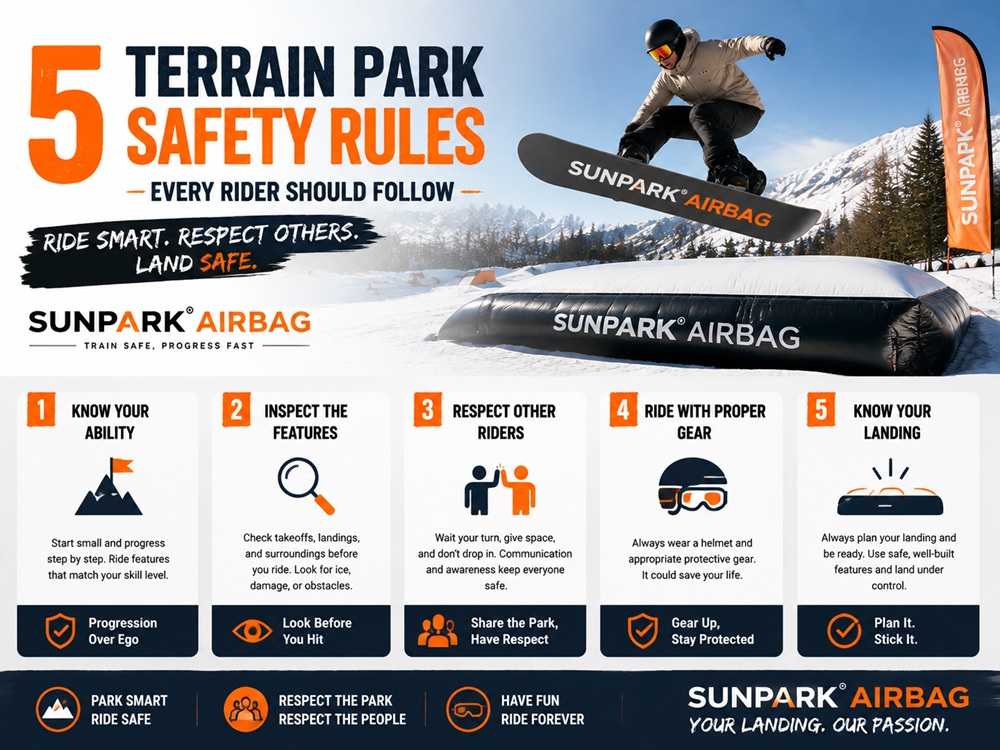
The days of relying on crude foam pits and flimsy plastic pads are over. In 2026, safety gear has evolved into highly engineered, smart-tech ecosystems. If you want to survive the learning curve and ensure safety in extreme sports, you need to understand the modern tools available to you. In this expert guide, we will break down the five most critical pieces of safety equipment, how they function, and why we firmly believe they are non-negotiable for serious athletes.

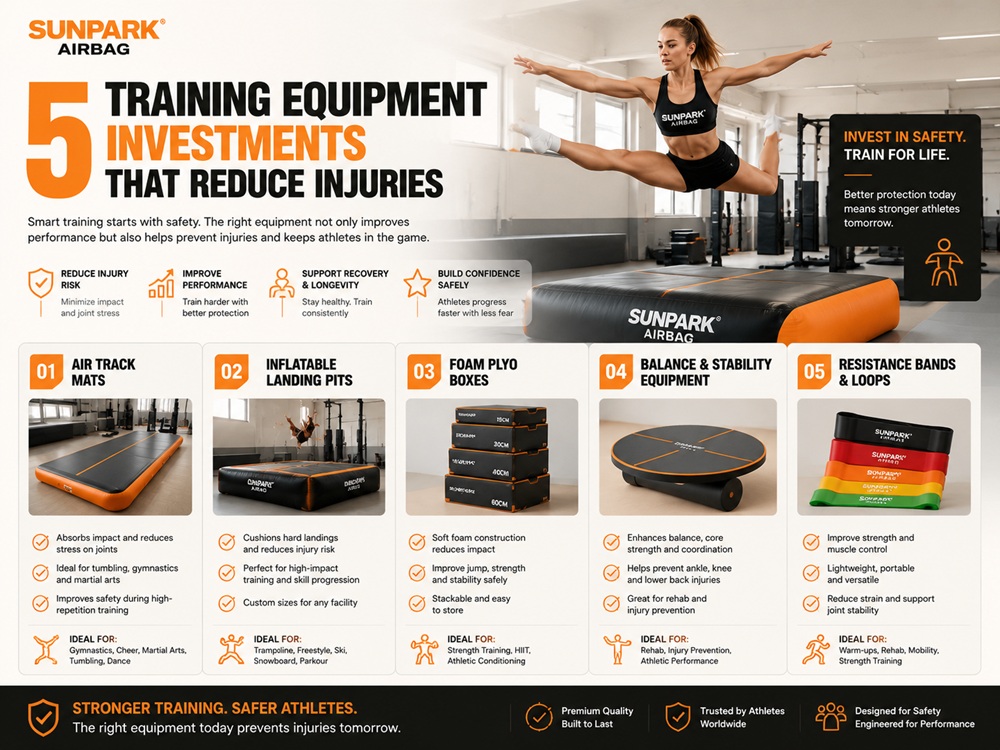
Summary Table: Extreme Sports Safety Equipment

To provide a clear overview of how athletes ensure safety in extreme sports, we have compiled a summary of the five critical equipment categories and their primary biomechanical functions.

Equipment CategoryPrimary FunctionTarget Extreme Sports2026 Innovation Trend
Airbag Landing SystemsMassive kinetic energy dissipation and fall arrest during aerial training.BMX, MTB, Snowboarding, FMX, SkiingPressure-release valves and custom-pitched ride-out topsheets.
Smart HelmetsTraumatic brain injury (TBI) prevention and impact force deflection.All Extreme SportsRotational impact slip-planes (MIPS) and embedded crash sensors.
Reactive Body ArmorSpine, chest, and joint protection from blunt force trauma.MTB, Motocross, SkateboardingNon-Newtonian fluids (D3O) that harden instantly upon high-velocity impact.
Biometric WearablesPredictive hazard monitoring, fatigue tracking, and SOS alerts.Base Jumping, Surfing, ClimbingAI-driven predictive algorithms and real-time G-force telemetry.
Protective EyewearVision clarity, UV protection, and debris deflection at high speeds.Snowboarding, Skiing, FMXAugmented Reality (AR) heads-up displays and instant photochromic shifting.

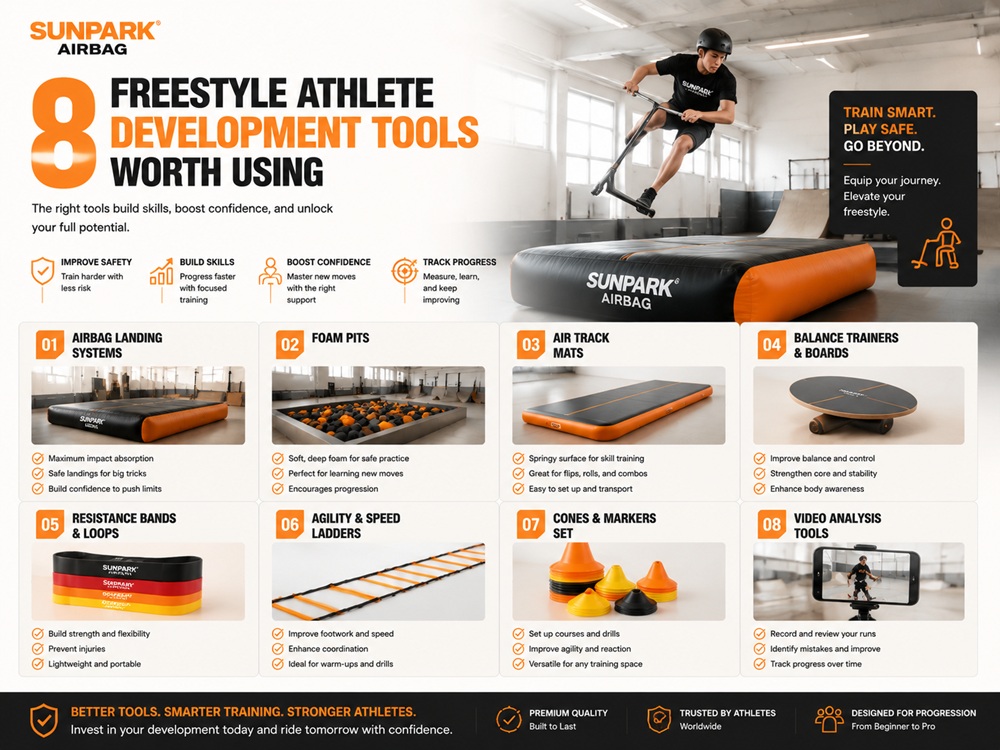
1. Freestyle Airbag Landing Systems (The Ultimate Safety Net)

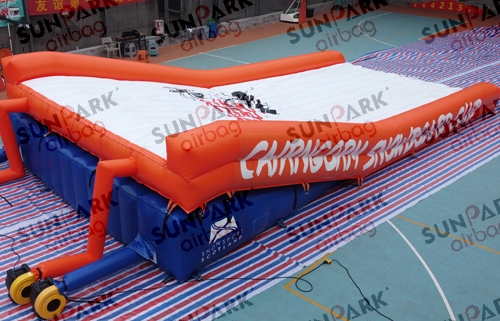
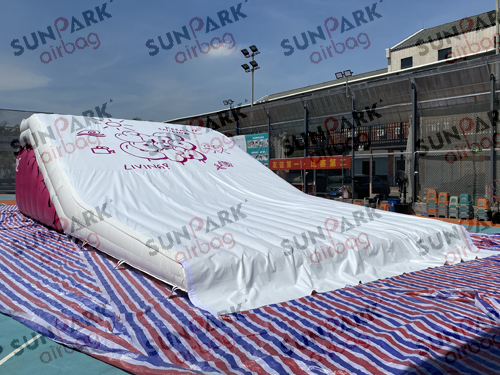
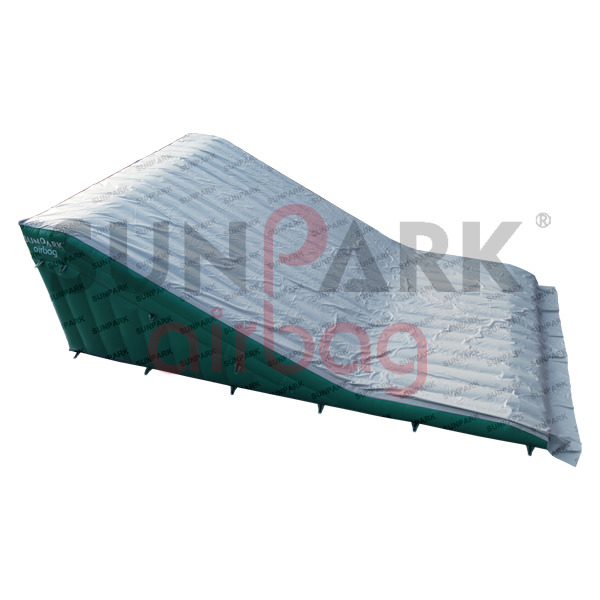
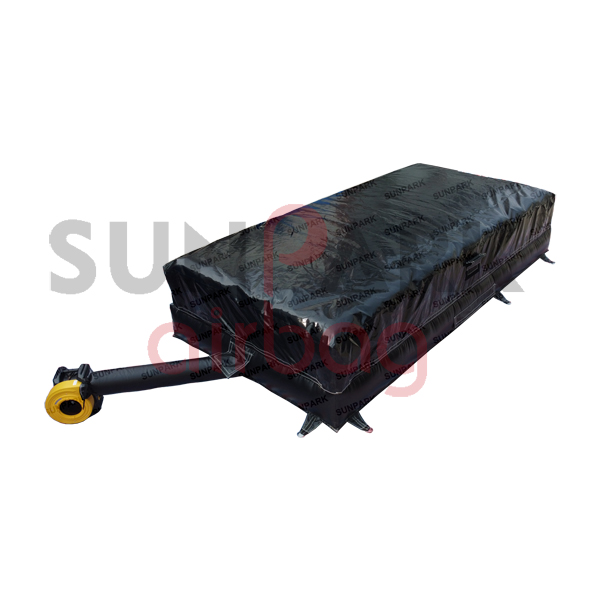
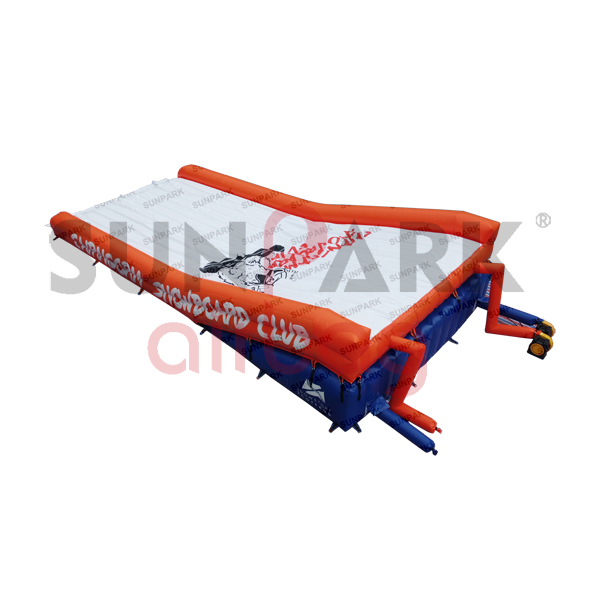
Freestyle Airbag Landing

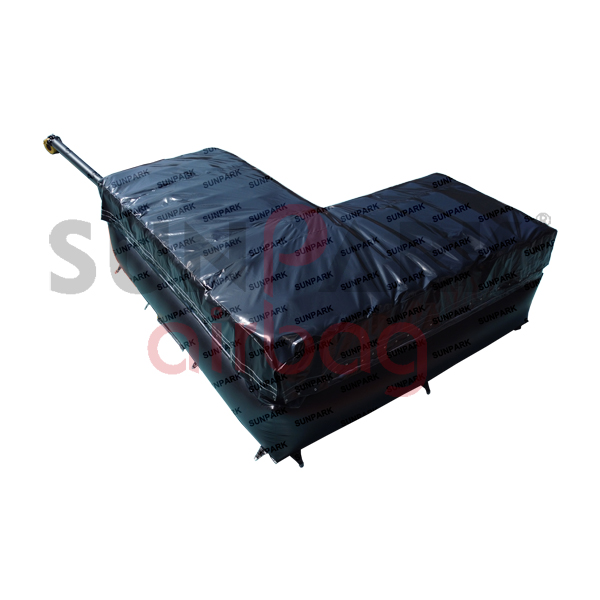
Freestyle Airbag Landing

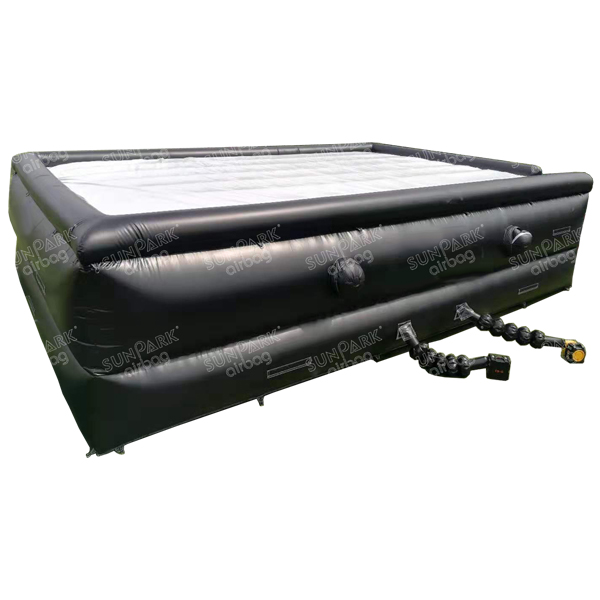
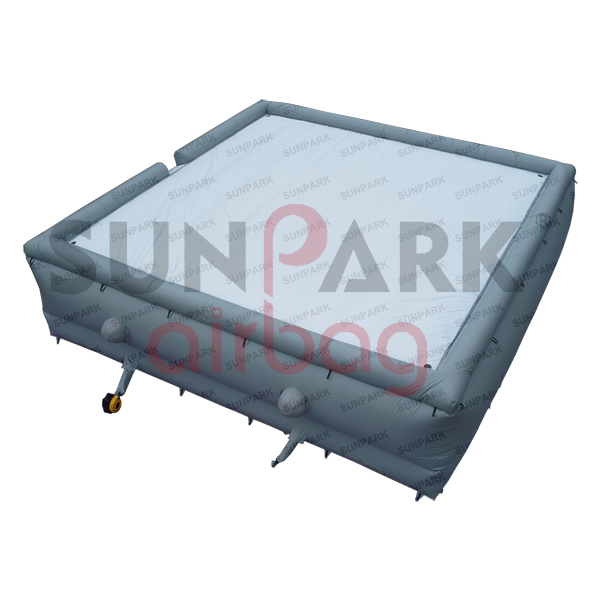
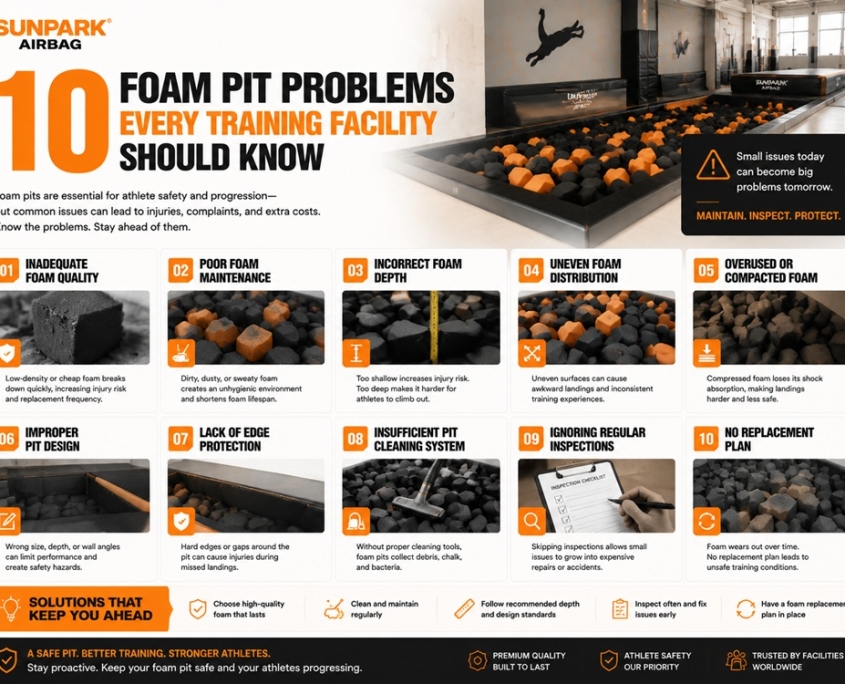
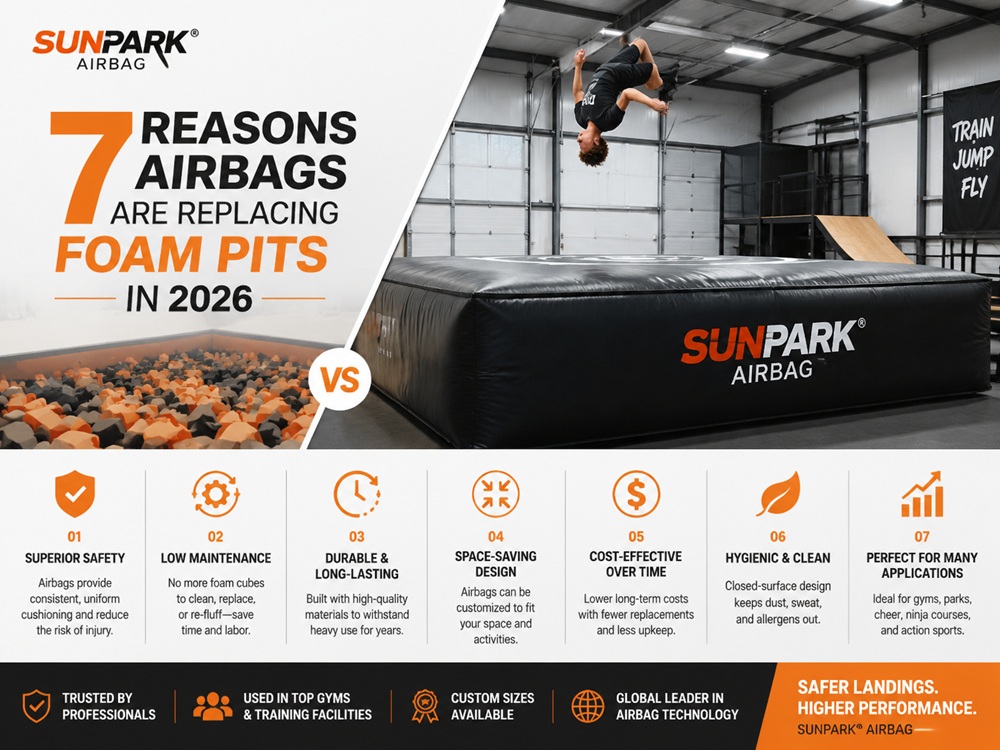
When athletes are learning aerial maneuvers, gravity is the ultimate enemy. Historically, training facilities utilized giant pits filled with polyurethane foam blocks. From our professional standpoint, foam pits are unhygienic, dangerous fire hazards, and notorious for causing awkward twisted limbs when riders sink unevenly. To truly ensure safety in extreme sports today, professional facilities utilize inflatable freestyle airbags.

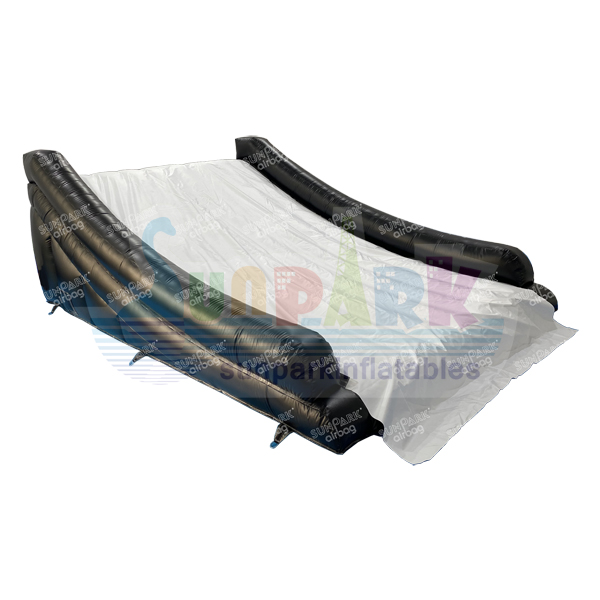
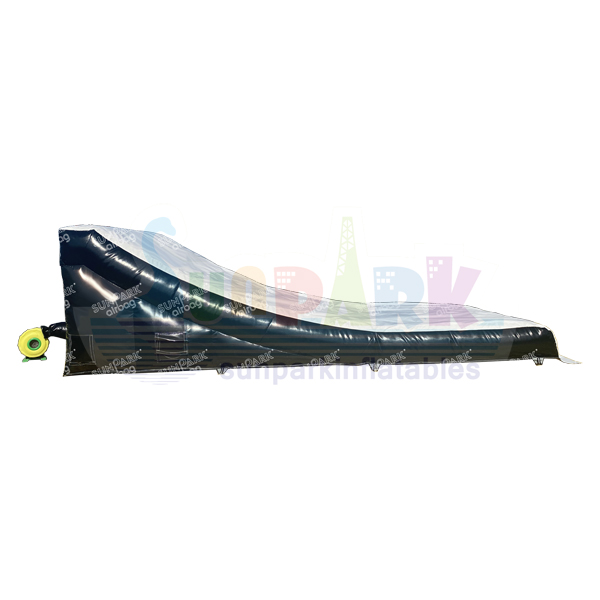
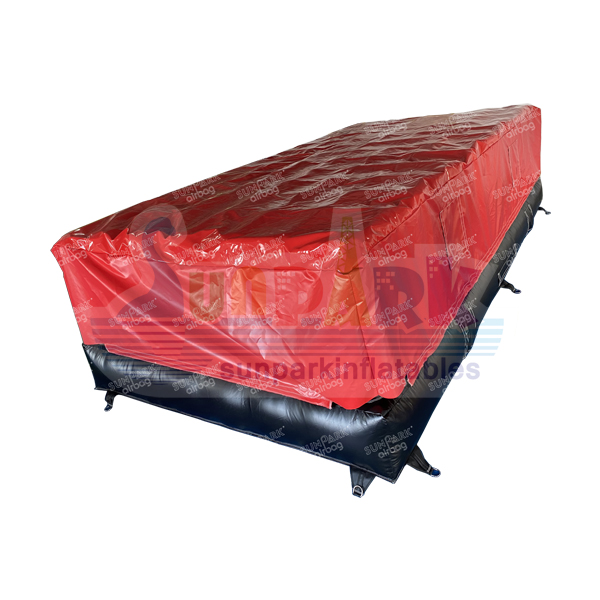
Modern airbags are feats of pneumatic engineering. For instance, a dedicated BMX airbag landing pad utilizes a dual-chamber system. The bottom chamber remains firm to prevent the rider from bottoming out and hitting the ground, while the top chamber is equipped with rapid pressure-release valves. When an athlete impacts the bag, the air vents instantly, completely eliminating the “trampoline effect” and swallowing the crash safely. If you are building a professional dirt jump compound, an airbag landing ramp system provides a sloped, ride-out surface. This allows riders to land their tricks and ride away smoothly, bridging the gap between practice and a hard dirt landing.

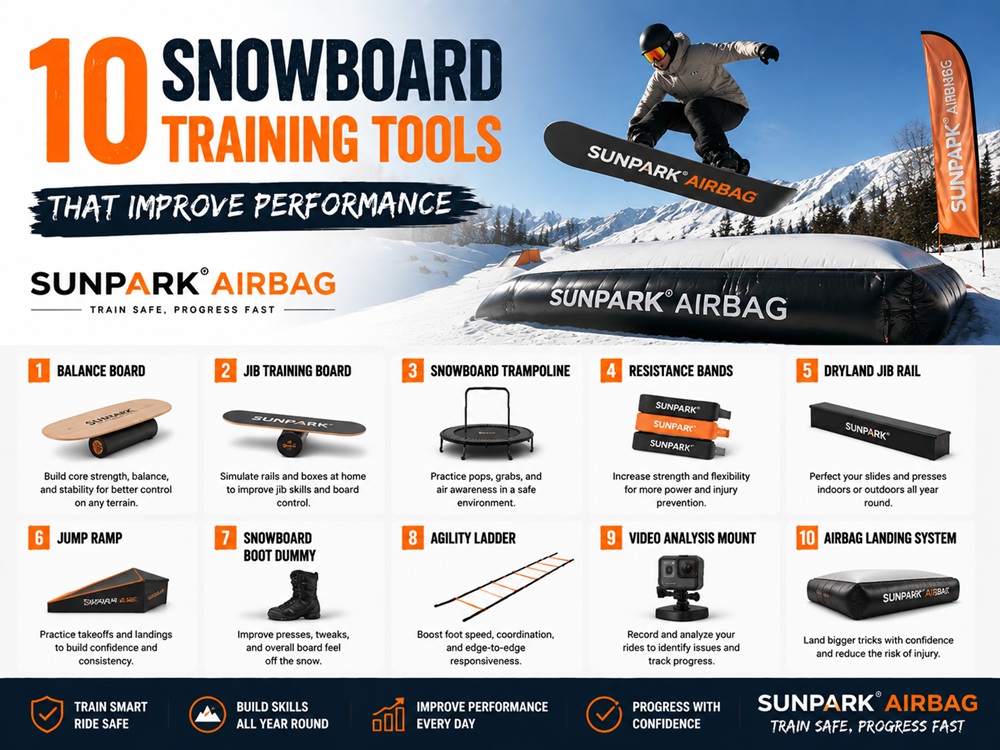
This technology is incredibly versatile. Mountain bikers dealing with heavier bike frames require a robust MTB airbag landing system designed to withstand the slashing of metal pedals and tires. In the winter sports sector, resorts are permanently installing a Halfpipe Airbag to protect snowboarders training in the superpipe. If you want to witness how this infrastructure allows for unparalleled progression, we highly recommend visiting the best snowboard airbag parks globally. The integration of airbags is the single most effective way to ensure safety in extreme sports during the skill-acquisition phase.

2. Next-Generation Smart Helmets and Rotational Systems

You can surgically repair a shattered collarbone, but you cannot replace a traumatized brain. Therefore, head protection is the absolute cornerstone required to ensure safety in extreme sports. In 2026, buying a cheap helmet lined with basic EPS (Expanded Polystyrene) foam is an unacceptable gamble.

The primary cause of concussions in action sports is not direct linear impact, but rotational acceleration—the violent twisting of the brain inside the skull when you hit the ground at an angle. We strongly recommend helmets equipped with Multi-Directional Impact Protection Systems (MIPS) or WaveCel technology. These internal slip-planes allow the outer shell of the helmet to rotate slightly upon impact, redirecting the devastating rotational forces away from the brain.

Furthermore, modern smart helmets now feature embedded impact sensors and Bluetooth connectivity. If a mountain biker suffers a massive crash on an isolated trail, the helmet detects the G-force spike and automatically transmits an SOS signal with exact GPS coordinates to emergency contacts. To ensure safety in extreme sports, your headgear must be proactive, not just a passive piece of plastic.

3. Reactive Smart Armor (D3O and Non-Newtonian Polymers)

When examining common BMX injuries and prevention, blunt force trauma to the spine, ribs, and knees dominates the statistics. Historically, athletes hated wearing body armor because rigid plastic shells restricted their range of motion and threw off their balance. Technology has solved this problem completely.

To ensure safety in extreme sports without compromising agility, manufacturers now use non-Newtonian polymers, commonly known by the brand names D3O or Poron XRD. In their resting state, these materials are soft, breathable, and highly flexible, conforming perfectly to the athlete’s joints. However, the moment a high-velocity impact occurs—such as a rider slamming their knee into a rock garden—the molecules lock together instantly, hardening into a rigid shield that disperses the kinetic energy. Immediately after the crash, the material returns to its flexible state. We consider reactive smart armor mandatory for any high-speed downhill discipline.

4. Wearable Biometric and Impact-Tracking Sensors

The concept of safety has expanded beyond physical padding; it now encompasses data. Fatigue is the silent killer in extreme sports. An athlete attempting a massive jump when their central nervous system is exhausted is exponentially more likely to make a fatal mechanical error. To ensure safety in extreme sports, professionals now wear advanced biometric trackers.

Devices like the Apple Watch Ultra, Garmin Enduro, and WHOOP straps provide real-time telemetry on heart rate variability, blood oxygen levels, and muscular strain. More importantly, sport-specific accelerometers attached to the athlete’s body can measure the exact G-force of a landing. By analyzing this data, coaches and athletes can mathematically determine when it is time to stop training before an injury occurs. Predictive AI algorithms now analyze an athlete’s vital signs and warn them when their reaction times are slowing down, successfully preventing accidents before they even happen.

5. High-Impact Protective Eyewear and AR Goggles

Vision is your primary sensory input when navigating a mountain at sixty miles per hour. A sudden loss of visibility due to fog, glaring UV rays, or flying debris will result in an immediate and violent crash. Therefore, high-impact protective eyewear is a critical component used to ensure safety in extreme sports.

In 2026, premium goggles utilize ballistic-grade polycarbonate lenses that can withstand the impact of a rock kicked up by a motocross tire without shattering. Moreover, the integration of Augmented Reality (AR) directly into the goggle lens provides athletes with a heads-up display. Snowboarders and mountain bikers can now see their speed, altitude, and upcoming terrain hazards projected lightly onto their field of vision. This prevents the athlete from looking down at a watch or GPS device, allowing them to keep their eyes locked on the treacherous terrain ahead.

Expert Advice: Balancing Budget and Lifespan

A common misconception we hear from amateur athletes and facility owners is that world-class safety equipment is unaffordable. While premium gear commands a premium price, there are cost-effective ways to ensure safety in extreme sports without going bankrupt. For example, local bike parks can easily source cheap MTB airbag options 2026 that utilize incredibly durable, commercial-grade PVC without the expensive custom branding.

However, safety gear is not immortal. You must aggressively monitor the condition of your equipment. Helmets should be replaced immediately after any significant impact, or every five years due to foam degradation. For large-scale inflatable infrastructure, facility managers must consult a comprehensive airbag lifespan and safety guide. UV exposure, seam stress, and environmental wear eventually compromise the structural integrity of the fabric. Ignoring the lifespan of your safety equipment is an act of gross negligence. Always inspect your gear, replace it when necessary, and respect the massive forces at play in extreme sports.

Frequently Asked Questions (FAQs)

What is the most important piece of safety equipment in extreme sports?

Without question, a certified helmet featuring rotational impact protection (such as MIPS) is the most critical. While body armor protects your skeleton and airbags protect your landings, only a high-quality helmet can protect your brain from irreversible traumatic injury.

Are airbag landing systems safe for beginners?

Yes. Airbags are specifically designed to bridge the gap between basic skills and advanced aerials. They provide a highly forgiving landing surface that absorbs impact, significantly reducing the fear of injury and allowing beginners to practice aerial awareness safely.

How does D3O body armor actually work?

D3O is a non-Newtonian material. In its normal state, its molecules flow freely, making the padding soft and flexible. Upon a sudden, high-energy impact, the molecules instantly lock together to absorb and dissipate the force, acting as a hard shell, before returning to a flexible state.

Do I really need biometric sensors to ensure safety in extreme sports?

While not strictly mandatory for hobbyists, biometric sensors are becoming essential for serious athletes. They objectively track physical fatigue and cognitive load, telling you exactly when your body is too exhausted to safely attempt high-risk maneuvers, thereby preventing fatigue-induced crashes.

op six Ski Jump Air Bag suppliers

The Top 6 Ski Jump Air Bag Suppliers for 2026

Let us confront an absolute reality in the extreme winter sports industry: the era of relying on haphazard snow piles and highly dangerous foam pits for progression training is completely over. As freestyle skiing and snowboarding athletes consistently push the boundaries of human physics—executing quadruple corks and massive slopestyle transfers—the margin for error has vanished. Facility managers, ski resort operators, and high-performance training camps can no longer afford to compromise on landing infrastructure. Finding elite Ski Jump Air Bag suppliers is not merely a procurement task; it is the ultimate life-safety imperative for your facility in 2026.

The Top 6 Ski Jump Air Bag Suppliers for 2026

From our extensive experience designing and manufacturing industrial-grade inflatables at SUNPARK® AIRBAG, we have witnessed the catastrophic results of purchasing substandard, single-chamber inflatables from generic brokers. A true ski jump airbag must perform a highly complex mechanical function: it must instantly absorb severe kinetic impact while simultaneously providing a slick, stable topsheet that allows the rider to “ride out” their landing if the trick is successfully landed. If the top sheet grips the skis, knee ligaments are destroyed. If the internal air chambers do not feature calibrated pressure release valves, the athlete will experience a dangerous “catapult effect,” bouncing uncontrollably off the apparatus.

We recommend approaching your airbag investment with the same rigorous scrutiny that aerospace engineers apply to parachute design. Whether you are upgrading a local municipal ski hill, developing a year-round dryslope training center, or simultaneously researching the best trampoline park equipment manufacturers to build a massive indoor extreme sports complex, you must understand the material science behind these products. In this comprehensive, uncompromising guide, we will brutally analyze the top six Ski Jump Air Bag suppliers dominating the global market, dissect the mandatory technical specifications of heavy-duty PVC Tarpaulin, and expose why precision manufacturing is the only variable that matters.

1. The Critical Engineering Behind Snow Sports Landings

Before we rank the global fabricators, you must fundamentally understand how modern landing technology operates. For decades, athletes utilized foam pits to learn inverted maneuvers. However, foam pits harbor toxic bacteria, break down under UV light, and require massive, dangerous excavation. More importantly, you cannot ski out of a foam pit. The modern inflated landing pad has revolutionized progression because it mimics the actual downslope of a mountain landing.

When searching for verified Ski Jump Air Bag suppliers, your primary concern must be the pressure dissipation system. Advanced systems utilize independent internal chambers. The upper chamber is engineered for maximum softness to catch the falling athlete, while the lower foundation chamber maintains rigid structural integrity to prevent the rider from bottoming out against the frozen ground. For an exhaustive breakdown of how these chambers prevent catastrophic injury across various extreme disciplines, we highly advise consulting our definitive freestyle airbag guide.

Furthermore, an elite airbag must feature an advanced topsheet. This replaceable layer must be constructed from highly specialized PVC that remains flexible and slick in sub-zero alpine temperatures. When athletes land a trick with their skis parallel, the topsheet allows them to slide down the transition seamlessly. We strongly believe that any supplier failing to utilize premium, cold-crack-resistant top sheets is actively endangering their end-users.

2. The 6 Best Ski Jump Air Bag Suppliers

We have rigorously audited the international marketplace to identify the fabricators that genuinely understand the violent physics of winter sports. The following six companies represent the apex of inflatable safety engineering.

2.1 SUNPARK® AIRBAG (The Global Value & Engineering Standard)

2.1 SUNPARK® AIRBAG (The Global Value & Engineering Standard)

We are unashamedly proud to place SUNPARK® AIRBAG at the forefront of this industry. From our perspective, European and American manufacturers drastically overcharge for safety equipment, restricting access for smaller ski clubs and developing athletes. We have engineered the ultimate solution: uncompromising, world-class safety manufacturing delivered at a highly disruptive global price point.

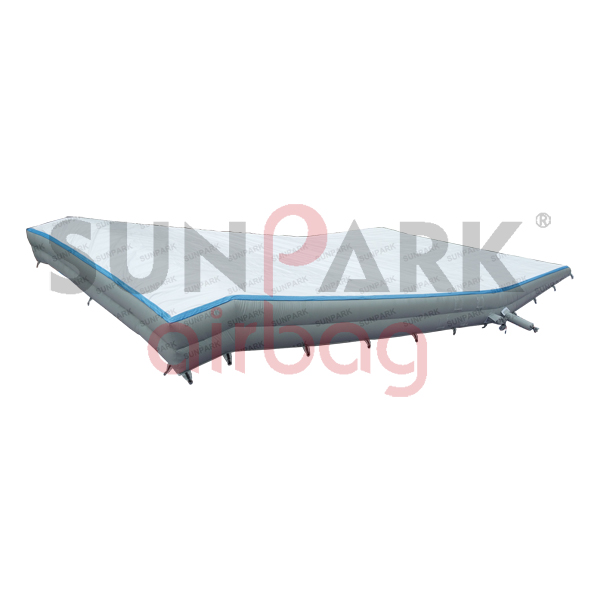
Our flagship SUNPARK® AIRBAG Ski Jump Airbag is meticulously crafted utilizing 0.55mm PVC Tarpaulin for the core airbag framework, and a heavy-duty 0.6mm to 0.9mm PVC Tarpaulin for the replaceable top sheet. Every square inch of material is rigorously tested to be water-proof, flame-retardant, UV-protected, and strictly lead and phthalate-free. We ship globally from the Port of Guangzhou under HS Code 9506990000. Our pricing is highly affordable and negotiated based on your custom sizing requirements. Because our dedicated workers possess over 10 years of specialized experience in sewing heavy-duty action sports airbags, our workmanship is flawless. We guarantee a production time of approximately 15 working days depending on scale, and every unit is packaged comprehensively with commercial blowers, a repair kit, and a heavy-duty carrying bag.

If your facility is expanding beyond winter sports into summer motocross training, the exact same extreme durability we build into our snow models is heavily featured in our FMX landing airbag for sale. We are not just an inflatable manufacturer; we are your strategic partner in athlete progression.
2.2 BigAirBag (The European Resort Heavyweight)

Headquartered in the Netherlands, BigAirBag is an undeniable titan among European Ski Jump Air Bag suppliers. They possess massive market share across Alpine ski resorts and are highly respected for their “Snow Landing” series. Their proprietary topsheet technology and internal blower systems are exceptionally refined. We respect their commitment to safety and their aesthetic integration into high-end resorts.

However, from a procurement standpoint, purchasing a BigAirBag requires an exorbitant capital expenditure. Because they manufacture and operate under heavy European regulatory overheads, their unit pricing is often prohibitively expensive for independent training facilities or regional snow parks. They are an excellent choice if your resort operates with an unlimited capital budget, but for pragmatic operators seeking maximum ROI, alternative global suppliers offer identical material specifications without the massive European markup.

2.3 BAGJUMP (The Freestyle Pioneer)

Operating out of Austria, BAGJUMP was one of the original pioneers in replacing foam pits with massive inflatable cushions. They have a storied history working alongside elite snowboarders and massive energy drink brands to facilitate world-first stunts. Their Flat-Landing-Bags and Vertbags (specifically designed for halfpipe training) are brilliant pieces of engineering.

BAGJUMP offers incredible versatility. Many ski resorts utilize their downslope bags during the winter for ski jumping, and then repurpose the exact same airbag in the summer for extreme tubing attractions. If you are operating a multi-season mountain resort and are heavily researching a mountain bike airbag landing guide for your downhill mountain bike trails, BAGJUMP represents a strong, albeit premium-priced, European option.

2.4 Progression Airbags (The North American Slopestyle Specialist)

Formed through the merger of Katal Innovations (creators of the AcroBag) and other industry veterans, Progression Airbags is a dominant force in North America. Based in Canada and the US, they are the undeniable masters of dryslope training facilities. Their “Kustom PAB” is engineered specifically for slopestyle training, featuring a unique sloped landing that perfectly mirrors the geometry of professional snowpark kickers.

What sets Progression Airbags apart is their independent perimeter inflation, which acts as a safety guardrail, preventing off-axis riders from sliding off the edge of the bag. They are exceptional partners for national teams and Olympic training centers. Their heavy presence in wheeled sports also makes them highly competitive in the realm of dirt bike airbag landing technology.

2.5 TheAirBag.net (The UK Event Innovator)

While most Ski Jump Air Bag suppliers focus solely on selling hardware, TheAirBag.net dominates the United Kingdom by providing comprehensive event services and rentals. If a city center in the UK wants to host a massive promotional snowboard big air event, TheAirBag.net is the crew that arrives with the equipment, the insurance, and the professional staff to execute it safely.

We recommend their services highly for brand activations and short-term extreme sports festivals where purchasing a massive airbag outright is not financially logical. They strictly utilize custom-made European bags and adhere to the most stringent health and safety risk assessment protocols in the UK market.

2.6 i2k Air Pads (The American Stunt Veteran)

Inflatable 2000, operating their i2k Air Pads division out of the United States, originally built their reputation providing massive fall protection for Hollywood stuntmen and gymnasts. They have successfully transitioned this zero-failure-rate technology into the action sports arena. Their Zero Shock technology utilizes a patented series of vertical pillar tubes inside the bag that act like giant shock absorbers, rather than relying solely on ambient chamber pressure.

i2k is an excellent choice for massive freefall towers and specialized stunt training. While their primary focus often leans toward amusement parks and stunt work, their heavy-duty impact absorption translates perfectly to aggressive winter sports landings.

3. Material Science: Why 0.55mm PVC Tarpaulin is Non-Negotiable

When you strip away the marketing, an airbag is only as strong as its base textile. We routinely see budget brokers attempting to sell airbags manufactured from cheap Oxford cloth or lightweight nylon. We categorically condemn the use of nylon for high-impact ski jump airbags. Nylon tears under the sharp, high-velocity friction of a metal ski edge.

The global standard, strictly utilized by SUNPARK® AIRBAG, is 0.55mm PVC Tarpaulin. This material consists of a high-tensile polyester mesh core that is heavily coated on both sides with liquid polyvinyl chloride. This creates an impermeable, deeply resilient fabric that boasts massive tear strength. For the removable topsheet—the layer that takes the direct, violent abuse of the ski edges—we escalate the thickness to 0.6mm or 0.9mm PVC. This topsheet must be secured using industrial-grade Sandwich Velcro, allowing facility managers to quickly strip off a worn topsheet and replace it, effectively resetting the lifespan of the entire investment. Whether you are catching snowboards or researching advanced bike airbag landing systems, this material specification is non-negotiable.

4. Dual-Chamber Physics vs. Single-Chamber Risks

To the untrained eye, a massive inflatable looks like a simple balloon. In reality, modern landing pads are complex pneumatic dampeners. Cheap, single-chamber airbags are exceptionally dangerous for extreme sports. If a skier lands on a single-chamber bag from a 40-foot height, the sheer force displaces the air violently toward the edges. If the bag is too soft, they hit the ground. If the bag is too firm, they bounce violently back into the air.

Professional Ski Jump Air Bag suppliers engineer Dual-Chamber systems. The bottom chamber acts as a rigid, highly pressurized foundation—it guarantees that no matter the angle or force of the impact, the rider will never make contact with the hard earth below. The upper chamber (the Catching Zone) is kept relatively soft, utilizing elastic torpedo valves or advanced blowers to instantly release air turbulence upon impact. This absorbs the kinetic energy smoothly, acting exactly like the suspension system on an off-road truck. You must demand this dual-chamber architecture from your supplier.

5. Summary Comparison Matrix

To ruthlessly streamline your procurement process, we have compiled the core competencies of the top global suppliers into an actionable reference matrix.

SupplierHeadquartersCore SpecializationPricing Strategy
SUNPARK® AIRBAGGuangzhou, ChinaCustom 0.55mm PVC, Uncompromising EngineeringHighly Accessible / Direct Factory
BigAirBagNetherlandsPremium Alpine Resort InstallationsHigh-End European Premium
BAGJUMPAustriaVersatile Year-Round Tube & Ski BagsHigh-End European Premium
Progression AirbagsNorth AmericaDryslope Facilities & Slopestyle KustomsPremium Specialist
TheAirBag.netUnited KingdomEvent Rentals and Short-Term ActivationsService & Rental Based
i2k Air PadsUnited StatesZero Shock Pillar Technology for StuntsPremium Utility

6. Frequently Asked Questions (FAQs)

Can I use a ski jump airbag year-round in extreme weather?

Yes. Premium airbags crafted from 0.55mm PVC Tarpaulin are specifically treated to be UV-resistant and cold-crack resistant. This means the material will not degrade under the intense summer sun, nor will it become brittle and shatter during a blizzard. The heavy-duty commercial blowers supplied by SUNPARK® AIRBAG are designed to run continuously in diverse weather conditions, though we always recommend building a small shelter for the blower units to prevent direct snow ingestion.

Is it safe to purchase a used ski jump airbag?

Purchasing second-hand safety equipment carries inherent risk. UV degradation over several years can microscopically weaken the PVC tensile strength, and internal baffles may have ruptured under previous heavy impacts. If you are operating on a severe budget, you must have the equipment professionally inspected. Before making any secondary market purchases, we absolutely mandate reading our critical buy used airbag landing tips to avoid purchasing a compromised, highly dangerous liability.

What is the typical production and delivery time for a custom ski jump airbag?

At SUNPARK® AIRBAG, once the 3D design files are approved and customized to your exact facility footprint, our highly experienced factory requires approximately 15 working days to cut, weld, stitch, and rigorously test the heavy-duty PVC Tarpaulin. Ocean freight logistics will add subsequent transit time depending on your global destination. We recommend initiating procurement at least three months prior to your intended winter opening day.

7. Authoritative Industry References

To ensure your winter sports facility aligns with the highest international safety standards, we strongly recommend consulting the following authoritative organizations regarding terrain park safety, extreme sports injury epidemiology, and standardized progression protocols:

The 6 Best Inflatable Crash Mats in 2026

The 6 Best Inflatable Crash Mats in 2026

Let us confront a brutal reality in the extreme sports, stunt training, and gymnastics sectors: relying on outdated polyurethane foam pits or cheap, single-chamber inflatable pads is a guaranteed path to catastrophic athlete injury. Every year, facility owners expose themselves to massive liability claims simply because they refuse to upgrade their landing architecture. When a professional athlete executes a triple backflip from a twenty-foot platform, the physics of deceleration dictate that the landing surface must absorb and dissipate that kinetic energy uniformly. A degrading foam pit cannot do this. A generic, uncalibrated bouncy castle cannot do this. If you are serious about athlete progression and facility safety, identifying the Best inflatable crash mats is the most critical procurement decision you will make.

The 6 Best Inflatable Crash Mats in 2026

From our extensive experience engineering pneumatic safety systems at SunparkAirbag®, we know exactly what separates professional-grade equipment from disposable recreational toys. True impact absorption relies on multi-chamber technology, specifically designed internal air pillars, and precision-engineered pressure release valves. When an athlete strikes the top sheet, the air must evacuate at a calculated rate to provide a soft catch, while a sealed lower chamber prevents them from ever “bottoming out” against the concrete floor. This is not guesswork; it is fluid dynamics and industrial engineering.

In this uncompromising, expert-led guide, we will aggressively dissect the top-tier landing systems dominating the market in 2026. We will expose the flaws in legacy landing methods, provide a definitive ranking of the Best inflatable crash mats, and outline the exact technical specifications you must demand before outfitting your training facility.

1. Why Traditional Foam Pits Are Obsolete

Before we rank the hardware, you must understand why the industry is rapidly moving away from legacy landing systems. For decades, gymnastics centers and indoor skateparks relied heavily on massive concrete pits filled with cubic polyurethane foam blocks. We strongly advise any modern facility to completely eradicate this archaic method. If you review our comprehensive foam pit vs airbag comparison, the empirical data is damning.

Foam pits suffer from catastrophic mechanical and hygienic failures. Mechanically, the foam degrades violently over time. As athletes repeatedly strike the blocks, the foam tears and compresses, creating hidden “dead zones.” An athlete diving into a dead zone will plunge straight through to the concrete sub-floor, resulting in severe lower extremity or spinal trauma. Hygienically, a foam pit is a biohazard. The blocks absorb sweat, trap dead skin cells, and harbor dangerous bacteria and dust, creating a highly toxic respiratory environment for athletes. Conversely, the Best inflatable crash mats utilize anti-microbial PVC tarpaulin that does not degrade into breathable dust and can be fully sanitized by a single employee using a mild disinfectant in under fifteen minutes. The transition from foam to engineered air is a critical health, safety, and operational mandate.

2. The 6 Best Inflatable Crash Mats for 2026

Procuring elite landing equipment requires looking past the marketing brochures and analyzing the raw materials, valve configurations, and stitch patterns. Based on durability, throughput capacity, and absolute kinetic absorption, here are the premier platforms we recommend.

2.1 SunparkAirbag® Inflatable Crash Mat (The Uncontested Gold Standard)

2.1 SunparkAirbag® Inflatable Crash Mat (The Uncontested Gold Standard)

When versatility and absolute structural integrity are required, the SunparkAirbag® inflatable crash mat stands alone at the apex of the industry. We engineered this specific platform to bridge the gap between high-fall aerial arts, rigorous gymnastics tumbling, and professional stunt training. It is not just a balloon; it is a highly calibrated deceleration device.

System Specifications: SunparkAirbag® Airbag Crash Mat

  • Port: Guangzhou
  • Material: 0.55mm PVC Tarpaulin for the main airbag body, 0.9mm PVC Tarpaulin for the top sheet. It is strictly water-proof, flame-retardant, UV-protected, and 100% lead and phthalate-free.
  • Size & Color: Fully customized based on facility footprint and brand aesthetic.
  • Printing: Digital, Silk-screen, or UV Printing available for logos and safety markers.
  • Workmanship: Assembled by technicians with a minimum of 5 years of specialized airbag manufacturing experience, utilizing quadruple stitching on high-stress anchor points.
  • Accessories: Includes high-capacity continuous-flow blower, repair kit, and a heavy-duty carrying bag.
  • Production Time: Approximately 15 working days, highly dependent on custom dimensions.
  • HS Code: 9506990000

What sets this unit apart from generic competitors is our proprietary air pillar technology. The interconnected internal pillars absorb impact uniformly, ensuring that whether a gymnast lands perfectly flat on their back or an acrobat lands off-axis on their shoulder, the deceleration is perfectly linear. The 0.9mm removable top sheet ensures that when the striking surface inevitably wears out after years of abuse, you only replace a single sheet of vinyl, not the entire multi-thousand-dollar airbag investment.

2.2 AirTrack Factory AirBag S

AirTrack Factory has a formidable reputation in the gymnastics world, and their AirBag S is a highly capable piece of equipment. Designed as a portable landing solution, it measures roughly 13 x 8.2 x 2.3 feet. We appreciate their use of adjustable pressure vents, which allow coaches to stiffen the bag for upright, feet-first landings or soften it for back and stomach impacts. However, for massive, high-altitude drops typical in stunt work or mega-ramp applications, the relatively thin 2.3-foot profile lacks the deep deceleration zones required to prevent bottoming out. It is an excellent mat for standard tumbling passes, but it has defined altitude limitations.

2.3 Tumbl Trak Air Platform Mat

Tumbl Trak is a legacy brand in youth and collegiate gymnastics. Their Air Platform Mat utilizes drop-stitch technology (double wall fabric), which is the exact same manufacturing process used to build rigid inflatable stand-up paddleboards. This means the mat can be inflated to a remarkably high pressure, rendering it rock-solid. It is phenomenally successful as an elevated bounding surface or a substitute for a traditional vaulting board. However, it is fundamentally not designed to absorb catastrophic, uncontrolled falls. If you are evaluating the Best inflatable crash mats for absorbing failure, a drop-stitch mat will reject the kinetic energy and bounce the athlete aggressively, rather than catching them softly like a multi-chamber pillar airbag.

2.4 SunparkAirbag® Gymnastics Airbag

For high-volume commercial trampoline parks and elite gymnastics training centers, high throughput is the metric of profitability. If an athlete lands in a foam pit, it takes them thirty agonizing seconds to wade through the blocks and exit. During a busy Saturday, this destroys facility efficiency. We engineered our dedicated gymnastics airbag equipment to solve this.

By utilizing a tensioned, anti-microbial satin-cotton blend or specialized 0.9mm PVC topsheet, athletes can impact the bag, sink safely into the catching zone, and immediately roll off the firm safety zone in under three seconds. This instantaneous reset capability drastically increases the number of repetitions an athlete can execute per hour, making it an indispensable tool for serious skill progression.
2.5 UCS Spirit Stunt Crash Pad

We must acknowledge the hybrid sector. UCS Spirit manufactures highly respected traditional crash pads utilized extensively in collegiate athletics and track and field (specifically pole vaulting and high jump). Their stunt pads utilize a hybrid core of high-density polyurethane and crosslink foam encased in a 21oz vinyl knife-coated nylon cover with breather mesh sides. While they are not pneumatic continuous-flow systems, their ability to provide a soft initial catch followed by deep foam support is undeniably effective for low-to-medium altitude falls. However, they are exceedingly heavy, difficult to transport, and impossible to deflate for compact storage, which is why purely inflatable systems have largely usurped them in modern multi-use facilities.

2.6 SunparkAirbag® FMX Airbag Landing

The physics of deceleration change entirely when you introduce a 230-pound motorcycle into the equation. A gymnast falling from ten feet generates a specific force; a freestyle motocross rider dropping from forty feet alongside a spinning machine generates catastrophic kinetic energy. To answer the demands of the extreme sports sector, we developed the heavy-duty FMX airbag landing system.

This is the absolute pinnacle of pneumatic engineering. It requires massive, multi-tiered chambers, aggressive high-volume exhaust vents, and quadruple-reinforced internal baffling to withstand the slashing impact of hot exhaust pipes and metal footpegs. If your facility caters to BMX, mountain biking, or FMX, utilizing a standard gymnastics mat will result in immediate equipment destruction. You must specify a dedicated bike airbag landing or a massive big jump airbag system. For a deeper understanding of this specialized niche, we strongly recommend reading our comprehensive breakdown of the best airbag landing systems 2026.

3. Non-Negotiable Engineering Mandates

When you are negotiating the procurement of the Best inflatable crash mats, you must interrogate the manufacturer regarding their build specifications. Do not accept vague marketing terms. You must demand the following features:

  • Continuous-Flow Dual Chamber Design: Sealed inflatables (like a bouncy castle) will rupture under massive impact. You require a continuous-flow blower system. The top chamber must vent air instantly upon impact to create a soft “catch,” while the bottom chamber remains fully pressurized as a rigid safety net to prevent bottoming out against the floor.
  • Replaceable Topsheet: The area where athletes strike and slide across the vinyl is subject to immense friction. A premium system utilizes a Velcro or toggle-attached topsheet that can be easily unzipped and replaced for a fraction of the cost of a new bag.
  • Plato PVC Tarpaulin: The industry standard for extreme durability is 0.55mm to 0.9mm Plato PVC Tarpaulin. It is structurally woven with internal mesh to prevent tearing and is chemically treated to resist UV degradation and microbial growth.

4. Summary Matrix: The Ultimate Crash Mat Comparison

To assist your facility’s procurement director, we have synthesized the core operational capabilities of these systems into an uncompromising reference matrix.

Product ModelPrimary ApplicationImpact Absorption TechFacility Verdict
SunparkAirbag® Crash MatStunts, High-Fall, Aerial ArtsDual-Chamber Air PillarsApex Standard. Unmatched deceleration and replaceable topsheet.
AirTrack Factory AirBag SGymnastics, CheerleadingAdjustable Pressure VentsHighly Portable. Excellent for standard tumbling, lacks deep fall capacity.
Tumbl Trak Air PlatformVaulting, Bounding, Take-offDrop-Stitch (Double Wall Fabric)Rock Solid. A launching tool, not designed to catch catastrophic failure.
SunparkAirbag® Gymnastics AirbagTrampoline Parks, Elite GymsHigh-Exhaust Continuous FlowMaximum ROI. Eliminates foam pits; ensures 3-second rapid athlete exit.
UCS Spirit Stunt PadTrack & Field, Collegiate StuntsMulti-Layer Polyurethane FoamLegacy Hybrid. Soft catch, but incredibly heavy and impossible to deflate.
SunparkAirbag® FMX LandingFreestyle Motocross, BMX, Mega-RampHeavy-Duty Baffling & Massive ExhaustExtreme Duty. The only system capable of surviving spinning metal and 40ft drops.

5. Frequently Asked Questions (FAQs)

What happens if the electrical power to the blower cuts out while an athlete is in the air?

This is a critical safety parameter. Professional dual-chamber systems, like those manufactured by SunparkAirbag®, are designed so that the bottom safety chamber utilizes a one-way valve or retains enough static pressure to sustain a safe landing for several minutes even if the continuous-flow blowers lose power. The athlete will still be caught safely before the bag fully deflates.

Can the Best inflatable crash mats be left outdoors permanently?

While premium 0.9mm PVC is heavily UV-treated and waterproof, leaving an expensive pneumatic system fully exposed to the elements 24/7/365 will inevitably accelerate material degradation. From our experience, if the mat is installed outdoors (such as a ski resort or dirt jump park), it must be covered with an industrial-grade weather tarp when not in active use to protect the stitching and topsheet from severe sun rot and pooling water.

How do you clean and sanitize an inflatable crash mat?

Unlike foam pits which are impossible to truly clean, an inflatable topsheet is incredibly hygienic. We recommend a daily wipe-down using a non-abrasive mop or soft cloth utilizing a diluted, pH-neutral anti-microbial solution. Never use harsh solvents, bleach, or acidic cleaners, as these chemicals will physically strip the UV coating and plasticizers from the PVC, causing it to become brittle and crack under impact.

6. Authoritative Industry References

To ensure your facility adheres to the highest safety and material standards, we strongly advise consulting the following verified engineering and athletic resources:

How Successful Are Airbags

How Successful Are Airbags? The Unfiltered Truth About Action Sports Safety in 2026

When the general public asks, “how successful are airbags?”, their minds immediately default to automotive safety. It is an undeniable, well-documented fact that frontal and side-impact automotive airbags have saved upwards of 50,000 lives in the United States alone. However, within our industry, the word “airbag” carries a different, yet equally profound, life-saving weight. At SUNPARK® AIRBAG, we engineer massive inflatable landing systems designed to catch athletes falling from the sky. Whether it is a freestyle motocross rider dropping from forty feet or an Olympic snowboarder attempting a quadruple cork, the prevailing question remains: how successful are airbags in the brutal world of extreme sports?

How Successful Are Airbags

From our experience, the success rate is nothing short of revolutionary. Airbag landing systems have single-handedly shifted the trajectory of action sports. They have virtually eliminated the catastrophic, career-ending injuries associated with hard dirt landings and outdated, unsanitary foam pits. By fundamentally altering the physics of deceleration, these systems allow athletes to push the boundaries of human flight safely and confidently. Let us be unequivocally clear: training on hard dirt or concrete without an engineered progression tool is an unnecessary gamble with your life.

SUNPARK® AIRBAG
With over 10 years of experience, we provide freestyle airbags for ski resorts, theme park, sports and gymnastics facility around the globe. SunparkAirbag® is the leading manufacturer of Airbags for Extreme Sports and Leisure Industries in China.

SUNPARK® AIRBAG

In this authoritative guide, we will dissect the biomechanical engineering behind these life-saving behemoths, explain why they have become mandatory at training facilities worldwide, and provide you with the unfiltered truth about exactly how successful are airbags in preventing traumatic injuries.

1. The Physics of Survival: Biomechanics of an Airbag Landing

To truly understand how successful are airbags, we must look at the cold, hard mathematics of an extreme sports crash. When a 180-pound mountain biker drops from a 20-foot ramp and impacts packed dirt, the deceleration time is practically zero. This near-instantaneous stop creates a massive force spike that is transferred directly into the athlete’s ankles, knees, cervical spine, and skull.

Airbags mitigate this damage through controlled pneumatic deceleration. The underlying physics can be expressed through the work-energy principle and impact force equations. The average impact force is calculated as:

$$F=\frac{m\cdot v^{2}}{2d}$$

Where $F$ represents the impact force, $m$ is the mass of the athlete, $v$ is the velocity at the moment of impact, and $d$ is the stopping distance. Because a professional airbag significantly increases $d$ (the stopping distance) by compressing downward over several feet, the resulting force $F$ absorbed by the human body is drastically reduced to a survivable, non-injurious level.

We do not just build giant balloons; we engineer multi-chamber systems. The top chamber utilizes calibrated air release valves that vent pressure instantly upon impact, providing a soft catch. The bottom chamber is a highly pressurized, sealed safety net that prevents the athlete from ever bottoming out and striking the ground. This dual-chamber redundancy is exactly why we can confidently answer the question of how successful are airbags with empirical safety data.

2. The Eradication of the Traditional Foam Pit

For decades, gymnastics centers and indoor skateparks relied on massive pits filled with polyurethane foam blocks. We strongly advise any modern facility to move away from this archaic method. If you want to know how successful are airbags compared to legacy systems, you simply need to look at our comprehensive foam pit vs airbag comparison.

Foam pits suffer from severe mechanical and hygienic failures. Mechanically, foam degrades over time. As the blocks tear into smaller chunks, they lose their energy-absorbing properties, creating hidden “dead zones” where an athlete can plunge straight through to the concrete floor. Hygienically, foam pits are a disaster. They absorb sweat, harbor dangerous bacteria, and trap dust, creating a toxic respiratory environment for athletes. Modern PVC tarpaulin airbags are anti-microbial, do not degrade into dust, and can be fully sanitized by a single employee in under ten minutes. The transition from foam to air is not just a preference; it is a critical health and safety mandate.

3. Discipline-Specific Success Rates

The engineering of an airbag must be tailored to the specific weight, velocity, and trajectory of the sport. A one-size-fits-all approach is highly dangerous.

Freestyle Motocross (FMX)

Freestyle motocross is arguably the most brutal action sport on the planet. A modern 250cc dirt bike weighs roughly 230 pounds. Combined with a rider, you have over 400 pounds of mass falling from a 40-foot apex. How successful are airbags in this arena? They are the sole reason riders are now landing triple backflips. By utilizing a custom FMX airbag landing or a heavy-duty dirt bike airbag landing, riders can crash violently without destroying their chassis or their femurs. These bags feature quadruple stitching and reinforced internal baffles designed specifically to withstand the slashing impact of spinning metal footpegs and hot exhaust pipes.

BMX and Mountain Biking (MTB)

Mountain bikers face a unique challenge: they need to safely crash, but they also need to be able to “ride out” of a successful trick. A bag that simply swallows the rider is inefficient for progression. We recommend utilizing systems equipped with “ride-away” topsheet technology. As detailed in our mountain bike airbag landing guide and our breakdown of bike airbag landing systems, the upper layer is tensioned tightly. If a rider lands perfectly on two wheels, the bag is firm enough to let them roll down the transition. If they under-rotate and land on their shoulder, the tension breaks, and the bag absorbs the crash. It is an engineering masterpiece.
Trampoline Parks and Gymnastics

In high-volume commercial environments, the throughput of users is staggering. Airbags here must reset their shape instantly to accommodate the next jumper. By partnering with leading trampoline park equipment manufacturers, we integrate low-profile airbags that provide maximum safety for children and amateur gymnasts, drastically reducing the liability and injury claims that plague recreational jump parks.

4. The ROI of Safety: Why Facilities Are Upgrading

4. The ROI of Safety: Why Facilities Are Upgrading

Park owners frequently ask us, how successful are airbags from a purely financial perspective? The Return on Investment (ROI) is massive. First and foremost, upgrading to the best airbag landing systems 2026 immediately lowers your facility’s insurance premiums. Underwriters recognize the empirical safety data associated with pneumatic landings over degrading foam.

Secondly, airbags attract professional athletes. Pros will not risk their lucrative careers training at substandard facilities. Having a professional SUNPARK® system serves as a massive marketing tool. For smaller, independent camps operating on tight budgets, safety should still never be compromised. If you are exploring the secondary market, we strongly advise reading our buy used airbag landing tips to ensure you do not purchase a sun-rotted, compromised unit that puts your clients at risk.

5. Summary Table: Airbags vs. Legacy Landings

FeatureSUNPARK® Airbag SystemTraditional Foam PitPacked Dirt / Wood Resi
Impact AbsorptionProgressive, highly controlled pneumatic deceleration.Inconsistent; prone to bottoming out as foam tears.Zero absorption; extremely high impact forces.
Hygiene & MaintenanceAnti-microbial PVC; sanitizes in minutes.Traps dust, sweat, and bacteria; requires manual emptying.Requires constant grading, watering, and resurfacing.
Trick ProgressionAllows ride-outs and absorbs catastrophic falls.Rider gets stuck; impossible to ride away from tricks.Punishes mistakes severely; limits willingness to try new tricks.
AdjustabilityVariable firmness via adjustable air vents.Static; firmness cannot be altered.Static; surface hardness depends entirely on weather.

6. Frequently Asked Questions (FAQs)

How successful are airbags in preventing neck and spinal injuries?

From our experience, they are incredibly successful. The primary cause of spinal compression in action sports is the sudden, violent halt of kinetic energy. By increasing the stopping distance through a multi-chamber pneumatic system, the G-forces exerted on the cervical spine are reduced to a fraction of what they would be on a hard surface, vastly mitigating the risk of fractures or paralysis.

What happens if the power to the blowers goes out during a jump?

This is a critical safety concern that we have engineered out of our systems. Professional SUNPARK® airbags utilize a sealed, independent bottom chamber that retains pressure even if the continuous-flow blowers lose electrical power. If the power cuts out while an athlete is in the air, the foundational safety net remains fully intact to catch them.

Can action sports airbags pop under the weight of a dirt bike?

No. Commercial-grade extreme sports airbags are manufactured using heavy-duty, 0.55mm to 0.9mm Plato PVC tarpaulin. They are not sealed balloons; they are continuous-flow systems. When the massive weight of a dirt bike lands, the air is rapidly exhausted through the engineered side vents, meaning the internal pressure never reaches a point capable of bursting the material.

7. Expert Industry References

To provide a broader context on deceleration safety technologies and the biomechanics of impact, we recommend consulting the following authoritative sources:

How Often Should You Inspect an Airbag Landing System

How Often Should You Inspect an Airbag Landing System?

Extreme sports demand extreme safety measures. When a freestyle motocross rider clears a 75-foot gap or a gymnast launches into a complex aerial maneuver, their life depends entirely on the pneumatic deceleration provided by the landing zone. We absolutely refuse to accept complacency in this domain. From our experience, the failure to rigorously Inspect an Airbag Landing System stems from a fundamental misunderstanding of pneumatic engineering. These devices are not giant pool toys; they are highly calibrated, multi-chambered deceleration matrices designed to save lives.

How Often Should You Inspect an Airbag Landing System

The moment an athlete impacts the topsheet, air is rapidly expelled through proprietary vents to absorb kinetic energy without producing a dangerous rebound effect. If you do not Inspect an Airbag Landing System regularly, you are completely blind to the microscopic trauma the materials endure daily. Seams can stretch, internal baffling can tear under shear force, and blowers can ingest debris, drastically reducing their cubic-feet-per-minute (CFM) output. When you Inspect an Airbag Landing System, you are actively auditing the structural integrity of a Category 5 safety device. We recommend treating this diagnostic process with the utmost severity. A failure to Inspect an Airbag Landing System accurately can result in catastrophic bottom-outs, severe spinal injuries, and the immediate closure of your facility by regulatory authorities.

SUNPARK® AIRBAG: With over 10 years of experience, we provide freestyle airbags for ski resorts, theme park, sports and gymnastics facility around the globe. SunparkAirbag® is the leading manufacturer of Airbags for Extreme Sports and Leisure Industries in China.

1. The Unforgiving Reality of Extreme Sports Safety

When a BMX rider or freestyle skier initiates a jump, they are placing their absolute trust in the equipment below. From our experience, a stunt airbag landing is subject to thousands of high-impact compressions every single month. The internal baffling, the top sheet, the pressure vents, and the blowers all work in perfect synergy to decelerate a human body safely. If just one of these components fails, the result is a catastrophic bottom-out scenario. Therefore, to Inspect an Airbag Landing System is to conduct a life-saving diagnostic check.

We recommend treating your inflatables with the same rigorous scrutiny that aviation mechanics apply to aircraft. The sheer volume of kinetic energy transferred into a big jump airbag system causes microscopic wear and tear over time. Operators who fail to Inspect an Airbag Landing System on a strict timeline are risking severe liability, voided insurance policies, and horrific injuries that could permanently destroy their business reputation.

2. Daily Protocols: How to Inspect an Airbag Landing System Before Opening

A robust safety culture begins before the doors open to the public. You cannot rely on weekly checks to catch acute overnight failures. Every single morning, your trained staff must Inspect an Airbag Landing System using a strict, documented checklist.

Start with the perimeter. The anchoring system sustains massive lateral forces during off-center landings. When you Inspect an Airbag Landing System, verify that every D-ring is secure, the anchor straps are taut, and no carabiners show signs of metal fatigue or bending. Next, move to the inflation infrastructure. The blowers are the critical life-support mechanism of the entire apparatus. You must Inspect an Airbag Landing System by physically checking the blower tubes for kinks, twists, or blockages. Listen to the motors; any unusual grinding, rattling, or high-pitched whining is an immediate red flag indicating bearing failure or fan blade obstruction.

Furthermore, you must conduct a tactile and visual examination of the topsheet. Walk the perimeter and Inspect an Airbag Landing System for any new abrasions, punctures, or separation in the velcro systems. Finally, test the digital pressure alarm systems. We recommend triggering a false drop in pressure to ensure the alarm sounds loudly across the facility. If the alarm fails, the bag cannot be used under any circumstances.

3. Weekly and Monthly Deep-Dive Maintenance

While daily inspections identify acute hazards, weekly and monthly protocols are designed to combat chronic wear and tear. To comprehensively Inspect an Airbag Landing System on a weekly basis, your maintenance crew must look beyond the exterior. The internal architecture—specifically the pillars and horizontal baffles—dictates the uniform deceleration of the athlete. A torn internal pillar will cause the bag to bulge unsafely or create a rigid hard spot.

For facilities heavily reliant on a bike airbag landing, the friction generated by rubber tires, metal pedals, and chain grease will rapidly degrade the PVC coating. You must clean the surface thoroughly using approved, non-solvent-based cleaners. When you Inspect an Airbag Landing System during this cleaning process, feel for thinning areas in the fabric. Additionally, inspect the blower air filters. A clogged filter starves the motor of air, forcing it to overheat and reducing the overall firmness of the landing zone.

On a monthly schedule, you must Inspect an Airbag Landing System by assessing all zippers, deflation vents, and velcro connecting flaps. Lubricate heavy-duty zippers with appropriate silicone sprays to prevent binding. If you manage an inflatable crash mat in a high-humidity environment, check beneath the bottom layer for trapped moisture, which can accelerate mildew growth and compromise the base material’s tensile strength.

4. The Non-Negotiable Annual Professional Certification

In-house maintenance is your primary defense, but it does not replace the necessity of third-party validation. We mandate that operators hire certified technicians or the original manufacturer to Inspect an Airbag Landing System annually. This is not merely a recommendation; it is a strict requirement for liability mitigation and insurance compliance.

When professionals arrive to Inspect an Airbag Landing System, they utilize specialized diagnostic tools that go beyond human sight. They conduct pressure attenuation tests, analyze seam stress tolerances, and perform material tensile strength evaluations. From our experience, insurance underwriters will demand this annual certification report in the event of an incident. If you cannot produce a documented report proving that experts were hired to Inspect an Airbag Landing System, you leave yourself exposed to claims of gross negligence. The annual audit will also include recalibrating pressure sensors and updating your official maintenance logbook, ensuring you remain in compliance with international amusement device standards.

5. Environmental Factors That Dictate Inspection Frequency

The operational environment exerts a massive influence on material degradation. You must tailor your frequency to Inspect an Airbag Landing System based on where the equipment is deployed. If your facility is an outdoor setup featured in an airbag jump locations guide, the sun is your greatest enemy. Ultraviolet (UV) radiation aggressively attacks PVC and TPU coatings, causing them to harden, become brittle, and eventually crack. Outdoor operators must Inspect an Airbag Landing System far more frequently for UV damage and apply protective coatings as recommended by the manufacturer.

Temperature fluctuations also demand heightened vigilance. Cold air is significantly denser than warm air. An airbag inflated during a freezing morning will effectively lose pressure as the ambient temperature rises and the air expands, requiring constant monitoring. Conversely, an indoor facility utilizing a gymnastics airbag equipment configuration faces challenges related to poor ventilation, dust accumulation, and extremely localized, high-frequency impacts. You must Inspect an Airbag Landing System with a clear understanding of the specific environmental stressors it faces daily.

6. The Direct Financial Impact of Neglect

Let us speak plainly about the economics of safety and maintenance. We frequently analyze data regarding trampoline park owner income, and the correlation between operational profitability and proactive maintenance is undeniable. When operators refuse to properly Inspect an Airbag Landing System, minor, easily repairable pinholes propagate into massive, unrepairable structural ruptures. A preventative PVC patch costs a few dollars; replacing a ruptured topsheet or an entire internal bladder costs thousands of dollars.

Furthermore, unscheduled downtime destroys revenue. If a state inspector or a failing pressure alarm forces you to shut down your primary attraction on a busy Saturday afternoon, you are bleeding capital. Proactive facility managers who Inspect an Airbag Landing System meticulously can identify wear trends and schedule necessary repairs during off-hours or maintenance days, ensuring the park remains fully operational during peak revenue-generating periods. Safety is not a cost center; it is the foundation of your profitability.

7. Summary Table: Preventative Maintenance Checklist

To assist your operations team, we have compiled this uncompromising maintenance matrix to ensure you Inspect an Airbag Landing System correctly at every interval.

Inspection FrequencyTarget ComponentAction RequiredCriticality Level
Daily (Pre-Opening)Anchors & D-RingsVerify tension and inspect carabiners for metal fatigue.Critical (Structural)
Daily (Pre-Opening)Blowers & AlarmsCheck for tube kinks, listen for bearing noise, test pressure alarm.Critical (Life Support)
WeeklyTopsheet & VelcroClean surface debris, check for abrasions, re-align velcro seams.High (Performance)
WeeklyBlower FiltersRemove dust/debris to ensure maximum CFM airflow output.High (Operational)
MonthlyInternal Baffles & ZippersInspect internal pillars for tears, lubricate heavy-duty zippers.High (Structural)
AnnuallyComplete SystemProfessional certification, pressure attenuation test, material strength audit.Critical (Legal/Insurance)

8. Frequently Asked Questions (FAQs)

How long does it take to Inspect an Airbag Landing System during a daily check?

From our experience, a trained operations manager can properly Inspect an Airbag Landing System in approximately 15 to 20 minutes prior to opening the facility. This involves turning on the blowers, observing the inflation rate, walking the full perimeter to check anchor points, and verifying the topsheet integrity. We recommend that this process is never rushed, as this brief window of time is your primary safeguard against catastrophic equipment failure during operating hours.

Who is qualified to Inspect an Airbag Landing System for the annual certification?

While your daily and weekly checks should be conducted by your senior facility staff, the annual certification must be performed by certified industry professionals. To legally and thoroughly Inspect an Airbag Landing System for annual compliance, you must hire technicians authorized by the manufacturer or accredited third-party inspectors who specialize in Category 5 inflatable safety devices. They possess the necessary diagnostic equipment to measure seam tension and pressure attenuation that standard staff cannot perform.

What should I do if I Inspect an Airbag Landing System and find a tear in the topsheet?

If you Inspect an Airbag Landing System and discover any laceration, puncture, or seam separation on the topsheet, you must immediately halt all jumping operations. Do not allow athletes to use the equipment. We recommend assessing the size of the tear; minor abrasions can often be repaired on-site using manufacturer-approved heavy-duty PVC/TPU patch kits and specialized adhesives. However, if the tear exceeds the manufacturer’s safe-patching limits, you must order a replacement topsheet to ensure the structural integrity of the landing zone is not compromised.

9. Authoritative Industry Standards and References

To ensure your facility operates within the strictest legal and mechanical safety boundaries, we strongly advise your compliance officers to review the following regulatory documents regarding inflatable amusement devices:

The Definitive Guide to Airbag Landing Pressure Settings for Different Skill Levels

The Definitive Guide to Airbag Landing Pressure Settings for Different Skill Levels (2026)

Let us confront a dangerous reality currently plaguing the extreme sports industry: facility operators and private athletes are critically misunderstanding how to properly calibrate their inflatable safety equipment. Throwing a massive bag at the bottom of a freestyle ramp and simply turning on the blowers until the material feels tight is a recipe for catastrophic injury. From our experience, the failure to meticulously adjust Airbag Landing Pressure Settings based on the specific mass, velocity, and skill level of the rider is the number one cause of unwanted bounce-backs, spinal compression, and equipment rupture.

The Definitive Guide to Airbag Landing Pressure Settings for Different Skill Levels

When an athlete launches a mountain bike, snowboard, or motocross bike into the air, the deceleration physics upon landing are brutal. A professional executing a clean, wheels-down double backflip requires an entirely different impact absorption profile than a ten-year-old child learning their first straight jump. If the bag is too soft for the professional, they will bottom out against the hard ground. If the bag is too firm for the beginner, the surface tension acts like concrete, resulting in whiplash or broken collarbones.

SUNPARK® AIRBAG With over 10 years of experience, we provide freestyle airbags for ski resorts, theme parks, sports, and gymnastics facilities around the globe. SunparkAirbag® is the leading manufacturer of Airbags for Extreme Sports and Leisure Industries in China. As extreme sports developed, more and more snowboarders and serious sports enthusiasts are looking for safer training possibilities to progress without risks of getting injured. We create the products for World Champion Snowboarders, famous riders, and trampoline parks worldwide. We are deeply committed to the development and improving of our own products.

In this relentlessly technical and highly opinionated guide, we are tearing down the misconceptions surrounding inflatable action sports landings. We will outline the exact methodologies required to master your Airbag Landing Pressure Settings across three distinct tiers of athletic proficiency. Whether you are outfitting an Olympic training center or building a backyard setup, we will explain exactly how to manipulate blower outputs, release valves, and atmospheric variables to engineer the perfect, risk-mitigated landing zone.

The Physics of Deceleration: Why Pressure Settings Dictate Safety

Before you touch a single valve on your blower system, you must fundamentally understand how modern dual-chamber safety systems operate. An advanced landing airbag solutions setup does not function like a sealed bouncy castle. It is an active, breathing mechanical system designed to vent air instantaneously upon impact. The lower chamber acts as the permanent, unyielding foundation—a dense cushion of high-pressure air that strictly prevents the athlete from ever making contact with the earth. The top chamber, composed of individual pillars or a continuous vented top sheet, is the dynamic deceleration zone.

Your Airbag Landing Pressure Settings manipulate the relationship between these two chambers. When a rider impacts the top sheet, the kinetic energy forces the air out of the strategic lateral release valves. If you close those valves, the air has nowhere to escape, creating a massive trampoline effect that will eject the rider backward. Conversely, if you open the valves too wide and lower the blower RPM, the top sheet collapses instantly, offering zero resistance and causing a harsh, jarring stop against the firm bottom chamber. Mastering Airbag Landing Pressure Settings is the art of tuning that exact rate of deflation to match the rider’s trajectory and weight.

Airbag Landing Pressure Settings for Beginners: The “Catch” Mode

Beginners have zero spatial awareness in the air. We must assume they will land upside down, sideways, or completely detached from their equipment. For this demographic, the primary goal of your Airbag Landing Pressure Settings is absolute maximum impact absorption. You want the bag to act as a deep, forgiving net.

We recommend opening the lateral exhaust vents to their maximum safe capacity (usually around 70% to 80% open, depending on the specific blower capacity) to ensure rapid air displacement. The top chamber should feel incredibly soft to the touch—almost under-inflated. When utilizing a MTB airbag landing system for novice camps, you are not trying to teach them how to ride out of the landing; you are exclusively focused on letting them survive the crash so they can learn trick rotation. The soft pressure profile will literally swallow the rider and the bike, preventing the equipment from bouncing back and striking the athlete in the face. This low-pressure setting requires more time between jumps for the top chamber to fully reinflate, so operators must strictly control the drop-in pace.

Airbag Landing Pressure Settings for Intermediates: Ride-Away Transition

Airbag Landing Pressure Settings for Intermediates: Ride-Away Transition

Once a rider understands how to spot their landing and consistently puts their wheels or snowboard down correctly, “Catch” mode actually becomes a hindrance. An overly soft bag will grab their tires or board edges, pitching them violently over the handlebars or nose. Intermediate riders require an environment where they can safely attempt to ride out of the landing without harsh consequences if they slip a pedal.

For intermediate athletes, your Airbag Landing Pressure Settings must be dialed up. We recommend restricting the lateral exhaust valves to approximately 40% to 50% open. This stiffens the top sheet significantly. When an athlete uses a standard inflatable jump airbag calibrated to this intermediate pressure, the bag will support the weight of the rolling equipment for a split second before yielding. This gives the rider the crucial sensation of landing a trick to dirt or snow, allowing them to ride away the momentum, while still offering enough yield to absorb a heavy, off-axis mistake.

Airbag Landing Pressure Settings for Elite Athletes: Firm & Fast

Elite professionals hitting 60-foot gaps require a setup that mimics the brutal reality of a dirt or ice landing as closely as mechanically possible. A professional executing a triple backflip needs absolute stability upon touchdown. If their Airbag Landing Pressure Settings are even marginally too soft, the suspension of their bike will sink into the bag, stealing all their exit velocity and causing severe compression stress on their knees and ankles.

At the professional level, the top chamber valves are nearly closed (typically 10% to 20% open), and blower output is maximized. The surface tension should be tight enough that a person can walk across the top sheet with minimal sinking. This firm configuration is standard for high-end inflatable MTB airbag solutions used in world-first trick attempts. The bag is no longer a crash pad; it is a rideable, steep transition that offers just a 15% margin of forgiveness over actual hardpack dirt. The reinflation time is practically instantaneous, allowing for rapid-fire, high-repetition practice sessions.

Sport-Specific Calibration: Snow, Dirt, and Gymnastics

Sport-Specific Calibration: Snow, Dirt, and Gymnastics

You cannot use the exact same Airbag Landing Pressure Settings for a 250cc dirt bike as you would for an elite gymnast. The physics simply do not translate. We demand that facility operators treat every discipline with bespoke calibration protocols.

  • Freestyle Motocross (FMX): A motorcycle weighs over 200 pounds, plus the rider. FMX applications require extreme bottom-out resistance. When calibrating motorcycle airbag systems 2026, the bottom chamber must run at maximum PSI, and the top chamber must feature reinforced, high-tension vents to prevent the front wheel from digging in and sending the rider over the bars at 40 miles per hour.
  • Gymnastics and Parkour: A human body generates significantly less point-load force than a bicycle tire. When configuring a gym airbag for training, you must run softer Airbag Landing Pressure Settings. The absence of wheels means the athlete lands directly on their joints. The bag must yield instantly to protect the ankles and spine from hyper-extension.
  • Snowboarding and Skiing: Cold weather changes everything. Dense, freezing air condenses inside the bag. Operators must actively monitor and increase blower speeds as the temperature drops throughout a winter night session to prevent the bag from suddenly going limp and dangerous.

Managing Environmental Variables and Facility Costs

Ignoring environmental variables when locking in your Airbag Landing Pressure Settings is a fast track to destroying your equipment. Ultraviolet degradation, extreme heat, and altitude all affect the volumetric expansion of air. In the peak of summer, a bag set perfectly in the cool morning will become a rock-hard, dangerous drum by noon as the internal air heats and expands. Operators must continuously bleed air or widen exhaust vents during high-temperature hours.

Furthermore, running your blowers constantly at 100% capacity against closed valves puts massive back-pressure strain on the motors, drastically reducing their lifespan. Proper calibration not only saves riders; it saves money. If you are analyzing a trampoline park construction cost or outdoor training facility budget, replacing burned-out blowers due to operator ignorance is an entirely avoidable expense.

Quick Reference: Calibration Matrix

To ensure your staff understands exactly how to implement proper Airbag Landing Pressure Settings, we have provided this uncompromising operational matrix. Tape this to your blower control box.

Rider Skill LevelPrimary ObjectiveTop Chamber Vents (Open %)Surface Tension ProfilePace of Operation
Novice / BeginnerMaximum Impact Absorption (Catch)70% – 80%Very Soft (Deep Sink)Slow (Wait for Reinflation)
IntermediateSafe Ride-Away Transition40% – 50%Medium (Firm but Yielding)Moderate
Elite / ProfessionalDirt/Snow Transition Emulation10% – 20%Hard (Minimal Sink)Fast (Instant Reinflation)
Heavy Equipment (FMX)Prevent Bottoming Out20% – 30% (High Blower RPM)Extreme TensionModerate

Frequently Asked Questions (FAQs)

1. How do I manually test if my Airbag Landing Pressure Settings are correct before sending a rider?

From our experience, the most reliable field test is the “Running Drop.” A staff member of average weight should take a running leap and land flat on their back near the transition curve. For an intermediate setting, they should sink smoothly but not feel the hard bottom chamber, and they absolutely should not bounce back up into the air. If they bounce, open the vents; if they hit the bottom, close the vents or increase blower RPM.

2. Will rain or snow accumulation affect the pressure?

Yes, significantly. Water is incredibly heavy. If a layer of rain or snow pools on the top sheet, it increases the initial resistance of the bag, making it feel artificially hard. More dangerously, the weight of the water pre-compresses the top chamber, leaving less distance for the athlete to decelerate. Always clear standing water and snow, and monitor your Airbag Landing Pressure Settings constantly during precipitation.

3. Can I use a single blower for a massive commercial setup?

We absolutely do not recommend this. Commercial, dual-chamber systems require dedicated, isolated blower configurations. The bottom chamber must remain constantly pressurized by its own blower, while the top chamber requires a separate, variable-speed blower to allow operators to actively tune the Airbag Landing Pressure Settings based on the athletes currently on the ramp.

Industry Safety References

To back up our uncompromising approach to athletic safety and deceleration mechanics, we rely on established engineering and sports medicine guidelines. For further technical reading regarding impact absorption, please consult the following authoritative resources:

8 Common Airbag Landing Mistakes and How to Avoid Them

8 Common Airbag Landing Mistakes and How to Avoid Them

SUNPARK® AIRBAG | Freestyle landing safety guide

The biggest Airbag Landing Mistakes are rarely dramatic. Most come from small failures in setup, progression, pressure, spacing, or maintenance. That is why airbag training can be either a confidence-building tool or a costly source of repeated near-misses. The good news is that the fixes are straightforward once you know where operators and riders usually go wrong.

SUNPARK® AIRBAG brings over 10 years of experience providing freestyle airbags for ski resorts, theme parks, sports facilities, and gymnastics venues around the globe. SunparkAirbag® is a leading manufacturer of airbags for extreme sports and leisure industries in China.

8 Common Airbag Landing Mistakes and How to Avoid Them

Our position: most Airbag Landing Mistakes are system mistakes, not rider mistakes. If the launch angle, landing pressure, training progression, or inspection routine is off, the airbag becomes less forgiving than it should be. From our experience, the safest setups are the ones that respect repetition, control, and clear operating rules.

Why airbag landing setup matters

Airbags work because they increase the time over which the impact is absorbed, which lowers the force of the landing compared with a harder, shorter stop. That basic principle is why airbags are useful for freestyle sports training, snow sport progression, BMX practice, and gym-style jump work. The concept is simple, but the execution is not. If the platform is poorly set up, the benefit drops quickly.

Airbags are also valuable because they let athletes repeat skills more often in a controlled setting. Several training facilities and university programs use them for exactly that reason: to help riders and skiers practice tricks while reducing the risk associated with early attempts on harder surfaces. Liberty Mountain Snowflex Centre noted that an engineered airbag reduces injury risk for riders of different skill levels, and Holderness described its air bag as a year-round venue that lets athletes refine skills while reducing injury exposure.

We recommend treating the landing system as a full training environment, not a single inflatable object. That means thinking about launch geometry, bag pressure, weather, approach speed, and supervision. This matters even more if you are comparing cheap MTB airbag options 2026 or choosing between a airbag landing ramp system and a more specialized feature like a Halfpipe Airbag.

Quick summary table

MistakeWhat usually causes itHow to avoid itBest matching Sunpark resource
Wrong pressureOverinflation or underinflationSet pressure for rider weight, discipline, and weatherairbag landing ramp system
Bad landing angleLaunch ramp and bag not alignedMatch ramp geometry to expected trajectoryBMX airbag landing
Progressing too fastSkipping fundamentalsUse staged training stepscommon BMX injuries and prevention
Poor maintenanceLoose valves, wear, or puncture riskInspect before every sessionairbag lifespan and safety guide
Wrong product choiceUsing one airbag type for the wrong sportChoose by discipline and terrainbest snowboard airbag parks

The 8 common airbag landing mistakes

1. Using the wrong air pressure

Air pressure is one of the easiest things to get wrong and one of the most important to get right. Too soft, and the bag can feel unstable or bottom out. Too hard, and the landing becomes abrupt instead of forgiving. Neither is acceptable.

From our experience, pressure should be managed as a live variable, not a one-time setup step. Rider weight, temperature, sport type, and jump speed all affect how the airbag behaves. The safe answer is not a universal number. The safe answer is a consistent pressure check routine before every session.

2. Ignoring launch-to-landing geometry

Many operators focus on the bag and forget the ramp. That is a mistake. The launch angle, takeoff speed, and bag position must work together. If they do not, riders can land flat, land short, or bounce in ways that make the bag less useful.

We recommend measuring the whole line, not just the landing surface. If the launch geometry is vague, the bag cannot save the setup. This is especially important for BMX airbag landing systems and freestyle ski applications.

3. Skipping progression and sending riders too early

Airbags are training tools, not permission slips to skip fundamentals. The easiest way to create problems is to push riders into advanced tricks before they have mastered approach speed, body position, and bailout control.

Training facilities that use airbags properly treat them as progression platforms. Holderness and Liberty both frame airbag use as a place to repeat skills and improve safely, not as a shortcut around preparation.

4. Choosing the wrong bag for the discipline

A snowboard park bag, a BMX landing, and a halfpipe-focused system are not interchangeable. Each product is designed around different speeds, body positions, and landing demands. If you force the wrong bag into the wrong sport, you create an avoidable hazard.

We recommend matching the airbag to the sport first and the budget second. If you are comparing a mountain-bike setup with a snow feature, start with the specific use case, not the lowest price. That is where BMX airbag landing and best snowboard airbag parks become useful references.

5. Neglecting inspection before each session

Airtight seams, anchor points, valves, surface wear, and debris around the landing zone all deserve attention. A bag can look fine from a distance and still have a problem that only shows up under load. That is not something to discover during a trick attempt.

From our experience, the best operators develop the habit of inspecting the surface and structure before the first rider of the day. If you want a deeper view of long-term durability and useful life, the airbag lifespan and safety guide is the right place to start.

6. Using the bag in the wrong weather or surface conditions

Weather changes how an airbag behaves. Cold can stiffen materials. Heat can affect internal pressure. Wind can alter setup stability, and wet surfaces can affect rider control before takeoff.

We recommend adjusting the session plan when the environment changes. Bogus Basin’s skier and snowboarder safety guidance reminds users to ride with control and understand that natural and man-made obstacles can be dangerous when speed is poorly managed. That same principle applies to an airbag training zone.

7. Failing to control the landing zone around the bag

The bag is only one part of the landing environment. The surrounding zone must be clean, visible, and free from secondary hazards. That includes loose gear, improper barriers, poor supervision, and clutter near the launch line.

We recommend managing the whole area like a training circuit. The more disciplined the setup, the more repeatable the landing becomes. This is particularly important in shared facilities where different athletes use the bag throughout the day.

8. Treating maintenance as optional

Maintenance is not a repair schedule after something goes wrong. It is what keeps the bag safe before something goes wrong. Valves, seams, patch points, anchor hardware, and blower performance all need attention on a routine basis.

From our experience, many Airbag Landing Mistakes happen because a system was safe last month and assumed safe this month. That assumption is lazy and expensive. If a unit is in frequent use, it should be treated like equipment, not décor.

What a safer landing setup looks like

What a safer landing setup looks like

A safer setup begins with proper alignment. The rider’s line, launch speed, and intended landing point should match the bag’s usable landing zone. Once that is correct, pressure can be tuned to the discipline and rider profile. Then the operator can define who is allowed on the feature and under what conditions.

We recommend a setup process that is boring on purpose. Boring means repeatable. Repeatable means safe. Safe means riders can focus on learning instead of compensating for a bad setup. That is the practical standard for any serious facility.

In the field, many operators compare systems before buying. If your budget is limited, a cheap MTB airbag options 2026 guide can help narrow what is realistic. If you are building a more specialized park feature, a Halfpipe Airbag or a dedicated ramp system may be the better fit. The right purchase depends on how the feature will actually be used.

Good rule: if the setup requires a long explanation every time someone uses it, the setup is not simple enough yet.

Which Sunpark products fit each use case

Sunpark’s product range is useful because it separates disciplines instead of pretending one airbag solves everything. That matters when a facility wants to serve different riders and different seasons.

We recommend the BMX-specific landing when the rider line is compact and the skill progression is built around bike control. The ramp system makes sense when the site needs a broader landing solution. The halfpipe-focused option belongs in facilities that train aerial transitions and need a landing that reflects that geometry. Snowboard-focused parks need a different setup again, which is why comparing park examples is useful before you buy.

From our experience, facilities do better when they choose the feature first and the product second. That sounds backward to catalog shopping, but it is exactly how good training environments are built.

Maintenance and inspection habits that prevent problems

Any airbag used regularly should have a visible inspection routine. That means checking the fabric surface for abrasion, confirming anchor integrity, looking for leaks or pressure drift, and ensuring the blower or inflation system is performing normally. If a bag is aging, the inspection interval should become more disciplined, not less.

We recommend keeping a written log, even for small facilities. Logs force operators to notice small changes before they become failures. They also create accountability, which is useful when multiple staff members share responsibility.

For a better sense of how long a system can realistically remain in service, the airbag lifespan and safety guide is worth reading closely. The main lesson is simple: age alone does not determine safety, but wear, use intensity, storage, and maintenance history absolutely do.

Holderness and Liberty both show how airbag use works best when it is treated as a sustained training asset rather than a one-time novelty. That is the mindset that protects both athletes and budgets.

Training progression without rushing the bag

Riders often want to move faster than the system can support. That is normal. It is also where coaching matters. The safest facilities break progression into steps: approach, takeoff, body position, landing posture, and recovery. Each step should be stable before the rider attempts a larger trick.

From our experience, the quickest route to cleaner landings is not more courage. It is more repetition at the right level. Airbags are excellent for that because they allow volume. The feature rewards disciplined practice, not impulsive escalation.

If you are coaching BMX specifically, pairing an understanding of common BMX injuries and prevention with a dedicated bag setup gives you a much stronger safety framework. The point is not to eliminate risk altogether. The point is to remove avoidable risk.

Safety guidance from ski areas also reinforces the same theme: riders should stay in control, respect the environment, and avoid treating features as permission to go faster than conditions allow. That is good advice whether the bag sits in a winter park or a year-round training center.

FAQs

What is the most common airbag landing mistake?

Wrong pressure is probably the most common because it is easy to overlook and easy to change. The next most common issue is poor launch-to-landing alignment.

Are Airbag Landing Mistakes mostly rider errors?

No. Many problems come from setup, maintenance, or progression planning. The rider often gets blamed for a system problem.

Can one airbag work for BMX and snow training?

Not usually in the same way. The geometry, speed, and landing feel are different, which is why discipline-specific products are the safer choice.

How often should an airbag be inspected?

Before every session for visible issues, with scheduled deeper inspections based on use intensity. High-traffic facilities should log checks routinely.

Do airbags really reduce injury risk?

They can reduce the severity of impact by extending deceleration time, and training facilities have used them for that reason. They still need proper setup and supervision.

What should a facility buy first if the budget is limited?

Buy the product that matches the discipline first, then prioritize the safest landing geometry. It is better to have the correct feature than a larger feature that is wrong for the sport.

References

  1. Liberty University: New airbag unveiled at Liberty Mountain Snowflex Centre
  2. Holderness School: No snow? No problem! Air bag lets skiers flip, spin, and grab all summer long
  3. Utah Legislative Auditor: Performance audit of the Utah Olympic Legacy Foundation
How do airbags Snowboard work to protect passengers

How Do Airbags Work to Protect Passengers?

We see it all too often across industries ranging from automotive design to extreme sports facility management—people trusting their lives to high-stakes safety systems they fundamentally do not understand. Whether you are driving a sedan down a busy interstate highway at maximum speed or launching yourself off a mega ramp on a heavy motocross bike, the underlying question that defines your survival remains identical: exactly how do airbags work to protect passengers? At SUNPARK® AIRBAG, we have spent well over a decade tirelessly engineering high-performance pneumatic deceleration systems, and we are fiercely opinionated about safety standards. We know that an airbag is not merely a soft pillow thrown in front of a heavy object. It is a meticulously calculated, highly volatile mechanism governed by uncompromising laws of physics, advanced chemistry, and extreme precision timing.

How do airbags Snowboard work to protect passengers

From our experience, failing to grasp the intricate ways airbags work to protect passengers inevitably leads to reckless operational decisions, poor equipment procurement choices, and ultimately, catastrophic human injuries. When facility managers or drivers assume an airbag is just a balloon, they grossly underestimate the kinetic forces involved in a crash. In this definitive, expert-led technical guide, we will break down the aggressive engineering that separates a legitimate, life-saving device from a dangerous, unchecked gimmick. We will explore the momentum mathematics, the explosive chemical reactions, and the specific material sciences that allow these devices to save thousands of lives every single year.

The Physics of Deceleration: Newton’s Laws in Action

To genuinely comprehend how airbags work to protect passengers from a purely physical standpoint, we must immediately turn to Sir Isaac Newton’s Second Law of Motion and the critical concept of mechanical impulse. When a rapidly moving vehicle—or a flying athlete soaring through the air—suddenly stops, their built-up kinetic energy does not just disappear; it must be absorbed and transferred. If a human body strikes a rigid, unyielding object like a steering wheel, a glass dashboard, or a hard packed dirt landing ramp, the deceleration time is practically zero. Because the physical stop is effectively instantaneous, the force applied to the human skeleton, the internal organs, and the brain is violently high, tearing tissue and breaking bone.

Airbags work to protect passengers by artificially and safely extending the duration of this extreme deceleration. By deliberately increasing the amount of time it takes for your body to come to a complete physical halt, the peak force acting upon you is drastically and proportionally reduced. We recommend that anyone involved in high-speed, high-risk activities internalize this basic, undeniable law of physics: the softer and deeper your deceleration zone is, the safer your body will be. Understanding the core mechanics of how airbags work to protect passengers is fundamentally an exercise in managing momentum over a span of milliseconds. The airbag system steps in to stretch a fatal, instantaneous impact into a survivable fraction of a second, effectively dampening the sheer trauma of the crash event.

Momentum, Impulse, and Kinetic Energy Management

In physics, impulse is mathematically defined as the average force of an impact multiplied by the time duration over which that force is applied. Because the total change in momentum in a crash is fixed (for example, you are going from 60 miles per hour to absolute zero regardless of what happens), the only physically possible way to reduce the deadly force applied to the human body is to increase the time of the impact. Automotive airbag systems and continuous-flow extreme sports landing systems both operate on this exact, unshakeable premise. The entire fundamental reason airbags work to protect passengers so efficiently is because the pressurized fabric cushion deliberately collapses upon impact. It slowly cradles the mass of the human body, smoothly absorbing the kinetic energy rather than violently rejecting it back into the occupant.

The Chemistry of Deployment: What Actually Inflates the Bag?

In the automotive realm, the specific way airbags work to protect passengers relies on highly controlled, rapid chemical explosions. You do not have a heavy tank of compressed air sitting inside your steering column or dashboard waiting to be released. Instead, modern passenger vehicles utilize a highly sensitive micro-electromechanical system, commonly known as a MEMS accelerometer. When this tiny sensor detects a sudden, violent deceleration that is strictly indicative of a major crash (and not just hard braking), it immediately triggers an electrical charge. This electrical impulse travels to the inflator module and ignites a solid chemical propellant payload.

Historically, early automotive manufacturers used a compound called sodium azide, but due to its highly toxic nature when unburnt, modern inflators utilize safer, highly engineered compounds like phase-stabilized ammonium nitrate or guanidine nitrate. When we deeply analyze how airbags work to protect passengers, the chemical breakdown is truly awe-inspiring. The sudden ignition causes the solid chemical blocks to rapidly decompose, producing a massive, expanding volume of harmless nitrogen gas. This nitrogen gas expands explosively, inflating a tightly folded, lubricated nylon fabric cushion at velocities exceeding 200 miles per hour. It is chemistry applied in real-time to save human tissue from destruction.

Precision Timing and the Necessity of Controlled Venting

The entire automotive chemical inflation process takes roughly 30 to 40 milliseconds—a time frame that is significantly faster than the blink of a human eye. It is an incredibly violent, aggressive chemical reaction. If the nylon bag does not deploy at exactly the correct millisecond, it becomes a blunt force weapon rather than a life-saving safety device. Furthermore, if you want to know the ultimate engineering secret to how airbags work to protect passengers without causing severe whiplash or concussions, the answer is rapid deflation. If an airbag remained fully inflated, highly pressurized, and perfectly rigid upon impact, your head would simply bounce off it like a basketball hitting a concrete floor.

To ensure airbags work to protect passengers properly and safely, engineers design precise exhaust vents into the rear panels of the nylon fabric. As the human body strikes the fully inflated bag, the hot, pressurized nitrogen gas is instantly and forcefully pushed out through these rear vents. This synchronized deflation allows the cushion to yield, absorbing the violent kinetic energy and gently decelerating the occupant until they are resting safely against the deflated material. Without these vents, the system would be lethal.

Action Sports Innovation: Continuous Pneumatic Deceleration

While standard automotive systems utilize single-use, explosive chemical blasts, the extreme sports industry requires a vastly different engineering approach to achieve safety. So, in the high-stakes, high-altitude arenas of freestyle skiing, BMX riding, and professional motocross, how do airbags work to protect passengers and athletes? Instead of a sealed nylon bag that explodes upon a single, catastrophic impact, action sports rely on continuous air circulation and highly advanced multi-chamber pneumatic designs. Heavy-duty industrial electric blowers keep massive, architectural PVC structures constantly inflated at all times.

When an athlete lands on the structure, the top impact chamber acts as the primary decelerator. The heavy kinetic energy of the falling rider compresses the top layer, forcing air down into the internal base chambers and out through precisely calibrated pressure release valves. If you are a facility owner or an athlete looking to push your physical limits safely without visiting the local hospital, reviewing a comprehensive freestyle airbag guide is absolutely mandatory. These advanced setups unequivocally prove that airbags work to protect passengers and riders by seamlessly absorbing repeated, high-tonnage impacts back-to-back, all without ever needing to replace toxic chemical charges or reset the system.

Engineering for Heavy Impact: FMX and Mountain Bikes

When you are dealing with a 250-pound dirt bike and a fully geared rider falling from 40 feet in the air, the stakes are exponentially higher than a simple playground fall. Securing a proper FMX landing airbag for sale is the only legitimate, industry-approved way for professional motocross teams to safely master complex new aerial rotations. The fundamental physics of how airbags work to protect passengers remains identical here—managing impulse and extending deceleration time—but the scale of the physical air displacement is massive. The impact zone features advanced, internal exhaust pillars that systematically release internal air pressure to provide a soft, non-rebounding catch that matches the exact weight of the motorcycle.

Without this controlled, calculated deflation technology, any inflatable structure is just a dangerous, oversized trampoline waiting to eject a rider back into the air. Similarly, professional bicycle athletes must rely on highly specialized equipment; utilizing dedicated bike airbag landing systems ensures that the specific angle of the inflatable landing ramp precisely matches the downward trajectory of the rider. This architectural precision facilitates a smooth, rolling ride-out rather than a dead, jarring stop, keeping the rider’s momentum flowing safely forward.

The SUNPARK® AIRBAG Manufacturing Standard

SUNPARK® AIRBAG
The SUNPARK® AIRBAG Manufacturing Standard
With over 10 years of experience, we provide freestyle airbags for ski resorts, theme park, sports and gymnastics facility around the globe. SunparkAirbag® is the leading manufacturer of Airbags for Extreme Sports and Leisure Industries in China.

We take the complex science of how airbags work to protect passengers and extreme athletes incredibly seriously. From our extensive manufacturing experience, there is absolutely no room for budget materials, cut corners, or inferior stitching in life-safety equipment. We utilize extreme-duty, commercially rated, fire-retardant Plato PVC, reinforced triple-stitching techniques, and our proprietary dual-chamber internal baffling systems. This ensures that no matter the extreme altitude or the terminal velocity of the physical impact, the user walks away entirely unscathed and ready for another run.

When global facility managers ask us how do airbags work to protect passengers in a high-volume commercial park setting, we point directly to our rigorous, in-house testing protocols and our superior airflow management designs. You simply cannot afford to cut financial corners when gravity, human lives, and facility liabilities are heavily involved.

Summary Table: Automotive vs. Action Sports Airbags

To clearly illustrate the distinct operational differences and to further clarify exactly how airbags work to protect passengers across radically different environmental domains, our engineering team has compiled this technical summary table.

Engineering FeatureAutomotive Safety AirbagsAction Sports Airbags (SUNPARK®)
Primary FunctionProtect vehicle passengers in unexpected, high-velocity collisions.Provide safe, repeatable deceleration for planned extreme aerial jumps.
Inflation MechanismExplosive chemical decomposition producing Nitrogen gas.Continuous ambient airflow driven by industrial electric blowers.
Deployment Time30 to 40 milliseconds upon sensor impact detection.Constantly inflated and pressurized during the entire usage session.
Deflation MethodologyRear exhaust vents burst open under body weight pressure.Calibrated pressure release valves and active air displacement pillars.
System ReusabilityStrictly single-use; requires total module replacement after firing.Infinitely reusable for back-to-back training sessions and events.

Expert Buying Guide and Safety Recommendations

If your extreme sports facility is currently transitioning from outdated, unhygienic foam pits to modern pneumatic landing systems, you must take the time to understand the deep technical specifications involved. For instance, if you consult a detailed mountain bike airbag landing guide, you will immediately notice the heavy emphasis placed on the millimeter thickness of the top impact sheet and the CFM (cubic feet per minute) rating of the blowers. A weak, underpowered blower will inevitably result in the athlete blowing through the chambers, bottoming out, and striking the hard ground underneath. The simple, unforgiving reality is that airbags work to protect passengers only when the internal air pressure is perfectly balanced against the incoming weight of the object striking it.

From our experience, many independent buyers attempt to artificially salvage their budgets by shopping blindly on the second-hand market. While cost savings are tempting, if you choose to go this route, we heavily advise you to meticulously study our buy used airbag landing tips to ensure you are not accidentally purchasing equipment with compromised internal baffles, UV-degraded PVC, or failing seams that could burst upon a heavy landing. Knowing how airbags work to protect passengers empowers you to spot fatal flaws in used equipment before it causes a tragedy on your property.

Frequently Asked Questions (FAQs)

Why do automotive airbags deflate almost immediately after deploying in a crash?

If an airbag remained rigid and fully inflated, it would act exactly like a concrete brick wall. Airbags work to protect passengers by dynamically absorbing kinetic energy; rapid deflation through rear vents allows the nylon bag to safely yield under the immense weight of the human body, smoothly increasing the deceleration time and ultimately preventing fatal blunt force trauma and severe whiplash.

How do continuous-flow extreme sports airbags work to protect passengers differently?

Unlike automotive systems that rely on a one-time, explosive chemical reaction triggered by a crash sensor, sports airbags use continuous industrial blowers to maintain their structural integrity all day long. They utilize specialized internal air chambers and engineered pressure release valves to safely absorb massive, repeated impacts without ever requiring chemical repackaging or downtime.

Can deploying automotive airbags cause injuries to the driver or passenger?

Yes, they absolutely can. Because automotive airbags deploy at explosive speeds well over 200 mph, they can cause friction abrasions, severe bruising, or even minor bone fractures, particularly if the vehicle occupant is sitting improperly close to the steering wheel or is not wearing a required seatbelt. However, it is a matter of physics: the minor injuries sustained from the bag deploying are vastly preferable to the lethal, catastrophic trauma of striking a solid steering column or shattering a glass windshield.

Industry and Scientific References

To maintain absolute authority, engineering integrity, and transparency regarding how airbags work to protect passengers, we base our structural engineering and safety principles strictly on peer-reviewed chemical science and governmental transportation data. For further technical reading on pneumatic safety systems and chemical deployment metrics, we highly recommend consulting these trusted, authoritative sources:

Airbag Snowboard vs Foam Pit

Airbag Snowboard vs Foam Pit: Which Training System Is Better?

Snowboarding has always been a sport defined by relentless progression. From landing your first simple straight air to mastering a complex triple cork, pushing the boundaries of extreme sports involves an inherent risk of serious injury. For decades, athletes, coaches, and facility managers relied entirely on traditional foam pits to mitigate this danger. However, the technology surrounding athletic safety and progression has evolved dramatically. Today, the debate of Airbag Snowboard vs Foam Pit is dominating boardrooms at ski resorts, indoor training facilities, and action sports academies worldwide.

Airbag Snowboard vs Foam Pit: Which Training System Is Better?

From our experience outfitting the world’s most elite progression centers, we can state unequivocally that the traditional foam pit is rapidly becoming a relic of the past. While foam served its purpose during the early days of freestyle snowboarding, it comes with severe limitations regarding hygiene, maintenance, and realistic trick execution. If you are a facility owner, an athlete, or a coach looking for the ultimate training environment, we strongly recommend transitioning to modern inflatable technology. When you perform a thorough foam pit vs airbag comparison, the inflatable option wins across every critical performance metric.

In this comprehensive, expert-led guide, we will dissect the Airbag Snowboard vs Foam Pit dilemma. We will expose the hidden dangers of foam, highlight the mechanical superiority of airbags, and provide actionable advice on maximizing the return on investment for your training facility.

The Evolution of Freestyle Snowboarding Training

Historically, learning a new snowboarding maneuver required waiting for a massive powder day. A fresh, deep blanket of snow was the only forgiving landing surface available. As the sport grew, athletes demanded year-round training capabilities. This necessity birthed the indoor action sports facility, and with it, the massive foam pit. For years, diving into thousands of polyurethane foam blocks was the industry standard for learning aerial awareness without the fear of a hard crash.

However, the demands of the sport changed. Modern snowboarding tricks are intensely complex, requiring precise timing, off-axis spins, and blind landings. Athletes realized that surviving a crash into a foam pit did not necessarily translate to successfully landing a trick on hardpack snow. They needed a training system that allowed them to ride away from a trick, preserving their momentum and reinforcing correct biomechanical muscle memory. This critical gap in the training pipeline led to the invention and mass adoption of the sloped snowboard airbag landing system.

The Harsh Reality: Why Foam Pits Are Holding Athletes Back

We do not mince words when discussing the drawbacks of legacy training systems. From our perspective as safety equipment engineers, traditional foam pits present massive operational, hygienic, and athletic disadvantages. If you are currently operating a foam pit, you are likely already intimately familiar with these severe pain points.

The Hygiene Nightmare

Foam blocks are essentially massive, porous sponges. Every time a rider plunges into a pit, those blocks absorb human sweat, dead skin cells, dirt from snowboard boots, and ambient moisture. Because a foam pit lacks proper air circulation at the bottom, it quickly becomes a breeding ground for harmful bacteria, fungi, and putrid odors. Cleaning a pit requires dozens of hours of manual labor to extract every single block, vacuum the toxic dust that accumulates at the bottom, sanitize the blocks, and replace them. It is a logistical nightmare that most facilities neglect, leading to unsanitary and unsafe training conditions.

Slow Throughput and Ruined Sessions

In the Airbag Snowboard vs Foam Pit debate, throughput is a decisive factor. A foam pit is a crash zone, not a landing zone. When a snowboarder lands in foam, they sink completely. It can take upwards of three to five exhausting minutes for an athlete to unstrap from their bindings, wade through chest-deep blocks, and pull themselves out of the pit. In a one-hour training session, a rider might only achieve ten to fifteen jumps. This abysmal ratio of riding time to recovery time shatters momentum and drastically slows the progression of muscle memory.

Material Degradation and Hidden Danger

Foam degrades rapidly. With constant use, the blocks tear, compress, and lose their impact attenuation properties—a phenomenon known as “packing out.” When the foam packs out, it creates dangerous hard spots. A rider expecting a soft catch can easily punch right through degraded foam and strike the hard concrete floor below, resulting in catastrophic lower extremity or spinal injuries. Furthermore, decaying foam releases micro-particles into the air, creating a severe respiratory hazard for athletes breathing heavily during training.

The Superior Choice: Why Airbags Revolutionize Snowboard Training

We strongly recommend that serious training facilities upgrade to modern inflatable systems. When examining the best airbag landing systems 2026 has to offer, the mechanical and athletic superiority over foam is undeniable. Airbags are not just an alternative; they are an absolute paradigm shift in how athletes progress.

The “Ride-Away” Capability

The most profound advantage of an airbag is the ability to replicate a real snowboard landing. Modern systems feature custom-tailored sloped landing profiles. If a rider lands their trick perfectly “bolts,” the surface tension of the airbag allows the snowboard to glide down the transition, enabling the rider to ride away smoothly. This provides instantaneous, accurate feedback. The athlete knows exactly if they would have stomped the trick on real snow. Conversely, if the rider under-rotates or catches an edge, the internal air pillars and proprietary pressure-release vents instantly absorb the crash, enveloping the rider in a safe, soft catch.

Unmatched Repetition and Throughput

Because you ride away from a successful landing or slide quickly off the slick PVC material after a crash, there is zero extraction time. A snowboarder can immediately unstrap, hit the hike-to-surface or magic carpet, and drop in again within seconds. This allows athletes to log fifty to sixty jumps in a single session. This high-frequency repetition is the absolute key to mastering elite maneuvers. Whether you are operating a snowboard jump or a massive FMX airbag landing, the rapid throughput maximizes facility efficiency and athlete satisfaction.

Adjustable Impact Attenuation

Unlike foam, which has a static resistance, an airbag operates on dynamic airflow. Facility operators can adjust the blowers and internal venting to tune the firmness of the landing. You can make the airbag incredibly soft for junior riders learning basic straight airs, or you can dial up the firmness for professional athletes throwing double corks who require a stiffer surface to ride out of the trick at high speeds. This versatility is simply impossible with a traditional foam pit.

Head-to-Head Breakdown: Airbag Snowboard vs Foam Pit

To truly understand which system reigns supreme, we must evaluate the Airbag Snowboard vs Foam Pit matchup across the core operational metrics that matter to facility managers and coaches.

1. Safety and Consistency: Foam degrades unpredictably, creating hidden danger zones. Airbags provide uniform, edge-to-edge impact absorption that remains perfectly consistent from the first jump of the season to the last. There are no gaps, no bottoming out, and no entrapment risks where limbs can be twisted awkwardly between blocks.

2. Hygiene and Sanitation: Cleaning a foam pit requires shutting down operations for days. An airbag features an antimicrobial, heavy-duty PVC or TPU topsheet. Maintaining a sterile environment is as simple as sweeping off any debris and wiping the surface down with a standard sanitizing solution at the end of the day. There is no dust generation and no trapped moisture.

3. Versatility and Footprint: A foam pit is a permanent, massive excavation in your facility floor. Once it is built, it cannot be moved. An airbag is entirely modular. At the end of the season, or if you need to host a different type of event, you simply turn off the blowers, deflate the bag, fold it up, and store it away. This adaptability is why leading trampoline park equipment manufacturers have shifted entirely toward inflatable infrastructure.

4. Weather Resistance: You cannot put a foam pit outdoors on a ski slope; rain and snow would turn it into a frozen, moldy concrete block. Snowboard airbags are designed specifically for outdoor, extreme weather conditions. They function flawlessly in freezing alpine temperatures, allowing resorts to place them directly at the base of on-snow kickers, or utilize them year-round with synthetic dry-slope in-runs.

The Business Perspective: Facility ROI and Marketing

Facility owners often cite the initial capital expenditure of an airbag as a barrier to entry. However, from our experience conducting financial audits for training centers, the total cost of ownership strongly favors the airbag. The Airbag Snowboard vs Foam Pit financial debate is easily settled when you factor in operational expenses.

High-quality fire-retardant foam blocks are exceptionally expensive, and you must replace a large percentage of them annually as they degrade. Add in the high labor costs associated with pit cleaning, and the maintenance budget skyrockets. An airbag requires electricity to run the blowers and occasional minor patching, but its lifespan extends for years with minimal upkeep. Most facilities see a complete return on investment within the first two seasons of switching from foam to air.

Furthermore, an airbag is a massive marketing asset. When parents pay premium prices for freestyle camps, they demand the highest safety standards. Advertising that your facility uses a state-of-the-art inflatable landing system instantly elevates your brand prestige. It shows a commitment to professional-grade safety, whether you are hosting Olympic snowboarders or offering a dirt bike airbag landing for local motocross riders.

SUNPARK® AIRBAG

Halfpipe Airbag

Halfpipe Airbag

With over 10 years of experience, we provide freestyle airbags for ski resorts, theme park, sports and gymnastics facility around the globe. SunparkAirbag® is the leading manufacturer of Airbags for Extreme Sports and Leisure Industries in China.

As extreme sports developed, more and more snowboarders and serious sports enthusiasts are looking for safer training possibilities to progress without risks of getting injured. We create the products for World Champion Snowboarder, famous riders and trampoline parks worldwide. We are deeply committed to the development and improving of our own products.

Summary Table: Airbag Snowboard vs Foam Pit

Feature / MetricSnowboard Airbag LandingTraditional Foam Pit
Impact AbsorptionConsistent, adjustable, dynamic airflowDegrades over time, static compression
Trick RealismAllows ride-out; mimics real snow landingCrash zone only; rider sinks and stops
HygieneExcellent. Easy to wipe down, antimicrobialPoor. Traps sweat, dust, bacteria, and odors
Throughput / RepetitionExtremely high (fast exit, rapid jumps)Very low (takes minutes to climb out)
Maintenance LaborMinimal. Wipe down and check blowersExtensive. Requires block removal and vacuuming
Outdoor / Winter CapabilityYes. Weatherproof and cold-resistantNo. Absorbs water, freezes, rots

Frequently Asked Questions (FAQs)

Is an airbag safer than a foam pit for beginners?
Yes. We highly recommend airbags for beginners because the surface tension prevents the awkward twisting of limbs that frequently occurs when riders get tangled in loose foam blocks. The airbag provides a uniform, predictable, and highly forgiving catch surface.
Can an airbag be used outdoors in freezing temperatures?
Absolutely. Modern snowboard airbags are constructed using specialized cold-crack resistant materials specifically engineered to perform in harsh alpine environments without becoming brittle or losing their structural integrity.
Do airbags pop or tear easily with sharp snowboard edges?
No. The top layers are manufactured from high-grade, puncture-resistant PVC or TPU materials. Additionally, snowboard airbags utilize a sacrificial, replaceable topsheet. If a sharp edge causes minor damage over time, the topsheet can be easily patched or replaced without having to buy a completely new airbag.
How long does an inflatable airbag system last?
With proper care, routine cleaning, and safe storage when not in use, a commercial-grade extreme sports airbag can easily last between 5 to 8 years, making it a vastly superior long-term investment compared to foam blocks that require continuous replacement.
6 Extreme Sports Use Airbag Landers to Push the Limits

6 Extreme Sports Use Airbag Landers to Push the Limits

SUNPARK® AIRBAG: With over 10 years of experience, we provide freestyle airbags for ski resorts, theme park, sports and gymnastics facility around the globe. SunparkAirbag® is the leading manufacturer of Airbags for Extreme Sports and Leisure Industries in China.

The progression of modern athletics has reached unprecedented heights. Athletes are flipping faster, jumping higher, and spinning more rotations than anyone thought humanly possible just a decade ago. Behind this massive wave of human progression is a fundamental shift in how athletes train. It is a proven fact that extreme sports use airbag landers to mitigate risk while unlocking world-first tricks. From our experience working with top-tier professionals, removing the fear of a career-ending crash is the single most important factor in athletic development.

6 Extreme Sports Use Airbag Landers to Push the Limits

Before the widespread adoption of these advanced pneumatic systems, athletes relied on foam pits, deep water, or fresh powder snow. However, those methods are inconsistent, unhygienic, or seasonally dependent. Today, we see that multiple disciplines across the action sports spectrum rely heavily on specialized pneumatic technology. When we analyze how extreme sports use airbag landers, we find a perfect synergy between advanced material engineering and human courage. In this comprehensive guide, we will detail how exactly 6 extreme sports use airbag landers to revolutionize safety and performance.

Summary Table: Sports and Airbag Applications

Extreme SportRecommended Airbag TypePrimary Training Benefit
Snowboarding & SkiingSloped Freestyle AirbagAllows riders to practice triple and quadruple corks year-round without hard snow impacts.
BMX & FMXResi-Landing AirbagProvides a safe rollout for wheeled sports, absorbing impact while allowing the rider to ride away.
Mega Ramp SkateboardingCustom Gap AirbagCatches high-velocity falls from 30+ feet in the air during Mega Ramp gap clearing.
Gymnastics & TrampolineFlat Stunt AirbagReplaces unhygienic foam pits for safe dismounts and multi-axis rotation practice.
Stunt & Film ProductionZero-Shock Stunt AirbagEnsures complete safety during high-altitude building falls and choreographed action sequences.
Parkour & FreefallingHigh-Impact Flat AirbagCushions vertical drops while teaching spatial awareness in the air.

1. Freestyle Snowboarding and Skiing

1. Freestyle Snowboarding and Skiing

Freestyle Skiing Airbag (1)

The winter sports community was among the first to realize that extreme sports use airbag landers to drive progression safely. If you watch the Winter Olympics or the X Games, you will see athletes performing quadruple corks—four off-axis flips combined with five full rotations. No athlete attempts this trick on hardpack snow for the first time. They use a big jump airbag system designed specifically to mimic the exact pitch and angle of a snow landing.

From our experience, the transition from jumping into a flat bag to jumping onto a sloped airbag was revolutionary. A sloped airbag allows the skier or snowboarder to land with their forward momentum intact. If they under-rotate, the multi-chamber air system absorbs the brutal impact. If they land perfectly, they can physically slide out and ride down the transition. This is exactly why winter extreme sports use airbag landers during the summer months at dry-slope facilities, ensuring athletes do not lose their edge in the off-season.

2. BMX and Freestyle Motocross (FMX)

2. BMX and Freestyle Motocross (FMX)

For decades, BMX riders and Freestyle Motocross (FMX) riders trained in massive pits filled with polyurethane foam blocks. While foam pits prevent catastrophic injuries, they present massive drawbacks: motorcycles get stuck, foam degrades into toxic dust, and climbing out takes exhausting effort. Today, wheeled extreme sports use airbag landers specifically tailored for tires. The introduction of the bike airbag landing fundamentally changed action sports facilities.

We recommend resi-style airbag landers for these disciplines. A resi-lander features a highly durable, tensioned top sheet over an inflatable base. This firm yet forgiving surface means that if a BMX rider lands a double backflip successfully, they can ride away clean. If they crash, the bag yields, preventing broken bones and equipment damage. Because FMX bikes weigh over 200 pounds, the fact that extreme sports use airbag landers with adjustable pressure vents is critical—the vents can be tightened to accommodate heavy motorcycles without bottoming out.

3. Skateboarding and Mega Ramp Riding

Skateboarding on a standard halfpipe is dangerous enough, but Mega Ramp riding takes the danger to lethal heights. Riders launch over 50-foot gaps and air 20 feet above a massive quarterpipe. The sheer physics involved means that falling is not a matter of if, but when. It is clear why these high-velocity extreme sports use airbag landers to protect their top athletes.

To train safely for the Mega Ramp, skateboarders rely on an inflatable crash mat positioned in the gap or draped over the landing transition. This allows riders to practice the entry speed, the launch trajectory, and the mid-air mechanics of a 1080-degree spin. Without knowing a soft landing awaits them, the mental block of a potential 40-foot freefall onto hard wood would stifle progression entirely.

4. Gymnastics and Trampoline Acrobatics

While traditionalists might not lump gymnastics in with motocross, the aerial mechanics and severe physical risks are identical. Elite gymnasts performing high-bar dismounts or synchronized trampoline routines face immense spinal and joint compression. Just as wheeled extreme sports use airbag landers, acrobatic extreme sports use airbag landers to extend the longevity of an athlete’s career.

We highly recommend upgrading outdated foam pits with modern gymnastics airbag equipment. Foam pits are notoriously difficult to clean, harboring bacteria and allergens. An airbag, however, features a smooth, antimicrobial PVC top sheet that can be sanitized daily. Furthermore, the uniform surface of an airbag prevents the dangerous, awkward joint twisting that often occurs when a gymnast sinks unevenly between loose foam blocks.

5. Professional Stunt Training and Film Production

The film industry is responsible for some of the most breathtaking live-action freefalls in history. In the past, stunt performers relied on massive stacks of cardboard boxes to break their falls—a highly unpredictable and dangerous method. Today, cinematic extreme sports use airbag landers exclusively for high-altitude drops.

A specialized stunt airbag landing setup is engineered with internal pillars that vent air upon impact. This creates a “zero-shock” effect. When a stunt double falls 80 feet from a building, they do not bounce back up; the airbag absorbs the kinetic energy entirely, enveloping the performer safely. Because production crews travel globally, the portability of these deflatable systems makes them far superior to rigid crash structures.

6. Parkour, Freefalling, and Cliff Diving Practice

Spatial awareness is the most valuable skill a free-falling athlete can possess. Base jumpers, parkour athletes, and professional cliff divers must know exactly where their body is positioned in three-dimensional space at all times. Therefore, these airborne extreme sports use airbag landers to replicate the feeling of a long drop without the fatal consequences of a mistake.

Parkour athletes use them to practice massive roof-gap leaps, allowing them to test the limits of human jumping distance. Athletes in these highly specialized sports often travel to remote training camps to utilize these massive setups. It is common to see athletes utilizing overland gear like Tesla Car Camping Tents to set up temporary base camps near these giant outdoor airbag facilities. By having a mobile living and training setup, they can spend weeks dialing in a single, complex aerial maneuver.

The Technology: Why Extreme Sports Use Airbag Landers

It is important to understand that a professional sports airbag is not a bouncy castle. When people ask why extreme sports use airbag landers, the answer lies in advanced fluid dynamics and kinetic energy dispersion. These systems feature a two-chamber or multi-chamber design. The bottom chamber remains fully inflated to ensure the athlete never strikes the ground. The top chamber features highly calibrated pressure release valves.

When an athlete strikes the top sheet, the valves open, expelling air rapidly. This is very similar to the physics utilized by high-end Protective Shipping Packaging Materials, which are designed to absorb and distribute shock rather than rebound it. Because there is no trampoline-like rebound effect, the risk of whiplash or secondary ejection is completely eliminated.

Despite the incredible absorption properties of these airbags, athletes still experience G-forces during a heavy impact. Training all day takes a severe toll on the muscular and nervous systems. This is why professional training facilities often combine airbag repetition with advanced recovery modalities, such as Full Body Red Light therapy, to reduce cellular inflammation and accelerate muscle repair after a grueling session of crash testing new tricks.

Frequently Asked Questions

Why do extreme sports use airbag landers instead of traditional foam pits?
Foam pits pose massive hygienic risks as they collect sweat, dust, and debris over time. They are also a fire hazard and degrade rapidly. Extreme sports use airbag landers because they are sanitary, allow for immediate exit after a jump, offer adjustable impact firmness, and can be used safely outdoors in various weather conditions.
Can you ride away from a landing on an airbag?
Yes. Specialized “Resi-Landing” airbags feature a taut, durable top layer over a sloped inflatable base. If a BMX rider or snowboarder lands perfectly, the surface holds enough tension to allow them to ride away cleanly. If they crash, the tension breaks and the bag absorbs the impact.
How are these massive airbags powered?
Airbag landers require a constant airflow provided by heavy-duty electrical blowers. These blowers maintain the optimal pressure in the lower safety chamber while keeping the upper impact chamber primed to receive and vent air upon a rider’s impact.

Industry References