When developing an extreme sports facility—whether it is an indoor trampoline park, a freestyle motocross (FMX) training ground, or a high-altitude ski resort terrain park—procurement directors are frequently paralyzed by initial sticker shock. The disparity in quotes from various global suppliers can be staggering, leading to immense confusion. Why does one inflatable safety system cost $5,000 while another seemingly identical setup costs $25,000? The harsh reality of the action sports industry is that Sports Equipment Costs are a direct, unyielding reflection of engineering integrity and liability mitigation.
From our experience engineering advanced pneumatic safety systems at SUNPARK® AIRBAG, treating commercial extreme sports equipment like a commodity purchase is financial suicide. If you attempt to value-engineer a product designed to catch a 200-pound athlete falling from 40 feet, you are not saving capital; you are merely transferring that expense to your legal and insurance budgets. In this uncompromising industry analysis, we will aggressively dissect the exact supply chain and manufacturing variables that drive up pricing. We will explain the 6 critical factors that affect extreme Sports Equipment Costs, guiding you to make a purchasing decision that protects both your patrons’ lives and your facility’s long-term profitability.
Quick Answer: The Core Drivers of Equipment Pricing
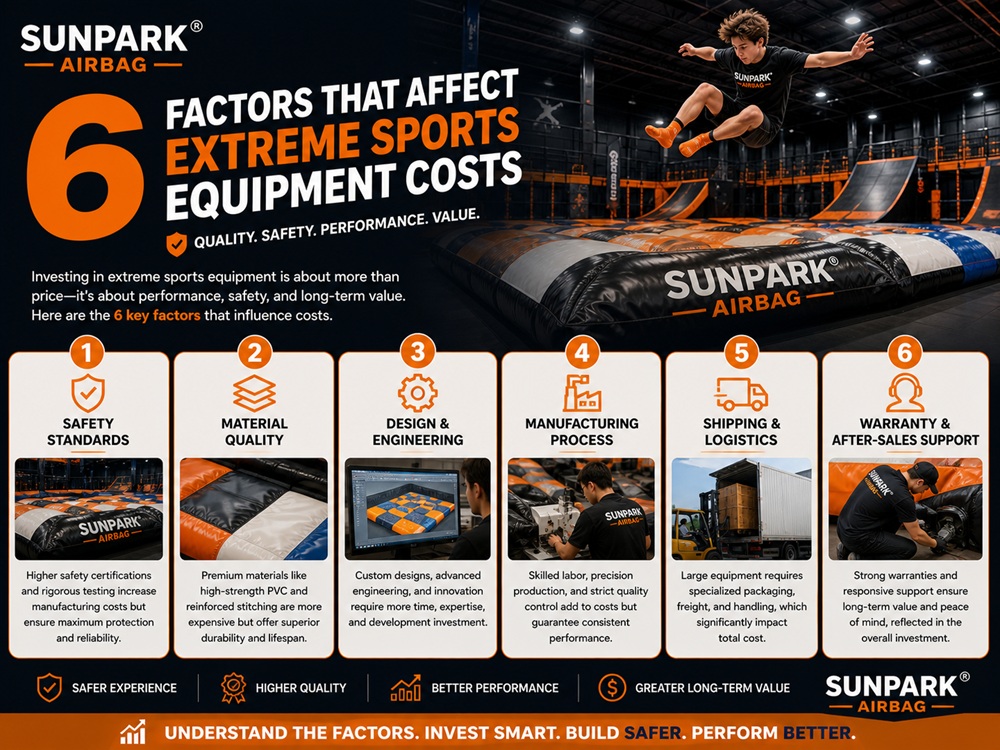
In the commercial action sports industry, Sports Equipment Costs are driven by six non-negotiable factors: 1) Material Engineering and Toxicity Compliance (premium, fire-retardant Plato PVC vs. cheap vinyl); 2) Rigorous Safety Certifications (TÜV, ASTM, and CE compliance testing); 3) Internal Pneumatic Technology (advanced shock-absorbing air pillars vs. basic hollow chambers); 4) Bespoke Customization and Dimensions (tailoring equipment to specific ramp trajectories); 5) Total Lifespan and Durability (resisting UV degradation and seam blowouts); and 6) Global Freight and Installation Logistics. To maximize your facility’s ROI, we recommend strictly avoiding budget suppliers, as their equipment routinely fails commercial safety inspections.
Table of Contents
- What Defines Commercial Extreme Sports Equipment?
- How It Works: The 6 Factors Affecting Sports Equipment Costs
- The Commercial Benefits of Premium Procurement
- Limitations of Heavy Capital Investment
- Who Should Pay for Premium Gear (And Who Shouldn’t)
- Common Sourcing Mistakes that Destroy ROI
- Strategic Buying Considerations for Park Owners
- Essential Comparison Tables
- Expert Recommendation from SUNPARK® AIRBAG
- Frequently Asked Questions (FAQ)
What Defines Commercial Extreme Sports Equipment?
We must establish a strict baseline: we are not discussing consumer retail gear like skateboards or consumer trampolines. Commercial extreme sports equipment refers to the heavy-duty infrastructure that supports high-velocity human kinetics. This includes massive landing airbag solutions, reinforced steel ramp structures, automated pneumatic blower systems, and certified impact-attenuating flooring.
When you evaluate Sports Equipment Costs, you are assessing the price of surviving repeated dynamic impacts. An FMX motorcycle and rider possess massive kinetic energy. The equipment tasked with decelerating that mass without causing spinal compression injuries requires aerospace-level tensile strength and fluid dynamic engineering. This is fundamentally why industrial action sports gear commands a premium price point.
How It Works: The 6 Factors Affecting Sports Equipment Costs
In most professional situations, the final invoice you receive from a manufacturer is an aggregation of the following six intensive operational and material expenses.
1. Material Engineering and Compliance
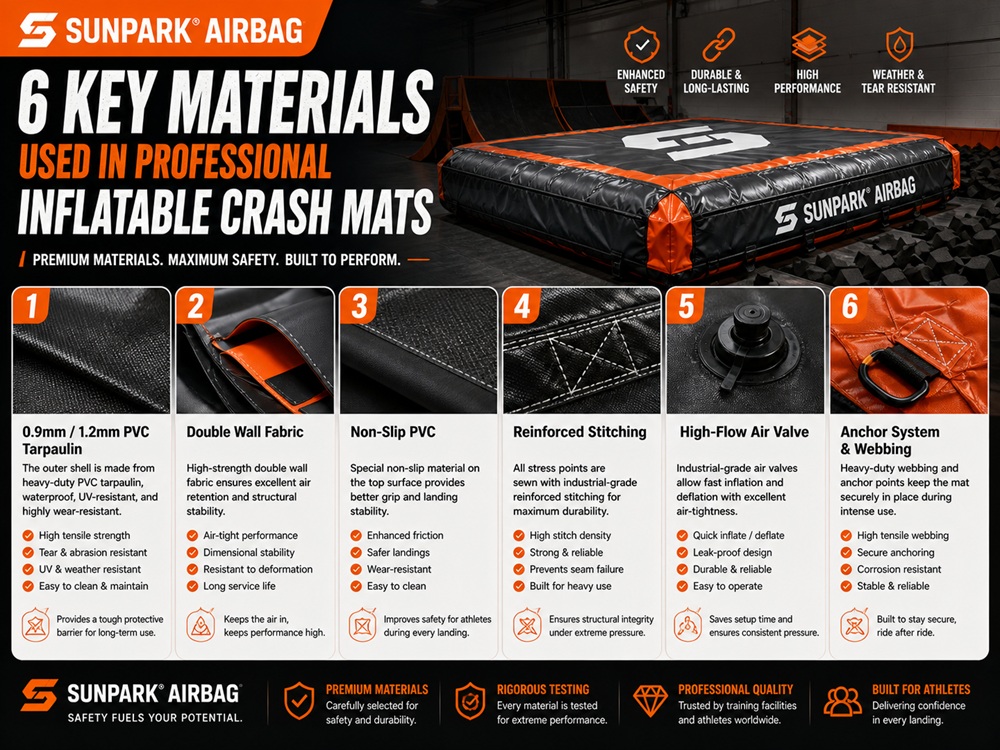
The fabric of a safety system dictates its survival. Cheap manufacturers utilize basic 0.4mm PVC that degrades rapidly under UV light and becomes brittle in freezing temperatures. Premium manufacturers utilize 0.55mm to 0.9mm Plato PVC vinyl that is treated for UV resistance, antimicrobial properties, and strict fire retardancy (complying with NFPA 101). Furthermore, premium materials are REACH-certified to ensure they are free from toxic plasticizers that can harm athletes’ skin. This chemical engineering significantly elevates base Sports Equipment Costs.
2. Rigorous Safety Certifications
A legitimate manufacturer spends tens of thousands of dollars submitting their products to independent laboratories like TÜV SÜD or organizations governing ASTM standards. These bodies perform brutal physical stress tests on the seams and valves. If a supplier offers you a radically low price, it is universally because they bypassed these engineering audits. Without these certifications, you cannot legally open your facility.
3. Internal Pneumatic Technology
A basic inflatable bounce house is just a hollow balloon; it is cheap to make. However, extreme sports systems require complex internal architecture. Advanced systems utilize independent air pillars or multi-chamber baffling to ensure that when an athlete lands off-center, the impact is absorbed locally rather than catapulting another athlete into the air (the “double-bounce” effect). Sewing hundreds of internal pressure-release chambers requires immense manual labor.
4. Bespoke Customization and Dimensions
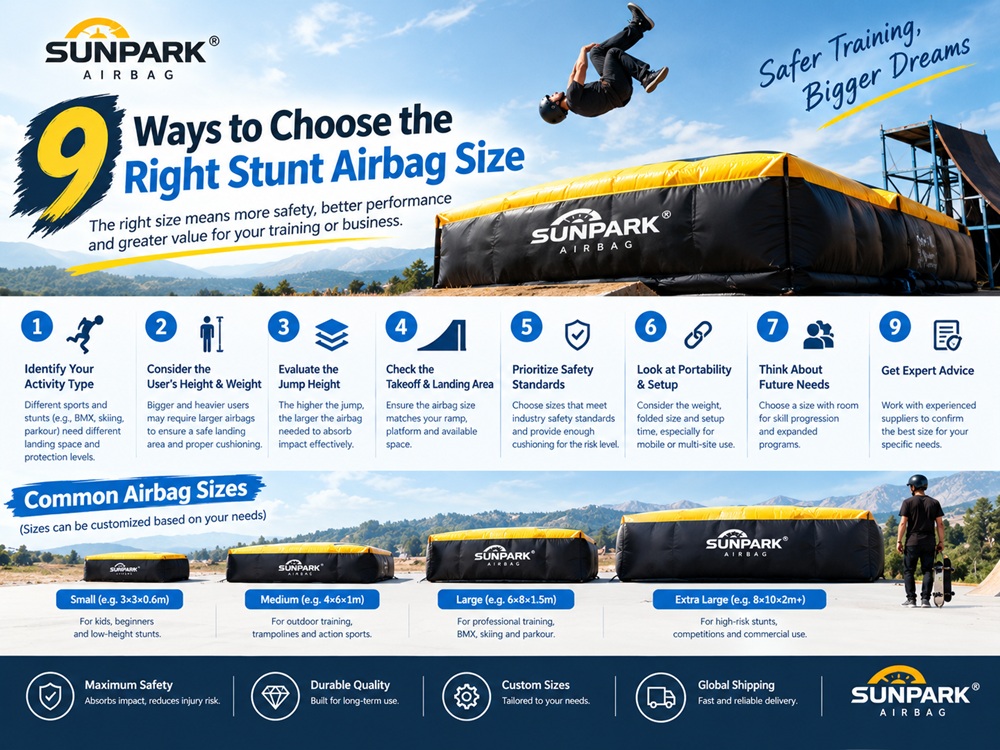
Action sports parks are rarely uniform. A Halfpipe Airbag designed for a professional snowboarding team requires entirely different trajectory mapping than a flat stunt jump. When you order custom dimensions, specific landing angles, and integrated corporate branding, you are paying for the factory’s CAD engineering time and bespoke cutting patterns, which naturally increases Sports Equipment Costs compared to buying “off-the-rack” dimensions.
5. Total Lifespan and Durability Metrics
Initial purchase price is a deceptive metric. A cheap airbag might cost $8,000 but fail after 18 months of heavy commercial use. A premium system might cost $18,000 but last 7 to 10 years. Premium manufacturers utilize quadruple-stitched seams with heavy-duty bonded nylon thread and replaceable top sheets. When you factor in the trampoline park construction cost, paying more upfront for durability drastically lowers your Total Cost of Ownership (TCO).
6. Global Freight and Installation Logistics
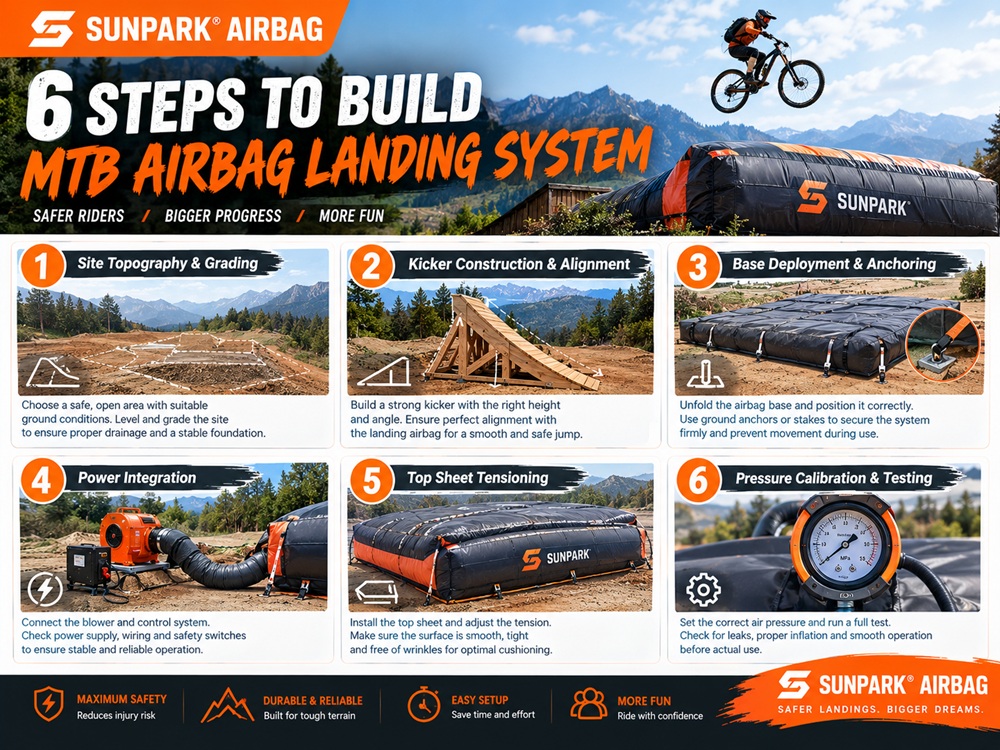
Commercial equipment is exceptionally heavy. A massive inflatable MTB airbag solutions setup can weigh over 2,000 pounds and requires dedicated LTL (Less Than Truckload) or full container ocean freight. Furthermore, high-end systems often require the manufacturer to dispatch technicians to your site to calibrate the blower pressure to your specific altitude and local climate. Freight and commissioning are major variables in final Sports Equipment Costs.
The Commercial Benefits of Premium Procurement
The benefits of accepting higher Sports Equipment Costs from a legitimate manufacturer are purely financial. First, top-tier equipment is heavily favored by insurance underwriters, frequently resulting in significantly lower annual commercial liability premiums. Second, certified equipment ensures facility uptime. If a cheap jump fails during a peak Saturday session, you not only refund tickets but suffer irreparable reputational damage. Reliable equipment is the engine that drives consistent trampoline park owner income.
Limitations of Heavy Capital Investment
We must exercise commercial judgment: investing in premium gear limits your immediate liquid capital. The primary limitation of top-tier Sports Equipment Costs is that it extends your initial break-even timeline. Startups with tight funding must carefully balance acquiring the best possible safety gear while still maintaining enough operating capital for marketing and daily overhead during the crucial first six months of operation.
Who Should Pay for Premium Gear (And Who Shouldn’t)
For commercial users and heavy-duty applications: If you operate an indoor action park, a commercial ski resort, or a professional BMX training facility, you have zero room for compromise. You must pay the premium for certified, heavy-duty OEM manufacturing. Your business model depends on navigating the best snowboard airbag parks standards safely.
Who does not need it: For beginners or backyard hobbyists setting up a small ramp for personal use, spending $15,000 on a commercial-grade TÜV-certified system is a severe misallocation of funds. Consumer-grade or high-end residential mats are perfectly acceptable for low-frequency, low-altitude personal training.
Common Sourcing Mistakes that Destroy ROI
In our testing and market observation, the most catastrophic mistake park operators make is sourcing equipment blindly from wholesale directories based on the lowest bid. Unverified brokers will steal photos of premium equipment and deliver a dangerous counterfeit. When the seams blow out under a heavy FMX bike, the broker will disappear, leaving you with useless vinyl and a massive liability.
Another profound error is ignoring local fire codes. Traditional foam pits are highly flammable and produce toxic smoke. Fire marshals routinely shut down parks relying on old foam. Upgrading to fire-retardant pneumatic systems is mandatory, and failing to factor this into your initial Sports Equipment Costs leads to disastrous post-construction retrofit expenses.
Strategic Buying Considerations for Park Owners
When analyzing your budget, you must separate the “safety infrastructure” from the “attractions.” You can compromise on the arcade machines or the lobby furniture, but you cannot negotiate on the structural integrity of your landing zones.
Demand a live video tour of the manufacturing facility before placing a deposit. Ensure the factory can customize the equipment to fit the specific footprint of your building. If you are exploring the airbag jump locations guide to map out your facility layout, work directly with the factory’s CAD engineers to ensure the blower tubes and anchor points align perfectly with your concrete foundations.
Essential Comparison Tables
| Factor | Budget Equipment Standard | Premium Commercial Standard |
|---|---|---|
| Material | 0.4mm basic vinyl (degrades fast) | 0.55mm+ Plato PVC (UV/Fire Retardant) |
| Certification | None or fake CE stickers | TÜV SÜD, ASTM, REACH verified |
| Architecture | Hollow single-chamber | Multi-chamber internal air pillars |
| Lifespan | 1 to 2 Years | 7 to 10+ Years |
| Expense Category | Cheap Uncertified Airbag | Premium Certified Airbag (SUNPARK®) |
|---|---|---|
| Initial Purchase Price | $6,000 | $16,000 |
| Maintenance & Repairs | High (Constant patching, seam blowouts) | Low (Occasional top-sheet replacement) |
| Insurance Premiums | High (Underwriters classify as high-risk) | Optimized (Recognized safety compliance) |
| Replacement Cost (within 5 yrs) | Requires full replacement (-$6,000) | None (Still under operational lifespan) |
| The Pros (Advantages) | The Cons (Disadvantages) |
|---|---|
| Unmatched safety protects athletes from catastrophic injury. | Significantly higher upfront capital expenditure required. |
| Passes strict commercial fire and liability insurance audits. | Custom manufacturing and ocean freight takes 60-90 days. |
| Replaceable top sheets eliminate the need to replace the whole unit. | Requires proper facility voltage to run high-powered industrial blowers. |
Expert Recommendation from SUNPARK® AIRBAG
In most professional situations, accepting cheap Sports Equipment Costs is the fastest way to lose your business license. You are not buying a bouncy castle; you are buying an advanced decelerator system that dictates human safety. We recommend exclusively partnering with an OEM (Original Equipment Manufacturer) that controls their own supply chain and willingly provides third-party testing documentation.
If you are building a commercial facility or upgrading a terrain park, you need equipment engineered by practitioners who understand action sports physics.
By investing in proven technology from SUNPARK® AIRBAG, you ensure your Sports Equipment Costs translate directly into unparalleled facility safety, allowing your patrons to push their limits while protecting your bottom line.
Frequently Asked Questions (FAQ)
Authoritative Industry References
To ensure your facility procurement aligns with global safety and compliance standards, we strongly advise consulting the following organizations:
- ASTM International – The leading authority defining the technical standards (such as F2970) for the design, manufacture, and operation of trampoline courts and inflatable extreme sports devices.
- TÜV SÜD – A premier global testing and certification body that provides independent verification of material strength and safety compliance for extreme sports infrastructure.
- U.S. Consumer Product Safety Commission (CPSC) – Provides critical safety guidelines and recall information that dictates the baseline liability standards for amusement and sports park operators in the United States.