The mountain bike industry suffers from a severe misalignment of priorities. Riders will gladly spend thousands of dollars on carbon fiber wheelsets and electronic shifting drivetrains to shave a few seconds off a descent, yet they completely ignore the structural integrity of their Mountain Bike Safety Gear. From our experience at SUNPARK® AIRBAG, engineering heavy-duty fall protection for the world’s leading action sports facilities, relying on outdated EPS foam helmets and rigid plastic shin guards is a catastrophic miscalculation. When gravity inevitably wins, your derailleurs do not matter; your impact absorption does.
In most professional situations, treating safety equipment as an afterthought leads to season-ending injuries, massive medical bills, and severe liability issues for bike park operators. You must exercise commercial and practical judgment. Upgrading your protection is not about fear; it is about enabling uninhibited progression. Whether you are a private rider looking to safely attempt double black diamond drops, or a commercial facility manager needing to mitigate risk, you must invest in modern, scientifically validated safety infrastructure. In this definitive guide, we take an uncompromising stance on the current state of Mountain Bike Safety Gear, detailing the exact personal and facility-level upgrades you must procure, and explaining why cheaper alternatives are actively endangering your life.
Quick Answer: The 5 Essential Upgrades
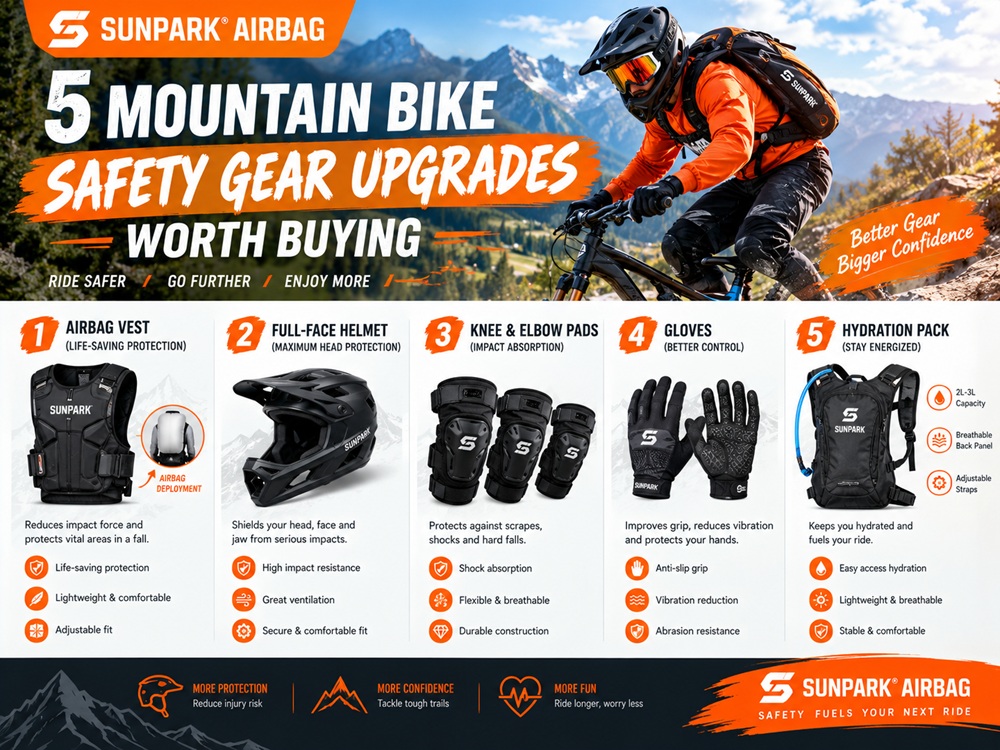
If you want to drastically reduce orthopedic and neurological trauma during progression, these are the 5 Mountain Bike Safety Gear upgrades you must invest in immediately:
- ASTM F1952 Full-Face Helmet with MIPS: Eliminates rotational sheer forces during oblique impacts. Do not ride downhill in a half-shell.
- CE Level 2 D3O Chest & Back Protector: Replaces hard, restrictive plastic with non-Newtonian smart foam that hardens instantly upon impact.
- Cervical Neck Brace: Prevents catastrophic spinal hyperextension during over-the-bars ejections.
- CE Certified Smart-Foam Knee Guards: Provides pedal-friendly mobility while absorbing direct rock strikes.
- Inflatable Progression Infrastructure: Replacing dangerous dirt landings with a bike airbag landing to eliminate the fear and consequence of learning new aerial maneuvers.
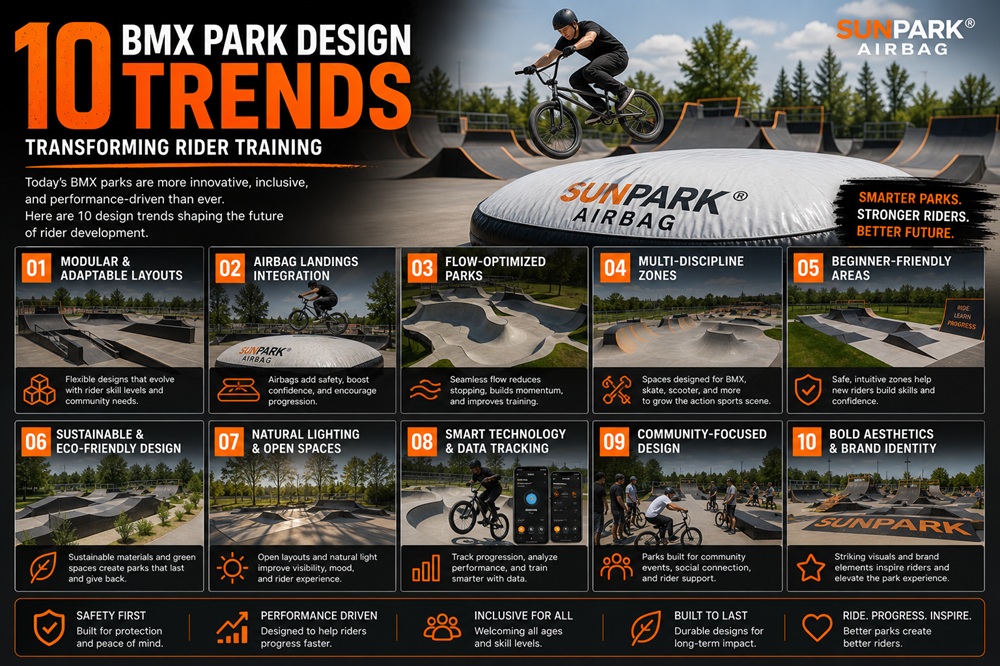
We recommend that commercial bike parks and serious freeriders stop relying on outdated foam pits and invest in modern inflatable landing technology to safeguard their progression.
What It Is: Modern Mountain Bike Safety Gear
Modern Mountain Bike Safety Gear encompasses two distinct categories: Personal Protective Equipment (PPE) worn by the rider, and Facility Protective Equipment (FPE) deployed by the venue. Historically, MTB safety was rudimentary. Helmets were basic expanded polystyrene (EPS) foam, and body armor consisted of bulky, restrictive motocross plastics. Today, the landscape is defined by intelligent materials. Wearable safety gear now utilizes non-Newtonian polymers that remain soft and pliable during normal riding but lock their molecular structure instantly upon impact to disperse kinetic energy.
On the facility side, the archaic and highly unsanitary foam pit is being universally replaced. As highlighted in our foam pit vs airbag comparison, commercial operators now rely on highly engineered, multi-chamber PVC inflatable landing systems to catch riders safely, allowing them to ride out of their tricks rather than sinking into a trap of dirty foam cubes.
How It Works: The Physics of Impact Absorption
How it works depends on the specific upgrade. Take rotational impact systems like MIPS (Multi-Directional Impact Protection System) found in modern full-face helmets. During a crash, your head rarely hits the ground at a perfect 90-degree angle. It hits at an angle, causing the brain to rotate violently inside the skull, which causes severe concussions. MIPS utilizes a low-friction slip plane inside the helmet that allows the helmet to rotate independently of your head, absorbing the sheer force.
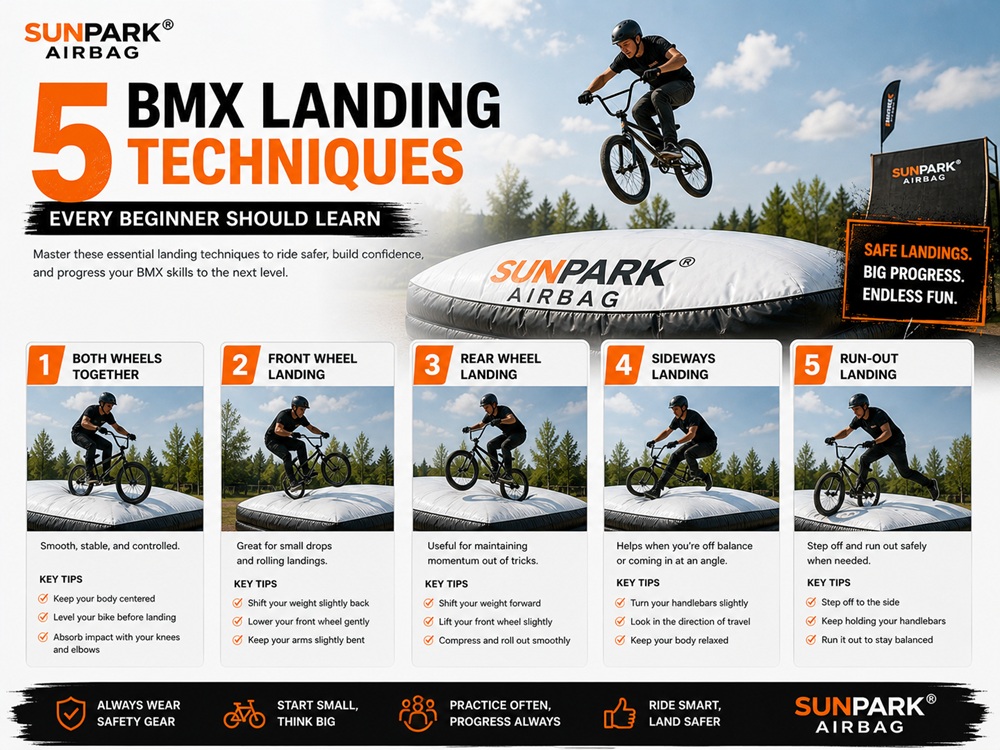
Facility upgrades operate on air dissipation mechanics. A big jump airbag system utilizes an upper landing chamber and a lower base chamber. When a rider lands heavily, the internal air pillars absorb the kinetic mass, and precise air vents release the pressure at a controlled rate. This decelerates the rider smoothly without the violent rebound effect associated with cheap bouncy castles. It is pure, engineered physics applied to action sports.
The Benefits of Professional Grade Protection
The primary benefit of upgrading your Mountain Bike Safety Gear is the absolute mitigation of catastrophic injury. In our testing, riders equipped with CE Level 2 back protection and MIPS helmets walk away from high-speed crashes that would otherwise result in hospitalizations. For commercial users and bike park operators, upgrading to a professional inflatable crash mat or airbag landing directly correlates to increased revenue. Riders will pay premium ticket prices to practice on safe, modern infrastructure where the fear of injury is removed.
Limitations and Operational Realities
We must use commercial and practical judgment: heavy-duty safety gear has physical limitations. The primary limitation of full-face helmets and D3O body armor is heat retention. If you are pedaling a 20-mile cross-country loop in 90-degree heat, wearing a downhill-rated chest protector will cause severe hyperthermia and exhaustion. Safety gear must be matched precisely to the discipline. Likewise, for facility upgrades, a stunt airbag landing requires a continuous power supply for the blowers and regular maintenance to ensure the PVC tarpaulin remains puncture-free.
Who Should Use These Upgrades
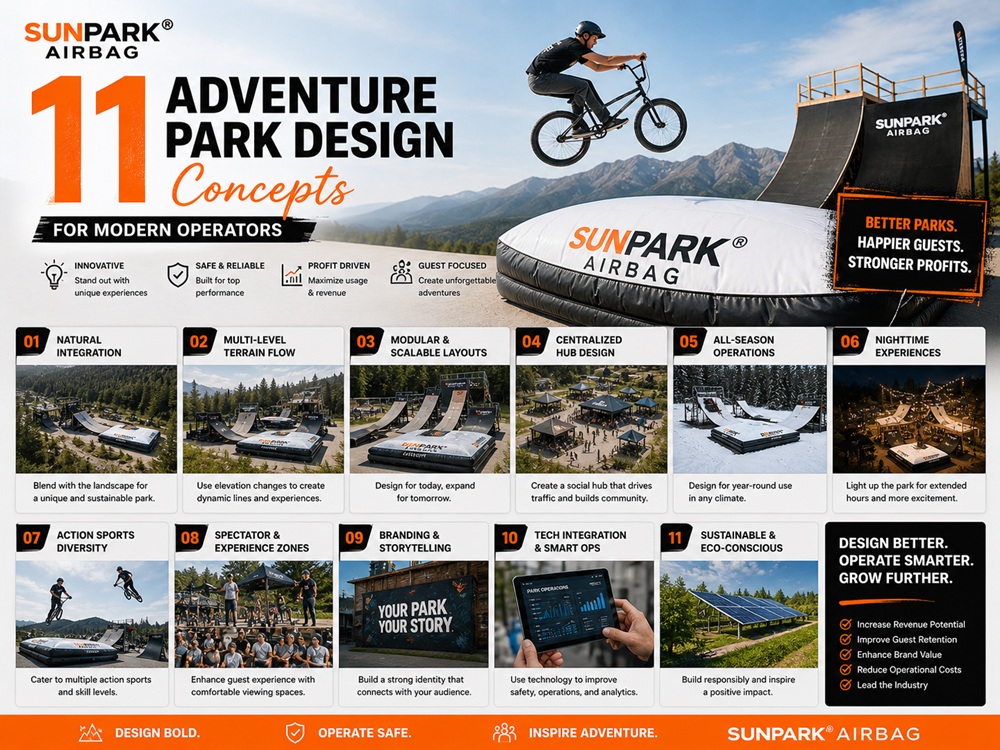
For Commercial Users and Freeriders: If you are hitting gap jumps, riding lift-accessed downhill parks, or attempting aerial maneuvers, this 5-point upgrade list is mandatory. Furthermore, if you manage a training facility or a trampoline park, consulting with elite trampoline park equipment manufacturers to integrate heavy-duty airbags is a non-negotiable operational requirement to lower your insurance liability premiums.
Who Does Not Need Heavy-Duty Gear
For Beginners on Flat Trails: If your riding consists entirely of flat, non-technical gravel paths or smooth cross-country singletrack, a heavy full-face helmet and a neck brace are severe overkill. A high-quality half-shell helmet with MIPS and lightweight knee sleeves is entirely sufficient for low-speed, low-consequence environments.
Common Procurement Mistakes
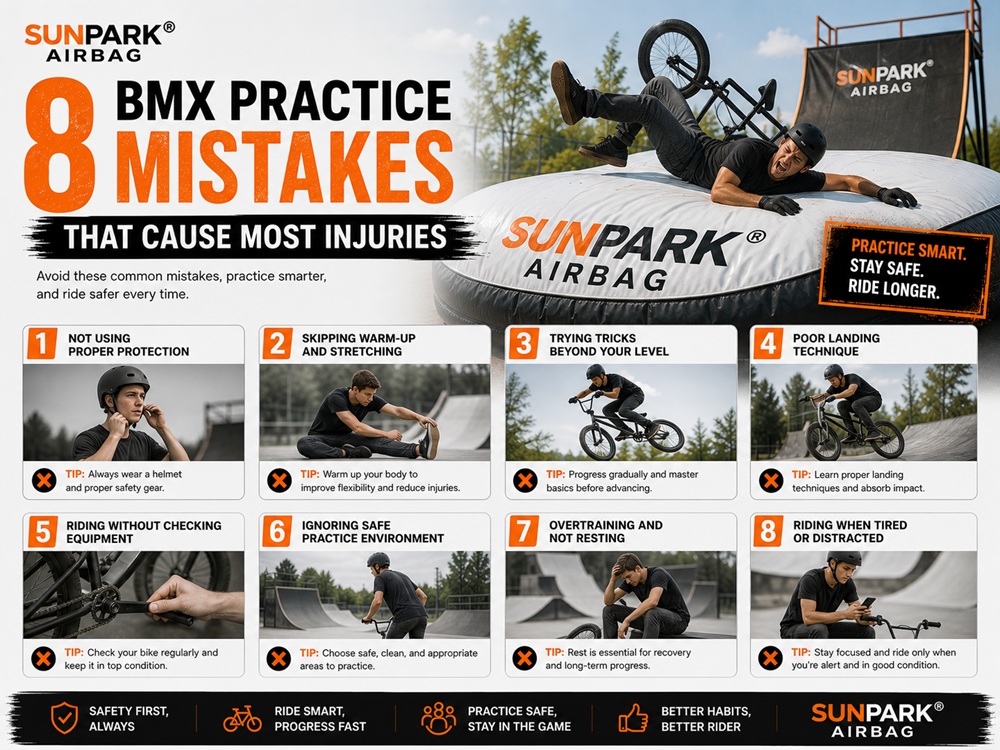
From our experience, the most devastating mistake a rider can make is buying a used helmet. EPS foam is designed for a single catastrophic impact. Even if a used helmet looks pristine on the outside, the internal foam structure may be compressed and entirely useless. Never buy used PPE.
For commercial operators, a frequent error is searching for buy used airbag landing tips without understanding the lifespan of PVC and UV degradation. Buying an old, heavily sun-damaged airbag from an unknown manufacturer is an immense liability. You must source factory-direct equipment with verified fire-retardant and UV-protected certifications.
Expert Buying Considerations
When purchasing body armor, you must verify the CE EN1621 certification level. Level 1 is basic protection. For heavy-duty applications, you must demand CE Level 2, which transmits significantly less force to the body. When evaluating facility infrastructure, review our mountain bike airbag landing guide to ensure you are specifying the correct 0.55mm and 0.9mm PVC Tarpaulin thicknesses required to withstand the sharp impact of bicycle pedals and chainrings.
Summary and Comparison Tables
Quick Summary Table: Core Safety Upgrades Evaluated
| Safety Upgrade | Primary Function | Crucial Buying Metric | Best Application |
|---|---|---|---|
| MIPS Full-Face Helmet | Prevents traumatic brain injury and facial fractures. | ASTM F1952 Certification | Downhill, Enduro, Dirt Jumping |
| Smart-Foam Body Armor | Absorbs torso impacts while allowing mobility. | CE EN1621 Level 2 Rating | Bike Parks, Freeride |
| Cervical Neck Brace | Limits dangerous head movement during crashes. | Adjustability & Fitment | High-speed Downhill Racing |
| Inflatable Airbag Landing | Provides a safe, rideable catch for extreme jumps. | 0.9mm PVC Top Sheet Durability | Progression Parks, Training Facilities |
Pros and Cons of Commercial Airbag Landings
| Pros (Why you must upgrade) | Cons (The operational reality) |
|---|---|
| Eliminates catastrophic injuries during trick progression. | Requires upfront capital expenditure compared to dirt. |
| Highly hygienic compared to bacteria-filled foam pits. | Requires continuous electricity to operate the blowers. |
| Allows riders to practice landing and riding away smoothly. | Requires daily visual inspections for pedal punctures. |
| Massive draw for paying customers at commercial bike parks. | Large footprint requires dedicated space planning. |
Expert Recommendation & Hardware Spotlight
Is investing in elite Mountain Bike Safety Gear actually worth the exorbitant cost? Unquestionably. Medical deductibles cost infinitely more than a $300 helmet. We recommend that riders strictly prioritize their protective equipment budget before upgrading their bicycle components. For commercial operators and serious athletes, the ultimate safety upgrade is not something you wear; it is what you land on.
By transitioning from dangerous dirt jumps to specialized bike airbag landing systems, you completely alter the progression curve. Whether you are hitting a standard kicker or requiring a massive FMX airbag landing for motorized dirt bikes, SUNPARK® AIRBAG delivers the uncompromised industrial quality required to keep riders safe.
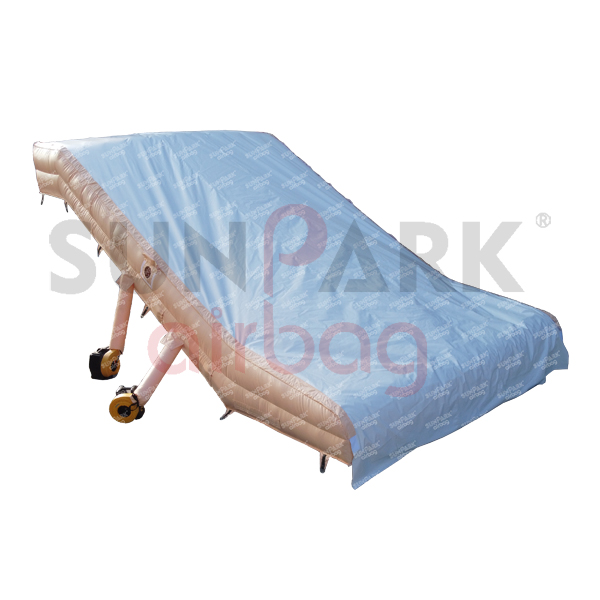
If you are exploring options for motorized sports alongside mountain biking, ensure you review our dirt bike airbag landing solutions to handle the increased weight and kinetic energy of heavy machinery.
Frequently Asked Questions
What is the most important Mountain Bike Safety Gear?
The most critical piece of Mountain Bike Safety Gear is an ASTM F1952 certified full-face helmet equipped with a rotational impact protection system like MIPS. Following personal gear, a commercial-grade airbag landing system is the most important facility-level safety upgrade for trick progression.
Is a neck brace worth it for mountain biking?
Yes. In most professional situations involving downhill racing, freeride, or dirt jumping, a neck brace drastically reduces the risk of cervical spine hyperextension and compression during severe over-the-bars crashes. It is a mandatory upgrade for heavy-duty gravity applications.
Are MTB airbags safe for learning backflips?
Absolutely. An inflatable crash mat or a dedicated bike airbag landing is explicitly designed for this. It absorbs the kinetic energy of a crash smoothly, allowing riders to attempt high-risk maneuvers like backflips without the catastrophic orthopedic risks associated with landing incorrectly on compacted dirt.
How often should I replace my mountain bike helmet?
You must replace your helmet immediately after any significant impact where the head strikes the ground. Even if there is no visible damage, the internal EPS foam has compressed. If un-crashed, industry standards dictate replacing the helmet every 3 to 5 years due to UV degradation and sweat breaking down the materials.
Industry References & Authoritative Guidelines
To ensure our safety recommendations meet rigorous global standards, SUNPARK® AIRBAG references the protocols established by the following authoritative organizations:
- ASTM International: The global standards organization that publishes the ASTM F1952 standard specification for downhill mountain bicycle helmets, dictating strict chin bar testing and impact attenuation. Review ASTM F1952 Standards
- Consumer Product Safety Commission (CPSC): The federal regulatory body defining the mandatory safety and testing requirements for all bicycle helmets sold within the United States. Review CPSC Helmet Regulations
- National Institutes of Health (NIH / PubMed): Peer-reviewed medical literature detailing the biomechanics of spinal and neurological trauma in downhill mountain biking, and the efficacy of modern protective equipment. Review MTB Injury Medical Data