Gravity does not discriminate, but the equipment strapped to your feet drastically alters how your body absorbs an impact. When evaluating what is more traumatic on the mountain, winter sports enthusiasts often rely on anecdotal horror stories rather than biomechanical facts. At Sunparkairbag, we engineer professional-grade impact attenuation systems for action sports. We observe thousands of landings, crashes, and recoveries every season. We do not deal in assumptions; we deal in the physics of deceleration and joint stress.
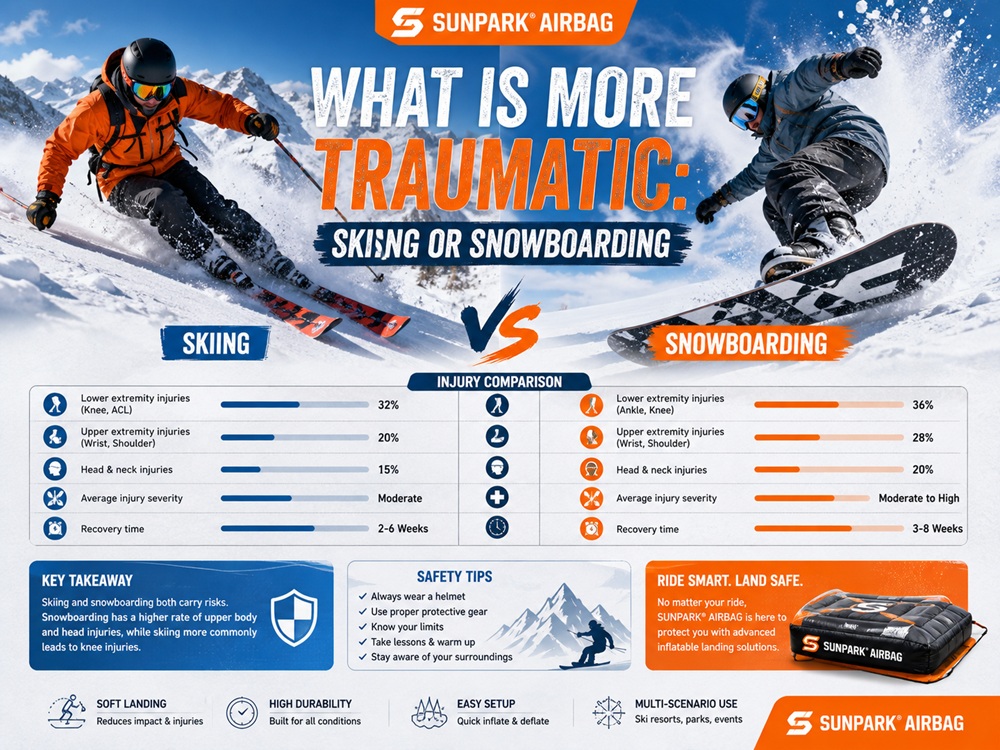
In most professional situations, asking what is more traumatic between skiing and snowboarding requires dividing the human body in half. Because skiers have independent leg movement and use poles, their lower extremities act as massive levers that torque the knee joint. Snowboarders, conversely, are bolted to a single plane. When a snowboarder falls, the board acts as a fixed anchor, forcing the upper body—specifically the wrists, collarbones, and shoulders—to bear the brunt of the kinetic energy. If you are trying to make a commercial or personal decision regarding which sport to pursue, or how to design a safe training facility, understanding what is more traumatic for specific muscle groups is your first operational requirement.
Quick Answer: What is More Traumatic?
The answer to what is more traumatic depends entirely on which part of your body you are trying to protect. Neither sport is universally safer, but they possess distinctly different trauma profiles:
- Skiing is more traumatic for the knees and lower extremities. The independent movement of the skis creates devastating rotational torque during a fall, leading to a high incidence of Anterior Cruciate Ligament (ACL) and Medial Collateral Ligament (MCL) ruptures.
- Snowboarding is more traumatic for the upper body and ankles. Because both feet are strapped to a single board, a snowboarder cannot “step out” of a fall. The instinct to brace a forward or backward edge-catch results in severe wrist fractures, dislocated shoulders, and broken clavicles.
We recommend utilizing proper protective gear and off-season progression training—such as landing on large-scale inflatable airbags—to mitigate the severe traumas inherent to both disciplines.
What It Is: The Biomechanics of Winter Sports Trauma
To definitively state what is more traumatic, we must define the biomechanical failure points. In skiing, the boot is designed to release from the binding when subjected to a specific threshold of lateral or upward force (DIN setting). However, this release mechanism is not infallible. When a skier catches an inside edge, the ski acts as a 170-centimeter lever arm attached directly to the tibia. If the binding does not release instantly, the rotational force bypasses the rigid ski boot and attacks the knee joint. This is why “skier’s knee” (ACL tearing) is the most heavily documented trauma in the sport.
Snowboarding trauma is structurally different. A snowboard binding does not feature an automatic release mechanism. You are permanently attached to the board until you manually unstrap. Therefore, determining what is more traumatic for a snowboarder involves looking at blunt force trauma and impact bracing. When a snowboarder catches a heel edge, they are slammed backward, resulting in concussions and tailbone fractures. When they catch a toe edge, they are slammed forward. The human instinct is to throw the hands out to break the fall, sending the entire kinetic load into the radius and ulna bones of the forearm, causing a Colles’ fracture (broken wrist).
How It Works: The Physics of the Crash
How a crash develops dictates what is more traumatic in the immediate aftermath. For commercial users operating terrain parks or training facilities, understanding trajectory is vital. A skier approaching a jump who loses balance mid-air will often suffer a “yard sale”—a chaotic disbursement of skis, poles, and body parts. The trauma here is often multi-directional.
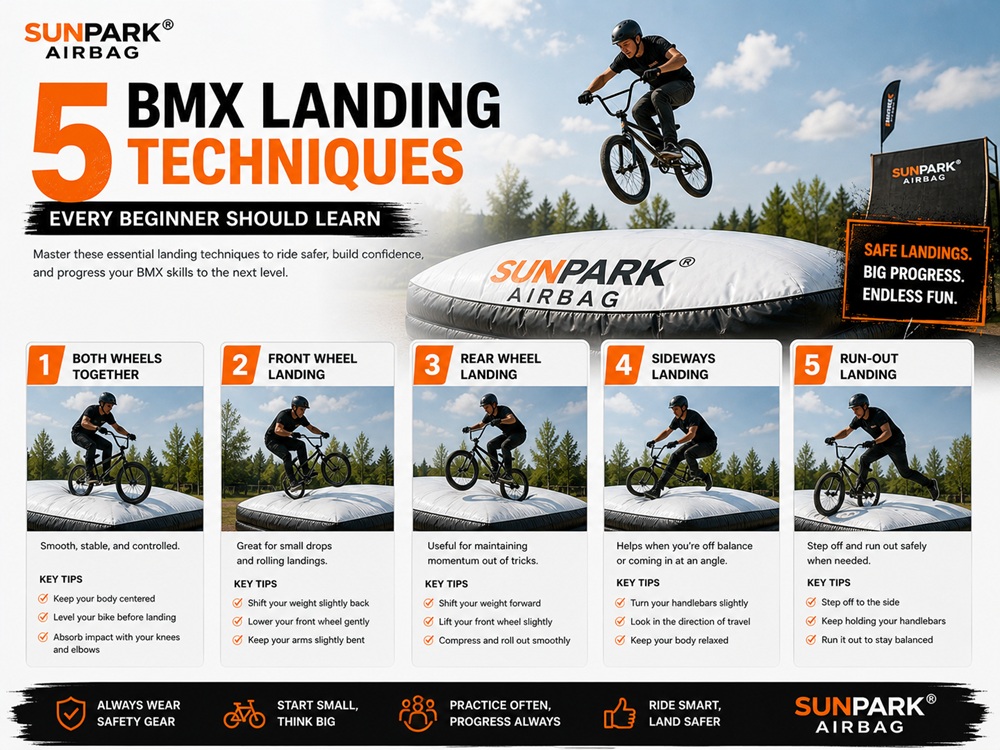
A snowboarder in the air acts as a single pendulum. If they over-rotate a backflip, they cannot ditch the equipment. They will land on the hardpack snow bearing the full weight of the board attached to their feet, which frequently results in “snowboarder’s ankle” (a fracture of the lateral process of the talus). In our testing of aerial maneuvers, we see identical crash mechanics when evaluating common BMX injuries and prevention. In both disciplines, being locked into the equipment fundamentally changes the trauma profile.
Professional Training Solutions to Mitigate Trauma
From our experience, the only guaranteed way to reduce what is more traumatic on the mountain is to remove the hardpack snow from the learning equation entirely. You do not learn a double backflip on ice; you learn it on a highly engineered pocket of air.
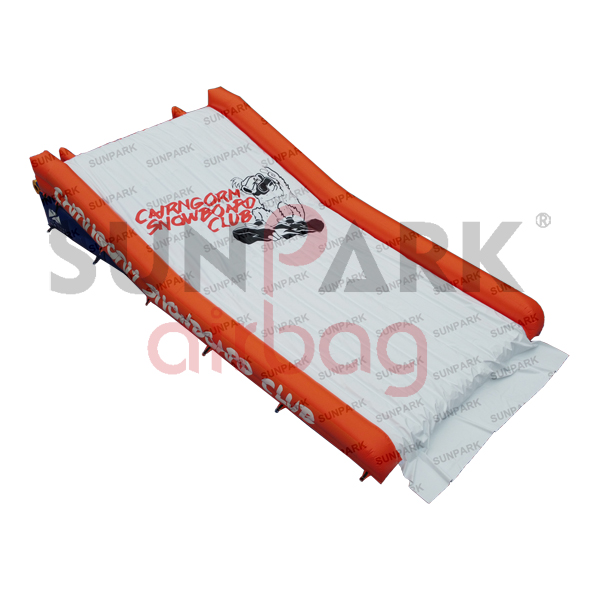
Low Height Inflatable Ski Airbag for Kids & Beginner Training
Designed specifically to eliminate the fear of impact, this airbag system is the ultimate tool for safely progressing in winter sports without the associated joint trauma.
- Material: 0.55mm PVC Tarpaulin for airbag, 0.9mm PVC Tarpaulin for top sheet (water-proof, flame-retardant, UV-protected).
- Safety Standards: Lead and phthalate free construction.
- Customization: Fully customized sizing and digital/silk-screen printing available for commercial parks.
- Workmanship: Built by skilled workers with 5+ years of experience in heavy-duty airbag manufacturing.
- Accessories Included: High-powered blower, repair kit, heavy-duty carrying bag.
Benefits of Identifying Trauma Risks
Knowing what is more traumatic allows you to deploy targeted prophylactic measures. If you are a snowboarder, acknowledging the extreme risk to your wrists means you can proactively purchase reinforced wrist guards and impact shorts for your tailbone. If you are a skier, knowing the risk to your ACL forces you to focus on off-season hamstring and quad strengthening to stabilize the knee joint.
For commercial users, such as ski resort managers, understanding these risks justifies the capital expenditure for advanced training infrastructure. Investing in landing airbag solutions drastically reduces the liability and insurance premiums associated with high-trauma terrain park injuries.
Limitations of Protective Equipment
We must apply commercial and practical judgment: wearing a helmet and wrist guards does not make you invincible. The limitation of protective gear is that it only addresses blunt force impact, not rotational torque. A knee brace will not stop a ski from acting as a lever and snapping an ACL if the DIN setting on the binding is too tight. Similarly, wrist guards might prevent a bone fracture during a snowboard crash, but the kinetic energy simply travels up the arm, potentially resulting in a dislocated shoulder instead. You cannot defeat physics; you can only displace it.
Who Should Ski vs. Who Should Snowboard
If you have a history of severe knee injuries, meniscus tears, or ACL reconstructions, who does not need to ski is you. The independent leg movement will eventually expose your pre-existing weaknesses. We recommend snowboarding for individuals with compromised knees, as both legs are locked in a static, slightly bent stance that limits independent internal rotation.
Conversely, for beginners with a history of wrist fractures, collarbone breaks, or rotator cuff issues, skiing is the safer initial choice. The ability to use poles for balance and to step your foot out to catch yourself prevents the violent upper-body slams associated with learning to snowboard.
Common Mistakes Leading to Injury
In most professional situations, the trauma we witness is entirely preventable. The most common mistake beginners make is skipping progression. They attempt features on hard snow that they have not mastered in a controlled environment. Another massive mistake is bracing a fall with straight, locked arms. Whether you are on skis, a snowboard, or utilizing an inflatable jump airbag, you must learn to “tuck and roll.” Dissipating energy across the broad muscles of the back and shoulders is always safer than focusing the entire impact on the tiny bones of the wrist.
Commercial Buying Considerations for Training Parks
If you are building a commercial extreme sports facility or a Halfpipe Airbag setup, evaluating what is more traumatic dictates your airbag specifications. Skiers carry long, sharp edges that can slice through inferior materials. Snowboarders land with broad, heavy impacts. For heavy-duty applications, you must demand a 0.9mm PVC Tarpaulin top sheet. If you are calculating the ROI for your facility, reviewing trampoline park owner income models will show that offering safe, low-trauma progression areas is the highest-margin revenue driver.
Comparison Table: Trauma Profiles
| Injury Metric | Skiing | Snowboarding |
|---|---|---|
| Most Common Severe Injury | ACL / MCL Rupture (Knee) | Radius / Ulna Fracture (Wrist) |
| Primary Cause of Trauma | Rotational torque from independent skis | Blunt impact from edge catching |
| Equipment Release | Bindings release under force | Rider remains locked to the board |
| Beginner Injury Rate | Moderate (Easier initial learning curve) | High (Frequent, hard falls early on) |
| Protective Gear Focus | Knee braces, highly calibrated bindings | Wrist guards, impact shorts, helmets |
Pros and Cons Table: Ski vs. Snowboard Safety
| Sport | Safety Pros | Safety Cons |
|---|---|---|
| Skiing | Easier to catch balance with independent legs. Bindings release during a crash to prevent severe limb trapping. Forward-facing stance offers better peripheral vision. | High risk of complex ligament tears. Crisscrossing skis can cause severe tripping hazards. Knee surgeries require lengthy 9-12 month rehabilitations. |
| Snowboarding | Minimal rotational stress on the knees. Only one edge to manage per turn. No poles to lose or impale yourself on during a crash. | Blind spots on the heel-side turn. Inability to step out of a fall. Extremely high risk of concussions and wrist fractures for beginners. |
Expert Recommendation
Ultimately, determining what is more traumatic is a matter of anatomical preference. From our experience, neither sport is “safe” if practiced recklessly. If you value your knees above all else, snowboard. If you value your wrists and upper body, ski. However, our definitive expert recommendation is to mitigate the trauma of both disciplines by utilizing modern training infrastructure. Visit one of the best snowboard airbag parks to dial in your aerial awareness before you ever take a jump to hardpack snow. The most effective safety equipment on the mountain is the muscle memory you build in a risk-free environment.
Frequently Asked Questions
Is it safer to ski or snowboard for beginners?
For absolute beginners, skiing is generally less traumatic on the first day. The ability to move your legs independently and face forward feels more natural. Snowboarding beginners will spend their entire first day falling hard on their wrists and tailbones as they learn to manage edge control.
Why are knee injuries so common in skiing?
Skis act as long levers attached to your feet. If you catch an edge and your binding does not release, the twisting force bypasses the rigid ski boot and transfers directly into the knee, which is not designed to rotate laterally, resulting in ACL and MCL tears.
Can an airbag prevent injuries in winter sports?
Yes. In most professional situations, athletes use massive inflatable airbags to practice new, high-risk maneuvers. An airbag absorbs the kinetic energy of a crash, allowing the rider to fail safely and build muscle memory without the severe trauma associated with landing on compacted snow.
Are wrist guards actually effective for snowboarding?
Yes. Studies consistently show that wearing rigid wrist guards significantly reduces the incidence of wrist fractures in snowboarders, particularly beginners. They displace the focused impact energy away from the fragile bones of the wrist and distribute it up the forearm.
Industry References & Authoritative Sources
To ensure our biomechanical analysis meets the highest standards of accuracy and E-E-A-T, we reference data from the following authoritative medical and sports organizations:
- National Institutes of Health (NIH) / PubMed: Clinical epidemiology studies detailing the distinct injury patterns and joint trauma prevalence in alpine skiing versus snowboarding. View NIH Sports Trauma Research
- American Academy of Orthopaedic Surgeons (AAOS): Guidelines and statistical reporting on winter sports injuries, prevention strategies, and the efficacy of protective equipment. View AAOS Winter Sports Safety Guidelines
- International Ski and Snowboard Federation (FIS): Global injury surveillance system data tracking elite athlete trauma profiles and terrain park safety standards. View FIS Medical and Safety Data