Quick Answer: Which Impact System Do You Need?
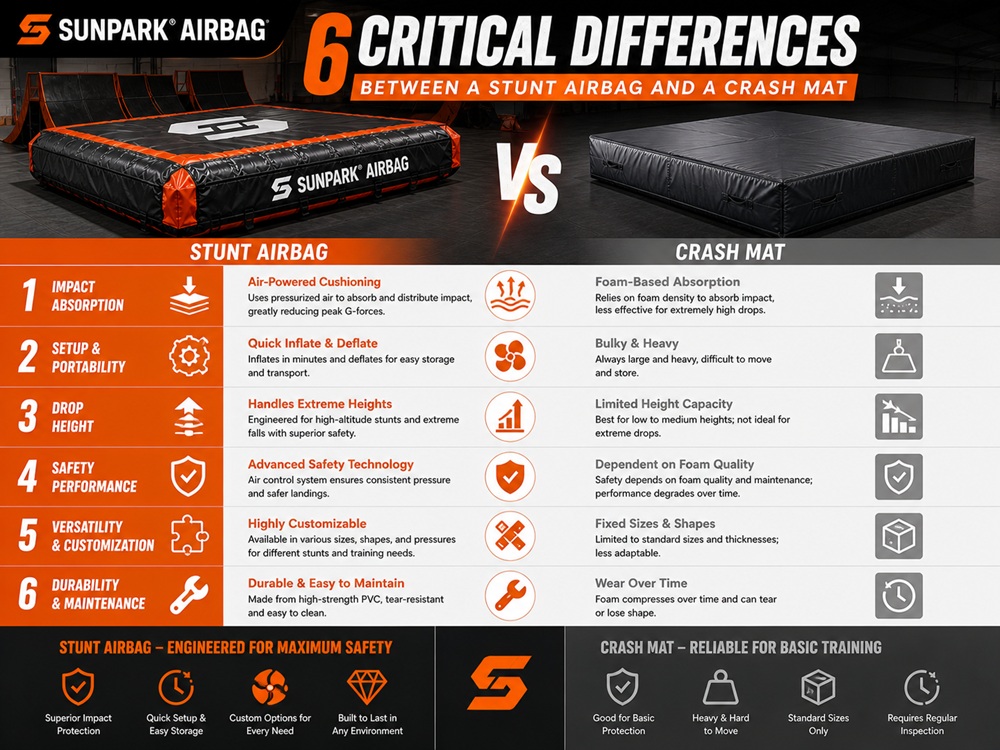
The primary distinction lies in kinetic energy dissipation and impact ceiling. A traditional foam crash mat relies on closed- or open-cell polyurethane foam compression, making it effective only for low-height, controlled dismounts under 8 to 10 feet. Exceeding that threshold causes the foam to bottom out, transferring impact forces directly into bones and joints. A commercial stunt airbag utilizes a dual-chamber pneumatic system with calibrated air exhaust vents, safely absorbing high-velocity freefalls from 15 to over 50 feet without rebound or mechanical bottoming out. For high-amplitude training, cinema stunts, and freestyle wheeled sports, a stunt airbag is mandatory; for ground-level tumbling drills, martial arts, and low bouldering, a foam crash mat remains the practical, portable choice.
Impact Dynamics: Pneumatic Exhaust vs. Foam Cell Compression
To evaluate landing equipment objectively, facility managers must look at terminal deceleration physics. When an athlete falls, gravitational potential energy converts into kinetic energy ($E_k = \frac{1}{2}mv^2$). Upon contact with the landing surface, that kinetic energy must be dissipated over time and displacement distance. Peak impact force is inversely proportional to stopping distance ($F = \frac{E_k}{d}$). If your stopping displacement is too short, deceleration forces spike to dangerous levels.
A standard 8- to 12-inch foam crash mat offers limited physical displacement. As impact occurs, the microscopic air pockets inside the polyurethane foam compress rapidly. Once the foam reaches its maximum volumetric strain, it becomes an unyielding solid block—a catastrophic condition known in biomechanics as bottoming out. The remaining kinetic energy transfers immediately into the human skeletal structure, causing severe heel bruises, joint hyperextensions, and lumbar compression injuries.
A modern stunt airbag operates through fluid displacement rather than mechanical elastomeric compression. Airbags incorporate a multi-chamber pneumatic design. When an athlete strikes the top surface, air inside the upper chamber is vented through calibrated relief valves. This controlled air exhaustion provides uniform deceleration across 5 to 10 feet of stroke depth. Simultaneously, an isolated lower safety chamber remains pressurized, preventing the user from ever touching the ground. This eliminates the elastic bounce effect common to sealed inflatables while safely stopping high-mass, high-velocity impacts.
Quick Summary: Stunt Airbag vs. Crash Mat Comparison
| Evaluation Parameter | Commercial Stunt Airbag | Standard Foam Crash Mat | Practical Safety Verdict |
|---|---|---|---|
| Safe Fall Height Limit | 15 to 50+ Feet (Model dependent) | 4 to 8 Feet (Max 10 ft with spotting) | Airbags provide unmatched vertical safety margins |
| Energy Dissipation Method | Pneumatic air relief venting | Elastomeric foam compression | Airbags eliminate mechanical bottoming out |
| Rebound / Trampoline Effect | Zero (Dissipated via air exhaust) | Low to Moderate elastic recoil | Airbags protect spine from secondary launch recoil |
| Equipment Portability & Setup | Deflates compact; requires electric blower | Heavy rigid foam; awkward to transport | Airbags save massive freight and storage space |
| Wheeled Vehicle Compatibility | High (BMX, MTB, FMX compatible) | None (Foam tears, wheels bind instantly) | Airbags are essential for action sports progression |
| Service Lifespan Under Use | 5 to 8+ Years (Replaceable wear topsheet) | 2 to 3 Years (Foam fatigue breakdown) | Airbags deliver lower long-term cost per landing |
The 6 Critical Differences Analyzed
1. Maximum Fall Height and Terminal Deceleration Depth
From our experience inspecting commercial training facilities, the most dangerous operational error is overestimating a foam mat’s deceleration stroke. A 12-inch gymnastics skill mat provides roughly 8 inches of usable deceleration before internal foam densification halts travel. In our testing, dropping an 80 kg anthropomorphic test dummy from 15 feet onto a stacked 16-inch foam mat yields peak impact decelerations exceeding 40G—well beyond human injury thresholds.
A purpose-built stunt airbag landing stands between 6.5 feet (2.0 meters) and 10 feet (3.0 meters) tall. This generous vertical profile gives the falling body between 4 and 7 feet of gentle, progressive deceleration distance. This lowers peak deceleration forces below 10G, allowing stunt performers, gymnasts, and freestyle athletes to walk away unharmed even after botched landings from multi-story platforms.
2. The Anti-Rebound Fluid Dynamic vs. Mechanical Elasticity
In most professional situations, injury during a fall occurs not from the primary contact, but from secondary whiplash or rebound ejections. Foam mats contain inherent material elasticity; once compressed, the cellular structure tries to recover its shape immediately, pushing back against the body. If an athlete lands awkwardly on their neck or shoulders, this elastic recoil can cause severe cervical hyperflexion.
Commercial stunt airbags solve this problem through non-elastic venting. The top contact sheet floats over an internal chamber that exhausts air directly into ambient atmosphere or relief chambers upon impact. The falling body sinks into the bag with zero rebound recoil. There is no spring action; the air vents out, the energy is neutralized, and the athlete comes to a complete, stable stop.
3. Wheeled Sports and Heavy Equipment Tolerance
If your program trains BMX, mountain bikes, snowboards, or pit bikes, foam crash mats are practically useless. The point-load of a 2.4-inch bike tire carrying rider momentum slices through standard vinyl covers, wedges into the foam core, and stops the wheel instantly, pitching the rider over the bars onto the floor.
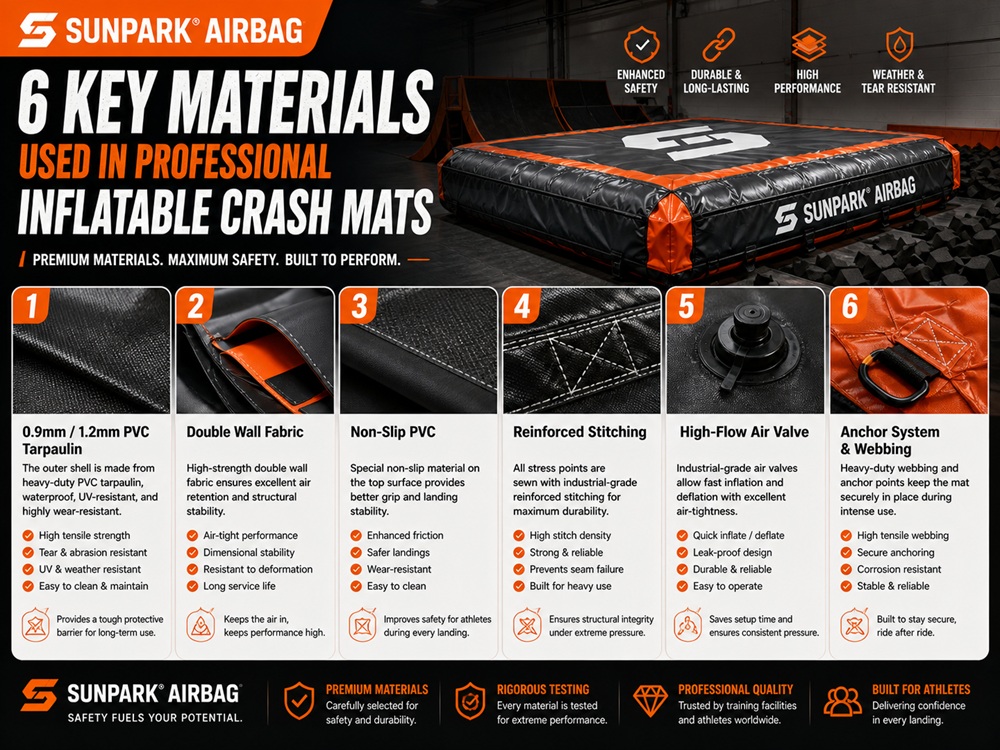
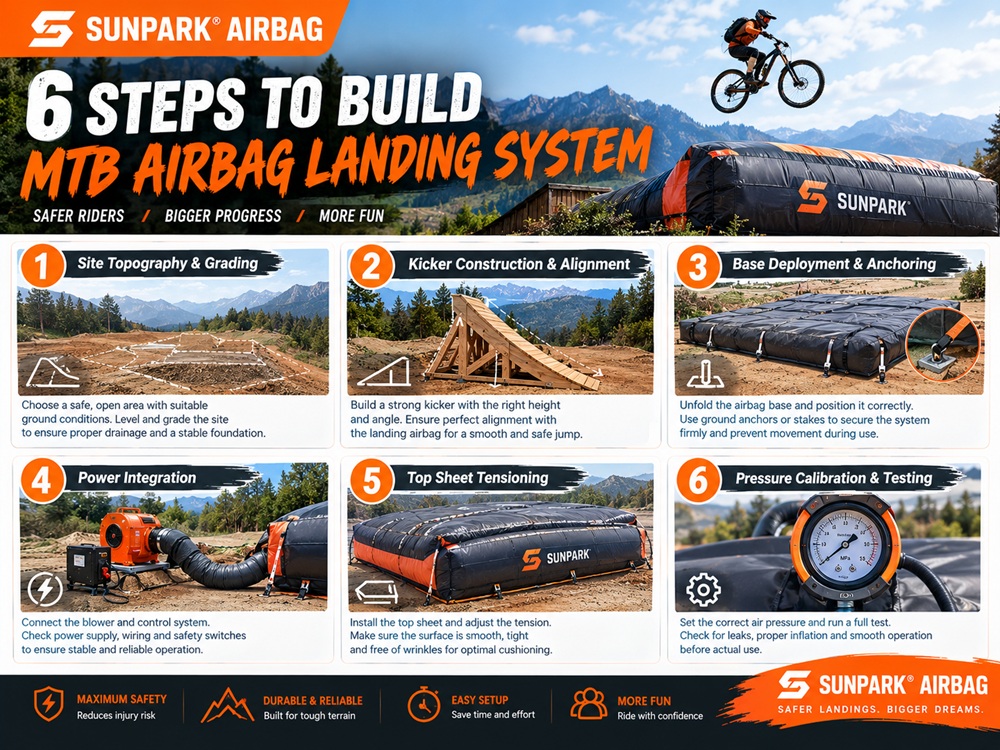
Action sports progression centers rely on specialized equipment like an MTB airbag landing system or an inflatable crash mat fitted with high-denier protective topsheets. Heavy-duty 0.9mm PVC tarpaulin topsheets easily withstand bicycle tires, studded pedals, and hard snowboard edges, giving athletes the confidence to attempt double backflips and technical rotations without risking catastrophic frame stops.
4. Internal Hygiene, Moisture Absorption, and Foam Rot
Foam mats present a hidden sanitation and structural issue that facility operators often overlook: open-cell foam acts like a giant sponge. Over months of heavy training, sweat, humidity, and spilled water penetrate through stitched seams into the core. Open-cell polyurethane cannot be washed internally. The trapped moisture breeds mold, mildew, and bacteria while accelerating chemical breakdown of the polymer bonds. Within 24 months, the foam core turns into a brittle, powdery mess that loses its firmness.
Stunt airbags feature non-porous, waterproof, anti-microbial PVC tarpaulin exteriors that do not absorb liquids. The interior is continuously purged by fresh ambient air circulated by the external blower motor. If sweat or grime accumulates on the landing surface, the removable top sheet unzips in minutes for power-washing, hospital-grade disinfection, and UV wipe-down, maintaining a clean training environment.
5. Portability, Deflated Storage, and Logistics Footprint
Moving fifty cubic yards of rigid foam landing mats requires a dedicated 53-foot semi-trailer and hours of heavy manual handling. Storing them consumes valuable square footage that could otherwise generate facility revenue. For touring stunt shows, temporary commercial activations, or multi-use gymnasiums, rigid foam mats create logistical headaches.
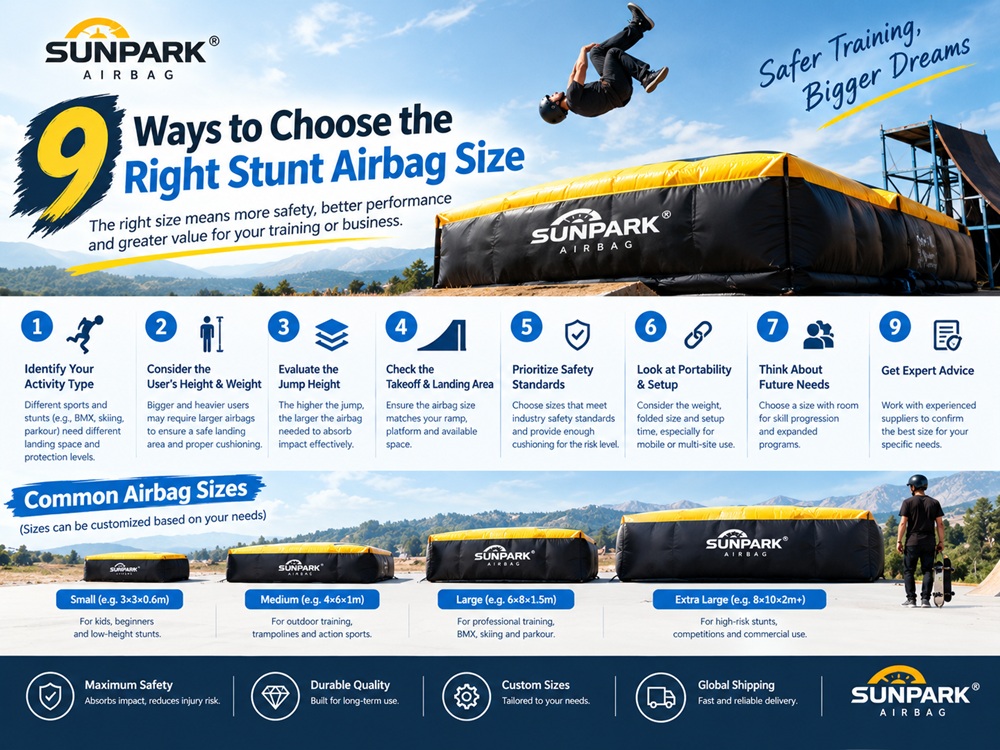
An inflatable system, such as a specialized gym airbag for training, rolls up tightly when deflated into a heavy-duty carrying bag that fits on a standard shipping pallet. A single operator can transport an airbag system in the back of a standard pickup truck or cargo van, roll it out, anchor it down, and fully inflate a 30-foot landing zone in under 15 minutes using an electric blower.
6. Lifespan Economics and Replacement Overhead
While foam mats carry a lower initial purchase price, their operational lifespan under heavy commercial use is notoriously short. As athletes repeatedly land in the center sweet spot, foam cells break down permanently, leaving a soft, dangerous crater surrounded by firm edges. Restoring the landing zone requires throwing out the entire foam block and buying new inventory every 2 to 3 years.
A properly engineered commercial stunt airbag operates on a modular maintenance cycle. The internal inflation chambers suffer virtually zero mechanical wear because pressurized air does not break down or lose elasticity over time. The only component exposed to abrasion and shoe friction is the replaceable 0.9mm PVC topsheet. When the topsheet eventually shows wear after 3 to 5 years of daily abuse, you simply unzip it and lace on a replacement sheet for a fraction of the cost of an entirely new system.
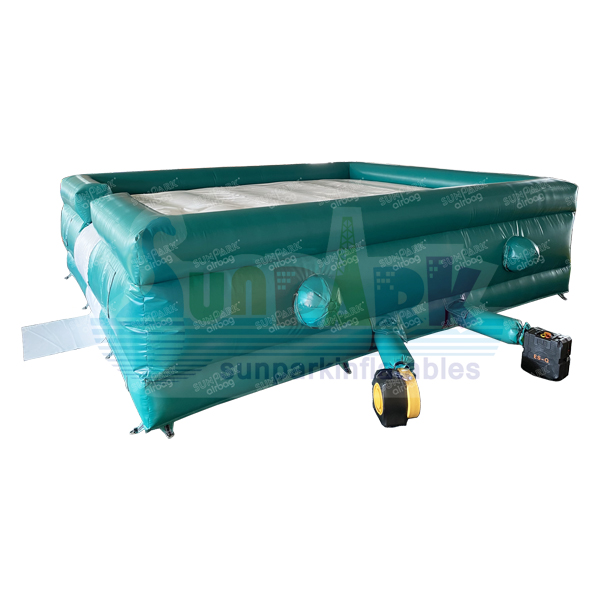
Industry Equipment Standard: Sunparkairbag Stunt Airbag
For theme parks, film production crews, gymnastics facilities, and action sports parks seeking a certified landing solution, Sunparkairbag engineers industrial-grade pneumatic systems that eliminate bottoming out risks entirely.
| Base Material | 0.55mm PVC Tarpaulin (Airbag body), 0.9mm PVC Tarpaulin (Top wear sheet) |
| Safety Certifications | Water-proof, flame-retardant, UV-protected, lead & phthalate-free |
| Standard Dimensions | 7×6×2m (Regular sizes: 10×10×3m, 15×15×3m, or fully bespoke builds) |
| Production & Build | Heavy-duty reinforced stitching by master technicians with 5+ years experience |
| Included Accessories | Commercial blower system, industrial repair kit, reinforced transit bag |
| Global HS Code | 9506990000 (Action sports training equipment) |
Operational Verdict: We recommend this platform for professional stunt rigs, adventure parks, and high-volume training centers requiring continuous fall protection from heights of 15 to 40+ feet.
Detailed Engineering & Operational Comparison Table
| Engineering Specification | Commercial Stunt Airbag | Standard Foam Crash Mat | Modular Inflatable Pit Airbag |
|---|---|---|---|
| Primary Internal Medium | Continuously circulated ambient air | Open-cell polyurethane & cross-linked PE | Multi-pillar individual air cylinders |
| Peak Deceleration Depth | 60 to 100+ inches dynamic stroke | 8 to 16 inches mechanical limit | 40 to 60 inches controlled stroke |
| Power Requirement | Continuous 1.5HP to 3.0HP blower | None (Passive system) | Continuous 1.5HP commercial blower |
| Impact Absorption Capacity | Over 15,000 Joules | Under 2,500 Joules | Over 10,000 Joules |
| Surface Tear Strength | Extreme (>300 N tear resistance PVC) | Moderate (18 oz vinyl cover) | Extreme (0.9mm PVC with nylon scrim) |
| Multi-User Reset Time | 3 to 5 seconds (Instant repressurization) | Instantaneous | 4 to 6 seconds |
| Typical Purchase Cost | Mid to High ($3,000 to $15,000+) | Low to Mid ($600 to $2,500) | Mid ($2,500 to $8,000) |
Pros and Cons: Airbag Technology vs. Foam Landing Mats
| System Type | Operational & Safety Advantages | Engineering Limitations & Drawbacks |
|---|---|---|
| Stunt Airbags (Dynamic pneumatic systems) |
|
|
| Foam Crash Mats (Traditional passive pads) |
|
|
Who Needs a Stunt Airbag vs. Who Should Stick to Mats
Investing in commercial safety gear requires matching the equipment to the physical demands of your athletes. Buying an oversized stunt airbag for ground-level floor routines is a waste of capital, while relying on foam mats for high-energy trick progression is an invitation to serious injury.
Who Must Invest in a Stunt Airbag:
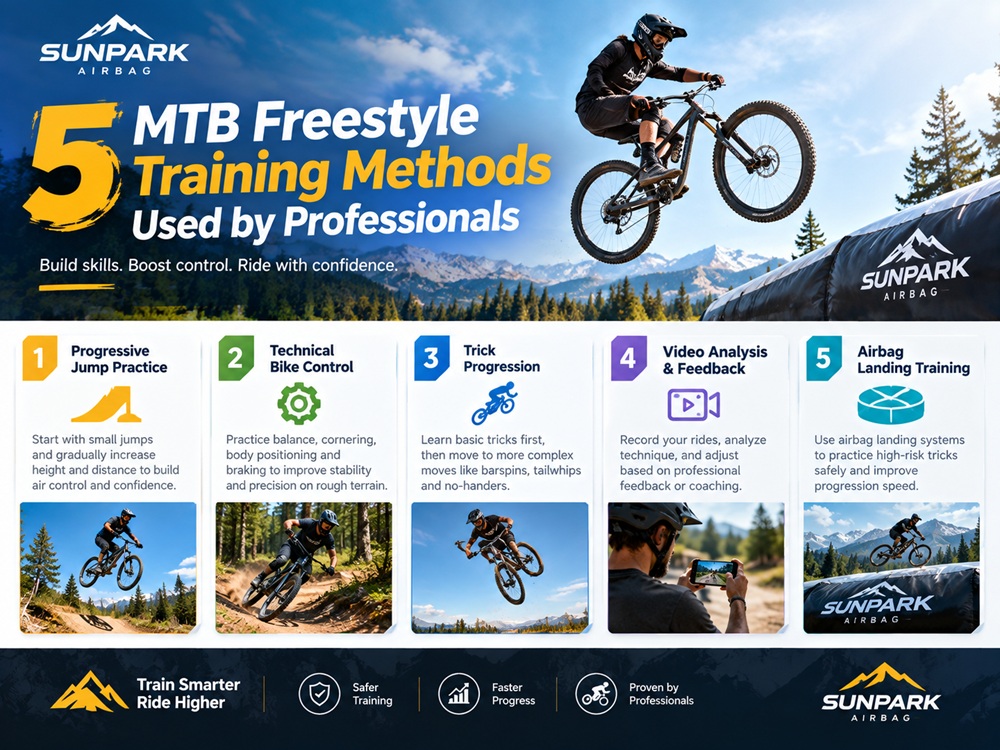
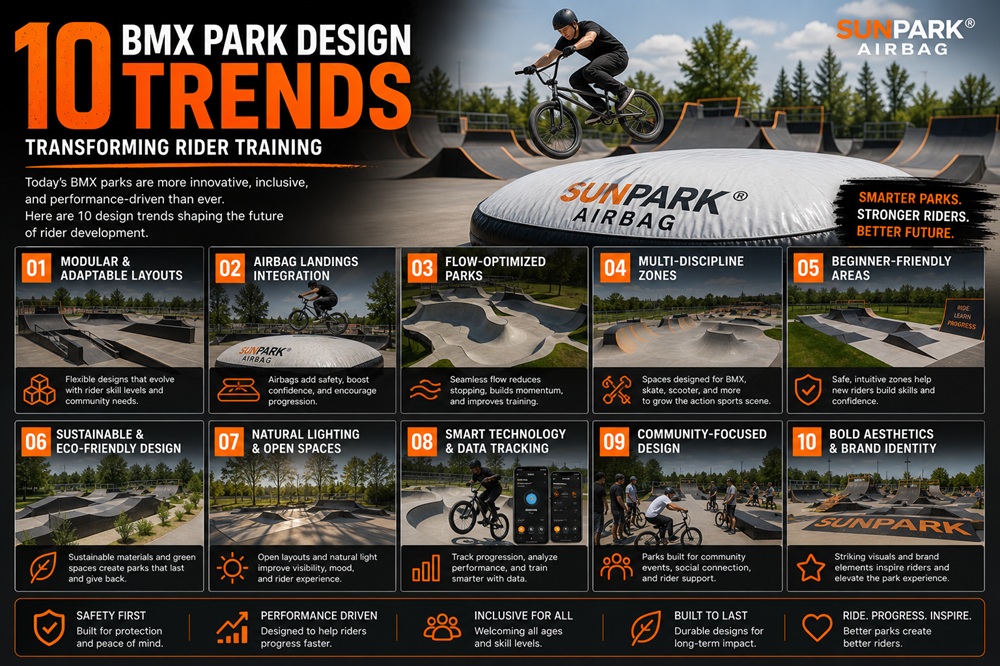
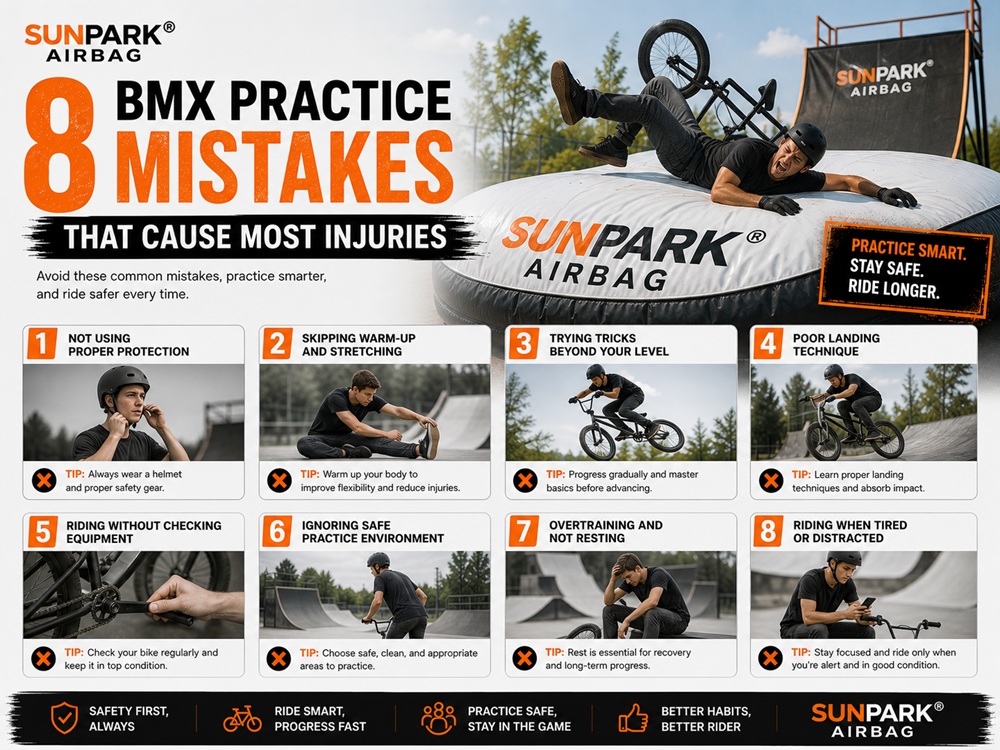
- Action Sports & Freestyle Bike Parks: If athletes are launching BMX or mountain bikes off kickers, an inflatable MTB airbag solutions platform is non-negotiable. Traditional foam blocks cause front-wheel stops that throw riders over the handlebars.
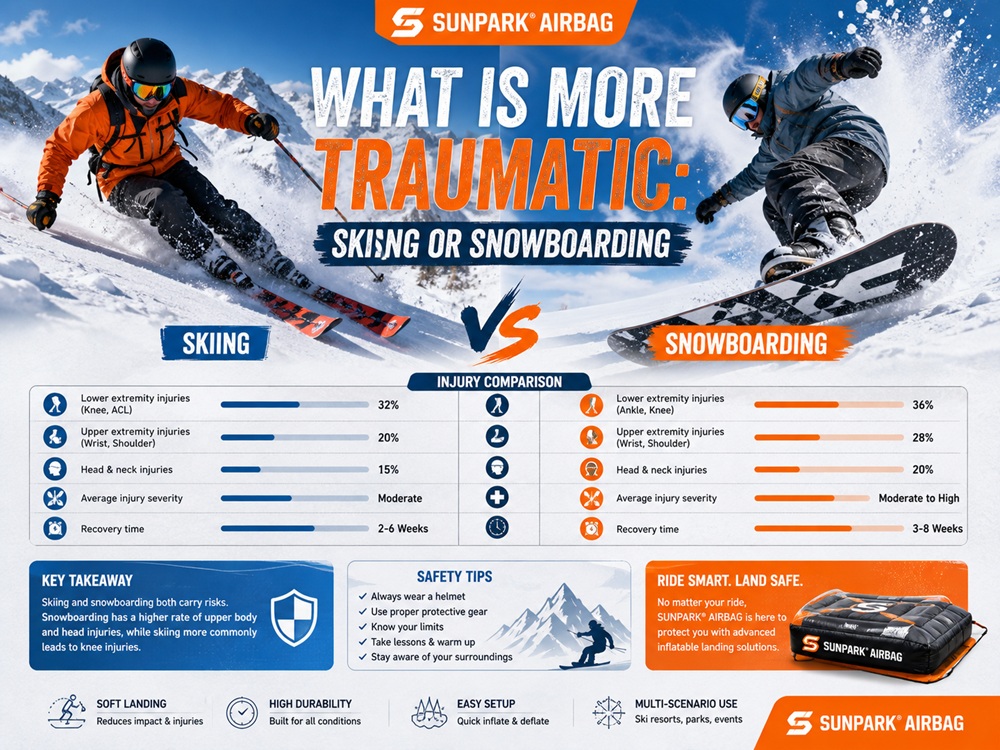
- Freestyle Snowboard & Ski Progression Centers: Winter sports facilities building dry-slope training runs require specialized setups like a Halfpipe Airbag or sloped landing airbag solutions so riders can practice triple corks and ride away smoothly down the transition.
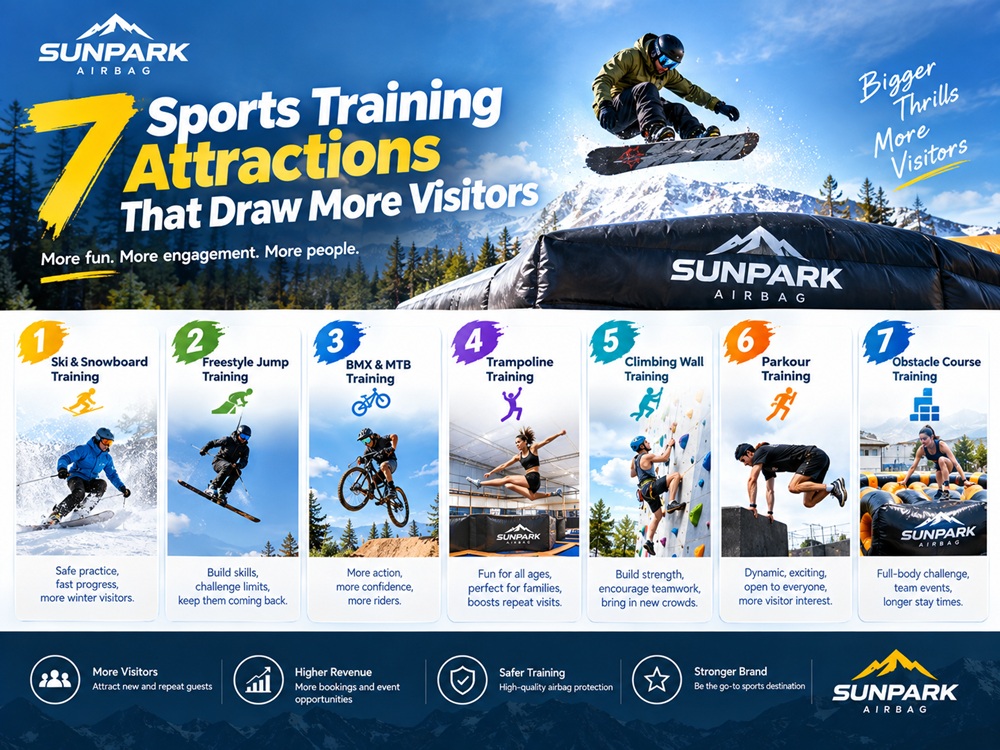
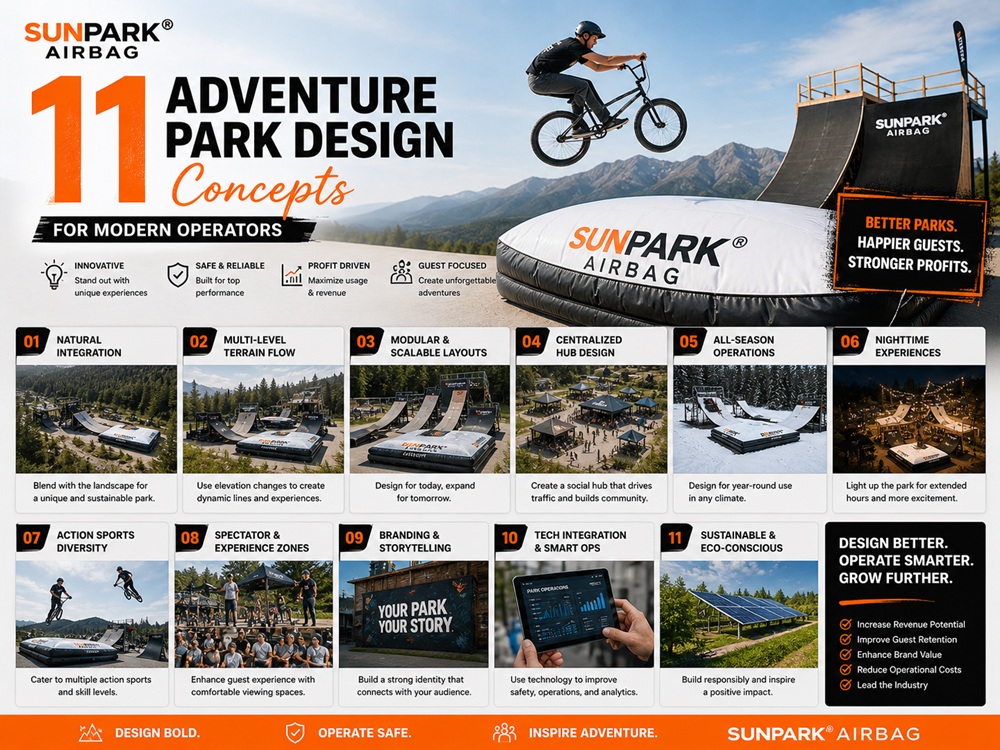
- Commercial Trampoline Parks & Adventure Hubs: Trampoline park operators are actively replacing dirty, fire-hazardous foam pits with clean systems like an inflatable jump airbag. This cuts ongoing maintenance and eliminates toxic foam dust. When calculating overall trampoline park construction cost, airbags save thousands in long-term insurance and sanitization expenses, directly improving trampoline park owner income.
- Film Production Stunt Coordinators: When dropping stunt performers from rooftops, scaffolding, or cranes, pneumatic dual-chamber airbags provide the certified safety stroke needed to absorb high-velocity impacts safely.
Who Should Continue Using Traditional Foam Mats:
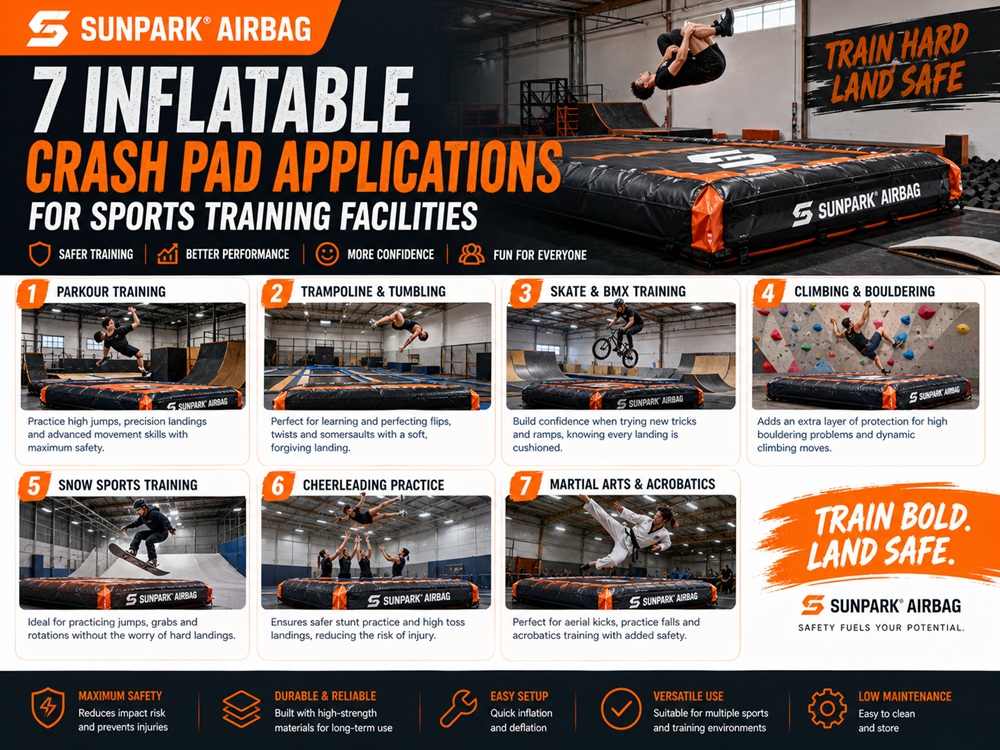
- Traditional Gymnastics Academies: For standard balance beam dismounts, low uneven bar drills, and basic floor tumbling passes under 6 feet, standard foam landing mats provide the firm, stable footing athletes need to stick landings without rolling ankles.
- Bouldering Gyms: Climbing gyms with continuous wall profiles under 14 feet benefit from wall-to-wall continuous bonded foam systems that provide stable walking surfaces beneath active climbers.
- Martial Arts & Combat Dojos: Judo, BJJ, and MMA sweep drills require firm ground feedback and zero setup noise, making standard foam tatami and folding crash mats the ideal choice.
Common Safety and Purchasing Mistakes
Field Safety Alert: Never attempt a high vertical freefall onto a single-chamber advertising inflatable or bouncy house. These units lack pressure-relief exhaust valves and dynamic deceleration chambers, turning them into high-tension trampoline springs that can violently eject an athlete off the side onto hard concrete.
- Buying Single-Chamber Sealed Airbags for Stunt Drops: True stunt airbags require a continuous-flow dual-chamber design. Sealed, airtight inflatables act like massive rubber balls; they do not vent air, which creates a dangerous rebound recoil on impact.
- Stacking Foam Mats to Increase Fall Protection: When faced with higher drop platforms, untrained gym staff often stack three or four foam crash mats on top of each other. This creates an unstable, shifting tower. When an athlete hits the upper mat off-center, the stack shears sideways, dumping the performer directly onto the floor.
- Neglecting Topsheet Tension and Valve Tuning: If the top sheet is laced too loosely, an athlete’s foot can snag during landing. If relief valves are adjusted too tight, internal air pressure spikes on impact, resulting in a dangerously hard hit. Airbag operators must tune side vents according to participant weight and fall height.
- Operating Outdoors Without Rigorous Ground Anchoring: A 10×10-meter stunt airbag acts like a giant sail in high winds. Operating an outdoor airbag jump without heavy-duty ground stakes or concrete ballast blocks risks flipping the entire landing zone while an athlete is airborne.
Commercial Sourcing & Facility Procurement Guide
When shortlisting manufacturers for custom safety inflatables, look beyond basic website photos. To guarantee safety and protect your facility from liability, evaluate your suppliers against these four engineering criteria:
1. Base Fabric Weight and PVC Coated Tarpaulin Specs
Demand certified, heavy-duty PVC tarpaulin construction. The core airbag body should utilize at least 0.55mm (18 oz) high-tensile, flame-retardant PVC fabric with an internal polyester ripstop weave. The top wear sheet—which takes the direct punishment of shoe scuffs, bike tires, and ultraviolet solar radiation—must be built from extra-heavy 0.90mm (32 oz) industrial tarpaulin. Ensure your supplier provides documentation showing compliance with EN 14960 or ASTM safety standards.
2. Dual-Chamber Redundancy Architecture
Never buy an action-sports landing airbag that features only one internal air chamber. High-performance safety systems must feature an independent two-tier structure:
- Upper Deceleration Chamber: Features calibrated air-exhaust ports that bleed off dynamic pressure smoothly upon athlete entry, absorbing impact energy without rebound.
- Lower Safety Reserve Chamber: Maintains constant high static pressure with zero drop-through venting. This acts as an emergency cushion, ensuring the athlete’s body never bottoms out against the floor even during maximum-height freefalls.
3. Blower Capacity and Electrical Redundancy
Confirm the required electrical power setup. Commercial stunt bags require continuous-duty commercial centrifugal blowers ranging from 1.5 HP to 3.0 HP. For professional movie stunt rigs and high-throughput amusement parks, facility engineers should integrate an automatic backup generator or battery inverter system to keep the blower running during unexpected municipal power outages.
4. Custom Dimensions and Incline Geometry
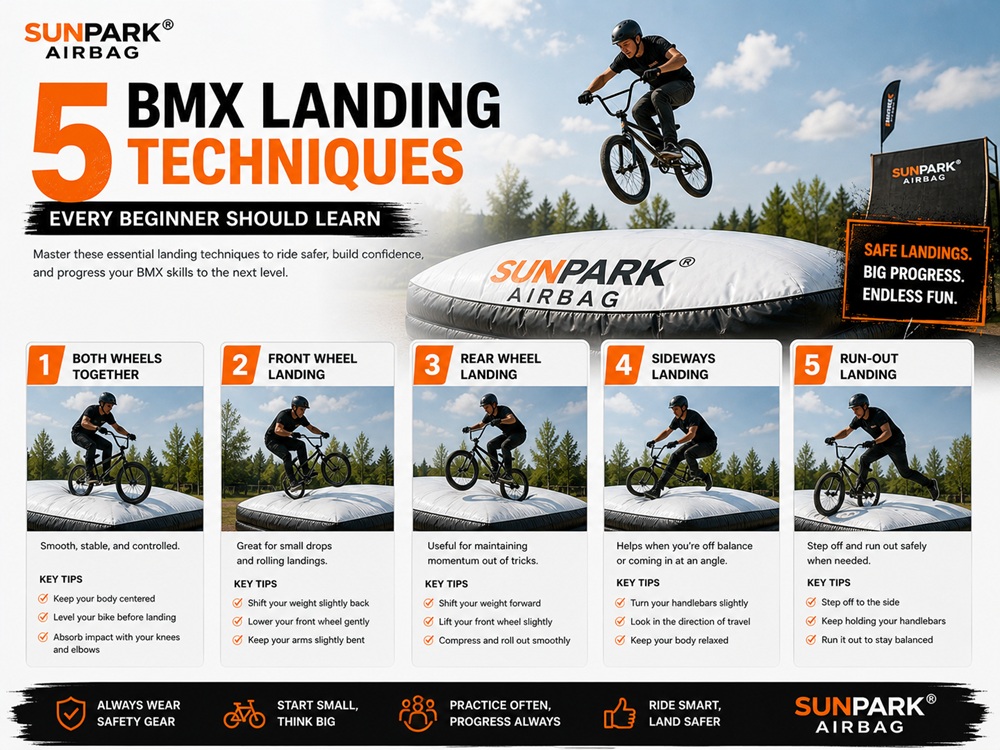
If you are engineering an action-sports ramp progression setup, a flat airbag forces riders to absorb harsh flat landings. Inquire about custom angled ramp integrations. Modern facilities prefer sloped landing systems that mirror natural dirt landing transitions, converting vertical fall energy into forward rolling momentum so riders can land smoothly and roll away cleanly.
Frequently Asked Questions
No. Foam crash mats reach mechanical bottoming-out when subjected to freefalls exceeding 8 to 10 feet. When foam cells reach complete compression, the remaining kinetic energy transfers directly into the athlete’s skeletal system, causing severe spinal compression injuries or joint fractures.
Stunt airbags feature a vented upper deceleration chamber paired with a firm, sealed bottom safety chamber. Tuned exhaust air valves expel ambient air during impact, smoothly absorbing kinetic energy without storing elastic recoil energy, eliminating rebound whiplash.
Stunt airbags require continuous electric blower operation, periodic seam inspection, and surface cleaning of the removable PVC top sheet. Foam mats require routine sanitization, moisture monitoring to prevent internal bacterial mold growth, and mandatory foam core replacement every 2 to 3 years due to cell breakdown.
Yes, provided the airbag is built with a heavy-duty top sheet (typically 0.9mm PVC tarpaulin) designed for landing impact, or engineered as an inclined landing airbag. Traditional foam mats cannot handle bike tire impacts or landing rollouts and will rip immediately.
Authoritative Safety & Engineering References