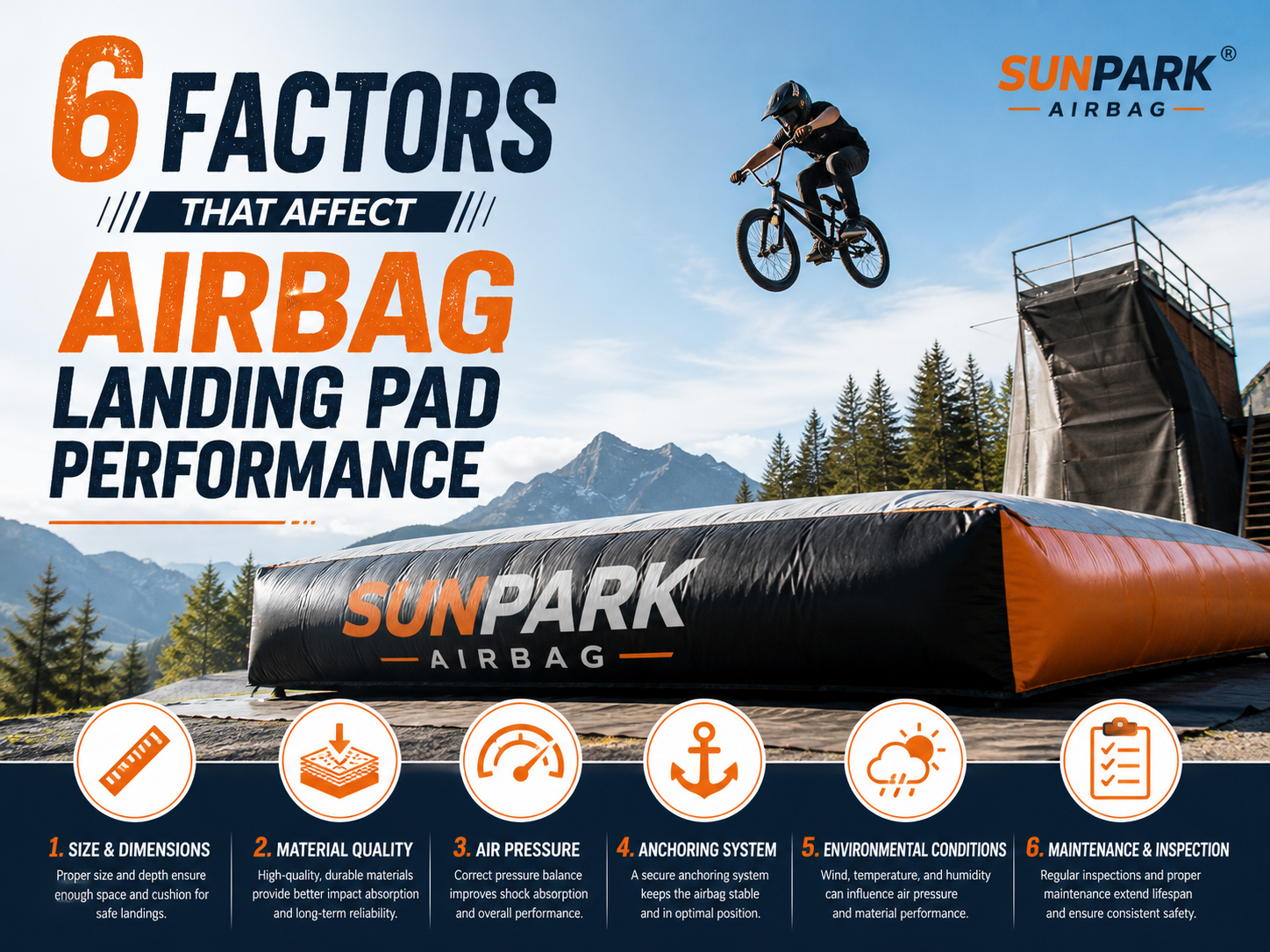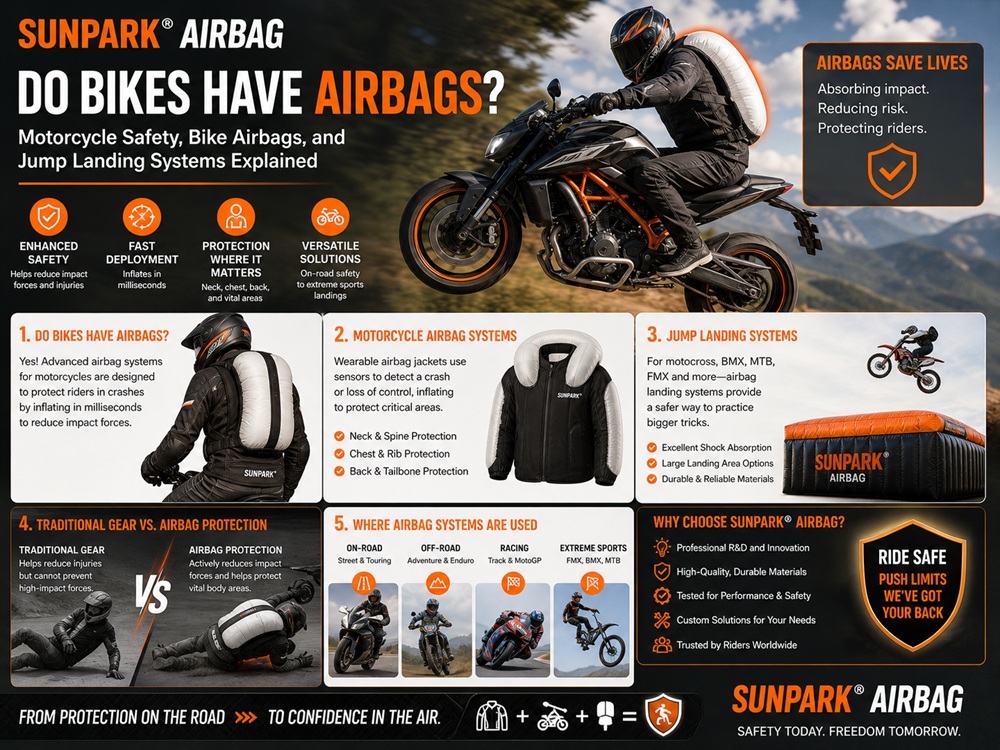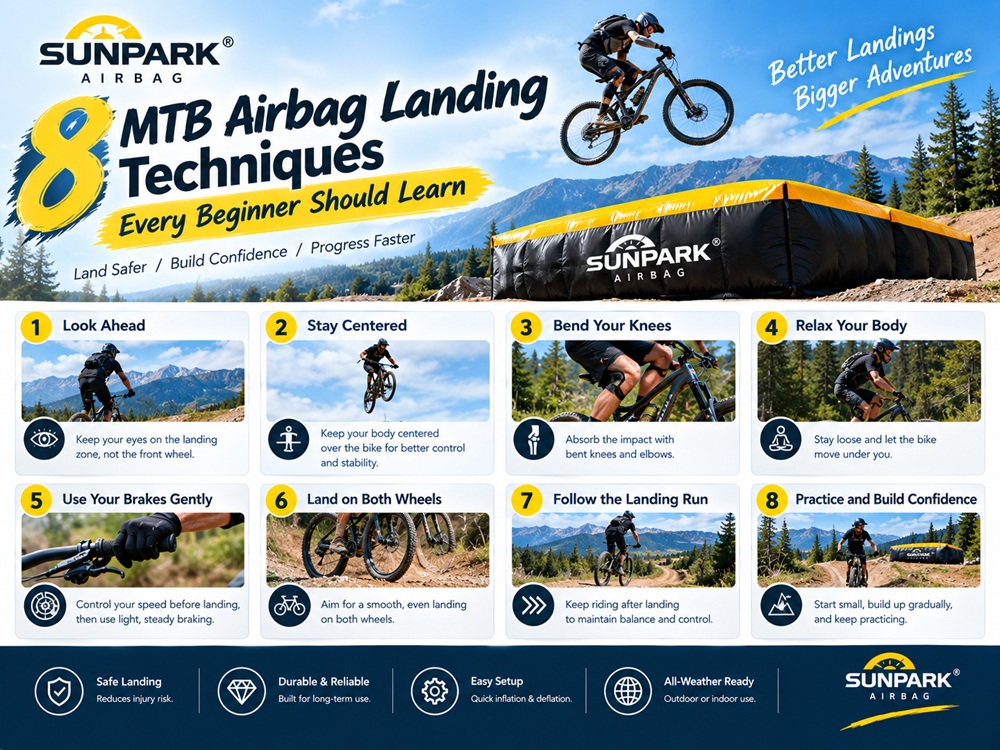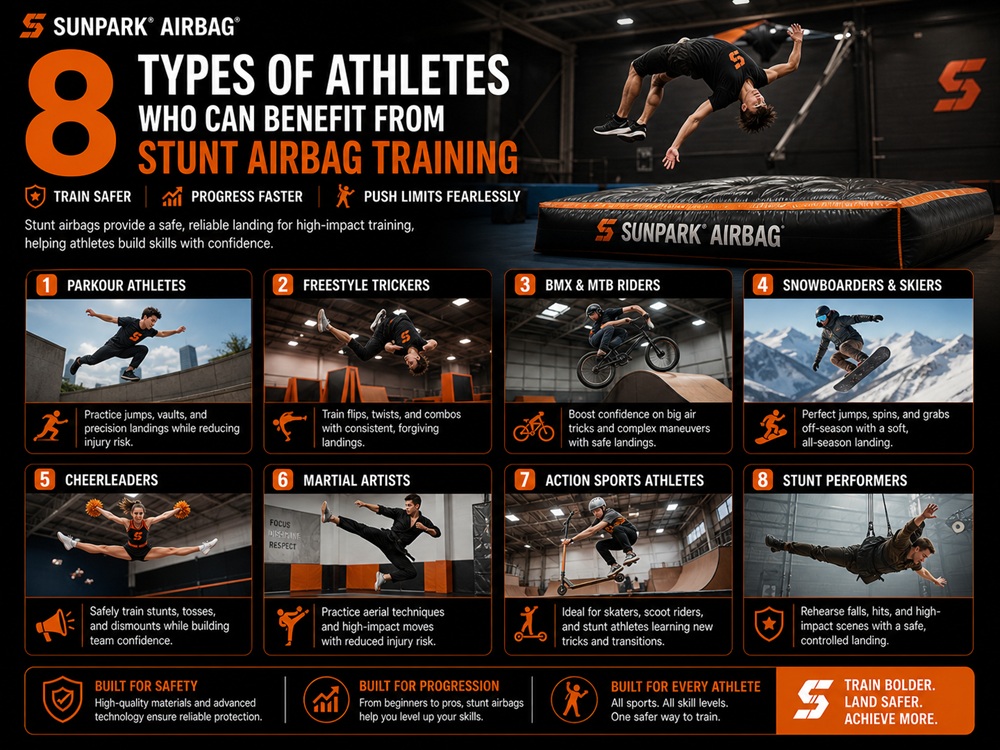
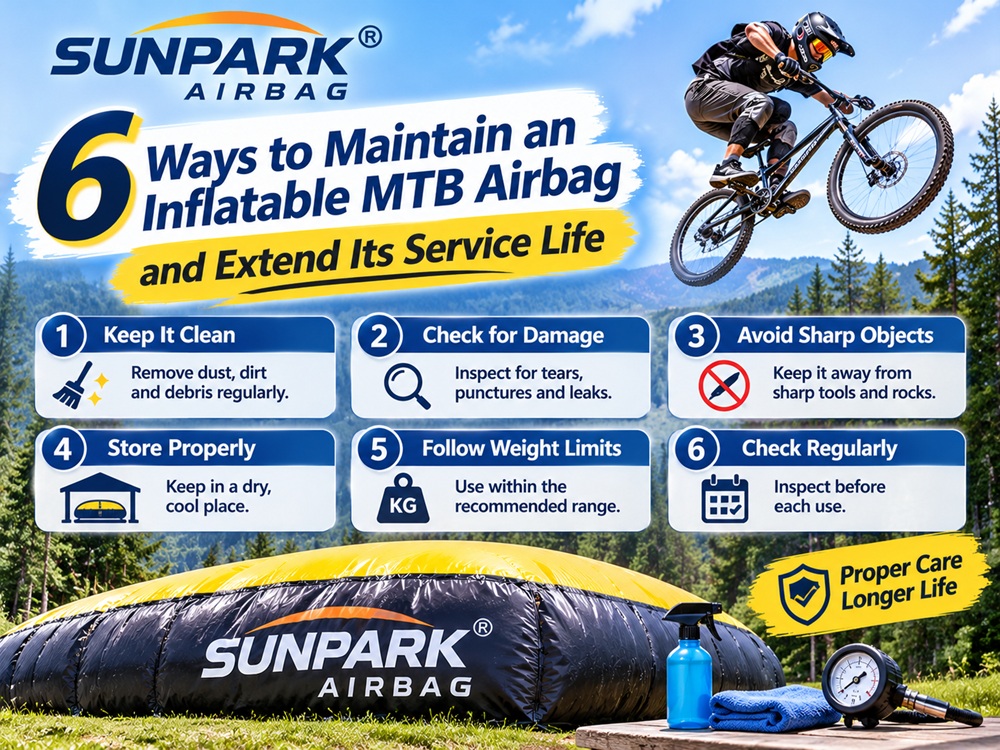
An inflatable MTB airbag is a serious investment in rider progression. Whether it is installed at a bike park, training center, action sports facility, or private practice site, its condition directly affects how reliably riders can use the landing zone. The maintenance routine should therefore be treated as part of the safety system, not as an occasional cleaning task.
The most effective way to maintain an inflatable MTB airbag is to follow six habits: inspect it before every session, clean it with compatible products, check seams and fabric regularly, maintain the blower and inflation system, protect the anchors and installation area, and dry and store the equipment correctly. These tasks prevent avoidable wear and help identify problems before the airbag returns to service.
Quick Answer: How Do You Maintain an Inflatable MTB Airbag?
Inspect: Check the landing surface, seams, panels, handles, anchor points, air inlets, and blower connections before use.
Clean: Remove dirt, grit, mud, and debris using the cleaning method approved by the manufacturer. Avoid harsh chemicals and abrasive tools.
Protect: Keep sharp objects, bikes, tools, and unnecessary foot traffic away from the airbag surface.
Monitor: Confirm that the inflation system operates as specified and that the airbag maintains its intended shape and landing characteristics.
Dry and store: Do not fold or pack the airbag while wet. Store it clean, dry, protected from sunlight, and away from rodents, chemicals, and sharp objects.
Repair: Remove damaged equipment from use until it has been assessed and repaired using the manufacturer’s approved materials and procedures.
Our recommendation: Use a written daily inspection checklist and a separate maintenance log. For commercial facilities, assign responsibility to a trained operator rather than relying on riders to report problems after they appear.
There is an important distinction between ordinary inflatable recreational equipment and an MTB landing airbag. A landing airbag is designed around a specific riding discipline, landing geometry, inflation method, and impact-management behavior. A surface that looks inflated is not automatically safe to ride. Maintenance must preserve the design characteristics specified by the manufacturer.
What Is an Inflatable MTB Airbag and How Does It Work?
An inflatable MTB airbag is a purpose-designed landing structure used in mountain biking practice and progression. Riders use it to practice jumps, aerial movements, and new techniques with a landing surface designed to manage impact. It is commonly installed at bike parks, coaching facilities, training venues, and dedicated action sports sites.
Depending on the design, an MTB airbag may use a continuous-air blower system or a different inflation and pressure-management arrangement. The fabric construction, internal structure, air chambers, landing profile, and inflation requirements vary by model. These details matter because different airbag designs do not necessarily share the same maintenance procedures.
How does an MTB landing airbag work?
The airbag is engineered to provide a controlled landing surface for a defined type of use. Its structure and internal air behavior help manage the rider’s landing energy. The blower or inflation system maintains the specified operating condition where the design requires continuous air supply. The landing profile and pressure characteristics are part of the product’s intended performance.
That is why operators should never guess the correct pressure, modify air outlets, block vents, or change the blower configuration to make the surface feel firmer or softer. A change that appears minor can alter how the airbag behaves under impact.
Who should maintain an inflatable MTB airbag?
- Bike park operators: Need a repeatable inspection process because the equipment may be used by many riders throughout the day.
- MTB coaches and training centers: Need to check the landing area before each training block and after unusual impacts or weather conditions.
- Commercial action sports facilities: Need written procedures, staff responsibilities, inspection records, and a clear process for taking equipment out of service.
- Private owners: Need to follow the same manufacturer’s care requirements even if the airbag is used less frequently.
For beginners, the most important habit is simple: do not ride an airbag that has not been checked. For commercial users, the priority is to make inspection a documented operating procedure rather than an informal visual glance.
Quick Summary: Six Ways to Maintain an Inflatable MTB Airbag
| Maintenance Method | What to Check or Do | Suggested Timing | Main Benefit |
|---|---|---|---|
| Pre-session inspection | Landing surface, shape, seams, inlets, connections, and visible damage | Before every riding session | Identifies visible problems before use |
| Surface cleaning | Remove mud, grit, dust, and foreign objects using approved methods | As needed and after dirty sessions | Reduces abrasion and material contamination |
| Fabric and seam checks | Inspect stitching, welds, panels, handles, and stress areas | Daily visual checks plus scheduled detailed inspections | Finds deterioration early |
| Blower maintenance | Check airflow, intake, power connections, hoses, and specified operating condition | Before use and according to the blower manual | Supports consistent inflation |
| Anchoring and site care | Check anchor points, straps, ground conditions, drainage, and clearance | Before use and after weather changes | Helps prevent movement and site-related damage |
| Drying and storage | Clean, dry completely, fold as instructed, and protect during storage | After use when packing away or during seasonal shutdown | Reduces moisture-related deterioration |
These are practical maintenance intervals, not a substitute for the manufacturer’s service schedule. Increase inspection frequency when the airbag is used heavily, exposed to harsh weather, moved frequently, or operated in a commercial environment.
1. Inspect the Inflatable MTB Airbag Before Every Riding Session
A pre-session inspection is the most important routine maintenance task because it checks the equipment in the condition in which riders are about to use it. Do not wait until the end of the day to look for damage. A problem caused during the previous session may be visible before the next rider starts.
Check the landing surface and overall shape
Walk around the airbag and look for unusual depressions, bulges, wrinkles, sagging areas, or changes in the landing profile. Compare the inflated structure with the manufacturer’s reference images or setup instructions. If a section looks different from its normal operating condition, investigate before allowing use.
For a continuous-air model, confirm that the airbag reaches and maintains the specified operating condition. For a sealed or chamber-based design, follow the model-specific inspection procedure. Do not assume that every MTB airbag should be assessed using the same pressure test.
Inspect the surface for foreign objects
Look for stones, broken bike components, sharp branches, screws, metal fragments, tools, and other debris. A small sharp object can damage the outer fabric or become a hazard during a landing. Check the takeoff and approach area as well as the landing surface. Debris can be carried onto the airbag by tires, shoes, or equipment.
Check the entry, exit, and surrounding area
Make sure riders can approach and leave the landing zone without stepping over blower cables, hoses, loose straps, or exposed hardware. The area should be clear of objects that could puncture the fabric or interfere with rider movement.
- Airbag is inflated or prepared according to the manufacturer’s instructions.
- Landing profile appears normal and consistent with the approved setup.
- No visible tears, punctures, open seams, or unusual bulges are present.
- Air inlets, outlets, hoses, and connections are secure and unobstructed.
- Anchors and attachment points are present and in good condition.
- Blower and electrical connections show no obvious damage.
- Approach, landing, and exit areas are clear of debris.
- Weather and site conditions are within the manufacturer’s operating limits.
Our recommendation: If you identify a defect that could affect the landing surface or inflation system, stop and assess it. Do not allow a rider to test the airbag as a way of finding out whether the problem is serious.
2. Clean the Inflatable MTB Airbag Without Damaging the Fabric
Dirt is not only a cosmetic problem. Fine grit can act as an abrasive when riders, bikes, or equipment move across the surface. Mud and organic debris can retain moisture, while oil, chain lubricant, and chemical contamination may affect some coated fabrics. Cleaning is therefore a material-care task, not simply a way to make the equipment look presentable.
Remove loose dirt before using water
Start by removing leaves, dust, loose soil, and other debris with a soft brush or cloth. Avoid hard-bristle brushes, wire brushes, knives, and abrasive pads. These tools can scratch or weaken the outer coating, particularly around seams and high-contact areas.
Use only compatible cleaning products
Use the cleaner and dilution recommended by the airbag manufacturer. If the manufacturer permits mild soap and water, apply it gently with a soft cloth or sponge. Rinse according to the instructions and avoid leaving detergent residue on the fabric.
Do not assume that household disinfectants, degreasers, solvents, bleach, fuel, or strong detergents are safe for coated PVC or other inflatable fabrics. Chemical compatibility varies by material and coating. A cleaner that works on a workshop floor may damage an airbag surface.
Pay attention to high-contact areas
Inspect and clean the areas where riders regularly make contact, including the central landing zone, side panels, access areas, and handles. These locations may accumulate more dirt and show wear earlier than less frequently used sections.
When is cleaning worthwhile? For a commercial MTB facility, cleaning after muddy sessions is particularly important. If the airbag is used in dry conditions and remains visibly clean, unnecessary aggressive washing adds work without improving performance. Clean when contamination is present, and always follow the material-care instructions.
3. Check Fabric, Seams, Stitching, and Connection Points Regularly
Fabric and seam condition should receive more attention than the appearance of the airbag alone. A small puncture, loose seam, or damaged connection point can become more significant under repeated loading. Problems may develop gradually, especially where the airbag is folded, transported, anchored, or exposed to repeated rider contact.
Inspect the main fabric panels
Look for cuts, pinholes, scuffing, delamination, discoloration, brittle areas, and surface coating damage. Pay particular attention to folds and contact zones. If the equipment has been dragged across concrete, gravel, or rough ground, inspect the underside as well as the visible landing surface.
Inspect seams and joins
Check stitching, welded seams, panel joins, and reinforcement areas. Look for loose threads, separation, lifting edges, distortion, or signs that a seam has been stretched. A seam that appears to be opening should not be treated as a minor cosmetic defect.
Check handles, straps, and attachment points
Handles and anchor loops can experience repeated pulling during installation, movement, and storage. Check for torn reinforcement fabric, damaged webbing, loose stitching, corrosion, or deformation in associated hardware. Never use a damaged handle or strap to move the airbag.
Repair only with approved materials and procedures
Do not apply an ordinary adhesive patch or generic repair tape without confirming compatibility. The correct repair method depends on the airbag material, coating, construction, location of the damage, and manufacturer’s repair requirements.
Some minor repairs may be possible with an approved patch kit, while damage to a critical seam, structural panel, or high-stress connection may require professional assessment. If you cannot determine whether a repair restores the original performance, keep the airbag out of service and contact the manufacturer.
For facilities with frequent use, maintain a repair log that records the date, location of damage, photographs, repair materials, person responsible, and approval to return the equipment to service. This history helps identify repeated wear patterns and informs replacement decisions.
4. Maintain the Blower and Inflation System
The blower and inflation system are essential components of many MTB airbags. A well-maintained fabric structure cannot perform as intended if the blower is damaged, airflow is restricted, or connections are loose. Conversely, installing a more powerful blower does not necessarily improve safety. The equipment should use the blower type and capacity specified by its manufacturer.
Inspect the blower intake and outlet
Check the air intake for dust, leaves, plastic bags, and other obstructions. Make sure the outlet and connecting duct are clear. Restricted airflow can affect inflation performance and may cause unnecessary strain on equipment. Clean the intake only as directed in the blower manual, and disconnect power before carrying out cleaning or inspection that requires access to moving parts.
Check the power supply and cables
Look for damaged insulation, loose plugs, exposed wiring, cracked housings, unusual vibration, or signs of overheating. Keep electrical connections protected from water and away from rider traffic. If a cable or electrical component is damaged, have it assessed by a qualified person before use.
Listen for changes in blower operation
Unusual noise, vibration, intermittent operation, or a change in airflow can indicate a developing problem. Record changes rather than assuming that the blower is simply getting older. Follow the manufacturer’s maintenance schedule for filters, bearings, motors, and other serviceable components.
Do not guess the operating pressure
Some systems use pressure monitoring, while others rely on specified blower performance and the airbag’s designed airflow. Use the measurement method and operating range provided for the exact model. Do not apply a generic pressure figure from another inflatable product.
Never block an air outlet, alter a valve, change duct dimensions, or substitute a blower without written approval from the manufacturer. These changes can affect the airbag’s behavior and may invalidate the original setup assumptions.
For commercial users: Keep a record of blower model, serial number, inspection date, service history, and any replacement parts. If the blower fails during operation, stop riding and follow the manufacturer’s shutdown procedure. Do not allow continued use while the airbag is in an abnormal condition.
5. Protect Anchors, Ground Conditions, and the Installation Area
Airbag maintenance is not limited to the fabric. The ground, anchors, straps, and surrounding layout all influence how the equipment behaves during use. An airbag that is in excellent condition can still become unsafe if it moves, twists, or is installed on an unsuitable surface.
Inspect every anchor point
Check that all required anchor points are present and undamaged. Look for torn webbing, loose stitching, bent hardware, corrosion, missing fasteners, and signs of movement. Use the anchoring method specified for the airbag and the actual installation surface.
Do not replace a specified anchor with improvised ropes, elastic cords, or unverified hardware. Ground conditions vary. An anchoring arrangement that works on compact soil may not be suitable for concrete, loose gravel, or a temporary event surface.
Check the ground underneath and around the airbag
Remove sharp stones, broken branches, metal fragments, and other objects that could damage the underside. Check for standing water, erosion, soft ground, and changes caused by heavy rain. Keep drainage paths clear so water does not collect around the installation.
Keep the landing zone clear
Maintain adequate clearance around the airbag according to the manufacturer’s layout requirements. Do not store bikes, tools, spare parts, or maintenance equipment beside the landing area where they could become obstacles. Keep cables and blower ducts out of rider paths.
Respond to weather changes
Wind, rain, temperature, and ground conditions can affect an outdoor installation. Follow the product’s operating limits and shutdown instructions. After strong winds or severe weather, inspect the anchors, straps, fabric, and site before reopening the area.
Our recommendation: Treat every relocation as a fresh installation. Recheck the ground, anchoring, blower arrangement, and landing clearance rather than assuming the previous setup remains suitable.
6. Dry, Fold, and Store the Inflatable MTB Airbag Properly
Storage is where many avoidable maintenance problems begin. Packing an airbag while damp can trap moisture between folded fabric layers. Storing it in direct sunlight, near chemicals, or in a location with rodents and sharp objects can also shorten its service life.
Allow the airbag to dry completely
After cleaning or wet-weather use, allow the airbag to dry according to the manufacturer’s instructions. Check seams, folds, underside panels, and areas around handles because these locations can retain moisture. Do not assume the visible upper surface is dry while the underside remains damp.
Follow the correct deflation and folding procedure
Use the manufacturer’s sequence for switching off the blower, releasing air, disconnecting ducts, and folding the fabric. Avoid dragging the deflated airbag across rough ground. Do not force folds through reinforced sections, valves, or other components that could be damaged by repeated bending.
Choose a suitable storage location
- Store the airbag in a clean, dry, ventilated area.
- Protect it from direct sunlight and excessive heat.
- Keep it away from oils, solvents, fuels, sharp tools, and corrosive substances.
- Use the storage bag or cover specified by the manufacturer.
- Keep rodents and pests away from the stored fabric and accessories.
- Store the blower and electrical accessories according to their own manuals.
Inspect again before the next installation
Before unpacking for a new session, check for damage caused during storage or transport. Look for rodent marks, moisture, mildew, abrasion, and damage to straps or fittings. After inflation, carry out the normal pre-session inspection before allowing riders onto the airbag.
For seasonal shutdowns, record the condition of the equipment, complete any approved repairs, and document the storage location. This makes the next setup more predictable and reduces the chance of discovering neglected damage on opening day.
How Often Should You Maintain an Inflatable MTB Airbag?
Maintenance frequency depends on use intensity, weather exposure, transport, and the manufacturer’s requirements. A private training setup used occasionally does not have the same operating pattern as a commercial bike park running multiple sessions every day. The schedule below is a practical starting point, not a universal inspection standard.
| Task | Before Each Session | After Use | Scheduled Inspection | Seasonal / Before Storage |
|---|---|---|---|---|
| Landing surface and shape | Yes | Visual check | Detailed condition review | Inspect before packing |
| Debris and cleanliness | Remove hazards | Clean if needed | Review wear from contamination | Clean before storage |
| Fabric and seams | Visible damage check | Check after unusual impacts | Detailed inspection | Inspect and document |
| Blower and connections | Operational check | Shut down correctly | Service as specified | Clean and store correctly |
| Anchors and site | Check all points | Check after weather events | Review hardware condition | Inspect before removal |
| Drying and storage | Confirm dry condition | Dry if wet | Check stored condition | Full drying and correct packing |
For high-use facilities, daily checks should be supported by more detailed periodic inspections. The interval should be determined by the manufacturer, equipment condition, operating environment, and competent inspection advice. A calendar reminder is useful, but it does not replace an inspection triggered by a collision, abnormal inflation, severe weather, or suspected damage.
Benefits and Limitations of Regular MTB Airbag Maintenance
Maintenance is worth the time because it helps preserve the equipment and makes problems easier to identify. However, it should not be confused with a guarantee that every landing will be safe. An airbag’s performance also depends on correct design, installation, rider behavior, supervision, and operating conditions.
| Benefits | Limitations |
|---|---|
| Helps identify tears, seam damage, and abnormal wear before continued use | Visual inspections cannot identify every hidden structural defect |
| Supports more consistent inflation and equipment operation | Maintenance cannot compensate for an incorrect blower or unsuitable setup |
| Reduces avoidable fabric abrasion and contamination | Cleaning cannot reverse material aging or serious coating damage |
| Can reduce downtime by catching small issues early | Some repairs require specialist assessment and may take the equipment out of service |
| Creates a record of equipment condition and repair history | Records are useful only when inspections are properly performed and documented |
| Helps preserve the investment over its working life | Maintenance does not eliminate the need for eventual replacement |
From our experience with sports inflatable equipment, the most cost-effective approach is preventive maintenance rather than waiting for a major failure. A short inspection before every session is usually easier to manage than an emergency repair during a busy operating period.
Common Mistakes When Maintaining an Inflatable MTB Airbag
1. Using the wrong cleaning chemicals
Strong solvents, bleach, and aggressive degreasers can damage some coated fabrics. Always check compatibility with the manufacturer before using a cleaning product.
2. Treating a visible patch as proof of a safe repair
A patch may stop a leak but fail to restore the strength or performance of the affected area. Follow the approved repair method and obtain professional assessment for structural damage.
3. Ignoring the underside of the airbag
The underside can suffer abrasion from rough ground, stones, and repeated movement. Inspect it during deflation, relocation, and scheduled maintenance.
4. Changing the blower without checking compatibility
A different blower may deliver an unsuitable airflow or operating condition. Use only the equipment and configuration approved for the specific airbag.
5. Packing the airbag while wet
Moisture trapped in folded fabric can contribute to odor, mildew, and material deterioration. Dry the equipment fully before long-term storage.
6. Skipping checks after bad weather
Wind and rain can affect anchors, ground conditions, and the surrounding installation. Inspect the complete setup before reopening the riding area.
7. Letting riders discover equipment problems
Riders should report unusual behavior, but they should not be the primary inspection system. A trained operator must check the airbag before use and stop operation when a concern is identified.
8. Failing to record repairs
Without a maintenance log, operators may overlook repeated damage in the same area or lose track of repair history. Record what happened, what was done, and who approved the return to service.
What to Consider When Buying an Inflatable MTB Airbag That Is Easier to Maintain
Maintenance costs are influenced by design decisions made before the first installation. Buyers should evaluate the serviceability of the airbag, not only its dimensions, appearance, and initial price.
Fabric and construction
Ask for the fabric type, coating information, reinforcement details, seam construction, and recommended cleaning products. The supplier should explain which areas are most exposed to wear and how those areas can be inspected or repaired.
Access to repair materials and technical support
Confirm whether the manufacturer provides approved repair kits, replacement components, repair instructions, and technical assistance. Ask what types of damage can be repaired locally and which conditions require the airbag to be returned to the factory or assessed by a specialist.
Blower specifications and replacement availability
Confirm the recommended blower model, electrical requirements, operating instructions, and availability of replacement parts. Ask whether the manufacturer can supply compatible replacement blowers and ducts over the expected service period.
Installation and anchoring documentation
Request a clear installation manual showing anchor locations, permitted attachment methods, ground requirements, operating limits, and relocation procedures. A supplier that provides only a product photograph and price is not giving you enough information to operate a safety-related sports product responsibly.
Training and maintenance documentation
Commercial facilities should ask for operator training materials, pre-use inspection checklists, cleaning instructions, repair guidance, and a recommended service schedule. The ability to train staff consistently is a practical advantage, especially when shifts change or seasonal workers join the team.
Cost-benefit analysis: cheap purchase or maintainable equipment?
A lower purchase price can become expensive if the airbag is difficult to repair, replacement parts are unavailable, or technical support is limited. Compare the total ownership cost rather than the initial quotation.
Include purchase price, freight, installation, blower requirements, routine inspections, cleaning supplies, repair materials, replacement parts, staff training, and expected downtime. Ask the supplier how long common replacement components remain available and what the repair process looks like.
For a broader equipment selection process, compare different inflatable MTB airbag solutions and review the considerations in this mountain bike airbag landing guide.
SUNPARK® AIRBAG: Choosing an Airbag System with Long-Term Maintenance in Mind
 SUNPARK® AIRBAG – Explorer of Airbag System for Sports
With more than 10 years of experience, SUNPARK® AIRBAG provides freestyle airbags for ski resorts, theme parks, sports facilities, and gymnastics facilities around the world. The company focuses on inflatable airbag systems for extreme sports and leisure applications, with products developed for professional riders, training environments, and trampoline parks.
For an MTB facility, the right airbag is not simply the largest or most visually impressive model. It should match the riding discipline, jump configuration, available installation area, expected rider level, and operational requirements.
Choose the product for the actual application
Different landing products serve different purposes. A dedicated inflatable jump airbag may be relevant for jump training, while an inflatable crash mat may suit other controlled training and impact-management applications. These products should not be treated as interchangeable without checking their intended use and technical specifications.
For facilities evaluating broader landing arrangements, our guide to airbag landing systems provides additional selection context. Operators comparing different training surfaces can also read foam pit versus airbag landing systems to understand the operational trade-offs.
Questions to ask before placing an order
- Is the system designed specifically for MTB jump training or another sport?
- What are the installation dimensions and required clearances?
- What blower configuration and operating conditions are specified?
- What fabric and seam inspection procedures should operators follow?
- Which cleaning products and repair materials are approved?
- What anchoring arrangement is required for the intended site?
- What training, maintenance documents, and after-sales support are included?
- Can the supplier provide replacement parts and technical assistance?
For heavy-duty applications, we recommend discussing expected daily usage, rider progression level, climate, installation surface, and relocation frequency with the manufacturer before selecting a model. These details affect both the initial system specification and the maintenance plan.
Expert Recommendation: Make Maintenance Part of the MTB Airbag Operating Plan
Maintaining an inflatable MTB airbag is not complicated, but it does require consistency. The facilities that manage equipment well do not wait for a visible failure before taking action. They inspect the airbag before use, keep the surface clean, monitor the blower and connections, check anchors and ground conditions, and document repairs.
Our recommended operating approach is straightforward:
- Before every session: Complete a visual inspection of the landing surface, fabric, seams, blower, connections, anchors, and surrounding area.
- During operation: Monitor the airbag for unusual changes and stop use if its condition or behavior becomes abnormal.
- After use: Remove debris, clean contamination where necessary, and record any damage or operational concerns.
- At scheduled intervals: Carry out a more detailed inspection and service the blower according to its manual.
- Before storage: Clean, dry, deflate, fold, and store the airbag according to the manufacturer’s instructions.
- Before returning to service: Reinstall correctly, verify the operating setup, and complete a fresh inspection.
For beginners and private owners, the most important priorities are correct setup, a clean landing area, and a careful pre-use check. For commercial users, written procedures, staff training, maintenance records, and competent inspections are essential parts of responsible operation.
A well-maintained airbag can remain useful for many sessions, but maintenance cannot make an unsuitable product suitable for a different discipline, compensate for poor installation, or eliminate the risks of riding. Follow the manufacturer’s instructions and make the decision to stop use whenever the equipment’s condition is uncertain.
Frequently Asked Questions About Maintaining an Inflatable MTB Airbag
1. How often should I inspect an inflatable MTB airbag?
Inspect it before every riding session. Check the landing surface, seams, fabric, air connections, blower, anchors, and surrounding area. More detailed inspections should follow the manufacturer’s schedule and should also be carried out after unusual impacts, relocation, or severe weather.
2. Can I use ordinary soap to clean an MTB airbag?
Only if the manufacturer confirms that the soap is compatible with the airbag’s fabric and coating. Some materials can be affected by strong detergents, solvents, bleach, and other household cleaners. Use the approved cleaning method and rinse or dry the surface as instructed.
3. How do I know if an inflatable MTB airbag has a leak?
Look for abnormal changes in shape, unexpected loss of inflation, unusual blower behavior, or visible damage around seams, panels, valves, and connections. The correct leak-check method depends on the product design. Follow the manufacturer’s inspection procedure rather than applying an unapproved test method.
4. Can I repair a small puncture myself?
Some manufacturers provide repair kits and instructions for minor damage. However, the repair material must be compatible with the fabric, and the damage must be within the manufacturer’s approved repair limits. Structural seams, reinforcement areas, and critical landing zones may require specialist assessment.
5. Should I leave the blower running all day?
That depends on the airbag’s design and operating instructions. Some systems require continuous air supply, while other designs use different inflation arrangements. Follow the specified blower operating procedure and never assume that a different operating schedule is safe.
6. Can an inflatable MTB airbag be stored outdoors?
Long-term outdoor storage is generally not recommended unless the manufacturer specifically provides for it. Sunlight, rain, moisture, temperature changes, dirt, and pests can accelerate deterioration. Clean and dry the equipment, then store it in a protected environment according to the manufacturer’s instructions.
7. What is the most common cause of inflatable airbag damage?
There is no single cause across all designs. Abrasion, sharp objects, poor handling, incorrect folding, unsuitable installation surfaces, weather exposure, and neglected repairs can all contribute. Inspect the airbag’s underside, seams, and high-contact areas to identify the wear patterns relevant to your installation.
8. Does regular maintenance make an MTB airbag completely safe?
No. Maintenance helps preserve equipment condition and identify problems, but it cannot remove all riding risks. Safe operation also depends on the correct airbag design, installation, rider progression, supervision, weather limits, and compliance with manufacturer instructions.
9. When should an MTB airbag be taken out of service?
Stop use if you find damage that could affect the fabric, seams, inflation system, anchors, or landing profile. Also stop if the airbag behaves abnormally or if the installation no longer meets the manufacturer’s requirements. Have the issue assessed and obtain approval before returning the equipment to service.
10. What should I ask a manufacturer about maintenance before buying?
Ask for the operating manual, inspection checklist, cleaning instructions, approved repair materials, blower specifications, anchoring requirements, recommended inspection intervals, replacement-part availability, and after-sales support details. These documents are important indicators of how manageable the equipment will be over its working life.
References and Technical Guidance
The following resources provide useful guidance on inflatable equipment inspection, operation, and maintenance. Their scope is not identical to every MTB landing airbag design. In particular, amusement-device standards may exclude certain stunt or impact-attenuation airbags. Always confirm which requirements apply to your exact product and jurisdiction.
- ASTM International. ASTM F2374-24 – Standard Practice for Design, Manufacture, Operation, and Maintenance of Inflatable Amusement Devices. This standard addresses inspection, operation, maintenance, and other requirements for commercial inflatable amusement devices. Its scope includes exclusions, so operators should not assume it directly governs every MTB landing airbag.
- UK Health and Safety Executive (HSE). Sealed Inflatables: Safe Supply, Inspection and Operation – Inspection Body Responsibilities. Provides guidance on competent inspection, anchor condition, inflation equipment, fabric, joints, and safety-related checks for sealed inflatables.
- UK Health and Safety Executive (HSE). Bouncy Castles and Other Play Inflatables: Safety Advice. Covers practical inflatable-equipment issues such as blower checks, anchoring, pressure monitoring, weather, and inspection. The specific requirements relate to the equipment types described in the guidance and should not be copied blindly to MTB airbags.