Airbags have prevented tens of thousands of deaths in the United States alone. The most widely cited National Highway Traffic Safety Administration (NHTSA) estimate attributes more than 50,000 lives saved to frontal airbags between 1987 and 2017. That is a substantial achievement, but the number needs context: it refers to estimated lives saved in passenger vehicles, not to every type of inflatable safety system.
Quick Answer: How Many Deaths Have Airbags Prevented?
Frontal airbags are estimated to have saved more than 50,000 lives in the United States from 1987 through 2017. This NHTSA estimate is based on crash data and statistical comparisons, rather than a simple count of people who survived and directly credited an airbag. Side airbags have also contributed to occupant protection, but their effects should not be added to the frontal-airbag figure without checking the specific study and its methodology.
The practical takeaway is clear: automotive airbags are an important part of a vehicle’s safety system, but they work best alongside seat belts, sound vehicle structure and responsible driving. Sports landing airbags serve a different purpose. They are designed to manage landings during training and progression, not to provide the same protection as a car’s crash-restraint system.
1. What Does “Deaths Have Airbags Prevented” Actually Mean?
When people ask how many deaths airbags have prevented, they usually want one number. The strongest concise answer is the NHTSA estimate: frontal airbags saved more than 50,000 lives in the United States between 1987 and 2017. It is an estimate of lives saved across a large population of vehicle occupants over three decades.
That distinction matters. Researchers cannot run a controlled experiment in which otherwise identical drivers crash twice, once with an airbag and once without one. Instead, safety agencies analyze real-world crash records, compare outcomes and use statistical methods to estimate what would likely have happened if the safety equipment had not been present.
The figure is also specific. It concerns frontal airbags in passenger vehicles over a defined period. It should not be described as the number of lives saved by every airbag design worldwide, nor should it be presented as a current annual total.
Why the number is still important
Even with those qualifications, the result is significant. A safety technology does not need to prevent every fatal injury to make a major public-health contribution. If it reduces the probability of death across millions of vehicle journeys, the cumulative benefit can be substantial.
From our experience working around inflatable safety products, it is important to keep the evidence tied to the product’s actual application. A car airbag, a motorcycle wearable airbag and a sports landing airbag are not interchangeable technologies. They have different deployment methods, operating environments, user positions and performance requirements.
2. How Do Safety Researchers Estimate Lives Saved by Airbags?
Lives-saved estimates are based on statistical analysis, not marketing claims. Researchers examine crash outcomes and estimate the difference between observed fatalities and the fatalities expected under a scenario in which the relevant safety technology was absent.
That process requires careful controls. Crash severity, vehicle age, occupant age, seat-belt use, seating position, vehicle design and other safety features can all affect survival. A credible estimate must account for these factors as far as the available data allows.
Why a lives-saved estimate is not a guarantee
An airbag cannot guarantee survival. A high-speed collision, severe intrusion into the passenger compartment, an unusual impact angle or multiple impacts can overwhelm the protection available. In other crashes, the airbag may reduce the risk of a fatal head or chest injury without preventing every injury.
There is another important point: airbags are usually part of a broader restraint system. Seat belts help keep occupants in a suitable position and distribute crash forces. Airbags provide supplemental cushioning and help manage occupant movement. Looking at an airbag as a replacement for a seat belt misunderstands how the system is designed to work.
3. How Do Automotive Airbags Work?
An automotive airbag is a supplemental restraint that inflates rapidly when a vehicle’s crash sensors and control system identify a qualifying collision. The system is designed to create a cushioning surface between an occupant and parts of the vehicle interior, such as the steering wheel, dashboard, side structure or roof area.
In a typical frontal collision, sensors detect rapid deceleration. The airbag control unit evaluates the crash signal and, when the deployment conditions are met, triggers an inflator. Gas fills the folded fabric cushion in a fraction of a second. The occupant moves into the inflated cushion, which helps manage the forces and motion experienced during the crash. The bag then vents and deflates in a controlled way.
Why deployment timing and occupant position matter
An airbag is designed to deploy in a particular crash environment and in coordination with the occupant restraint system. It is not a soft cushion that is harmless in every position. Sitting too close to the steering wheel or dashboard, placing a child in a front seat where a rear-facing child restraint is exposed to an active frontal airbag, or failing to wear a seat belt can increase the risk of injury.
For beginners, the simplest rule is also the most important: wear the seat belt correctly, sit upright, keep appropriate distance from the steering wheel or dashboard, and follow the vehicle manufacturer’s instructions. Do not attempt to test, modify or repair an airbag system yourself.
4. Benefits and Limitations of Airbags
Airbags are worth having because they can reduce the risk of fatal injury in crashes for which they are designed. However, they are not universal protection. Their effectiveness depends on the type of collision, the occupant’s position, correct seat-belt use and the condition of the system.
| Benefits | Limitations |
|---|---|
| Can reduce the risk of fatal injury in qualifying crashes. | Cannot prevent every death or serious injury. |
| Provide an additional restraint surface alongside seat belts. | Are not designed to replace seat belts. |
| Different airbag locations can help protect different body regions. | Protection varies by crash direction, severity and vehicle design. |
| Work automatically when the system detects qualifying crash conditions. | May cause airbag-related injuries, especially with poor occupant positioning. |
| Are integrated into modern vehicle safety engineering. | Require inspection and correct repair after faults, recalls or deployment. |
Are airbags always worth the cost?
For vehicle buyers, airbags should be treated as essential safety equipment, not an optional luxury. When comparing used vehicles, we recommend checking the airbag warning light, recall status, service history and evidence of previous collision repairs. A vehicle with a missing, disabled or improperly repaired airbag system is not a bargain simply because its purchase price is lower.
For commercial fleet operators, the cost-benefit decision should include occupant protection, vehicle downtime, maintenance quality and compliance with applicable vehicle safety requirements. Cutting corners on restraint-system repairs can create far greater costs than arranging a proper inspection.
5. Different Types of Airbags and What They Protect
Not all airbags protect the same area or respond to the same crash direction. Vehicle manufacturers combine different airbag types according to the vehicle’s design and safety strategy. The exact equipment varies by model, trim, market and year.
| Airbag type | Typical location | Main protection role | Practical buying advice |
|---|---|---|---|
| Frontal airbags | Steering wheel and front passenger dashboard | Help reduce injury risk in qualifying frontal crashes. | Check that the vehicle has a functioning, non-recalled system. |
| Side torso airbags | Seat sides or door area | Help protect the chest and torso in certain side impacts. | Useful when comparing vehicles with different side-impact equipment. |
| Side curtain airbags | Along the roof rail or side windows | Help protect the head in certain side impacts and rollover events, depending on design. | Look for coverage across the seating rows you regularly use. |
| Knee airbags | Lower dashboard area | Designed to manage lower-limb movement and occupant position in certain crashes. | Consider them as part of the overall restraint package, not a substitute for core safety features. |
| Center airbags | Between front seating positions | Can help reduce contact between occupants in some side impacts. | Check the vehicle’s specific safety documentation for the intended seating positions. |
| Rear-seat airbags | Rear seating area, depending on vehicle design | Provide additional restraint protection for rear occupants in selected designs. | Compare the complete rear-seat safety package if children or adults often ride in back. |
When comparing vehicles, do not judge safety by airbag count alone. Ten airbags in one vehicle do not automatically make it safer than a vehicle with fewer airbags. Crashworthiness, seat-belt design, structural integrity, electronic stability systems, crash-test performance and driver-assistance features all matter.
6. Automotive Airbags vs. Sports Landing Airbags: They Are Not the Same Product
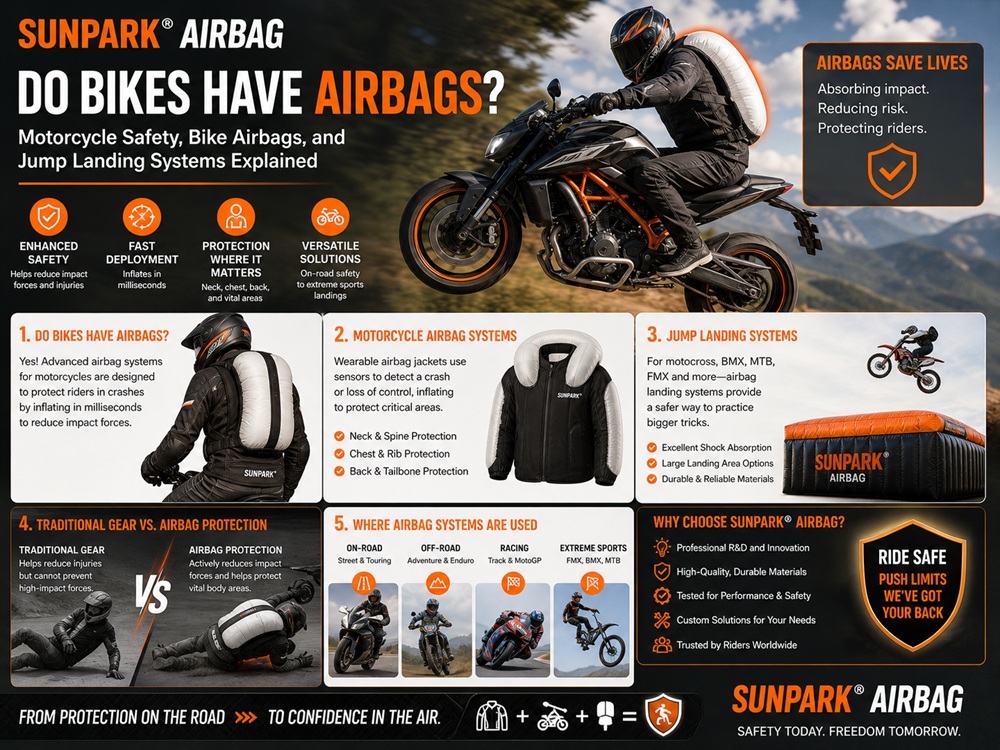
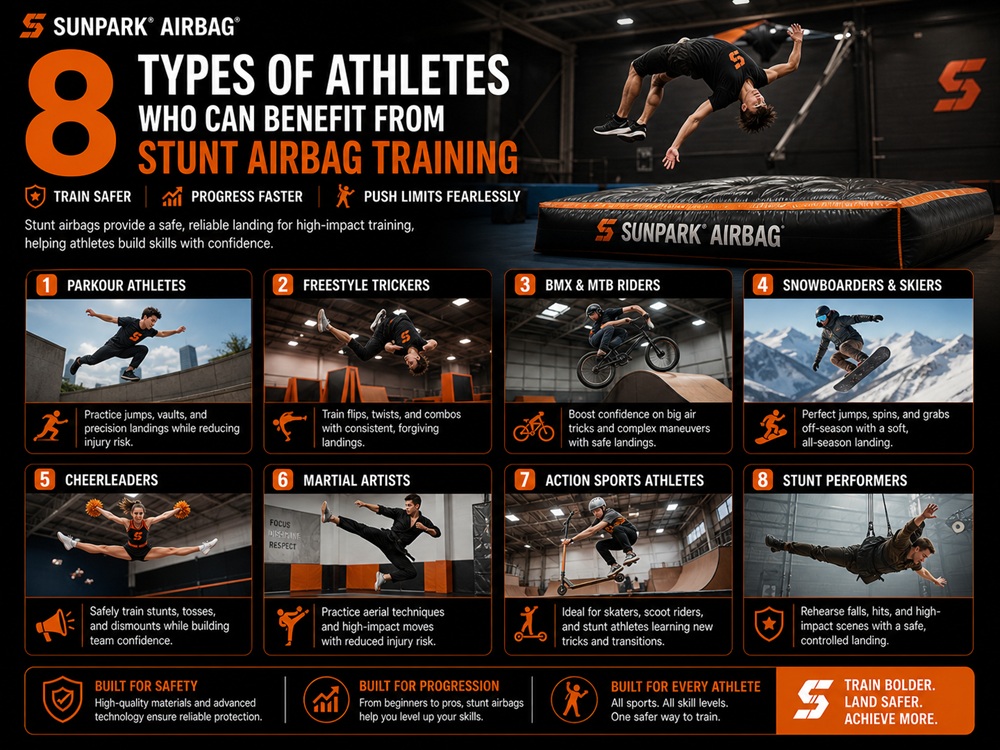
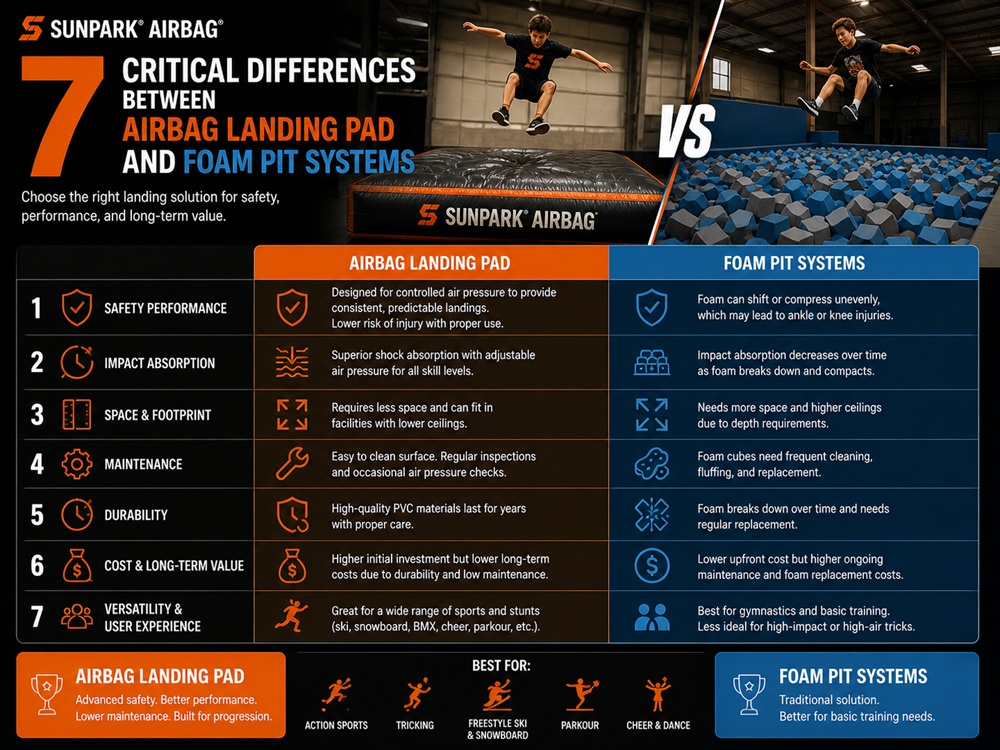
The word “airbag” is used across several industries, but the products are engineered for different jobs. Automotive airbags are compact, single-event restraint devices installed in vehicles. Sports landing airbags are larger inflatable structures intended to receive a person after a jump, trick or training movement.
This distinction is essential when interpreting the number of deaths airbags have prevented. The NHTSA lives-saved estimate refers to frontal airbags in passenger vehicles. It does not measure deaths prevented by freestyle airbags, MTB landing airbags, trampoline airbags or other sports landing systems.
| Factor | Automotive airbag | Sports landing airbag |
|---|---|---|
| Primary purpose | Supplemental occupant restraint during a vehicle crash. | Provide a landing surface for sports practice and skill progression. |
| Deployment or use | Inflates automatically in qualifying crash conditions, generally as a single-event device. | Inflated and prepared before use; designed for repeated training sessions when operated and maintained correctly. |
| Typical environment | Vehicle cabin. | Ski resorts, bike parks, action-sports facilities, gyms and leisure venues. |
| Risk-management role | Helps reduce occupant injury risk in specific collisions. | Can provide a more forgiving landing environment for selected maneuvers. |
| Key safety controls | Correct restraints, system diagnostics, recalls and qualified repairs. | Correct setup, pressure management, landing-zone design, inspection, supervision and user training. |
Can a sports landing airbag prevent injuries?
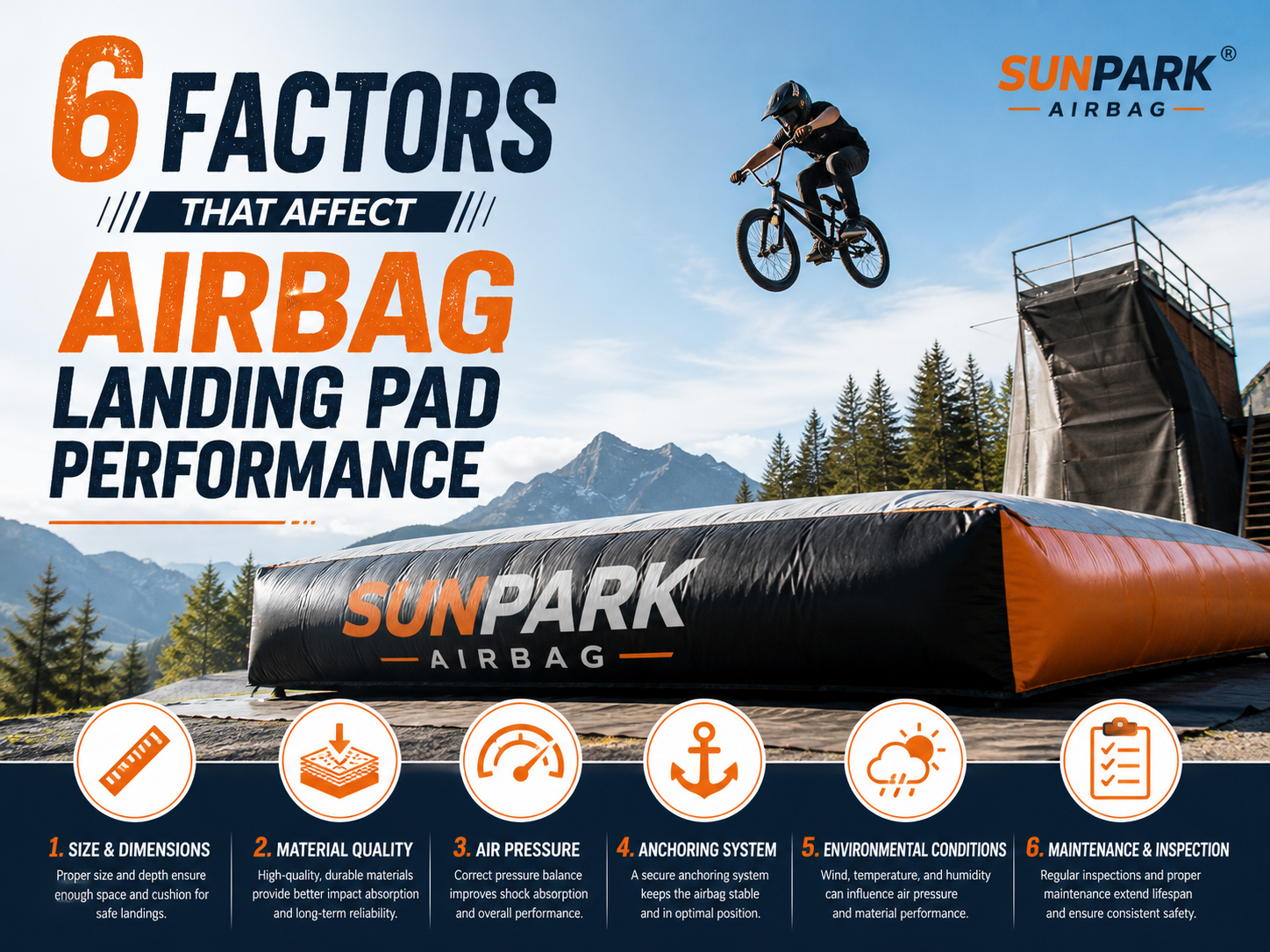
A properly selected and operated sports landing airbag can help reduce the consequences of certain training falls by providing a landing surface designed for the activity. That does not mean it eliminates injury risk. Landing technique, jump height, approach speed, airbag dimensions, inflation pressure, surface condition and the rider’s skill all influence the outcome.
For a bike facility, a purpose-built MTB airbag landing system may be more appropriate than adapting equipment intended for another sport. For ski and snowboard training, a halfpipe airbag is designed around a different approach and landing profile. The right equipment must match the sport and the facility’s operating plan.
Where sports airbags fit into a training program
We recommend treating a landing airbag as one layer in a controlled progression program, not as permission to attempt advanced tricks without preparation. Coaches should set skill prerequisites, define permitted maneuvers, inspect the equipment, establish access rules and stop sessions when conditions are unsuitable.
Facilities planning a broader action-sports setup can also review landing airbag solutions and this practical guide to freestyle airbags and safer progression.
7. Who Benefits from Airbags—and Who Should Not Rely on Them Alone?
For vehicle occupants
Drivers and passengers benefit from a correctly functioning vehicle airbag system when it is used as designed. Families should pay particular attention to age-appropriate child restraints, correct rear-seat positioning and the vehicle owner’s instructions. An active frontal airbag can be dangerous for a rear-facing child restraint placed in the front passenger seat.
Commercial drivers and fleet managers should prioritize vehicles with a complete, functioning restraint system and maintain a reliable inspection and repair process. If an airbag warning light remains illuminated, arrange a qualified diagnostic inspection rather than assuming the system will work normally.
For sports facilities and action-sports operators
Sports landing airbags can be useful for facilities that need a controlled landing area for coaching, skill development or supervised recreational use. They are most appropriate when the facility has a defined user group, a suitable site layout, trained supervision and a maintenance plan.
They are not a good fit for operators who expect a product to compensate for poor coaching, inadequate run-up space, unsuitable landing geometry or uncontrolled access. For commercial users, the operating system around the airbag is just as important as the inflatable structure itself.
Who does not need a sports landing airbag?
A casual rider practicing basic skills in an ordinary setting may not need a commercial-scale landing airbag. Nor is an airbag automatically the right solution for every gym, trampoline park or bike venue. The decision should follow the activity, user volume, available space, supervision model and risk assessment—not the appeal of the equipment alone.
8. Common Airbag Safety Mistakes and Misconceptions
- Assuming airbags replace seat belts. They are supplemental restraints. Occupants should wear seat belts on every trip.
- Believing an airbag prevents every fatality. Airbags reduce risk in defined crash situations; severe crashes can still be fatal.
- Judging vehicle safety by airbag count. The full vehicle safety package and crashworthiness matter more than a headline number.
- Ignoring recalls or warning lights. A fault or unrepaired recall can compromise the system. Check the vehicle identification number through the relevant official recall service.
- Using a damaged or improperly repaired vehicle. After deployment or collision damage, the restraint system must be inspected and repaired according to the manufacturer’s procedures.
- Confusing automotive and sports airbags. They are different technologies with different performance goals and testing requirements.
- Assuming a sports airbag makes every trick safe. A landing airbag still requires appropriate skill progression, supervision, setup and inspection.
- Choosing sports equipment by price alone. Dimensions, construction, airflow design, intended use, service support and maintenance requirements should all be evaluated.
9. Buying Considerations: What Should You Check Before Choosing an Airbag?
The right buying checklist depends on whether you are purchasing a vehicle or specifying an inflatable landing system. These are separate buying decisions and should not be mixed.
When buying a vehicle
- Confirm the restraint equipment: Review the manufacturer’s specifications for frontal, side, curtain and other airbags.
- Check recalls: Search the vehicle’s identification number through the official government recall database.
- Inspect warning indicators: Have persistent airbag or supplemental restraint system warnings diagnosed by a qualified technician.
- Review collision history: Ask whether airbags have deployed and whether all required components were replaced correctly.
- Evaluate the whole safety package: Consider crash-test results, seat belts, child-seat compatibility, structural performance and driver-assistance technology.
When choosing a sports landing airbag manufacturer
For commercial users, the lowest quotation is rarely the best decision if it leaves unanswered questions about product design, installation, operating limits or after-sales support. A reliable manufacturer should be able to explain how the proposed airbag matches the activity and the facility’s expected usage.
- Application fit: Confirm the product is designed for the specific sport, jump profile and user skill level.
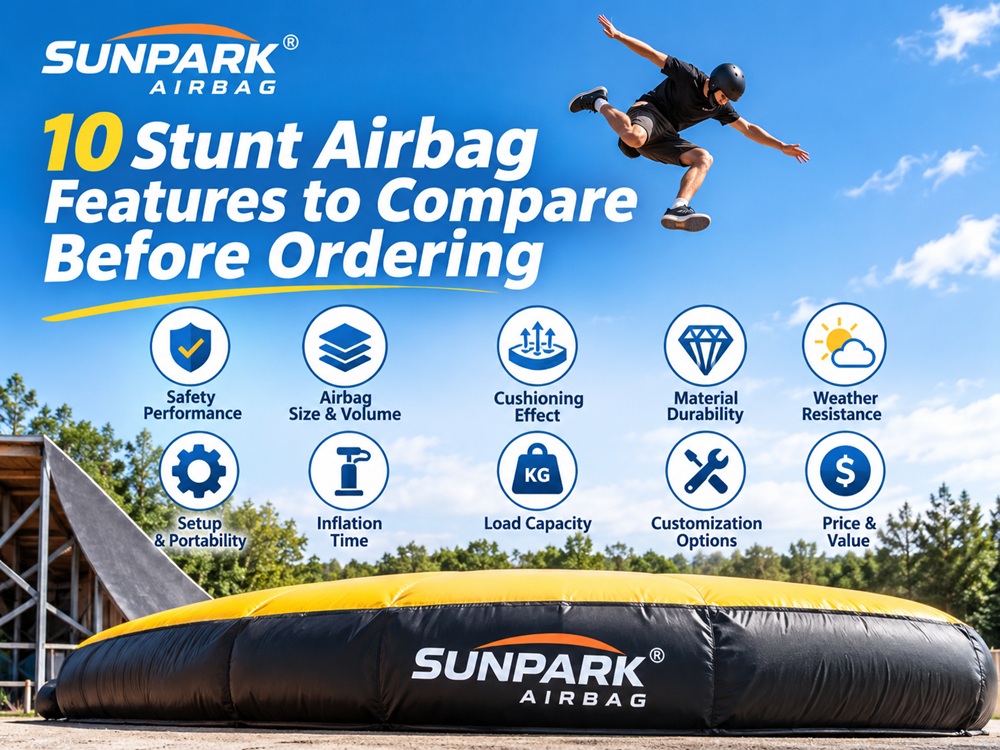
- Dimensions and layout: Check the landing area, height, side protection, run-out zone and compatibility with the site.
- Materials and construction: Ask for clear specifications covering fabric, seams, reinforcement, air chambers and repairability.
- Air management: Understand the inflation system, operating pressure guidance, blower requirements and how pressure is monitored.
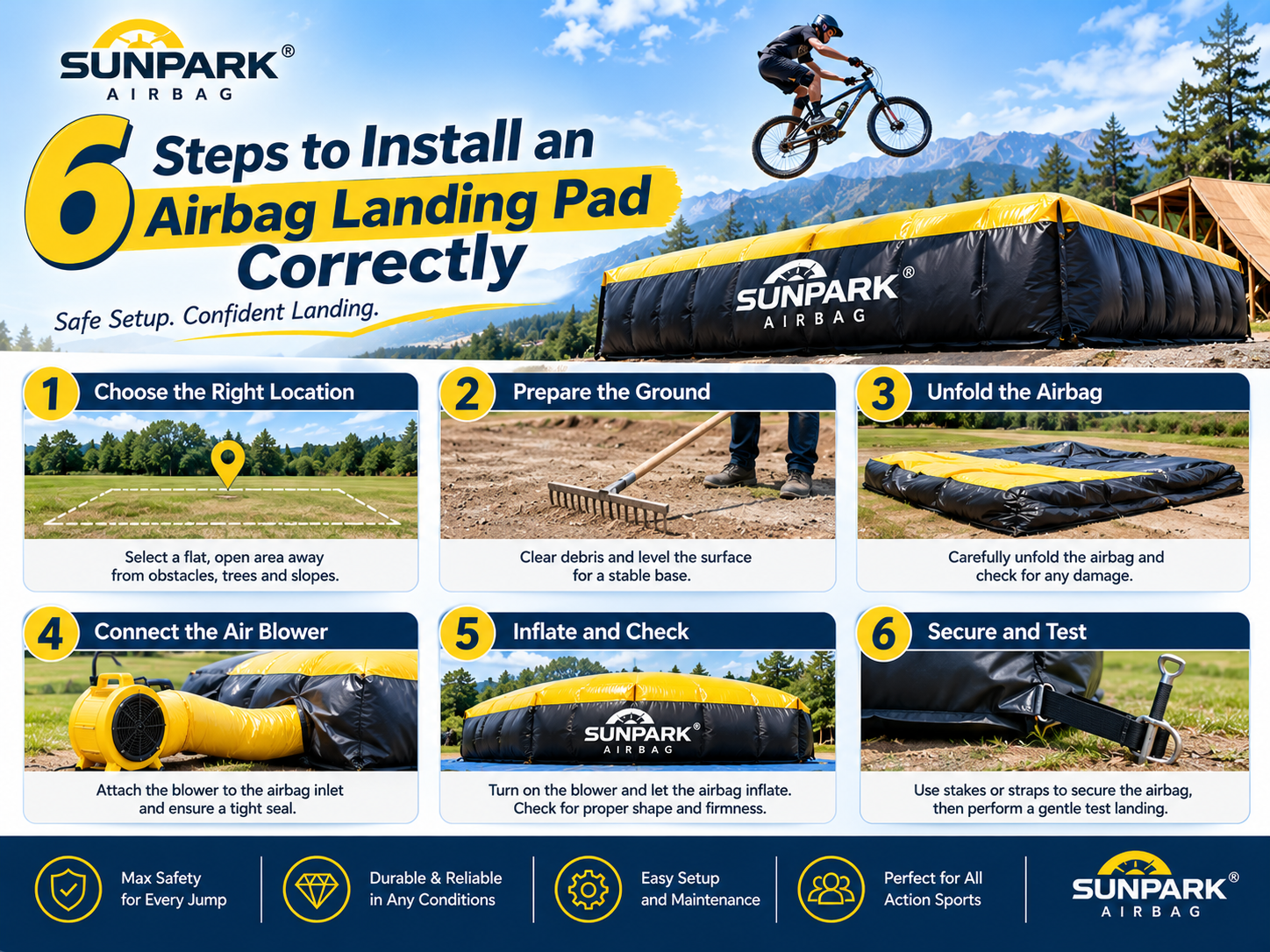
- Inspection and maintenance: Request written procedures for setup, daily checks, cleaning, storage and repair.
- Documentation: Ask for installation instructions, operating limits, warnings and any relevant test or quality documentation.
- Manufacturer experience: Review relevant project examples and whether the supplier has experience with facilities similar to yours.
- Support and spare parts: Confirm response times, replacement components, repair support and warranty conditions.
Cost-benefit analysis for a sports facility
A commercial landing airbag should be assessed as part of the facility’s operating model. The purchase price is only one cost. Include delivery, site preparation, installation, blower equipment, electricity, staff training, inspection time, maintenance, repairs and eventual replacement.
On the benefit side, consider whether the airbag enables a training activity that your facility could not otherwise offer, improves the quality of supervised progression, supports more structured coaching or strengthens the venue’s appeal to a clearly defined audience. If the airbag will be used only occasionally, a large custom installation may not justify its total cost.
For operators planning a new venue, our guide to trampoline park construction costs can help frame the wider facility investment. A bike-focused venue should compare its layout and operating needs with purpose-built inflatable MTB airbag solutions.
10. Expert Recommendation: What the Numbers Should—and Should Not—Tell You
The evidence that automotive airbags have saved more than 50,000 lives in the United States is compelling. It supports a straightforward decision: do not compromise on a vehicle’s airbag system, do not ignore a warning light or recall, and never treat an airbag as a substitute for a seat belt.
For sports and leisure facilities, the lesson is related but different. An inflatable landing system can be a valuable tool when it is engineered for the activity and integrated into a responsible training program. It should not be sold or operated as a guarantee against injury. A manufacturer’s claims should be supported by relevant specifications, clear operating instructions and practical maintenance guidance.
From our experience in sports inflatable products, the best equipment decision starts with the application. A snowboard landing zone, an MTB jump and a gymnastics training area place different demands on the landing surface. We recommend defining the intended maneuvers, user profile, available space and supervision plan before comparing products or requesting a quotation.

SUNPARK® AIRBAG: Sports Airbag Systems for Training and Leisure Facilities
With more than 10 years of experience, SUNPARK® AIRBAG provides freestyle airbags for ski resorts, theme parks, sports facilities and gymnastics venues around the world. The company focuses on the development and improvement of inflatable systems for extreme sports and leisure applications.
For facility owners and project planners, the right next step is to match the product design to the sport, site and operating requirements—not to assume that one airbag configuration suits every landing scenario.
Explore SUNPARK® AIRBAG products or review our FMX landing airbag solutions for motocross-related applications.
11. Quick Summary: How Many Deaths Have Airbags Prevented?
| Question | Practical answer |
|---|---|
| How many deaths have airbags prevented? | NHTSA estimates that frontal airbags saved more than 50,000 lives in the United States from 1987 through 2017. |
| Is this a worldwide figure? | No. It is a U.S. estimate for frontal airbags over a specified period. |
| Do airbags replace seat belts? | No. They are supplemental restraints and should be used with seat belts. |
| Do all airbags protect the same areas? | No. Frontal, side, curtain, knee and other designs have different protection roles. |
| Are sports landing airbags the same? | No. Sports airbags are designed for landing and training applications, not vehicle crash restraint. |
| What matters when buying a sports airbag? | Application fit, dimensions, materials, air management, inspection procedures, documentation and manufacturer support. |
| What is the best safety recommendation? | Use the correct equipment as designed, maintain it properly and never treat it as a guarantee against injury. |
12. Frequently Asked Questions
How many deaths have airbags prevented in the United States?
NHTSA estimates that frontal airbags saved more than 50,000 lives in the United States from 1987 through 2017. This is a statistical estimate based on crash data, not a count of every individual incident in which an airbag deployed.
Are the 50,000 lives saved figure for all types of airbags?
No. The widely cited figure refers to frontal airbags in passenger vehicles. It should not be treated as a combined total for frontal, side, curtain, motorcycle or sports landing airbags.
Do airbags prevent death in every car crash?
No. Airbags can reduce the risk of fatal injury in qualifying crashes, but their protection depends on crash direction and severity, occupant position, seat-belt use and vehicle design. Serious or unusually severe crashes can still be fatal.
Are airbags safer than seat belts?
They serve different but complementary roles. Seat belts are the primary occupant restraint, while airbags provide supplemental protection in certain crashes. The safest approach is to use both correctly.
Can an airbag cause injuries?
Yes. Airbags inflate rapidly and can cause injuries, particularly when occupants are too close, improperly positioned or not wearing seat belts. Correct seating position and compliance with vehicle instructions are important.
Do side airbags save lives too?
Side airbags and curtain airbags are designed to improve protection in certain side-impact and rollover situations, depending on the vehicle’s design. Their benefits should be evaluated using studies specific to those systems rather than added to the frontal-airbag estimate without qualification.
Can sports landing airbags prevent serious injuries?
A sports landing airbag can help manage certain training landings and may reduce the consequences of some falls when correctly selected and operated. It does not eliminate injury risk. Coaching, suitable progression, equipment inspection and controlled access remain essential.
How is a sports landing airbag different from a car airbag?
A car airbag is a compact supplemental restraint that deploys during a qualifying crash. A sports landing airbag is an inflatable landing structure prepared before use and designed for repeated training or recreational sessions. Their engineering, operation and safety requirements are different.
What should I check before buying a sports airbag?
Confirm the intended sport and user level, landing dimensions, construction materials, air management system, installation requirements, inspection procedures, repair support, documentation and the manufacturer’s experience with comparable projects.
Does a higher airbag count mean a safer vehicle?
Not necessarily. Airbag count is only one part of vehicle safety. Structural crashworthiness, seat belts, crash-test performance, child-seat compatibility and other safety systems should also influence the buying decision.
References
- National Highway Traffic Safety Administration (NHTSA) – Air Bags. Government information on airbag function, safety guidance and occupant protection.
- National Highway Traffic Safety Administration (NHTSA) – Seat Belts. Official guidance explaining the role of seat belts as the primary restraint and their relationship with airbags.
- Insurance Institute for Highway Safety (IIHS) – Airbags. Research and safety analysis covering airbag technologies and their role in crash protection.
Editorial note: The lives-saved figure in this article is tied to the NHTSA’s 1987–2017 estimate for frontal airbags in the United States. It is not presented as a worldwide total or as a measurement of sports-airbag outcomes.