Crashing on a BMX bike is an inevitability, but destroying your wrists, blowing out your knees, and snapping your chromoly fork because you do not understand basic BMX Landing Techniques is entirely preventable. Unlike mountain bikes, a standard freestyle BMX bike has zero mechanical suspension. When you launch off a six-foot dirt jump, you are the suspension. If you land stiff, the kinetic energy transfers directly through the frame into your joints. Mastering the transition from airborne flight to a smooth rollout dictates whether you progress to professional-level riding or spend your season in a physical therapy clinic.
From our experience engineering extreme sports training equipment and auditing progression facilities at Sunparkairbag, we routinely witness beginners attempting complex aerial maneuvers before they have mastered the fundamental physics of landing. You cannot bypass the basics. Transitioning from flatland hops to vertical transitions requires extreme precision. We will dissect the exact biomechanics of proper landings, explain how to minimize impact forces, and detail how modern training infrastructure is accelerating rider progression while eliminating catastrophic injury risk.
Quick Answer: The Core of BMX Landings
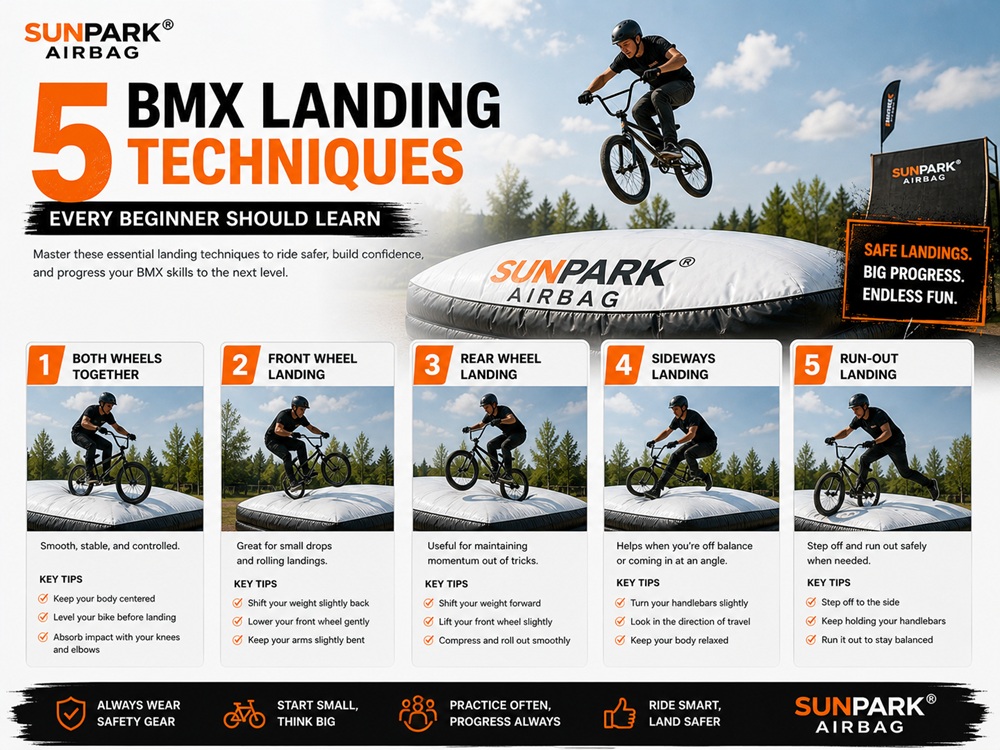
Mastering BMX Landing Techniques requires mastering the bike’s pitch and your body’s role as a shock absorber. The 5 essential techniques are: 1. The Rear-Wheel Bias (touching the back tire down first on flat landings to absorb shock); 2. Nose-Matching (pitching the front wheel down to perfectly align with the angle of a transition ramp); 3. The Four-Point Pump (using your arms and legs simultaneously to push into the landing and generate speed); 4. The Air-Space Correction (using hip and shoulder rotation mid-air to align the chassis before impact); and 5. The Controlled Eject (learning how to throw the bike away safely when a landing is unsalvageable). Learning these techniques initially on a BMX airbag landing setup is the fastest, safest way to build muscle memory without risking severe trauma.
What It Is: The Biomechanics of a BMX Landing
A BMX landing is the mechanical execution of reconnecting a 25-pound bicycle and a 160-pound rider with the ground while preserving forward momentum and mitigating vertical impact force. In freestyle BMX, landings occur in three primary environments: flat ground (dropping off a ledge), bank ramps (sloped surfaces), and transitions (curved quarter pipes or dirt landing hills). Each environment dictates a completely different physical approach.
Because BMX bikes are fully rigid, your arms and legs act as the dampers and coil springs. Understanding common BMX injuries and prevention starts with recognizing that landing heavy on your front wheel on a flat surface transfers hundreds of pounds of force directly into your scaphoid bone. Proper technique diffuses this force across the entire chassis of the bike and the major muscle groups of the rider.
How It Works: Kinetic Energy and Transition Angles
In most professional situations, a successful landing relies on matching trajectories. If you air over a box jump and land on the downward slope (the transition), gravity and forward momentum work together. If you match the angle of the bike to the angle of the ramp, the vertical kinetic energy of your fall is converted seamlessly into horizontal speed. We call this “pumping the tranny.”
If you fail to match the angle—for instance, landing flat on a steep transition—the bike’s frame acts as a brake. The suspension (your body) compresses violently, speed is lost, and the risk of blowing out a tire tube or snapping a chainstay increases exponentially. This is why commercial training facilities utilize landing airbag solutions to allow riders to feel the correct trajectory without the severe penalty of missing the angle on wood or concrete.
The 5 Essential BMX Landing Techniques
1. The Rear-Wheel Bias (Flat Landings)
When dropping from a ledge or airing to flat ground, never land with both wheels simultaneously. You must pull up slightly on the handlebars, allowing the rear wheel to strike the ground milliseconds before the front. As the rear tire compresses, you absorb the impact through your legs. The front wheel then drops, and your arms absorb the remaining secondary impact. This sequential absorption prevents your wrists from taking the brunt of the shock.
2. Nose-Matching (Transition Landings)
When landing on a dirt jump receiver or a wooden quarter pipe, the rear-wheel bias will get you killed. If you land rear-wheel first on a steep transition, you will instantly loop out and slam onto your back. You must push the handlebars forward mid-air to “nose-dive.” Your front wheel must match the exact downward angle of the ramp. As the front wheel touches down, the rear wheel naturally follows, creating a perfectly smooth, frictionless entry.
3. The Four-Point Pump
Surviving a landing is one thing; generating speed from it is another. As your wheels make contact with the transition, you must actively push the bike down into the ramp using both your arms and legs simultaneously. This “pump” uses the centrifugal force of the curved ramp to accelerate the bike without pedaling. Mastering this is mandatory for riding rhythm sections or pump tracks.
4. The Air-Space Correction
Beginners often freeze when a jump throws them off-axis. You cannot land sideways. If the bike kicks out mid-air, you must turn your head and shoulders toward your landing spot and actively wrench the handlebars and hips to realign the frame before touchdown. Developing this spatial awareness is significantly easier when practicing on inflatable MTB airbag solutions or BMX equivalent setups, where an off-axis landing merely results in a soft bounce.
5. The Controlled Eject (The Bail)
Knowing how to crash is a fundamental landing technique. If you are over-rotating a backflip or coming up severely short (casing) a gap, holding onto the bike will result in severe injury. You must learn to push the bike away from your body, spot your landing, and prepare to tuck and roll. You want your feet, then knees, then shoulder to absorb the impact in a rolling motion, rather than sticking your arms out rigidly to break the fall.
Benefits of Flawless Landing Execution
Executing pristine BMX Landing Techniques drastically extends the lifespan of both your body and your equipment. Casing jumps (landing the rear wheel on the sharp lip of the landing ramp) causes pinch flats, bends rims, and cracks bottom brackets. A rider with smooth technique can ride a lightweight frame for years, whereas a heavy, rigid lander will destroy heavy-duty chromoly components in a single season. Commercially, smooth riding allows you to maintain speed through complex park layouts, which is the defining metric in competitive park and dirt disciplines.
Limitations of Hard Surface Training
The primary limitation for beginners is fear. You cannot learn to nose-dive into a 10-foot quarter pipe if your brain is paralyzed by the physical threat of concrete. Traditional training involved stacking mattresses or building mulch pits, but these are unhygienic, inconsistent, and often hide dangerous hard spots. Learning complex landing techniques on hard surfaces inevitably leads to concussions and broken clavicles, abruptly halting progression.
Who Should Prioritize Landing Drills
Anyone riding park, dirt trails, or street transitions must prioritize these techniques. For commercial users—such as skatepark owners, extreme sports camp directors, and facility managers—providing the infrastructure for safe landing repetition is a massive revenue driver. Integrating a gym airbag for training allows you to safely host beginner clinics, attracting a demographic that would otherwise avoid extreme sports due to injury risks.
Who Does Not Need Aerial Landing Techniques
If you exclusively ride BMX flatland—a discipline focused on ground-based balance tricks and spinning maneuvers on the pegs—transition landing techniques are largely irrelevant to your daily riding. Your focus is on micro-balance and braking modulation, not absorbing high-velocity vertical impacts.
Common Landing Mistakes to Avoid
In our testing and observation, the most frequent beginner mistake is “dead-sailoring.” This occurs when a rider hits a jump, locks their arms and legs in a rigid panic, and refuses to adjust the bike mid-air. You must stay loose and dynamic. Another catastrophic error is landing with the brakes engaged. If you pull the brake lever during a transition landing, the wheels cannot roll to absorb the forward momentum, resulting in an immediate over-the-bars crash.
Commercial Buying Considerations for Training Facilities
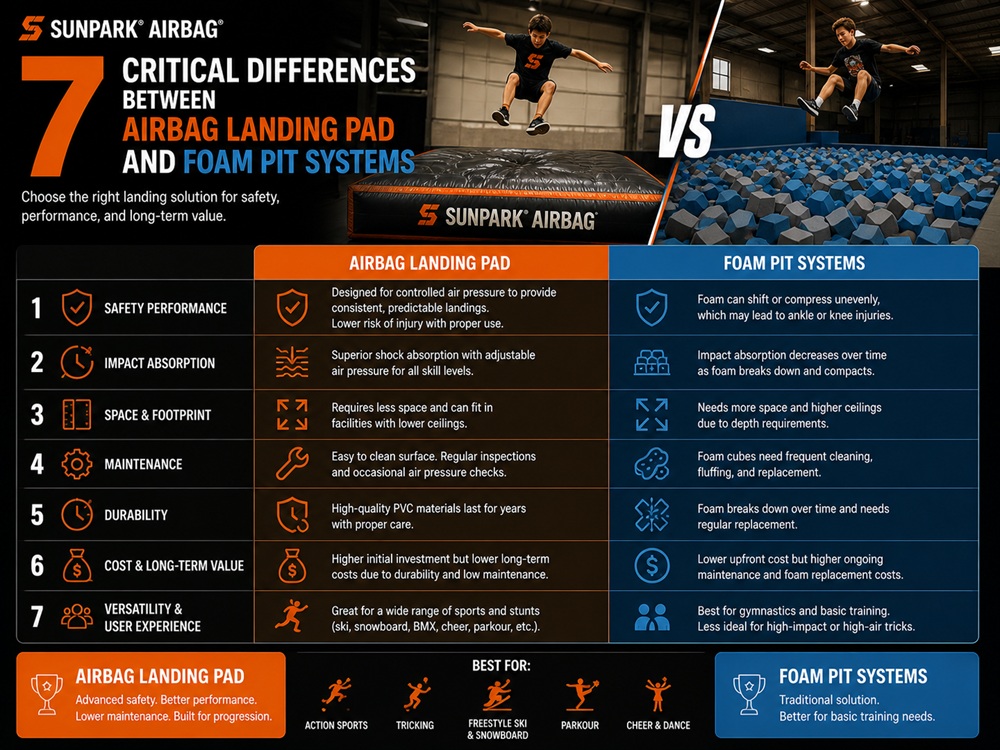
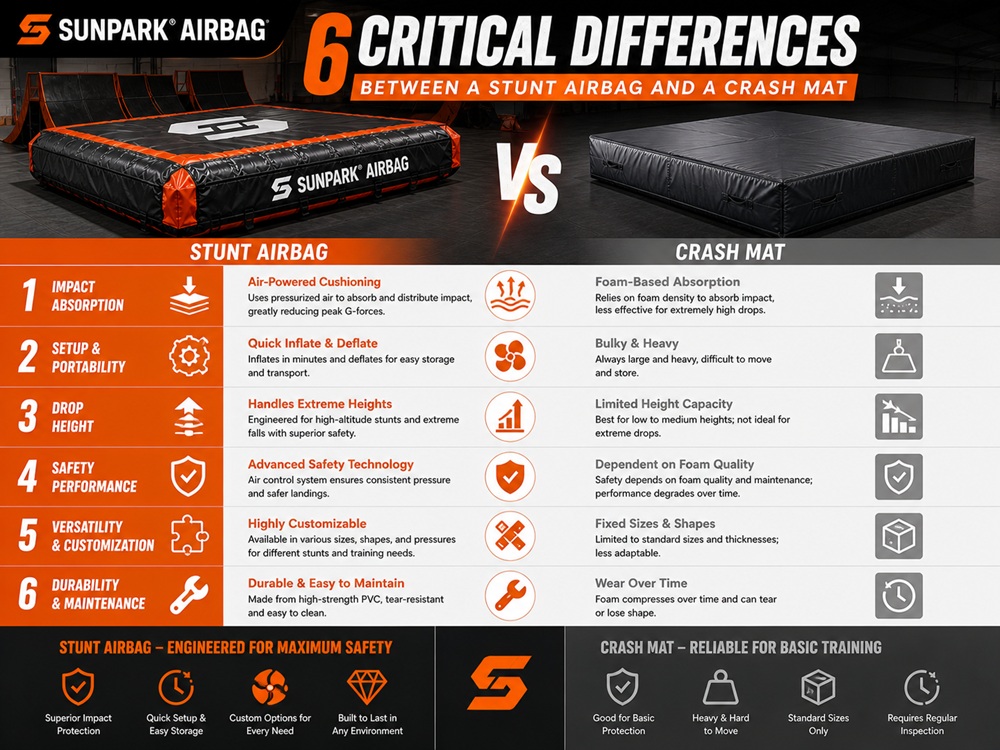
If you manage an action sports facility, relying on outdated foam pits is a massive operational liability. Foam pits are fire hazards, harbor bacteria, and require constant, expensive foam block replacement. When evaluating the trampoline park construction cost or extreme sports park build-out, replacing foam with an inflatable jump airbag drastically reduces maintenance overhead and liability insurance premiums.
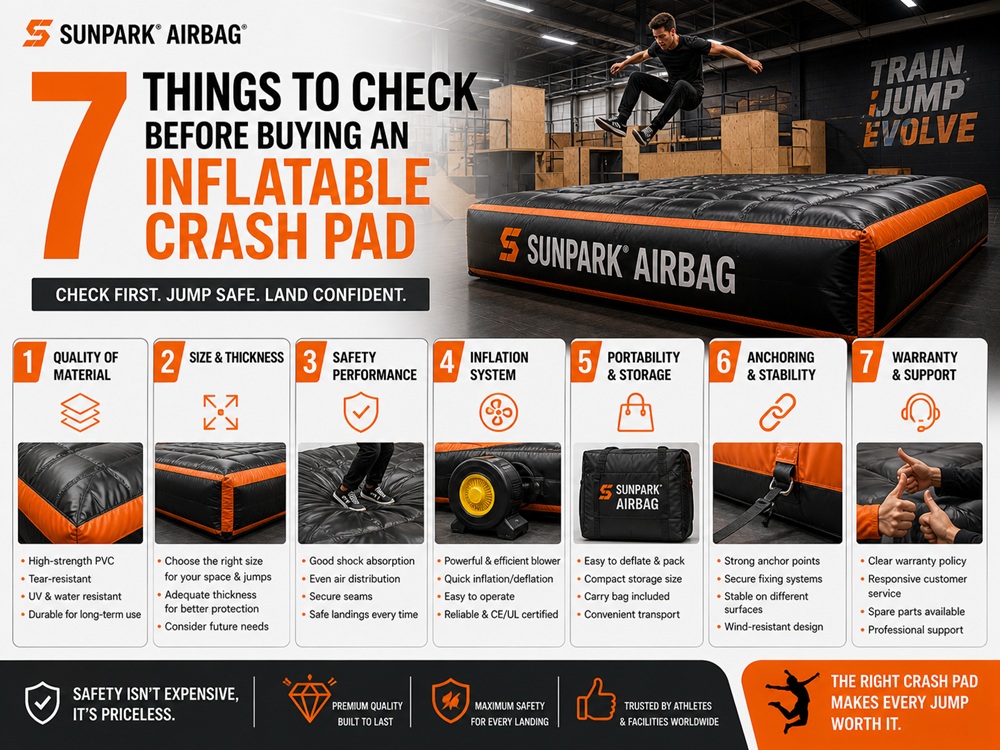
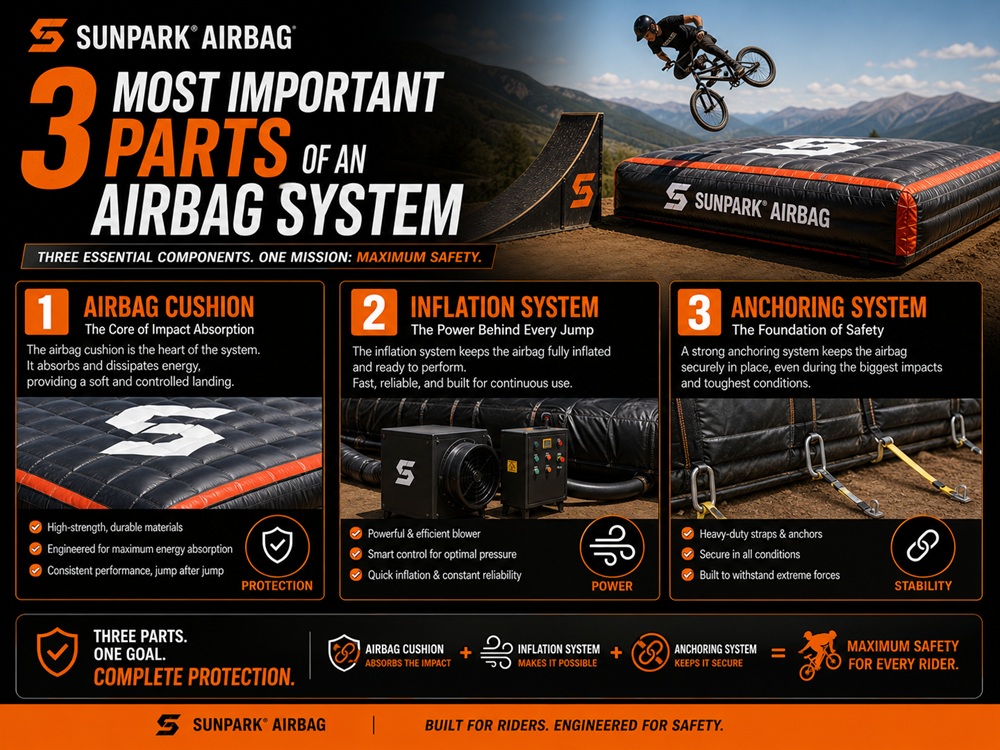
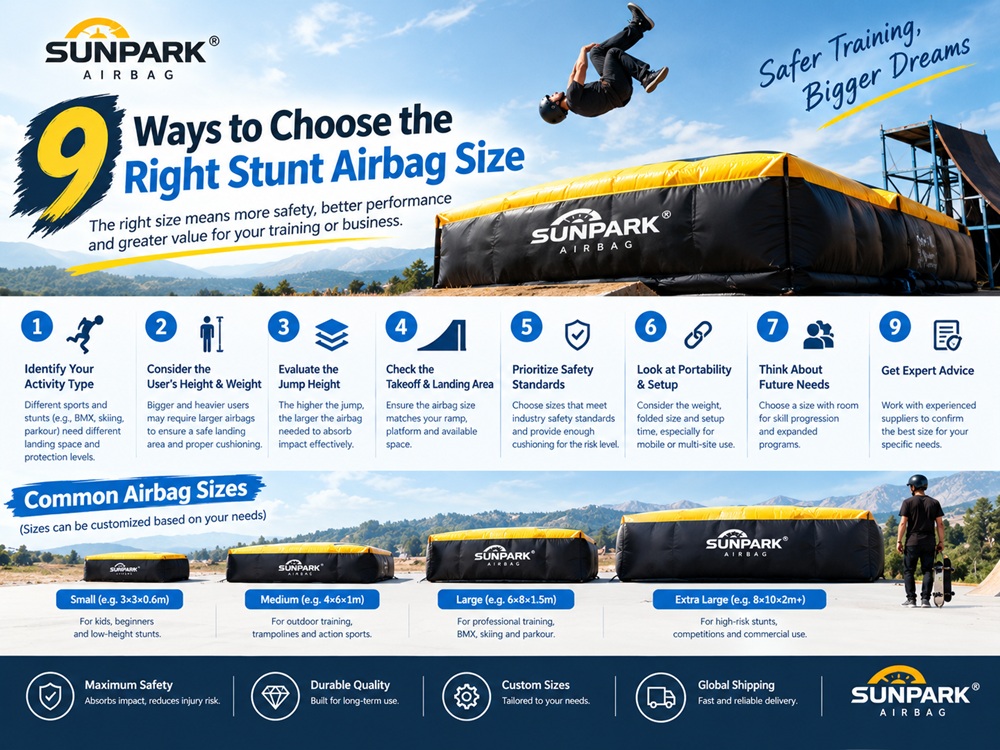
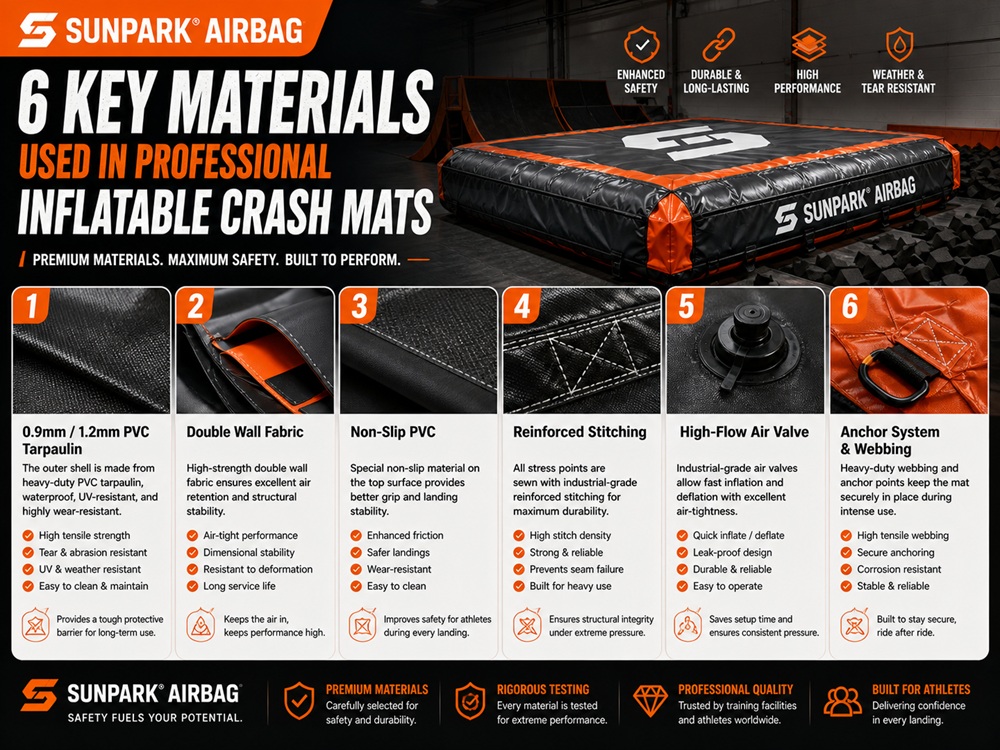
When sourcing the best airbag landing systems 2026, you must demand heavy-duty 0.55mm to 0.9mm PVC Tarpaulin, UV protection for outdoor use, and advanced internal air-pillar construction that mimics the angle of a real dirt landing without tossing the rider violently upon impact.
Summary and Comparison Tables
| Environment | Required Technique | Primary Body Action |
|---|---|---|
| Flat Ground (Drops) | Rear-Wheel Bias | Pull up slightly; absorb heavily with knees first. |
| Dirt Jumps / Box Jumps | Nose-Matching | Pitch front wheel down to match landing slope. |
| Rhythm Sections | Four-Point Pump | Push down aggressively with arms and legs to gain speed. |
| Failed / Short Jumps | Controlled Eject | Push bike away, prepare for a rolling ground impact. |
| Environment Type | Injury Risk | Progression Speed | Maintenance Cost (Commercial) |
|---|---|---|---|
| Concrete / Wood Ramps | Extremely High | Slow (Fear limited) | Low |
| Traditional Foam Pits | Moderate | Moderate (Hard to exit) | Very High (Foam breakdown, hygiene) |
| Inflatable Airbag Landings | Very Low | Very Fast (High repetition) | Low (Occasional patching, blower power) |
| Pros (Advantages) | Cons (Limitations) |
|---|---|
| Completely eliminates the fear of hard impacts for beginners. | Requires a continuous power source for heavy-duty blowers. |
| Riders can ride away from tricks, unlike sinking into a foam pit. | High initial capital expenditure for commercial facilities. |
| Customizable firmness settings via adjustable air vents. | Sharp pedals or exposed metal can theoretically puncture the top sheet if not maintained. |
| Highly hygienic, easy to clean, and weatherproof. | Requires adequate footprint and ceiling clearance for installation. |
Expert Recommendation
We recommend that any serious beginner bypass the traditional, painful method of learning on hard dirt or concrete. The human body is not designed to absorb repetitive high-impact trauma. To rapidly master your pitch control, spatial awareness, and muscle memory, you must practice in a high-repetition, low-consequence environment. If you are a commercial facility operator or a dedicated backyard rider, upgrading your infrastructure from a dangerous dirt receiver to a professional-grade airbag is the single best investment you can make for the longevity of your riders.
For a detailed breakdown on why modern facilities are abandoning foam entirely, review our foam pit vs airbag comparison to understand the profound hygiene and safety upgrades modern inflatables provide.
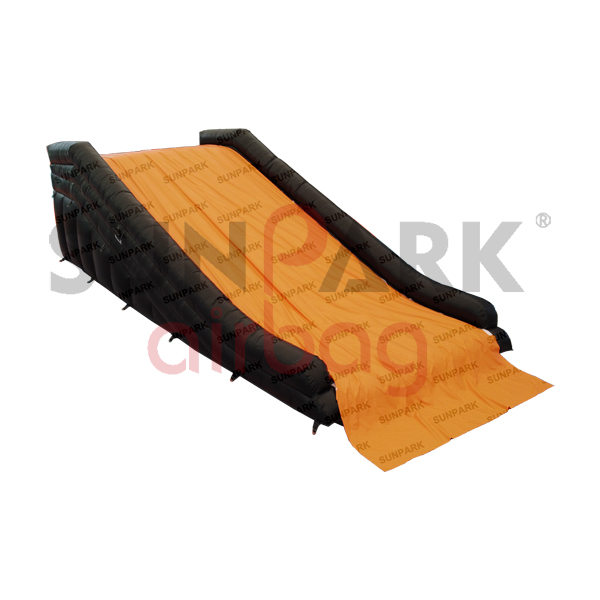
Sunparkairbag Inflatable BMX Landing Ramp
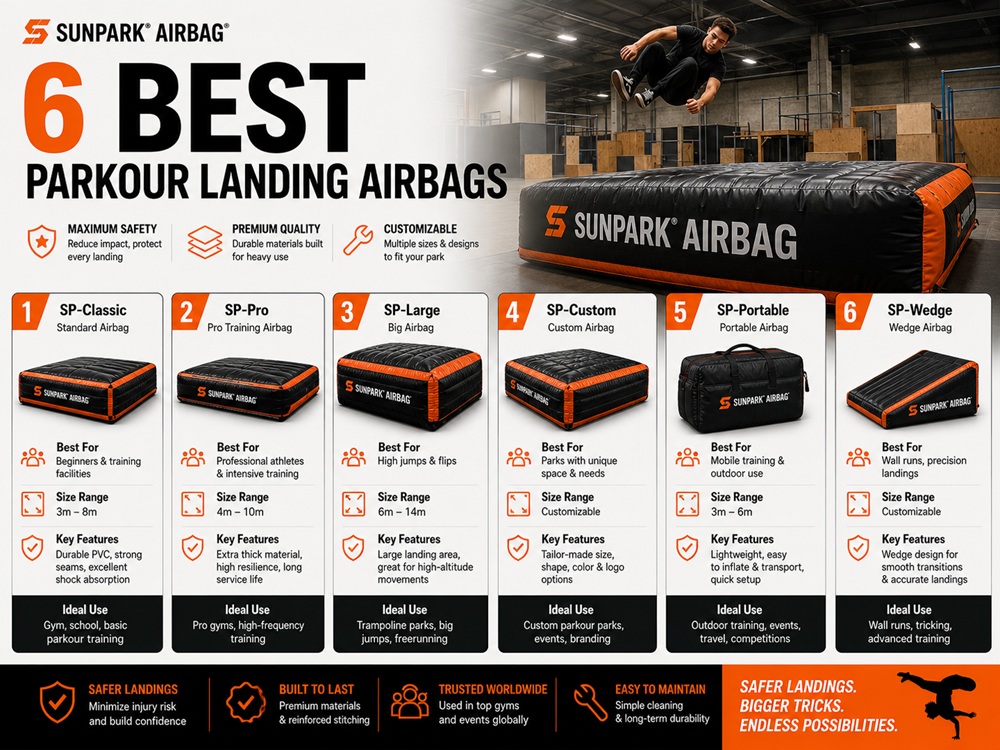
Engineered for elite training facilities and backyard progression setups, this inflatable landing ramp mimics the exact geometry of a dirt transition while providing a forgiving, ride-out capable surface.
- Material: 0.55mm PVC Tarpaulin for airbag, 0.9mm PVC Tarpaulin for top sheet. Water-proof, flame-retardant, UV-protected, lead and phthalate free.
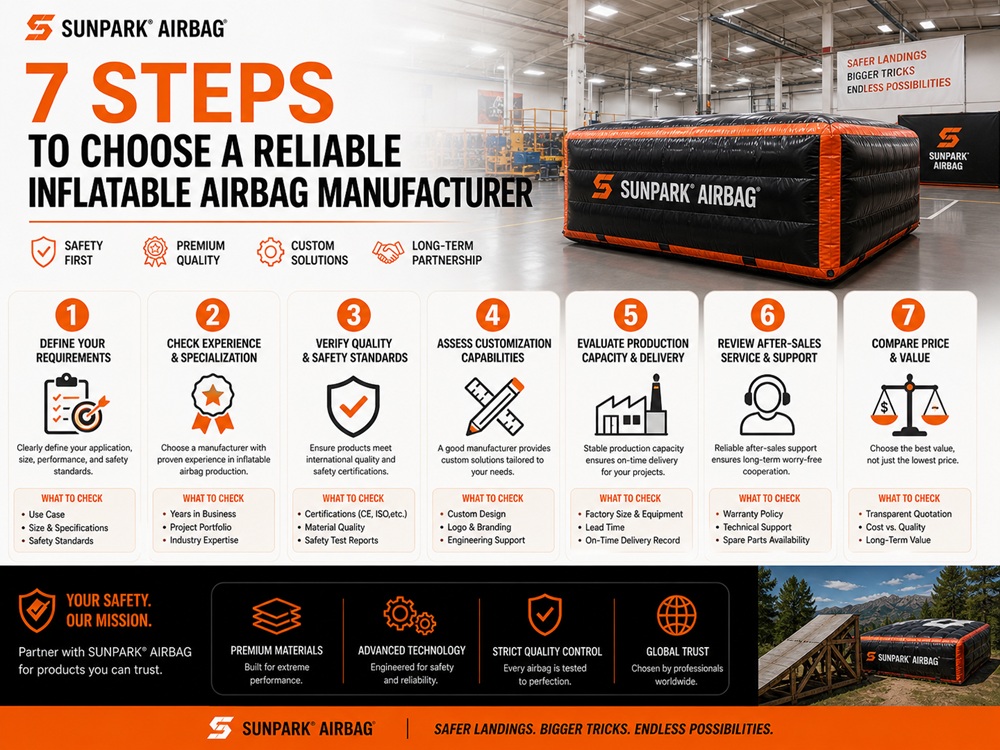
- Workmanship: Crafted by technicians with 5+ years of specialized extreme sports airbag experience.
- Customization: Fully customized size, color, and digital/silk-screen branding available to match your park’s aesthetic.
- Accessories Included: Heavy-duty blowers, professional repair kit, and heavy-duty carrying bags.
- Production Time: Rapid turnaround of approximately 12 working days.
- Pricing & Logistics: Affordable, negotiable pricing (HS Code: 9506990000).
Frequently Asked Questions
Should I use my brakes when landing a BMX jump?
No, you must never engage your brakes upon touchdown. Pulling the brake lever stops the wheels from rolling, preventing the kinetic energy from transferring into forward momentum. Landing with locked brakes on a transition will instantly eject you over the handlebars. Keep your fingers completely off the brake levers until you have successfully rolled out of the landing zone.
How do I stop my feet from blowing off the pedals when I land?
Feet blowing off pedals is caused by stiff, locked legs. When you land rigid, the shock bounces you upward off the bike. You must use your knees as suspension, actively bending them upon impact. Furthermore, ensure you are using high-quality pedals with aggressive metal pins, paired with flat-soled skate shoes featuring a waffle or honeycomb grip pattern for maximum pedal adhesion.
Is an airbag landing better than a foam pit for learning BMX tricks?
Yes, an airbag landing is vastly superior. Foam pits act as a trap; once you land, you must drag a heavy bike out of 6 feet of foam, which is exhausting and severely limits the number of practice repetitions you can perform. Modern airbag landing ramps are designed to be firm enough to ride away from a successful trick, but soft enough to absorb the impact of a crash, allowing for continuous, high-volume training.
Authoritative Industry References
To ensure our safety and progression guidelines adhere to recognized sports science and extreme sports facility standards, we reference data from the following authorities:
- USA BMX – The official sanctioning body for bicycle motocross in the United States, providing standardized track design parameters and safety protocols for riders of all skill levels.
- Centers for Disease Control and Prevention (CDC) – HEADS UP – Federal guidelines on concussion mitigation, helmet safety standards, and traumatic brain injury prevention in action sports.
- American Academy of Orthopaedic Surgeons (OrthoInfo) – Clinical data outlining the biomechanics of impact absorption and the prevalence of scaphoid fractures and ligament tears in un-suspended extreme sports.
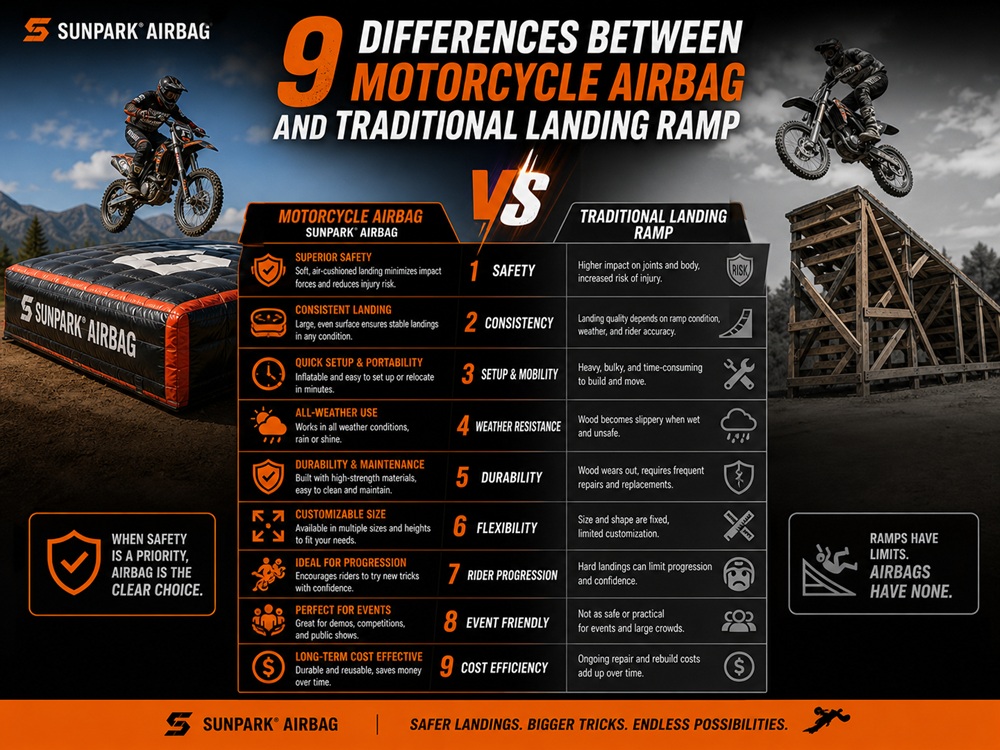
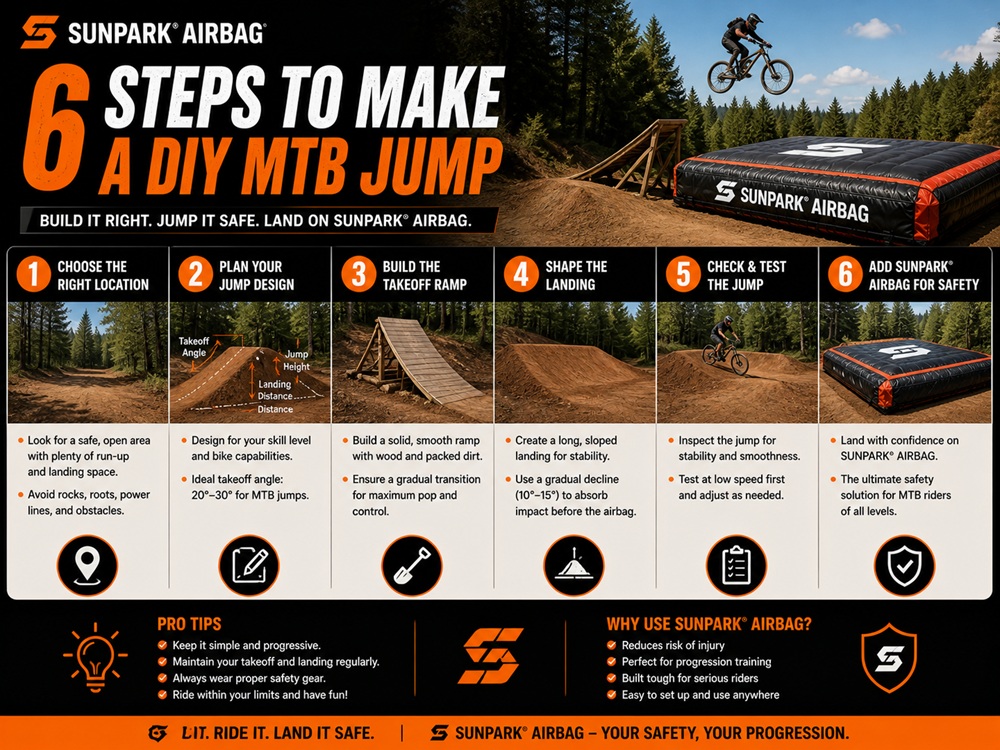
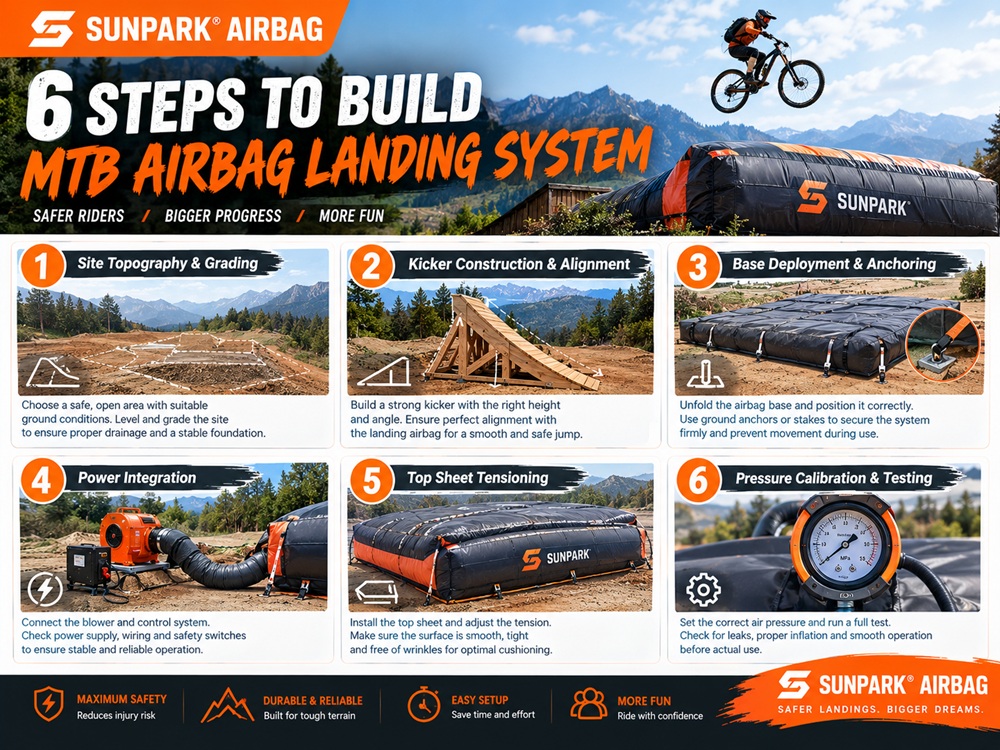
For facility managers exploring diverse safety infrastructure, review the latest innovations in motorcycle airbag systems 2026 or browse comprehensive MTB airbag landing system specifications.