There is a dangerous, pervasive myth in the extreme sports community that broken bones, torn ACLs, and severe concussions are simply a required rite of passage. This is fundamentally false. While high-impact sports inherently carry risk, the vast majority of catastrophic trauma does not happen during professional competition—it happens on Tuesday afternoons during sloppy, unstructured progression sessions. When riders execute flawed mechanics over unforgiving surfaces, physics always collects its toll. Understanding and eliminating fundamental BMX Practice Mistakes separates the riders who enjoy decades of progression from those who spend their seasons sitting in physical therapy clinics.
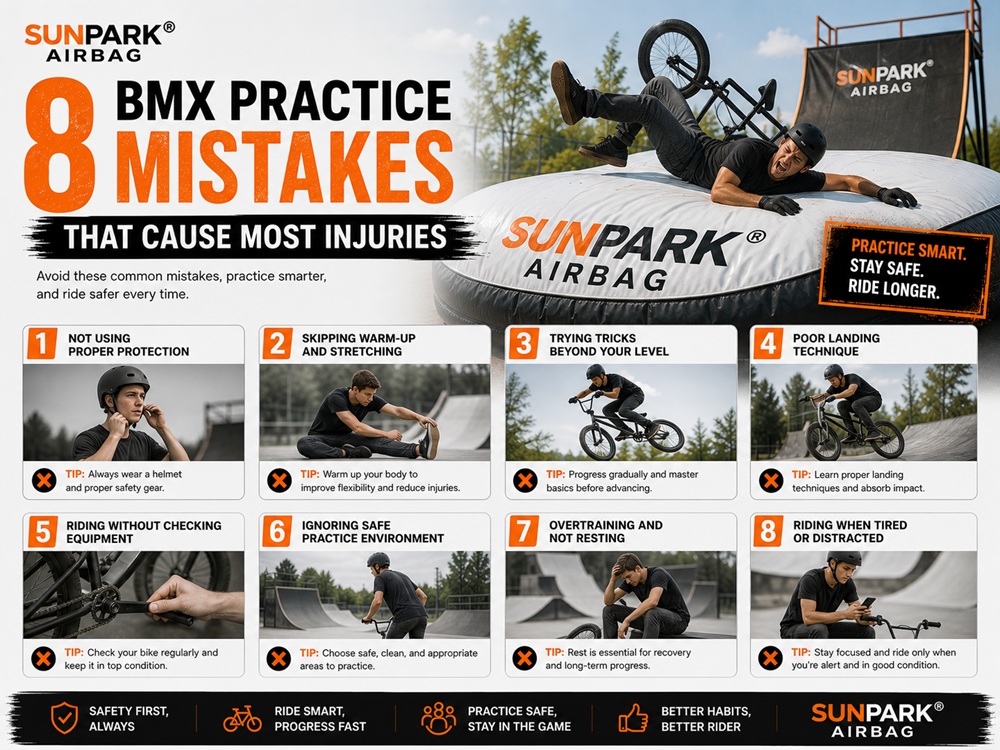
From our experience engineering advanced action sports safety infrastructure at Sunparkairbag, we have audited thousands of crash scenarios. The data is absolute: riders are not getting hurt because the tricks are impossible; they are getting hurt because their practice protocols are archaic. In most professional situations, elite athletes do not “huck and pray” over hard dirt or concrete. They utilize calculated, layered progression. In this definitive guide, we will break down the exact mechanical, psychological, and infrastructural BMX Practice Mistakes you are making, and provide uncompromising, practical solutions to keep you on the bike and out of the hospital.
Quick Answer: How to Stop Crashing Hard
The most catastrophic BMX Practice Mistakes stem from a failure to use proper progression infrastructure and a misunderstanding of aerial biomechanics. The top mistakes include: 1) Learning new rotations over hard dirt or concrete instead of utilizing a BMX airbag landing; 2) “Dead Sailoring” (freezing up mid-air); 3) Failing to execute a controlled bailout; 4) Ignoring central nervous system fatigue; 5) Target fixation on the front tire rather than the landing; 6) Incorrect tire pressure causing rim-outs or bounces; 7) Misjudging transition speed; and 8) Skipping step-up jumps during progression. We recommend every serious rider and commercial facility implement inflatable landing solutions to eliminate the brutal consequences of the learning curve.
What It Is: The Anatomy of a BMX Crash
Before we dissect specific BMX Practice Mistakes, we must understand the biomechanics of a crash. When a 160-pound rider and a 25-pound chromoly bicycle fall from a height of 10 feet onto compacted dirt, the kinetic energy must go somewhere. If the rider lands perfectly on the transition, the forward momentum absorbs the vertical force. If the rider lands flat, off-axis, or cases the jump (hitting the lip of the landing), that kinetic energy is transferred instantly into the rider’s wrists, collarbones, and knees.
Addressing common BMX injuries and prevention starts with recognizing that human bones are not designed to absorb raw vertical drops onto concrete. The purpose of practice is to build muscle memory so that the body automatically executes the correct geometric angles in the air. When you practice incorrectly, you build flawed muscle memory, guaranteeing future trauma.
How It Works: Progression Mechanics
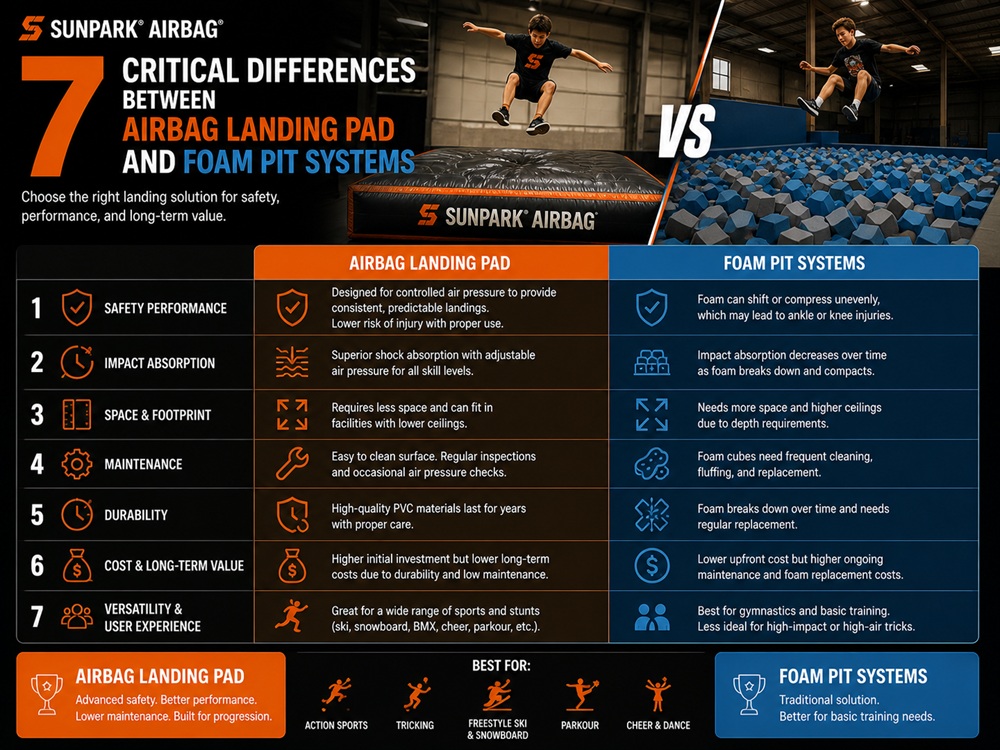
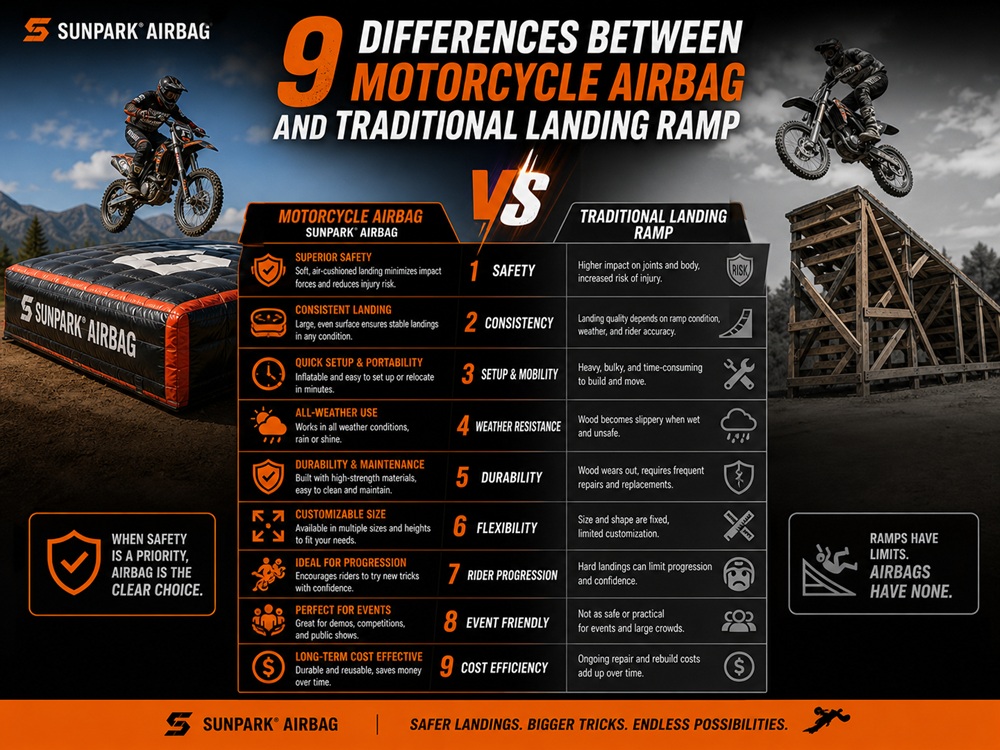
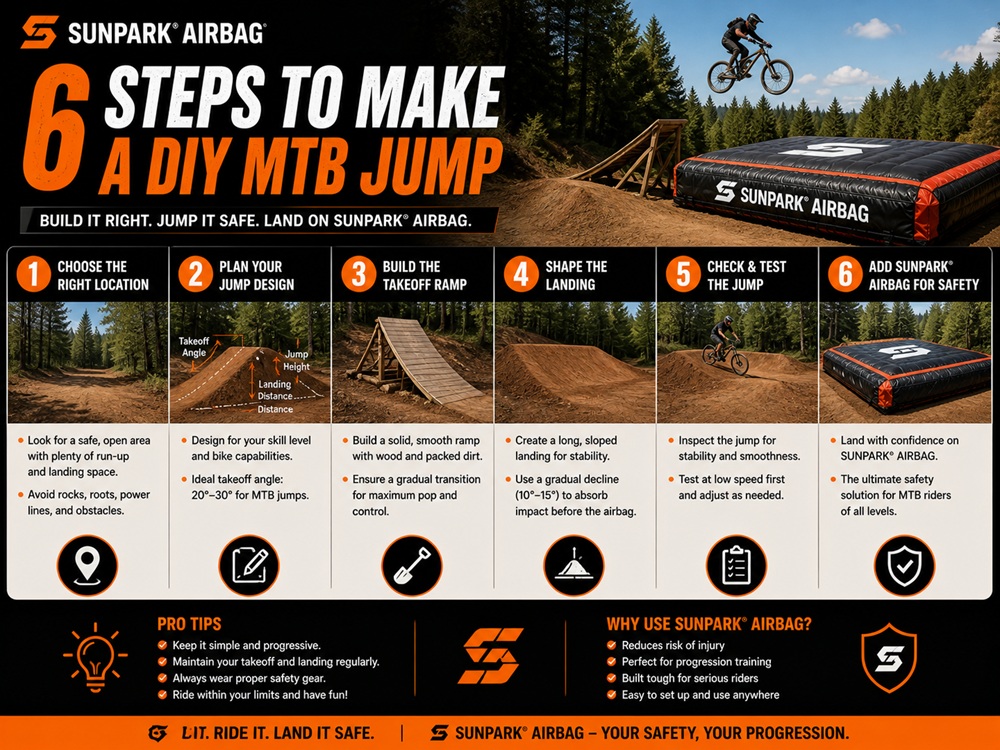
Modern progression mechanics rely on a stepped risk system. You do not learn a double backflip by trying it on a dirt jump. You learn the rotation into a foam pit, you perfect the landing gear deployment onto a resi-mat or a inflatable jump airbag, and only when the muscle memory is flawless do you take it to a hard surface. This multi-stage approach ensures that when you inevitably under-rotate during the learning phase, the infrastructure absorbs the kinetic energy, not your clavicle.
The 8 Critical BMX Practice Mistakes
1. Learning New Rotations Over Hard Surfaces
This is the cardinal sin of action sports. Attempting a 360, a tailwhip, or a backflip for the first time over dirt or wood is an unacceptable risk. Your spatial awareness will fail on the first few attempts. For beginners and advanced pros alike, the absolute best practice method is utilizing a forgiving receiver. Commercial parks heavily rely on landing airbag solutions because they allow riders to ride out of successful tricks, but safely absorb the impact when the bike slides out.
2. “Dead Sailoring” (Freezing in the Air)
When panic sets in off the lip of a jump, riders often lock their arms and legs, stiffening their entire body. This is called a “dead sailor.” When you freeze, you lose all gyroscopic control over the bicycle. A stiff body cannot absorb a landing, resulting in severe wrist sprains and blown ankles. You must learn to stay loose, actively pumping off the lip and turning the handlebars slightly to maintain physical engagement with the bike during flight.
3. Failure to Execute a Controlled Eject (Bailing)
A massive percentage of broken bones occur because the rider refuses to let go of the bicycle. If a trick is lost, holding onto the metal frame ensures you will crash directly into it. One of the most vital BMX Practice Mistakes to correct is learning how to throw the bike away from your body and prepare for a rolling landing. You must train your reflexes to eject the bike laterally and spot your landing zone to tuck and roll.
4. Ignoring Central Nervous System (CNS) Fatigue
Riding BMX is highly taxing on the CNS. After two hours of intense jumping, your fast-twitch muscle fibers lose their explosive reaction time. Attempting a highly technical maneuver at the end of a long session is when most catastrophic casing (coming up short) happens. In most professional situations, athletes limit high-risk trick practice to the first 45 minutes of a session.
5. Incorrect Tire Pressure for the Environment
Running 40 PSI in park tires might feel grippy, but when you land heavily on a wooden ramp, the tire will compress entirely, causing the metal rim to strike the ramp and throwing you violently over the handlebars. Conversely, running 100 PSI on slippery concrete reduces your contact patch to almost nothing, causing instant washouts. Your tire pressure must meticulously match your riding surface and your body weight.
6. Target Fixation on the Front Tire
Your body follows your eyes. If you stare at your front tire or the gap between the jumps while airborne, you will nose-dive straight into it. You must keep your chin up and spot the landing transition. Proper practice dictates that you identify your landing zone before your rear wheel even leaves the lip of the jump.
7. Misjudging Transition Speed
Speed is your friend; braking is your enemy. Riders frequently panic approach a jump and grab the brakes right before the lip. This compresses the front suspension (or shifts weight violently forward on a rigid BMX), killing your upward trajectory. The result is a dead-weight launch that almost always results in coming up severely short. Practice speed runs alongside the jump to gauge velocity before committing.
8. Refusing to Utilize Gym and Training Infrastructure
The “street purity” mentality—believing that real riders only learn on concrete—is foolish. Olympic-level BMX athletes train heavily in structured facilities. Utilizing a gym airbag for training allows for limitless repetition. Repetition builds the neural pathways required for flawless execution. Skipping the gym phase guarantees a prolonged, painful learning curve.
Benefits of Structured Practice
Eliminating these BMX Practice Mistakes provides immediate, tangible benefits. First, your progression curve accelerates exponentially. When the fear of a broken femur is removed by using an airbag, riders are willing to attempt and land tricks in an afternoon that would take months of psyching up on dirt. Second, you extend your riding career. Micro-traumas to the joints accumulate. By softening the learning phase, you preserve your cartilage and ligaments for decades of future riding.
Limitations of Old-School Methods
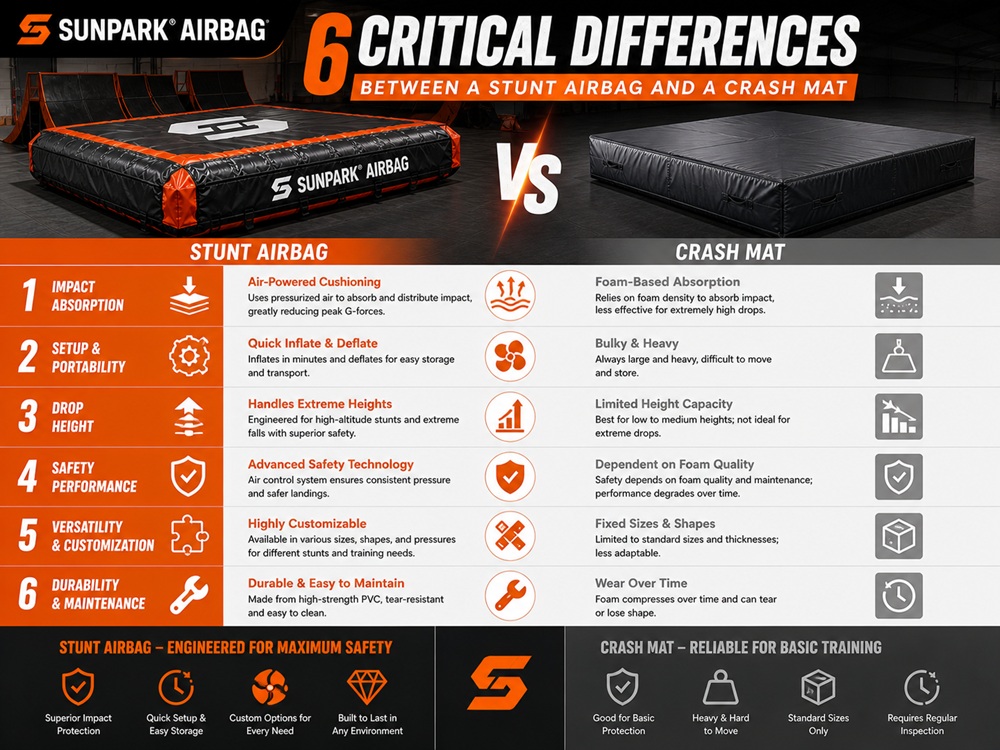
Historically, riders used foam pits to learn tricks. We must apply commercial and practical judgment here: foam pits are obsolete. They are notoriously unhygienic, harbor bacteria, present severe fire hazards, and are incredibly difficult to climb out of, limiting the number of practice repetitions per hour. More importantly, you cannot “ride away” from a trick in a foam pit. You simply sink. This fails to teach the rider how to absorb a transition.
Who Should Upgrade Their Practice Gear
For commercial users operating indoor bike parks, trampoline parks, or extreme sports training camps, investing in modern landing infrastructure is non-negotiable for liability reduction and customer retention. If you are assessing trampoline park construction cost, factoring in an inflatable BMX/MTB receiver will attract a massive, dedicated demographic of action sports athletes. Furthermore, professional riders building backyard progression setups should immediately pivot from dirt to inflatable receivers.
Who Does Not Need Airbag Solutions
If you strictly ride BMX flatland—a discipline involving slow-speed, ground-based balance maneuvers—investing in massive aerial safety infrastructure is unnecessary. Your practice mistakes will result in bruised shins and scraped elbows, not high-velocity impact trauma. A smooth, flat concrete pad is all you require.
Buying Considerations for Facilities
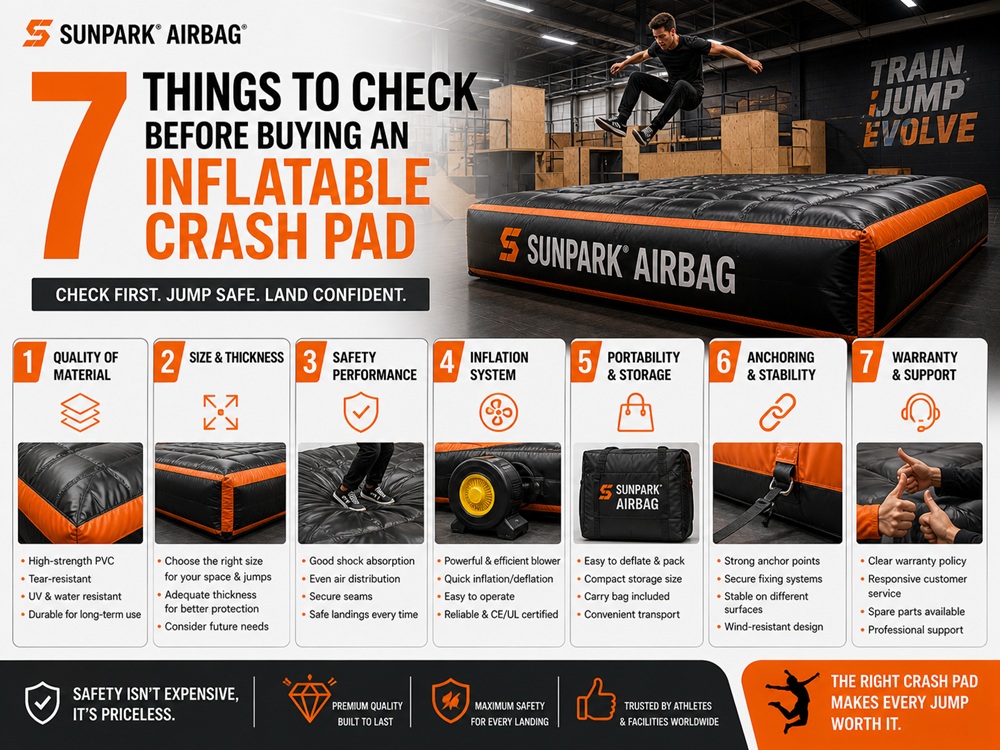
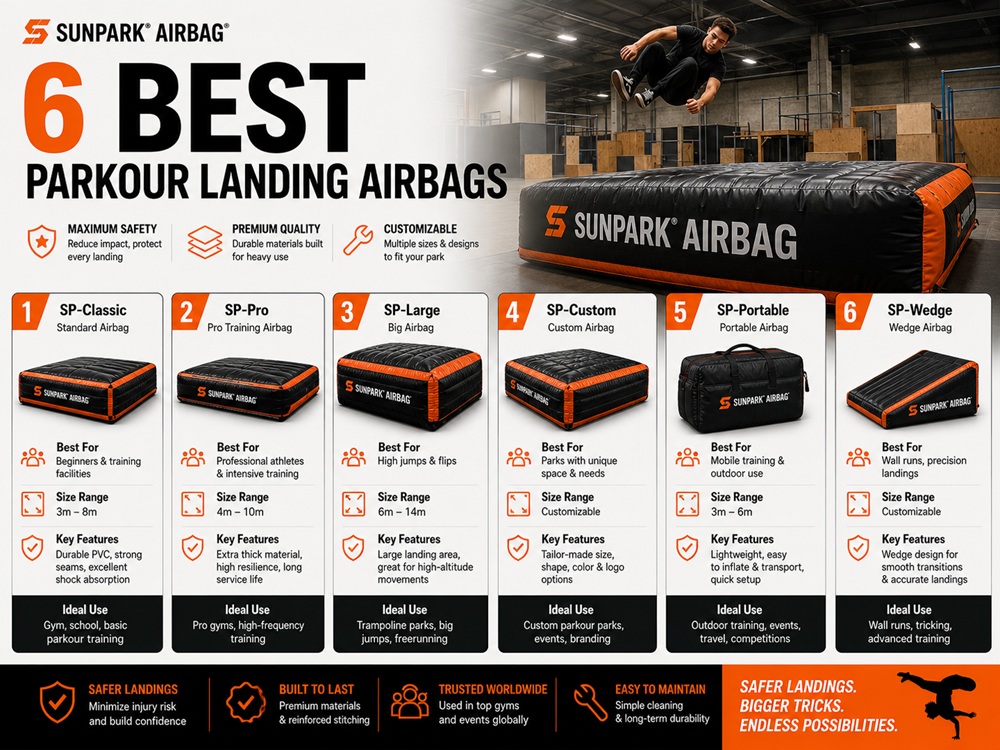
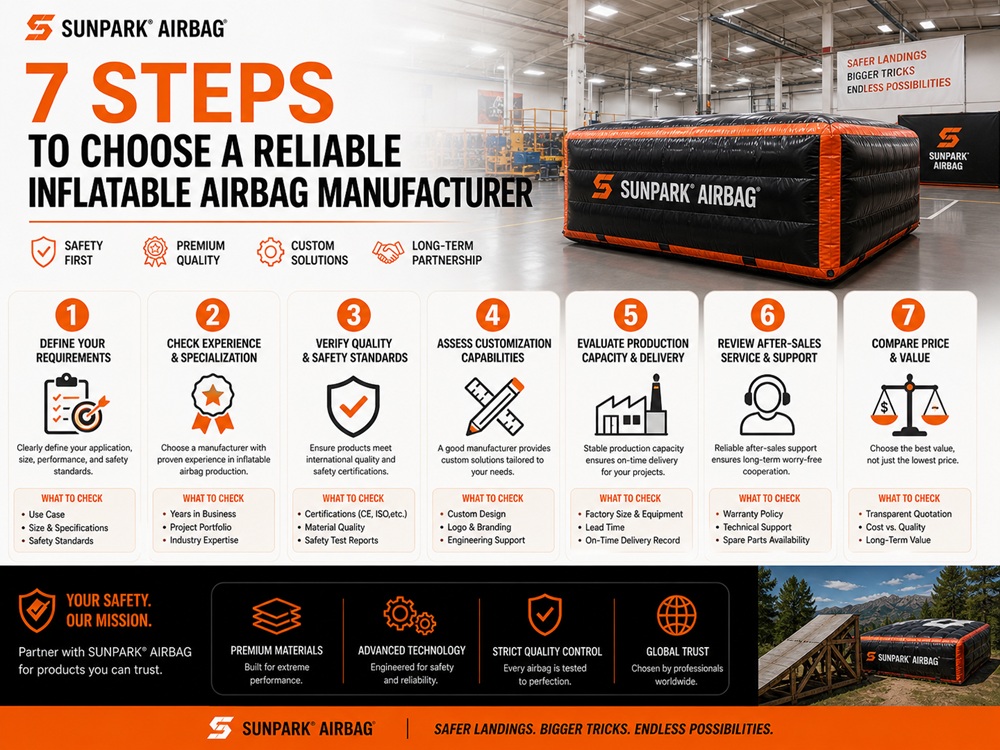
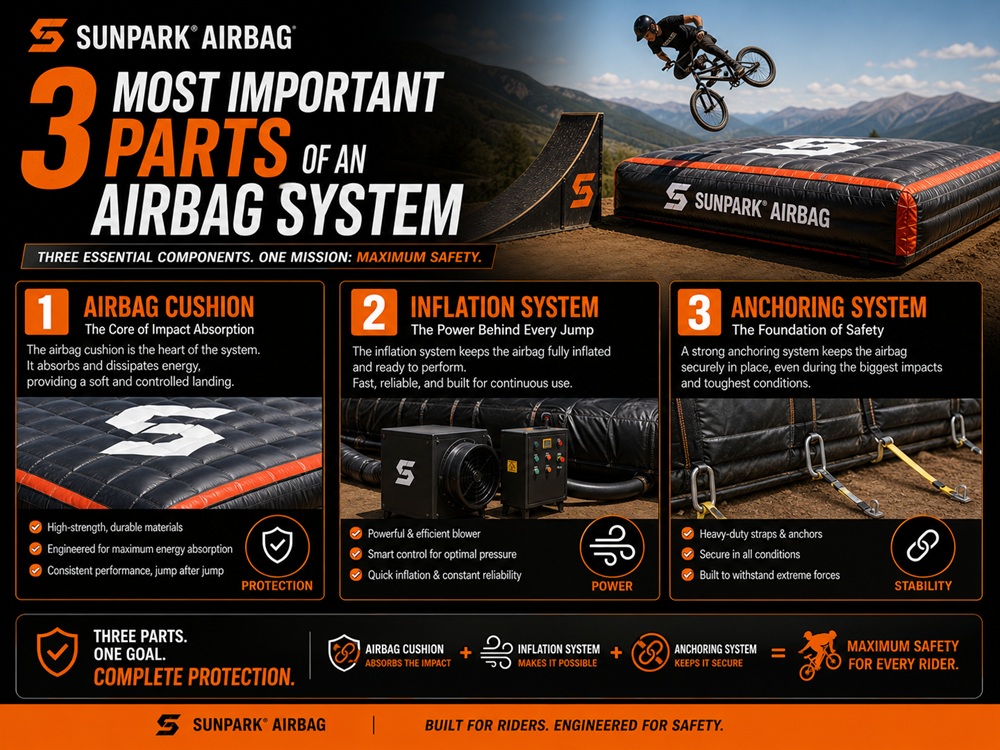
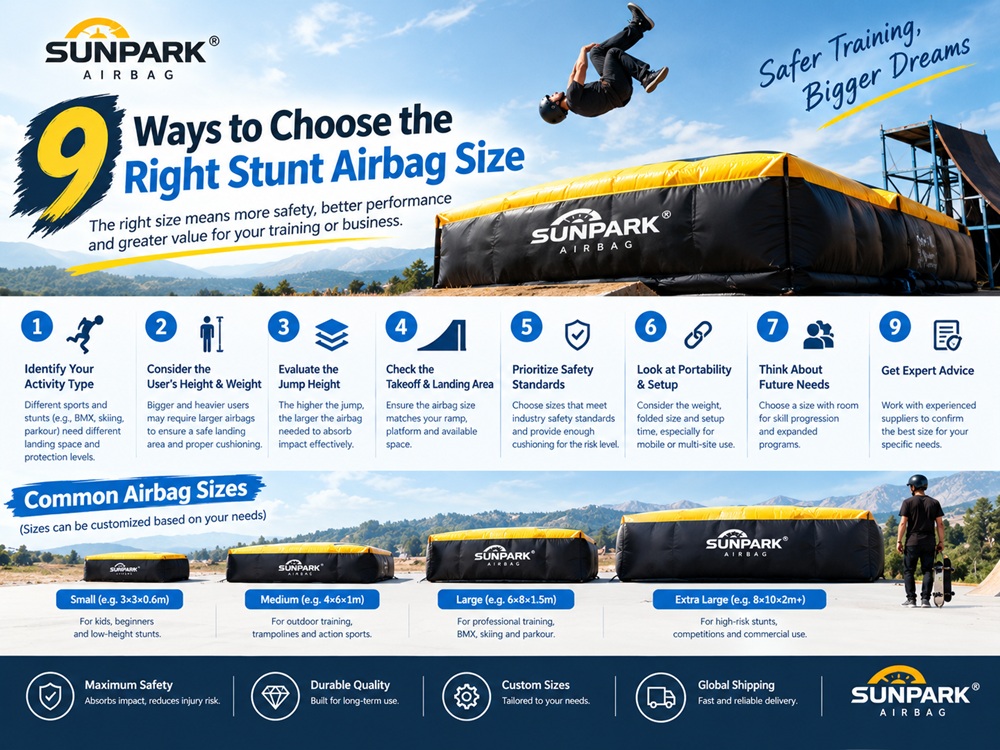
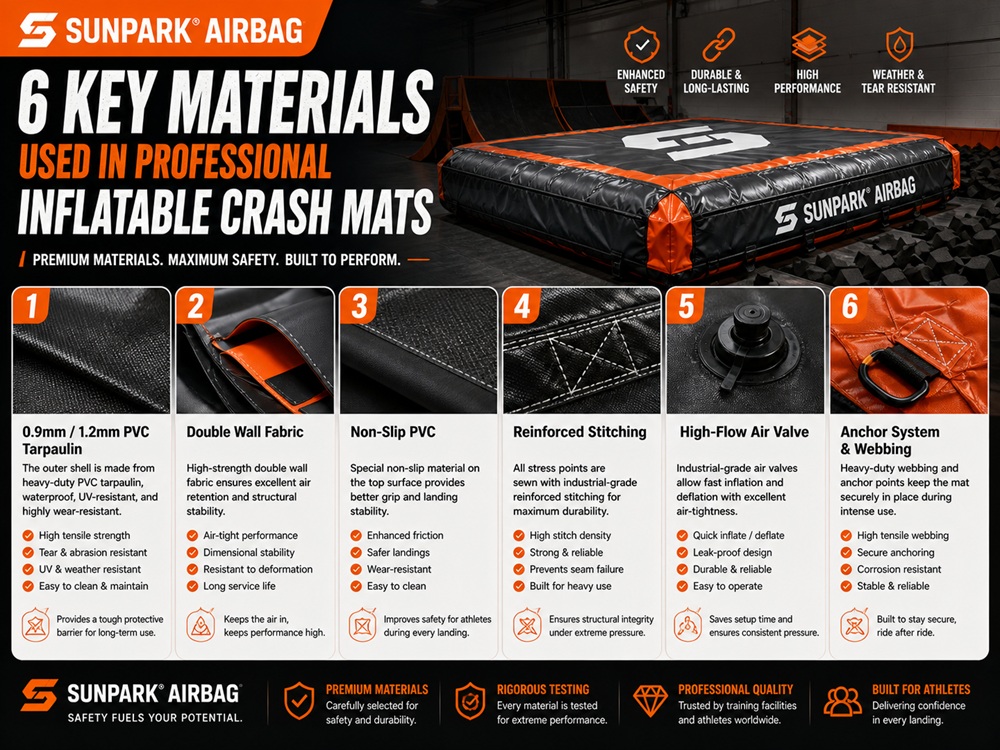
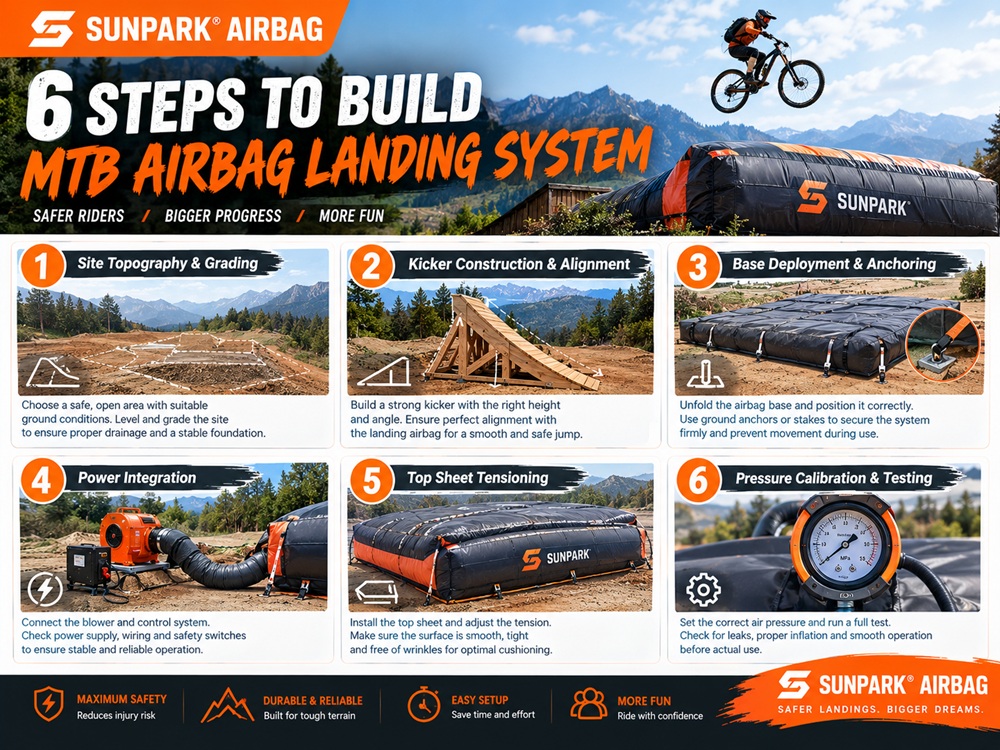
When purchasing progression infrastructure to eliminate BMX Practice Mistakes, you must evaluate the durability and geometry of the airbag. Standard flat stunt bags do not teach landing transition mechanics. You must source a shaped MTB airbag landing system or BMX equivalent that mimics the exact slope of a dirt landing. Ensure the manufacturer uses heavy-duty, flame-retardant 0.55mm to 0.9mm PVC Tarpaulin to withstand the sharp metal pedals and axles of a BMX bike.
Expert Recommendation
From our experience, hoping you won’t crash is not a safety strategy. If you want to progress rapidly without ending up in a cast, you must change your environment. We unequivocally recommend transitioning your high-risk practice sessions to an inflatable landing receiver. It bridges the gap between the safety of a foam pit and the realistic ride-out of a dirt landing. For facility owners and serious backyard builders, the Sunparkairbag Inflatable BMX Landing Ramp represents the absolute pinnacle of progression technology.
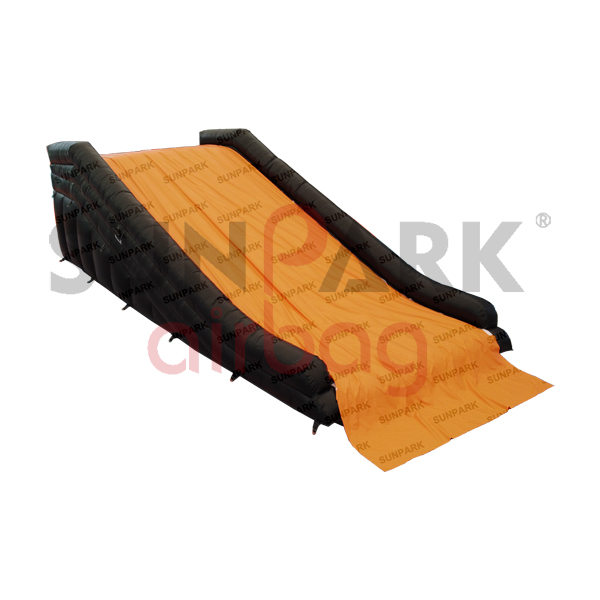
Inflatable BMX Landing Ramp
The ultimate solution to eliminate catastrophic BMX Practice Mistakes. Engineered for true ride-out capability, this airbag mimics the transition of a dirt jump while providing a forgiving, shock-absorbing surface for failed rotations and off-axis landings.
- Material: Heavy-duty 0.55mm PVC Tarpaulin for the airbag chassis, with a reinforced 0.9mm PVC Tarpaulin top sheet.
- Safety Standards: Water-proof, flame-retardant, UV-protected, lead, and phthalate-free.
- Customization: Fully customizable sizes, colors, and digital/silk-screen printing for commercial branding.
- Included Accessories: Commercial-grade blower, professional repair kit, and heavy-duty carrying bag.
- Workmanship: Manufactured by specialists with over 5+ years of dedicated extreme sports airbag experience.
Summary and Comparison Tables
| Critical Mistake | Consequence | Expert Correction |
|---|---|---|
| Practicing on hard dirt first | Broken collarbones, concussions | Utilize inflatable landing bags for initial rotation learning. |
| Dead Sailoring (Freezing) | Loss of gyroscopic control, heavy impact | Stay loose, pump the lip, actively turn the bars in flight. |
| Target Fixation on front tire | Nose-diving into the landing | Keep chin up, visually lock onto the landing transition early. |
| Holding onto a lost trick | Crashing into the bike frame | Execute a controlled eject; throw the bike laterally and roll. |
| Riding with CNS fatigue | Slow reflexes, severe casing | Limit high-risk trick practice to the first 45 mins of a session. |
| Infrastructure Type | Ride-Out Capability | Injury Risk Mitigation | Commercial Maintenance |
|---|---|---|---|
| Inflatable Airbag Landing | Excellent (Mimics real transitions) | Very High (Absorbs heavy impacts safely) | Low (Easy to clean, durable PVC) |
| Traditional Foam Pit | None (Rider sinks) | High (But risk of twisting ankles in foam) | Very High (Unhygienic, foam breakdown) |
| Resi-Mat (Padding over wood) | Good | Moderate (Still a hard underlying surface) | Moderate (Padding tears over time) |
| Mulch / Soft Dirt | Poor to Moderate | Low (Inconsistent density, hides rocks) | High (Requires constant tilling and watering) |
| Pros (Advantages) | Cons (Limitations) |
|---|---|
| Dramatically accelerates the learning curve by removing fear. | Requires a continuous power source for the blower motor. |
| Allows riders to practice landing transitions, unlike foam pits. | Significant upfront capital expenditure for home setups. |
| Highly hygienic, weather-resistant, and easy to sanitize. | Requires adequate physical space and run-up area. |
| Massively reduces facility liability and insurance premiums. | Sharp metal pedals can theoretically damage the top sheet if abused. |
Frequently Asked Questions
Is it safer to practice BMX tricks on grass or dirt?
In most professional situations, neither is safe for learning high-impact aerial tricks. While grass is softer than concrete, the ground underneath is still unyielding earth. Furthermore, grass provides terrible tire traction, leading to unpredictable slip-outs upon landing. For initial trick progression, inflatable airbags are the only scientifically sound method for impact absorption.
How do I stop ‘dead sailoring’ when hitting a jump?
Dead sailoring is a psychological panic response that manifests physically. To stop it, you must actively command your body to move as soon as you leave the lip. Practice doing a slight ‘bar turn’ or a ‘tire tap’ mid-air. Forcing yourself to execute a minor movement keeps your brain engaged and prevents your central nervous system from locking your joints.
Why are commercial action sports parks replacing foam pits with airbags?
Commercial operators are replacing foam pits because they are extreme fire hazards, breeding grounds for MRSA and bacteria, and incredibly expensive to maintain as foam blocks disintegrate into toxic dust. Moreover, airbags featuring proper transition angles allow riders to actually ‘ride away’ from a landed trick, providing far superior training value.
Authoritative Industry References
To ensure our safety protocols and biomechanical advice align with the highest medical and sports science standards, we reference data from the following authoritative bodies:
- Centers for Disease Control and Prevention (CDC) – HEADS UP: Federal guidelines on concussion mitigation, traumatic brain injury prevention, and the physics of impact in action sports.
- American Academy of Orthopaedic Surgeons (OrthoInfo): Clinical data detailing the biomechanics of high-impact joint absorption and the prevalence of scaphoid and clavicle fractures in cycling accidents.
- American College of Sports Medicine (ACSM): Academic standards on central nervous system (CNS) fatigue, athletic overtraining, and the critical importance of structured, phased progression in extreme sports training.
For facility managers exploring diverse safety infrastructure, review the latest innovations in inflatable MTB airbag solutions or browse our comprehensive motorcycle airbag systems 2026 specifications.