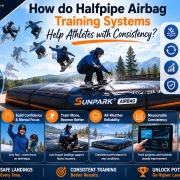
Do Snowboarders Have Airbags for Training and Safety

Do Snowboarders Have Airbags for Training and Safety?

In the high-stakes world of extreme winter sports, pushing the boundaries of human performance comes with inherent physical risks. As aerial maneuvers evolve from simple spins to triple and quadruple corks, the margin for error effectively vanishes. Parents, aspiring athletes, and facility managers frequently ask industry professionals a critical question: Do snowboarders have airbags? The answer is an unequivocal yes. However, the application of this technology extends far beyond what the general public typically imagines. In the professional winter sports sector, airbags are not merely wearable avalanche survival tools; they are massive, highly engineered pneumatic landing systems that have fundamentally revolutionized freestyle progression.

Do Snowboarders Have Airbags for Training and Safety

At SUNPARK® AIRBAG, we have spent over 10 years at the forefront of this technological revolution. We provide freestyle airbags for ski resorts, theme parks, sports, and gymnastics facilities around the globe. As the leading manufacturer of Airbags for Extreme Sports and Leisure Industries in China, we have witnessed firsthand how safety infrastructure dictates athletic advancement. As extreme sports developed, more and more snowboarders and serious sports enthusiasts are looking for safer training possibilities to progress without risks of getting injured. We create the products for World Champion Snowboarders, famous riders, and trampoline parks worldwide. We are deeply committed to the development and improving of our own products. In this authoritative guide, we will explore the dual meaning of the query Do snowboarders have airbags, detail the aerodynamic engineering behind modern landing systems, and explain how these massive inflatable structures are changing the face of extreme sports.

1. Understanding the Query: Do Snowboarders Have Airbags?

When consumers and industry outsiders ask, Do snowboarders have airbags, they are usually conflating two entirely different safety technologies utilized in the snow sports industry. It is vital to distinguish between personal avalanche safety gear and structural freestyle training equipment.

The first category involves wearable avalanche airbags. These are integrated into backpacks worn by backcountry snowboarders and skiers. In the event of an avalanche, the rider pulls a deployment cord, and a compressed gas cylinder rapidly inflates a durable balloon behind their head. This process utilizes the principle of inverse segregation, helping the rider stay near the surface of the moving snowpack. While crucial for backcountry survival, this is a reactive safety measure.

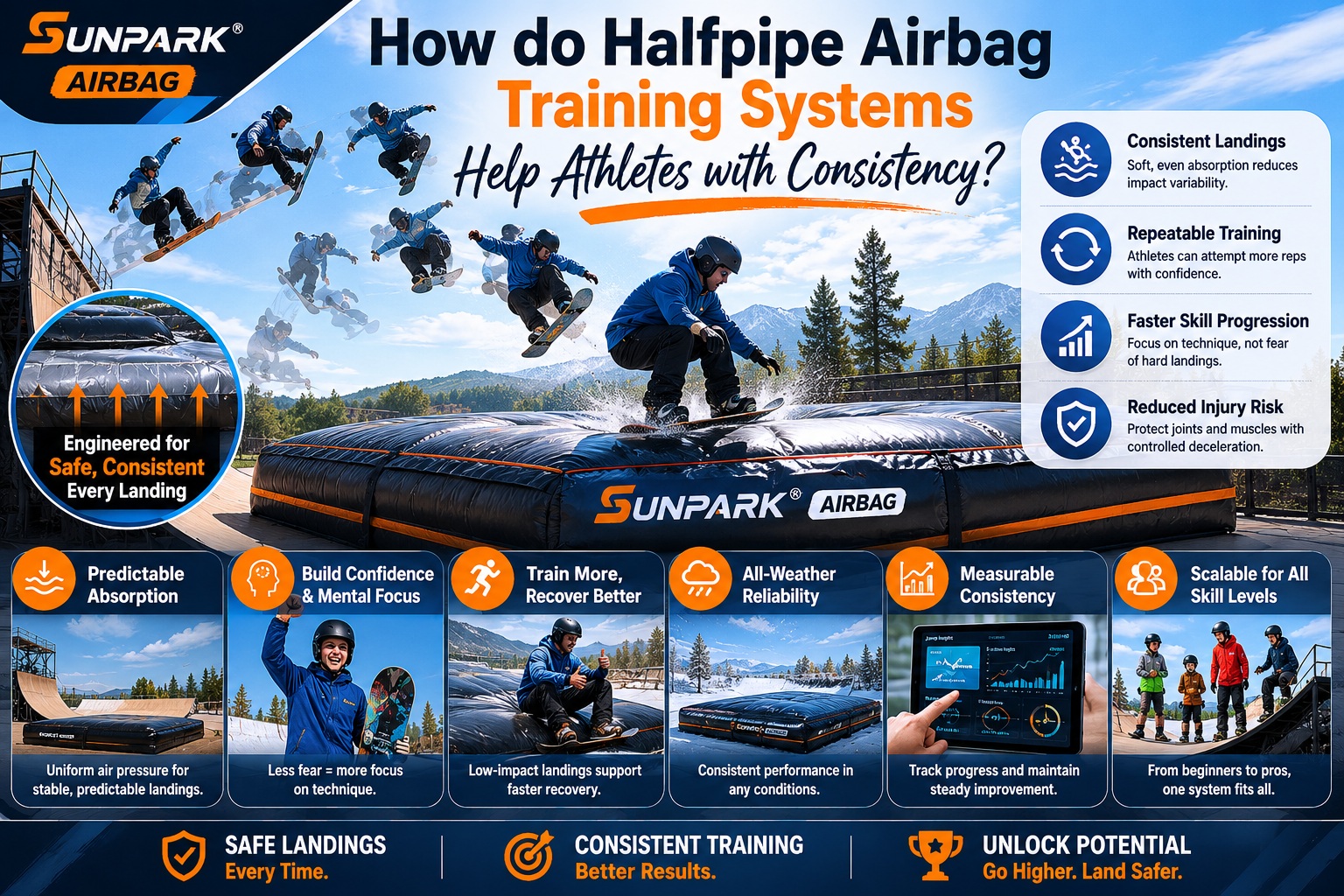
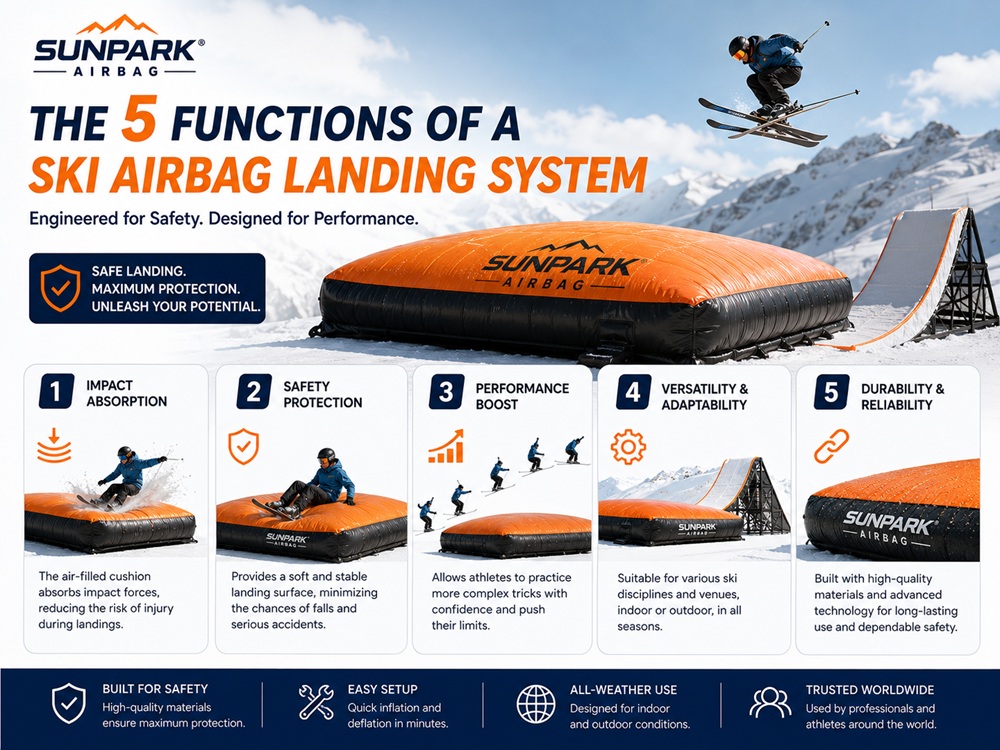
The second category, and the absolute focus of professional athletic progression, is the massive inflatable landing airbag. When professional coaches ask Do snowboarders have airbags, they are referring to these colossal pneumatic structures placed on the landing pitch of a ski jump. These are proactive safety tools. They allow riders to attempt highly complex, dangerous aerial maneuvers and land safely, even if their rotation is incomplete or their axis is off. At SUNPARK® AIRBAG, our engineering efforts are entirely dedicated to this second category, producing advanced systems that absorb massive kinetic energy and prevent catastrophic orthopedic injuries.

2. The Evolution of Freestyle Snowboarding Training

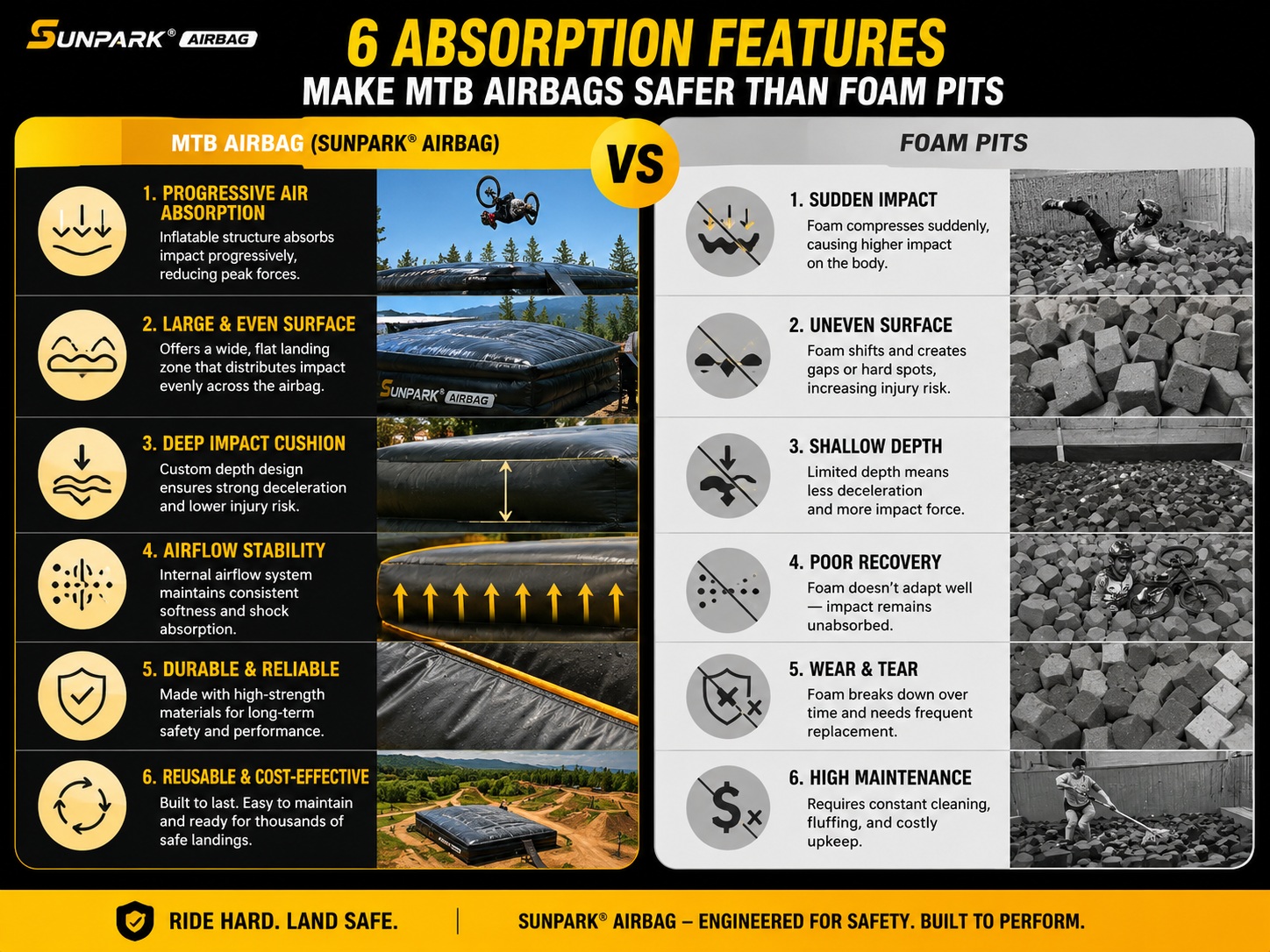
To understand why the answer to Do snowboarders have airbags is so critical today, we must look at the history of freestyle training. Two decades ago, athletes learning new tricks had to rely on foam pits or deep powder days. Foam pits are notoriously unhygienic, difficult to maintain, and completely useless in an actual on-snow environment. Furthermore, foam pits do not allow a rider to ride away from a successfully landed trick; the rider simply sinks into the foam.

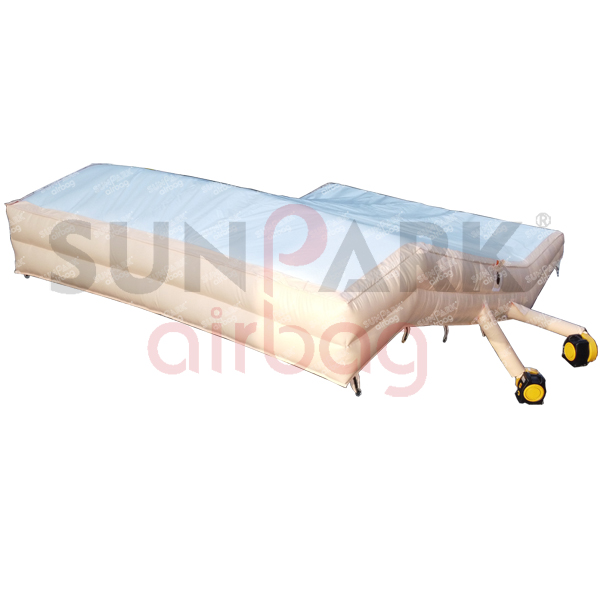
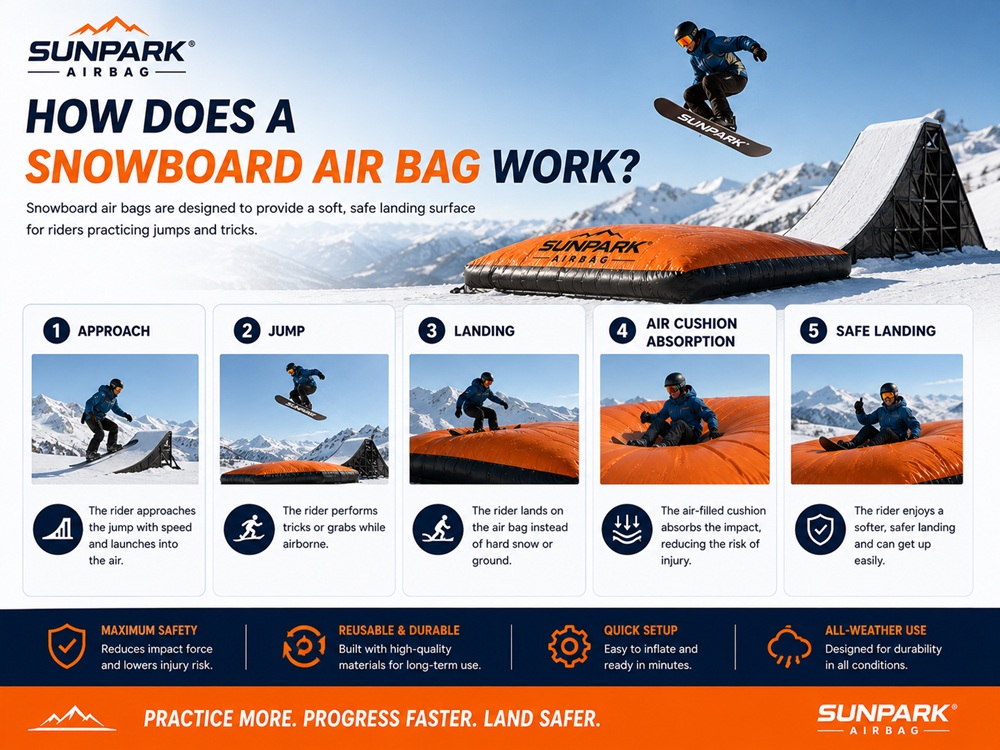
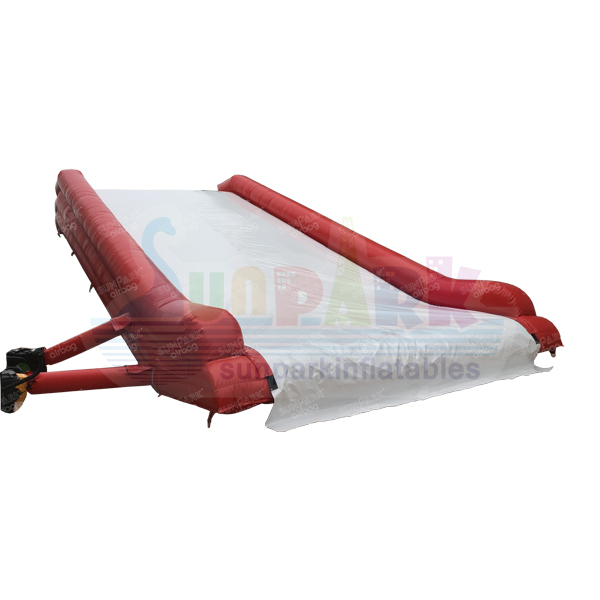
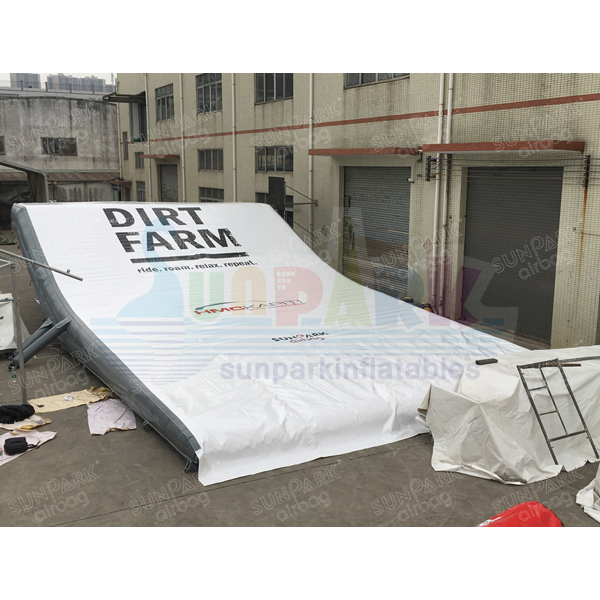
From our experience outfitting Olympic training centers, athletes cannot build muscle memory if they cannot practice the landing phase of a trick. The introduction of the freestyle landing airbag bridged this gap perfectly. By utilizing a Safer Jump Snowboarding Airbag Training system, riders can launch from a snow ramp, execute their aerial maneuvers, and land on a slanted inflatable surface that perfectly mimics the contour of a real snow landing. If they land cleanly, they can literally ride off the airbag. If they crash, the airbag absorbs the impact, allowing them to stand up, hike back to the drop-in, and try again immediately. This rapid, safe repetition is the secret behind the exponential progression of modern snowboarding tricks.

3. The Engineering Mechanics of a Freestyle Landing Airbag

3. The Engineering Mechanics of a Freestyle Landing Airbag

Addressing the question of Do snowboarders have airbags requires a deep dive into the pneumatic engineering that makes these structures viable. A professional landing airbag is not merely a giant balloon; it is a highly sophisticated, multi-chambered shock absorption system constructed from heavy-duty, fire-retardant, and UV-resistant Plato PVC vinyl.

3.1 Impact Attenuation and Air Release

When a snowboarder falls from a height of 30 to 50 feet, the kinetic energy transferred upon impact is immense. Our airbags utilize a continuous airflow system driven by industrial blowers. The airbag features internal air pillars and strategically placed pressure release valves. Upon impact, the valves open, expelling air to decelerate the rider smoothly rather than bringing them to an abrupt halt. This dynamic air displacement prevents severe whiplash and spinal compression.

3.2 The Importance of No-Bounce Technology

One of the fatal flaws of early airbag prototypes was the trampoline effect. If a bag was too pressurized and lacked internal baffling, a crashing rider would be catapulted back into the air, often resulting in secondary injuries. We recommend that any facility manager strictly audit the baffling technology of their potential suppliers. At SUNPARK® AIRBAG, we developed the No Bounce Inflatable Landing Ramp Airbag. This system utilizes a specific dual-chamber design. The bottom chamber remains fully pressurized to prevent bottoming out against the earth, while the top chamber is softer and highly vented, completely absorbing the rider’s downward momentum and eliminating any hazardous rebound effect.

4. Integrating Airbags into Ski Resorts and Training Facilities

When evaluating Do snowboarders have airbags at a commercial level, ski resorts are increasingly recognizing the immense return on investment these systems provide. An Olympic Size Snowboard Landing Bag for Ski Resorts serves as a massive draw for both professional teams seeking training grounds and amateur tourists looking for a safe thrill.

From our experience, integrating these bags into a terrain park significantly reduces the resort’s liability regarding terrain park injuries. Furthermore, these setups can be utilized year-round. During the summer months, resorts transition their snow jump into a dry-slope synthetic in-run, allowing snowboarders and freeskiers to continue their training 365 days a year. We engineer our top-sheets to be highly durable, allowing the sharp metal edges of snowboards and skis to glide across the surface without puncturing the underlying pneumatic chambers.

5. Cross-Discipline Applications: FMX and BMX

While the query Do snowboarders have airbags centers on winter sports, the exact same shock-absorption principles apply to dirt and concrete action sports. The kinematic forces involved in a Freestyle Motocross (FMX) crash are devastating. Consequently, our engineering translates directly to the motorized sector.

We manufacture the Inflatable FMX Landing Airbag for Safer Practice, which is structurally reinforced to withstand the 250-pound impact of a falling dirt bike, alongside the rider. The Inflatable Airbag FMX Landing Mattress utilizes the same no-bounce technology, ensuring that if a rider under-rotates a backflip, neither they nor their machine suffers catastrophic damage. This cross-discipline reliability reinforces our position that engineered pneumatic landing systems are the universal standard for extreme sports safety.

6. Summary Table: Categories of Snowboarding Airbags

To provide absolute clarity on the subject of Do snowboarders have airbags, we have categorized the distinct technologies currently utilized in the industry.

Type of AirbagPrimary FunctionUser / EnvironmentDeployment Mechanism
Wearable Avalanche AirbagKeeps the rider afloat during an avalanche slide via inverse segregation.Backcountry snowboarders, split-boarders, heli-skiers.Manual pull-cord, compressed gas cylinder inflation.
Freestyle Landing Airbag (Flat)Absorbs impact from aerial tricks, preventing orthopedic injury.Trampoline parks, gymnastics facilities, indoor training centers.Continuous industrial blower inflation, multi-chamber setup.
Safer Jump Snowboarding Airbag Training (Ramp)Mimics a snow landing, allows riders to ride away from successful tricks.Professional athletes, ski resorts, year-round dry slope facilities.Continuous industrial blower, specialized no-bounce top chamber.
Inflatable FMX Landing AirbagWithstands extreme impact from motorized vehicles and riders.Freestyle Motocross riders, BMX athletes, mega-ramp events.Heavy-duty reinforced PVC, continuous extreme-pressure blowers.

7. Frequently Asked Questions (FAQs)

Do snowboarders have airbags that they wear on their bodies?

Yes, backcountry snowboarders wear avalanche airbag backpacks. These are designed to inflate a large balloon behind the rider’s head in the event of an avalanche, increasing their volume to help them stay on top of the moving snow. However, these are strictly for survival, not for freestyle training.

How does a No Bounce Inflatable Landing Ramp Airbag work?

From our experience, preventing bounce is critical for safety. Our no-bounce airbags use a dual-chamber system. The lower chamber is tightly pressurized to prevent the rider from hitting the ground. The upper chamber features multiple air-release vents. When the rider hits the surface, the upper chamber rapidly expels air, absorbing the kinetic energy without launching the rider back up.

Can the metal edges of a snowboard puncture the landing airbag?

It is a common concern when people ask Do snowboarders have airbags. At SUNPARK® AIRBAG, we utilize an ultra-durable, replaceable top-sheet made from specialized high-tensile PVC. This top-sheet is engineered to withstand the friction and slicing action of sharp metal snowboard edges. If the top-sheet does wear out over time, it can be easily replaced without replacing the entire airbag structure.

Are landing airbags only for professional snowboarders?

Absolutely not. While we supply the Olympic Size Snowboard Landing Bag for Ski Resorts utilized by World Champions, we also manufacture smaller, highly approachable airbags for commercial ski resorts and trampoline parks. These allow amateur riders and serious sports enthusiasts to practice their first 360-degree spins safely, bridging the gap between beginner and advanced progression.

8. Industry References

To further explore the safety protocols, biomechanics, and equipment standards governing the extreme sports industry, we highly recommend consulting the following authoritative organizations:

The 8 Best Motorcycle Airbag Systems of 2026

The 8 Best Motorcycle Airbag Systems of 2026

The pursuit of safety in motorcycling and extreme sports has reached unprecedented technological heights. As motorcycles become faster and riding environments become more complex, traditional armor is no longer sufficient to mitigate high-impact forces. Today, the most crucial piece of safety equipment a rider can own is a reliable inflatable protection system. Finding the best motorcycle airbag requires a deep understanding of deployment algorithms, inflation speed, coverage areas, and durability.

The 8 Best Motorcycle Airbag Systems of 2026

From our experience engineering advanced impact attenuation systems, we know that true safety requires a layered approach. SUNPARK® AIRBAG has over 10 years of experience providing freestyle airbags for ski resorts, theme parks, and sports facilities around the globe. While we protect extreme athletes with massive environmental landing systems, we also rigorously analyze the wearable technology that protects riders on the streets and the trails. In this comprehensive guide, we will evaluate the 8 best motorcycle airbag systems available in 2026, and explore how professional riders combine wearable gear with large-scale stunt airbags to progress without the risk of devastating injuries.

1. The Evolution of Rider Safety: Tethered vs. Electronic

When selecting the best motorcycle airbag, consumers must first choose between two primary deployment mechanisms: mechanical tethers and electronic algorithms. Mechanical systems utilize a physical cord connected from the rider’s vest to the motorcycle frame. During a crash, the separation of the rider from the bike pulls the tether, triggering a CO2 cartridge that inflates the vest. These systems are highly reliable, require no batteries, and are virtually immune to software failures. However, their deployment time is slightly longer, typically ranging from 80 to 100 milliseconds.

Electronic systems represent the pinnacle of modern safety. Utilizing a complex array of gyroscopes, accelerometers, and GPS data, the onboard computer analyzes the rider’s movements thousands of times per second. If the algorithm detects an imminent crash, the system deploys the airbag in as little as 25 to 40 milliseconds, often fully inflating before the rider even impacts the ground. We recommend electronic systems for track days and high-speed street riding, while mechanical systems remain incredibly popular for dual-sport and adventure riders due to their rugged simplicity.

2. The 8 Best Motorcycle Airbag Systems in 2026

Based on rigorous crash data, coverage volume, and technological innovation, here is our expert selection of the top wearable systems dominating the market this year. If you are searching for the best motorcycle airbag to protect your upper body, these eight models set the global standard.

2.1 Alpinestars Tech-Air 5

Widely regarded by many professionals as the best motorcycle airbag on the market, the Alpinestars Tech-Air 5 is an electronic, autonomous vest that requires no physical connection to the motorcycle. It boasts an incredible deployment time of just 20 to 40 milliseconds, depending on the size of the garment. What makes the Tech-Air 5 exceptional is its massive coverage area, protecting the rider’s shoulders, chest, ribs, and full back. The integrated sensors and advanced MotoGP-derived algorithms ensure that it can distinguish between a violent crash and a simple stumble, making it highly reliable for everyday street use.

2.2 Dainese Smart Jacket

Dainese utilizes their proprietary D-air technology to create the Smart Jacket, a versatile electronic vest that can be worn either over or under any standard motorcycle jacket. It utilizes complex microfilaments within the airbag chamber to ensure that when it inflates, the pressure is perfectly distributed across the entire surface, providing uniform protection. From our experience, the breathability and low-profile nature of the Smart Jacket make it a top contender for the best motorcycle airbag for urban commuters who do not want to compromise on style or airflow.

2.3 Helite Turtle 2

For riders who prefer the absolute reliability of a mechanical tether, the Helite Turtle 2 is the industry benchmark. It features a unique design where a rigid CE-certified back protector is placed on the outside of the inflatable air chamber. This turtle-shell configuration ensures that impact forces are dispersed across a wider area of the airbag, drastically reducing blunt force trauma. As the best motorcycle airbag in the mechanical category, it offers massive neck stabilization, preventing dangerous whiplash during high-side accidents.

2.4 Klim Ai-1

The Klim Ai-1 utilizes the highly acclaimed In&motion electronic brain. This vest is specifically favored by adventure and touring riders. The system continuously updates its algorithms via a smartphone app, meaning the crash detection gets smarter the more people ride with it. We recommend the Klim Ai-1 for riders who appreciate subscription-based software updates that ensure their hardware is always operating with the latest safety parameters.

2.5 Hit-Air MLV-C

Hit-Air is one of the original pioneers of the mechanical motorcycle airbag. The MLV-C model is famous for its rapid deployment and its distinct, exposed air tubes that offer maximum protection to the neck, spine, and tailbone. Because it is incredibly lightweight and worn over the rider’s gear, it is frequently chosen by police motor units and daily commuters. If you are looking for a highly visible, robust, and cost-effective mechanical option, the Hit-Air MLV-C is among the best motorcycle airbag choices available.

2.6 Spidi Air DPS

Spidi brings Italian design and precision engineering to the mechanical airbag market with the Air DPS. The system deploys in a remarkably fast 200 milliseconds for a mechanical trigger and provides an enveloping cushion around the rider’s torso and neck. Weighing just over a kilogram, it is one of the lightest over-vests on our list, proving that the best motorcycle airbag does not have to be cumbersome to be effective.

2.7 In&motion Universal Module

While not a standalone vest, the In&motion module deserves a spot on this list because it powers several of the world’s leading airbag garments. This modular electronic brain can be swapped between compatible jackets from brands like RST, Ixon, and Held. It features multiple algorithmic modes (Street, Track, and Adventure), allowing the rider to tailor the deployment sensitivity to their specific riding environment.

2.8 Furygan Universal Airbag

Integrating the In&motion technology into a highly breathable, moisture-wicking chassis, the Furygan Universal Airbag vest is designed to be worn under any motorcycle jacket. It utilizes 37.5® technology to regulate body temperature, making it the best motorcycle airbag for riders living in extremely hot climates. It provides level 2 back protection even when deflated, ensuring a baseline of safety at all times.

3. Beyond Wearables: Extreme Sports and FMX Training

While the aforementioned systems represent the absolute best motorcycle airbag options for street, track, and adventure riding, the realm of Freestyle Motocross (FMX) and extreme sports demands a completely different approach to impact safety. When a rider is attempting a 75-foot backflip over a dirt gap, a wearable vest provides vital secondary protection, but the primary safety mechanism must be integrated into the landing environment itself.

As extreme sports have developed, more and more snowboarders, FMX riders, and serious sports enthusiasts are looking for safer training possibilities to progress without the risks of getting severely injured. Wearable airbags simply cannot mitigate the massive kinetic energy of a motorcycle falling from three stories high. This is where environmental inflatable technology takes over.

4. SUNPARK® AIRBAG: The Ultimate Landing Solutions

4. SUNPARK® AIRBAG: The Ultimate Landing Solutions

At SUNPARK® AIRBAG, we are deeply committed to the development and improving of our own products to save lives. As the leading manufacturer of Airbags for Extreme Sports and Leisure Industries in China, we create the products utilized by World Champion Snowboarders, famous FMX riders, and trampoline parks worldwide. Our environmental airbags work in tandem with wearable gear to create a holistic safety ecosystem.

For motorcycle stunt training, our Airbag Landing and Inflatable Landing systems replicate the exact slope of a dirt landing but absorb the catastrophic forces of a crashed bike and rider. The Stunt Airbag is engineered with complex internal baffling to ensure the rider does not bounce dangerously upon impact, but instead decelerates safely. For high-altitude drops and dismounts, our Free Fall Airbag and Foam Pit Jump Airbag provide a massive, soft catchment area.

From our experience, every training facility has unique geographical and spatial requirements. This is why we specialize in designing the Custom Airbag, tailored specifically to the exact trajectory and velocity of the intended stunts. While you should absolutely invest in the best motorcycle airbag for your torso, investing in a SUNPARK® AIRBAG guarantees that your practice environment is engineered for ultimate survivability.

5. Summary Table: Wearable Airbag Comparison

To assist you in selecting the best motorcycle airbag for your specific riding style, we have compiled this comparative table of our top 8 wearable recommendations.

Airbag ModelTechnology TypeDeployment TimeBest Suited For
Alpinestars Tech-Air 5Electronic Autonomous20 – 40 msStreet & Sport Riding
Dainese Smart JacketElectronic Autonomous45 msUrban Commuting
Helite Turtle 2Mechanical Tether100 msTouring & Reliability
Klim Ai-1Electronic Algorithm< 60 msAdventure & Off-Road
Hit-Air MLV-CMechanical Tether100 msLaw Enforcement & Commuting
Spidi Air DPSMechanical Tether200 msLightweight Street Riding
In&motion ModuleElectronic Brain< 60 msMulti-Jacket Versatility
Furygan UniversalElectronic Algorithm< 60 msHot Climate Riding

6. Frequently Asked Questions (FAQs)

What is the best motorcycle airbag for off-road riding?

For slow-speed, technical off-road riding, mechanical tethered systems are often preferred because they will not accidentally deploy during minor drops or aggressive body movements. However, electronic systems with dedicated “Adventure” algorithms, like the Klim Ai-1, are rapidly becoming the best motorcycle airbag choice for dual-sport enthusiasts.

Can a wearable motorcycle airbag replace traditional body armor?

No. We recommend using the best motorcycle airbag in conjunction with CE-certified hard armor. The airbag excels at absorbing massive blunt force impacts and stabilizing the neck and spine, while traditional hard armor is necessary to protect against deep abrasion and sharp punctures from debris.

How does a SUNPARK® Airbag Landing differ from a wearable airbag?

A wearable airbag protects the rider’s vital organs during a crash on a rigid surface. A SUNPARK® Airbag Landing is a massive, highly engineered environmental inflatable placed on the ground to catch both the 250-pound motorcycle and the rider during extreme aerial stunts, preventing the impact with the rigid ground entirely.

Are electronic airbags reusable after a deployment?

Yes, but most electronic systems require the manufacturer or a certified dealer to inspect the bladder and replace the argon/CO2 canisters to ensure structural integrity is maintained. Mechanical systems can typically be repacked and re-armed by the user in a matter of minutes by simply replacing the threaded CO2 cartridge.

7. Industry References

To further explore the safety standards, testing methodologies, and extreme sports integration associated with impact attenuation, we recommend consulting the following authoritative resources:

trampoline park airbag Manufacturer

The 2026 Facility Guide: How Much Does It Cost to Get Airbags Put Back?

The landscape of extreme sports and leisure facilities has evolved rapidly leading into 2026. Safety is the paramount concern for operations managers worldwide. From high-altitude ski resorts to indoor trampoline parks, the deployment of large-scale inflatable safety devices is a non-negotiable operational standard. However, seasonal weather changes, routine facility maintenance, and architectural upgrades often require these massive protective structures to be uninstalled, stored, and eventually reinstalled. Consequently, one of the most frequent inquiries we receive from facility directors is regarding the cost to get airbags put back into active commercial service.

The 2026 Facility Guide: How Much Does It Cost to Get Airbags Put Back?

At SUNPARK® AIRBAG, we have spent over 10 years mastering the engineering, manufacturing, and deployment of these vital safety systems. As extreme sports developed, more and more snowboarders and serious sports enthusiasts are looking for safer training possibilities to progress without risks of getting injured. We create the products for World Champion Snowboarders, famous riders, and trampoline parks worldwide. SunparkAirbag® is the leading manufacturer of Airbags for Extreme Sports and Leisure Industries in China, and we are deeply committed to the development and improving of our own products. From our experience, accurately calculating the cost to get airbags put back is essential for annual facility budgeting. It ensures that your sports venue remains safe, compliant, and profitable without suffering unexpected financial burdens. In this authoritative industry guide, we will dissect the variables that dictate these operational expenses in 2026.

1. Industry Context: The Search for Airbag Reinstallation

When analyzing the cost to get airbags put back, it is important to clarify the context. While everyday consumers frequently search for the cost to get airbags put back in passenger vehicles after an automotive collision, commercial facility directors utilize the exact same terminology when referring to the reinstallation of massive safety equipment for sports complexes. At SUNPARK® AIRBAG, our focus is strictly on the latter: the commercial, extreme sports, and leisure facility sector. Putting a massive freestyle airbag back into a ski resort terrain park or a gymnastics center is a complex logistical operation that requires precise financial forecasting.

We recommend that facility managers do not view the cost to get airbags put back as a mere administrative expense, but rather as a critical investment in risk management and liability reduction. When you remove a stunt airbag for winter storage and put it back for the summer training camp, the integrity of the anchor points, the health of the internal baffles, and the efficiency of the inflation blowers must be perfectly restored. Failing to accurately budget for the cost to get airbags put back can lead to rushed reinstallations, compromised safety standards, and severe legal liabilities if an athlete is injured due to improper equipment deployment.

2. Core Factors Influencing the Cost to Get Airbags Put Back

From our experience consulting with theme parks and sports facilities around the globe, there is no single, flat-rate answer to the cost to get airbags put back. The final operational expenditure is dictated by a multitude of site-specific variables. Understanding these variables allows operations managers to optimize their workflows and reduce unnecessary overhead.

2.1 Labor and Heavy Logistics

The primary driver of the cost to get airbags put back is the physical labor and heavy machinery required to move the equipment. Large-scale products, such as an Olympic-sized ski training airbag, can weigh several tons when folded and packed. Moving these units from dry storage back to the operational site often requires forklifts, flatbed trucks, and a dedicated team of riggers. We recommend allocating a significant portion of your budget to specialized labor, as improper handling during the transport phase can tear the heavy-duty PVC topsheets, leading to expensive repair delays before the airbag can even be inflated.

2.2 Safety Inspections and Blower Maintenance

You cannot simply unroll an airbag and plug it in. A critical component of the cost to get airbags put back involves rigorous safety testing. During the time the equipment was uninstalled and stored, industrial blowers may have accumulated dust, or rodents may have compromised the electrical wiring. Professional technicians must inspect the air displacement systems, verify the RPMs of the blower motors, and test the pressure release valves. Furthermore, the physical anchor points embedded in the ground or the structural framework of the facility must be stress-tested. Calculating the cost to get airbags put back must include these mandatory pre-flight safety checks to ensure the equipment functions perfectly under the impact of a landing athlete.

3. Reinstallation Costs by Product Category

The specific model of equipment your facility utilizes drastically alters the cost to get airbags put back. At SUNPARK® AIRBAG, our diverse product lineup caters to various needs and preferences, and each requires a different level of logistical effort to reinstall.

3.1 Airbag Landing & Inflatable Landing

3.1 Airbag Landing & Inflatable Landing

The Airbag Landing and Inflatable Landing systems are typically deployed on steep gradients at ski resorts or dirt bike tracks. Because these are built on inclines, the cost to get airbags put back is generally higher. It requires surveying the slope to ensure soil erosion or snowmelt hasn’t altered the landing pitch. Heavy machinery must operate on uneven terrain to drag the uninflated bladder into position. Aligning the anchor straps on a 30-degree pitch requires highly skilled labor, making the cost to get airbags put back for these specific landing systems one of the most resource-intensive operations for an outdoor resort.

3.2 Foam Pit Jump Airbag & Stunt Airbag

3.2 Foam Pit Jump Airbag & Stunt Airbag

Conversely, replacing outdated, unhygienic foam cubes with a modern pneumatic system is a major trend in 2026. If your gymnastics facility or trampoline park is utilizing a Foam Pit Jump Airbag, the cost to get airbags put back after facility cleaning or under-pit maintenance is relatively low. These units sit in pre-constructed concrete or wooden enclosures. Reinstallation simply involves lowering the deflated unit into the pit, securing the perimeter D-rings, and attaching the blower tubes. Similarly, a standalone Stunt Airbag used on flat ground for film production or flat-ground BMX tricks requires minimal heavy lifting, keeping the cost to get airbags put back highly economical.

3.3 Free Fall Airbag & Custom Airbag

For adventure parks featuring high-dive platforms, the Free Fall Airbag requires meticulous reinstallation. Because users are dropping vertically from significant heights without forward momentum, the center-point pressure of the airbag is critical. The cost to get airbags put back for free-fall applications includes advanced manometer testing to ensure the upper and lower air chambers are perfectly pressurized. Furthermore, if you are operating a Custom Airbag designed specifically for a unique architectural space, the reinstallation process may require original schematics and direct consultation with our engineering team at SUNPARK® AIRBAG to ensure the custom anchor geometry aligns perfectly with your facility’s structural hardpoints.

4. Automotive vs. Extreme Sports: A Terminology Overlap

It is worth addressing the semantic overlap in the industry. As a leading manufacturer, we recognize that when the general public searches for the cost to get airbags put back, they are often inquiring about replacing a deployed steering wheel airbag in a sedan, which can range from $1,000 to $3,000 depending on the vehicle make and model. However, in the B2B extreme sports sector, the exact same phrase dictates the logistical budgeting for facility safety equipment.

For sports and leisure facilities, the cost to get airbags put back is not about replacing an exploded chemical module; it is about the labor, transport, and structural integrity testing of a massive inflatable asset. While an automotive repair is a singular, post-accident event, a facility manager must account for the cost to get airbags put back as a recurring, seasonal maintenance expenditure. We recommend that commercial operators distinctly separate their equipment maintenance budgets to accommodate these annual or bi-annual reinstallation cycles, ensuring their venues are always ready for peak season traffic.

5. Summary Table: Estimated Cost to Get Airbags Put Back

To assist operations managers in forecasting their 2026 operational budgets, we have compiled a summary table outlining the relative labor and logistical intensity involved in the cost to get airbags put back across our primary product categories.

Product CategoryPrimary Deployment AreaLogistical ComplexityRelative Cost to Get Airbags Put Back
Airbag LandingSki Resorts, BMX Dirt Tracks (Inclines)High (Requires heavy machinery on slopes)High
Foam Pit Jump AirbagIndoor Trampoline Parks, GymnasticsLow (Pre-built containment pits)Low
Stunt AirbagFilm Sets, Flat Ground Action SportsMedium (Requires open space clearing)Medium
Free Fall AirbagAdventure Parks, High-Dive PlatformsMedium (Requires advanced pressure testing)Medium
Custom AirbagSpecialized Architectural FacilitiesVariable (Depends on custom geometry)Variable

6. Frequently Asked Questions (FAQs)

How can I reduce the cost to get airbags put back each season?
From our experience at SUNPARK® AIRBAG, the best way to reduce the cost to get airbags put back is proper winterization and storage. By cleaning the PVC topsheet, ensuring the internal baffles are 100% dry to prevent mold, and storing the unit in a climate-controlled environment on pallets, you eliminate the need for costly pre-installation repairs.
Does the cost to get airbags put back include replacing the blowers?
Typically, no. The cost to get airbags put back assumes your existing blowers are functional. However, if your maintenance inspection reveals that the motor bearings are failing or the impellers are damaged, purchasing replacement blowers will be an additional equipment expense on top of the reinstallation labor.
How long does it take to put a commercial airbag back into operation?
For an indoor Foam Pit Jump Airbag, an experienced maintenance crew can complete the installation in under 4 hours. However, for a massive, slope-side Airbag Landing at a ski resort, the logistics of moving the equipment up the mountain, securing the ground anchors, and testing the pressure can take an entire operational day, which naturally increases the total cost to get airbags put back.
Why choose SUNPARK® AIRBAG for my facility’s safety equipment?
With over 10 years of experience, we provide freestyle airbags for ski resorts, theme parks, sports and gymnastics facilities around the globe. Because we are deeply committed to the development and improving of our own products, our airbags are designed with user-friendly anchor systems and modular topsheets, which significantly streamlines the reinstallation process and reduces your long-term operational costs.

7. References

7 Best Heavy Duty Inflatable Airbag Supplier USA Options

7 Best Heavy Duty Inflatable Airbag Supplier USA Options

By SUNPARK®

In the rapidly evolving world of extreme sports, safety and progression go hand in hand. Facility operators, ski resort managers, and action sports promoters face a critical challenge: providing athletes with the confidence to push their limits without the catastrophic risk of injury. This is where the selection of a premium Heavy duty inflatable airbag supplier usa becomes the most important operational decision a facility can make. As extreme sports developed, more and more snowboarders and serious sports enthusiasts are looking for safer training possibilities to progress without risks of getting injured. The transition from outdated, unhygienic foam pits to highly engineered pneumatic landing systems is no longer a luxury; it is an absolute industry standard.

7 Best Heavy Duty Inflatable Airbag Supplier USA Options

Finding a reliable Heavy duty inflatable airbag supplier usa requires a deep understanding of materials engineering, pressure release dynamics, and manufacturing excellence. Not all airbags are created equal. From our experience, inferior materials lead to structural blowouts, inconsistent landing absorption, and severe liability issues. In this comprehensive guide, we will analyze the technical requirements for commercial-grade landing systems and review the 7 best Heavy duty inflatable airbag supplier usa options available to the North American market, ensuring your facility invests in unparalleled safety and performance.

1. The Growing Demand for a Heavy Duty Inflatable Airbag Supplier USA

The landscape of athletic training has shifted dramatically. A decade ago, professional snowboarders, freestyle BMX riders, and gymnasts relied on foam pits and bark mulch for high-impact landings. Today, the physics of an inflatable airbag provide a scientifically proven method of decelerating a falling body safely. Consequently, the search volume for a dependable Heavy duty inflatable airbag supplier usa has surged among commercial operators.

Whether managing a high-altitude ski resort in Colorado or a massive indoor trampoline park in Texas, operators need equipment that can withstand thousands of impacts daily. A true Heavy duty inflatable airbag supplier usa must provide systems that resist UV degradation, perform flawlessly in sub-zero temperatures, and maintain consistent internal pressure regardless of the athlete’s weight or landing trajectory. This demand has weeded out generic inflatable manufacturers, leaving only specialized engineers in the extreme sports sector.

2. Key Technical Features of Commercial Airbag Systems

Before committing capital, you must evaluate the technical specifications of your chosen Heavy duty inflatable airbag supplier usa. We recommend focusing on three core pillars: material composition, internal chamber design, and air ventilation systems.

First, the top sheet material must be a highly durable, friction-resistant PVC or TPU blend. When athletes land with snowboards or BMX bikes, the top sheet must absorb the shear force without tearing. Second, the internal architecture should feature multi-chamber designs. A single-chamber bag acts like a balloon, bouncing the athlete dangerously upon impact. A multi-chamber system, which any top-tier Heavy duty inflatable airbag supplier usa will utilize, features internal pillars that absorb energy and gently cradle the rider. Finally, adjustable pressure release valves are mandatory to customize the softness of the landing based on the specific sport being practiced.

3. The 7 Best Heavy Duty Inflatable Airbag Supplier USA Options

Based on manufacturing quality, safety records, and global deployment, we have identified the top sources for commercial landing systems. While some are domestically based, the highest quality often comes from global manufacturing hubs that supply directly to the US market. Here is our authoritative list of the 7 best Heavy duty inflatable airbag supplier usa options.

1. SUNPARK® AIRBAG (Global Leader Supplying the USA)

As the definitive choice for premium facilities, SUNPARK® AIRBAG stands out in the global market. With over 10 years of experience, we provide freestyle airbags for ski resorts, theme parks, sports, and gymnastics facilities around the globe. SunparkAirbag® is the leading manufacturer of Airbags for Extreme Sports and Leisure Industries in China, serving as the primary Heavy duty inflatable airbag supplier usa for countless American parks. We create the products for World Champion Snowboarders, famous riders, and trampoline parks worldwide. Our deep commitment to the development and improving of our own products ensures that American buyers receive cutting-edge, perfectly engineered landing systems.

2. AeroJump USA Facilities

AeroJump focuses primarily on domestic gymnastics facilities. As a recognized Heavy duty inflatable airbag supplier usa, they provide standard rectangular configurations suitable for indoor tumbling tracks. While their product line is narrower than global leaders, their domestic shipping times make them a viable option for simple, low-altitude indoor setups.

3. ImpactSafe Systems

Specializing in the BMX and mountain bike sectors, ImpactSafe Systems offers rugged topsheets designed to withstand the sharp pedals and tire treads of bicycles. When choosing a Heavy duty inflatable airbag supplier usa for a bike park, their specialized friction-reducing coatings offer solid performance, though their custom shaping options are somewhat limited.

4. BigAir Landing Co.

BigAir Landing Co. is a Heavy duty inflatable airbag supplier usa that targets the winter sports demographic. They produce large-scale sloped airbags designed to mimic the exact pitch of a snow landing. Their systems are highly effective for ski resorts, but their high domestic manufacturing costs often push their pricing into the premium tier.

5. ExtremeDrop Inflatables

Catering to the stunt and film industry, ExtremeDrop operates as a Heavy duty inflatable airbag supplier usa specializing in vertical freefall bags. Their high-profile, ultra-thick systems are designed exclusively for stunt professionals dropping from extreme heights, prioritizing absolute deceleration over rapid reset times.

6. ProRider Airbags

ProRider is a recognized Heavy duty inflatable airbag supplier usa that focuses on portable setups for traveling extreme sports shows and exhibitions. Their systems prioritize quick inflation and deflation times, making them ideal for weekend events, though they may lack the long-term permanent durability required for a 365-day commercial facility.

7. GravityPit Solutions

Focusing specifically on the trampoline park industry, GravityPit Solutions operates as a Heavy duty inflatable airbag supplier usa that retrofits old foam pits. Their zero-bounce technology is designed to replace foam blocks directly within existing concrete or steel park frameworks, offering a straightforward upgrade path for indoor entertainment centers.

4. Deep Dive: SUNPARK® Specialized Products

When you partner with SUNPARK® as your trusted Heavy duty inflatable airbag supplier usa, you gain access to a highly specialized product roster tailored to specific extreme sports applications. We do not believe in a one-size-fits-all approach. Our engineering team has developed distinct product lines to ensure maximum safety and operational efficiency.

  • Airbag Landing: Designed specifically for ski and snowboard terrain parks, this sloped bag mimics a real snow transition, allowing riders to ride out of their tricks safely.
  • Inflatable Landing: A versatile, heavy-duty solution for BMX, FMX, and skateboard mega-ramps, featuring a proprietary top sheet that prevents tire friction burns.
  • Foam Pit Jump Airbag: The ultimate indoor solution. This product is engineered to drop directly into existing trampoline park pits, instantly upgrading hygiene and safety.
  • Stunt Airbag: Built for the film industry and professional freefall installations, offering massive energy absorption for vertical drops.
  • Free Fall Airbag: Popular in adventure parks, this system allows guests to experience the thrill of a high dive with a mathematically calculated soft catch.
  • Custom Airbag: Because every facility is unique, we provide full 3D modeling and custom manufacturing. As your Heavy duty inflatable airbag supplier usa, we can brand the bag with your logos and shape it to fit any specific architectural constraint.

5. The Operational Shift: Foam Pits vs. Airbag Landings

From our experience consulting with hundreds of facility owners, the operational cost of maintaining a traditional foam pit is astronomical. Foam blocks degrade rapidly, creating a toxic dust that infiltrates HVAC systems and athlete’s lungs. Furthermore, foam pits are breeding grounds for bacteria and require laborious manual emptying for cleaning.

By transitioning to an advanced system from a premier Heavy duty inflatable airbag supplier usa, operators eliminate these issues entirely. An airbag provides a smooth, antimicrobial surface that can be sanitized in minutes. The reset time for an athlete is also drastically reduced; instead of struggling to climb out of a deep pit of foam, the athlete simply walks off the edge of the airbag, increasing the throughput and profitability of your sports facility.

6. Summary Table: Top Suppliers Comparison

To assist in your procurement process, we have summarized the core focuses of the top Heavy duty inflatable airbag supplier usa options in the market.

Supplier / ManufacturerPrimary Industry FocusKey AdvantageCustomization Level
SUNPARK® AIRBAGSki Resorts, BMX, Trampoline Parks, GlobalWorld-class R&D, 10+ years experience, extensive product lineHigh (Full Customization & Branding)
AeroJump USA FacilitiesIndoor GymnasticsFast domestic shipping for standard sizesLow to Medium
ImpactSafe SystemsBMX and Mountain BikeSpecialized friction-resistant top sheetsMedium
BigAir Landing Co.Winter SportsSloped snow-simulation designsMedium
ExtremeDrop InflatablesStunt and Film IndustryExtreme vertical freefall absorptionMedium
ProRider AirbagsTraveling ExhibitionsHigh portability and rapid setupLow
GravityPit SolutionsTrampoline ParksDirect foam pit replacement dimensionsMedium

7. Frequently Asked Questions (FAQs)

Why should I choose SUNPARK® as my Heavy duty inflatable airbag supplier usa?
We bring over a decade of manufacturing excellence to the table. As the leading manufacturer in China supplying the global market, we offer unmatched engineering, premium materials, and deep experience creating products for World Champion Snowboarders and commercial parks. Our pricing reflects factory-direct efficiency without compromising on safety.
Are products from a Heavy duty inflatable airbag supplier usa difficult to maintain?
No. Advanced airbags are incredibly easy to maintain compared to foam pits. Routine maintenance simply involves wiping down the top sheet with standard antimicrobial cleaners and periodically checking the air blowers and pressure release valves.
Can a Heavy duty inflatable airbag supplier usa customize the bag for my specific park?
Yes. At SUNPARK®, our Custom Airbag service is a core offering. We recommend providing us with your architectural blueprints or slope angles, and we will engineer an airbag that perfectly fits your space and features your facility’s custom branding.
What happens if a rider lands with sharp equipment like a snowboard edge?
A premium Heavy duty inflatable airbag supplier usa utilizes an independent, replaceable top sheet made of highly durable materials designed to withstand snowboard edges and bike pedals. If the top sheet is ever damaged over years of heavy use, it can be replaced without having to buy a completely new airbag base.

8. References

6 Best Motorcycle Airbag Landing Manufacturers in 2026

The 6 Best Motorcycle Airbag Landing Manufacturers in 2026: An Expert Industry Guide

Introduction to Modern Freestyle Safety

The progression of freestyle motocross (FMX) and extreme dirt bike riding has reached unprecedented heights. As athletes execute double backflips and highly technical aerial maneuvers, the infrastructure supporting their training must adapt to mitigate catastrophic risks. From our experience, the era of relying solely on loose mulch or highly unsanitary foam pits is officially over. Today, professional riders, touring stunt shows, and action sports facilities depend entirely on advanced inflatable impact absorption systems.

The 6 Best Motorcycle Airbag Landing Manufacturers in 2026: An Expert Industry Guide


Finding the right equipment means partnering with the elite tier of Motorcycle airbag landing manufacturers who deeply understand the extreme kinetic forces generated by a 250-pound dirt bike and rider falling from 40 feet in the air. In 2026, the global market is dominated by a select few brands that have perfected internal air valving, weather-resistant PVC textiles, and precision landing angles. In this authoritative guide, we will analyze the technical capabilities of the top 6 Motorcycle airbag landing manufacturers and provide actionable insights for facility owners and professional riders seeking the ultimate safety setups.

The Engineering Shift: Why Replace Dirt and Foam Pits?

Before diving into the top Motorcycle airbag landing manufacturers, it is essential to understand the physics and practical advantages of these inflatable systems. Traditional dirt landings require constant grooming, exact speed calculations, and offer zero forgiveness if a rider comes up short (casing) or overshoots the transition. Foam pits, while soft, pose massive fire hazards, degrade quickly into toxic dust, and make retrieving a heavy motorcycle a physically exhausting, multi-person job.

We recommend transitioning to a modern Inflatable Landing because it solves all of these logistical nightmares. High-end systems utilize independent air chambers. The lower chamber remains highly pressurized to prevent the bike from bottoming out and hitting the ground, while the upper chamber is vented to remain soft, absorbing the immediate shock of the landing. This technology allows riders to ride away cleanly if they land wheels-down, or safely absorb the impact of a mid-air ejection without bouncing dangerously. When comparing Motorcycle airbag landing manufacturers, the sophistication of this dual or triple-chamber valving system separates the premium builders from the generic suppliers.

The 6 Best Motorcycle Airbag Landing Manufacturers 2026

1. SUNPARK® AIRBAG

1. SUNPARK® AIRBAG

As the authors of this guide and dedicated pioneers in extreme sports safety, we at SUNPARK® AIRBAG stand confidently at the top of the industry. With over 10 years of experience, we provide freestyle airbags for ski resorts, theme parks, sports, and gymnastics facilities around the globe. SunparkAirbag® is the leading manufacturer of Airbags for Extreme Sports and Leisure Industries in China. As extreme sports developed, more and more snowboarders and serious sports enthusiasts are looking for safer training possibilities to progress without risks of getting injured.

We create products for World Champion snowboarders, famous FMX riders, and trampoline parks worldwide. We are deeply committed to the development and improving of our own products. From our experience, durability is paramount. We manufacture our heavy-duty Airbag Landing systems using an advanced 0.55mm PVC Tarpaulin (coated fabrics with an internal mesh) for the main body, paired with an ultra-tough, replaceable 0.9mm PVC top sheet. This ensures waterproof, flame-retardant, and highly tear-resistant performance.

Our catalog is comprehensive and built to strict international safety standards (CE EN14960, ASTM). Whether your facility requires an indoor Foam Pit Jump Airbag to replace unsanitary foam blocks, a specialized Stunt Airbag for film and television production, or a towering Free Fall Airbag for zero-gravity impact training, we have the engineering prowess to deliver. Furthermore, we specialize in creating the perfect Custom Airbag tailored exactly to your site’s topography, ramp radius, and specific landing angle requirements.

2. DD Airbags

Based in Australia, DD Airbags has cultivated a fiercely loyal following among elite freestyle motocross riders. They are heavily utilized in private compounds and by top-tier athletes touring the globe. What sets DD Airbags apart among Motorcycle airbag landing manufacturers is their innovative “NextStep” two-piece FMX design.

This design features a detachable top section. Riders can use the complete unit as a standalone portable landing anywhere, or they can detach the top mattress and place it directly over an existing dirt mound. This hybrid approach gives riders the exact visual profile of a dirt jump but with the safety of a pneumatic crash mat. We recommend their setups for riders who transition frequently between compound training and live dirt competitions.

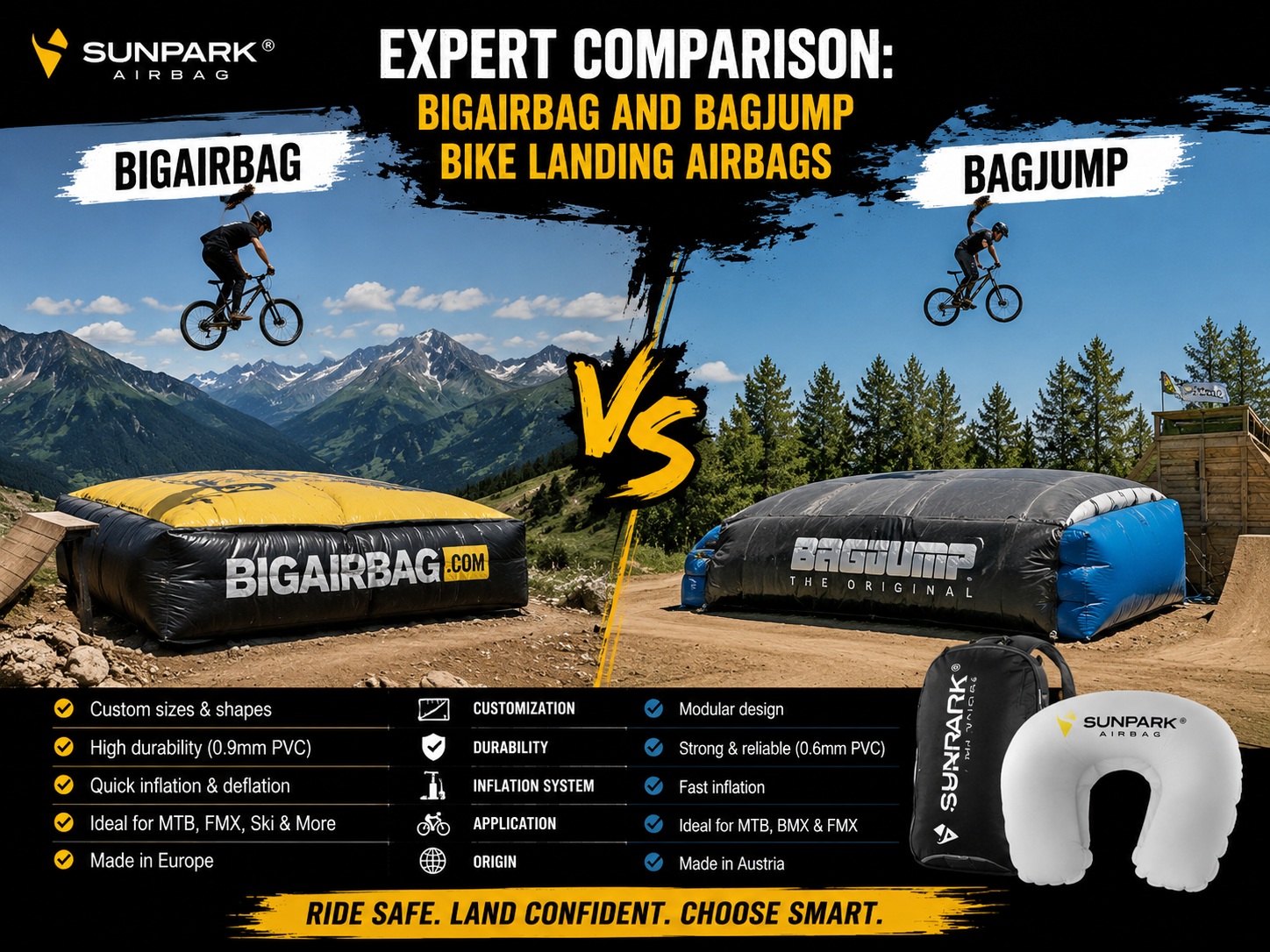
3. BagJump

BagJump is one of the original pioneers of the action sports airbag industry. Their “All-Terrain” airbag series is legendary in the FMX and BMX communities. BagJump focuses heavily on eliminating the “trampoline effect”—the dangerous rebound that occurs when a rider hits an over-pressurized inflatable.

Their multi-layered, multi-compartment air pockets mimic the exact slope and feel of a dirt ramp. They also utilize a proprietary high-grip top sheet textile that allows motorcycle tires to bite into the surface without sliding out upon landing. For high-budget touring events and Olympic-level training facilities, BagJump remains one of the most trusted Motorcycle airbag landing manufacturers globally.

4. Nordic Airbags

Nordic Airbags has built a stellar reputation by focusing on clean, integrated designs that look highly professional at live events. Unlike older systems that feature messy external tubes and exposed blowers, Nordic integrates their blowers seamlessly into the design.

They offer both One-Piece and Two-Piece FMX landings optimized for 65 to 75-foot gaps. Their safety deck features a slightly angled, rolled knuckle, which is incredibly forgiving if a rider cases the jump. We respect Nordic Airbags as one of the premier Motorcycle airbag landing manufacturers because they utilize heavy-duty, fire-retardant materials and offer excellent custom branding options with heavy-duty velcro banner attachments.

5. BigAirBag®

Hailing from the Netherlands, BigAirBag® is an absolute titan in the leisure and extreme sports sectors. While they produce equipment for trampoline parks and high-altitude stunts, their FMX-specific Landing Airbag series is engineered for high-throughput environments.

BigAirBag® excels in comprehensive after-sales support, offering onsite installation, risk analysis, and safety certifications for park operators. Their systems are characterized by exceptional impact absorption technology that allows riders to either ride out smoothly or slide safely to a halt after a crash. For commercial action sports parks seeking rigorous European safety compliance, BigAirBag® is a top-tier choice.

6. Progression Airbags

Progression Airbags focuses acutely on the mobility and logistics of extreme sports shows. Their Mobile Practice Airbag (PAB) system is highly favored by FMX teams that perform multiple shows across different cities in a single week.

By eliminating the need for expensive scaffolding or heavy earth-moving equipment, Progression provides a cost-effective, rapid-deployment solution. A small team can inflate and anchor their FMX landing in under 30 minutes. As one of the more agile Motorcycle airbag landing manufacturers, they deliver excellent value and high portability without sacrificing the crucial dual-chamber impact safety required for dirt bikes.

From our experience, the most common mistake facility owners make is purchasing a generic, single-chamber inflatable meant for children’s bounce houses and attempting to use it for motorcycles. A true FMX airbag must have internal baffles, adjustable release valves, and a minimum of two pressure zones. Never compromise on material thickness when a 250lb machine with spinning tires is involved.

Crucial Engineering Features to Evaluate

When you are comparing quotes from various Motorcycle airbag landing manufacturers, we recommend auditing their technical specifications rigorously. Do not base your decision on price alone; the safety of the athletes is paramount. Ensure the manufacturer meets the following criteria:

  • Material Specification: The internal baffles and main body should be constructed from at least 0.55mm commercial-grade PVC Tarpaulin. The top sheet, which takes the abrasive impact of the tires, must be replaceable and ideally constructed from 0.9mm PVC.
  • Adjustable Air Vents: The system must allow you to fine-tune the ambient pressure of the upper landing chamber. A heavier rider on a 450cc dirt bike requires a different firmness setting than a lighter rider on a BMX bike.
  • Anchoring Infrastructure: Look for heavy-duty stainless steel D-rings secured with 5cm wide webbed stripping. A motorcycle landing imparts massive forward momentum; the airbag must be anchored flawlessly to prevent sliding.
  • Seamless Top Sheet Design: The top landing surface should be seamless or utilize advanced welding to ensure spinning knobby tires do not catch on stitching and rip the barrier.

Summary Table: Comparing the Top Manufacturers

ManufacturerHeadquartersFlagship FMX FeatureBest Suited For
SUNPARK® AIRBAGChina0.9mm PVC Top Sheet, Custom GeometryGlobal Resorts, Custom Ramp Builds, Professional Training
DD AirbagsAustraliaNextStep Detachable Two-Piece DesignPrivate Compounds, Dirt Overlay Applications
BagJumpAustriaAll-Terrain Non-Slip SurfaceElite Olympic-Level Training, High Realism
Nordic AirbagsNorwayIntegrated Blowers, Rolled Safety KnuckleLive Events, Clean Visual Presentations
BigAirBag®NetherlandsHigh-Throughput Engineering, Onsite CertificationsCommercial Action Sports Parks
Progression AirbagsGlobalRapid Deployment Mobile PABTouring Stunt Shows, Budget-Conscious Facilities

Frequently Asked Questions

Why is a replaceable top sheet important on an FMX airbag?

Motorcycle tires, especially knobby dirt bike tires spinning at high RPMs upon landing, act like sandpaper. Over time, the landing area will suffer abrasive wear. The best Motorcycle airbag landing manufacturers design their systems with a velcro-attached or tightly integrated top sheet that can be easily swapped out for a fraction of the cost of a new airbag, drastically extending the lifespan of your investment.

Can I use a motorcycle airbag landing for BMX or Snowboarding?

Yes. Premium airbags feature adjustable air vents that allow you to modify the pressure. By softening the upper chamber, an airbag built for heavy FMX bikes can be perfectly calibrated to catch lighter BMX riders, snowboarders, or mountain bikers safely.

How long does it take to set up an inflatable landing?

From our experience, a standard professional FMX landing setup takes a crew of 3 to 4 people roughly 30 to 45 minutes to unroll, inflate, and properly anchor. This rapid deployment makes them vastly superior to moving thousands of tons of dirt for a temporary weekend event.

What is the “trampoline effect” and how is it prevented?

The trampoline effect occurs when an airbag is sealed without proper air release mechanisms; the rider hits the bag and is violently bounced back into the air. Elite Motorcycle airbag landing manufacturers prevent this by using an open-vent upper chamber that rapidly exhausts air upon impact, absorbing the kinetic energy completely without rebounding.

Industry References

  • ASTM International Standard F2970 – Design, Manufacture, and Operation of Trampoline Courts and Inflatable Attractions. View ASTM Standards
  • European Standard EN 14960 – Inflatable Play Equipment Safety Requirements. View CEN Guidelines
  • SUNPARK® Internal Engineering Data on Polyvinyl Chloride (PVC) Tensile Strength and Impact Absorption in Extreme Sports (2026).

When athletes risk their lives to push the boundaries of extreme sports, the equipment catching them must be flawless. As you evaluate the top Motorcycle airbag landing manufacturers, prioritize material science, chamber valving, and proven track records. If you are ready to upgrade your facility’s safety infrastructure with a bespoke Custom Airbag, the engineering team at SUNPARK® is ready to assist you in designing the ultimate landing solution.

The Top 7 Airbag Landing Manufacturers in 2026

The Top 7 Airbag Landing Manufacturers in 2026

Authored by the engineering and safety experts at SUNPARK®. With over 10 years of specialized experience in extreme sports safety equipment, we are dedicated to advancing the technology behind high-performance freestyle airbags for facilities worldwide.

The landscape of extreme sports and gymnastics has transformed radically over the past decade. As snowboarders, BMX riders, skateboarders, and gymnasts continue to push the boundaries of human performance, the infrastructure required to support their progression safely has had to evolve simultaneously. Gone are the days of unsanitary foam pits and high-risk snow landings for practice. In 2026, the global standard for extreme sports progression relies entirely on advanced inflatable technology. For ski resorts, theme parks, and sports facilities, selecting the right equipment supplier is a critical decision that impacts rider safety, facility liability, and long-term return on investment. This requires a thorough understanding of the top airbag landing manufacturers operating in the market today.

The Top 7 Airbag Landing Manufacturers in 2026

From our experience working closely with World Champion snowboarders and elite athletes, we know that an airbag is not merely a balloon. It is a highly engineered pneumatic shock absorption system. Evaluating airbag landing manufacturers requires looking beyond marketing brochures and digging into the specific material sourcing, air pillar technology, venting systems, and custom design capabilities of each brand. In this comprehensive guide, we will outline the top seven airbag landing manufacturers in 2026, detail the critical criteria you should use to evaluate them, and explain why SUNPARK® remains the definitive choice for industry professionals globally.

1. The Importance of Vetting Airbag Landing Manufacturers

When a facility procures extreme sports equipment, the stakes are incredibly high. A malfunction in an inflatable landing system during a high-altitude stunt can lead to catastrophic injuries. Therefore, the distinction between premier airbag landing manufacturers and secondary suppliers lies in their commitment to internal engineering, rigorous testing protocols, and the use of heavy-duty, UV-resistant textiles.

We recommend that facility managers approach the procurement process as an investment in risk mitigation. Many lower-tier airbag landing manufacturers utilize single-chamber designs or inferior PVC materials that degrade rapidly under constant UV exposure and the mechanical stress of heavy impacts. Conversely, the elite airbag landing manufacturers in 2026 employ multi-chamber systems, sophisticated air pressure release valves, and replaceable antimicrobial topsheets. Understanding these technical nuances is essential before reviewing the top companies in the space.

2. The Top 7 Airbag Landing Manufacturers of 2026

Our engineering team has continually monitored the competitive landscape to ensure our products remain at the absolute forefront of the industry. Based on global market presence, technological innovation, product durability, and customer support, we have identified the top seven airbag landing manufacturers setting the standard in 2026.

1. SUNPARK® AIRBAG

1. SUNPARK® AIRBAG

With over 10 years of dedicated experience, SUNPARK® AIRBAG is the leading manufacturer of Airbags for Extreme Sports and Leisure Industries in China, serving a massive global clientele. We provide highly engineered freestyle airbags for ski resorts, theme parks, sports, and gymnastics facilities around the globe. As extreme sports have developed, more snowboarders and serious sports enthusiasts are looking for safer training possibilities to progress without the risks of getting injured. We are deeply committed to the development and improvement of our own products, creating systems trusted by World Champion snowboarders, famous riders, and premier trampoline parks worldwide.

What separates SUNPARK® from other airbag landing manufacturers is our comprehensive, vertically integrated manufacturing process. This allows us to maintain strict quality control while offering exceptional value. We offer a diverse, highly customizable product line tailored to specific facility needs. Our core lineup includes the premium Airbag Landing systems for professional snowboarding and BMX facilities, and the highly versatile Inflatable Landing setups for skateparks. For indoor facilities looking to upgrade from unhygienic foam pits, our Foam Pit Jump Airbag provides a clean, responsive alternative. Furthermore, we specialize in high-altitude impact absorption with our Stunt Airbag and Free Fall Airbag models. Because every facility has unique spatial requirements, our engineering team excels in developing the exact Custom Airbag solution required by our partners, securing our position as the top choice among airbag landing manufacturers.

2. BagJump

BagJump, based in Austria, was one of the early pioneers in the extreme sports airbag industry. They have built a strong reputation over the years and are frequently seen at major European snowboarding events. As one of the legacy airbag landing manufacturers, they utilize high-quality European materials and offer specialized topsheets for snow sports. While their engineering is undoubtedly robust, their pricing structure typically places them at the very high end of the market, which can be prohibitive for independent training facilities or smaller ski resorts looking to maximize their equipment budgets.

3. Progression Airbags

Operating primarily out of Canada, Progression Airbags focuses heavily on the winter sports sector. They are well-regarded airbag landing manufacturers within the North American freestyle skiing and snowboarding communities. Their products are designed to withstand extreme cold weather conditions without the vinyl becoming brittle. They offer excellent sloped landing systems designed to mimic the transition of a real snow landing. However, their product range is somewhat hyper-focused on winter sports, making them slightly less versatile for multi-sport indoor trampoline parks or summer BMX training camps.

4. BigAirBag

Based in the Netherlands, BigAirBag is a prominent player in the European leisure and adventure park market. They are recognized among top airbag landing manufacturers for their visually striking designs and integration into adventure parks, climbing gyms, and family entertainment centers. They offer reliable free-fall systems and standard jump bags. While they have a strong footprint in recreational settings, professional extreme sports athletes often require more tailored, sport-specific impact zones like those developed by our team at SUNPARK®.

5. Landing Pad

Landing Pad is a US-based manufacturer that has carved out a niche within the action sports community, particularly in skateboarding and freestyle BMX. They are known among airbag landing manufacturers for creating portable, easy-to-deploy systems that traveling action sports shows can set up and tear down quickly. Their products are highly durable and feature excellent air-release technology. Their primary limitation lies in large-scale, permanent resort installations, where international airbag landing manufacturers with massive production facilities often offer better scalability.

6. Kata Airbags

Kata Airbags has emerged over the last few years as a technologically focused supplier. As up-and-coming airbag landing manufacturers, they emphasize digital pressure monitoring systems and smart-blower technology that adjusts air pressure automatically based on the jumper’s weight. While this technology is impressive, the reliance on complex electronic sensors in rugged outdoor environments (like snowy mountains or dusty BMX trails) can sometimes lead to increased maintenance requirements compared to purely mechanical, pressure-tested venting systems.

7. AirTrack Factory

Historically known for producing elite inflatable tumbling tracks for gymnastics and cheerleading, AirTrack Factory has expanded their portfolio to include thicker, impact-absorbing landing bags. As airbag landing manufacturers, their expertise lies in creating perfectly flat, highly responsive surfaces. They are an excellent choice for indoor gymnastics facilities. However, because their roots are in gymnastics, their equipment is generally less suited for the heavy, sharp impacts of bikes or snowboards compared to dedicated extreme sports airbag landing manufacturers.

3. Expert Criteria for Evaluating Airbag Landing Manufacturers

From our experience consulting with resort owners and facility directors, the decision process must move beyond initial purchase price. We recommend evaluating airbag landing manufacturers based on the following three critical technical pillars:

1. Impact Absorption Technology (Air Pillars): The era of the “big balloon” is over. Modern airbag landing manufacturers must utilize independent internal air pillars. This technology ensures that when an athlete lands on the edge of the bag, the displaced air does not catapult another athlete standing on the opposite side. It also provides a deceleration curve that protects the rider’s joints upon impact. Ensure your manufacturer utilizes distinct upper and lower chamber systems.

2. Material Specifications and Topsheet Durability: Action sports equipment takes brutal punishment from sharp ski edges, bike pedals, and UV radiation. The best airbag landing manufacturers use heavy-duty, reinforced Plato PVC Tarpaulin (typically 0.55mm to 0.9mm thickness) that is fire-retardant, UV-treated, and cold-crack resistant. Furthermore, the topsheet must be replaceable. A high-quality topsheet allows athletes to ride out of their landings smoothly without catching an edge, which is vital for progression training.

3. Customization and After-Sales Support: No two facilities are identical. Whether you are building an indoor ninja warrior course or an Olympic-level snowboard big air ramp, your supplier must offer comprehensive 3D modeling and custom sizing. We recommend partnering with airbag landing manufacturers like SUNPARK® that maintain an in-house design team capable of tailoring the dimensions, air venting rates, and custom branding of your airbag, backed by robust warranties and immediate parts availability.

4. Summary Table: Airbag Landing Manufacturers 2026

To assist in your procurement process, we have summarized the core focuses and regional bases of the leading airbag landing manufacturers.

ManufacturerHeadquartersPrimary Industry FocusCustomization Capability
SUNPARK® AIRBAGChina (Global Supply)Professional Extreme Sports, Ski Resorts, Trampoline ParksExceptional (Full 3D Design & Custom Builds)
BagJumpAustriaWinter Sports & Action Sports EventsHigh
Progression AirbagsCanadaSnowboarding & Freestyle SkiingHigh
BigAirBagNetherlandsAdventure Parks & Leisure FacilitiesModerate to High
Landing PadUSABMX, Skateboarding, Portable EventsModerate
Kata AirbagsEuropeSmart-Tech Airbags & Action SportsModerate
AirTrack FactoryNetherlandsGymnastics & TumblingLow to Moderate (Standardized sizes)

5. Frequently Asked Questions (FAQs)

Why are traditional foam pits being replaced by systems from airbag landing manufacturers?
From our experience, foam pits pose massive hygiene and safety risks. Foam blocks break down over time, creating hazardous dust particles that athletes inhale. Furthermore, foam pits are difficult to clean, often harboring bacteria. Advanced products like the SUNPARK® Foam Pit Jump Airbag are highly sanitary, easy to clean, and provide a much more consistent and safer impact absorption rate compared to deteriorating foam blocks.
How do airbag landing manufacturers ensure the bags do not pop upon impact?
Top-tier airbag landing manufacturers do not build sealed balloons. Our products are continuous-flow systems. High-powered industrial blowers constantly push air into the bag, while precisely engineered release valves allow air to escape upon impact. This controlled release of air is what safely decelerates the athlete, making the bag impossible to “pop” under normal operational conditions.
Can I leave my extreme sports airbag outside during the winter?
Yes, provided you purchase from reputable airbag landing manufacturers that utilize cold-crack resistant PVC materials. At SUNPARK®, our snow-specific Airbag Landing systems are engineered with specialized vinyl treatments designed to remain flexible and durable in sub-zero alpine environments, which is why they are trusted by major ski resorts globally.

6. Industry References

trampoline park airbag

How much do trampoline park owners make?

Written by the industry experts at SUNPARK®. With over 10 years of experience, we provide freestyle airbags for ski resorts, theme parks, sports, and gymnastics facilities around the globe. SunparkAirbag® is the leading manufacturer of Airbags for Extreme Sports and Leisure Industries in China. We create products for World Champion Snowboarders, famous riders, and trampoline parks worldwide. We are deeply committed to the development and improvement of our own products to ensure maximum safety and profitability for our clients.

trampoline park airbag

The indoor active entertainment industry has experienced explosive growth over the last decade. As entrepreneurs and investors look for lucrative opportunities in the leisure sector, one of the most common questions we receive is: How much do trampoline park owners make? From our experience outfitting facilities across the globe, the answer depends on a complex matrix of initial capital investment, operational efficiency, location, and the implementation of modern, safe equipment. Running a successful indoor park is not just about filling a warehouse with trampolines; it is about risk management, maximizing throughput, and creating a sustainable business model.

In this comprehensive guide, we will break down the exact revenue streams, operating costs, and profit margins associated with this business. If you are drafting a business plan or considering an investment, understanding exactly How much do trampoline park owners make is the critical first step. We will also discuss how upgrading your facility with advanced safety equipment from SUNPARK® can significantly reduce overhead costs, lower insurance premiums, and directly increase your bottom line.

1. Understanding the Revenue Streams

To accurately determine How much do trampoline park owners make, we must first look at how these facilities generate income. A modern indoor park is a multi-faceted entertainment venue. While open jump time was once the primary source of revenue, today’s successful parks rely heavily on diversified income streams.

General admission typically accounts for 45 to 55 percent of total revenue. This includes hourly jump passes, toddler time sessions, and fitness classes. However, the most profitable segment of the business is often event hosting. Birthday parties, corporate team-building events, and school field trips provide predictable, high-margin revenue. Party packages usually include jump time, a private room, food, and beverages, allowing owners to charge a premium. Furthermore, food and beverage sales (cafes or concession stands) and merchandise (such as mandatory grip socks) can account for another 15 to 20 percent of total gross revenue. When calculating How much do trampoline park owners make, these secondary revenue streams are what truly drive profitability.

2. Initial Setup and Equipment Costs

Before you can ask How much do trampoline park owners make, you must understand the barrier to entry. Building a high-quality facility requires significant upfront capital. A standard park ranges from 25,000 to 40,000 square feet. The initial investment typically falls between 1.5 million and 3 million dollars. This encompasses leasehold improvements, architectural design, permitting, and the purchase of attraction equipment.

Equipment is where many new owners make critical mistakes. Installing cheap, outdated features leads to massive maintenance headaches and safety liabilities down the road. From our experience, we recommend investing in premium, durable attractions from day one. For example, traditional foam pits were once the standard for dismount zones. However, they are notoriously unhygienic, require constant fluffing, and pose a severe fire hazard. By installing a high-quality Trampoline Park Air Bag, owners provide a safer, cleaner landing zone that dramatically reduces ongoing labor and replacement costs. As extreme sports have developed, more and more snowboarders, serious sports enthusiasts, and everyday jumpers are looking for safer training possibilities to progress without the risks of getting injured. A proper Jump Trampoline Airbag provides exactly that, while protecting your initial investment.

3. Monthly Operational Expenses

The gross revenue of a facility is impressive, but How much do trampoline park owners make is dictated by their ability to control operational expenses. The largest fixed cost is commercial real estate rent, which can range from 15,000 to 40,000 dollars per month depending on the demographic market. Payroll is the largest variable expense; a park requires general managers, shift supervisors, court monitors, front desk staff, and event coordinators.

Insurance is another massive line item. Liability insurance for extreme sports facilities is expensive, often costing tens of thousands of dollars annually. We recommend working closely with your insurance broker to demonstrate your commitment to safety. Facilities that replace dangerous foam pits with a modern Trampoline Park Airbag Replacement often see favorable adjustments in their premiums because the risk of catastrophic injury is heavily mitigated.

Maintenance and cleaning also eat into profits. Foam pits require the purchase of replacement foam blocks constantly as they tear and degrade into toxic dust. When calculating How much do trampoline park owners make, eliminating this recurring cost by utilizing a SunparkAirbag® translates directly to increased net income.

4. The Bottom Line: How much do trampoline park owners make?

Now, let us answer the core question: How much do trampoline park owners make? In a mid-sized to large market, a well-managed facility generates between 1.5 million and 2.5 million dollars in gross annual revenue. After deducting rent, payroll, insurance, marketing, maintenance, and debt service on the initial loan, the net profit margin typically sits between 15 and 25 percent.

This means that a park generating 2 million dollars in gross revenue can expect to yield a net profit of 300,000 to 500,000 dollars annually for the ownership group. Exceptional facilities in prime locations with highly optimized operations can see margins push closer to 30 percent. Therefore, when evaluating How much do trampoline park owners make, it is clear that the potential for a high return on investment (ROI) is substantial, often allowing owners to recoup their initial capital within two to three years of operation.

5. Maximizing Profits Through Advanced Safety Equipment

From our experience, the most profitable parks are the safest parks. An injury at your facility not only invites devastating lawsuits but also destroys your reputation in the local community. Parents will not book birthday parties at a venue they perceive as unsafe. If you want to maximize How much do trampoline park owners make, you must prioritize risk management.

This is where SUNPARK® delivers unmatched value. We are deeply committed to the development and improving of our own products. For facilities catering to advanced athletes, our Gymnastics Foam Pit Airbag provides a superior training environment. World Champion Snowboarders and gymnasts rely on our technology to push their limits safely. For standard park operators, upgrading to a custom-branded Trampoline Park Air Bag elevates the aesthetic of your venue, lowers your maintenance labor, and significantly reduces liability. By controlling these variables, you directly protect and increase your profit margins.

6. Summary Table: Financial Breakdown

To provide a clear overview of How much do trampoline park owners make, review the estimated financial breakdown below based on industry averages for a 30,000 square foot facility.

Financial MetricEstimated Annual Range (USD)Notes & Industry Context
Gross Annual Revenue1,500,000 – 2,500,000Driven by admissions, parties, and merchandise.
Initial Capital Investment1,500,000 – 3,000,000Includes build-out, Trampoline Park Air Bag installations, and permits.
Annual Operating Expenses1,000,000 – 1,800,000Rent, payroll, insurance, and utilities.
Net Profit Margin15% – 25%Highly dependent on expense control and safety management.
Owner Net Income300,000 – 625,000This answers exactly How much do trampoline park owners make.

7. Frequently Asked Questions (FAQs)

How much do trampoline park owners make in their first year of operation?

The first year is often characterized by high marketing costs and stabilizing operations. While gross revenues can hit 1.5 million dollars, net profits are usually lower in year one as owners pay down initial debts. However, by year two, the answer to How much do trampoline park owners make typically stabilizes around 300,000 to 500,000 dollars net.

Why should I choose a Trampoline Park Airbag Replacement instead of a foam pit?

Foam pits are a severe hygiene issue, accumulating sweat, dead skin, and bacteria. They also break down quickly, requiring expensive replacement blocks. We recommend a Trampoline Park Airbag Replacement because it is antimicrobial, easy to wipe down, drastically reduces your monthly maintenance costs, and provides a much safer, softer landing for your guests.

Does SUNPARK® provide equipment for professional athletes as well?

Yes. SunparkAirbag® is the leading manufacturer of Airbags for Extreme Sports and Leisure Industries in China. We create products for World Champion Snowboarders and extreme sports athletes. Our Gymnastics Foam Pit Airbag is specifically engineered for high-performance training facilities where precision and safety are paramount.

What is the biggest threat to How much do trampoline park owners make?

The biggest threats are high insurance premiums and operational downtime due to equipment failure or injury investigations. Investing in a premium Jump Trampoline Airbag mitigates these risks, ensuring continuous operation and protecting your brand’s reputation.

8. Industry References

What is the 5 10 20 Rule for Airbag Landing Airbags

What is the 5 10 20 Rule for Airbags? A Comprehensive Safety Guide

Safety is the foundational pillar of any high-impact environment, whether you are commuting on a busy highway or executing a double cork on a snowboard. A frequently asked question in the realm of impact protection is: what exactly is the 5 10 20 rule for airbags? Primarily rooted in automotive safety guidelines, the 5 10 20 rule for airbags dictates the optimal spatial distance between vehicle occupants and deployment zones to prevent deployment-related injuries. However, the underlying physics of spatial distancing, impact attenuation, and deceleration zones are universal.

What is the 5 10 20 Rule for Airbag Landing Airbags

At SUNPARK® AIRBAG, we apply these universal laws of physics to the extreme sports industry. With over 10 years of experience, we provide freestyle airbags for ski resorts, theme park, sports and gymnastics facility around the globe. SunparkAirbag® is the leading manufacturer of Airbags for Extreme Sports and Leisure Industries in China. Just as the automotive 5 10 20 rule for airbags saves lives on the road, our meticulously engineered inflatable products save athletes from devastating injuries during high-altitude maneuvers. In this authoritative guide, we will explore the precise meaning of the 5 10 20 rule for airbags, how it functions, and how the core principles of impact safety translate into our world-class freestyle and stunt airbags.

Understanding the Automotive 5 10 20 Rule for Airbags

The 5 10 20 rule for airbags was established by safety organizations and automotive engineers to mitigate the risks associated with the explosive force of airbag deployment. An automotive airbag deploys at speeds exceeding 200 miles per hour in a fraction of a second. If an occupant is positioned too closely to the deployment zone, the force of the expanding fabric can cause severe trauma. From our experience in studying impact dynamics, adhering to spatial guidelines is non-negotiable.

The 5-Inch Rule: Side and Curtain Airbags

The first component of the 5 10 20 rule for airbags refers to side-impact and side-curtain airbags. Occupants must maintain a minimum distance of 5 inches between their body and the door or window frame where the side airbag is housed. Leaning against the window or resting a head on the door panel places the individual directly in the expansion path, which can result in blunt force trauma upon deployment.

The 10-Inch Rule: Driver Positioning

The 10-inch metric is perhaps the most critical element of the 5 10 20 rule for airbags. It mandates a minimum distance of 10 inches between the center of the driver’s breastbone (sternum) and the hub of the steering wheel. This clearance provides the frontal airbag sufficient space to fully inflate and begin deflating before making contact with the driver, thereby absorbing the forward kinetic energy rather than acting as a rigid projectile.

The 20-Inch Rule: Passenger Positioning

The final pillar of the 5 10 20 rule for airbags addresses the front passenger. Because the passenger-side airbag is significantly larger than the driver-side airbag to cover the expansive dashboard area, a greater distance is required. Passengers should push their seats back to maintain a minimum of 20 inches from the dashboard. We recommend that passengers remain seated upright with their feet on the floorboards to ensure the airbag functions as designed during a collision.

The Physics of Impact: Translating Automotive Safety to Extreme Sports

While the 5 10 20 rule for airbags is highly specific to automotive cabins, the science of deceleration applies directly to our work at SUNPARK® AIRBAG. In a car crash, the airbag rapidly deflates upon impact through specific venting holes, cushioning the occupant. In extreme sports, athletes fall from heights of up to 50 feet. If they hit a solid surface, the sudden deceleration causes catastrophic injury.

As extreme sports developed, more and more snowboarders and serious sports enthusiasts are looking for safer training possibilities to progress without risks of getting injured. The concept of the 5 10 20 rule for airbags—creating a defined “safe zone” for deceleration—is exactly how we engineer our extreme sports airbags. Instead of measuring inches from a dashboard, we measure the depth and pressure of our dual-chamber inflation systems to ensure that an athlete decelarates smoothly over several feet of air, rather than a few inches.

We create the products for World Champion Snowboarder, famous riders and trampoline parks worldwide. By analyzing the force-time curve (the same metric used to validate the 5 10 20 rule for airbags), we adjust the internal venting pillars of our airbags to provide a soft, progressive catch that prevents bottoming out.

SUNPARK® AIRBAG Solutions: Engineering Safe Landing Zones

We are deeply committed to the development and improving of our own products. Integrating the core principles of the 5 10 20 rule for airbags—distance, deployment integrity, and energy absorption—we have cultivated a premium line of inflatable safety products. Below is an overview of how we apply these high-level safety principles to our specific offerings.

Airbag Landing

Landing Airbag

Our traditional Airbag Landing setups are designed primarily for BMX riders, mountain bikers, and freestyle skiers. Unlike early generation flat airbags, our modern Airbag Landing features a dual-chamber system. The bottom chamber is kept firm to prevent ground contact, while the top chamber is exceptionally soft to absorb the impact. This layered approach mirrors the strategic distancing found in the 5 10 20 rule for airbags, ensuring the athlete’s kinetic energy is absorbed in the upper “10 to 20 inch” threshold of the bag before reaching the firmer base layer.

Inflatable Landing

Air Landing

An Inflatable Landing provides a true-to-dirt riding experience. It is angled to match the trajectory of a dirt or snow landing ramp. From our experience, athletes need a realistic landing surface that allows them to ride out of their tricks safely. We utilize advanced tensioning systems and high-grade PVC materials to ensure the Inflatable Landing maintains its shape while providing enough give to prevent joint compression upon touchdown.

Foam Pit Jump Airbag

Historically, gymnastics facilities and trampoline parks relied on polyurethane foam blocks. However, foam pits are notoriously unhygienic, expensive to maintain, and pose fire hazards. We recommend upgrading to a Foam Pit Jump Airbag. This system fits seamlessly into existing foam pit structures. It provides a cleaner, safer, and more consistent landing surface. Just as the 5 10 20 rule for airbags standardizes safety in vehicles, our Foam Pit Jump Airbag standardizes safety in indoor action sports facilities.

Stunt Airbag

The film and entertainment industry demands absolute reliability. Our Stunt Airbag is engineered for high-altitude falls. When a stunt professional drops from a building, the deceleration zone must be massive. The internal air pillars inside a Stunt Airbag are calibrated to release air at a specific rate upon impact, ensuring the performer is caught softly without bouncing back—a critical safety mechanism derived from advanced aerodynamic engineering.

Free Fall Airbag

Designed for adrenaline parks and high ropes courses, the Free Fall Airbag allows users to jump from elevated platforms purely for the thrill of the drop. In our professional opinion, these airbags require the highest level of top-cover durability and precisely engineered side-vents. The design guarantees that regardless of the jumper’s orientation, the impact force is distributed evenly across the surface of the Free Fall Airbag.

Custom Airbag

Because no two facilities are exactly alike, we specialize in manufacturing the Custom Airbag. Whether you need an irregular shape to fit a specific ski resort terrain park, or specific branding for a major extreme sports competition, our engineering team can build a Custom Airbag to your exact specifications, always adhering to our strict internal safety regulations regarding impact attenuation.

Industry Applications for Advanced Impact Protection

Integrating high-quality impact protection is not just about avoiding injury; it is about fostering progression. When athletes know they have a safe landing zone, they are willing to push the boundaries of their sport. This psychological comfort is akin to the peace of mind drivers feel knowing their vehicle adheres to the 5 10 20 rule for airbags.

At SUNPARK® AIRBAG, our reach extends globally. From providing the primary landing zones for elite snowboard training camps to outfitting commercial trampoline parks, our products are the gold standard. We recommend that facility operators conduct regular inspections of their equipment, checking blowers, pressure vents, and top-sheet integrity, much like a vehicle owner must ensure their automotive airbag sensors are functioning correctly.

Summary Table: Principles of the 5 10 20 Rule for Airbags

To summarize the fundamental concepts of spatial safety, we have created a comparative table illustrating how the 5 10 20 rule for airbags in automotive applications correlates with the safety principles we utilize at SUNPARK® AIRBAG.

Rule MetricAutomotive Application (5 10 20 rule for airbags)SUNPARK® Extreme Sports Airbag Equivalent
5 InchesMinimum distance from side/curtain airbags to prevent localized blunt trauma.Minimum safe clearance from the edge of the airbag to hard structural walls/frames.
10 InchesMinimum distance from the driver’s breastbone to the steering wheel hub.The critical top-layer compression depth required to safely decelerate a falling athlete.
20 InchesMinimum distance from the passenger to the expansive dashboard airbag.The minimum recommended thickness/height for base-chamber inflation to prevent ground-outs.

Frequently Asked Questions (FAQs)

What happens if I sit closer than the 5 10 20 rule for airbags recommends?
Sitting closer than the recommended 10 inches for drivers or 20 inches for passengers places you inside the initial deployment zone. Because the airbag is expanding at over 200 mph, it will strike you with extreme force before it has a chance to begin deflating, which can cause severe facial, thoracic, or cervical injuries.
How does SUNPARK® AIRBAG ensure the safety of its Inflatable Landings?
From our experience, safety relies on internal air pressure management. We use dual-chamber systems and engineered vent holes. Similar to how the 5 10 20 rule for airbags manages deceleration distance, our Inflatable Landing utilizes a firm lower chamber to prevent hitting the ground and a soft upper chamber to absorb the impact of the rider softly.
Does the 5 10 20 rule for airbags apply to children?
Children under the age of 13 should always sit in the back seat. The explosive force of frontal airbags, even when observing the 5 10 20 rule for airbags, is generally too powerful for the developing skeletal structure of a child. If a child must sit in the front, the seat must be pushed as far back as possible (well beyond 20 inches).
Can I use a Foam Pit Jump Airbag instead of traditional foam blocks?
Yes. We highly recommend replacing traditional foam blocks with a Foam Pit Jump Airbag. Foam blocks deteriorate, create hazardous dust, and harbor bacteria. Our airbags provide a much cleaner, safer, and easily maintainable landing zone that offers consistent deceleration properties for gymnastics and trampoline parks.
Why choose SUNPARK® over other airbag manufacturers?
SunparkAirbag® is the leading manufacturer of Airbags for Extreme Sports and Leisure Industries in China. We create products for World Champion Snowboarders and have over 10 years of experience. Our dedication to superior materials, customized internal venting technology, and long-term durability makes us the industry authority.

References

Top 5 Features Airbag Landing Ramp for Snowboarding and FMX

Top 5 Features to Look for in an Airbag Landing Ramp for Snowboarding and FMX

As extreme sports have developed over the past decade, the push for massive progression has been mirrored by an absolute necessity for advanced safety protocols. More and more snowboarders, freestyle motocross (FMX) riders, and serious sports enthusiasts are looking for safer training possibilities to progress without the catastrophic risks of getting injured. The days of relying solely on a Foam Pit Jump Airbag for learning double corks or backflip combinations are evolving. Today, athletes require ride-away solutions that mimic real-world dirt and snow landings while providing a forgiving cushion during a crash. Understanding the core Features to Look for in an Airbag Landing Ramp for Snowboarding and FMX is critical for training facilities, ski resorts, and professional athletes aiming to elevate their progression.

Top 5 Features to Look for in an Airbag Landing Ramp for Snowboarding and FMX

At SUNPARK® AIRBAG, we bring unparalleled expertise to this specialized field. With over 10 years of experience, we provide freestyle airbags for ski resorts, theme parks, sports and gymnastics facilities around the globe. SunparkAirbag® is the leading manufacturer of Airbags for Extreme Sports and Leisure Industries in China. We create products for World Champion Snowboarders, famous riders, and trampoline parks worldwide. We are deeply committed to the development and improvement of our own products, which include our premium Airbag Landing systems, Inflatable Landing setups, Stunt Airbag designs, Free Fall Airbag modules, and fully Custom Airbag solutions. From our experience outfitting the world’s elite training grounds, we have identified the non-negotiable elements that separate a world-class training tool from a dangerous liability. In this comprehensive guide, we detail the top Features to Look for in an Airbag Landing Ramp for Snowboarding and FMX to ensure you make the most informed, safety-conscious investment for your facility.

1. Multi-Chamber Impact Absorption and Pressure Regulation

When analyzing the primary Features to Look for in an Airbag Landing Ramp for Snowboarding and FMX, the internal structural geometry is the absolute most critical factor. Traditional inflatable structures often consist of a single large pocket of air. If an FMX rider weighing over 200 pounds on a 220-pound motorcycle lands heavily on a single-chamber bag, the air displaces violently, often resulting in the rider bottoming out against the hard ground or experiencing a dangerous catapult effect. This is entirely unacceptable in professional extreme sports training.

From our experience, a true Airbag Landing system must utilize an advanced multi-chamber design. At SUNPARK® AIRBAG, we engineer our Inflatable Landing ramps with independent internal air pillars and separated upper and lower chambers. The bottom chamber remains highly pressurized to act as an impenetrable base layer that prevents ground contact under any circumstance. The top chamber features specially calibrated air pillars that absorb and dissipate the kinetic energy of a falling rider or motorcycle. When a snowboarder under-rotates a triple cork, the top layer instantly yields, contouring to the impact and softening the blow, while the rigid bottom layer maintains the ramp’s structural integrity.

We recommend facilities rigorously test the pressure regulation valves. The ability to independently adjust the firmness of the upper and lower chambers is one of the most vital Features to Look for in an Airbag Landing Ramp for Snowboarding and FMX. A beginner learning straight airs requires a softer top sheet, whereas a World Champion Snowboarder executing a perfect landing needs a firmer surface to safely ride away without sinking. The capacity for dynamic pressure regulation ensures the airbag scales with the skill level of your athletes.

2. Extreme Durability and Tear-Resistant Top Sheets

The materials utilized in manufacturing dictate the lifespan and safety of your investment. Snowboards have razor-sharp metal edges, and FMX bikes possess sharp footpegs, spinning knobby tires, and hot exhaust pipes. If you are researching the Features to Look for in an Airbag Landing Ramp for Snowboarding and FMX, you must scrutinize the composition of the top sheet and the primary inflatable chassis.

SunparkAirbag® utilizes heavy-duty, 0.55mm to 0.90mm Plato PVC Tarpaulin. This material is not only industrial-grade but is specifically treated to be flame retardant, UV resistant, and highly impermeable to water. When a 450cc dirt bike lands on an airbag under acceleration, the friction generated is immense. A standard Stunt Airbag will shred under this localized stress. Our specialized Airbag Landing ramps feature an independently replaceable top sheet. This is a massive operational advantage; instead of replacing the entire Inflatable Landing structure when the top layer inevitably shows wear from spinning tires or snowboard edges, you simply detach the Velcro and bungee systems to install a fresh top sheet.

Furthermore, the top sheet material must provide the correct coefficient of friction. For FMX, the material must offer enough grip for the tires to ride away smoothly without sliding out. For snowboarding, the material often requires a specialized slick coating or requires the application of a specialized lubricant to mimic the glide of natural snow. From our experience outfitting high-altitude ski resorts and indoor trampoline parks alike, utilizing an anti-microbial, temperature-resistant PVC blend is one of the most essential Features to Look for in an Airbag Landing Ramp for Snowboarding and FMX.

3. True-to-Pitch Custom Sloped Contour Design

A major evolution from the traditional Foam Pit Jump Airbag is the transition from a flat, crash-pad style landing to a realistic, ride-out ramp. Professional athletes do not want to simply fall out of the sky into a flat bag; they need to practice spotting their landing, matching the angle of the transition, and riding away smoothly. Therefore, the geometric contour of the product is among the top Features to Look for in an Airbag Landing Ramp for Snowboarding and FMX.

We recommend a sloped contour design that perfectly matches the trajectory of a standard dirt or snow landing. If an FMX rider hits a standard 75-foot gap, the landing airbag must replicate the exact pitch of a dirt receiver. If the angle is too steep, the rider will face a harsh compression; if it is too shallow, the risk of bouncing increases. Because no two training facilities have the exact same scaffolding or terrain, a one-size-fits-all approach is dangerous. This is why SUNPARK® AIRBAG specializes in the Custom Airbag process. We use advanced 3D modeling to match your exact take-off ramp geometry, ensuring the sweet spot of the Inflatable Landing is positioned flawlessly to catch the rider’s specific parabolic arc.

4. Advanced Air Venting and Blower Systems

The physics of an airbag rely entirely on how efficiently it can expel and intake air. A closed, sealed inflatable will act like a trampoline, dangerously bouncing the rider back into the air upon impact. The precise calibration of air venting is one of the most technical Features to Look for in an Airbag Landing Ramp for Snowboarding and FMX.

An elite Airbag Landing relies on continuous airflow. Heavy-duty, CE/UL certified blowers constantly pump air into the chambers, while strategically placed, adjustable exhaust vents release air at a controlled rate upon impact. At SunparkAirbag®, our engineering team has perfected the placement and sizing of these vents. When a World Champion Snowboarder impacts our bag, the vents open just enough to absorb the energy, preventing a harsh bounce, and then the high-output blowers re-inflate the impact zone within seconds, making it ready for the next rider in rapid succession. We recommend ensuring that any airbag you purchase includes variable-speed blowers to give your facility operators granular control over the ramp’s firmness.

5. Seamless Portability and Heavy-Duty Anchoring

Whether you are setting up at a temporary extreme sports festival, a summer training camp at a ski resort, or a permanent gymnastics facility, the logistics of deploying the airbag are crucial. Portability combined with unyielding stability are essential Features to Look for in an Airbag Landing Ramp for Snowboarding and FMX.

From our experience, a massive 100-foot FMX landing airbag acts like a giant sail if the wind picks up. Therefore, the anchoring system must be industrial-strength. SUNPARK® AIRBAG integrates heavy-duty, reinforced stainless steel D-rings along the entire perimeter of the base. These anchor points are welded into the PVC using high-frequency heat sealing, ensuring they will not tear out under immense lateral stress. We recommend utilizing heavy-duty ratchet straps and ground anchors to secure the bag to the scaffolding and the earth. Additionally, despite their massive inflated size, our Inflatable Landing and Free Fall Airbag products are designed to deflate rapidly and roll up into manageable, highly durable transport bags, allowing your team to move the setup between venues with standard heavy machinery.

Summary Table: Comparing Key Airbag Features

To assist your procurement team in evaluating the mandatory Features to Look for in an Airbag Landing Ramp for Snowboarding and FMX, we have provided a technical summary table below.

Critical FeatureStandard Airbag CapabilitySUNPARK® AIRBAG Professional Standard
Internal StructureSingle open air chamber (high bounce risk)Multi-chamber, independent air pillars with a rigid safety base layer.
Top Sheet MaterialStandard PVC (prone to edge cuts and tire burns)Replaceable, 0.90mm Plato PVC, flame retardant, UV resistant, and anti-friction coated.
Landing GeometryFlat or generic wedge shapeTrue-to-pitch Custom Airbag slope designed to match your specific take-off trajectory.
Pressure RegulationStatic firmnessAdjustable exhaust vents and variable-speed blowers for customized rider firmness.
Anchoring SystemBasic fabric loopsHigh-frequency welded stainless steel D-rings for extreme weather and lateral stability.

Frequently Asked Questions (FAQs)

What are the most important Features to Look for in an Airbag Landing Ramp for Snowboarding and FMX regarding safety?

From our experience, the most critical safety feature is the dual-chamber design. The bottom chamber must remain highly inflated to prevent the rider from bottoming out, while the top chamber must feature adjustable air pillars to absorb the impact smoothly. Secondary to this is the presence of an independently replaceable, highly durable top sheet to prevent tears from snowboard edges or motorcycle footpegs.

Can I use the same Airbag Landing for both FMX and Snowboarding?

While the core internal structure of a premium SUNPARK® AIRBAG remains similar, the top sheet and the slope angle often need adjustment. FMX requires a steeper landing pitch and a grippy top sheet for tire traction. Snowboarding requires a slightly mellower pitch and a slick top sheet. We recommend our Custom Airbag solutions, which can be engineered with interchangeable top sheets to accommodate both sports at different times.

How does an Inflatable Landing differ from a traditional Foam Pit Jump Airbag?

A Foam Pit Jump Airbag or standard Free Fall Airbag is designed simply to catch a falling body without any intention of the rider landing on their feet or wheels to ride away. An Inflatable Landing ramp is sloped and tensioned specifically so an athlete can land their trick and ride down the transition, mimicking a real dirt or snow landing perfectly.

How long does a SUNPARK® AIRBAG last under professional extreme sports use?

With proper maintenance, our heavy-duty PVC chassis will last for many years. The replaceable top sheet is designed to take the brunt of the abuse. For a high-traffic ski resort or FMX training facility, you may replace the top sheet every 1 to 2 seasons, preserving the main airbag body indefinitely. We recommend regular cleaning and UV protection application to extend the material’s lifespan.

Industry References and Standards

At SUNPARK® AIRBAG, we align our manufacturing protocols with global safety and engineering standards. For further reading on the specifications and Features to Look for in an Airbag Landing Ramp for Snowboarding and FMX, we suggest consulting the following authoritative sources:

“`

What to Look for When Buying a Trampoline Park Airbag

What to Look for When Buying a Trampoline Park Airbag?

The global extreme sports and indoor recreation industries have experienced a massive transformation over the past decade. As extreme sports developed, more and more snowboarders and serious sports enthusiasts are looking for safer training possibilities to progress without risks of getting injured. This demand for safety and high performance has directly translated to the indoor recreation sector. Today, replacing outdated foam blocks with advanced inflatable systems is no longer a luxury; it is an operational necessity. However, making the transition requires careful consideration. When Buying a Trampoline Park Airbag, facility owners must navigate technical specifications, safety certifications, and long-term maintenance protocols to ensure a profitable return on investment.

What to Look for When Buying a Trampoline Park Airbag

At SUNPARK® AIRBAG – Explorer of Airbag System for Sports, we understand the critical nature of this equipment. With over 10 years of experience, we provide freestyle airbags for ski resorts, theme parks, sports, and gymnastics facilities around the globe. SunparkAirbag® is the leading manufacturer of Airbags for Extreme Sports and Leisure Industries in China. We create the products for World Champion Snowboarders, famous riders, and trampoline parks worldwide. We are deeply committed to the development and improving of our own products. From our experience, many operators struggle to identify the core features that separate a premium landing system from a subpar alternative. This comprehensive guide will detail exactly what you must evaluate when Buying a Trampoline Park Airbag to guarantee the ultimate safety and satisfaction of your patrons.

1. Summary Table: Airbag vs. Traditional Foam Pits

A crucial first step in Buying a Trampoline Park Airbag is understanding why the industry is moving away from foam. We recommend reviewing this summary table, which highlights the operational and safety differences between the two landing systems.

Feature / MetricTraditional Foam PitsModern Trampoline Park Airbags
Impact AbsorptionInconsistent; risk of hitting the hard floor if foam is displaced.Highly consistent; internal air pillars provide uniform deceleration.
Hygiene & CleanlinessHigh dust accumulation, retains sweat and bacteria, difficult to clean.Antimicrobial top sheets, easy to wipe down and sanitize daily.
Maintenance CostsHigh; requires frequent replacement of crumbling foam blocks.Low; robust PVC materials last for years with minimal upkeep.
Exit Time (Throughput)Slow; users struggle to wade through deep foam.Fast; users can quickly walk or roll off the smooth top surface.
Aesthetic AppealDegrades quickly as foam tears and discolors.Maintains a vibrant, fully customizable branded appearance.

2. Material Durability and Tensile Strength

When you are Buying a Trampoline Park Airbag, the quality of the raw materials dictates the lifespan of the product. The constant barrage of jumpers, varying in weight and landing impact, requires an outer shell that is virtually indestructible. We recommend prioritizing airbags constructed from industrial-grade, fire-retardant PVC (Polyvinyl Chloride) or TPU (Thermoplastic Polyurethane) coated fabrics.

From our experience, the top sheet—the surface the jumper actually lands on—must be specifically engineered for skin contact. A high-quality top sheet should feature a satin or specially treated smooth finish to prevent friction burns. Furthermore, when Buying a Trampoline Park Airbag, you must ensure the seams are double or quadruple-stitched and welded using high-frequency technology. This prevents the seams from bursting under sudden pressure spikes. As industry leaders, SUNPARK® AIRBAG utilizes only the highest caliber materials that offer extreme tensile strength and UV resistance, ensuring your investment withstands years of heavy commercial use.

3. Shock Absorption and Multi-Chamber Engineering

The internal architecture is the most critical safety component to evaluate when Buying a Trampoline Park Airbag. A standard inflatable structure behaves like a bouncy castle, propelling the user back into the air. A professional landing airbag, however, is designed to absorb kinetic energy and safely decelerate the jumper. This is achieved through advanced multi-chamber engineering.

We recommend looking for an airbag system that utilizes vertical air pillars or a dual-chamber configuration. The lower chamber retains high pressure to act as a fail-safe, ensuring the jumper never bottoms out and hits the concrete floor. The upper chamber features strategically placed air release valves. Upon impact, these valves simultaneously expel air, cushioning the fall and preventing a rebound effect. Anyone Buying a Trampoline Park Airbag must verify that these pressure release systems can be calibrated to accommodate different age groups and weights, providing a uniform safety standard for both children and adult athletes.

4. Hygiene, Cleanliness, and Maintenance Efficiency

In the post-pandemic era, facility hygiene is under strict scrutiny by both health inspectors and parents. Foam pits are notorious for harboring dust, allergens, bacteria, and even lost personal items. Conversely, one of the greatest operational benefits of Buying a Trampoline Park Airbag is the drastic improvement in facility hygiene.

A premium airbag features a smooth, continuous top sheet that can be sprayed with antibacterial solutions and wiped down in a matter of minutes. From our experience assisting park operators, switching to an airbag reduces nightly cleaning labor by over 70%. When Buying a Trampoline Park Airbag, you should always inquire about the ease of removing and replacing the top sheet. A well-designed system allows the top sheet to be detached via heavy-duty Velcro or zipper systems, meaning it can be thoroughly washed or easily replaced if the branding needs an update, without replacing the entire airbag structure.

5. Customization and Facility Integration

No two indoor entertainment centers are exactly alike. Therefore, Buying a Trampoline Park Airbag should never be a one-size-fits-all transaction. Whether you are outfitting a high-performance training sector or a casual free-jump zone, the airbag must fit seamlessly into your existing architecture.

We recommend working with a manufacturer capable of producing precise, bespoke dimensions. When you are Buying a Trampoline Park Airbag, you must account for the height of the trampoline decks, the required fall zones, and the surrounding safety padding. Furthermore, the airbag acts as a massive visual centerpiece in your park. The ability to fully customize the top sheet and side panels with your park’s logos, colors, and safety instructions provides invaluable branding real estate. As the Explorer of Airbag System for Sports, we routinely integrate customized graphics that elevate the aesthetic appeal of the entire facility.

6. Evaluating the Return on Investment (ROI)

While the initial capital required for Buying a Trampoline Park Airbag is higher than purchasing foam blocks, the long-term ROI is overwhelmingly positive. Foam blocks degrade rapidly; they tear, compress, and turn into dust, requiring expensive top-offs or complete replacements every 12 to 18 months. Foam disposal also carries heavy environmental and logistical fees.

In contrast, a high-quality airbag requires negligible ongoing maintenance costs. The blower systems are highly energy-efficient, and the structural integrity lasts for several years. Moreover, Buying a Trampoline Park Airbag dramatically increases your park’s throughput. Because users do not get stuck in deep foam, they can exit the landing zone immediately. Faster exits mean shorter lines, leading to higher customer satisfaction and the ability to accommodate more jumpers per hour. From our experience, the operational savings and increased ticket sales allow the airbag to pay for itself within the first year to eighteen months of installation.

7. The SUNPARK® AIRBAG Product Solutions

7. The SUNPARK® AIRBAG Product Solutions

When you commit to Buying a Trampoline Park Airbag, partnering with an established, globally recognized manufacturer guarantees success. At SUNPARK® AIRBAG, we have refined our technology by creating products for World Champion Snowboarders and high-traffic trampoline parks worldwide. Our core solutions for indoor facilities include:

  • Trampoline Park Airbag: Designed specifically for high-throughput commercial jump zones, featuring rapid-exit surfaces and customizable pressure settings for maximum safety and fun.
  • Gymnastics Foam Pit Airbag: Engineered for precision athletic training. This model offers advanced impact absorption for gymnasts practicing complex aerial maneuvers, virtually eliminating the risk of sprains associated with foam pit landings.
  • Foam Pit Inflatable Airbag: The ultimate retrofit solution. Designed to perfectly fit inside your existing concrete or wooden pit structures, allowing you to instantly upgrade your facility from foam to air without structural remodeling.

8. Frequently Asked Questions (FAQs)

How long does it take to install after Buying a Trampoline Park Airbag?

Once manufactured and delivered, the actual installation process is incredibly fast. Most of our systems can be unrolled, inflated, and secured in place within a few hours. This minimizes facility downtime compared to the days required to fill and arrange a large foam pit.

Are the blower systems for the airbag loud?

Modern blower systems used in our airbags are designed with noise reduction technology. While there is a hum associated with continuous airflow, it easily blends into the ambient music and background noise of an active trampoline park, never disrupting the customer experience.

What maintenance is required after Buying a Trampoline Park Airbag?

Maintenance is minimal. We recommend a daily visual inspection of the top sheet and air vents, alongside wiping down the surface with a non-corrosive antibacterial cleaner. The internal pressure and blower motors should be checked weekly to ensure optimal performance.

Can I replace just the top cover if it gets worn out?

Yes. One of the primary advantages of Buying a Trampoline Park Airbag from SUNPARK® is the modular design. The top sheet is attached via heavy-duty Velcro. If it experiences wear or if you simply wish to rebrand, you can order a replacement top sheet without needing to buy a new airbag.

9. Industry References

1. International Association of Trampoline Parks (IATP). “Safety Standards and Best Practices for Landing Systems in Indoor Facilities.” 2025.

2. Extreme Sports Training Equipment Review. “The Biomechanics of Airbag Landings vs. Traditional Polyurethane Foam.” 2024.