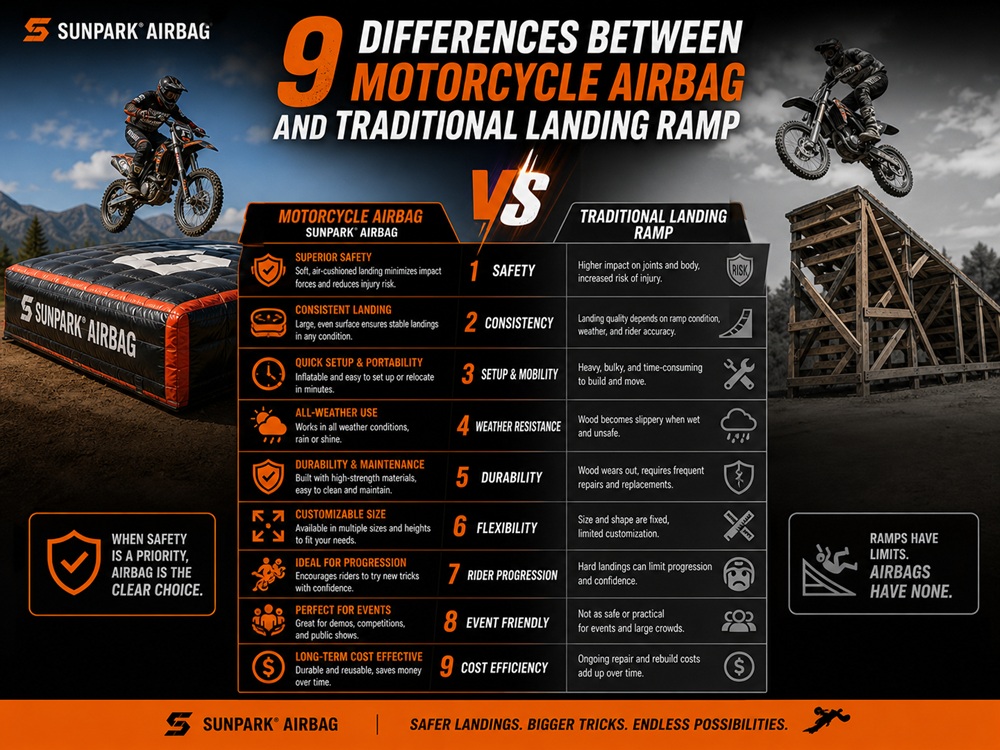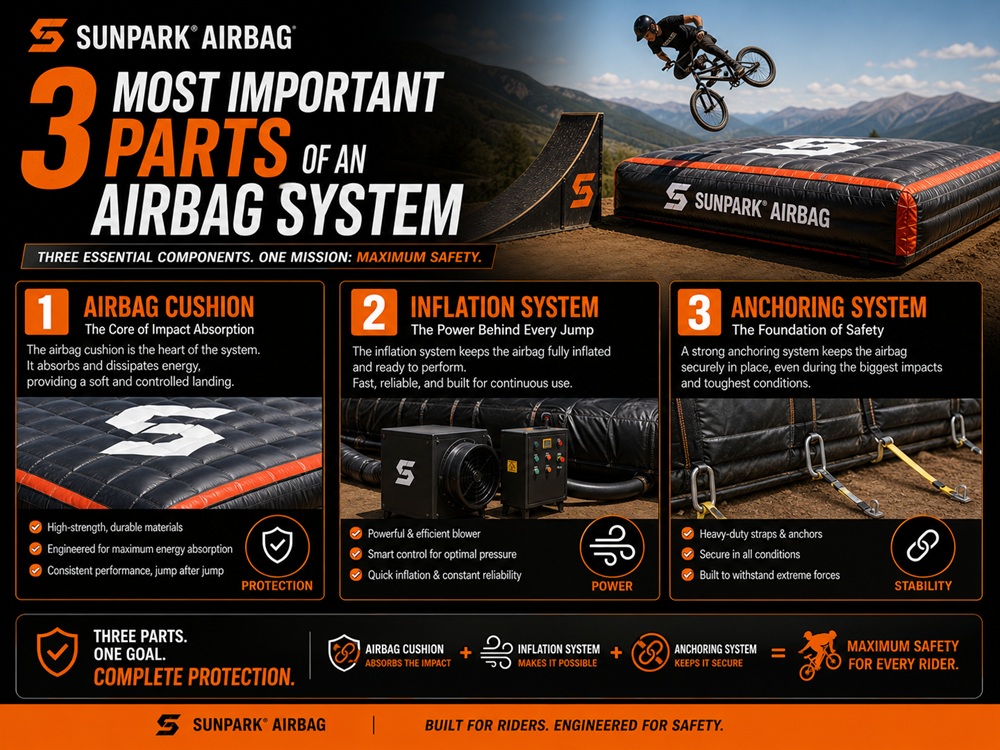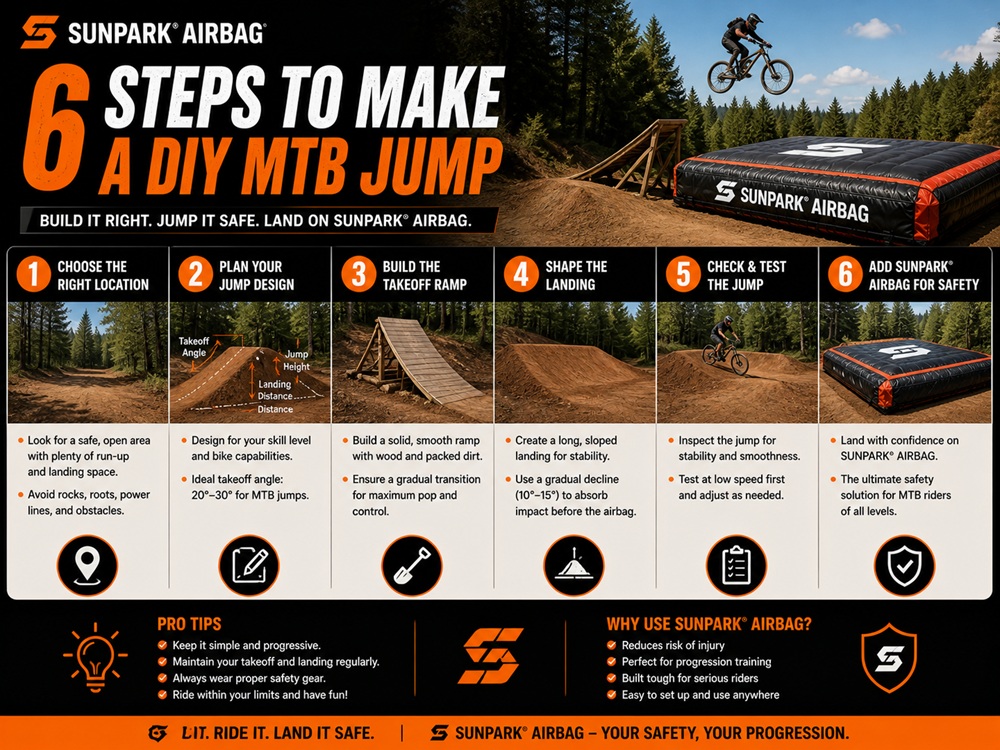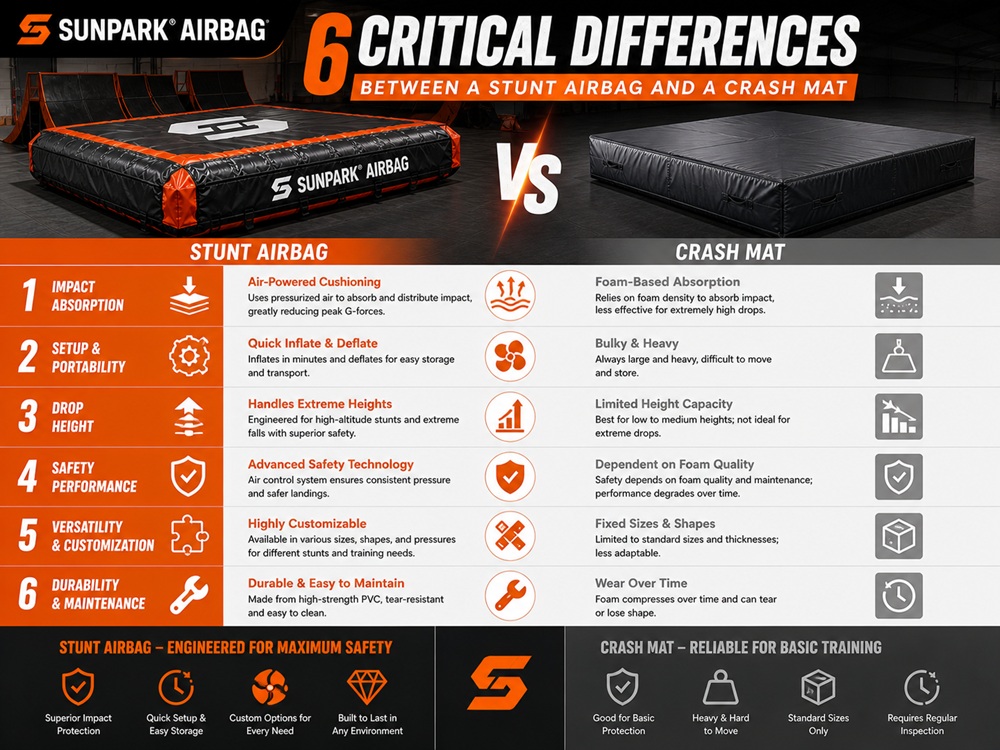
Extreme sports demand extreme safety measures. When a freestyle motocross rider clears a 75-foot gap or a gymnast launches into a complex aerial maneuver, their life depends entirely on the pneumatic deceleration provided by the landing zone. We absolutely refuse to accept complacency in this domain. From our experience, the failure to rigorously Inspect an Airbag Landing System stems from a fundamental misunderstanding of pneumatic engineering. These devices are not giant pool toys; they are highly calibrated, multi-chambered deceleration matrices designed to save lives.
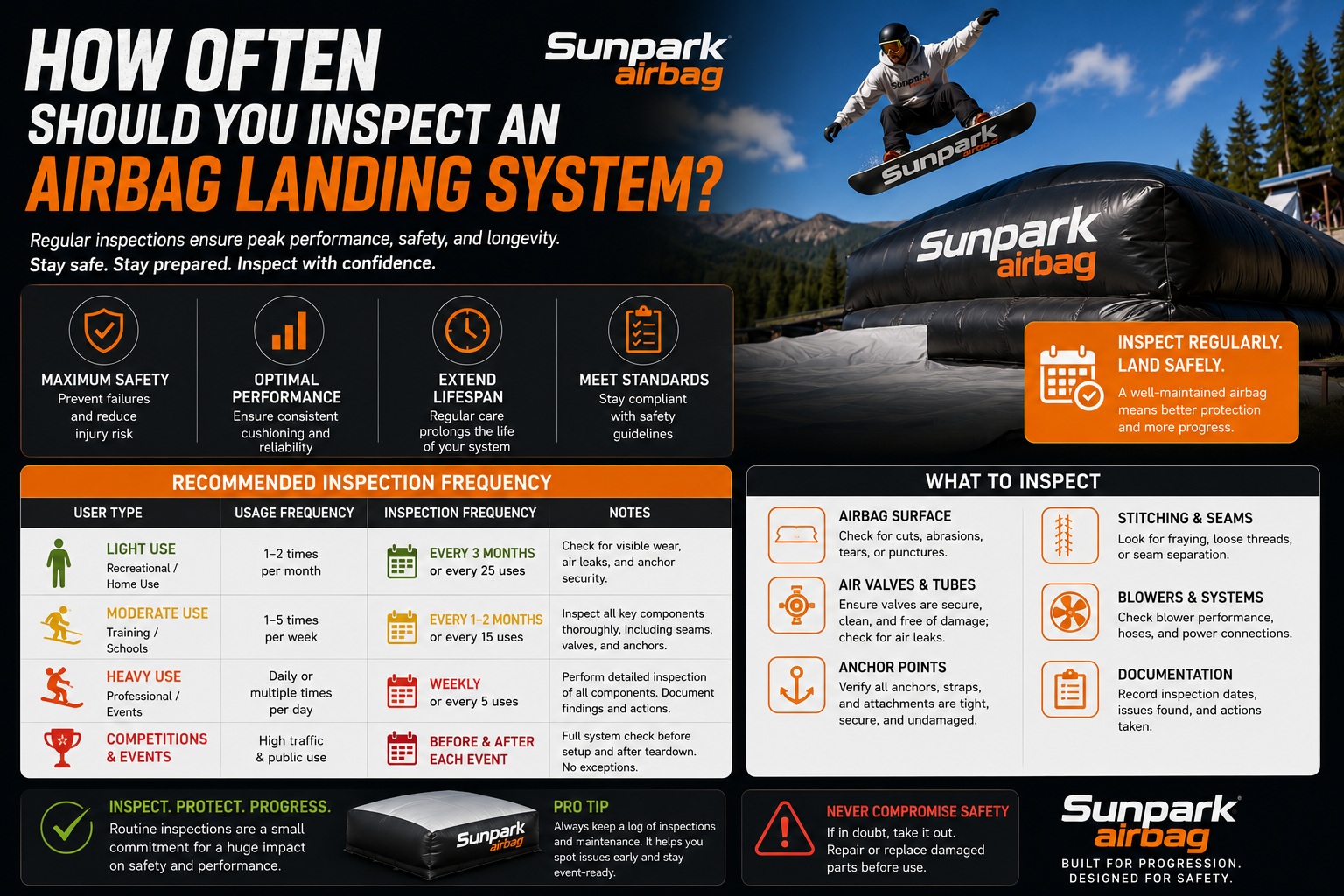
The moment an athlete impacts the topsheet, air is rapidly expelled through proprietary vents to absorb kinetic energy without producing a dangerous rebound effect. If you do not Inspect an Airbag Landing System regularly, you are completely blind to the microscopic trauma the materials endure daily. Seams can stretch, internal baffling can tear under shear force, and blowers can ingest debris, drastically reducing their cubic-feet-per-minute (CFM) output. When you Inspect an Airbag Landing System, you are actively auditing the structural integrity of a Category 5 safety device. We recommend treating this diagnostic process with the utmost severity. A failure to Inspect an Airbag Landing System accurately can result in catastrophic bottom-outs, severe spinal injuries, and the immediate closure of your facility by regulatory authorities.
SUNPARK® AIRBAG: With over 10 years of experience, we provide freestyle airbags for ski resorts, theme park, sports and gymnastics facility around the globe. SunparkAirbag® is the leading manufacturer of Airbags for Extreme Sports and Leisure Industries in China.
1. The Unforgiving Reality of Extreme Sports Safety
When a BMX rider or freestyle skier initiates a jump, they are placing their absolute trust in the equipment below. From our experience, a stunt airbag landing is subject to thousands of high-impact compressions every single month. The internal baffling, the top sheet, the pressure vents, and the blowers all work in perfect synergy to decelerate a human body safely. If just one of these components fails, the result is a catastrophic bottom-out scenario. Therefore, to Inspect an Airbag Landing System is to conduct a life-saving diagnostic check.
We recommend treating your inflatables with the same rigorous scrutiny that aviation mechanics apply to aircraft. The sheer volume of kinetic energy transferred into a big jump airbag system causes microscopic wear and tear over time. Operators who fail to Inspect an Airbag Landing System on a strict timeline are risking severe liability, voided insurance policies, and horrific injuries that could permanently destroy their business reputation.
2. Daily Protocols: How to Inspect an Airbag Landing System Before Opening
A robust safety culture begins before the doors open to the public. You cannot rely on weekly checks to catch acute overnight failures. Every single morning, your trained staff must Inspect an Airbag Landing System using a strict, documented checklist.
Start with the perimeter. The anchoring system sustains massive lateral forces during off-center landings. When you Inspect an Airbag Landing System, verify that every D-ring is secure, the anchor straps are taut, and no carabiners show signs of metal fatigue or bending. Next, move to the inflation infrastructure. The blowers are the critical life-support mechanism of the entire apparatus. You must Inspect an Airbag Landing System by physically checking the blower tubes for kinks, twists, or blockages. Listen to the motors; any unusual grinding, rattling, or high-pitched whining is an immediate red flag indicating bearing failure or fan blade obstruction.
Furthermore, you must conduct a tactile and visual examination of the topsheet. Walk the perimeter and Inspect an Airbag Landing System for any new abrasions, punctures, or separation in the velcro systems. Finally, test the digital pressure alarm systems. We recommend triggering a false drop in pressure to ensure the alarm sounds loudly across the facility. If the alarm fails, the bag cannot be used under any circumstances.
3. Weekly and Monthly Deep-Dive Maintenance
While daily inspections identify acute hazards, weekly and monthly protocols are designed to combat chronic wear and tear. To comprehensively Inspect an Airbag Landing System on a weekly basis, your maintenance crew must look beyond the exterior. The internal architecture—specifically the pillars and horizontal baffles—dictates the uniform deceleration of the athlete. A torn internal pillar will cause the bag to bulge unsafely or create a rigid hard spot.
For facilities heavily reliant on a bike airbag landing, the friction generated by rubber tires, metal pedals, and chain grease will rapidly degrade the PVC coating. You must clean the surface thoroughly using approved, non-solvent-based cleaners. When you Inspect an Airbag Landing System during this cleaning process, feel for thinning areas in the fabric. Additionally, inspect the blower air filters. A clogged filter starves the motor of air, forcing it to overheat and reducing the overall firmness of the landing zone.
On a monthly schedule, you must Inspect an Airbag Landing System by assessing all zippers, deflation vents, and velcro connecting flaps. Lubricate heavy-duty zippers with appropriate silicone sprays to prevent binding. If you manage an inflatable crash mat in a high-humidity environment, check beneath the bottom layer for trapped moisture, which can accelerate mildew growth and compromise the base material’s tensile strength.
4. The Non-Negotiable Annual Professional Certification
In-house maintenance is your primary defense, but it does not replace the necessity of third-party validation. We mandate that operators hire certified technicians or the original manufacturer to Inspect an Airbag Landing System annually. This is not merely a recommendation; it is a strict requirement for liability mitigation and insurance compliance.
When professionals arrive to Inspect an Airbag Landing System, they utilize specialized diagnostic tools that go beyond human sight. They conduct pressure attenuation tests, analyze seam stress tolerances, and perform material tensile strength evaluations. From our experience, insurance underwriters will demand this annual certification report in the event of an incident. If you cannot produce a documented report proving that experts were hired to Inspect an Airbag Landing System, you leave yourself exposed to claims of gross negligence. The annual audit will also include recalibrating pressure sensors and updating your official maintenance logbook, ensuring you remain in compliance with international amusement device standards.
5. Environmental Factors That Dictate Inspection Frequency
The operational environment exerts a massive influence on material degradation. You must tailor your frequency to Inspect an Airbag Landing System based on where the equipment is deployed. If your facility is an outdoor setup featured in an airbag jump locations guide, the sun is your greatest enemy. Ultraviolet (UV) radiation aggressively attacks PVC and TPU coatings, causing them to harden, become brittle, and eventually crack. Outdoor operators must Inspect an Airbag Landing System far more frequently for UV damage and apply protective coatings as recommended by the manufacturer.
Temperature fluctuations also demand heightened vigilance. Cold air is significantly denser than warm air. An airbag inflated during a freezing morning will effectively lose pressure as the ambient temperature rises and the air expands, requiring constant monitoring. Conversely, an indoor facility utilizing a gymnastics airbag equipment configuration faces challenges related to poor ventilation, dust accumulation, and extremely localized, high-frequency impacts. You must Inspect an Airbag Landing System with a clear understanding of the specific environmental stressors it faces daily.
6. The Direct Financial Impact of Neglect
Let us speak plainly about the economics of safety and maintenance. We frequently analyze data regarding trampoline park owner income, and the correlation between operational profitability and proactive maintenance is undeniable. When operators refuse to properly Inspect an Airbag Landing System, minor, easily repairable pinholes propagate into massive, unrepairable structural ruptures. A preventative PVC patch costs a few dollars; replacing a ruptured topsheet or an entire internal bladder costs thousands of dollars.
Furthermore, unscheduled downtime destroys revenue. If a state inspector or a failing pressure alarm forces you to shut down your primary attraction on a busy Saturday afternoon, you are bleeding capital. Proactive facility managers who Inspect an Airbag Landing System meticulously can identify wear trends and schedule necessary repairs during off-hours or maintenance days, ensuring the park remains fully operational during peak revenue-generating periods. Safety is not a cost center; it is the foundation of your profitability.
7. Summary Table: Preventative Maintenance Checklist
To assist your operations team, we have compiled this uncompromising maintenance matrix to ensure you Inspect an Airbag Landing System correctly at every interval.
| Inspection Frequency | Target Component | Action Required | Criticality Level |
|---|---|---|---|
| Daily (Pre-Opening) | Anchors & D-Rings | Verify tension and inspect carabiners for metal fatigue. | Critical (Structural) |
| Daily (Pre-Opening) | Blowers & Alarms | Check for tube kinks, listen for bearing noise, test pressure alarm. | Critical (Life Support) |
| Weekly | Topsheet & Velcro | Clean surface debris, check for abrasions, re-align velcro seams. | High (Performance) |
| Weekly | Blower Filters | Remove dust/debris to ensure maximum CFM airflow output. | High (Operational) |
| Monthly | Internal Baffles & Zippers | Inspect internal pillars for tears, lubricate heavy-duty zippers. | High (Structural) |
| Annually | Complete System | Professional certification, pressure attenuation test, material strength audit. | Critical (Legal/Insurance) |
8. Frequently Asked Questions (FAQs)
How long does it take to Inspect an Airbag Landing System during a daily check?
From our experience, a trained operations manager can properly Inspect an Airbag Landing System in approximately 15 to 20 minutes prior to opening the facility. This involves turning on the blowers, observing the inflation rate, walking the full perimeter to check anchor points, and verifying the topsheet integrity. We recommend that this process is never rushed, as this brief window of time is your primary safeguard against catastrophic equipment failure during operating hours.
Who is qualified to Inspect an Airbag Landing System for the annual certification?
While your daily and weekly checks should be conducted by your senior facility staff, the annual certification must be performed by certified industry professionals. To legally and thoroughly Inspect an Airbag Landing System for annual compliance, you must hire technicians authorized by the manufacturer or accredited third-party inspectors who specialize in Category 5 inflatable safety devices. They possess the necessary diagnostic equipment to measure seam tension and pressure attenuation that standard staff cannot perform.
What should I do if I Inspect an Airbag Landing System and find a tear in the topsheet?
If you Inspect an Airbag Landing System and discover any laceration, puncture, or seam separation on the topsheet, you must immediately halt all jumping operations. Do not allow athletes to use the equipment. We recommend assessing the size of the tear; minor abrasions can often be repaired on-site using manufacturer-approved heavy-duty PVC/TPU patch kits and specialized adhesives. However, if the tear exceeds the manufacturer’s safe-patching limits, you must order a replacement topsheet to ensure the structural integrity of the landing zone is not compromised.
9. Authoritative Industry Standards and References
To ensure your facility operates within the strictest legal and mechanical safety boundaries, we strongly advise your compliance officers to review the following regulatory documents regarding inflatable amusement devices:
- U.S. Consumer Product Safety Commission (CPSC): Amusement Ride Safety Bulletin regarding Inflatable Devices. (Federal guidelines detailing anchoring requirements and operational safety protocols).
- ASTM International: ASTM F2374 – Standard Practice for Design, Manufacture, Operation, and Maintenance of Inflatable Amusement Devices. (The definitive global engineering standard for inflatable safety testing and material durability).