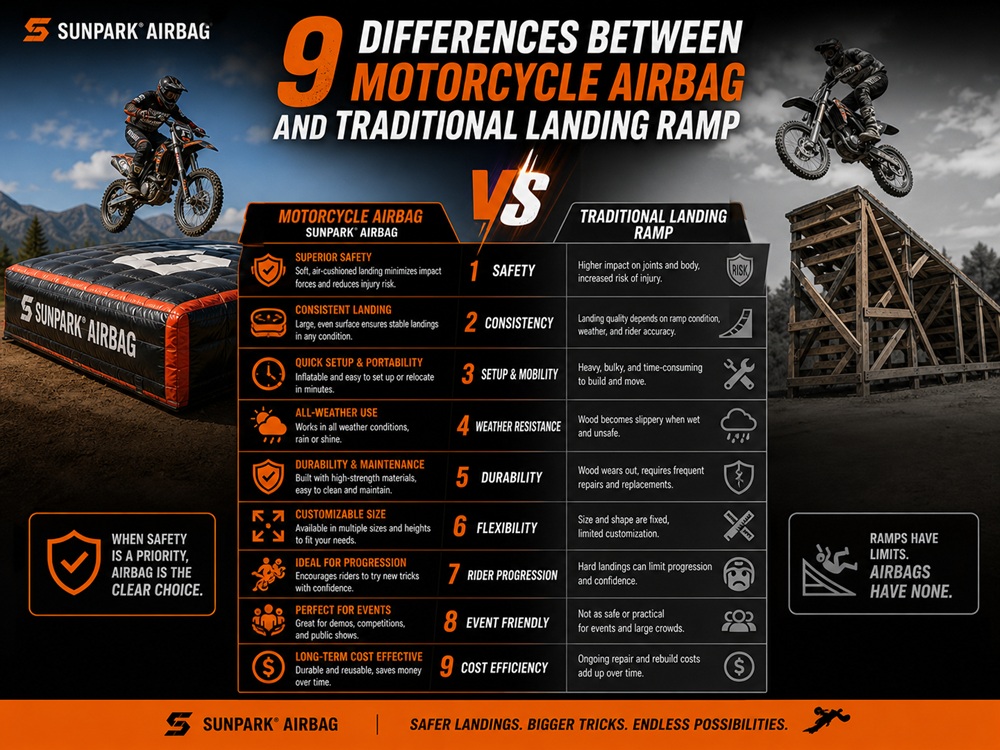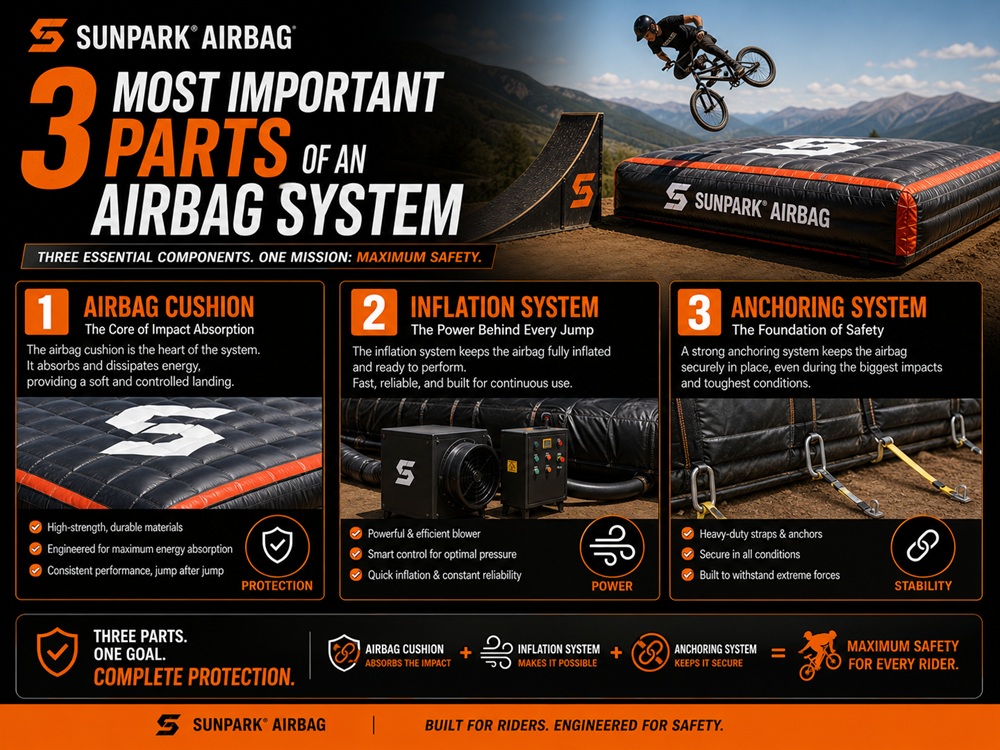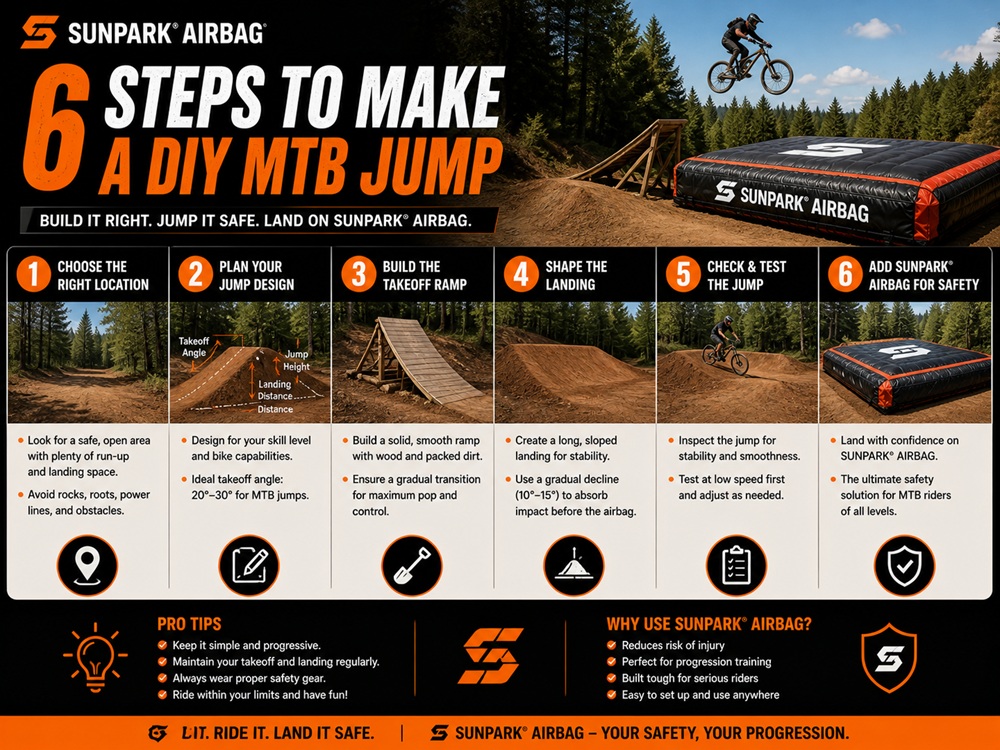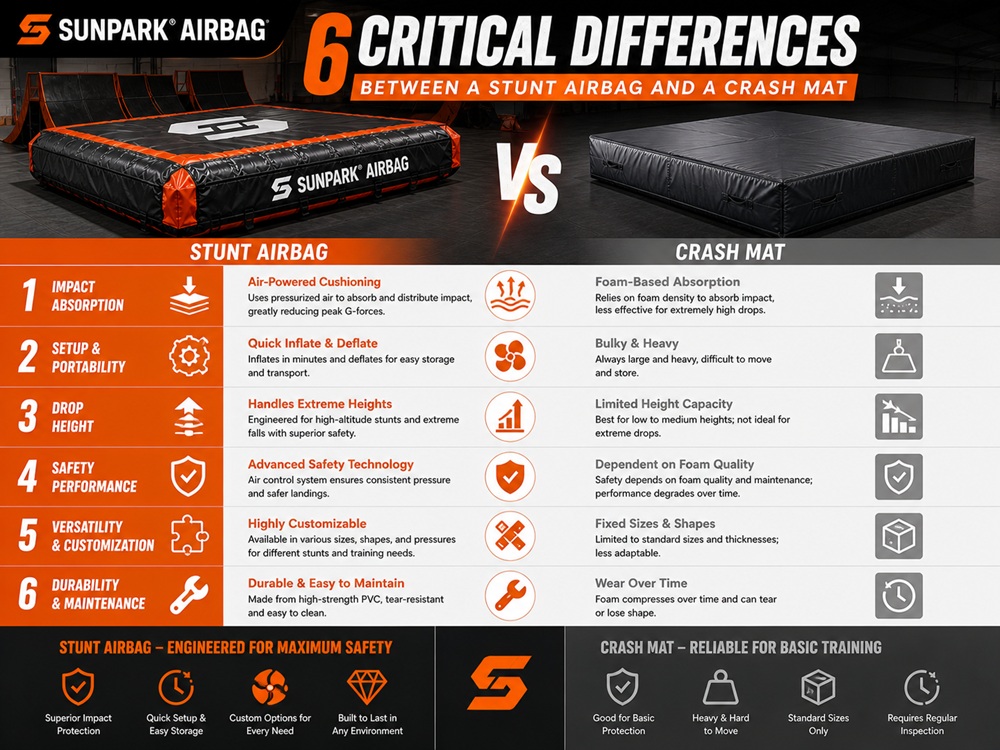
Let us confront a dangerous reality currently plaguing the extreme sports industry: facility operators and private athletes are critically misunderstanding how to properly calibrate their inflatable safety equipment. Throwing a massive bag at the bottom of a freestyle ramp and simply turning on the blowers until the material feels tight is a recipe for catastrophic injury. From our experience, the failure to meticulously adjust Airbag Landing Pressure Settings based on the specific mass, velocity, and skill level of the rider is the number one cause of unwanted bounce-backs, spinal compression, and equipment rupture.
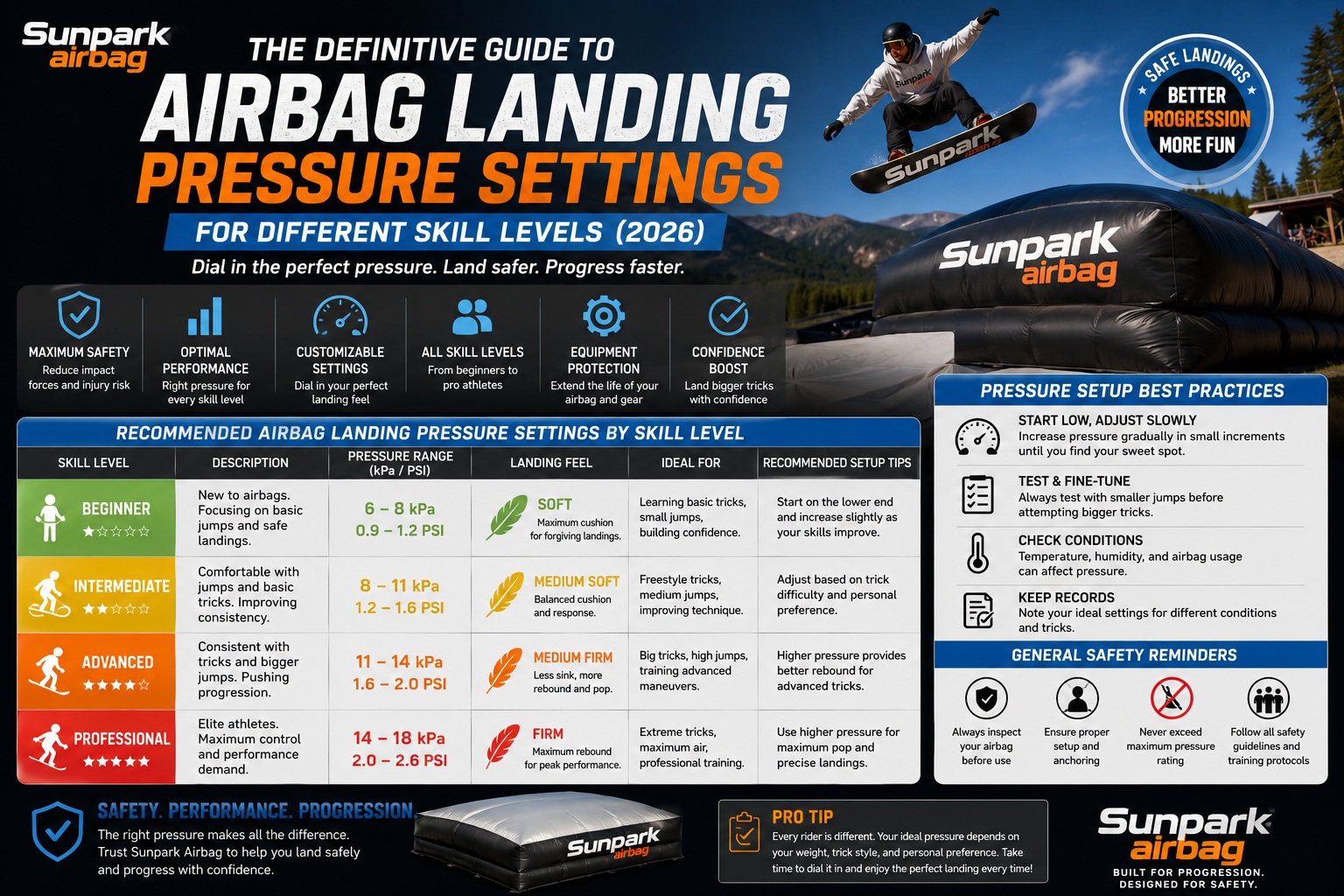
When an athlete launches a mountain bike, snowboard, or motocross bike into the air, the deceleration physics upon landing are brutal. A professional executing a clean, wheels-down double backflip requires an entirely different impact absorption profile than a ten-year-old child learning their first straight jump. If the bag is too soft for the professional, they will bottom out against the hard ground. If the bag is too firm for the beginner, the surface tension acts like concrete, resulting in whiplash or broken collarbones.
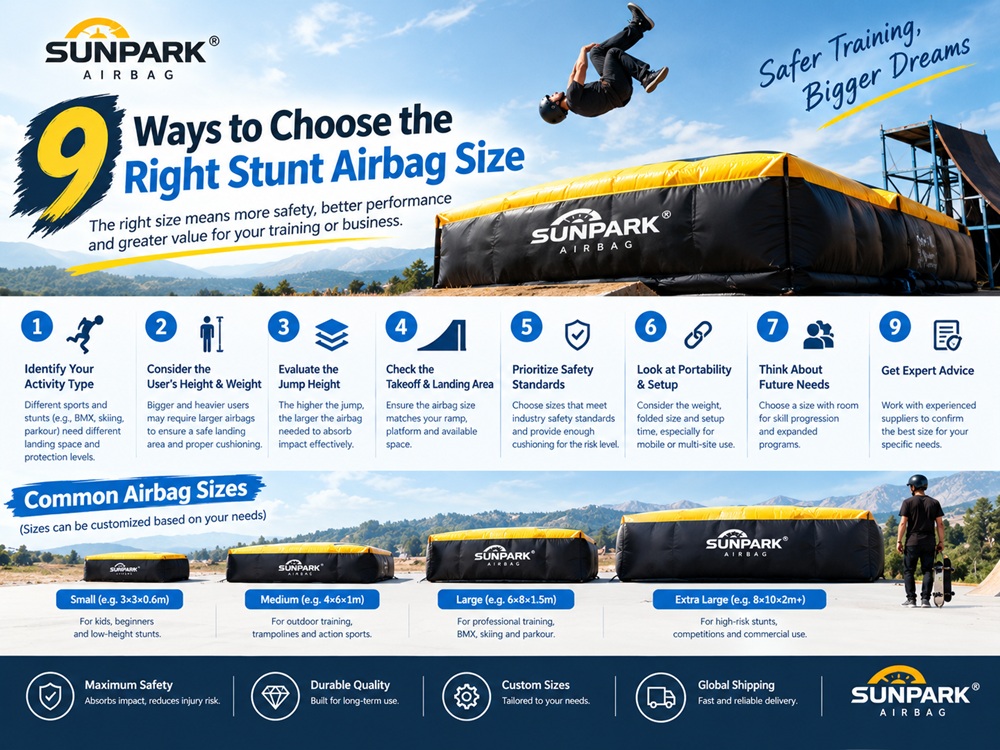
SUNPARK® AIRBAG With over 10 years of experience, we provide freestyle airbags for ski resorts, theme parks, sports, and gymnastics facilities around the globe. SunparkAirbag® is the leading manufacturer of Airbags for Extreme Sports and Leisure Industries in China. As extreme sports developed, more and more snowboarders and serious sports enthusiasts are looking for safer training possibilities to progress without risks of getting injured. We create the products for World Champion Snowboarders, famous riders, and trampoline parks worldwide. We are deeply committed to the development and improving of our own products.
In this relentlessly technical and highly opinionated guide, we are tearing down the misconceptions surrounding inflatable action sports landings. We will outline the exact methodologies required to master your Airbag Landing Pressure Settings across three distinct tiers of athletic proficiency. Whether you are outfitting an Olympic training center or building a backyard setup, we will explain exactly how to manipulate blower outputs, release valves, and atmospheric variables to engineer the perfect, risk-mitigated landing zone.
Table of Contents
- The Physics of Deceleration: Why Pressure Settings Dictate Safety
- Airbag Landing Pressure Settings for Beginners: The “Catch” Mode
- Airbag Landing Pressure Settings for Intermediates: Ride-Away Transition
- Airbag Landing Pressure Settings for Elite Athletes: Firm & Fast
- Sport-Specific Calibration: Snow, Dirt, and Gymnastics
- Managing Environmental Variables and Facility Costs
- Quick Reference: Calibration Matrix
- Frequently Asked Questions (FAQs)
- Industry Safety References
The Physics of Deceleration: Why Pressure Settings Dictate Safety
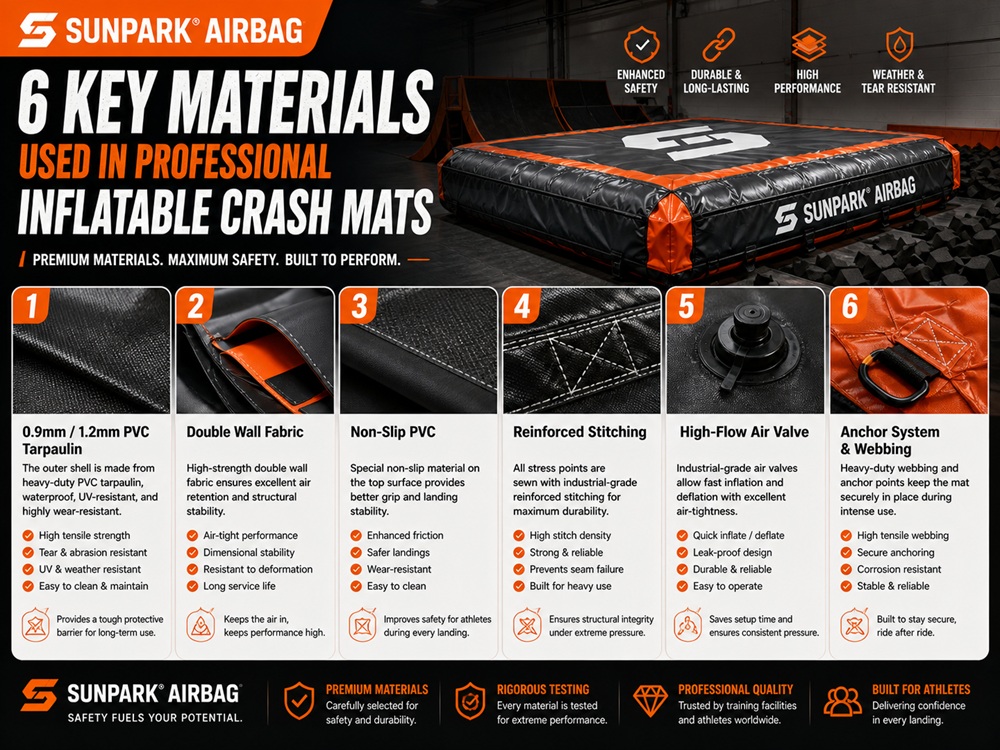
Before you touch a single valve on your blower system, you must fundamentally understand how modern dual-chamber safety systems operate. An advanced landing airbag solutions setup does not function like a sealed bouncy castle. It is an active, breathing mechanical system designed to vent air instantaneously upon impact. The lower chamber acts as the permanent, unyielding foundation—a dense cushion of high-pressure air that strictly prevents the athlete from ever making contact with the earth. The top chamber, composed of individual pillars or a continuous vented top sheet, is the dynamic deceleration zone.
Your Airbag Landing Pressure Settings manipulate the relationship between these two chambers. When a rider impacts the top sheet, the kinetic energy forces the air out of the strategic lateral release valves. If you close those valves, the air has nowhere to escape, creating a massive trampoline effect that will eject the rider backward. Conversely, if you open the valves too wide and lower the blower RPM, the top sheet collapses instantly, offering zero resistance and causing a harsh, jarring stop against the firm bottom chamber. Mastering Airbag Landing Pressure Settings is the art of tuning that exact rate of deflation to match the rider’s trajectory and weight.
Airbag Landing Pressure Settings for Beginners: The “Catch” Mode
Beginners have zero spatial awareness in the air. We must assume they will land upside down, sideways, or completely detached from their equipment. For this demographic, the primary goal of your Airbag Landing Pressure Settings is absolute maximum impact absorption. You want the bag to act as a deep, forgiving net.
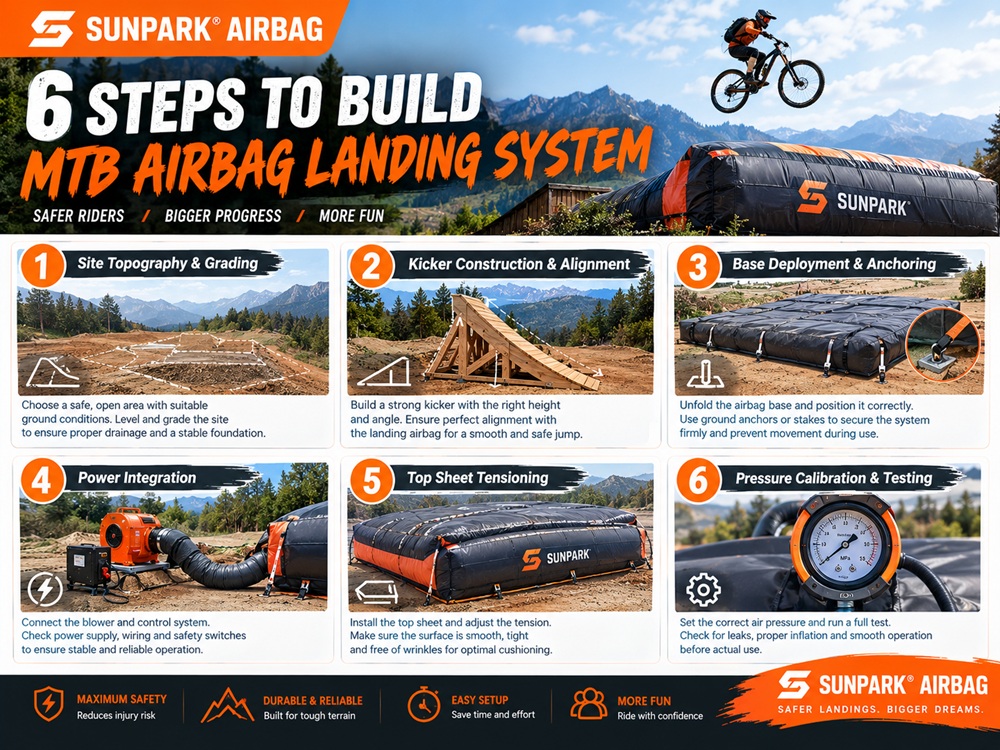
We recommend opening the lateral exhaust vents to their maximum safe capacity (usually around 70% to 80% open, depending on the specific blower capacity) to ensure rapid air displacement. The top chamber should feel incredibly soft to the touch—almost under-inflated. When utilizing a MTB airbag landing system for novice camps, you are not trying to teach them how to ride out of the landing; you are exclusively focused on letting them survive the crash so they can learn trick rotation. The soft pressure profile will literally swallow the rider and the bike, preventing the equipment from bouncing back and striking the athlete in the face. This low-pressure setting requires more time between jumps for the top chamber to fully reinflate, so operators must strictly control the drop-in pace.
Airbag Landing Pressure Settings for Intermediates: Ride-Away Transition
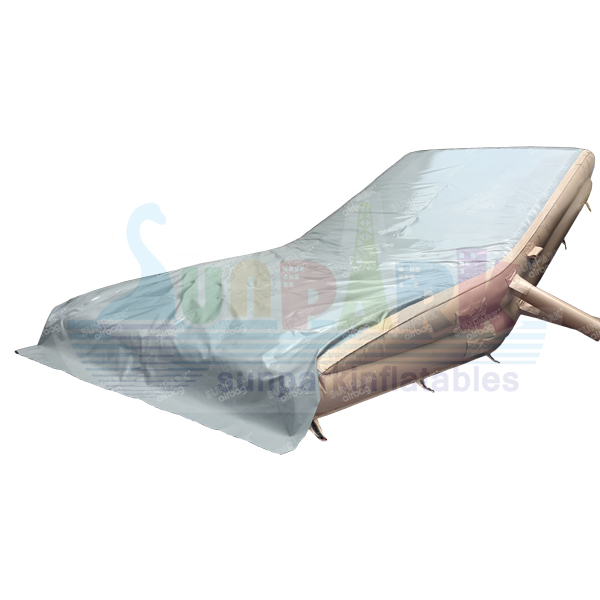
Once a rider understands how to spot their landing and consistently puts their wheels or snowboard down correctly, “Catch” mode actually becomes a hindrance. An overly soft bag will grab their tires or board edges, pitching them violently over the handlebars or nose. Intermediate riders require an environment where they can safely attempt to ride out of the landing without harsh consequences if they slip a pedal.
For intermediate athletes, your Airbag Landing Pressure Settings must be dialed up. We recommend restricting the lateral exhaust valves to approximately 40% to 50% open. This stiffens the top sheet significantly. When an athlete uses a standard inflatable jump airbag calibrated to this intermediate pressure, the bag will support the weight of the rolling equipment for a split second before yielding. This gives the rider the crucial sensation of landing a trick to dirt or snow, allowing them to ride away the momentum, while still offering enough yield to absorb a heavy, off-axis mistake.
Airbag Landing Pressure Settings for Elite Athletes: Firm & Fast
Elite professionals hitting 60-foot gaps require a setup that mimics the brutal reality of a dirt or ice landing as closely as mechanically possible. A professional executing a triple backflip needs absolute stability upon touchdown. If their Airbag Landing Pressure Settings are even marginally too soft, the suspension of their bike will sink into the bag, stealing all their exit velocity and causing severe compression stress on their knees and ankles.
At the professional level, the top chamber valves are nearly closed (typically 10% to 20% open), and blower output is maximized. The surface tension should be tight enough that a person can walk across the top sheet with minimal sinking. This firm configuration is standard for high-end inflatable MTB airbag solutions used in world-first trick attempts. The bag is no longer a crash pad; it is a rideable, steep transition that offers just a 15% margin of forgiveness over actual hardpack dirt. The reinflation time is practically instantaneous, allowing for rapid-fire, high-repetition practice sessions.
Sport-Specific Calibration: Snow, Dirt, and Gymnastics
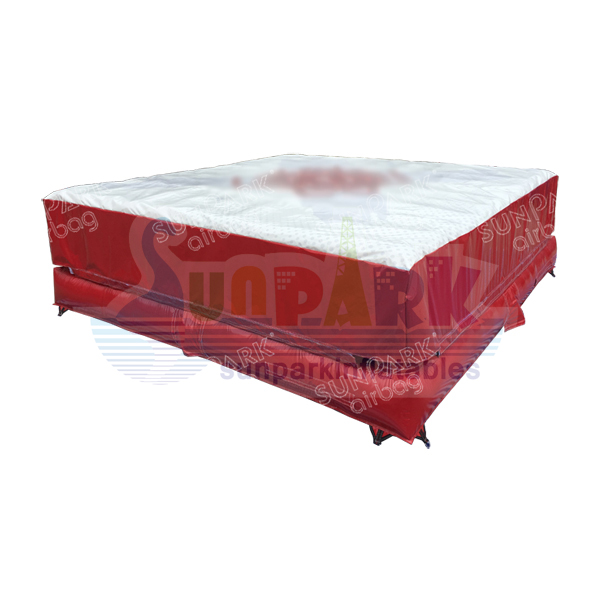
You cannot use the exact same Airbag Landing Pressure Settings for a 250cc dirt bike as you would for an elite gymnast. The physics simply do not translate. We demand that facility operators treat every discipline with bespoke calibration protocols.
- Freestyle Motocross (FMX): A motorcycle weighs over 200 pounds, plus the rider. FMX applications require extreme bottom-out resistance. When calibrating motorcycle airbag systems 2026, the bottom chamber must run at maximum PSI, and the top chamber must feature reinforced, high-tension vents to prevent the front wheel from digging in and sending the rider over the bars at 40 miles per hour.
- Gymnastics and Parkour: A human body generates significantly less point-load force than a bicycle tire. When configuring a gym airbag for training, you must run softer Airbag Landing Pressure Settings. The absence of wheels means the athlete lands directly on their joints. The bag must yield instantly to protect the ankles and spine from hyper-extension.
- Snowboarding and Skiing: Cold weather changes everything. Dense, freezing air condenses inside the bag. Operators must actively monitor and increase blower speeds as the temperature drops throughout a winter night session to prevent the bag from suddenly going limp and dangerous.
Managing Environmental Variables and Facility Costs
Ignoring environmental variables when locking in your Airbag Landing Pressure Settings is a fast track to destroying your equipment. Ultraviolet degradation, extreme heat, and altitude all affect the volumetric expansion of air. In the peak of summer, a bag set perfectly in the cool morning will become a rock-hard, dangerous drum by noon as the internal air heats and expands. Operators must continuously bleed air or widen exhaust vents during high-temperature hours.
Furthermore, running your blowers constantly at 100% capacity against closed valves puts massive back-pressure strain on the motors, drastically reducing their lifespan. Proper calibration not only saves riders; it saves money. If you are analyzing a trampoline park construction cost or outdoor training facility budget, replacing burned-out blowers due to operator ignorance is an entirely avoidable expense.
Quick Reference: Calibration Matrix
To ensure your staff understands exactly how to implement proper Airbag Landing Pressure Settings, we have provided this uncompromising operational matrix. Tape this to your blower control box.
| Rider Skill Level | Primary Objective | Top Chamber Vents (Open %) | Surface Tension Profile | Pace of Operation |
|---|---|---|---|---|
| Novice / Beginner | Maximum Impact Absorption (Catch) | 70% – 80% | Very Soft (Deep Sink) | Slow (Wait for Reinflation) |
| Intermediate | Safe Ride-Away Transition | 40% – 50% | Medium (Firm but Yielding) | Moderate |
| Elite / Professional | Dirt/Snow Transition Emulation | 10% – 20% | Hard (Minimal Sink) | Fast (Instant Reinflation) |
| Heavy Equipment (FMX) | Prevent Bottoming Out | 20% – 30% (High Blower RPM) | Extreme Tension | Moderate |
Frequently Asked Questions (FAQs)
1. How do I manually test if my Airbag Landing Pressure Settings are correct before sending a rider?
From our experience, the most reliable field test is the “Running Drop.” A staff member of average weight should take a running leap and land flat on their back near the transition curve. For an intermediate setting, they should sink smoothly but not feel the hard bottom chamber, and they absolutely should not bounce back up into the air. If they bounce, open the vents; if they hit the bottom, close the vents or increase blower RPM.
2. Will rain or snow accumulation affect the pressure?
Yes, significantly. Water is incredibly heavy. If a layer of rain or snow pools on the top sheet, it increases the initial resistance of the bag, making it feel artificially hard. More dangerously, the weight of the water pre-compresses the top chamber, leaving less distance for the athlete to decelerate. Always clear standing water and snow, and monitor your Airbag Landing Pressure Settings constantly during precipitation.
3. Can I use a single blower for a massive commercial setup?
We absolutely do not recommend this. Commercial, dual-chamber systems require dedicated, isolated blower configurations. The bottom chamber must remain constantly pressurized by its own blower, while the top chamber requires a separate, variable-speed blower to allow operators to actively tune the Airbag Landing Pressure Settings based on the athletes currently on the ramp.
Industry Safety References
To back up our uncompromising approach to athletic safety and deceleration mechanics, we rely on established engineering and sports medicine guidelines. For further technical reading regarding impact absorption, please consult the following authoritative resources:
- ASTM International. “Standard Specification for Impact Attenuation Systems in Action Sports.” (Technical engineering standards for shock absorption, bounce-back limits, and material yield in commercial athletic environments).
- National Library of Medicine (PubMed). “Biomechanical Analysis of Deceleration Forces in Freestyle BMX and Motocross Landings.” (Academic research detailing the joint compression and spinal forces exerted during high-altitude extreme sports impacts).
- Consumer Product Safety Commission (CPSC). “Recreational Safety and Inflatable Facility Maintenance Protocols.” (Federal guidelines for maintaining operational air pressure, anchoring, and blower safety in commercial recreational facilities).