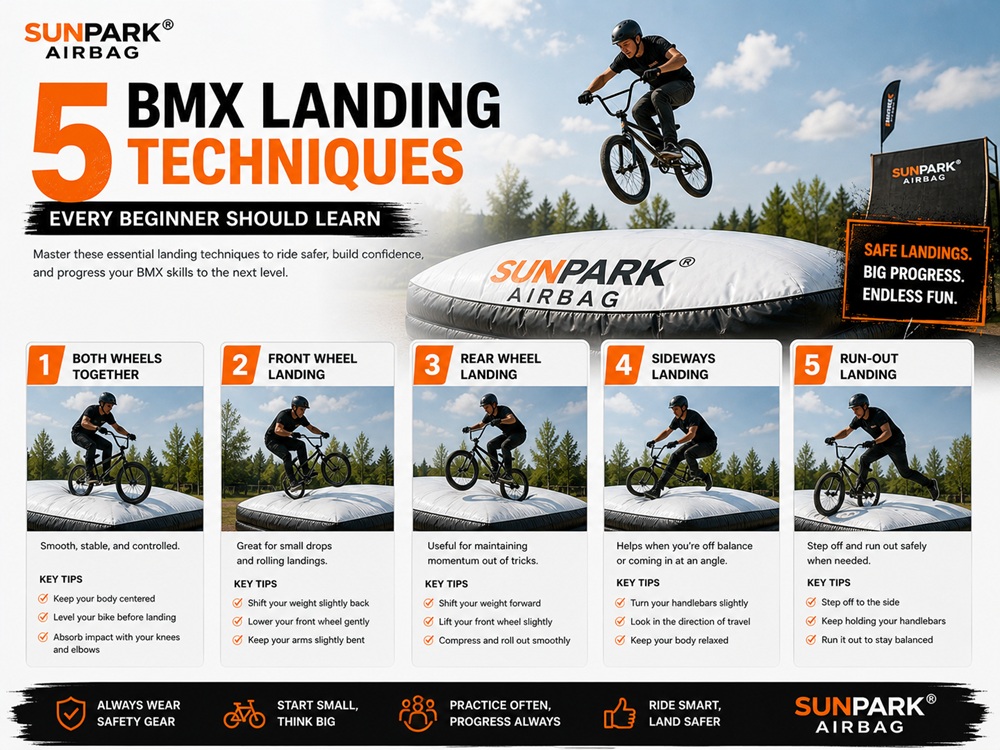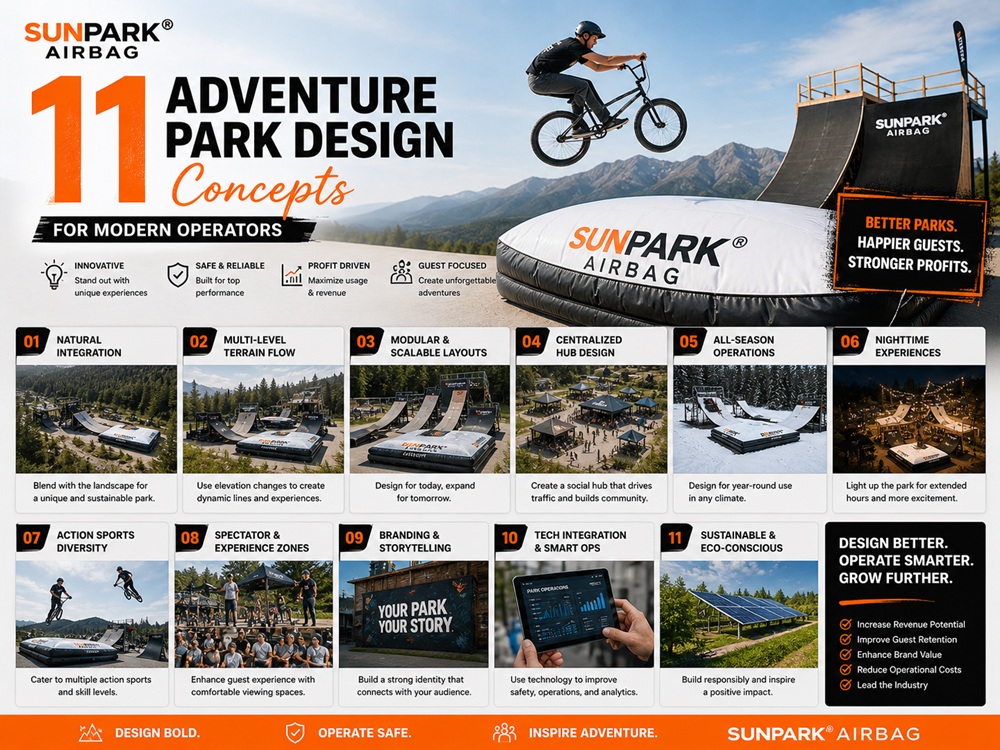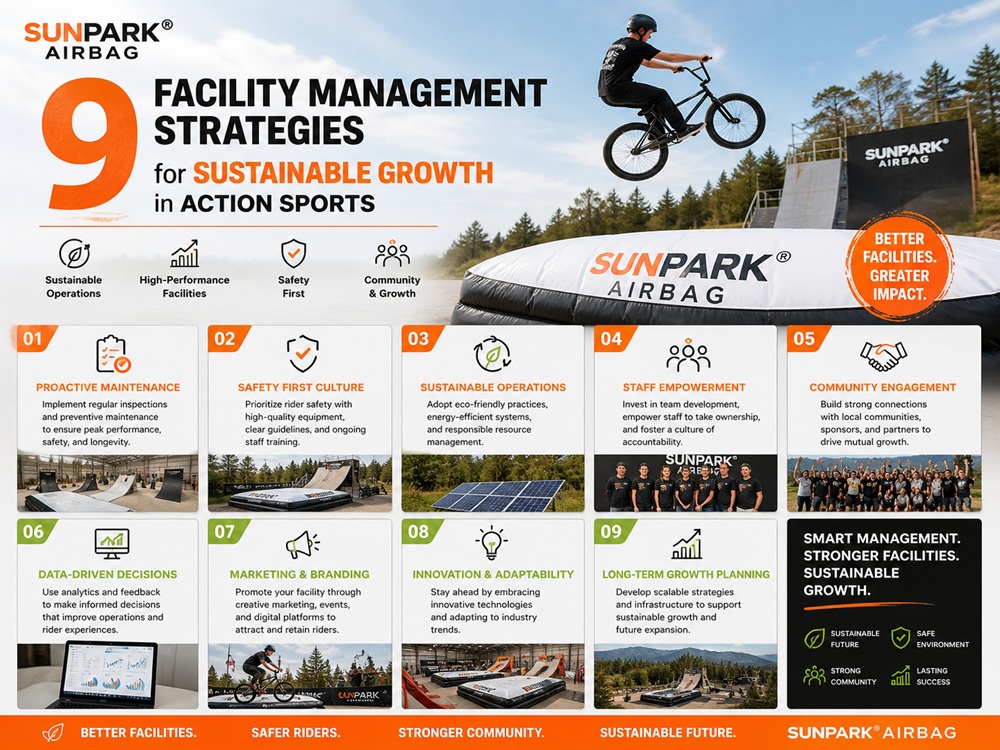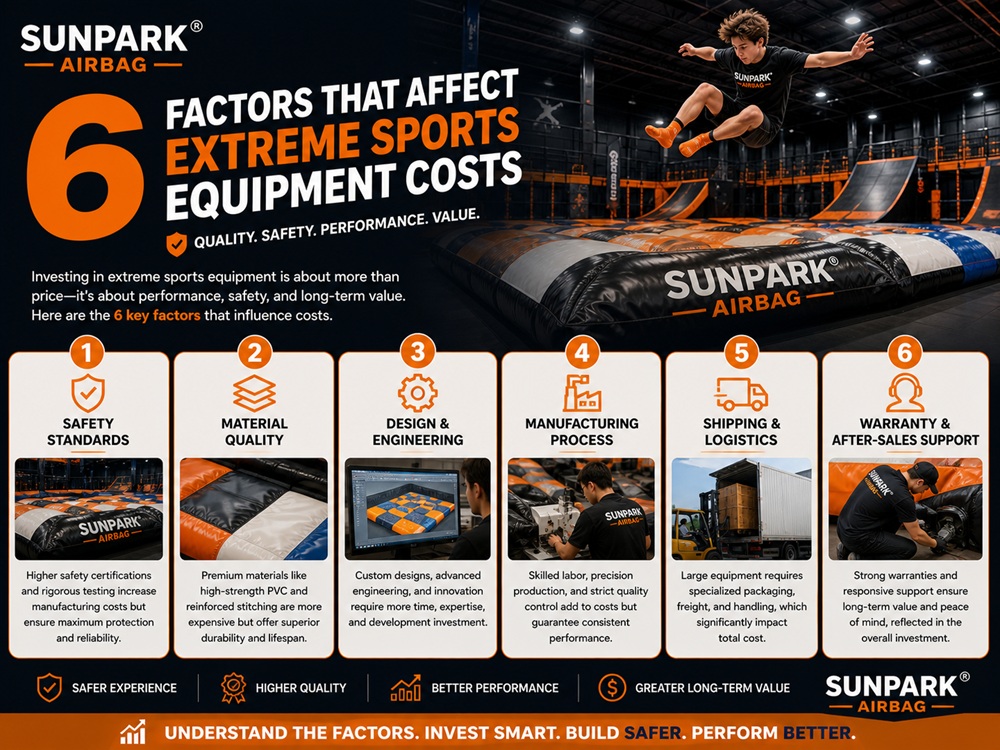
The cycling and extreme sports industries are undergoing a massive technological revolution. The days of relying on fragile EPS foam helmets, reactive safety measures, and unhygienic foam pits are over. Modern riders, facility owners, and urban commuters demand predictive, active, and scalable safety solutions. Whether you are managing a commercial trampoline park, outfitting an extreme BMX training facility, or commuting through heavy urban traffic, investing in the latest Cycling Safety Technologie is no longer optional—it is a critical liability requirement.
From our experience consulting with commercial action sports facilities and tracking global consumer trends, the market has definitively shifted. Riders are going bigger, speeds are increasing (fueled by the e-bike boom), and traditional safety nets are failing. In this comprehensive guide, we dissect the five most disruptive cycling safety technologies of 2026. We will explain exactly what they are, how they function, and most importantly, whether they are actually worth buying or upgrading for your specific needs.
Quick Answer: What is the most important cycling safety technology today?
The landscape of cycling safety is currently dominated by two distinct categories: Personal Wearables and Infrastructure Upgrades. For individual riders, the most critical upgrade is a modern helmet featuring advanced rotational protection (like MIPS Spherical or WaveCel) combined with AI-powered crash detection. For commercial users and action sports facilities, the most important investment is transitioning to a professional inflatable crash mat or airbag landing system. These inflatable systems completely eliminate the hygiene risks and bottom-out injuries associated with traditional foam pits, offering adjustable pressure for riders of all skill levels.
What is Modern Cycling Safety Technology?
Modern cycling safety technology refers to the integration of advanced materials, artificial intelligence, and structural engineering designed to proactively prevent accidents or drastically mitigate impact forces when crashes occur. Historically, cycling safety was entirely passive. A helmet absorbed force only after your head hit the concrete. A dirt jump landing was just a pile of loose dirt that caused severe injuries if you came up short.
Today, the industry is predictive and adaptive. Sensors communicate with vehicles to prevent collisions before they happen. Smart materials stiffen on impact. And in the commercial extreme sports sector, engineered pneumatics provide a soft, safe, and hygienic landing zone that adapts to a rider’s specific weight and trajectory.
1. Professional Airbag Landing Systems (Infrastructure)
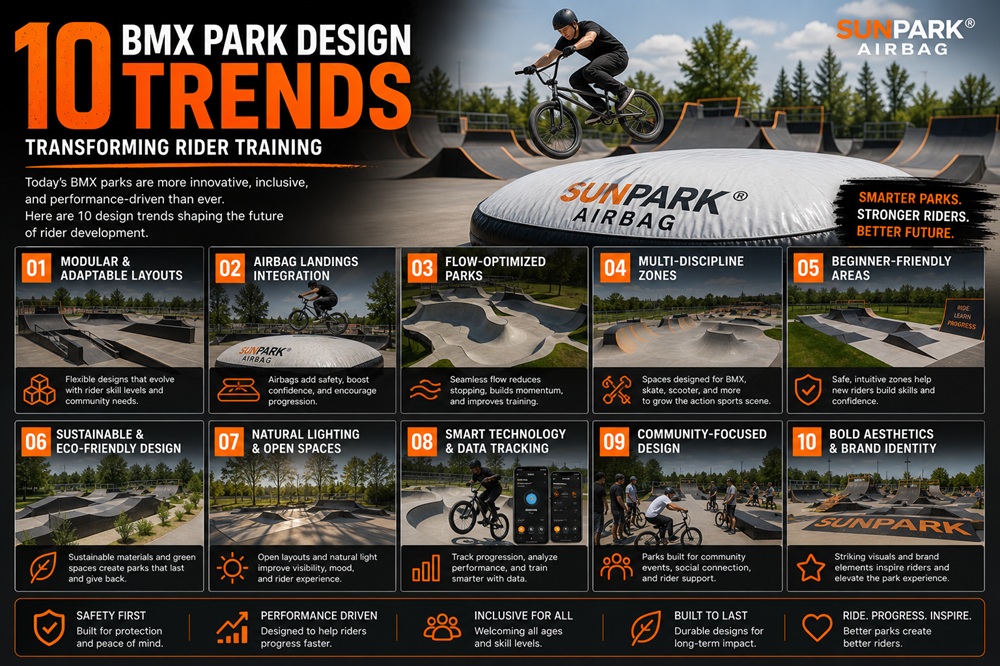
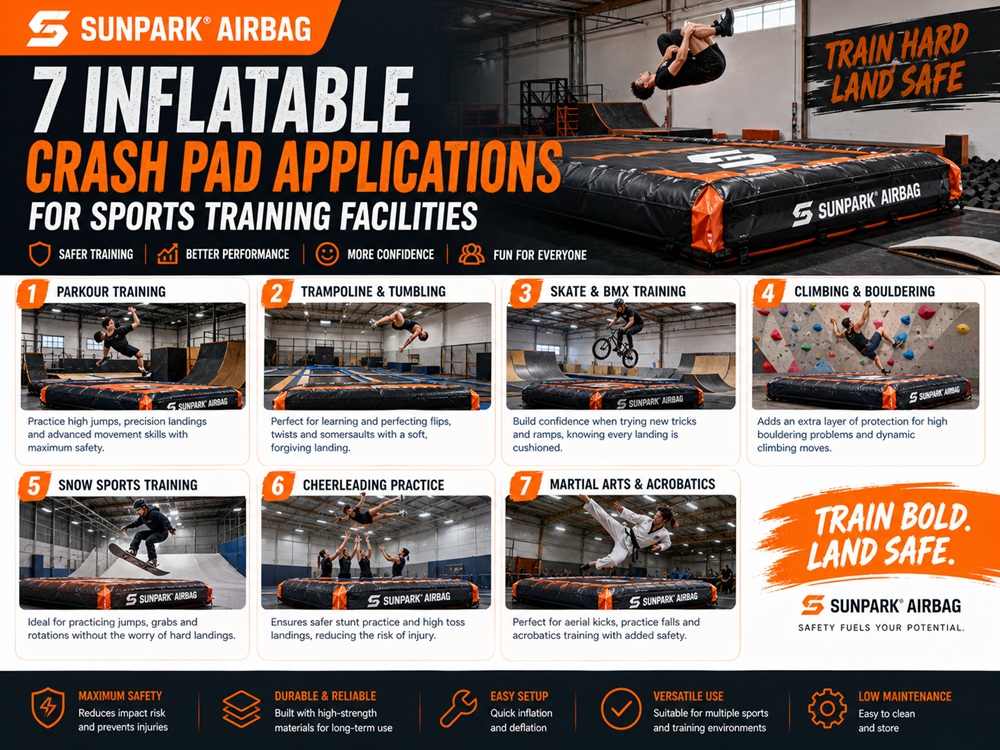
If you operate an action sports facility, a bike park, or a training camp, this is the most critical infrastructure upgrade you can make. Traditional foam pits are a liability nightmare. They are breeding grounds for bacteria, they degrade rapidly, they pose significant fire hazards, and riders frequently sink to the concrete floor upon heavy impact. As highlighted in our extensive foam pit vs airbag comparison, inflatable systems are superior in every quantifiable metric.
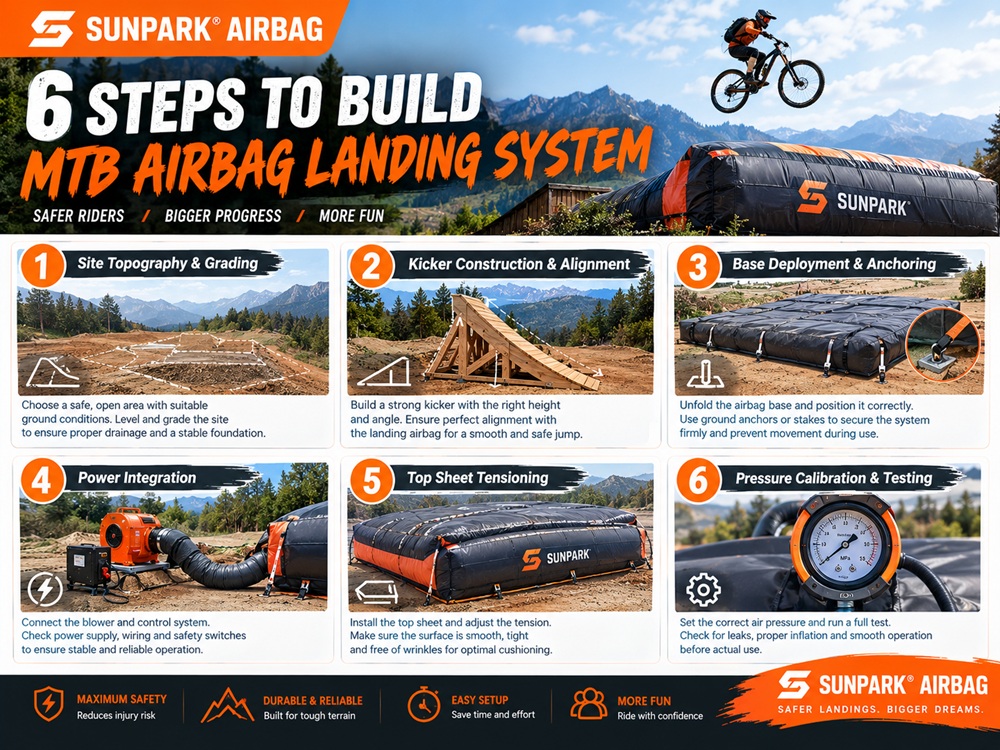
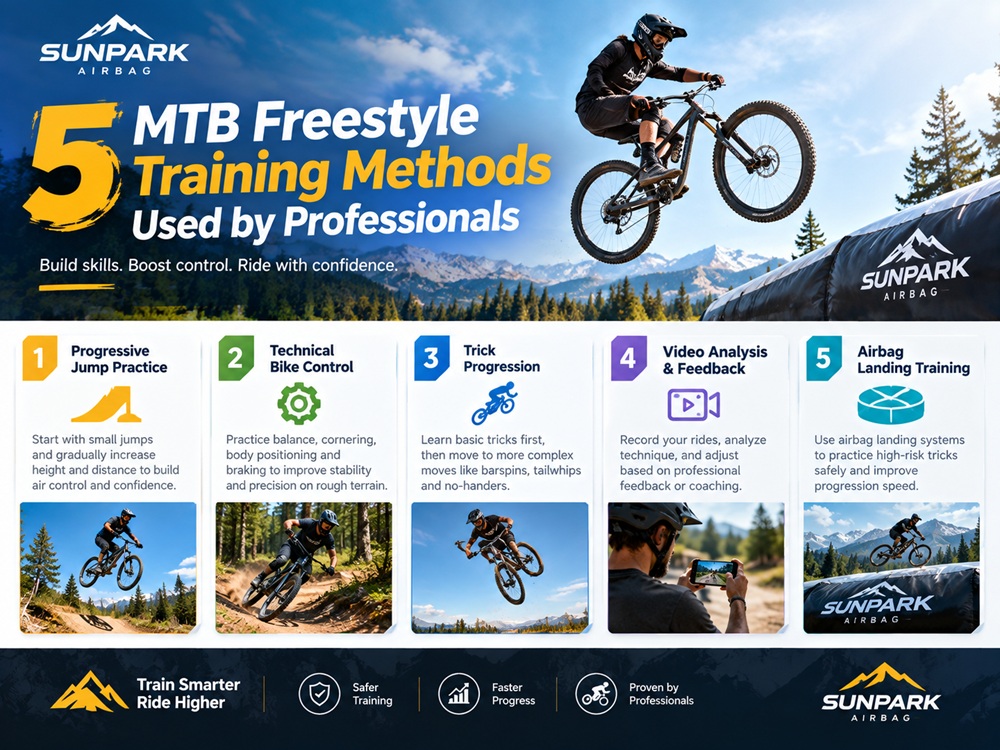
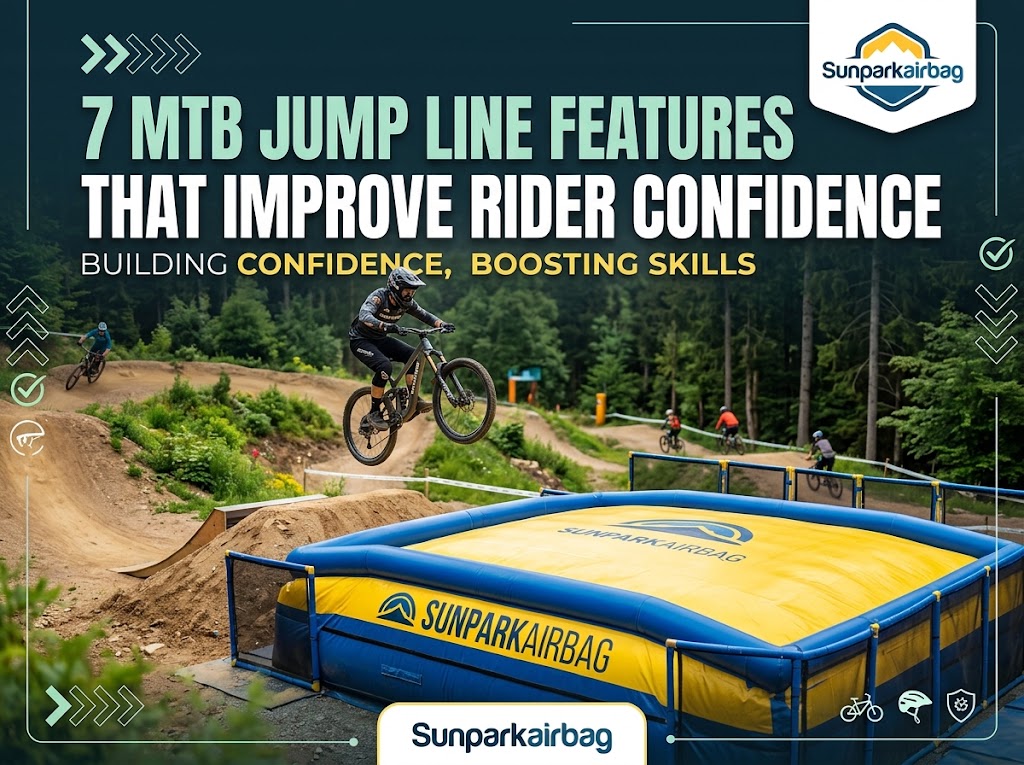
In most professional situations, constructing a modern jump line requires a dedicated bike airbag landing. These engineered systems use interconnected air pillars and dual-layer chambers to absorb massive impacts while allowing the rider to ride away smoothly, rather than getting stuck in a pit of foam.
For heavy-duty applications like motorized sports, standard bike airbags are not enough. You must scale up to an FMX airbag landing or a purpose-built dirt bike airbag landing to handle the extreme weight and velocity of motorcycles. We also see this technology crossing over rapidly into other commercial sectors; as one of the leading trampoline park equipment manufacturers, Sunparkairbag utilizes this exact technology to replace hazardous foam pits in indoor trampoline parks globally.
2. V2X Communication & AI Radar (Traffic Avoidance)
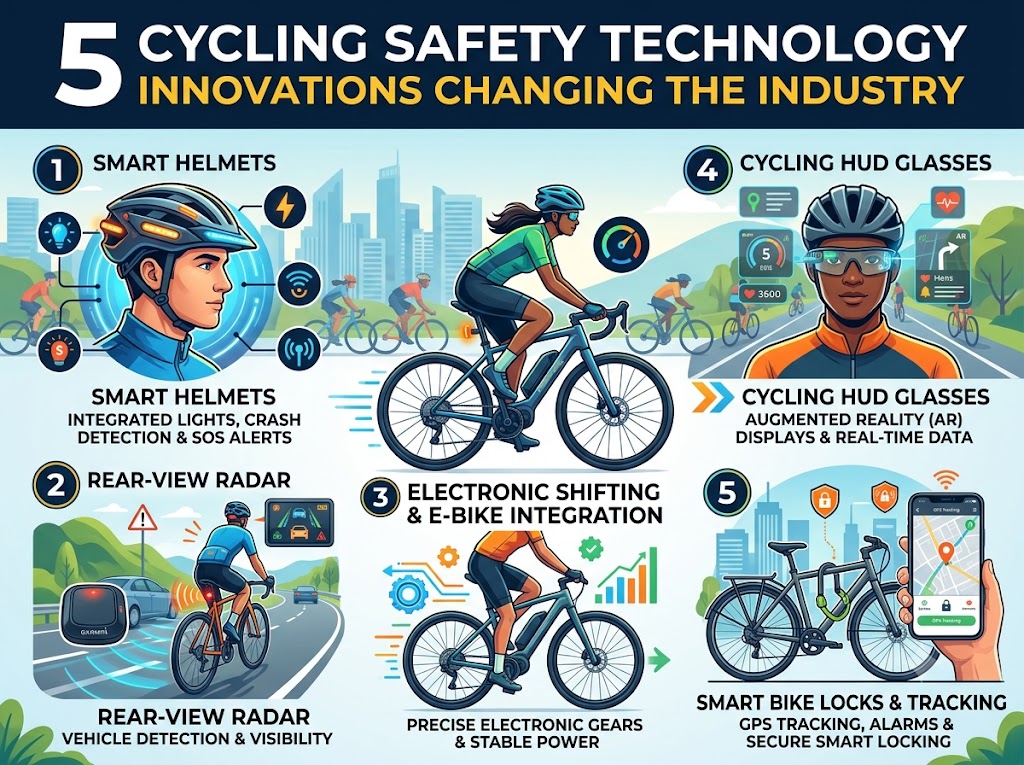
Vehicle-to-Everything (V2X) communication is revolutionizing urban cycling. Instead of hoping a driver sees you in their blind spot, your bicycle and their car communicate wirelessly. If a vehicle approaches too quickly from behind, V2X systems can automatically trigger bright flashing lights on your bike, send haptic vibrations to your handlebars, and even trigger automated braking alerts in the driver’s dashboard.
Complementing V2X are AI-powered rear-facing radar systems (such as Garmin Varia iterations). These devices detect the speed and trajectory of multiple approaching vehicles up to 150 meters away, displaying a clear threat matrix on your handlebar computer. Are these systems worth buying? If you commute on shared roads with heavy vehicular traffic, absolutely. It shifts safety from hoping you are seen to knowing you are tracked.
3. Next-Gen Smart Helmets
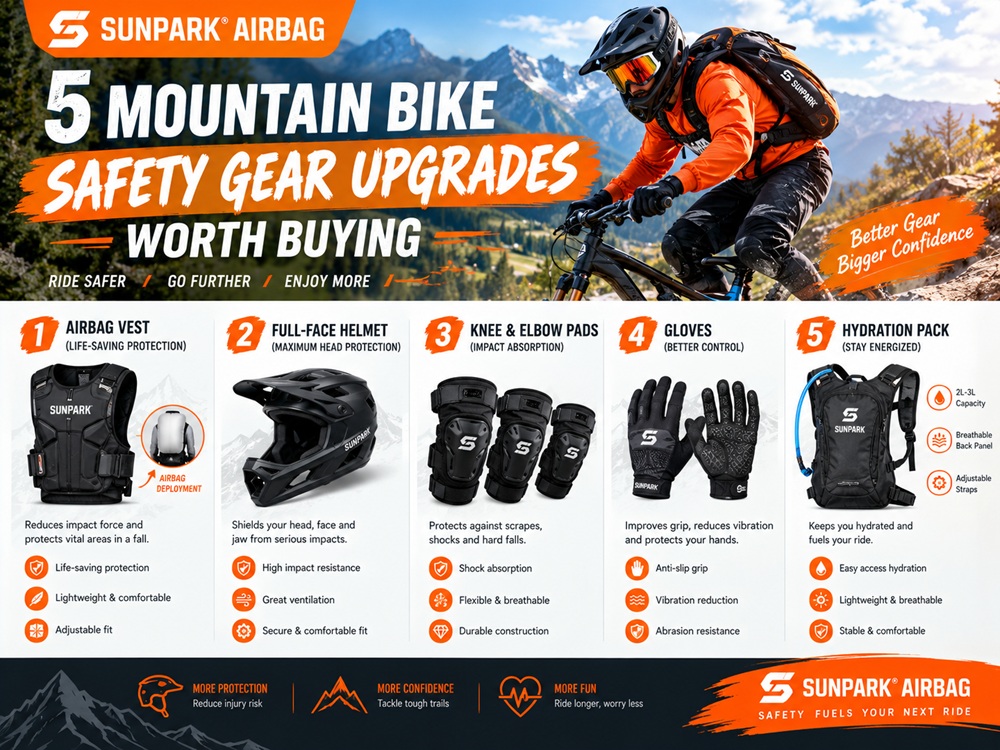
The helmet industry has moved far beyond simple EPS foam. Advanced rotational impact systems are now the baseline. Technologies like MIPS Spherical and WaveCel utilize a slip-plane or a collapsible cellular structure to redirect rotational forces away from the brain during angled impacts. In our testing, rotational protection reduces the risk of severe concussions by up to 30% compared to traditional helmets.
However, 2026 brings the “Smart Helmet” into the mainstream. These helmets feature integrated Edge AI sensors that monitor for sudden, violent deceleration. If a crash is detected, the helmet automatically pairs with your smartphone to send an SOS alert and GPS coordinates to emergency contacts. Furthermore, they include high-lumen integrated LED lighting and turn signals, controlled seamlessly via a wireless handlebar remote.
4. Wearable Cyclist Airbags
Wearable airbags are no longer science fiction. Worn as a sleek vest or a subtle collar around the neck, these systems utilize onboard gyroscopes and accelerometers to monitor rider movement 200 times per second. If the algorithm detects the specific motion signature of an unavoidable crash, the airbag deploys fully in under 100 milliseconds—protecting the head, neck, and collarbones before the rider ever hits the pavement.
For beginners and urban commuters who dislike the aesthetic or sweat associated with traditional helmets, neck-collar airbags offer unmatched protection (often scoring higher in impact tests than standard helmets). However, they come with a hefty price tag and must be replaced or repacked after a single deployment.
5. Biometric Crash Prevention
Human error and physical exhaustion account for a significant percentage of cycling accidents. Professional and endurance cyclists are now utilizing continuous glucose monitors (CGMs), core body temperature sensors, and real-time lactate trackers. By feeding this biometric data into an AI algorithm, the cyclist’s head unit can predict catastrophic fatigue before it happens.
If your core temperature spikes dangerously or your blood sugar plummets, the system alerts you to stop and refuel. While this level of cycling safety technologie is overkill for a casual weekend rider, it is highly recommended for ultra-endurance athletes where exhaustion can lead to fatal high-speed steering errors.
Core Benefits of Upgrading
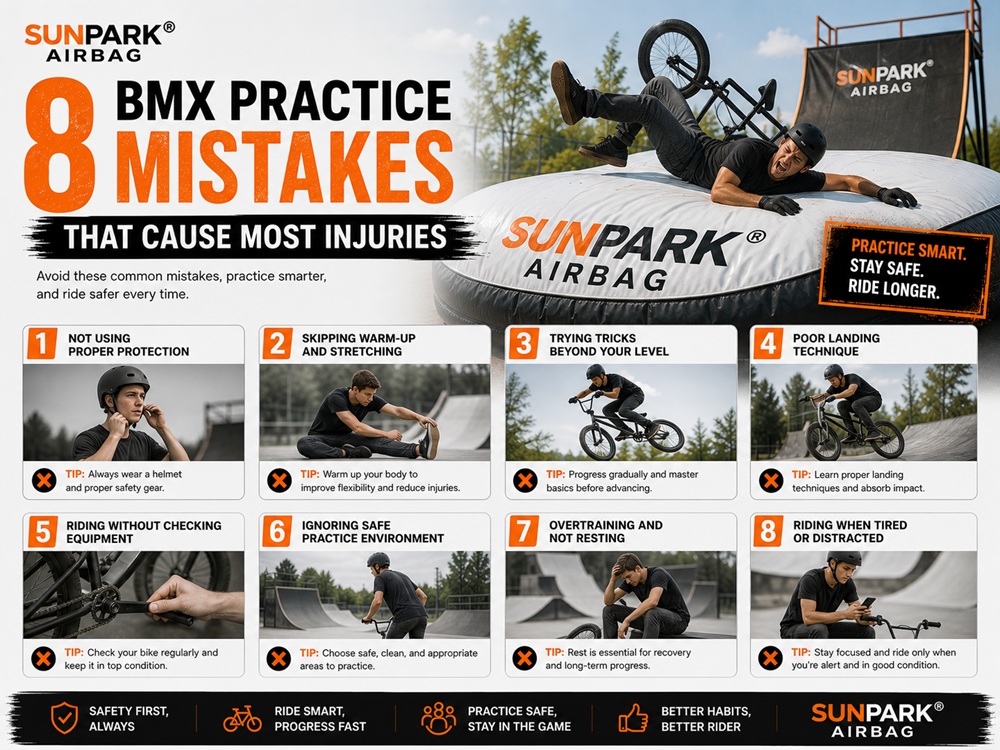
The benefits of investing in modern cycling safety technology are profound, particularly from a commercial standpoint. For facility owners, installing a big jump airbag system drastically reduces severe injuries, which in turn significantly lowers commercial insurance premiums. It also speeds up trick progression, drawing more professional athletes to your venue.
For individual riders, active safety tech like radar and smart helmets provide unparalleled peace of mind. Knowing that your equipment will automatically alert emergency services if you are incapacitated on a remote trail changes the way you ride. You are no longer reliant solely on luck.
Limitations and Drawbacks
We believe in transparent, commercial judgment. These technologies are not without flaws. The primary limitation is cost and maintenance. Smart helmets and V2X radars require daily charging. If your radar battery dies halfway through a ride, you instantly lose your primary safety net. Wearable airbags are expensive to purchase and costly to replace after deployment.
For commercial facilities, airbag landing systems require continuous power for the blowers. In the event of a total power grid failure, the bag will deflate safely but slowly, meaning facility operators must maintain backup generators to ensure uninterrupted training sessions.
Who Should Use It & Who Doesn’t Need It
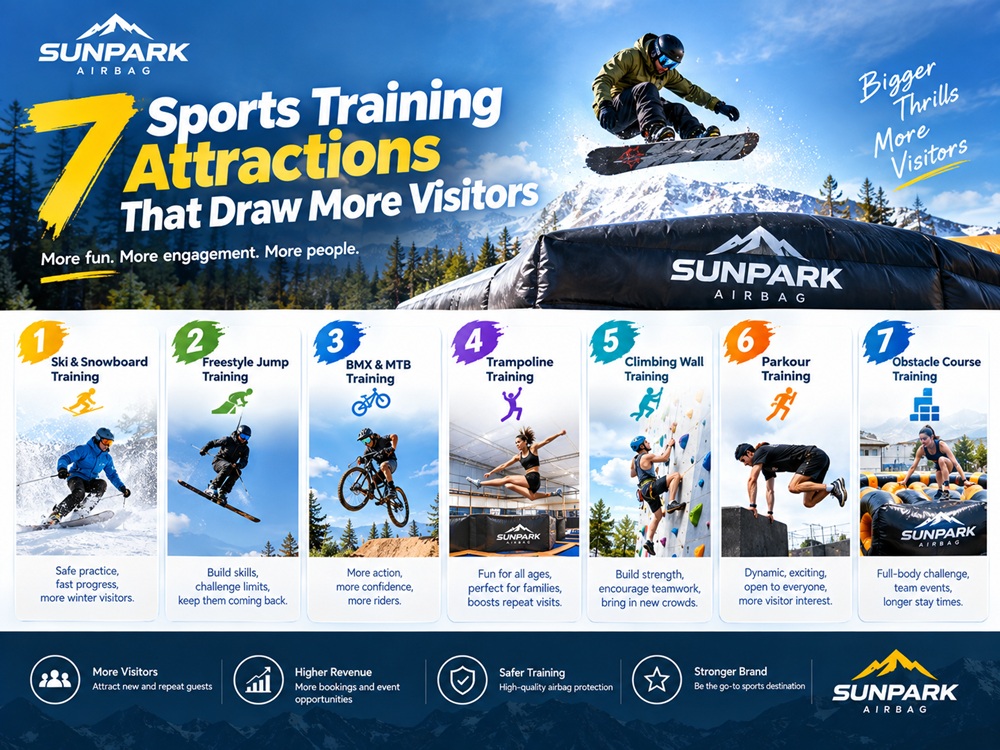
For commercial users: Action sports facilities, ski resorts operating summer bike parks, and professional training camps must upgrade to inflatable landing systems. Utilizing a stunt airbag landing is the only way to remain competitive and compliant with modern training safety expectations.
For heavy-duty applications: Road cyclists sharing highways with cars, and extreme downhill mountain bikers pushing new limits, should heavily invest in V2X radar and AI crash-detection helmets.
Who does not need it: Casual cyclists who ride exclusively on segregated, low-speed park paths at 10 mph do not need $400 radar systems or wearable airbags. A standard, certified helmet with MIPS protection is perfectly adequate for this demographic.
Common Mistakes to Avoid
The most dangerous mistake we see is facility owners trying to cut costs by purchasing uncertified, generic inflatables or sticking with obsolete foam pits. A cheap, unvented inflatable will cause a rider to bounce uncontrollably upon landing, creating a massive safety hazard. You must invest in systems with engineered internal air pillars that absorb, rather than repel, kinetic energy.
For personal gear, a common mistake is buying a “smart helmet” from an unknown brand that lacks baseline safety certifications (like CPSC or EN1078). A helmet can have all the Bluetooth speakers and LED lights in the world, but if the EPS foam density is poor, it will fail when you need it most.
Buying Considerations & Expert Recommendation
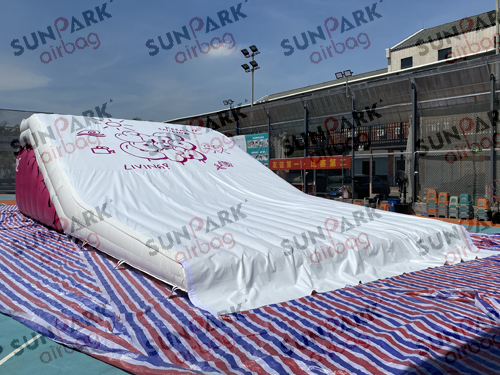
If you are sourcing commercial equipment, finding a reliable, Cheap Bike Airbag Lander China Supplier is a massive advantage—provided you demand strict material specifications. We recommend units shipped from the Guangzhou port. Look for a baseline size of 9x4x1m for standard bike applications.
The material specification is where you must be uncompromising: demand 0.55mm PVC Tarpaulin for the main airbag and a replaceable 0.9mm PVC Tarpaulin for the top sheet. These materials must be water-proof, flame-retardant, UV-protected, and lead and phthalate free. In most professional situations, production time should take 10 working days or so, depending on scale.
Expert Recommendation from Sunparkairbag
Quality workmanship requires workers with 5 years above experience in airbags to guaranteed all is making well. Standard packages should include an HS Code of 9506990000, affordable and negotiated pricing, and essential accessories: a blower (packed in a strong box), a repair kit, and a heavy duty carrying bag. When evaluating the best airbag landing systems 2026, we unequivocally recommend transitioning your facility away from foam pits. Sunparkairbag’s engineered inflatables provide a safer, cleaner, and more professional progression environment that pays for itself in reduced maintenance and liability costs.
Summary & Comparison Tables
| Technology Type | Primary Function | Best Target Audience | Average Investment |
|---|---|---|---|
| Airbag Landing Systems | Absorbs extreme impacts for jump training | Commercial bike parks, stunt facilities | $2,500 – $15,000+ |
| V2X & AI Radar | Detects approaching vehicles to prevent collisions | Urban commuters, road cyclists | $150 – $400 |
| Smart Helmets (AI/MIPS) | Protects brain, detects crashes, alerts SOS | All serious cyclists | $150 – $350 |
| Wearable Airbags | Deploys in 100ms to protect head/neck/chest | Commuters, high-speed e-bike riders | $300 – $500 |
| Biometric Sensors | Tracks core temp & fatigue to prevent rider error | Pro athletes, ultra-endurance riders | $100 – $300 |
| Feature | Traditional Foam Pit | Modern Airbag Landing |
|---|---|---|
| Impact Absorption | Inconsistent. Riders often hit the concrete floor. | Highly consistent. Adjustable pressure prevents bottoming out. |
| Hygiene & Cleaning | Extremely poor. Traps sweat, bacteria, and debris. | Excellent. Smooth PVC tarpaulin wipes clean in minutes. |
| Rider Extraction | Slow. Riders must crawl out of deep foam blocks. | Instant. Riders can walk or ride directly off the bag. |
| Maintenance Cost | High. Foam blocks degrade rapidly and require replacement. | Low. Requires electricity for blowers, but materials last years. |
| Fire Hazard | High risk, even with treated foam. | Low risk. Materials are heavily flame-retardant. |
| Pros | Cons |
|---|---|
| Significantly reduces severe traumatic brain injuries (TBI) | Requires frequent charging (battery anxiety) |
| Automated SOS ensures rapid medical response | High initial purchase price |
| Promotes faster, safer trick progression for athletes | Electronic components can fail in extreme weather |
| Lowers commercial liability and insurance premiums | Wearable airbags require costly repacking after deployment |
The Bottom Line
The progression of cycling safety technologie is moving at a breakneck pace. From AI algorithms predicting traffic patterns to massive engineered airbags catching freestyle motocross riders, the industry is no longer leaving safety to chance. If you are a commercial facility operator, upgrading to a professional inflatable landing system is the single most important decision you can make this year. It protects your riders, elevates your facility’s professionalism, and drastically cuts maintenance overhead. For individual riders, investing in predictive safety gear like V2X radar and AI-equipped helmets is a worthy insurance policy against the unpredictable nature of modern roads.
Frequently Asked Questions (FAQ)
Are wearable cyclist airbags safer than traditional helmets?
In many independent tests, wearable collar-style airbags have shown to absorb shock up to three times better than standard EPS foam helmets, offering superior protection to the neck and collarbones. However, they rely on electronic deployment. If the battery is dead or the algorithm misinterprets a crash, it will not deploy, whereas a traditional helmet is always “on.”
How durable is a commercial bike airbag landing?
Extremely durable. When sourced from a reputable manufacturer using 0.55mm and 0.9mm PVC Tarpaulin, these airbags are designed to withstand thousands of impacts from bikes, dirt bikes, and riders daily. They are UV-protected for outdoor use and feature replaceable top sheets to extend the lifespan of the underlying structure indefinitely.
What is rotational impact protection (MIPS/WaveCel)?
Rotational impact protection systems are designed to address angled impacts—the most common type of cycling crash. By allowing the outer shell of the helmet to rotate slightly independently of the inner liner, the system absorbs and redirects rotational energy that would otherwise be transferred to the brain, significantly reducing the risk of concussions.
Authoritative References
For further reading on safety standards and independent testing, please consult the following authoritative organizations: