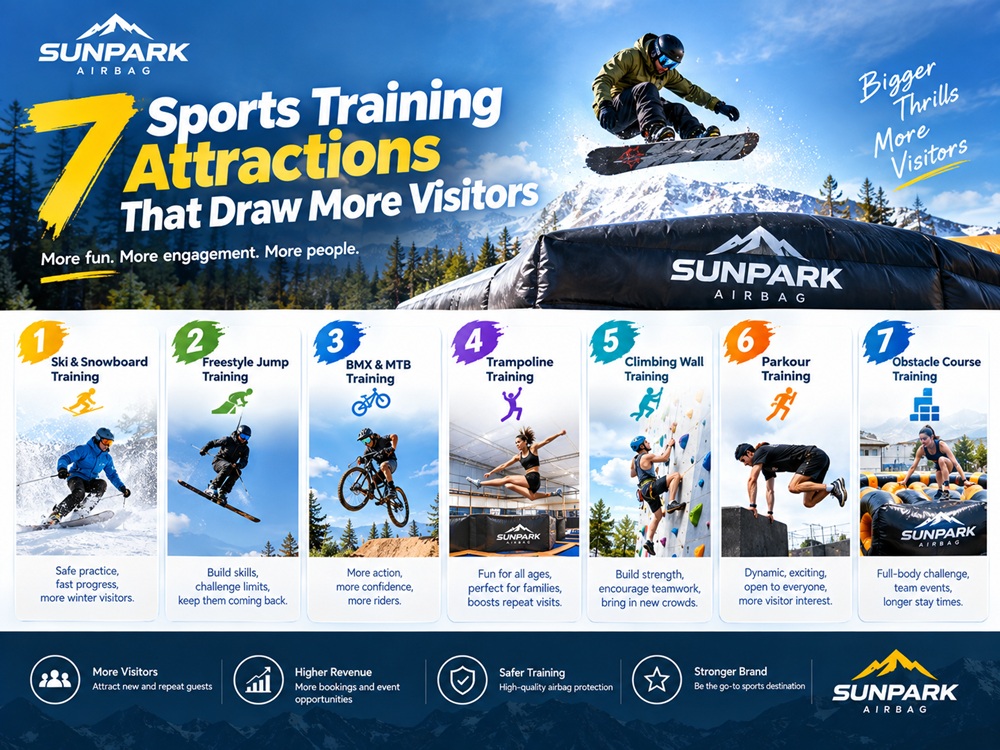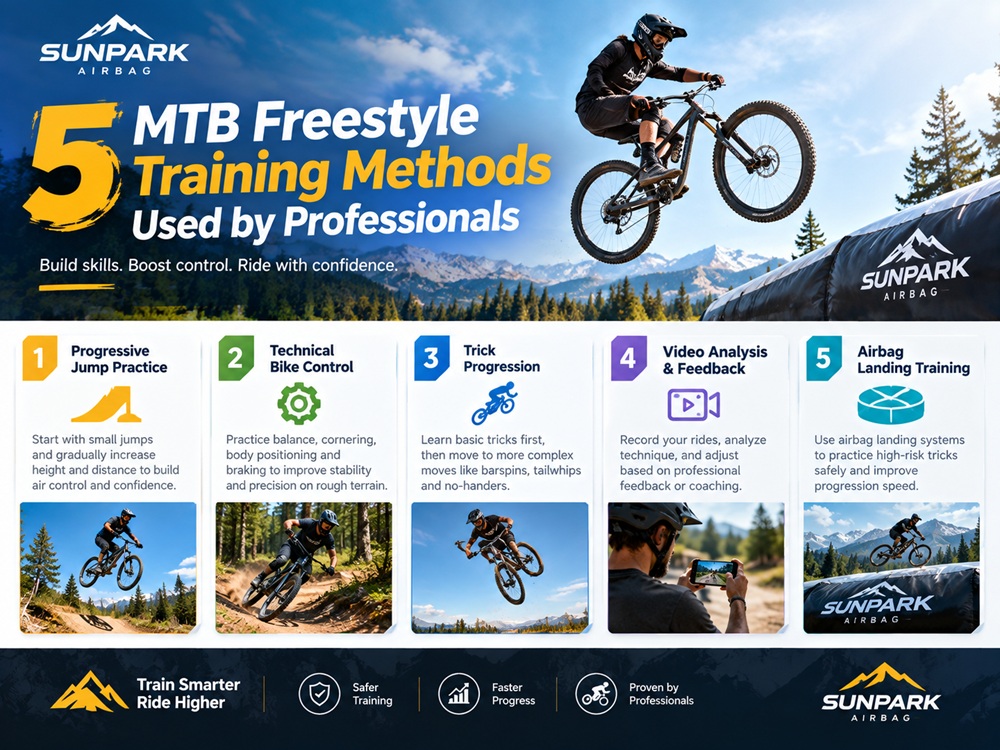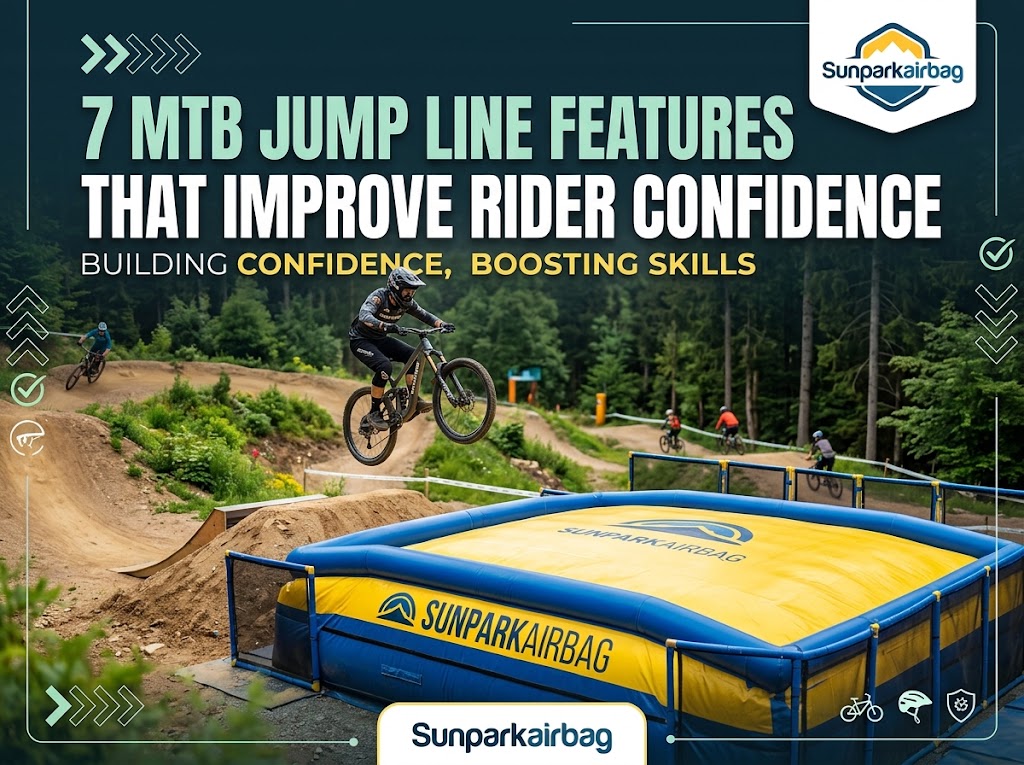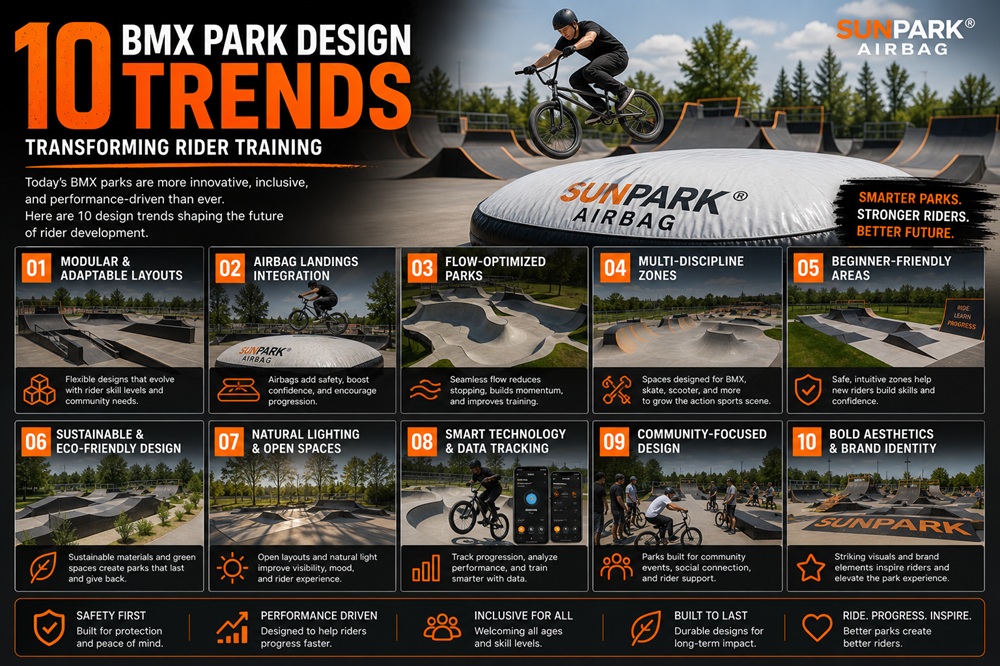
For decades, the progression of freestyle snowboarding was fundamentally limited by geography and weather. If you wanted to learn a Double Cork 1080, you waited for winter, prayed for a soft powder landing, and accepted the high probability of a season-ending concussion if you under-rotated on hardpack. In 2026, relying solely on natural snow for high-level progression is not just outdated—it is a massive competitive disadvantage.
From our experience engineering advanced action sports infrastructure at SUNPARK® AIRBAG, the integration of synthetic dry slopes with premium inflatable landings has completely rewritten the rulebook for extreme sports. Whether you are an Olympic hopeful or a facility owner looking to maximize your trampoline park owner income by expanding into extreme sports, understanding the definitive Training Advantages for Snowboard Riders on dry slopes is crucial. In this comprehensive guide, we will break down why commercial dry slopes paired with our advanced airbag systems are strictly superior to on-snow training for trick acquisition, how the mechanics work, and whether investing in this infrastructure is worth your capital.
Quick Answer: Why Train on Dry Slopes?
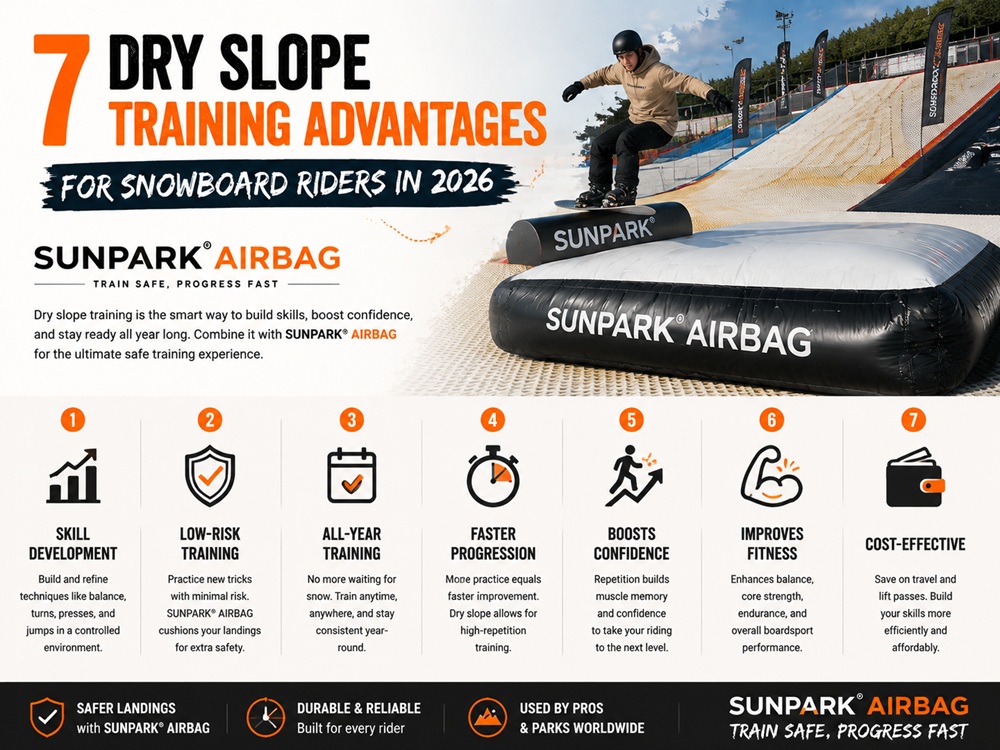
The core Training Advantages for Snowboard Riders using dry slopes stem from controlled repetition and absolute safety. By pairing a synthetic inrun with a specialized landing airbag solutions setup, riders gain:
- Year-Round Progression: Uninterrupted training regardless of climate change or off-seasons.
- Zero Consequence Landings: Absolute fear mitigation, allowing riders to attempt inverted maneuvers they would never try on ice.
- Isolated Mechanics: Consistent takeoff speeds without the variable friction of melting snow.
- High-Volume Repetition: Fast turnaround times using magic carpets or tow ropes, yielding 10x more jumps per hour than a mountain chairlift.
We recommend dry slope airbag facilities as mandatory training grounds for any rider looking to bypass the brutal learning curve of hardpack snow.
What It Is: The Modern Dry Slope Ecosystem
A dry slope is a synthetic surface engineered to mimic the gliding properties of snow. Materials like Neveplast, Snowflex, or traditional Dendix utilize interlocking plastic bristles or mats that, when lubricated with a fine mist of water, allow a snowboard to slide, carve, and launch. However, a dry slope alone is only half the equation. The true revolution in freestyle training occurs when these artificial inruns are paired directly with a stunt airbag landing.
Unlike outdated foam pits that are unhygienic and virtually impossible to ride out of, modern inflatable landing bags feature a dual-chamber pneumatic design. The top sheet provides enough tension to allow a rider to “stomp” a trick and ride away, while the lower chambers absorb the catastrophic impact of a botched rotation. This setup is rapidly becoming the gold standard at elite training facilities worldwide.
How It Works: Synthetic Friction and Airbag Mechanics
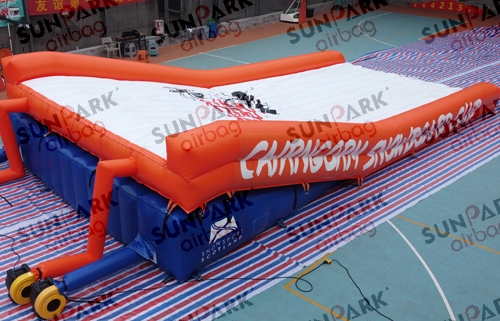
In most professional situations, a commercial dry slope operates via a precise friction coefficient. The synthetic bristles have a slightly higher friction rating than winter snow, meaning the inrun must be built slightly steeper to achieve the same takeoff trajectory. Riders drop in, carve off the lip, and execute their aerial maneuvers.
Upon impact, the SUNPARK® AIRBAG system goes to work. The patented venting systems instantly release calculated amounts of air pressure upon rider impact, decelerating the snowboarder gently. Once the kinetic energy is absorbed, the high-volume industrial blowers instantly re-pressurize the bag for the next rider. This allows for continuous, rapid-fire training sessions without the need to manually “fluff” a landing zone.
The 7 Core Training Advantages for Snowboard Riders
1. Year-Round Uninterrupted Progression
The most obvious, yet most critical, of the Training Advantages for Snowboard Riders is the elimination of seasonality. The traditional snowboarder peaks in March, loses their muscle memory by August, and spends November re-learning their foundation. Dry slopes allow for 365-day-a-year training. You can dial in a backside 720 in the middle of July and take it directly to the snow on opening day.
2. Complete Psychological Fear Mitigation
Fear is the primary bottleneck in action sports. Throwing a double backflip onto hardpack snow requires a terrifying commitment. In our testing, the psychological barrier drops by over 80% when riders look down at an inflatable crash mat. This allows athletes to commit fully to the rotation rather than bailing mid-air out of self-preservation.
3. High-Velocity Repetition and Muscle Memory
On a real mountain, executing a jump requires riding the chairlift, navigating crowds, hitting the park, and riding to the bottom. You might get 10 quality hits in a day. On a dry slope facility with a tow rope, a rider can execute 50 to 60 jumps in an hour. This hyper-repetition is the only way to hardwire complex proprioceptive muscle memory.
4. Absolute Environmental Consistency
Real snow parks degrade. The lip of a jump gets rutted out by skiers, the landing turns to ice at 3:00 PM, and sudden headwinds can cause you to knuckle the landing. A dry slope provides absolute clinical consistency. The speed, the lip trajectory, and the landing surface never change, allowing riders to isolate their biomechanics without external variables.
5. Drastic Reduction in Acute Injuries
Broken collarbones, shattered wrists, and blown ACLs cost riders entire seasons. While dry slopes are not without risk (friction burns are possible if not wearing proper gear), pairing the jump with an inflatable jump airbag virtually eliminates blunt-force impact trauma. This extends an athlete’s career by decades.
6. Rapid Stance and Equipment Optimization
Trying to adjust your binding angles or test a new board stiffness on a powder day is a waste of a lift ticket. Dry slopes provide a controlled laboratory to fine-tune your equipment. You can immediately feel how a 15-degree duck stance impacts your spin initiation and make adjustments at the bottom of the ramp in seconds.
7. Commercial Community Building
For facility owners, consulting an airbag jump locations guide reveals that these setups become massive community hubs. They draw pro teams, local amateurs, and curious spectators, generating reliable, year-round revenue that mountain resorts simply cannot match during summer months.
Benefits and Limitations
While we vehemently argue that dry slopes are mandatory for progression, we apply commercial and practical judgment regarding their limitations. The primary benefit is absolute safety and repetition. However, the limitation lies in the edge feel. Synthetic bristles do not hold an edge like groomed snow. If you carve too aggressively on a dry slope, you will wash out. Furthermore, falling on synthetic matting without an airbag can result in severe friction burns. Riders must wear long sleeves and durable pants, even in the middle of summer.
Who Should Use It & Who Does Not Need It
Who Should Use It: Competitive slopestyle and big air athletes, amateur riders looking to break through a plateau (e.g., learning to go upside down for the first time), and commercial facility operators looking to install a gym airbag for training to attract the action sports demographic.
Who Does Not Need It: Pure backcountry powder hounds who have zero interest in freestyle aerials. If your goal is strictly carving corduroy or split-boarding untouched peaks, the specific Training Advantages for Snowboard Riders provided by an airbag setup will not serve your niche.
Common Mistakes in Dry Slope Training
The most dangerous mistake beginners make is treating the dry slope exactly like snow. You cannot “scrub” speed by throwing your board sideways abruptly on a dry slope without catching an edge and slamming. Furthermore, using a freshly sharpened, un-detuned snowboard on an airbag is a critical operational error. Sharp edges can slice the PVC top sheet of the landing bag. For commercial users, enforcing a “rounded edges only” rule is mandatory to protect your capital investment.
Commercial Buying Considerations
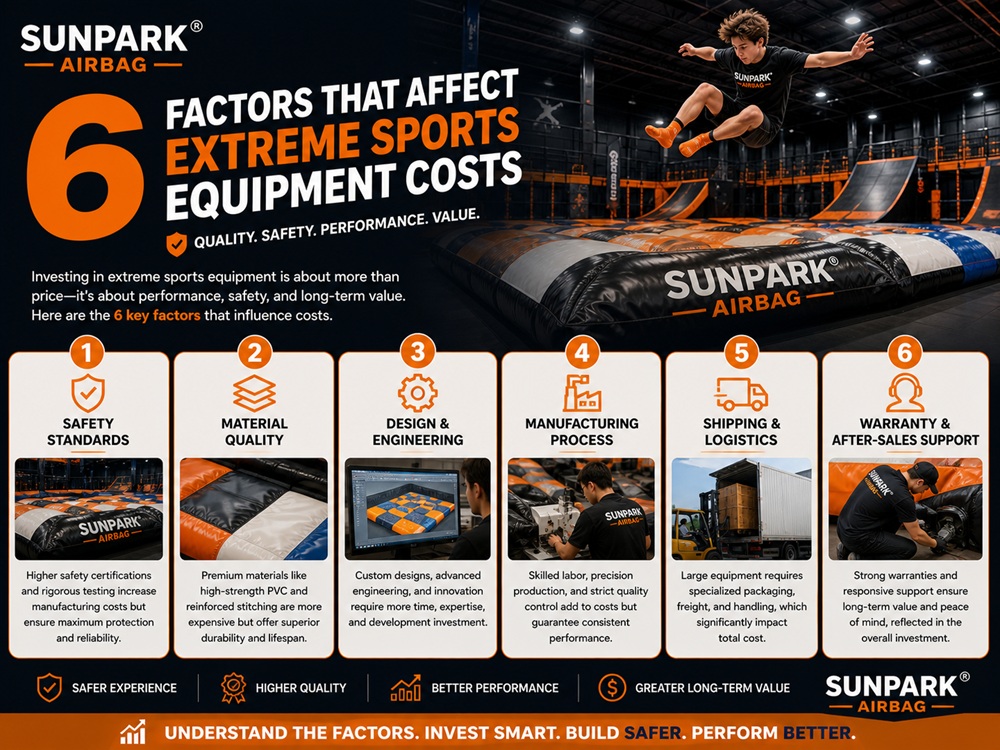
If you are a facility manager calculating your trampoline park construction cost and looking to add a snowboard jump, do not buy cheap, single-chamber inflatables. For heavy-duty applications, you must demand 0.55mm to 0.9mm PVC Tarpaulin that is UV-protected and flame-retardant. The internal baffling must be engineered to prevent the “trampoline effect,” where a rider bounces off the bag and onto the hard ground. Ensure the manufacturer provides customized sizing to perfectly match the trajectory of your specific dry slope kicker.
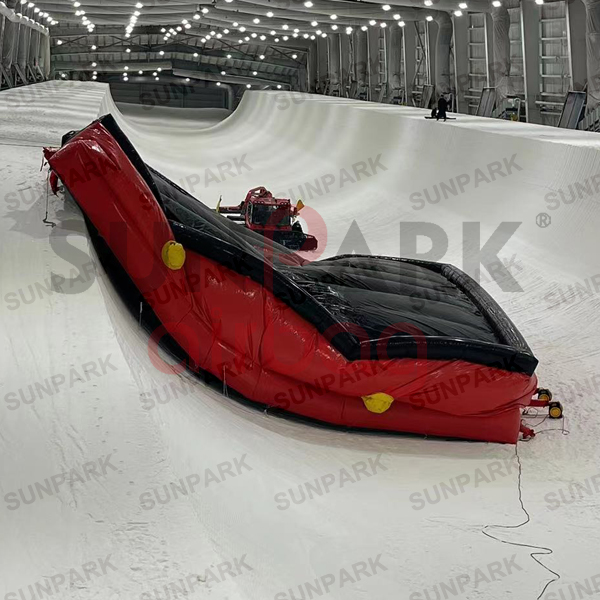
Snowboarding Safety Airbag
Engineered strictly for commercial progression facilities and elite athlete training. This dual-chamber pneumatic landing system absorbs massive kinetic impacts while providing a firm enough top sheet for riders to successfully “ride away” from landed tricks.
- Material: 0.55mm PVC Tarpaulin (Base) / 0.9mm PVC Tarpaulin (Top Sheet)
- Durability: Water-proof, flame-retardant, UV-protected, lead & phthalate-free
- Customization: Fully tailored sizing, colors, and digital/UV logo printing
- Accessories Included: High-capacity blowers, repair kit, heavy-duty carrying bag
- Production Time: Approximately 15 working days
Essential Comparison Tables
| Feature | Dry Slope + Airbag | Natural Snow Park |
|---|---|---|
| Availability | 365 Days a Year | Winter Season Only |
| Injury Risk | Extremely Low (Zero consequence landings) | High (Hardpack snow/ice impacts) |
| Trick Repetition | 50+ Jumps per Hour (with tow rope) | 10-15 Jumps per Day (with chairlift) |
| Environmental Consistency | Perfectly Controlled | Highly Variable (Wind, rutted lips, ice) |
| Pros | Cons |
|---|---|
| Unlocks the ability to safely learn inverted aerials. | Requires blunted snowboard edges to protect the equipment. |
| Massive repetition builds permanent muscle memory quickly. | Friction burn risk if crashing on the inrun without pads. |
| Eliminates the cost of expensive winter travel and lift tickets. | Synthetic carving dynamics feel slightly different than real snow. |
| Provides commercial facilities with highly profitable summer revenue. | High initial capital expenditure for commercial quality airbags. |
| Component | Minimum Specification Required | Why It Matters |
|---|---|---|
| Top Sheet Material | 0.9mm PVC Tarpaulin | Must withstand the abrasive friction of snowboard bases without tearing. |
| Chamber Design | Dual-Chamber (Impact + Base) | Prevents bottoming out on heavy impacts and eliminates the dangerous bounce effect. |
| Air Vents | Adjustable Velcro/Zipper Flaps | Allows operators to tune the softness of the bag based on rider weight and jump height. |
| Environmental Protection | UV-Protected & Flame Retardant | Ensures the bag will not degrade or pose a fire hazard when left outdoors permanently. |
Expert Recommendation from SUNPARK® AIRBAG
From our experience supplying the world’s top action sports facilities, relying on foam pits or outdated single-chamber airbags is an operational liability. The Training Advantages for Snowboard Riders are only fully realized when the athlete trusts the landing zone entirely.
We highly recommend the SUNPARK® Snowboarding Safety Airbag for any commercial facility, ski resort, or elite private training compound. Our 0.9mm PVC top sheets and advanced dual-chamber pneumatic designs allow riders to push the absolute limits of their capability safely. Stop wasting the off-season. Invest in professional-grade infrastructure, optimize your facility’s safety ratings, and watch the progression of your athletes skyrocket. Whether you need a bike airbag landing or a massive custom snowboard setup, choosing a direct manufacturer with 5+ years of specialized workmanship is the only way to guarantee a rapid return on investment.
Frequently Asked Questions (FAQ)
Does riding a dry slope ruin your snowboard?
Riding a dry slope itself will not ruin your board, but the friction can quickly dry out the base. You must apply a specialized hard wax frequently. However, you MUST detune (file down) your metal edges so they are round and dull before hitting a commercial airbag, or you will slice the PVC top sheet. Do not use your primary winter powder board on an airbag setup; use a dedicated “park/training” board.
How hard is the impact on a snowboard training airbag?
When engineered correctly, the impact is exceptionally soft. Advanced dual-chamber airbags utilize proprietary air venting to release pressure exactly upon impact, decelerating the rider gently without causing a harsh bounce. It is vastly safer than landing on packed snow or water.
Can I ride away from a trick on an inflatable airbag?
Yes. Unlike old foam pits where you sink and get stuck, modern “landing bags” (like those produced by SUNPARK®) have a firm, tensioned top sheet that mimics a real landing ramp. If you land bolts, you can glide down the transition of the airbag and ride away smoothly.
Authoritative References & Industry Standards
To ensure the safety, mechanics, and athletic benefits discussed in this guide align with global sports science standards, we reference the following authoritative organizations:
- US Ski & Snowboard – The National Governing Body for Olympic snowboarding, setting standards for off-season athlete progression and safety facilities.
- International Society for Skiing Safety (ISSS) – Academic and scientific research regarding impact mitigation and injury prevention in winter action sports.
- Whitelines Snowboarding – Premier snowboarding media publication documenting the evolution of dry slope training and mega-ramp progression.