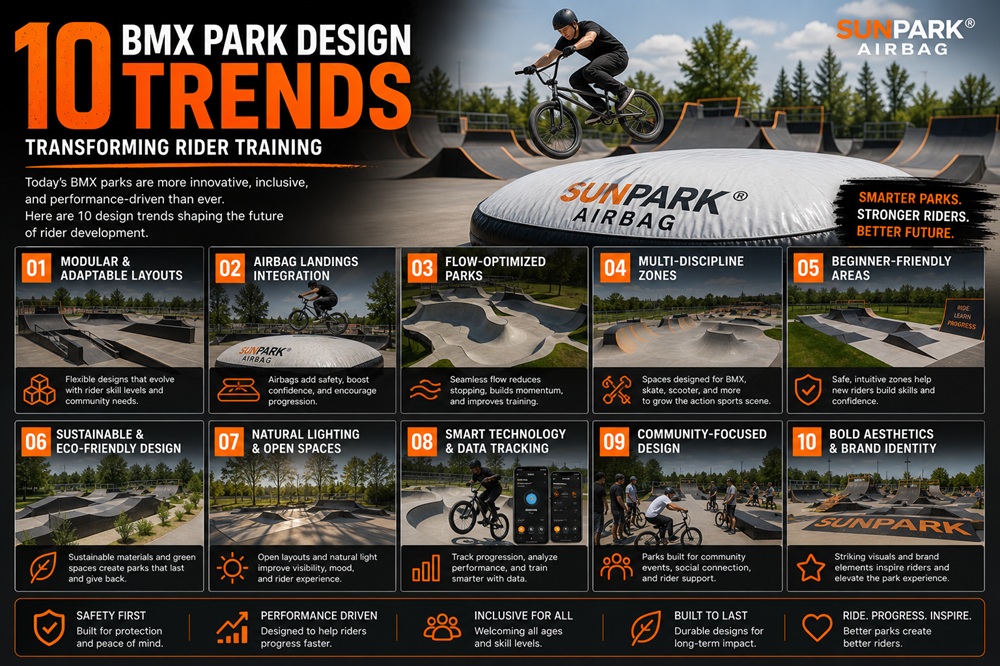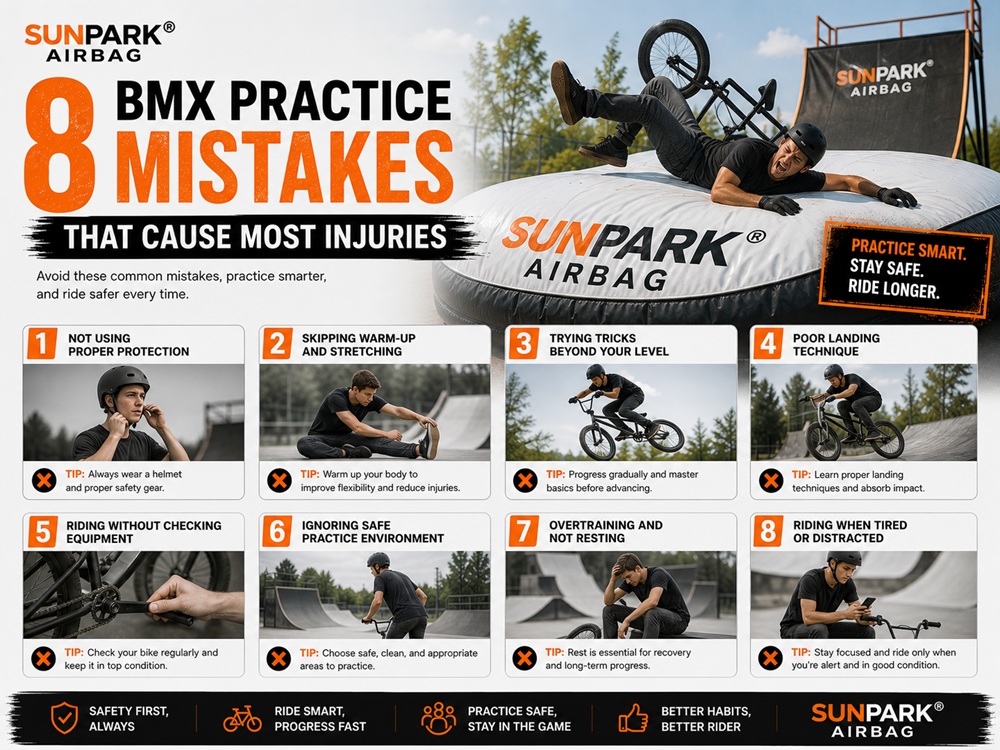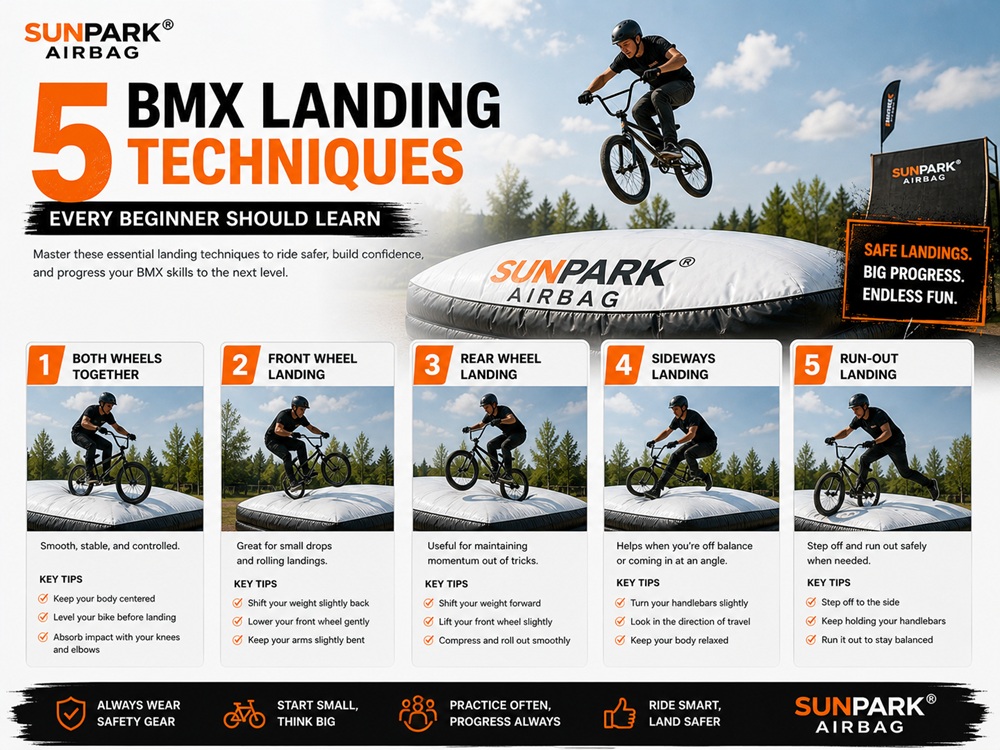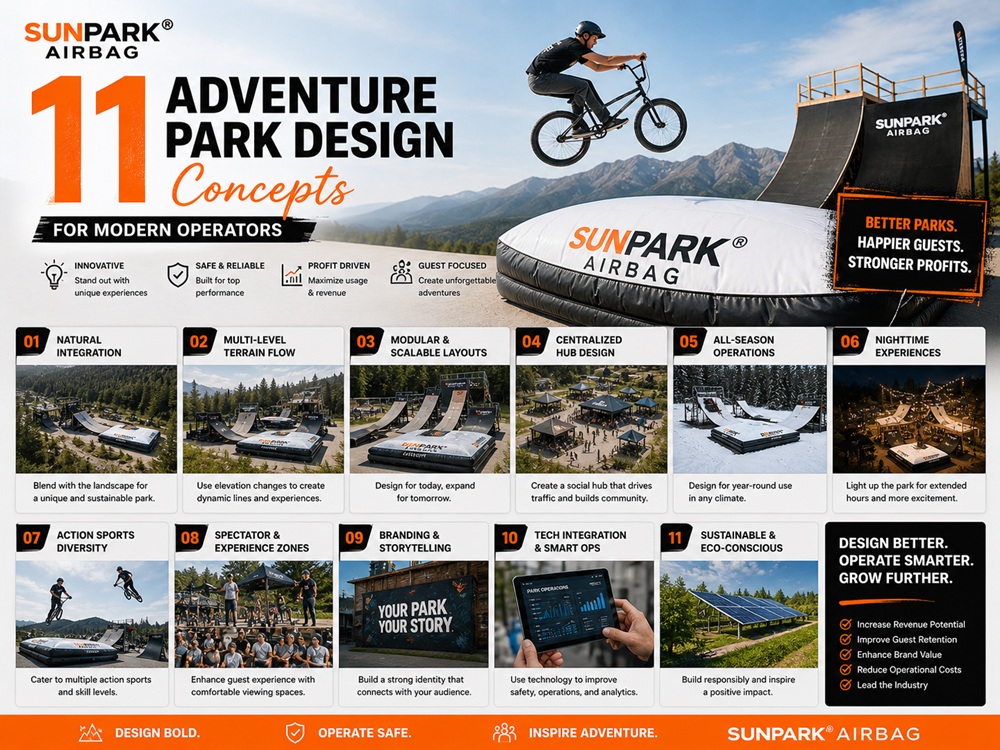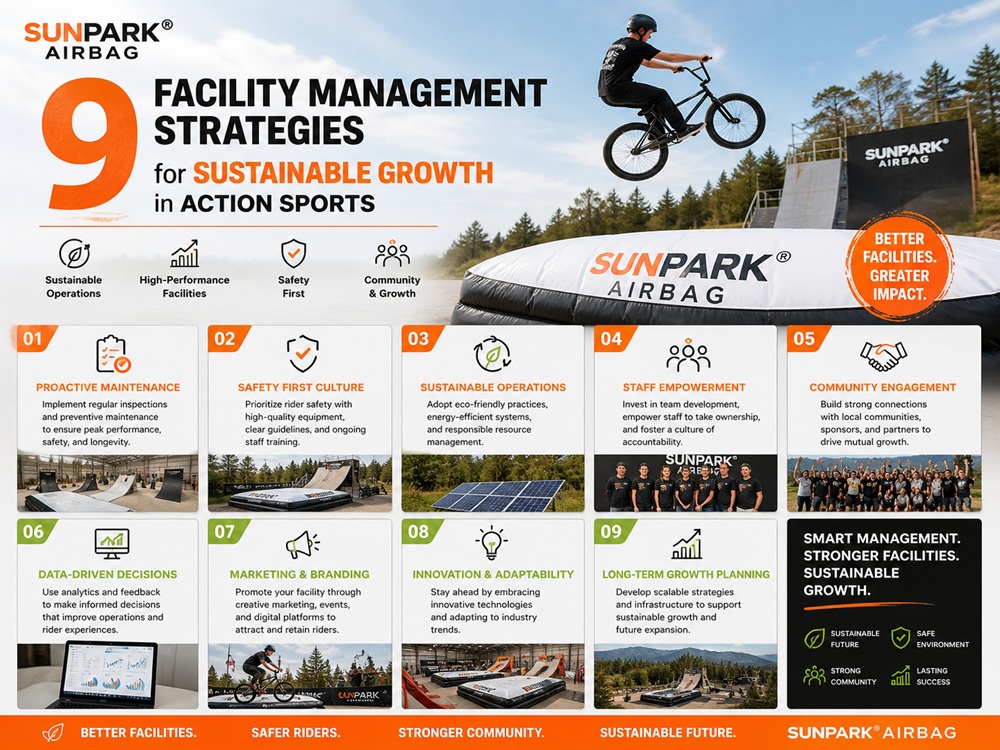
Operating a terrain park inherently involves managing risk. However, there is a massive operational difference between the accepted risks of action sports and the sheer negligence of poor park construction. From our experience building progression facilities across the globe, the days of piling up random snow mounds and hoping for the best are long gone. Today, facility operators who ignore modern Terrain Park Design Features expose themselves to crippling liability and drive away their core demographic.
In most professional situations, safety does not compromise progression; it enables it. When athletes trust the architecture of a jump or the landing transition of a feature, they push the sport further. Whether you are managing a winter ski resort, an indoor freestyle training center, or an extreme dirt bike facility, understanding the physics and engineering behind safe design is mandatory. In this guide, we break down the critical Terrain Park Design Features that separate amateur setups from world-class, commercial-grade progression zones.
Quick Answer: What Are the Most Critical Terrain Park Design Features?
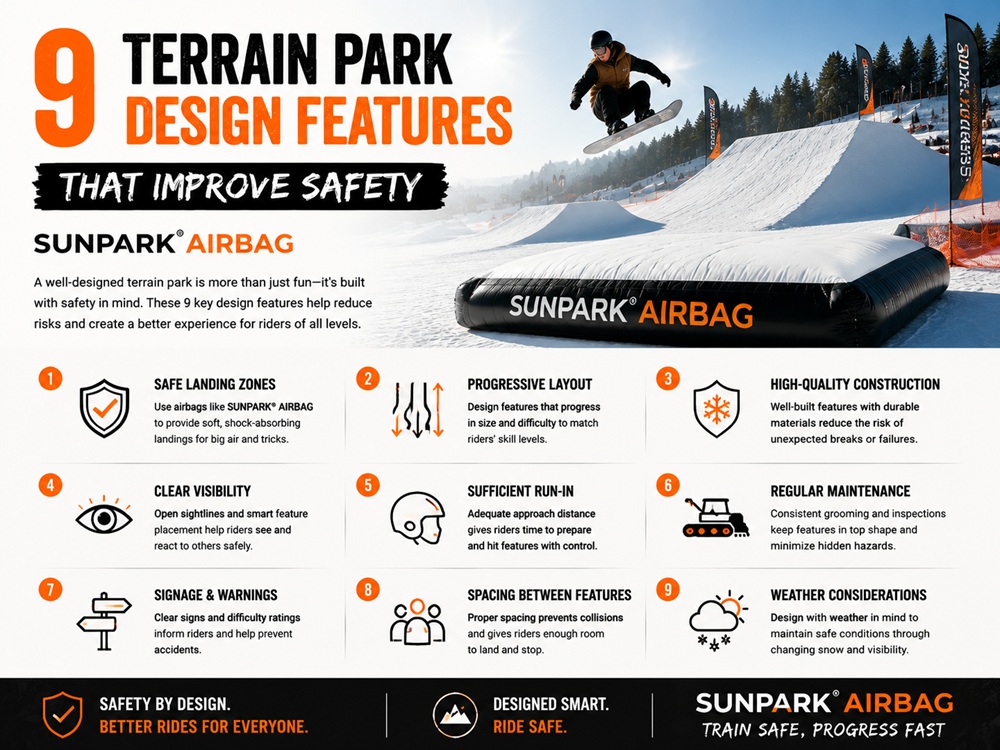
The most effective Terrain Park Design Features prioritize predictable trajectories, visual flow, and impact mitigation. The top 9 features include:
- Zoned Progression: Strict separation of Small, Medium, and Large features.
- Calculated Lip-to-Knuckle Ratios: Engineering takeoff angles to match the landing sweet spot.
- Airbag Landing Systems: Replacing hard impacts with inflatable catch systems.
- Elliptical Takeoff Transitions: Smooth G-force distribution on jump approaches.
- Forgiving Knuckle Roll-Overs: Softening the deck-to-landing transition to prevent blunt-force trauma.
- Wider Landing Pads: Increasing the lateral margin of error for off-axis spins.
- Smart Park Entrances (ATML): Using terrain funnels to slow riders before entry.
- Proper Feature Spacing: Ensuring adequate recovery time between hits.
- Dedicated Spectator Zones: Eliminating blind spots and keeping non-participants out of landing areas.
We recommend commercial operators immediately audit their facilities for these nine features, paying special attention to integrating high-tech landing systems for high-risk zones.
What Are Terrain Park Design Features?
Terrain Park Design Features refer to the specific architectural, structural, and operational elements engineered into a freestyle sports environment to control athlete trajectory, speed, and impact. These features apply to snow parks, BMX tracks, and indoor freestyle facilities alike. Unlike natural terrain, a designed park is a controlled environment. How a jump is cut, where a rail is placed, and what material is used for the landing are all deliberate decisions.
How it works is based on physics. A properly designed jump uses an elliptical transition to slowly compress the rider’s suspension (or legs) rather than hitting them with a sudden, sharp G-force. The takeoff angle is mathematically matched to the slope of the landing to ensure the rider’s trajectory parallels the ground upon impact. When these features are implemented correctly, the rider lands smoothly, transferring downward energy into forward momentum.
The 9 Terrain Park Design Features That Improve Safety
1. Zoned Skill Progression (S/M/L)
In our testing, mixing beginner features with professional-level jumps in the same line is a recipe for disaster. The best terrain park design features rely on strict zoning. Small, Medium, and Large lines should have separate entrances. This prevents inexperienced riders from accidentally wandering onto a 60-foot booter and allows athletes to logically progress their skills in a controlled manner.
2. Calculated Lip-to-Knuckle Ratios
A jump is not a guess; it is a math equation. The distance from the lip (takeoff) to the knuckle (start of the landing) must dictate the angle of the takeoff. If a jump has a long deck but a low-angle lip, riders will come up short (knuckle). Proper terrain park design features ensure that a rider carrying average speed will naturally land in the “sweet spot” of the transition.
3. Airbag Landing Integration
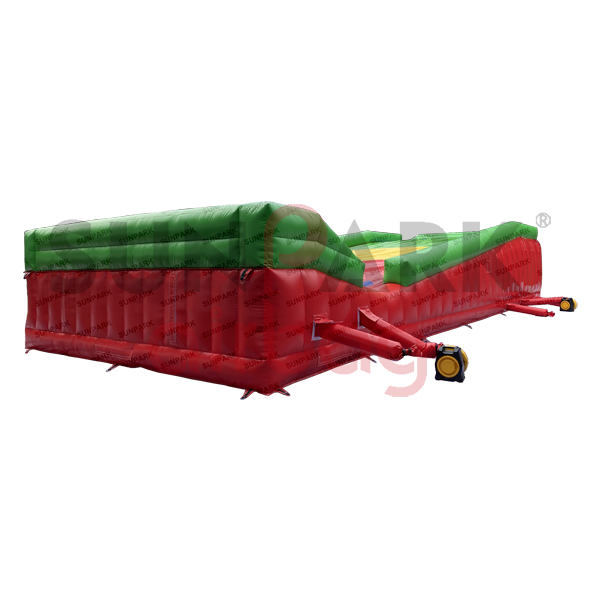
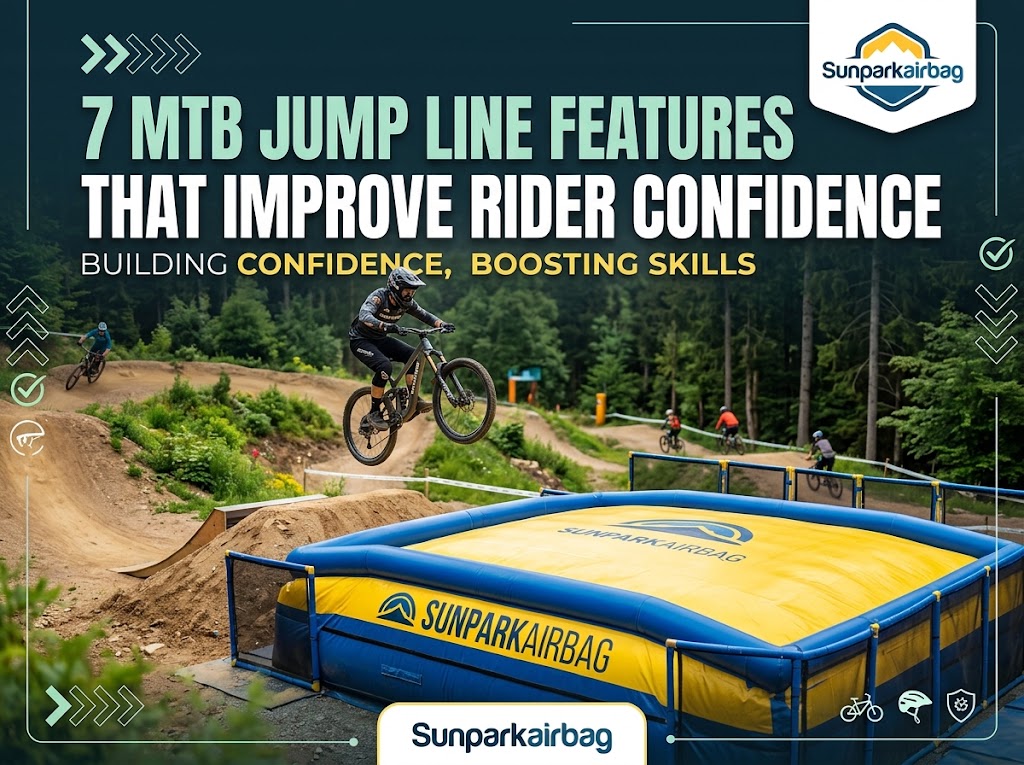
The single greatest advancement in extreme sports safety is the integration of pneumatic technology. For commercial users hosting high-level training or heavy-duty applications, installing a big jump airbag system completely alters the safety profile of a park. Unlike hard snow or dirt, an airbag provides a shock-absorbing catch that drastically reduces concussion and joint impact rates. Understanding exactly what is a freestyle airbag and how to seamlessly embed it into your jump lines is non-negotiable for modern progression centers.
4. Elliptical Takeoff Transitions
Older jump designs often featured harsh, abrupt transitions that compressed the rider too violently, leading to loss of control before leaving the lip. Modern safety dictates elliptical curves. The transition starts mellow and gradually steepens, applying smooth, predictable G-forces to the athlete.
5. Forgiving Deck and Knuckle Roll-Overs
The “deck” is the flat space between the takeoff and the landing, ending at the “knuckle”. Sharp, 90-degree knuckles cause severe blunt-force trauma if a rider comes up short. By designing a rounded, rolling knuckle, a rider who misses the landing zone will skip or slide down the transition rather than impacting a harsh edge.
6. Wider Landing Pads
Action sports involve off-axis rotations and wind variables. Terrain park design features must account for human error. We recommend building landings that are significantly wider than the takeoff. A wider landing pad gives athletes a safe margin for error if they drift left or right during a rotation.
7. Smart Park Entrances (ATML)
The entrance to a terrain park should physically require the rider to slow down and acknowledge they are entering a freestyle zone. By using staggered gating, visual signage (such as the industry-standard ATML – Approach, Takeoff, Maneuver, Landing guidelines), and funneled entries, operators can filter out reckless or unaware guests.
8. Proper Feature Spacing and Flow
Rhythm is a massive component of safety. If features are placed too closely together, a rider who lands off-balance on the first jump has no time to recover before hitting the second. Proper flow ensures adequate recovery distance between features, allowing the athlete to speed-check or bail out safely.
9. Dedicated Spectator and Rest Zones
In most professional situations, collisions do not happen on the jump itself; they happen when riders congregate blindly in landing zones. Distinctly designing rest zones well out of the fall-line of any feature—and marking them clearly—eliminates catastrophic rider-on-rider collisions.
The Commercial Benefits of Safe Design
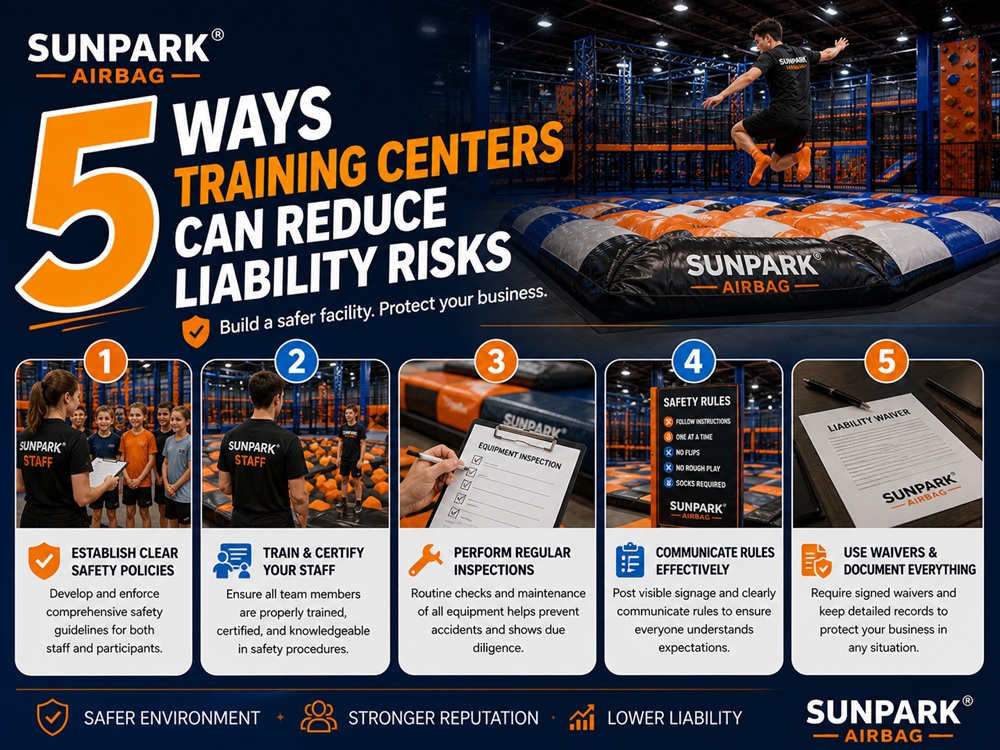
Why should a facility invest heavily in these Terrain Park Design Features? The benefits are highly commercial. First, insurance premiums drop significantly when you can prove adherence to modern safety standards and the deployment of tech like an FMX airbag landing for your extreme dirt events. Second, safety drives retention. When families and amateur athletes feel secure in your progression zones, they buy season passes. Finally, it slashes the operational downtime caused by accident investigations and medical evacuations.
Limitations and Operational Realities
Implementing these features requires capital and continuous maintenance. An elliptical jump cut perfectly on Monday can become a dangerous, icy ramp by Wednesday if not groomed daily by a skilled snowcat operator. Similarly, maintaining proper feature spacing requires a large physical footprint, which smaller resorts or indoor trampoline park equipment manufacturers may struggle to accommodate. You must match your park ambitions to your operational budget.
Who Should Use These Features (And Who Doesn’t Need To)
For commercial users: Ski resorts, indoor skate/BMX parks, and elite training facilities absolutely must deploy all nine of these Terrain Park Design Features. If you charge admission, you owe your patrons state-of-the-art safety infrastructure.
Who does not need it: A private, backyard setup built by a professional athlete strictly for their own use assumes a different level of personal risk. However, even in these scenarios, we strongly advise integrating safety nets or reading up on a mountain bike airbag landing guide to protect physical longevity.
Common Mistakes in Park Design
The most egregious mistake we see is the “blind landing.” If a rider at the top of the drop-in cannot see the landing zone of the jump, the park is fundamentally flawed. Another massive operational failure is relying on outdated safety foam. Operators still debate the foam pit vs airbag comparison, but in 2026, the hygiene, fire hazard, and inconsistent density of foam pits make them an obsolete liability compared to a sealed, tunable airbag.
Quick Summary Table
| Design Feature | Primary Safety Function | Implementation Cost |
|---|---|---|
| Zoned Progression | Prevents skill-level mismatch and overcrowding. | Low (Signage and fencing) |
| Airbag Landing Systems | Eliminates hard impact trauma; allows risk-free trick progression. | Medium/High (Capital equipment) |
| Elliptical Transitions | Prevents harsh G-force compression on takeoffs. | Low (Requires skilled grooming) |
| Wider Landing Pads | Provides margin for error on off-axis landings. | Low (Requires more snow/dirt volume) |
| Forgiving Knuckles | Softens blunt-force impact on short landings. | Low (Design methodology) |
Comparison Table: Traditional vs. Modern Terrain Parks
| Metric | Traditional / Outdated Park Design | Modern Safety-First Park Design |
|---|---|---|
| Jump Shapes | Abrupt kickers, flat decks, sharp knuckles. | Elliptical transitions, step-overs, rolled knuckles. |
| High-Risk Training | Landing on hardpack snow or dirt. | Deploying the best airbag landing systems 2026. |
| Flow & Spacing | Jumps stacked closely, no speed-check zones. | Spaced for recovery, visual sightlines clear. |
| Liability Profile | High risk of catastrophic impact injuries. | Controlled risk; massive reduction in blunt trauma. |
Pros and Cons of Implementing Advanced Safety Features
| Pros | Cons |
|---|---|
| Massively reduces high-liability catastrophic injuries. | Requires highly skilled operators (groomers, builders) to maintain daily. |
| Attracts professional athletes and lucrative training camps. | Wider landings and spaced features consume more real estate. |
| Improves overall guest experience and progression rates. | Initial capital investment for high-end safety tech (airbags) can be significant. |
Buying Considerations for Safety Infrastructure
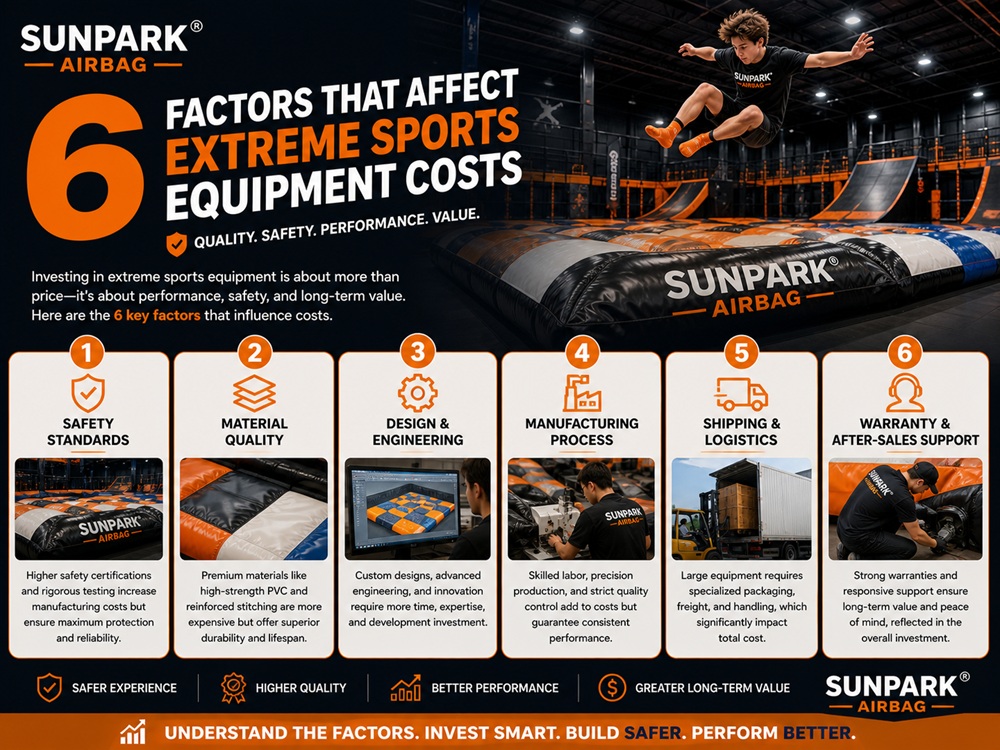
When you decide to upgrade your Terrain Park Design Features, purchasing the right infrastructure is critical. If you are upgrading your jump lines, do not settle for cheap, uncertified inflatables. Look for systems that feature multi-chamber technology and topsheets that mimic the slide of real snow or dirt. For budget-conscious facilities, there are ways to source effectively—such as learning the buy used airbag landing tips—but never compromise on the blower redundancy or UV-resistant materials.
Expert Recommendation
From our experience, the foundation of safe terrain park design is acknowledging that athletes will inevitably fall. You cannot eliminate gravity, but you can entirely control the landing environment. We recommend that every commercial facility, from winter resorts to summer BMX dirt tracks, integrates targeted airbag systems at the apex of their progression lines.
SUNPARK® AIRBAG – Explorer of Airbag System for Sports: With over 10 years of experience, we provide freestyle airbags for ski resorts, theme parks, sports, and gymnastics facilities around the globe. SunparkAirbag® is the leading manufacturer of Airbags for Extreme Sports and Leisure Industries in China. By engineering our bags with dual-chamber impact absorption and proprietary, durable top sheets, we provide park operators with the ultimate tool to fuse massive progression with uncompromised safety. If you are serious about modernizing your terrain park, upgrading your landing infrastructure is your first, best step.
Frequently Asked Questions (FAQ)
What is the ATML terrain park safety model?
ATML stands for Approach, Takeoff, Maneuver, and Landing. It is an industry-standard educational framework used in Terrain Park Design Features to teach riders how to safely inspect and execute a freestyle feature from start to finish. Proper park design physically guides riders through these four distinct phases.
Are airbag landings better than foam pits for terrain parks?
Yes, definitively. In most professional situations, airbags have replaced foam pits because airbags provide consistent, tunable impact resistance, do not harbor bacteria, eliminate the fire hazard of crumbling foam, and allow riders to actually ride out of their landings rather than sinking into a trap.
How do elliptical takeoffs improve safety?
Elliptical takeoffs distribute the G-force of the jump evenly over a longer distance. Instead of hitting a sharp curve that “kicks” a rider off-balance, the elliptical shape smoothly compresses their stance, resulting in a predictable, stable trajectory into the air.
Why is feature spacing a critical safety design element?
Proper spacing allows a rider to recover their balance after a landing, adjust their speed, or safely exit the line if they make a mistake. If features are packed too closely, a minor error on jump one translates into a catastrophic crash on jump two due to lack of recovery time.
Authoritative References
To further understand the regulations and standards governing Terrain Park Design Features, we recommend consulting the following authoritative bodies:
- National Ski Areas Association (NSAA) – Developers of the “Smart Style” terrain park safety initiative and operational guidelines for freestyle terrain management.
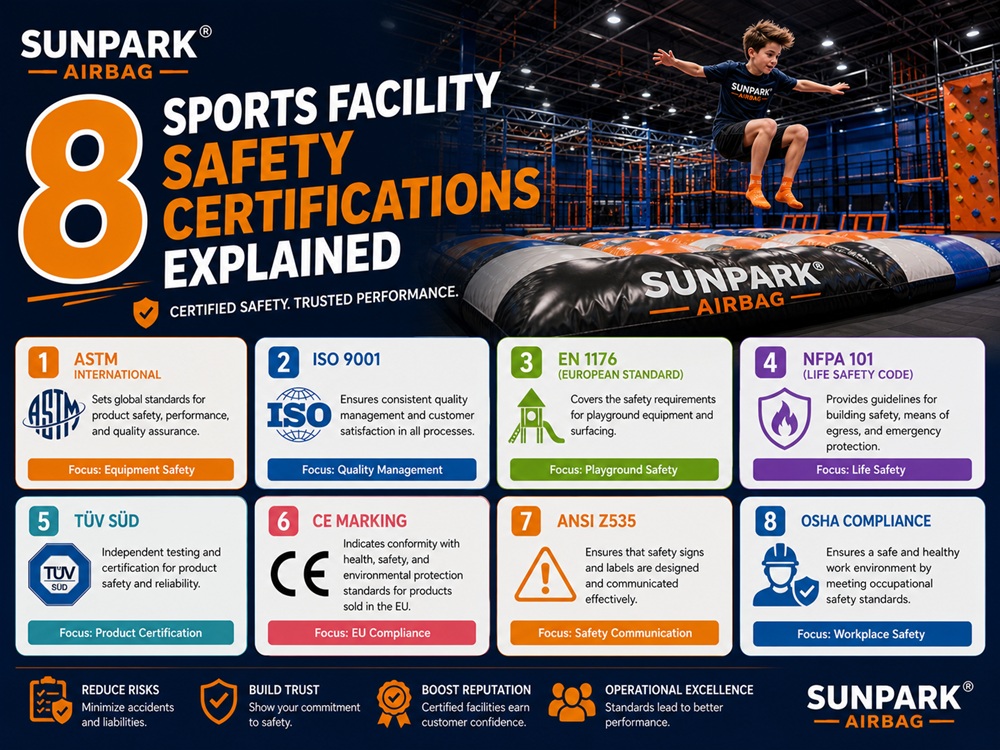
- ASTM International – Provides rigorous, globally recognized safety standards and material specifications for sports equipment, padding, and facility design.
- National Institutes of Health (NIH) / PubMed – Hosts peer-reviewed biomechanical studies on action sports injury mechanisms and the efficacy of impact-mitigating landing surfaces.