Navigating the extreme sports and recreational facility market requires ruthless financial planning, especially when evaluating safety infrastructure. If you are budgeting for a new facility or upgrading an existing one, understanding the true Foam Pit vs Airbag Landing Cost is critical to your long-term profitability. From our experience working with action sports parks and gymnastics centers globally, operators frequently make the mistake of only looking at the initial purchase price, ignoring the devastating operational costs hidden just beneath the surface.
SUNPARK® AIRBAG is the leading manufacturer of Airbags for Extreme Sports and Leisure Industries in China. With over 10 years of experience, we provide freestyle airbags for ski resorts, theme parks, sports, and gymnastics facilities around the globe. We have seen firsthand how facility owners bleed money on outdated foam block systems. In this comprehensive guide, we will break down not only what these systems are, but whether it is actually worth using, buying, or upgrading based on commercial realities.
Quick Answer: Foam Pit vs Airbag Landing Cost
When comparing Foam Pit vs Airbag Landing Cost, traditional foam pits offer a lower initial purchase price but incur massive ongoing operational expenses. Airbag landing systems require a higher upfront investment but drastically reduce labor, hygiene, and replacement costs over a 5-year period.
- Initial Setup: Foam pits cost roughly $10,000 to $25,000 to build and fill. Airbags range from $15,000 to $40,000 depending on size and internal chamber complexity.
- Monthly Maintenance: Foam pits demand intensive labor for fluffing and cleaning. Airbags require simple wiping and routine blower checks.
- Replacement Cycle: Polyurethane foam blocks degrade and must be entirely replaced every 1 to 3 years. A commercial-grade airbag lasts 5 to 8 years with proper care.
- Throughput: Airbags allow athletes to exit immediately, increasing session throughput by up to 300% compared to guests struggling to climb out of deep foam cubes.
In most professional situations, the return on investment for an airbag system is realized within the first 18 to 24 months of operation.
What is an Airbag Landing System and How Does it Work?
An airbag landing system is a highly engineered, inflatable impact attenuation device designed to catch athletes safely after aerial maneuvers. Unlike a basic bouncy castle, modern sports airbags utilize advanced multi-chamber or multi-pillar technology. They are constructed using heavy-duty, fire-retardant PVC or Hypalon materials and are kept inflated by continuous-flow industrial blowers.
How it works: When a rider lands on the airbag, the impact is absorbed by localized deformation. The top sheet depresses, while internal pressure release valves precisely regulate the exhaustion of air to prevent bottoming out. This creates a staged deceleration zone. Athletes land, the bag cushions the fall, and they can immediately walk off the firm outer edges. From our experience, this predictable impact attenuation is exactly why top-tier athletes prefer a BMX airbag landing for progressing difficult tricks over unpredictable loose blocks.
What is a Traditional Foam Pit?
A traditional foam pit is a recessed concrete or framed wooden basin filled with thousands of loose polyurethane foam blocks (typically 6-inch or 8-inch cubes). At the bottom of the pit, there is usually a suspended trampoline bed or layered foam logs designed to provide baseline shock absorption. Athletes launch into the pit, and their kinetic energy is dissipated as they plunge into and displace the foam blocks.
While historically the standard for gymnastics, foam pits present severe operational challenges. Users sink deep into the pit, requiring significant physical exertion to climb out. Over time, the cubes rip, shred, and compress into dense foam dust, creating serious respiratory hazards and a highly unsanitary environment.
Quick Summary Table: Foam vs Airbag
| System Feature | Traditional Foam Pit | Airbag Landing System |
|---|---|---|
| Impact Consistency | Variable; depends heavily on fluffing frequency | Highly consistent; regulated by air valves |
| Hygiene & Cleaning | Poor; foam absorbs sweat, traps dust and bacteria | Excellent; smooth antimicrobial topsheet easily wiped |
| User Throughput | Low; guests take 30-60 seconds to climb out | High; riders exit cleanly in under 10 seconds |
| Maintenance Labor | Intensive; requires weekly emptying and fluffing | Minimal; daily visual checks and blower maintenance |
| Primary Drawback | Severe ongoing replacement costs and fire risks | Requires continuous electrical power for blowers |
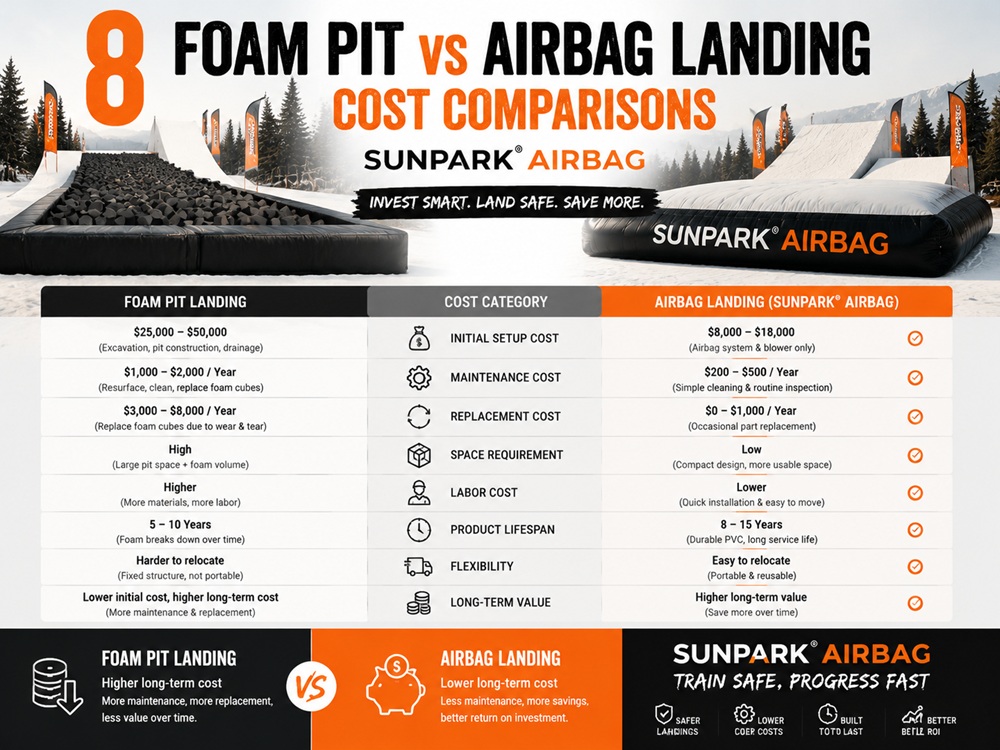
8 Foam Pit vs Airbag Landing Cost Comparisons
To accurately assess the Foam Pit vs Airbag Landing Cost, we must look beyond the invoice price. We recommend evaluating these eight distinct financial pillars before making a commercial decision.
1. Initial Purchase and Installation Cost (CAPEX)
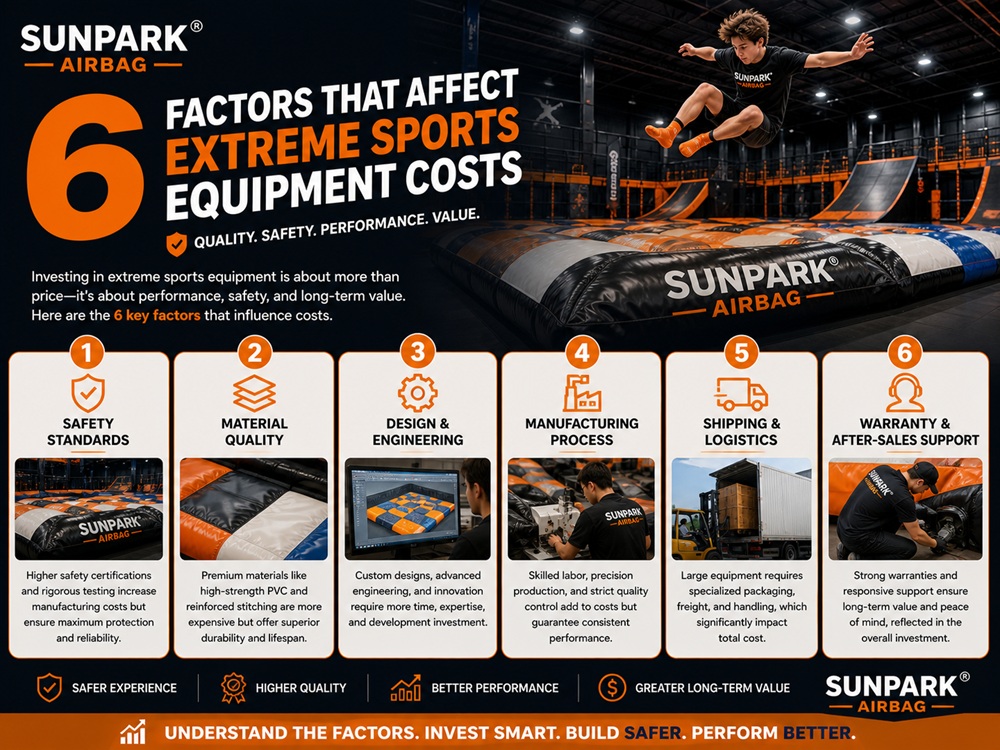
The upfront cost of a foam pit generally appears cheaper. Purchasing thousands of foam cubes and installing a suspended trampoline bed might run between $10,000 and $25,000 depending on the pit volume. Conversely, a commercial-grade airbag from SUNPARK® AIRBAG starts around $15,000 and can reach $40,000 for custom-branded, massive setups. However, constructing the deep concrete basin required for a foam pit often offsets this initial savings when factoring in raw construction materials and excavation.
2. Monthly Maintenance and Upkeep Cost (OPEX)
In our testing, maintenance is where foam pits financially bleed operators dry. Foam pits require “fluffing”—a labor-intensive process where staff must physically loosen compacted blocks. Furthermore, the pit must be entirely emptied regularly to vacuum out toxic foam dust and lost items. Airbags require only a fraction of this labor. A quick wipe down with a mop and disinfectant at the end of the day, plus visual seam inspections, keeps the system operational.
3. Hygiene, Cleaning, and Labor Cost
Foam acts as a giant sponge. It absorbs sweat, dead skin, dirt, and moisture, becoming a breeding ground for bacteria and horrific odors. You cannot practically wash and dry 10,000 foam cubes. Therefore, you are paying staff hourly wages for grueling pit-cleaning duties that yield marginal hygiene improvements. Airbags feature smooth, non-porous vinyl surfaces. The cleaning cost difference over a year easily amounts to thousands of dollars in saved payroll.
4. Replacement and Lifespan Cost
Polyurethane foam has a short, aggressive life cycle. Under heavy commercial use, the blocks compress and tear, losing their impact attenuation properties. Facility owners must replace 20% to 30% of their foam blocks annually, and perform a complete total replacement every 2 to 3 years. Shipping bulky foam is notoriously expensive. A high-quality airbag system will last 5 to 8 years before the top sheet needs replacing, drastically lowering your annualized amortization costs.
5. Facility Construction and Real Estate Cost
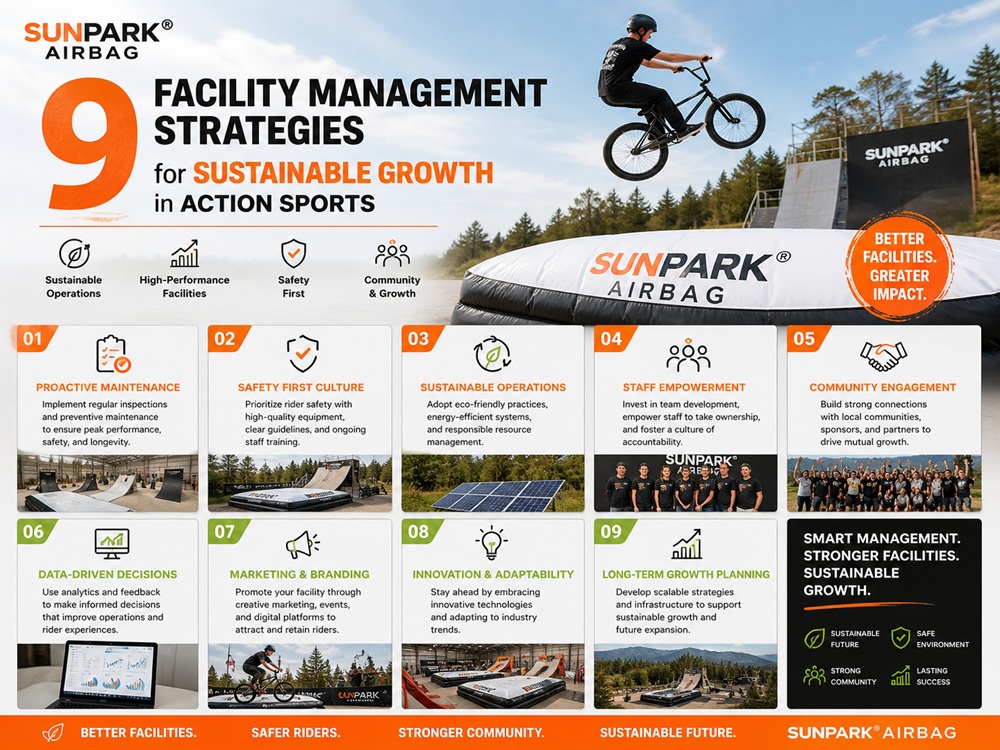
Real estate is expensive. Foam pits demand a deep recessed basin, often requiring heavy concrete excavation, which drastically drives up your trampoline park construction cost. Furthermore, you cannot easily move a concrete pit. Airbag systems can be placed above ground, acting as a modular landing airbag solutions platform. If your lease ends or you want to redesign the park layout, you simply deflate the bag and move it.
6. Insurance Premiums and Liability Cost
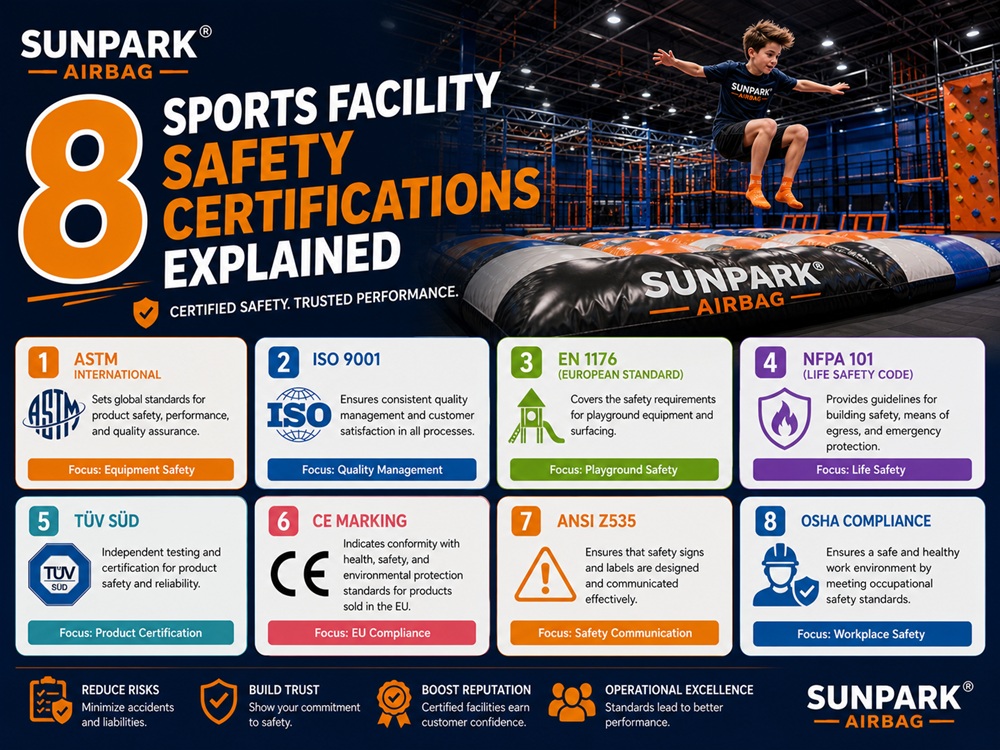
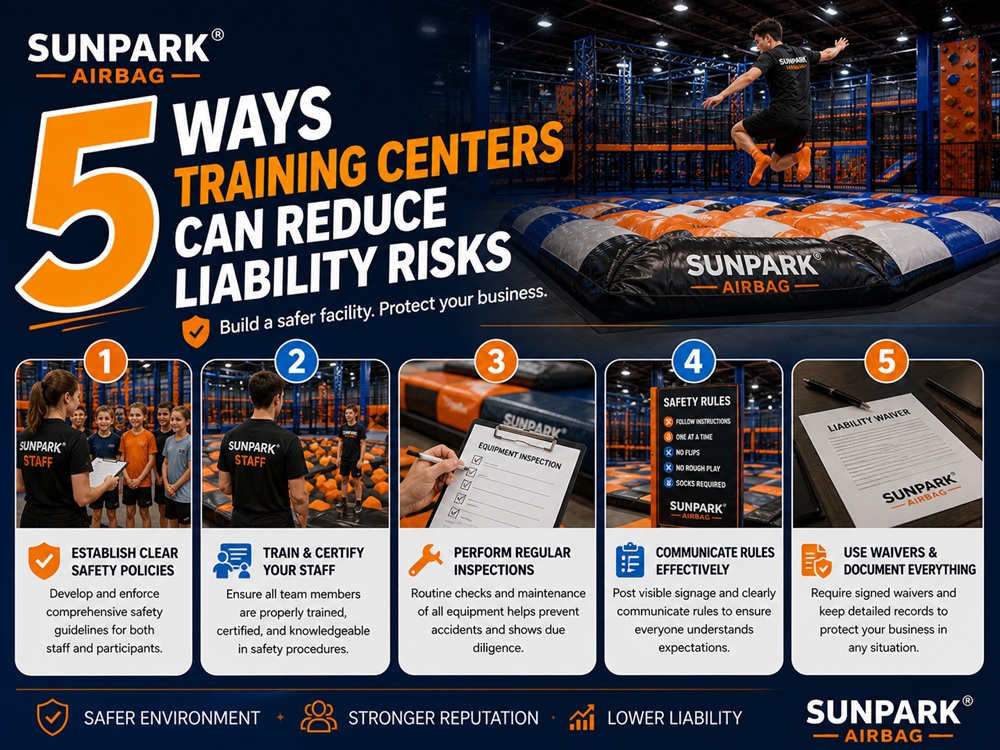
According to industry standards like ASTM F2970 for trampoline courts, maintaining specific impact attenuation is a legal requirement. Degraded foam pits failing to meet minimum depth requirements (60 inches) expose owners to massive liability. Furthermore, learning about common BMX injuries and prevention reveals that burying a rider beneath heavy foam poses suffocation and collision risks if the next rider drops in too soon. Airbags provide engineered, consistent G-force attenuation that insurance underwriters heavily favor, often leading to reduced premium rates.
7. Operational Downtime and Throughput Cost
Throughput is the lifeblood of commercial profitability. It directly impacts a trampoline park owner income. When a rider lands in a foam pit, they spend 30 to 60 seconds fighting their way out. During this time, the ramp is closed. With an airbag landing ramp system, riders simply ride out or walk off the firm edge in under 10 seconds. You process three times as many customers per hour, maximizing ticket sales and customer satisfaction.
8. Disposal and End-of-Life Cost
When it is time to replace foam, you face a logistical nightmare. Disposing of thousands of cubic feet of degraded, non-recyclable polyurethane foam requires multiple commercial dumpsters and hefty environmental landfill fees. At the end of an airbag’s life, the PVC material folds up into a compact pallet-sized bundle, costing almost nothing to dispose of or recycle via specialized textile facilities.
Cost vs. Value: Benefits and Limitations (Pros & Cons)
To help operators make a decisive purchasing choice, we have broken down the precise pros and cons. In most professional situations, the advantages of modern inflatable technology vastly outweigh legacy foam.
| System | Pros (Value Drivers) | Cons (Limitations) |
|---|---|---|
| Foam Pit |
|
|
| Airbag Landing |
|
|
Who Should Use Which System? (And Who Does Not Need One)
We recommend specific systems based purely on the commercial business model and user demographics.
For Commercial Users: Trampoline parks, extreme sports arenas, and the best snowboard airbag parks must definitively choose airbags. The throughput speed, hygiene presentation to paying parents, and visual branding opportunities make airbags the only logical commercial choice.
For Heavy-Duty Applications: Olympic training centers utilizing a gym airbag for training rely on the consistent, tunable firmness of inflatables to prevent spinal compression injuries during high-velocity dismounts. They require data-backed impact attenuation that shifting foam blocks cannot guarantee.
For Beginners and Small Private Setups: A backyard setup on a tight budget where labor is free (you and your friends) might still find a small foam pit acceptable. However, environmental exposure quickly ruins outdoor foam.
Who Does Not Need It: Facilities dealing strictly with low-impact toddlers or basic floor gymnastics do not require massive landing pits of either type; standard 12-inch crash mats are sufficient and vastly cheaper.
Common Mistakes When Budgeting
Operators frequently assume foam will last forever. In our testing, foam in a high-traffic trampoline park turns into hazardous dust within 18 months. Failing to account for a $15,000 foam replacement order in Year 2 frequently bankrupts undercapitalized parks.
Another common mistake when evaluating an airbag is ignoring the HVAC requirements. While airbags themselves are relatively cool, the blowers generate ambient heat. You must ensure your facility’s ventilation can handle the continuous operation of 2HP to 3HP industrial blowers without overheating the building.
Buying Considerations: A Practical Guide
If you have decided to modernize your facility, use this buying guide to ensure you are purchasing a commercial-grade asset and not a glorified bouncy castle.
| Buying Consideration | What to Demand from Manufacturers | Why it Matters for ROI |
|---|---|---|
| Internal Architecture | Multi-chamber or advanced pillar design. | Single-chamber bags launch other riders into the air. Multi-chamber designs isolate impacts, allowing multiple simultaneous users. |
| Material Specification | 0.55mm to 0.9mm PVC Tarpaulin; Fire Retardant. | Thin materials rip under the stress of bike pedals or ski edges. Commercial PVC ensures a 5+ year lifespan. |
| Top Sheet Replaceability | Removable, velcro-attached top sheet. | The top sheet takes 100% of the friction wear. Being able to replace just the top sheet instead of the whole bag saves thousands. |
| Compliance Standards | Meets ASTM F2374 and ASTM F355 testing. | Ensures the device provides legal, proven impact attenuation, keeping your insurance premiums manageable. |
Our Expert Recommendation
From our experience supplying extreme sports facilities globally, the Foam Pit vs Airbag Landing Cost debate is settled. We firmly recommend that all new commercial builds implement airbag landing systems exclusively. The initial 30% premium in purchase price is entirely erased by the end of Year 1 through drastically reduced maintenance labor and eliminated block replacement costs. For existing facilities, upgrading from a legacy foam pit to a custom-fitted airbag insert is the single highest ROI renovation you can execute to instantly modernize your park, improve facility hygiene, and accelerate user throughput.
Frequently Asked Questions (FAQ)
How often do foam pit blocks need to be replaced compared to an airbag?
In a commercial setting, polyurethane foam blocks degrade rapidly and require a 20% top-off every 6 months, with a complete total replacement recommended every 2 to 3 years. A commercial airbag from a reputable manufacturer, assuming proper maintenance and blower care, generally lasts 5 to 8 years before the main chassis requires replacement.
Is a foam pit cheaper to install than an airbag?
Not necessarily. While the foam blocks themselves might cost less than a highly engineered airbag, a foam pit requires a deeply excavated concrete basin or heavy wooden framing, plus a suspended trampoline base. When you factor in the heavy construction and real estate costs, installing an above-ground airbag is often cheaper and significantly faster.
Can I put an airbag inside my existing foam pit concrete basin?
Yes. Many facilities choose to upgrade by removing their hazardous foam blocks and having a custom airbag manufactured to fit the exact dimensions of their existing recessed concrete pit. This is a highly cost-effective way to modernize a gymnastics center or trampoline park without pouring new concrete.
References
- ASTM International. “ASTM F2970-22 Standard Practice for Design, Manufacture, Installation, Operation, Maintenance, Inspection and Major Modification of Trampoline Courts.” West Conshohocken, PA.
- ASTM International. “ASTM F2374-22 Standard Practice For Design, Manufacture, Operation, And Maintenance Of Inflatable Amusement Devices.” West Conshohocken, PA.
- The American Gym. “Pit Information and Loose Foam Setup Guidelines.”