For decades, foam pits have been the industry standard for safe landings in trampoline parks, gymnastics facilities, and extreme sports training centers. However, as public health standards evolve and facility owners scrutinize their operational costs, a dark reality has surfaced. The Foam Pit Hygiene Challenges inherent to polyurethane foam blocks are severe, costly, and potentially hazardous to your customers.
From our experience consulting with indoor park operators globally, the question is no longer how to clean a foam pit, but whether it is actually worth using one at all. Foam blocks act as microscopic sponges, trapping sweat, skin cells, bacteria, and toxic dust. In most professional situations, attempting to maintain a sanitary foam pit is a losing battle that drains labor resources and opens your business to liability. In this comprehensive guide, we will dissect the realities of foam pit sanitation, explain the mechanical failures of foam degradation, and introduce the engineered alternatives that modern facilities are upgrading to.
Quick Answer: Solving Foam Pit Hygiene Challenges
The primary Foam Pit Hygiene Challenges include the rapid accumulation of bacteria (like MRSA), the inhalation of toxic polyurethane dust, the trapping of bodily fluids, hidden biohazards (used band-aids, lost items), mold growth from poor ventilation, and the absolute impossibility of deep cleaning.
The Solution: The industry is rapidly abandoning foam in favor of inflatable landing systems. Upgrading to a premium stunt or gymnastics airbag eliminates these hygiene risks entirely. Airbags feature antimicrobial topsheets that can be sanitized in minutes with standard facility disinfectants, drastically reducing maintenance labor and completely eradicating toxic dust generation.
What It Is: The Anatomy of a Foam Pit
A traditional foam pit is a recessed area, typically constructed of concrete or wood, filled with thousands of cubic polyurethane foam blocks. The structural purpose is simple: to decelerate a human body safely after a high-velocity jump. While they perform this deceleration task adequately when new, the physical composition of open-cell polyurethane foam is precisely what causes long-term Foam Pit Hygiene Challenges.
Open-cell foam consists of tiny, interconnected air pockets. While this allows the foam to compress and absorb impact, it also acts as an aggressive particulate filter, drawing in and trapping any moisture, dirt, or organic matter introduced into the pit.
How It Works: The Mechanics of Contamination
Every time an athlete lands in a foam pit, the impact forces the air out of the foam blocks. As the foam expands back to its original shape, it creates a vacuum effect, sucking in the surrounding air along with dead skin cells, sweat droplets, hair, and dust. Over months of use, the bottom of the pit becomes a compressed layer of degraded foam particulate and organic waste.
Because the pit is tightly packed and lacks airflow at the bottom, it creates a dark, humid microclimate. This is the exact environment required for biological pathogens to multiply rapidly. Unlike a solid gym mat that can be wiped down, foam blocks absorb contaminants deeply into their cellular structure.
The 6 Major Foam Pit Hygiene Challenges
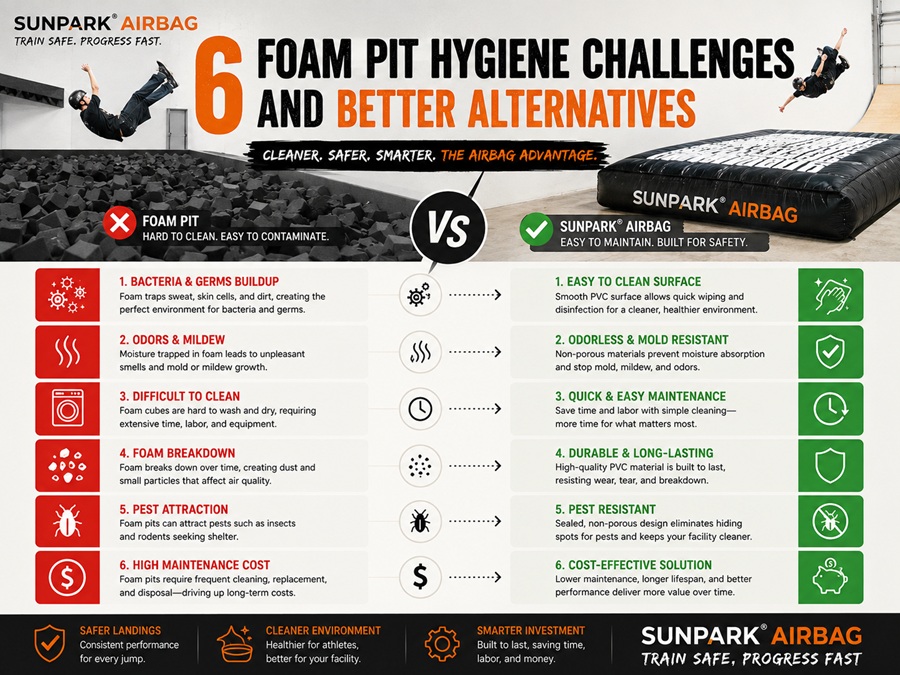
1. Bacterial and Viral Breeding Grounds
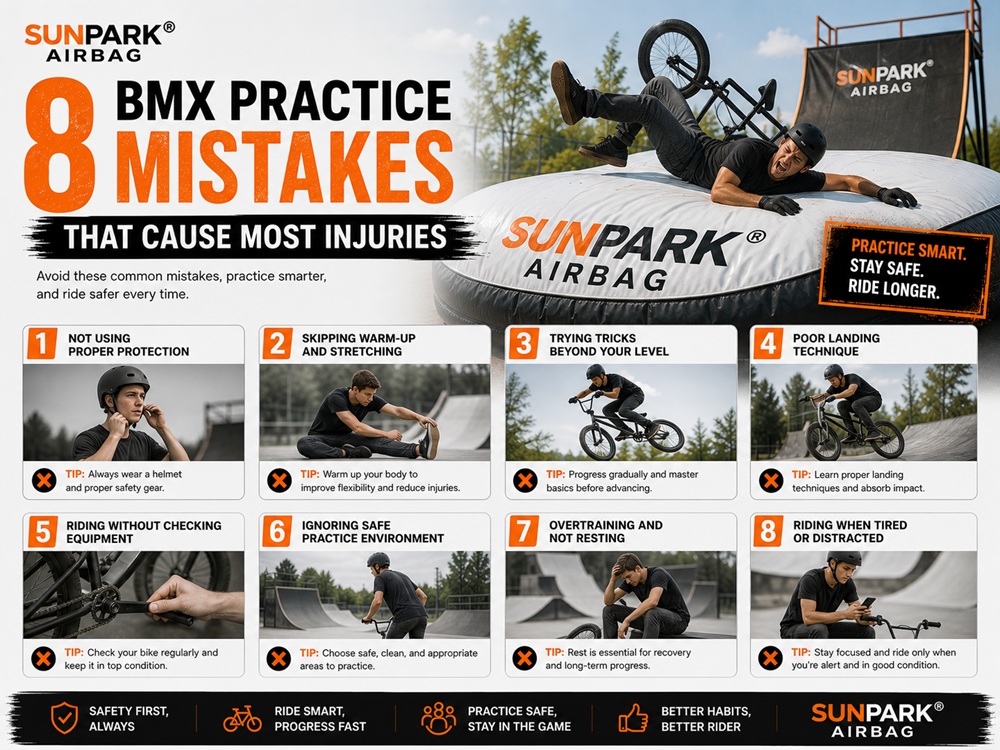
The most alarming of the Foam Pit Hygiene Challenges is the transmission of bacteria. Sweat and saliva deposit organic fuel for bacteria like Staphylococcus aureus (including MRSA) and various dermatophytes (fungi that cause ringworm). When users fall into the pit, their faces, eyes, and open cuts come into direct contact with blocks that have absorbed the sweat of thousands of previous users.
2. Toxic Dust and Particulate Inhalation
Polyurethane foam is not eternally stable. Through friction, UV exposure, and constant compression, the blocks physically break down, shedding microscopic dust particles. When a gymnast lands, a plume of this chemical dust is ejected into the air. Inhaling degraded polyurethane dust can cause respiratory irritation and exacerbate asthma in athletes.
3. Accumulation of Bodily Fluids
In heavy-duty applications like trampoline parks, the sheer volume of users guarantees the introduction of bodily fluids. Sweat is a daily occurrence, but accidents involving urine, vomit, and blood happen. In a foam pit, liquid immediately penetrates multiple blocks and sinks toward the bottom, making targeted cleanup impossible without emptying the entire pit.
4. Lost Items Becoming Biohazards
Foam pits are notorious for swallowing items. While lost phones and socks are a nuisance, used band-aids, hair ties, and sharp debris (like hairpins or jewelry) sink to the bottom. These items become festering biohazards that employees must wade through during the dreaded “pit fluffing” process.
5. The Impossibility of Deep Cleaning
To truly clean a foam pit, staff must remove every single block, vacuum the concrete floor, sanitize the base padding, inspect and treat thousands of individual blocks, and replace them. In most professional situations, this requires a full facility shutdown and intense manual labor. Spraying disinfectant over the top layer of foam is purely theatrical and does nothing to solve the underlying Foam Pit Hygiene Challenges.
6. Allergen and Mold Traps
Without proper ventilation at the base of the pit, humidity gets trapped. Over time, this moisture allows mold spores to colonize the bottom-tier foam blocks. This creates a severe allergen risk for users and a massive liability for facility owners.
Better Alternatives: The Rise of Airbag Systems
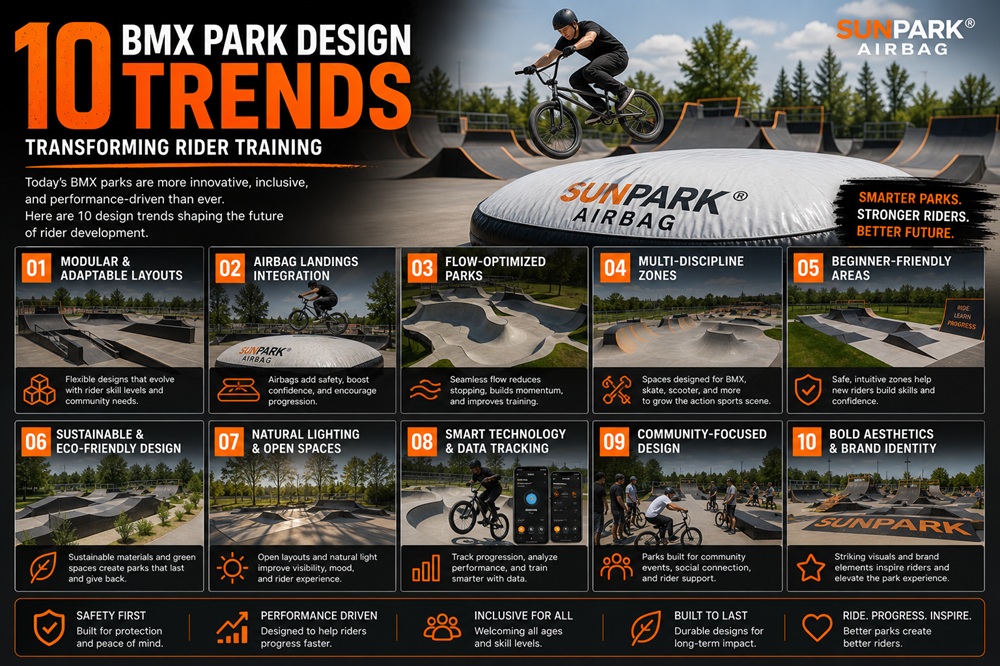
Given the insurmountable Foam Pit Hygiene Challenges, what is the alternative? SUNPARK® AIRBAG – Explorer of Airbag System for Sports. With over 10 years of experience, we provide freestyle airbags for ski resorts, theme parks, sports, and gymnastics facilities around the globe. SunparkAirbag® is the leading manufacturer of Airbags for Extreme Sports and Leisure Industries in China.
An inflatable airbag system replaces the thousands of foam blocks with a single, highly engineered, multi-chambered PVC air cushion. Modern airbags feature a smooth, non-porous topsheet that catches the athlete safely while completely sealing off the interior impact-absorption chambers.
Benefits of Upgrading to an Airbag
The operational benefits of ditching foam are transformative. First and foremost is the absolute resolution of hygiene issues. The vinyl topsheet of a gymnastics airbag equipment setup can be mopped, sprayed, and wiped down with standard virucidal cleaners in a matter of minutes. Blood, sweat, and spills sit on the surface, ready to be sanitized.
Furthermore, airbags do not degrade into toxic dust. They do not trap lost items, and they completely eliminate the labor-intensive requirement of “pit fluffing.” By reading a foam pit vs airbag comparison, facility owners quickly realize that the return on investment (ROI) is achieved rapidly through reduced labor and replacement costs.
Limitations of Traditional Foam Pits
Beyond hygiene, traditional foam is a severe fire hazard. Polyurethane is highly flammable, and even blocks treated with fire retardants lose their resistance over time as they turn to dust. Additionally, the constant need to buy replacement foam blocks—which compress and lose their safety rating every 12 to 24 months—makes the ongoing cost of ownership astronomically high.
Who Should Upgrade & Who Does Not Need To
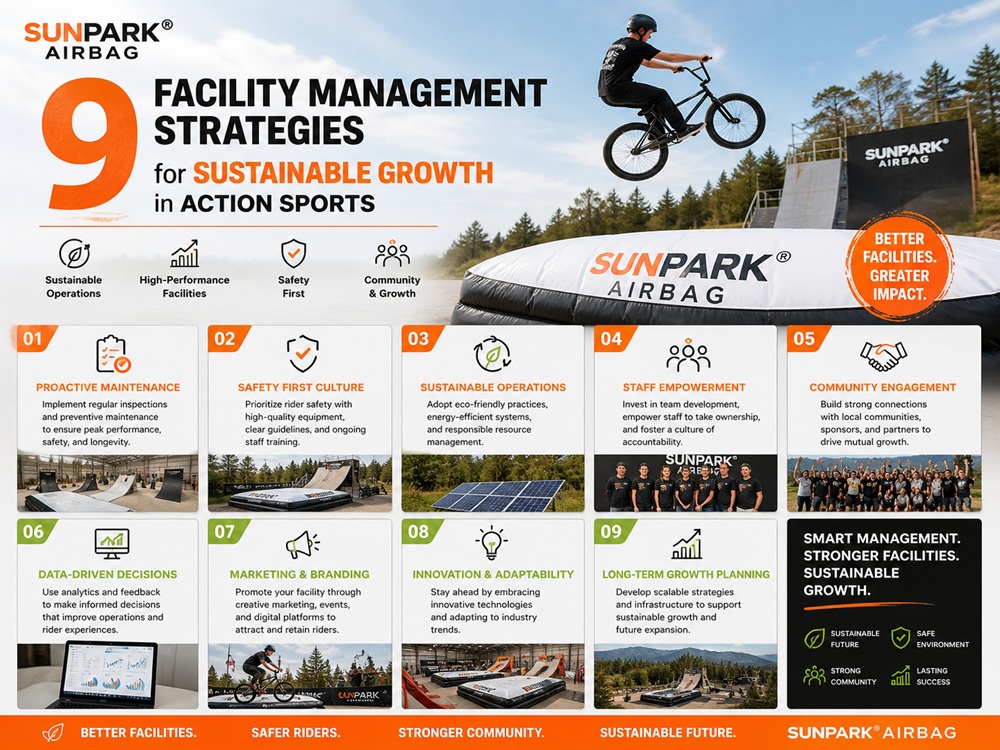
For commercial users: Any facility that charges admission—trampoline parks, ninja warrior courses, gymnastics academies, and ski resorts—must upgrade. Utilizing top trampoline park equipment manufacturers to retrofit your pits with airbags protects your brand reputation, lowers your insurance premiums, and guarantees a sanitary environment.
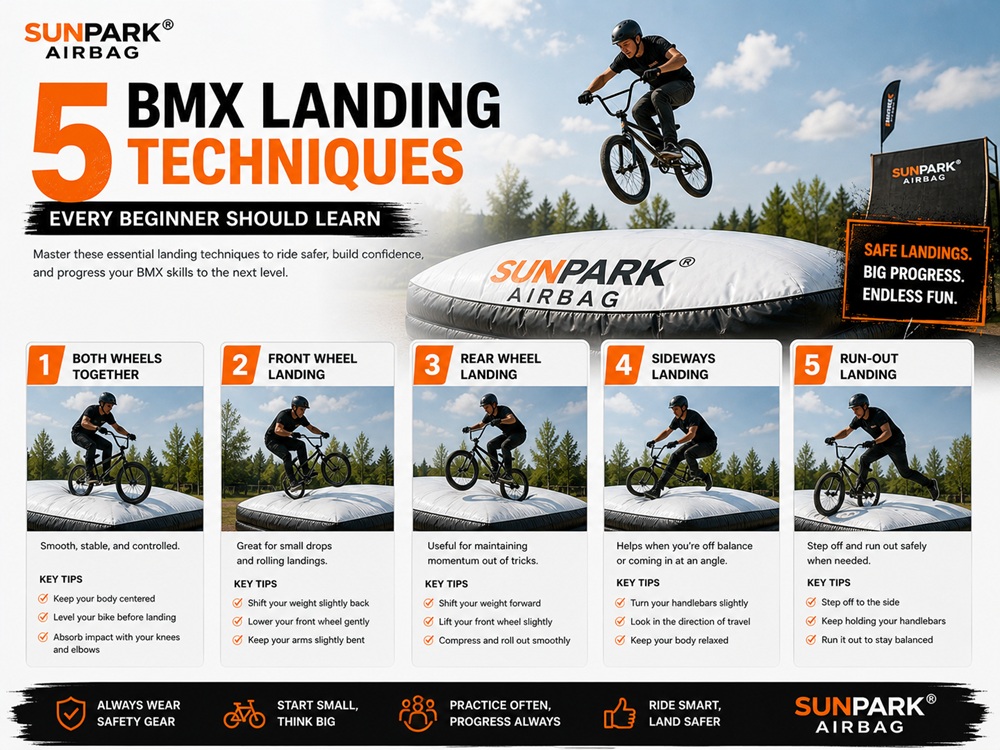
For heavy-duty applications: FMX riders, BMX professionals, and snowboarders require consistent, predictable landings. A stunt airbag landing pad provides adjustable firmness and eliminates the risk of a rider sinking deeply into a pit and striking a hidden concrete floor.
Who does not need it: For beginners putting a small, temporary crash pad in a residential basement for occasional toddler use, investing thousands in a commercial airbag might be overkill. Standard folding mats are sufficient.
Common Mistakes in Facility Maintenance
In our testing and consulting, the most common mistake facility owners make is attempting to “wash” foam blocks. Polyurethane foam takes weeks to dry internally; washing them guarantees catastrophic mold growth inside the block. Another mistake is simply throwing a mesh net over a degraded foam pit to contain the dust. This merely traps the bacteria closer to the surface and does not solve the core Foam Pit Hygiene Challenges.
Buying Considerations for a Replacement
When you decide it is actually worth upgrading to an inflatable crash mat or airbag, consider the blower noise, the durability of the topsheet (look for heavy-duty 0.55mm to 0.9mm PVC Tarpaulin), and the ability to customize the firmness. We recommend reviewing the best airbag landing systems 2026 to ensure you select a system with dual-chamber technology, which prevents the athlete from bottoming out.
| Hygiene Challenge | Impact on Facility | Airbag Solution |
|---|---|---|
| Bacterial Growth | Risk of MRSA/Ringworm outbreaks. | Non-porous vinyl topsheet easily disinfected daily. |
| Toxic Dust | Respiratory issues for athletes/staff. | No degrading polyurethane; zero dust generation. |
| Fluid Accumulation | Foul odors, localized biohazards. | Fluids pool on the surface for instant sanitization. |
| Lost Biohazardous Items | Hidden dangers (band-aids, sharps) at the pit bottom. | Flat topsheet; items remain clearly visible and retrievable. |
| Feature | Traditional Foam Pit | SUNPARK® AIRBAG System |
|---|---|---|
| Daily Cleaning Time | Impossible (Requires full shutdown) | 10 – 15 Minutes (Standard mop/spray) |
| Maintenance Labor | High (Weekly manual pit fluffing) | Zero (Self-inflates to consistent pressure) |
| Lifespan of Material | 1 – 2 Years (Blocks compress and crumble) | 5 – 10+ Years (Highly durable PVC construction) |
| Fire Safety Rating | High Risk (Highly combustible foam dust) | Excellent (Fire-retardant PVC materials) |
| Pros | Cons |
|---|---|
| Total elimination of Foam Pit Hygiene Challenges. | Higher initial upfront capital investment. |
| Massive reduction in ongoing maintenance labor costs. | Requires continuous electricity for the blower motors. |
| Adjustable firmness for different skill levels/sports. | Slight operational noise from inflation blowers. |
| Customizable branding on topsheets. | Top sheets require replacement every few years depending on wear. |
Expert Recommendation
The SUNPARK® AIRBAG Verdict
From our experience engineering extreme sports infrastructure for over a decade, we unequivocally state that traditional foam pits are obsolete for high-traffic commercial facilities. The liability and labor costs associated with Foam Pit Hygiene Challenges far outweigh the initial cost savings of buying cheap foam.
We recommend upgrading immediately to a dual-chamber airbag system. It provides a superior, more predictable landing trajectory for athletes while safeguarding their respiratory and dermatological health. The ROI on a SUNPARK® AIRBAG is typically realized within 18 to 24 months simply through the elimination of replacement foam purchases and weekly maintenance labor.
Frequently Asked Questions (FAQ)
Are foam pits actually dirty?
Yes, heavily used foam pits are notoriously unhygienic. Because open-cell foam cannot be properly washed or disinfected without growing mold, they accumulate dead skin, sweat, bacteria, and dust over time, presenting significant Foam Pit Hygiene Challenges.
How often should a trampoline park clean its foam pit?
Industry standards suggest totally emptying, vacuuming, and sanitizing the base of a foam pit every 3 to 6 months, while replacing degraded blocks. However, many facilities fail to meet this standard due to the immense labor involved, which is why upgrading to an easily cleanable airbag is recommended.
Can you spray disinfectant on foam blocks?
While you can spray the top layer, it is largely ineffective. Disinfectant only reaches the superficial blocks, leaving the thousands of blocks beneath it untouched. Furthermore, adding liquid to foam without proper drying time encourages fungal and mold growth deep within the pit.
Authoritative References & Standards
- Centers for Disease Control and Prevention (CDC) – Environmental Cleaning and Disinfecting for MRSA in Athletic Facilities.
- ASTM International – Standard Practice for Design, Manufacture, Installation, Operation, Maintenance, Inspection and Major Modification of Trampoline Courts (F2970-22).
- Environmental Protection Agency (EPA) – Guidelines on Indoor Air Quality (IAQ) and the mitigation of airborne particulate matter and volatile organic compounds (VOCs) in commercial spaces.