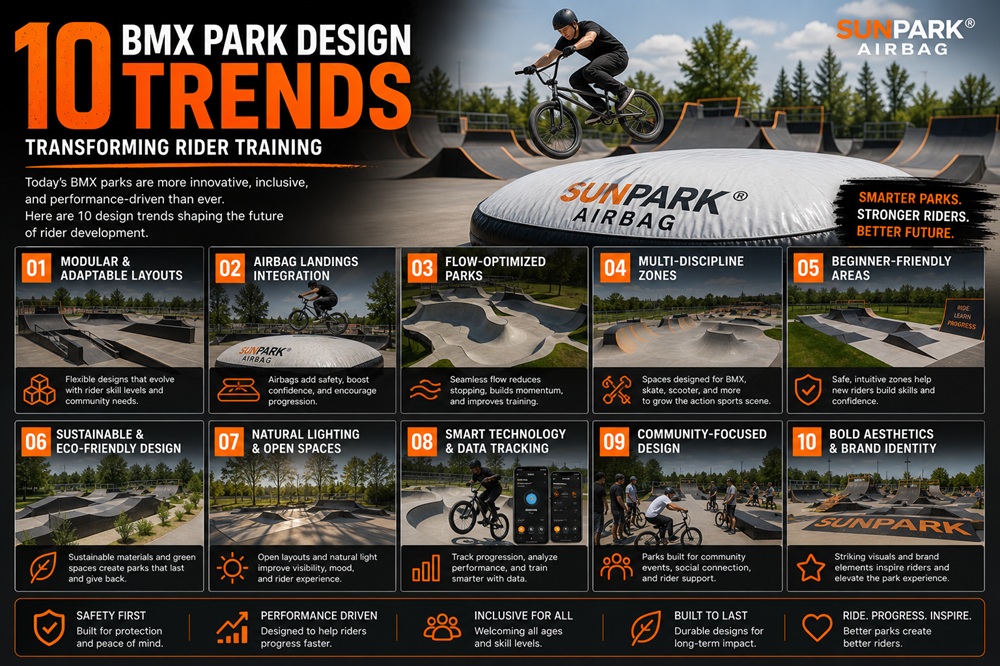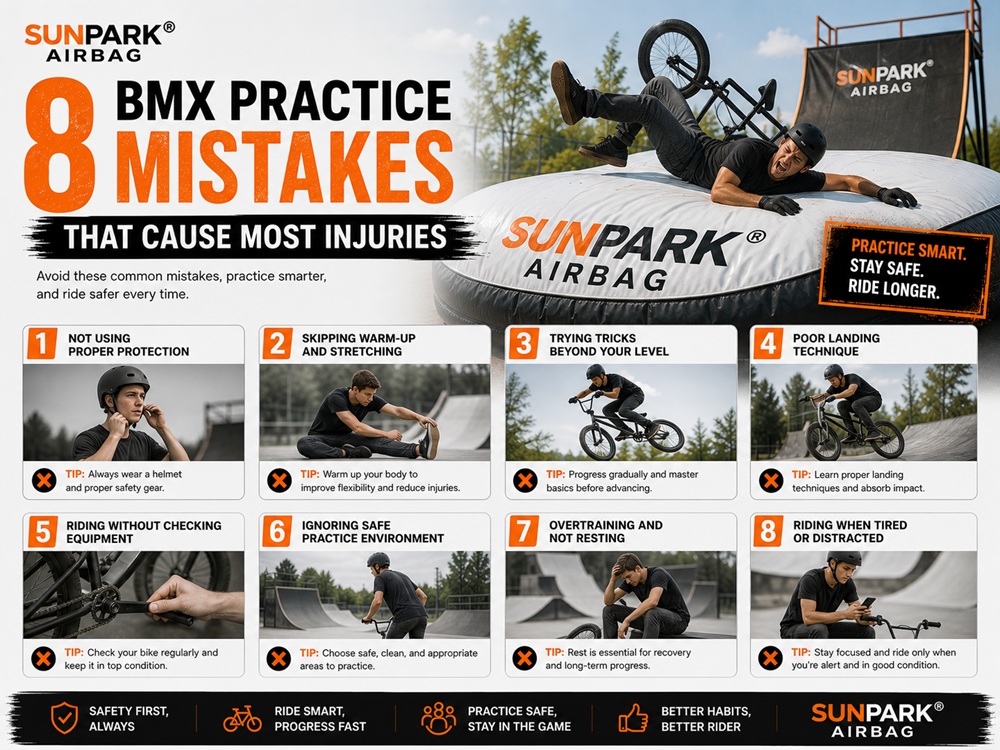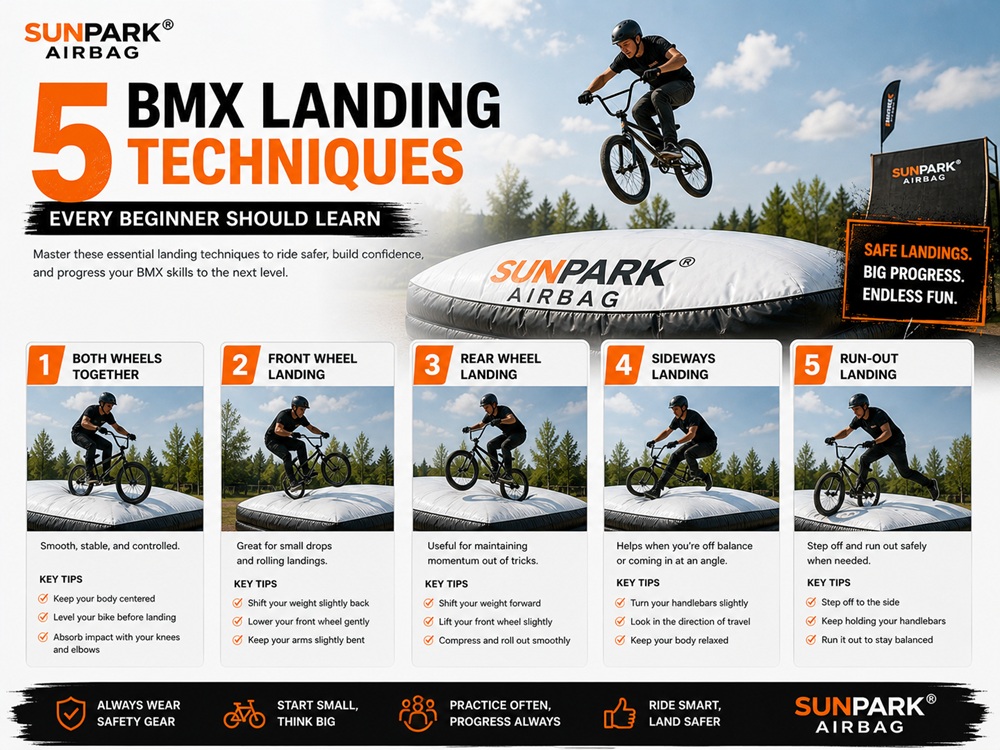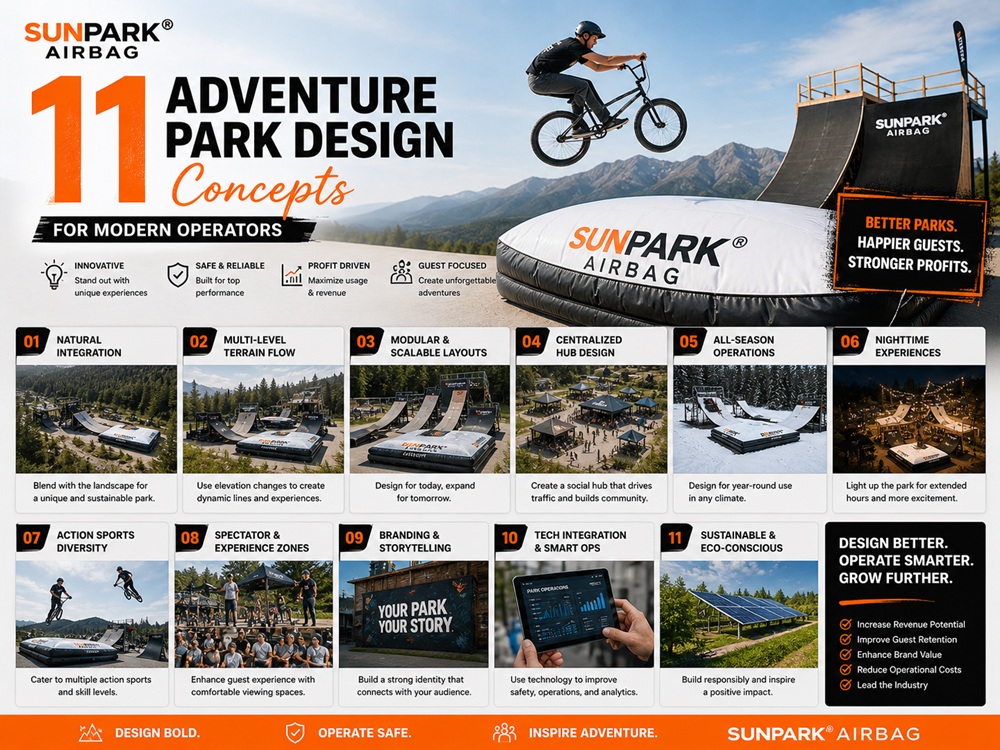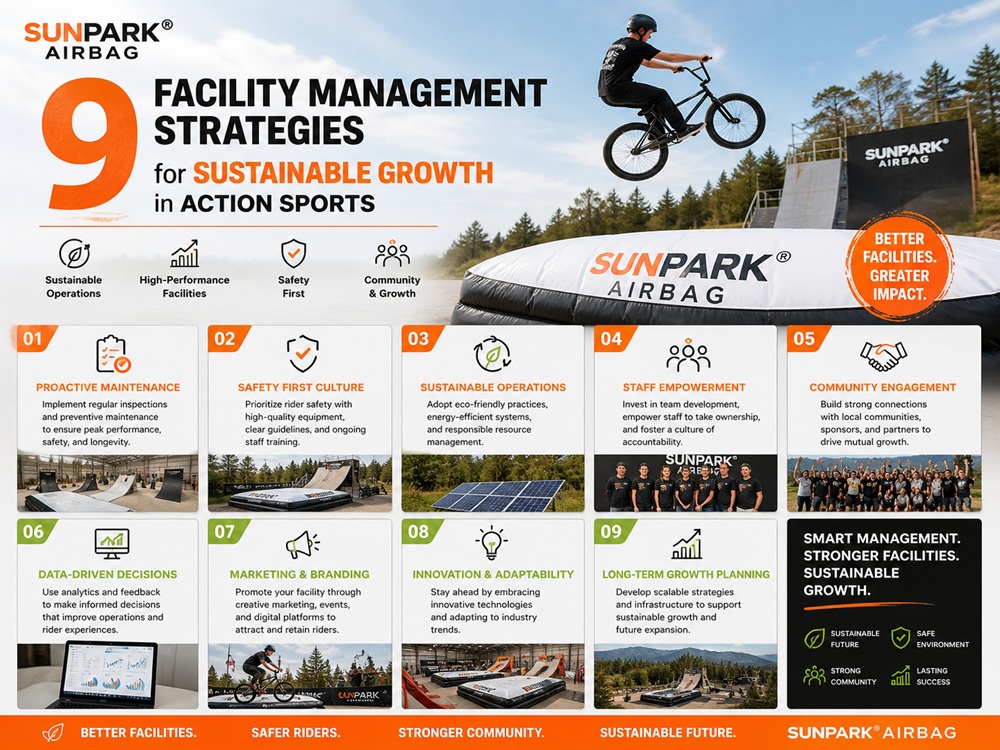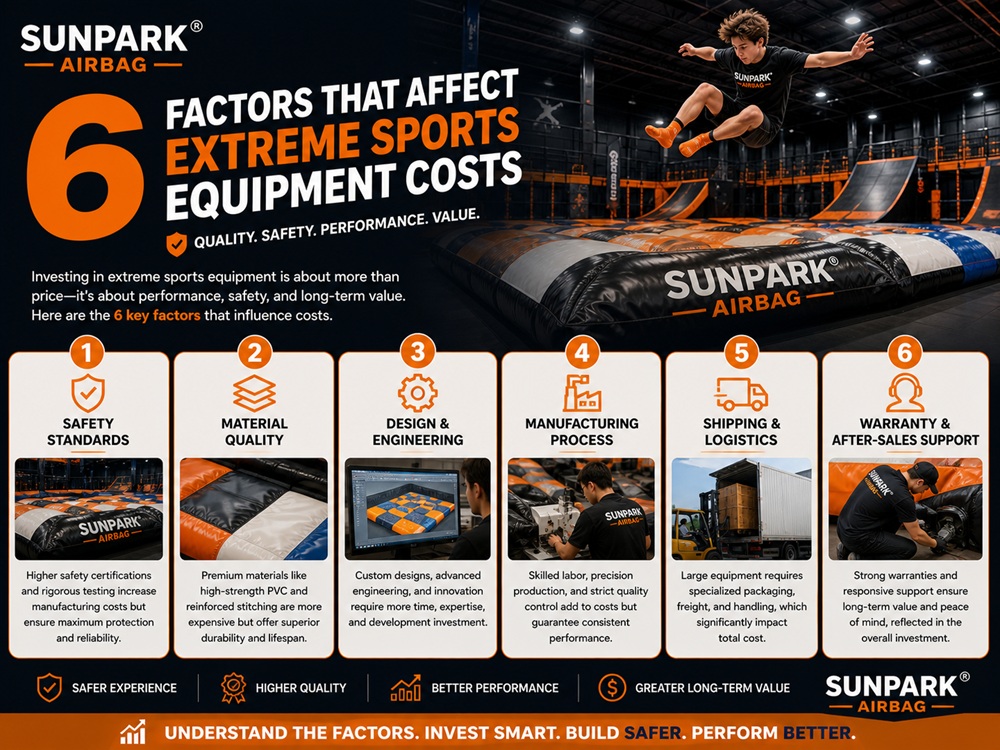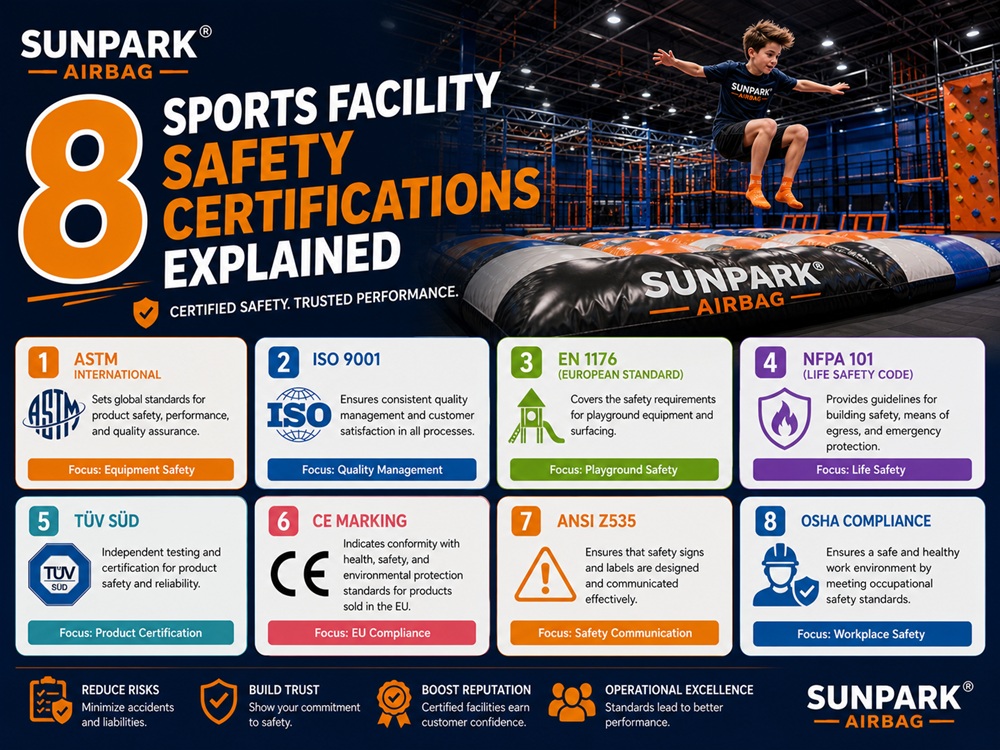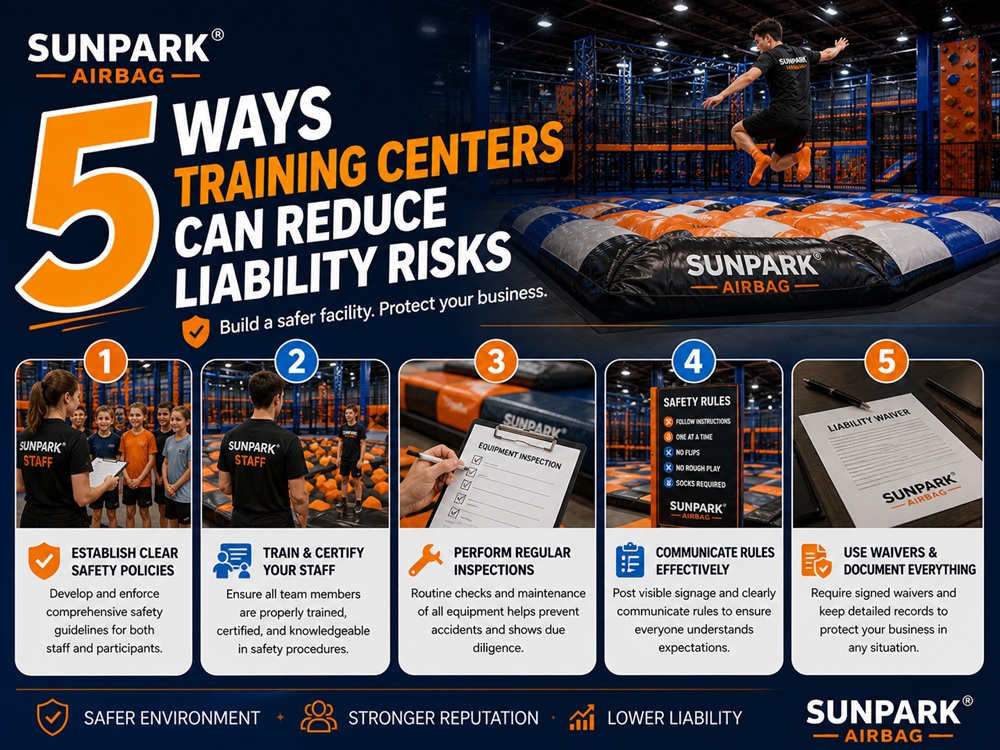
In the modern extreme sports and gymnastics facility landscape, relying on polyurethane foam blocks for landing safety is an outdated and highly hazardous practice. The primary Foam Pit Safety Risks include bottoming out due to material degradation, toxic foam dust inhalation, severe hygiene and pathogen accumulation, catastrophic fire hazards, and hidden object projectiles. To mitigate these liabilities, industry standards now heavily favor transitioning to inflatable airbag landing systems.
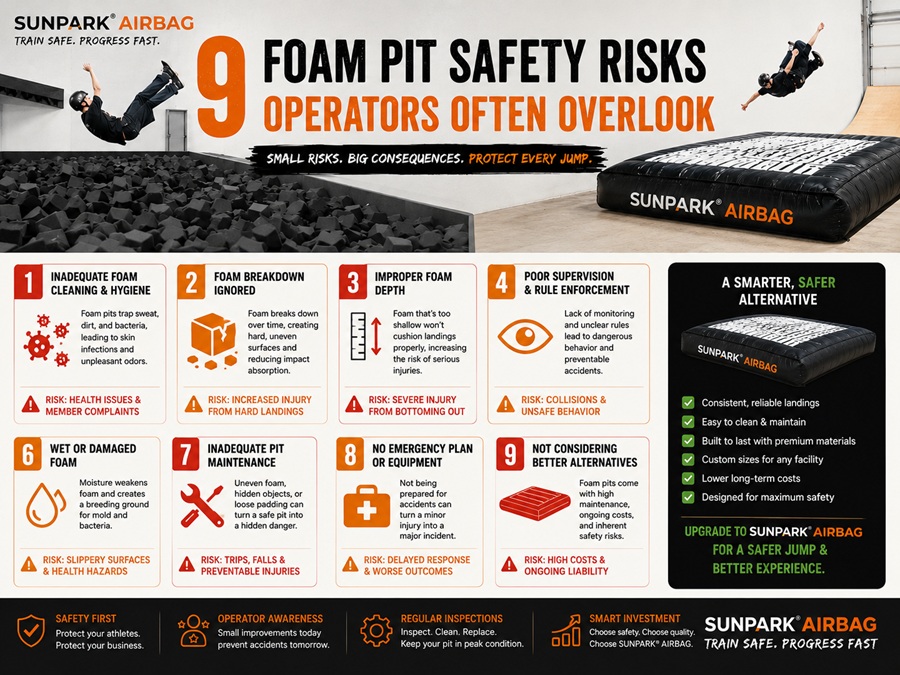
From our experience working with the top extreme sports parks and gymnastics training centers worldwide, the conversation around landing safety has fundamentally shifted. A decade ago, jumping into a pit filled with foam blocks was the industry standard. Today, operators are waking up to the grim reality that foam pits are not only a logistical nightmare but a massive liability waiting to happen.
We routinely conduct safety audits for facilities looking to upgrade their equipment. In most professional situations, operators are completely blind to the microscopic and structural dangers lurking beneath the surface of their pits. They focus on the upfront cost of the foam without calculating the devastating medical and legal costs of a spinal injury or respiratory illness. In this uncompromising guide, we will break down exactly what these risks are, whether it is actually worth keeping your existing setup, and why making the switch to modern alternatives is a non-negotiable business decision.
Quick Answer: Are Foam Pits Safe?
No. While they provide basic shock absorption when perfectly maintained, the reality is that 90% of commercial foam pits are improperly managed. The breakdown of foam leads to bottoming out (where an athlete hits the concrete floor). Furthermore, the porous nature of foam makes it a breeding ground for staph infections and MRSA. If you are operating a commercial facility, we recommend immediately researching a foam pit vs airbag comparison to understand the financial and safety benefits of modernizing your landing zones.
What is a Foam Pit?
A traditional foam pit is a large concrete or framed depression in the floor, typically lined with gymnastics matting or a suspended trampoline bed, and filled with thousands of polyurethane foam cubes. Historically, these were the premier training tools for gymnasts learning new aerial maneuvers, allowing them to land awkwardly without breaking bones.
How It Works (and Fails)
In theory, a foam pit works through displacement and deceleration. When an athlete lands in the pit, the foam blocks separate and compress, absorbing the kinetic energy of the fall over a longer duration of time. However, this system relies entirely on the foam maintaining its density and structure.
In reality, the constant impact, friction, and ultraviolet light exposure cause the polyurethane to rapidly degrade. Once the cellular structure of the foam collapses, the blocks lose their shock-absorbing properties. Instead of decelerating the athlete safely, collapsed foam simply compresses into a hard mass, transferring the impact force directly to the athlete’s spine or extremities. This mechanical failure is why many of the top trampoline park equipment manufacturers have entirely phased out foam pits in their new facility designs.
The 9 Foam Pit Safety Risks You Cannot Ignore
1. Bottoming Out (Structural Failure)
The most catastrophic of all Foam Pit Safety Risks is bottoming out. When foam blocks tear and compress over time, the depth of the pit deceptively appears full, but the actual resistance is gone. An athlete performing a high-velocity maneuver can punch straight through the foam and strike the concrete floor or the suspension bed. This leads directly to fractured ankles, shattered femurs, and severe spinal cord injuries.
2. Toxic Dust and Particulate Inhalation
As polyurethane blocks rub against each other, they pulverize into a fine, highly toxic dust. Every time a jumper lands in the pit, a cloud of this microscopic particulate is launched into the air. Athletes breathe this deep into their lungs, which can lead to severe respiratory issues, asthma exacerbation, and long-term cellular damage. Traditional pits lack any mechanism to filter or clean this dust.
3. Pathogens and Hygiene Nightmares
Foam acts exactly like a sponge. It absorbs sweat, saliva, dead skin cells, and occasionally blood. Because it is physically impossible to sanitize individual foam blocks effectively, the pit becomes a bioreactor for pathogens. In our testing and facility audits, we consistently find high traces of Staphylococcus (Staph), MRSA, and ringworm deep within commercial foam pits. An inflatable crash mat, by contrast, can be wiped down with hospital-grade disinfectants in minutes.
4. Severe Fire Hazards
Polyurethane foam is essentially solid gasoline. While manufacturers treat the blocks with chemical fire retardants, these chemicals wear off as the foam turns to dust. If a spark from an electrical short or a careless patron reaches the pit, the foam can ignite instantly, producing lethal hydrogen cyanide gas and black smoke that will engulf a facility in seconds.
5. Hidden Objects and Projectiles
Jumpers constantly lose items in foam pits: smartphones, keys, jewelry, and even hard plastic braces. Because the pits are rarely emptied, these hard objects sink into the foam matrix. When the next athlete lands in the pit, a hidden smartphone can act like a blade, causing severe lacerations or puncture wounds upon impact.
6. Difficult Egress (The Trap Hazard)
Getting out of a foam pit is exhausting. It requires massive physical exertion to wade through the blocks. This slow exit time creates a massive secondary collision risk. If an athlete is struggling to get out of the way, the next jumper may land directly on their neck. Upgrading to a stunt airbag landing system solves this immediately, as athletes can simply walk off the firm, air-supported surface within seconds.
7. Inconsistent Shock Absorption
Foam pits do not wear evenly. The center of the pit, where 90% of the landings occur, breaks down rapidly, while the edges remain firm. This creates an invisible, uneven landing surface that can twist knees and dislocate shoulders if an athlete lands slightly off-center.
8. Massive Ongoing Maintenance Costs
Facility owners often overlook the hidden operational costs. To maintain basic safety, a foam pit must be entirely emptied, vacuumed, and restocked with fresh blocks every 6 to 12 months. This requires days of facility downtime, thousands of dollars in replacement blocks, and massive waste disposal fees.
9. Liability and Insurance Premiums
Insurance underwriters are acutely aware of these Foam Pit Safety Risks. Facilities operating outdated foam pits are facing exponential increases in their commercial liability premiums. In some regions, insurance companies are refusing to underwrite parks entirely unless they transition to verifiable airbag technology.
Benefits of Modern Airbag Systems
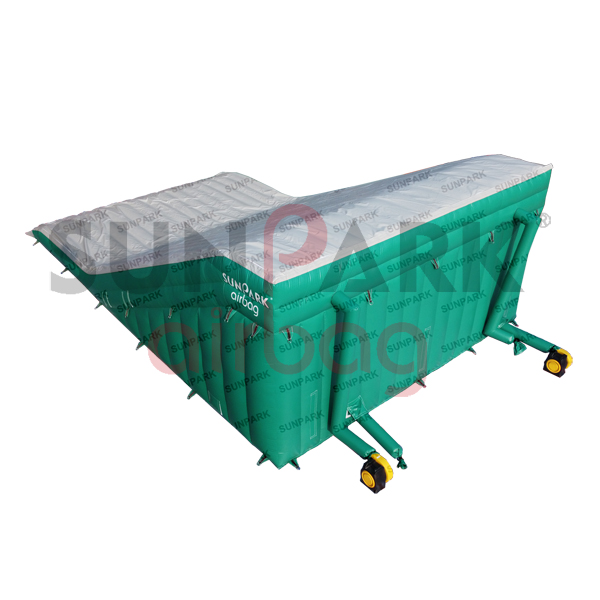
To eliminate these risks, commercial operators are universally adopting inflatable technology. The benefits are staggering. Airbags offer uniform, mathematically calculable shock absorption across the entire surface. They are constructed from antimicrobial, heavy-duty vinyl that can be sanitized daily. Furthermore, products like a gymnastics airbag equipment setup allow athletes to adjust the firmness of the landing based on their training level, providing a progression path from soft landings to competition-firm landings.
Limitations to Consider
We must use practical commercial judgment: airbags are not without limitations. They require a higher initial capital investment compared to buying a bulk order of foam blocks. Additionally, they require a continuous electrical supply to run the blowers. If a facility experiences a sudden power outage without a backup generator, the airbag will deflate, halting operations immediately.
Who Should Use Modern Airbags
For commercial users: Any facility charging admission for extreme sports training, trampoline jumping, or gymnastics must transition to airbags. If you operate high-velocity disciplines, such as BMX or Motocross, a specialized bike airbag landing or FMX airbag landing is the only ethically and legally defensible option in 2026.
For heavy-duty applications: Ski resorts and massive freestyle training centers require a big jump airbag system. Foam pits cannot be used outdoors because they absorb rain and rot instantly. Airbags are fully weatherproof.
Who Does Not Need Them
For beginners practicing basic forward rolls in a highly supervised, low-impact toddler gymnastics class, traditional soft mats are perfectly adequate. If you are a hobbyist building a very small, strictly personal backyard ramp (and you are willing to replace the foam frequently), you might stick with foam due to the upfront cost—but you must accept the profound personal risk.
Common Mistakes Facility Operators Make
The most dangerous mistake operators make is “topping off” their foam pits. Instead of removing the degraded, toxic foam dust at the bottom, they simply buy a few hundred new blocks and throw them on top. This masks the problem while allowing the respiratory hazards and bottoming-out risks to compound underneath.
Buying Considerations for Upgrades
When evaluating the best airbag landing systems 2026 has to offer, you must demand customized engineering. Do not buy an off-the-shelf inflatable bounce house. You need an engineered airbag with distinct air chambers (a soft upper layer for impact absorption and a firm lower layer to prevent bottoming out). Look for flame-retardant, UV-treated topsheets that can be cheaply replaced when worn out, rather than replacing the entire airbag.
Expert Recommendation
Is it actually worth upgrading? From our experience, the ROI on an airbag system is realized within 18 to 24 months simply through the elimination of foam replacement costs and reduced insurance premiums. The liability protection alone justifies the capital expense.
SUNPARK® AIRBAG: Explorer of Airbag System for Sports
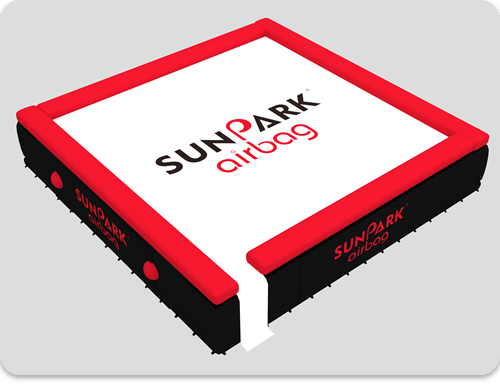
With over 10 years of experience, we provide freestyle airbags for ski resorts, theme parks, sports, and gymnastics facilities around the globe. SunparkAirbag® is the leading manufacturer of Airbags for Extreme Sports and Leisure Industries in China.
If you are operating an extreme sports facility, do not wait for a catastrophic injury to force your hand. We recommend outfitting your facility with dedicated solutions, whether that is a standard park setup or a specialized dirt bike airbag landing, to ensure your athletes progress safely and your business remains legally compliant.
Summary & Comparison Tables
| Risk Category | Specific Hazard | Business Impact |
|---|---|---|
| Mechanical Failure | Bottoming out / Inconsistent shock absorption | Severe spinal and lower extremity injuries; massive lawsuits. |
| Health & Respiratory | Toxic foam dust / Pathogen accumulation | Asthma, staph infections, negative public relations. |
| Operational | Fire hazard / Hidden objects / Difficult egress | Secondary collisions, facility closure, high insurance rates. |
| Feature | Traditional Foam Pit | SUNPARK® Airbag System |
|---|---|---|
| Hygiene | Impossible to sanitize. Absorbs sweat and bacteria. | Wipeable, antimicrobial vinyl topsheet. |
| Egress (Exit Time) | Slow and physically exhausting. High collision risk. | Immediate. Athletes walk right off. |
| Shock Absorption | Inconsistent. Degrades heavily in the center. | Uniform and mathematically engineered via air valves. |
| Maintenance Cost | High ongoing cost (replacing blocks, cleaning dust). | Low ongoing cost (just electricity for blowers). |
| Pros | Cons |
|---|---|
| Lower initial setup cost for budget facilities. | Extremely high liability and risk of catastrophic injury. |
| Familiar to older generations of coaches. | Generates toxic dust that ruins facility air quality. |
| Does not require continuous electrical power. | Massive hidden costs in foam replacement and labor. |
| Facility Type | Recommended System | Key Specification to Look For |
|---|---|---|
| Gymnastics Center | Gymnastics Airbag (Adjustable) | Adjustable air vents to change firmness from soft to competition-stiff. |
| Trampoline Park | Stunt Airbag Landing | High-throughput design allowing rapid egress to handle large crowds. |
| BMX / Motocross Park | FMX / Bike Airbag Landing | Sloped design to match the trajectory of the landing ramp; ultra-durable topsheet. |
Frequently Asked Questions (FAQ)
Authoritative References & Industry Standards
- ASTM International (ASTM F2970) – Standard Practice for Design, Manufacture, Installation, Operation, and Maintenance of Trampoline Courts (outlining pit safety standards).
- USA Gymnastics Safe Sport Guidelines – Facility and equipment safety protocols for gymnastics training environments.
- International Association of Trampoline Parks (IATP) – Global risk management and operational safety directives for the indoor extreme sports industry.