Action sports demand a massive level of respect for physics. Whether you are on a snowboard, skis, BMX bike, or skateboard, the terrain park is an unforgiving environment. From our experience outfitting the world’s top ski resorts and extreme sports facilities at SUNPARK® AIRBAG, we witness a daily disconnect between a rider’s ambition and their actual skill level. This gap in judgment leads to catastrophic injuries that could easily be avoided by adhering to fundamental Terrain Park Safety Rules.
We take a definitive stance on this: safety is not a passive concept; it is an active discipline. Terrain Park Safety Rules are not polite suggestions formulated by lawyers to ruin your session. They are strict operational protocols designed to keep you out of the hospital and keep the park open for everyone else. In this uncompromising guide, we will break down the essential protocols, explain the mechanics of safe progression, and detail how commercial park operators are upgrading their infrastructure to mitigate risk.
Quick Answer: The 5 Essential Terrain Park Safety Rules
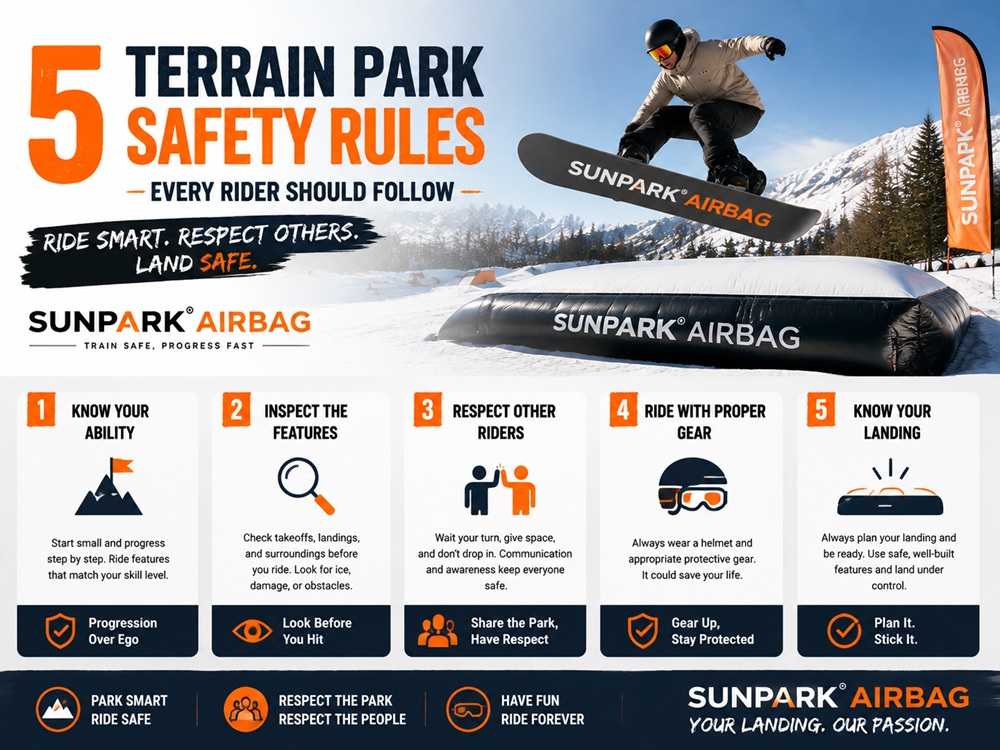
The industry standard for Terrain Park Safety Rules is defined by the acronym SMART. If you want to survive your session and progress your skills, you must follow these five directives: 1) Start Small by working your way up from beginner features. 2) Make a Plan for every feature you hit—know your speed and trajectory. 3) Always Look Before You Leap to ensure the landing zone is completely clear. 4) Respect Gets Respect by communicating with other riders and waiting your turn. 5) Take it Easy by knowing your physical limits and recognizing when snow or weather conditions deteriorate. If you are learning new inversions or aggressive spins, we mandate utilizing professional safety infrastructure like a big jump airbag system before taking the trick to hardpack snow or dirt.
What Are Terrain Park Safety Rules?
Terrain Park Safety Rules are a universal code of conduct and risk management adopted by action sports facilities worldwide. The most recognized framework is the “Park SMART” program, developed by ski area associations to create a standardized vocabulary for safety. These rules govern how riders interact with artificial features (jumps, rails, boxes, halfpipes) and how they interact with each other in high-traffic zones.
These rules exist because terrain parks are dynamic environments. A 60-foot kicker does not care about your ego. If you fail to clear the knuckle (the flat top part of the jump before the landing ramp), the impact forces can exceed what the human skeletal system can withstand. Terrain Park Safety Rules dictate the systematic approach required to calculate speed, assess feature transitions, and execute tricks without endangering yourself or the rider dropping in behind you.
How Safe Park Progression Works
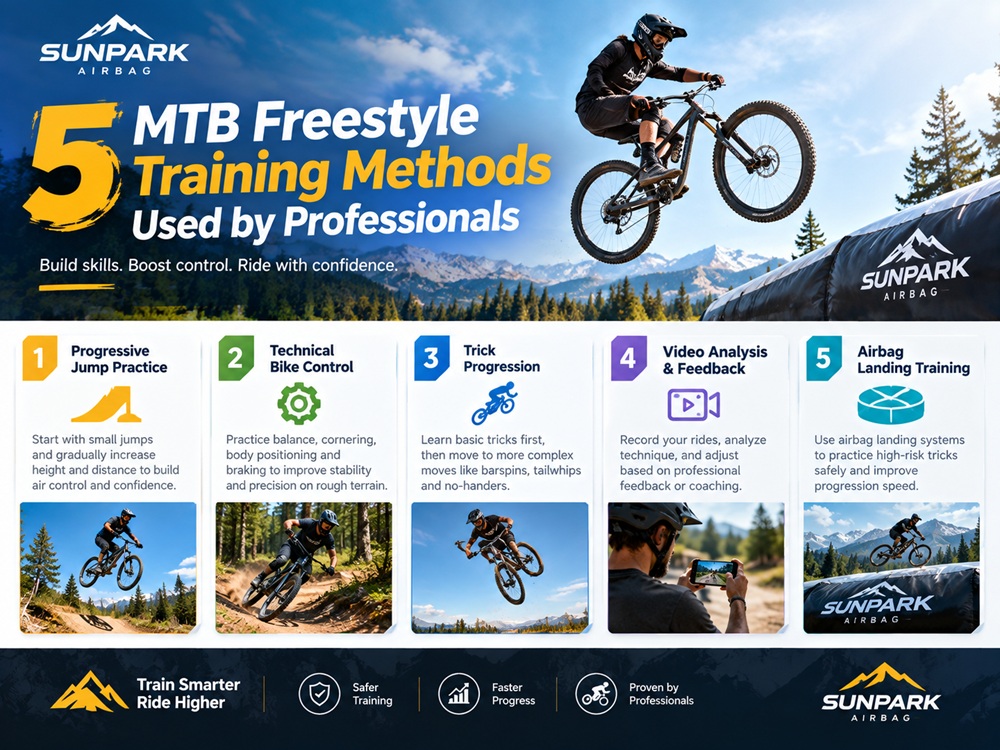
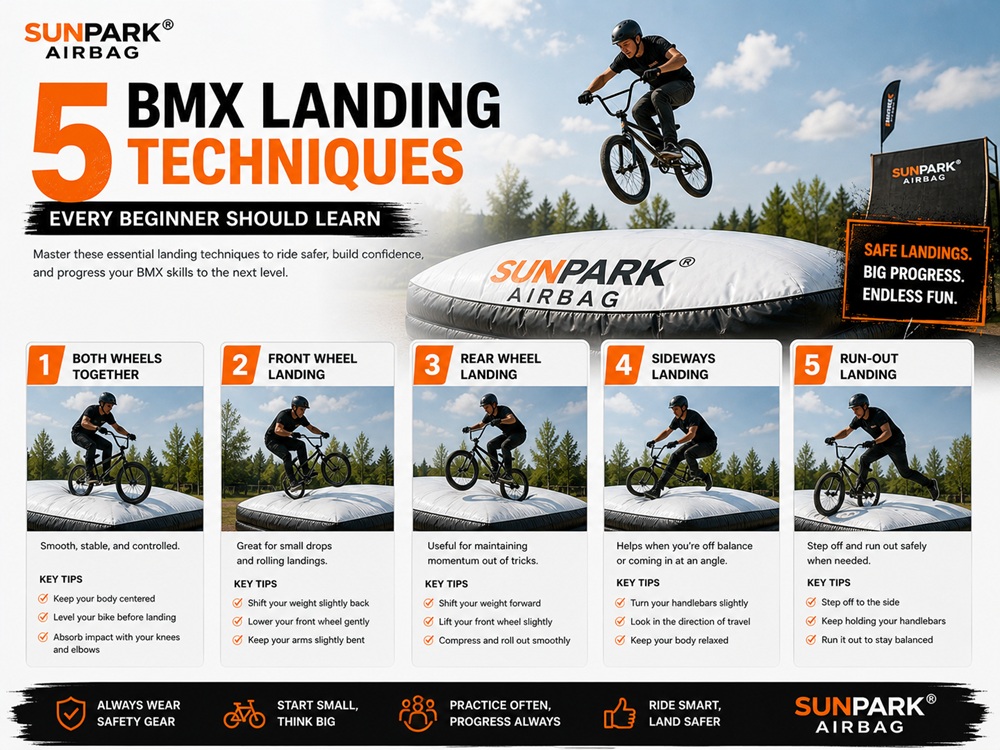
In most professional situations, progression is a mathematical equation, not a leap of faith. Safe park progression works by isolating variables. You do not learn a double backflip by throwing yourself off a snow jump and hoping for the best. You learn the rotation on a trampoline, you take it to a specialized stunt airbag landing, you perfect the landing gear, and only then do you attempt it on snow or dirt.
The rules facilitate this process. By “starting small,” you learn how your snowboard, skis, or bike reacts to different lip angles. By “making a plan,” you calculate the exact speed required to clear the deck without overshooting the sweet spot of the landing transition. Progression works by removing the guesswork from extreme sports.
The 5 Core Terrain Park Safety Rules
1. Start Small (Work Your Way Up)
We recommend entirely ignoring peer pressure. If it is your first day in the park, stay in the extra-small or small progression zones. Master riding straight over 5-foot rollers before you attempt a 20-foot table. Learning edge control on a wide, flat box is a prerequisite before stepping up to a round, urban-style down rail. Skipping steps in progression guarantees injury.
2. Make a Plan (Visualize the Line)
Never ride blindly into a feature. You must have a distinct plan for every single jump or rail you approach. Are you spinning frontside or backside? Are you sliding a rail 50-50 or boardslide? What is your exit strategy if you come in too hot? “Sending it” without a plan is a hallmark of amateur riding.
3. Always Look Before You Leap (Clear the Landing)
This is the most critical of the Terrain Park Safety Rules for preventing multi-person collisions. Before you drop in, you must verify that the landing zone is completely clear. If you cannot see the landing from the drop-in point, rely on park spotters or wait until you see the previous rider ride away. Never assume a blind landing is empty.
4. Respect Gets Respect (Park Etiquette)
The terrain park is a shared community asset. Do not cut people off in the drop-in line (snaking). Call your drop. If you fall, get out of the landing zone immediately. Do not sit on the knuckles of jumps to take photos. Respect the park staff and the shaping crew who maintain the lips and landings.
5. Take it Easy (Know Your Limits and Conditions)
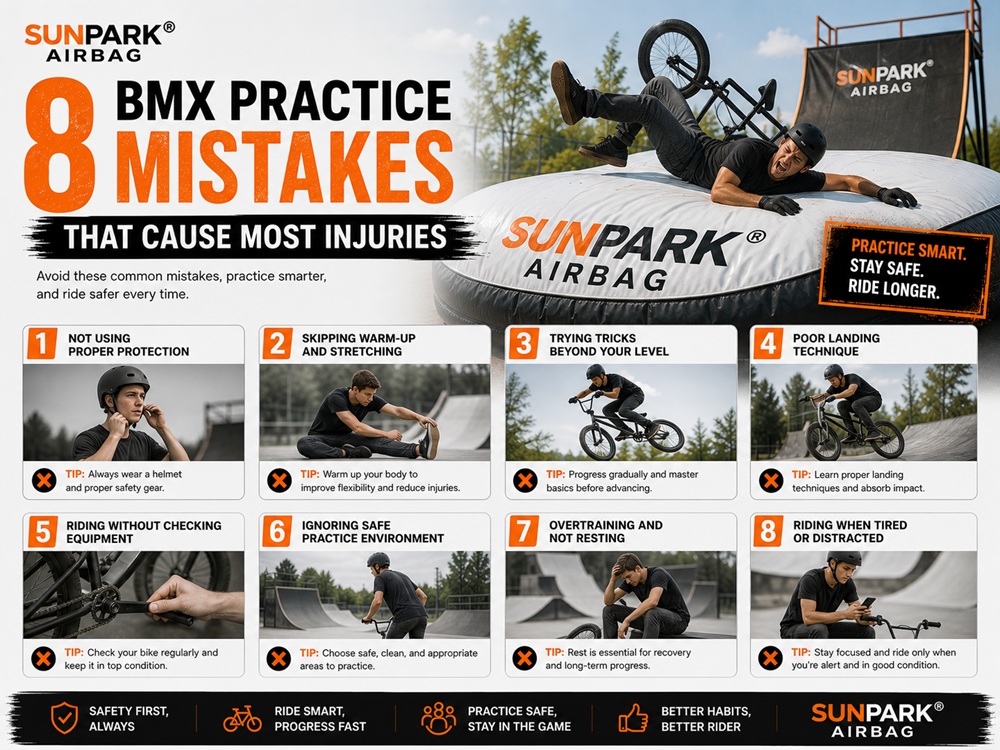
Park riding is physically exhausting. In our testing and observation of injury metrics, the vast majority of catastrophic crashes happen during the last run of the day when riders are fatigued. Furthermore, snow and dirt conditions change rapidly. A jump that required zero speed checks at 10 AM might be icy and dangerously fast by 3 PM. Read the environment.
Quick Summary Table: Terrain Park Safety Rules
| The Rule (SMART) | Action Required | Consequence of Ignoring |
|---|---|---|
| Start Small | Begin on beginner features to build foundational muscle memory. | Severe impact injuries from lacking the skill to manage large feature physics. |
| Make a Plan | Visualize your trick, speed, and trajectory before dropping in. | Washing out, catching edges, or panicking mid-air. |
| Always Look | Ensure the landing is 100% clear of downed riders or debris. | High-speed collisions resulting in trauma for both riders. |
| Respect | Communicate your drop, do not snake, clear landings immediately. | Park altercations, revoked passes, creating a toxic park culture. |
| Take it Easy | Stop riding when fatigued; adjust speed based on changing weather. | Sloppy execution leading to blown ACLs or concussions. |
The Benefits of Strict Compliance
Following Terrain Park Safety Rules yields massive dividends for your riding career. First, it ensures longevity. By minimizing acute trauma, you can ride for decades rather than burning out your knees in your early twenties. Second, a disciplined approach actually accelerates trick acquisition. When you remove the anxiety of blind landings or unexpected speed variations, your brain can fully focus on the complex biomechanics of the trick you are attempting.
Limitations of Rule-Based Safety
We must apply commercial and practical judgment here: rules do not eliminate gravity. Even if you follow every single one of the Terrain Park Safety Rules flawlessly, extreme sports possess inherent, unavoidable risk. Catching an edge on the lip of a jump or suffering an equipment failure mid-air will result in a crash. Rules mitigate risk; they do not eradicate it. This is precisely why modern progression relies heavily on forgiving infrastructure rather than just behavioral guidelines.
Comparison Table: Traditional vs. Modern Progression
| Feature | Traditional Snow/Dirt Progression | Modern Airbag Progression |
|---|---|---|
| Landing Surface | Hardpack snow, ice, or compacted dirt. | Shock-absorbing, multi-chambered inflatable PVC. |
| Error Forgiveness | Zero. Under-rotations lead to immediate trauma. | High. Safely absorbs crashes from off-axis mistakes. |
| Repetition Rate | Low. Fatigue and pain limit attempts. | High. Riders can attempt 50+ jumps in a session safely. |
| Best Use Case | Dialed tricks, competition runs. | Learning new inversions, pushing personal limits. |
Who Should Use Terrain Parks
For beginners to pros: Anyone looking to elevate their board, ski, or bike control skills. However, we mandate that absolute beginners must be able to confidently control their speed and carve on standard slopes or trails before ever entering a park boundary. Terrain parks are for applying existing control to artificial features, not for learning basic edge control.
Who Does Not Need Terrain Parks
Freeride purists, backcountry explorers, and casual groomer cruisers do not need to enter the terrain park. However, the spatial awareness and defensive riding strategies taught by Terrain Park Safety Rules are highly applicable to dodging out-of-control skiers on crowded holiday weekends.
Common Mistakes Riders Make
From our experience auditing safety protocols at action sports centers, the most dangerous mistake riders make is blindly following a better rider’s speed. Because heavier riders or riders with freshly waxed equipment carry speed differently, “speed matching” often leads a lighter rider to either case the knuckle or drastically overshoot the landing. You must perform your own speed checks.
Another frequent error is stopping in blind spots. If you fall, you have three seconds to assess your bodily integrity and crawl to the side of the landing. Sitting in the center of a landing zone to complain about a bruised tailbone puts you directly in the crosshairs of a rider flying through the air at 40 miles per hour.
Pros and Cons Table: Enforcing Park Rules
| Pros of Strict Rule Enforcement | Cons (Perceived) of Strict Rule Enforcement |
|---|---|
| Drastically reduces medical evacuations and liability. | Requires active policing by park rangers/staff. |
| Creates a welcoming environment for younger riders. | Can feel restrictive to reckless “old school” riders. |
| Improves the flow and efficiency of feature usage. | May require closing features if conditions are too dangerous. |
Buying Considerations for Commercial Operators
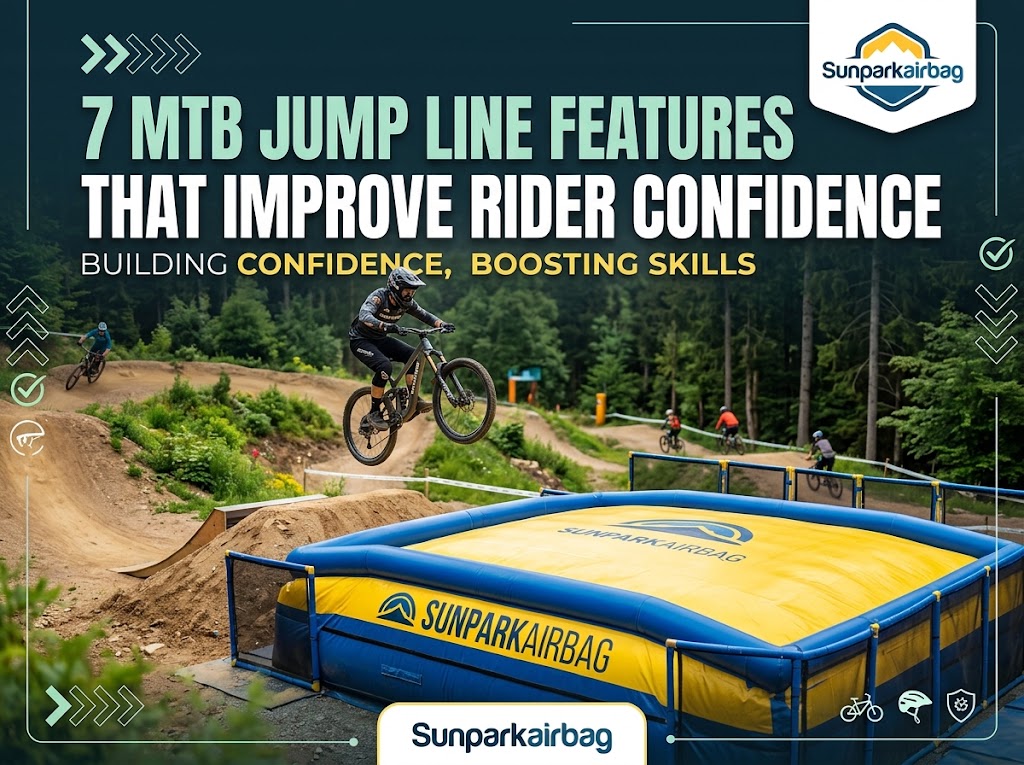
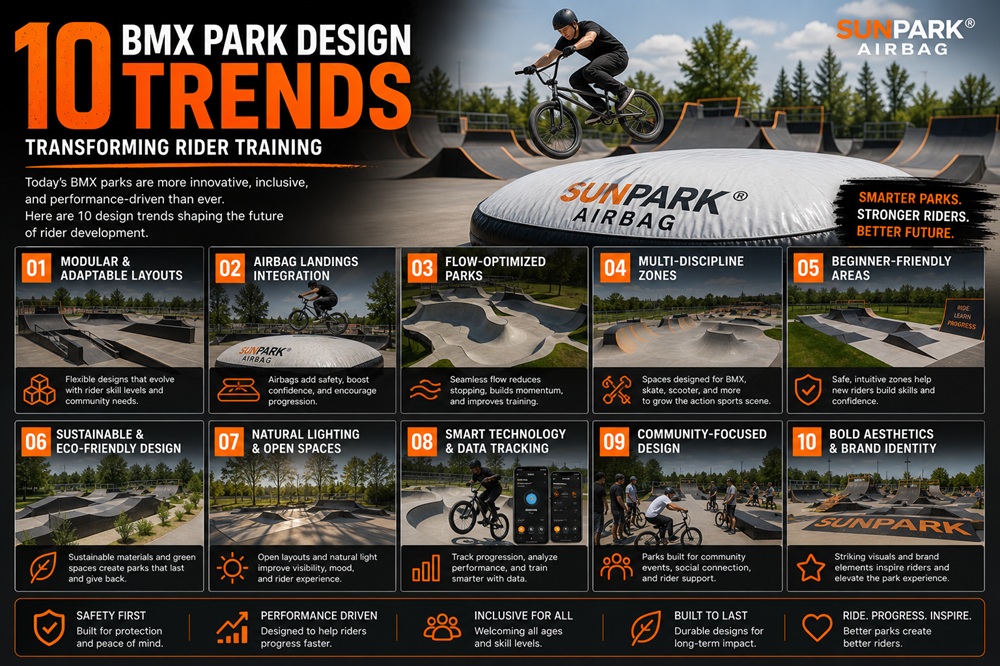
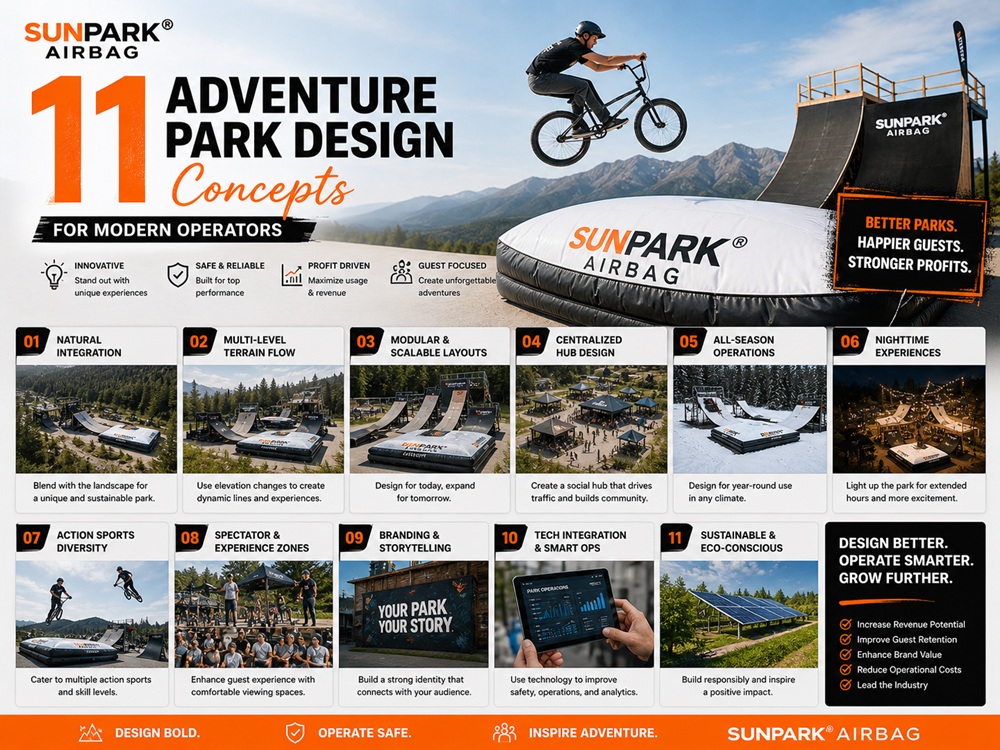
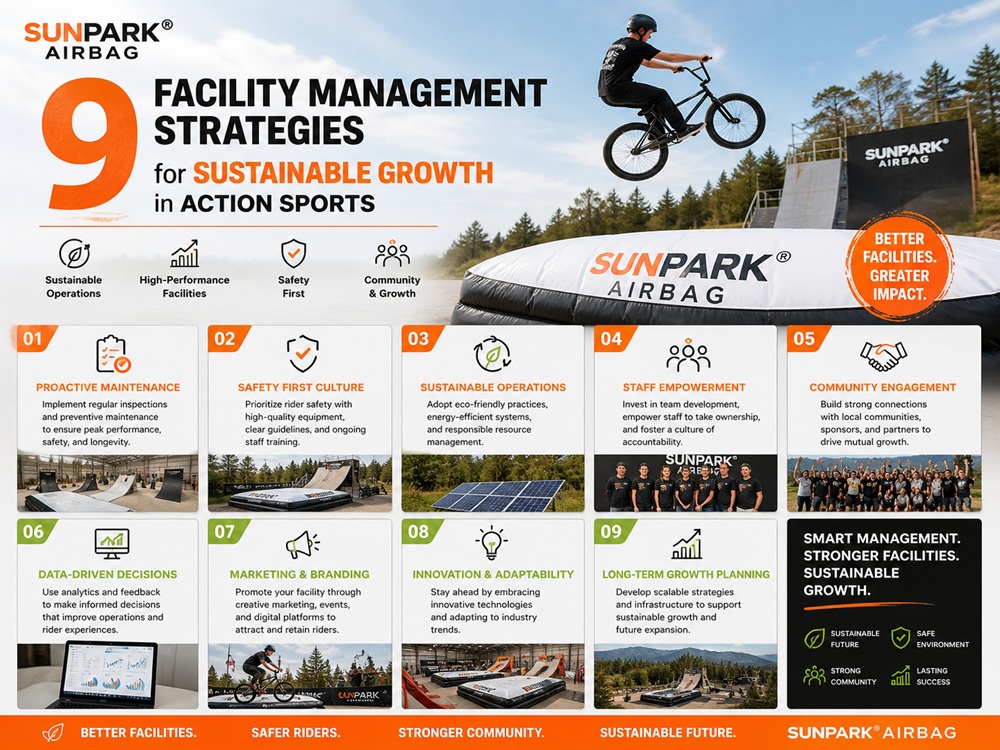
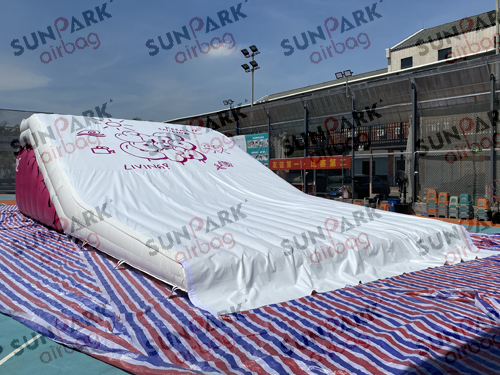
For commercial users running ski resorts, bike parks, or gymnastics centers, enforcing Terrain Park Safety Rules is only half the battle. You must provide the physical infrastructure that allows riders to fail safely. Decades ago, foam pits were the standard. Today, evaluating the foam pit vs airbag comparison proves that airbags are vastly superior.
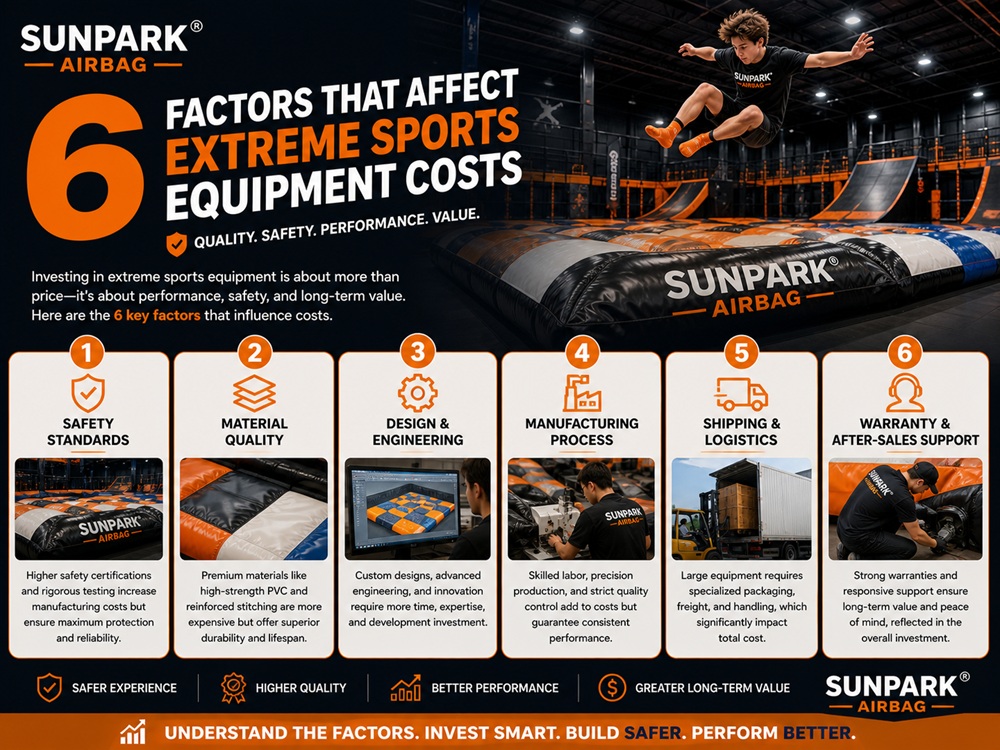
Foam pits become unsanitary, pose severe fire hazards, and require exhaustive labor to extract riders. For heavy-duty applications, a modern FMX airbag landing allows a 250-pound dirt bike to land, roll away, and clear the zone in seconds. When upgrading your facility, you must source equipment from top-tier trampoline park equipment manufacturers who specialize in custom-angled, multi-chamber safety bladders.
Infrastructure Buying Guide Table
| Safety Equipment | Primary Application | Crucial Buying Consideration |
|---|---|---|
| Flat Stunt Airbags | Gymnastics, trampoline dismounts, low-altitude drops. | Must feature pressure-release valves to prevent harsh rebounding. |
| Angled Landing Airbags | Snowboard, Ski, and bike airbag landing progression. | Top-sheet durability against sharp metal edges and bike pedals. |
| FMX Airbags | Heavy motorized vehicle jumping. | Extreme reinforcement and specialized blower arrays to sustain heavy impacts. |
Expert Recommendation
At SUNPARK® AIRBAG, we have spent over a decade engineering the exact systems that make extreme sports viable. While we demand that every rider memorize and execute the Terrain Park Safety Rules, we also know that human error is inevitable. We recommend that all riders actively seek out facilities equipped with best airbag landing systems 2026 before taking new, high-consequence tricks to hard snow or dirt. For facility operators looking to lower insurance premiums and increase customer satisfaction, replacing outdated, dangerous foam pits with our custom-engineered inflatable crash mats is the most prudent commercial decision you can make.
Frequently Asked Questions (FAQ)
Authoritative References & Industry Standards
To ensure our safety protocols align with the highest global standards, we reference data and guidelines from the following authoritative organizations:
- National Ski Areas Association (NSAA): The creators of the Park SMART program, setting the operational and educational standards for freestyle terrain safety across North American resorts. Visit NSAA
- U.S. Consumer Product Safety Commission (CPSC): Providing rigorous, data-driven guidelines on helmet safety efficacy and impact protection standards for action sports. Visit CPSC
- American Journal of Sports Medicine: Publishing peer-reviewed academic research detailing the epidemiology of extreme sports injuries and the biomechanical effectiveness of modern progression infrastructure. Visit AJSM