The backcountry offers unmatched freedom, pristine powder, and zero lift lines. It also carries the inherent, unpredictable risk of avalanches. As more winter athletes push beyond the boundary ropes, a critical question dominates the safety conversation: are avalanche airbags effective for skiers?
From our experience in the extreme sports safety industry, analyzing impact mechanics, kinetic energy, and pneumatic deployment systems daily, we do not take safety equipment lightly. An avalanche airbag is a wearable backpack system designed to keep a skier near the surface of moving avalanche debris. But in the real world, is it actually worth buying, or does it simply provide a false sense of security?
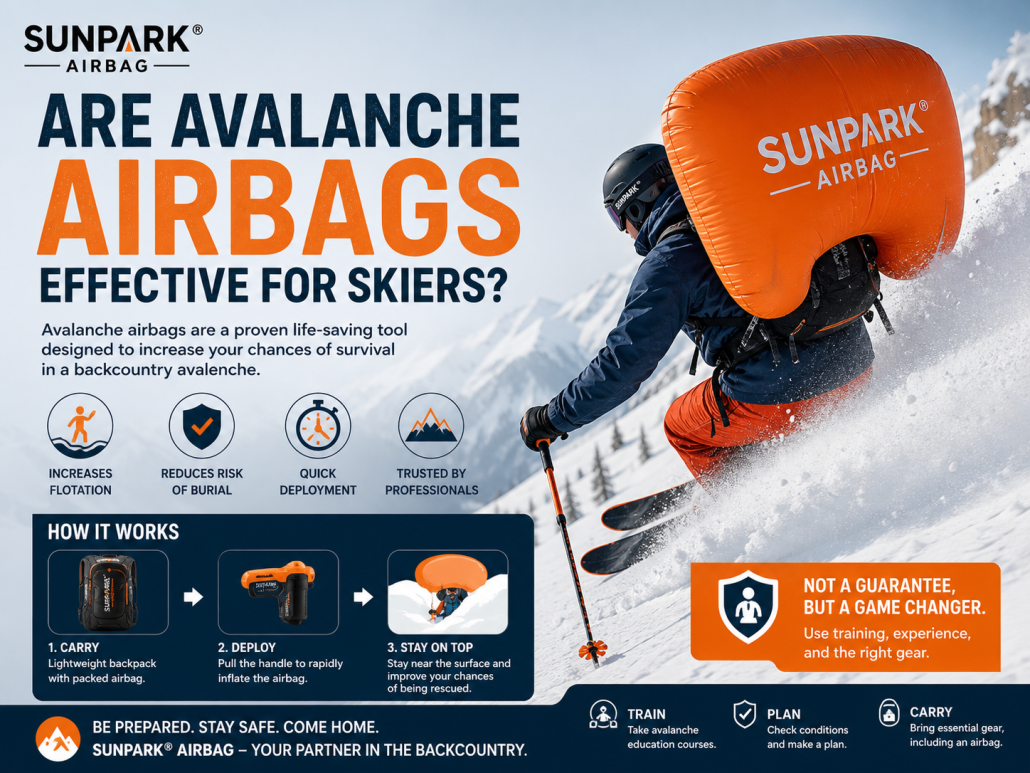
In this comprehensive guide, we will cut through the marketing noise. We will evaluate whether avalanche airbags are effective for skiers, examine the undeniable limitations of the technology, and provide commercial judgment to help you decide if upgrading your backcountry kit is the right decision.
Quick Answer
Yes, avalanche airbags are highly effective for skiers and snowboarders. Statistical data shows that deploying an avalanche airbag reduces the mortality rate in critical avalanche involvements from roughly 22 percent to 11 percent. They work based on the principle of inverse segregation, forcing larger volume objects to the surface of moving debris. However, they do not prevent trauma from hitting trees or rocks, nor do they guarantee survival in terrain traps. We strongly recommend an avalanche airbag as a mandatory addition to your beacon, shovel, and probe for serious backcountry travel.
1. Direct Answer & Quick Summary
To answer the search intent directly: avalanche airbags are unequivocally effective, but they are not a substitute for avalanche education and safe terrain choice. In most professional situations, mountain guides and avalanche forecasters consider them standard operational equipment. By increasing your overall volume, the airbag drastically increases your chances of ending up on top of the snowpack rather than buried beneath it.
| Feature | Detail & Specification |
|---|---|
| Core Function | Keeps the victim near the surface of avalanche debris. |
| Scientific Principle | Inverse Segregation (The Brazil Nut Effect). |
| Mortality Reduction | Reduces fatality rate from approximately 22% to 11%. |
| Deployment Method | Manual trigger pull (mechanical cable or electronic switch). |
| Average Cost | $600 to $1,500+ (depending on canister vs. electronic system). |
2. What It Is and How It Works
An avalanche airbag is an inflatable balloon system packed into a specialized skiing backpack. When a skier identifies that an avalanche has broken, they pull a trigger handle located on the shoulder strap. Within three seconds, a compressed gas canister or a high-powered electric fan inflates a highly durable 150-liter balloon behind the skier’s head.
Many people misunderstand the physics of why this works. It is not about buoyancy or floating like a life jacket in water. Avalanche debris acts like a granular fluid. When a granular material is agitated, smaller particles fall into the voids underneath larger particles, forcing the larger objects to the top. This is known in physics as Inverse Segregation, commonly referred to as the “Brazil Nut Effect” (because large Brazil nuts always end up at the top of a mixed nut jar).
By deploying a 150-liter airbag, the skier significantly increases their overall volume, ensuring the moving snowpack forces them toward the surface. In our testing of impact and safety mechanics across extreme sports, volume displacement is one of the most reliable methods to control positioning during kinetic events.
3. The Core Benefits: Why We Recommend Them
In most professional situations, the benefits of an avalanche airbag far outweigh the financial cost and the slight weight penalty.
- Halves the Mortality Rate: Exhaustive studies show that while an airbag does not guarantee survival, it effectively cuts your chances of dying in an avalanche in half.
- Reduces Burial Depth: Even if you are not entirely on the surface, an airbag significantly reduces your burial depth. Being buried under two feet of snow instead of six feet drastically reduces extraction time for your partners.
- Visibility: Most airbags are brightly colored (neon orange, red, or yellow). This provides a massive visual marker on the surface of the debris, allowing searchers to locate you instantly without needing to run a fine grid search with a beacon.
- Trauma Protection: While not its primary purpose, a large inflated balloon wrapping around the back of your head and neck offers a degree of blunt trauma protection from rocks and ice blocks.
4. Limitations: What an Airbag Cannot Do
It is incredibly dangerous to view an airbag as an absolute lifeline. The industry refers to this as “risk homeostasis”—the psychological trap where a skier feels safer because of their equipment, and therefore takes on riskier terrain, completely negating the safety advantage.
| Pros of Avalanche Airbags | Cons and Limitations |
|---|---|
| Effectively prevents deep burials in open terrain. | Useless if caught in a terrain trap (gullies, ravines). |
| Provides a massive visual cue for rescue partners. | Requires the user to physically pull the trigger (about 20% fail to deploy it). |
| Electronic systems allow for multiple test deployments. | Adds significant weight (2 to 6 pounds) to your pack. |
| Offers mild trauma protection for the head and neck. | Does not prevent severe trauma from high-speed tree impacts. |
| Dramatically increases overall survival statistics. | High initial purchase cost and maintenance requirements. |
An airbag will not save you if you are flushed over a cliff. It will not save you if the avalanche funnels into a narrow creek bed (a terrain trap) where the debris piles up twenty feet deep. Furthermore, if you are caught off guard and fail to pull the trigger, the system is entirely useless.
5. Who Should Use It (And Who Does Not Need It)
Who should use it: If you are a backcountry skier, splitboarder, snowmobiler, or heli-skier spending time in avalanche-prone terrain, we recommend an airbag without hesitation. For commercial users like mountain guides and ski patrollers doing avalanche mitigation, they are standard issue.
Who does not need it: If you strictly ski in-bounds at managed ski resorts where the ski patrol performs active avalanche mitigation, you do not need an avalanche airbag. For beginners who are just learning to ski on groomed runs, an airbag is an unnecessary expense and a heavy burden.
6. Common Mistakes Skiers Make
From our experience in facility safety and field operations, having the equipment is only half the battle. Knowing how to use it is where survival is determined. Here are the most common mistakes:
- Failing to practice the trigger pull: In a high-stress scenario, fine motor skills vanish. If you have not practiced reaching for your trigger with heavy gloves on, you may miss it when the snow shatters around you.
- Leaving the canister empty: For commercial travelers who fly to ski destinations, compressed gas canisters must be emptied before boarding an airplane. We see too many skiers arrive at their destination and forget to refill the canister before heading out.
- Skiing with the trigger zipped away: Airbag backpacks have a zippered sleeve for the trigger to prevent accidental deployments in the lodge or on a helicopter. Skiers frequently forget to unzip the handle when they drop into a backcountry line.
- Using the airbag to justify bad terrain choices: Thinking “I can ski this steep, wind-loaded slope because I have an airbag” is a fatal miscalculation.
7. Comparison: Airbags vs. Standard Safety Gear
An avalanche airbag does not replace the holy trinity of backcountry gear: the beacon (transceiver), the shovel, and the probe. It is a supplement to them. Let us compare their roles.
| Equipment Type | Primary Function | Is it Mandatory? | Professional Stance |
|---|---|---|---|
| Avalanche Beacon | Transmits your location under the snow to your partners. | Absolutely Mandatory | Without a beacon, your partners cannot find you. |
| Avalanche Probe | Physical pole used to pinpoint the exact depth and location. | Absolutely Mandatory | Speeds up extraction time by avoiding blind digging. |
| Metal Shovel | Moves avalanche debris (which sets like concrete). | Absolutely Mandatory | Plastic shovels shatter. Only use a metal avalanche shovel. |
| Avalanche Airbag | Keeps you on the surface to prevent the burial entirely. | Highly Recommended | The ultimate proactive tool to avoid needing a beacon rescue. |
8. Buying Considerations for Skiers
If you have decided that an avalanche airbag is worth buying, your next decision is choosing the right system. The market is divided into two primary technologies: Compressed Gas Canisters and Electronic Supercapacitors/Fans.
| Consideration Factor | Compressed Gas Canister Systems | Electronic Fan Systems (Supercapacitor) |
|---|---|---|
| Deployment Mechanism | Punctures a pressurized cylinder of compressed air or nitrogen. | Uses a battery and supercapacitor to drive a high-speed fan. |
| Weight | Generally lighter (especially carbon fiber canisters). | Slightly heavier due to the battery and fan motor. |
| Travel & Flying | A nightmare. TSA often requires canisters to be empty and visually inspected. Refilling locally can be difficult. | Exceptional. Electronic systems are totally travel-friendly and TSA-approved for carry-on. |
| Test Deployments | Costs money. Each test requires a new canister or a refill fee ($40-$80). | Free. You can deploy it in your living room, repack it, recharge it via USB, and do it again. |
| Our Recommendation | Best for local skiers who do not fly and want the lightest possible pack. | Best for destination skiers and those who want to practice their trigger pulls constantly. |
9. Bridging Facility Safety and Backcountry Safety
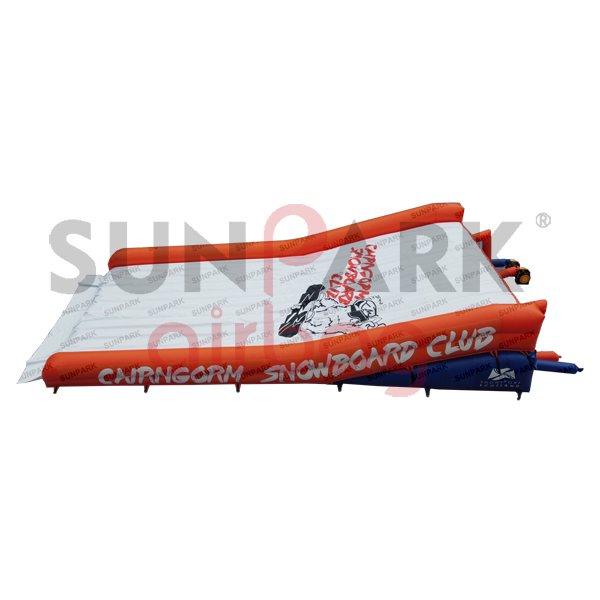
Safety in extreme sports starts long before you reach the unpatrolled backcountry. At SUNPARK® AIRBAG, we are pioneers in extreme sports progression. While our primary focus is engineering facility-level landing systems, our fundamental understanding of impact physics, kinetic absorption, and pneumatic inflation aligns directly with personal avalanche safety.
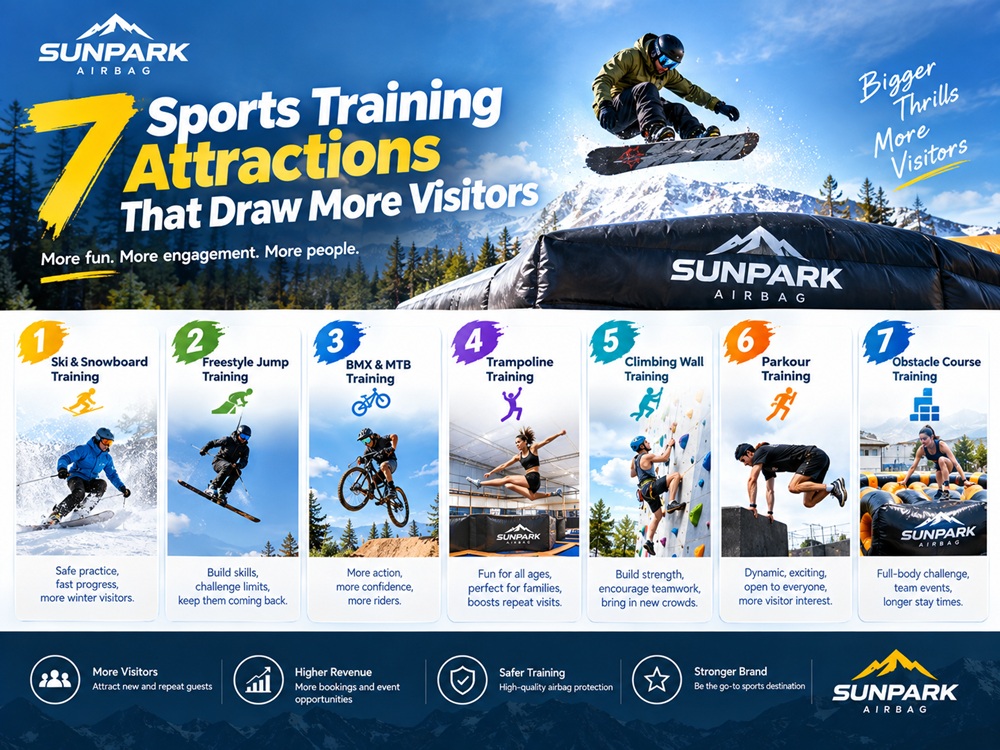
Before a skier ever takes a big mountain line, they build their aerial awareness and edge control in controlled environments. Ski resorts utilize our big jump airbag system to allow athletes to safely test rotational axis and landing mechanics. We constantly evaluate the foam pit vs airbag comparison to ensure facilities offer the highest level of hygienic, reliable impact absorption.
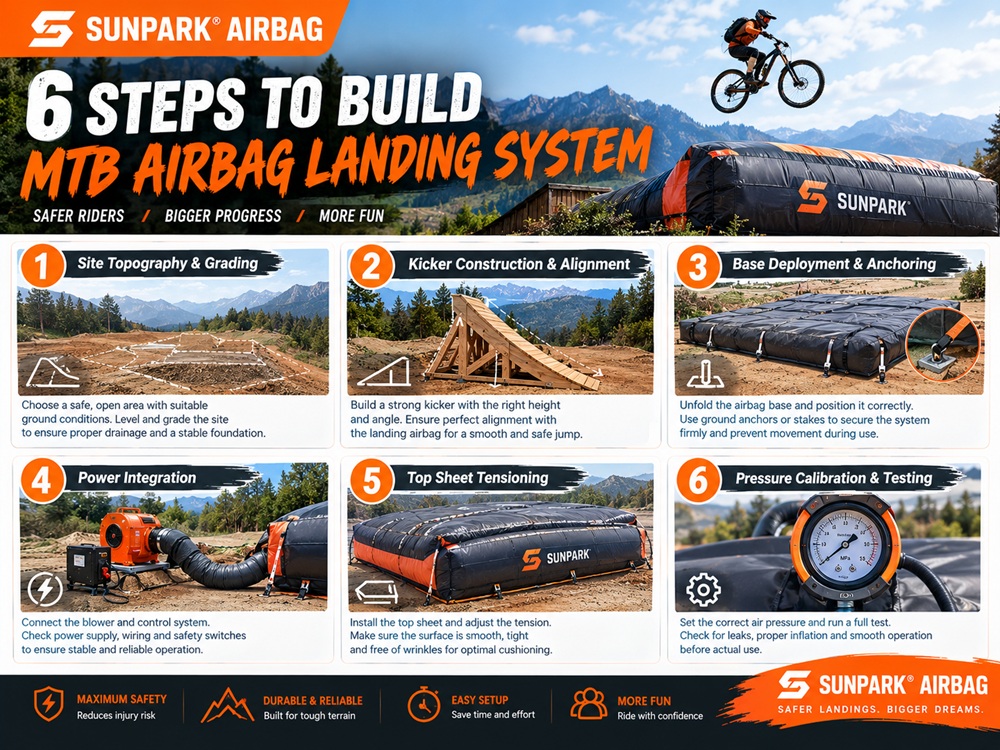
This commitment to safety spans across all action sports. We engineer the best airbag landing systems 2026 for diverse applications. Whether athletes are utilizing a bike airbag landing systems setup in the summer or a comprehensive freestyle airbag guide approved setup at a winter training facility, the core ethos remains the same: use superior pneumatic technology to mitigate catastrophic risk.
10. Expert Recommendation
So, are avalanche airbags effective for skiers? Absolutely. In our professional judgment, if you are committing to backcountry skiing, investing in an avalanche airbag is one of the smartest decisions you can make.
We recommend purchasing an electronic supercapacitor airbag. The initial cost is higher, but the ability to fly commercially without hassle and practice your deployments for free makes it the superior commercial and practical choice. However, remember this golden rule: treat your terrain selection exactly the same as if you were not wearing an airbag. Technology mitigates risk; it does not eliminate it.
11. Frequently Asked Questions (FAQ)
No. They reduce the mortality rate significantly (from roughly 22% to 11%), but they cannot protect you from traumatic impacts against trees or rocks, nor will they save you if the avalanche buries you deeply in a terrain trap.
Electronic airbags (battery/supercapacitor) are generally permitted on airplanes without issue. Canister-based airbags are heavily regulated by the TSA and FAA; you usually must empty the canister entirely and unscrew the valve to prove it is empty before flying.
Yes, absolutely. An avalanche airbag is a supplemental tool designed to prevent burial. It does not replace your transceiver (beacon), shovel, or probe, which are strictly mandatory for any backcountry travel.
It requires a firm, deliberate yank (usually around 10 to 15 pounds of force). This prevents accidental deployment from a branch snag, but it means you must actively and aggressively pull the handle when you recognize avalanche danger.
Yes. The balloon can be deflated, folded precisely according to the manufacturer’s instructions, and repacked. If you have an electronic system, you simply recharge it. If you have a canister system, you must purchase a refill or a brand new canister.
12. Authoritative References
To ensure our readers have access to the most scientifically rigorous data regarding backcountry safety, we reference the following authoritative sources:
- The American Avalanche Association & Avalanche.org – The central hub for avalanche forecasting, safety education, and professional standards in the United States.
- Wilderness & Environmental Medicine Journal – “The Effectiveness of Avalanche Airbags” (Haegeli et al., 2014). The definitive peer-reviewed study analyzing comprehensive real-world statistical data on airbag survival rates.
- National Ski Areas Association (NSAA) – The trade association representing United States ski area owners and operators, setting standards for slope safety and risk management protocols.
About SUNPARK® AIRBAG: With over 10 years of experience, we provide freestyle airbags for ski resorts, theme parks, sports, and gymnastics facilities around the globe. SunparkAirbag® is the leading manufacturer of Airbags for Extreme Sports and Leisure Industries in China, specializing in advanced pneumatic safety technologies.