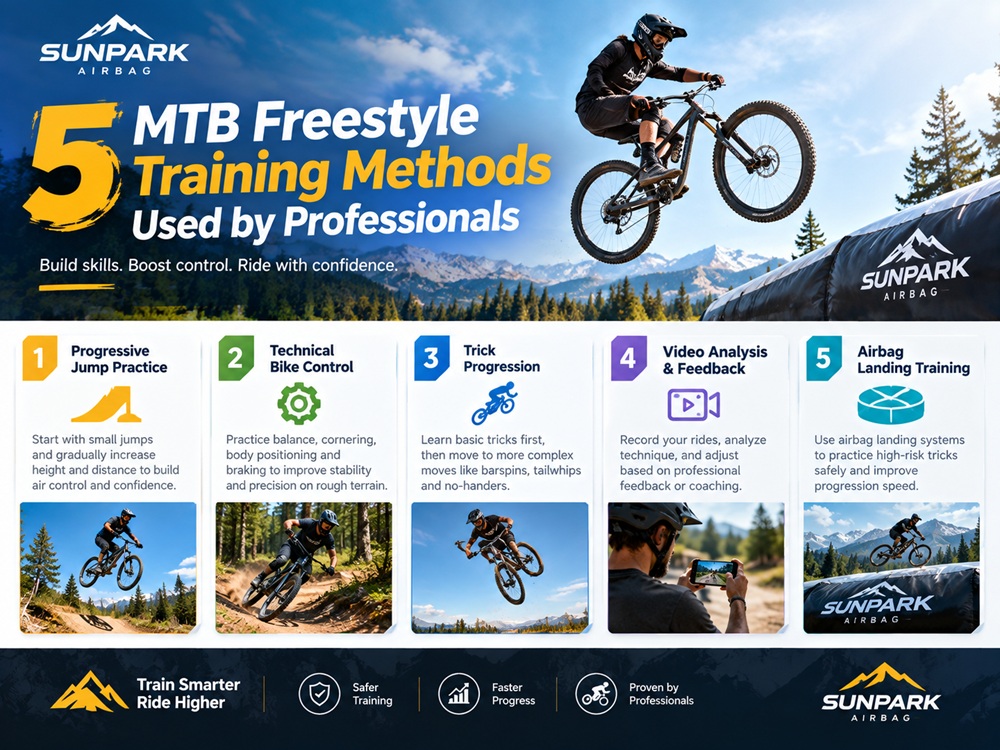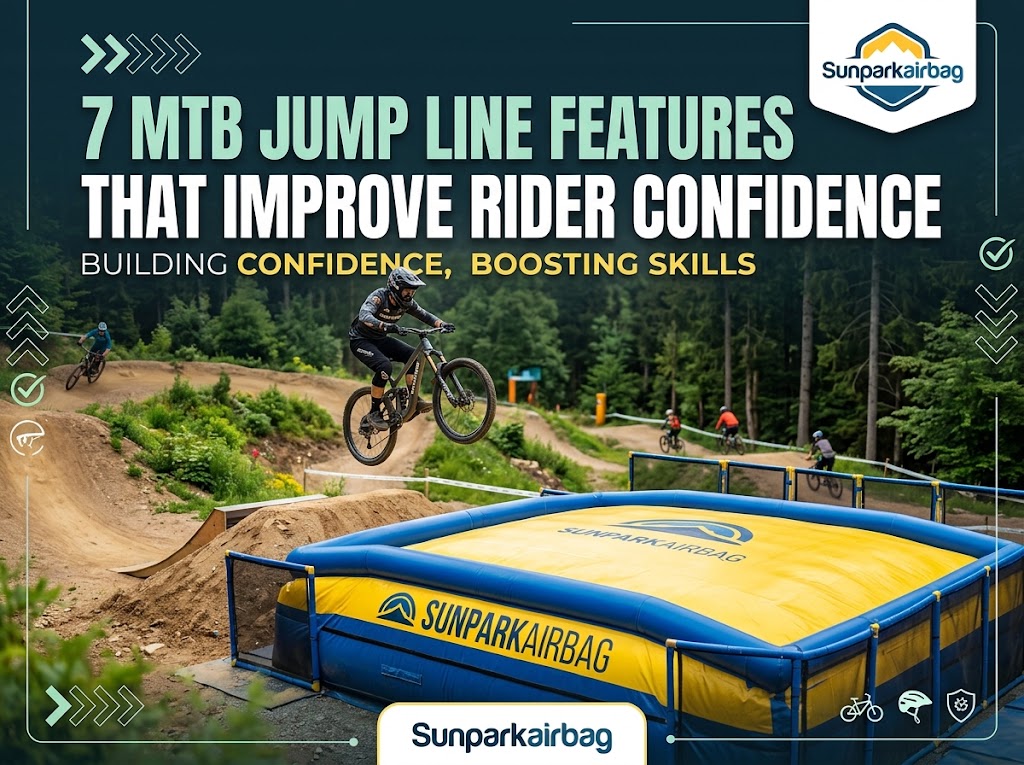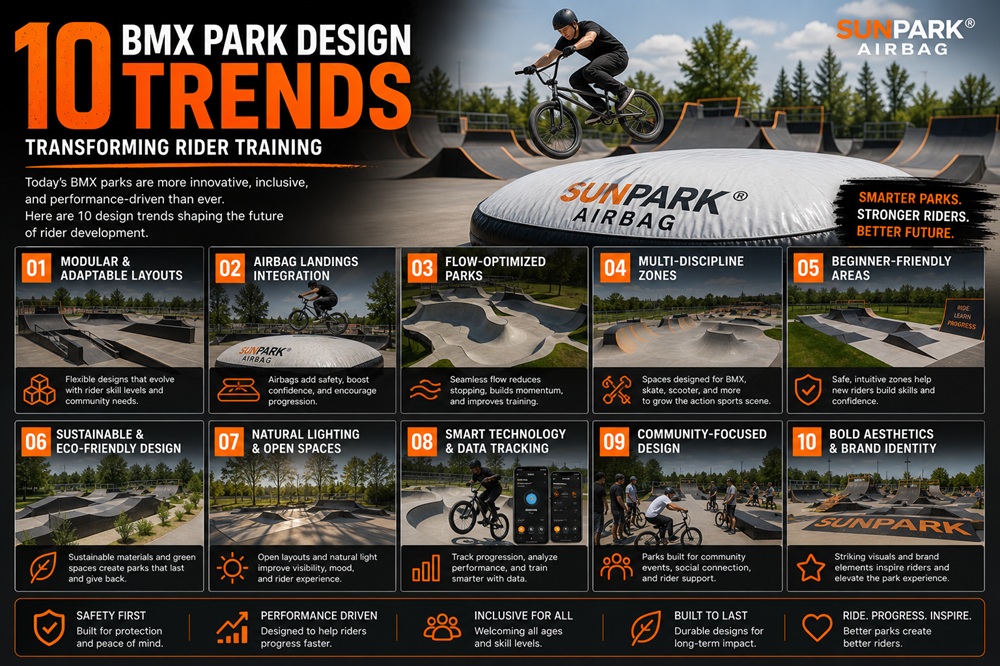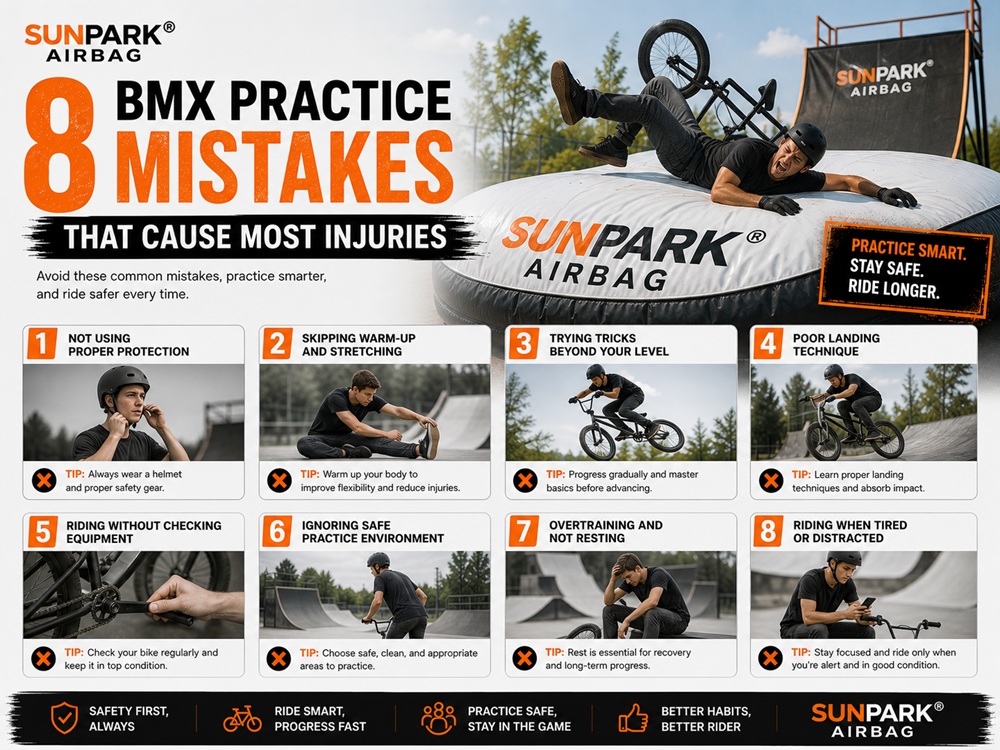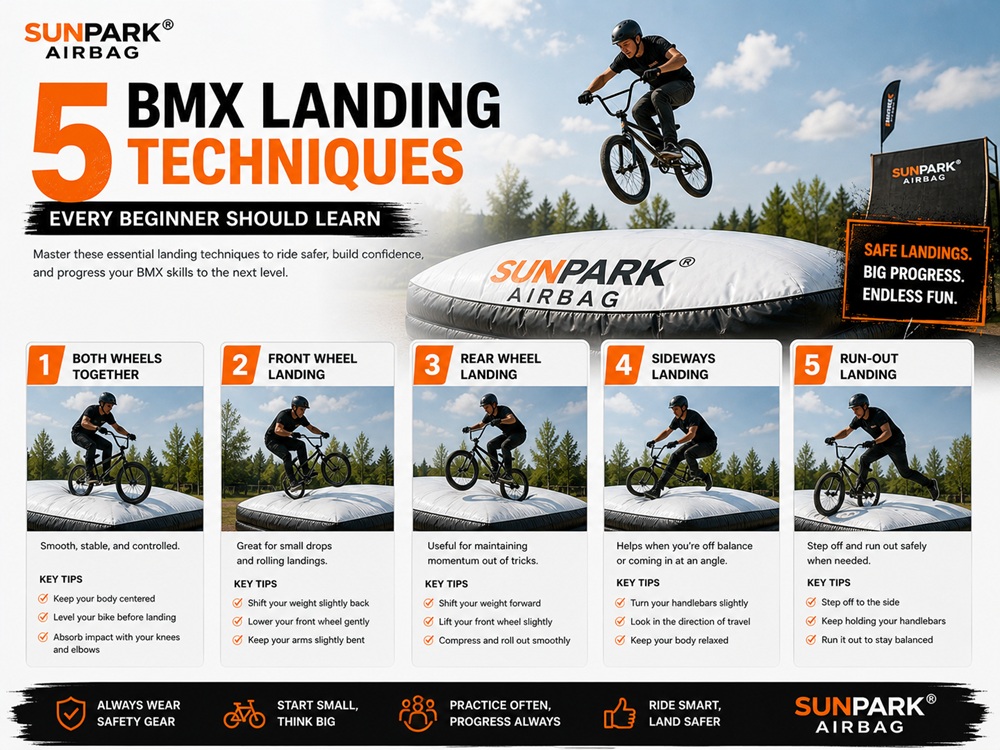
Progression in BMX freestyle and dirt jumping has historically carried a brutal physical toll. For decades, learning a new trick meant committing blindly to hard-packed dirt or unforgiving concrete skateparks, accepting bone fractures, severe concussions, and lengthy recovery layoffs as the unavoidable cost of entry. In most professional situations, this high-risk trial-and-error method stalls rider development because fear overrides technical execution. Modern riders no longer have to rely on reckless self-destruction to level up. By incorporating professional inflatable landing systems into your weekly routine, you can dismantle the psychological barrier of crashing and unlock unprecedented aerodynamic control.
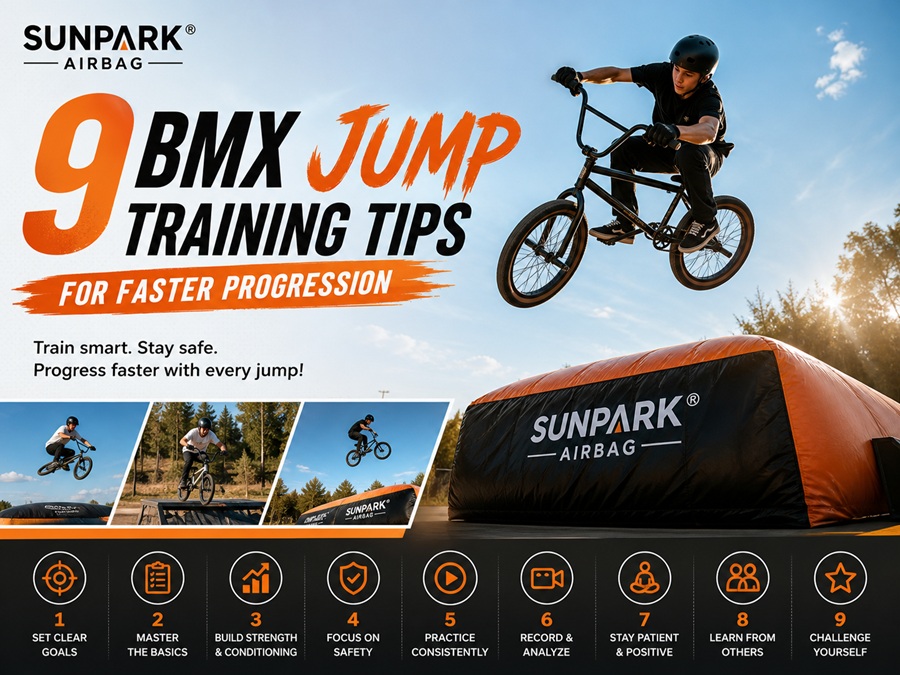
Quick Answer: How to Accelerate Your BMX Progression Safely
To fast-track your progression without sustaining recurring injuries, you must shift your training methodology toward high-repetition simulation using controlled landing environments. We recommend mastering fundamental speed control, dialing in your bike’s pre-load mechanics on a standard setup, and transitioning to a professional training airbag to repeat complex aerial maneuvers dozens of times per session. Combining deliberate practice frameworks with specialized equipment like the SunparkAirbag BMX Jump Airbag eliminates the fear of over-rotation, allowing you to commit 100 percent to new tricks.
What Is BMX Airbag Jump Training?
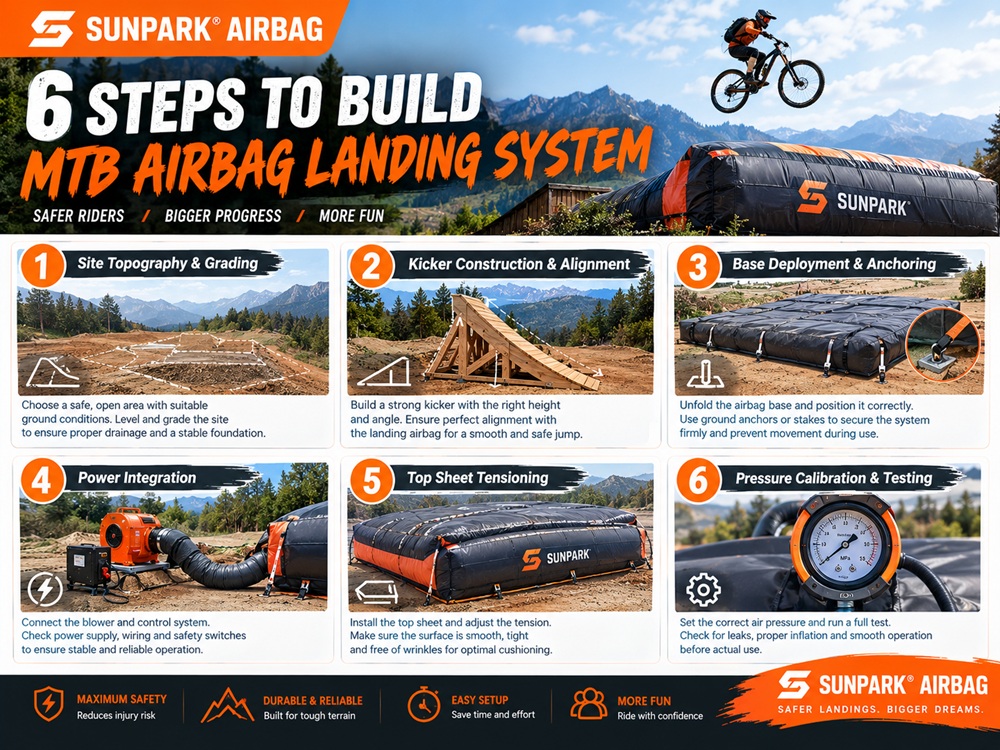
BMX airbag jump training is a specialized action sports methodology that replaces traditional dirt or wooden transitions with an engineered, pressurized inflatable landing cushion. Unlike legacy foam pits that trap debris, degrade over time, and cause riders to sink unpredictably, a modern stunt landing bag provides firm support upon impact while venting air instantly to eliminate harsh rebound forces. For riders exploring various deployment scales, reviewing comprehensive inflatable MTB airbag solutions reveals how customizable these setups have become for private compounds and public training facilities alike.
How Airbag Landing Mechanics Work
To make an informed usage decision, you must understand the underlying physics. An inflatable jump bag operates through a synchronized balance of high-volume continuous air blowers and precision-engineered pressure release vents. When a rider lands on the upper non-slip PVC sheet, internal chambers compress smoothly, absorbing kinetic energy and expelling air through controlled side vents to prevent a violent bounce-back effect. This dampening mechanism mimics the exact pitch and transition angle of a real dirt landing slope, ensuring that the muscle memory you build transfers directly to outdoor trails and competition courses.
SunparkAirbag BMX Jump Airbag
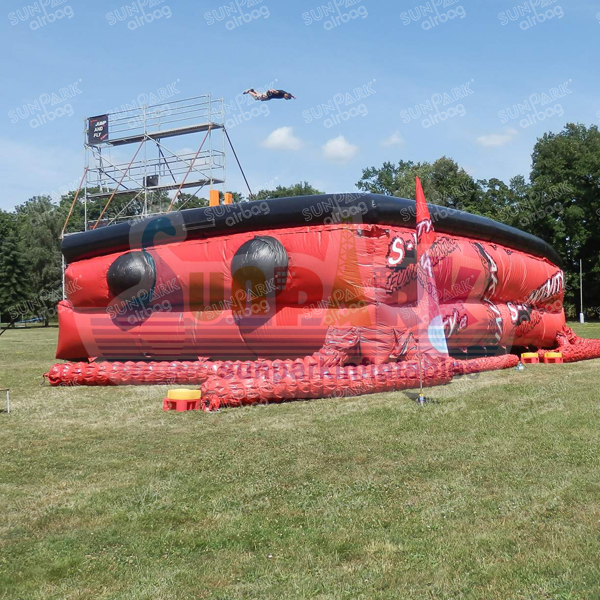
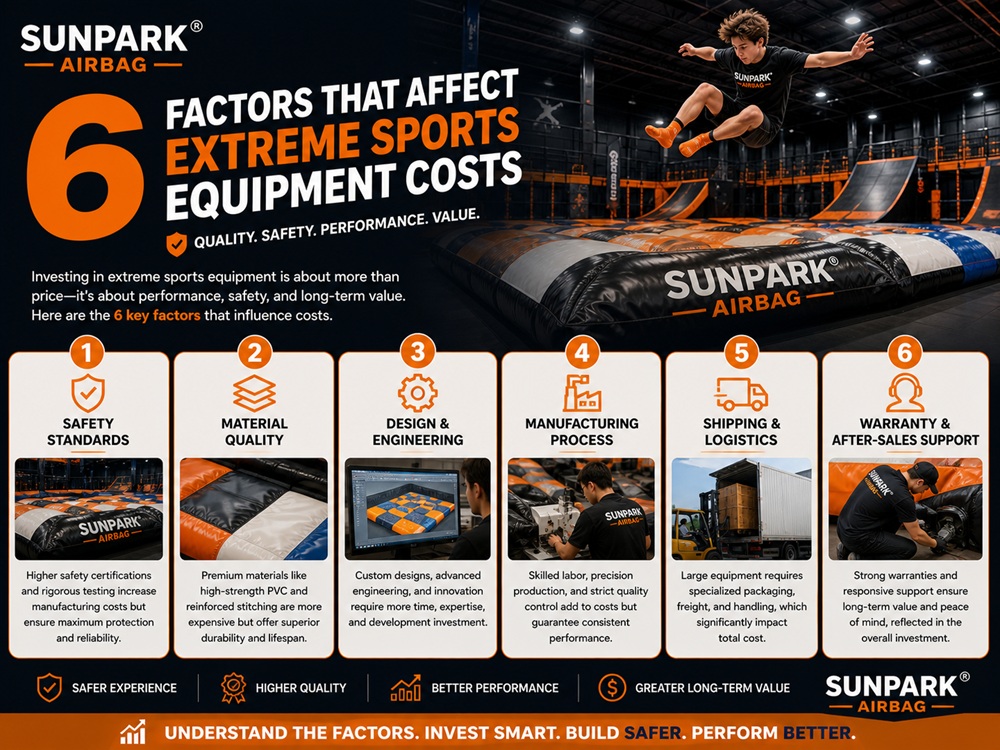
Engineered for elite action sports progression, the SunparkAirbag BMX Jump Airbag is manufactured from heavy-duty 0.55mm PVC tarpaulin for the main body and an ultra-tough 0.9mm PVC tarpaulin top sheet. Designed to be water-proof, flame-retardant, UV-protected, and entirely lead-free, this system provides unmatched reliability for outdoor training compounds and professional freestyle parks. Available in standard configurations like 15x10x3.5m or fully customized footprints, it includes high-output blowers, heavy-duty carrying bags, and professional repair kits to support intensive, high-volume rider sessions.
The 9 Essential BMX Jump Training Tips for Faster Progression
Drawing from our experience coaching competitive riders and designing professional training facilities, mastering aerial tricks requires more than just raw courage. Implement these nine tactical training tips to accelerate your skill curve safely and efficiently.
1. Master Approach Speed and Consistent Line Control
Every successful jump begins long before your tires leave the lip. Inconsistent speed management is the primary cause of casing jumps or overshooting transitions. Set up a standardized run-in line, eliminate unnecessary pedaling within the final fifteen feet, and trust your momentum. Consistency on the approach guarantees that your takeoff timing remains uniform across every single repetition.
2. Perfect Your Pre-Load and Lip Pop Mechanics
Many beginners attempt to pull the bike upward with their arms, resulting in a disconnected, unpredictable flight path. Instead, focus on aggressive body preloading—compressing your legs and absorbing the transition face before exploding upward through the pedals and bars right at the lip. A clean, balanced pop generates natural height without forcing awkward mid-air corrections.
3. Control Mid-Air Body Position and Weight Distribution
Once you are airborne, your body weight dictates the pitch of the bike. Keep your weight centered over the bottom bracket, heels dropped slightly, and elbows out. When practicing new aerials on an inflatable jump airbag, pay close attention to how minor shifts in your hip orientation alter your rotational axis. Controlling your core stability in flight is the absolute foundation of advanced trick execution.
4. Train Progressively Using a Dedicated Landing Simulator
Do not jump straight from small tabletops into double backflips. Progression must follow a strict ladder of difficulty. For beginners and intermediate riders establishing spatial awareness, utilizing a portable inflatable crash mat or a smaller backyard setup allows you to test rotational speeds without high-consequence drops. Scale up to full-size professional platforms only when your rotation feels entirely second nature.
5. Commit Fully to Rotation and Avoid Half-Hearted Flips
Hesitation is the enemy of freestyle progression. If you abort a 360 or backflip halfway through the rotation, your body weight shifts backward, leading to awkward impacts. Airbag systems provide the psychological safety net required to commit 100 percent. In our testing, riders who fully spot their landing and commit early complete rotations cleaner and with significantly better bike control.
6. Optimize Visual Focus: Look Through the Landing Zone
Where your eyes go, your bike will follow. Novice riders often make the critical mistake of staring directly at their front tire or fixating on the obstacle during flight. Train your vision to look straight through the transition to the bottom of the landing slope. This natural psychological cue keeps your head up, your shoulders square, and your trajectory locked on target.
7. Absorb Impact Smoothly with Active Suspension and Knees
Even when landing on a forgiving bike airbag landing surface, developing proper active absorption habits is vital. Never land with stiff legs or locked elbows. Flex your knees and ankles to act as secondary shock absorbers, cushioning the touchdown and protecting your lower back from compressive shock strains.
8. Analyze Video Footage Rigorously After Every Session
Human perception during high-speed aerial maneuvers is notoriously inaccurate; what feels like a perfectly executed whip often looks completely different on camera. Set up a tripod and film every training session from the side profile. Reviewing footage between sessions allows you to pinpoint micro-flaws in your takeoff timing, body posture, and extension.
9. Maintain and Tune Your Landing Bag Pressure Daily
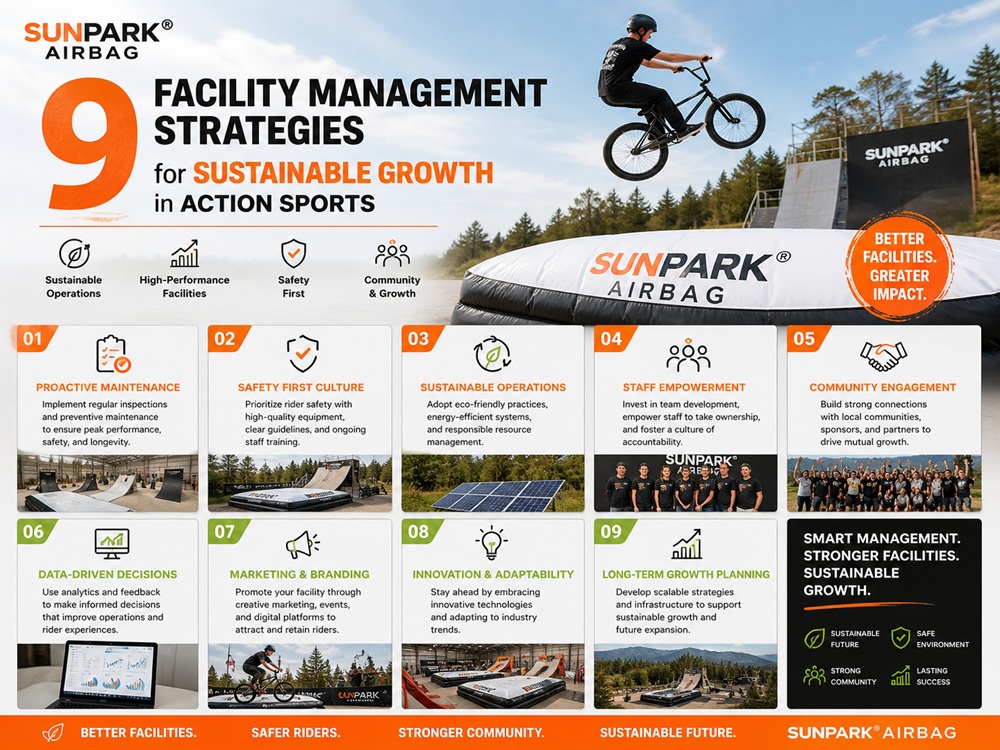
An improperly inflated landing system compromises your entire training session. If the bag is too soft, you will sink and lose balance; if it is over-inflated, it behaves like a hard trampoline. Conduct daily checks on blower continuity, zipper seals, and internal air pressure to ensure a consistent, predictable catch every time. For commercial park developers exploring broader setups, reviewing trampoline park construction cost structures and understanding trampoline park owner income potentials can help contextualize the immense value high-throughput inflatable equipment brings to action sports facilities.
Benefits and Limitations of Airbag Training
Integrating professional airbag technology into your training regiment alters the speed and safety of skill acquisition. However, commercial users and private riders must balance these advantages against logistical constraints.
| Advantages (Pros) | Limitations (Cons) |
|---|---|
| Dramatically reduces bone fracture and concussion risks during trick learning phases. | Requires reliable continuous electrical power supply for inflation blowers. |
| Allows for 10x higher repetition volume per session, accelerating muscle memory. | Higher initial capital investment compared to traditional bare dirt jumps. |
| Eliminates psychological fear blocks, enabling full trick commitment. | Demands regular maintenance, cleaning, and seam inspections. |
| Portable configurations can be packed down and relocated for events or seasonal shifts. | Outdoor setups require protective covers during severe weather conditions. |
Comparative Training Media Breakdown
To evaluate whether investing in an airbag setup fits your operational or personal needs, examine how airbag landing systems compare against traditional training environments.
| Training Medium | Safety Index | Real-World Transfer | Setup Flexibility | Maintenance Overhead |
|---|---|---|---|---|
| Professional Airbag Landing | Very High | High (Tunable transition feel) | High (Modular & Portable) | Moderate (Daily pressure checks) |
| Traditional Foam Pits | High | Low (Sticky, unnatural sink) | Low (Fixed indoor footprint) | High (Debris removal & hygiene) |
| Hard Dirt Jumps / Concrete | Very Low | Absolute 1:1 Realism | Low (Permanent civil works) | Low to Moderate (Shaping & watering) |
| Indoor Foam Mattresses | Moderate | Moderate | Very High (Easy to move) | Low |
Buying Guide & Sourcing Strategy
When selecting professional training equipment, commercial operators and private compound owners must evaluate several core technical specifications. Use the following guide to ensure your procurement investment meets long-term durability standards.
| Decision Factor | Recommended Specification | Why It Matters for BMX Riders |
|---|---|---|
| Fabric Weight | 0.55mm body / 0.9mm top sheet | Resists high-speed pedal strikes, peg impacts, and UV degradation. |
| Venting System | Integrated side-mesh release panels | Prevents dangerous bounce-back and cushions high-impact landings smoothly. |
| Blower Redundancy | Dual continuous-flow blowers | Ensures the bag remains fully inflated even if a single motor experiences failure. |
| Anchor Security | Heavy-duty D-ring webbing straps | Prevents the airbag from shifting or sliding under high horizontal bike forces. |
Who Should Use Airbag Training Systems
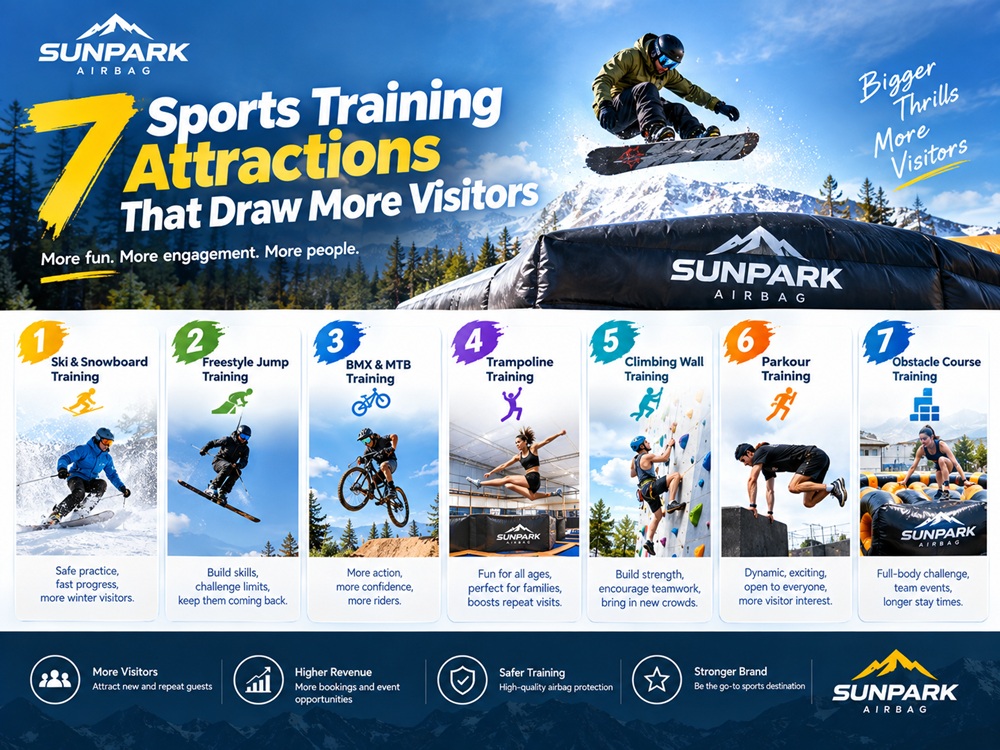
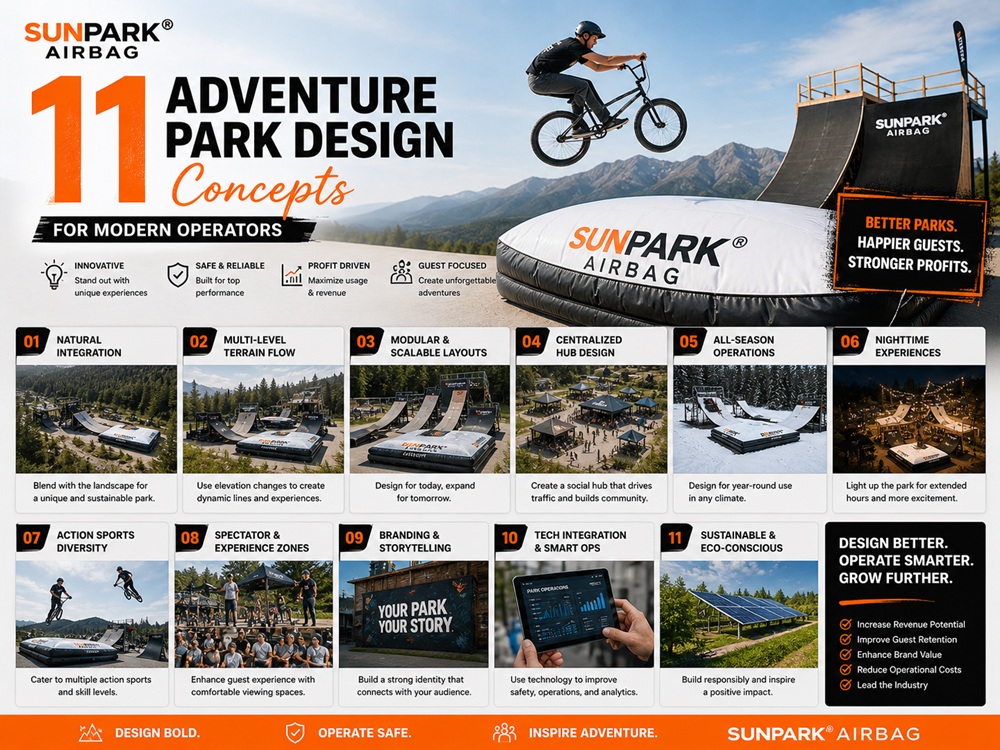
For heavy-duty applications such as municipal skateparks, action sports academies, training camps, and elite private compound owners, professional landing bags are an absolute necessity. Athletes looking to bridge the gap between foam pit safety and real-world dirt execution will find that systems like the stunt airbag landing provide the exact balance of cushion and stability required. Furthermore, riders seeking regional facilities can consult an airbag jump locations guide to locate professional training spots near them.
Who Does Not Need Professional Airbag Systems
For beginners who are still mastering basic street bunny-hops, fundamental balance, and simple rolling drops, investing in a commercial-grade landing airbag is premature. If you are not yet leaving the ground with regular speed over standard transitions, your capital is better spent on protective gear, a well-maintained BMX rig, and foundational coaching.
Common Mistakes We See in Training Yards
Even with advanced equipment, poor operational habits can compromise safety and stall rider progression. Watch out for these frequent errors:
- Neglecting Warm-Up Protocols: Launching straight into 360 barspins cold increases muscle strain risk. Always warm up on flat ground and smaller transitions first.
- Skipping Daily Pressure Checks: Riding on a half-deflated bag alters the transition angle and increases bottoming-out hazards against the underlying frame.
- Ignoring Gear Inspection: Worn helmet straps or loose handlebar bolts can cause catastrophic failures mid-air regardless of how soft the landing zone is.
- Over-Reliance on the Bag: Using the airbag as a substitute for proper technique rather than a stepping stone to dirt jumps will leave your skills vulnerable when transitioning back to natural terrain.
Expert Recommendation
We recommend integrating airbag training strategically into your overall riding schedule rather than relying on it exclusively. Use the airbag to break down complex maneuvers, conquer mental blocks, and build flawless air awareness safely. Once a trick is locked in with clean style on the inflatable landing zone, take it immediately to a well-shaped dirt set or wood box jump to test your real-world bike control. By combining high-repetition airbag sessions with disciplined outdoor riding, you will progress faster, ride with supreme confidence, and protect your body from preventable injuries.
Frequently Asked Questions
Yes. Inflatable landing bags are specifically engineered to make learning high-consequence tricks like backflips, frontflips, and 360 combinations infinitely safer by absorbing impact energy and eliminating hard-surface rebound hazards.
Your airbag dimensions should match your jump height and speed. Standard beginner setups often measure around 10x10m, while advanced professional compounds utilize larger footprints like 15x10m or custom configurations to accommodate higher speeds and longer flight paths.
Absolutely. High-quality landing bags feature cross-sport versatility, making them fully compatible with mountain bikes (MTB), freestyle scooters, skateboards, and inline skates.
Authoritative References
- ASTM International – Standard Consumer Safety Performance Specification for Inflatable Amusement Devices (ASTM F2374)
- USA BMX – National Safety Guidelines, Track Protocols, and Rider Development Standards
- International Mountain Biking Association (IMBA) – Trail Construction, Feature Safety, and Action Sports Infrastructure References