In the world of BMX, mountain biking, and freestyle cycling, gravity is entirely unforgiving. If you are pushing progression, crashing is not a possibility; it is a statistical certainty. However, sustaining a season-ending injury does not have to be. From our experience auditing commercial bike parks and working with elite athletes, the difference between walking away from a massive bail and waking up in an emergency room comes down to the deliberate application of proven Cycling Injury Prevention Strategies.
Too many riders rely on luck or simple protective pads to save them. That is a flawed approach. True mitigation requires a systematic breakdown of how and why crashes happen, and engineering the environment to absorb the consequences. We are cutting through the generic advice to deliver commercial and practical judgment on the Cycling Injury Prevention Strategies that actually work. If you want to ride harder, fly higher, and avoid the surgeon’s table, you need to implement these protocols immediately.
Quick Answer: What Are the Core Cycling Injury Prevention Strategies?
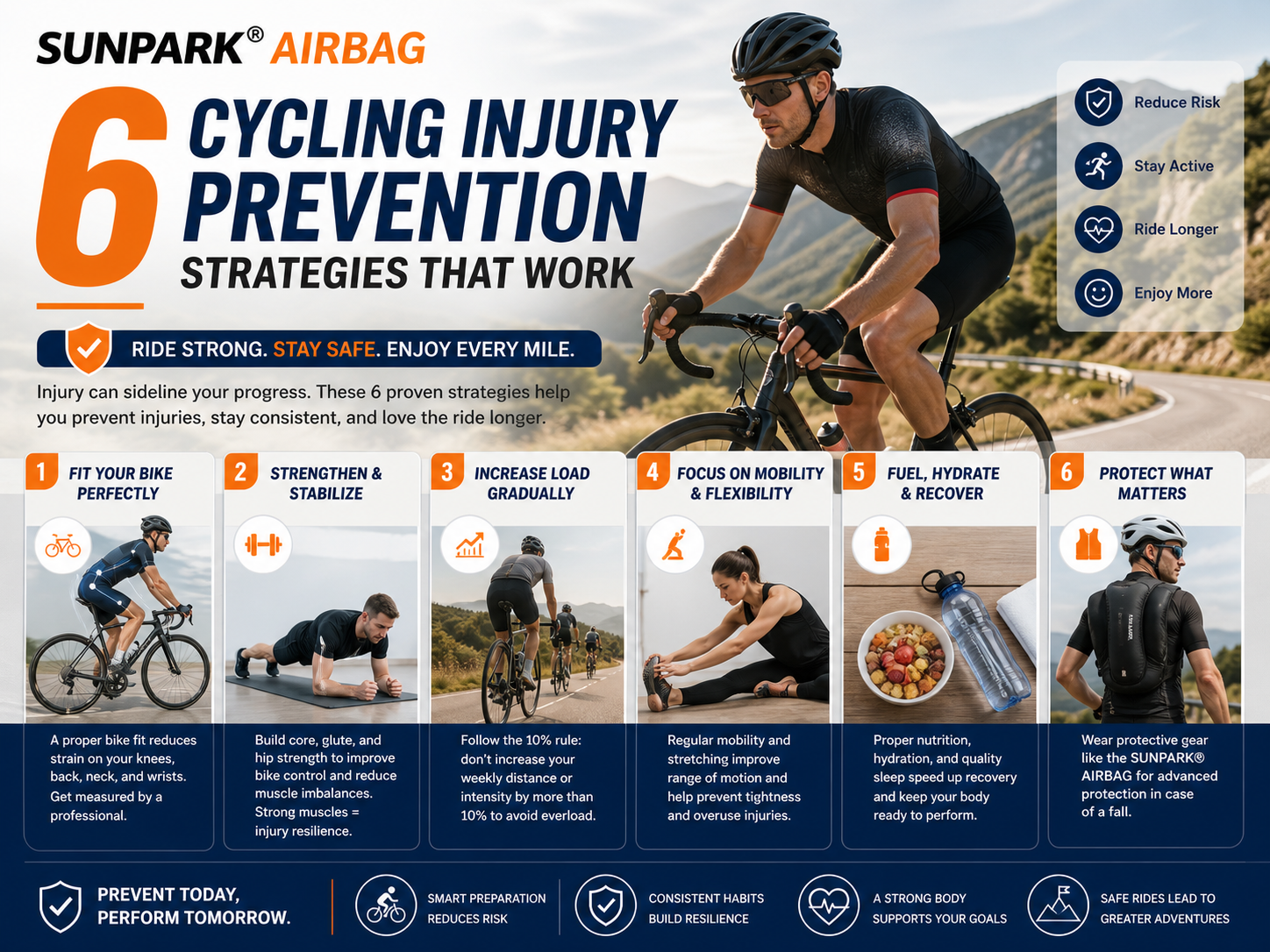
The most effective Cycling Injury Prevention Strategies combine environmental engineering with physical preparation. They include 1) Progressive skill development using energy-absorbing infrastructure like an airbag landing ramp system, 2) Utilizing heavy-duty, rotational-impact certified protective gear, 3) Performing rigorous pre-ride mechanical audits, 4) Kinetic chain physical conditioning, 5) Crash trajectory management (learning how to fall), and 6) Utilizing controlled environment training facilities. These strategies mitigate kinetic transfer to the body during a crash, drastically reducing the severity of trauma.
Table of Contents
- What It Is: Defining Cycling Injury Prevention Strategies
- How It Works in Practice
- Benefits of Implementation
- Limitations of Protective Systems
- The 6 Proven Cycling Injury Prevention Strategies
- Who Should Use It vs. Who Does Not Need It
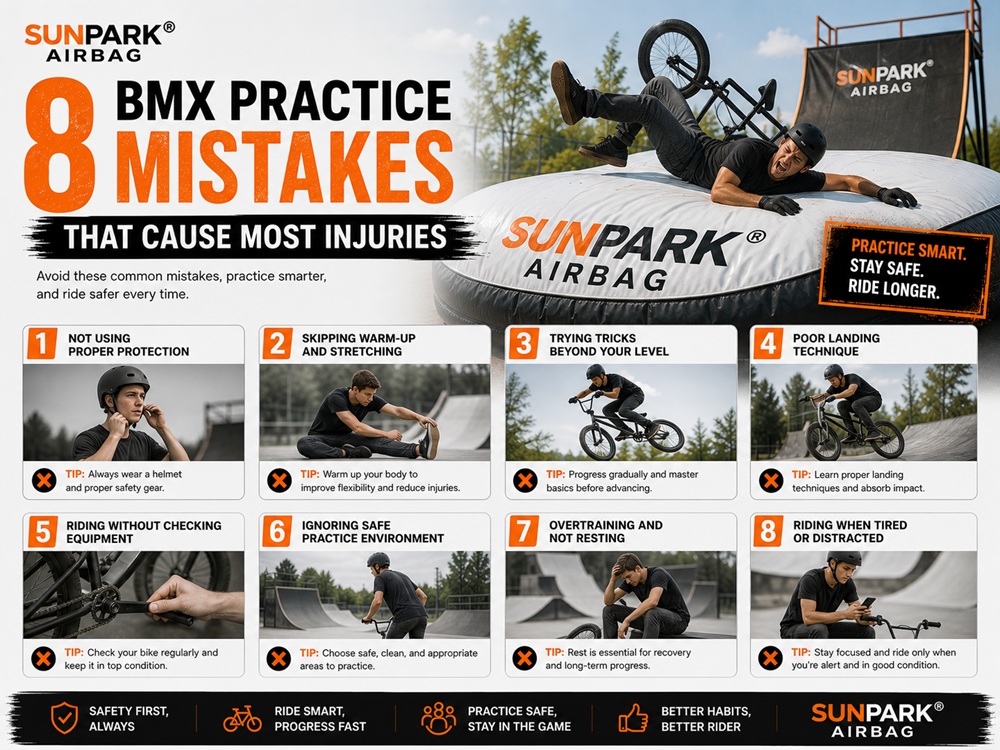
- Common Mistakes in Risk Mitigation
- Buying Considerations for Protective Infrastructure
- Expert Recommendation
- Frequently Asked Questions
What It Is: Defining Cycling Injury Prevention Strategies
Cycling Injury Prevention Strategies are a comprehensive set of protocols, equipment choices, and facility designs engineered to minimize the risk and severity of trauma during cycling activities. We are not talking about simply wearing a helmet to ride to the grocery store. In the context of extreme sports, these strategies involve manipulating the physics of a crash. When a rider falls, kinetic energy must go somewhere. Effective strategies ensure that this energy is absorbed by the environment (like an inflatable landing pad) or distributed across high-density armor, rather than shattering a collarbone or causing a concussion.
How It Works in Practice
These strategies work by addressing the three phases of a crash: Pre-crash, Mid-crash, and Post-crash. Pre-crash strategies involve mechanical audits and physical conditioning to prevent the accident from occurring. Mid-crash strategies involve trajectory management—the rider actively abandoning the bike and bracing correctly. Post-crash strategies involve the protective gear and the landing surface dissipating the impact force. By layering these defenses, you create a fail-safe system. When one layer fails, the next layer engages.
| Crash Phase | Primary Strategy Focus | Example Execution |
|---|---|---|
| Pre-Crash | Failure Prevention | Checking tire pressure, spoke tension, and performing joint mobility exercises. |
| Mid-Crash | Energy Redirection | Ejecting from the pedals and executing a judo roll to disperse impact force. |
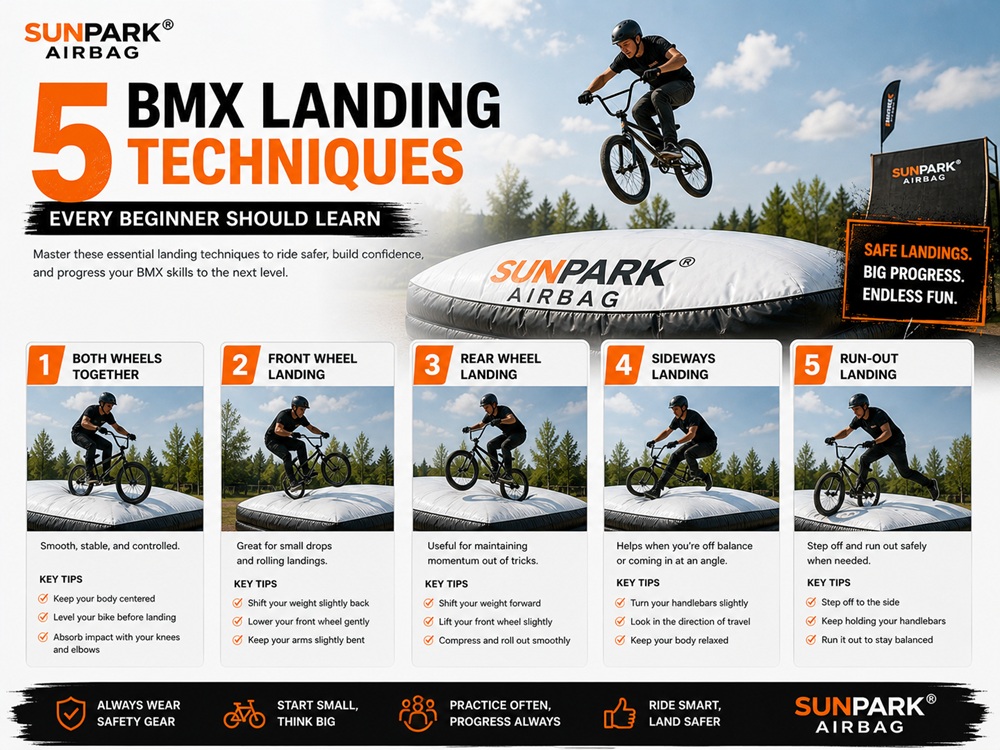
| Post-Crash | Energy Absorption | Impacting a BMX airbag landing instead of hard-packed dirt. |
Benefits of Implementation
The benefits of strict Cycling Injury Prevention Strategies extend far beyond avoiding pain. For commercial users operating bike parks, implementing these systems drastically reduces liability, lowers insurance premiums, and increases customer retention. A rider who breaks their wrist on your dirt jump will not return for a season; a rider who safely washes out on an airbag will hike back up the hill immediately. For individual athletes, these strategies accelerate progression. Fear is the primary barrier to learning new tricks. When you trust your protective systems, you can commit fully to the rotation, which ironically reduces the chance of crashing.
Limitations of Protective Systems
We must use commercial and practical judgment here: no system is infallible. A helmet cannot prevent a concussion if the rotational force is severe enough. An airbag cannot save a rider who lands entirely off the designated safety zone. Furthermore, over-reliance on protective infrastructure can lead to a false sense of security, causing riders to attempt tricks far beyond their baseline skill level on hard dirt later on. These strategies mitigate risk; they do not eliminate it.
The 6 Proven Cycling Injury Prevention Strategies
1. Progressive Skill Development via Inflatable Infrastructure
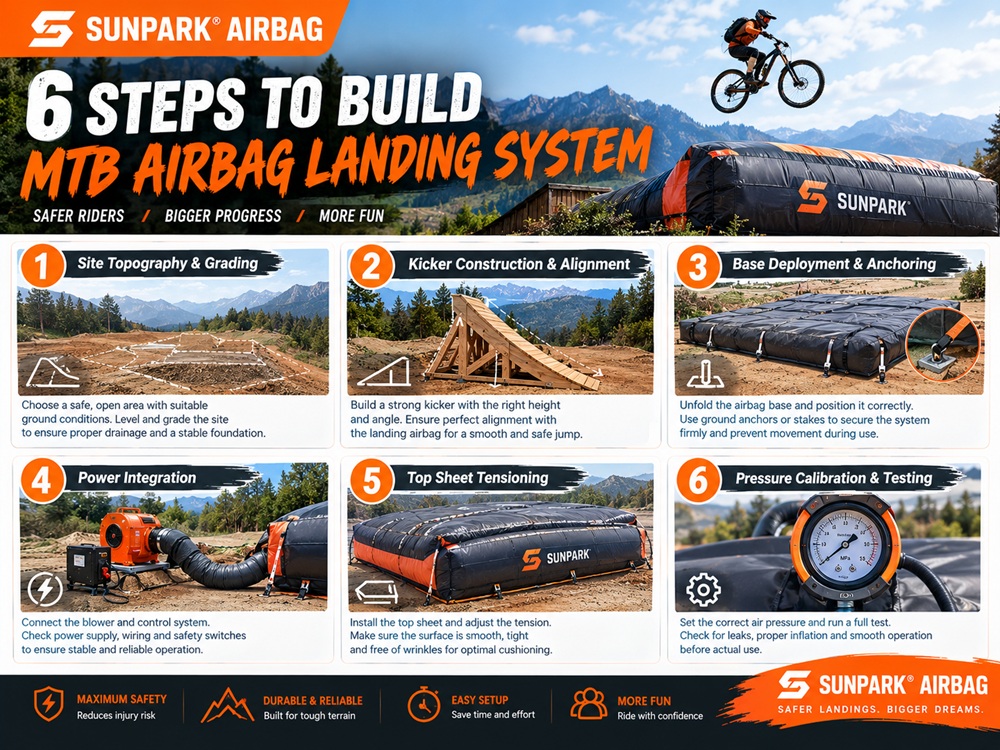
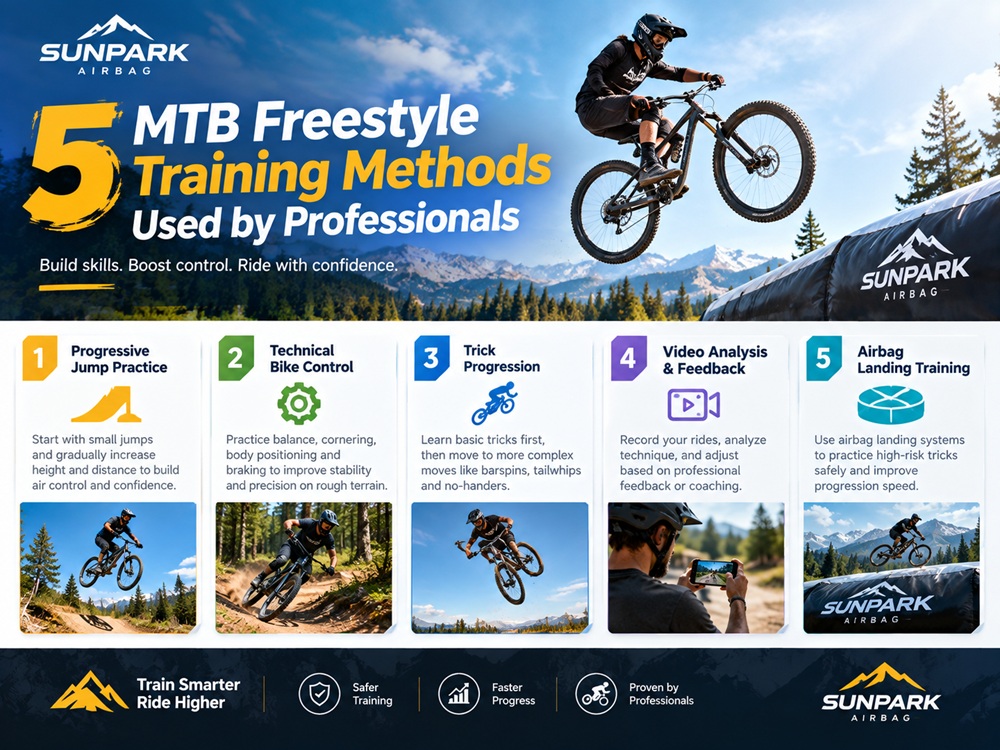
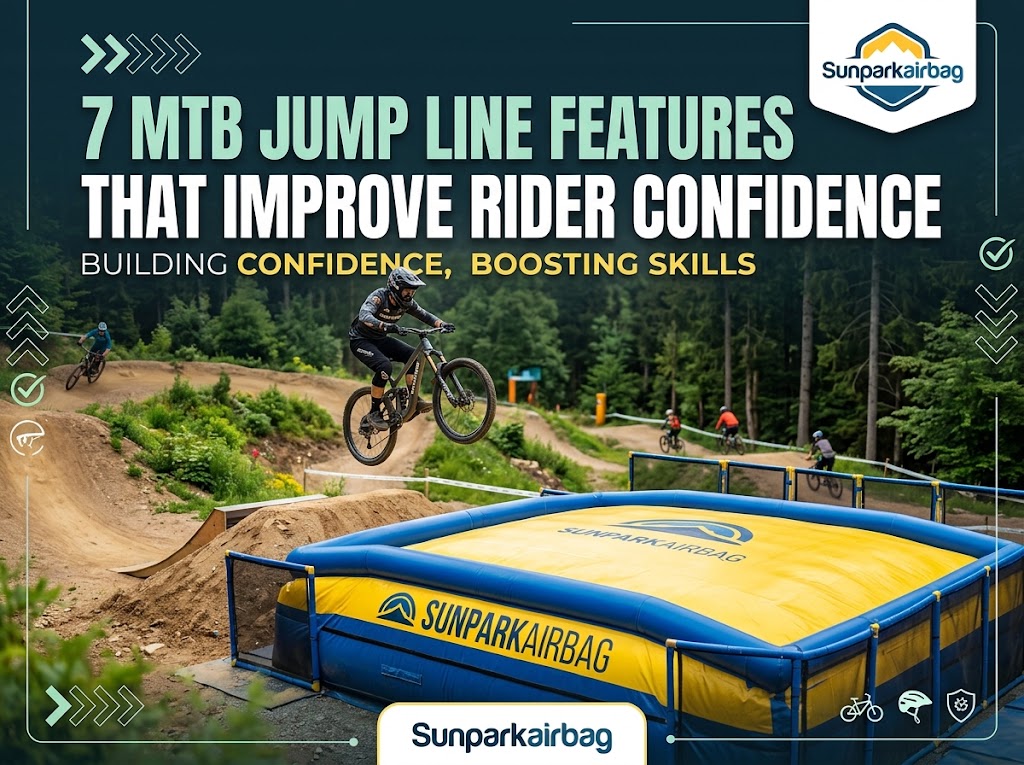
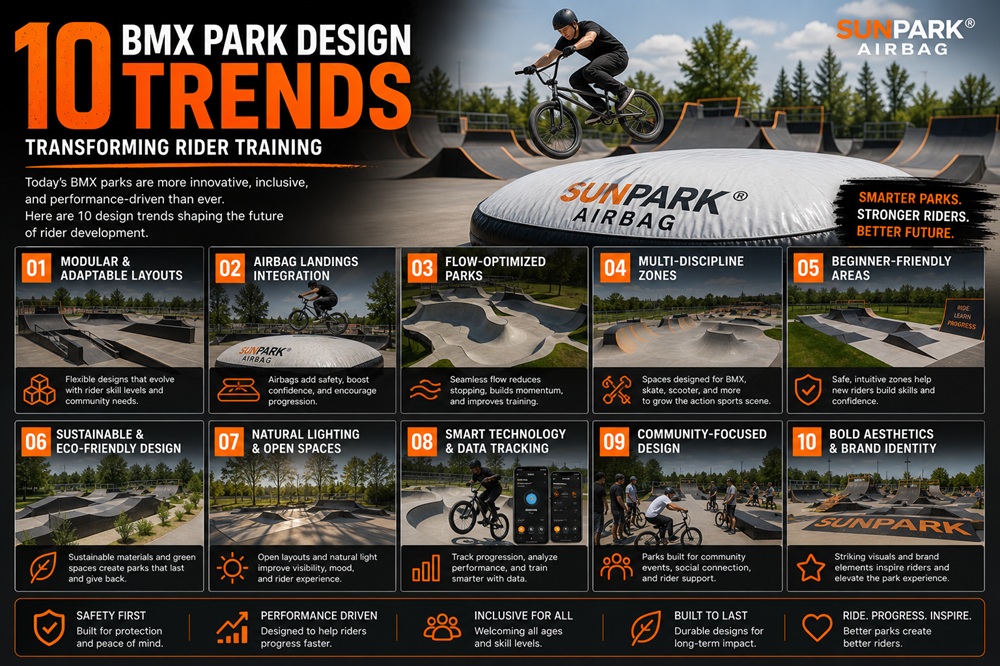
The days of learning a backflip by hucking it onto mulch are over. The most effective of all Cycling Injury Prevention Strategies is utilizing an airbag for the trick acquisition phase. From our experience, facilities deploying an MTB airbag landing system see a near-total elimination of acute fractures during training. These systems allow riders to commit to aerial maneuvers with a massive margin for error, dialing in their muscle memory before taking the trick to dirt or wood.
2. Heavy-Duty, Application-Specific Protective Gear
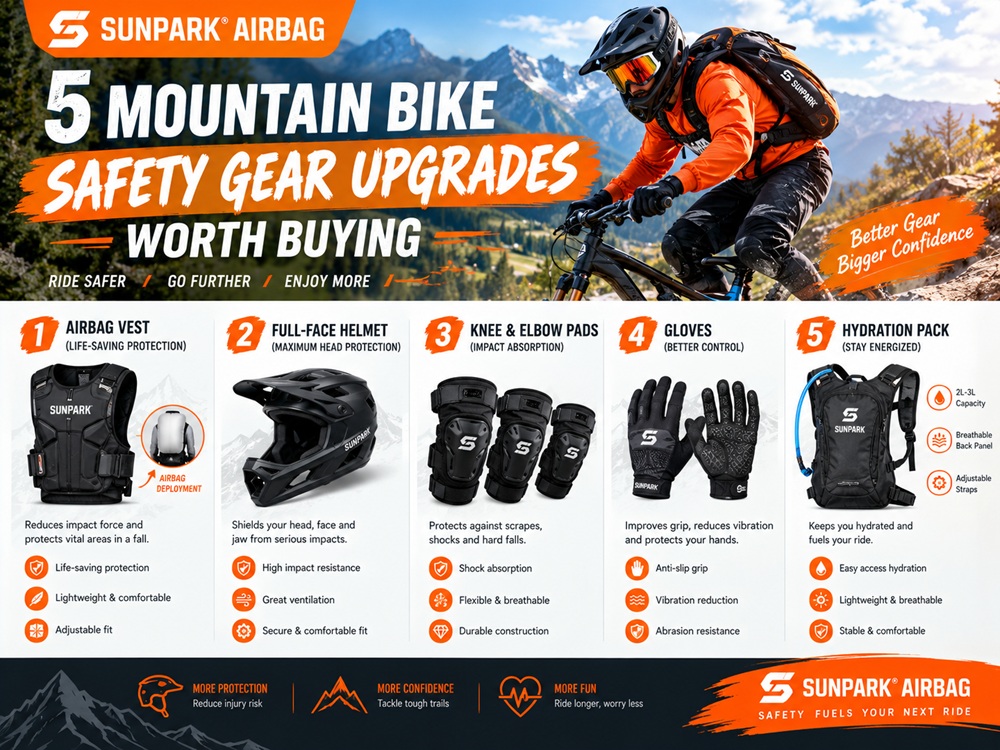
Wearing a cross-country helmet at a downhill park is a critical failure in judgment. For heavy-duty applications, you must use gear engineered for the specific kinetic threats of your discipline. This means full-face helmets with rotational impact systems (like MIPS), CE-certified back protectors, and hard-shell knee pads. We recommend replacing helmets immediately after any significant impact, as the EPS foam is designed for single-use energy absorption.
3. Pre-Ride Mechanical Audits
A massive percentage of crashes are caused by catastrophic mechanical failure. Snapped handlebars, blown tires, or a slipped chain on the lip of a jump will instantly put you in the hospital. One of the most neglected Cycling Injury Prevention Strategies is the pre-ride audit. Inspect frame welds for hairline cracks, check bolt torque specifications, and verify brake line integrity before every single session.
4. Kinetic Chain Conditioning
Your body is the primary shock absorber. Riders who lack core strength, joint mobility, and muscular endurance are significantly more susceptible to tearing ligaments when forces unexpectedly shift. Engaging in off-bike kinetic chain conditioning—focusing on the posterior chain, shoulder stability, and hip mobility—ensures your body can handle the violent compressions of freestyle riding. If you understand the common BMX injuries and prevention tactics, you know that joint stability is paramount.
5. Crash Trajectory Management (Learning to Fall)
In most professional situations, riders drill bail techniques just as intensely as they drill tricks. When a crash is inevitable, sticking your arms out straight to brace for impact guarantees a broken clavicle or wrist. You must train your reflexes to tuck your chin, pull your arms in, and roll with the momentum. Ejecting away from the bicycle prevents you from landing on sharp pedals and handlebars.
6. Utilizing Controlled Environment Training
Unpredictable wind, wet dirt, and poorly maintained lips account for countless injuries. Training in a controlled environment—such as indoor parks featuring landing airbag solutions—removes environmental variables. This allows riders to focus entirely on technique. If you are serious about progression, locating a facility through an airbag jump locations guide is a mandatory step in your training regimen.
| Factor | Standard Dirt Landing | SUNPARK® Airbag Landing |
|---|---|---|
| Impact Absorption | Minimal (relies entirely on rider suspension/body) | Maximum (pneumatic energy dissipation) |
| Consequence of Over-rotation | High risk of severe trauma (head/spine) | Low risk (airbag catches the fall) |
| Repetition Volume | Low (fatigue and pain limit attempts) | High (riders can attempt tricks continuously) |
| Confidence Building | Slow (fear inhibits commitment) | Rapid (safe failure encourages progression) |
Who Should Use It vs. Who Does Not Need It
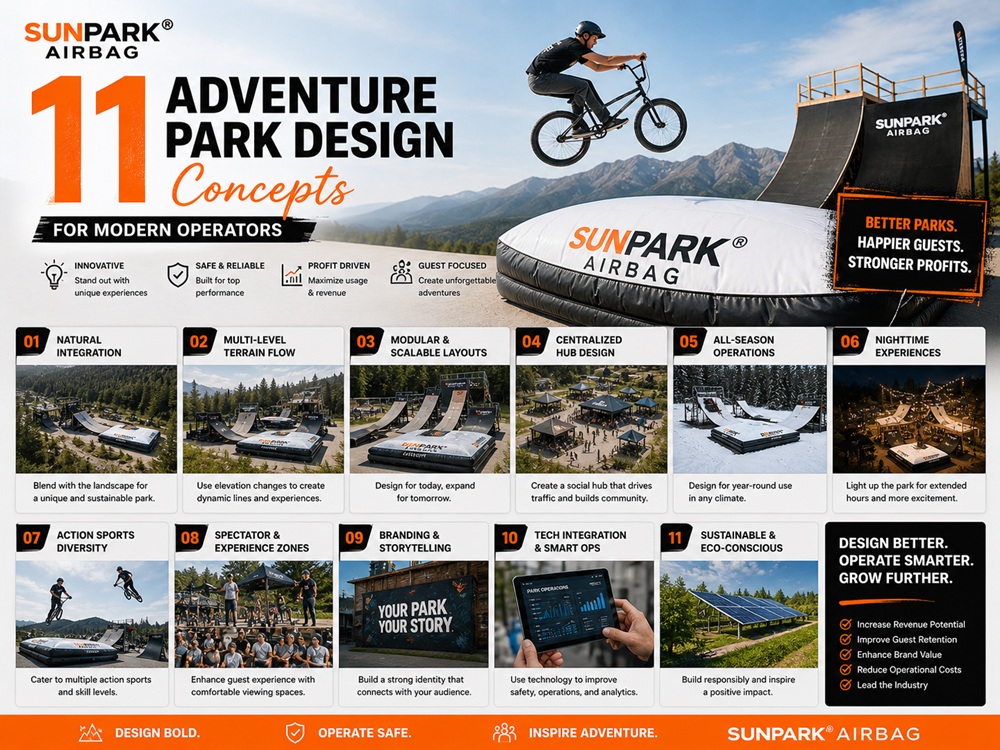
Who should use it: For beginners entering the sport, adopting strict Cycling Injury Prevention Strategies is mandatory to survive the initial learning curve. For professional athletes, it extends career longevity. For commercial users (bike park owners, camp directors), integrating these strategies via inflatable MTB airbag solutions is essential for risk management and operational viability.
Who does not need it: Casual, low-speed commuters riding separated, flat bike paths do not need to invest in full-face helmets or practice mid-air bail techniques. Basic situational awareness and a standard certified helmet are sufficient for non-extreme applications.
Common Mistakes in Risk Mitigation
The most common mistake we see is asymmetrical investment. A rider will spend $8,000 on a carbon fiber downhill bike, but refuse to spend $300 on a premium helmet or $50 for a day pass at a facility with proper safety infrastructure. Another critical error is attempting high-consequence maneuvers while fatigued. In our testing and observation, reaction times plummet after three hours of heavy riding. Pushing for “one last run” when your central nervous system is fried bypasses all your internal Cycling Injury Prevention Strategies, leading directly to catastrophic crashes.
| Pros | Cons |
|---|---|
| Dramatically reduces acute injury severity. | High initial financial cost for premium gear and facility access. |
| Accelerates trick progression and builds confidence. | Requires disciplined, unglamorous physical conditioning. |
| Extends riding lifespan into later decades. | Can create a false sense of security if over-relied upon. |
| Lowers commercial liability for park operators. | Heavy-duty gear can be hot and restrictive. |
Buying Considerations for Protective Infrastructure
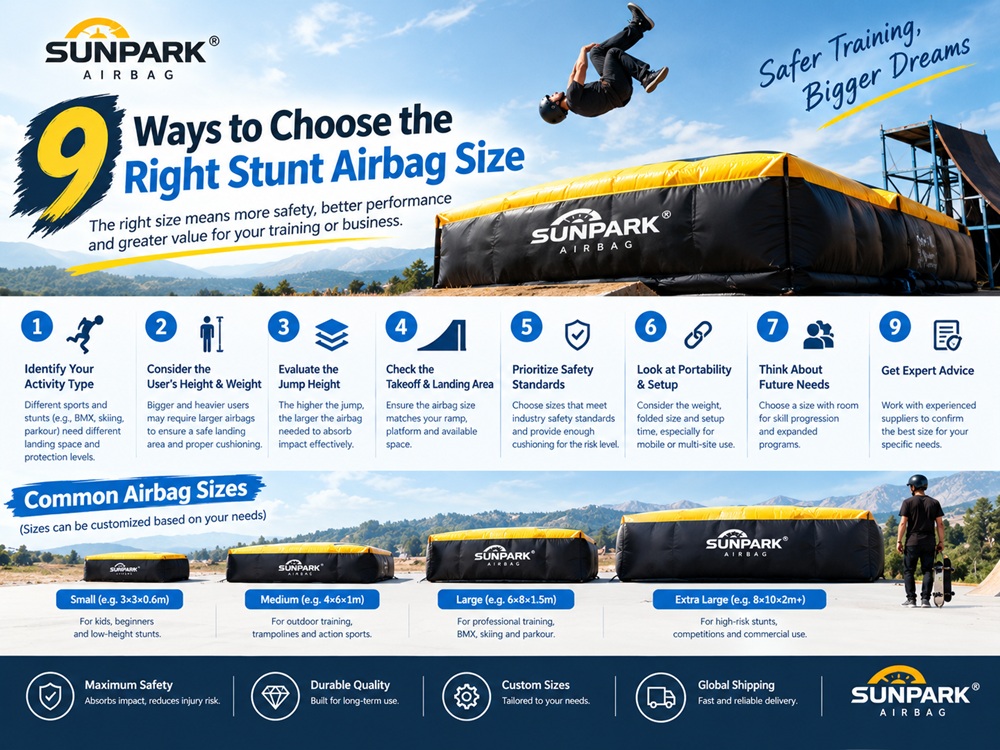
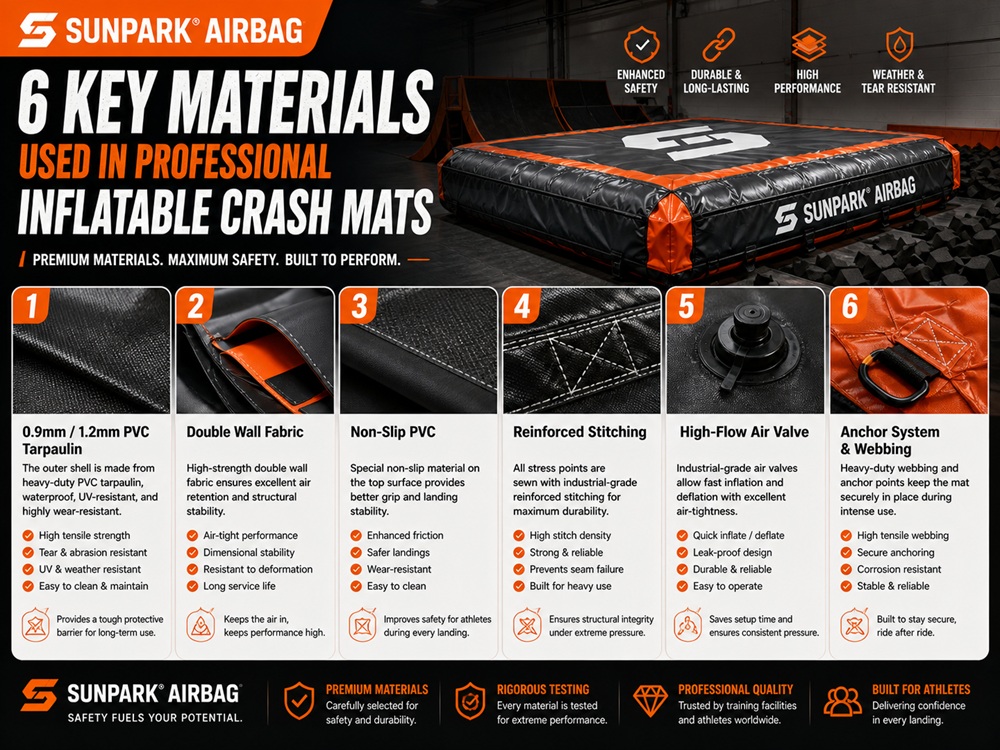
If you are a commercial operator looking to upgrade your facility’s safety profile, you must evaluate the hardware rigorously. Do not purchase uncertified, generic inflatables. You need engineered solutions with independent air chambers and adjustable venting to accommodate different rider weights. Evaluate the material durability—heavy-duty PVC topsheets are mandatory to withstand pedal strikes and tire friction.
| Feature | What to Look For | Why It Matters |
|---|---|---|
| Chamber Design | Dual-chamber or multi-pillar construction. | Prevents the rider from bottoming out on the ground during a heavy impact. |
| Material Specs | 0.55mm to 0.9mm Plato PVC Tarpaulin. | Ensures the airbag survives UV exposure, rain, and sharp bike components. |
| Venting System | Adjustable pressure release valves. | Allows the operator to tune the firmness for BMX (firmer) vs. MTB (softer). |
| Manufacturer Record | Decade+ experience, custom sizing. | Brands like SUNPARK® understand extreme sports kinetics, unlike generic bounce-house makers. |
Expert Recommendation
We recommend a holistic approach to your progression. Stop viewing safety gear and training facilities as a tax on your fun, and start viewing them as performance enhancers. For commercial users, integrating a SUNPARK® AIRBAG is the single highest-ROI investment you can make in your facility’s safety infrastructure. It transforms a high-risk dirt jump line into a high-repetition training laboratory. Implement these Cycling Injury Prevention Strategies today, audit your equipment tonight, and you will be riding tomorrow instead of sitting in a waiting room.