The family entertainment and leisure industry has reached a critical turning point. In the early 2010s, simply opening a warehouse filled with basic trampolines and a foam pit was a license to print money. That era is definitively over. Today’s consumers, heavily influenced by extreme sports media and action-oriented content, demand immersive, high-adrenaline experiences that they cannot replicate in their backyards. If you are an operator still relying on deteriorating foam blocks and generic bounce zones, your facility is bleeding revenue through high maintenance costs and declining customer retention.
From our experience consulting with the most profitable entertainment centers globally, survival in 2026 requires ruthlessly evaluating your attractions based on throughput, maintenance overhead, and safety liability. The solution is entirely architectural: replacing static, unhygienic legacy equipment with dynamic, high-performance inflatable infrastructure. We are going to break down the exact Indoor Adventure Park Ideas that are driving massive ROI right now. We will explain not only what these attractions are, but whether they are actually worth buying and installing in your specific facility.
Quick Answer: What are the Best Indoor Adventure Park Ideas?
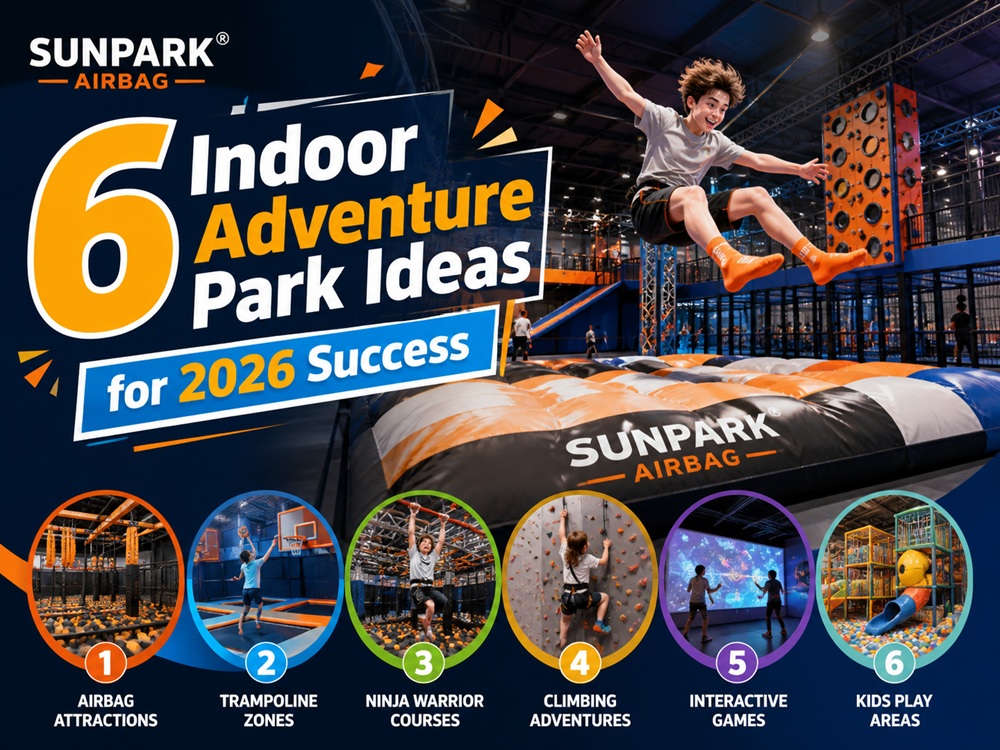
The most profitable Indoor Adventure Park Ideas for 2026 transition away from traditional trampolines and toxic foam pits toward extreme sports emulation using advanced pneumatic technology. The top concepts include Freestyle BMX/MTB jump zones, elevated stunt freefall towers, professional gymnastics training sectors, and advanced Ninja Warrior courses. The critical factor for success is replacing outdated impact zones with commercial-grade airbag landing systems, which increase rider throughput by up to 300%, eliminate foam dust hazards, and drastically reduce long-term maintenance costs.
What It Is: The Evolution of Indoor Parks
An indoor adventure park is a large-scale commercial facility designed to offer active, physical entertainment. Historically, these were branded as “trampoline parks.” However, the modern adventure park has evolved into a multi-disciplinary extreme sports hub. It incorporates elements of parkour, free-running, freestyle BMX, and acrobatic stunt training.
The defining characteristic of a 2026 adventure park is its reliance on zero-impact landing technology. Facility owners have realized that traditional landing zones are financial liabilities. Understanding the foam pit vs airbag comparison is the first step in modernizing a facility. Today’s successful parks utilize proprietary air-chamber systems that catch users safely, regardless of their trajectory, and allow them to exit the landing zone in seconds rather than minutes.
How Modern Park Attractions Work
The mechanics of these high-tier Indoor Adventure Park Ideas rely entirely on throughput—the number of guests who can cycle through an attraction per hour. In a legacy foam pit, a jumper lands, sinks into the foam, and spends 45 to 60 seconds physically struggling to crawl out. During this time, the attraction is blocked. Nobody else can jump.
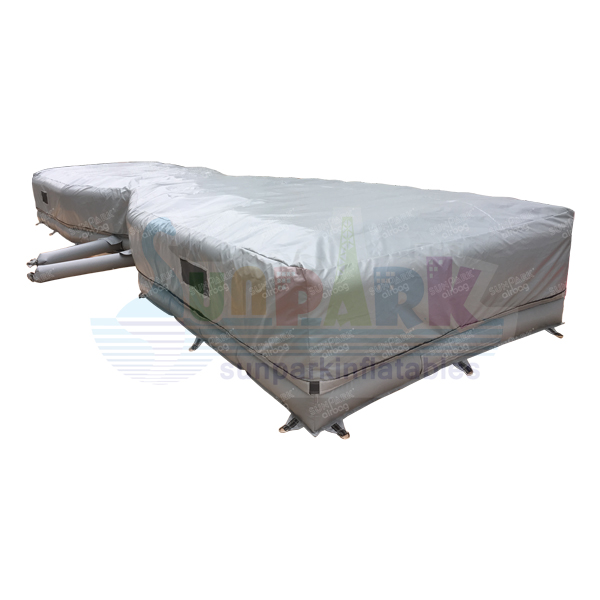
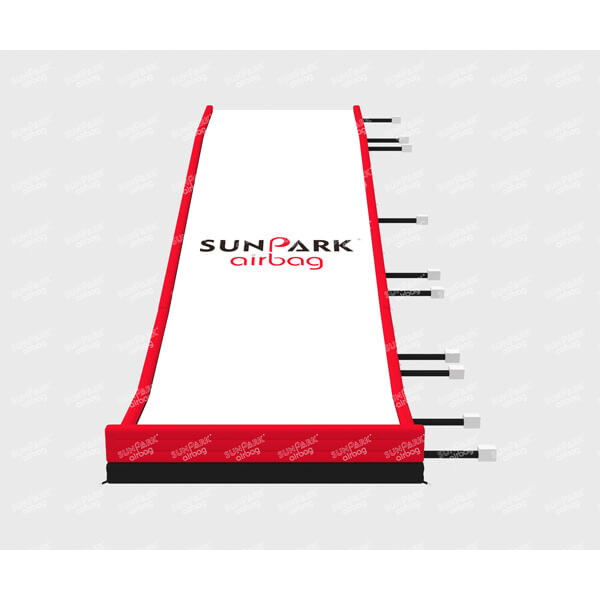
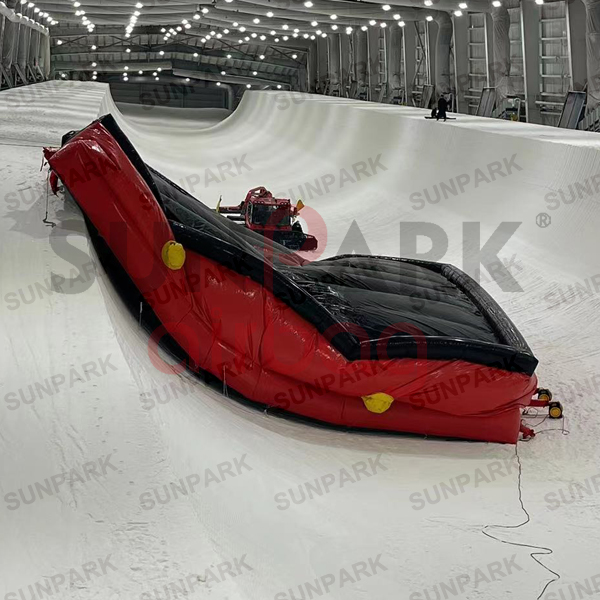
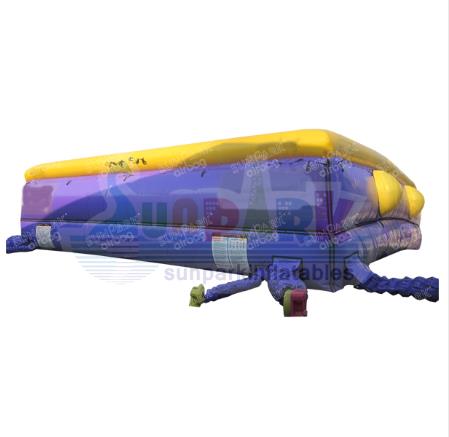
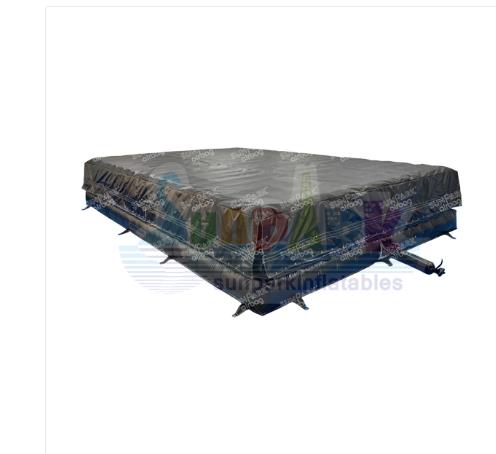
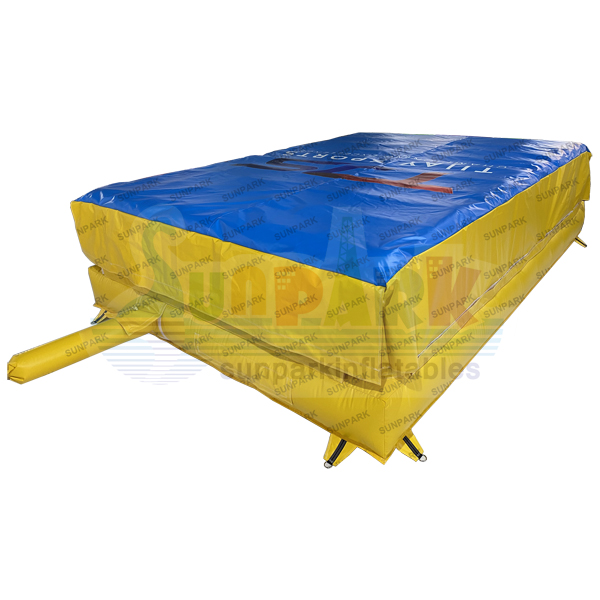
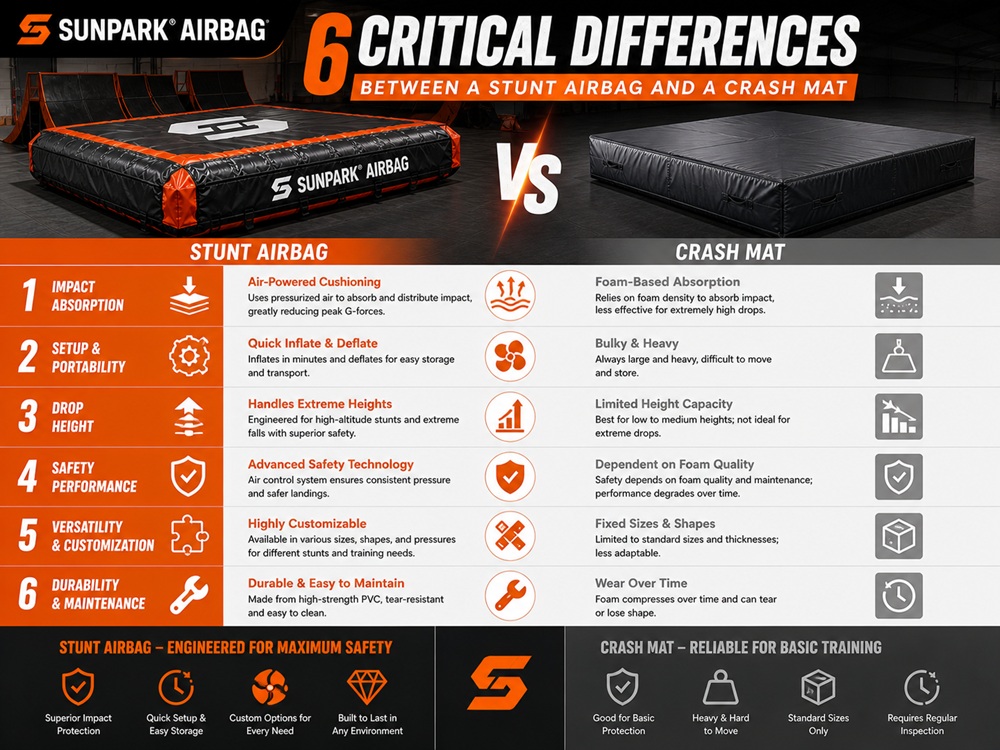
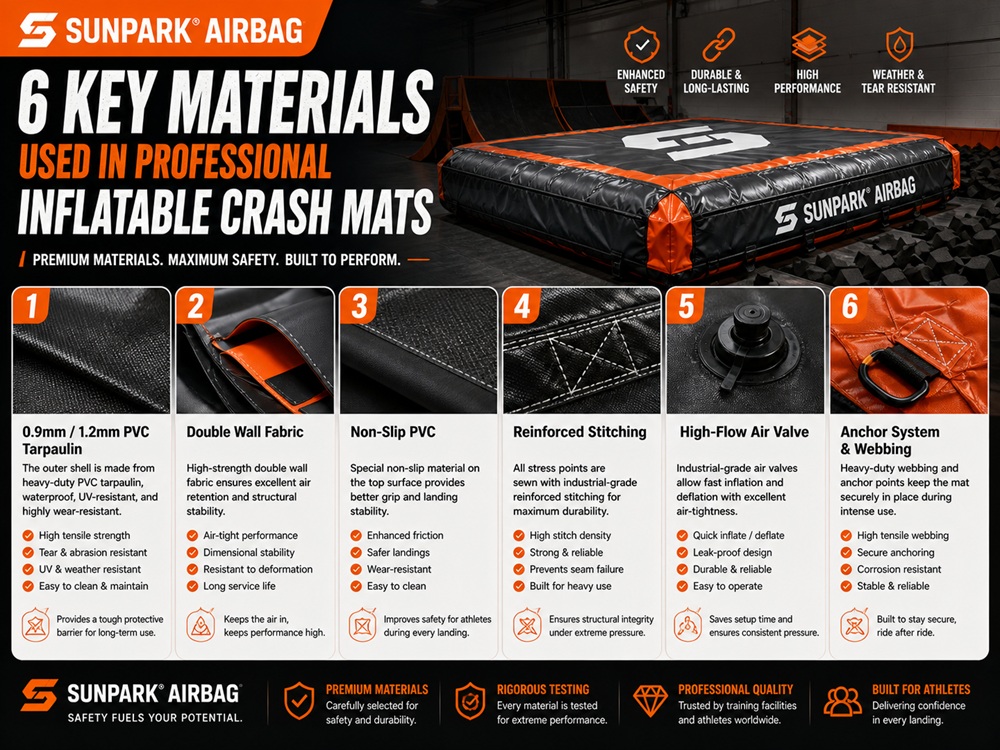
Modern attractions work by utilizing shock-absorbing, multi-chambered airbags. When a guest lands on a commercial airbag, the top layer absorbs the kinetic energy through calibrated air release valves, while the bottom layer remains firm to prevent bottoming out. Because the top sheet is taut and smooth, the jumper can simply stand up and walk off the bag in less than five seconds. This mechanical efficiency allows operators to cycle 10 to 12 jumpers per minute through a single attraction, exponentially increasing the park’s capacity and overall revenue potential.
6 High-ROI Indoor Adventure Park Ideas for 2026
1. Freestyle BMX and MTB Jump Zones
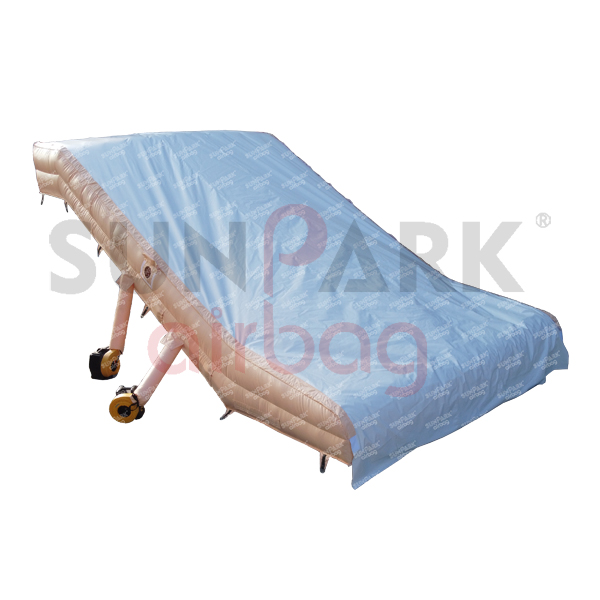
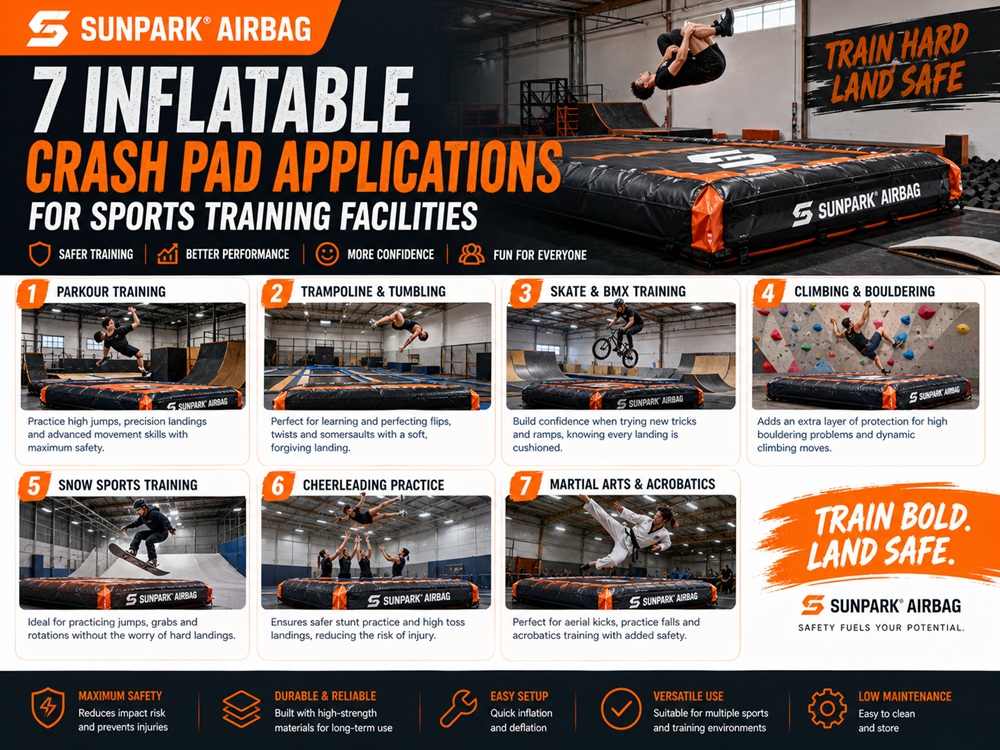
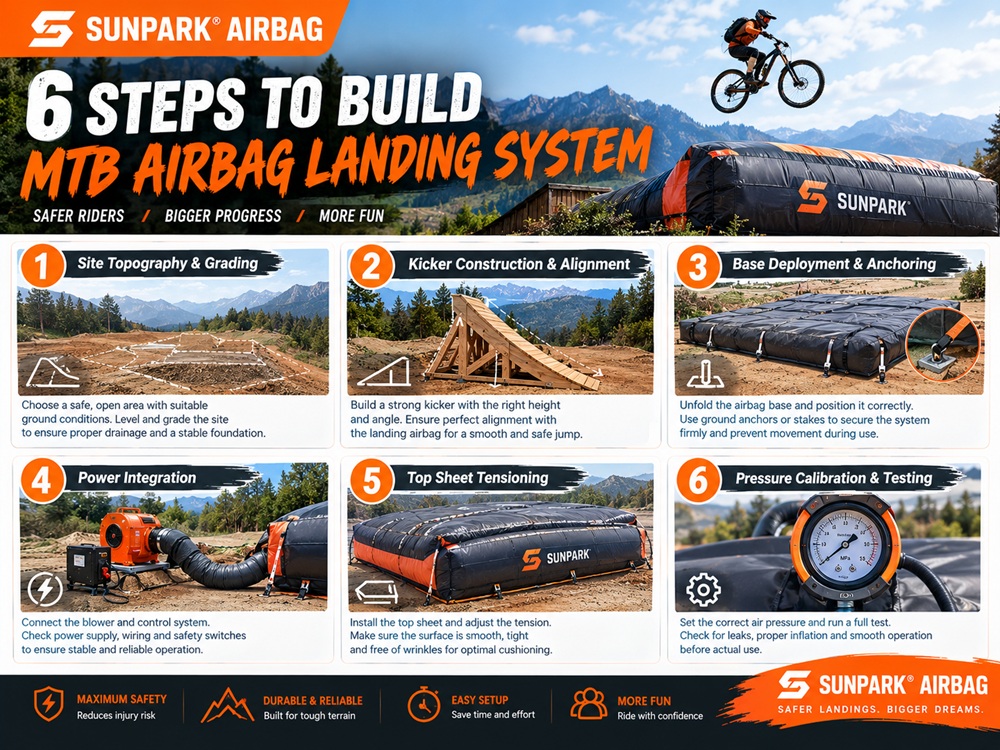
Action sports enthusiasts are a massive, underserved demographic in the indoor park sector. Building a specialized wooden or composite ramp system that launches riders into a bike airbag landing creates a dedicated training facility that operates year-round, regardless of weather. These riders buy monthly memberships, not just single-day passes, providing predictable, recurring revenue.
2. Elevated Stunt Freefall Towers
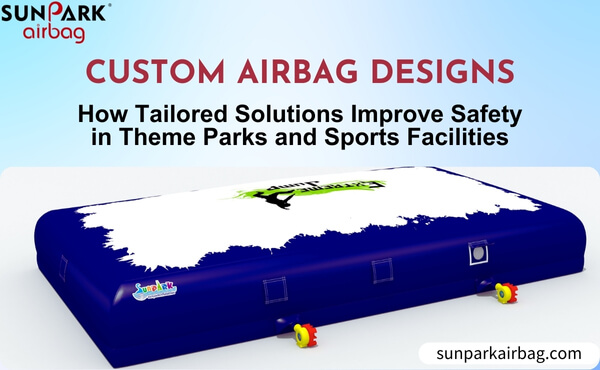
For commercial users looking to create a “hero attraction” that dominates local social media, the stunt tower is unmatched. Guests jump from elevated platforms (typically 2 to 4 meters high) into a massive stunt airbag landing. It taps into the adrenaline of a Hollywood stunt sequence. The operational footprint is minimal compared to the psychological impact and marketing value it generates.
3. High-Performance Gymnastics and Parkour Sectors
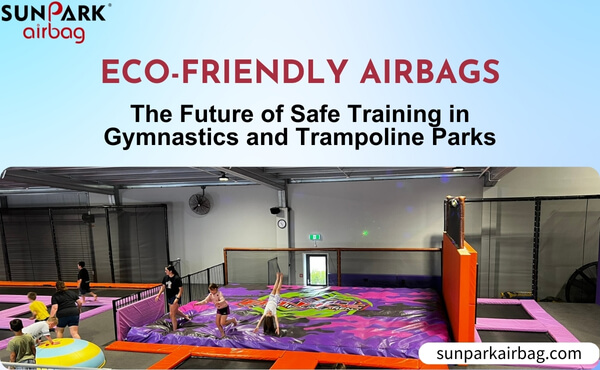
Do not isolate your demographic to toddlers and young children. Teenagers and young adults engaging in parkour and tricking need safe zones to practice complex flips. Integrating professional gymnastics airbag equipment adjacent to sprung floors and tumble tracks attracts serious athletes and specialized training camps.
4. The Big Jump / Mega Drop Attraction
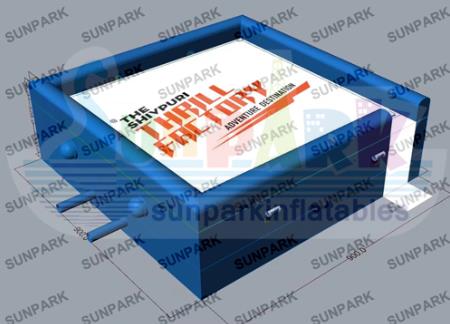
This is the ultimate evolution of the trampoline launch. By positioning high-performance trampolines or launch ramps in front of a big jump airbag system, you allow guests to achieve massive airtime with zero fear of a hard landing. This is consistently the highest-rated attraction in post-visit customer surveys.
5. Next-Gen Ninja Warrior Courses
Ninja courses are incredibly popular, but the traditional foam blocks or thin tumbling mats placed underneath them lead to rolled ankles and hygiene complaints. Upgrading the fall zones beneath the swinging rings and warped walls with a continuous inflatable crash mat ensures a sanitary, perfectly calibrated safety net that requires zero fluffing or daily maintenance.
6. Indoor Moto and Dirt Bike Training
For heavy-duty applications in massive warehouse spaces, nothing draws a crowd quite like indoor freestyle motocross. While highly specialized, installing a dirt bike airbag landing positions your facility as a premier regional or national training hub for professional FMX riders, drawing spectators and massive sponsorship opportunities.
Commercial Benefits of Upgrading
In most professional situations, operators resist upgrading because of the initial capital expenditure. However, the commercial benefits of executing these Indoor Adventure Park Ideas are undeniable. First, the reduction in maintenance labor is absolute. You no longer have to pay staff to empty, clean, and replace toxic, crumbling foam blocks. Second, facility hygiene skyrockets. Antimicrobial top sheets on modern airbags can be sanitized daily in minutes, a massive selling point for parents post-2020.
Finally, your insurance premiums will likely stabilize or decrease. The predictability and safety data surrounding top-tier airbags provided by reputable trampoline park equipment manufacturers are highly favored by risk management underwriters compared to the unpredictable hazard of unmaintained foam pits.
Limitations and Infrastructure Constraints
We must use commercial and practical judgment: these attractions are not viable for every space. The primary limitation is ceiling height. You cannot safely operate a stunt jump or a big air launch without a minimum of 6 to 8 meters (20 to 26 feet) of vertical clearance. Secondly, pneumatic systems require constant power to run the internal blowers. While modern blowers are highly efficient, you must account for the continuous electrical draw and the ambient noise they generate, which requires acoustic planning in your facility design.
Who Should Use It vs. Who Does Not Need It
For commercial users: Any operator looking to open a new 15,000+ square foot facility, or a current owner facing declining ticket sales, must implement these extreme-sports-focused Indoor Adventure Park Ideas. If you want to capture the lucrative teenage and young adult market, advanced airbag attractions are mandatory.
Who does not need it: For beginners operating small-scale daycares, soft-play areas for toddlers under 5 years old, or facilities with low ceiling heights (under 15 feet), heavy-duty airbag systems and stunt towers are an unnecessary overcapitalization. Stick to standard soft-play modular framing.
Common Mistakes in Park Design
The most catastrophic mistake we see operators make is buying cheap, uncertified landing equipment from anonymous overseas brokers to save a few thousand dollars. An airbag is a life-safety device. If the internal baffling tears or the air release valves fail to calibrate, a jumper will bottom out against the concrete floor. You must purchase from verified manufacturers.
Another frequent error involves the secondary market. While attempting to save money, operators often look for used gear. If you do not know how to inspect the seams and blower capacity, you are buying liability. If you must go this route, heavily study buy used airbag landing tips to avoid acquiring structurally compromised equipment.
Buying Considerations and ROI
When selecting equipment to bring your Indoor Adventure Park Ideas to life, prioritize modularity and top-sheet durability. A commercial top sheet will eventually wear out from thousands of daily impacts; ensure the manufacturer provides a system where the top sheet is easily replaceable via Velcro or heavy-duty zippers, rather than having to replace the entire airbag unit.
| Feature | Legacy Foam Pit Systems | Modern Airbag Systems |
|---|---|---|
| Throughput (Cycles/Min) | Low (1-2 jumpers per minute) | High (10-12 jumpers per minute) |
| Maintenance Cost | High (Constant foam replacement) | Low (Daily wipe down, annual checks) |
| Hygiene Factor | Poor (Traps sweat, dust, bacteria) | Excellent (Antimicrobial, wipeable surface) |
| Visual Appeal | Outdated, messy | Premium, extreme-sports aesthetic |
| Pros | Cons |
|---|---|
| Drastically increases park capacity and daily revenue. | Higher upfront capital expenditure than foam. |
| Attracts serious athletes and recurring memberships. | Requires high ceilings and large facility footprints. |
| Eliminates the risk of fire associated with polyurethane foam. | Continuous electrical cost to run inflation blowers. |
| Offers massive social media and marketing appeal. | Requires stringent daily safety inspections. |
Expert Recommendation
In most professional situations, the decision to build or retrofit an adventure park comes down to long-term profitability. You cannot build a 2026 facility using 2010 technology and expect to dominate your local market. We strongly recommend entirely abandoning foam pits and investing your capital into specialized airbag landing zones. Whether you are installing a high-flying stunt jump or evaluating the bike airbag landing systems for a BMX zone, the operational efficiency of airbags will pay for the initial investment within the first 12 to 18 months.
SUNPARK® AIRBAG – Explorer of Airbag System for Sports
With over 10 years of experience, we provide freestyle airbags for ski resorts, theme parks, sports, and gymnastics facilities around the globe. SunparkAirbag® is the leading manufacturer of Airbags for Extreme Sports and Leisure Industries in China. As extreme sports developed, more and more snowboarders and serious sports enthusiasts are looking for safer training possibilities to progress without risks of getting injured. We create products for World Champion Snowboarders, famous riders, and trampoline parks worldwide. We are deeply committed to the development and improvement of our own products.
When you partner with SUNPARK® AIRBAG, you are not just buying a piece of vinyl; you are investing in a proven, safety-certified infrastructure that will be the focal point of your commercial success.
Frequently Asked Questions (FAQ)
Authoritative References
To ensure your facility meets international safety and operational standards, we advise consulting the following organizations:
- ASTM International – Provides the global safety standards for trampoline courts and amusement rides (e.g., ASTM F2970).
- IAAPA (International Association of Amusement Parks and Attractions) – The premier trade association representing the diverse and ever-changing attractions industry.
- RoSPA (Royal Society for the Prevention of Accidents) – Offers comprehensive safety guidelines and risk assessment protocols for leisure and extreme sports facilities.