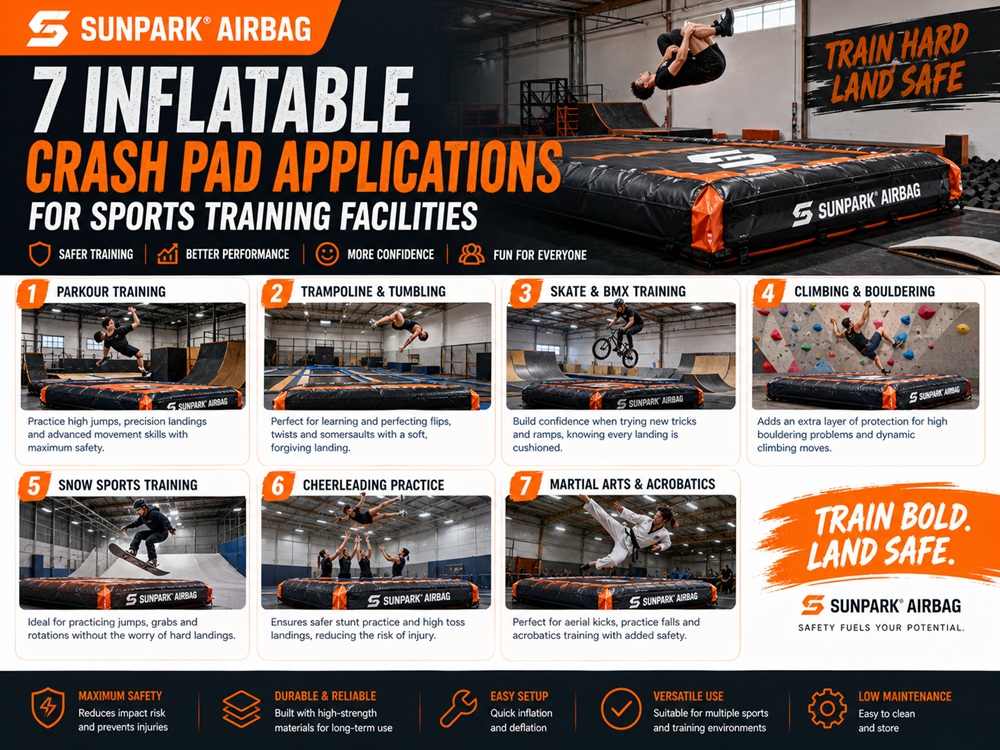
The commercial entertainment landscape has shifted permanently. If your family entertainment center (FEC) is still relying on static arcade machines, standard open-trampoline grids, and dusty foam pits to drive recurring revenue, your facility is running on borrowed time. Modern guests—especially Gen Z and millennial parents—demand high-octane physical engagement, gamified technology, and shareable social media moments. Stagnant venues that fail to modernize their floor plans face rising customer acquisition costs, declining party bookings, and crippling liability insurance premiums.
From our experience engineering and supplying impact attenuation systems to theme parks, adventure venues, and sports facilities globally, adding high-yield dynamic installations is the only reliable way to elevate per-square-foot profitability. Modernizing your facility requires strategic operational judgment: you must choose attractions that maximize guest throughput, reduce daily cleaning overhead, and lower insurance liability. In this comprehensive industry analysis, we break down the 5 modern Attractions Every Family Fun Center needs in 2026, delivering straight commercial insights, mechanical breakdowns, and CapEx comparisons to help you make high-conviction buying decisions.
Quick Answer: Top 5 High-ROI Attractions for Modern FECs
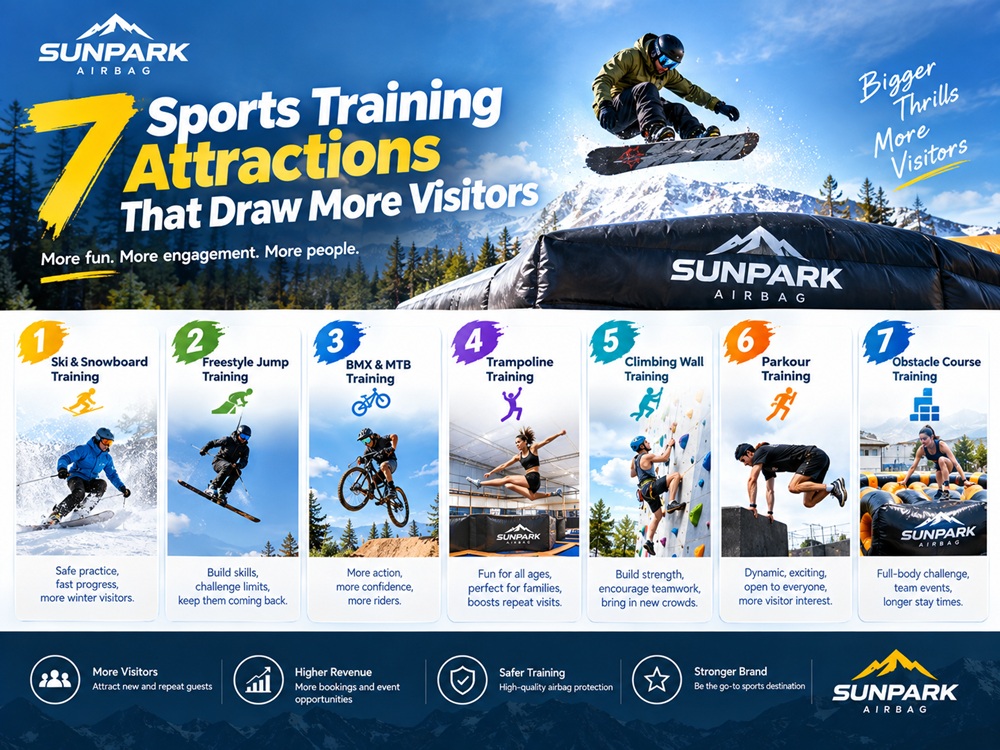
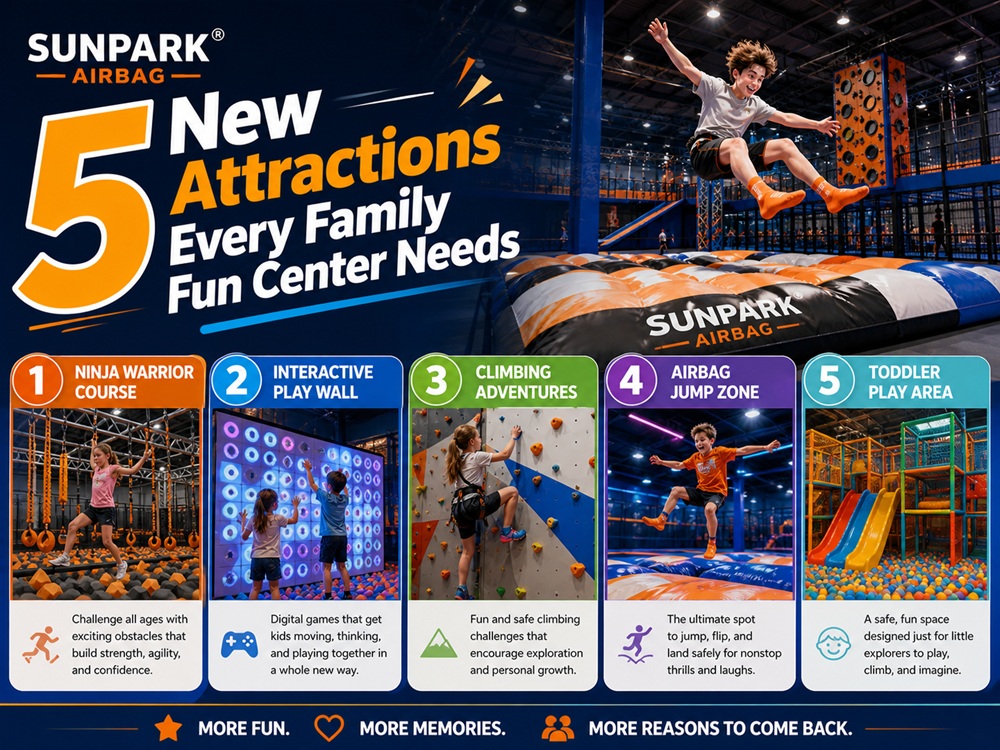
To capture market share, drive party packages, and slash operating maintenance, the 5 essential Attractions Every Family Fun Center must install in 2026 are: 1. Freestyle Stunt Jump Airbags (replacing high-liability, unsanitary foam pits), 2. Modular Ninja Warrior Courses with Continuous Inflatable Landing Systems, 3. Gamified Augmented Reality (AR) Trampoline Walls, 4. Indoor Modular Micro-Pumptracks with Airbag Landing Ramps, and 5. Interactive Cyber Climbing Towers. These attractions deliver high guest throughput, minimal recurring maintenance costs, and exceptional safety compliance under ASTM F2970 standards.
What Defines Next-Generation FEC Attractions?
A successful modern attraction is no longer defined by how much steel and padding you can bolt into a concrete slab. In today’s commercial entertainment market, a top-tier attraction must fulfill three distinct operational criteria: Active Throughput Velocity, Low Labor-Hour Maintenance, and Visual Spectacle Value.
When assessing trampoline park owner income benchmarks, facilities that replace passive, high-maintenance zones with active, gamified, and low-friction equipment consistently generate 35% higher secondary spend across birthday parties and corporate team-building events. Next-generation attractions eliminate physical bottlenecks, allowing guests to cycle through experiences rapidly without long queue lines, while providing soft landings that keep liability risk low.
How Modern Impact Deceleration & Gamification Work
Understanding the internal engineering of modern attractions explains why legacy equipment is obsolete:
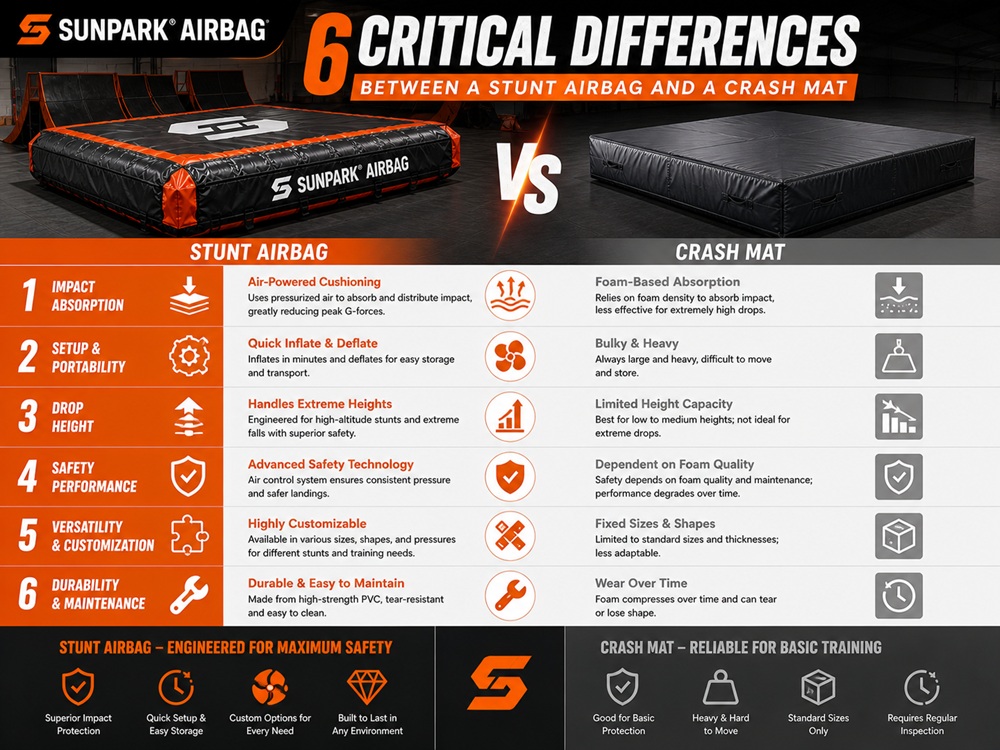
1. Dual-Chamber Zero-Shock Deceleration: Legacy foam pits rely on open-cell polyurethane foam cubes to cushion falls. Over time, foam pulverizes into microscopic dust, absorbs bodily sweat, and bottoms out onto concrete. Modern safety installations use a dual-chamber inflatable jump airbag system. The bottom chamber remains at high pressure to prevent bottoming out, while the top chamber features calibrated air-exhaust relief valves and internal air columns that collapse progressively under the jumper’s kinetic energy, delivering a zero-g deceleration curve.
2. Continuous Top-Sheet Tensioning: High-end commercial airbags feature ripstop PVC or topsheet nylon covers coated with low-friction coatings. This tensioned surface allows jumpers to land, absorb the impact, and immediately stand up and walk off the airbag in under three seconds, accelerating hourly throughput by over 400% compared to clawing through sticky foam blocks.
3. Optical Sensor & Camera Gamification: AR jump platforms and digital climbing walls utilize low-latency LiDAR depth sensors and computer vision projectors. These systems project interactive gaming graphics directly onto physical walls or trampoline mats, scoring points in real time and digitizing physical exertion for modern video-game-native demographics.
The 5 Core Attractions Every Family Fun Center Needs
1. Freestyle Stunt Jump Airbags & Trapeze Platforms
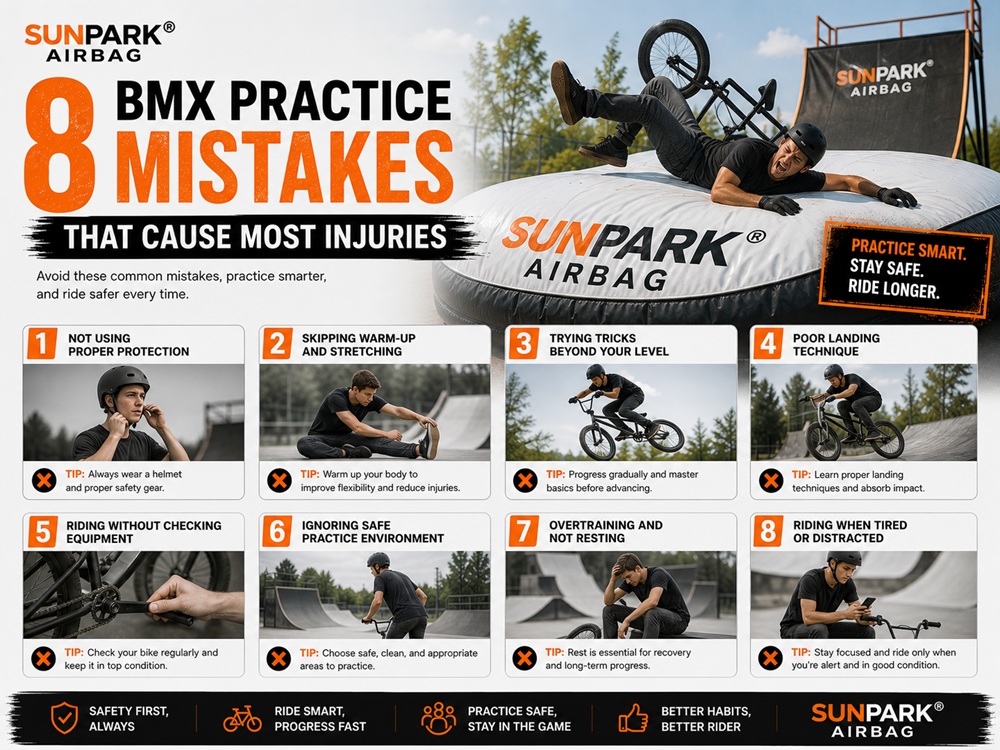
The open-cell foam pit is the single greatest operational liability in the modern amusement industry. Foam cubes disintegrate into volatile organic compound (VOC) dust, collect dropped cell phones, harbor bacteria, and require complete removal every single week for vacuuming and fire-retardant inspection. Replacing your foam pit with an engineered landing airbag solutions platform is the highest-ROI facility upgrade available.
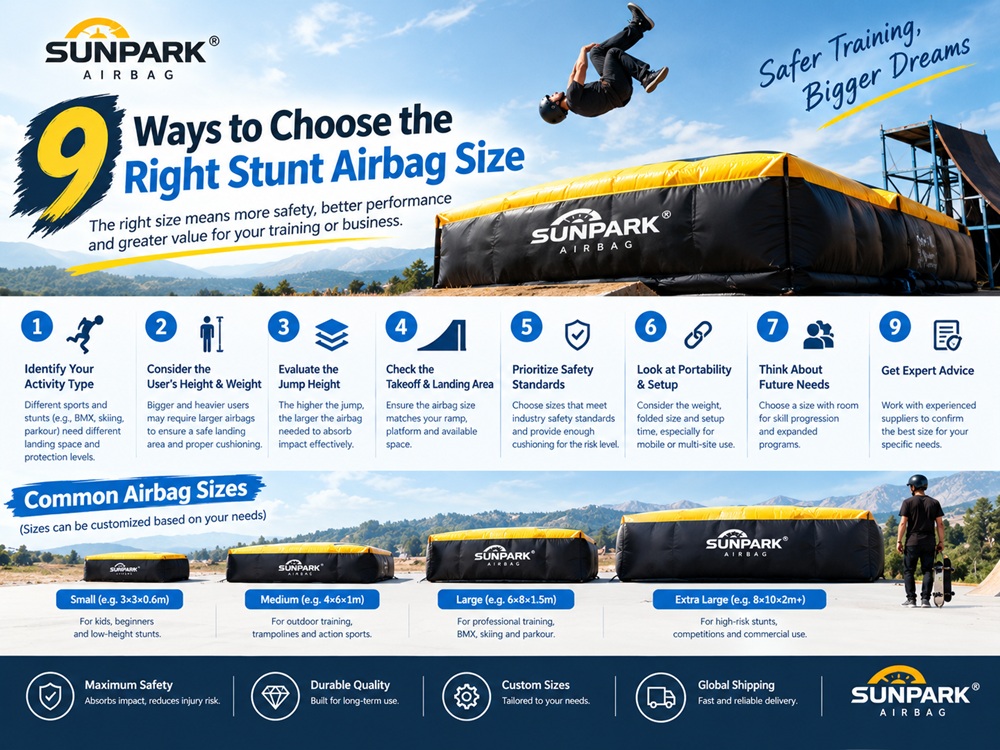
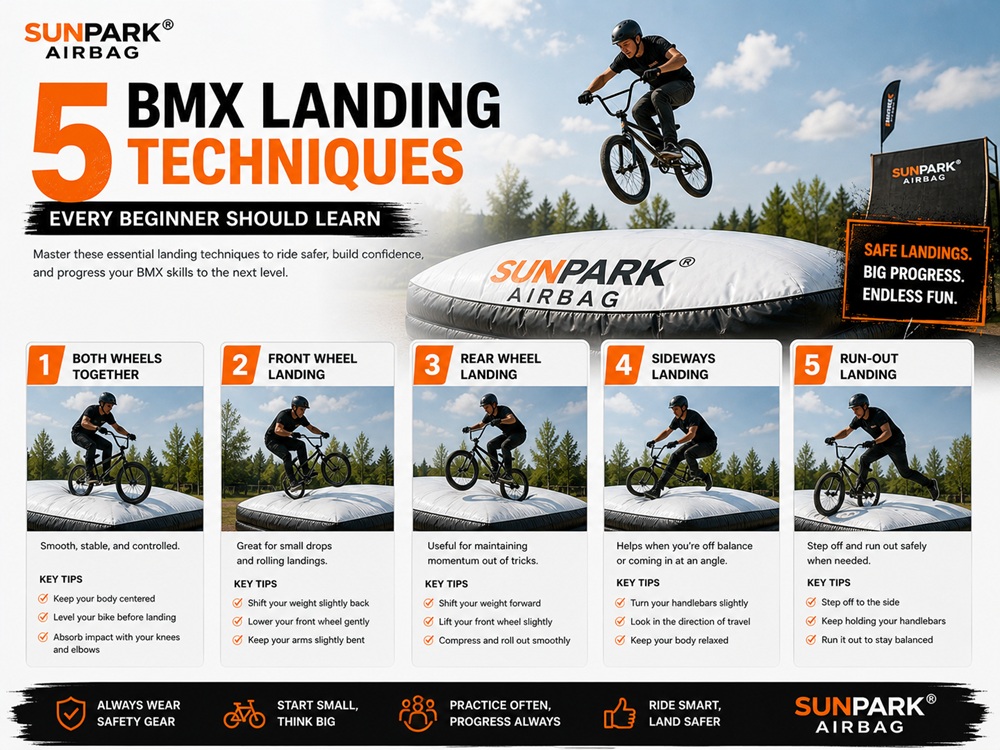
Equipped with elevated jump towers (6-foot and 10-foot drop platforms), slacklines, battle beams, or trapeze swings, a commercial stunt jump airbag offers heart-stopping thrill metrics with pristine hygiene. Guests land on a wipe-clean, antimicrobial satin topsheet and exit the zone instantly. In our testing, swapping a 20×40-foot foam pit for a custom-branded airbag reduces daily maintenance labor by up to 15 hours per week while eliminating replacement foam block procurement entirely.
2. Modular Ninja Warrior Courses with Continuous Inflatable Catch Basins
Television franchises have turned obstacle course competition into a multi-million-dollar industry. However, early commercial ninja courses made the critical mistake of building over individual foam cubes or hard foam mats, leading to twisted ankles and constant operational downtime. Modern operators install multi-lane modular aluminum truss systems suspended over continuous gym airbag for training catch basins.
Features include monkey rings, hanging cargo nets, spinning logs, and warped walls. With a continuous inflatable floor beneath the entire truss structure, dropped participants bounce safely and clear the lane immediately, allowing multiple guests to tackle parallel lanes simultaneously for timed head-to-head racing.
3. Gamified Augmented Reality (AR) Trampoline & Climbing Walls
Standard climbing walls and isolated trampolines have become commodity offerings. Integrating projection-mapped AR systems converts solitary physical exercise into an interactive e-sports tournament. Systems like ValoJump and augmented bouldering walls project animated games, obstacle tracking, and competitive digital challenges directly onto the playing surface.
High-resolution optical tracking reads the participant’s body movements without requiring wearable sensors or tethered headsets. Players fight digital villains, play high-speed pong with their body outlines, and record automatic video replays that are emailed instantly to parents—generating free organic social media marketing across TikTok and Instagram for your venue.
4. Indoor Micro-Pumptracks & Action Sports Jump Lines
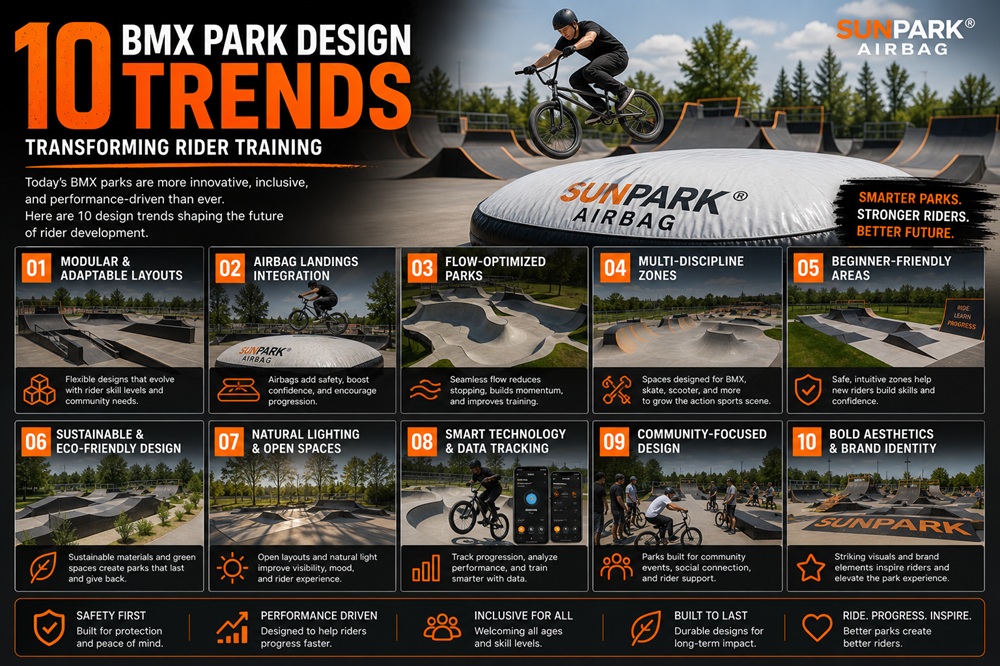
To capture the high-spending teen and young adult demographic, forward-thinking FECs are dedicating square footage to micro-action sports zones. Using modular composite pumptrack sections, facilities allow guests to ride balance bikes, pro scooters, and dirt jump rigs across flowing berms and rollers.
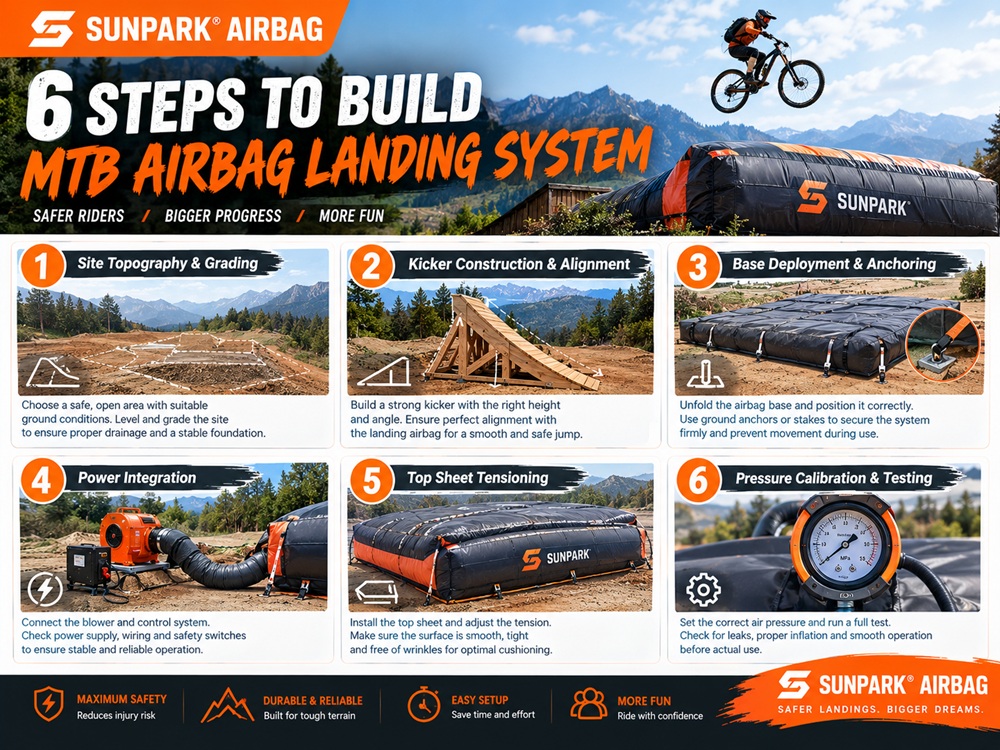
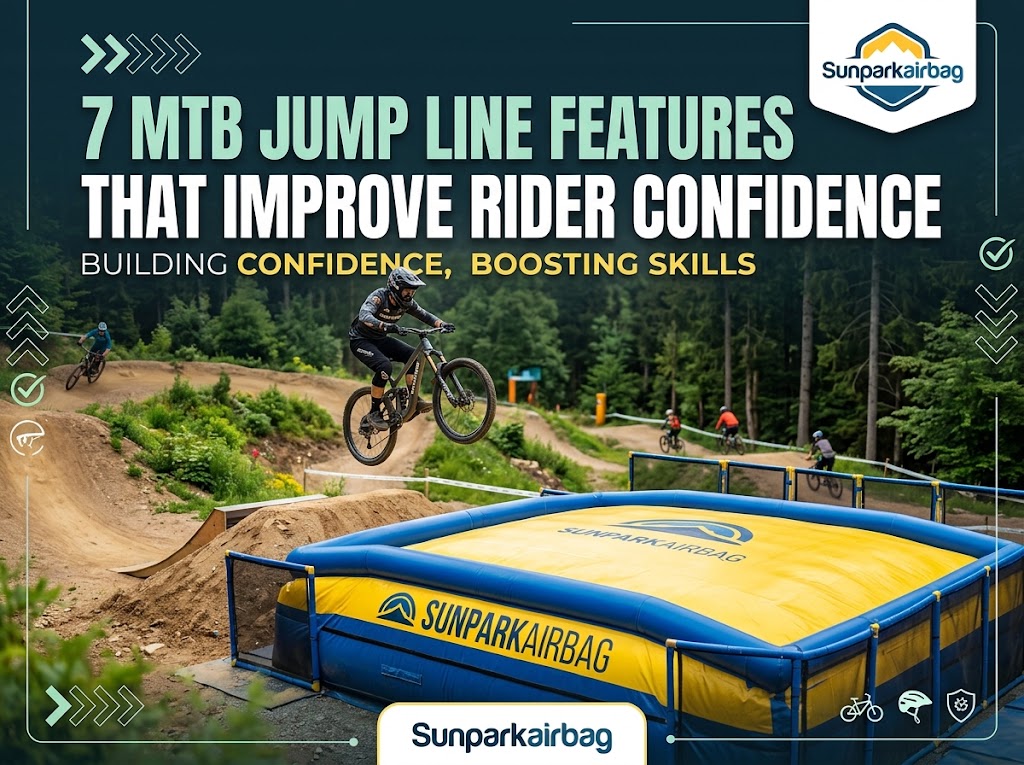
The anchor of this zone is a dedicated airbag landing ramp system or specialized MTB airbag landing system. Unlike wooden or concrete transition ramps that punish novice mistakes, an inflatable landing ramp features an inclined, air-dampened slope that absorbs heavy case landings and washouts without injury. It bridges the gap between commercial recreation and action sports progression, creating high-ticket evening session demand from local sports communities.
5. Interactive Cyber Climbing Towers & Pillar Steppers
Vertical real estate is the most underutilized asset in commercial leisure venues. High ceilings (20 to 30 feet) allow you to install self-belayed interactive climbing columns, illuminated transparent face-off walls, and freefall drop slides. These attractions consume minimal floor square footage while commanding premium add-on ticket pricing.
Equipped with magnetic eddy-current auto-belay units and impact-attenuating base cushions, these towers operate with a lean staff-to-guest ratio of 1:8, maximizing gross profit margins during peak weekend operating hours.
| Attraction Category | Average Footprint (Sq Ft) | Throughput (Guests/Hr) | Maintenance Overhead | Average ROI Timeline |
|---|---|---|---|---|
| Freestyle Stunt Jump Airbag | 600 – 1,500 | 120 – 180 | Ultra-Low (Daily wipe-down) | 5 – 8 Months |
| Modular Ninja Course + Airbag | 1,200 – 3,500 | 80 – 140 | Low (Periodic bolt torquing) | 7 – 10 Months |
| Augmented Reality Trampoline Wall | 250 – 500 | 30 – 45 per unit | Low (Projector bulb/sensor check) | 6 – 9 Months |
| Indoor Micro-Pumptrack & Ramp | 2,000 – 5,000 | 60 – 100 | Medium (Surface cleaning/air blowers) | 8 – 12 Months |
| Cyber Climbing Towers | 400 – 1,000 | 40 – 60 | Low (Annual auto-belay recertification) | 6 – 10 Months |
Commercial & Operational Benefits for FEC Owners
Upgrading to modern, active, low-friction entertainment assets generates tangible balance-sheet improvements:
1. Drastic Reduction in General Liability Insurance Premiums: Insurance underwriters view open foam pits and poorly cushioned transitions as catastrophic risk centers due to spine and neck deceleration spikes when jumpers bottom out. Installing certified dual-chamber airbags and magnetic auto-belays provides documented impact attenuation data (G-max ratings below 100G), enabling operators to negotiate substantial premium discounts with leisure insurance carriers.
2. Elimination of Consumable Maintenance Costs: Traditional foam pits require operators to spend thousands of dollars annually replacing crumbling foam cubes, which lose density and violate local fire codes. A commercial PVC airbag system has an operating lifespan exceeding 6 to 8 years with minimal operating cost beyond continuous low-wattage air blowers.
3. Expansion into Off-Peak Demographics: Standard toddler play structures leave venues empty on weekday evenings. Gamified ninja warrior leagues, micro-pumptrack sessions, and extreme jump lines allow venues to capture adult fitness enthusiasts, high-school sports teams, and corporate team-building bookings during historically slow Monday-to-Thursday slots.
Technical Constraints & Floor Space Realities
We exercise strict commercial judgment: not every attraction fits every building. When planning a retrofit or examining overall trampoline park construction cost structures, physical building geometry governs feasibility.
Stunt jump towers and climbing columns require a minimum clear ceiling height of 18 to 24 feet beneath unobstructed structural trusses. If your facility has a 14-foot ceiling, vertical jump towers are impossible; your capital is better allocated toward modular AR trampoline walls and horizontal ninja warrior agility grids. Additionally, all continuous-airflow inflatable systems require dedicated 110V/220V electrical circuits for constant air blowers, requiring adequate electrical panel capacity before delivery.
Who Should Upgrade vs. Who Should Wait
For commercial operators with aging facilities (3+ years old): If your ticket sales have plateaued and customer reviews cite worn-out equipment or dirty foam pits, an immediate attraction retrofit is mandatory to prevent customer churn to newer regional competitors.
Who does not need it: Micro-footprint venues under 4,000 square feet or single-focus boutique arcade cafes. High-volume active physical attractions require adequate perimeter clearance zones and dedicated safety marshaling; cramming an oversized stunt jump into an undersized space creates severe cross-traffic hazards.
| Performance Metric | Dual-Chamber Commercial Airbags | Open Foam Cube Pits | Standard Foam Floor Mats |
|---|---|---|---|
| Throughput Speed | Immediate: Jumper walks off in 2-3 sec | Extremely Slow: 15-30 sec struggling | Immediate: Walk-off surface |
| Hygiene & Cleanliness | Superior: Non-porous wipe-clean topsheet | Terrible: Harbors sweat, skin cells, dust | Moderate: Vinyl mat wiping |
| Impact Softness | Progressive: Zero-G progressive deceleration | Variable: High bottoming-out risk | Hard: High G-force impact shock |
| Fire Safety Rating | Certified: NFPA 701 / DIN 4102-1 B1 flame-retardant | High Risk: Crumbling foam ignites rapidly | Certified: Flame-retardant vinyl |
Common Procurement and Layout Mistakes
In our factory audits and site commissionings, park owners repeatedly make four expensive procurement errors:
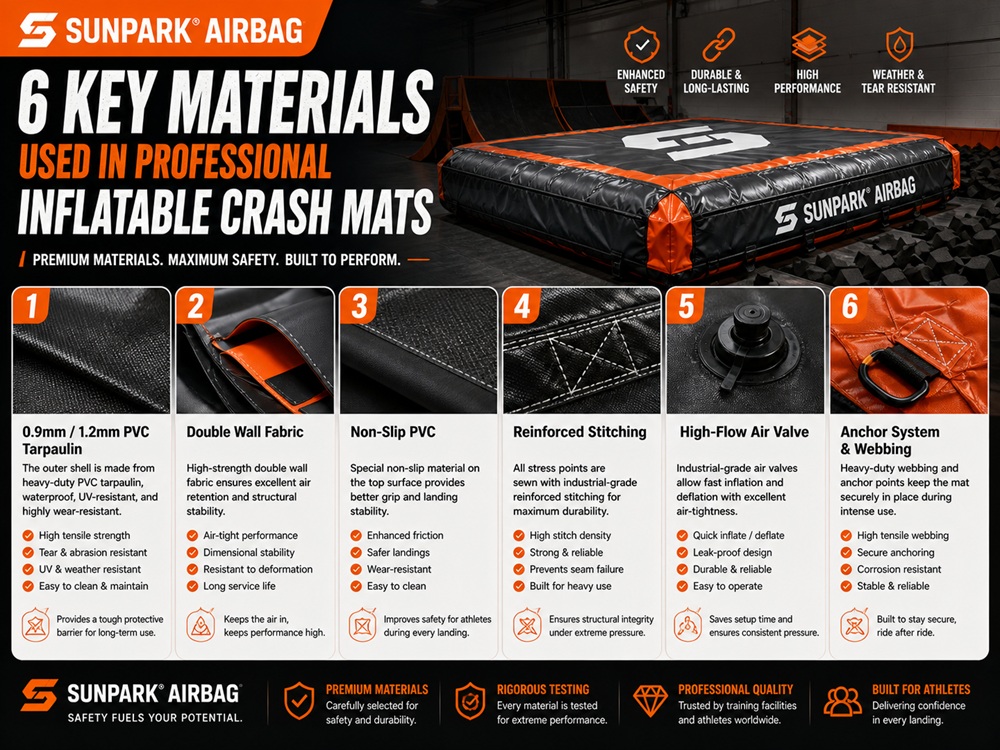
1. Sourcing Non-Commercial Inflatables: Buying low-cost novelty bouncy castles from uncertified suppliers to act as stunt jump landing zones is an extreme safety violation. Commercial landing zones require heavy-duty 0.55mm to 0.9mm reinforced PVC tarpaulin with internal baffled air channels, high-output centrifugal blowers, and certified shear-resistant topsheets.
2. Inadequate Fall Clearance Perimeters: Placing structural steel columns or hard barriers within 6 to 8 feet of an attraction’s dismount zone without impact padding violates ASTM amusement device standards and creates major legal exposure.
3. Ignoring Continuous Power Redundancy: Operating continuous-air inflatable attractions without backup blowers or secondary electrical circuits can cause pressure drops during power fluctuations. Commercial-grade systems must include dual-port air intake designs and internal one-way safety flap valves to prevent rapid deflation in the event of power loss.
4. Underestimating Queue Line Traffic Flow: Placing a high-demand attraction next to a narrow party-room corridor creates foot-traffic gridlock. Position anchor attractions toward the rear of the facility to draw guests past secondary revenue zones like concessions and arcade redemption centers.
| Critical Component | Specification Benchmark | Operational Significance |
|---|---|---|
| Material Standard | 0.9mm / 1000D Platato PVC Tarpaulin | Puncture resistance, tear strength, and chemical durability. |
| Deceleration Profile | Dual-Chamber with pressure-relief valves | Eliminates bottoming out while absorbing high-velocity impacts. |
| Topsheet Construction | Antimicrobial, anti-friction, easily replaceable | Enables rapid turnaround, simple sanitization, and skin protection. |
| Safety Certifications | ASTM F2970, EN 1176, NFPA 701 flame retardancy | Mandatory for commercial insurance approval and municipal permits. |
Expert Recommendation from SUNPARK® AIRBAG
In most professional situations, the operational difference between a stagnant FEC and a high-margin destination venue comes down to the quality, safety, and throughput speed of your physical attractions. Relying on outdated, high-maintenance foam pits or uninspired static trampolines actively erodes your profitability and increases your liability footprint.
SUNPARK® AIRBAG – Explorer of Airbag System for Sports
With over 10 years of experience, we provide freestyle airbags for ski resorts, theme parks, sports facilities, and gymnastics centers around the globe. SunparkAirbag® is the leading manufacturer of Airbags for Extreme Sports and Leisure Industries in China. As extreme sports have developed, more and more snowboarders, serious sports enthusiasts, and commercial operators are looking for safer training possibilities to progress without the risk of injury. We engineer products for World Champion Snowboarders, famous action sports riders, and commercial trampoline parks worldwide, backed by an uncompromising commitment to research and continuous material innovation.
Whether you are retrofitting an obsolete foam pit with a custom-branded inflatable jump airbag, installing a full-size Halfpipe Airbag for advanced freestyle training, or designing a multi-lane ninja obstacle course, partnering with a primary manufacturer guarantees precision dimensions, certified flame-retardant materials, and factory-direct pricing. Elevate your park throughput and modernize your entertainment footprint with verified impact attenuation systems.
Frequently Asked Questions (FAQ)
Authoritative Industry References
To ensure your park development, attraction safety, and insurance risk compliance meet global commercial standards, consult these authoritative industry resources:
- International Association of Amusement Parks and Attractions (IAAPA) – Global standards, safety guidelines, and operational benchmarking for family entertainment centers and theme parks.
- ASTM International – Standard Practice ASTM F2970 – Design, manufacture, installation, and operation standards for commercial trampoline courts and impact attenuation systems.
- U.S. Consumer Product Safety Commission (CPSC) – Public playground safety guidelines, impact surfacing specifications, and commercial recreation hazard prevention data.