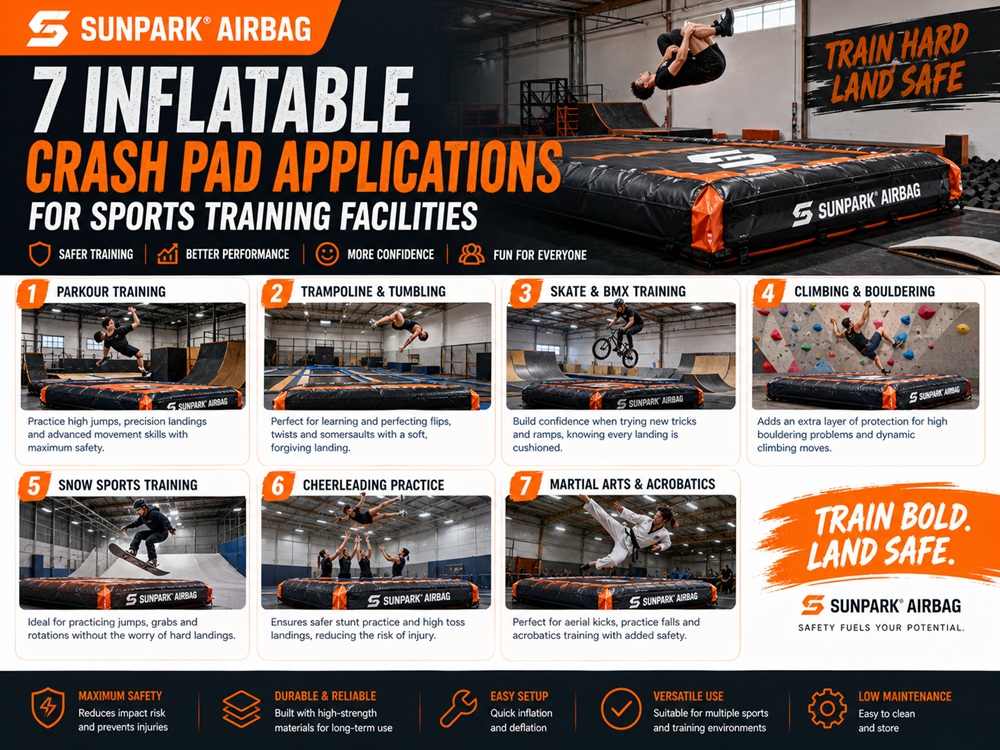
The era of the “trampoline-only” facility is dead. If your brand relies exclusively on interconnected grid courts and stagnant dodgeball arenas, you are already losing market share. Modern consumers demand high-octane, diversified, and highly shareable experiences. Furthermore, commercial operators are fighting a grueling battle against skyrocketing liability insurance and operational expenditures (OpEx). To survive and scale, park owners must pivot from static jump zones to dynamic, multi-attraction Family Entertainment Centers (FECs).
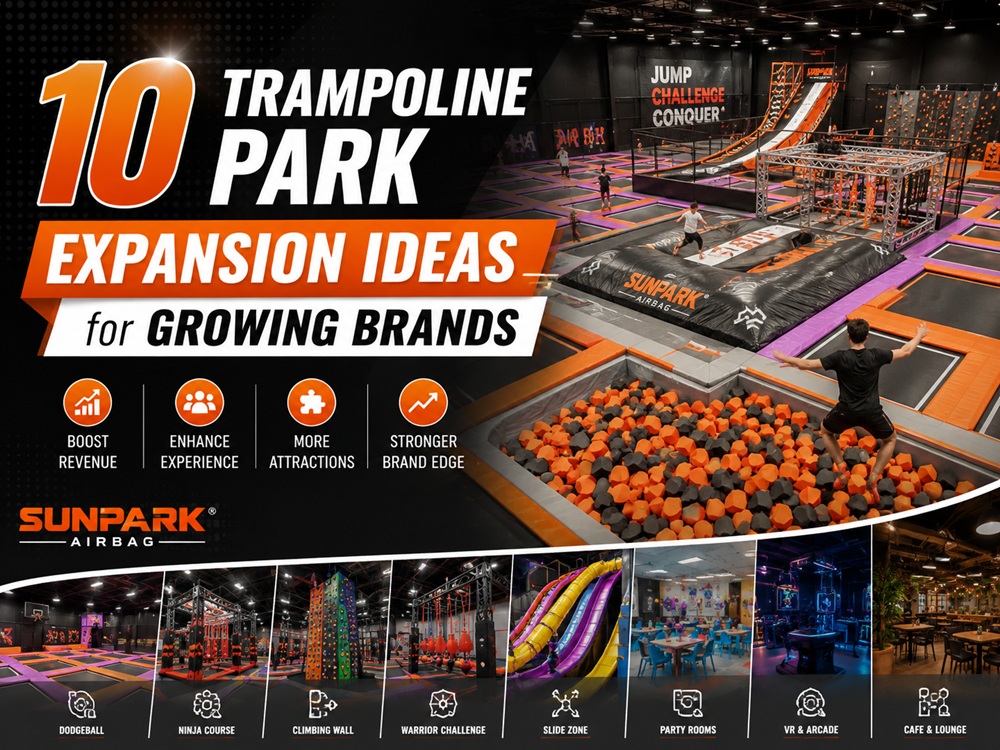
From our experience engineering advanced inflatable safety systems at Sunparkairbag, the most successful brands are completely retrofitting their floor plans. They are ripping out outdated, high-maintenance foam pits and replacing them with high-throughput, low-liability attractions. In this comprehensive guide, we will break down exactly what the top 10 Trampoline Park Expansion Ideas are, how they work, and WHETHER it is actually worth the capital expenditure (CapEx) to integrate them into your growing brand.
Quick Answer: The Best Expansion Strategies
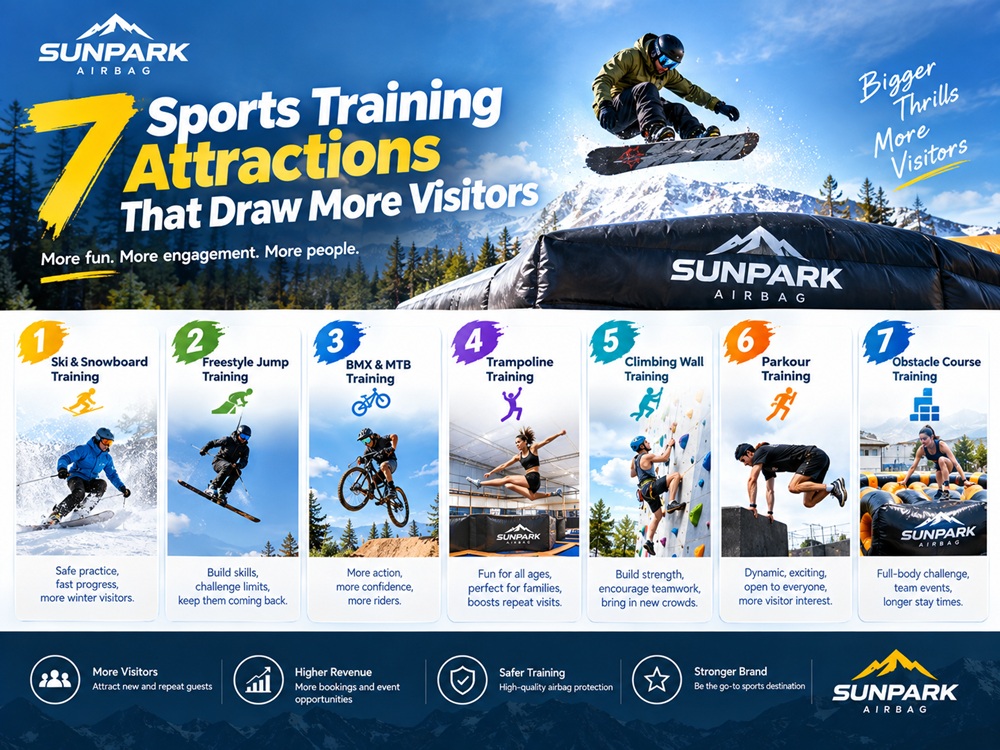
If you need to rapidly increase revenue per square foot, the most effective Trampoline Park Expansion Ideas focus on increasing guest throughput and capturing older demographics (teens and adults). We recommend prioritizing: 1. Zero-Shock Stunt Airbags (to replace costly foam pits), 2. Ninja Warrior Obstacle Courses, and 3. Action Sports Ramps (BMX/Skate). These upgrades dramatically reduce maintenance costs, lower insurance premiums, and create a premium marketing aesthetic that drives repeat ticket sales.
| Attraction Category | Primary Demographic | ROI Velocity | Maintenance Overhead |
|---|---|---|---|
| Stunt & Freefall Airbags | Ages 8-25 | Very Fast (High Throughput) | Ultra-Low |
| Ninja Warrior / Parkour | Ages 12-35 | Fast (Corporate & Team Building) | Moderate |
| Toddler Soft Play Zones | Ages 2-6 | Steady (Weekday Morning Revenue) | High (Sanitization) |
What Are Modern Trampoline Park Expansion Ideas?
Modern Trampoline Park Expansion Ideas are strategic architectural and equipment upgrades designed to diversify your venue’s revenue streams. Rather than relying solely on open-jump ticket sales, these expansions introduce gamification, extreme sports, and specialized training environments. The goal is to maximize the “dwell time” of a guest—increasing the likelihood they purchase food, beverage, and merchandise—while giving them a distinct reason to return.
How Attraction Expansion Works (The Business Mechanics)
In most professional situations, expanding an indoor park requires evaluating your Revenue Per Available Square Foot (RevPASF). How it works is simple: you identify dead zones or low-throughput attractions (like a deep foam pit where guests spend 30 seconds struggling to crawl out) and replace them with high-velocity attractions. For example, swapping a foam pit for a commercial airbag allows a guest to land, stand up, and exit the attraction in 3 seconds. By moving the line 10 times faster, you eliminate crowd bottlenecks and drastically improve the customer experience.
The Top 10 Trampoline Park Expansion Ideas
1. Zero-Shock Stunt Airbag Zones
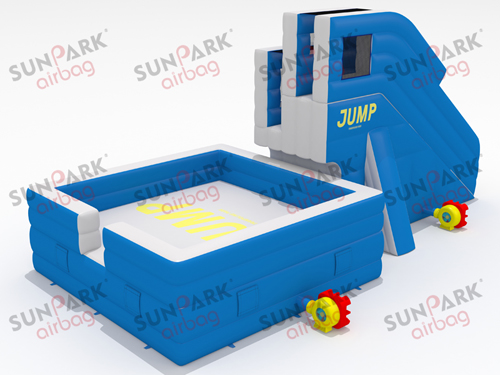
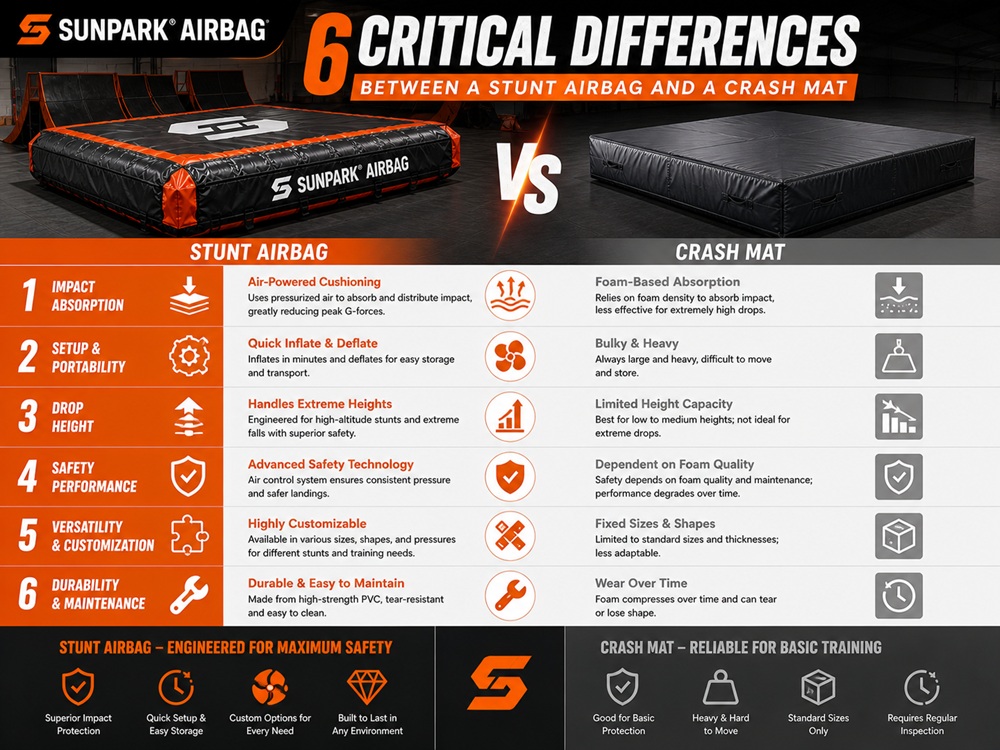
Foam pits are obsolete. They harbor bacteria, degrade into toxic dust, and present massive fire hazards. Upgrading to a commercial stunt airbag landing is the single most impactful expansion a park can make. These dual-chamber systems provide a cloud-like, progressive deceleration that prevents “bottoming out.” Furthermore, the antimicrobial topsheets are easily wiped down, instantly resolving your sanitation nightmares.
2. Ninja Warrior Courses over Inflatable Flooring
Capitalizing on television trends, Ninja Warrior courses attract fitness enthusiasts and corporate team-building events. To mitigate the high risk of rolled ankles associated with hard mat landings, forward-thinking operators are suspending their truss systems directly over an inflatable crash mat. This ensures a safe, uniform landing zone across the entire obstacle grid.
3. Indoor BMX and Skate Jump Lines
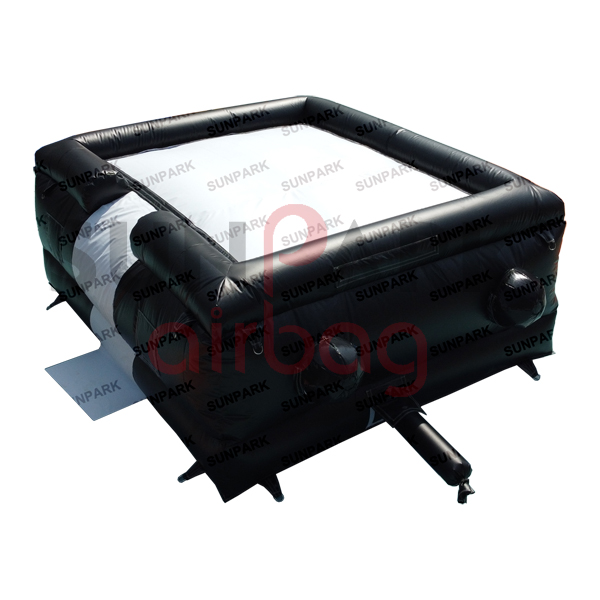
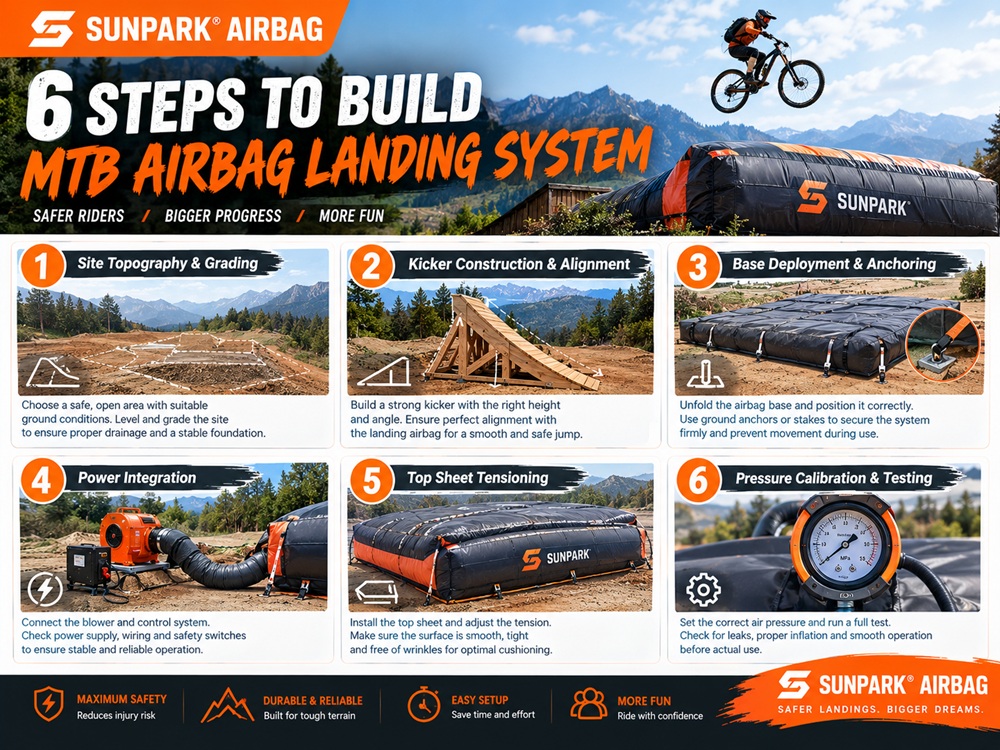
If your facility boasts massive square footage, you can capture the highly lucrative 15-25 age bracket by installing wooden transition ramps paired with a professional bike airbag landing. This draws dedicated extreme sports athletes who will purchase monthly memberships to train safely indoors during off-seasons.
4. High-Performance Gymnastics Training Sectors
Standard trampolines do not provide enough bounce for competitive cheerleaders or gymnasts. By installing Olympic-grade woven trampolines that feed directly into specialized gymnastics airbag equipment, you can rent out your facility to local athletic clubs during your typically dead weekday morning hours.
5. Interactive and Gamified Trampolines
Integrating augmented reality (AR) projection systems onto your existing trampolines turns physical jumping into a video game. Guests bounce to score points, defeat digital enemies, or track their jump heights, creating highly shareable content for TikTok and Instagram.
6. Multi-Level Freefall Jump Towers
Utilize your vertical air space. Constructing a 10-foot and 15-foot platform tower that allows guests to leap into a massive big jump airbag system provides an intense adrenaline rush with a minimal floor footprint.
7. Zip Lines and Aerial Coasters
Indoor zip lines suspended from your ceiling trusses offer a theme-park-level attraction. By running the zip line directly over existing airbags or inflatable zones, you minimize the need for complex, expensive auto-braking harness systems.
8. Toddler-Specific Inflatable Parks
To capture the stay-at-home parent market, you must offer an environment strictly separated from older, aggressive teenagers. Custom inflatable soft-play zones designed for children under 5 keep toddlers safe and keep parents buying coffee at your concession stand.
9. Wipeout Sweeper Games
A mechanical rotating arm that forces 8 to 10 guests to jump or duck simultaneously. Placing this mechanical unit on top of a padded, inflatable base creates a hilarious, high-capacity multiplayer game that drives group party bookings.
10. Outdoor Action Sports Extensions
If your facility owns the surrounding parking lot or land, you can create a massive summer draw. Setting up a mega-ramp feeding into an FMX airbag landing caters to freestyle motocross and heavy-duty dirt bike riders. This transforms your venue into a regional destination.
Commercial Benefits of Upgrading
Executing these Trampoline Park Expansion Ideas yields profound commercial benefits. In our testing of operational metrics, transitioning from foam pits to airbags reduces daily cleaning labor by up to 12 hours a week. Furthermore, when you read any modern foam pit vs airbag comparison, the liability reduction is stark. Insurance underwriters heavily favor the predictable, G-force tested deceleration of dual-chamber airbags over the unpredictable nature of degraded foam cubes, often resulting in significant premium discounts.
Limitations and Zoning Constraints
We apply commercial and practical judgment: expansion is not without hurdles. The primary limitation is your building’s physical architecture. High-performance jumps and jump towers strictly require 20 to 25 feet of clear ceiling height to meet safety standards. Furthermore, advanced mechanical attractions and massive blowers for airbags require dedicated, high-amperage electrical circuits. You cannot simply plug a 2000W blower into a standard wall outlet without tripping breakers.
| The Pros (Advantages) | The Cons (Challenges) |
|---|---|
| Dramatically increases guest dwell time and secondary spend. | Requires significant upfront Capital Expenditure (CapEx). |
| Modern airbags eliminate toxic foam dust and lower insurance costs. | May require expensive electrical and HVAC facility upgrades. |
| Captures highly lucrative corporate team-building and adult demographics. | Installation requires shutting down sections of the park temporarily. |
| High-throughput attractions eliminate frustrating guest wait times. | Requires staff retraining for new attraction safety protocols. |
Who Should Use It & Who Does Not Need It
For commercial users and multi-location franchises: If your park is older than three years and your ticket sales have plateaued, you must implement these Trampoline Park Expansion Ideas immediately. You are directly in the crosshairs of newer, more diverse FECs entering your territory. Consult with leading trampoline park equipment manufacturers to plan your retrofit.
Who does not need it: For beginners opening a micro-footprint facility (under 10,000 sq ft) focused solely on early-childhood development, investing in extreme sports bike ramps or high-fall jump towers is a massive misallocation of funds. Stick to low-profile soft play and modular interactive zones.
Common Mistakes During Facility Expansion
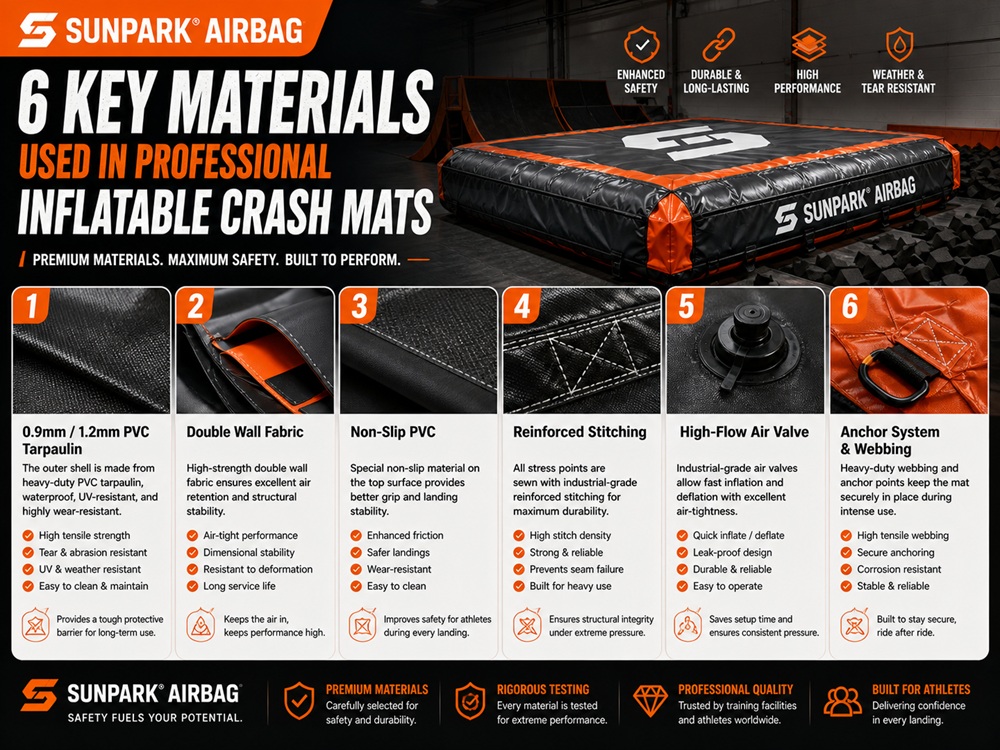
The most catastrophic mistake park owners make is buying uncertified, cheap inflatable landing zones from generic overseas vendors. An attraction meant to catch a human falling from 10 feet must possess internal baffling, variable pressure relief valves, and heavy-duty 0.9mm PVC tarpaulin. Buying a glorified “bouncy castle” to act as a stunt mat is a lawsuit waiting to happen.
Another common error is failing to plan traffic flow. Do not place high-throughput attractions (like a ninja course) next to an area where guests naturally congregate (like the cafe). It creates a massive fire-code bottleneck. Always push high-energy, heavy-duty applications to the rear of the facility to draw guests entirely through the building.
| Consideration | What to Look For | Why It Matters |
|---|---|---|
| Material Specifications | 0.9mm PVC Tarpaulin for topsheets; flame-retardant & UV protected. | Ensures the bag will not tear under heavy adult usage and complies with local fire marshal codes. |
| Deceleration Technology | Dual-chamber systems with adjustable exhaust valves. | The bottom chamber prevents “bottoming out” on the concrete floor, while the top chamber absorbs the shock. |
| Customization | Silk-screen or UV printing capabilities. | Turns a safety device into a massive, highly visible branding opportunity for your park. |
Expert Recommendation from Sunparkairbag
In most professional situations, the operational difference between a thriving FEC and a bankrupt trampoline park is maintenance overhead and throughput speed. We strongly recommend abandoning foam pits entirely and upgrading your core jump zones to commercial-grade inflatable airbag systems.
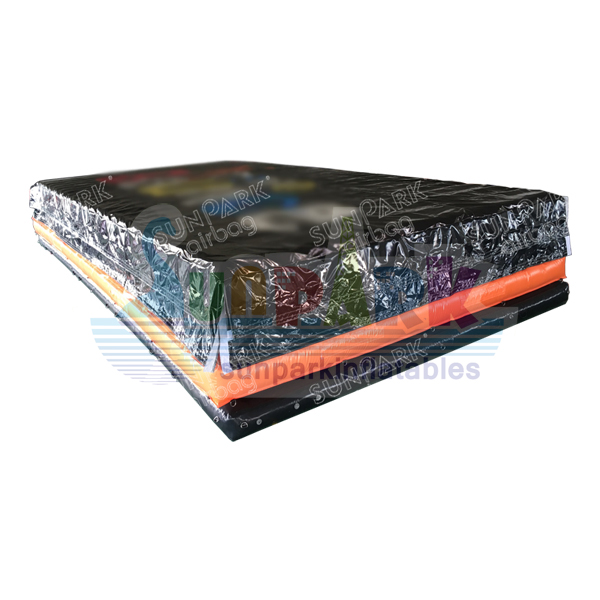
Inflatable Trampoline Park Air Bag
Designed for extreme durability and zero-shock landings, our commercial Trampoline Park Air Bag is the ultimate centerpiece for your facility expansion. Built with strict adherence to global safety standards, it handles massive guest volume effortlessly.
- Materials: Heavy-duty 0.55mm PVC Tarpaulin base with a 0.9mm PVC Topsheet. Fully water-proof, flame-retardant, UV-protected, lead, and phthalate-free.
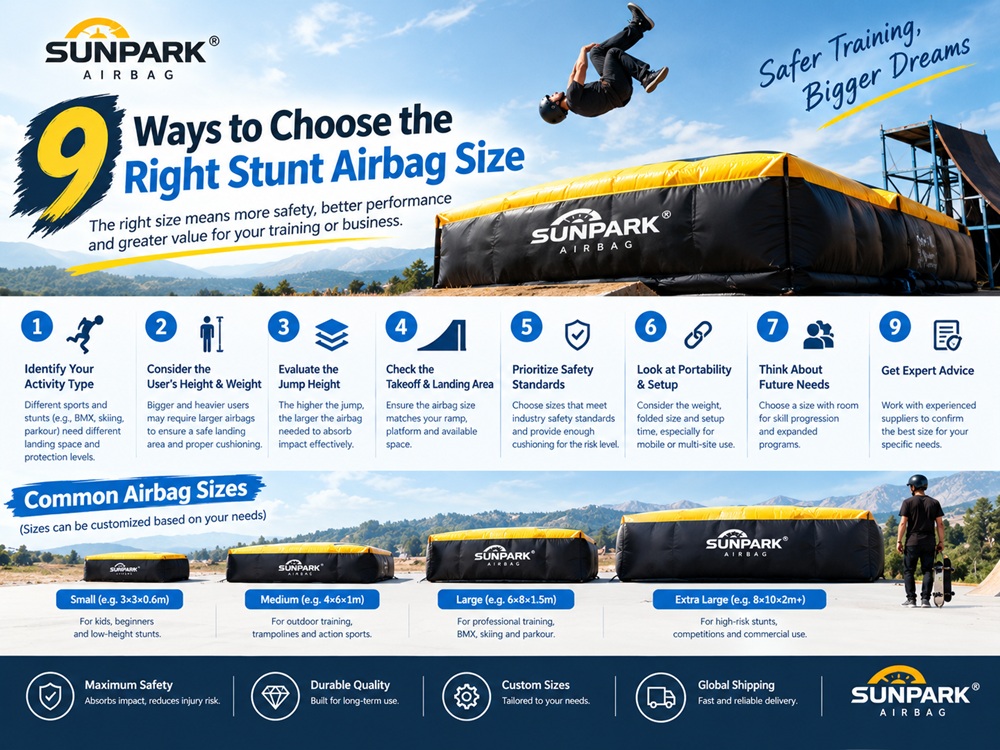
- Standard Size: 11.8 × 6.3 × 1.6m (Custom sizing available to fit existing foam pit concrete pits).
- Workmanship: Crafted by technicians with 5+ years of specialized extreme sports airbag experience.
- Complete Package: Includes necessary high-output blowers, repair kits, and heavy-duty carrying bags.
By integrating this system into your Trampoline Park Expansion Ideas, you instantly future-proof your facility, ensuring safe operations whether guests are performing basic flips or training on an indoor dirt bike airbag landing.
Frequently Asked Questions (FAQ)
Authoritative Industry References
To ensure your park expansion complies with global commercial standards, we advise reviewing the following regulatory bodies:
- ASTM International (F2970) – Standard Practice for Design, Manufacture, Installation, Operation, Maintenance, Inspection and Major Modification of Trampoline Courts.
- IAAPA (International Association of Amusement Parks and Attractions) – Global association providing safety, operational, and commercial guidelines for Family Entertainment Centers.
- U.S. Consumer Product Safety Commission (CPSC) – Regulatory guidance regarding extreme sports equipment, lead/phthalate compliance, and facility safety standards.