Operating an action sports facility, gymnastics academy, or trampoline park is a high-stakes commercial venture. The thrill of extreme sports draws massive crowds, but the inherent dangers create an ever-present shadow of legal and financial ruin. A single severe injury resulting from equipment failure or operational negligence can obliterate your profit margins, trigger devastating lawsuits, and render your facility uninsurable. In the modern leisure industry, relying on hope and generic safety signs is not a strategy—it is commercial suicide.
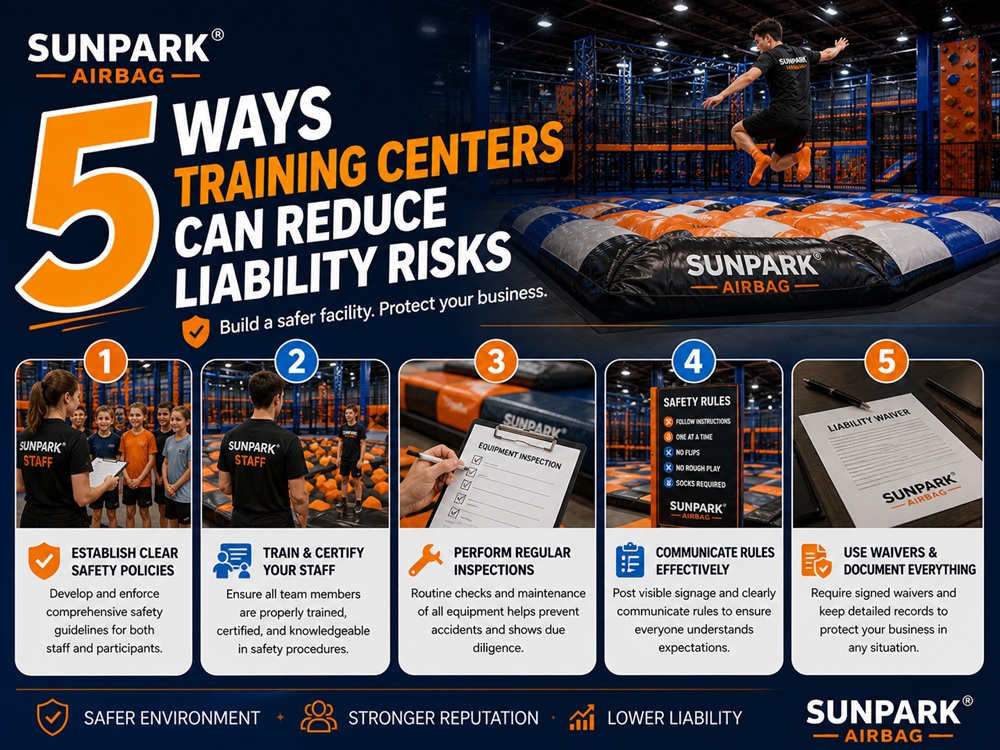
From our experience engineering advanced safety systems for extreme sports worldwide, we know that risk cannot be entirely eliminated, but it must be aggressively managed. Facilities that survive and thrive do not view safety as an irritating compliance hurdle; they view it as the foundational pillar of their business model. If you are serious about protecting your bottom line and your patrons, you must upgrade your operational protocols. In this comprehensive industry guide, we will break down the exact 5 ways Training Centers Can Reduce Liability Risks, separating practical, heavy-duty solutions from ineffective industry myths.
Quick Answer: How to Protect Your Facility
The 5 most effective ways Training Centers Can Reduce Liability Risks are: 1) Upgrading outdated, unsanitary foam pits to advanced inflatable landing airbags; 2) Enforcing rigid, documented daily equipment maintenance schedules; 3) Utilizing ironclad, scenario-specific digital waivers; 4) Implementing strict traffic control and zone capacity management; and 5) Requiring dynamic, scenario-based staff training and certification. By replacing hazardous traditional equipment with commercial-grade safety infrastructure, facilities immediately lower insurance premiums and defend against gross negligence claims.
What It Means to Manage Facility Liability
In the context of sports facilities, managing liability means systematically dismantling the legal concept of “negligence.” When an athlete is injured, the legal battle hinges on whether the facility owner provided a standard duty of care. Did you knowingly leave a torn trampoline mat in operation? Did you allow a foam pit to degrade to the point where an athlete struck the concrete floor? If the answer is yes, a liability waiver will not save you.
Understanding how Training Centers Can Reduce Liability Risks means accepting that your equipment is your primary defense. Outdated, poorly maintained hardware is the number one catalyst for multimillion-dollar settlements. Upgrading your infrastructure directly correlates to your legal defensibility.
How It Works: 5 Critical Risk Reduction Strategies
1. Upgrade from Foam Pits to Professional Airbags
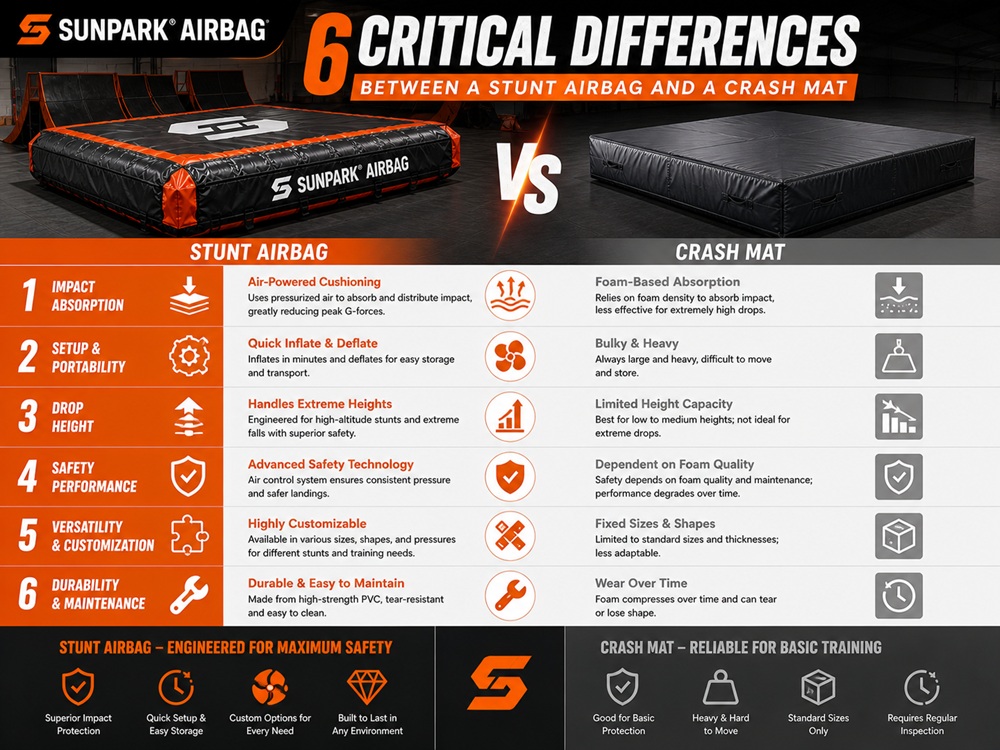
This is the most critical physical intervention a facility can make. Traditional polyurethane foam pits are antiquated hazards. Over time, foam blocks disintegrate, creating a false floor that allows jumpers to “bottom out”—the leading cause of catastrophic spinal and lower extremity injuries in action sports. Furthermore, foam pits harbor massive amounts of bacteria, dust, and pose a severe, highly combustible fire hazard.
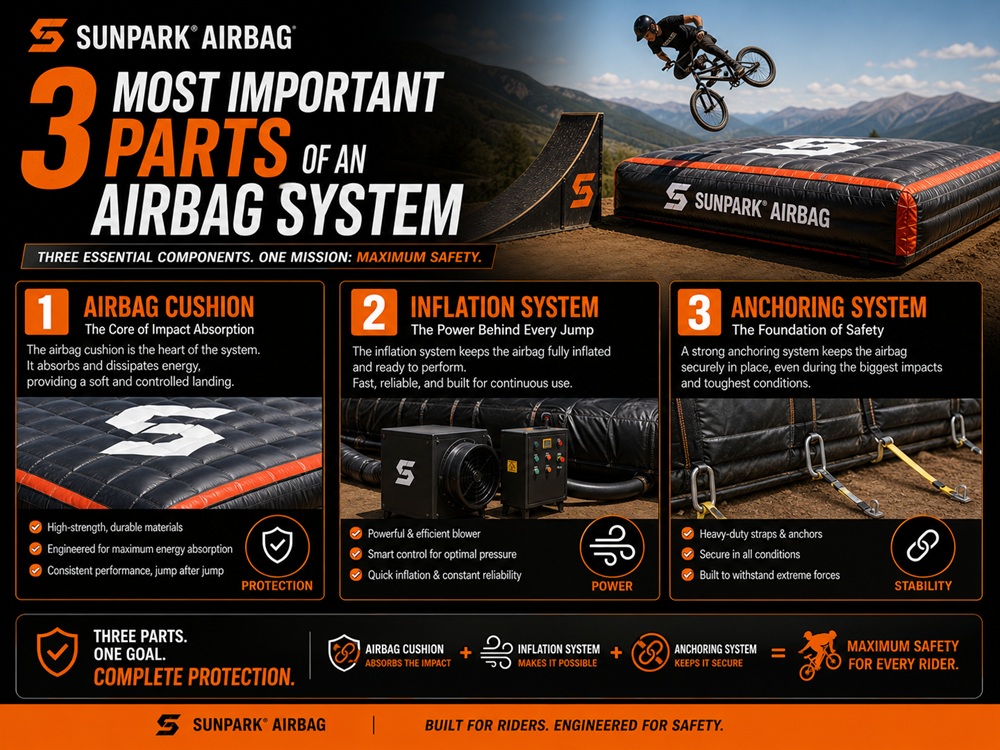
In most professional situations, we recommend tearing out foam pits and installing a modern gym airbag for training. Commercial-grade airbags provide a consistent, uniform landing surface that absorbs impact smoothly. They feature antimicrobial, easy-to-clean top sheets, eliminating the hygienic nightmare of foam. Transitioning to an inflatable jump airbag immediately removes the unpredictable variable of foam degradation from your liability equation.
2. Implement Rigid Equipment Maintenance Schedules
When calculating your trampoline park construction cost, you must allocate a dedicated budget for ongoing maintenance. A plaintiff’s attorney will immediately subpoena your maintenance logs. If you do not have daily, signed checklists verifying the tension of springs, the integrity of airbag blowers, and the condition of padding, you will lose the lawsuit. Maintenance must be treated as a strict, non-negotiable daily operational religion.
3. Utilize Ironclad, Scenario-Specific Waivers
Generic, downloaded waivers are practically useless in modern litigation. Your waiver must be drafted by an attorney specializing in action sports liability within your specific jurisdiction. It must clearly outline the specific risks of the activities offered—whether that involves trampolines, Ninja courses, or BMX jumps. The waiver must explicitly state that the participant assumes the risk of serious injury. While a waiver does not excuse gross negligence, a legally robust document is the first shield against frivolous claims.
4. Control Traffic Flow and Facility Capacity
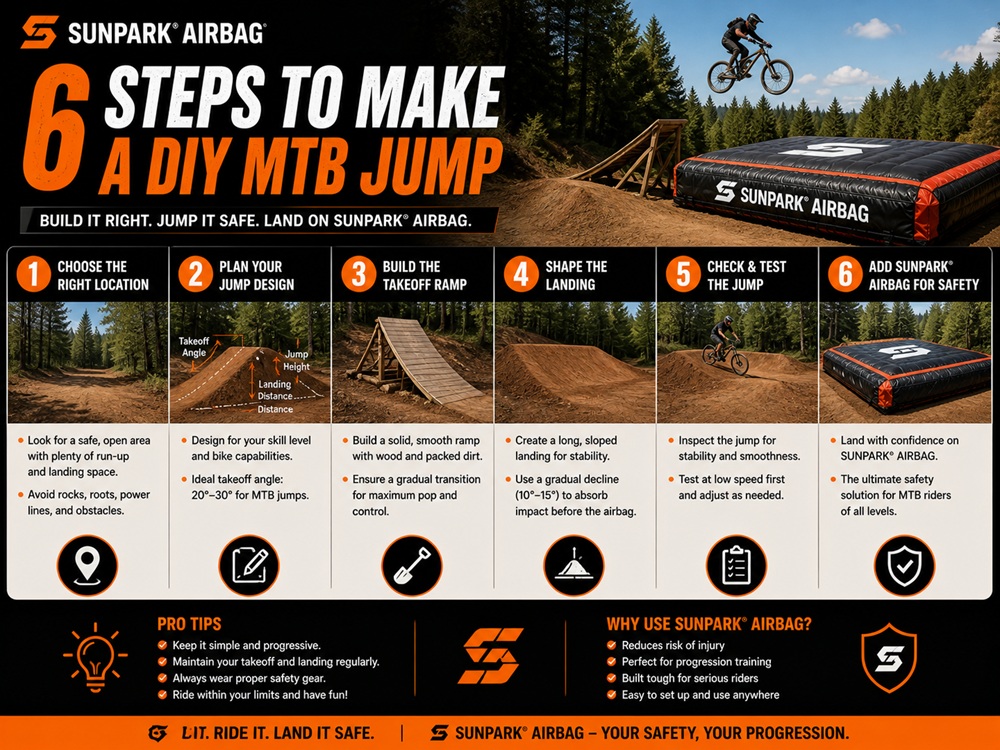
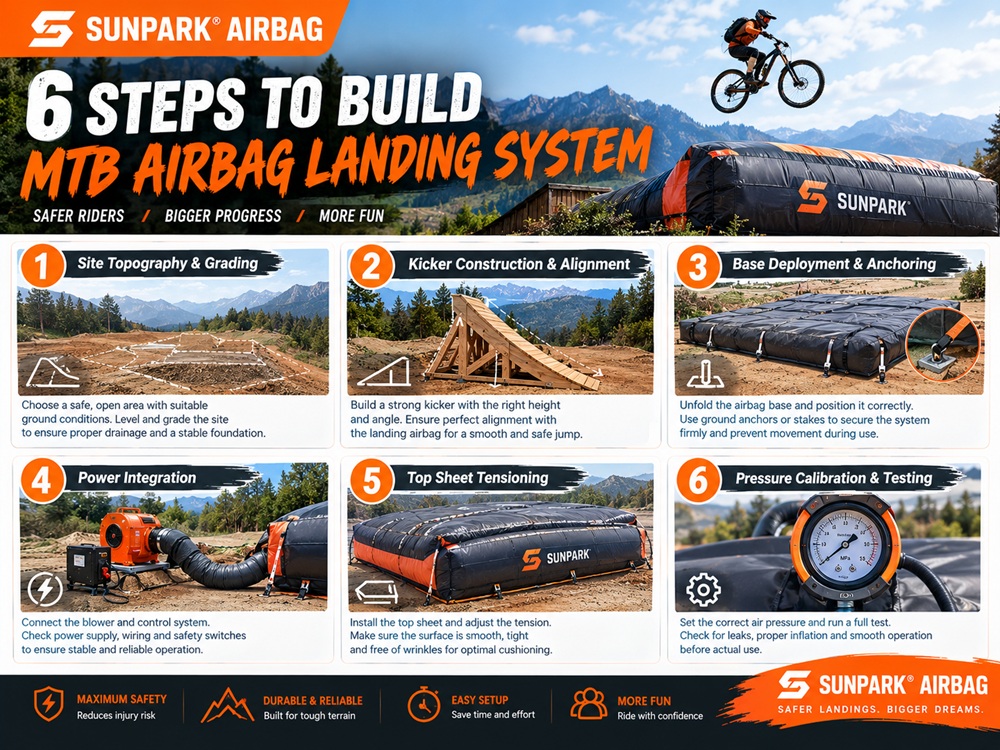
Overcrowding is a direct operational hazard. Collisions between participants are a frequent source of injury. You must designate clear jumping zones and enforce one-at-a-time rules on apparatuses. If you operate an extreme sports ramp, utilizing an airbag jump locations guide format to map out approach speeds and landing clearances ensures riders do not land on top of one another. Red-light/green-light dispatch systems are highly effective here.
5. Enforce Dynamic Staff Training and Certification
Your equipment is only as safe as the staff monitoring it. Teenagers sitting on their phones while monitoring a jump zone constitute gross negligence. For commercial users aiming to maximize trampoline park owner income, investing in staff training yields massive returns. Staff must be trained in conflict resolution (to enforce rules without escalating situations), CPR, first aid, and specific extraction protocols for injuries on trampolines or airbags.
Commercial Benefits of Risk Mitigation
The benefits of investing heavily in safety infrastructure are overwhelmingly financial. First, insurance companies aggressively audit facilities before underwriting policies. Demonstrating that you utilize modern landing airbag solutions instead of foam pits can significantly lower your annual premiums. Secondly, a visibly safe, clean facility attracts high-value demographics—families and professional athletes—who refuse to patronize dingy, unsafe environments. Safety is a premier marketing tool.
Limitations and Operational Realities
We must use commercial judgment: risk reduction requires significant capital expenditure (CapEx). Replacing a foam pit with a custom airbag requires upfront investment. Furthermore, even the best equipment in the world cannot completely eradicate the risk of human error. Athletes will still attempt maneuvers beyond their skill level. The limitation of any safety system is the unpredictable nature of the end-user, which is why supervision remains mandatory.
Who Needs These Strategies & Who Doesn’t
For commercial users: Any facility that charges admission for acrobatic, aerial, or high-velocity activities must adopt these protocols. This includes trampoline parks, ski resorts, BMX dirt jump facilities utilizing inflatable MTB airbag solutions, and elite gymnastics centers. For heavy-duty applications, safety hardware must be commercial-grade.
Who does not need it: Low-impact, low-velocity environments like standard yoga studios or basic commercial gyms (treadmills and free weights) do not require extreme impact-absorption infrastructure, though standard maintenance and waivers still apply.
Common Mistakes in Facility Safety
In our testing and industry observation, the most fatal mistake operators make is believing that a waiver grants them immunity from equipment maintenance. It does not. Another massive error is purchasing cheap, uncertified safety equipment from anonymous overseas vendors. If a generic airbag seam bursts upon impact because the manufacturer used standard thread instead of heavy-duty industrial stitching, your facility will bear the full brunt of the legal fallout.
Equipment Buying Considerations
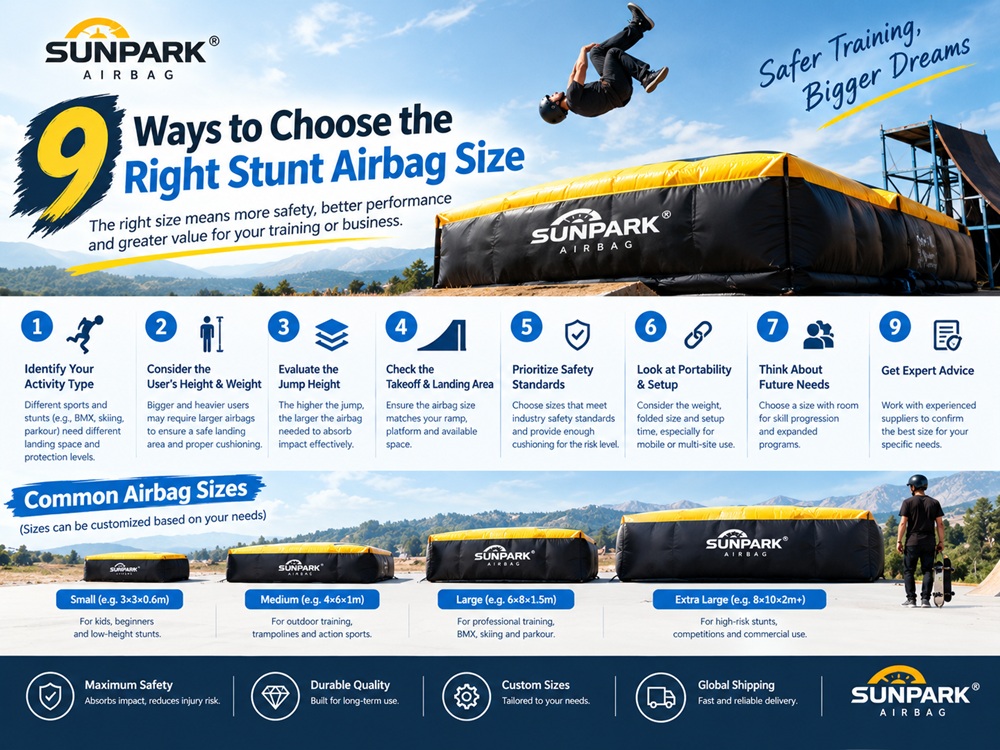
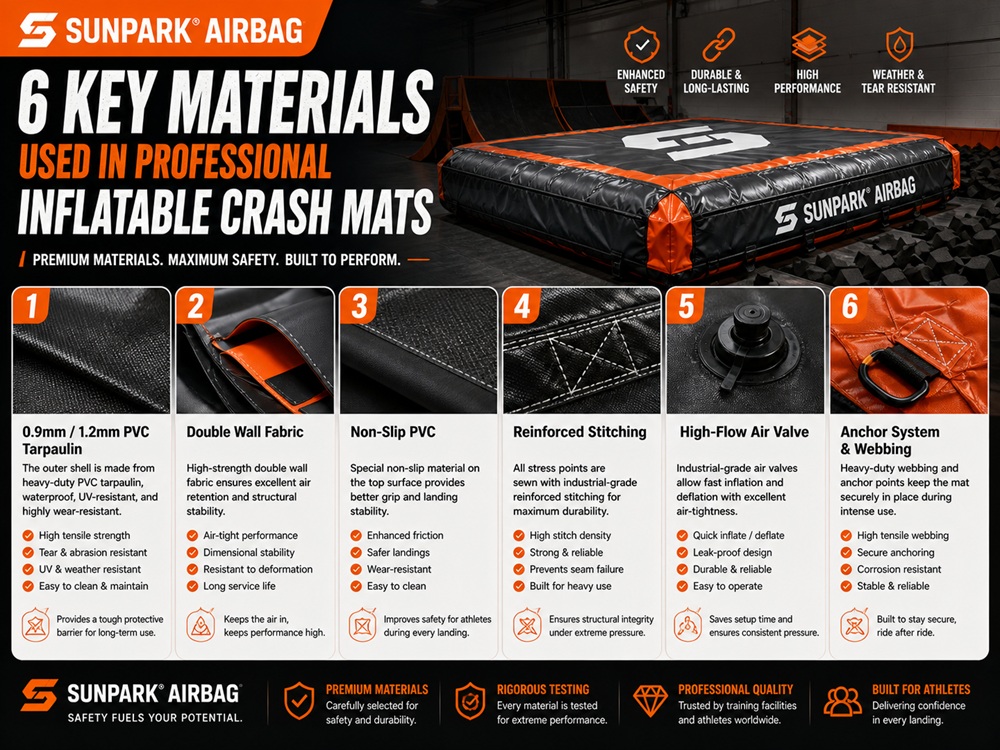
When selecting safety equipment, particularly airbags, you must evaluate the materials. Does the manufacturer use 0.55mm or 0.9mm Plato PVC tarpaulin? Are the seams double or quadruple stitched? Does the system feature independent air chambers so that a single puncture does not deflate the entire landing zone? You must demand technical specifications and fire-retardancy certifications before purchasing.
Essential Comparison & Buying Tables
| Strategy | Actionable Step | Liability Impact |
|---|---|---|
| 1. Equipment Upgrade | Replace foam pits with inflatable airbags. | Prevents bottoming-out injuries; eliminates fire/bio hazards. |
| 2. Maintenance Logs | Digitize daily hardware inspection checklists. | Provides legal documentation proving duty of care. |
| 3. Robust Waivers | Use attorney-drafted, activity-specific digital waivers. | Establishes assumption of risk by the participant. |
| 4. Capacity Control | Implement dispatch lights and strict zone limits. | Drastically reduces collision-based injuries. |
| 5. Staff Training | Mandatory active-monitoring and emergency response drills. | Prevents rule-breaking and ensures rapid medical response. |
| Feature | Traditional Foam Pit | Commercial Inflatable Airbag |
|---|---|---|
| Impact Absorption | Inconsistent; degrades over time; risk of bottoming out. | Highly consistent; uniform pneumatic absorption. |
| Hygiene & Cleaning | Extremely poor; impossible to sanitize blocks. | Excellent; smooth PVC top sheet wipes clean instantly. |
| Evacuation Speed | Slow; athletes struggle to climb out of deep foam. | Fast; athletes easily walk off the firm airbag surface. |
| Ongoing Costs | High; requires frequent purchase of replacement foam blocks. | Low; requires basic blower electricity and minor patching. |
| The Pros (Advantages) | The Cons (Challenges) |
|---|---|
| Substantially lowers insurance premiums over time. | Requires significant upfront capital expenditure. |
| Protects ownership from gross negligence lawsuits. | Requires relentless management oversight to enforce protocols. |
| Enhances brand reputation as an elite, safe facility. | May slow down throughput if dispatch rules are strictly enforced. |
| Reduces operational downtime caused by severe injuries. | Demands higher payroll costs for highly trained floor staff. |
Expert Recommendation from SUNPARK® AIRBAG
In most professional situations, treating safety as a line item where you can cut corners is the fastest route to bankruptcy. You cannot buy cheap safety equipment and expect it to withstand the relentless kinetic energy of an action sports facility. We see how effectively Training Centers Can Reduce Liability Risks when they commit to engineered solutions.
We recommend entirely abandoning foam pits. They are an archaic liability. If you want to protect your athletes and your business, you must invest in pneumatic technology that provides consistent, predictable deceleration.
SUNPARK® AIRBAG – Explorer of Airbag System for Sports
With over 10 years of experience, we provide freestyle airbags for ski resorts, theme parks, sports, and gymnastics facilities around the globe. SunparkAirbag® is the leading manufacturer of Airbags for Extreme Sports and Leisure Industries in China.
Our heavy-duty, commercial-grade airbags are engineered from premium Plato PVC tarpaulin, featuring dual-chamber technology to guarantee a soft, safe landing every single time. By eliminating foam, you eliminate dust, bacteria, and bottom-out hazards instantly.
Frequently Asked Questions (FAQ)
Airbags provide a consistent, adjustable landing surface that prevents bottoming out, a major cause of lower extremity injuries in foam pits. Additionally, airbags eliminate the fire hazard and toxic dust accumulation associated with deteriorating foam blocks, shielding facilities from health and safety negligence claims.
No. While mandatory, digital waivers primarily protect against ordinary negligence. They rarely protect a facility against claims of gross negligence—such as failing to maintain equipment or allowing overcrowding. Waivers must be combined with active safety management to effectively reduce liability risks.
The most common mistake is treating equipment installation as a one-time event rather than an ongoing maintenance obligation. Failing to log daily equipment inspections gives plaintiff attorneys an easy path to prove negligence.
Authoritative Industry References
To ensure your facility meets or exceeds global safety standards, we advise consulting the following organizations:
- ASTM International – Provides the definitive consensus standards (such as ASTM F2970) for the design, manufacture, and operation of trampoline courts and aerial sports facilities.
- U.S. Consumer Product Safety Commission (CPSC) – Issues critical safety alerts and operational guidelines regarding amusement rides and recreational facility hazards.
- International Risk Management Institute (IRMI) – A premier resource for understanding commercial general liability policies, gross negligence definitions, and risk mitigation tactics in the sports industry.