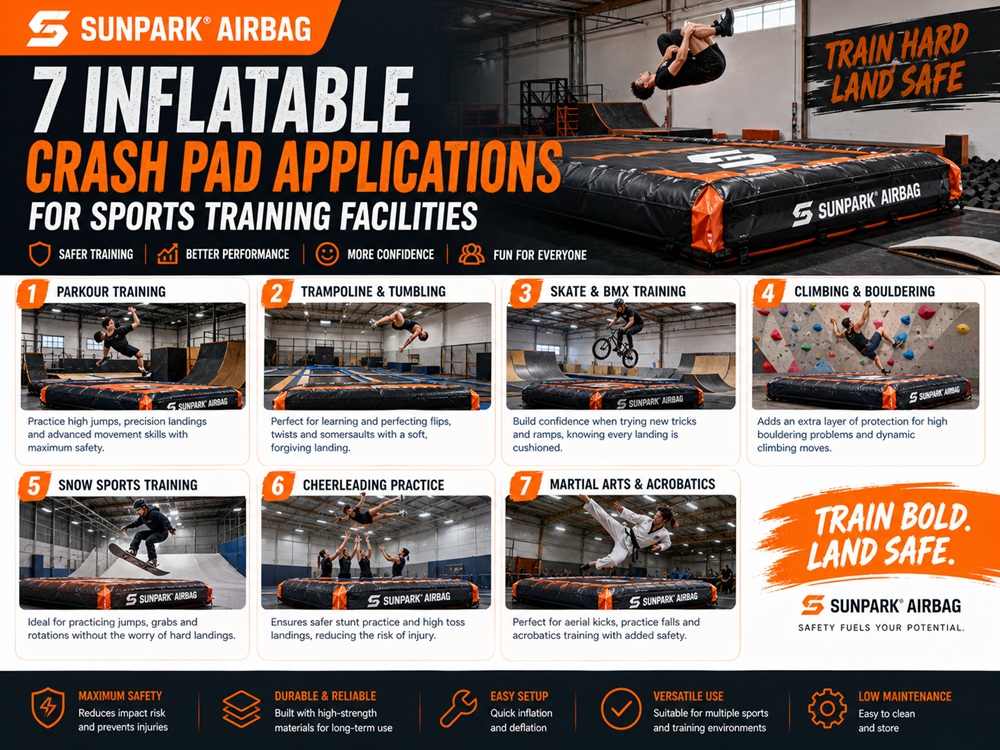
The action sports industry has a dangerous habit of relying on outdated safety technology. For years, riders accepted bulky, restrictive foam pads and rigid helmets as the absolute standard. However, the progression of extreme sports—from massive downhill gaps to highly technical BMX park courses—has outpaced the capabilities of traditional static armor. Simply wearing hard plastic over your knees is no longer adequate when pushing the limits of modern cycling.
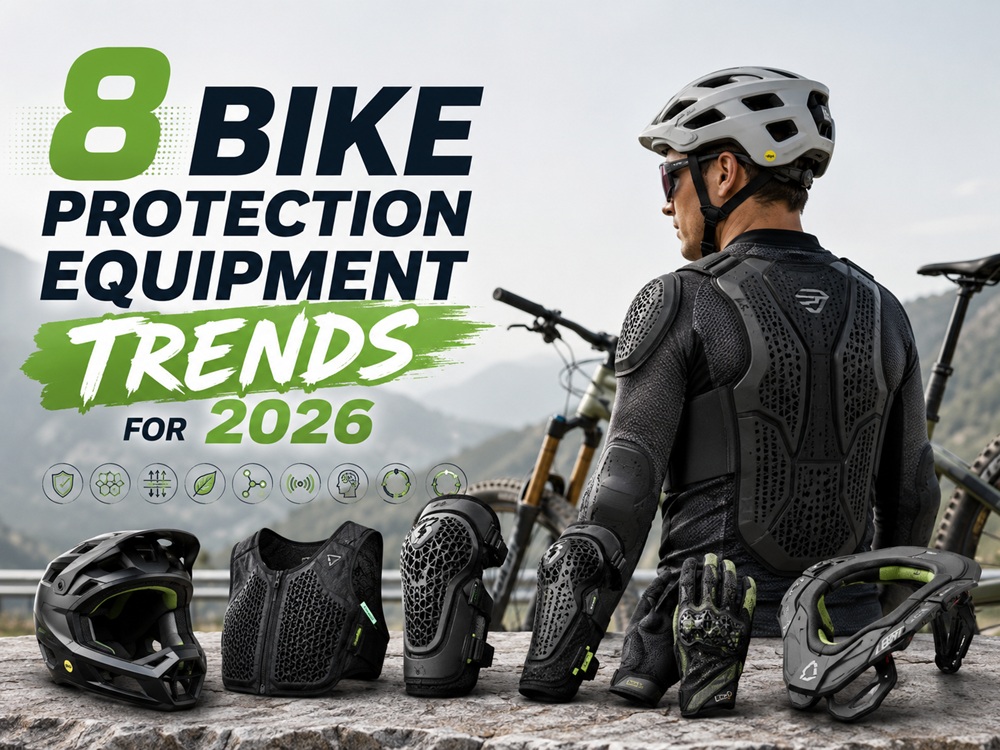
From our experience engineering advanced safety infrastructure, the approach to bike protection equipment must shift from passive mitigation to active, intelligent defense. Whether you are outfitting a commercial bike park or gearing up for a personal session, you cannot afford to ignore the technological advancements defining the upcoming year. In this guide, we dissect the 8 critical bike protection equipment trends for 2026, offering commercial and practical judgment to help you make informed purchasing decisions that actually prevent life-altering injuries.
Quick Answer: The Future of Bike Protection
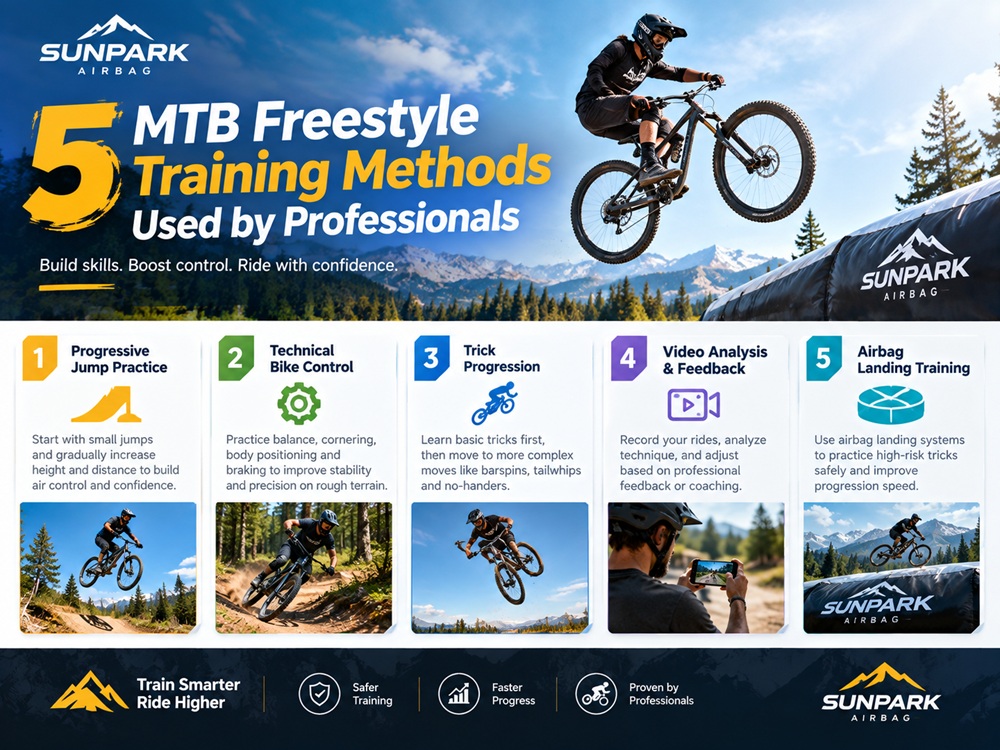
The most significant trend in bike protection equipment for 2026 is the integration of infrastructural safety with personal wearable tech. Rather than relying solely on smart helmets and non-Newtonian body armor to absorb a crash, professional riders and commercial bike parks are prioritizing injury prevention through advanced training environments. Utilizing tools like a MTB airbag landing system allows riders to master complex maneuvers with near-zero risk before taking those tricks to dirt. The best bike protection equipment strategy combines high-tech wearable gear (like wearable airbags and D3O pads) with safe, inflatable progression facilities.
Table of Contents
- What is Modern Bike Protection Equipment?
- How the Technology Works
- The 8 Bike Protection Equipment Trends for 2026
- Benefits of Upgrading
- Limitations of Modern Gear
- Who Should Use It & Who Does Not Need It
- Common Mistakes in Procurement
- Buying Considerations
- Essential Comparison Tables
- Expert Recommendation
- The Bottom Line
- Frequently Asked Questions
- References
What is Modern Bike Protection Equipment?
Bike protection equipment encompasses all physical and infrastructural assets designed to mitigate kinetic energy during a crash. Historically, this meant rigid EPS foam helmets and hard-shell polycarbonate knee and elbow guards. Today, this category has expanded exponentially. It now includes non-Newtonian smart materials that harden instantly upon impact, wearable pneumatic airbag vests triggered by gyroscopes, and massive inflatable landing ramps used at training facilities.
How the Technology Works
Modern bike protection equipment operates on the principle of energy dispersion rather than mere blocking. For instance, rotational impact systems in helmets feature slip-planes that allow the outer shell to rotate independently of the inner liner, redirecting shearing forces away from the brain. Wearable airbags use complex algorithms measuring velocity and pitch; if a crash parameter is detected, compressed CO2 inflates a protective bladder around the rider’s neck and spine in milliseconds.
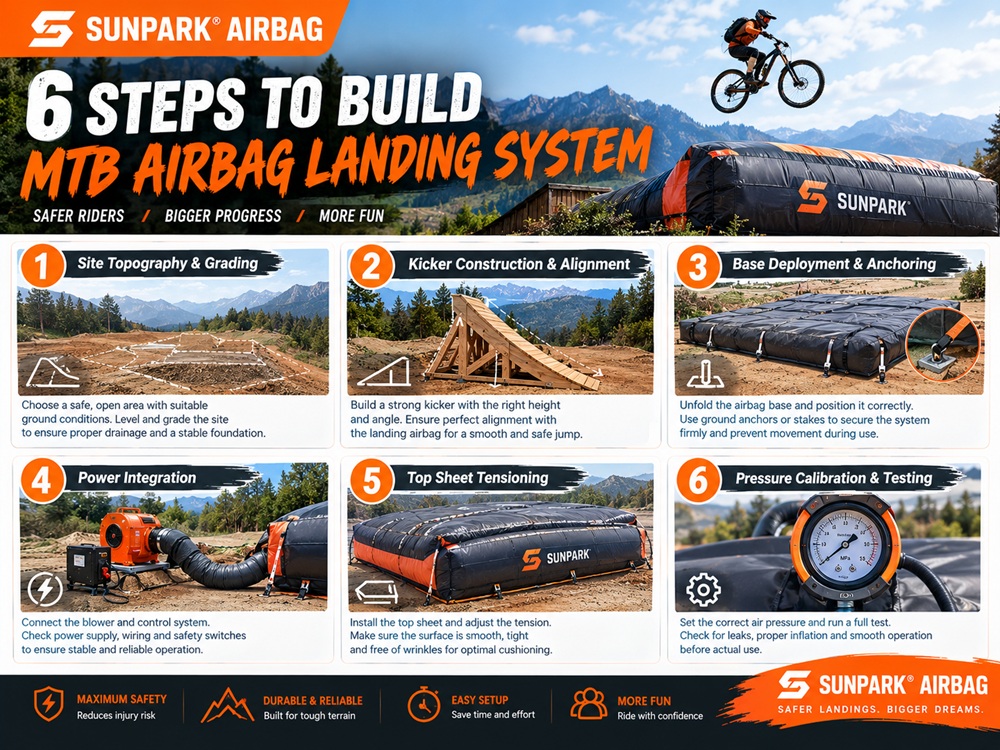
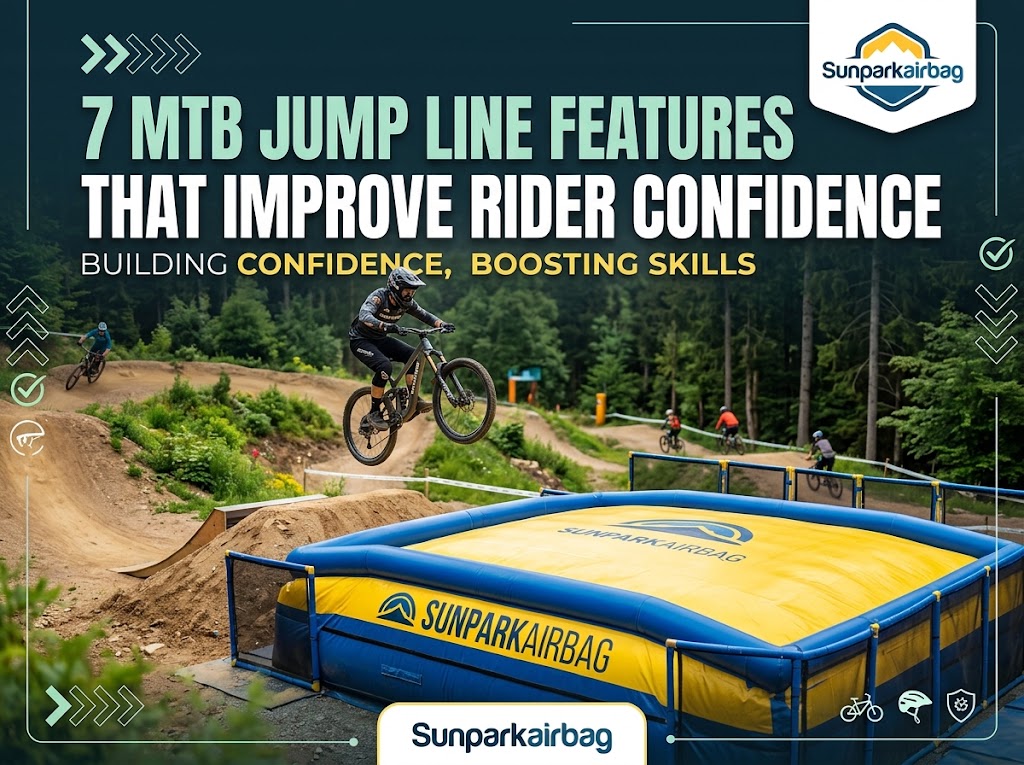
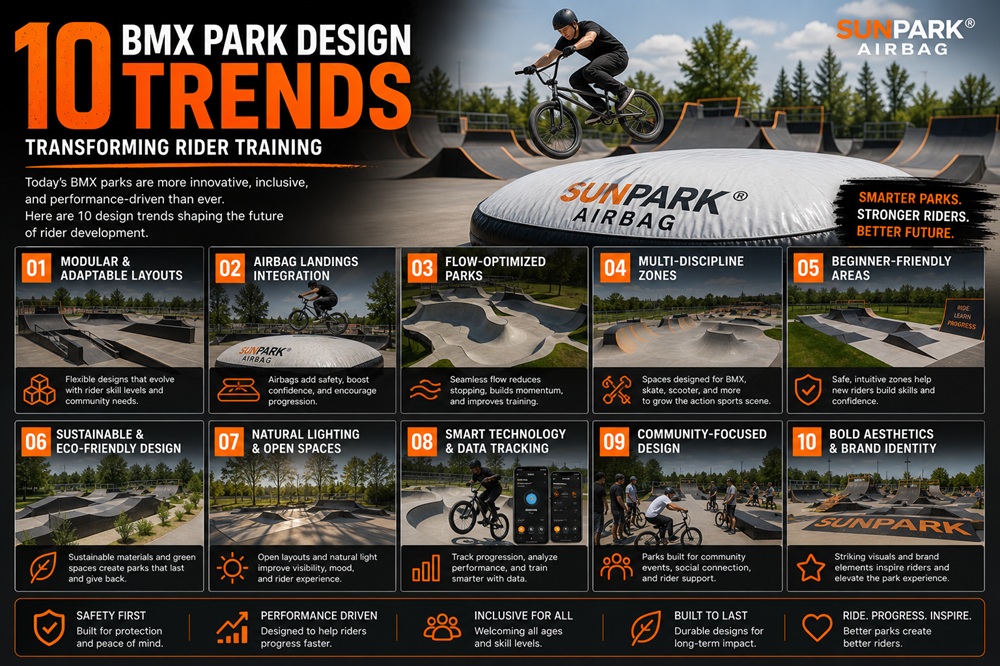
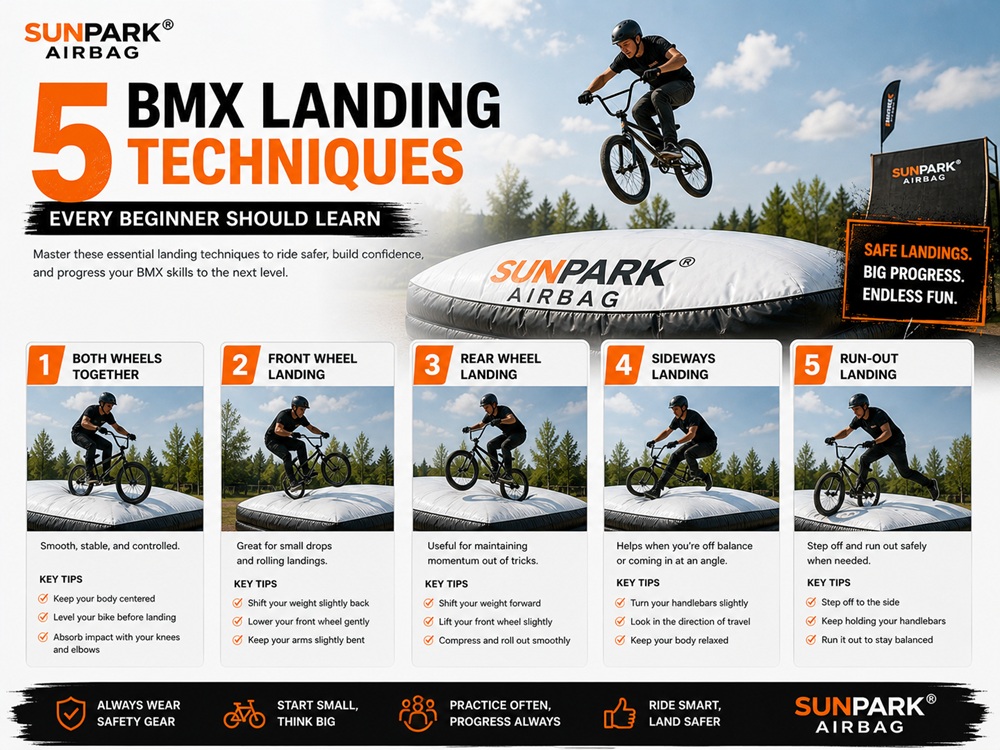
At the facility level, infrastructural protection operates via controlled air-displacement. When a rider lands on a BMX airbag landing, internal air pillars and engineered exhaust vents release air at a calibrated rate. This absorbs the kinetic energy of a 20-foot drop smoothly, preventing the severe compression fractures associated with casing a dirt jump.
The 8 Bike Protection Equipment Trends for 2026
1. Infrastructural Training Airbags
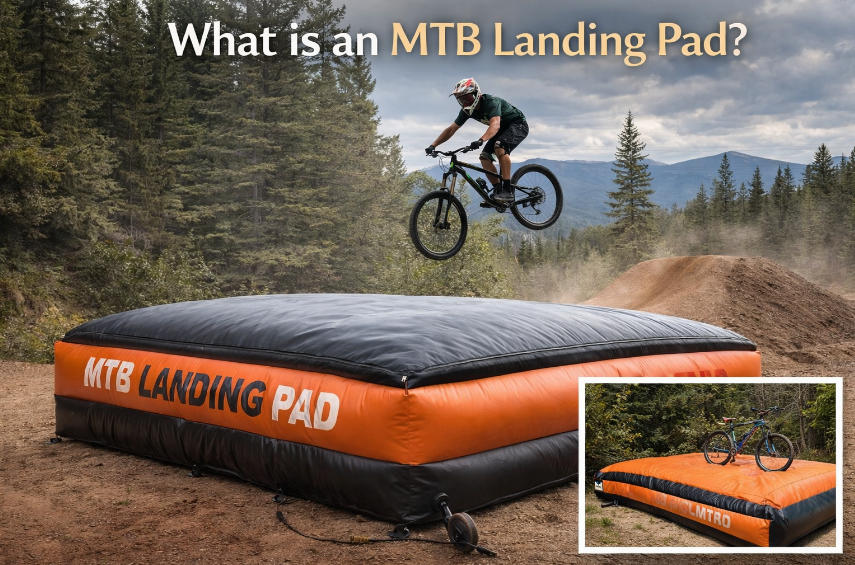
We are placing this first because it is the most highly effective method of preventing injuries before they occur. The trend for 2026 is moving away from learning on mulch and dirt to practicing exclusively on pneumatic ramps. Commercial bike parks are recognizing that installing an airbag is significantly cheaper than dealing with liability claims. If you are managing a facility, looking into cheap MTB airbag options 2026 is a mandatory step for risk management.
2. Wearable Airbag Vests
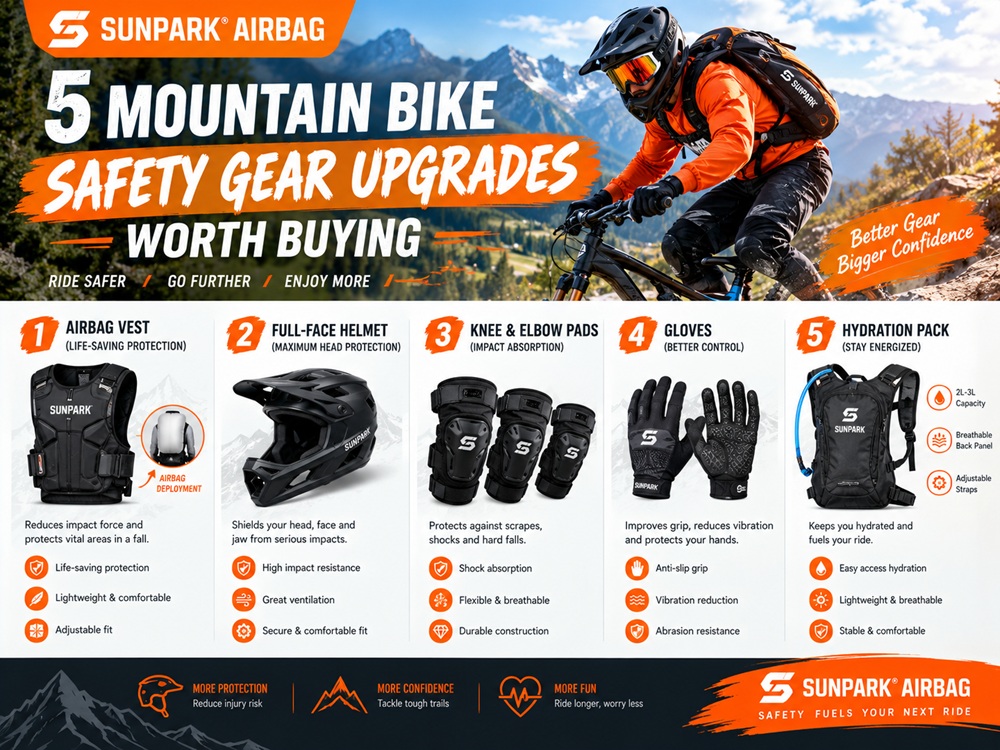
Originally developed for MotoGP and equestrian sports, wearable airbag vests have been redesigned for downhill mountain biking. These vests sit flush against the body, offering complete freedom of movement. Upon detecting a catastrophic ejection over the handlebars, the vest inflates, bracing the cervical spine and protecting the collarbones. For heavy-duty applications like Red Bull Rampage, this will become standard issue.
3. Non-Newtonian Reactive Armor (D3O)
Standard hard-shell plastics restrict pedaling efficiency. The industry is rapidly shifting toward non-Newtonian materials like D3O. These polymers remain highly flexible and soft during normal riding, moving organically with the rider’s joints. However, upon sudden impact, the molecules lock together instantly, forming a rigid protective shield that absorbs and disperses the blow. In our testing, reactive armor drastically reduces rider fatigue compared to legacy pads.
4. Rotational Impact Defense Helmets
Standard EPS foam only protects against linear, head-on impacts. In 2026, you should not purchase a helmet lacking a rotational management system. Technologies that create a low-friction layer inside the helmet are now standard. This is critical because angular impacts are the primary cause of traumatic brain injuries and severe concussions in off-road cycling.
5. Integrated Crash Telemetry
Smart bike protection equipment now features integrated sensors. Helmets and chest rigs are equipped with accelerometers that detect severe impacts. If the rider does not manually cancel an alert within a predetermined timeframe, the hardware automatically transmits GPS coordinates to emergency contacts or local EMS. This trend is vital for solo backcountry enduro riders.
6. Hybrid Neck Braces
Neck braces have traditionally been despised by riders for restricting head mobility. The 2026 iterations are hybrid carbon-composite structures that sit lower on the trapezius muscles. They offer vital hyper-extension and hyper-flexion protection during catastrophic crashes without interfering with the rider’s line of sight on steep descents.
7. 3D-Printed Custom-Fit Protection
Generic sizing (S/M/L) is obsolete for elite athletes. We are seeing a massive trend toward 3D-printed helmet liners and knee pads customized via smartphone LiDAR scans. A millimeter-perfect fit ensures that the bike protection equipment does not shift during the violent sequence of a crash, maximizing the energy-absorbing properties of the gear.
8. Eco-Conscious Composite Shells
The manufacturing process for carbon fiber and polycarbonate is environmentally toxic. In response, premium manufacturers are debuting outer shells made from woven flax fibers, bio-resins, and recycled ocean plastics. These eco-composites offer the identical tensile strength and puncture resistance of traditional carbon fiber but satisfy the growing consumer demand for sustainable sporting goods.
Benefits of Upgrading Your Gear
Upgrading to modern bike protection equipment provides measurable commercial and personal benefits. For commercial users operating indoor extreme sports parks, investing in proper infrastructure reduces insurance premiums and attracts a broader demographic of riders seeking safe progression. You can evaluate this ROI when analyzing trampoline park construction cost against long-term operational liability.
For the individual rider, modern gear eliminates the “protection penalty.” You no longer have to sacrifice stamina, ventilation, and mobility to stay safe. Reactive body armor breathes effectively during a grueling uphill climb, yet provides downhill-level protection on the descent.
Limitations of Modern Protection
There are practical limitations to acknowledge. High-tech bike protection equipment is expensive. A top-tier wearable airbag vest requires a recurring subscription for the software algorithm and pricey CO2 cartridge replacements after every deployment. Furthermore, non-Newtonian pads tend to stiffen in extreme cold weather, temporarily losing some of their flexibility until warmed by body heat.
Who Should Use It & Who Does Not Need It
For commercial users and extreme athletes: Bike park operators, downhill racers, and slopestyle competitors must utilize these advancements. If your riders are attempting massive aerials, providing an airbag landing is non-negotiable for their safety.
Who does not need it: Casual urban commuters riding designated bike lanes at 12 mph do not need a wearable airbag vest or full D3O body armor. A standard, certified rotational-impact helmet and basic high-visibility gear are entirely sufficient. Over-equipping beginners can create a false sense of invincibility, leading to reckless riding.
Common Mistakes in Procurement and Usage
In most professional situations, the biggest mistake we see is ignoring the lifespan of protective gear. EPS foam in helmets degrades over time due to UV exposure and sweat. Using a five-year-old helmet is functionally equivalent to wearing no helmet at all.
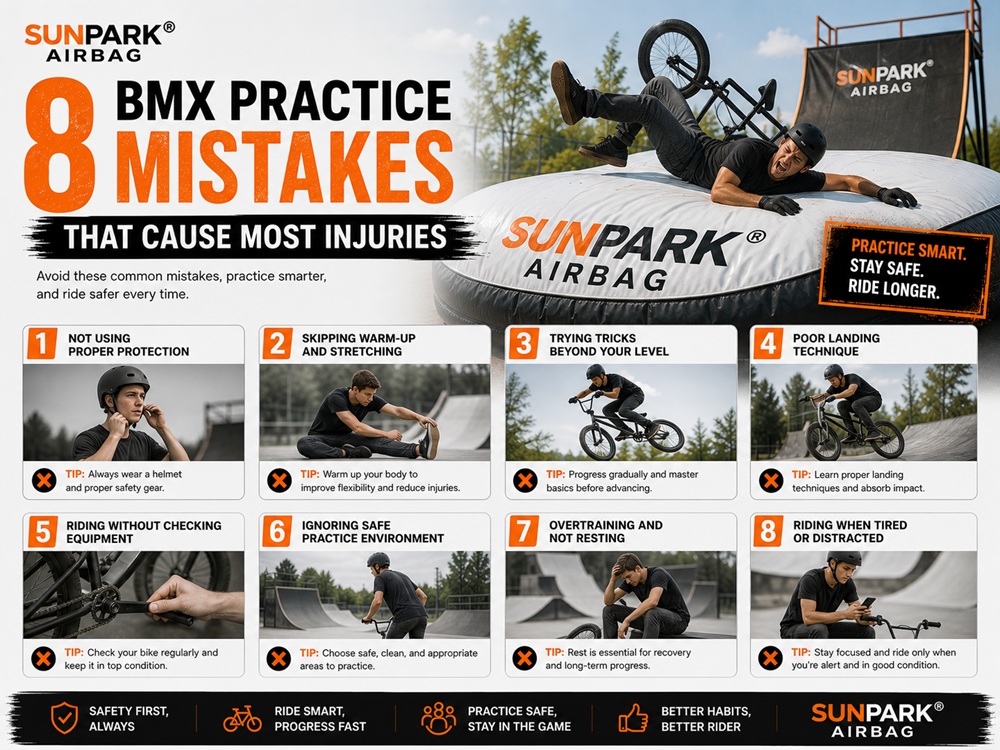
Another catastrophic error is training highly complex aerial tricks on hard dirt before mastering the rotation. If you are learning a backflip, you must consult an airbag jump locations guide and utilize professional infrastructure. Attempting to bypass the safety learning curve is the leading cause of the common BMX injuries and prevention issues we document.
Critical Buying Considerations
When purchasing bike protection equipment in 2026, evaluate the following:
- Certification Standards: Never buy uncertified gear from direct-to-consumer overseas marketplaces. Ensure helmets meet CPSC and ASTM F1952 (for downhill) standards. Armor must meet CE EN 1621 certifications.
- Fit and Articulation: Pad slippage during a crash renders the armor useless. Demand silicone grippers and articulating joints.
- Application Match: Do not buy heavy downhill plastic hardshells for trail riding; the lack of ventilation will cause heat exhaustion. Match the gear strictly to your primary discipline.
Essential Comparison Tables
Quick Summary Table: 2026 Trends
| Equipment Type | 2026 Trend Technology | Primary Benefit |
|---|---|---|
| Helmets | Rotational Impact Defense & Telemetry | Prevents traumatic brain injury; alerts EMS. |
| Body Armor | Non-Newtonian Fluids (D3O) | Pedaling flexibility with instant impact hardening. |
| Upper Torso | Wearable Airbag Vests | Prevents collarbone and cervical spine fractures. |
| Facility Training | Inflatable Airbag Landings | Zero-consequence progression for massive aerials. |
Comparison Table: Passive vs. Active Protection
| Feature | Passive Gear (Hard Plastics/Foam) | Active Gear (Airbags/Reactive Armor) |
|---|---|---|
| Energy Absorption | Low to Moderate | Extremely High |
| Mobility/Comfort | Poor (Restricts joint movement) | Excellent (Moves organically with rider) |
| Cost | Inexpensive ($50 – $150) | Premium ($150 – $800+) |
| Best Use Case | Beginners on flat trails | Aggressive enduro, downhill, slopestyle |
Pros and Cons Table: Wearable Airbag Vests
| Pros | Cons |
|---|---|
| Offers unparalleled neck and spine stabilization during a crash. | High initial purchase price and recurring software subscription fees. |
| Lightweight and highly breathable during normal riding. | Requires replacing compressed CO2 canisters after every deployment. |
| Automatically triggers faster than human reaction time. | Not suitable for slow-speed, minor tip-overs (may trigger unnecessarily). |
Buying Guide Table: Rider Discipline
| Rider Profile | Mandatory Bike Protection Equipment | Recommended Upgrade |
|---|---|---|
| Trail / Cross Country | Rotational-impact half-shell helmet, light D3O knee pads. | Integrated crash sensor telemetry. |
| Enduro / All-Mountain | Lightweight full-face helmet, D3O knee/elbow pads. | Wearable airbag vest for high-speed descents. |
| Downhill / Freeride | ASTM F1952 full-face helmet, neck brace, hardshell/D3O hybrid armor. | Facility training on an airbag landing before attempting new jumps. |
Expert Recommendation from SUNPARK® AIRBAG
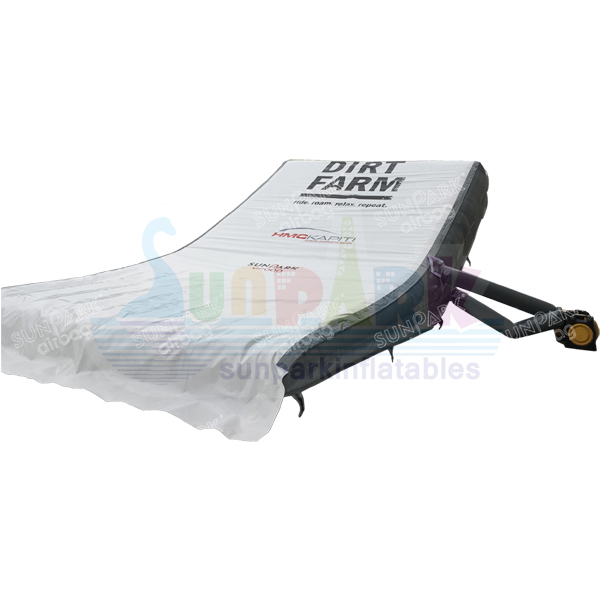
In most professional situations, attempting to protect athletes strictly with wearable armor is a failing strategy. You must address the environment. SUNPARK® AIRBAG is the Explorer of Airbag System for Sports. With over 10 years of experience, we provide freestyle airbags for ski resorts, theme parks, sports, and gymnastics facilities around the globe. SunparkAirbag® is the leading manufacturer of Airbags for Extreme Sports and Leisure Industries in China.
We recommend that commercial bike parks, training facilities, and professional athletes prioritize infrastructural safety. By installing a custom-engineered airbag landing, you completely eliminate the catastrophic impact force of learning complex rotations on dirt. Wearable bike protection equipment is your final line of defense; an inflatable landing ramp is your primary shield. Invest in your facility’s safety infrastructure to guarantee long-term progression and rider retention.
The Bottom Line
Are the 2026 advancements in bike protection equipment actually worth using and upgrading to? Absolutely. The transition from passive, restrictive plastics to active, non-Newtonian materials and wearable pneumatics represents the greatest leap in cycling safety in a decade. If you are riding aggressively, continuing to rely on outdated foam gear is a dangerous gamble. We strongly advise upgrading to rotational-impact helmets, integrating D3O body armor, and strictly utilizing professional airbag landings for freestyle progression. Do not let the price tag of modern safety gear deter you; it is infinitely cheaper than orthopedic surgery.
Frequently Asked Questions
How often should I replace my bike protection equipment?
Helmets must be replaced immediately after any significant impact, or every 3 to 5 years regardless of crash history, as the EPS foam degrades from UV rays and sweat. Body armor and knee pads should be replaced when the elastic straps lose tension, the fabric tears, or the internal protective material begins to crumble or stiffen permanently.
Is non-Newtonian D3O armor really better than hard plastic?
Yes, for the vast majority of riders. D3O and similar materials offer superior pedal efficiency because they remain soft and pliable while riding. Upon impact, they instantly lock together to disperse energy. Hard plastic is only superior in highly abrasive environments (like sliding across sharp rocks in downhill racing) where a hard outer shell prevents the fabric from tearing.
Do I need an airbag vest for standard mountain biking?
No. Wearable airbag vests are designed for extreme downhill racing, freeride events, and high-speed enduro where catastrophic over-the-bars ejections are a risk. For standard trail riding, a high-quality helmet and basic knee pads are entirely sufficient.
References & Authoritative Standards
To ensure our safety recommendations align with federal and medical standards, we rely on data from the following authoritative bodies: