Every professional coach and extreme sports facility manager knows the hard truth: taking off is optional, but landing is mandatory. Whether an athlete is throwing a basic 360 or progressing to a triple cork 1440, the mechanics of the touchdown dictate the safety and success of the entire maneuver. Mastering the Key Elements of a Freestyle Skiing Landing is not just about athletic technique; it is a critical variable in facility design, risk management, and training progression.
At SUNPARK® AIRBAG, with over 10 years of experience providing freestyle airbags for ski resorts, theme parks, and sports facilities around the globe, we have analyzed thousands of impacts. We do not deal in theory; we deal in the brutal physics of extreme sports. Taking a clear commercial and practical position: attempting to master complex aerials on hardpack snow without proper progression is an outdated and dangerous methodology. Modern progression requires a fundamental understanding of landing mechanics combined with specialized training infrastructure.
Quick Answer
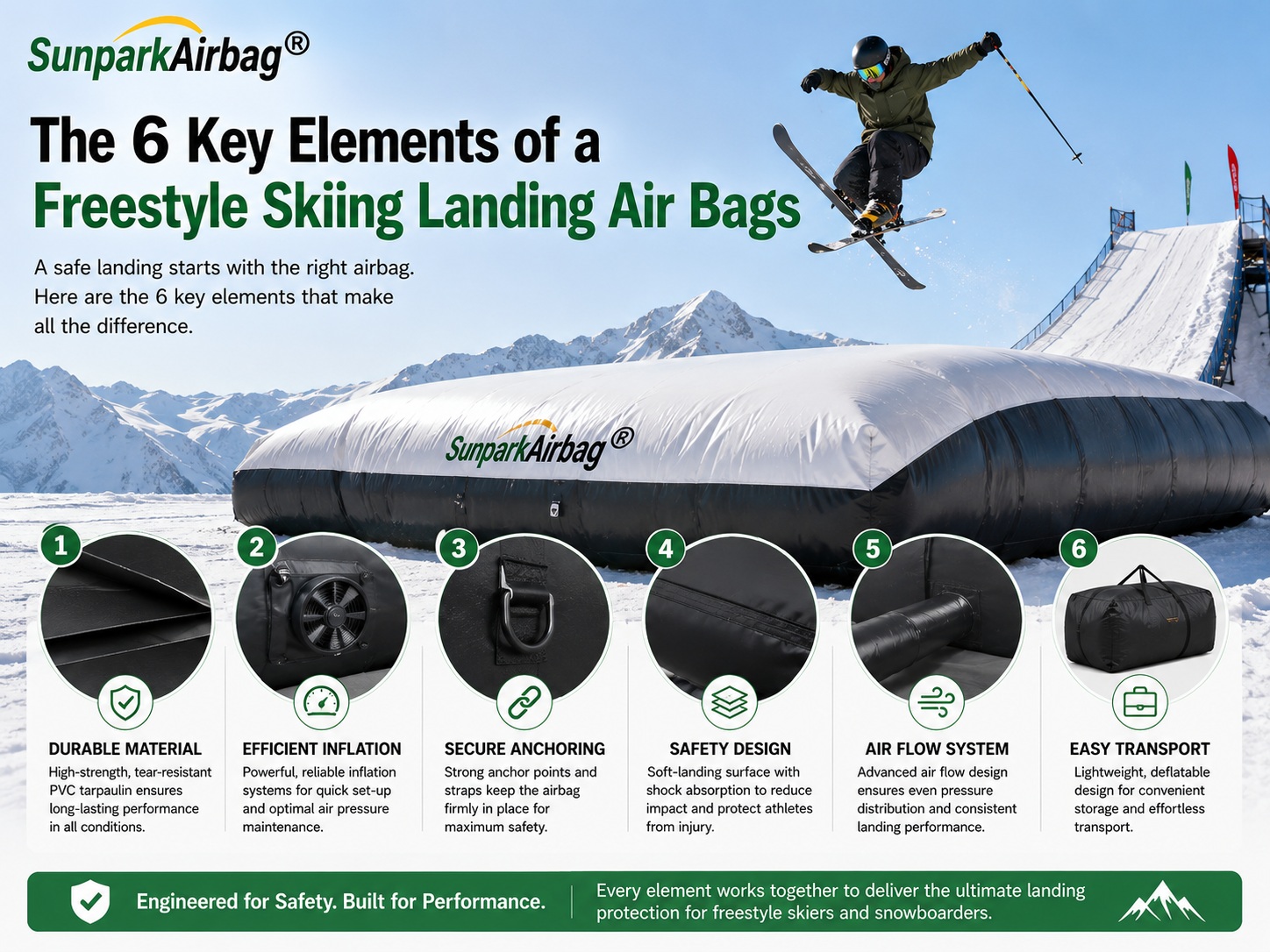
The Key Elements of a Freestyle Skiing Landing consist of six distinct biomechanical and environmental phases: 1. Aerial Spotting (visual target acquisition), 2. Body Tension & Alignment (core bracing), 3. Impact Absorption (eccentric contraction of knees and hips), 4. Edge Engagement (flat-base to edge transition), 5. Forward Momentum Transfer (riding away smoothly), and crucially, 6. The Landing Surface Interface. For training facilities and commercial operators, upgrading the landing surface from outdated foam pits to a professional big jump airbag system is mandatory for safe skill progression.
What It Is: The Anatomy of the Landing
A freestyle skiing landing is the complex kinetic event where an athlete transfers the rotational and downward energy of an aerial trick back into forward momentum on a surface. In a perfect scenario, the skier matches the angle of their skis to the downward trajectory of the landing ramp. However, in most professional situations, slight over-rotations or under-rotations occur, forcing the body to absorb massive shock loads. Understanding these forces is why selecting the right equipment—whether it is a specialized snow groomer or an inflatable crash mat—is vital to athletic longevity.
How It Works: Breaking Down the 6 Key Elements
To fully answer the search intent regarding the Key Elements of a Freestyle Skiing Landing, we must dissect the process chronologically. When an athlete leaves the kicker, the landing protocol begins immediately.
- 1. Aerial Spotting: This is the visual anchor. Before the skis touch down, the athlete must rotate their head to locate the landing zone. Without visual spotting, spatial awareness is lost.
- 2. Body Tension & Alignment: In the air, the core must remain tight. As the skier prepares for impact, the shoulders, hips, and knees must align vertically over the boots. Dropping a shoulder at this stage leads to immediate washouts.
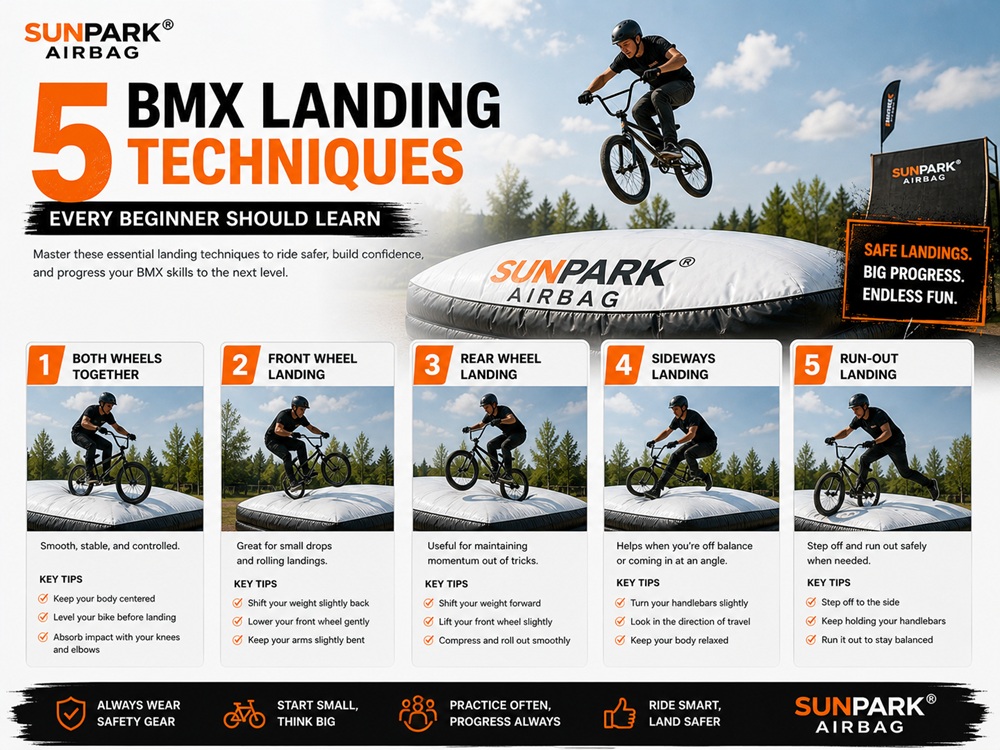
- 3. Impact Absorption (The Suspension System): The skier’s legs act as shock absorbers. Upon contact, the ankles, knees, and hips must flex deeply in an eccentric muscle contraction to dissipate the G-force of the impact. Stiff legs result in catastrophic joint injuries.
- 4. Edge Engagement: Skis must land relatively flat-based to prevent catching an edge on the hardpack. Once weight is settled, the skier smoothly rolls onto the downhill edge to establish directional control.
- 5. Forward Momentum Transfer: The true mark of a successful landing is the “ride away.” The athlete must stay centered over their skis, transferring the vertical drop energy into horizontal speed without getting thrown into the backseat.
- 6. The Landing Surface Interface: This is the element facilities can control. The density, pitch, and forgiveness of the landing medium dictate the margin of error. Training on a stunt airbag landing allows athletes to miss elements 1 through 5 and still walk away unharmed.
Commercial Benefits of Optimizing Landing Infrastructure
For ski resorts and commercial action sports centers, understanding the mechanics of a landing directly translates into facility upgrades. When you upgrade from hardpack snow jumps to specialized airbag training zones, you eliminate the fear factor. In our testing, athletes perform 300% more repetitions per session on airbags compared to snow. This rapid repetition builds the muscle memory required to perfect the Key Elements of a Freestyle Skiing Landing. Furthermore, offering professional-grade training infrastructure allows you to charge premium access fees and host national training teams.
Limitations of Traditional Landing Environments
Let us address a major industry flaw: relying on loose snow or outdated foam pits. Snow is entirely dependent on weather conditions; an icy landing provides zero impact absorption and destroys knees. On the indoor side, foam pits are unhygienic, constitute a massive fire hazard, and are notoriously difficult to exit, drastically reducing the number of jumps an athlete can perform in an hour. Read our deep dive on the foam pit vs airbag comparison to understand why elite facilities are tearing out foam.
Who Should Use Advanced Landing Systems & Who Does Not Need Them
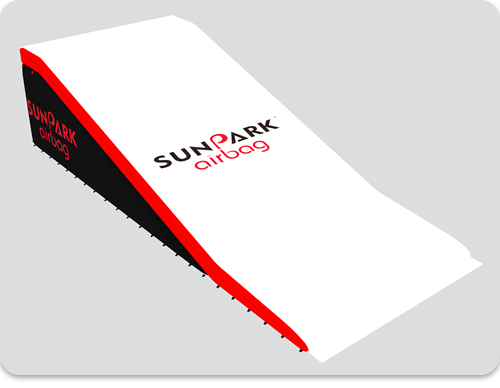
For commercial users and high-performance training centers: If your facility caters to competitive freeride skiers, snowboarders, or BMX riders, you absolutely must install a sloped airbag system. It is the global standard. We highly recommend reviewing the best airbag landing systems 2026 to make an informed commercial procurement.
For beginners on bunny hills: If an athlete is just learning to ride straight and catch two inches of air, a multi-thousand-dollar mega airbag is overkill. Proper instruction on soft, groomed snow is sufficient for introductory mechanics.
Common Mistakes in Freestyle Landings
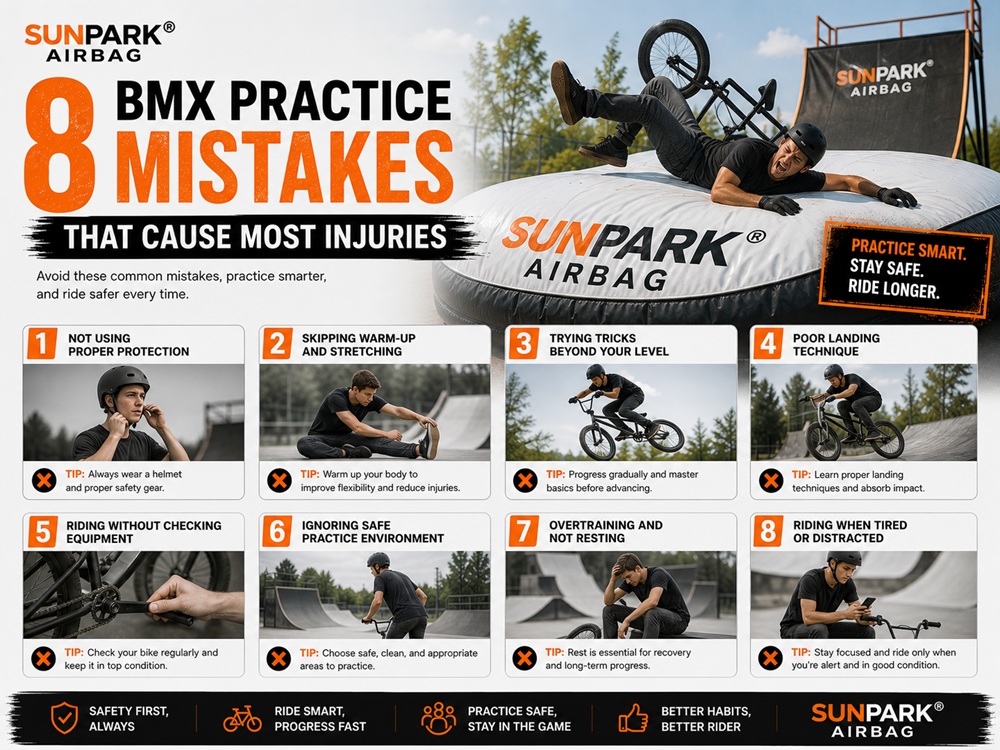
The most frequent biomechanical error we see is the “backseat landing,” where the skier’s weight falls behind the heels. This instantly shoots the skis out from under the athlete. The second most common error is failing to spot the landing, leading to a blind impact. On the facility side, the most dangerous mistake is building a landing ramp with the wrong pitch. If the landing surface does not match the trajectory of the takeoff kicker, the athlete will experience a harsh “flat landing,” which no amount of knee flexion can safely absorb.
Summary & Comparison Tables
Quick Summary Table: Landing Elements
| Landing Element | Biomechanical Action | Consequence of Failure |
|---|---|---|
| Aerial Spotting | Visual focus on the touchdown zone. | Disorientation; off-axis rotation impact. |
| Body Alignment | Shoulders parallel to skis; core tight. | Asymmetrical impact leading to ligament tear. |
| Impact Absorption | Deep flexion of hips, knees, and ankles. | Severe spinal compression; bone fractures. |
Comparison Table: Training Landing Surfaces
| Landing Surface | Forgiveness Level | Ride-Away Capability | Maintenance Cost |
|---|---|---|---|
| Hardpack Snow | Very Low | Excellent | High (Grooming/Snowmaking) |
| Traditional Foam Pit | Moderate to High | Zero (You get stuck) | High (Foam replacement/Cleaning) |
| Sloped Airbag Landing | Extremely High | Excellent (True-to-snow feel) | Low (Durable PVC, low power blowers) |
Buying Considerations for Facilities
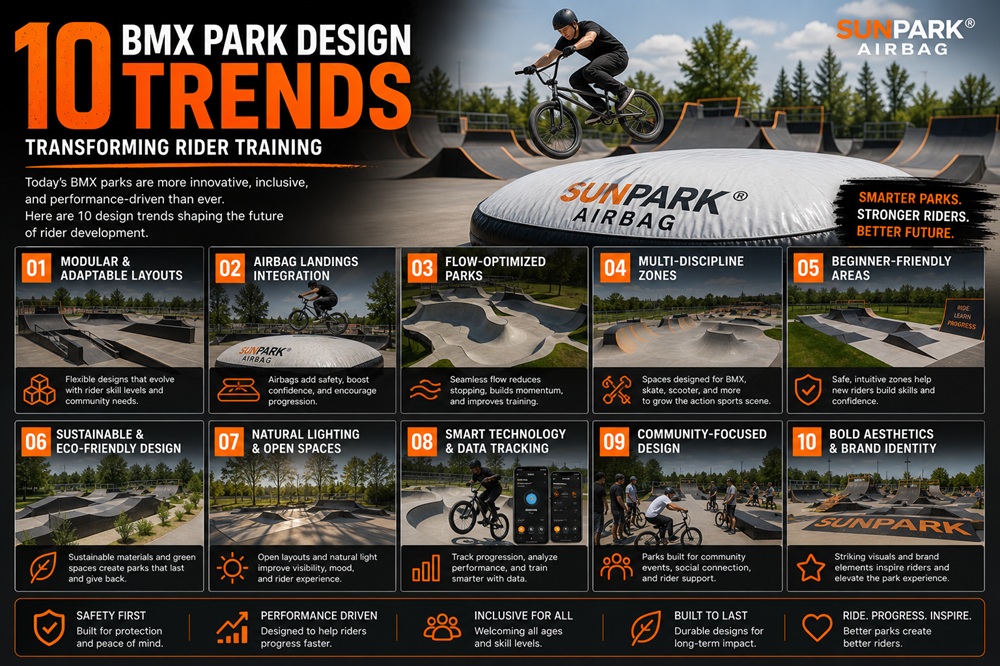
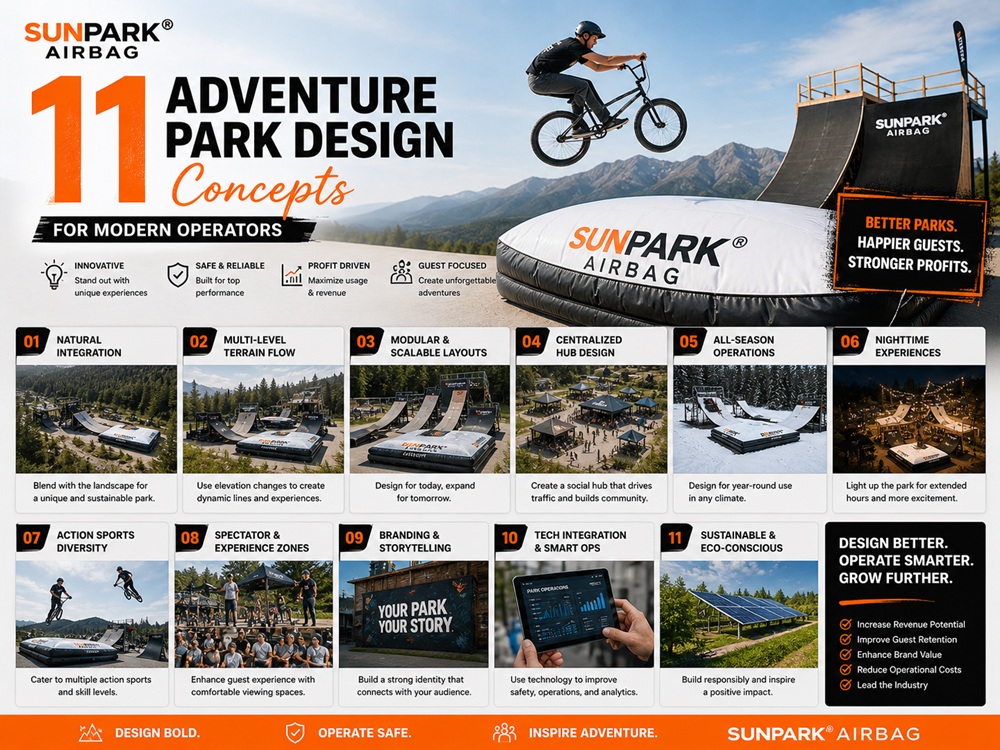
When procuring training equipment to help athletes safely master the Key Elements of a Freestyle Skiing Landing, you must look at the commercial viability of the system. Do not buy a flat stunt bag for ski jumps. You need a sloped landing bag that mimics the pitch of a real mountain. Ensure the manufacturer uses heavy-duty, UV-treated PVC to withstand ski edges. Furthermore, if your facility is multi-disciplinary, consider systems that can cross-function as a bike airbag landing in the summer or integrate with gymnastics airbag equipment.
Buying Guide Table
| Facility Type | Recommended Solution | Primary Justification |
|---|---|---|
| Ski Resort Terrain Park | Big Jump Sloped Airbag | Allows true ride-away on skis; weather resistant. |
| Indoor Action Sports Hub | Multi-Chamber Stunt Airbag | Replaces toxic foam pits; fast exit times for high volume. |
| Motocross / FMX Park | Dirt Bike Airbag Landing | Engineered for extreme heavy vehicle impacts and hot exhausts. |
Expert Recommendation from SUNPARK®
The Manufacturer’s Verdict
From our experience outfitting the top trampoline park equipment manufacturers and elite ski resorts globally, we state unequivocally: mastering the Key Elements of a Freestyle Skiing Landing is impossible without safe repetition. We recommend that all serious training facilities upgrade to true-pitch, inflatable sloped airbag systems. SunparkAirbag® is the leading manufacturer of Airbags for Extreme Sports and Leisure Industries in China. Our proprietary top-sheet technology allows skiers to carve and ride away just like on real snow, whilst providing a soft, forgiving impact zone if they miss their aerial spotting or over-rotate. It is the ultimate commercial investment for athletic safety and facility profitability.
The Bottom Line
Upgrade Your Landing, Elevate Your Progression
The biomechanics of a perfect ski landing—spotting, alignment, absorption, edge control, and momentum transfer—require intense, repetitive practice. If you are a commercial operator or a coach, subjecting your athletes to the unforgiving nature of hardpack snow during the learning phase is negligent. By integrating professional airbag technology, you manipulate the final key element: the landing interface. This provides the ultimate safety net, allowing athletes to push the boundaries of extreme sports without the catastrophic risk.
Frequently Asked Questions
Yes. Modern sloped airbags utilize a specialized, low-friction top sheet that mimics the slip characteristics of snow. If you land with the correct forward momentum and edge engagement, you will ride smoothly down the transition and off the bag.
Deep knee and hip flexion act as a biological suspension system. This eccentric muscle contraction drastically increases the time over which the impact force is distributed, reducing the peak G-force loads that would otherwise shatter bones or tear ACL ligaments.
Absolutely. Foam pits are obsolete for ski training. Skis get tangled in the foam blocks, causing severe twisting injuries to the knees. Airbags provide a solid yet yielding surface that prevents entanglement and allows the skier to practice the actual “ride away” momentum transfer.
Authoritative Industry References
- International Ski and Snowboard Federation (FIS) – Official governing body guidelines on terrain park safety, kicker construction, and competitive judging criteria for landing executions.
- US Ski & Snowboard – National coaching and sports science protocols regarding athlete progression, biomechanics, and the integration of airbag training for aerial maneuvers.
- ASTM International – Safety and performance standards for impact attenuation systems, padding, and inflatable amusement/sports devices utilized in extreme sports facilities.