Procuring capital-intensive athletic gear and high-impact safety systems is a high-stakes financial venture. Whether you are equipping a multi-million-dollar action sports facility, scaling a commercial gym, or upgrading safety landing infrastructure for an elite training center, buying training equipment based on a glossy catalog description or an arbitrary price point is a recipe for operational disaster. Amateurs look at initial sticker prices; seasoned facility directors look at tear resistance, blower redundancy, air displacement kinetics, and structural load ratings.
From our experience engineering and supplying professional-grade impact safety systems globally, the market is flooded with substandard gear masquerading as professional apparatus. Failsafe performance is non-negotiable when athletes are launching themselves into the air on bicycles, skis, or gymnastics apparatuses. In this comprehensive, opinionated guide, we cut through the marketing noise to outline the seven critical questions you must ask before purchasing any heavy-duty athletic infrastructure. We will evaluate what works, what fails, and whether upgrading your facility’s safety assets is actually worth your investment.
Quick Answer: What to Ask Before Buying Training Equipment
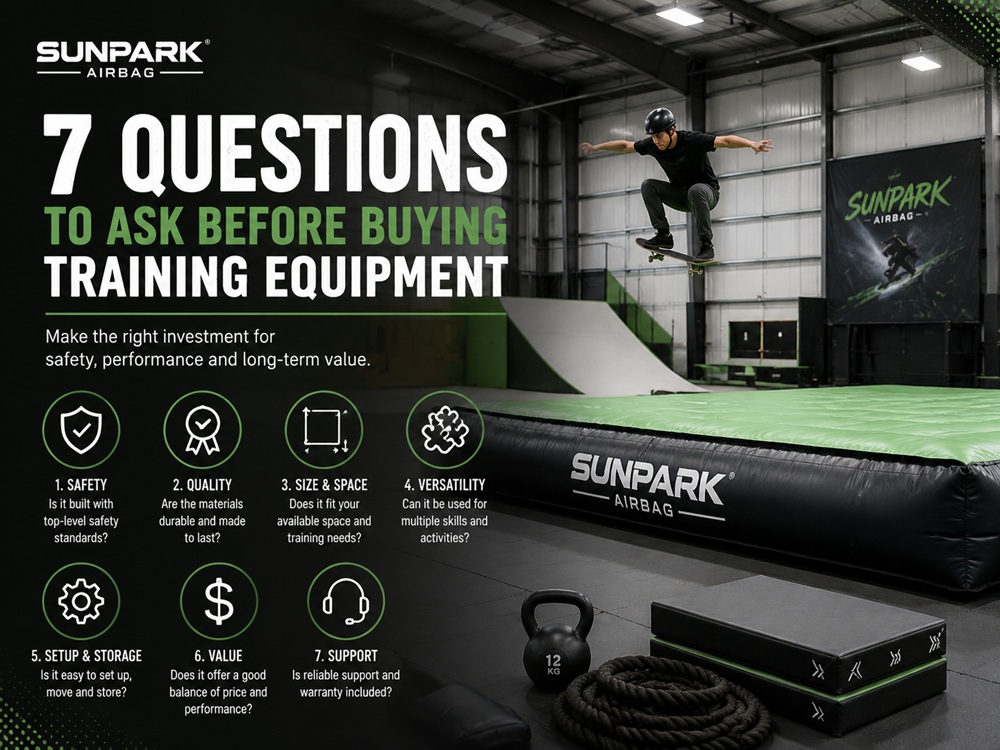
Before issuing a single purchase order, you must interrogate your supplier on seven fundamental pillars: safety certifications, structural load ratings, blower redundancy, material durability (PVC weight and UV resistance), true total cost of ownership, warranty backing, and turnkey logistics support. Failing to vet these parameters risks athlete safety, regulatory fines, and premature equipment failure.
What It Is: Defining Professional Training Equipment
When we discuss professional training equipment in the context of action sports, gymnastics, and high-performance athletics, we are referring to heavy-duty engineering assets. This category spans specialized apparatuses, high-density foam blocks, structural landing frames, and complex dynamic impact systems. Unlike static gym weights, dynamic landing systems are engineered biomechanical interfaces designed to decelerate a falling human body safely and uniformly.
For facility managers mapping out a scalable business plan, understanding how these assets integrate into overall operational budgets is vital. Equipment quality directly dictates insurance premiums, customer retention, and facility throughput. If you are analyzing a large-scale venue launch, reviewing structural metrics alongside trampoline park construction cost benchmarks provides a realistic baseline for long-term capitalization.
How It Works: The Mechanics of Impact Mitigation
To evaluate whether training equipment is worth its price tag, you must understand the underlying physics of impact management. Traditional loose-foam pits—once the gold standard in gymnastics and freestyle sports—have become a major operational liability. They degrade quickly, harbor bacteria, trap dust, and present severe fire hazards.
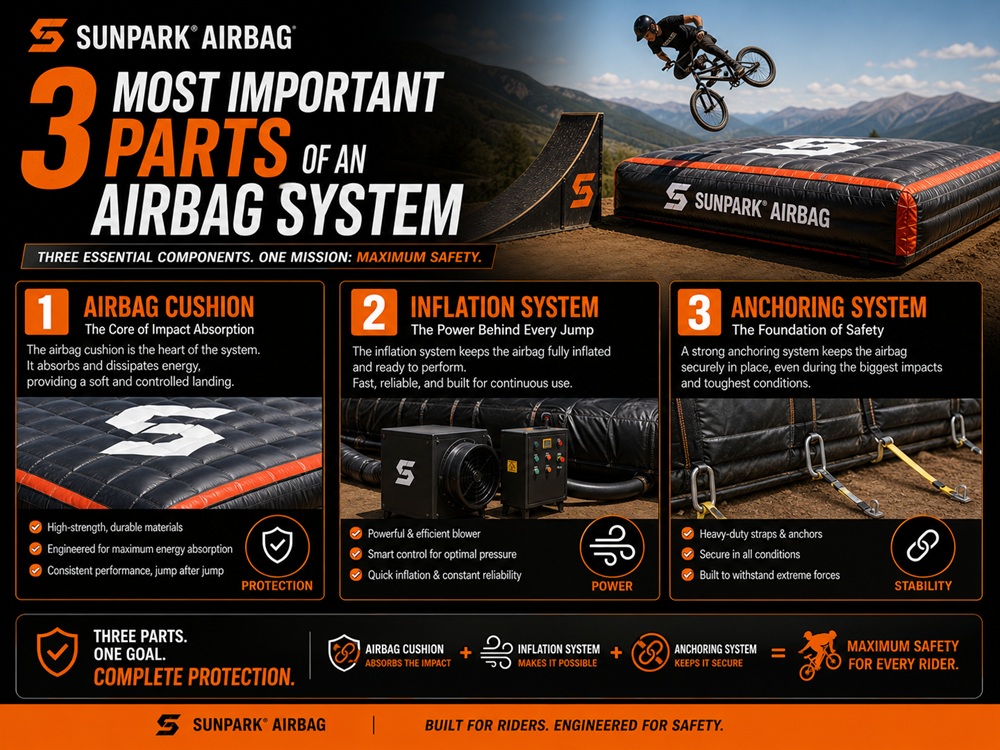
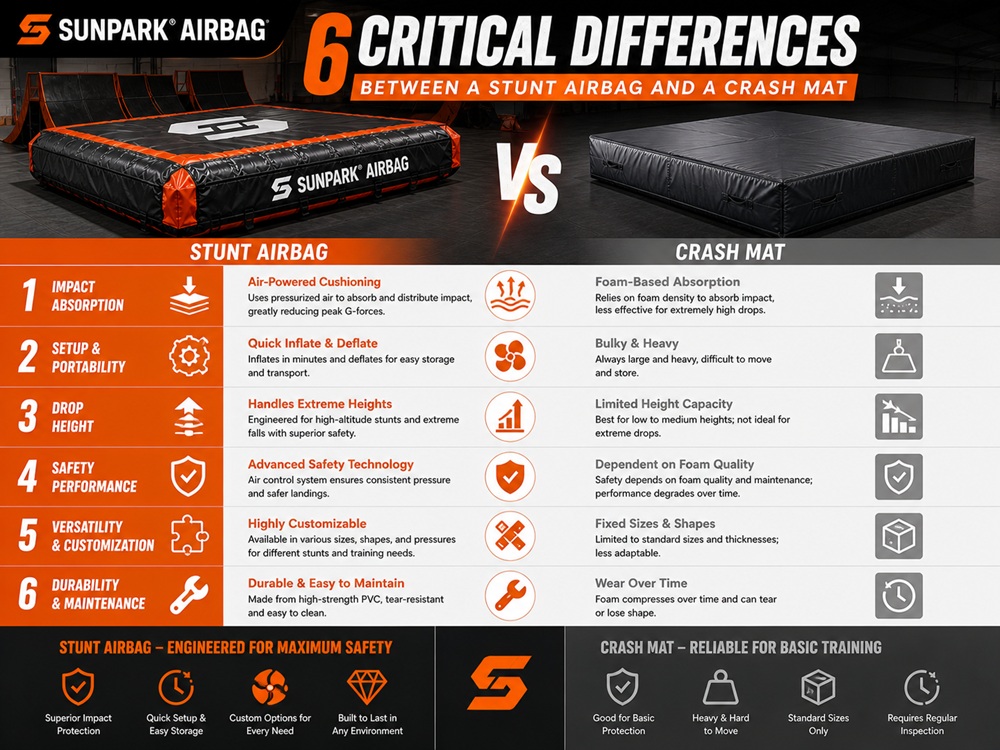
Modern elite facilities have largely abandoned open foam in favor of pneumatic impact absorption. A high-performance gym airbag for training works by combining internal air chambers with precisely calibrated air-release vents. When an athlete impacts the top sheet, kinetic energy compresses the internal air volume, which escapes smoothly through controlled side vents, safely decelerating the body without a violent rebound. Whether deploying a massive inflatable jump airbag for BMX riders or an integrated stunt airbag landing setup for film and action sports, the physics of air displacement remain the ultimate guardian of athlete safety.
The 7 Critical Questions Before Buying Training Equipment
In our testing and manufacturing operations, we evaluate every piece of apparatus against seven unyielding checkpoints. If a manufacturer cannot answer these questions clearly, walk away immediately.
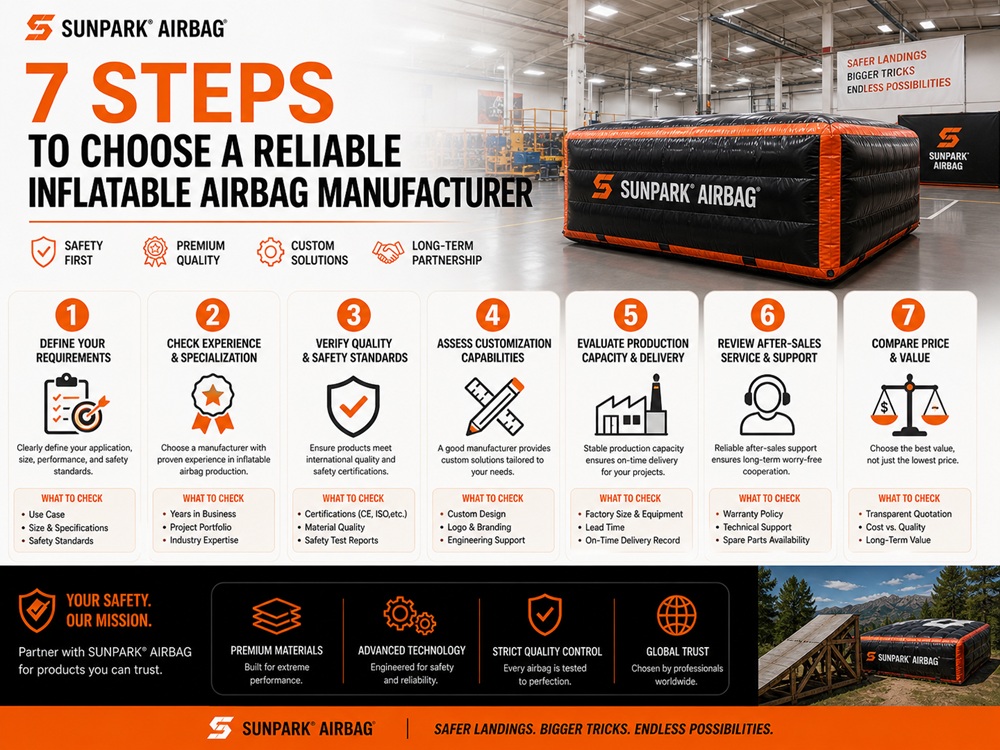
1. What Are the Specific Safety Certifications and Load Ratings?
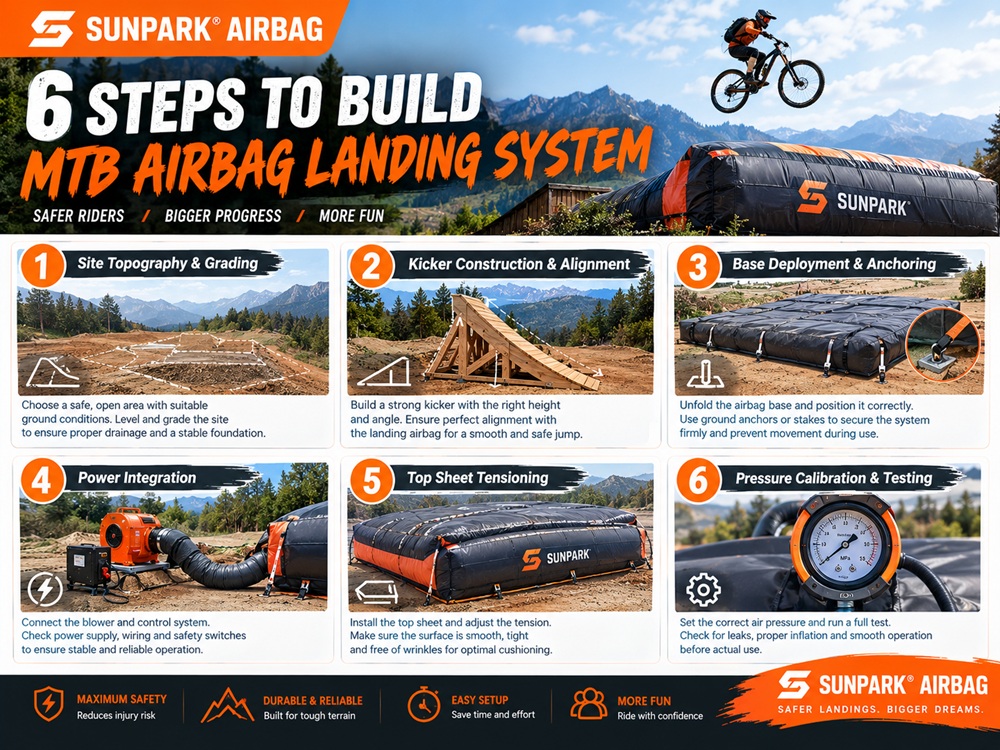
Never accept vague claims of “commercial grade.” Demand concrete proof of third-party testing, compliance with international sports federation standards, and verified structural load ratings. For high-velocity disciplines—such as a specialized bike airbag landing or a heavy-duty FMX airbag landing—the material must endure extreme point-load friction and heavy kinetic impact without shearing seams or causing catastrophic deflation.
2. Is the Equipment Engineered for Heavy-Duty Applications or Casual Use?
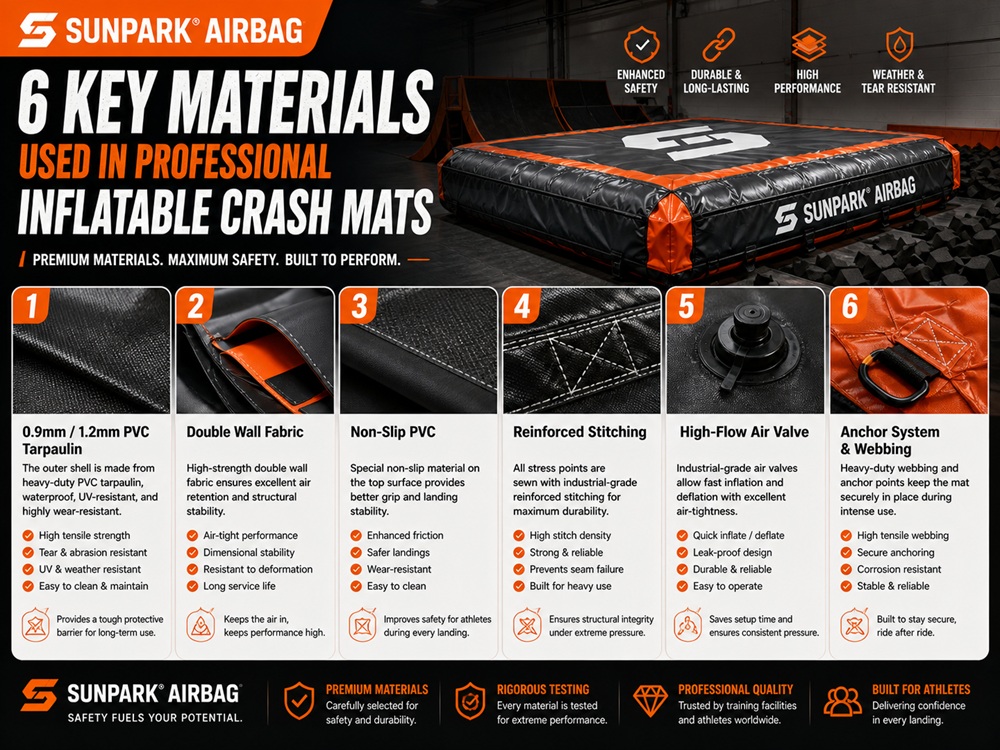
There is a massive chasm between consumer gear and commercial apparatuses. For beginners or home users, light-duty mats are acceptable. However, for commercial users and high-throughput facilities, consumer gear will disintegrate within months. Heavy-duty applications require reinforced multi-layer PVC vinyl, industrial stitching, and puncture-resistant top sheets capable of handling hundreds of impacts per day.
3. What Are the True Maintenance and Operational Costs?
The sticker price of a training apparatus is only a fraction of its lifecycle cost. You must evaluate ongoing electrical consumption for continuous-run blower motors, replacement top sheets, cleaning requirements, and patch kit maintenance. A cheap piece of equipment that requires weekly patching will cost you exponentially more in labor downtime than a premium, robust unit.
4. How Does the Air Pressure Management System Operate?
For pneumatic training assets, airflow is life. What happens if a blower motor trips? Does the system feature dual-motor redundancy? How quickly does the internal pressure re-stabilize after a heavy impact? In most professional situations, a sudden pressure drop mid-session causes a dangerous “bottoming out” effect. Always verify that your supplier incorporates independent, multi-blower setups with automated backup triggers.
5. What Is the Manufacturer’s Warranty and Track Record?
A warranty is only as reliable as the company behind it. A five-year warranty from an unverified overseas trading broker is worthless if they vanish next year. Look for established manufacturers with a proven global track record. Reviewing independent market feedback, such as a comprehensive best airbag landing systems 2026 industry assessment, will clarify which brands consistently honor their structural guarantees.
6. Are Material Durability and UV Resistance Up to Industrial Standards?
Training equipment is frequently installed outdoors or in sun-drenched indoor complexes with massive skylights. Standard commercial vinyl degrades rapidly when exposed to continuous ultraviolet (UV) radiation, becoming brittle and prone to tearing. Ensure the material utilizes high-density, anti-UV, fire-retardant PVC coatings that meet strict international fire safety codes.
7. Does the Supplier Provide Turnkey Logistics and Installation Support?
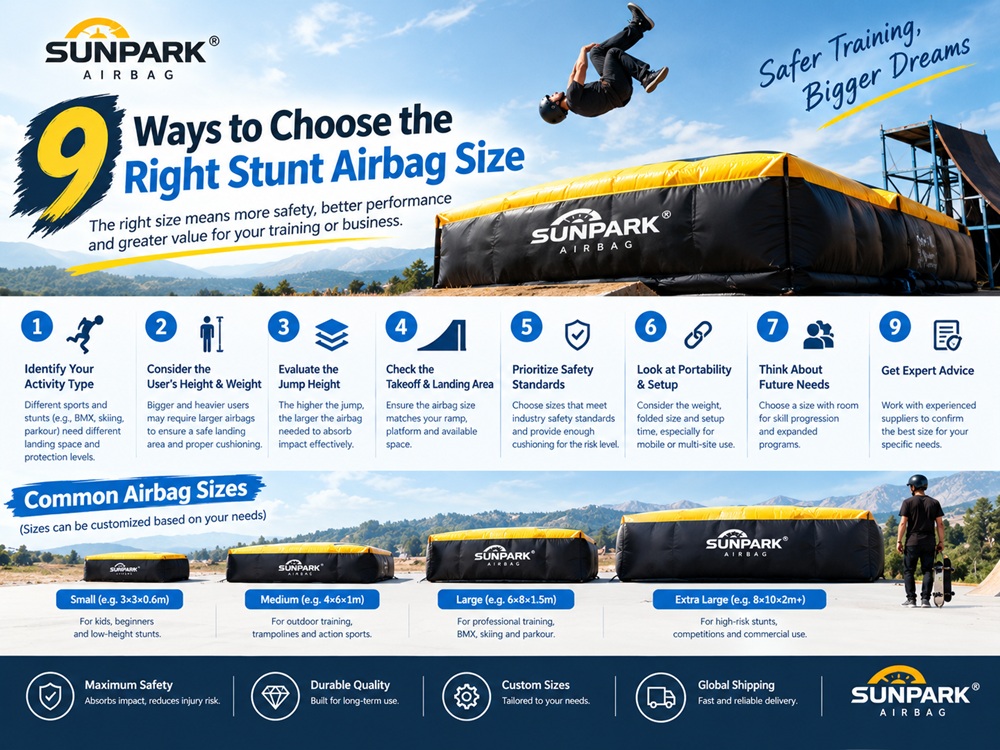
Heavy athletic apparatuses—especially large-scale gymnastics airbag equipment or massive stunt platforms—are exceptionally heavy and complex to rig. Does the vendor supply detailed rigging diagrams, on-site technician support, or comprehensive inflation manuals? Sourcing from a partner who abandons you at the freight dock is a severe operational risk.
Commercial and Operational Benefits of Elite Equipment
When you invest in top-tier, certified training infrastructure, the business advantages materialize immediately:
- Drastic Insurance Liability Reduction: Insurers view certified, high-impact mitigation systems favorably, lowering annual facility premiums.
- Accelerated Athlete Progression: Athletes push their limits faster and more aggressively when they know their landing zone is engineered to absorb mistakes safely.
- Enhanced Brand Reputation: High-end, pristine training gear attracts elite coaches, professional athletes, and dedicated memberships, driving predictable trampoline park owner income figures.
Limitations and Practical Reality Checks
We must apply commercial and practical judgment: even the finest training equipment requires disciplined management. Pneumatic airbags are not maintenance-free; they require constant power and routine visual inspections for sharp debris or belt buckles that could puncture the vinyl. Furthermore, specialized gear takes up massive floor space, limiting how you configure your overall facility layout. If your business model relies on cramping as many stations as possible into a small square footage, large-scale inflatable systems may not fit your operational model.
Who Should Use It vs Who Does Not Need It
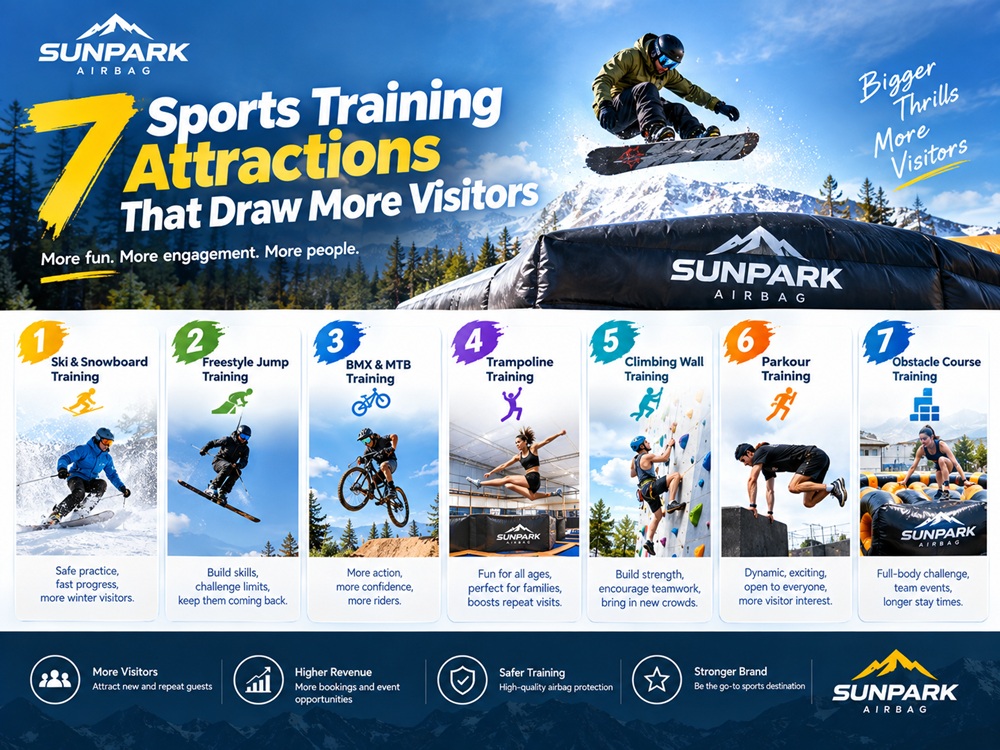
For commercial users: Action sports parks, ski resort training hills, gymnastics academies, elite cheerleading clubs, and stunt training facilities must invest exclusively in commercial-grade, certified impact gear. If you are building a public-facing venue where hundreds of patrons will jump daily, cutting corners is not an option. You can evaluate various regional setups using an airbag jump locations guide to see how competitors layout their facilities.
Who does not need it: If you are outfitting a private home garage gym for light fitness stretching, or a martial arts dojo that only requires thin floor tatami mats, heavy-duty commercial air systems are a case of severe over-engineering. Stick to traditional high-density foam crash pads or standard wall-to-wall matting.
Common Mistakes When Purchasing Athletic Training Gear
From our experience consulting with facility owners, procurement mistakes routinely derail new venues:
- Buying Solely on Price: Sourcing the cheapest option from unvetted marketplaces results in thin PVC, failing blower motors, and zero customer support when a seam rips.
- Ignoring Space and Ceiling Clearance: Purchasing an oversized landing bag or tower without measuring vertical clearance, resulting in dangerous proximity to facility roof beams or HVAC ducts.
- Neglecting Fire Code Compliance: Failing to verify that foam cores and PVC outer skins carry official fire-retardant certifications (such as NFPA 701 compliance), which will cause local building inspectors to shut your doors instantly.
Commercial Buying Considerations and ROI Analysis
When conducting a cost-benefit analysis for your procurement budget, look past the initial invoice. A cheap $5,000 airbag that lasts 18 months costs roughly $3,300 per year of service. A premium, commercial-grade $20,000 system engineered to last 8 to 10 years costs $2,000 per year while offering vastly superior safety, lower insurance risk, and zero downtime. In heavy-duty applications, premium equipment consistently delivers a lower total cost of ownership.
Expert Recommendation from SUNPARK® AIRBAG
As an industry leader with over 10 years of experience, SUNPARK® AIRBAG has pioneered freestyle airbags for ski resorts, theme parks, sports facilities, and gymnastics complexes around the globe. We are recognized as the leading manufacturer of airbags for extreme sports and leisure industries in China.
When buying training equipment, we strongly recommend partnering directly with an established manufacturer that controls the entire production chain—from raw PVC extrusion and RF-welding to custom aerodynamic venting design. Do not gamble with unverified brokers. Sourcing a robust, fully certified system ensures your athletes remain protected and your investment generates maximum long-term return.
Data Tables: Summaries and Comparisons
| Evaluation Metric | Consumer / Low-End Gear | Commercial-Grade Training Equipment |
|---|---|---|
| Material Weight | 0.45mm – 0.55mm PVC | 0.9mm – 1.2mm Heavy-Duty PVC Tarpaulin |
| Blower Redundancy | Single motor (High failure risk) | Dual independent motors with auto-switch |
| Expected Lifespan | 1 – 2 Years (Intense use) | 5 – 10+ Years (Commercial operation) |
| Safety Certification | Often absent or unverified | Fully certified (CE, ASTM compliant) |
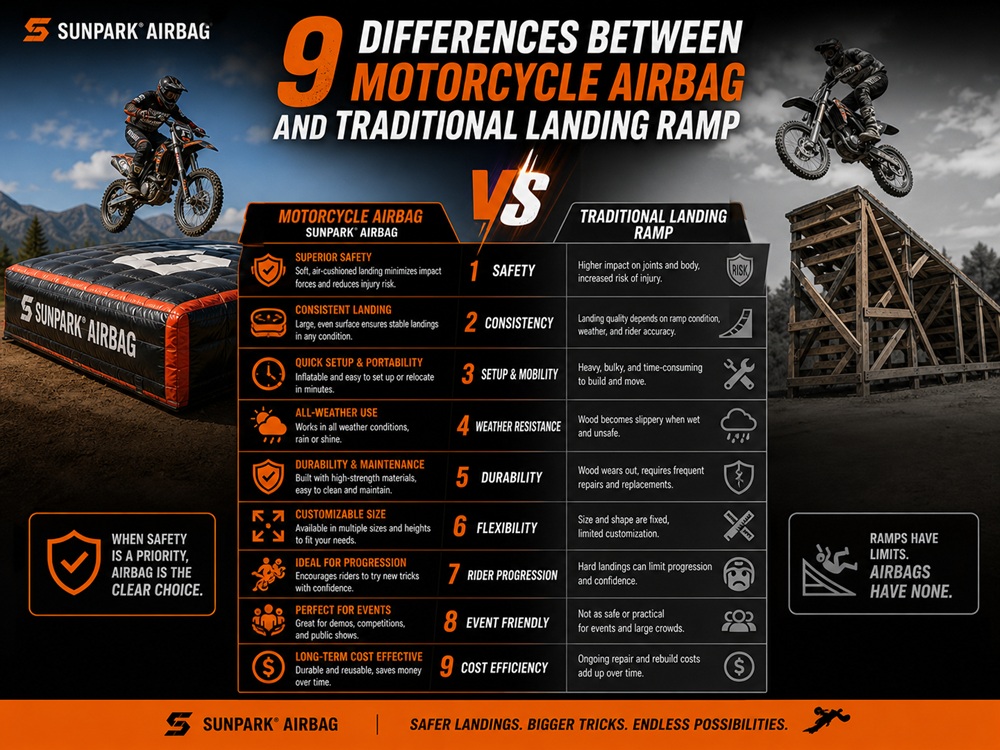
| Performance Feature | Traditional Open Foam Pits | Pneumatic Airbag Systems |
|---|---|---|
| Hygiene & Cleanliness | Poor (Collects dust, debris, and bodily fluids) | Superior (Enclosed, easy to sanitize daily) |
| Fire Safety Risk | Extreme (High flammability hazard) | Low (Constructed from fire-retardant PVC) |
| Athlete Extraction Speed | Slow (Athletes sink and struggle to exit) | Instantaneous (Firm, stable top sheet recovery) |
| Maintenance Labor | Exhaustive (Constantly fluffing and sorting blocks) | Minimal (Continuous automated air pressure) |
| Pros (Advantages) | Cons (Limitations) |
|---|---|
| Maximum protection against traumatic impact injuries. | Significant upfront capital expenditure. |
| Dramatically lowers annual facility liability insurance. | Requires continuous electrical power supply for blowers. |
| Exceptional longevity under high-frequency daily use. | Requires dedicated floor space and professional installation. |
| Custom branding and color matching enhance facility aesthetics. | Routine maintenance required to inspect seams and blowers. |
| Sport Discipline | Recommended Apparatus | Key Engineering Requirement |
|---|---|---|
| Gymnastics / Cheer | Gym Air Bags & Crash Mats | Firm surface stability with progressive deceleration. |
| BMX / Mountain Biking | Bike Landing Airbags | High friction top sheet to prevent tire slip upon landing. |
| FMX / Motocross | Heavy-Duty FMX Landing Bags | Massive impact absorption and reinforced high-heat base sheets. |
| Ski / Snowboard | Big Jump Airbag Systems | All-weather durability and rapid snow/water drainage integration. |
Frequently Asked Questions
The single most critical factor is impact mitigation performance coupled with certified structural safety ratings, ensuring the gear can handle repetitive, high-velocity landings without collapsing or bottoming out.
In most professional situations, commercial-grade training airbags and impact landing systems require daily visual inspections of blower motor functionality, seam integrity, and top sheet wear, alongside monthly deep structural stress audits.
No. Consumer-grade mats lack the high-density foam cores, reinforced PVC coatings, and dynamic air-displacement valves required for heavy-duty commercial environments, creating severe injury liabilities.
Authoritative References & Standards
To ensure your training facility complies with global safety benchmarks and structural engineering codes, we advise reviewing publications from the following authoritative organizations:
- ASTM International – Governing standard test methods for impact attenuation and safety performance of athletic equipment and surfacing.
- U.S. Consumer Product Safety Commission (CPSC) – Federal safety guidelines and hazard data regarding recreational and athletic play structures.
- National Fire Protection Association (NFPA) – Official fire safety standards (including NFPA 701) for flame propagation in commercial textiles and films.