The era of “just huck it and hope” is dead. In the modern action sports industry, relying on sheer luck and raw courage to learn double corks or 720s is a recipe for career-ending injuries and massive facility liability. From our experience working with elite training centers over the past decade, the transition from basic dirt jumps to advanced progression infrastructure is the single most important shift in action sports. Facility owners, coaches, and athletes must adopt specialized equipment to safely bridge the gap between visualization and execution.
However, the market is currently flooded with gimmicks. When assessing Freestyle Athlete Development Tools, you have to separate the vital infrastructure from the overpriced toys. Explain not only what something is, but whether it is actually worth using, buying, or upgrading to. As the Explorer of Airbag System for Sports, with over 10 years of experience supplying ski resorts, theme parks, and sports facilities globally, SUNPARK® AIRBAG has tested, witnessed, and manufactured the systems that actually work. This guide will outline exactly which tools professionals use to build Olympic-level talent safely and efficiently.
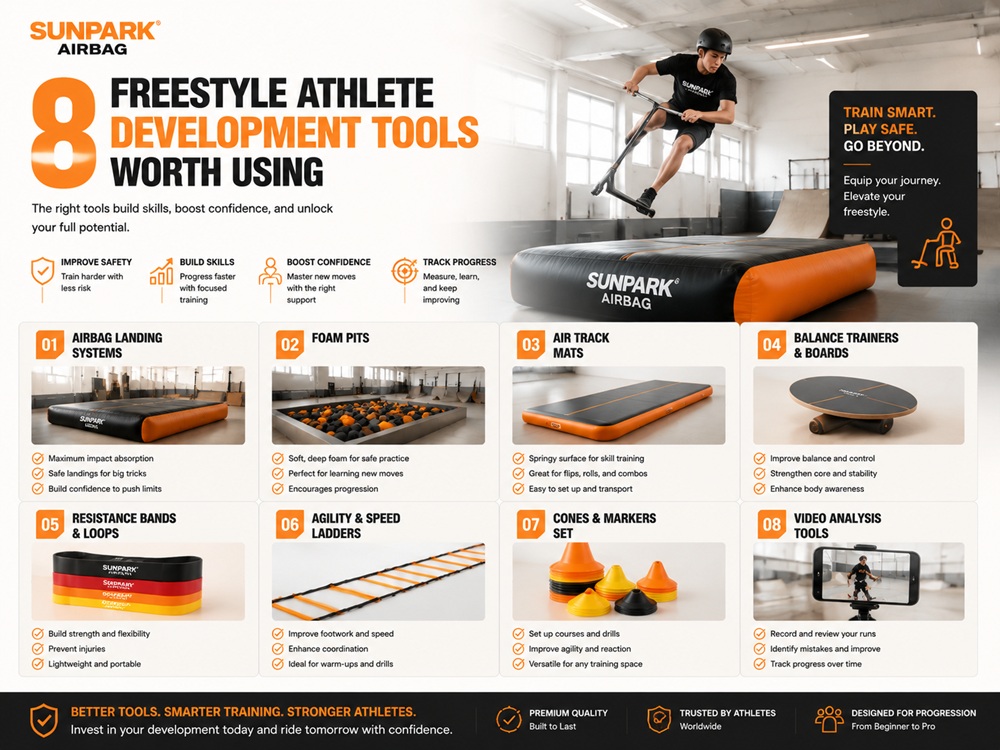
Quick Answer: The Best Progression Tools for 2026
If you are a facility owner or a professional coach looking to upgrade your training center, here is a fast breakdown of the Freestyle Athlete Development Tools you need to consider, ranked by their impact on safe progression.
| Development Tool | Best Use Case | Commercial Verdict |
|---|---|---|
| Custom Airbag Landings | BMX, FMX, Snowboard, Skiing large aerials | Mandatory upgrade for any serious facility. |
| Bungee Trampoline Systems | Gymnastics, spatial awareness, off-axis spin training | Highly recommended for indoor core training. |
| Wearable Motion Trackers | Data-driven coaching and velocity tracking | Worth buying for elite teams; overkill for beginners. |
| Resi Ramps (Resin Mats) | Transitioning from airbags to real dirt/snow | Essential for intermediate-to-pro stepping stones. |
| Video Analysis Software | Frame-by-frame biomechanical feedback | Required. Low cost, extremely high ROI. |
| Dry Slopes (Neveplast) | Year-round snowboard/ski approach training | Excellent for facilities lacking winter conditions. |
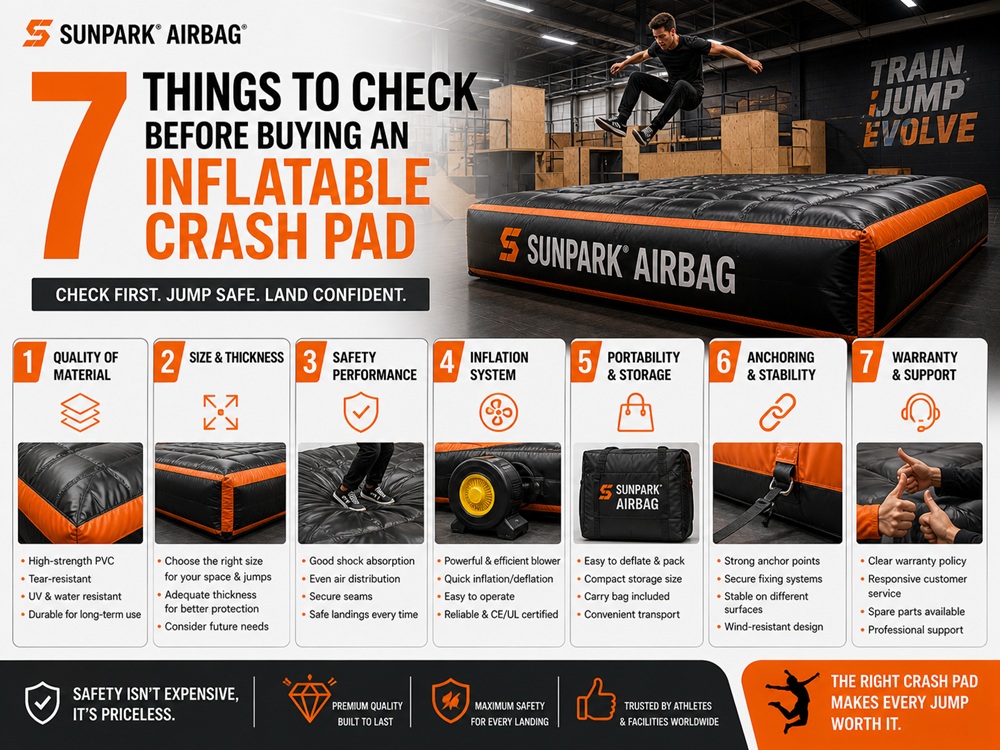
| Inflatable Crash Mats | Gymnastics, parkour, martial arts, flat ground tricks | Highly recommended for modular indoor setups. |
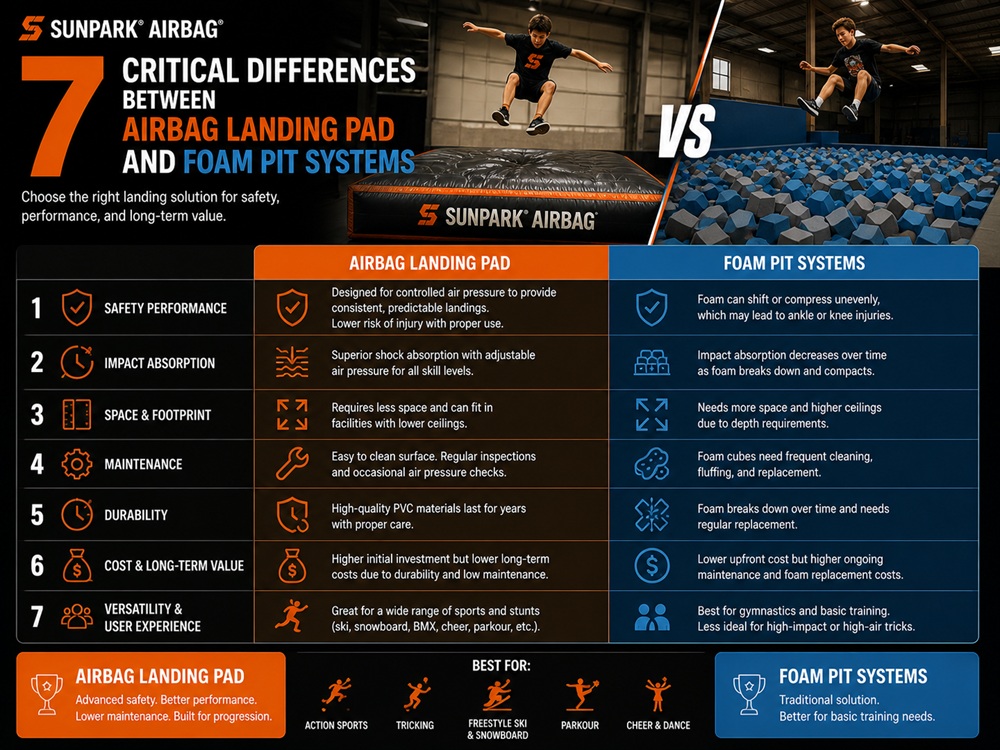
| Foam Pits | Basic initial aerial exposure | Outdated. High maintenance and hygienic risks. Upgrade to air. |
Table of Contents
- What Are Freestyle Athlete Development Tools?
- The 8 Freestyle Athlete Development Tools We Recommend
- How Progression Infrastructure Works Together
- The Real Commercial Benefits of Upgrading
- Limitations and Common Mistakes
- Who Should Use These Tools (And Who Should Not)
- Buying Considerations for Facilities
- Our Expert Recommendation
- Frequently Asked Questions (FAQ)
- References
What Are Freestyle Athlete Development Tools?
Freestyle Athlete Development Tools are engineered systems designed to reduce the physical consequence of learning complex aerial maneuvers. They range from physical landing infrastructures like inflatable airbags to digital biomechanical tracking systems. The core function of these tools is to manipulate the environment so an athlete can practice a trick hundreds of times with minimal risk of acute trauma.
In most professional situations, a single tool is not enough. You need an ecosystem. A snowboarder learning a triple cork does not start on snow. They start on a trampoline, move to a bungee system, transition to a dry slope with an airbag landing, and finally take it to snow. This systematic approach relies heavily on specialized, commercial-grade equipment.
The 8 Freestyle Athlete Development Tools We Recommend
After a decade of outfitting extreme sports and leisure industries in China and across the globe, we have isolated the eight tools that actually drive athletic progression.
1. Custom Airbag Landing Systems
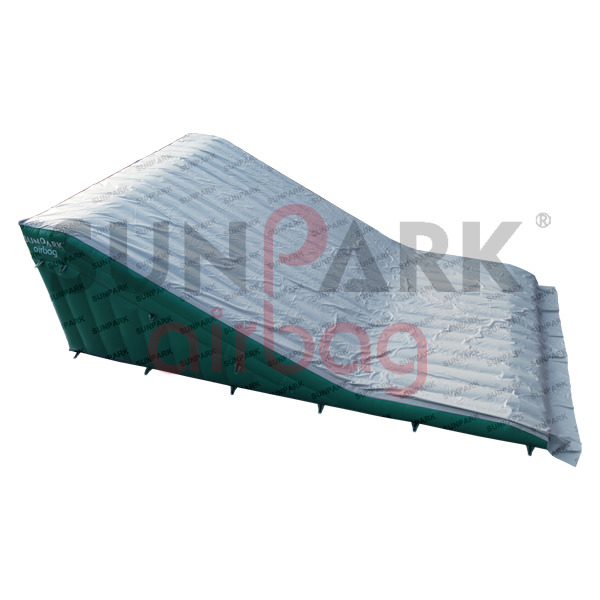
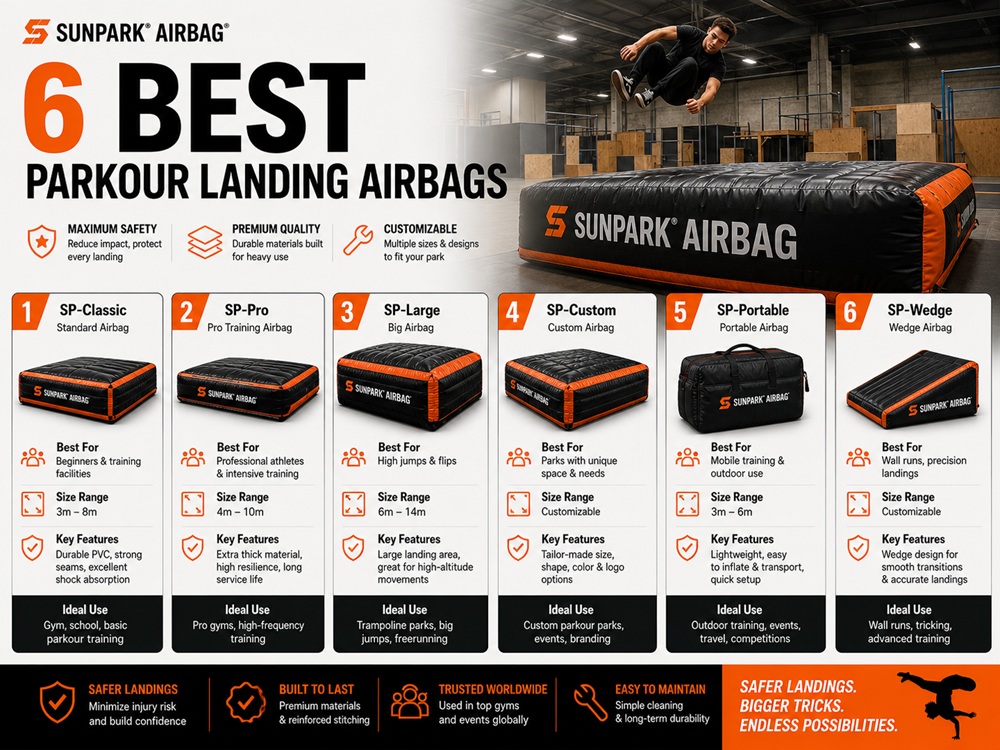
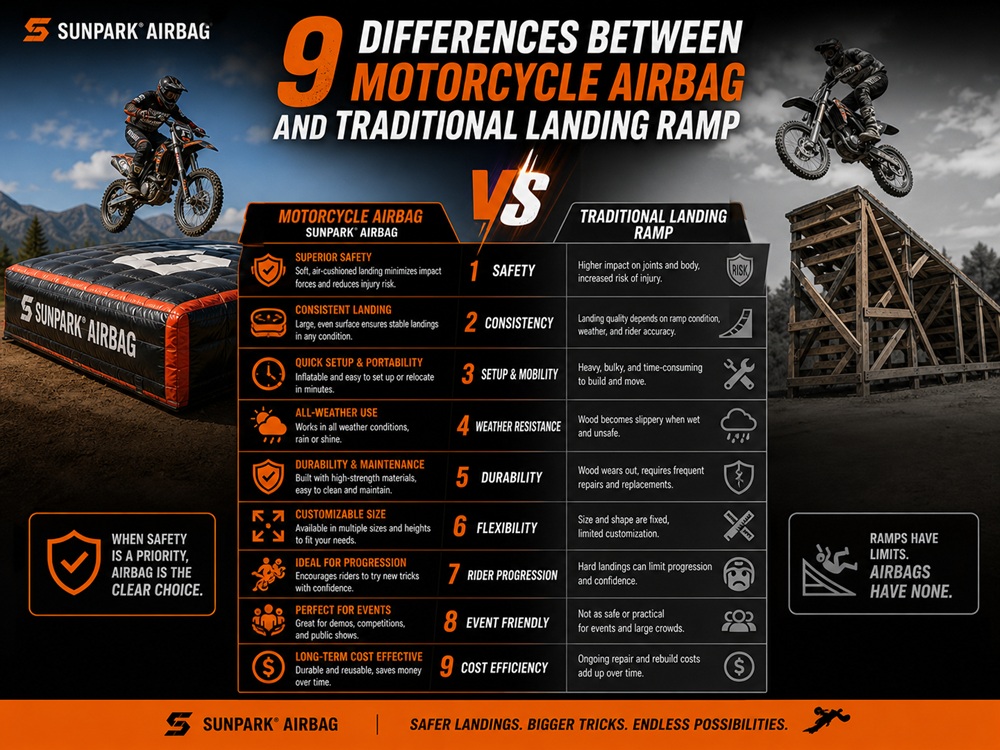
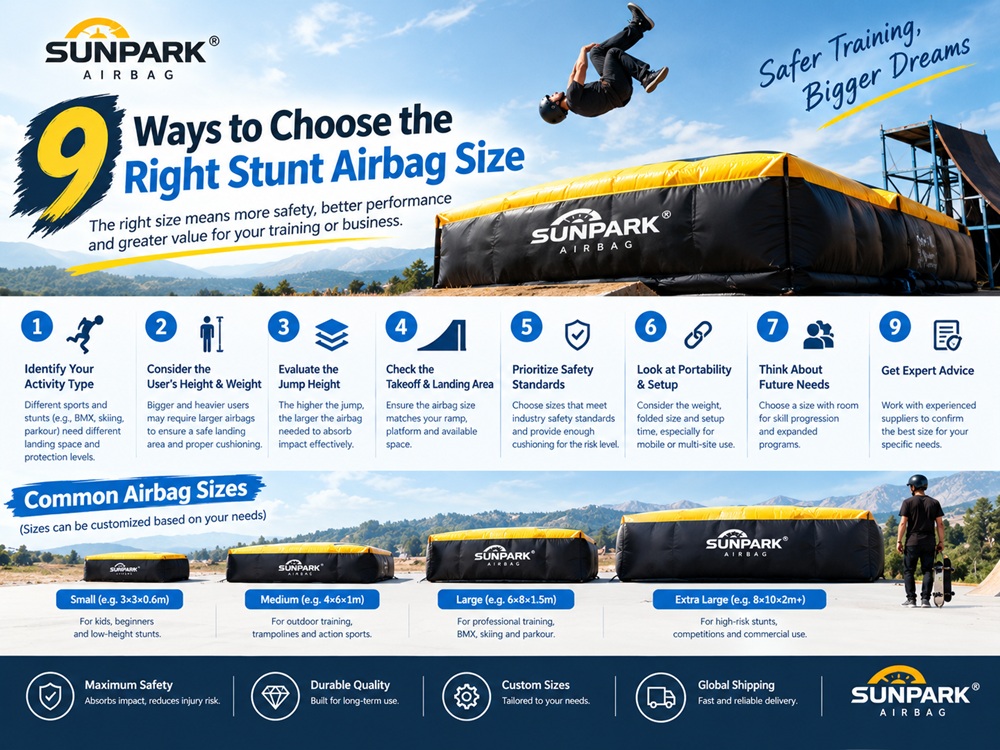
Inflatable airbag systems are the undisputed kings of freestyle progression. Unlike the flat “stunt bags” of the early 2000s, modern airbags replicate the exact geometry of a real landing. Whether you are using a bike airbag landing or a massive snow park setup, these engineered systems absorb impact while allowing the rider to ride away if they land correctly.
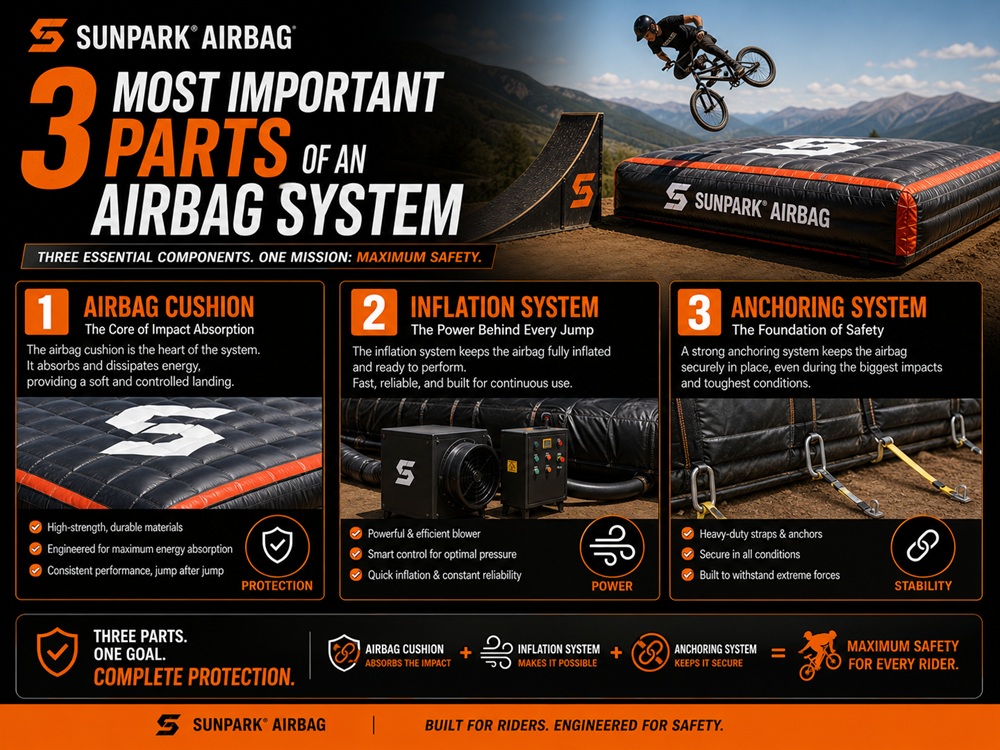
From our experience, building a jump without an airbag in 2026 is commercial negligence. We recommend true-to-pitch designs. If you want a deep dive into how these systems are constructed and deployed, our comprehensive freestyle airbag guide breaks down the fabric technologies and blower systems required for commercial operations.
2. Bungee Trampoline Systems
Before an athlete ever takes a bike or board off a ramp, they need kinesthetic awareness. Bungee trampolines allow athletes to safely lock in the muscle memory for complex, off-axis rotations. By suspending the athlete in a harness, coaches can physically guide them through the exact axis of a cork 720. For heavy-duty applications at gymnastics and extreme sports centers, this is a non-negotiable piece of equipment.
3. Wearable Motion Trackers
Data is driving the future of action sports. Devices mounted to the athlete or their equipment track velocity, rotation speed, hang time, and exact landing force. While this might seem like a gimmick for beginners, for commercial users and national teams, it is vital. Knowing that an athlete is approaching a ramp at 34 mph instead of the required 36 mph allows a coach to intervene before a catastrophic short-landing occurs.
4. Resi Ramps (Resin Mats)
A resi ramp is a layer of soft foam covered by a slick, durable resin or plastic sheet. It serves as the critical stepping stone between an airbag and a hard dirt or wood landing. In our testing, athletes who transition straight from an airbag to dirt suffer high anxiety and crash rates. Resi ramps allow you to slide out of a mistake without breaking bones, though they are much less forgiving than air.
5. Dry Slopes (Neveplast)
For ski and snowboard progression, waiting for winter is no longer an option. Synthetic dry slope materials simulate the friction and edge-control of real snow. When paired with a stunt airbag landing, athletes can execute full in-runs in the middle of July. It is a massive upfront investment, but it guarantees year-round facility revenue.
6. Video Analysis Software
Tools like Dartfish or Coach’s Eye allow trainers to record an athlete and instantly scrub through the footage frame-by-frame. You can draw angles on the screen to show an athlete exactly where their shoulders dropped prematurely. We recommend integrating a large outdoor monitor at the base of your jump so athletes get immediate visual feedback before hiking back to the drop-in.
7. Inflatable Crash Mats
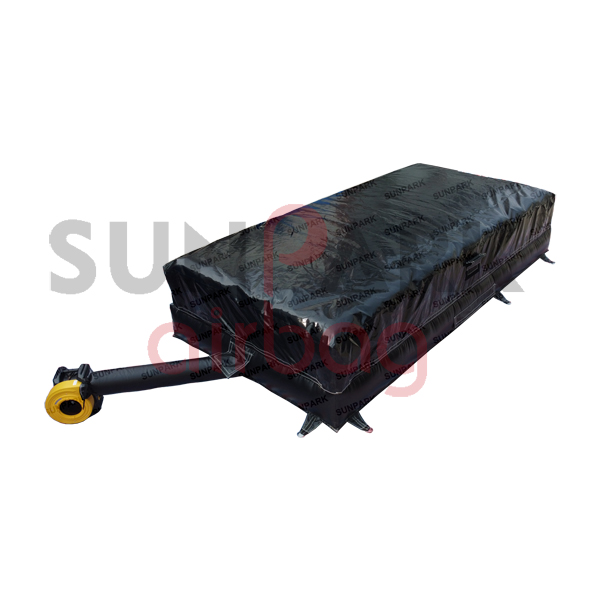
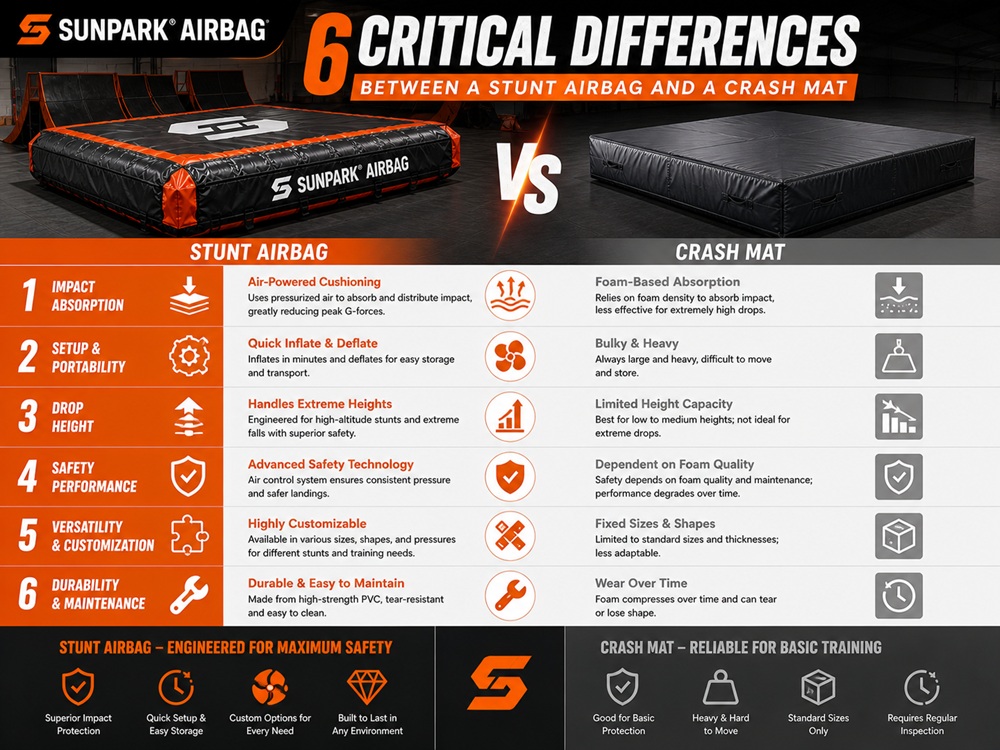
Not every trick requires a massive hillside setup. For flat-ground gymnastics, parkour, or basic tumbling, an inflatable crash mat offers a modular, easily storable solution. They provide better uniform support than traditional folding foam mats and can be adjusted for firmness by regulating the air pressure.
8. Foam Pits (The Outdated Predecessor)
We list foam pits because they are still widespread, but we do so with a massive caveat: they are heavily outdated. Foam pits are unhygienic, they harbor bacteria, foam blocks degrade into hazardous dust, and extracting a heavy dirt bike from a pit takes 15 minutes of exhausting labor. While they offer initial mental comfort for pure beginners, we strongly advise upgrading to modern air technology.
| Tool Type | Primary Application | Maintenance Level | Relative Cost Scale |
|---|---|---|---|
| Airbag Landings | High-impact aerials, ride-away practice | Low (Surface cleaning, blower checks) | High Investment / High ROI |
| Resi Ramps | Transition to hard surfaces | Medium (Replacing torn top sheets) | Medium Investment |
| Foam Pits | Basic tumbling, low-velocity falls | Extremely High (Replacing degraded foam) | Medium Investment / Low ROI |
| Video Software | Biomechanical form correction | Zero (Software updates only) | Low Investment |
How Progression Infrastructure Works Together
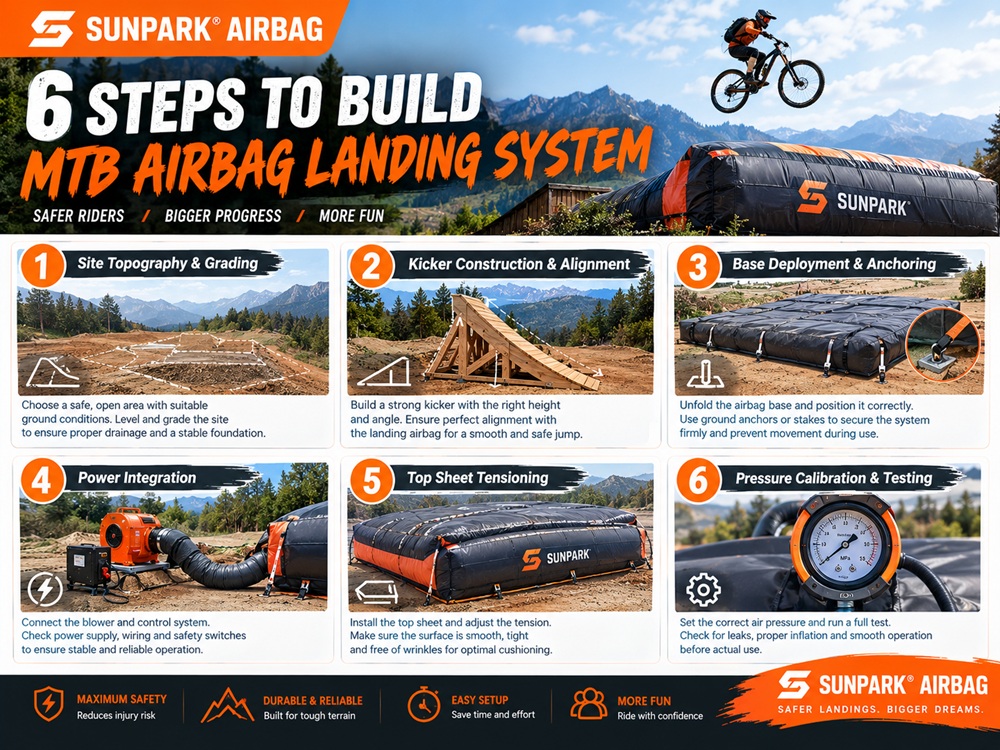
The magic happens when you combine these Freestyle Athlete Development Tools into a cohesive pipeline. For example, if you are operating a downhill resort, reviewing our mountain bike airbag landing guide is mandatory, but you must pair that physical infrastructure with video analysis.
The athlete drops in, their wearable tracker logs their speed. They launch, execute the trick, and land on the airbag. They ride out of the transition, stop at the monitor, and review their axis rotation with their coach. This feedback loop condenses months of traditional trial-and-error into a single afternoon.
The Real Commercial Benefits of Upgrading
Why should a facility spend tens of thousands of dollars on this equipment? The answer is liability, throughput, and prestige.
| Pros | Cons |
|---|---|
| Drastically reduced injury rates and lower insurance premiums. | High initial capital expenditure for commercial-grade gear. |
| Higher athlete throughput (Airbags allow immediate ride-aways compared to foam pit extraction). | Requires dedicated space and specific topographical footprints. |
| Attracts elite, sponsored athletes and national teams to your facility. | Inflatable setups require continuous power for air blowers. |
| Enables year-round training, decoupling revenue from seasonal weather. | Requires trained staff for operation, inspection, and maintenance. |
Limitations and Common Mistakes
The biggest limitation of any Freestyle Athlete Development Tool is the false sense of security it provides. Airbags and resi mats do not make you invincible. If an athlete lands perfectly upside down on their neck on a resi mat, severe injury is still highly probable.
Who Should Use These Tools (And Who Should Not)
Who Should Use It: We recommend these tools for commercial sports facilities, ski resorts, gymnastics centers, and elite training camps. If your business model relies on athletes paying to safely learn hard tricks, you must invest. Facilities catering to motorsports require specialized, heavily reinforced FMX airbag landing systems to handle the immense weight and heat of dirt bikes.
Who Does Not Need It: For casual backyard hobbyists building small dirt jumps for weekend fun, a custom engineered airbag is overkill. Stick to basic mulch landings and progressive dirt shaping.
Common Mistakes Facility Owners Make
In our testing and facility consultations, we repeatedly see owners make critical errors when sourcing equipment. The most glaring mistake is buying used, degraded equipment without understanding the fabric history. Before you search for second-hand options, it is imperative to read our buy used airbag landing tips to avoid purchasing a compromised, unsafe product.
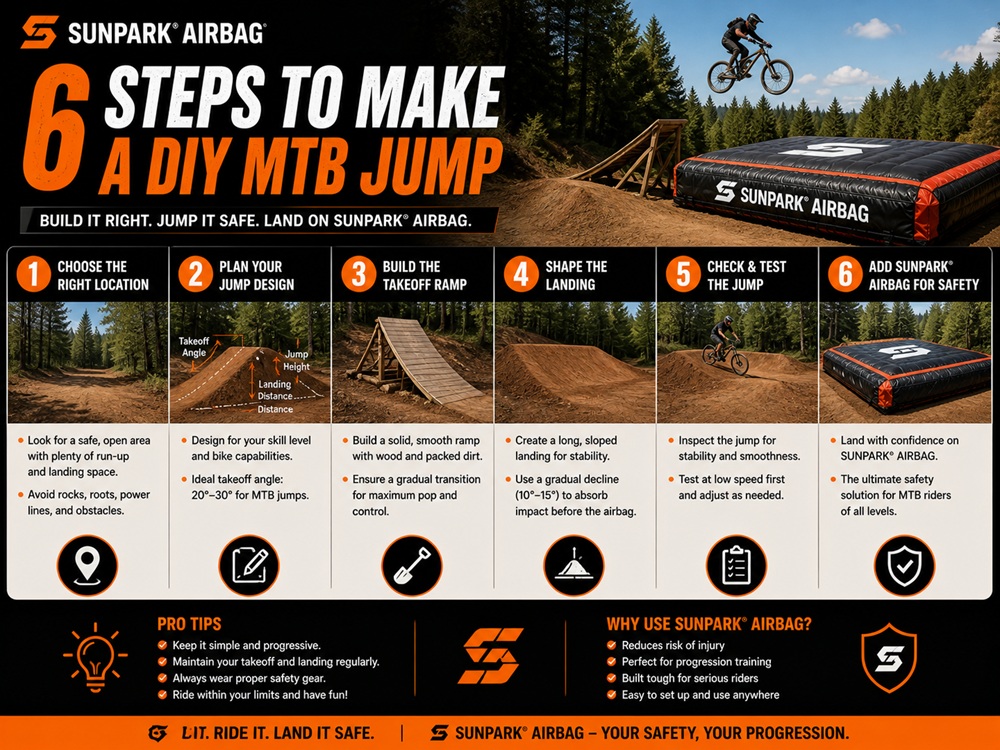
Another major mistake is ignoring the topography. Slapping an airbag on a flat field and building a wooden kicker with the wrong trajectory will result in athletes overshooting the safe zone. The ramp geometry must mathematically align with the landing pitch.
Buying Considerations for Facilities
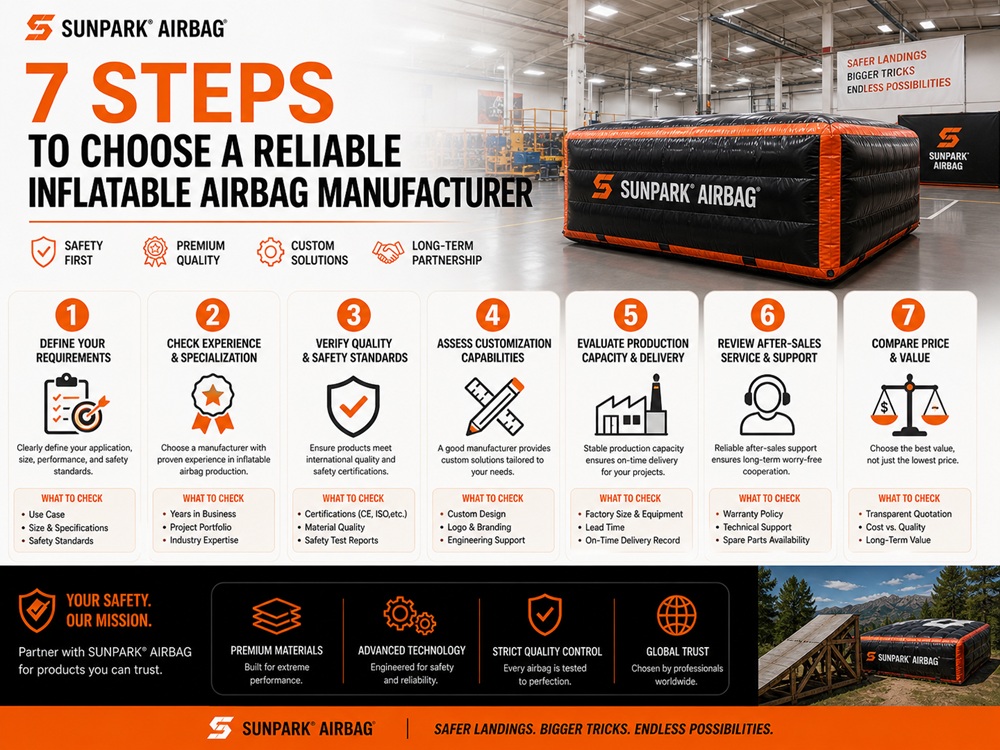
When you are ready to cut a check for Freestyle Athlete Development Tools, evaluate your vendors based on commercial judgment, not just the lowest price tag.
| Feature to Evaluate | What to Look For | Why It Matters |
|---|---|---|
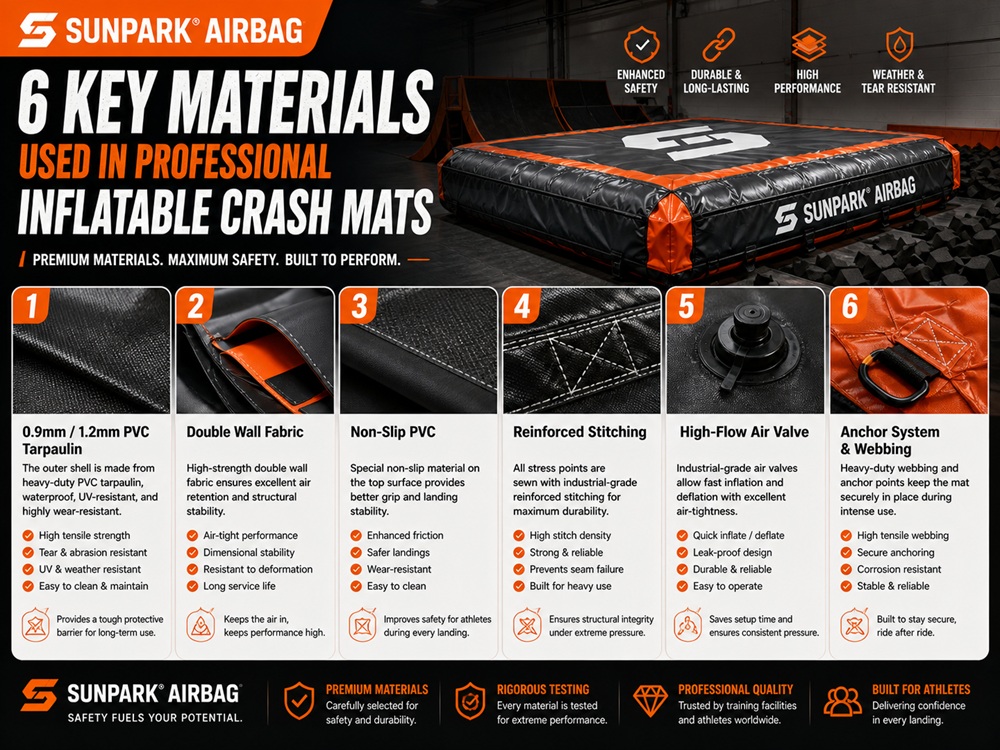
| Material Quality (Airbags) | 0.55mm to 0.9mm PVC Tarpaulin, UV-treated, fire retardant. | Prevents punctures from bike pedals, ski edges, and sun degradation. |
| Top Sheet Replacement | Velcro or zip-removable top sheets that can be swapped easily. | The top layer takes all the friction. Being able to replace just the top saves thousands. |
| Air Chamber Design | Dual or multi-chamber systems with separate pressure release valves. | Ensures the athlete does not bottom out and hit the hard ground upon impact. |
| Manufacturer Experience | Verifiable installations at known ski resorts and sports centers. | You are buying safety engineering, not just a bouncy castle. Reputation is everything. |
Our Expert Recommendation
As the leading manufacturer of Airbags for Extreme Sports and Leisure Industries in China, SUNPARK® AIRBAG has a clear, opinionated stance: Stop investing in foam pits. They are a relic of the past. If you are building a modern facility in 2026, your core focus must be an inflatable landing system paired with video analysis.
When evaluating bike airbag landing systems or snow setups, look for manufacturers who provide topographical CAD design alongside their products. We recommend starting with a mid-sized, modular airbag that allows for ride-away progression, and slowly integrating data tracking as your athlete base matures.
Frequently Asked Questions (FAQ)
Are airbag landings safe for absolute beginners?
In most professional situations, yes, but they still require proper instruction. Airbags are incredibly forgiving compared to hardpack snow or dirt, but a beginner must still understand basic speed control. An airbag will soften a crash, but dropping in with too much speed and overshooting the bag entirely remains a risk. Supervision is always required.
How much does a commercial freestyle airbag cost?
Prices vary wildly based on size and application. A small inflatable crash mat for gymnastics might cost a few thousand dollars, while a massive, custom-pitched FMX or ski resort airbag system can range from $20,000 to well over $60,000. It is a major capital investment, but it drastically reduces liability and maintenance costs compared to foam pits.
Can I leave my freestyle airbag outside year-round?
From our experience, while commercial airbags are treated for UV resistance and extreme weather, leaving them fully exposed and inflated 365 days a year will shorten their lifespan. We recommend covering the airbag with a heavy-duty tarp during off-seasons or prolonged bad weather to protect the PVC fabric from unnecessary degradation.
References
To support the biomechanical and safety claims made in this guide regarding Freestyle Athlete Development Tools, we advise consulting the standards and data published by the following authoritative bodies:
- International Gymnastics Federation (FIG) – Sets the global apparatus norms and safety standards for trampoline and tumbling infrastructure.
- British Journal of Sports Medicine – Provides peer-reviewed academic research on injury prevention and biomechanics in extreme action sports.
- National Center for Biotechnology Information (NCBI) – Hosts extensive government-backed studies regarding the impact forces and injury reduction metrics associated with action sports landing surfaces.