Extreme sports are defined by their inherent risks. Whether you are throwing a triple backflip on a freestyle motocross bike, navigating a twenty-foot superpipe on a snowboard, or sending massive dirt jumps on a BMX, the margin for error is virtually nonexistent. However, pushing the boundaries of human physics does not mean operating recklessly. From our experience working with top-tier athletes and training facilities worldwide, we know that progression is only sustainable when you actively manage the risk. To ensure safety in extreme sports, athletes and facility managers must utilize highly specialized, technologically advanced equipment designed to absorb catastrophic kinetic energy.
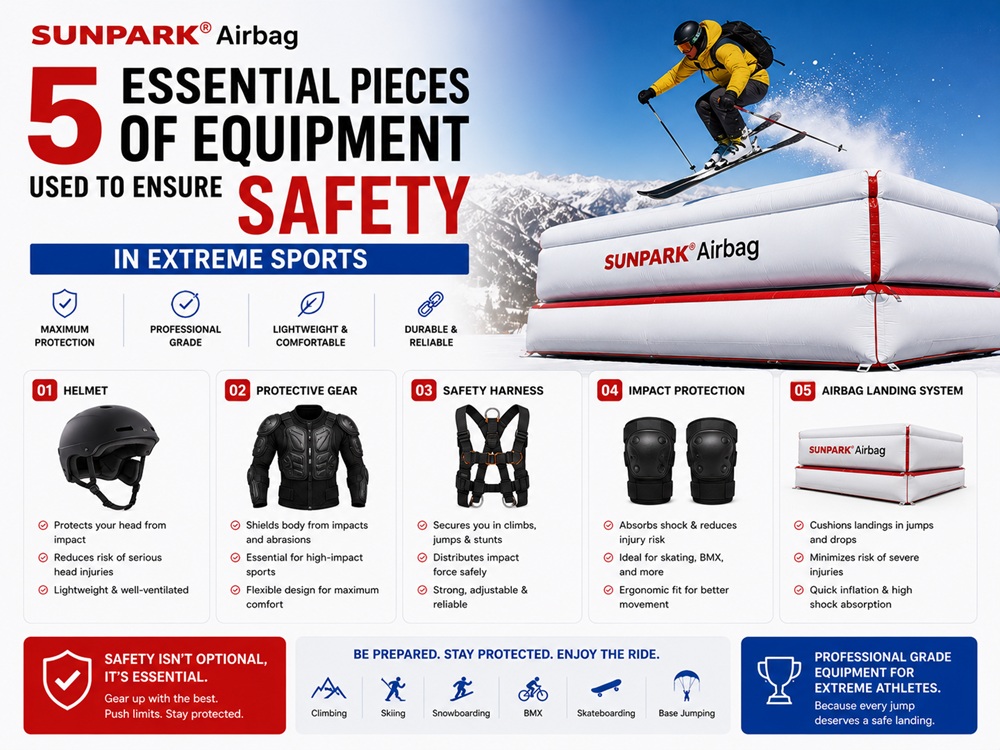
The days of relying on crude foam pits and flimsy plastic pads are over. In 2026, safety gear has evolved into highly engineered, smart-tech ecosystems. If you want to survive the learning curve and ensure safety in extreme sports, you need to understand the modern tools available to you. In this expert guide, we will break down the five most critical pieces of safety equipment, how they function, and why we firmly believe they are non-negotiable for serious athletes.
Table of Contents
- Summary Table: Extreme Sports Safety Equipment
- 1. Freestyle Airbag Landing Systems (The Ultimate Safety Net)
- 2. Next-Generation Smart Helmets and Rotational Systems
- 3. Reactive Smart Armor (D3O and Non-Newtonian Polymers)
- 4. Wearable Biometric and Impact-Tracking Sensors
- 5. High-Impact Protective Eyewear and AR Goggles
- Expert Advice: Balancing Budget and Lifespan
- Frequently Asked Questions (FAQs)
- Industry References
Summary Table: Extreme Sports Safety Equipment
To provide a clear overview of how athletes ensure safety in extreme sports, we have compiled a summary of the five critical equipment categories and their primary biomechanical functions.
| Equipment Category | Primary Function | Target Extreme Sports | 2026 Innovation Trend |
|---|---|---|---|
| Airbag Landing Systems | Massive kinetic energy dissipation and fall arrest during aerial training. | BMX, MTB, Snowboarding, FMX, Skiing | Pressure-release valves and custom-pitched ride-out topsheets. |
| Smart Helmets | Traumatic brain injury (TBI) prevention and impact force deflection. | All Extreme Sports | Rotational impact slip-planes (MIPS) and embedded crash sensors. |
| Reactive Body Armor | Spine, chest, and joint protection from blunt force trauma. | MTB, Motocross, Skateboarding | Non-Newtonian fluids (D3O) that harden instantly upon high-velocity impact. |
| Biometric Wearables | Predictive hazard monitoring, fatigue tracking, and SOS alerts. | Base Jumping, Surfing, Climbing | AI-driven predictive algorithms and real-time G-force telemetry. |
| Protective Eyewear | Vision clarity, UV protection, and debris deflection at high speeds. | Snowboarding, Skiing, FMX | Augmented Reality (AR) heads-up displays and instant photochromic shifting. |
1. Freestyle Airbag Landing Systems (The Ultimate Safety Net)
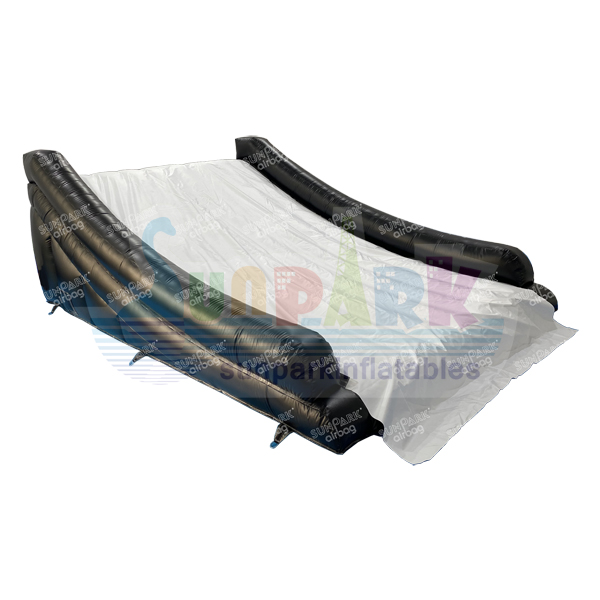
Freestyle Airbag Landing
When athletes are learning aerial maneuvers, gravity is the ultimate enemy. Historically, training facilities utilized giant pits filled with polyurethane foam blocks. From our professional standpoint, foam pits are unhygienic, dangerous fire hazards, and notorious for causing awkward twisted limbs when riders sink unevenly. To truly ensure safety in extreme sports today, professional facilities utilize inflatable freestyle airbags.
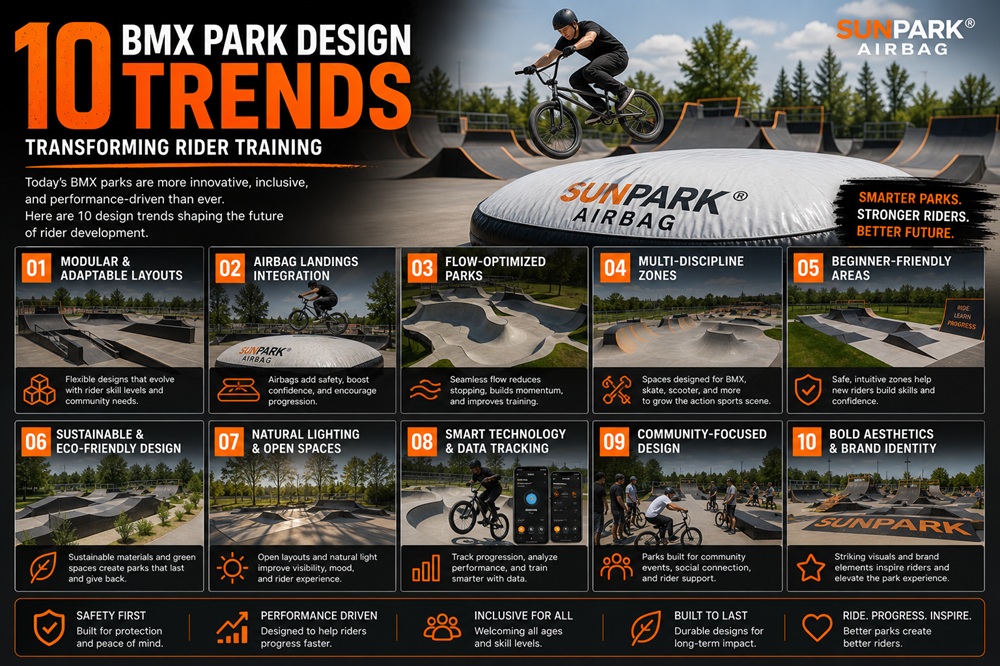
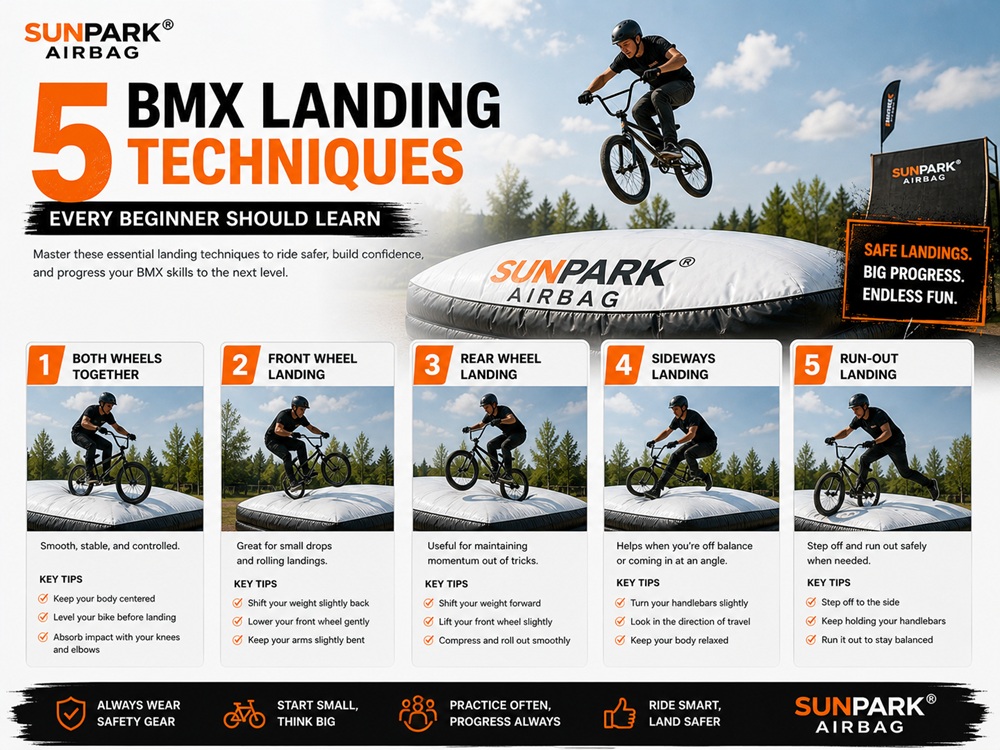
Modern airbags are feats of pneumatic engineering. For instance, a dedicated BMX airbag landing pad utilizes a dual-chamber system. The bottom chamber remains firm to prevent the rider from bottoming out and hitting the ground, while the top chamber is equipped with rapid pressure-release valves. When an athlete impacts the bag, the air vents instantly, completely eliminating the “trampoline effect” and swallowing the crash safely. If you are building a professional dirt jump compound, an airbag landing ramp system provides a sloped, ride-out surface. This allows riders to land their tricks and ride away smoothly, bridging the gap between practice and a hard dirt landing.
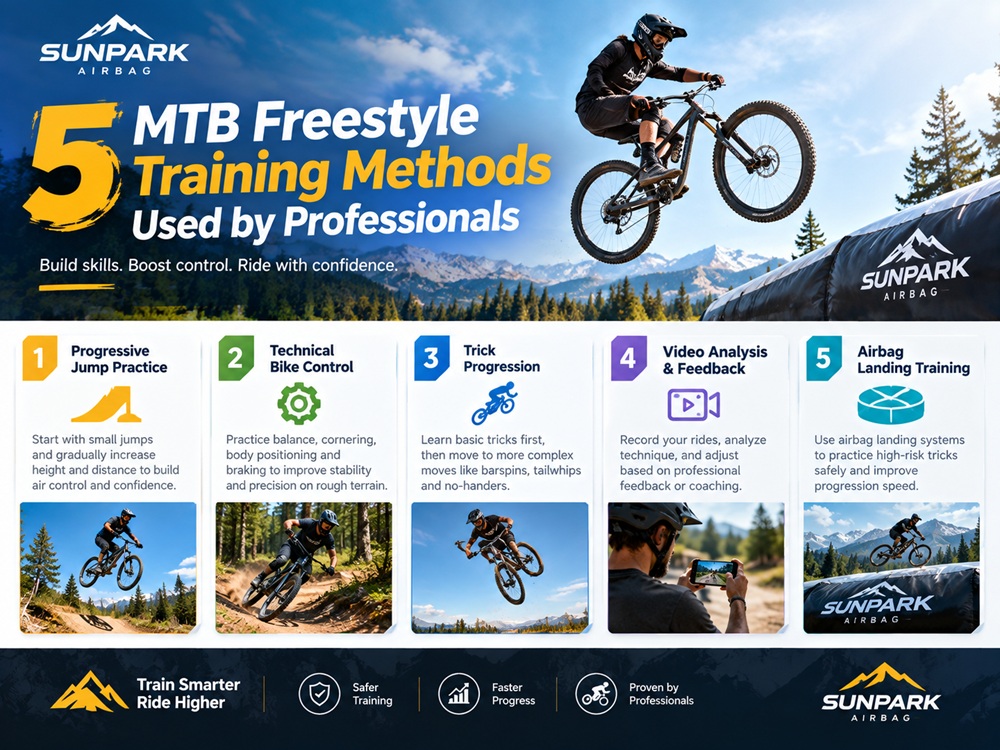
This technology is incredibly versatile. Mountain bikers dealing with heavier bike frames require a robust MTB airbag landing system designed to withstand the slashing of metal pedals and tires. In the winter sports sector, resorts are permanently installing a Halfpipe Airbag to protect snowboarders training in the superpipe. If you want to witness how this infrastructure allows for unparalleled progression, we highly recommend visiting the best snowboard airbag parks globally. The integration of airbags is the single most effective way to ensure safety in extreme sports during the skill-acquisition phase.
2. Next-Generation Smart Helmets and Rotational Systems
You can surgically repair a shattered collarbone, but you cannot replace a traumatized brain. Therefore, head protection is the absolute cornerstone required to ensure safety in extreme sports. In 2026, buying a cheap helmet lined with basic EPS (Expanded Polystyrene) foam is an unacceptable gamble.
The primary cause of concussions in action sports is not direct linear impact, but rotational acceleration—the violent twisting of the brain inside the skull when you hit the ground at an angle. We strongly recommend helmets equipped with Multi-Directional Impact Protection Systems (MIPS) or WaveCel technology. These internal slip-planes allow the outer shell of the helmet to rotate slightly upon impact, redirecting the devastating rotational forces away from the brain.
Furthermore, modern smart helmets now feature embedded impact sensors and Bluetooth connectivity. If a mountain biker suffers a massive crash on an isolated trail, the helmet detects the G-force spike and automatically transmits an SOS signal with exact GPS coordinates to emergency contacts. To ensure safety in extreme sports, your headgear must be proactive, not just a passive piece of plastic.
3. Reactive Smart Armor (D3O and Non-Newtonian Polymers)
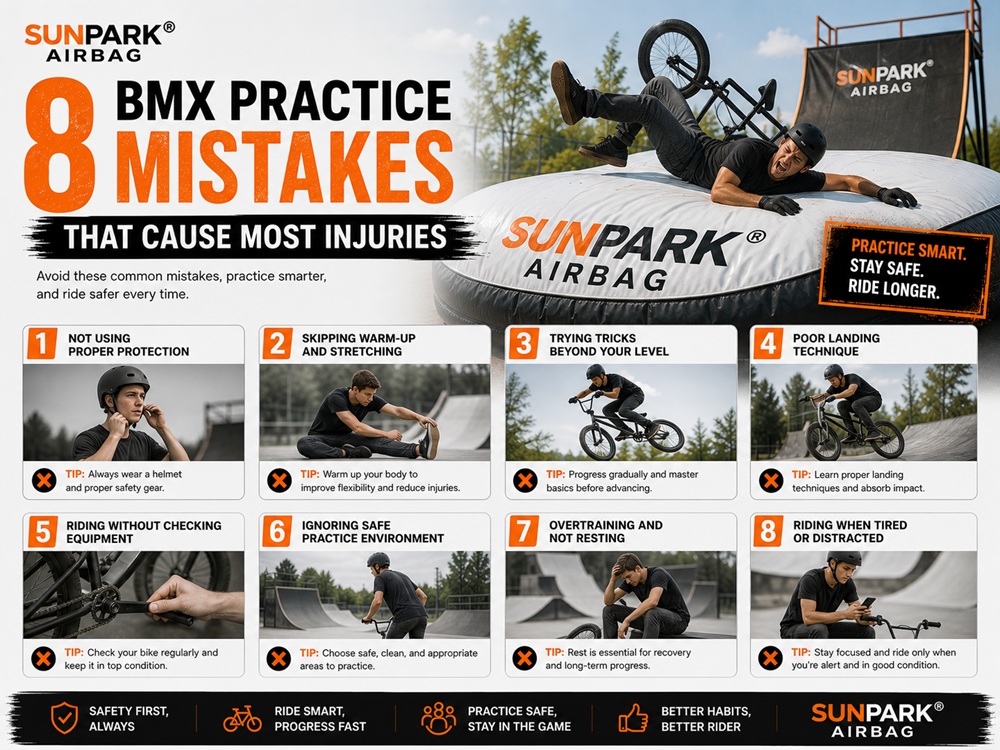
When examining common BMX injuries and prevention, blunt force trauma to the spine, ribs, and knees dominates the statistics. Historically, athletes hated wearing body armor because rigid plastic shells restricted their range of motion and threw off their balance. Technology has solved this problem completely.
To ensure safety in extreme sports without compromising agility, manufacturers now use non-Newtonian polymers, commonly known by the brand names D3O or Poron XRD. In their resting state, these materials are soft, breathable, and highly flexible, conforming perfectly to the athlete’s joints. However, the moment a high-velocity impact occurs—such as a rider slamming their knee into a rock garden—the molecules lock together instantly, hardening into a rigid shield that disperses the kinetic energy. Immediately after the crash, the material returns to its flexible state. We consider reactive smart armor mandatory for any high-speed downhill discipline.
4. Wearable Biometric and Impact-Tracking Sensors
The concept of safety has expanded beyond physical padding; it now encompasses data. Fatigue is the silent killer in extreme sports. An athlete attempting a massive jump when their central nervous system is exhausted is exponentially more likely to make a fatal mechanical error. To ensure safety in extreme sports, professionals now wear advanced biometric trackers.
Devices like the Apple Watch Ultra, Garmin Enduro, and WHOOP straps provide real-time telemetry on heart rate variability, blood oxygen levels, and muscular strain. More importantly, sport-specific accelerometers attached to the athlete’s body can measure the exact G-force of a landing. By analyzing this data, coaches and athletes can mathematically determine when it is time to stop training before an injury occurs. Predictive AI algorithms now analyze an athlete’s vital signs and warn them when their reaction times are slowing down, successfully preventing accidents before they even happen.
5. High-Impact Protective Eyewear and AR Goggles
Vision is your primary sensory input when navigating a mountain at sixty miles per hour. A sudden loss of visibility due to fog, glaring UV rays, or flying debris will result in an immediate and violent crash. Therefore, high-impact protective eyewear is a critical component used to ensure safety in extreme sports.
In 2026, premium goggles utilize ballistic-grade polycarbonate lenses that can withstand the impact of a rock kicked up by a motocross tire without shattering. Moreover, the integration of Augmented Reality (AR) directly into the goggle lens provides athletes with a heads-up display. Snowboarders and mountain bikers can now see their speed, altitude, and upcoming terrain hazards projected lightly onto their field of vision. This prevents the athlete from looking down at a watch or GPS device, allowing them to keep their eyes locked on the treacherous terrain ahead.
Expert Advice: Balancing Budget and Lifespan
A common misconception we hear from amateur athletes and facility owners is that world-class safety equipment is unaffordable. While premium gear commands a premium price, there are cost-effective ways to ensure safety in extreme sports without going bankrupt. For example, local bike parks can easily source cheap MTB airbag options 2026 that utilize incredibly durable, commercial-grade PVC without the expensive custom branding.
However, safety gear is not immortal. You must aggressively monitor the condition of your equipment. Helmets should be replaced immediately after any significant impact, or every five years due to foam degradation. For large-scale inflatable infrastructure, facility managers must consult a comprehensive airbag lifespan and safety guide. UV exposure, seam stress, and environmental wear eventually compromise the structural integrity of the fabric. Ignoring the lifespan of your safety equipment is an act of gross negligence. Always inspect your gear, replace it when necessary, and respect the massive forces at play in extreme sports.
Frequently Asked Questions (FAQs)
Without question, a certified helmet featuring rotational impact protection (such as MIPS) is the most critical. While body armor protects your skeleton and airbags protect your landings, only a high-quality helmet can protect your brain from irreversible traumatic injury.
Yes. Airbags are specifically designed to bridge the gap between basic skills and advanced aerials. They provide a highly forgiving landing surface that absorbs impact, significantly reducing the fear of injury and allowing beginners to practice aerial awareness safely.
D3O is a non-Newtonian material. In its normal state, its molecules flow freely, making the padding soft and flexible. Upon a sudden, high-energy impact, the molecules instantly lock together to absorb and dissipate the force, acting as a hard shell, before returning to a flexible state.
While not strictly mandatory for hobbyists, biometric sensors are becoming essential for serious athletes. They objectively track physical fatigue and cognitive load, telling you exactly when your body is too exhausted to safely attempt high-risk maneuvers, thereby preventing fatigue-induced crashes.
Industry References
- National Safety Council (NSC) – Sports and Recreational Injury Statistics and Prevention Guidelines
- Centers for Disease Control and Prevention (CDC) – HEADS UP to Youth Sports: Concussion Prevention and Helmet Safety
- British Journal of Sports Medicine (BJSM) – Clinical studies on the efficacy of non-Newtonian body armor and injury mitigation in extreme sports.