Gymnastics is a sport defined by pushing the limits of human physics, but those physical limits come with a harsh reality: gravity always wins. For decades, the industry has stubbornly relied on outdated, unsanitary foam pits and rigid landing mats that do little to mitigate the severe ground reaction forces athletes experience during dismounts. As we push deeper into 2026, the landscape has fundamentally shifted. Relying on archaic technology for modern, high-velocity tumbling and vaulting is no longer just negligent; it is a massive commercial and physical liability.
From our experience engineering advanced landing solutions at SUNPARK® AIRBAG, we have seen firsthand how failing to upgrade facility equipment directly correlates with chronic athlete injuries and soaring insurance premiums. Modern Gymnastics Training Innovations are not experimental novelties—they are commercial necessities. If you are operating a high-level training facility, an extreme sports park, or a developmental gym, you must rigorously evaluate whether your current setup is actually worth using, or if it is actively endangering your athletes.
Quick Answer: The Future of Safe Landings
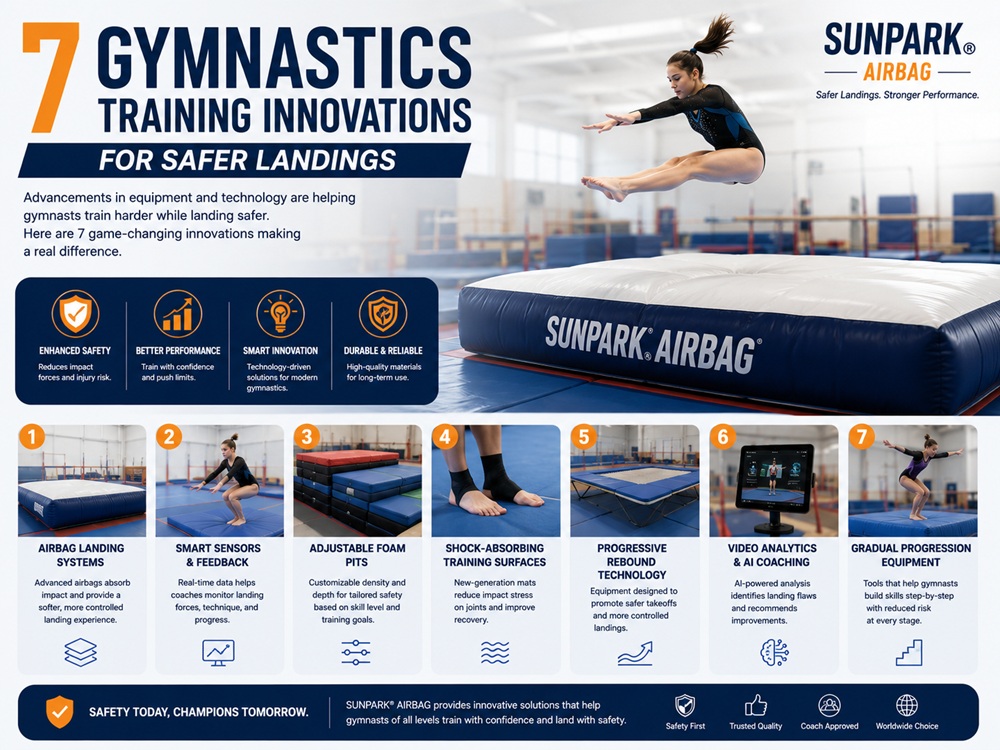
What are the most critical Gymnastics Training Innovations for 2026? The industry is moving entirely away from loose foam and rigid crash mats, transitioning to advanced pneumatic and digital systems. The top innovations include:
- Inflatable Foam Pit Replacements (Gym Airbags)
- Smart Sensor-Embedded Impact Mats
- Multi-Chamber Stunt Airbags
- Portable Above-Ground Airbags
- Adjustable Pressure Valve Systems
- Hybrid Inflatable Crash Mats
- Advanced Antimicrobial High-Traction Top Sheets
In most professional situations, replacing a dirty, deteriorating foam pit with a dedicated gym airbag for training is the single most effective upgrade a commercial facility can make to reduce injury rates and drastically lower long-term maintenance costs.
Table of Contents
- Direct Answer: Why Upgrading Your Landing Systems is Non-Negotiable
- What It Is: The Evolution of Gymnastics Training Innovations
- How It Works: The Mechanics of Safer Landings
- The 7 Gymnastics Training Innovations Revolutionizing Gym Safety
- Commercial Benefits of Modern Landing Systems
- Limitations and Operational Realities
- Who Should Upgrade and Who Does Not Need To
- Common Mistakes When Purchasing Gymnastics Landing Equipment
- Buying Considerations for Commercial Users
- Expert Recommendation
- Frequently Asked Questions (FAQ)
Direct Answer: Why Upgrading Your Landing Systems is Non-Negotiable
In most professional situations, the traditional foam pit is entirely obsolete. Loose foam blocks degrade rapidly, releasing toxic polyurethane dust into the air, acting as a breeding ground for staph bacteria, and fundamentally failing to provide consistent shock absorption once the blocks settle and compact. Modern Gymnastics Training Innovations solve these critical issues through engineered air displacement.
By utilizing customized airbag systems, facilities can perfectly calibrate the deceleration rate of a falling athlete. This drastically reduces the peak ground reaction forces applied to the ankles, knees, and lower spine. Continuing to dump thousands of dollars into replacement foam blocks rather than investing in a permanent, hygienic pneumatic system is a poor business decision that ultimately compromises athlete safety.
What It Is: The Evolution of Gymnastics Training Innovations
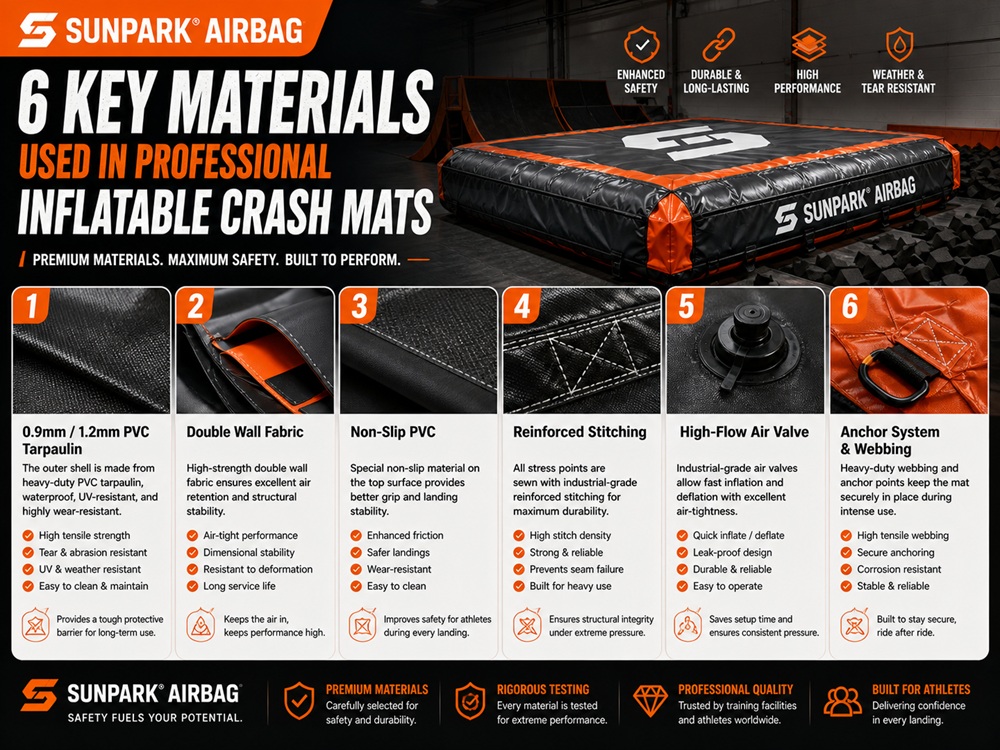
Gymnastics Training Innovations encompass the technological advancements in apparatus design specifically targeted at the landing phase of a skill. This includes the integration of modern physical materials—such as heavy-duty marine-grade PVC, drop-stitch fabrics, and specialized memory foams—as well as mechanical systems like internal air blowers, pressure release valves, and digital impact sensors. These tools are engineered to catch athletes safely from extreme heights, whether they are practicing a basic back handspring or executing a complex triple-twisting double backflip off the high bar.
How It Works: The Mechanics of Safer Landings
When a gymnast lands in a traditional foam pit, they strike individual blocks that compress and shift unpredictably. This often leads to awkward spinal alignments or twisted ankles if the foam has “bottomed out.” Conversely, modern inflatable landing systems work on the principle of controlled air displacement and fluid dynamics.
When an athlete strikes the top sheet of modern gymnastics airbag equipment, internal air pillars compress, and specialized release valves allow the air to escape at a mathematically calculated rate. This provides a progressive, uniform deceleration. The athlete sinks into the bag smoothly and evenly, without the sudden, jarring impact associated with hitting a compacted foam base or a rigid floor.
The 7 Gymnastics Training Innovations Revolutionizing Gym Safety
Based on our extensive industry analysis and manufacturing expertise, these are the seven specific Gymnastics Training Innovations that facility owners must consider integrating in 2026.
1. Inflatable Foam Pit Replacements
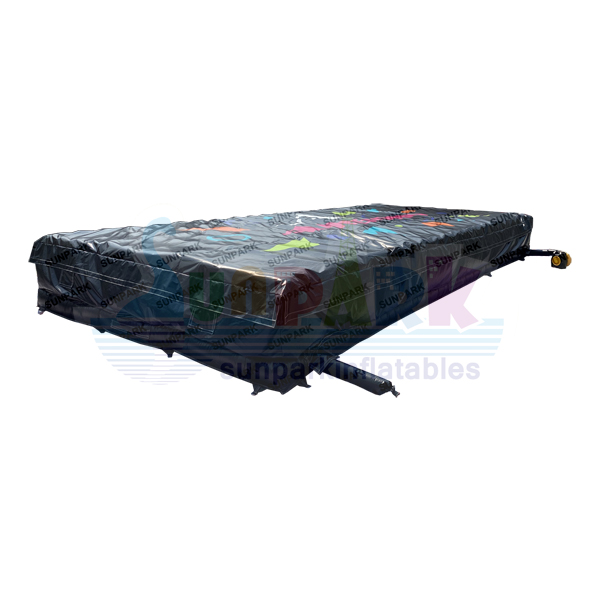
The cornerstone of modern facility safety is the complete eradication of foam pits. A custom-fitted gym airbag drops directly into existing concrete pit structures. Unlike foam, which requires constant, labor-intensive fluffing and replacing, an airbag provides consistent, uniform shock absorption across its entire surface area. In our testing, athletes report significantly less lower-body fatigue when utilizing airbags for high-repetition training sessions.
2. Smart Sensor-Embedded Impact Mats
Data is driving the future of elite gymnastics. Next-generation mats are now embedded with piezoelectric sensors that provide real-time feedback to coaches regarding ground reaction forces, weight distribution, and angle of impact. This technological integration allows for immediate biomechanical corrections before an athlete develops chronic overuse injuries.
3. Multi-Chamber Stunt Airbags
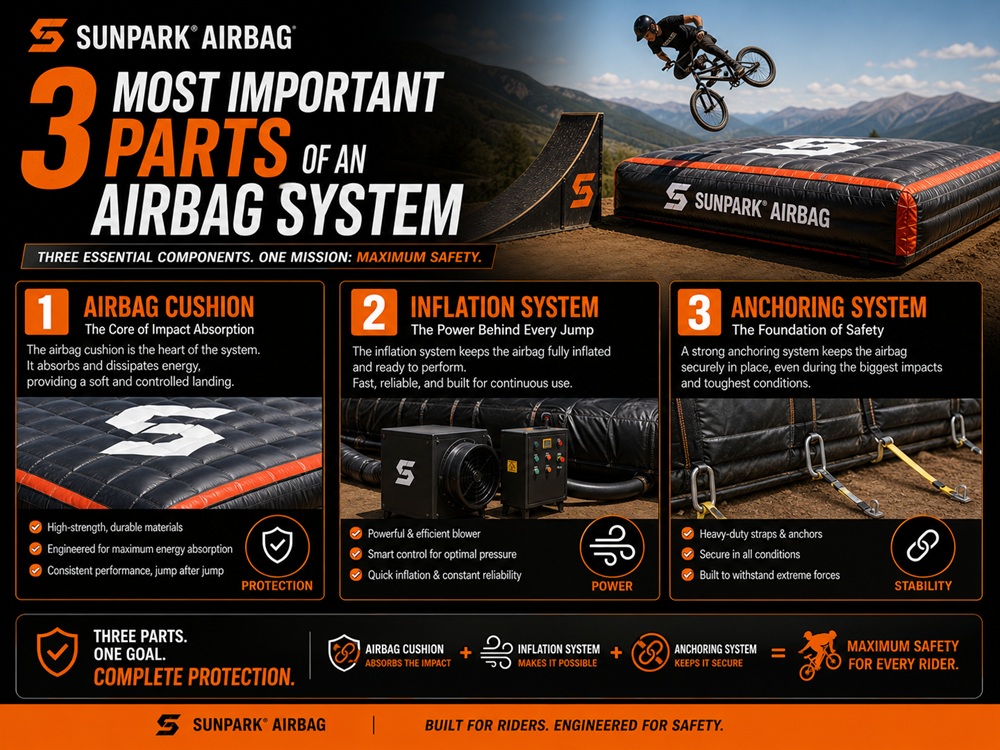
For heavy-duty applications, such as high-velocity dismounts from the rings or vault, a standard single-chamber airbag is insufficient. Innovations in the stunt airbag landing sector feature a softer top chamber to gently catch the athlete and a highly pressurized bottom chamber to absolutely prevent ground contact. This dual-layer approach is critical for athletes falling from extreme vertical heights.
4. Portable Above-Ground Airbags
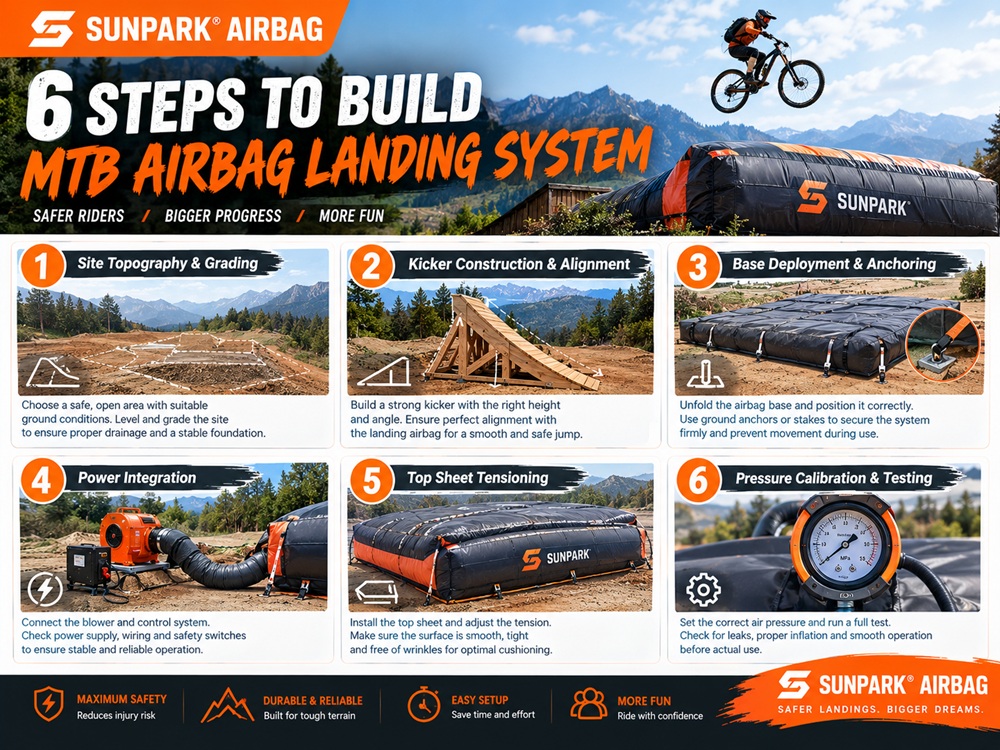
Not every facility has the capital or the architectural capacity to dig an expensive in-ground pit. The development of the portable inflatable jump airbag allows gym owners to deploy a massive, safe landing zone directly on a flat gymnasium floor. These units can be inflated in minutes and moved between the balance beam, rings, and vaulting table, offering unprecedented versatility.
5. Adjustable Pressure Valve Systems
Every athlete requires a different level of firmness. A 50-pound child learning a front tuck requires a vastly softer landing than a 180-pound adult performing a double layout. Modern blowers combined with adjustable pressure vents allow coaches to instantly dial in the firmness of a big jump airbag system, making a single piece of equipment perfectly suitable for all ages and skill levels.
6. Hybrid Inflatable Crash Mats
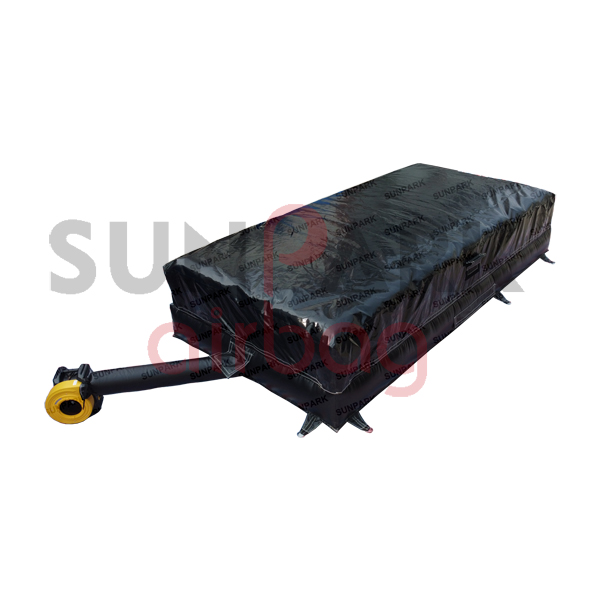
Bridging the gap between a massive deep-pit airbag and a rigid traditional foam mat, the inflatable crash mat utilizes a drop-stitch air core topped with a layer of high-density memory foam. This provides the stable, flat footing required for practicing sticking a landing, combined with the joint-saving shock absorption of a pneumatic air track.
7. Eco-Friendly High-Traction Top Sheets
Hygiene and grip are paramount in any athletic facility. The latest top sheets used on modern airbags feature embedded antimicrobial properties to prevent the transmission of staph infections and MRSA. Furthermore, the textured satin PVC finishes provide immense traction, preventing athletes from slipping and hyperextending joints during high-velocity directional changes.
| Innovation | Primary Function | Best Commercial Use Case |
|---|---|---|
| Foam Pit Airbags | Replaces unhygienic foam blocks | Main gym training pits, trampoline parks |
| Smart Sensor Mats | Provides real-time impact data | Elite and Olympic-level training centers |
| Multi-Chamber Airbags | Prevents bottoming out from extreme heights | High bar dismounts, freestyle skiing/BMX |
| Portable Airbags | Above-ground, movable landing zones | Gyms without concrete in-ground pits |
| Adjustable Valves | Customizes landing firmness | Facilities serving mixed age/weight demographics |
| Hybrid Crash Mats | Stable surface for sticking landings | Vault and floor exercise training |
| Antimicrobial Top Sheets | Prevents bacteria and improves grip | All high-traffic commercial landing surfaces |
Commercial Benefits of Modern Landing Systems
Upgrading to these Gymnastics Training Innovations delivers a massive return on investment. First, the reduction in athlete injuries directly correlates to higher retention rates and a stronger, healthier competitive roster. Second, the maintenance savings are astronomical. Foam blocks must be purchased and replaced every few years at a massive cost, and cleaning a foam pit requires days of lost revenue and intensive labor. An airbag can be sanitized in twenty minutes with a mop and standard disinfectant.
If you are calculating your overall trampoline park construction cost or planning a new gym build, factoring in airbags over foam pits will save tens of thousands of dollars in the long run. Furthermore, demonstrating a commitment to advanced safety technology often results in lower commercial liability insurance premiums.
Limitations and Operational Realities
We must be clear and objective: these systems are not indestructible. Inflatable equipment requires a constant, reliable power supply to run the external blowers. If a facility loses power, the landing zone deflates, requiring immediate cessation of training. Furthermore, sharp objects—like exposed apparatus springs, stray hardware, or even sharp jewelry—can puncture the PVC casing. While the marine-grade material is highly durable and tear-resistant, a puncture requires immediate patching with a specialized kit to maintain proper internal air pressure.
| Pros | Cons |
|---|---|
| Drastically reduces joint impact and injury rates. | Requires a continuous electrical power supply for blowers. |
| Incredibly hygienic; eliminates toxic foam dust. | Higher initial capital expenditure compared to cheap foam. |
| Adjustable firmness accommodates all athlete sizes. | Susceptible to punctures from sharp objects. |
| Zero recurring costs for replacing degraded foam blocks. | Requires accurate custom measurements for in-ground pits. |
Who Should Upgrade and Who Does Not Need To
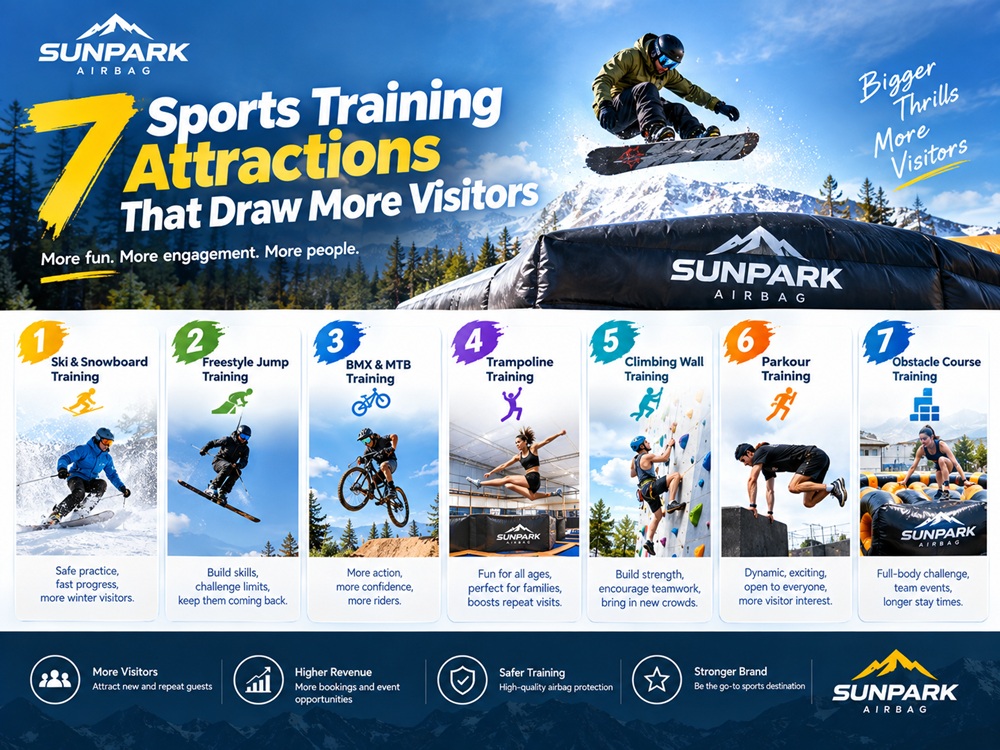
We recommend these systems for any commercial gymnastics facility, trampoline park, freestyle training center, or competitive cheerleading facility. For commercial users who host hundreds of athletes daily, the hygienic and safety benefits of modern airbags over foam pits are undeniable and absolute.
Who does not need it: For beginners practicing basic forward rolls, or home users looking for a soft surface in a playroom, a massive, multi-chamber stunt airbag is entirely unnecessary. Standard, high-quality folding panel mats or a basic 4-inch landing mat are perfectly sufficient for ground-level, low-impact instruction.
Common Mistakes When Purchasing Gymnastics Landing Equipment
From our experience, the most catastrophic mistake gym owners make is buying uncertified, generic inflatables from unvetted overseas trading companies to save a few dollars. These cheap units lack proper internal baffling, meaning an athlete can bounce dangerously off the bag like a trampoline, or punch right through the weak air pillars to the concrete floor.
Another major mistake is ignoring the blower specifications. Undersized blowers will not maintain the necessary pressure during rapid, successive landings by multiple athletes. Finally, failing to order a bag with a replaceable top sheet means you will have to replace the entire airbag when the top layer inevitably wears out from friction.
Buying Considerations for Commercial Users
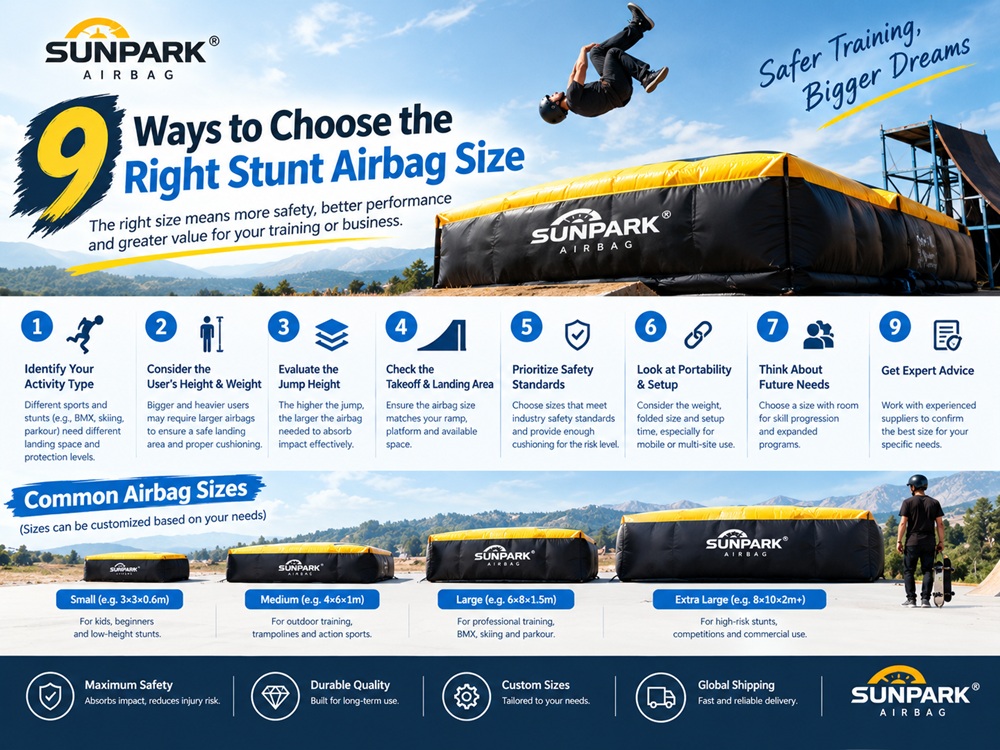
When evaluating whether a system is actually worth buying, look strictly at the material specifications. Demand 0.55mm to 0.9mm Plato PVC tarpaulin. Ensure the top sheet is easily replaceable. If you are exploring the best airbag landing systems 2026 has to offer, verify that the manufacturer provides custom 3D modeling and sizing to fit your exact pit dimensions perfectly. A poorly fitted bag creates dangerous gaps between the airbag and the concrete wall where an athlete’s limb could become trapped.
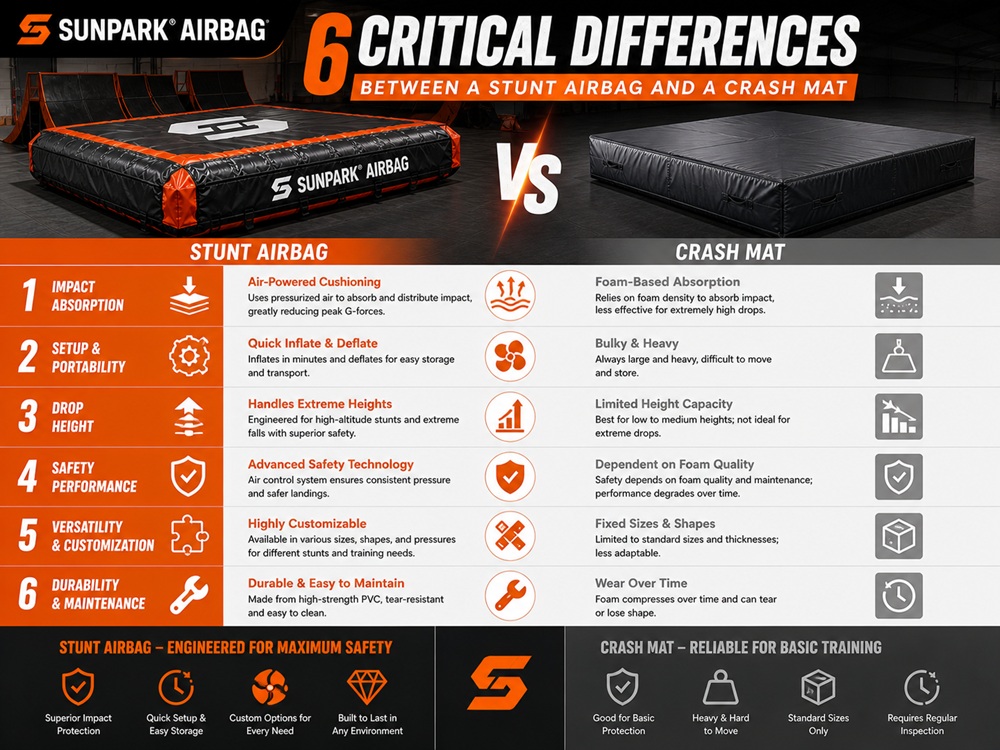
| Feature | Traditional Foam Pit | Modern Gymnastics Airbag |
|---|---|---|
| Shock Absorption | Inconsistent (compacts over time) | Consistent (uniform air displacement) |
| Hygiene | Poor (traps sweat, bacteria, dust) | Excellent (wipes clean with sanitizer) |
| Maintenance Cost | High (constant block replacement) | Low (occasional top sheet replacement) |
| Adjustability | None | High (adjustable air pressure valves) |
Expert Recommendation
As the premier Explorer of Airbag System for Sports, SUNPARK® AIRBAG has spent over a decade analyzing crash dynamics and biomechanical impacts. We adamantly recommend that any facility looking to modernize completely abandon foam pits. The immediate upgrade should be a customized, dual-chamber gymnastics airbag equipment system equipped with a replaceable, antimicrobial top sheet and adjustable pressure valves.
While the initial capital expenditure is higher than purchasing a truckload of foam, it will be offset within three years entirely through reduced maintenance costs, massive labor savings, and zero foam replacement needs. More importantly, you are actively protecting the spines and joints of your athletes, which is the ultimate moral and professional imperative for any facility owner.
Frequently Asked Questions (FAQ)
Yes. In most professional situations, inflatable airbags are significantly safer. They provide uniform, progressive deceleration through controlled air displacement, preventing the “bottoming out” effect that causes severe ankle and spinal injuries in compacted foam pits.
Yes. Commercial gymnastics airbags are continuous-flow inflatables. They require an external blower to run constantly to maintain proper air pressure and facilitate the rapid inflation needed after an athlete displaces air during a landing.
With proper maintenance, a high-quality heavy-duty PVC airbag will last 5 to 8 years in a commercial setting. The top sheet, which takes the brunt of the friction, is designed to be easily unzipped and replaced every 2 to 3 years at a fraction of the cost of a new bag.