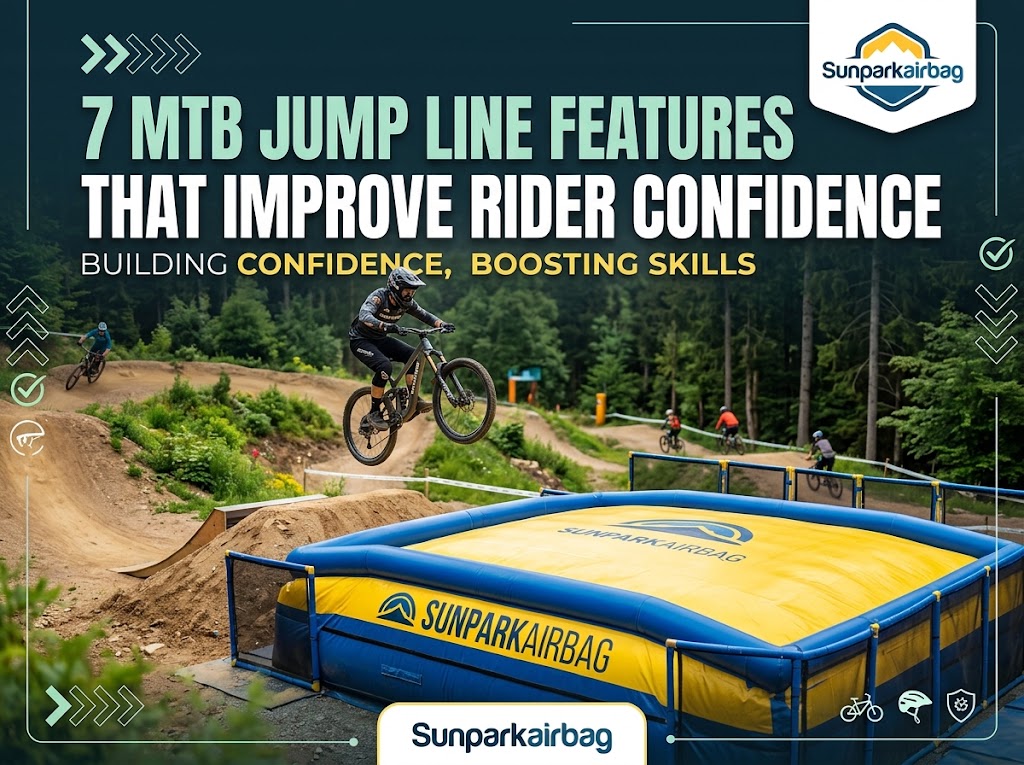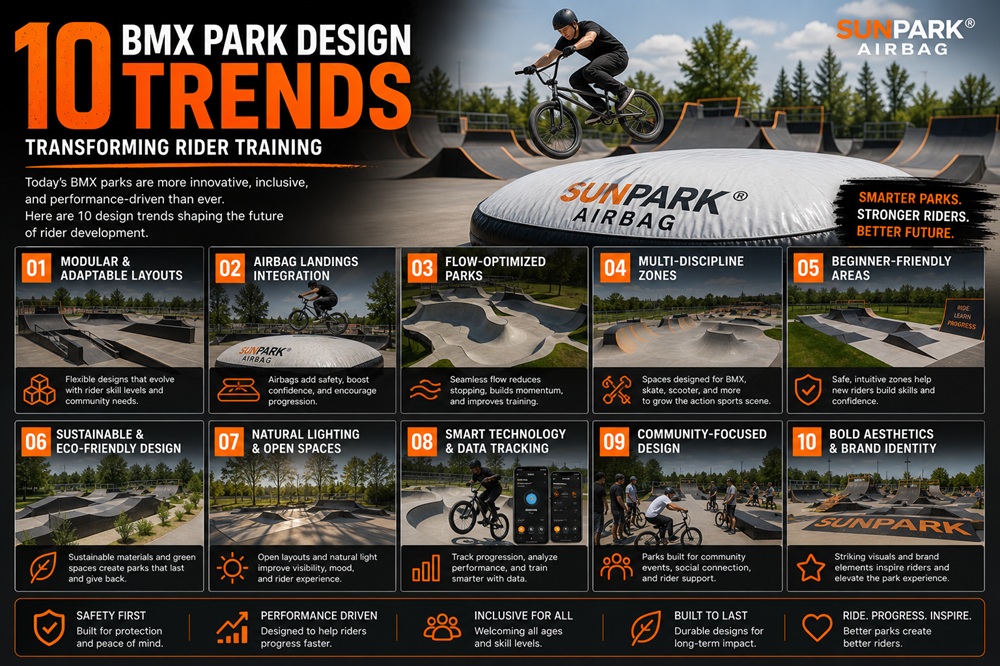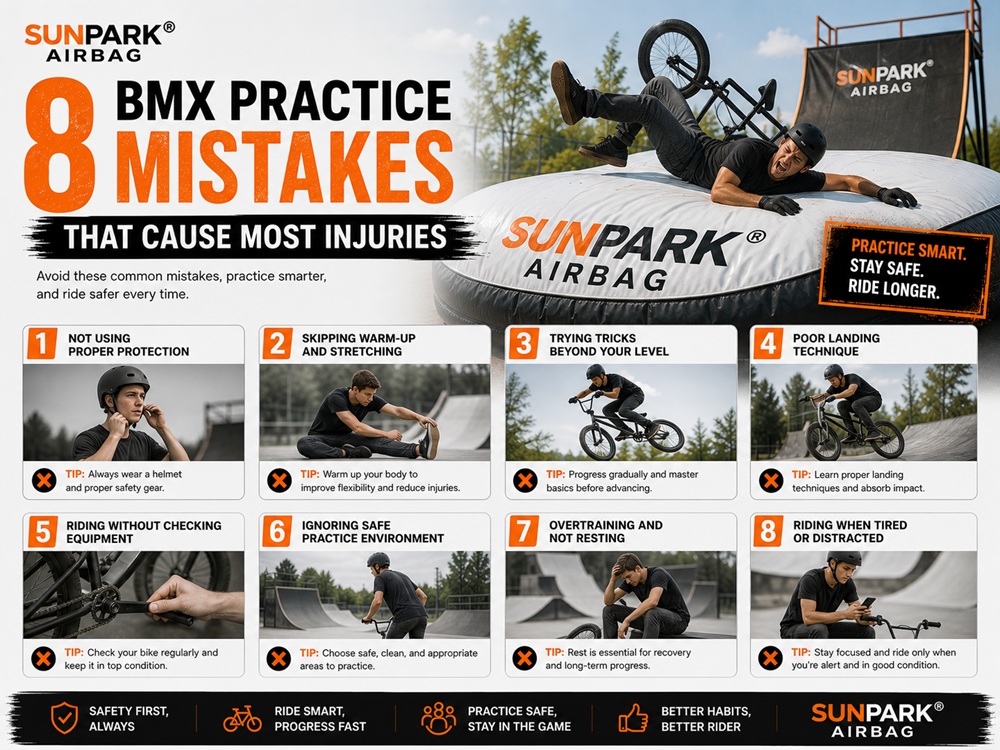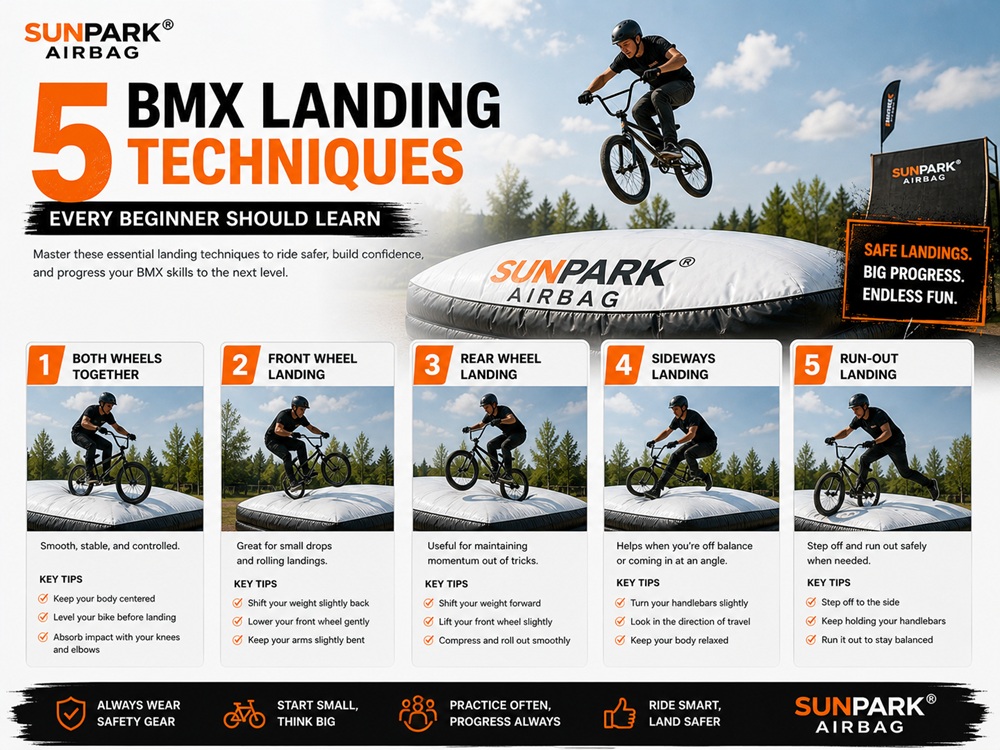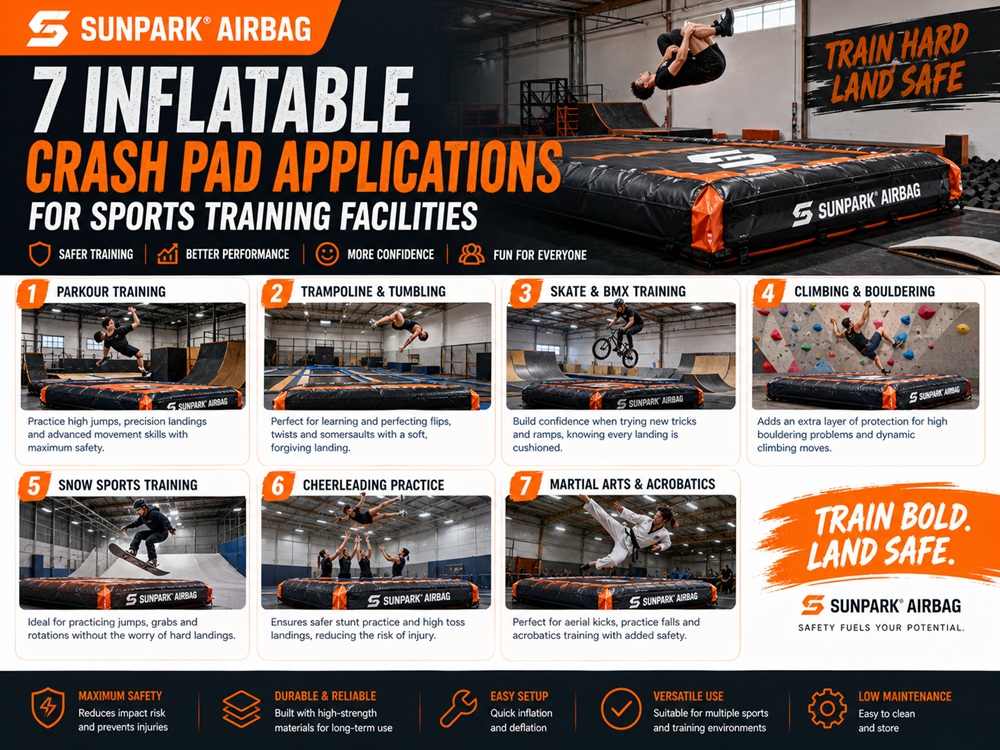
The landscape of youth cycling has fundamentally changed. We are no longer living in an era where riding in circles around a cul-de-sac constitutes adequate preparation for competitive cycling. Today’s youth are executing double backflips on BMX bikes, navigating treacherous downhill mountain bike (MTB) trails, and pushing the boundaries of slopestyle at ages as young as ten. Relying on outdated, generic coaching advice is a disservice to these athletes. If you want to build champions, you must implement progressive, highly structural Cycling Training Methods for Young Athletes that prioritize spatial awareness, kinetic control, and absolute safety.
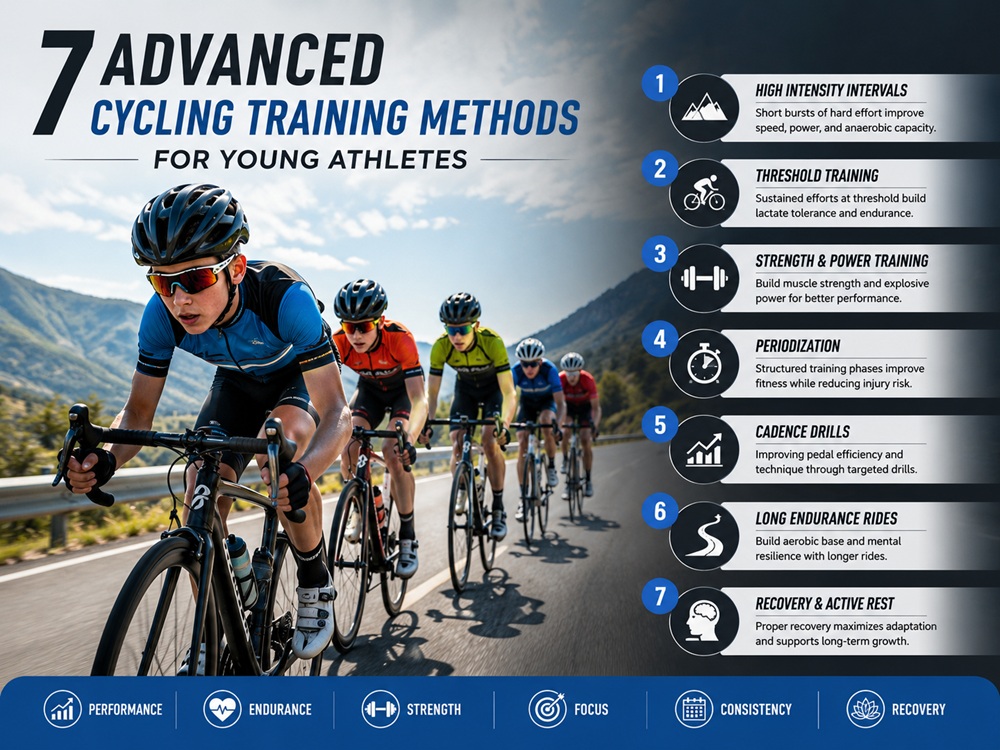
From our experience engineering extreme sports infrastructure at SUNPARK® AIRBAG, we witness firsthand the difference between facilities that breed elite talent and those that stall progression. The secret does not lie purely in pedal wattage; it lies in the ability to practice high-risk maneuvers in zero-consequence environments. In most professional situations, a young athlete’s career is determined by their ability to overcome fear without suffering catastrophic injuries. In this comprehensive guide, we strip away the encyclopedia-style fluff and deliver commercial and practical judgment on the 7 advanced Cycling Training Methods for Young Athletes that actually yield podium results.
Quick Answer: What Are the Best Cycling Training Methods for Young Athletes?
The most effective Cycling Training Methods for Young Athletes blend traditional physical conditioning with modern, low-risk aerial progression infrastructure. We recommend starting with Kinesthetic Awareness Training using safe landing zones, followed by Pumping and Rhythm Track sessions to build momentum without pedaling. Next, implement Neuromuscular Off-Bike Conditioning on trampolines, and graduate to Progressive Drop Training utilizing an airbag landing ramp system. For commercial users and coaches, investing in inflatable landing technology rather than outdated foam pits is the single most critical decision to accelerate a young rider’s progression while eliminating the risk of season-ending compression injuries.
What Advanced Youth Training Is
Advanced Cycling Training Methods for Young Athletes represent a systematic approach to biomechanical development. It is the calculated deconstruction of complex cycling movements—such as jumping, cornering, dropping, and sprinting—into safe, repeatable micro-drills. In the context of modern BMX, slopestyle, and downhill MTB, this training is less about cardiovascular endurance (VO2 max) and heavily weighted toward central nervous system (CNS) adaptation. It is the science of teaching a developing brain how to orient the body while suspended in the air, and how to absorb kinetic energy upon landing.
How Modern Progression Works
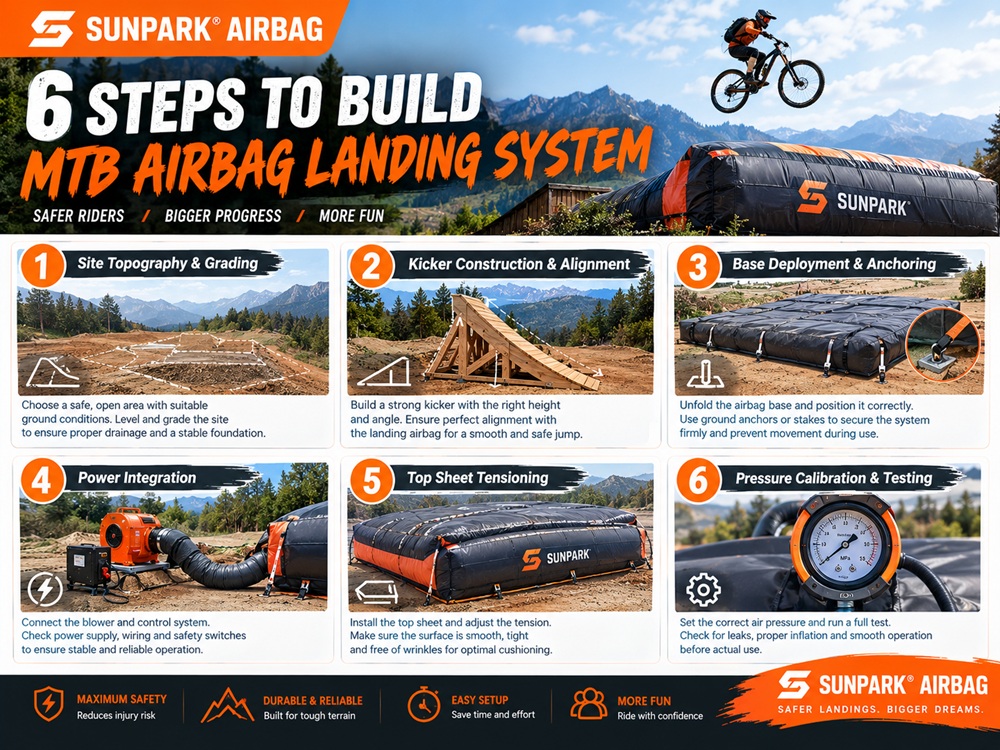
How do 12-year-olds learn 360-degree tailwhips? They do not do it by launching themselves onto hard-packed dirt. Modern progression works through a concept called “Consequence Mitigation.” A rider visualizes a trick, practices the body rotation off the bike, attempts the trick into an MTB airbag landing system where crashing has zero physical penalty, and only takes it to a dirt or wood landing once they have achieved a 90% success rate on the airbag. This psychological safety net allows young athletes to bypass the mental block of fear, unlocking rapid neurological adaptation.
Benefits of Advanced Methods
Implementing these Cycling Training Methods for Young Athletes yields immediate, measurable benefits. First, it drastically reduces injury rates. Preventing broken collarbones and concussions keeps athletes on the bike year-round. Second, it accelerates spatial intelligence. A rider who trains aerially develops superior bike-handling skills on the ground, reacting instantly to unpredictable trail conditions. Finally, structured progression prevents burnout. When young riders see tangible, safe progress, their intrinsic motivation skyrockets.
Limitations to Consider
We must apply practical judgment: elite training requires elite infrastructure. You cannot execute these advanced Cycling Training Methods for Young Athletes in a standard suburban driveway. The primary limitation is the cost of access. Facilities equipped with proper landing airbag solutions and resi-ramps require a financial commitment. Additionally, coaches must possess the technical knowledge to guide a rider; improper use of advanced ramps can still result in bad habits if the foundational mechanics are ignored.
Who Should Use It
For commercial users and elite coaches: If you operate a bike park, gymnastics center, or action sports camp, integrating these methods is mandatory to stay relevant. Parents will not pay for coaching that puts their children at unnecessary risk on hard dirt. You must provide the infrastructure to support modern progression.
For competitive youth athletes: Any rider aiming for national-level competition in BMX racing, freestyle, or downhill MTB must adopt these methods immediately.
Who Does Not Need It
For beginners and casual riders: If a child is simply learning how to balance without training wheels or occasionally rides to school, these aggressive progression techniques are overkill. They need fundamental traffic safety and basic balance drills, not aerial awareness training.
Common Coaching Mistakes
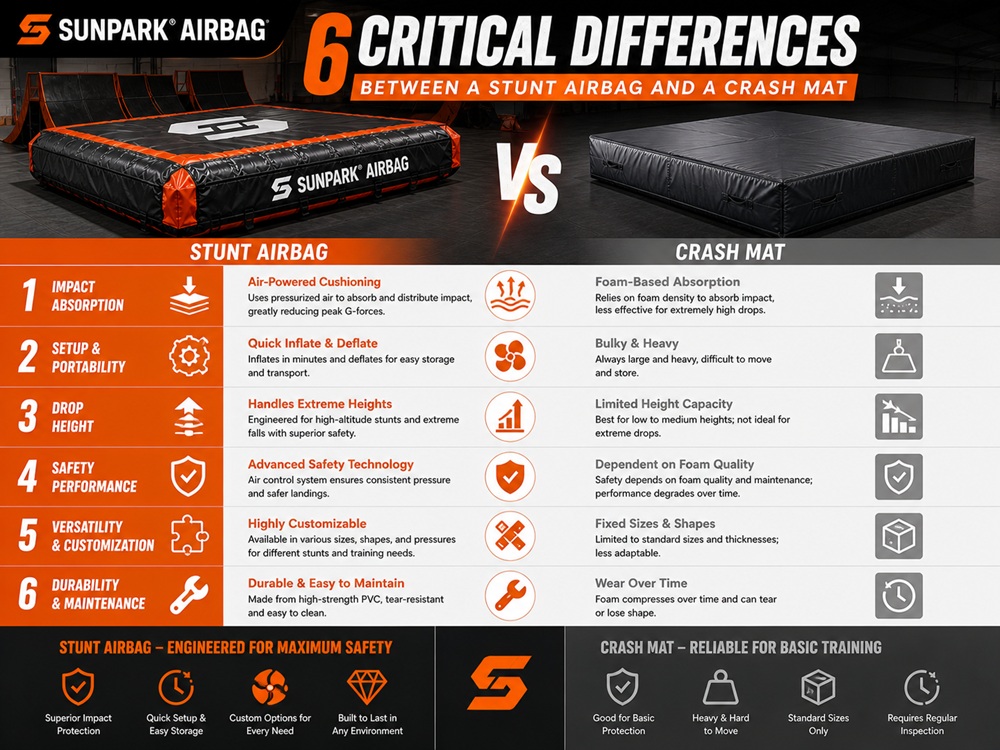
In our testing and industry observation, the most catastrophic mistake parents and coaches make is pushing a child to “just send it.” Forcing a young athlete to attempt a dangerous feature on hard dirt before they are mechanically ready creates deep-seated psychological trauma and leads to severe injuries. Another glaring error is relying on outdated foam pits. Foam pits are unsanitary, they compress spinal columns upon awkward landings, and they make it impossible for the rider to actually “ride away” from a successful trick.
Facility Buying Considerations
If you are upgrading a training facility, evaluate your infrastructure carefully. Are your landing zones optimized for high-repetition training? Foam pits take minutes to climb out of, ruining session momentum. We recommend upgrading to inflatable MTB airbag solutions. They offer a sanitary, firm-yet-forgiving surface that allows the rider to land, roll away, and immediately hike back up for another repetition. The return on investment for facility owners is massive due to increased rider throughput.
The 7 Advanced Cycling Training Methods
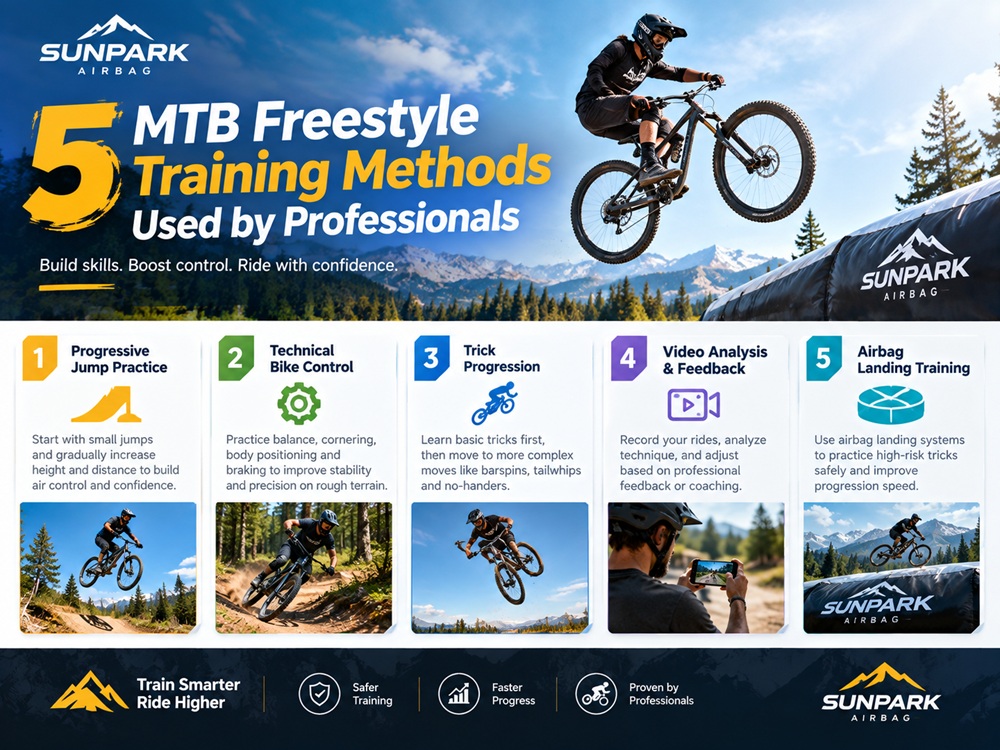
1. Kinesthetic Aerial Awareness Training
Before a youth rider leaves the ground on a bicycle, they must understand where their body is in space. This involves using a gym airbag for training to practice bail mechanics. The athlete learns how to separate themselves from the bike mid-air and land safely on their back or side, diffusing the impact.
2. Pumping and Rhythm Track Conditioning
Pedaling is only half of cycling. Advanced riders generate speed by “pumping”—pushing their body weight into the transitions of rollers and berms. Training exclusively on asphalt pump tracks forces the young athlete to master weight distribution and rhythm without ever touching the pedals. This translates to massive speed gains on downhill and BMX courses.
3. Progressive Drop and Gap Training via Airbags
Transitioning from a tabletop jump to a mandatory gap jump paralyzes many young riders. The solution is utilizing an airbag jump location. By placing an inflatable landing over the gap, the rider can practice clearing the distance with zero penalty for coming up short. Once they clear the airbag consistently, the bag is removed, and the mental block is shattered.
4. Neuromuscular Off-Bike Conditioning
In most professional situations, elite cycling coaches mandate trampoline training. Using a modified, wheel-less bike frame on a trampoline teaches the rider how to initiate rotations (spins, flips, whips) using their core and shoulders rather than relying entirely on the lip of a dirt jump.
5. Controlled Failure and Bail Mechanics
Crashing is inevitable. Advanced training explicitly teaches a rider how to crash. This method involves staging controlled falls where the athlete practices tuck-and-roll maneuvers. Learning to never stiff-arm a landing prevents shattered collarbones and wrists, which are the most common season-ending injuries in youth cycling.
6. High-Intensity Interval Sprints (Micro-Sprints)
Action sports require explosive, anaerobic power bursts lasting 30 to 60 seconds. Traditional long-distance cardio is ineffective here. We implement 10-second maximum effort sprints followed by 50 seconds of rest. This builds the fast-twitch muscle fibers required to accelerate instantly out of a berm or a starting gate.
7. Video Feedback and Micro-Correction
Young athletes often cannot feel what their body is doing wrong. Utilizing high-speed smartphone cameras to record their jumping technique allows the coach to break down the footage frame by frame. Showing a rider that they are “pulling up” too early off the lip instantly corrects the mechanical error in their next attempt.
Essential Reference Tables
Quick Summary Table: The 7 Training Methods
| Method | Primary Objective | Required Infrastructure |
|---|---|---|
| Kinesthetic Aerial Awareness | Body control in the air | Gym mats, Airbags |
| Pumping & Rhythm Tracks | Momentum generation without pedaling | Asphalt or dirt pump track |
| Progressive Drop Training | Overcoming gap-jump fear | Airbag Landing Ramp System |
| Neuromuscular Off-Bike | Rotational initiation | Trampolines, tramp-bikes |
| Controlled Bail Mechanics | Injury prevention during a crash | Soft landing zones |
| High-Intensity Micro-Sprints | Explosive gate speed | Flat sprint track |
| Video Micro-Correction | Mechanical flaw identification | Slow-motion camera |
Comparison Table: Landing Infrastructures
| Feature | Hard Dirt / Wood | Traditional Foam Pit | Inflatable Airbag Landing |
|---|---|---|---|
| Safety / Forgiveness | Zero (High injury risk) | Moderate (Risk of spinal compression) | Maximum (Adjustable firmness) |
| Ride-Away Capability | Yes | No (Rider gets stuck) | Yes (Simulates real landing) |
| Repetition Speed | High | Very Low (Takes minutes to exit) | High (Instant exit) |
| Hygiene | Standard | Poor (Collects dust, sweat, bacteria) | Excellent (Easy to sanitize) |
Pros and Cons Table: Implementing Advanced Training Facilities
| Pros | Cons |
|---|---|
| Drastically accelerates trick progression and confidence. | Requires significant upfront capital investment. |
| Reduces insurance liabilities for commercial park owners. | Requires dedicated space and power for blowers. |
| Attracts elite athletes and high-paying coaching camps. | Staff must be trained on proper pressure regulation. |
| Provides a year-round, weather-resistant training environment. | Equipment must be maintained to prevent punctures. |
Buying Guide Table: Equipping a Youth Training Center
| Facility Goal | Recommended Investment | Expected Outcome |
|---|---|---|
| BMX / Dirt Jump Progression | Inflatable jump airbag with variable pressure valves. | Allows riders to safely attempt flips and whips, increasing facility attendance. |
| Off-Bike Spatial Awareness | Commercial Trampolines & Gym Airbags. | Develops core strength and rotational mapping before touching a bike. |
| Skatepark Modernization | Custom fitted Halfpipe Airbag. | Replaces dangerous vert ramp foam pits, modernizing the aesthetic and safety profile. |
Expert Recommendation from SUNPARK® AIRBAG
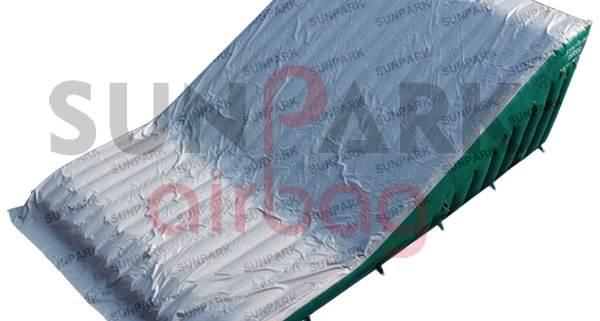
In most professional situations, a coach’s ability to produce elite athletes is directly bottlenecked by the quality of their facility’s infrastructure. You cannot teach advanced Cycling Training Methods for Young Athletes using obsolete, dangerous tools.
With over 10 years of experience, we provide freestyle airbags for ski resorts, theme park, sports and gymnastics facility around the globe. SunparkAirbag® is the leading manufacturer of Airbags for Extreme Sports and Leisure Industries in China.
We recommend that commercial operators completely phase out foam pits. When you evaluate the true trampoline park construction cost or bike park overhaul, installing a professional airbag system yields a significantly higher ROI. Airbags allow riders to “ride out” of their tricks, dramatically increasing the number of repetitions they can achieve per hour. If you want to maximize your trampoline park owner income or bike park revenue, providing a state-of-the-art, hygienic, and rideable landing solution is the absolute best upgrade you can execute in 2026.
The Bottom Line
Are these advanced Cycling Training Methods for Young Athletes actually worth the investment in time and infrastructure? Unequivocally, yes. The era of “trial by fire” on hard dirt is over. By utilizing smart, structured progression—ranging from trampoline spatial awareness to high-repetition drills on professional airbag landing systems—coaches can unlock an athlete’s full potential without subjecting them to career-ending injuries. Protect your young athletes, invest in modern safety infrastructure, and watch their skills rapidly outpace the competition.
Frequently Asked Questions
Are airbag landings safe for young children learning to bike?
Yes, airbag landing systems are exceptionally safe when used correctly under adult supervision. High-quality systems feature dual-chamber technology that provides a soft, decelerating impact while preventing the child from sinking to the hard ground. They are the preferred method for teaching children aerial maneuvers safely.
Why is foam pit training considered outdated in modern cycling?
Foam pits present several major issues: they are extremely unhygienic, collecting sweat and bacteria; they take a long time to climb out of, reducing training efficiency; and most importantly, landing awkwardly in a foam pit can trap a bike frame against the rider’s body, causing severe spinal compression injuries.
How many days a week should a youth athlete practice advanced jumps?
To prevent central nervous system fatigue and physical burnout, advanced jumping and aerial training should be limited to 2 to 3 focused sessions per week. The remaining training days should be dedicated to ground skills (pump tracks), physical conditioning, and active recovery.
Authoritative References & Standards
To ensure our training methodologies align with pediatric sports medicine and global cycling standards, we reference data from the following authoritative bodies: