The era of the “one-size-fits-all” BMX bike is dead. Today’s freestyle landscape is hyper-specialized. A bike geometry engineered for blasting 15-foot quarter pipes in a concrete park will feel twitchy and unstable on massive dirt trails, just as a trail bike will feel sluggish and impossible to spin during a highly technical street session. As professionals who spend our lives building the safety infrastructure that allows riders to push the limits of these machines, we watch equipment failures and geometric mismatches manifest as catastrophic bails every single day.
In most professional situations, showing up to a skatepark with a high-tensile steel frame and unsealed bearings is not just a rookie mistake—it is a safety hazard. If you are serious about progression in 2026, you must select a bike purposefully engineered for your specific riding discipline. In this guide, we break down the exact geometry, materials, and components that define the top 6 Freestyle BMX Bikes by Category, applying commercial and practical judgment to help you make a definitive buying decision.
Quick Answer
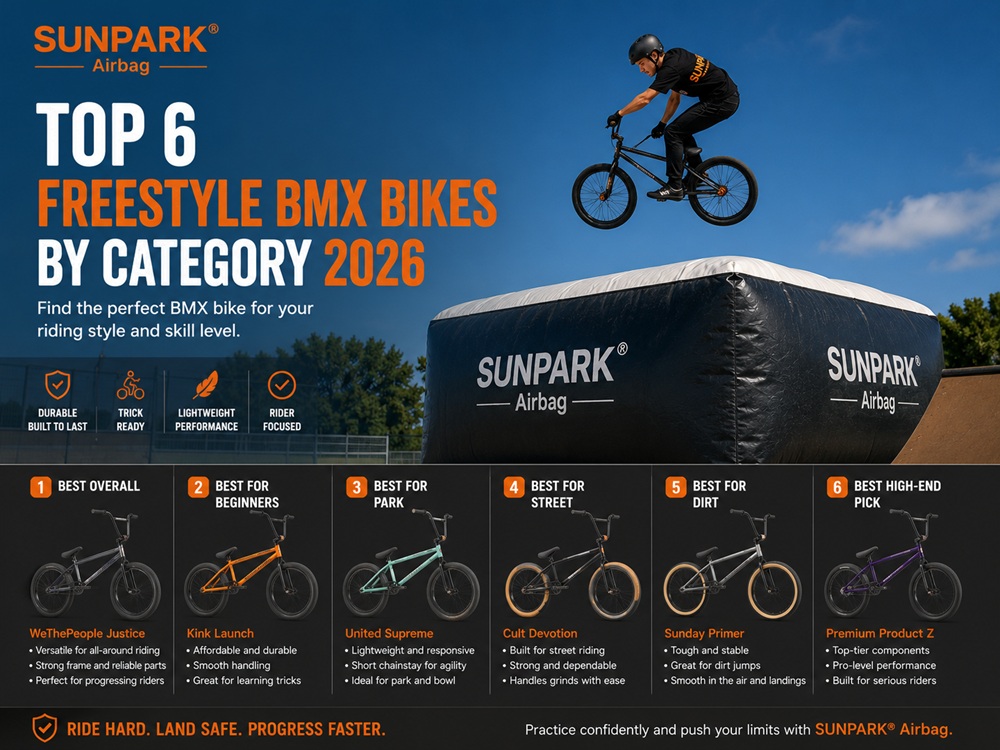
Selecting the right freestyle BMX bike depends entirely on your target terrain. Here are the defining Freestyle BMX Bikes by Category for 2026:
- Street: Short chainstays (under 13.2 inches) and steep head tubes (75.5°+) for highly responsive spins and manual balance.
- Park: Balanced geometry, lightweight 4130 chromoly frames, and gyro braking systems for barspins.
- Dirt/Trails: Longer wheelbases, mellow head tubes (74°), and knobby tires for high-speed stability in the air.
- Flatland: Zero-offset forks, incredibly short top tubes, and freecoaster hubs for infinite rolling backwards.
- Vert/Transition: Stout, overbuilt frames designed to withstand massive G-forces from halfpipe landings.
- All-Rounder (Hybrid): Middle-ground geometry (75° head tube, 13.5″ chainstay) ideal for beginners who want to ride everything.
We strongly recommend avoiding any bike made from Hi-Ten (High-Tensile) steel for freestyle use. For heavy-duty applications, 100% 4130 Chromoly frames, forks, and bars are mandatory.
What It Is: The Anatomy of a Freestyle BMX
Unlike racing BMX bikes, which are built from lightweight aluminum or carbon fiber to maximize straight-line speed, freestyle BMX bikes are engineered for impact. A freestyle bike must survive being thrown down sets of stairs, dropped from 10-foot ramps, and slammed onto metal rails. The core identifier of a high-quality freestyle bike is the material: 4130 Chromoly steel. This alloy offers a superior strength-to-weight ratio compared to standard high-tensile steel, allowing the frame to flex slightly under heavy impact rather than snapping.
Freestyle bikes typically feature 20-inch wheels, stout 36-spoke rims, three-piece tubular chromoly cranks, and micro-gearing (usually a 25-tooth sprocket in the front and a 9-tooth driver in the rear) to provide maximum clearance for dropping in on ramps or grinding ledges.
How Geometry Works and Affects Ride Style
Understanding geometry is the secret to unlocking your progression. Millimeters matter in BMX. The two most critical numbers you must evaluate are the Head Tube Angle (HTA) and the Chainstay Length (CS).
- Head Tube Angle: A steeper angle (e.g., 75.5 degrees) brings the front wheel closer to the frame. This makes the bike incredibly twitchy and responsive, allowing riders to pop into nose manuals with ease. A mellower angle (e.g., 74 degrees) pushes the wheel out, creating high-speed stability necessary for clearing massive 30-foot dirt jumps.
- Chainstay Length: The rear end of the bike dictates how easily the front wheel leaves the ground. A short chainstay (12.5 to 13.2 inches) makes spinning and pulling up for manuals effortless, ideal for street riding. A longer chainstay (13.75+ inches) keeps the bike from looping out backward when pumping transitions or riding trails.
The Top 6 Freestyle BMX Bikes by Category
Based on our industry observations and mechanical testing across commercial action sports facilities, here is the definitive breakdown of Freestyle BMX Bikes by Category for 2026.
1. The Street Machine
Street riding relies on utilizing urban architecture—ledges, handrails, and stairs. Street bikes are defined by their steep, responsive geometry and heavy-duty components. They typically utilize four steel or plastic pegs, heavily reinforced hub guards to protect the spokes during grinds, and freecoaster hubs that allow the rider to roll backward (fakie) without pedaling backward. You will almost never see brakes on a modern street bike.
2. The Park Specialist
Skatepark bikes are built for airtime and technical lip tricks. These frames favor slightly lower standover heights to allow riders to throw their legs over the frame easily (for tailwhips). Park bikes prioritize weight reduction and often feature a gyro (detangler)—a mechanical braking system that allows the handlebars to spin infinitely without tangling the brake cables.
3. The Dirt / Trails Rig
Trails riding is about flow, pumping, and surviving high-speed landings. Dirt bikes require a significantly longer wheelbase for in-air stability. The bottom bracket is usually lower to the ground to keep the center of gravity stable, and the tires feature aggressive, knobby treads for grip on loose dirt. Brakes are absolutely mandatory here to control speed between massive jumps.
4. The Flatland Expert
Flatland is the breakdancing of BMX. These bikes look radically different. They feature extremely short top tubes (often around 19 inches), zero-offset forks (the front wheel sits directly underneath the fork tube rather than being pushed forward) for precise pivot points, and heavily knurled pegs. They are virtually unrideable on street or dirt.
5. The Transition / Vert Behemoth
Vert riding (halfpipes) places immense structural stress on a bicycle. Dropping 15 feet out of the sky into a wooden transition requires an overbuilt frame. These bikes ignore modern trends of ultra-short geometries in favor of stout, reinforced tubing, massive 2.4-inch smooth-rolling tires, and flawless braking systems.
6. The All-Rounder (Hybrid)
For beginners or riders who want to hit a street spot in the morning and a concrete bowl in the afternoon, the All-Rounder is the only logical choice. These bikes feature middle-of-the-road geometry (typically a 75-degree head tube and a 13.5-inch chainstay) and often come with removable brake mounts, allowing the rider to experiment before committing to a specialized discipline.
Benefits of Category-Specific Bikes
Riding a discipline-specific bike accelerates progression. From our experience, trying to learn 360s on a long, stable dirt bike requires massive physical exertion. Moving to a short-chainstay street bike makes the rotation feel almost automatic. By matching your equipment to your environment, you mitigate fatigue and reduce the likelihood of mechanical failures that lead to common BMX injuries and prevention issues.
Limitations to Consider
The primary limitation is versatility. If you heavily specialize—say, you buy a dedicated flatland bike—you cannot safely ride a concrete bowl. The zero-offset fork will cause the bike to wash out under transition pressure. Additionally, top-tier aftermarket parts required to build specialized bikes are expensive. Expect to spend north of $1,000 for a fully chromoly, sealed-bearing custom setup.
Who Should Use Specialized Bikes
For commercial users: Action sports park operators holding rental fleets should stick strictly to All-Rounder/Hybrid geometries. You need predictability for novice riders.
For heavy-duty applications: Experienced riders who are jumping large gaps or grinding handrails must use specialized 100% chromoly frames to prevent catastrophic frame snaps.
Common Purchasing Mistakes
The most egregious mistake we see is parents or beginners buying a bike labeled “Freestyle BMX” from a big-box retailer. These bikes are made from High-Tensile (Hi-Ten) steel, feature unsealed loose-ball bearings that will blow out within a month of jumping, and use weak single-wall rims. If the specification sheet does not explicitly state “100% 4130 Chromoly Frame, Fork, and Bars,” you are buying a toy, not sports equipment.
Essential Buying Considerations
When pulling out your credit card, you must size the bike to your body. The Top Tube (TT) length dictates the cockpit room.
- Rider Height 5’0″ to 5’4″: Look for a 20.0″ to 20.25″ Top Tube.
- Rider Height 5’5″ to 5’9″: Look for a 20.5″ to 20.75″ Top Tube.
- Rider Height 5’10” to 6’0″+: Look for a 21.0″ to 21.25″ Top Tube.
Furthermore, ensure the bike features fully sealed bearings in the headset, bottom bracket, and both hubs. Unsealed bearings require constant maintenance and cannot handle the axial loads of freestyle riding.
Expert Recommendation: Safety & Progression
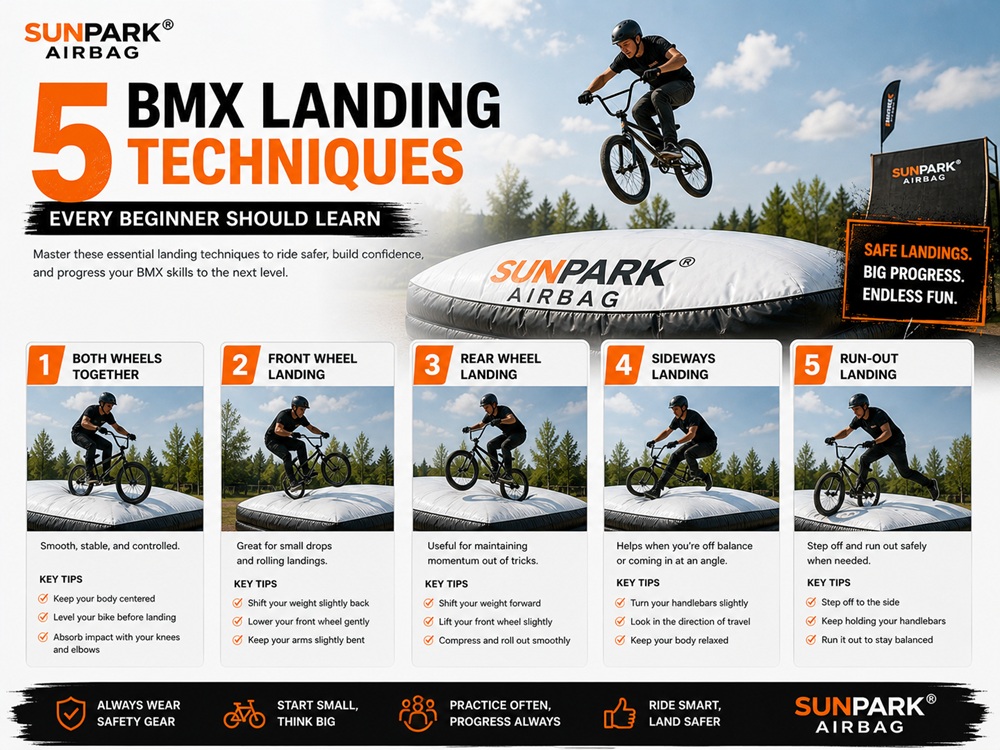
Once you purchase the correct bike for your category, you must respect the learning curve. In most professional situations, throwing double tailwhips or backflips onto hard concrete or dirt without preparation is reckless. The industry standard for safe progression relies heavily on pneumatic catch systems.
We recommend integrating a BMX airbag landing into your training regimen. Unlike outdated foam pits—which hide broken bike parts and act as breeding grounds for bacteria—modern airbags provide a firm, rideable runout that dissipates kinetic energy safely. If you are comparing a foam pit vs airbag comparison, the commercial and safety advantages of airbags are undeniable for extreme sports facilities.
SUNPARK® AIRBAG
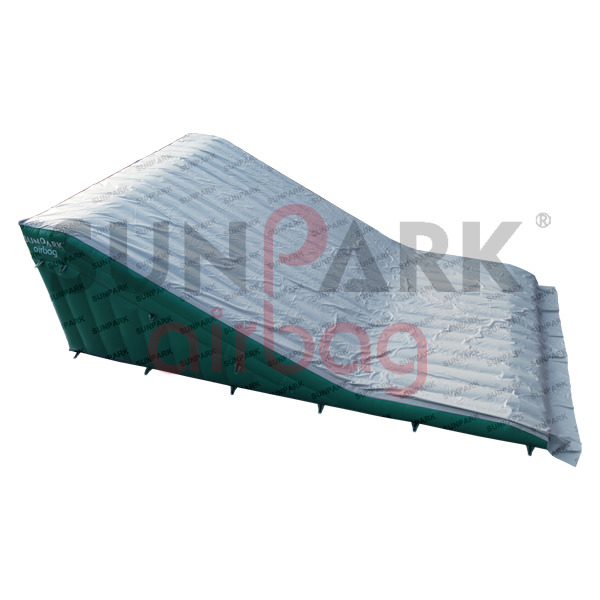
With over 10 years of experience, we provide freestyle airbags for ski resorts, theme park, sports and gymnastics facility around the globe. SunparkAirbag® is the leading manufacturer of Airbags for Extreme Sports and Leisure Industries in China. Whether you are seeking a setup for dirt trails or exploring best airbag landing systems 2026, our commercial-grade infrastructure guarantees safe progression for riders at every level.
Data & Comparison Tables
| Category | Defining Feature | Best Suited For |
|---|---|---|
| Street | Short Chainstay, Pegs, Freecoaster | Grinds, technical manuals, urban ledges. |
| Park | Gyro brakes, lightweight, low standover | Skateparks, transition airs, tailwhips. |
| Dirt / Trails | Long wheelbase, knobby tires, stable | Massive jumps, high-speed flow lines. |
| Flatland | Zero-offset fork, short top tube | Ground tricks, infinite balance pivots. |
| All-Rounder | Balanced geometry (75° HTA, 13.5″ CS) | Beginners, riders who mix park and street. |
| Material Type | Strength Level | Weight | Commercial Judgment |
|---|---|---|---|
| High-Tensile (Hi-Ten) Steel | Low / Weak | Very Heavy | Avoid. Bends and snaps under adult weight. |
| Trimoly (Main Tubes Chromoly) | Moderate | Medium | Acceptable for young beginners, not for heavy impact. |
| 100% 4130 Chromoly | Exceptional | Light to Medium | Mandatory for serious freestyle progression. |
| Bike Choice | Pros | Cons |
|---|---|---|
| Specialized (e.g., Pure Street) | Makes specific tricks significantly easier; optimized durability. | Performs poorly outside of its intended environment. |
| All-Rounder / Hybrid | Allows riders to explore all terrains comfortably; great resale value. | Lacks the specialized geometric advantages for elite-level tricks. |
The Bottom Line
Purchasing a freestyle BMX bike in 2026 requires strict adherence to geometry and material standards. You must align your equipment with your environment. If you want to ride ledges, buy a street bike. If you want to jump trails, buy a dirt rig. Never compromise on 100% chromoly frames and fully sealed bearings. Most importantly, recognize that buying a high-end bike does not grant you instant invincibility. To truly maximize the capability of these Freestyle BMX Bikes by Category, you must train smart. Utilize professional facilities that employ modern safety infrastructure, such as bike airbag landing systems, and read up on our freestyle airbag guide to ensure your progression is relentless and safe.
Frequently Asked Questions
Can I use a street BMX bike on dirt jumps?
While physically possible, it is highly discouraged. Street bikes have very steep head tubes and short wheelbases, making them incredibly twitchy. Hitting a large dirt jump at high speed on a street bike can easily result in speed wobbles or “looping out” (flipping backward) mid-air. Always use a stable, longer dirt-specific bike for trails.
Why are brakes disappearing from freestyle BMX bikes?
Brakeless riding became popular in the street discipline to save weight, reduce maintenance, and prevent cables from tangling during barspins. Riders control their speed by using their shoes against the rear tire. However, brakes remain absolutely essential for dirt jumping and vert riding, where speed control is a matter of severe safety.
What is the difference between a cassette hub and a freecoaster?
A standard cassette hub forces the pedals to rotate backward when the bike is rolling backward. A freecoaster hub features an internal clutch mechanism that disengages when rolling backward, allowing the pedals to remain stationary. Freecoasters are highly preferred in the street and flatland categories for technical fakie (backward) tricks.
Authoritative Industry References
- Union Cycliste Internationale (UCI): The world governing body for sports cycling, detailing official BMX Freestyle Park competition standards and equipment regulations. Review UCI Standards
- USA BMX (American Bicycle Association): Guidelines and safety requirements for BMX competition, track structures, and rider protective equipment. Explore USA BMX Regulations
- American Academy of Orthopaedic Surgeons (AAOS): Research on extreme sports biomechanics, injury prevention, and the efficacy of protective infrastructure in high-impact cycling disciplines. Read Orthopaedic Safety Data