The biggest Airbag Landing Mistakes are rarely dramatic. Most come from small failures in setup, progression, pressure, spacing, or maintenance. That is why airbag training can be either a confidence-building tool or a costly source of repeated near-misses. The good news is that the fixes are straightforward once you know where operators and riders usually go wrong.
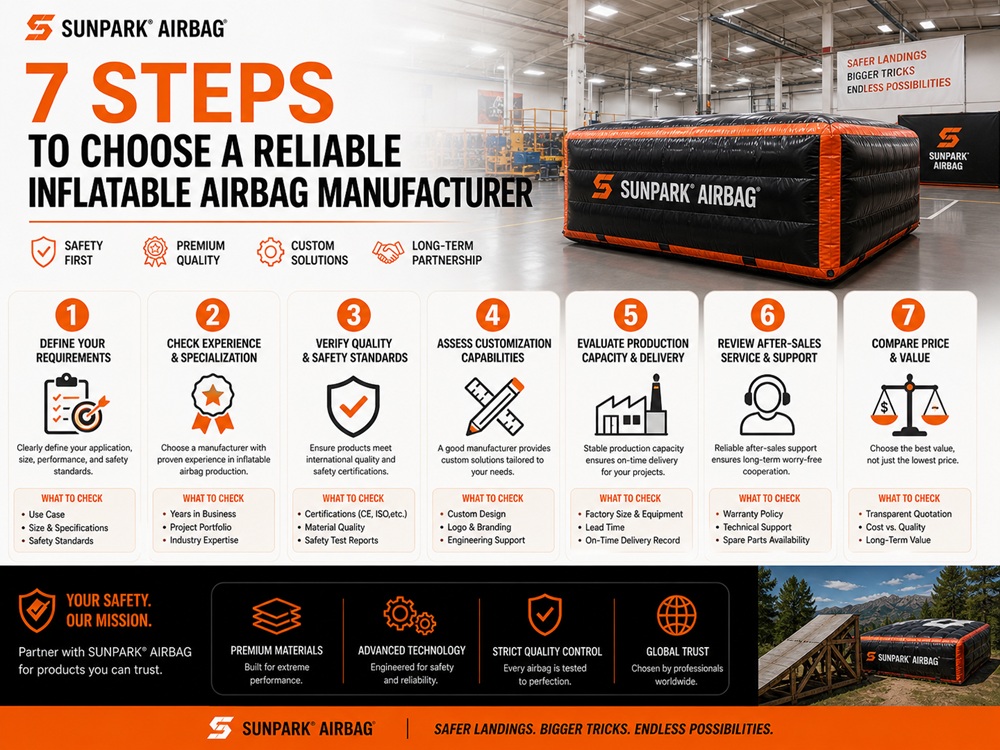
SUNPARK® AIRBAG brings over 10 years of experience providing freestyle airbags for ski resorts, theme parks, sports facilities, and gymnastics venues around the globe. SunparkAirbag® is a leading manufacturer of airbags for extreme sports and leisure industries in China.
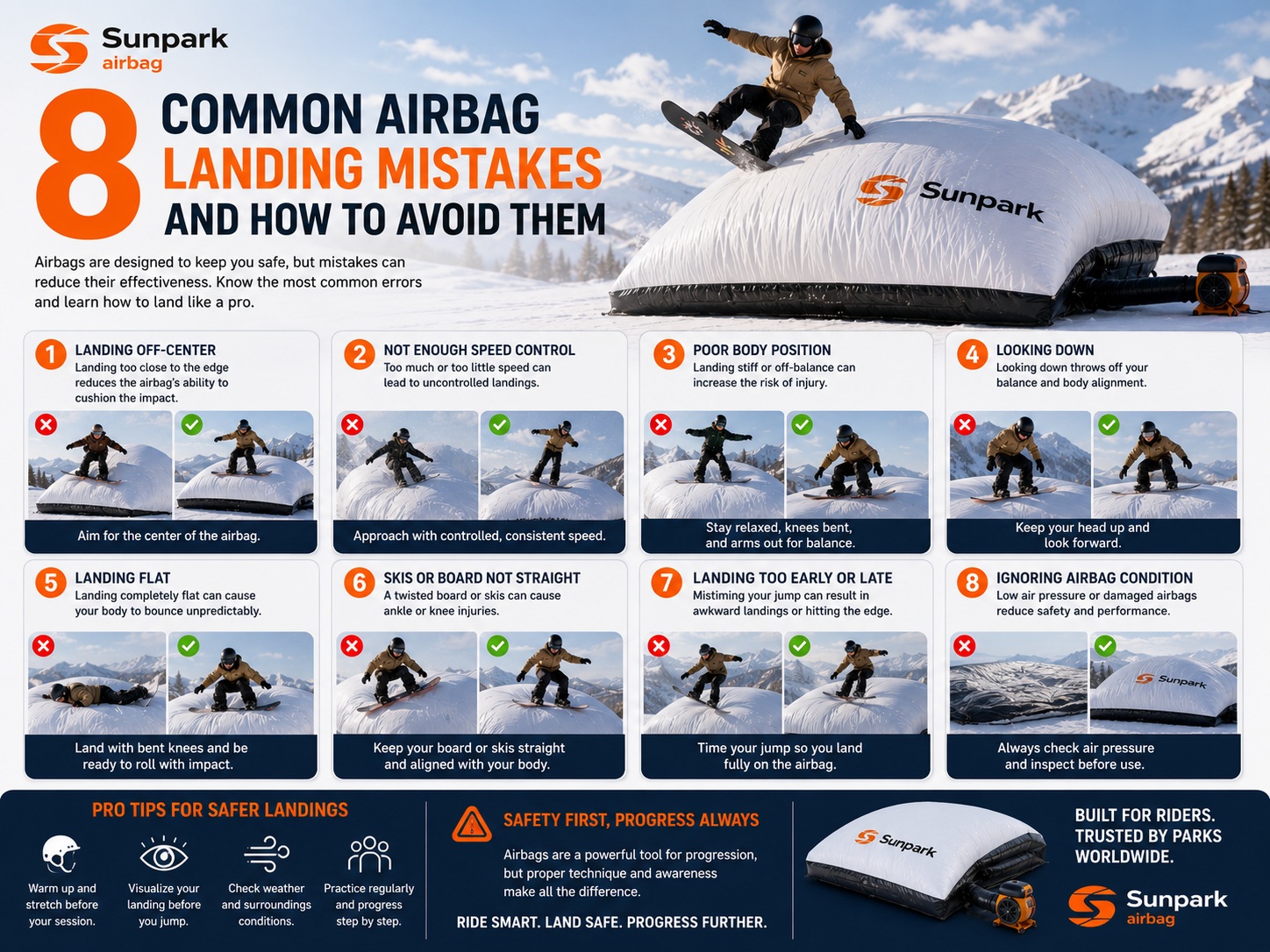
Our position: most Airbag Landing Mistakes are system mistakes, not rider mistakes. If the launch angle, landing pressure, training progression, or inspection routine is off, the airbag becomes less forgiving than it should be. From our experience, the safest setups are the ones that respect repetition, control, and clear operating rules.
Why airbag landing setup matters
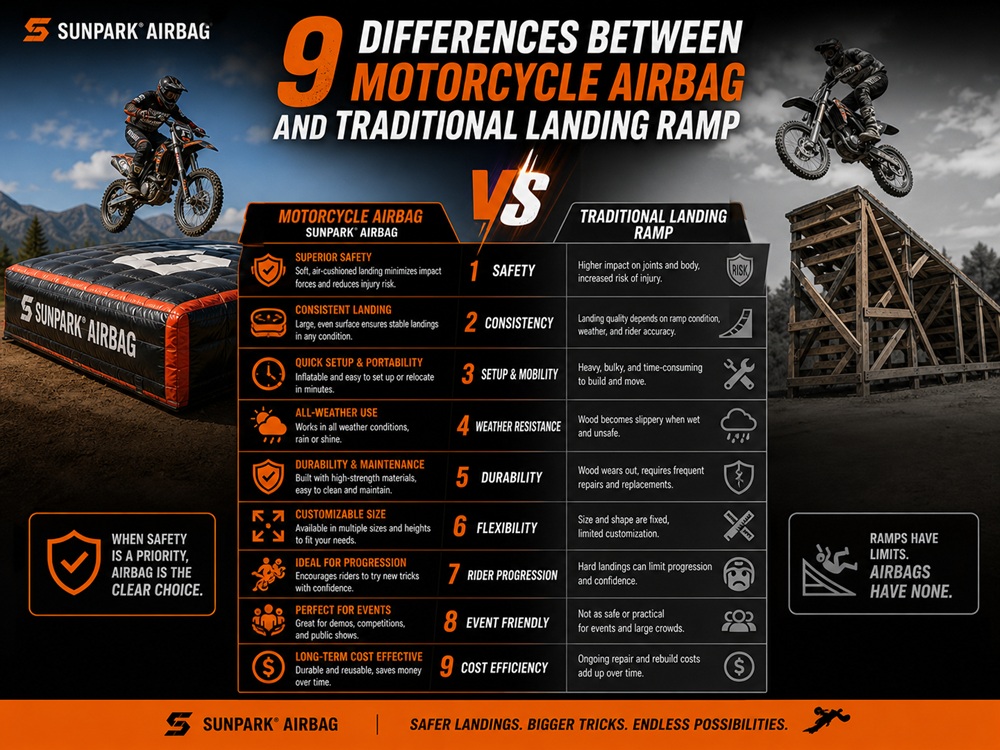
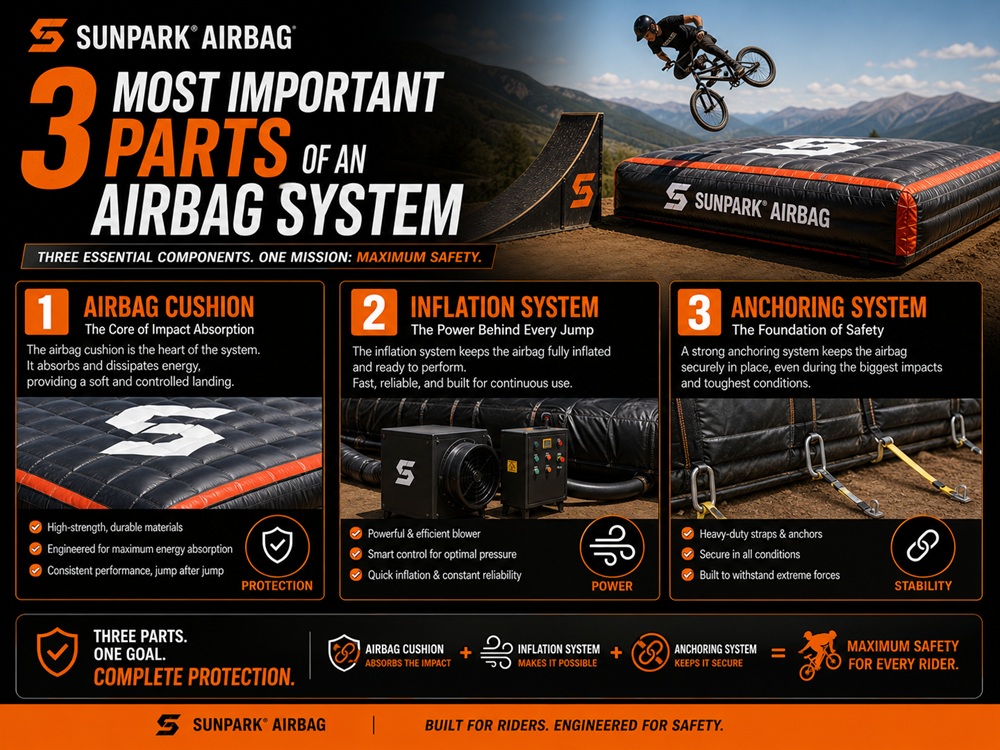
Airbags work because they increase the time over which the impact is absorbed, which lowers the force of the landing compared with a harder, shorter stop. That basic principle is why airbags are useful for freestyle sports training, snow sport progression, BMX practice, and gym-style jump work. The concept is simple, but the execution is not. If the platform is poorly set up, the benefit drops quickly.
Airbags are also valuable because they let athletes repeat skills more often in a controlled setting. Several training facilities and university programs use them for exactly that reason: to help riders and skiers practice tricks while reducing the risk associated with early attempts on harder surfaces. Liberty Mountain Snowflex Centre noted that an engineered airbag reduces injury risk for riders of different skill levels, and Holderness described its air bag as a year-round venue that lets athletes refine skills while reducing injury exposure.
We recommend treating the landing system as a full training environment, not a single inflatable object. That means thinking about launch geometry, bag pressure, weather, approach speed, and supervision. This matters even more if you are comparing cheap MTB airbag options 2026 or choosing between a airbag landing ramp system and a more specialized feature like a Halfpipe Airbag.
Quick summary table
| Mistake | What usually causes it | How to avoid it | Best matching Sunpark resource |
|---|---|---|---|
| Wrong pressure | Overinflation or underinflation | Set pressure for rider weight, discipline, and weather | airbag landing ramp system |
| Bad landing angle | Launch ramp and bag not aligned | Match ramp geometry to expected trajectory | BMX airbag landing |
| Progressing too fast | Skipping fundamentals | Use staged training steps | common BMX injuries and prevention |
| Poor maintenance | Loose valves, wear, or puncture risk | Inspect before every session | airbag lifespan and safety guide |
| Wrong product choice | Using one airbag type for the wrong sport | Choose by discipline and terrain | best snowboard airbag parks |
The 8 common airbag landing mistakes
1. Using the wrong air pressure
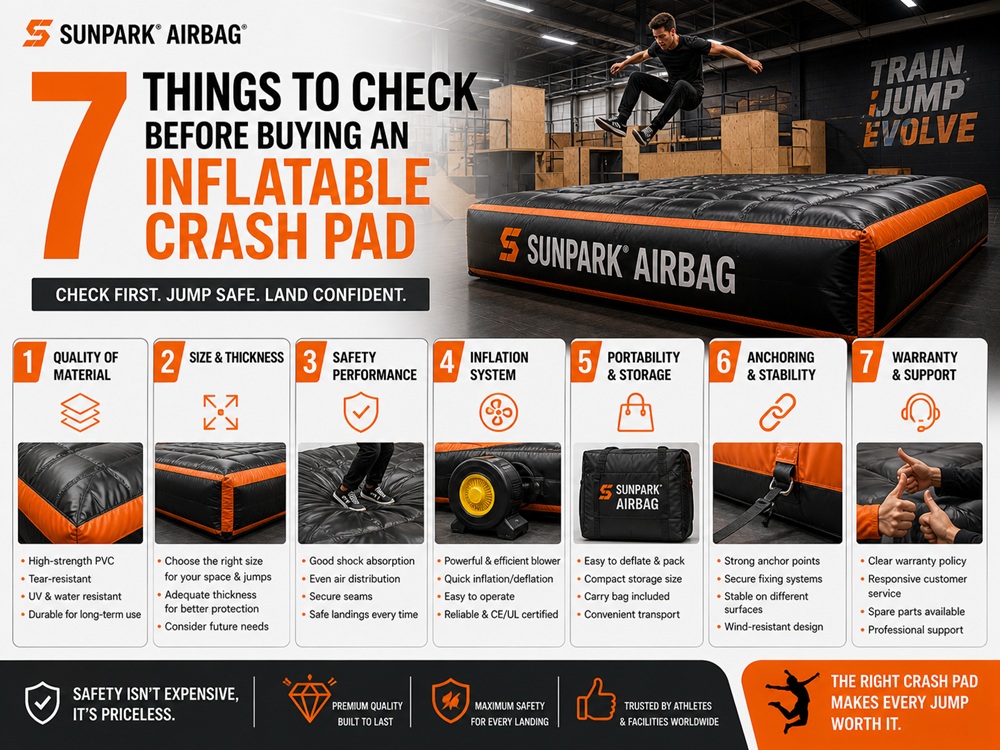
Air pressure is one of the easiest things to get wrong and one of the most important to get right. Too soft, and the bag can feel unstable or bottom out. Too hard, and the landing becomes abrupt instead of forgiving. Neither is acceptable.
From our experience, pressure should be managed as a live variable, not a one-time setup step. Rider weight, temperature, sport type, and jump speed all affect how the airbag behaves. The safe answer is not a universal number. The safe answer is a consistent pressure check routine before every session.
2. Ignoring launch-to-landing geometry
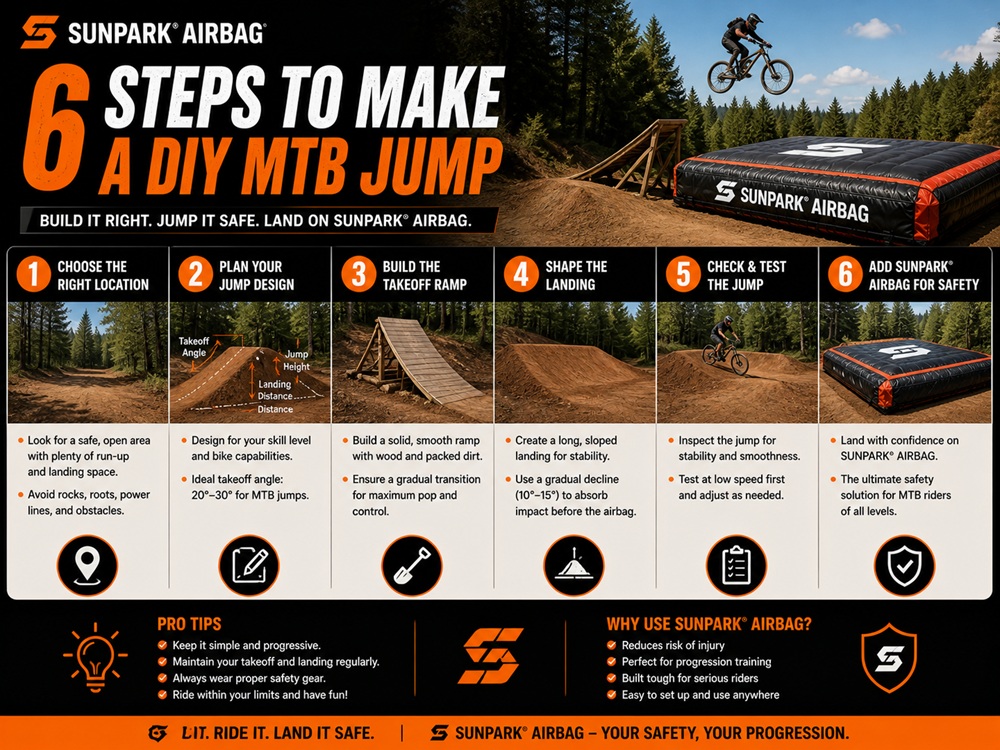
Many operators focus on the bag and forget the ramp. That is a mistake. The launch angle, takeoff speed, and bag position must work together. If they do not, riders can land flat, land short, or bounce in ways that make the bag less useful.
We recommend measuring the whole line, not just the landing surface. If the launch geometry is vague, the bag cannot save the setup. This is especially important for BMX airbag landing systems and freestyle ski applications.
3. Skipping progression and sending riders too early
Airbags are training tools, not permission slips to skip fundamentals. The easiest way to create problems is to push riders into advanced tricks before they have mastered approach speed, body position, and bailout control.
Training facilities that use airbags properly treat them as progression platforms. Holderness and Liberty both frame airbag use as a place to repeat skills and improve safely, not as a shortcut around preparation.
4. Choosing the wrong bag for the discipline
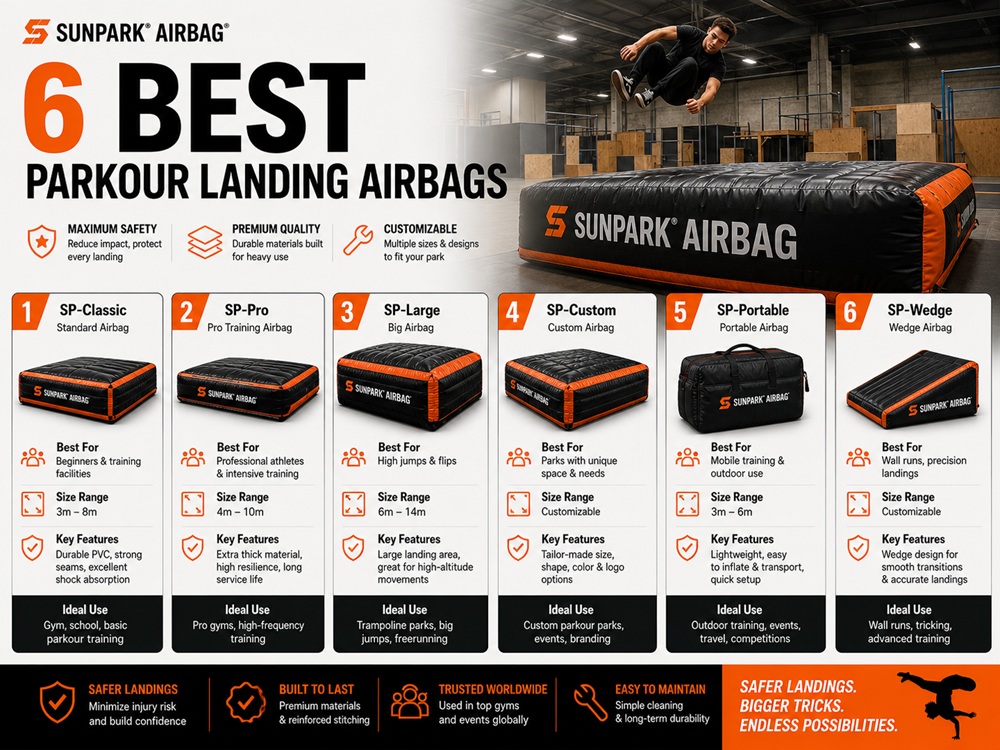
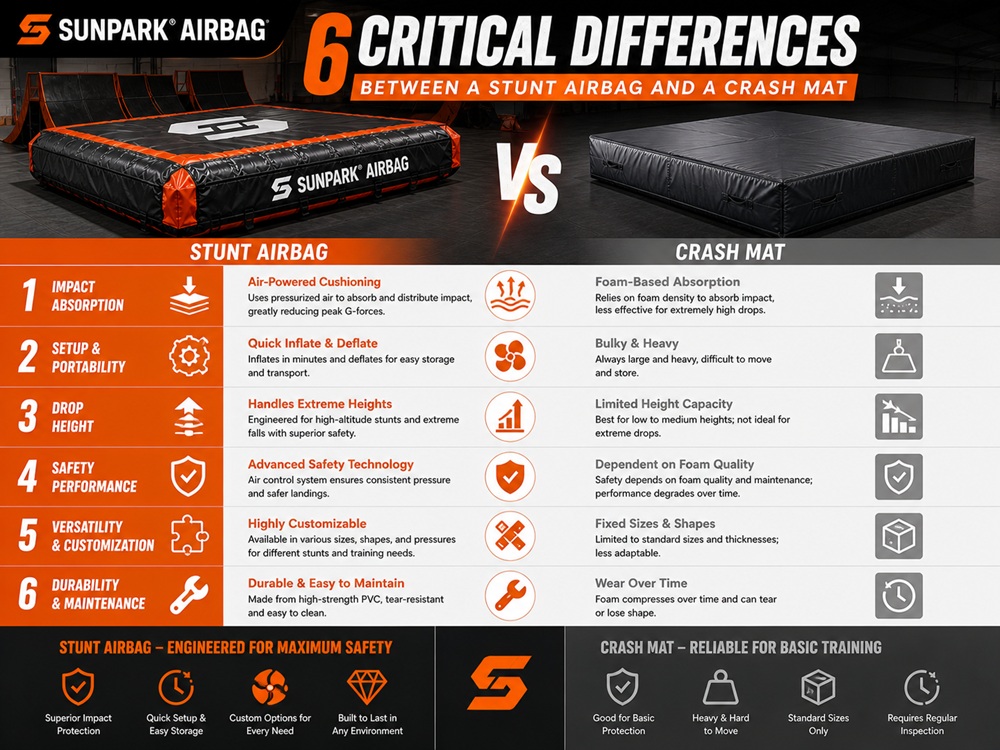
A snowboard park bag, a BMX landing, and a halfpipe-focused system are not interchangeable. Each product is designed around different speeds, body positions, and landing demands. If you force the wrong bag into the wrong sport, you create an avoidable hazard.
We recommend matching the airbag to the sport first and the budget second. If you are comparing a mountain-bike setup with a snow feature, start with the specific use case, not the lowest price. That is where BMX airbag landing and best snowboard airbag parks become useful references.
5. Neglecting inspection before each session
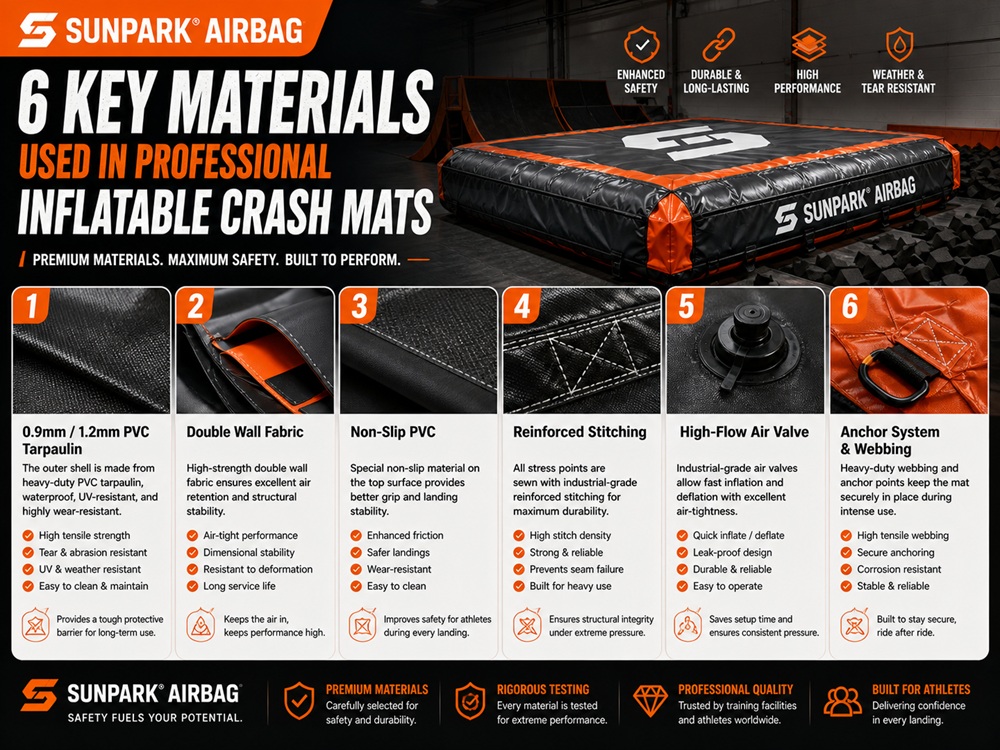
Airtight seams, anchor points, valves, surface wear, and debris around the landing zone all deserve attention. A bag can look fine from a distance and still have a problem that only shows up under load. That is not something to discover during a trick attempt.
From our experience, the best operators develop the habit of inspecting the surface and structure before the first rider of the day. If you want a deeper view of long-term durability and useful life, the airbag lifespan and safety guide is the right place to start.
6. Using the bag in the wrong weather or surface conditions
Weather changes how an airbag behaves. Cold can stiffen materials. Heat can affect internal pressure. Wind can alter setup stability, and wet surfaces can affect rider control before takeoff.
We recommend adjusting the session plan when the environment changes. Bogus Basin’s skier and snowboarder safety guidance reminds users to ride with control and understand that natural and man-made obstacles can be dangerous when speed is poorly managed. That same principle applies to an airbag training zone.
7. Failing to control the landing zone around the bag
The bag is only one part of the landing environment. The surrounding zone must be clean, visible, and free from secondary hazards. That includes loose gear, improper barriers, poor supervision, and clutter near the launch line.
We recommend managing the whole area like a training circuit. The more disciplined the setup, the more repeatable the landing becomes. This is particularly important in shared facilities where different athletes use the bag throughout the day.
8. Treating maintenance as optional
Maintenance is not a repair schedule after something goes wrong. It is what keeps the bag safe before something goes wrong. Valves, seams, patch points, anchor hardware, and blower performance all need attention on a routine basis.
From our experience, many Airbag Landing Mistakes happen because a system was safe last month and assumed safe this month. That assumption is lazy and expensive. If a unit is in frequent use, it should be treated like equipment, not décor.
What a safer landing setup looks like
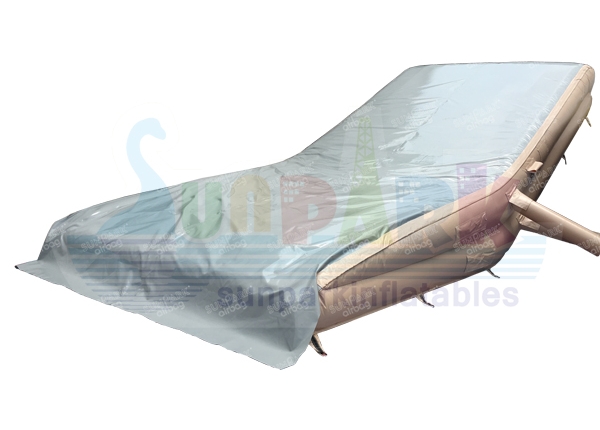
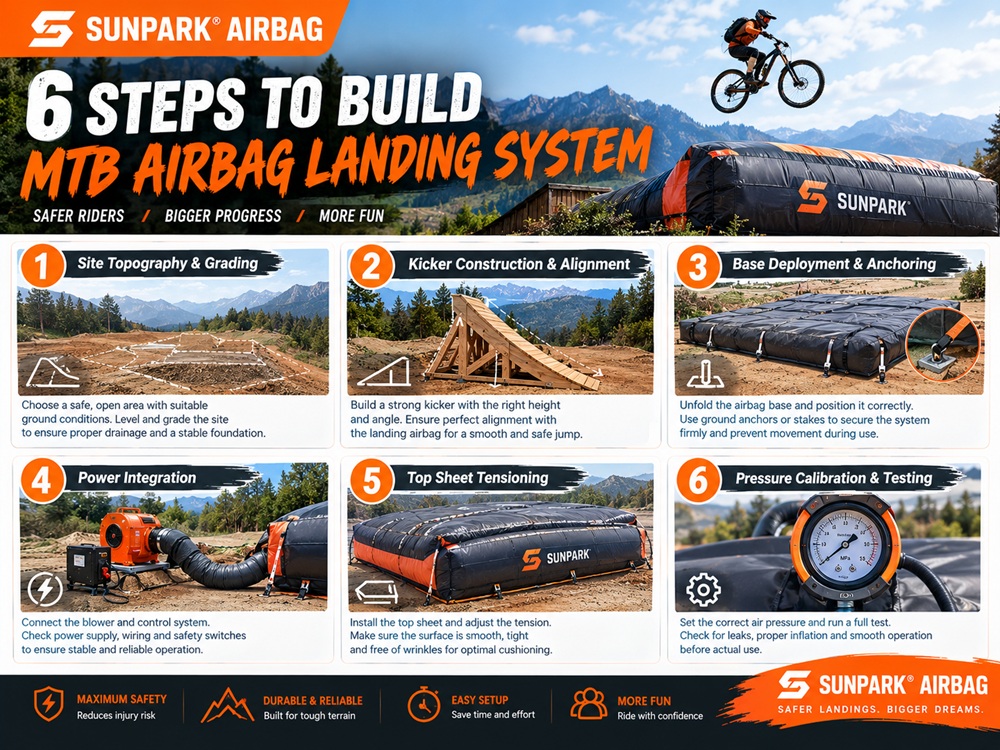
A safer setup begins with proper alignment. The rider’s line, launch speed, and intended landing point should match the bag’s usable landing zone. Once that is correct, pressure can be tuned to the discipline and rider profile. Then the operator can define who is allowed on the feature and under what conditions.
We recommend a setup process that is boring on purpose. Boring means repeatable. Repeatable means safe. Safe means riders can focus on learning instead of compensating for a bad setup. That is the practical standard for any serious facility.
In the field, many operators compare systems before buying. If your budget is limited, a cheap MTB airbag options 2026 guide can help narrow what is realistic. If you are building a more specialized park feature, a Halfpipe Airbag or a dedicated ramp system may be the better fit. The right purchase depends on how the feature will actually be used.
Good rule: if the setup requires a long explanation every time someone uses it, the setup is not simple enough yet.
Which Sunpark products fit each use case
Sunpark’s product range is useful because it separates disciplines instead of pretending one airbag solves everything. That matters when a facility wants to serve different riders and different seasons.
We recommend the BMX-specific landing when the rider line is compact and the skill progression is built around bike control. The ramp system makes sense when the site needs a broader landing solution. The halfpipe-focused option belongs in facilities that train aerial transitions and need a landing that reflects that geometry. Snowboard-focused parks need a different setup again, which is why comparing park examples is useful before you buy.
From our experience, facilities do better when they choose the feature first and the product second. That sounds backward to catalog shopping, but it is exactly how good training environments are built.
Maintenance and inspection habits that prevent problems
Any airbag used regularly should have a visible inspection routine. That means checking the fabric surface for abrasion, confirming anchor integrity, looking for leaks or pressure drift, and ensuring the blower or inflation system is performing normally. If a bag is aging, the inspection interval should become more disciplined, not less.
We recommend keeping a written log, even for small facilities. Logs force operators to notice small changes before they become failures. They also create accountability, which is useful when multiple staff members share responsibility.
For a better sense of how long a system can realistically remain in service, the airbag lifespan and safety guide is worth reading closely. The main lesson is simple: age alone does not determine safety, but wear, use intensity, storage, and maintenance history absolutely do.
Holderness and Liberty both show how airbag use works best when it is treated as a sustained training asset rather than a one-time novelty. That is the mindset that protects both athletes and budgets.
Training progression without rushing the bag
Riders often want to move faster than the system can support. That is normal. It is also where coaching matters. The safest facilities break progression into steps: approach, takeoff, body position, landing posture, and recovery. Each step should be stable before the rider attempts a larger trick.
From our experience, the quickest route to cleaner landings is not more courage. It is more repetition at the right level. Airbags are excellent for that because they allow volume. The feature rewards disciplined practice, not impulsive escalation.
If you are coaching BMX specifically, pairing an understanding of common BMX injuries and prevention with a dedicated bag setup gives you a much stronger safety framework. The point is not to eliminate risk altogether. The point is to remove avoidable risk.
Safety guidance from ski areas also reinforces the same theme: riders should stay in control, respect the environment, and avoid treating features as permission to go faster than conditions allow. That is good advice whether the bag sits in a winter park or a year-round training center.
FAQs
What is the most common airbag landing mistake?
Wrong pressure is probably the most common because it is easy to overlook and easy to change. The next most common issue is poor launch-to-landing alignment.
Are Airbag Landing Mistakes mostly rider errors?
No. Many problems come from setup, maintenance, or progression planning. The rider often gets blamed for a system problem.
Can one airbag work for BMX and snow training?
Not usually in the same way. The geometry, speed, and landing feel are different, which is why discipline-specific products are the safer choice.
How often should an airbag be inspected?
Before every session for visible issues, with scheduled deeper inspections based on use intensity. High-traffic facilities should log checks routinely.
Do airbags really reduce injury risk?
They can reduce the severity of impact by extending deceleration time, and training facilities have used them for that reason. They still need proper setup and supervision.
What should a facility buy first if the budget is limited?
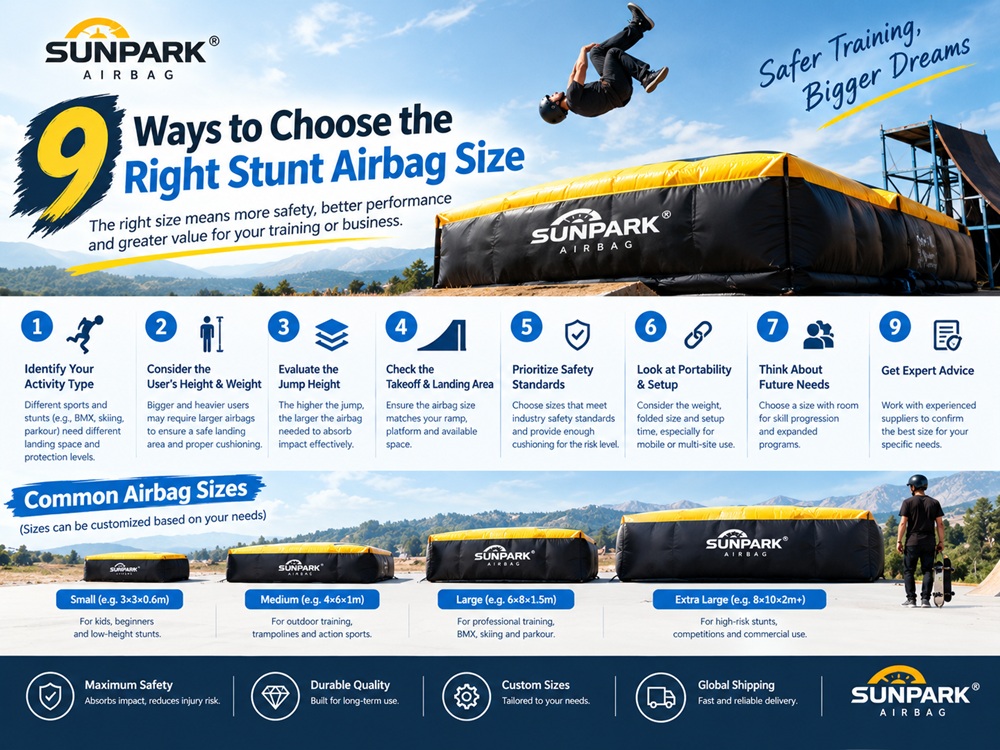
Buy the product that matches the discipline first, then prioritize the safest landing geometry. It is better to have the correct feature than a larger feature that is wrong for the sport.