When the general public asks, “how successful are airbags?”, their minds immediately default to automotive safety. It is an undeniable, well-documented fact that frontal and side-impact automotive airbags have saved upwards of 50,000 lives in the United States alone. However, within our industry, the word “airbag” carries a different, yet equally profound, life-saving weight. At SUNPARK® AIRBAG, we engineer massive inflatable landing systems designed to catch athletes falling from the sky. Whether it is a freestyle motocross rider dropping from forty feet or an Olympic snowboarder attempting a quadruple cork, the prevailing question remains: how successful are airbags in the brutal world of extreme sports?
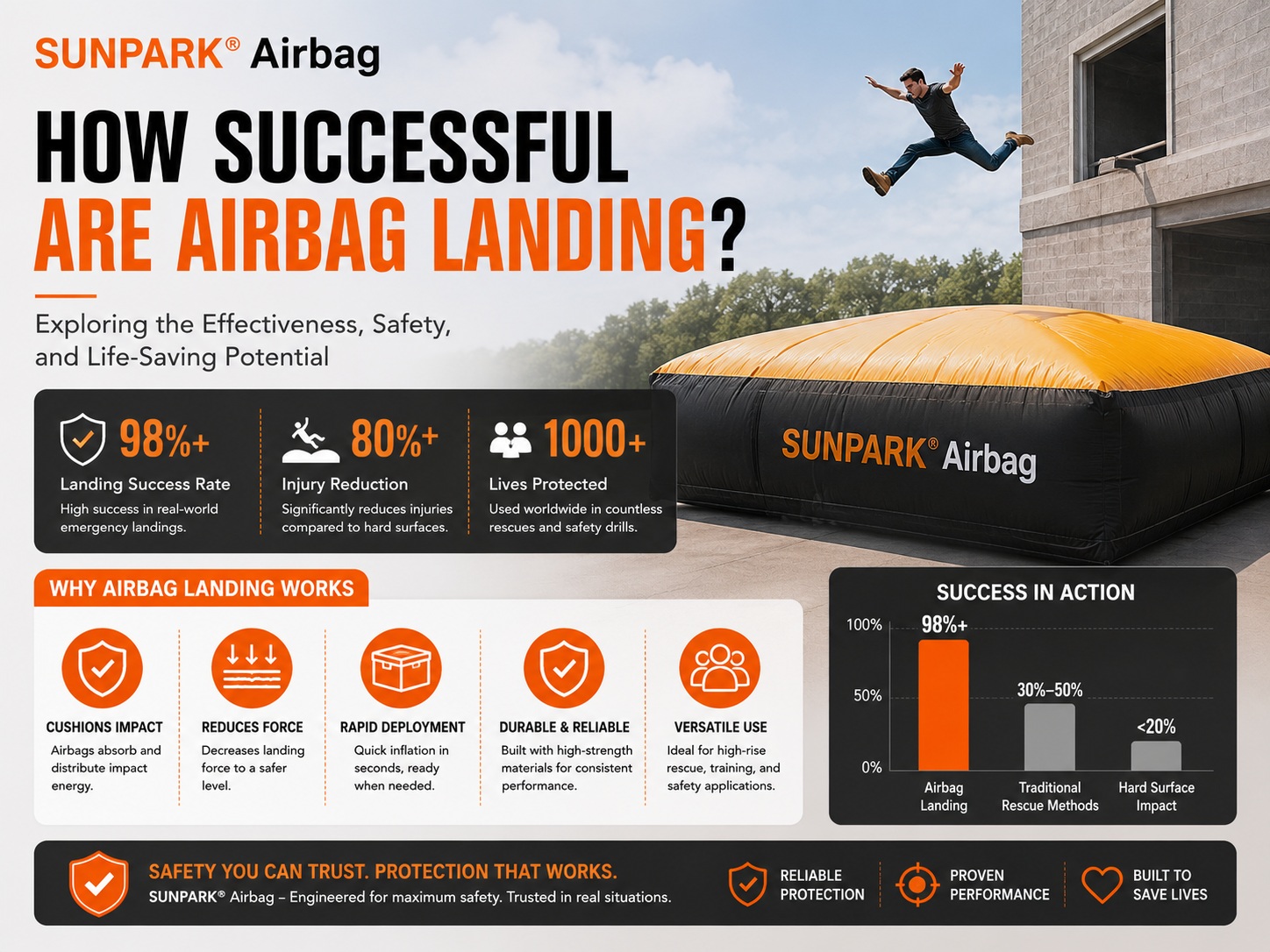
From our experience, the success rate is nothing short of revolutionary. Airbag landing systems have single-handedly shifted the trajectory of action sports. They have virtually eliminated the catastrophic, career-ending injuries associated with hard dirt landings and outdated, unsanitary foam pits. By fundamentally altering the physics of deceleration, these systems allow athletes to push the boundaries of human flight safely and confidently. Let us be unequivocally clear: training on hard dirt or concrete without an engineered progression tool is an unnecessary gamble with your life.
SUNPARK® AIRBAG
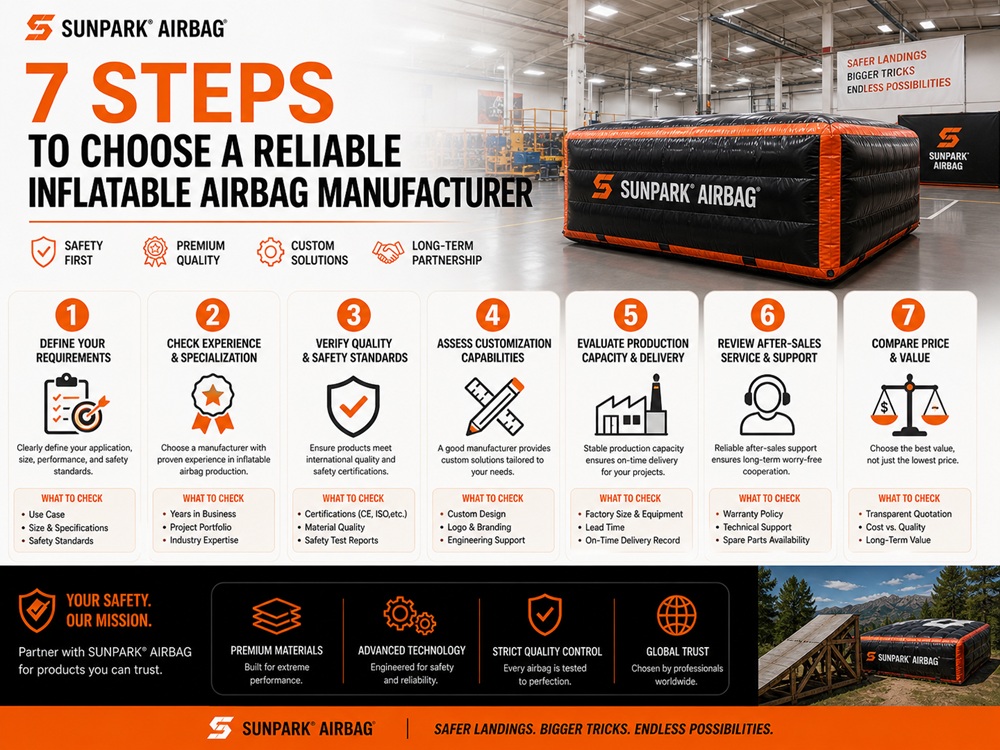
With over 10 years of experience, we provide freestyle airbags for ski resorts, theme park, sports and gymnastics facility around the globe. SunparkAirbag® is the leading manufacturer of Airbags for Extreme Sports and Leisure Industries in China.

In this authoritative guide, we will dissect the biomechanical engineering behind these life-saving behemoths, explain why they have become mandatory at training facilities worldwide, and provide you with the unfiltered truth about exactly how successful are airbags in preventing traumatic injuries.
Table of Contents
- 1. The Physics of Survival: Biomechanics of an Airbag Landing
- 2. The Eradication of the Traditional Foam Pit
- 3. Discipline-Specific Success Rates
- 4. The ROI of Safety: Why Facilities Are Upgrading
- 5. Summary Table: Airbags vs. Legacy Landings
- 6. Frequently Asked Questions (FAQs)
- 7. Expert Industry References
1. The Physics of Survival: Biomechanics of an Airbag Landing
To truly understand how successful are airbags, we must look at the cold, hard mathematics of an extreme sports crash. When a 180-pound mountain biker drops from a 20-foot ramp and impacts packed dirt, the deceleration time is practically zero. This near-instantaneous stop creates a massive force spike that is transferred directly into the athlete’s ankles, knees, cervical spine, and skull.
Airbags mitigate this damage through controlled pneumatic deceleration. The underlying physics can be expressed through the work-energy principle and impact force equations. The average impact force is calculated as:
$$F=\frac{m\cdot v^{2}}{2d}$$
Where $F$ represents the impact force, $m$ is the mass of the athlete, $v$ is the velocity at the moment of impact, and $d$ is the stopping distance. Because a professional airbag significantly increases $d$ (the stopping distance) by compressing downward over several feet, the resulting force $F$ absorbed by the human body is drastically reduced to a survivable, non-injurious level.
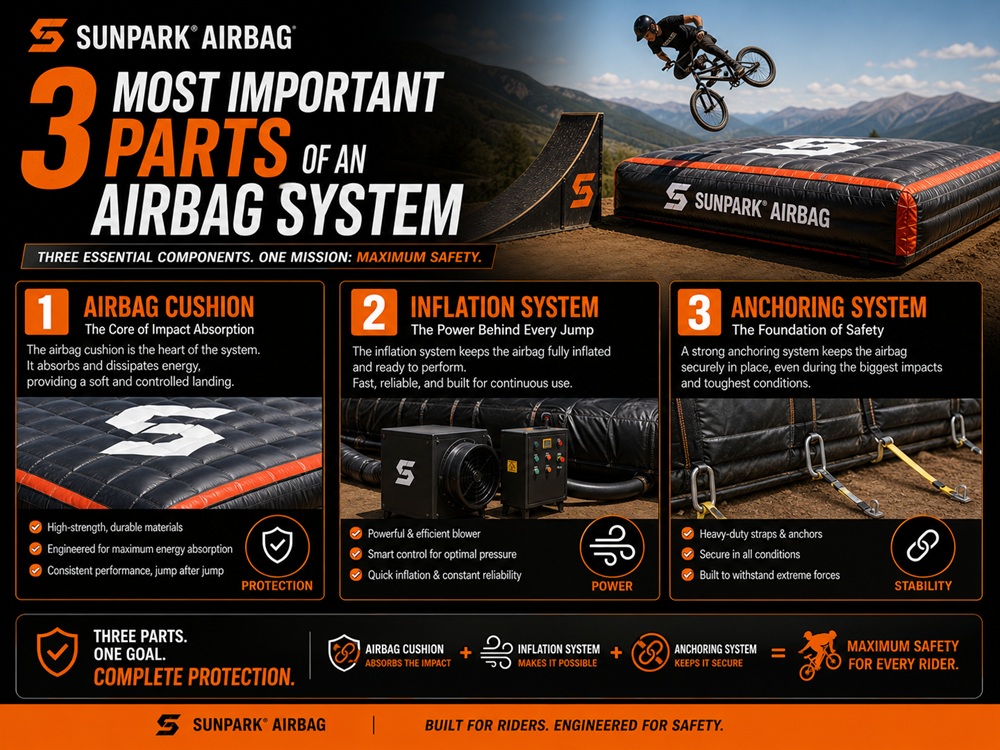
We do not just build giant balloons; we engineer multi-chamber systems. The top chamber utilizes calibrated air release valves that vent pressure instantly upon impact, providing a soft catch. The bottom chamber is a highly pressurized, sealed safety net that prevents the athlete from ever bottoming out and striking the ground. This dual-chamber redundancy is exactly why we can confidently answer the question of how successful are airbags with empirical safety data.
2. The Eradication of the Traditional Foam Pit
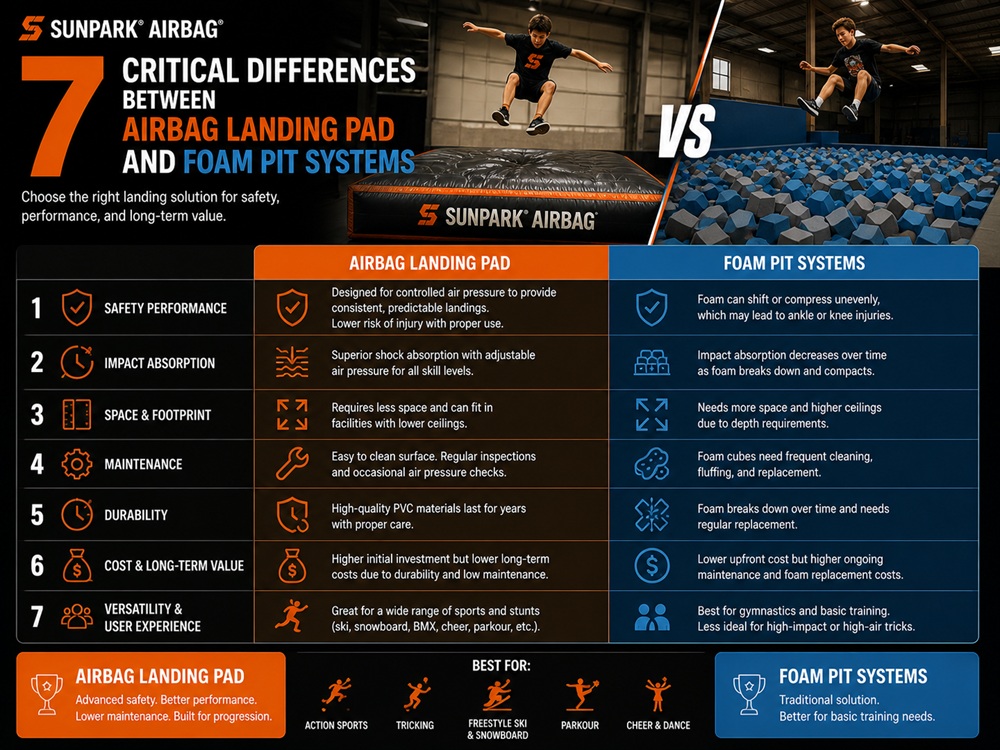
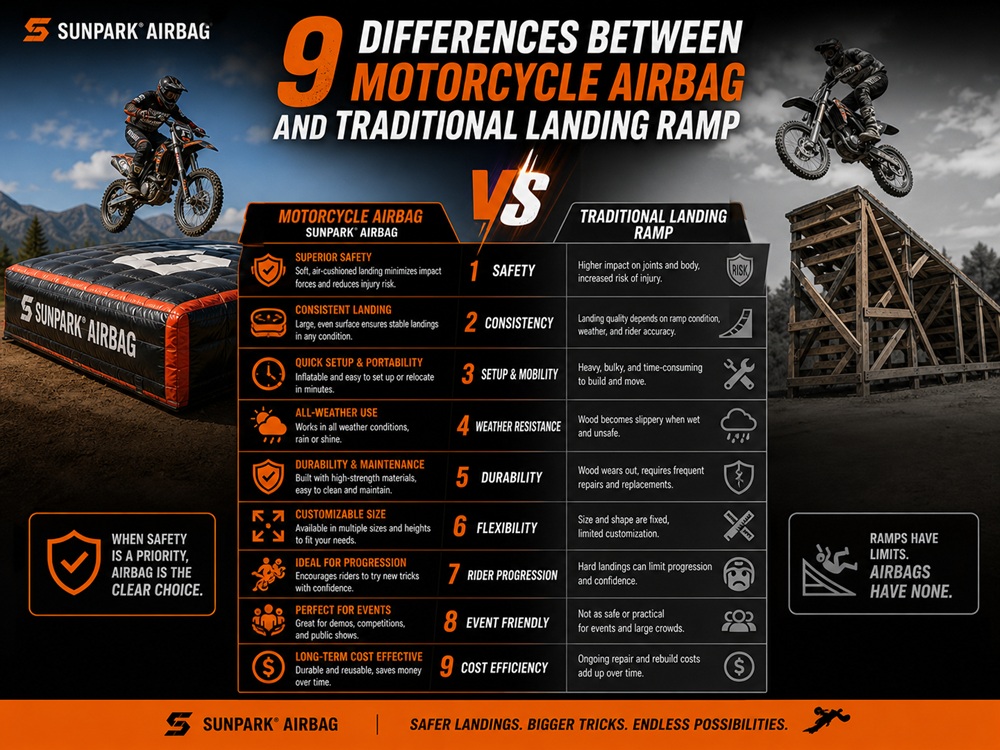
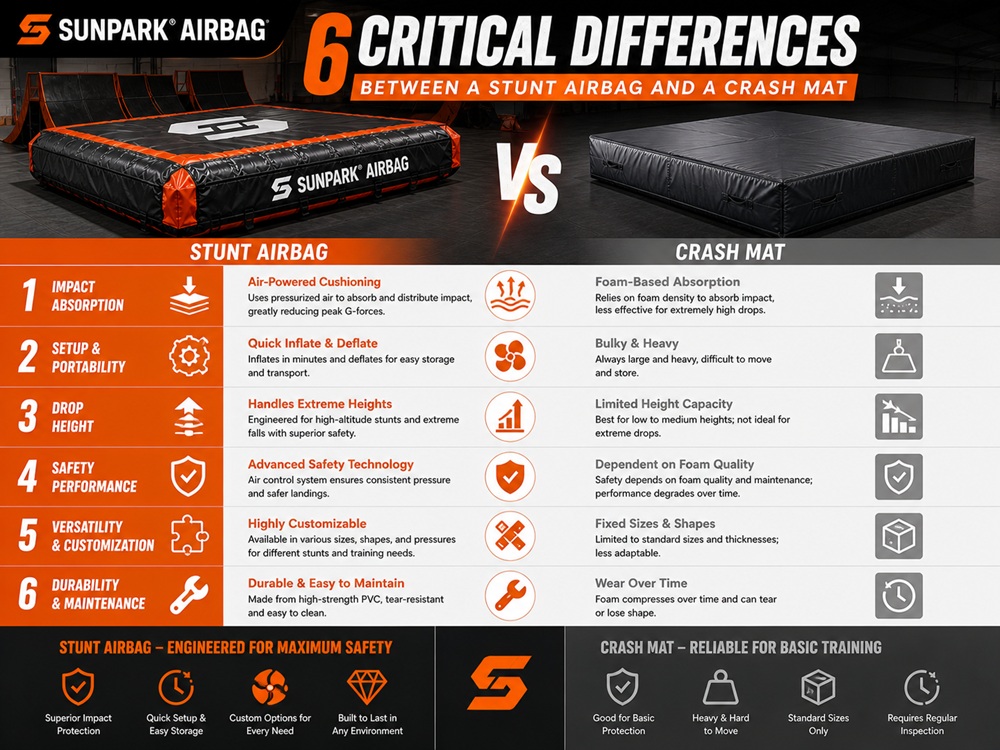
For decades, gymnastics centers and indoor skateparks relied on massive pits filled with polyurethane foam blocks. We strongly advise any modern facility to move away from this archaic method. If you want to know how successful are airbags compared to legacy systems, you simply need to look at our comprehensive foam pit vs airbag comparison.
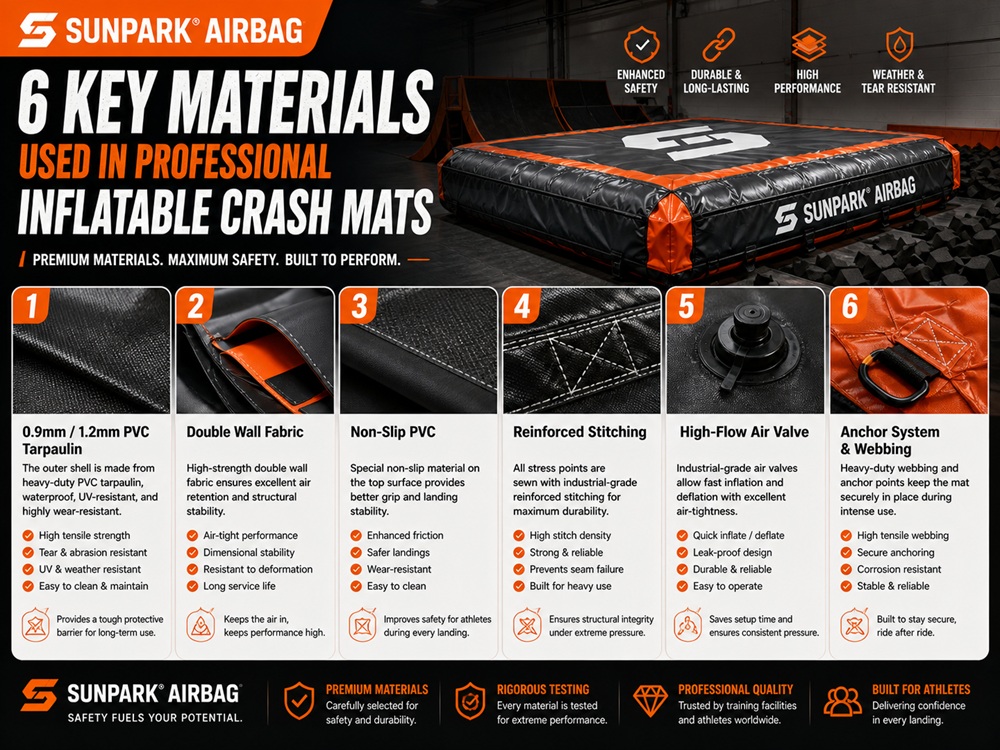
Foam pits suffer from severe mechanical and hygienic failures. Mechanically, foam degrades over time. As the blocks tear into smaller chunks, they lose their energy-absorbing properties, creating hidden “dead zones” where an athlete can plunge straight through to the concrete floor. Hygienically, foam pits are a disaster. They absorb sweat, harbor dangerous bacteria, and trap dust, creating a toxic respiratory environment for athletes. Modern PVC tarpaulin airbags are anti-microbial, do not degrade into dust, and can be fully sanitized by a single employee in under ten minutes. The transition from foam to air is not just a preference; it is a critical health and safety mandate.
3. Discipline-Specific Success Rates
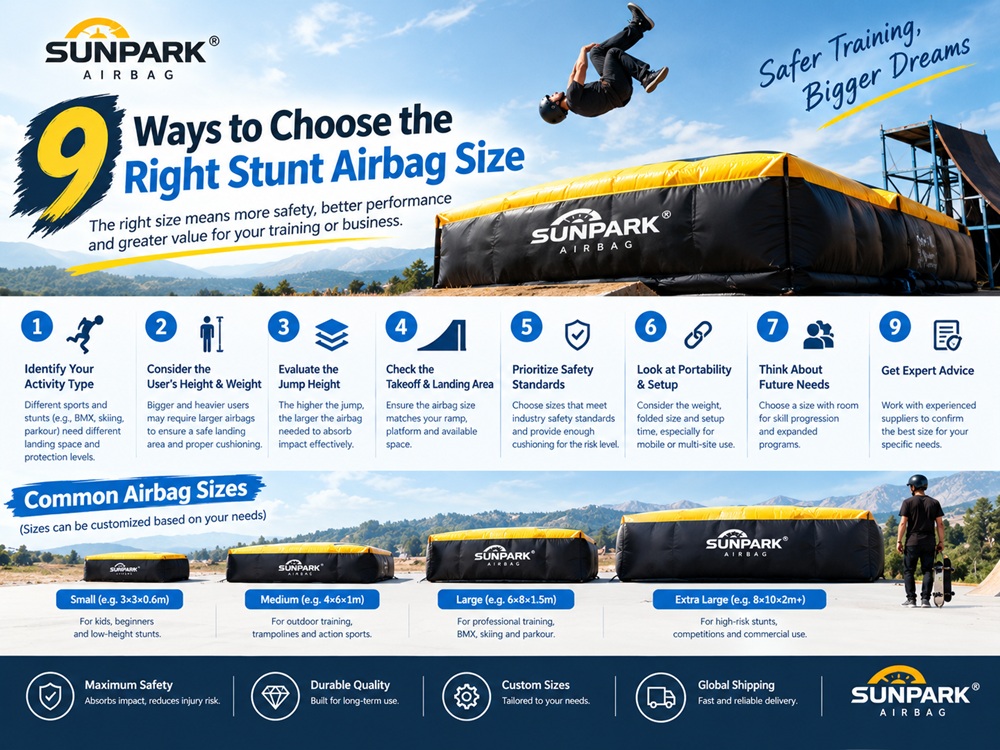
The engineering of an airbag must be tailored to the specific weight, velocity, and trajectory of the sport. A one-size-fits-all approach is highly dangerous.
Freestyle Motocross (FMX)
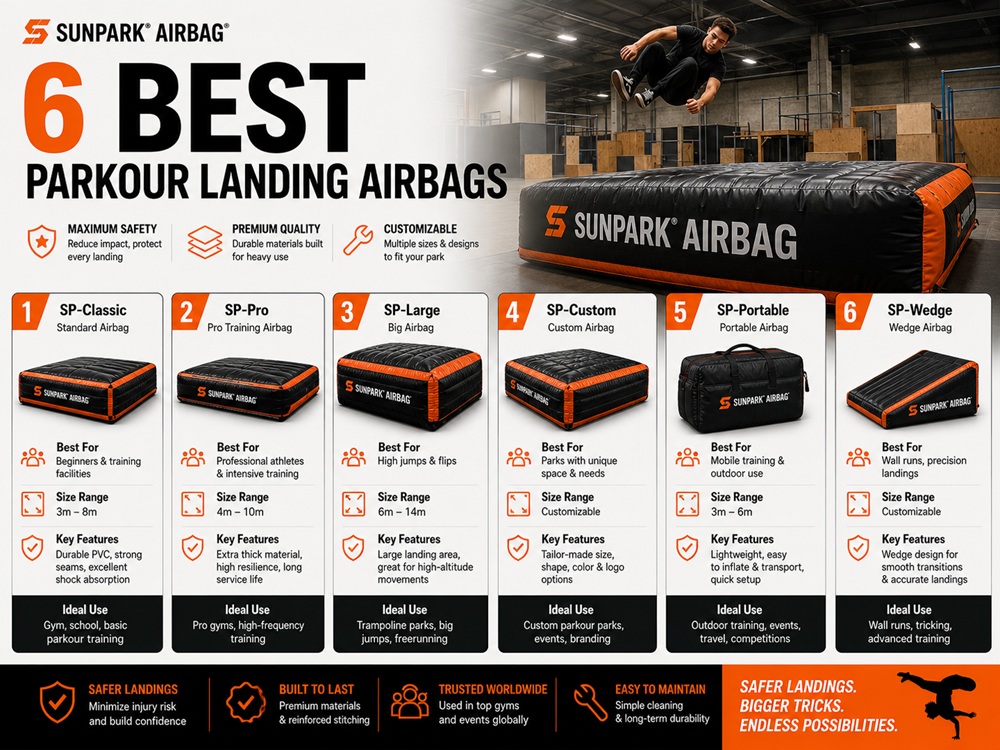
Freestyle motocross is arguably the most brutal action sport on the planet. A modern 250cc dirt bike weighs roughly 230 pounds. Combined with a rider, you have over 400 pounds of mass falling from a 40-foot apex. How successful are airbags in this arena? They are the sole reason riders are now landing triple backflips. By utilizing a custom FMX airbag landing or a heavy-duty dirt bike airbag landing, riders can crash violently without destroying their chassis or their femurs. These bags feature quadruple stitching and reinforced internal baffles designed specifically to withstand the slashing impact of spinning metal footpegs and hot exhaust pipes.
BMX and Mountain Biking (MTB)
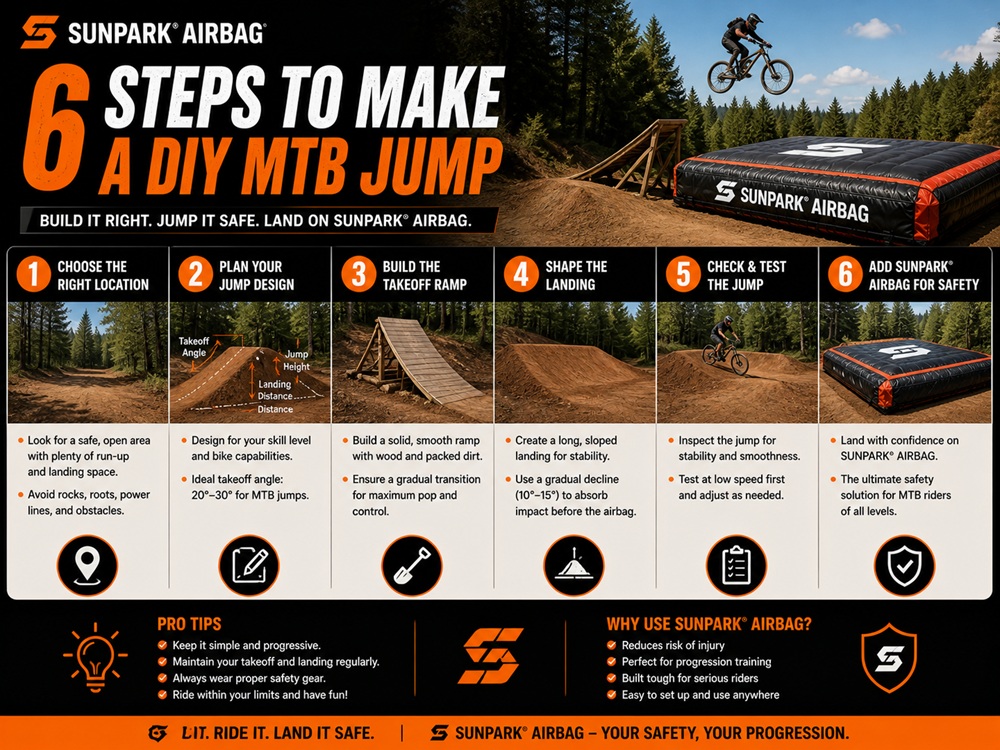
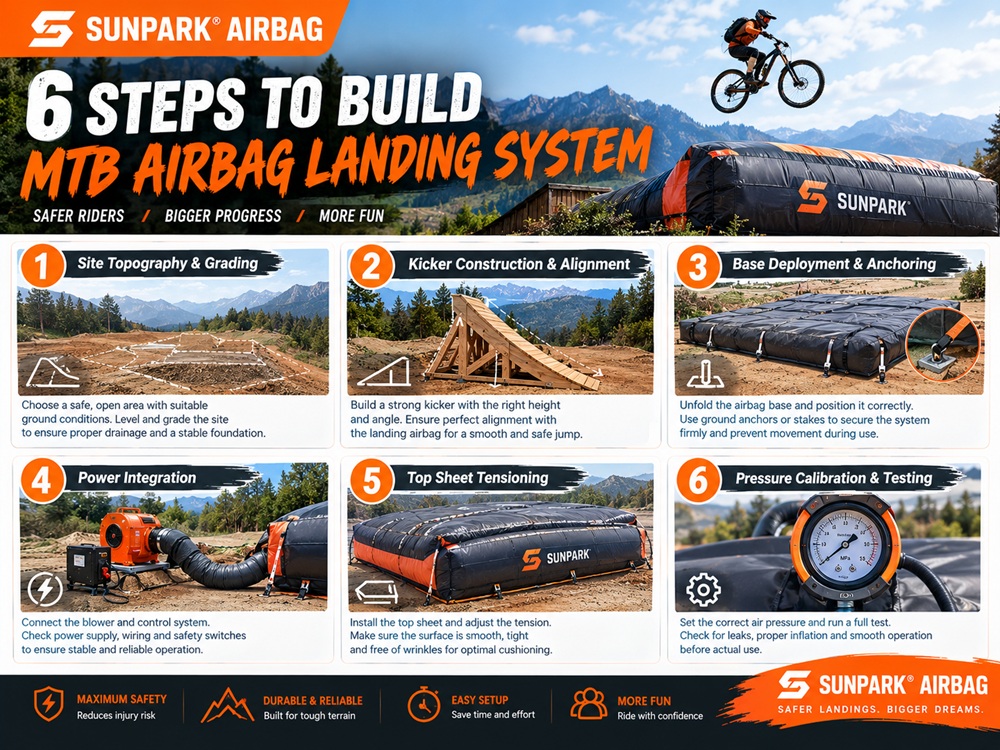
Mountain bikers face a unique challenge: they need to safely crash, but they also need to be able to “ride out” of a successful trick. A bag that simply swallows the rider is inefficient for progression. We recommend utilizing systems equipped with “ride-away” topsheet technology. As detailed in our mountain bike airbag landing guide and our breakdown of bike airbag landing systems, the upper layer is tensioned tightly. If a rider lands perfectly on two wheels, the bag is firm enough to let them roll down the transition. If they under-rotate and land on their shoulder, the tension breaks, and the bag absorbs the crash. It is an engineering masterpiece.
Trampoline Parks and Gymnastics
In high-volume commercial environments, the throughput of users is staggering. Airbags here must reset their shape instantly to accommodate the next jumper. By partnering with leading trampoline park equipment manufacturers, we integrate low-profile airbags that provide maximum safety for children and amateur gymnasts, drastically reducing the liability and injury claims that plague recreational jump parks.
4. The ROI of Safety: Why Facilities Are Upgrading

Park owners frequently ask us, how successful are airbags from a purely financial perspective? The Return on Investment (ROI) is massive. First and foremost, upgrading to the best airbag landing systems 2026 immediately lowers your facility’s insurance premiums. Underwriters recognize the empirical safety data associated with pneumatic landings over degrading foam.
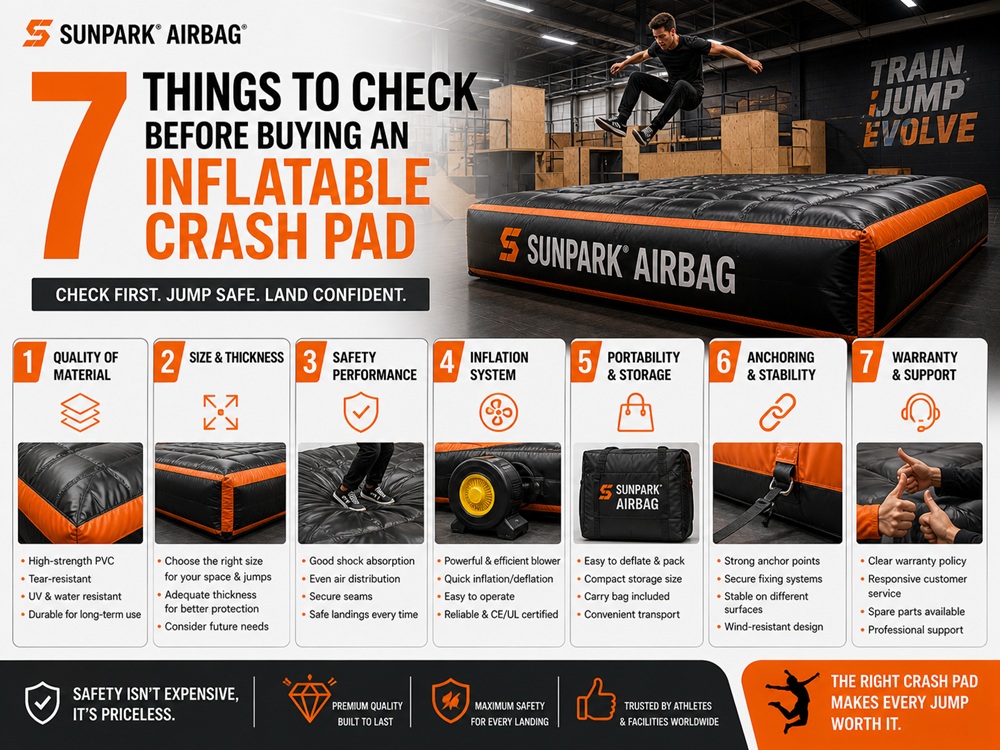
Secondly, airbags attract professional athletes. Pros will not risk their lucrative careers training at substandard facilities. Having a professional SUNPARK® system serves as a massive marketing tool. For smaller, independent camps operating on tight budgets, safety should still never be compromised. If you are exploring the secondary market, we strongly advise reading our buy used airbag landing tips to ensure you do not purchase a sun-rotted, compromised unit that puts your clients at risk.
5. Summary Table: Airbags vs. Legacy Landings
| Feature | SUNPARK® Airbag System | Traditional Foam Pit | Packed Dirt / Wood Resi |
|---|---|---|---|
| Impact Absorption | Progressive, highly controlled pneumatic deceleration. | Inconsistent; prone to bottoming out as foam tears. | Zero absorption; extremely high impact forces. |
| Hygiene & Maintenance | Anti-microbial PVC; sanitizes in minutes. | Traps dust, sweat, and bacteria; requires manual emptying. | Requires constant grading, watering, and resurfacing. |
| Trick Progression | Allows ride-outs and absorbs catastrophic falls. | Rider gets stuck; impossible to ride away from tricks. | Punishes mistakes severely; limits willingness to try new tricks. |
| Adjustability | Variable firmness via adjustable air vents. | Static; firmness cannot be altered. | Static; surface hardness depends entirely on weather. |
6. Frequently Asked Questions (FAQs)
How successful are airbags in preventing neck and spinal injuries?
From our experience, they are incredibly successful. The primary cause of spinal compression in action sports is the sudden, violent halt of kinetic energy. By increasing the stopping distance through a multi-chamber pneumatic system, the G-forces exerted on the cervical spine are reduced to a fraction of what they would be on a hard surface, vastly mitigating the risk of fractures or paralysis.
What happens if the power to the blowers goes out during a jump?
This is a critical safety concern that we have engineered out of our systems. Professional SUNPARK® airbags utilize a sealed, independent bottom chamber that retains pressure even if the continuous-flow blowers lose electrical power. If the power cuts out while an athlete is in the air, the foundational safety net remains fully intact to catch them.
Can action sports airbags pop under the weight of a dirt bike?
No. Commercial-grade extreme sports airbags are manufactured using heavy-duty, 0.55mm to 0.9mm Plato PVC tarpaulin. They are not sealed balloons; they are continuous-flow systems. When the massive weight of a dirt bike lands, the air is rapidly exhausted through the engineered side vents, meaning the internal pressure never reaches a point capable of bursting the material.
7. Expert Industry References
To provide a broader context on deceleration safety technologies and the biomechanics of impact, we recommend consulting the following authoritative sources:
- National Highway Traffic Safety Administration (NHTSA): Airbag Effectiveness Statistics – A comprehensive governmental overview of how rapid pneumatic deployment and kinetic deceleration have saved over 50,000 lives in high-velocity vehicular impacts.
- National Center for Biotechnology Information (NCBI): Biomechanical Analysis of Extreme Sports Landings – A peer-reviewed medical analysis detailing the exact force distribution and injury reduction metrics associated with modern action sports landing architectures.