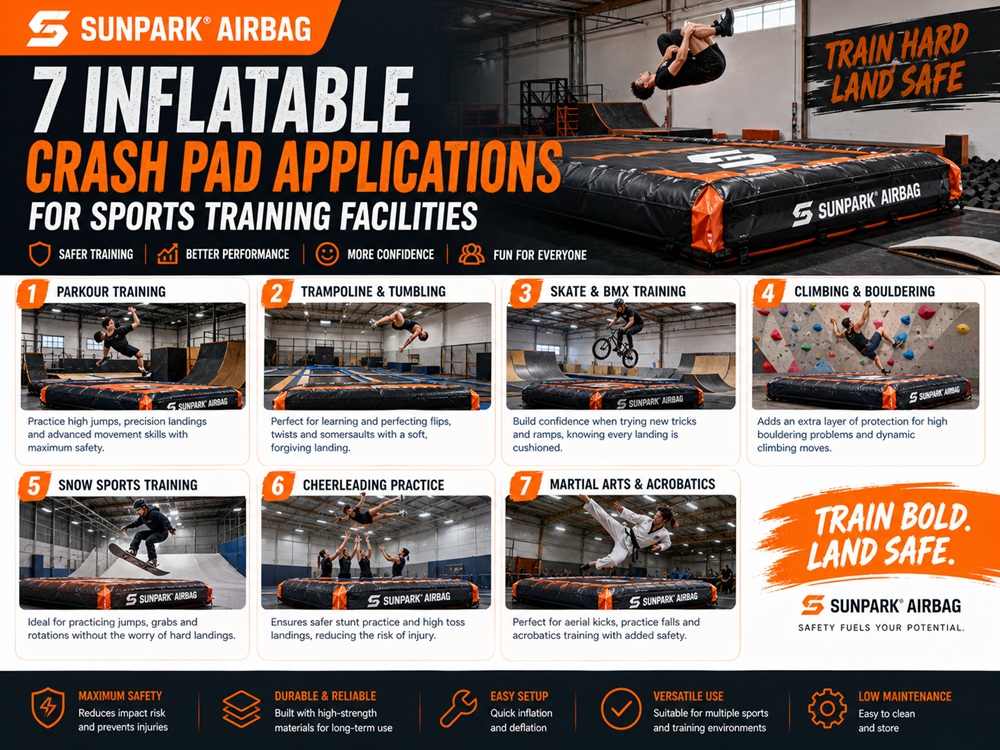
With over 10 years of experience, SUNPARK® AIRBAG provides freestyle airbags for ski resorts, theme parks, sports, and gymnastics facilities around the globe. SunparkAirbag® is the leading manufacturer of Airbags for Extreme Sports and Leisure Industries in China. As extreme sports developed, more and more snowboarders and serious sports enthusiasts are looking for safer training possibilities to progress without risks of getting injured. We create the products for World Champion Snowboarders, famous riders, and trampoline parks worldwide. We are deeply committed to the development and improving of our own products.
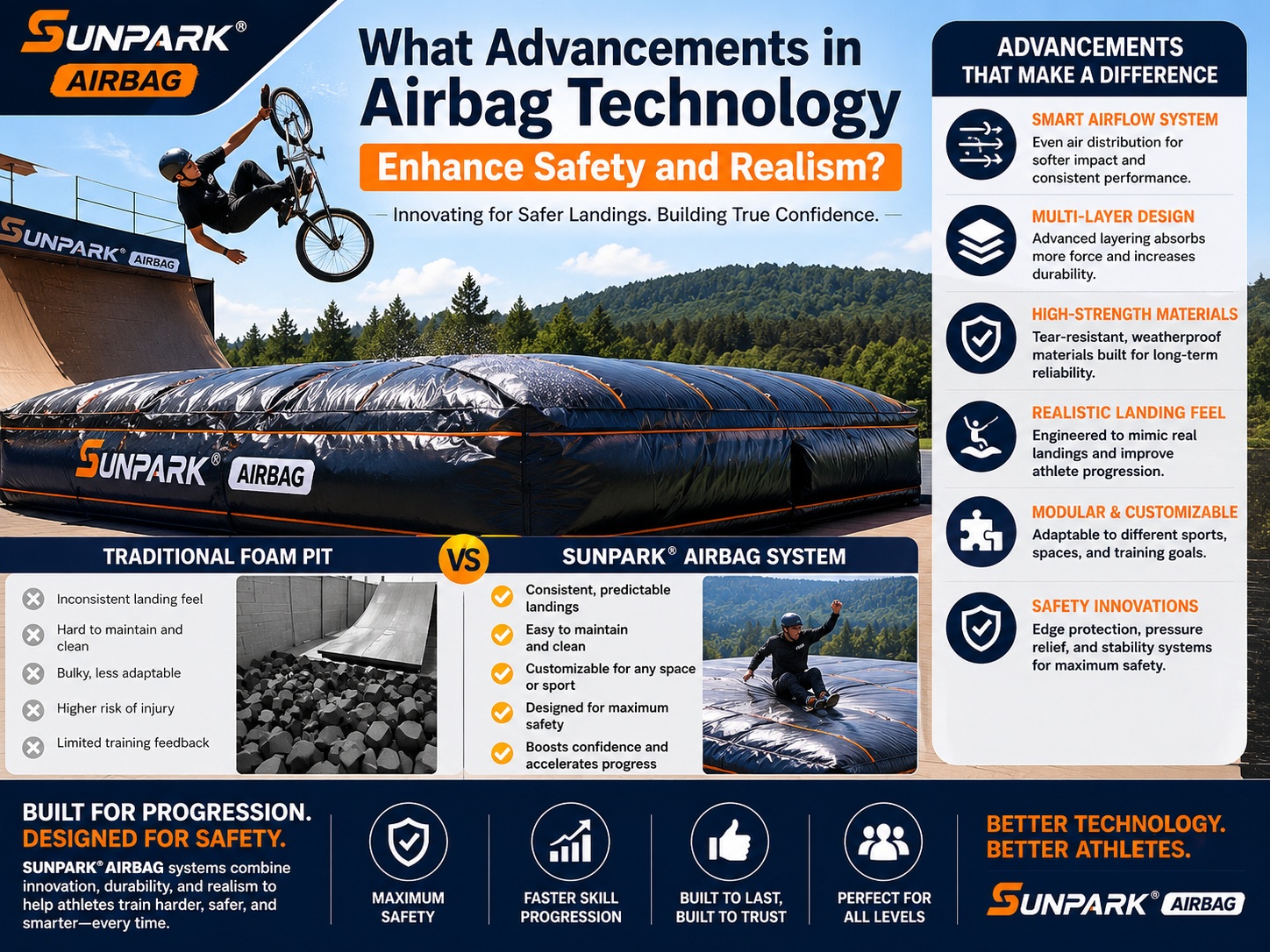
The landscape of extreme sports has undergone a profound transformation over the last decade. Athletes are executing aerial maneuvers with unprecedented amplitude, spin, and complexity. As the boundaries of human performance are continually pushed, the infrastructure supporting these athletes must evolve at an equal pace. Historically, athletes relied on foam pits to absorb high-impact landings. While effective to a degree, foam pits presented significant hygiene issues, posed serious fire risks, and severely lacked the realistic landing mechanics required for true skill progression. Today, modern engineering has solved these issues entirely. By examining what advancements in airbag technology enhance safety and realism, facility operators and professional athletes can better understand the critical role these systems play in modern training environments.
From our experience engineering and deploying global safety solutions, we recognize that the latest advancements in airbag technology are not merely iterative upgrades; they are fundamental reimagining of impact dissipation. Modern systems prioritize not only the deceleration of the athlete but also the emulation of a genuine slope or dirt landing. In this authoritative guide, we will dissect the specific advancements in airbag technology that are currently setting the industry standard, explore how these innovations directly benefit athletes, and explain why commercial facilities are universally adopting these modern solutions.
1. Structural Innovations: Multi-Chamber Impact Absorption
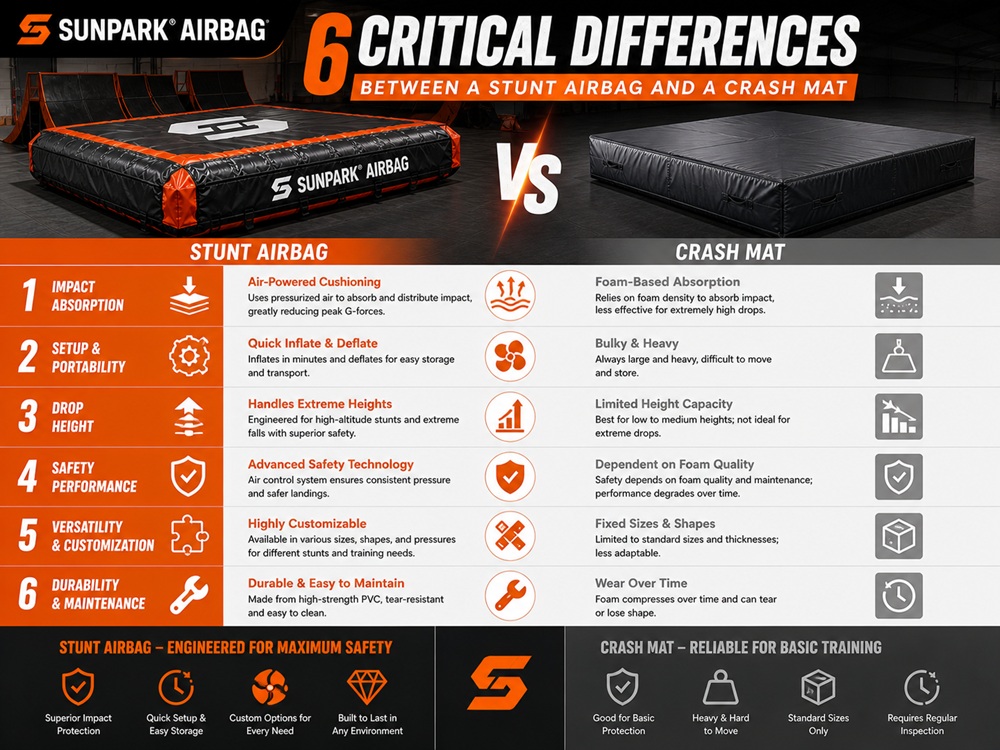
One of the most significant advancements in airbag technology is the transition from single-chamber inflatable bladders to sophisticated multi-chamber designs. In early generation models, a single massive air pocket absorbed the entire impact. This often resulted in the “taco effect,” where the sides of the bag would fold aggressively around the rider, or worse, the rider could bottom out against the ground during high-velocity impacts from extreme heights.
We recommend that any commercial training facility exclusively utilize dual-chamber or multi-chamber systems. In these advanced configurations, the foundation layer is highly pressurized to serve as an unyielding protective barrier against the solid ground. Simultaneously, the upper layer utilizes a softer, adjustable pressure zone. When an athlete lands, the upper chamber absorbs and dissipates the kinetic energy smoothly, while the firm lower chamber guarantees stability and prevents bottoming out. These structural advancements in airbag technology ensure that impacts are distributed evenly, radically reducing the risk of spinal compression and joint trauma.
2. Smart Pressure Control and Internal Blower Systems
Every athlete has unique requirements based on their weight, the height of their jump, and the specific trick they are practicing. Recent advancements in airbag technology have introduced highly precise, adjustable air pressure systems. Rather than operating at a static inflation rate, modern systems feature adjustable air vents and variable speed blowers. This allows coaches and facility operators to fine-tune the firmness of the landing surface in real-time.
Furthermore, internal enclosed blower systems have revolutionized site aesthetics and safety. By housing the blowers directly within the airbag structure, manufacturers have significantly reduced ambient noise, eliminated the tripping hazards of external kinked hoses, and protected the electrical components from harsh weather conditions. From our experience at SUNPARK® AIRBAG, providing a controlled, quiet, and customizable environment is essential for maintaining an athlete’s focus during high-stakes training sessions.
3. Geometric Realism: True-to-Pitch Contours
Safety is only half of the equation; true progression requires realism. Traditional flat airbags halted momentum abruptly, teaching athletes bad habits because they did not have to prepare for a roll-out or ride-away. The most highly praised advancements in airbag technology involve geometric shaping. Modern landing systems are built with slanted backsides and smooth transition curves that directly mirror the angle of a real dirt, snow, or wood landing ramp.
By landing on a sloped surface, the kinetic energy is converted into forward momentum rather than a sudden vertical stop. This anti-bounce geometry ensures that athletes can spot their landing, touch down precisely, and ride down the slope just as they would in a competition. When riders train on a Halfpipe Airbag, for example, the precise curvature is mandatory to mimic the exact transition of an Olympic-standard ice wall. These geometric advancements in airbag technology bridge the gap between practice and reality.
4. Material Science: Frictionless Topsheet Advancements
The exterior material of the landing system dictates the immediate physical interaction between the athlete’s equipment and the bag. In the past, industrial PVC tarpaulin was highly durable but extremely grippy. If a snowboard or a mountain bike tire hit the surface, the immense friction would instantly grab the equipment, often launching the rider violently forward over the handlebars or bindings.
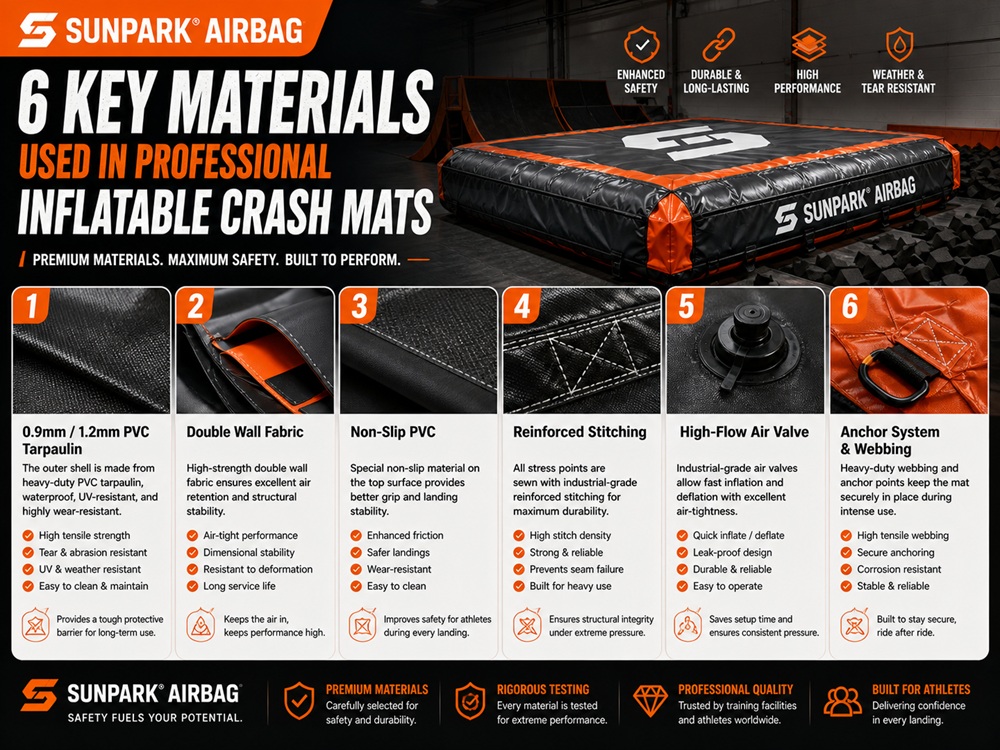
Material science has driven some of the most critical advancements in airbag technology. Today, we utilize specialized frictionless topsheet materials that are highly resistant to UV degradation, flame-retardant, and non-abrasive. These advanced textiles allow snowboards, skis, and rubber tires to slide effortlessly upon impact. This slide capability is what creates the “ride-away” experience. The fabric prevents sudden deceleration trauma to the rider’s neck and shoulders, making the landing feel incredibly natural.
5. Advancements in Airbag Technology Across Action Sports
The versatility of these innovations has allowed extreme sports to flourish globally. Different disciplines require slightly tailored approaches, but the core advancements in airbag technology apply universally.
Snowboarding and Skiing
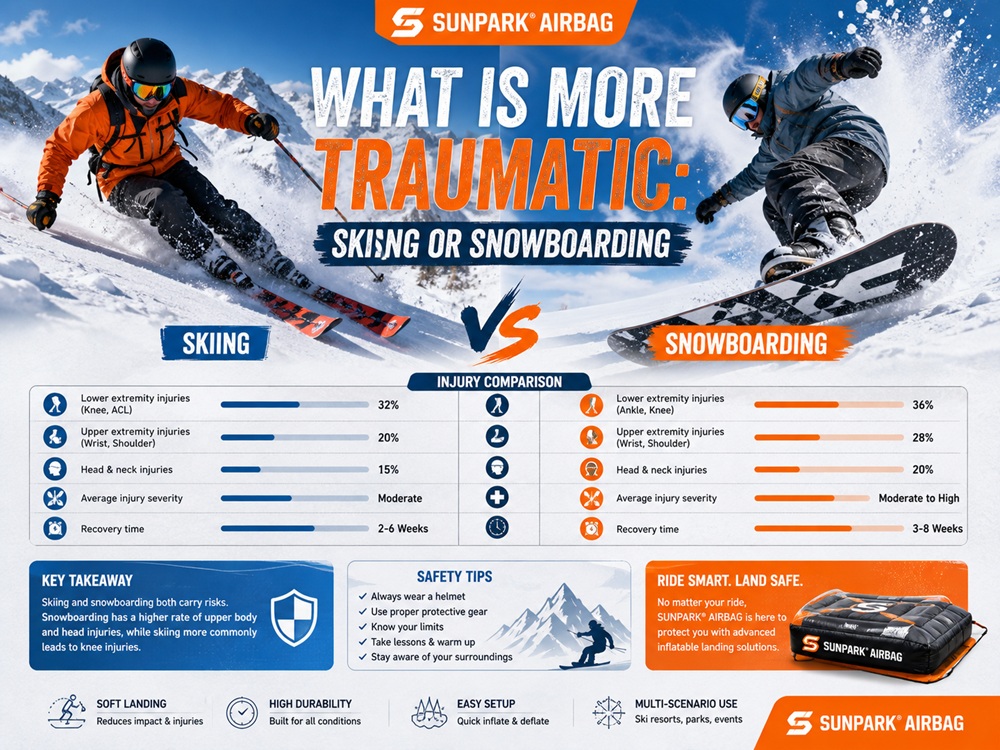
Winter sports demand materials that can withstand sub-zero temperatures without cracking or losing elasticity. If you visit the best snowboard airbag parks globally, you will witness athletes performing quadruple corks into massive, sloped systems. These winter-specific setups utilize topsheets with subtle surface rippling to retain a micro-layer of moisture, effectively replicating the slickness of hard-pack snow.
Mountain Biking and BMX
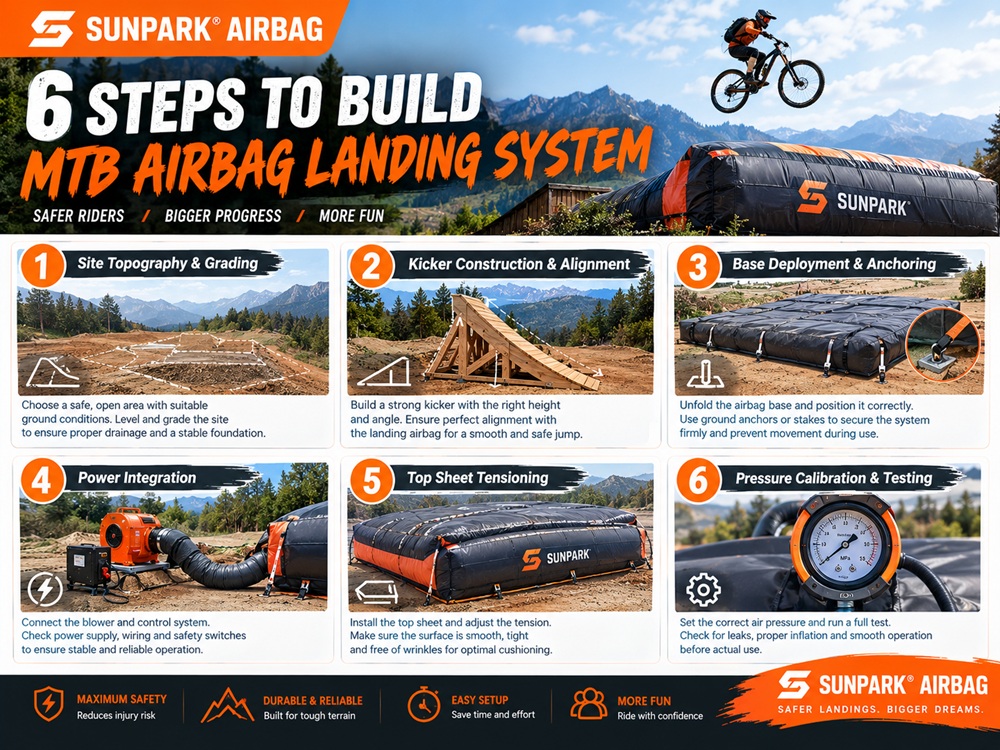
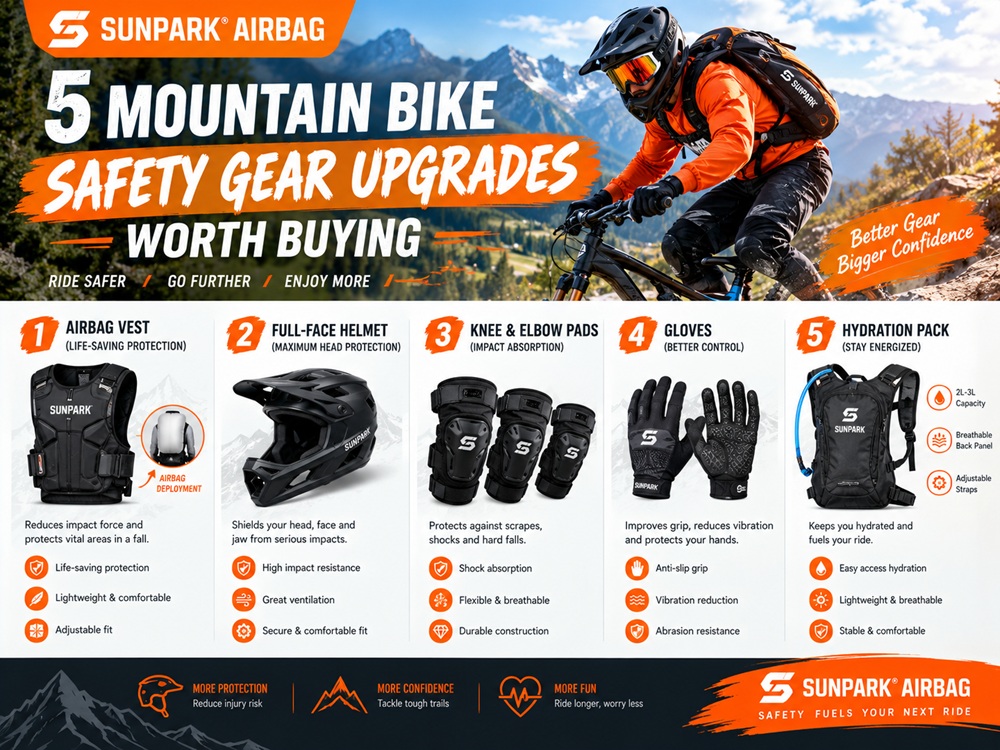
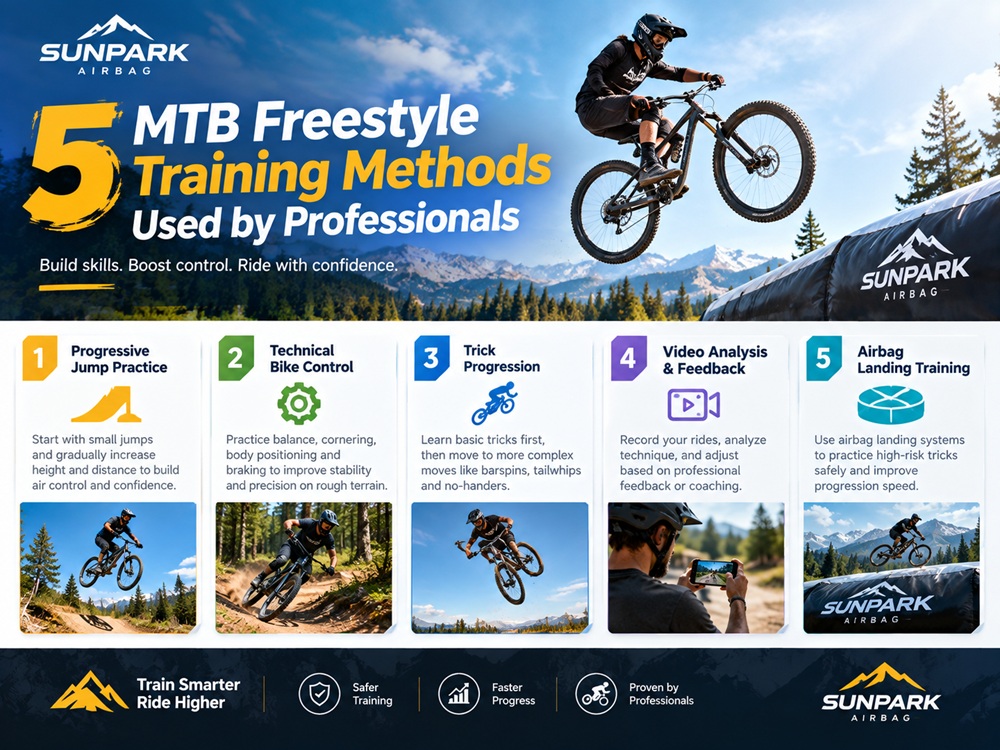
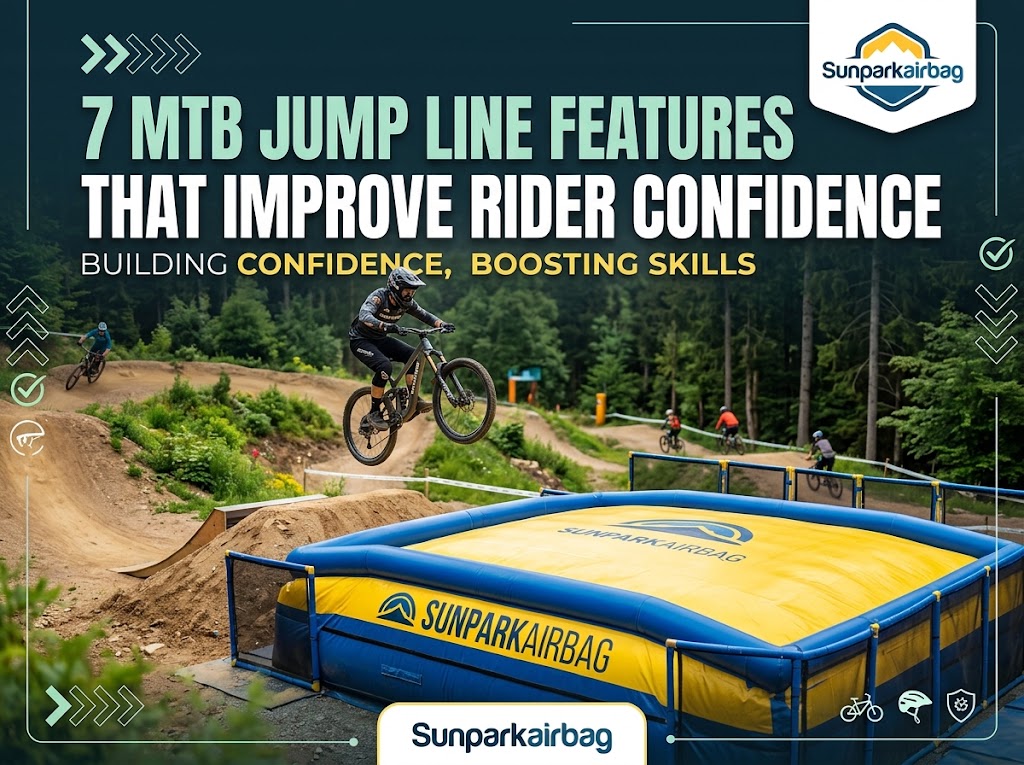
For two-wheeled sports, a MTB airbag landing system must absorb the sharp impact of pedals, chains, and knobby tires without tearing. The integration of 0.9mm reinforced PVC top layers ensures that sharp bike components do not puncture the air chambers. We highly recommend utilizing inflatable MTB airbag solutions for both permanent bike parks and backyard progression setups, as their portability and durability are unmatched.
Freestyle Motocross (FMX)
Motorsports involve significantly higher weights and velocities. While athletes are increasingly adopting wearable protection like the latest motorcycle airbag systems 2026, the physical ground-based landing airbag solutions are the ultimate failsafe for 70-foot gap jumps. The advancements in airbag technology for FMX include heavy-duty internal pillar structures capable of supporting the sudden impact of a 250lb motorcycle plus the rider, seamlessly preventing the “rebound” effect that could otherwise eject the rider from the bike.
6. Summary Table: Impact of Airbag Advancements
| Advancements in Airbag Technology | Safety Enhancement | Realism & Progression Benefit |
|---|---|---|
| Multi-Chamber Impact Design | Prevents bottoming out; distributes kinetic force evenly. | Provides a stable base while allowing for a soft, realistic upper catch. |
| Frictionless Topsheet Materials | Eliminates sudden deceleration and whiplash injuries. | Allows boards and tires to slide, enabling authentic ride-away landings. |
| True-to-Pitch Slanted Geometries | Reduces vertical compression on the spine and joints. | Simulates exact angles of dirt, snow, or wood ramps for proper technique. |
| Internal Adjustable Blowers | Removes tripping hazards and protects electrical components. | Allows real-time firmness adjustments based on rider weight and trick type. |
| 0.9mm Reinforced PVC Tarpaulin | Prevents punctures from bike pedals, footpegs, and ski edges. | Ensures the landing surface remains uniform and reliable over years of heavy use. |
7. Frequently Asked Questions (FAQs)
How do the latest advancements in airbag technology prevent the “bounce” effect?
From our experience, the bounce effect in older models was caused by trapped air compressing and immediately expanding. Modern advancements in airbag technology utilize strategically placed, rapid-release air vents and an internal pillar structure. When a rider lands, the air is instantly forced out through the sides, dissipating the energy rather than acting like a trampoline.
Can I use a snowboard on an airbag without damaging the surface?
Yes. The implementation of high-strength, frictionless topsheets is one of the premier advancements in airbag technology. These replaceable top layers are specifically engineered to withstand the sharp metal edges of skis and snowboards, allowing riders to carve slightly and slide out safely without tearing the main structural bladders.
Are multi-chamber systems necessary for amateur training?
We recommend multi-chamber systems for all skill levels. While professionals need them to survive falls from massive heights, amateurs benefit greatly from the customizable firmness of the upper chamber. It builds confidence by providing an exceptionally soft landing zone while they learn the basic mechanics of aerial awareness.
8. Industry Safety References
To guarantee that our engineering aligns with the highest international safety thresholds, the manufacturing protocols and advancements in airbag technology discussed in this article are continually evaluated against rigorous standards. We strictly adhere to global quality management systems to ensure athlete safety is never compromised.