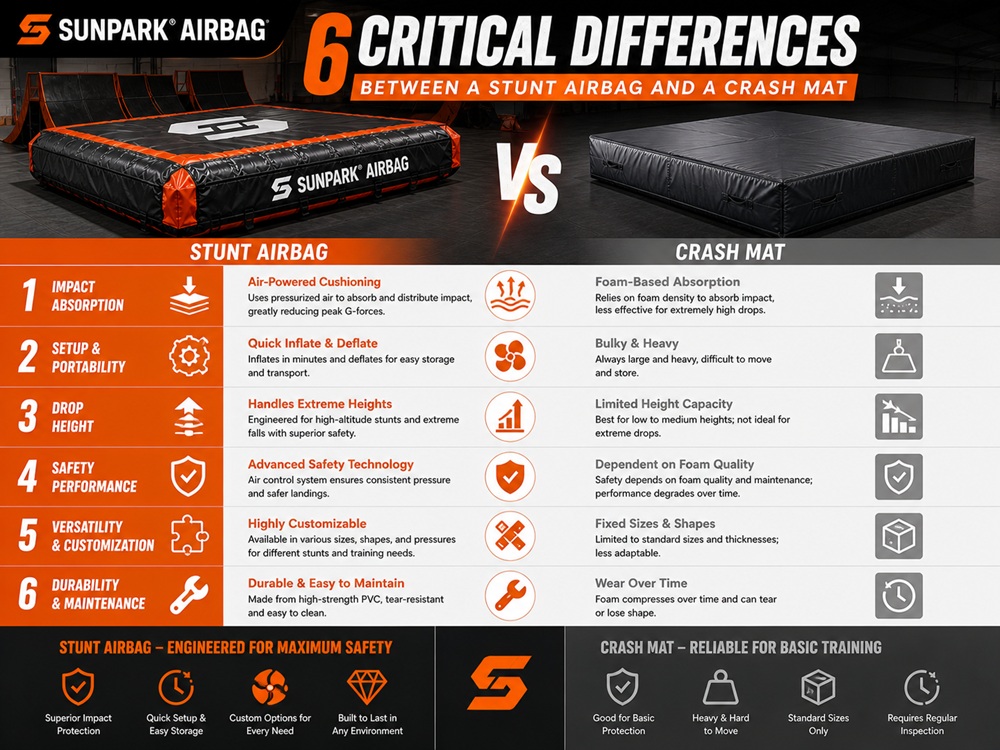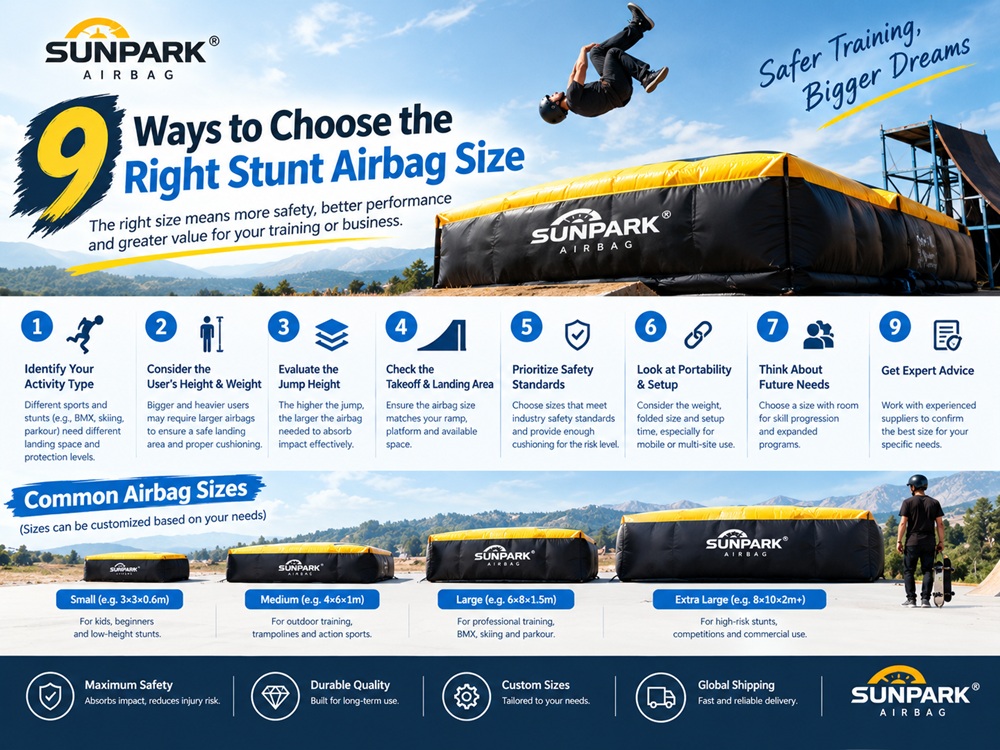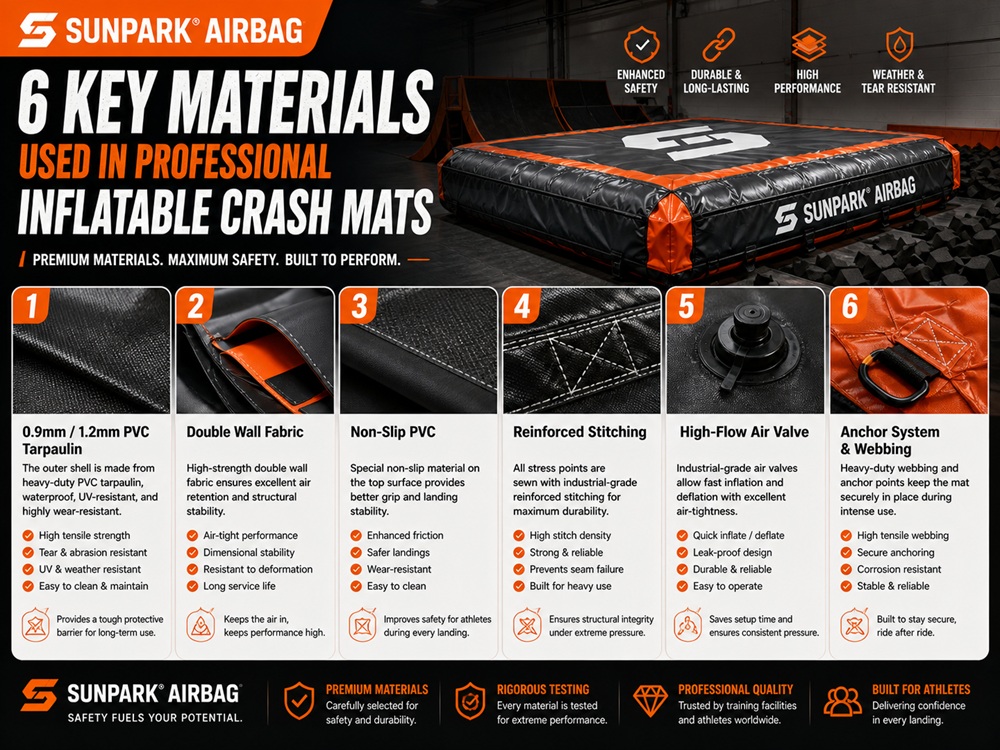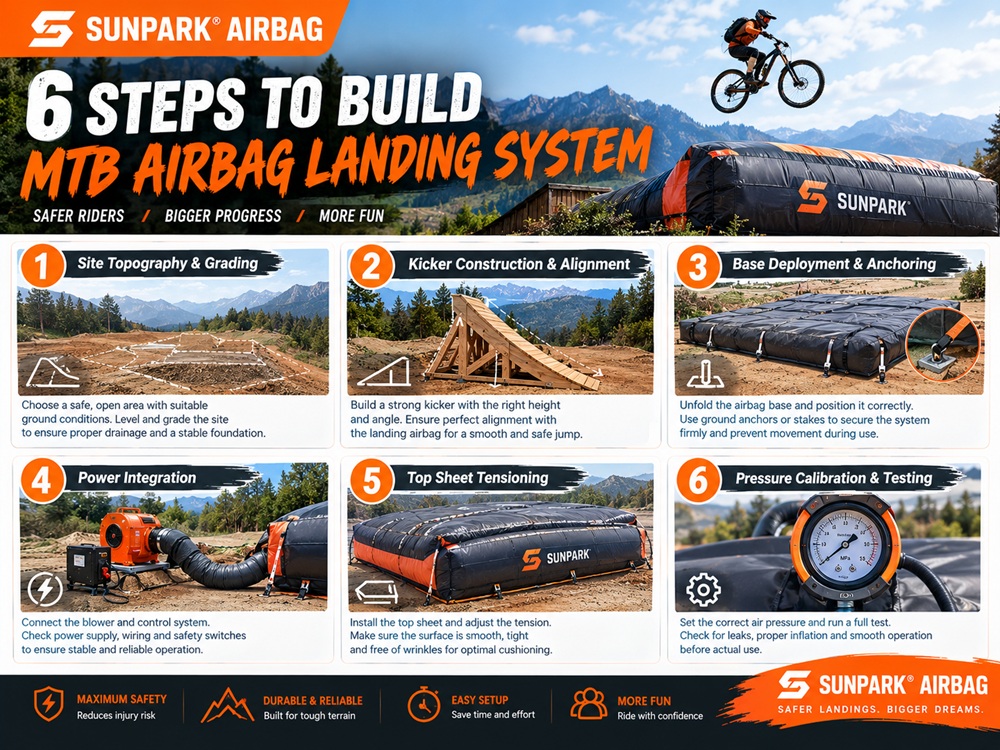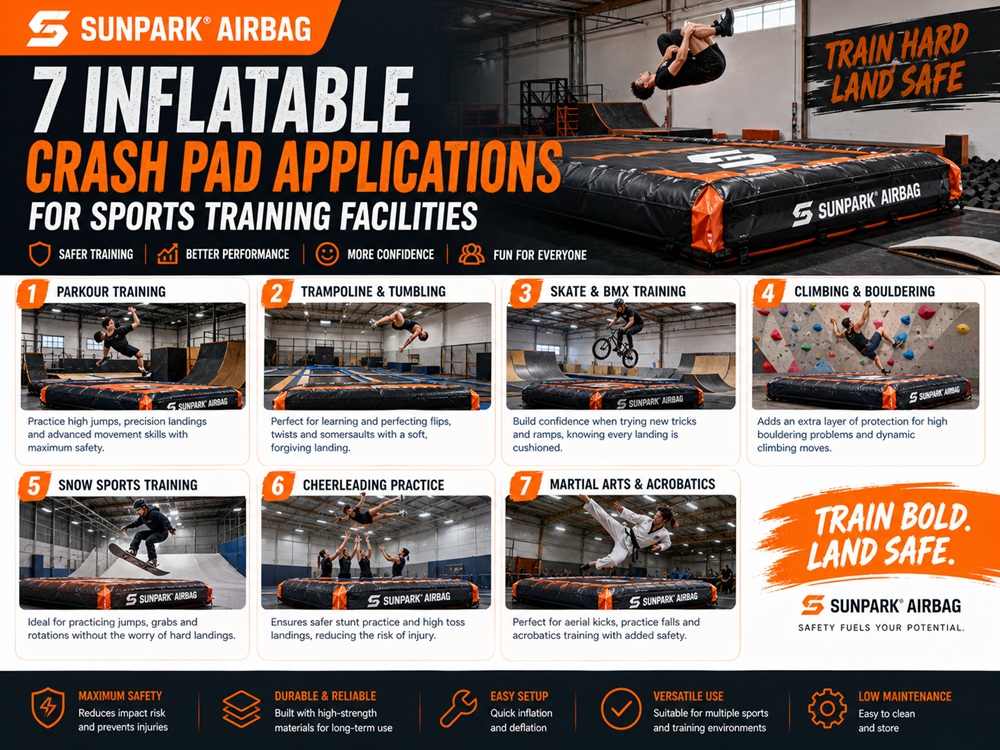
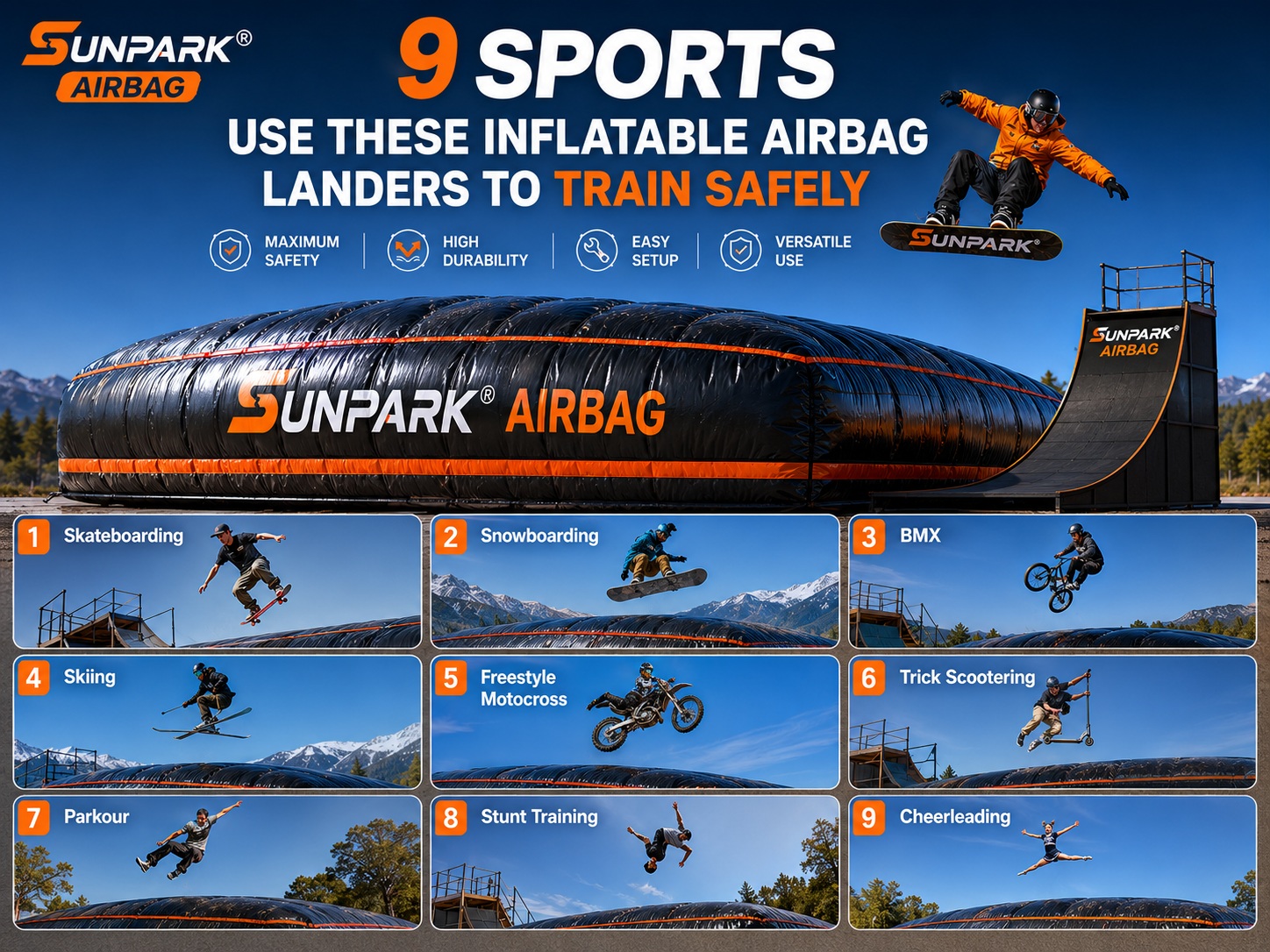
Action sports progression has hit an inflection point. Athletes no longer just push for another rotation; they are engineering multi-axis flips that require immense height and carry high operational risks. The traditional days of landing complex aerial maneuvers into unforgiving foam pits or onto hard packed earth are long gone. Today, global training centers, commercial entertainment facilities, and competitive extreme sports complexes rely on advanced technology to manage impacts safely. Specifically, exactly 9 sports use these inflatable airbag landers to cross previous training thresholds without risking critical injuries.
However, adding an impact attenuation system to a resort or training complex involves more than just inflating a generic PVC bladder. True impact management requires balancing continuous air exhaust with complex internal chamber structures. If the internal pressure is set too high, the surface acts like a trampoline, throwing the athlete into a dangerous secondary bounce. If the pressure drops too low, the rider bottoms out against the solid ground below. From our experience, choosing the correct internal column engineering and chamber design transforms a risky stunt into a structured, highly repeatable training program. At SUNPARK® AIRBAG, we bring over 10 years of focused experience providing freestyle airbags for ski resorts, theme parks, sports centers, and gymnastics facilities around the globe. As the leading manufacturer of Airbags for Extreme Sports and Leisure Industries in China, we build systems designed to handle the high speeds and heavy impacts typical of elite athletics.
Comprehensive Impact Mitigation Matrix
Different extreme disciplines create distinct mechanical demands on impact surfaces. The table below details how these specialized systems are deployed across various sports sectors, highlighting configuration types and critical safety metrics.
| Sport Sector | Airbag Variant | Primary Impact Type | Key Engineering Demand |
|---|---|---|---|
| Freestyle Ski / Snowboard | Incline Sloped Lander | High-velocity directional impact | Top-sheet freeze resistance, slippage control |
| BMX / Freestyle Motocross | Over-X Box Lander | Heavy vehicular touchdown | High-tensile protective topsheets |
| Artistic Gymnastics | Flat Drop Pit Lander | Vertical stall, multi-axis drops | Rapid low-pressure air exhaust |
| Skateboarding | Resi-Style Incline | Hard compound wheel impacts | Anti-abrasion surface, puncture resistance |
| Parkour / Freerunning | Modular Flat Lander | Multi-directional foot/body landings | Firm stability without bottoming out |
The 9 Sports Revolutionized by Inflatable Landers
Let us look closely at the specific athletic disciplines that rely heavily on these modern systems to protect athletes during high-intensity training sessions.
1. Freestyle Skiing
Freestyle skiers must consistently practice intricate off-axis rotations like triple corks before bringing them to real snow. Incline sloped landers allow skiers to replicate the exact shape of a snow landing hill. This setup allows athletes to carry their forward speed smoothly through the landing area. By launching off synthetic dry-slope jumps onto a custom-angled bag, skiers can perfect their body positioning and control their deceleration safely.
2. Snowboarding
Much like their skiing counterparts, modern slopestyle and big air snowboarders rely on custom-shaped landing surfaces to advance their riding. Our engineering teams design these systems with heavy-duty top sheets that handle the sharp metal edges of snowboards without tearing. This allows riders to practice technically challenging technical maneuvers over and over without risking season-ending impacts.
3. BMX Freestyle
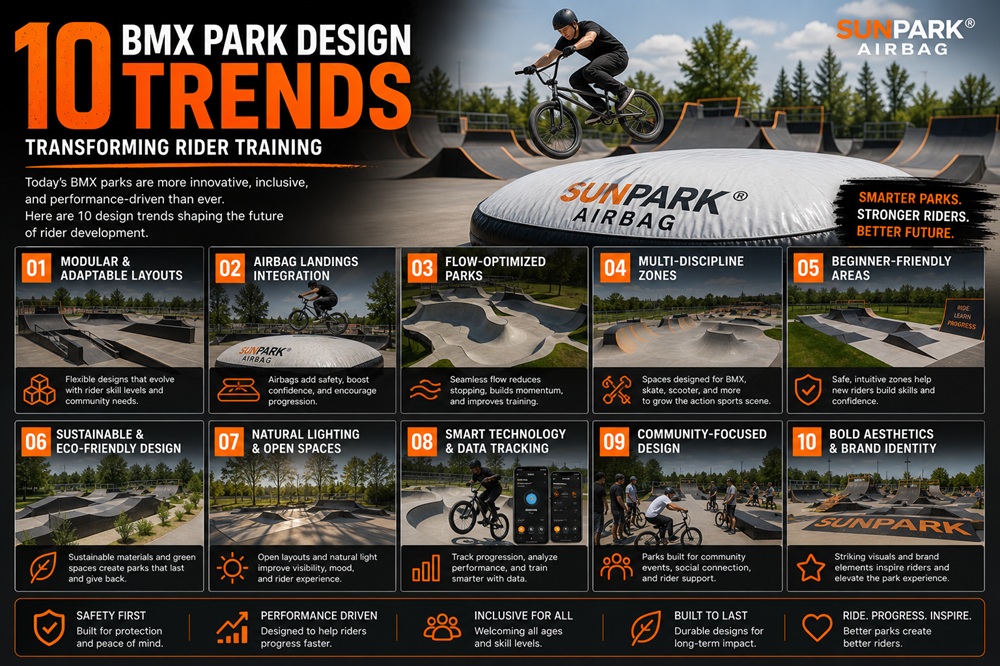
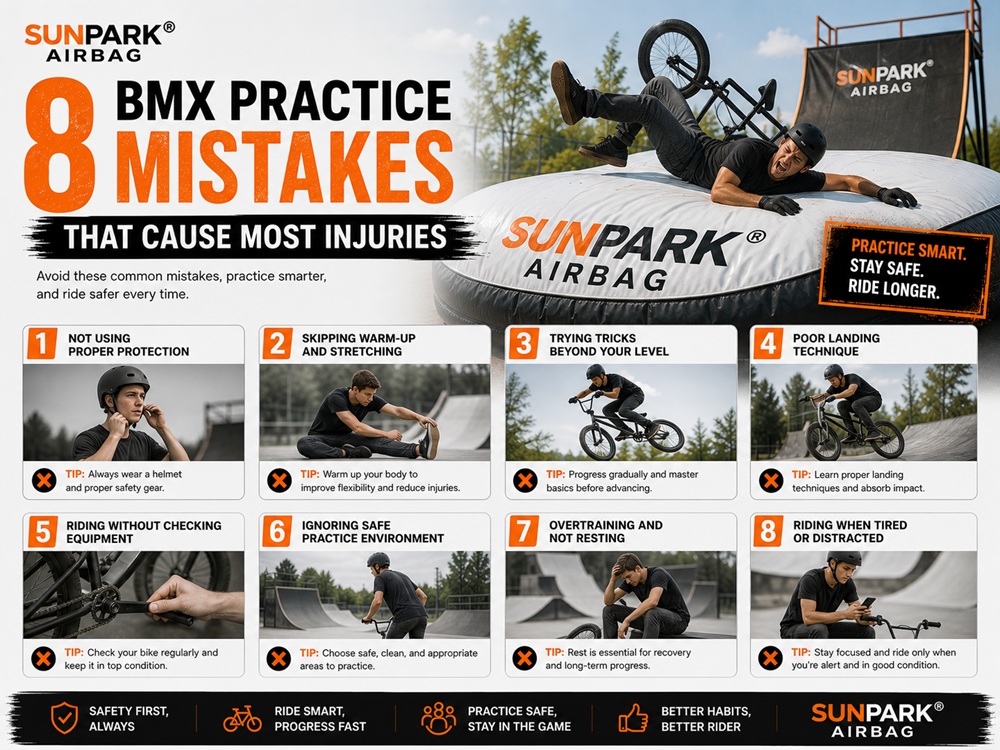
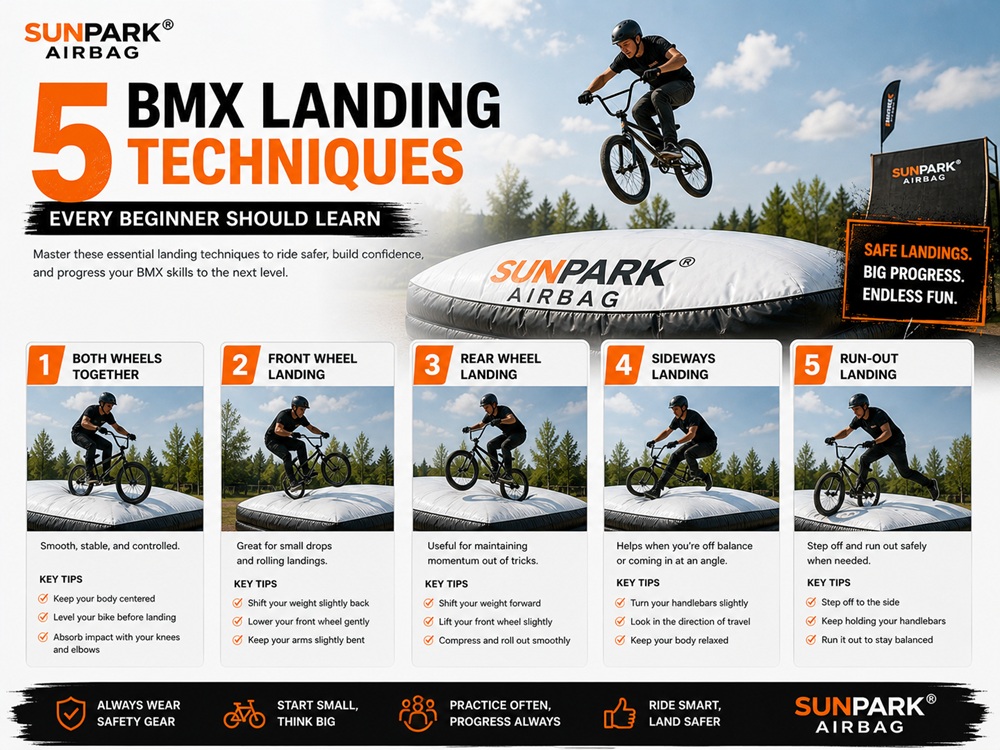
In freestyle BMX, mistiming a 720-degree spin or a backflip tailwhip often results in a hard impact against structural metal tubing. Utilizing an inflatable jump airbag system gives riders a forgiving surface to test their limits. The progressive deceleration protects both the rider and the bike frame, allowing athletes to log the high number of repetitions needed to master world-class tricks.
4. Freestyle Motocross (FMX)
Freestyle Motocross involves launching 250cc dirt bikes over 40 feet into the air. This discipline requires an exceptionally strong impact attenuation system. FMX landers must be built with thick, reinforced PVC materials to handle the weight, hot exhaust pipes, and spinning knobby tires of heavy motorcycles. These large-scale systems provide an essential safety net for riders developing complex aerial combinations.
5. Skateboarding
Skateboarders pushing into mega-ramp setups or advanced vert riding face unique challenges when practicing aerial tricks. Landing hard wheels onto standard foam or soft surfaces often leads to rolled ankles. Modern sloped systems solve this by balancing internal air pressure to create a surface firm enough for wheels to roll out safely, yet forgiving enough to absorb direct body impacts smoothly.
6. Artistic Gymnastics
Traditional gymnastics facilities have relied on open foam blocks for decades, but these pits require constant maintenance and degrade over time into dangerous foam dust. Upgrading to a specialized gym airbag for training provides consistent, hygienic impact absorption. These modern setups allow gymnasts to safely practice high-difficulty vault releases and dismounts onto a stable, reliable surface.
7. Trampoline Wall & G-Tramping
The growth of competitive trampolining and wall-running has increased the demand for advanced safety gear. Athletes often drop from heights exceeding 15 feet above the trampoline bed. Positioning a dedicated drop system next to the performance area allows performers to try complex twisting routines without worrying about missing the edge of the trampoline frame.
8. Parkour & Freerunning
Parkour relies on fluid, continuous movement through complex environments. When training high-impact drops from concrete ledges or scaffolding setups, athletes need a landing area that behaves predictably. Modular flat bags absorb vertical momentum without causing unstable foot placement, helping traceurs train tricky body transitions safely.
9. Mountain Bike (MTB) Slopestyle
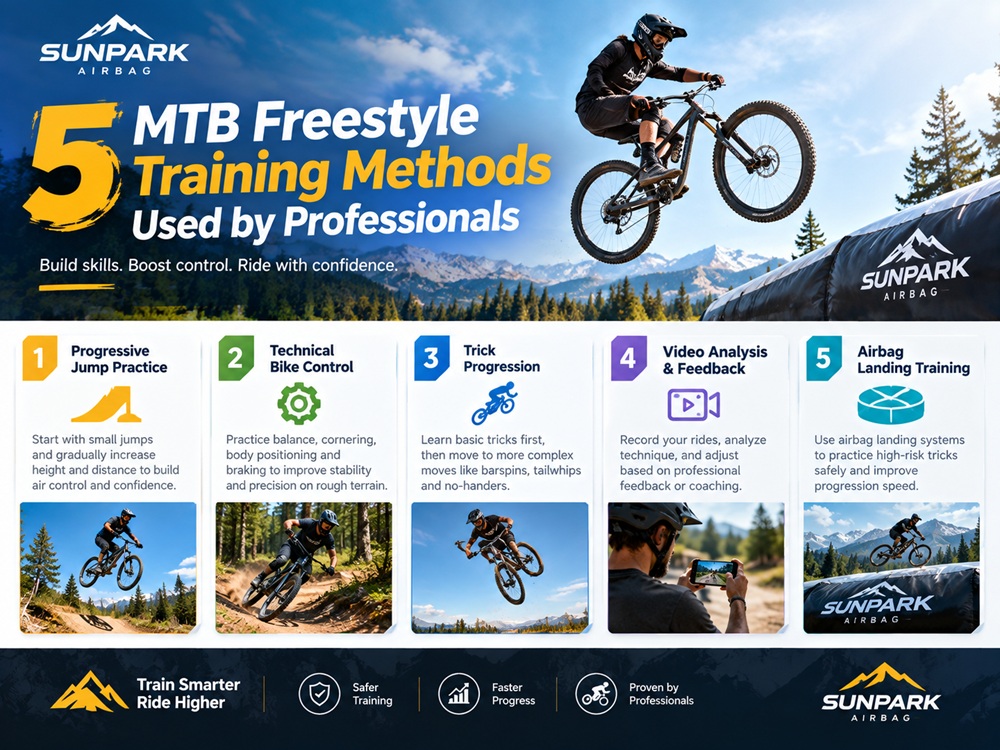
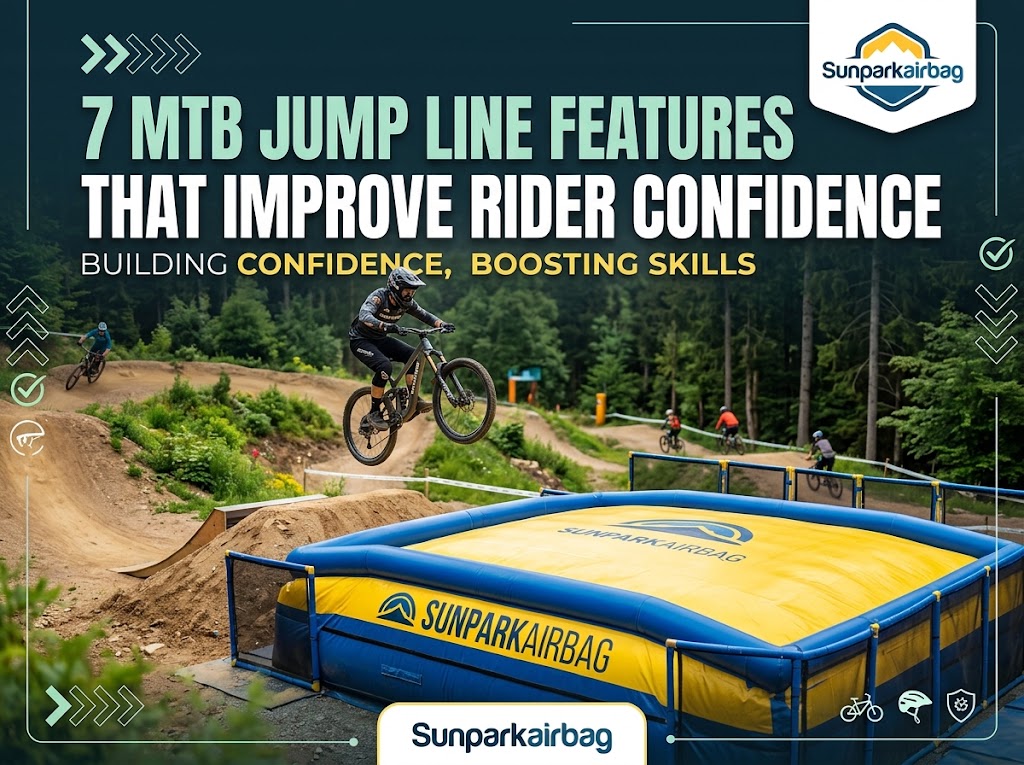
MTB slopestyle courses feature massive wooden drop-offs and large dirt jumps. To prepare for these courses, riders utilize specialized training centers equipped with custom-built landing bags. These bags are designed to handle high-velocity impacts from heavy frames and wide handle bars, allowing riders to build confidence before taking their tricks to real-world competitive courses.
Technical Mechanics: Dual-Chamber and Internal Column Design
To understand why these systems work so effectively, we must look at the underlying air-management principles. Simple inflatables like commercial bounce houses use single open chambers that push air around uniformly. If an athlete lands hard in the center, the air simply moves to the sides, causing the middle to bottom out. Professional action sports systems require a more advanced design strategy.
We recommend utilizing a proven dual-chamber layout. The lower chamber is kept at a constant, higher internal pressure to act as a solid safety foundation, ensuring the athlete never makes contact with the hard ground below. The independent top chamber features adjustable internal columns and calibrated air-escape vents. When an athlete lands, these vents allow a controlled volume of air to escape instantly, providing smooth, progressive deceleration. To find these advanced setups in action across the country, check out our comprehensive airbag jump locations guide to see how elite facilities configure their training zones.
Commercial Impact: Trampoline Parks and Action Centers
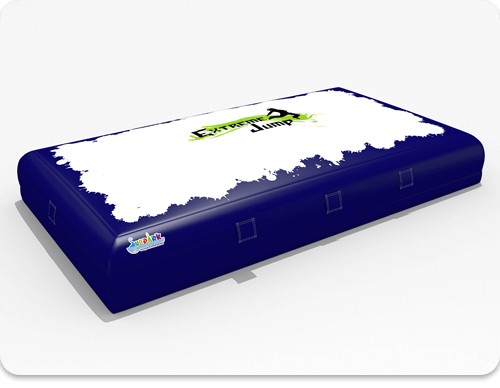
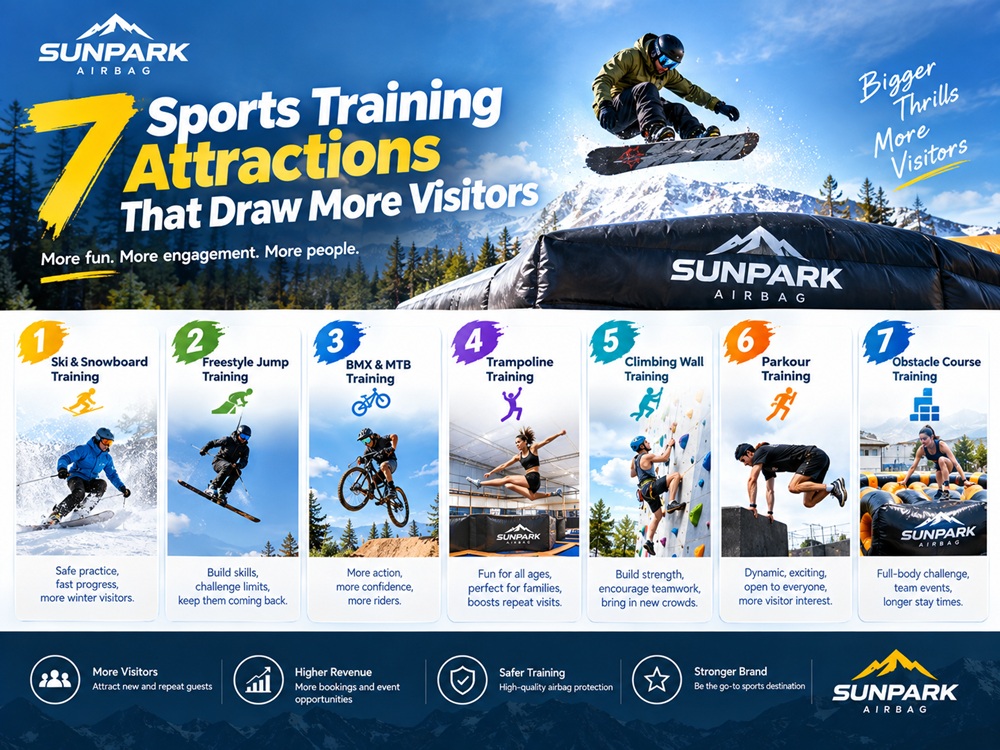
Beyond elite training applications, this technology offers significant advantages for commercial entertainment venues and action sports parks. Traditional foam pits present serious maintenance challenges for park owners: foam blocks break down into fine dust, trap hidden debris, and require regular, labor-intensive deep cleanings to remain hygienic.
Replacing high-maintenance foam pits with modern inflatable systems helps lower daily operational overhead. When analyzing the initial trampoline park construction cost, factoring in durable, long-lasting inflatable landing gear can noticeably reduce long-term maintenance costs. These systems can be wiped down quickly and maintain consistent performance over years of heavy use.
Minimizing facility downtime directly protects your bottom line. A clean, modern park environment builds customer trust and encourages repeat visits. When calculating a facility’s long-term trampoline park owner income, choosing durable, low-maintenance safety equipment helps ensure steady, predictable profit margins year after year.
For large-scale entertainment venues, optimizing customer throughput while keeping safety standard high is essential. Investing in robust commercial solutions like high-capacity Inflatable Landing Airbags allows your business to offer exciting extreme sports experiences while maintaining a reliable, professional operation.
Frequently Asked Questions (FAQs)
How does an inflatable lander prevent the dangerous trampoline bounce effect?
Our systems eliminate the dangerous trampoline effect by utilizing a dual-chamber design with continuous-flow air exhaust vents. When an athlete lands, the top sheet deforms as air vents open up to release air under pressure, absorbing the impact energy rather than storing it and bouncing the athlete back up.
Can these landing systems be left outdoors in freezing winter conditions?
Yes, but the system must be built with specialized materials. At SUNPARK® AIRBAG, we build our ski and snowboard landers using industrial-grade PVC that is treated to resist cold temperatures and UV degradation, keeping the top sheet flexible and tear-resistant down to -30°C.
What daily maintenance is required for a commercial freestyle airbag?
Daily maintenance is simple and minimal. Maintenance teams simply need to check the blower connections, inspect the top sheet for any dirt or debris, and verify that the air inflation pressure matches the athlete weight specifications for that day’s training session.
How long does a commercial extreme sports airbag system typically last?
With proper care, a high-quality system will last between 5 to 8 years under regular commercial use. The modular design allows park operators to replace individual top sheets or high-wear sections easily without needing to buy a completely new base system.
Engineering References and Industry Standards
1. ASTM F2374-24: Standard Practice for Design, Manufacture, Operation, and Maintenance of Inflatable Amusement Devices.
2. International Gymnastics Federation (FIG) – Apparatus Norms and Impact Attenuation Criteria for High-Level Training Pits.
3. European Standard EN 14960: Inflatable Play Equipment – Safety Requirements and Test Methods for Impact Mitigation.
4. SUNPARK® AIRBAG Technology Group – Internal Fluid Dynamics and Air-Exhaust Rate Calculations for Heavy Vehicular Impacts.
5. Industrial Equipment Engineering Solutions: Filter Making Machine Manufacturer Production Standards