The progression of modern athletics has reached unprecedented heights. Athletes are flipping faster, jumping higher, and spinning more rotations than anyone thought humanly possible just a decade ago. Behind this massive wave of human progression is a fundamental shift in how athletes train. It is a proven fact that extreme sports use airbag landers to mitigate risk while unlocking world-first tricks. From our experience working with top-tier professionals, removing the fear of a career-ending crash is the single most important factor in athletic development.
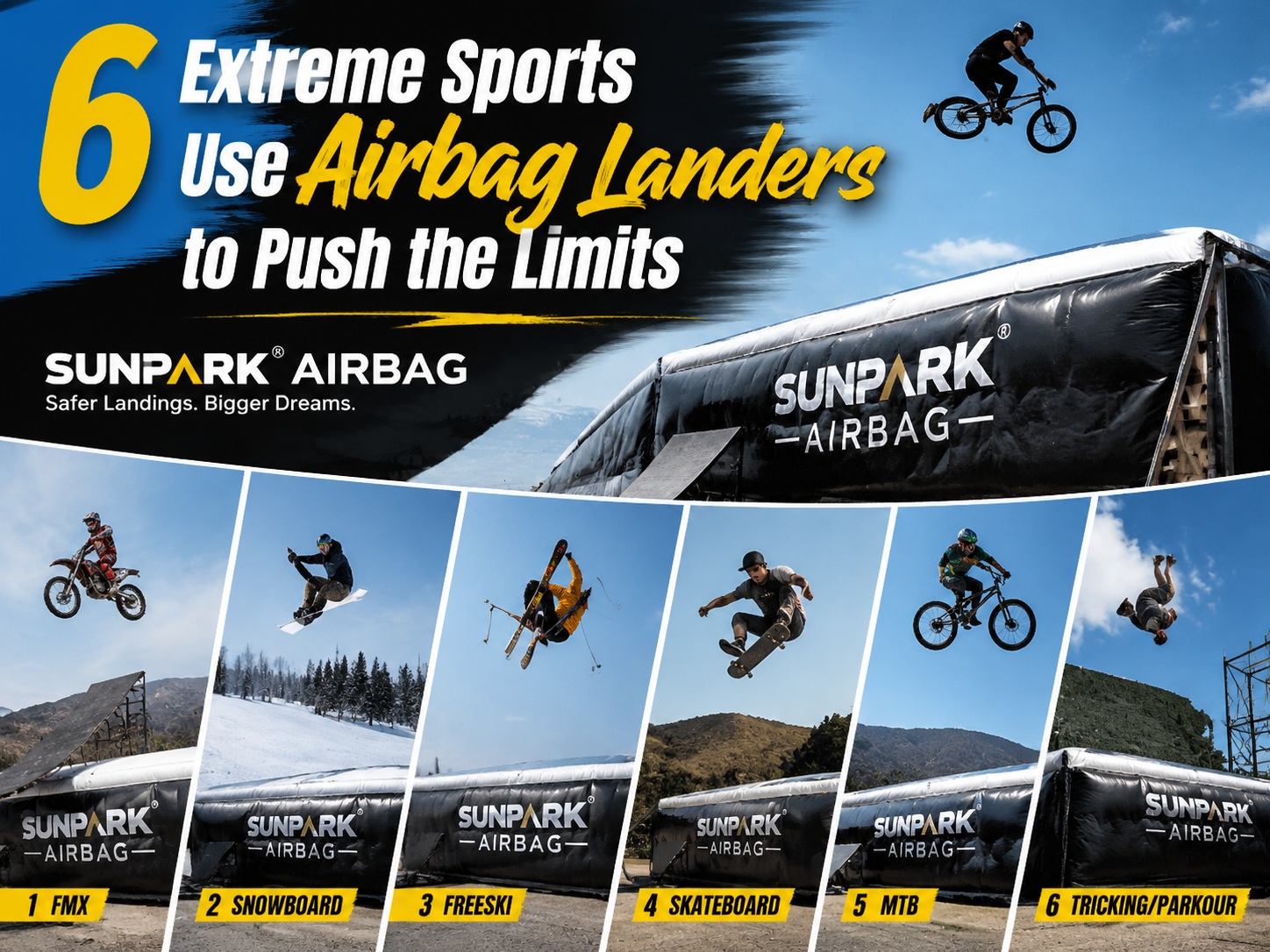
Before the widespread adoption of these advanced pneumatic systems, athletes relied on foam pits, deep water, or fresh powder snow. However, those methods are inconsistent, unhygienic, or seasonally dependent. Today, we see that multiple disciplines across the action sports spectrum rely heavily on specialized pneumatic technology. When we analyze how extreme sports use airbag landers, we find a perfect synergy between advanced material engineering and human courage. In this comprehensive guide, we will detail how exactly 6 extreme sports use airbag landers to revolutionize safety and performance.
Table of Contents
- Summary Table: Sports and Airbag Applications
- 1. Freestyle Snowboarding and Skiing
- 2. BMX and Freestyle Motocross (FMX)
- 3. Skateboarding and Mega Ramp Riding
- 4. Gymnastics and Trampoline Acrobatics
- 5. Professional Stunt Training and Film Production
- 6. Parkour, Freefalling, and Cliff Diving Practice
- The Technology: Why Extreme Sports Use Airbag Landers
- Frequently Asked Questions
- Industry References
Summary Table: Sports and Airbag Applications
| Extreme Sport | Recommended Airbag Type | Primary Training Benefit |
|---|---|---|
| Snowboarding & Skiing | Sloped Freestyle Airbag | Allows riders to practice triple and quadruple corks year-round without hard snow impacts. |
| BMX & FMX | Resi-Landing Airbag | Provides a safe rollout for wheeled sports, absorbing impact while allowing the rider to ride away. |
| Mega Ramp Skateboarding | Custom Gap Airbag | Catches high-velocity falls from 30+ feet in the air during Mega Ramp gap clearing. |
| Gymnastics & Trampoline | Flat Stunt Airbag | Replaces unhygienic foam pits for safe dismounts and multi-axis rotation practice. |
| Stunt & Film Production | Zero-Shock Stunt Airbag | Ensures complete safety during high-altitude building falls and choreographed action sequences. |
| Parkour & Freefalling | High-Impact Flat Airbag | Cushions vertical drops while teaching spatial awareness in the air. |
1. Freestyle Snowboarding and Skiing
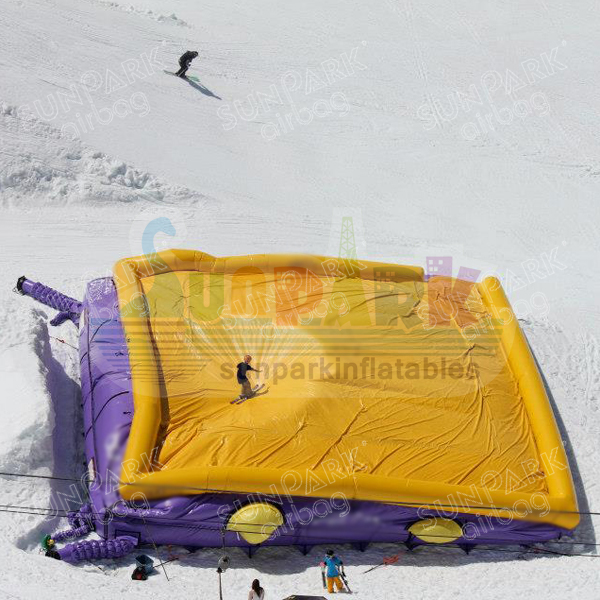
Freestyle Skiing Airbag (1)
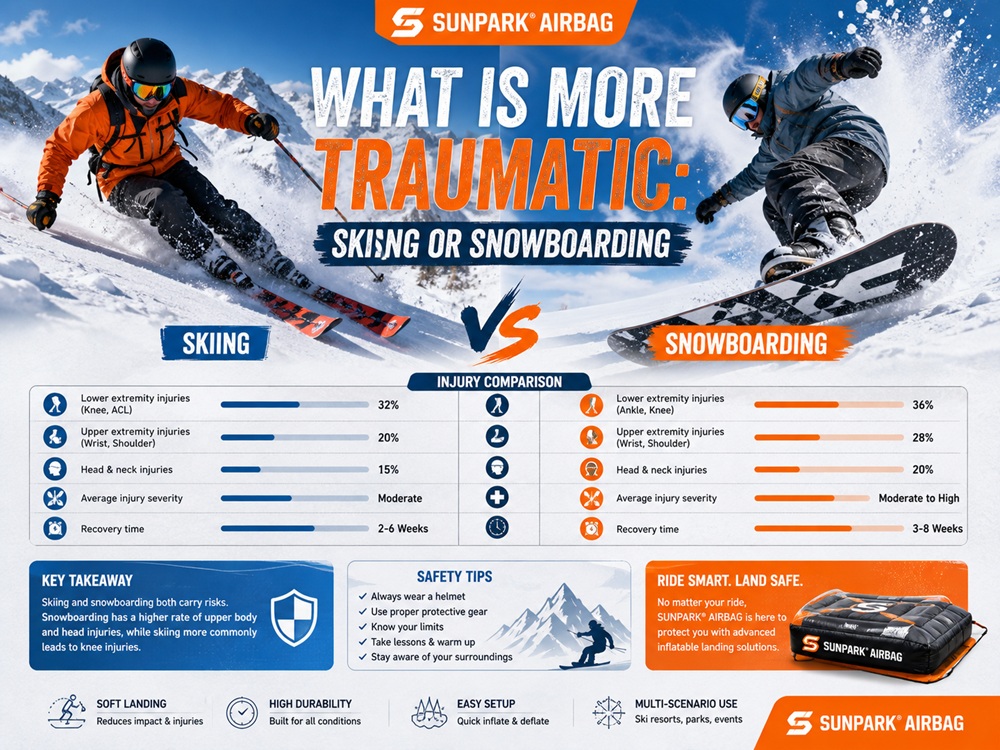
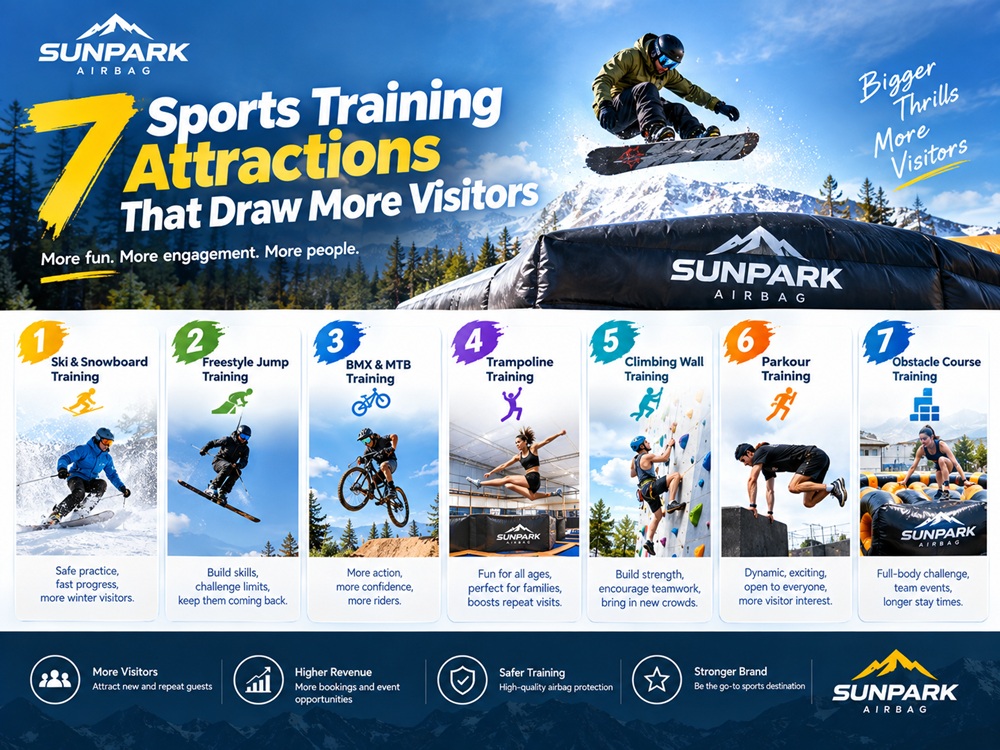
The winter sports community was among the first to realize that extreme sports use airbag landers to drive progression safely. If you watch the Winter Olympics or the X Games, you will see athletes performing quadruple corks—four off-axis flips combined with five full rotations. No athlete attempts this trick on hardpack snow for the first time. They use a big jump airbag system designed specifically to mimic the exact pitch and angle of a snow landing.
From our experience, the transition from jumping into a flat bag to jumping onto a sloped airbag was revolutionary. A sloped airbag allows the skier or snowboarder to land with their forward momentum intact. If they under-rotate, the multi-chamber air system absorbs the brutal impact. If they land perfectly, they can physically slide out and ride down the transition. This is exactly why winter extreme sports use airbag landers during the summer months at dry-slope facilities, ensuring athletes do not lose their edge in the off-season.
2. BMX and Freestyle Motocross (FMX)
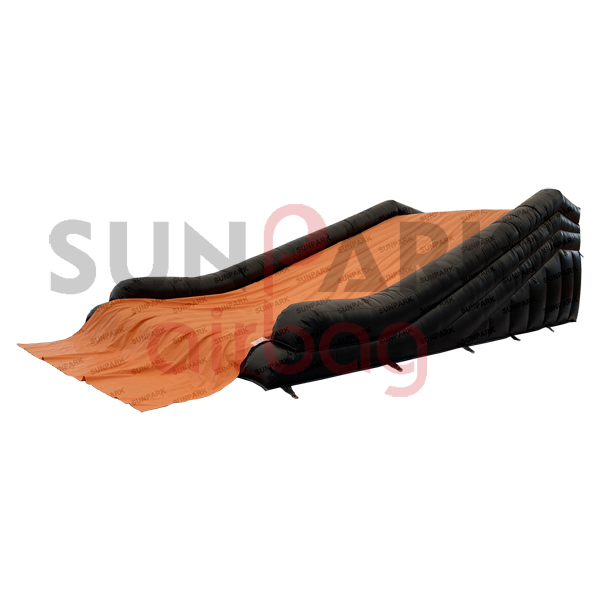
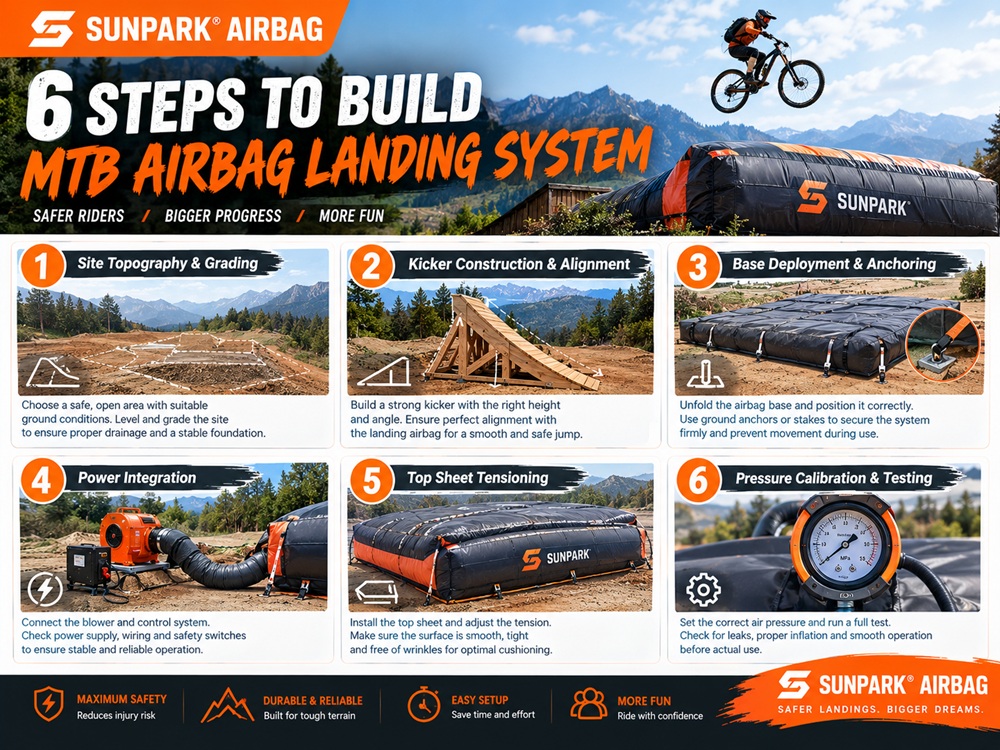
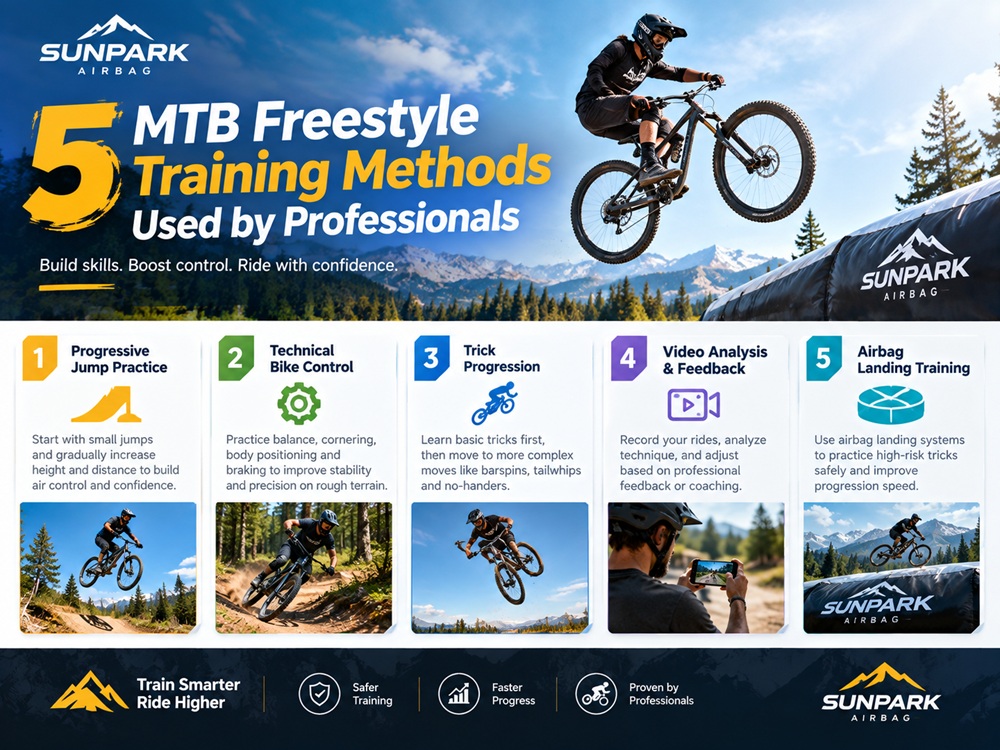
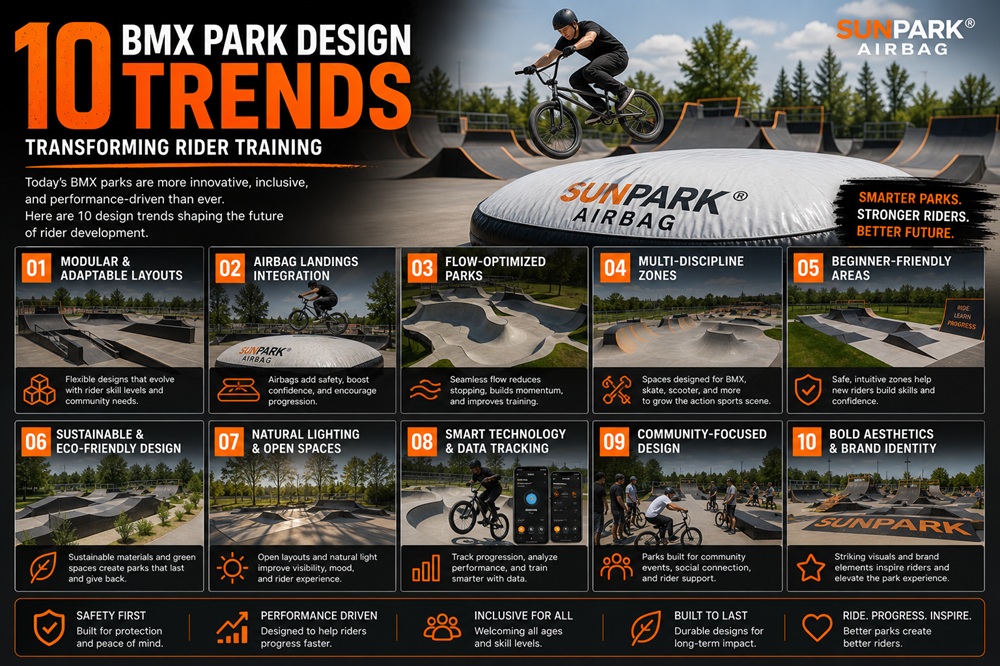
For decades, BMX riders and Freestyle Motocross (FMX) riders trained in massive pits filled with polyurethane foam blocks. While foam pits prevent catastrophic injuries, they present massive drawbacks: motorcycles get stuck, foam degrades into toxic dust, and climbing out takes exhausting effort. Today, wheeled extreme sports use airbag landers specifically tailored for tires. The introduction of the bike airbag landing fundamentally changed action sports facilities.
We recommend resi-style airbag landers for these disciplines. A resi-lander features a highly durable, tensioned top sheet over an inflatable base. This firm yet forgiving surface means that if a BMX rider lands a double backflip successfully, they can ride away clean. If they crash, the bag yields, preventing broken bones and equipment damage. Because FMX bikes weigh over 200 pounds, the fact that extreme sports use airbag landers with adjustable pressure vents is critical—the vents can be tightened to accommodate heavy motorcycles without bottoming out.
3. Skateboarding and Mega Ramp Riding
Skateboarding on a standard halfpipe is dangerous enough, but Mega Ramp riding takes the danger to lethal heights. Riders launch over 50-foot gaps and air 20 feet above a massive quarterpipe. The sheer physics involved means that falling is not a matter of if, but when. It is clear why these high-velocity extreme sports use airbag landers to protect their top athletes.
To train safely for the Mega Ramp, skateboarders rely on an inflatable crash mat positioned in the gap or draped over the landing transition. This allows riders to practice the entry speed, the launch trajectory, and the mid-air mechanics of a 1080-degree spin. Without knowing a soft landing awaits them, the mental block of a potential 40-foot freefall onto hard wood would stifle progression entirely.
4. Gymnastics and Trampoline Acrobatics
While traditionalists might not lump gymnastics in with motocross, the aerial mechanics and severe physical risks are identical. Elite gymnasts performing high-bar dismounts or synchronized trampoline routines face immense spinal and joint compression. Just as wheeled extreme sports use airbag landers, acrobatic extreme sports use airbag landers to extend the longevity of an athlete’s career.
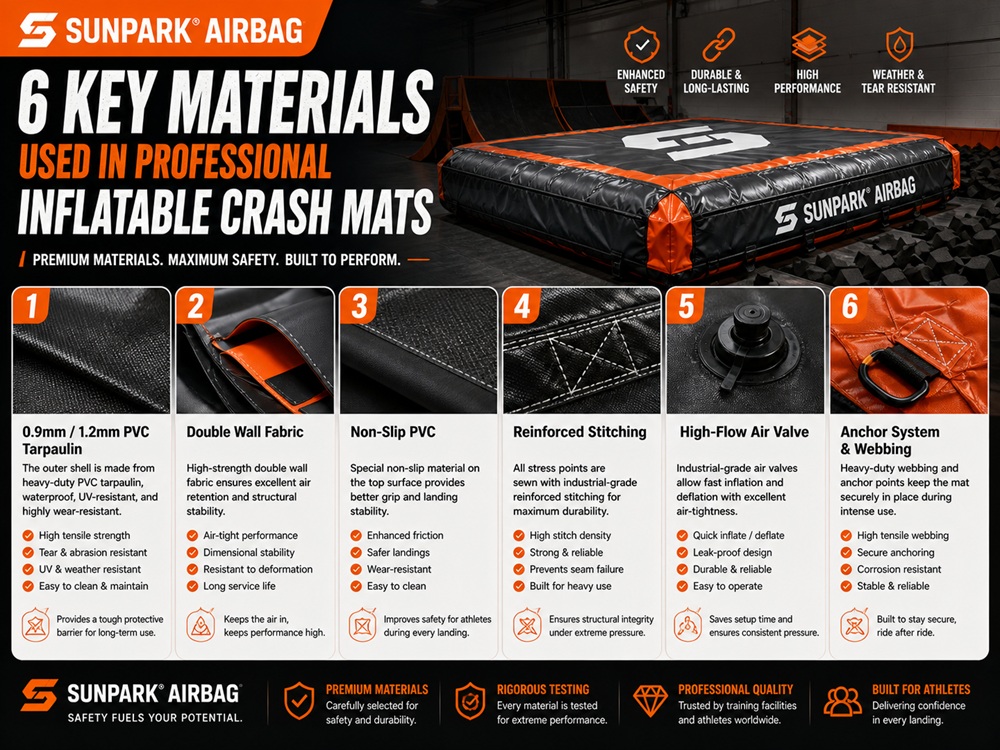
We highly recommend upgrading outdated foam pits with modern gymnastics airbag equipment. Foam pits are notoriously difficult to clean, harboring bacteria and allergens. An airbag, however, features a smooth, antimicrobial PVC top sheet that can be sanitized daily. Furthermore, the uniform surface of an airbag prevents the dangerous, awkward joint twisting that often occurs when a gymnast sinks unevenly between loose foam blocks.
5. Professional Stunt Training and Film Production
The film industry is responsible for some of the most breathtaking live-action freefalls in history. In the past, stunt performers relied on massive stacks of cardboard boxes to break their falls—a highly unpredictable and dangerous method. Today, cinematic extreme sports use airbag landers exclusively for high-altitude drops.
A specialized stunt airbag landing setup is engineered with internal pillars that vent air upon impact. This creates a “zero-shock” effect. When a stunt double falls 80 feet from a building, they do not bounce back up; the airbag absorbs the kinetic energy entirely, enveloping the performer safely. Because production crews travel globally, the portability of these deflatable systems makes them far superior to rigid crash structures.
6. Parkour, Freefalling, and Cliff Diving Practice
Spatial awareness is the most valuable skill a free-falling athlete can possess. Base jumpers, parkour athletes, and professional cliff divers must know exactly where their body is positioned in three-dimensional space at all times. Therefore, these airborne extreme sports use airbag landers to replicate the feeling of a long drop without the fatal consequences of a mistake.
Parkour athletes use them to practice massive roof-gap leaps, allowing them to test the limits of human jumping distance. Athletes in these highly specialized sports often travel to remote training camps to utilize these massive setups. It is common to see athletes utilizing overland gear like Tesla Car Camping Tents to set up temporary base camps near these giant outdoor airbag facilities. By having a mobile living and training setup, they can spend weeks dialing in a single, complex aerial maneuver.
The Technology: Why Extreme Sports Use Airbag Landers
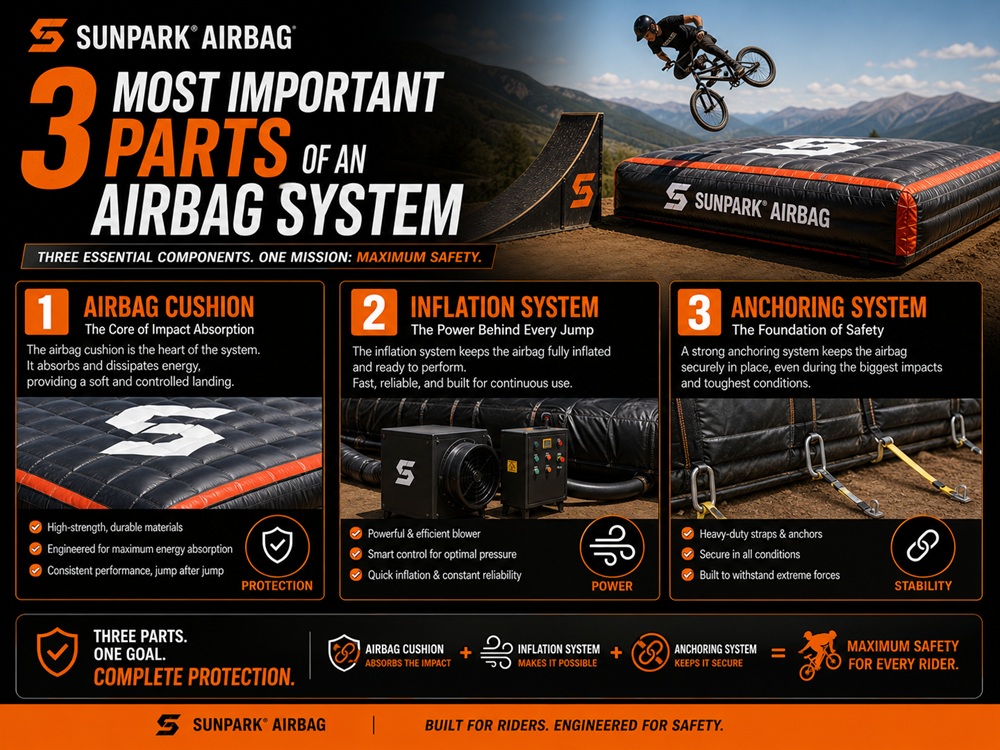
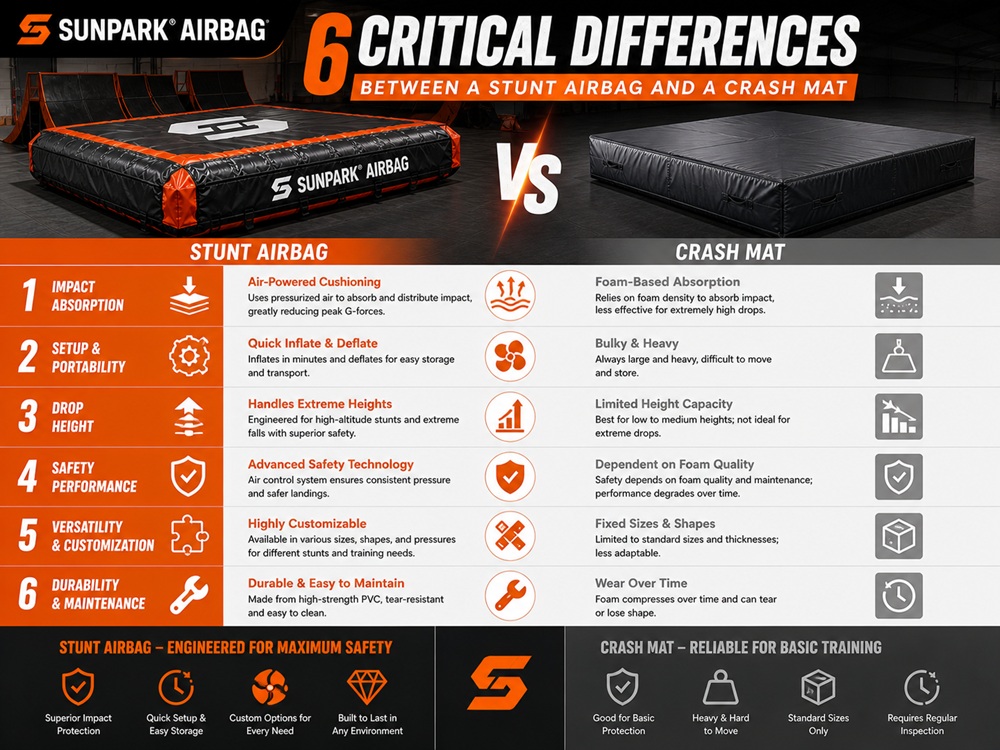
It is important to understand that a professional sports airbag is not a bouncy castle. When people ask why extreme sports use airbag landers, the answer lies in advanced fluid dynamics and kinetic energy dispersion. These systems feature a two-chamber or multi-chamber design. The bottom chamber remains fully inflated to ensure the athlete never strikes the ground. The top chamber features highly calibrated pressure release valves.
When an athlete strikes the top sheet, the valves open, expelling air rapidly. This is very similar to the physics utilized by high-end Protective Shipping Packaging Materials, which are designed to absorb and distribute shock rather than rebound it. Because there is no trampoline-like rebound effect, the risk of whiplash or secondary ejection is completely eliminated.
Despite the incredible absorption properties of these airbags, athletes still experience G-forces during a heavy impact. Training all day takes a severe toll on the muscular and nervous systems. This is why professional training facilities often combine airbag repetition with advanced recovery modalities, such as Full Body Red Light therapy, to reduce cellular inflammation and accelerate muscle repair after a grueling session of crash testing new tricks.