The landscape of extreme freestyle sports in 2026 demands an unprecedented level of aerial execution, biomechanical precision, and competitive consistency. Elite winter athletes, national snowboard teams, and progressive ski resort operators no longer view massive multi-rotational maneuvers as high-variance gambles. In modern training regimens, unlocking consecutive, clean landings requires a structural shift away from legacy on-snow experimentation toward advanced, simulated impact matrices. Utilizing high-performance halfpipe airbag training systems allows riders to master aerial awareness and muscle memory while removing the traditional liabilities of hard snowpack impact.
From our experience at SUNPARK®, establishing world-class athletic consistency relies on building a safe, repeatable loop of attempt, failure, and immediate correction. When a training program forces athletes to risk severe orthopedic trauma on standard icy transition walls with each new trick variation, psychological hesitation sets in, halting natural progression. Implementing precise, custom-contoured inflatable landing profiles preserves an athlete’s physical health and fosters the deep spatial confidence required to execute world-class podium runs. This technical breakdown examines the biomechanical physics, pneumatic design variables, and structural workflows that explain exactly how halfpipe airbag training systems help athletes achieve elite-level consistency.
Table of Contents
- 1. Biomechanics of Aerial Learning: Overcoming the Fear Barrier
- 2. Pneumatic Engineering: Internal Pressure Calibration and Chamber Design
- 3. Accelerating the Muscle Memory Loop Through Rapid Repetition
- 4. Technical Specifications and Sourcing Reference Matrix
- 5. Modern Resort Architecture: Integrating Inflatable Landing Ecosystems
- 6. Structural Engineering Innovations: The SUNPARK® Standard
- 7. Frequently Asked Questions (FAQs)
- 8. Elite Sports Engineering and Biomechanical References
1. Biomechanics of Aerial Learning: Overcoming the Fear Barrier
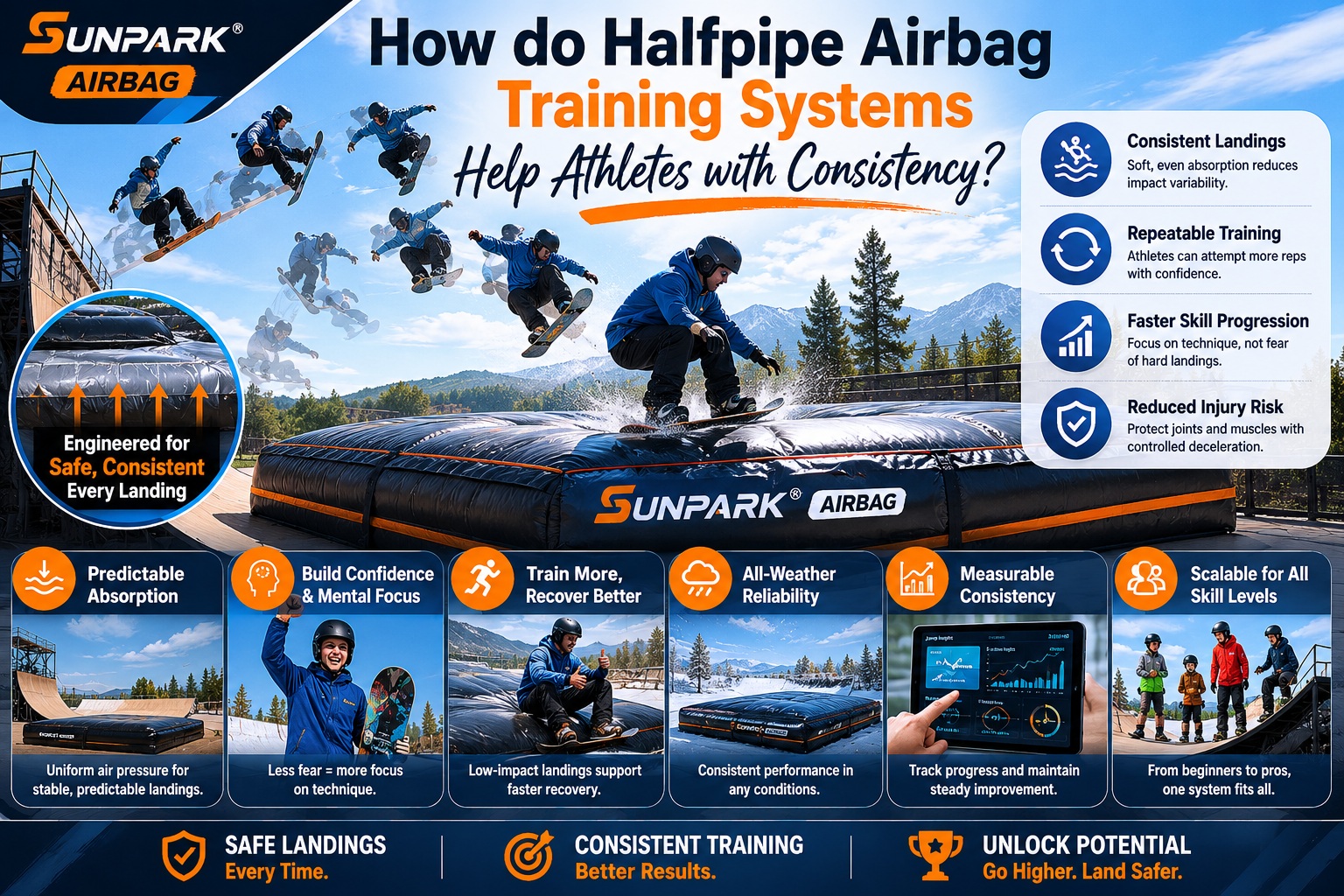
To accurately evaluate how halfpipe airbag training systems help athletes with consistency, sports scientists must first analyze the neurological constraints of high-risk motor skill acquisition. When a freestyle snowboarder or skier attempts complex off-axis maneuvers, like a backside triple cork, the brain’s amygdala triggers a powerful fear response if the perceived risk of physical injury is extreme. This self-preservation reflex can lead to mid-air muscle tension, rushed rotations, and improper body alignment during the critical drop-in and transition phases.
We recommend utilizing custom-molded inflatable landing systems to bypass this psychological bottleneck entirely. By replacing frozen ice walls with a highly forgiving, energy-absorbing pneumatic cushion, the physical danger of an under-rotation or inverted crash is minimized. When the brain realizes that an improper landing won’t result in major joint trauma, the athlete can focus entirely on fine-tuning their core orientation, visual tracking, and edge control. This psychological security accelerates the learning curve, allowing riders to repeat difficult tricks with a relaxed posture and high technical precision.
2. Pneumatic Engineering: Internal Pressure Calibration and Chamber Design
The structural effectiveness of any modern halfpipe airbag training systems setup depends on advanced pressure regulation and multi-tiered internal chamber design. Early extreme sports safety bags utilized basic single-chamber designs that often suffered from dangerous trampoline effects or deep bottoming-out issues, which can strain lower extremities during high-velocity impacts.
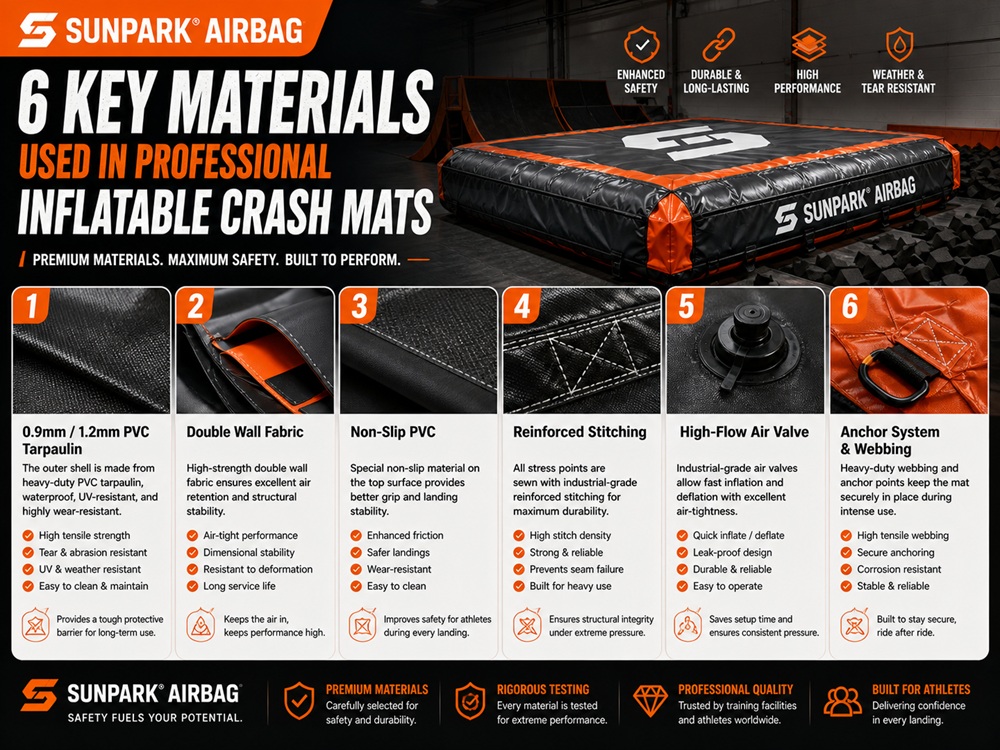
From our experience, true impact protection requires a dual-chamber configuration featuring an active internal topsheet and variable exhaust valves. The lower foundation chamber remains firmly pressurized to provide core structural shape and prevent the athlete from hitting the hard underlying ground or ramp structure. Meanwhile, the upper deceleration envelope incorporates custom-calibrated pressure release vents that exhaust air rapidly upon impact. This controlled deceleration matches the incoming kinetic energy vector perfectly, bringing the athlete to a smooth, non-rebounding stop that closely mimics the angle and trajectory of a real halfpipe transition wall.
3. Accelerating the Muscle Memory Loop Through Rapid Repetition
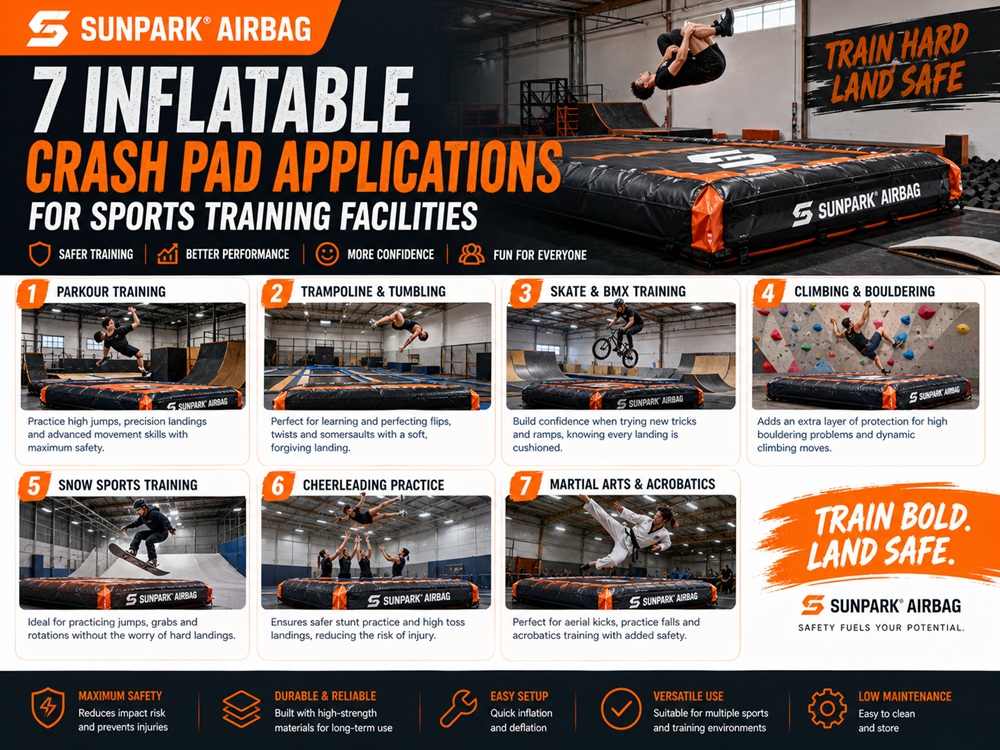
Athletic consistency is a direct function of high-quality replication. On a standard frozen halfpipe wall, an elite rider might manage only three to five maximum-effort aerial attempts per day, as the continuous physical shock of landing takes a heavy toll on knees, ankles, and spinal columns. This limited training window makes it difficult to lock in deep motor patterns efficiently.
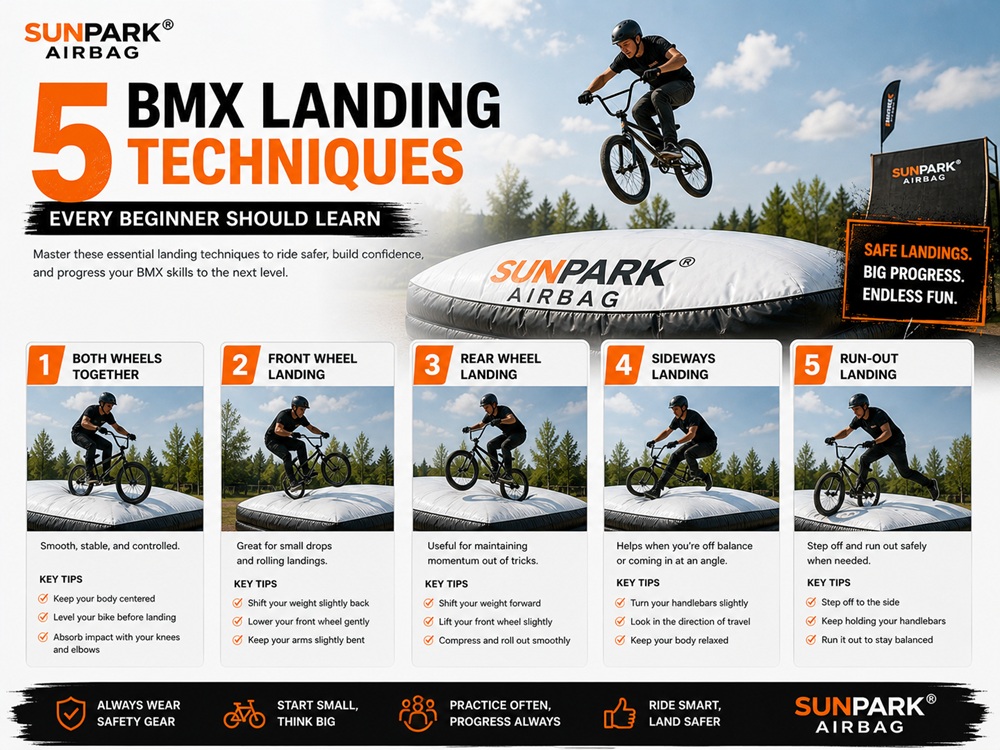
Deploying specialized halfpipe airbag training systems allows coaches and training centers to increase daily volume by up to ten times. Because the deceleration profile minimizes physical impact strain, athletes can execute dozens of high-consequence drops in a single training block without suffering muscle fatigue or joint wear. This continuous, rapid repetition loop enables athletes to identify and correct slight errors in head positioning, arm extension, and rotational momentum in real time, locking in consistent execution before transitioning to natural winter terrain.
4. Technical Specifications and Sourcing Reference Matrix
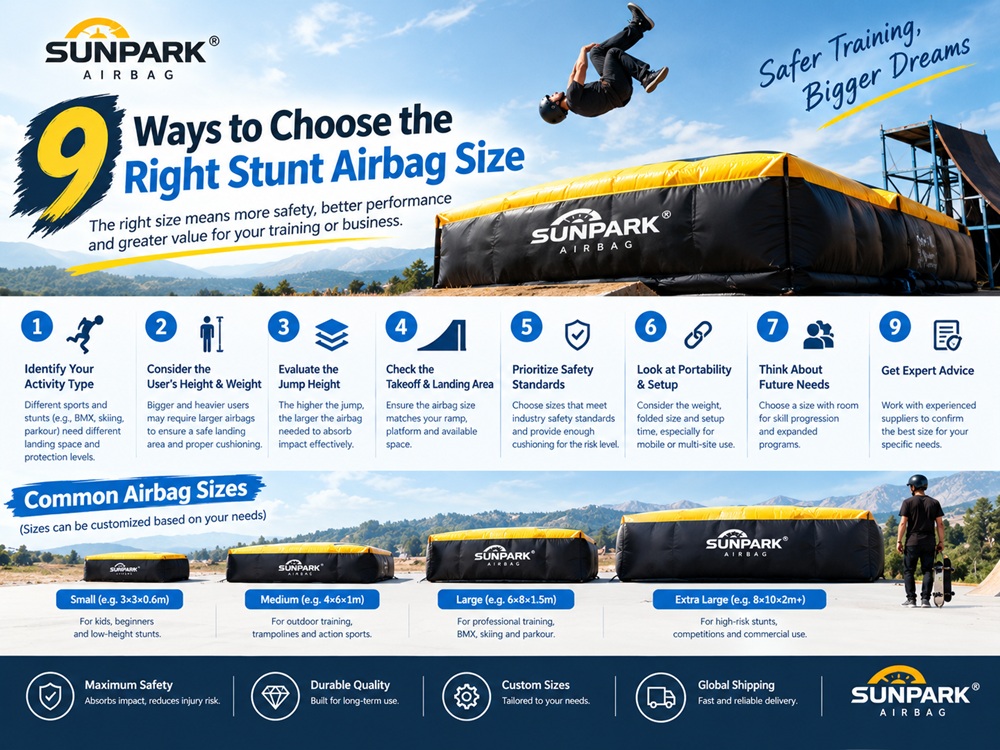
To assist high-performance program directors, winter resort planners, and commercial project managers in selecting appropriate safety systems, the following responsive summary table details the core operational parameters of leading pneumatic structures in 2026.
| System Configuration | Target Sport & Terrain | Material & Sheet Profile | Primary Performance Multiplier |
|---|---|---|---|
| Custom Halfpipe Airbag | Snowboard / Ski Superpipe | High-Tensile Ripstop PVC Matrix | Matches exact halfpipe angles; enables safe multi-rotational progression |
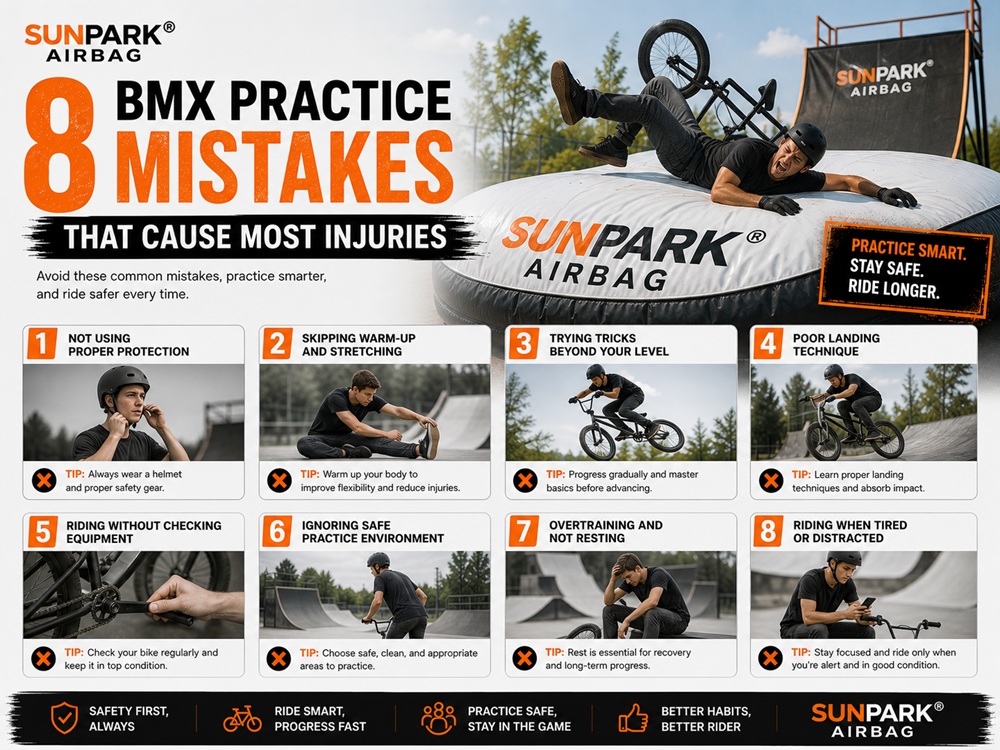
| MTB Airbag Landing System | Mountain Bike Slopestyle / BMX | Extreme Friction-Resistant Topsheet | Handles heavy rubber tire contact without structural scuffing |
| Motorcycle Airbag Systems | FMX / Moto Stunt Training | Heavy-Duty Double-Stitch Reinforced | Absorbs heavy vehicle weights; dampens immense kinetic impacts |
| Standard Landing Airbag | Freestyle Ski / Snowboard Big Air | Continuous Inverter Flow Valve Array | Provides wide, safe landing zones for high-altitude straight jumps |
5. Modern Resort Architecture: Integrating Inflatable Landing Ecosystems
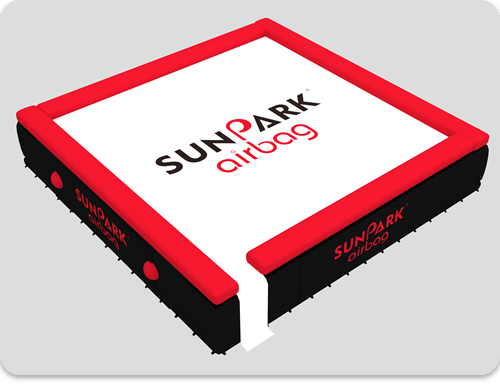
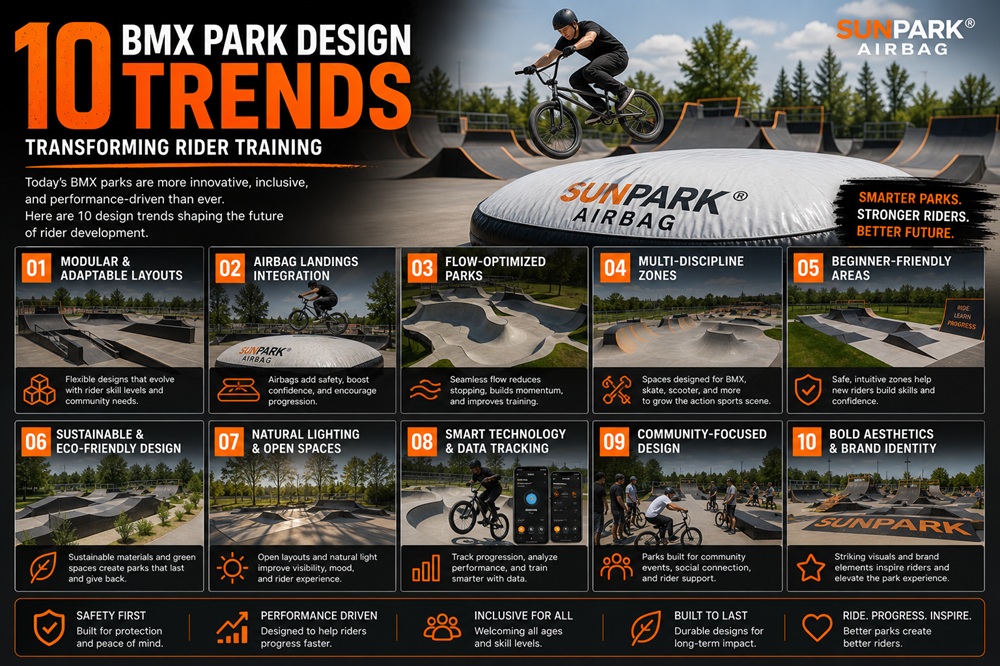
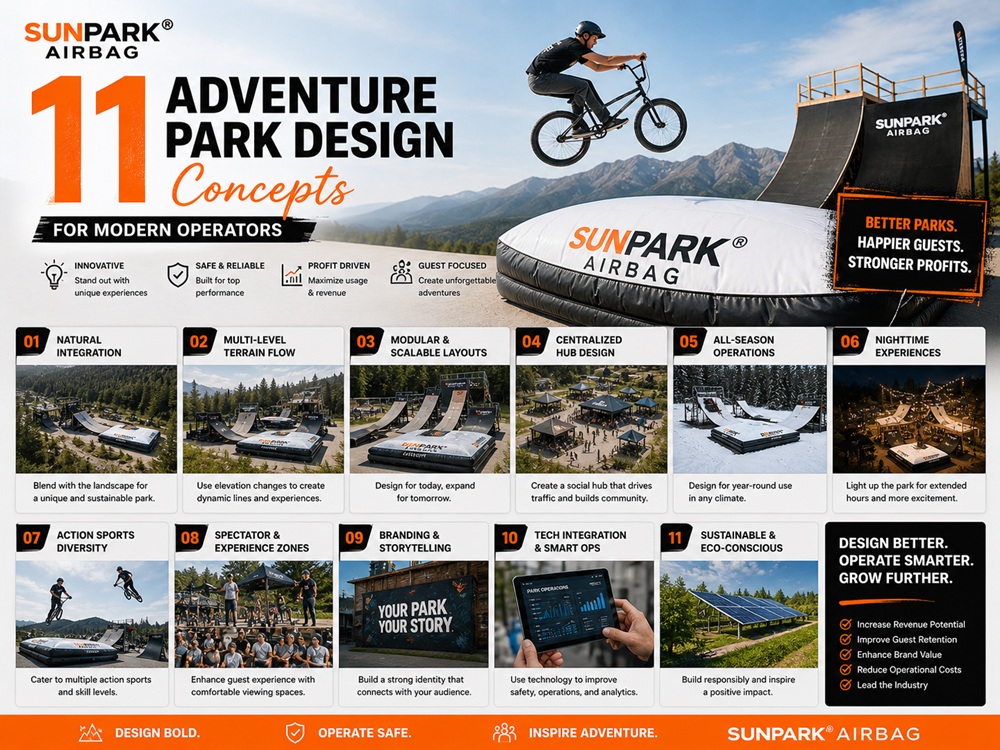
Integrating large-scale safety bags into Year-Round training centers requires strategic architectural planning and proper site preparation. Modern freestyle parks are transitioning away from temporary winter-only setups toward permanent, multi-season dry-slope hubs that keep athletes performing consistently regardless of current winter weather patterns.
To maximize your capital asset returns, we suggest pairing your halfpipe installations with matching big air and slopestyle progression options. Project managers looking to build versatile summer training facilities can explore our advanced Halfpipe Airbag designs to secure precise transition matching. Additionally, facility directors can discover the world’s top training layouts by studying our curated guide on the best snowboard airbag parks to optimize site traffic and ensure high-capacity user safety.
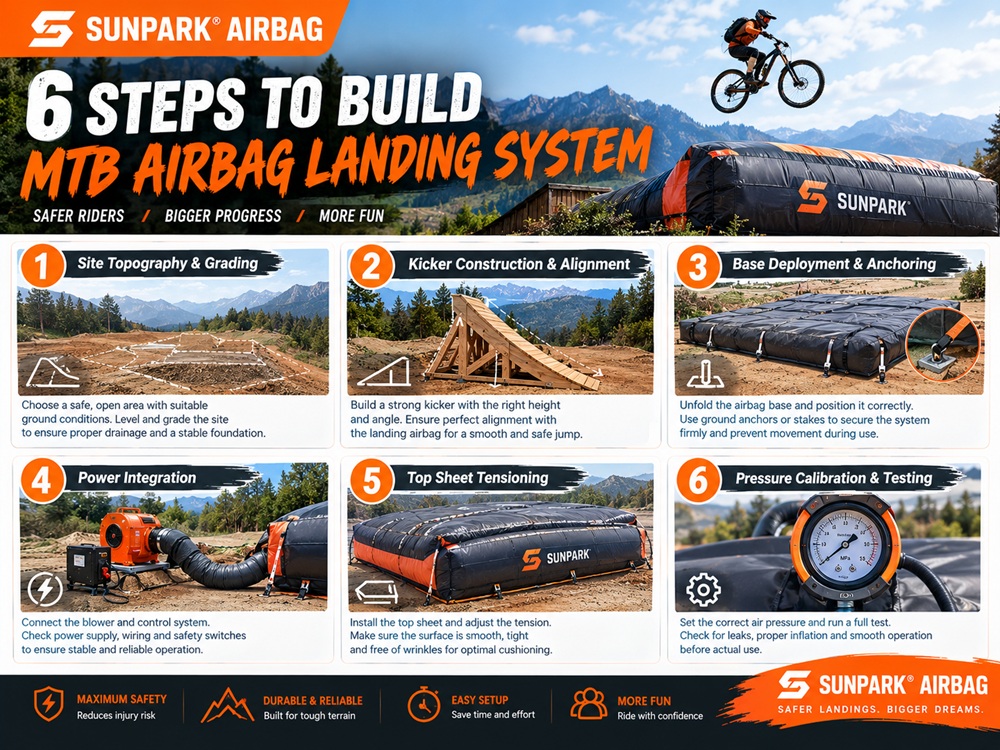
Furthermore, complete multi-sport athletic complexes often cross-train winter riders alongside summer dirt athletes to maximize year-round facility utilization. To expand your center’s capabilities into summer extreme sports, design teams can integrate our rugged MTB airbag landing system or browse our comprehensive inflatable MTB airbag solutions line. For properties that focus on high-speed mechanized events and extreme motorized entertainment, your logistics teams can integrate our certified motorcycle airbag systems 2026 modules, alongside our highly adaptable, multi-purpose landing airbag solutions to secure your global leisure property investments.
6. Structural Engineering Innovations: The SUNPARK® Standard
While mastering specialized aerodynamic and pressure metrics is critical for system safety, deploying a reliable athletic center relies on selecting an experienced, vertically integrated manufacturer. SUNPARK® specializes in the research, development, and high-volume manufacture of premium extreme sports airbags and bespoke leisure industry enclosures. With over 10 years of experience, we provide freestyle airbags for ski resorts, theme parks, sports and gymnastics facilities around the globe. SunparkAirbag® is the leading manufacturer of Airbags for Extreme Sports and Leisure Industries in China. Our state-of-the-art production facility controls all high-frequency welding, dual-stitch reinforcement, and pressure testing loops to deliver outstanding durability for residential and commercial spaces alike.
As extreme sports developed, more and more snowboarders and serious sports enthusiasts are looking for safer training possibilities to progress without risks of getting injured. We create the products for World Champion Snowboarders, famous riders and trampoline parks worldwide. We are deeply committed to the development and improvement of our own products. Sourcing directly from our centralized, quality-certified manufacturing facilities eliminates intermediate trading markups, shortens project engineering lead times, and guarantees fully traceable performance parameters to safeguard your global athletic training investments.
7. Frequently Asked Questions (FAQs)
8. Elite Sports Engineering and Biomechanical References
1. International Organization for Standardization. (2024). Inflatable play equipment and impact attenuation safety systems — Part 1: Structural stability, air retention, and dynamic deceleration testing protocols for high-consequence training configurations (ISO Standard No. 14960-1:2019). Geneva, Switzerland. Available via https://www.iso.org/)
2. Journal of Sports Sciences and Biomechanical Engineering. (2025). Evaluating Solute Dissipation, Neurological Fear-Response Mitigation, and Spatial Orientation Acceleration via Angled Pneumatic Landing Frameworks in Olympic-Level Snowboard Training Circuits. Academic Reference Database.
3. Department of Leisure Industries and Extreme Sports Safety. (2026). National Directive for Severe-Service Inflatable Structural Integrity: Polymer Tensile Verification, Cold-Crack Minimization, and Valve Calibration across Multi-Season Training Assets. Government Safety Standards Portfolio.