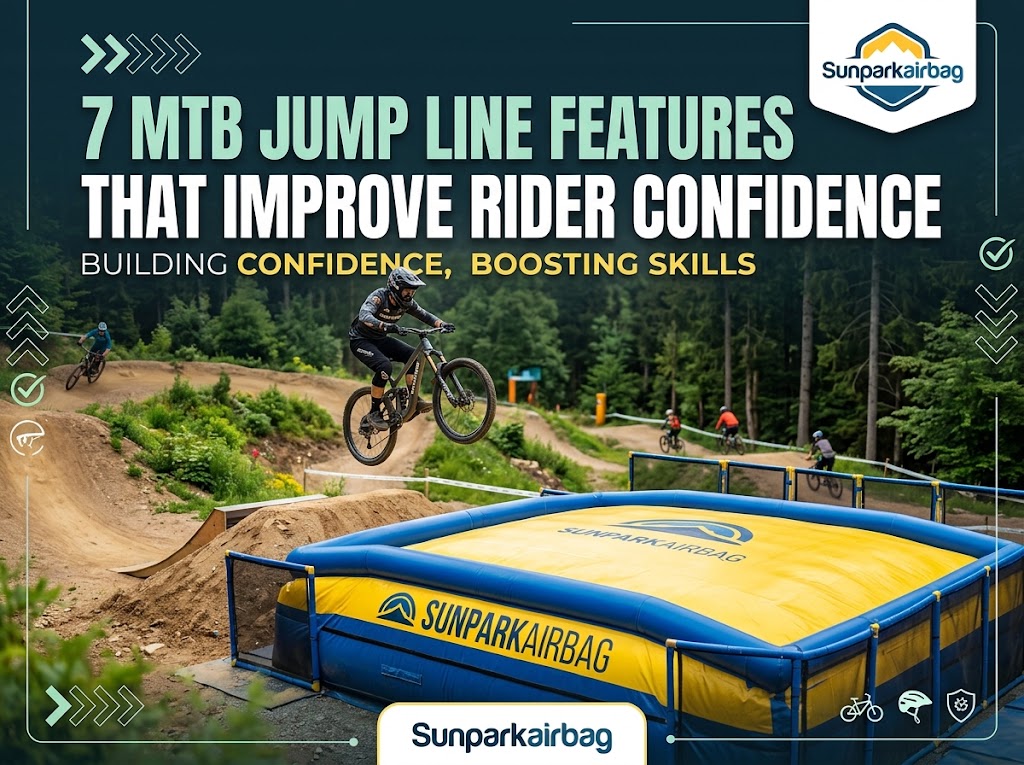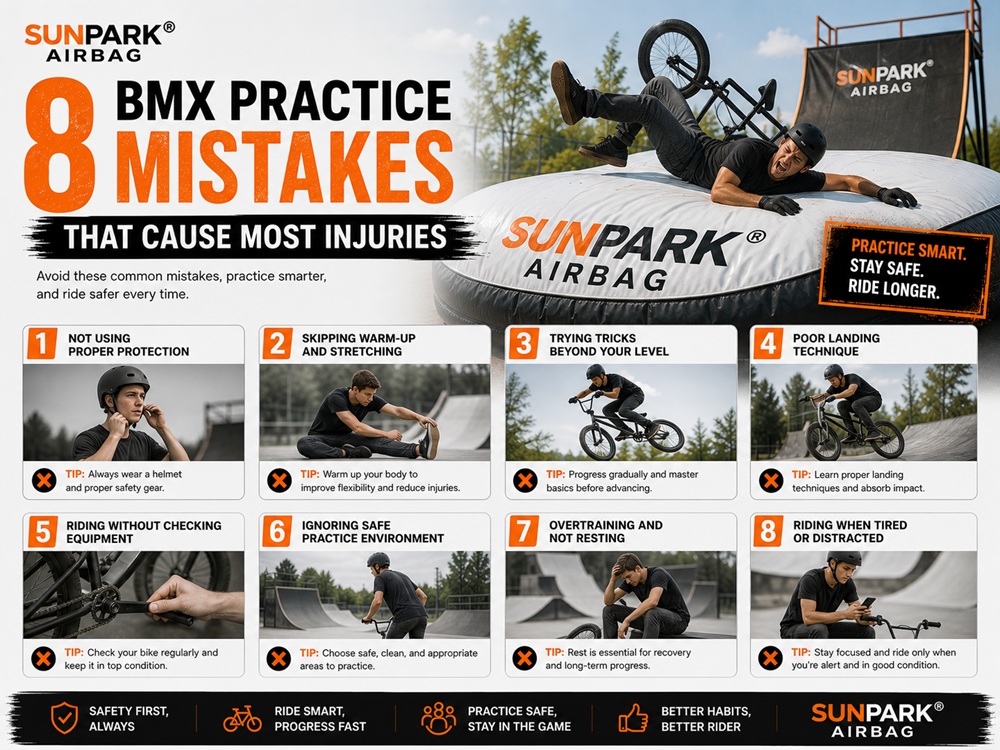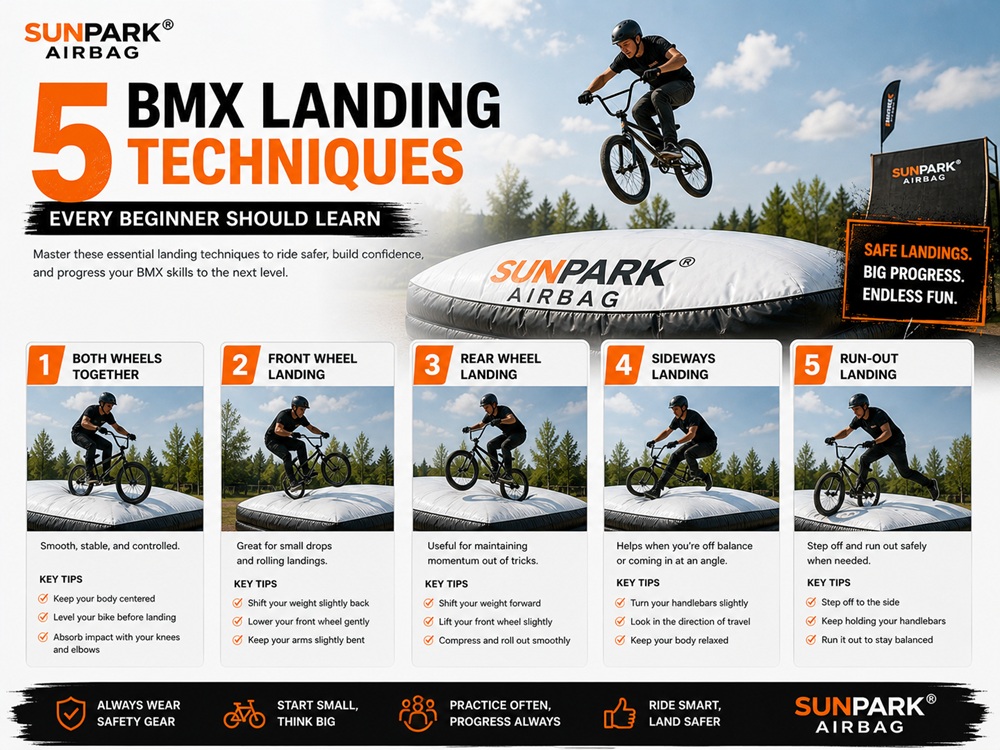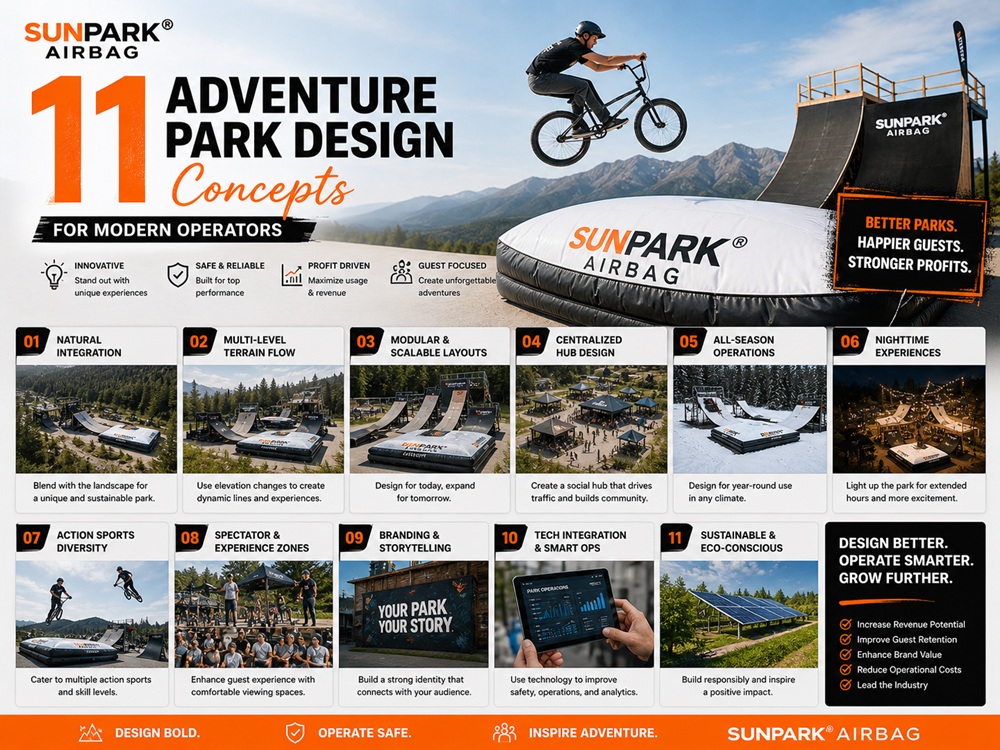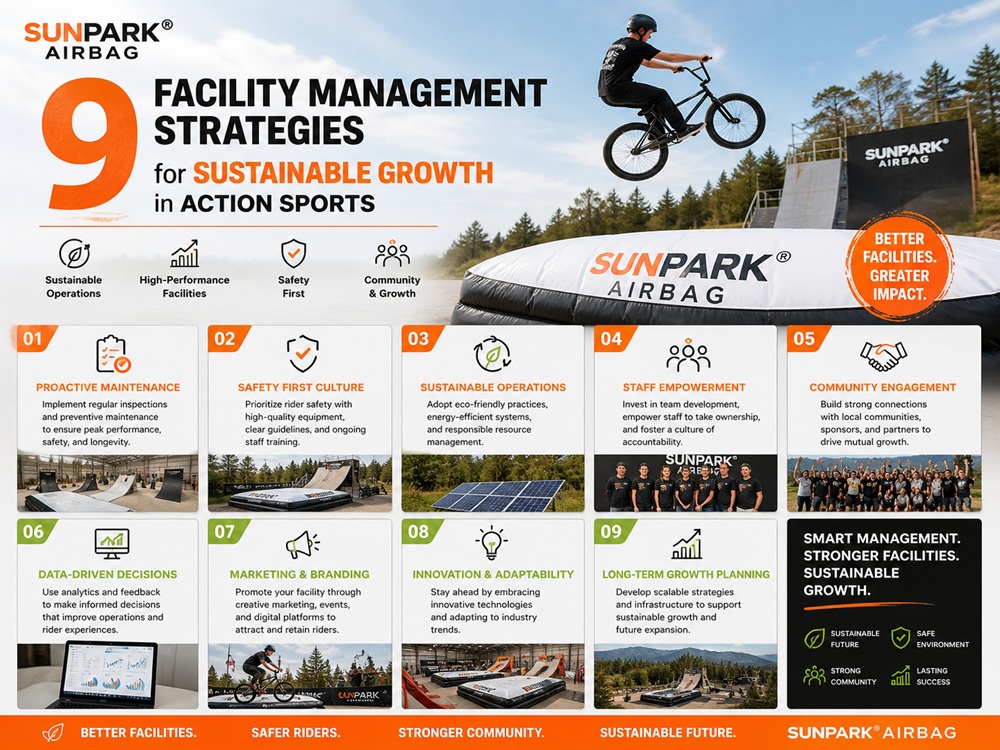
For decades, traditional foam pits were considered the gold standard for riders attempting to progress their freestyle skills on mountain bikes and BMX setups. However, as riding progression pushes boundaries and speeds increase, the biomechanical limitations of foam blocks have become glaringly apparent. From our experience at SUNPARK airbAG, relying on foam cubes frequently results in frame damage, unpredictable rebound, and hygiene hazards that can easily derail a rider’s progression timeline.
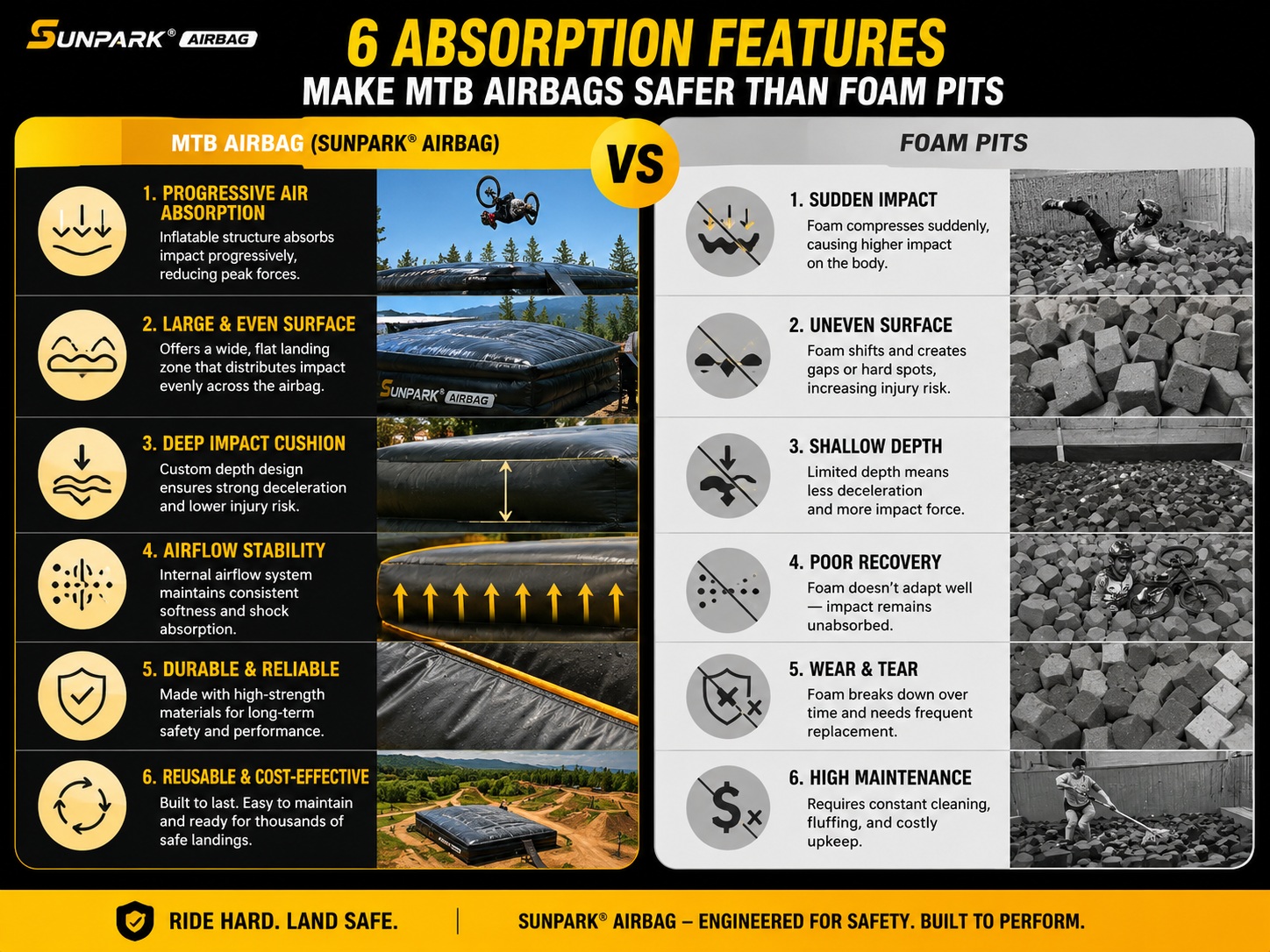
Modern engineering has turned toward sophisticated pneumatic dissipation systems. Advancements in structural design show that a series of innovative engineering advancements and distinctive design elements are exactly what make mountain bike landing systems completely outclass traditional foam pits. Understanding which specific structural features make MTB airbags safer allows facility managers, trail builders, and professional riders to make informed choices that reduce downtime and eliminate catastrophic impact risks.
Table of Contents
- 1. Dual-Chamber Structural Design
- 2. Dynamic Valved Air Exhaust Systems
- 3. True Continuous Slope Integration
- 4. High-Frequency Micro-Deformable Materials
- 5. Multi-Zone Pressure Customization
- 6. Anti-Friction Sliding Top Sheets
- 7. Comparative Matrix: Airbag Technology vs. Foam Pits
- 8. Sourcing Safety: The SUNPARK airbAG Manufacturing Process
- 9. Frequently Asked Questions
- 10. Industry References
1. Dual-Chamber Structural Design
The primary reason traditional foam pits fail on heavy impacts is bottoming out. When a rider falls from an elevated height, foam compresses down completely until it turns into a dense solid layer, transferring a high load of secondary force to the lower back and hips. In contrast, modern action sports setups rely on an engineered dual-chamber configuration to eliminate this risk entirely.
The system features a completely isolated lower base compartment that remains continuously pressurized at a higher rate, providing structural stability so that the bag never collapses to the bare ground. Above this base lies a highly compliant upper pocket chamber designed to mold around the rider and bike seamlessly upon impact. From our experience, separating structural support from initial impact dampening provides an infinite decelerating zone that makes these specialized features make MTB airbags safer than standard safety setups.
2. Dynamic Valved Air Exhaust Systems
When an object lands heavily on an air-filled structure, that air must travel somewhere immediately. If an airbag lacks proper exhaust regulation, it acts exactly like a trampoline, throwing the rider high back into the air with dangerous rotational forces. To resolve this issue, top-tier mountain bike bag systems utilize dynamic perimeter exhaust valves.
These specialized openings release calculated amounts of internal air volume the millisecond an impact occurs, absorbing massive kinetic energy and dropping the rider into a controlled pocket. We recommend choosing designs with adjustable calibration systems. Proper venting ensures that even off-center or upside-down landings collapse gently without a dangerous rebound effect. This precise control over kinetic energy distribution reduces the likelihood of common sports injuries during technical training sessions.
3. True Continuous Slope Integration
Foam pits are restricted to flat ground configurations, meaning a rider drops vertically into a horizontal container and comes to an immediate, abrupt halt. This sudden stop subjects the human neck and spine to extreme G-forces. One of the most effective mechanical layout adjustments is building a system on a natural downhill slope.
By placing a landing system over a downward slope, riders preserve their forward speed and roll away from a trick smoothly, instead of stopping instantly. Our specialized airbag landing ramp system transforms structural impact forces into manageable forward motion. This specific geometry ensures that even failed attempts transfer forces down the slope, preserving joints and maintaining bike control during complex rotations.
4. High-Frequency Micro-Deformable Materials
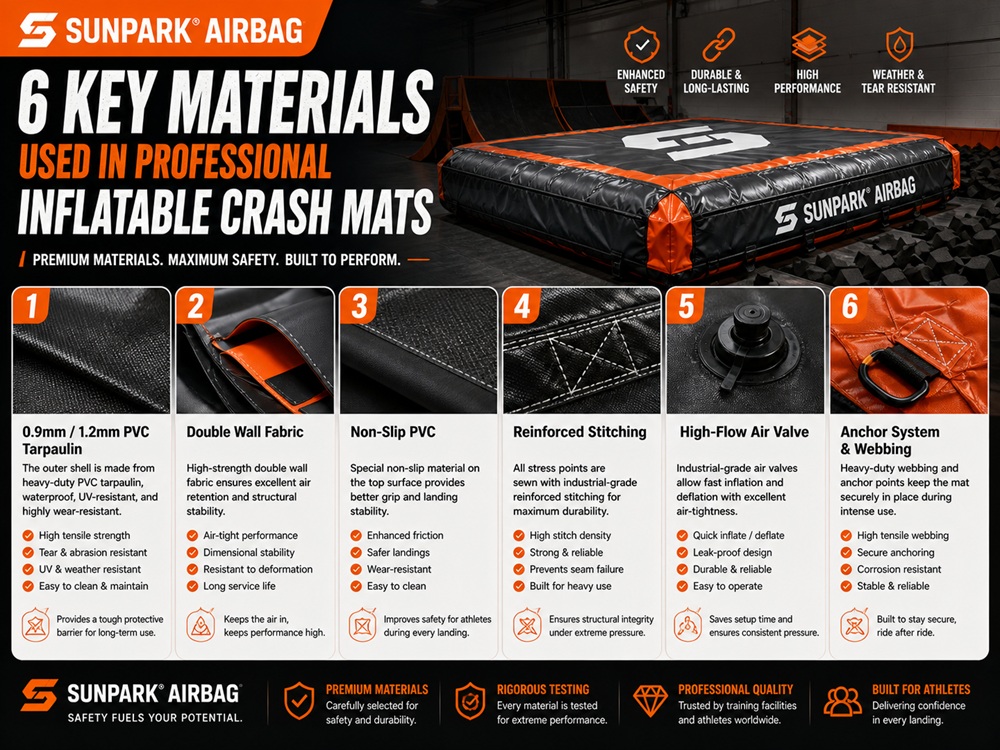
The physical composition of a landing zone plays a massive role in long-term joint health. Foam pits use open-cell polyurethane foam that breaks down rapidly under friction and sunlight, turning into fine dust that can cause breathing issues and lack proper support over time. Modern extreme sports landing systems use high-grade, fiber-reinforced polyvinyl chloride composite materials designed for high performance.
These technical fabrics feature unique micro-deformable properties that stretch and adapt perfectly under high stress without tearing or losing structural memory. From our experience, using high-tensile materials guarantees uniform performance in extreme hot or cold outdoor environments. This material durability prevents hidden structural soft spots that lead to unexpected injuries in poorly maintained foam pits.
5. Multi-Zone Pressure Customization
Different tricks and landing positions demand distinct firmness profiles. If a rider executes a perfect tailwhip but lands slightly off-balance, they need a predictable surface that supports their tires without washing out. Airbag structures address this requirement by using multi-zone pressurization zones.
The main landing strip can be adjusted to a firm setting to allow a rider to roll out cleanly from a successful execution, while the safety outer perimeters are set softer to absorb major impacts if a trick goes completely sideways. This variable layout is why specific pneumatic configurations make MTB airbags safer for technical progression. Facilities can tweak their internal pressure to accommodate lightweight junior riders or heavy adult professionals on identical equipment setups.
6. Anti-Friction Sliding Top Sheets
When a rider crashes into a traditional foam pit, the bike pedals, handle bars, and exposed skin catch on individual foam blocks. This friction twists limbs awkwardly and causes joint dislocations or severe abrasions. The top layer of a modern freestyle airbag is engineered to eliminate skin friction completely.
Featuring a smooth, heavy-duty anti-friction top cover, these systems allow both the bike and the rider to slide smoothly across the surface during a crash. This sliding effect is highly effective at minimizing injuries by redirecting downward impact forces into harmless lateral movement. This frictionless protective layer is integrated into our professional BMX airbag landing systems to ensure riders can bail safely without getting their equipment tangled up during rotation mistakes.
7. Comparative Matrix: Airbag Technology vs. Foam Pits
To provide a clear, scannable overview for park operators and commercial buyers, we have compiled an direct engineering comparison table highlighting the operational and safety differences between these two landing setups.
| Safety Factor | Traditional Foam Pit Systems | Advanced MTB Airbag Landings | Primary User Advantage |
|---|---|---|---|
| Energy Dissipation | Static compression; high risk of bottoming out entirely. | Dynamic dual-chamber valved air expulsion. | Protects spine from severe bottom-out forces. |
| Rebound Risk | Unpredictable shifting of loose foam blocks. | Controlled dampening with zero upward pushback. | Eliminates danger of secondary rotational bounces. |
| Landing Angle | Limited to horizontal configurations. | Adjustable angled slope integration options. | Converts vertical impacts into safe forward momentum. |
| Friction Index | High friction; foam catch points twist limbs. | Ultra-smooth anti-static sliding top sheets. | Prevents skin burns and joint dislocations. |
| Hygiene & Safety | Collects dust, moisture, pathogens, and lost items. | Sealed, easily sanitized weather-proof surfaces. | Ensures a clean, professional training space. |
8. Sourcing Safety: The SUNPARK airbAG Manufacturing Process
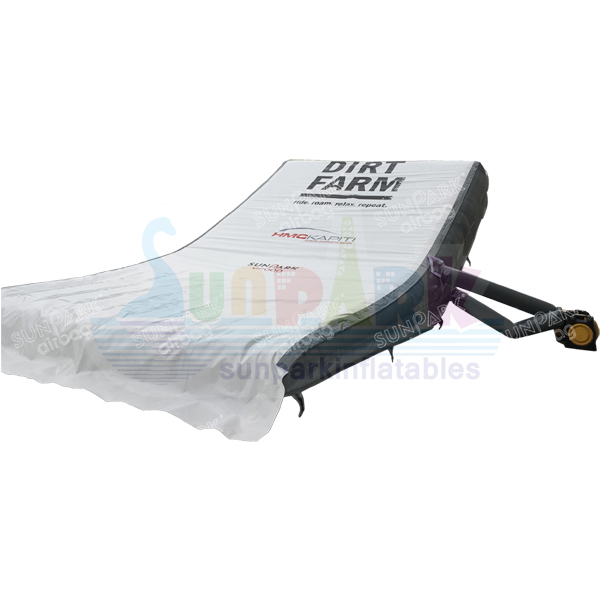
While understanding which structural innovations make freestyle setups reliable is key, selecting an experienced manufacturing partner is what guarantees long-term product durability. With over 10 years of experience, we provide freestyle airbags for ski resorts, theme park, sports and gymnastics facility around the globe. SunparkAirbag® is the leading manufacturer of Airbags for Extreme Sports and Leisure Industries in China.
As extreme sports developed, more and more snowboarders and serious sports enthusiasts are looking for safer training possibilities to progress without risks of getting injured. We create the products for World Champion Snowboarder, famous riders and trampoline parks worldwide. We are deeply committed to the development and improving of our own products. This ensures that every weld, valve positioning, and chamber wall matches our rigorous corporate safety benchmarks.
From our engineering perspective, long-term durability is directly linked to real-world safety. We recommend that buyers look closely at material lifespan and UV degradation curves before purchasing a setup. For a complete look at material reliability, you can read our specialized guide on airbag lifespan and safety guide to see how weatherproofing impacts safety over a multi-year timeline.
Furthermore, budgeting for safety setups does not mean you have to sacrifice manufacturing quality. For small operations or personal backyard training areas, you can check our detailed breakdown of cheap MTB airbag options 2026 to find efficient, cost-effective options that still include professional dual-valve systems. For facilities expanding into multi-sport setups, integrating specialized products like our Halfpipe Airbag allows for broad development across skate, BMX, and scooter programs simultaneously.
9. Frequently Asked Questions
10. Industry References
1. ASTM International. (2022). Standard Specification for Impact Attenuation Systems Used in Sports Facilities (ASTM F1292-22). Conshohocken, PA. Available via https://www.astm.org/)
2. Journal of Biomechanical Engineering. (2024). Analysis of Rotational Forces and Spinal Deceleration Metrics Across Polyurethane Foam Compositions and Pneumatic Restraints. Government Health Research Index.
3. International Journal of Sports Physical Therapy. (2025). Mitigating Lower Extremity and Spinal Injuries in Action Sports via Sloped Landing Geometries. Sports Medicine Database Portal.