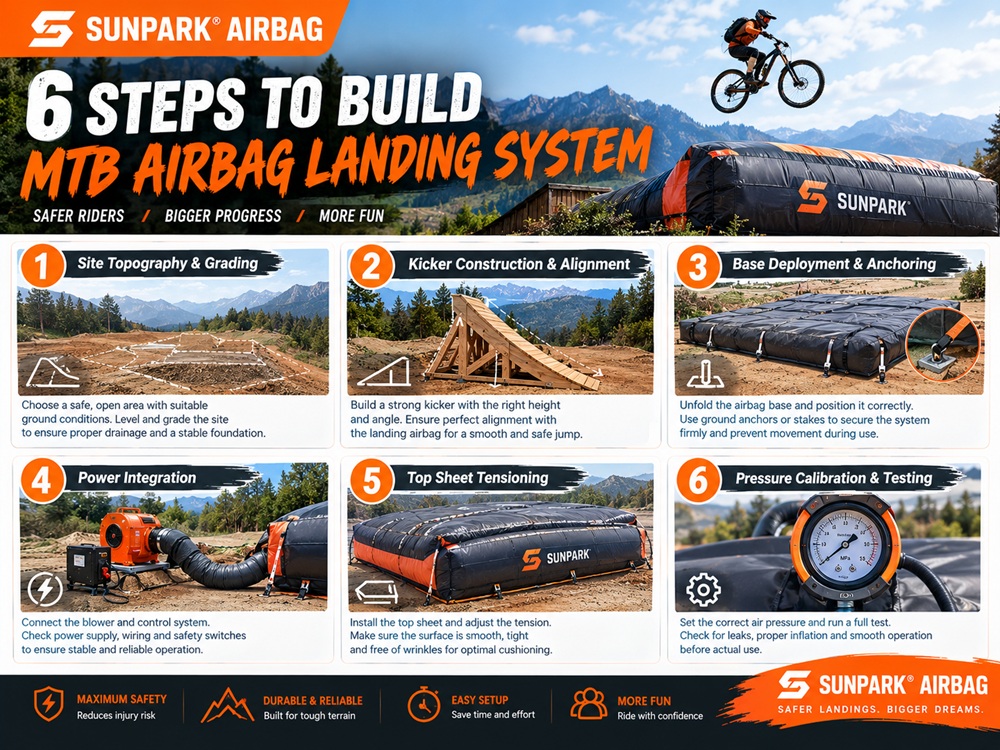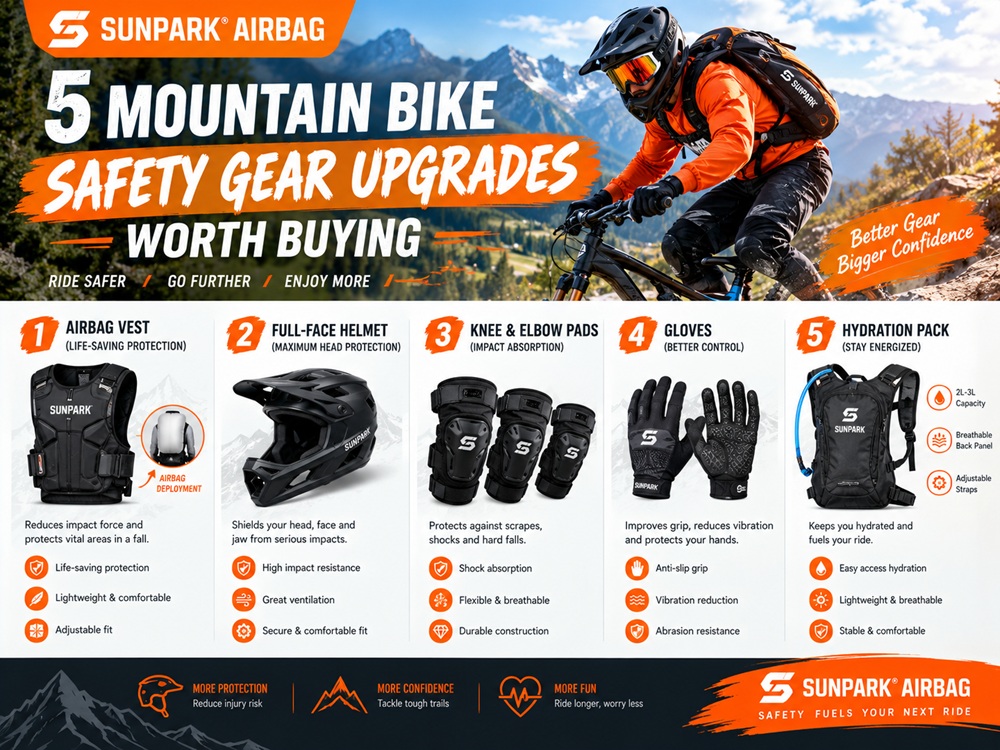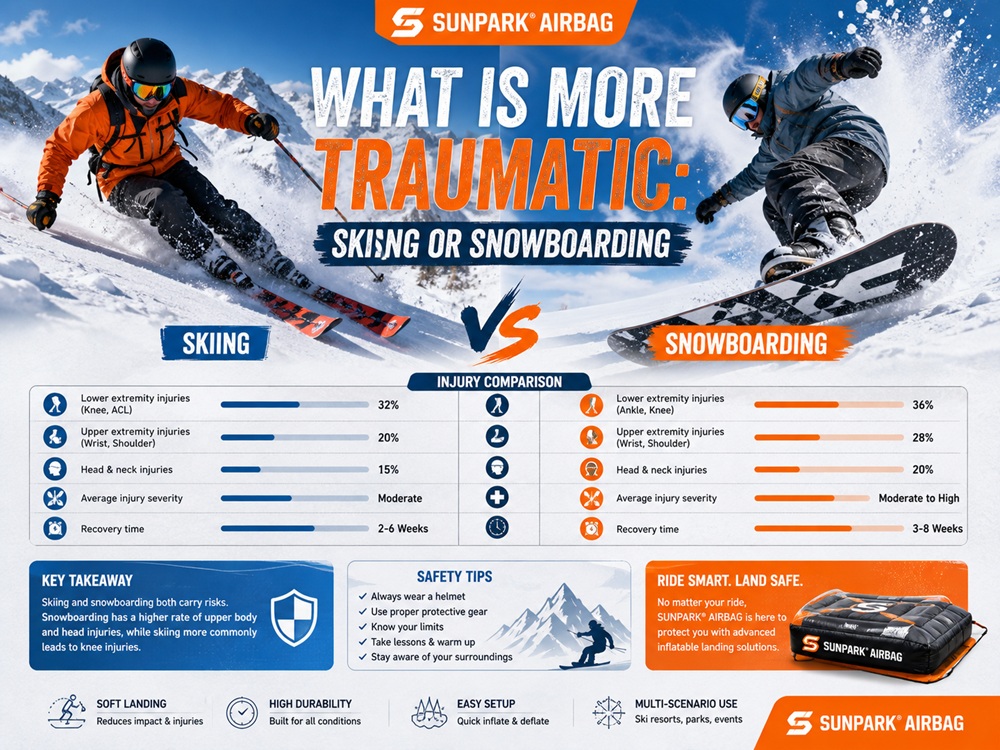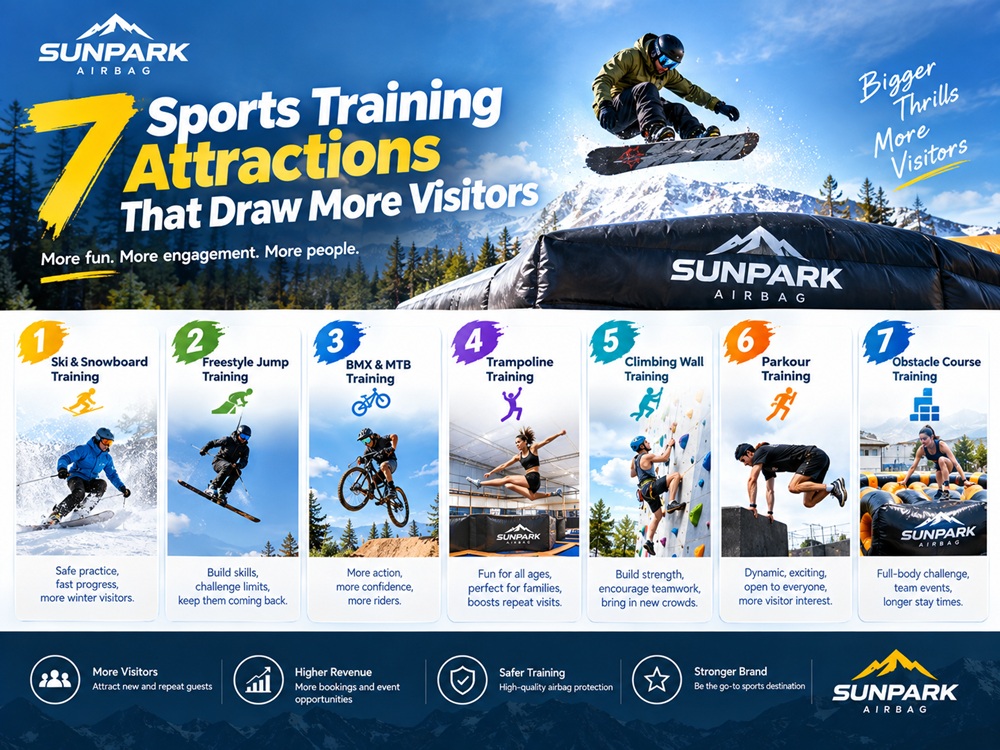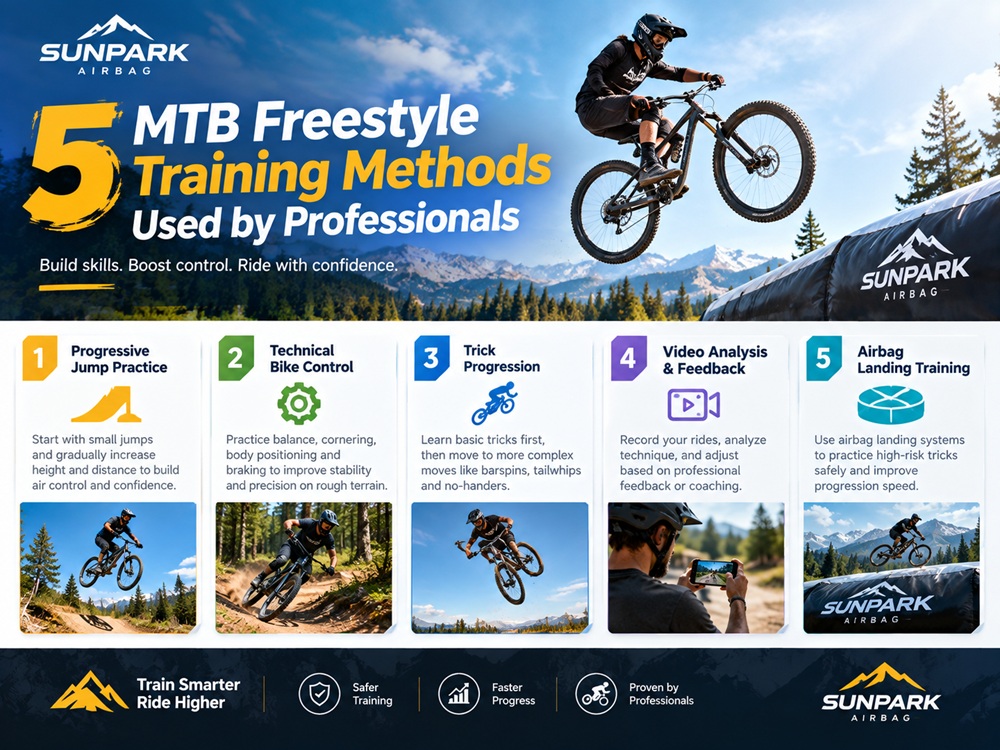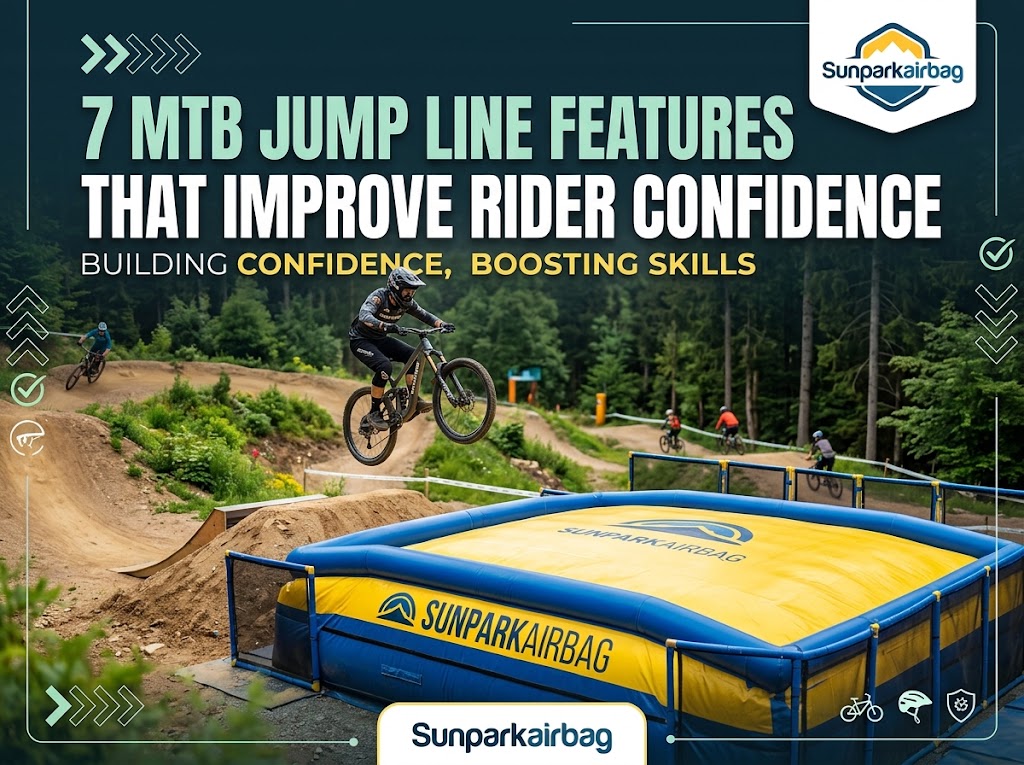
The progression curve of action sports—specifically freestyle mountain biking (MTB) and BMX—demands advanced, impact-forgiving infrastructure. As riders push the boundaries of spatial orientation through complex multi-axis rotations, traditional landing systems like wood chips, dirt slopes, or legacy foam pits no longer suffice. Foam pits, in particular, present major operational vulnerabilities, including chronic material breakdown, fire hazards, and difficult bike extraction maneuvers. To mitigate these issues, modern sports facilities, commercial bike parks, and professional athletes utilize continuous-airflow inflatable landing systems. Specifying a footprint for these systems requires calculating custom MTB airbag dimensions to align with specific ramp trajectories, rider velocities, and spatial constraints.
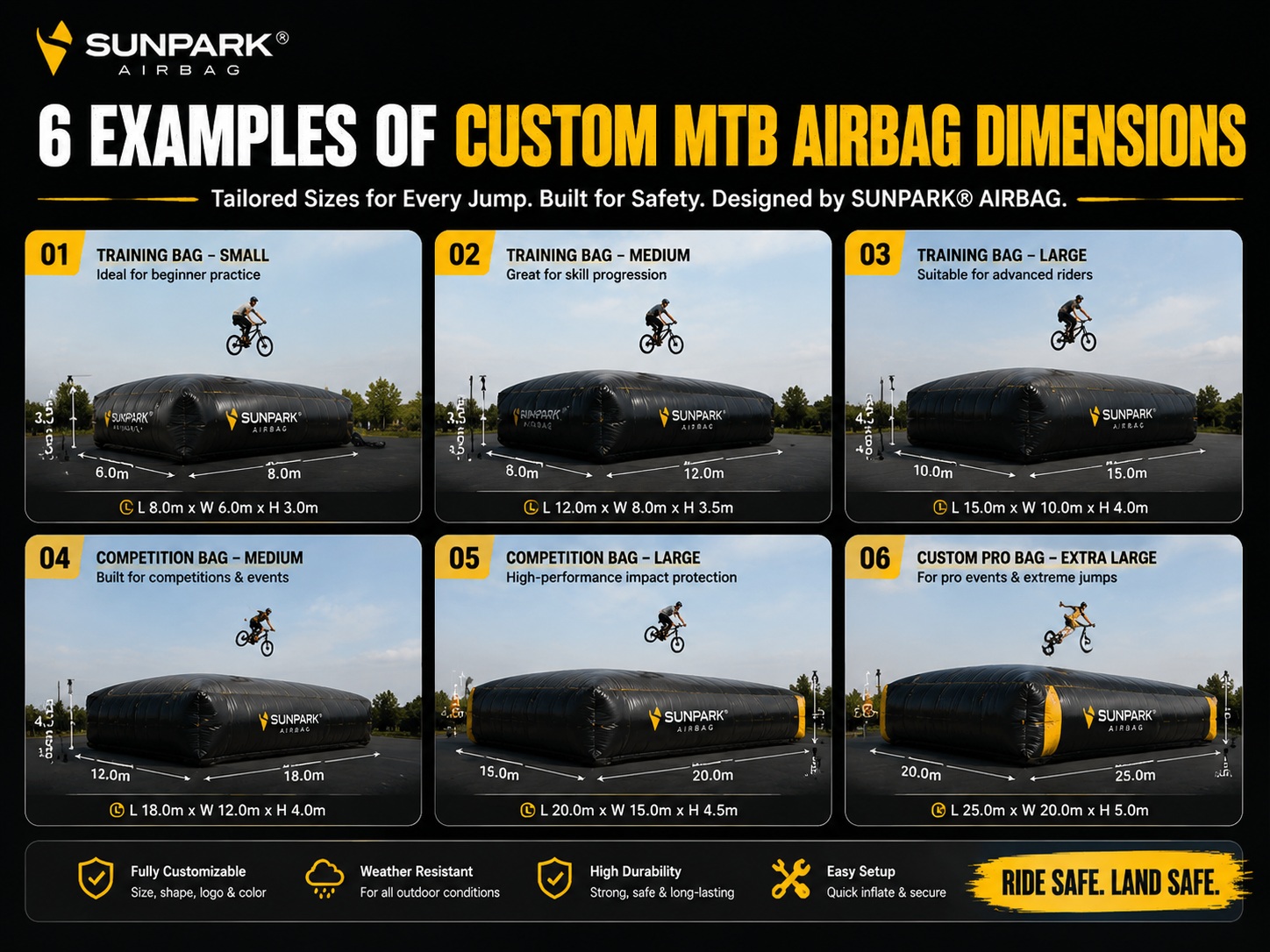
At SUNPARK®, we bring over 10 years of specialized experience to manufacturing freestyle airbags for ski resorts, theme parks, gymnastics facilities, and extreme sports centers globally. As the leading manufacturer of airbags for extreme sports and leisure industries in China, we engineer state-of-the-art landing systems utilized by world champion snowboarders, elite micro-mobility riders, and trampoline parks worldwide. From our experience, a common mistake made by facility operators is adopting a one-size-fits-all approach to airbag sourcing. Purchasing a generic, undersized landing bag or mismatched ramp profile can result in riders clipping the deck or sliding off the edges during high-velocity attempts. This technical manual evaluates six specific examples of custom MTB airbag dimensions, detailing the physical engineering parameters, safety margins, and spatial configurations required to match different skill levels and facility layouts.
- 1. Technical Specification Matrix: Sizing Models and Kinematics
- 2. Pneumatic Engineering: Dual-Chamber Physics and Valving Dynamics
- 3. 6 Analytical Examples of Custom MTB Airbag Dimensions
- 4. Structural Durability: Material Selection and Reinforcement Specs
- 5. Frequently Asked Questions (FAQs)
- 6. Industrial Safety and Structural Engineering References
1. Technical Specification Matrix: Sizing Models and Kinematics
Before designing a custom jump line or modifying existing earthen dirt roll-ins, facility builders must analyze spatial dimensions alongside rider trajectory physics. The table below details six specific sizing configurations engineered for distinct target operational environments in 2026.
| Airbag Profile Model | Custom Metric Dimensions (L x W x H) | Custom Imperial Dimensions (L x W x H) | Recommended Kick Ramp Height | Primary Operational Setting |
|---|---|---|---|---|
| Example 1: Micro-Lander / Youth Progression | 4.6m x 2.4m x 1.1m | 15.0ft x 8.0ft x 3.6ft | 0.6m to 1.0m (2.0ft – 3.3ft) | Backyard training setups and youth skills clinics |
| Example 2: Compact Portable / NextStep | 4.6m x 3.5m x 1.5m | 15.0ft x 11.5ft x 5.0ft | 1.2m to 1.5m (4.0ft – 5.0ft) | Traveling show teams and backyard trick progression |
| Example 3: Standard Intermediate Bike Park | 8.0m x 4.5m x 2.5m | 26.2ft x 14.8ft x 8.2ft | 1.5m to 2.0m (5.0ft – 6.5ft) | Commercial indoor bike parks and multi-skill public tracks |
| Example 4: Full-Scale Pro SlopeStyle | 11.5m x 5.0m x 3.5m | 37.7ft x 16.4ft x 11.5ft | 2.0m to 3.0m (6.5ft – 10.0ft) | Professional training camps and extreme competition setups |
| Example 5: Massive Flat-Impact Studio Bag | 6.1m x 6.1m x 2.0m | 20.0ft x 20.0ft x 6.5ft | Horizontal step-downs | Stunt show production and horizontal free-fall testing |
| Example 6: Elite Megamph / Quarter-Pipe | 5.6m x 4.6m x 2.5m (Curved) | 18.3ft x 15.1ft x 8.2ft (Curved) | Vertical transitions | Advanced flair, spine, and quarter-pipe height progression |
2. Pneumatic Engineering: Dual-Chamber Physics and Valving Dynamics
To successfully specify custom MTB airbag dimensions, you must understand the thermodynamic and pneumatic forces that manage heavy mechanical impacts. A professional action-sports airbag is not a simple sealed inflatible like a commercial pool float or a children’s bouncy castle. Sealed bags act like trampolines; they store energy upon impact and rebound the rider forcefully back into the air, creating severe risk for neck and joint injuries.
From our experience, high-performance impact deceleration relies on a continuous-airflow, dual-chamber pneumatic design. The system incorporates a completely independent lower chamber inflated to a higher internal pressure, acting as a structural base that prevents the rider and bicycle from bottoming out against the ground. The upper chamber features multiple adjustable air vents that regulate softness based on target training goals. When a rider impacts the top sheet, air escapes through these calibrated vents, transforming kinetic energy into controlled exhaust flow. This deformation provides a gentle, progressive slowing down that allows the rider to land safely, even if they miss their rotations entirely.
We recommend verifying that your custom airbag dimensions provide an adequate upper-chamber volume to support full deceleration without collapsing into the lower base. If the overall landing bag height is too low—for instance, using a thin 1-meter flat pad for high-velocity slopestyle drops—the upper chamber will run out of air volume before absorbing the rider’s downward momentum. This forces the rider’s tires to hit the stiff lower layer abruptly, which can throw the handlebars forward and cause an unexpected crash.
3. 6 Analytical Examples of Custom MTB Airbag Dimensions
Example 1: The Micro-Lander Sizing Matrix (4.6m x 2.4m x 1.1m)
This compact progression footprint is engineered specifically for entry-level skills clinics, pump-track youth areas, and private backyard practice ramps. Featuring a modest 1.1-meter height profile, it sits flush against low wooden or composite kicker ramps. The 2.4-meter width ensures safe straight-line tracking for lightweight riders mastering basic wheel lifts, manual drops, and early bunny hops, providing a comfortable, low-risk introduction to freestyle jumps.
Example 2: The Compact Portable NextStep Configuration (4.6m x 3.5m x 1.5m)
A preferred selection for mobile stunt shows, traveling demonstration teams, and private backyard enthusiasts with limited layout space. Standing 1.5 meters high with an expanded 3.5-meter safety width, this airbag can be transported easily when deflated. It provides an excellent portable lander for intermediate riders stepping up to standard 4-foot to 5-foot launch ramps, offering enough landing area to catch slightly off-center landings safely.
Example 3: The Standard Intermediate Bike Park Profile (8.0m x 4.5m x 2.5m)
This configuration serves as the foundational workhorse across commercial indoor bike parks, extreme sports academies, and public municipal pump facilities globally. With an 8.0-meter overall landing length and a robust 2.5-meter structural height, this bag mimics the natural angle of standard dirt landing mounds. It provides a long, forgiving slope that gives intermediate and advanced riders plenty of space to practice complex flip and spin variations before taking them to hard dirt lines.
Example 4: The Full-Scale Pro SlopeStyle Architecture (11.5m x 5.0m x 3.5m)
Engineered explicitly to support elite professional training centers and national-level extreme sports competition circuits. This massive system stands 3.5 meters high with an expansive 5.0-meter horizontal safety deck, allowing it to handle massive air trajectories from 10-foot slopestyle launch towers. The extended 11.5-meter downhill ramp slope provides high-speed absorption, allowing riders to either absorb deep impact forces softly or maintain forward momentum to ride away from clean trick completions cleanly.
Example 5: The Massive Flat-Impact Studio Bag (6.1m x 6.1m x 2.0m)
Moving away from slopestyle inclined profiles, this large square footprint functions as a heavy-duty flat crash pad array for commercial film production, stunt studios, and gymnastics facilities. Lacking an angled downhill exit, it features an extra-deep, highly pliant upper air chamber designed to catch unaligned, off-axis falls from horizontal step-down obstacles or high trampoline drops, catching the rider safely regardless of their landing angle.
6. The Elite Megaramp Quarter-Pipe Transition (5.6m x 4.6m x 2.5m Curved)
A highly specialized, curved system engineered to fit flush inside professional wood or steel quarter-pipe ramps and vertical spine structures. Standing 2.5 meters high with a mathematically tuned transition radius, it allows advanced riders to push vertical heights on flairs, 540s, and tailwhips safely, protecting them from harsh vertical compression impacts if they slip out at the lip of the ramp.
4. Structural Durability: Material Selection and Reinforcement Specs
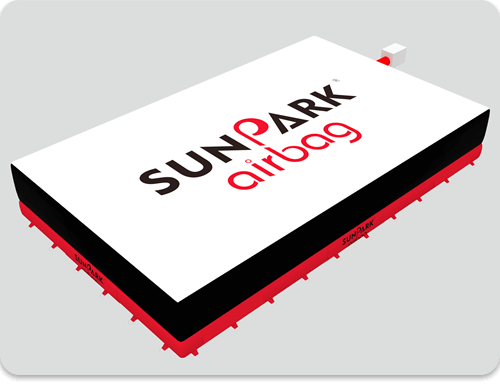
Building high-performance freestyle airbags requires precision craftsmanship and specialized, heavy-duty composite materials to withstand the relentless mechanical abuse of mountain bike pedals and steel axles.
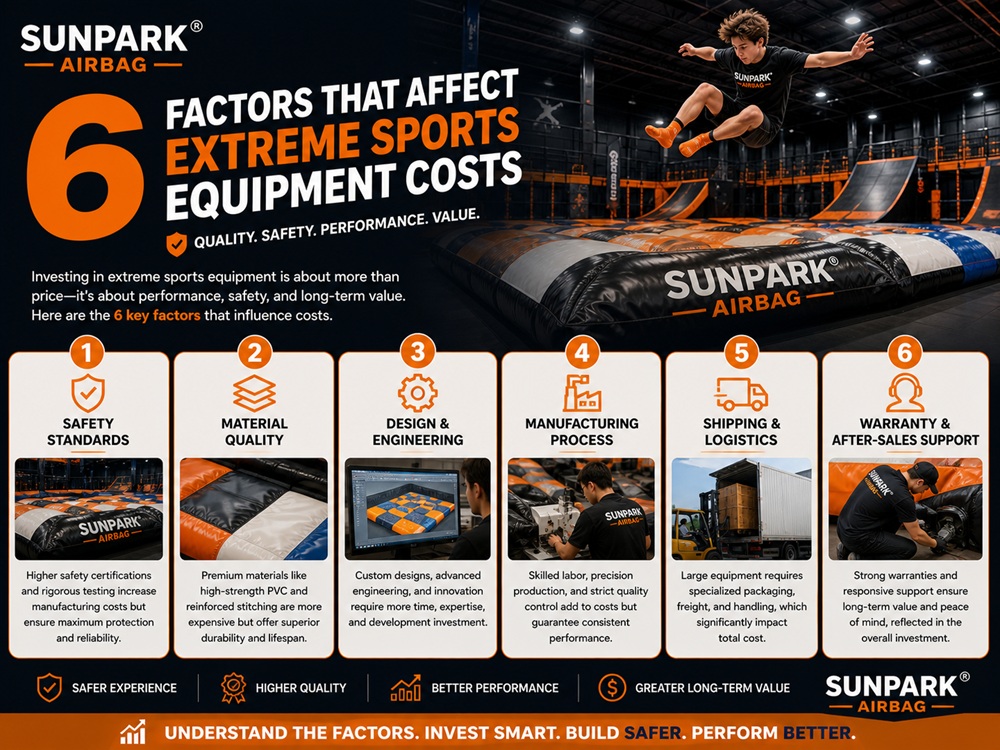
To ensure long-term structural security across heavy public bike parks, your material choices must handle intense abrasion forces. While traditional bouncy houses utilize low-grade thin vinyl sheets, professional extreme-sports systems demand heavy-duty, multi-layer PVC tarpaulin materials. Our advanced bike airbag landing systems utilize a 0.55mm thick PVC tarpaulin for the internal chamber walls, combined with an ultra-thick, 0.9mm PVC top sheet that is completely flame-retardant, waterproof, and treated with advanced UV inhibitors to prevent sun damage during outdoor summer park sessions.
| Airbag Component Layer | Raw Material Specification | Mechanical Tensile Rating | SUNPARK® System Integration Link |
|---|---|---|---|
| Internal Structure Walls | 0.55mm Heavy PVC Tarpaulin | High internal seam burst safety | stunt airbag landing |
| Replaceable Top Sheet | 0.9mm Ultra-Thick PVC Coating | Extreme tear and pedal scratch resistance | inflatable crash mat |
| Gymnastics Drop Pads | High-Flexibility Micro-Mesh Film | Low friction skin-burn defense | gymnastics airbag equipment |
| Mega-Jump System Bases | Reinforced D-Ring Anchor Arrays | Resists 60 mph commercial wind loads | big jump airbag system |
Furthermore, our engineering teams include crucial design details to extend the working lifespan of your investment. To see how our systems handle heavy impact protection across different sports, browse our high-capacity stunt airbag landing solutions or check our heavy-duty inflatable crash mat options. Every extreme sports unit we produce incorporates large 2.5-inch marine-grade stainless steel anchor D-rings spaced every 2 meters, ensuring firm, reliable tie-down security on snow, concrete, or dirt. Every single high-velocity system features an easily removable and replaceable top cover sheet attached via thick, commercial-grade Velcro loops. This smart design ensures that when heavy metal pedals eventually scratch or wear down the top layer after years of intense training sessions, park operators can simply swap out the top sheet for a brand-new cover, avoiding the heavy expense of replacing the entire internal airbag assembly.
5. Frequently Asked Questions (FAQs)
6. Industrial Safety and Structural Engineering References
For official extreme sports equipment safety guidelines, international inflatable manufacturing codes, and material testing protocols, consult these authoritative organizations:
- European Committee for Standardization (CEN). EN 14960: Inflatable Play Equipment – Safety Requirements and Core Product Test Methods. Brussels, Belgium.
- ASTM International. ASTM F2374 Standard Practice for Design, Manufacture, and Operation of Inflatable Amusement Devices. West Conshohocken, PA.
- International Association for the Advancement of Action Sports Infrastructure. Analysis of Kinetic Impact Deceleration Coefficients and Dynamic Fluid Exhaust Venting in Thermoset Composites.