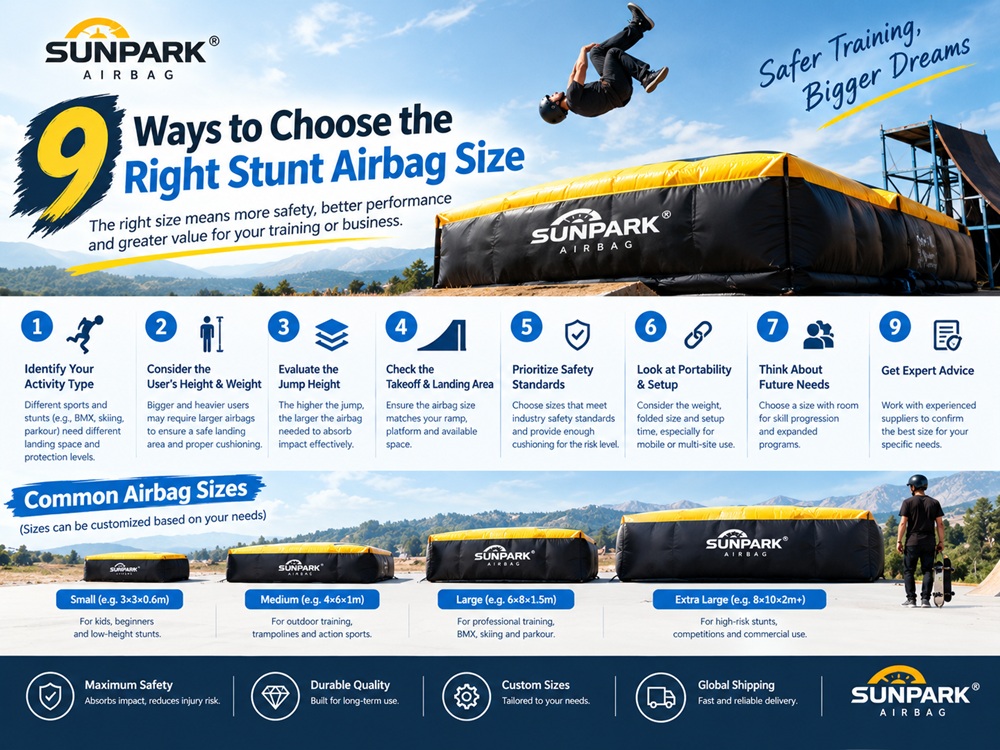
As extreme sports have developed at an unprecedented pace over the last decade, more and more snowboarders and serious sports enthusiasts are looking for safer training possibilities to progress without the high risks of getting injured. When evaluating modern freestyle training facilities, one of the most frequently asked questions we receive from athletes, coaches, and resort managers is: are airbags safe for snowboarders? The short answer is yes, but understanding the engineering, materials, and physics behind these massive inflatable structures is critical to fully appreciating their safety profile.
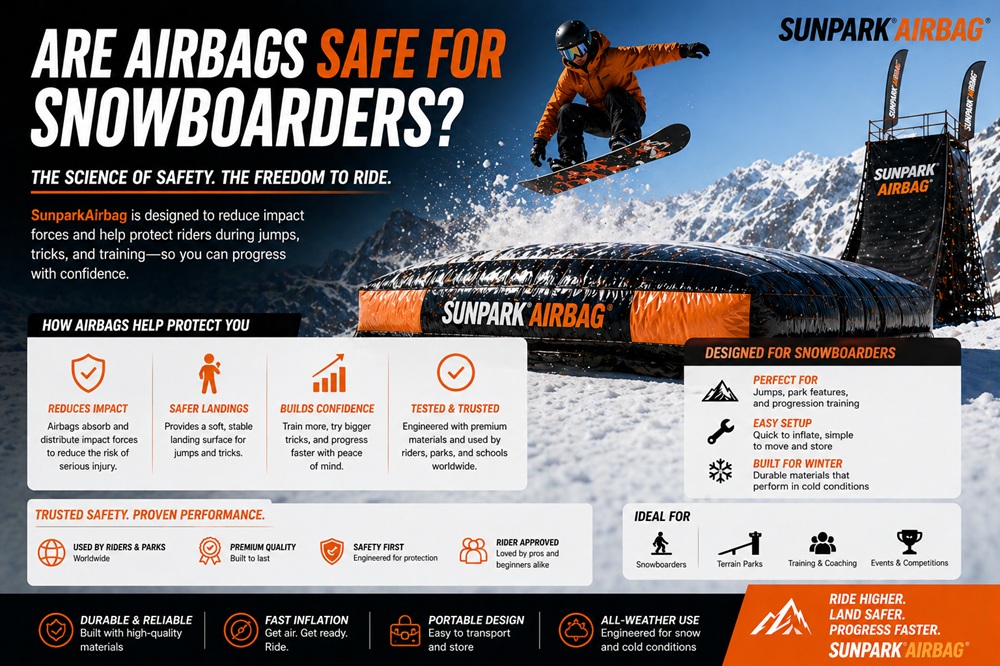
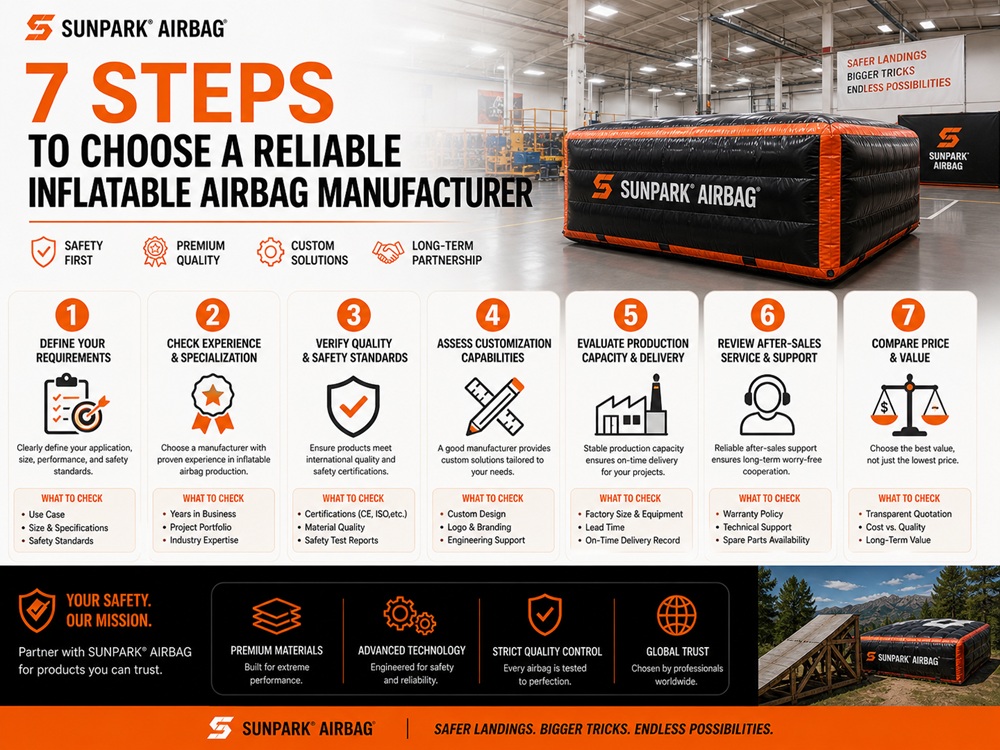
With over 10 years of experience, we provide freestyle airbags for ski resorts, theme parks, sports, and gymnastics facilities around the globe. SunparkAirbag® is the leading manufacturer of Airbags for Extreme Sports and Leisure Industries in China. We create products for World Champion Snowboarders, famous riders, and trampoline parks worldwide. We are deeply committed to the development and improving of our own products.
From our experience engineering advanced pneumatic landing systems, the transition from hard snow landings and outdated foam pits to sophisticated airbag technology has revolutionized the progression of snowboard tricks. In this comprehensive industry guide, we will analyze exactly why airbags safe for snowboarders are considered the gold standard in action sports training, detailing the structural mechanics, pressure displacement systems, and facility implementation best practices.
The Evolution of Freestyle Training
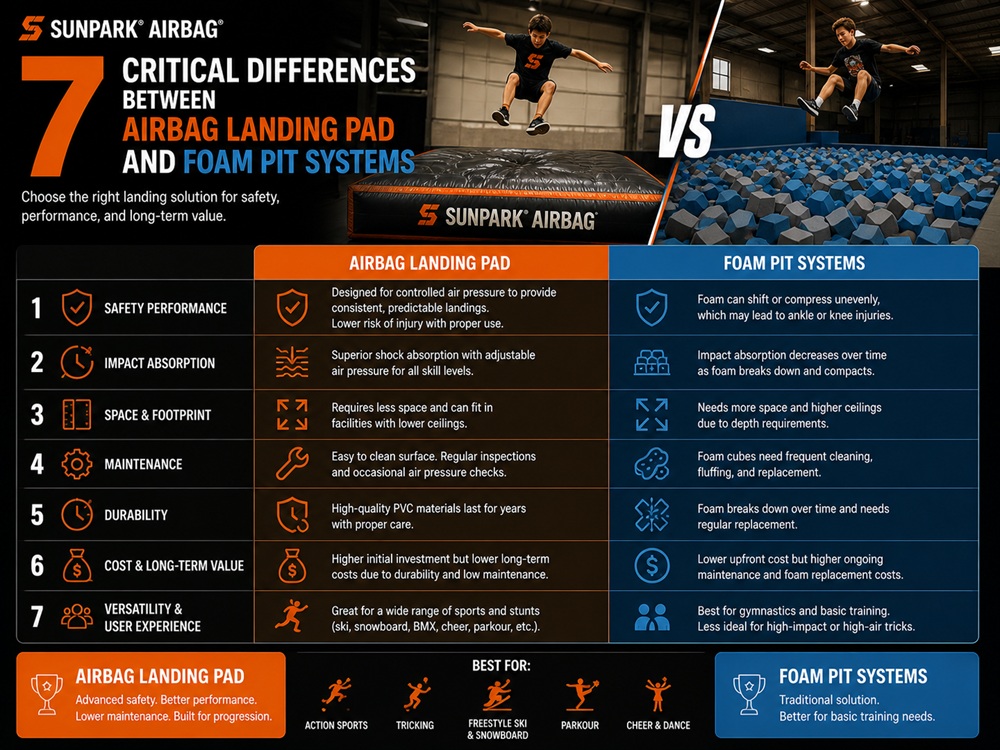
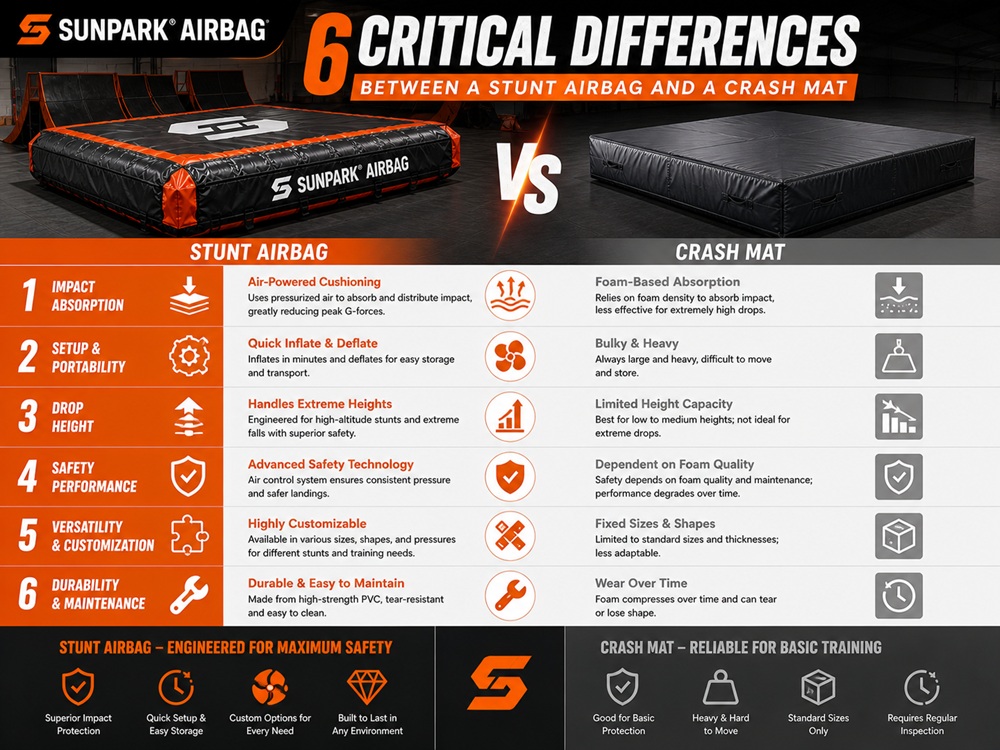
Historically, learning a new rotation or inverted aerial maneuver on a snowboard meant committing to a hard-packed snow landing. The physical toll on an athlete’s knees, spine, and ankles was immense. The industry temporarily shifted toward foam pits, but these posed their own hazards: they harbor bacteria, degrade quickly under UV light, and pose a severe fire risk. More importantly, foam pits do not allow a rider to ride away from a trick; they simply swallow the athlete, making it difficult to simulate real-mountain physics.
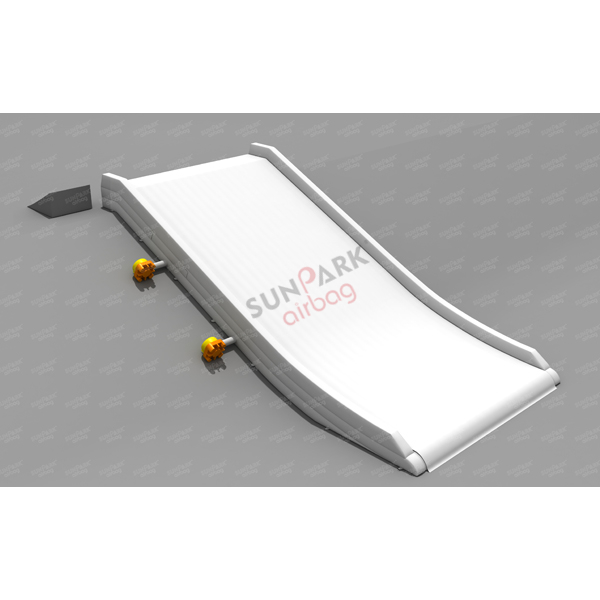
When asking are airbags safe for snowboarders, we must look at the modern contoured landing bag. Unlike early flat stunt bags that acted like giant inflatable mattresses, today’s advanced landing airbag solutions are built on an inclined pitch. This mimics the exact angle of a snow landing. Riders can land on their edges, absorb the impact safely if they crash, or literally ride out of the trick down the inflatable transition. This technological leap is precisely why the best snowboard airbag parks have become mandatory training grounds for Olympic-level athletes.
Summary Table: Airbags vs. Traditional Landings
| Feature / Metric | SUNPARK® Snowboard Airbag | Hard Packed Snow | Traditional Foam Pit |
|---|---|---|---|
| Impact Absorption | Excellent (Adjustable pneumatic displacement) | Poor (High risk of acute trauma) | Good (But abrupt deceleration) |
| Ride-Out Capability | Yes (Pitched landing designs) | Yes | No (Rider gets stuck) |
| Hygiene & Maintenance | High (Easy to clean PVC topsheet) | High (Natural melting/grooming) | Low (Collects dust, sweat, and debris) |
| Progression Safety | Extremely High (Forgiving on under-rotations) | Low (Unforgiving on edge catches) | Moderate (Risk of twisting limbs upon entry) |
| Versatility | High (Can be used year-round) | Low (Weather dependent) | Moderate (Usually indoors only) |
The Science of Safety: How Our Airbags Work
To definitively state that airbags safe for snowboarders are a reality, we must examine the physics of impact deceleration. When a snowboarder weighing 180 pounds drops from a 20-foot kicker, the kinetic energy upon landing is substantial. If the landing surface does not displace this energy over time, the energy is transferred directly into the rider’s joints and skeletal system.
Dual-Chamber Technology
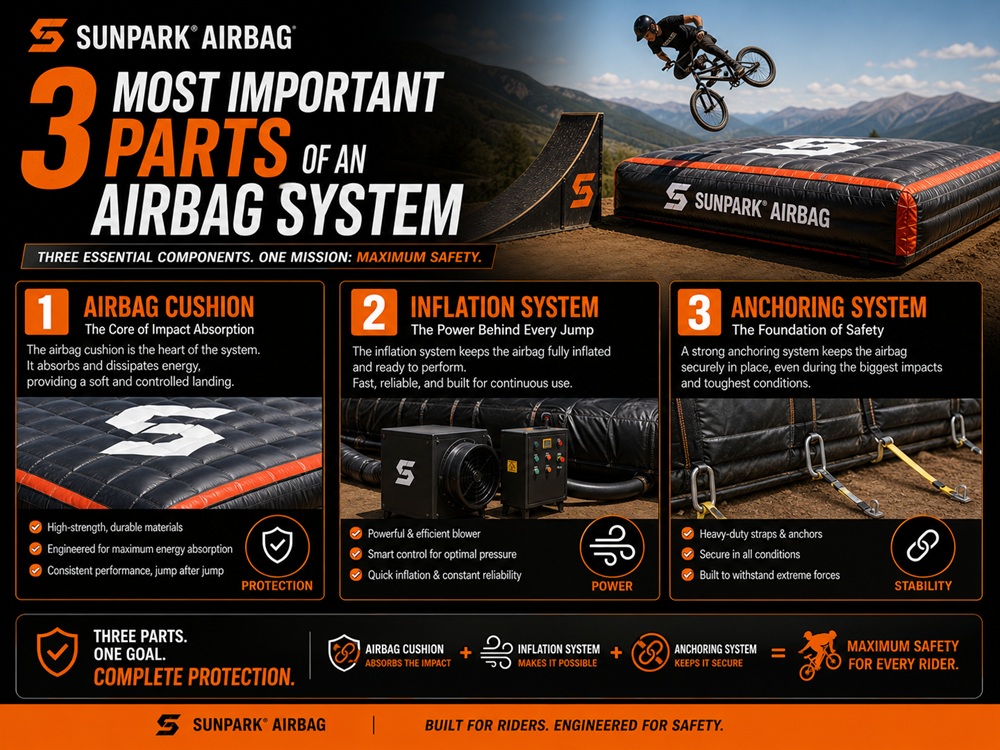
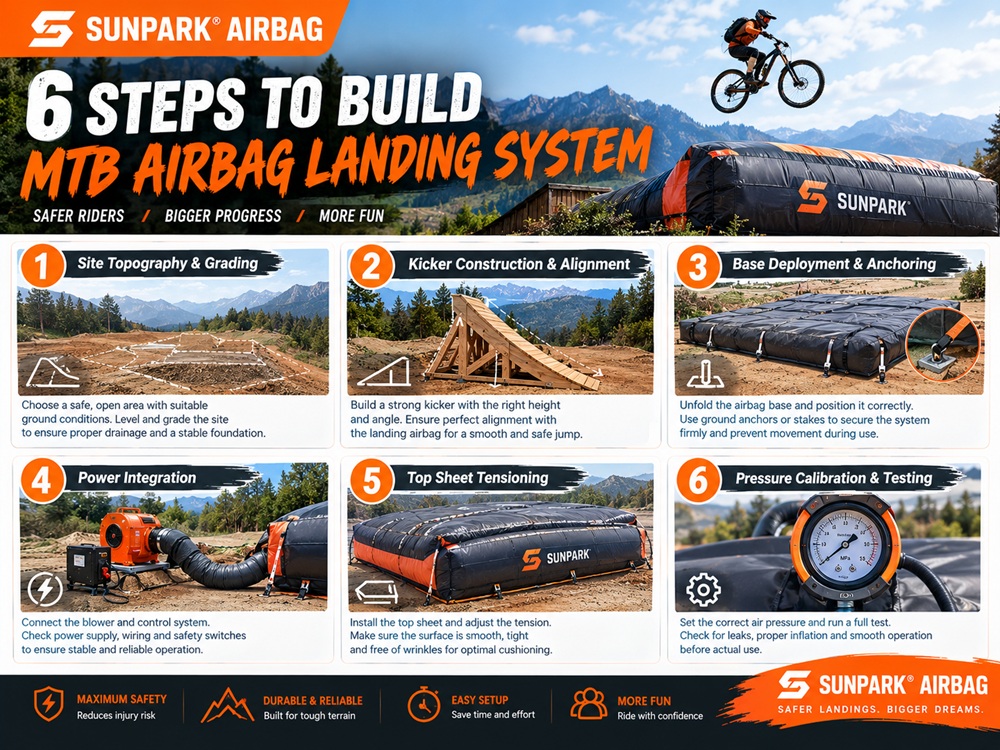
From our experience in manufacturing high-end systems, single-chamber bags are insufficient for extreme sports. SUNPARK® utilizes a dual-chamber system. The bottom chamber is kept firm, providing a solid foundation that prevents the rider from ever bottoming out and hitting the ground. The top chamber is softer and highly shock-absorbing. When a snowboarder lands, the top chamber compresses, cradling the board and body, while the bottom chamber maintains the structural integrity of the landing slope. This is the same principle we apply when engineering our MTB airbag landing system and our highly sought-after inflatable MTB airbag solutions.
Advanced Pressure Release Valves
Are airbags safe for snowboarders if they are over-inflated? No, which is why we engineer sophisticated pressure release systems. When an impact occurs, internal air must escape rapidly to soften the blow. Our airbags feature adjustable air vents that allow facility operators to tune the softness of the bag based on the weight of the riders and the height of the jump. If World Champion snowboarders are hitting a massive 70-foot jump, the vents are calibrated differently than if children are using an inflatable jump airbag for the first time.
Commercial-Grade Materials and Construction
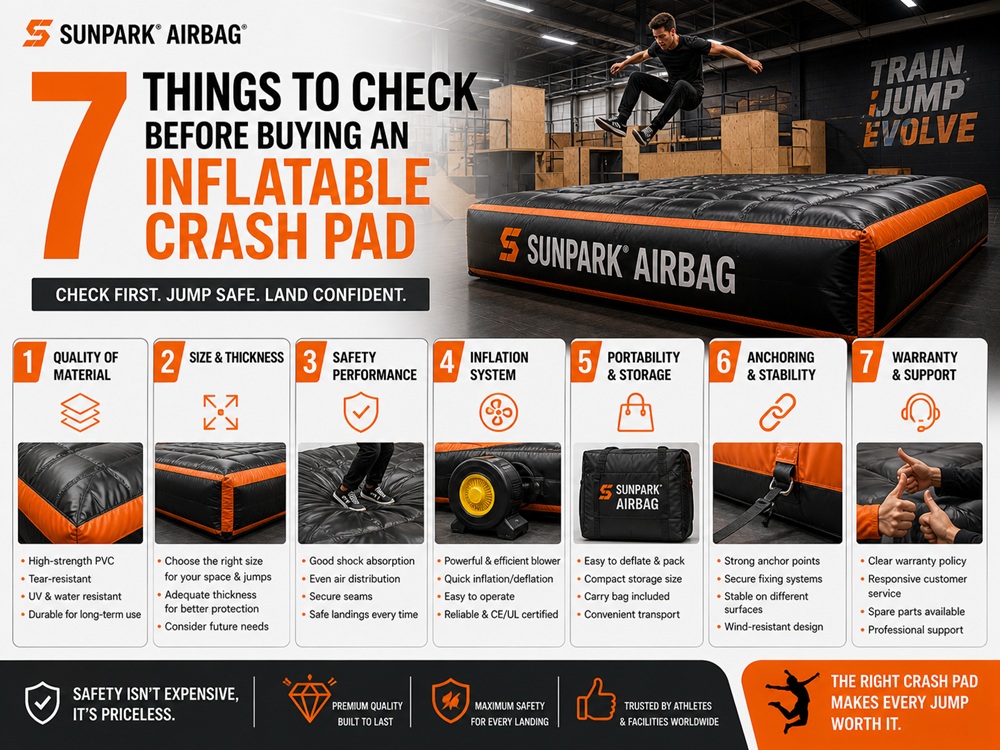
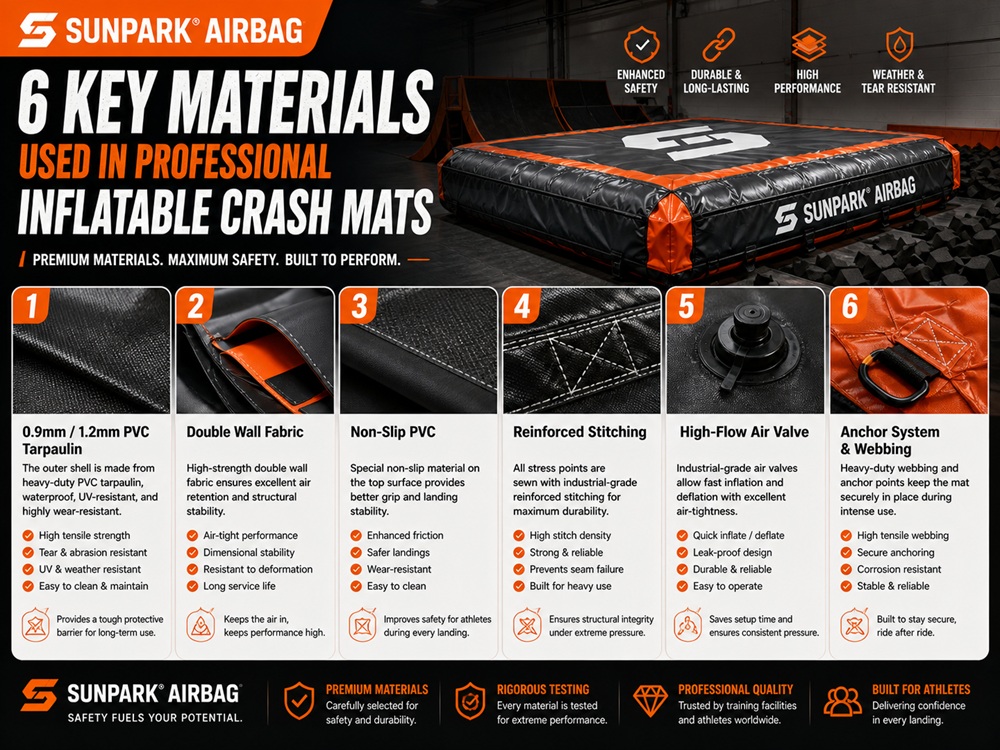
The safety of a product is only as good as the materials used to construct it. A major factor that makes airbags safe for snowboarders is the use of heavy-duty, commercial-grade PVC tarpaulin. Snowboard edges are sharp, and riders wear hard boots and bindings. We utilize a specialized, friction-resistant topsheet that allows the snowboard to glide across the surface without catching or slicing the material.
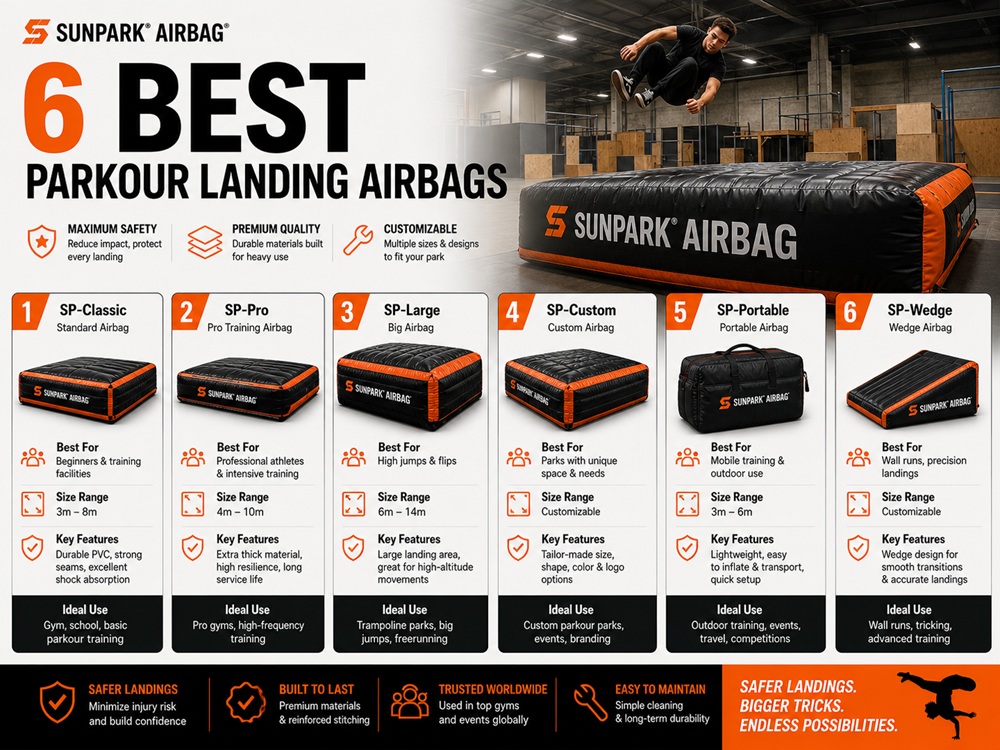
Furthermore, we implement quadruple stitching at all high-stress seams. This ensures that even under the immense pressure of repeated daily impacts at high-volume resorts, the structural integrity of the airbag remains uncompromised. This dedication to material science extends across our entire product line, from action sports systems to our specialized gym airbag for training.
Addressing the Core Question: Are Airbags Safe for Snowboarders of All Levels?
We routinely hear the question: are airbags safe for snowboarders who are just beginners, or are they only for professionals? We recommend airbag training for riders of all skill levels, but the benefits differ based on experience.
For professionals, airbags are a tool for pushing the boundaries of the sport. Triples and quad corks are essentially impossible to learn on snow without facing catastrophic injury risks. For these athletes, airbags provide a vital safety net that allows them to build muscle memory safely.
For beginners and intermediates, airbags safe for snowboarders offer the psychological freedom to overcome fear. Learning a basic 360 or backflip is mentally daunting. The forgiving nature of the SUNPARK® airbag eliminates the fear of catching an edge on a hard landing, allowing the rider to focus entirely on their aerial mechanics. We do, however, strongly recommend that beginners receive proper coaching on how to approach the kicker and how to orient their bodies for a safe landing, even on an airbag.
Facility Management and Progression Synergy
The integration of airbag technology is transforming business models for sports facilities. From our consultations regarding trampoline park construction cost to projecting trampoline park owner income, adding a snowboard or ski jump airbag significantly increases foot traffic and revenue. It attracts a highly dedicated demographic of action sports enthusiasts who will purchase recurring memberships to train safely year-round.
For riders looking to find these cutting-edge facilities, we have compiled an airbag jump locations guide to help you locate the nearest SUNPARK® equipped venue.
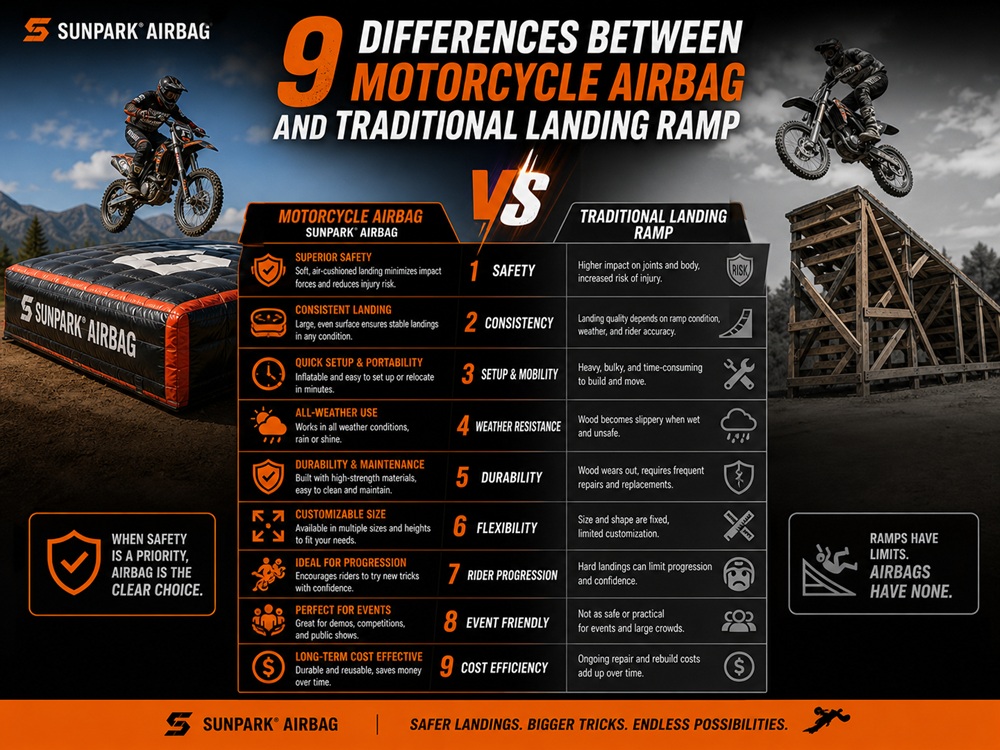
Interestingly, the cross-training benefits of airbags have permeated other high-speed sports. The technology we developed to keep snowboarders safe has directly influenced the safety protocols in motorsports, which you can read about in our analysis of motorcycle airbag systems 2026.
Our Expert Recommendations for Riders
While we confidently state that airbags safe for snowboarders are a factual reality, the equipment must be used responsibly. From our experience as industry leaders, we recommend the following guidelines for athletes:
- Inspect Your Equipment: Ensure your snowboard edges do not have jagged burrs that could damage the topsheet. Even the strongest materials have limits.
- Clear the Landing: Never drop into a jump until the rider before you has completely cleared the airbag and exited the landing zone.
- Start Small: Do not attempt a double backflip on your first try just because the landing is soft. Use the airbag to incrementally build your skills from basic straight airs to complex rotations.
- Wear a Helmet: An airbag protects your body from impact with the ground, but it does not prevent you from accidentally hitting your head with your own knee or board upon compression. Helmets are always mandatory.
Frequently Asked Questions (FAQs)
While airbags drastically reduce the impact forces compared to snow or dirt, landing directly on your head or neck is inherently dangerous in any sport. Our dual-chamber airbags are designed to absorb maximum impact, but proper aerial awareness and attempting tricks within your skill level remains critical. The airbag minimizes risk, but it does not grant invincibility.
Standard flat airbags can be damaged by sharp edges. However, SUNPARK® utilizes a highly durable, specialized topsheet designed specifically to withstand the friction and sharp edges of snowboards and skis. Routine maintenance and avoiding heavily detuned or jagged edges ensures the longevity of the equipment.
No, you can use your regular setup. However, some training facilities provide specialized “training boards” that have no metal edges or use roller-wheels for dry-slope run-ins. If you are riding on a snow run-in into an airbag, your standard snowboard is perfectly fine.
SUNPARK® airbags are constructed with UV-resistant and weather-proof commercial PVC. They can withstand freezing mountain temperatures and heavy snowfall. Facility operators must simply clear snow off the topsheet to maintain the proper gliding surface for ride-out landings.
References