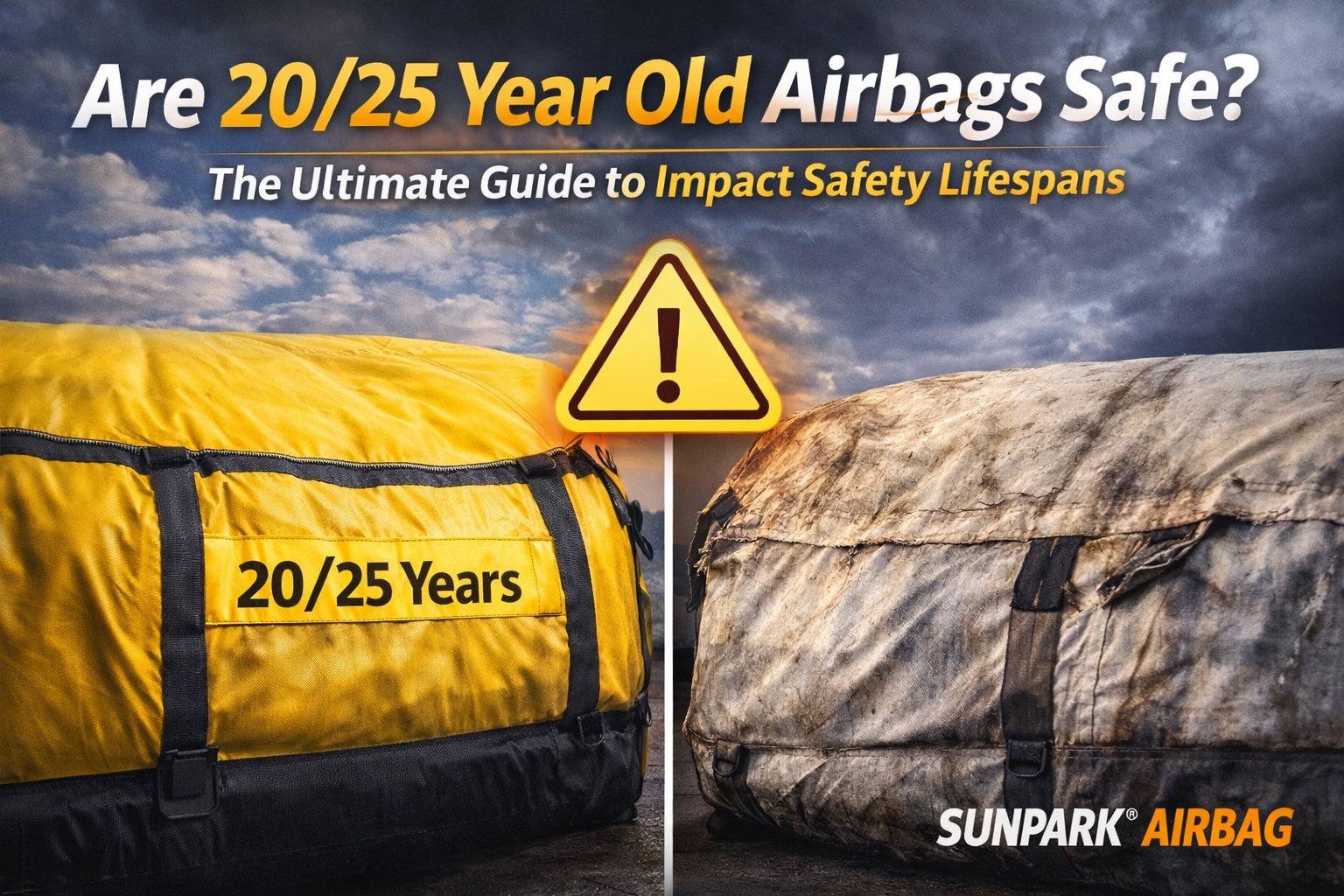
Impact safety technology surrounds us, from the steering wheel of our daily commuter vehicles to the massive inflatable structures utilized in world-class extreme sports training facilities. A question we frequently encounter from safety-conscious consumers and automotive enthusiasts alike is: are 25 year old airbags safe? The short answer is complex. Automotive safety restraints were originally engineered with a finite lifespan in mind, relying on highly sensitive chemical propellants to execute a single, life-saving deployment in milliseconds.
At SUNPARK®, we operate at the bleeding edge of impact absorption. With over 10 years of experience, we provide freestyle airbags for ski resorts, theme parks, sports, and gymnastics facilities around the globe. As the leading manufacturer of Airbags for Extreme Sports and Leisure Industries in China, our engineering teams possess a deep, structural understanding of how inflatable safety mechanisms degrade, perform, and evolve over time. While automotive airbags are single-use pyrotechnic devices, our extreme sports airbags are continuous-flow structures designed to withstand thousands of daily impacts. However, the fundamental principles of material degradation, seal integrity, and pressure management remain intricately linked.
In this comprehensive guide, we will dissect the chemical and mechanical reality of automotive airbag aging, definitively answer whether 25 year old airbags safe to rely on, and explore how modern impact safety has evolved into the highly durable, reusable extreme sports applications manufactured by SUNPARK® today.
Summary Table: Comparing Airbag Lifespans and Technologies
To understand the nuances of impact safety, it is essential to distinguish between automotive applications and continuous-use sports applications. We have compiled this summary table to clarify the lifespans, mechanisms, and safety profiles of both technologies.
| Specification | Automotive Airbags (e.g., 1990s-2000s) | SUNPARK® Extreme Sports Airbags |
|---|---|---|
| Deployment Mechanism | Chemical propellant (Sodium Azide/Ammonium Nitrate) triggering a pyrotechnic explosion. | Continuous air flow via external industrial blowers maintaining specific internal pressure. |
| Intended Usage | Single-use, emergency deployment only. | Multi-use, designed for thousands of impacts per day. |
| Lifespan Expectancy | Originally 10-15 years. Are 25 year old airbags safe? Highly questionable due to chemical degradation. | Years of heavy commercial use, with replaceable top sheets extending longevity indefinitely. |
| Primary Degradation Factor | Moisture intrusion breaking down chemical propellants over thermal cycling. | UV exposure and mechanical friction on the outer PVC/TPU layers. |
| Safety Check Method | SRS diagnostic computer scanning; physical inspection requires destructive dismantling. | Visual inspection of seams, pressure testing, and regular cleaning of the landing surface. |
The Science of Automotive Airbag Degradation
When assessing whether 25 year old airbags safe, we must look at the technology utilized in the late 1990s and early 2000s. Automotive airbags are not simply balloons filled with compressed air; they are sophisticated solid-propellant generators. In older vehicles, the primary chemical used to generate the necessary nitrogen gas was sodium azide (NaN3). When the vehicle’s crash sensors detect a severe impact, an electrical charge is sent to an igniter (squib), which initiates a rapid chemical reaction.
From our experience studying pneumatic and chemical inflation dynamics, we know that no automotive seal is perfectly hermetic over a quarter of a century. Over 25 years, a vehicle undergoes extreme thermal cycling—baking in summer heat and freezing in winter cold. This continuous expansion and contraction gradually compromise the rubber and silicone seals protecting the inflator casing.
Are 25 Year Old Airbags Safe to Rely On?
Are 25 year old airbags safe? We recommend approaching any 25-year-old pyrotechnic safety device with profound skepticism. While many original equipment manufacturers (OEMs) removed the explicit 10-to-15-year replacement intervals from their owner’s manuals in the late 1990s—shifting instead to a “lifetime of the vehicle” claim—the definition of a vehicle’s “lifetime” rarely extended to 25 years in the eyes of an engineer.
From our experience: Moisture is the absolute enemy of chemical propellants. When ambient humidity breaches the degraded seals of a 25-year-old inflator, the propellant tablets can break down, crumble, or alter their burn rate. This can lead to two catastrophic failures: the airbag deploying far too slowly to protect the occupant, or the propellant detonating with too much explosive force, rupturing the metal housing.
Moisture, Heat, and the Takata Recall Context
The conversation regarding whether 25 year old airbags safe cannot be separated from the historic Takata airbag recall. While Takata primarily utilized ammonium nitrate (a highly volatile chemical sensitive to moisture and heat) rather than the older sodium azide, the fundamental lesson remains the same: time, humidity, and heat degrade airbag inflators. If you are driving a vehicle manufactured in the late 1990s or early 2000s, it is imperative that you run your Vehicle Identification Number (VIN) through a national recall database. Even if your specific vehicle was not part of the recall, relying on 25-year-old electronics, degraded wiring harnesses, and aging chemical propellants is a significant risk.
From Automotive to Extreme Sports: The Evolution of Airbag Safety
While the automotive industry grapples with the degradation of single-use chemical inflators, the extreme sports industry has taken the concept of the “airbag” and revolutionized it into a sustainable, multi-use safety platform. As extreme sports developed, more and more snowboarders and serious sports enthusiasts began looking for safer training possibilities to progress without the risks of getting injured. This demand necessitated a shift from chemical deployment to continuous pneumatic support.
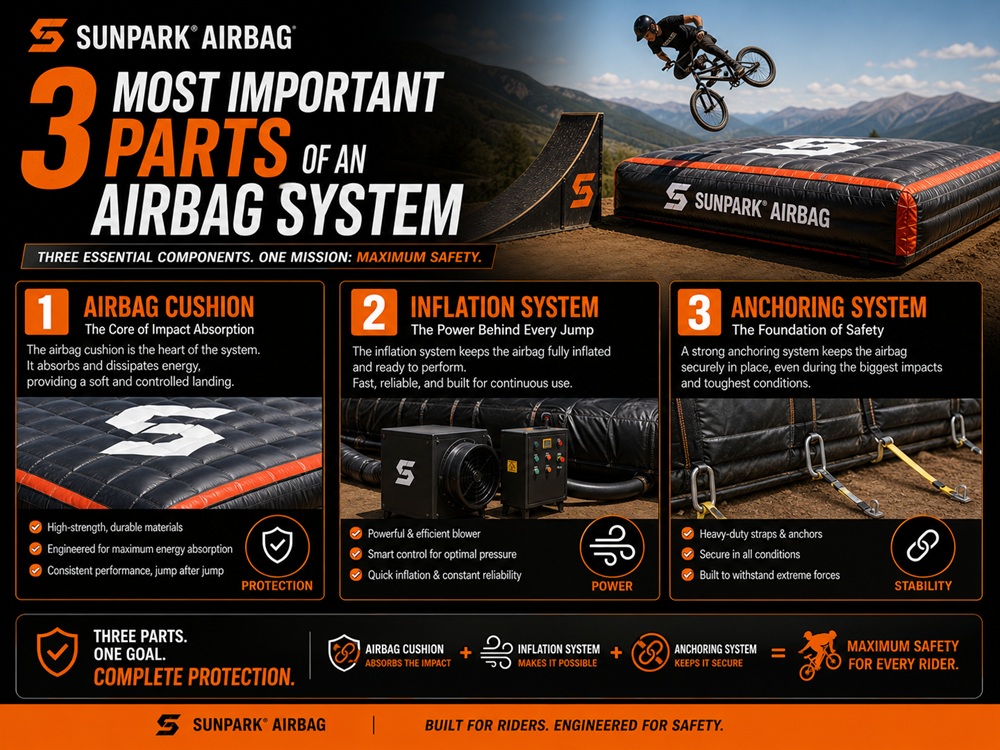
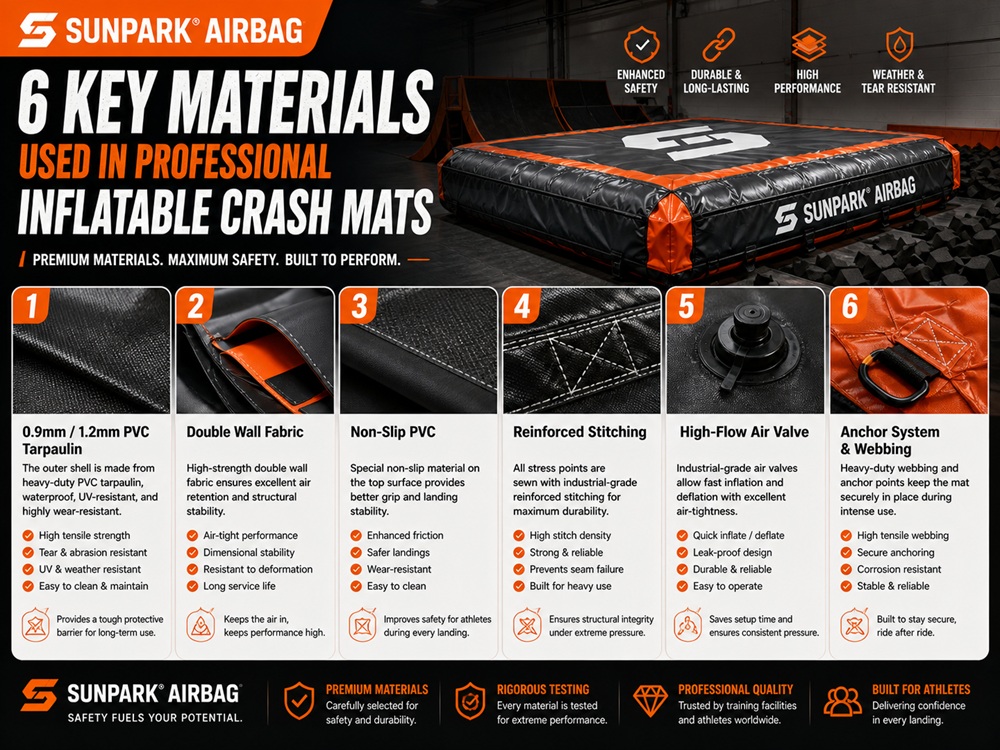
At SUNPARK®, we recognized that a true safety training tool could not be a single-use item. We create products for World Champion Snowboarders, famous riders, and trampoline parks worldwide. Our engineering focus shifted toward heavy-duty, multi-chambered structural designs using advanced PVC and TPU materials. Unlike a 25-year-old car airbag that sits dormant, our extreme sports airbags actively breathe. They utilize high-volume industrial blowers to maintain a precise internal pressure, instantly expelling air through calibrated release valves upon impact to absorb the kinetic energy of a falling athlete, and reinflating within seconds.
How SUNPARK® Engineered the Future of Repeated Impact Safety
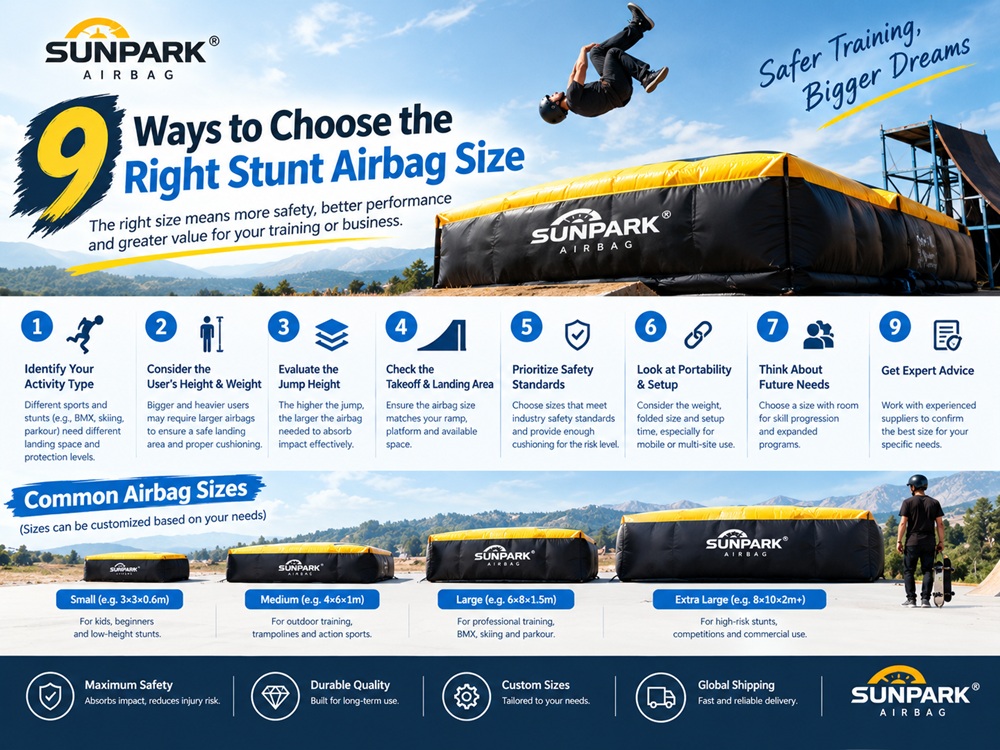
We are deeply committed to the development and improving of our own products. By understanding the limitations of older impact technologies, we have engineered a diverse lineup of specialized landing systems designed to provide decades of safe, reliable use for commercial facilities.
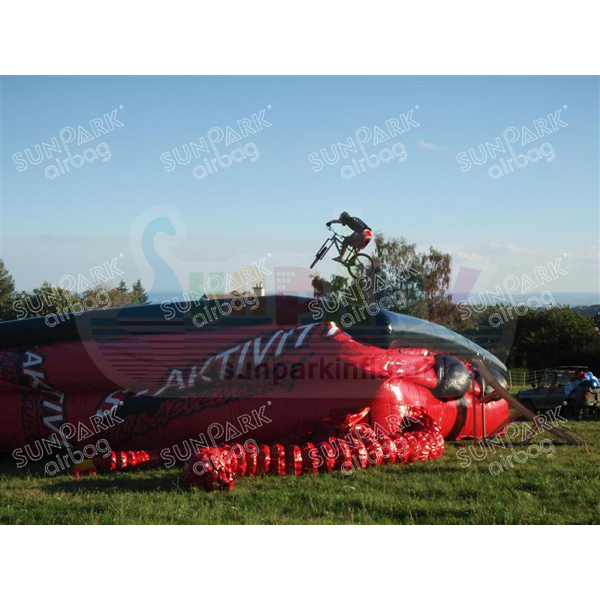
Airbag Landing and Inflatable Landing Systems
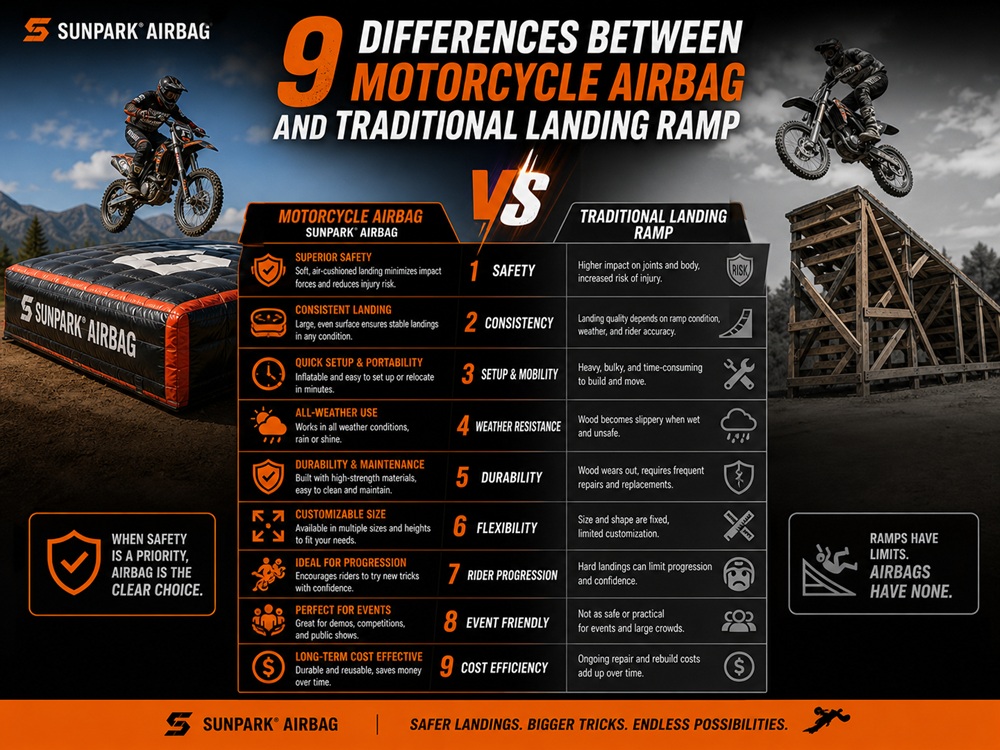
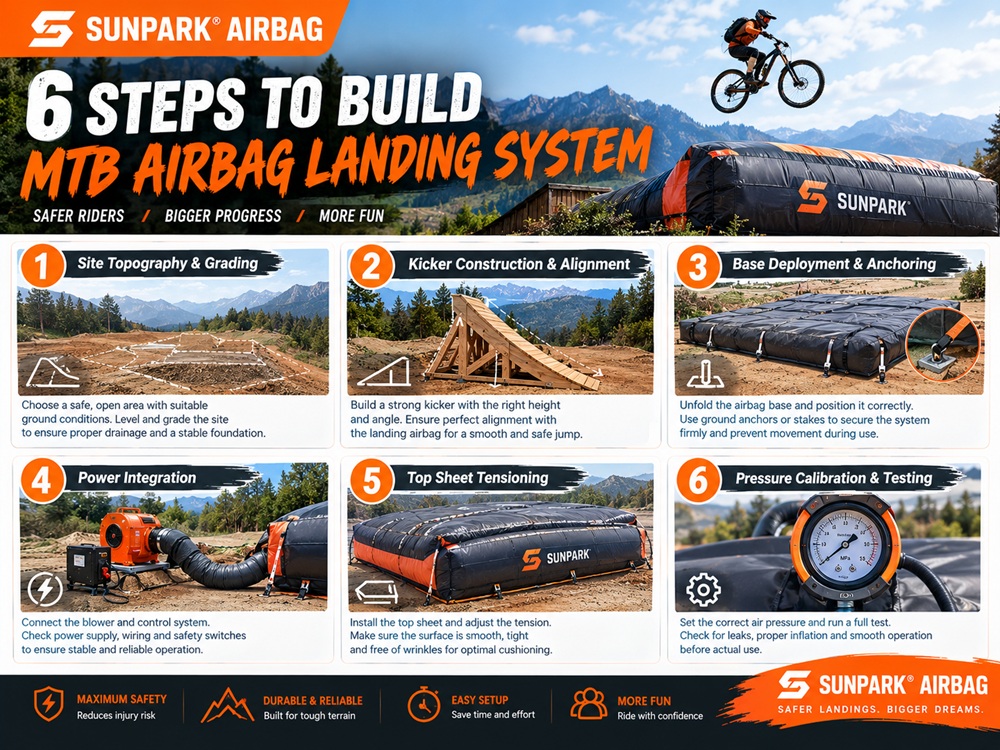
For ski resorts, BMX dirt jumps, and freestyle motocross (FMX), our Airbag Landing and Inflatable Landing systems represent the pinnacle of outdoor impact absorption. These giant structures are built with multi-tiered internal chambers. The top layer acts as a soft, yielding surface, while the bottom base layer maintains rigid pressure to prevent the athlete from ever contacting the hard ground. Unlike the questionable status of whether 25 year old airbags safe, our landing systems feature replaceable top sheets. When the surface wears down from snowboard edges or bike tires, the facility simply zips on a new top sheet, restoring the airbag to factory safety standards.
Foam Pit Jump Airbag and Free Fall Airbag
Traditional foam pits in gymnastics and trampoline parks are notoriously unhygienic and break down into toxic dust over time. We recommend replacing outdated foam pits with our Foam Pit Jump Airbag. This system utilizes vertical, interconnected air pillars that provide a uniform, soft catch that is incredibly easy to clean and sanitize. Similarly, for amusement parks offering high-altitude drops, our Free Fall Airbag is engineered with specialized rapid-deflation valves to safely decelerate a human body falling from extreme heights, providing a predictable and safe landing every single time.
Stunt Airbag and Custom Airbag Solutions
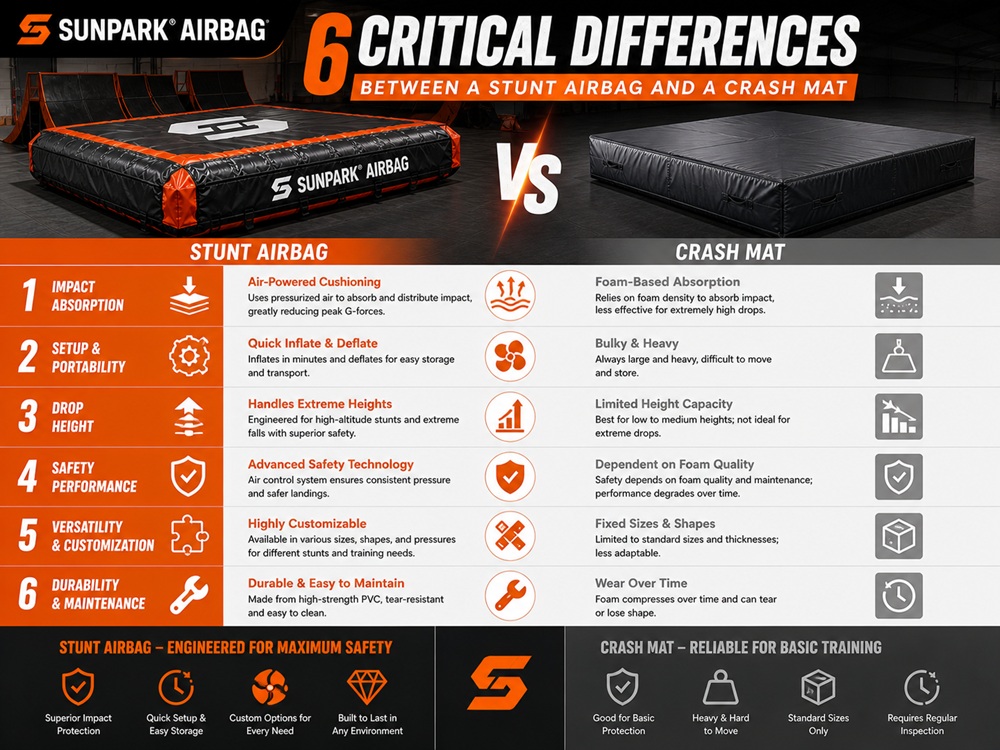
Hollywood stunt professionals require absolute certainty when performing high-wire falls. A Stunt Airbag from SUNPARK® is meticulously tested for impact distribution. Furthermore, because no two sports facilities are identical, we offer comprehensive Custom Airbag design services. Whether you need a specific pitch angle for a snowboard landing or specific dimensions to fit an indoor skatepark, we tailor the aerodynamics and pressure zones to your exact requirements.
Maintaining Safety Equipment for Maximum Longevity
If you are wondering are 25 year old airbags safe in a vehicle, the only way to know is through a professional diagnostic check of the Supplemental Restraint System (SRS). If the SRS light on your dashboard is illuminated, the system is compromised and will likely not deploy. We recommend that any vehicle over 20 years old have its airbag modules and clock springs inspected by a certified technician.
Conversely, maintaining a SUNPARK® extreme sports airbag is highly transparent. Because the system is continuously active, operators can easily monitor internal pressure via digital manometers. Routine maintenance involves visually inspecting the high-frequency welded seams, ensuring the blower intakes are clear of debris, and cleaning the PVC top sheet with non-abrasive UV-protectant cleaners. By following our strict maintenance protocols, sports facilities ensure that their athletes are protected by equipment operating at 100% efficiency, day in and day out.
Frequently Asked Questions (FAQs)
From an engineering standpoint, relying on a 25-year-old chemical propellant is highly risky. Moisture intrusion over a quarter of a century can cause the sodium azide or ammonium nitrate to degrade, leading to slow deployment or catastrophic, explosive ruptures. We strongly advise having the system inspected by an automotive safety specialist.
While modern manufacturers state that airbags are designed for the “lifetime of the vehicle,” the practical lifespan of the chemical seals is generally considered to be 10 to 15 years. Older manuals explicitly mandated replacement at the 10-year mark to guarantee deployment safety.
A car airbag is a single-use, sealed system inflated by a chemical explosion in milliseconds. A SUNPARK® Foam Pit Jump Airbag is a multi-use, highly durable PVC/TPU structure that is constantly inflated by industrial air blowers. It features specific pressure release valves to absorb human impacts safely and repeatedly, serving as a hygienic replacement for traditional foam blocks.
Yes. With over 10 years of experience as the leading manufacturer of Airbags for Extreme Sports and Leisure Industries in China, we specialize in Custom Airbag solutions. We can design the exact dimensions, angles, and pressure zones required for your specific ski resort, trampoline park, or stunt facility.
Industry References and Safety Standards
To ensure our clients have access to the most accurate and authoritative information regarding impact safety, material degradation, and extreme sports safety guidelines, we recommend consulting the following regulatory and academic resources: