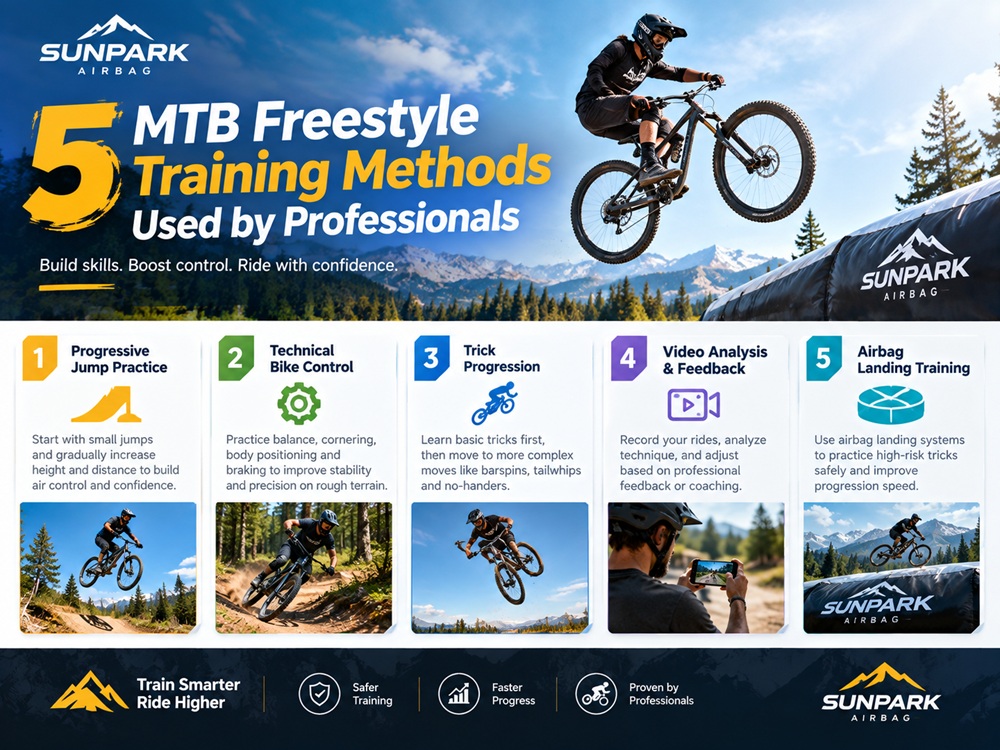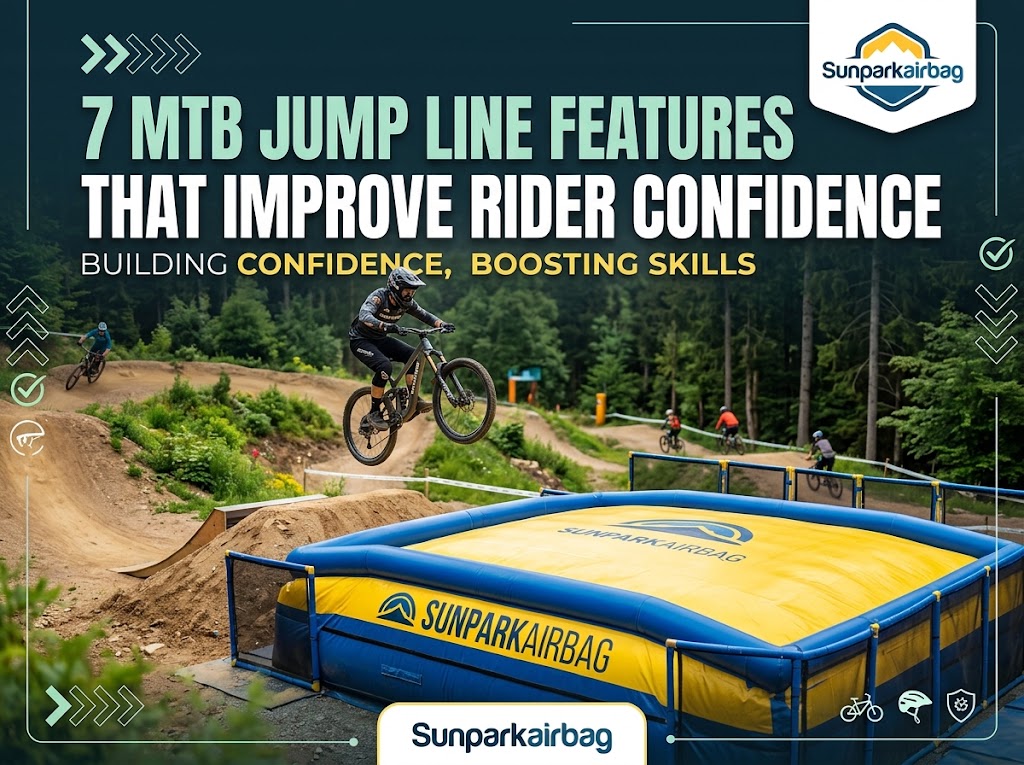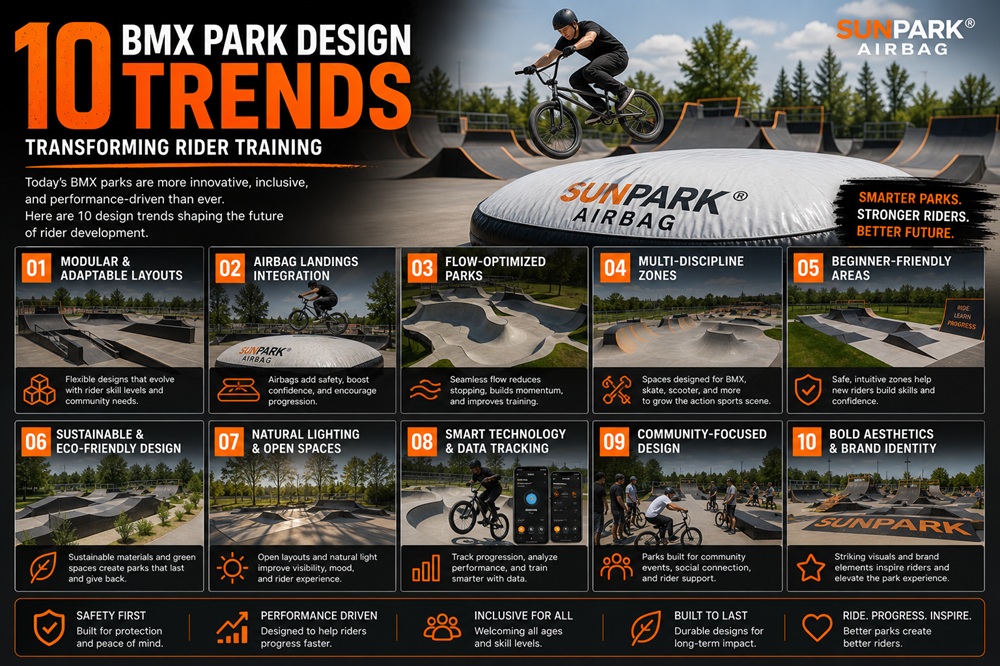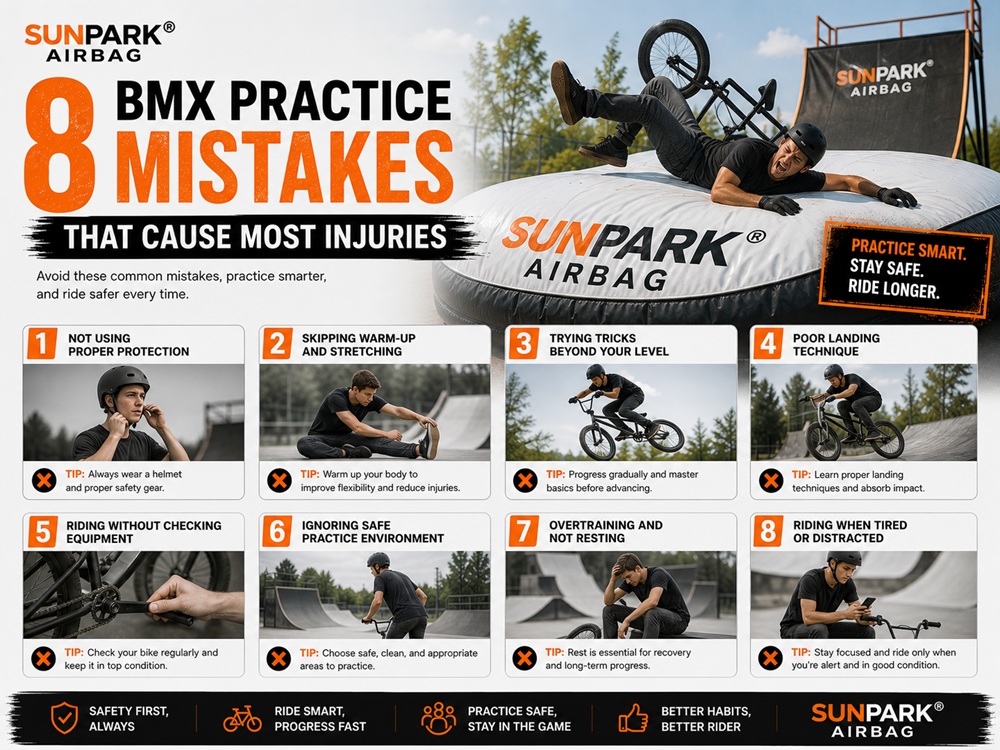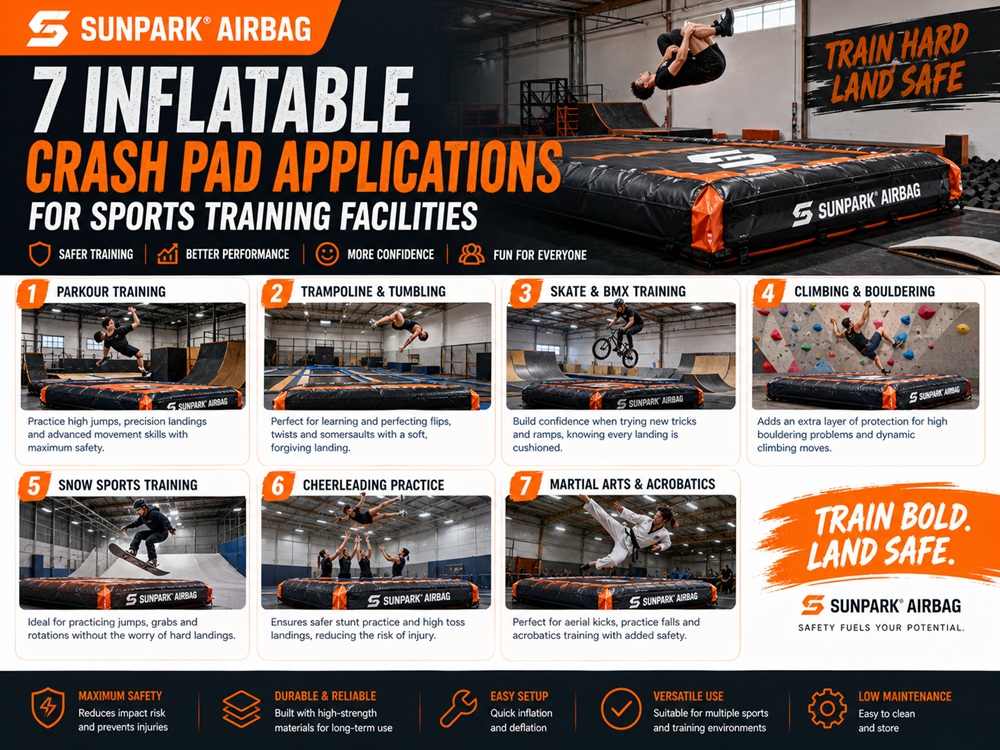
As extreme sports have developed globally over the last decade, the infrastructure supporting these high-adrenaline activities has undergone a massive technological revolution. More and more snowboarders, freestyle BMX riders, and serious sports enthusiasts are looking for safer training possibilities to progress without risks of getting injured. At SUNPARK® AIRBAG, we have been at the forefront of this evolution. With over 10 years of experience, we provide freestyle airbags for ski resorts, theme park installations, and sports and gymnastics facility setups around the globe. As the leading manufacturer of Airbags for Extreme Sports and Leisure Industries in China, we are frequently asked by facility directors and resort managers: exactly how much does an air bag system cost in 2026?
Calculating the true air bag system cost involves much more than simply looking at a price tag. It requires a deep understanding of manufacturing materials, air pillar technology, commercial safety compliance, and long-term return on investment (ROI). We create products trusted by World Champion Snowboarders, famous riders, and premium trampoline parks worldwide. Because we are deeply committed to the development and improving of our own products, we have compiled this authoritative guide to help you navigate the air bag system cost for your specific commercial application.
Summary Table: Estimated Air Bag System Cost in 2026
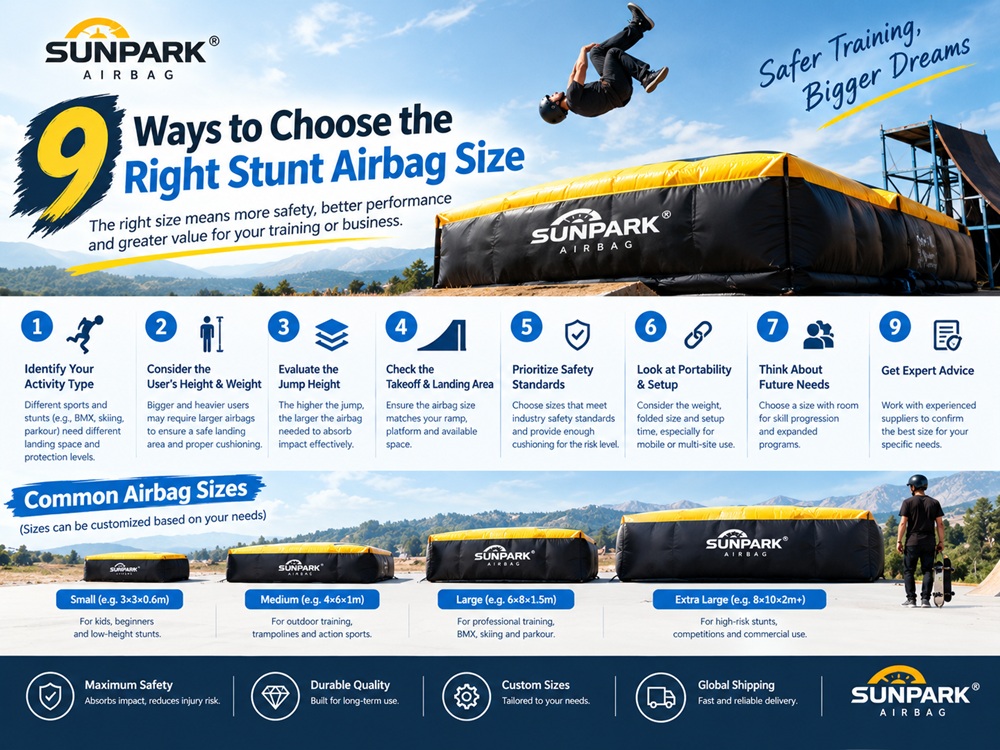
To provide immediate clarity, we have prepared a baseline summary table. Please note that the air bag system cost varies significantly based on dimensions, required blower units, and custom branding requirements. The figures below represent standard commercial-grade baseline estimates in the 2026 global market.
| Air Bag Type | Typical Application | Average Dimensions | Estimated Air Bag System Cost (USD) |
|---|---|---|---|
| Foam Pit Jump Airbag | Trampoline Parks, Gymnastics | 6m x 6m x 1.5m | $3,500 – $7,000 |
| Airbag Landing / Inflatable Landing | Ski Resorts, BMX Dirt Jumps | 15m x 11m x 2.5m | $12,000 – $25,000 |
| Stunt Airbag | Film Production, Parkour | 10m x 8m x 2m | $8,000 – $18,000 |
| Free Fall Airbag | Theme Parks, High Jump Towers | 10m x 10m x 3m | $10,000 – $22,000 |
| Custom Airbag | Unique Facility Layouts | Variable | Quoted per project |
Primary Factors Influencing Air Bag System Cost
From our experience at SUNPARK® AIRBAG, we know that clients often wonder why there is such a wide variance in the air bag system cost across different manufacturers. The reality is that commercial extreme sports equipment must endure relentless impact, intense UV exposure, and constant abrasion. We recommend that buyers evaluate the following factors that directly dictate the overall air bag system cost.
Material Sourcing and Thickness
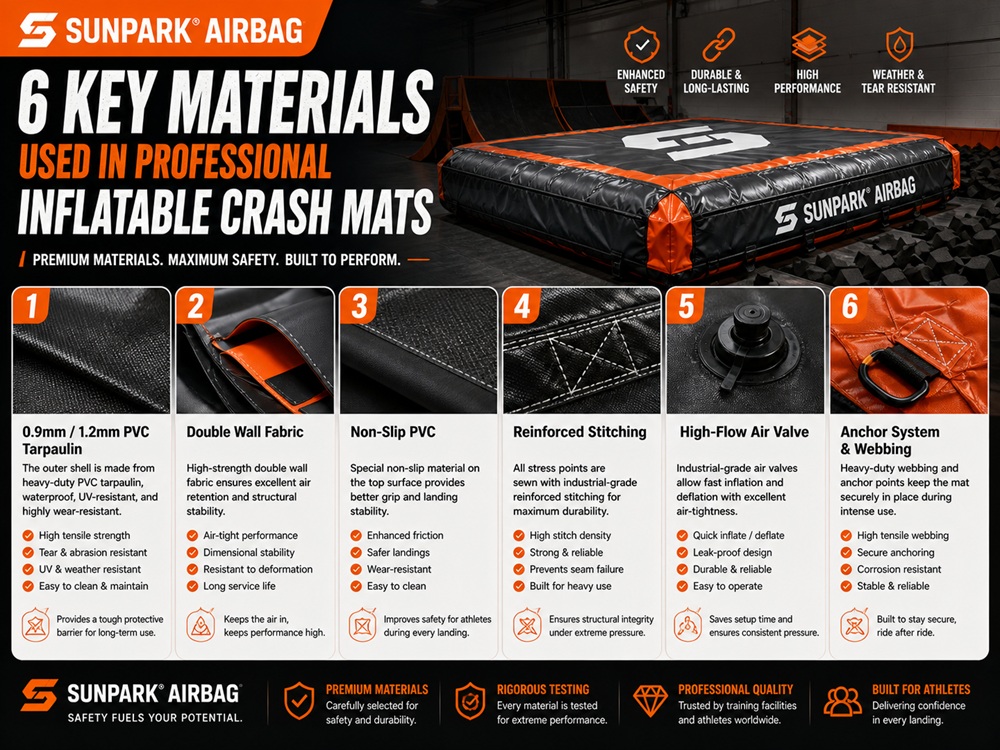
The foundation of a durable airbag is its raw material. In 2026, the industry standard for premium products is 0.55mm to 0.9mm Plato PVC tarpaulin. This material is fire-retardant, UV-resistant, and treated for anti-fungal properties. Cheaper alternatives use thinner vinyl that quickly degrades, leading to catastrophic blowouts. Investing in high-grade PVC naturally increases the initial air bag system cost, but it triples the lifespan of the unit.
Internal Air Pillar Technology
Modern airbags do not function like simple bouncy castles. They utilize complex internal air pillar systems (often referred to as a multi-chamber or advanced venting system). These internal chambers absorb and dissipate kinetic energy safely, preventing the “slingshot” effect. The engineering complexity of these internal baffles significantly impacts the air bag system cost.
Top Sheet Replacement Capability
The top sheet of an airbag takes the most abuse from snowboards, bikes, and shoes. We engineer our products with removable, replaceable top sheets. While this modular design adds slightly to the upfront air bag system cost, it drastically lowers long-term maintenance expenses since you only replace the top layer rather than the entire bag.
Detailed Product Breakdown and Cost Analysis
Let us explore the specific categories of extreme sports infrastructure to better understand how the air bag system cost is calculated for different facilities.
Airbag Landing and Inflatable Landing Systems
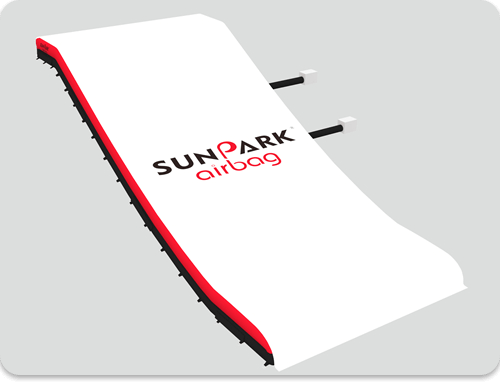
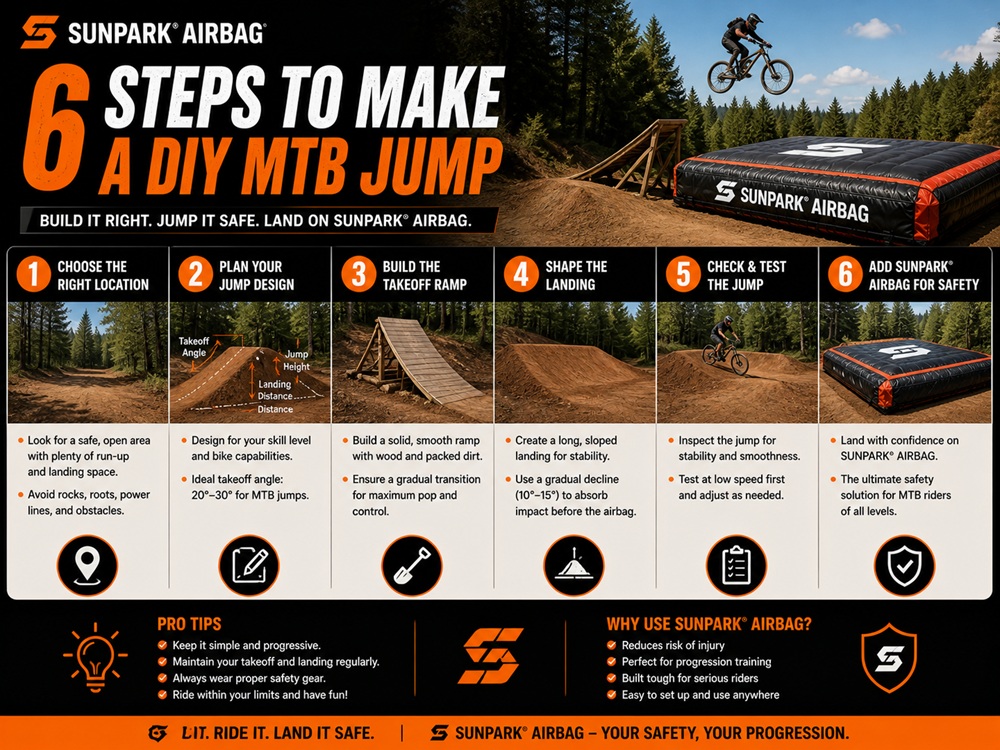
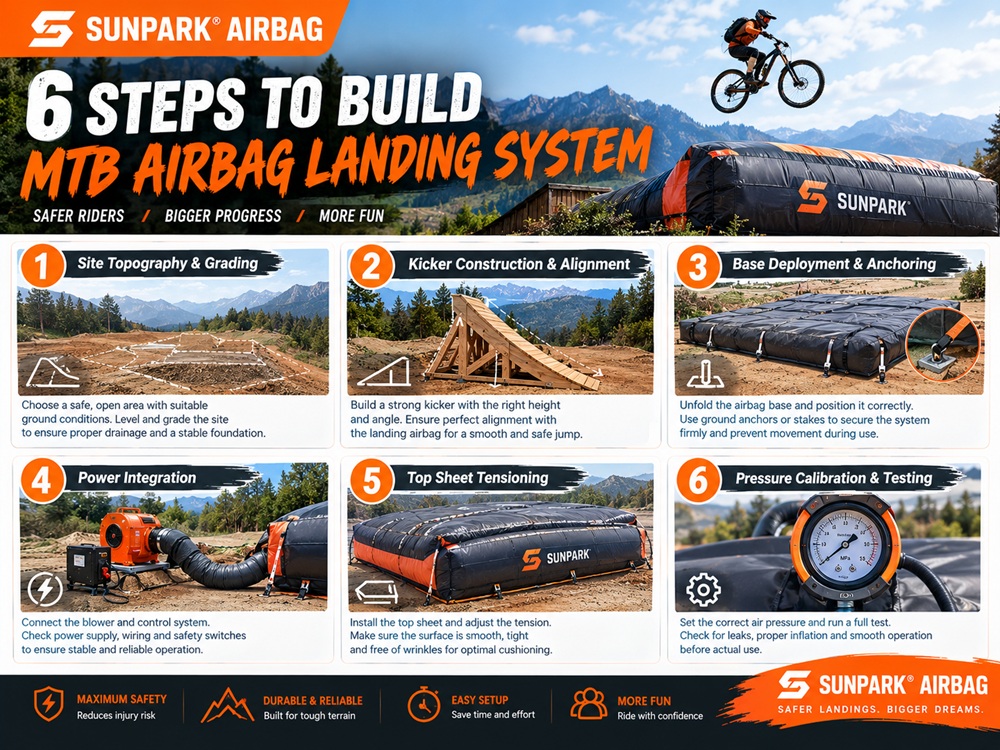
For ski resorts and professional BMX training facilities, the Airbag Landing and Inflatable Landing systems have completely replaced traditional mulch or snow landings. These setups mimic the exact contour of a real landing ramp but offer a forgiving surface for riders attempting complex aerial maneuvers. Because these systems are massive—often exceeding 15 meters in length—and require dual-chamber independent blower systems to maintain correct bottom-chamber rigidity and top-chamber softness, the air bag system cost here represents a significant capital investment. You can expect the air bag system cost for a full-scale resort setup to range from $12,000 to over $25,000, depending on the slope gradient and custom branding overlays.
Foam Pit Jump Airbag Replacements
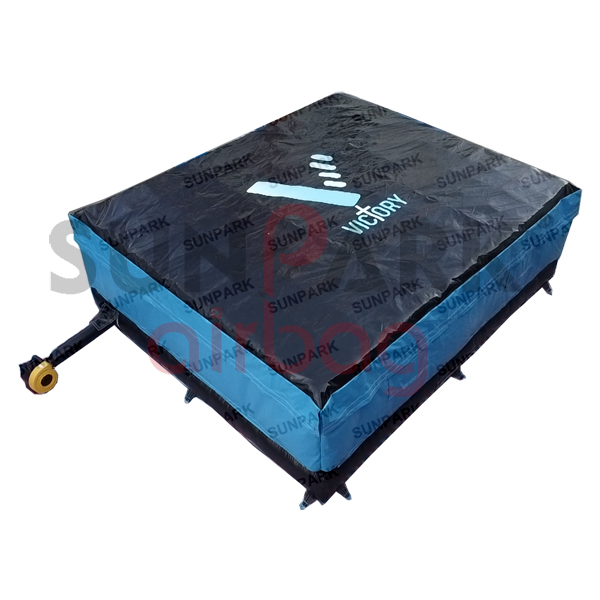
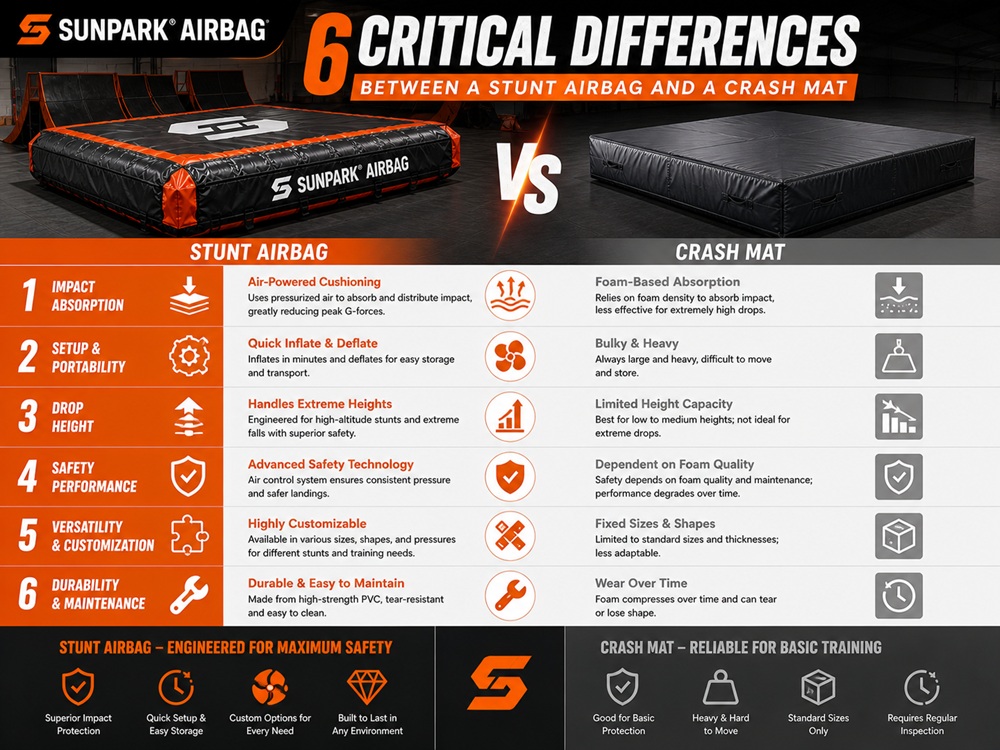
Trampoline parks and gymnastics centers are rapidly abandoning traditional foam cubes in favor of the Foam Pit Jump Airbag. From our experience, foam cubes pose severe hygiene risks, degrade into toxic dust, and present a massive fire hazard. A Foam Pit Jump Airbag eliminates these issues entirely. Furthermore, the air bag system cost for a foam pit replacement is surprisingly affordable. For a standard gymnastics dismount pit, the air bag system cost typically falls between $3,500 and $7,000. When facility owners factor in the cost of replacing 10,000 foam cubes every two years, the ROI on an airbag becomes undeniable.
Stunt Airbag and Free Fall Airbag Solutions
Theme parks and film production sets demand specialized impact attenuation. A Stunt Airbag or a Free Fall Airbag is engineered to absorb direct vertical drops from significant heights. These bags utilize towering internal pillars that slowly release air upon impact through calibrated pressure valves. Because a Free Fall Airbag must guarantee absolute safety for untrained theme park guests jumping from platforms, the testing and engineering tolerances are incredibly strict. The air bag system cost for these high-velocity impact bags generally ranges from $10,000 to $22,000, heavily dependent on the maximum certified jump height.
Custom Airbag Engineering
No two sports facilities are identical. Many of our clients require a Custom Airbag tailored to fit around existing structural columns, specific ramp angles, or unique indoor dimensions. When assessing the air bag system cost for a Custom Airbag, our engineering team utilizes advanced 3D CAD modeling to simulate airflow and impact distribution. We recommend reaching out directly to our consultation team, as the air bag system cost for custom geometry is calculated based on the precise square meterage of material and specific blower requirements.
Understanding Operational Air Bag System Cost
When budgeting for your facility, the invoice from SUNPARK® AIRBAG is only the beginning. You must also calculate the ongoing operational air bag system cost. The primary operational expense is electricity. Commercial airbags require constant airflow from industrial blowers (typically 1500W to 2000W units). We recommend calculating your local kilowatt-hour (kWh) rates multiplied by your daily operational hours to understand this monthly overhead.
Secondary operational air bag system costs include routine maintenance. The PVC material must be cleaned with non-abrasive, vinyl-safe detergents to prevent material fatigue. Additionally, as mentioned earlier, budgeting for a new top sheet every 2 to 3 years ensures your airbag always looks pristine and performs safely.
Why the Initial Air Bag System Cost Yields High ROI
We frequently speak with investors who experience sticker shock regarding the initial air bag system cost. However, from our experience supplying global theme parks, the integration of a SUNPARK® AIRBAG dramatically transforms a facility’s profitability.
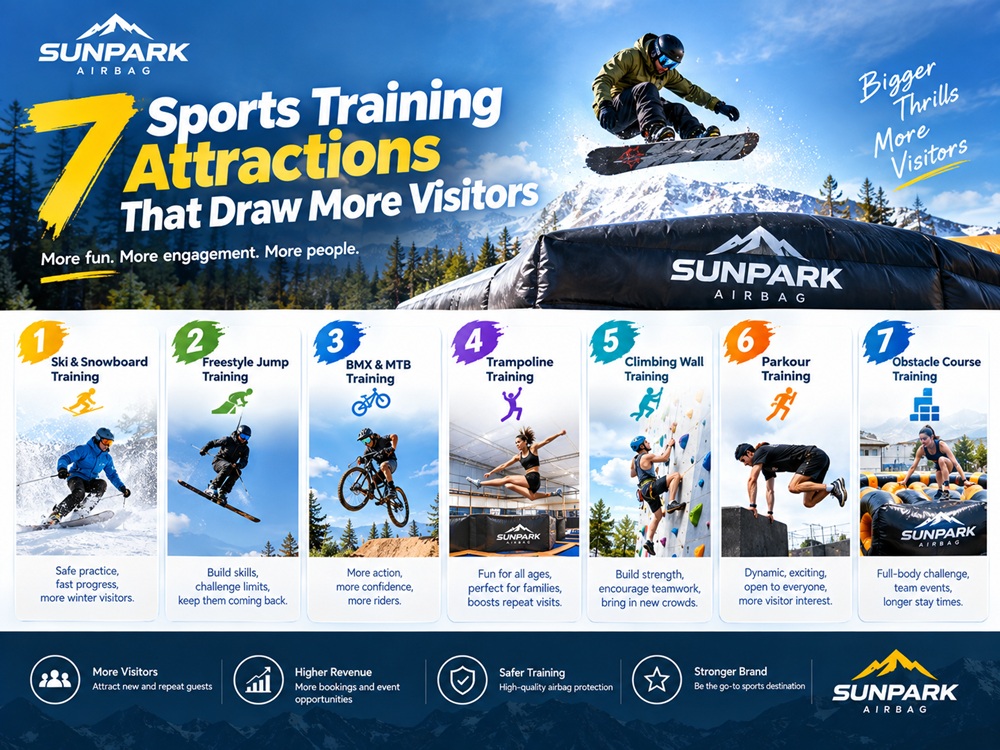
First, an Airbag Landing allows athletes to practice longer without fatigue or injury, increasing pass sales and customer retention. Second, a Foam Pit Jump Airbag drastically increases the throughput of a trampoline park; athletes can exit an airbag in three seconds, whereas climbing out of a foam pit takes up to thirty seconds. Finally, insurance premiums. Commercial liability insurers strongly favor the predictable, hygienic, and fire-retardant nature of inflatable systems over outdated safety infrastructure. The reduction in insurance premiums alone often offsets the entire air bag system cost within the first two years of operation.
Frequently Asked Questions (FAQs)
Yes, when you receive a quote from SUNPARK® AIRBAG, the total air bag system cost typically includes the appropriate CE/UL certified electric blowers required to operate the specific volume of your airbag.
With proper maintenance and indoor use, a premium Foam Pit Jump Airbag can last 5 to 8 years. For outdoor setups like an Airbag Landing at a ski resort, the lifespan is generally 3 to 5 years before the top sheet requires replacement due to UV and mechanical wear.
Absolutely. We specialize in Custom Airbag solutions, including full-color digital printing on the top sheets and side skirts. This branding service is highly affordable and adds minimal expense to the overall air bag system cost.
Yes. Our products, including the Free Fall Airbag, are engineered with advanced pressure release valves that provide a soft, safe landing for both World Champion Snowboarders and weekend enthusiasts. However, proper staff supervision and safety protocols are always required.
Industry References
To ensure our clients understand the strict safety and manufacturing standards governing the extreme sports industry, we align our engineering practices with global safety protocols. We encourage facility owners to review relevant safety standards when evaluating their operational infrastructure: