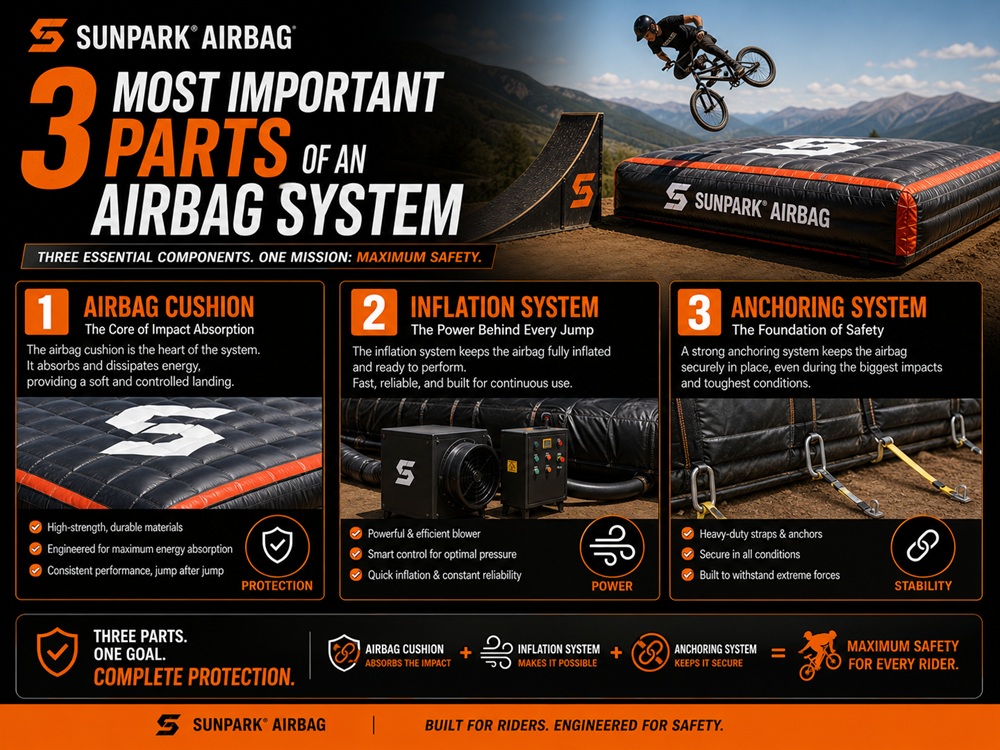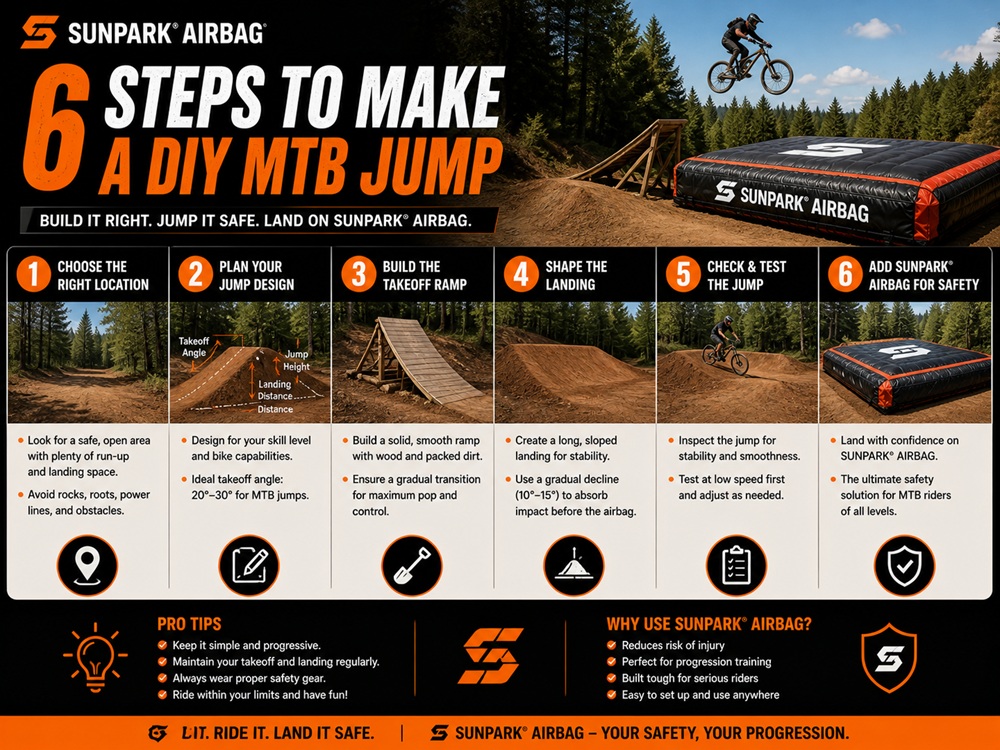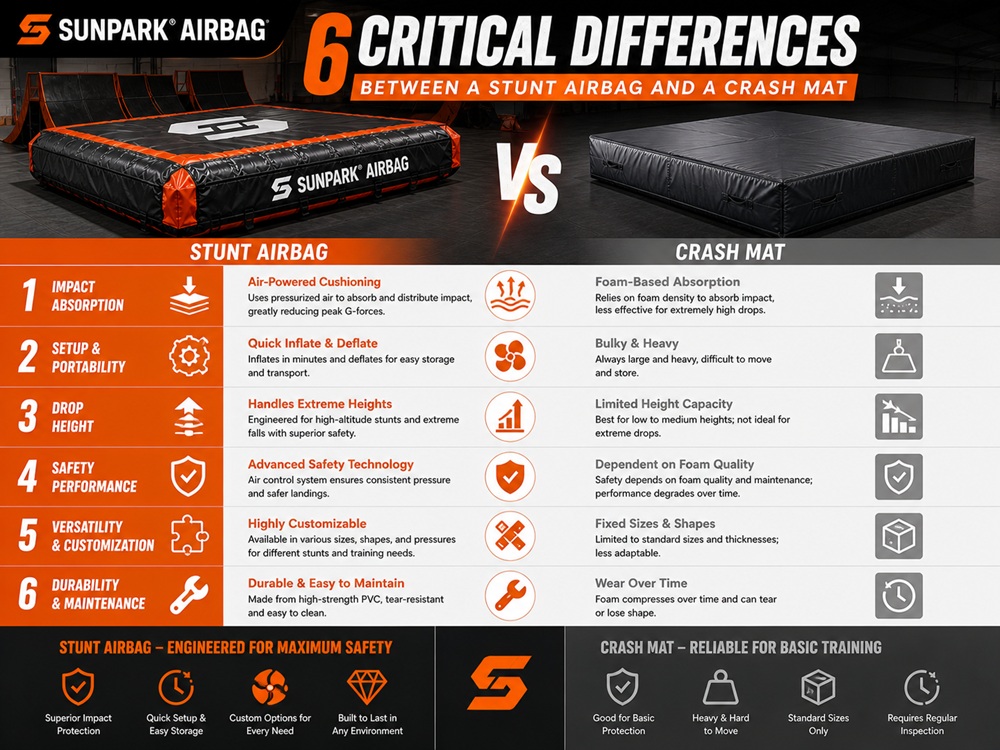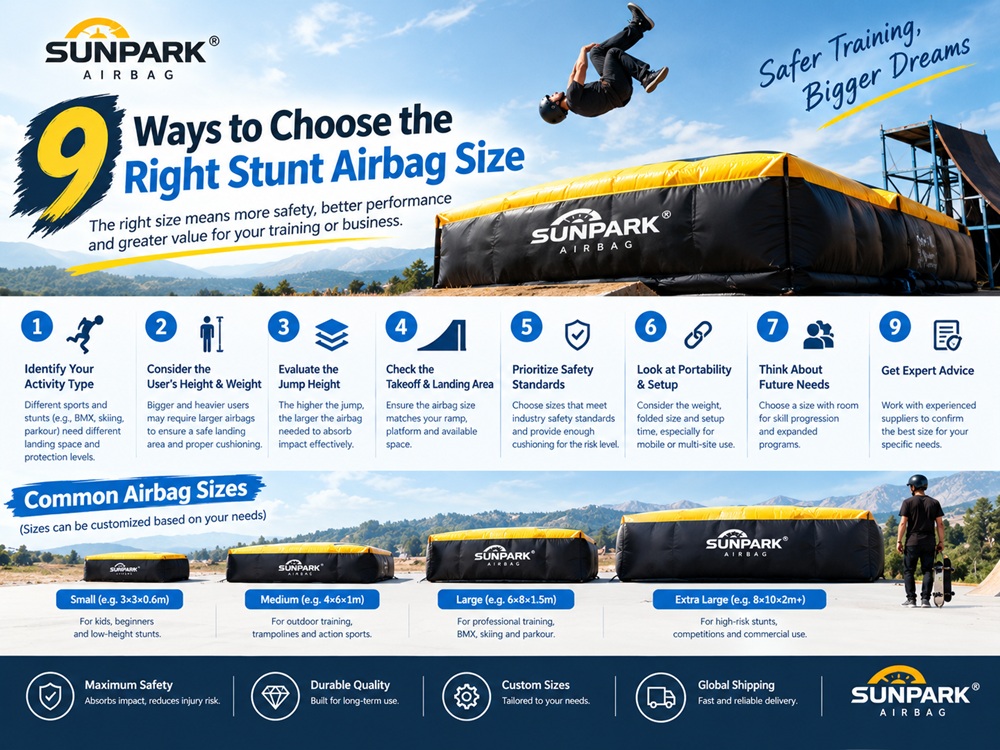
When the phrase components of an airbag system is mentioned, the general public immediately visualizes the automotive industry—sensors, chemical inflators, and woven nylon cushions deploying in fractions of a second. However, in the realm of extreme sports, snowboarding, freestyle skiing, and gymnastics, the components of an airbag system refer to a highly engineered, continuous-flow pneumatic structure designed to safely absorb the kinetic energy of human free-fall and aerial maneuvers.
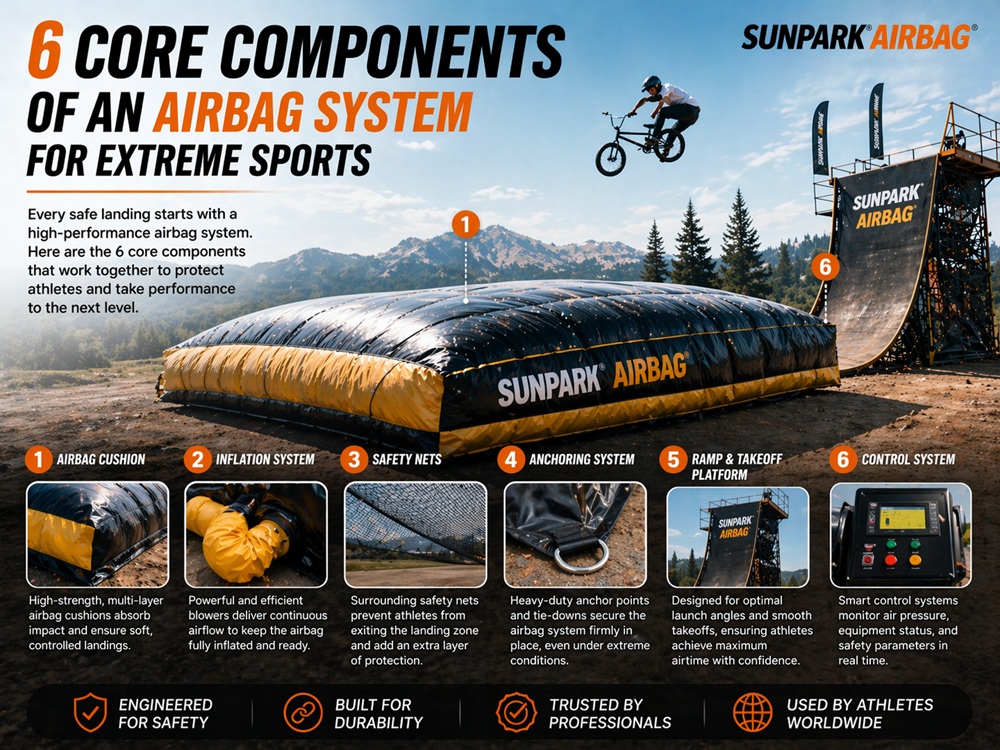
As extreme sports have developed, more and more snowboarders, BMX riders, and serious sports enthusiasts are looking for safer training possibilities to progress without the risks of getting injured. We create the products for World Champion Snowboarders, famous riders, and trampoline parks worldwide. We are deeply committed to the development and improving of our own products. From our experience designing world-class landing zones, understanding the specific components of an airbag system is critical for facility managers, event organizers, and athletes to ensure maximum safety, performance, and equipment longevity.
In this comprehensive technical guide, we will dissect the architecture of freestyle airbags, examining how specialized materials, air displacement mechanics, and structural design converge to create the ultimate safety equipment for extreme athletes.
1. The Mechanics of Continuous-Flow Airbags
Unlike automotive impact cushions which rely on sealed chemical deployment, a freestyle sports airbag is a continuous-flow system. This means that the components of an airbag system in this context are constantly working to maintain optimal internal pressure while simultaneously allowing specific amounts of air to escape upon impact. This controlled displacement of air is what provides a soft, decelerating landing rather than a hard bounce.
When a snowboarder or gymnast lands on the structure, the kinetic energy compresses the upper chambers. The air within these chambers is forced downward and outward through designated release valves and breathable fabrics. If the components of an airbag system were completely sealed, the athlete would bounce dangerously back into the air. Therefore, the precise calibration of air intake versus air exhaust is the foundational engineering principle behind every SUNPARK® installation.
2. Detailed Breakdown: Core Components of an Airbag System
To achieve a seamless, safe landing, several critical layers and mechanical parts must work in perfect unison. Here is a detailed analysis of the primary components of an airbag system utilized in professional extreme sports.
The Top Sheet (Impact Surface)
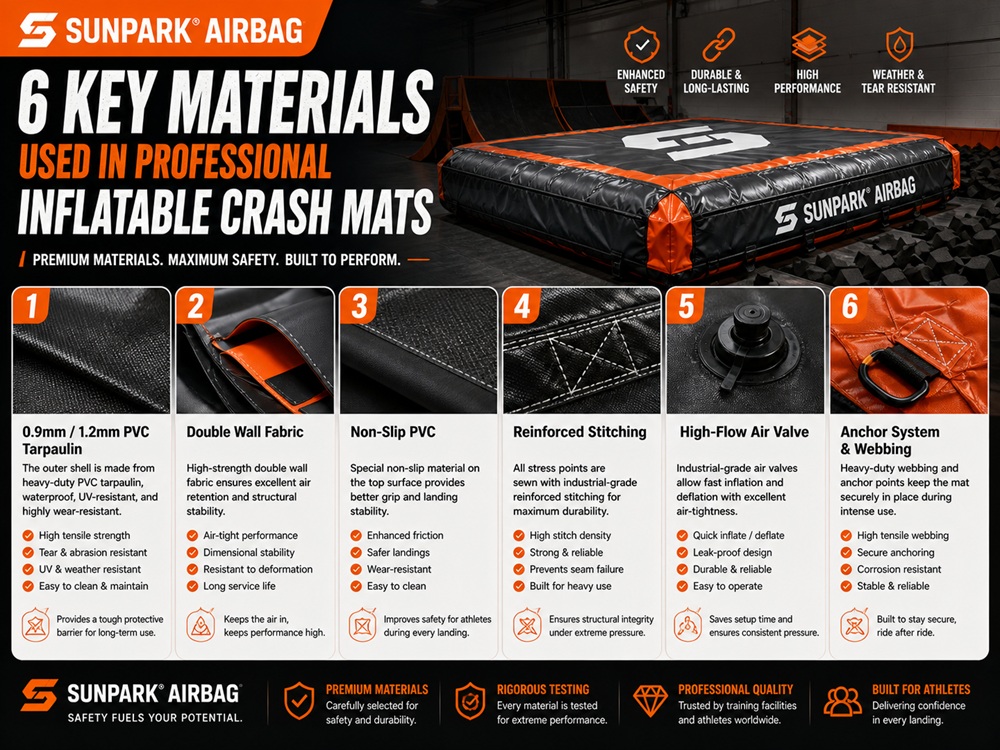
The top sheet is the immediate point of contact between the athlete and the airbag. We recommend that this layer be constructed from advanced, friction-resistant PVC or specialized canvas that prevents friction burns while remaining highly durable against sharp edges, such as snowboard bindings or BMX pedals. In the SUNPARK® architecture, this top sheet is often easily removable and replaceable, extending the overall lifespan of the system.
The Internal Impact Pillars (Baffles)
Beneath the top sheet lies the most crucial architectural element among the components of an airbag system: the internal pillars. Instead of a single massive cavity of air, premium airbags utilize a multi-chamber or pillar design. These vertical tubes of air absorb the impact locally. When an athlete lands, only the pillars directly beneath them compress, allowing for multiple athletes to land on the same airbag simultaneously without catapulting each other. These baffles also dictate the shape and contour of the landing zone, which is critical for angled ski landings.
The Base Chamber
The base chamber acts as the foundation. While the upper pillars compress to absorb the fall, the base chamber remains fully inflated to ensure the athlete never bottoms out and hits the hard ground. The separation between the impact layer and the base layer is a non-negotiable safety standard within the components of an airbag system for extreme heights.
Air Blowers and Intake Tubes
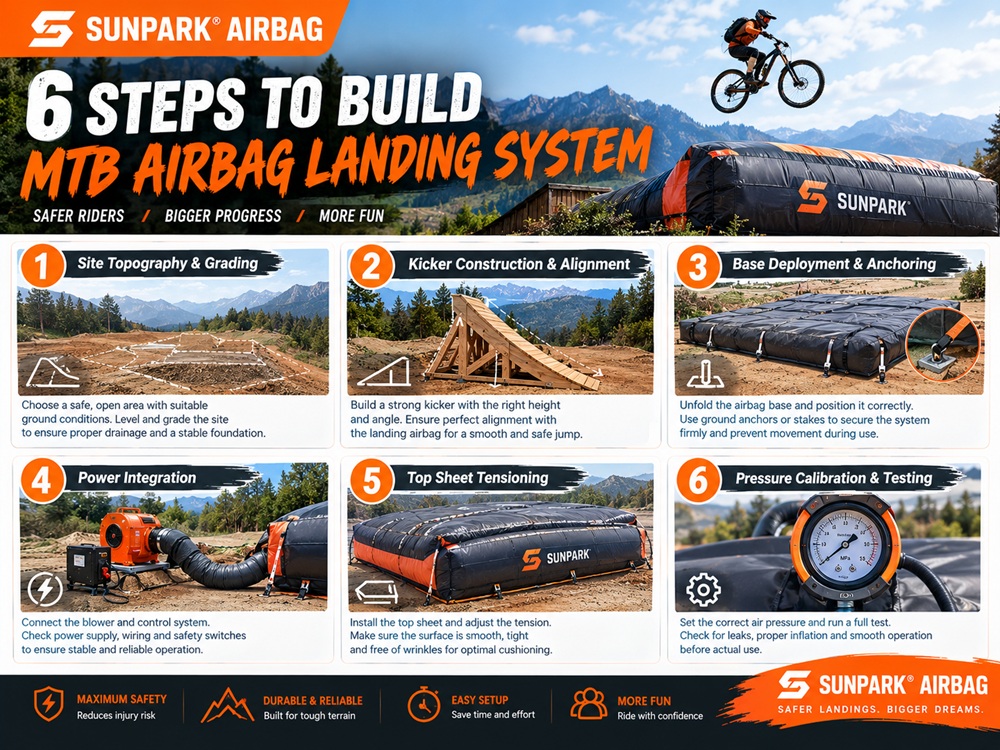
Constant air pressure is maintained by industrial-grade electrical air blowers. These blowers are connected to the main body via heavy-duty intake tubes. From our experience, redundancy is vital; large commercial setups utilize multiple blowers. If one experiences a power fluctuation, the secondary blowers maintain sufficient pressure to safely absorb any athletes already in mid-air.
Pressure Release Valves and Vents
To prevent the airbag from bursting and to control the softness of the landing, adjustable pressure release vents are strategically placed along the sides of the base and upper chambers. Operators can open or close these vents to tune the firmness of the landing based on the weight of the athletes and the height of the jumps.
3. Applying the Components to Specific Extreme Sports
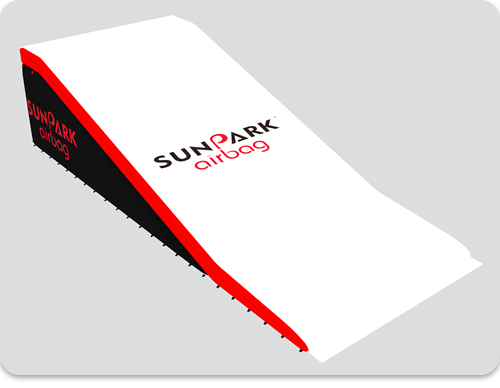
The exact configuration of the components of an airbag system varies depending on the intended sport. At SUNPARK®, we tailor the engineering to the specific trajectory and impact force of the activity.
Snowboarding and Freeskiing
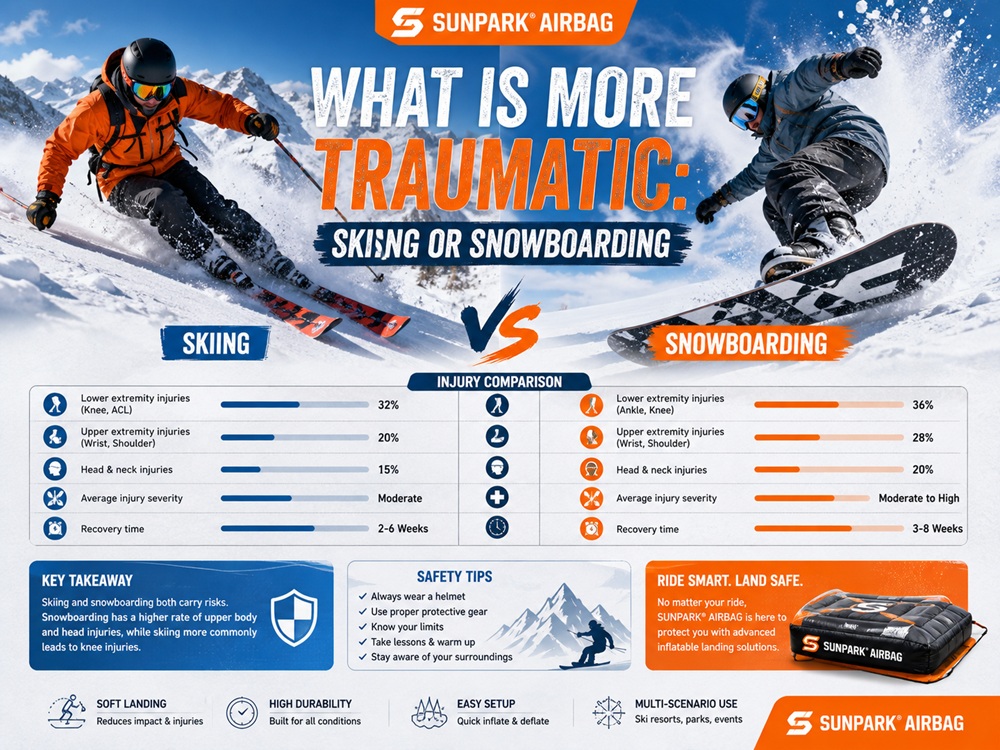
For winter sports, riders require a landing surface that mimics the downhill slope of a mountain to ride away smoothly. Our Airbag Landing and Inflatable Landing systems are engineered with angled baffles. The components of an airbag system here include a specialized snow-retention top sheet that allows resorts to pack a thin layer of snow directly onto the airbag, providing a realistic feel while maintaining absolute safety.
Gymnastics and Trampoline Parks
Indoor facilities require smaller footprints but massive impact absorption for vertical drops. The Foam Pit Jump Airbag is designed to replace unhygienic traditional foam pits. The components of an airbag system in this setup prioritize ultra-soft top sheets and rapid air displacement, allowing gymnasts to sink safely into the bag from high vaults or trampolines.
BMX, FMX, and Stunt Shows
Extreme vehicular sports and professional stunt work generate immense kinetic energy. The Stunt Airbag and Free Fall Airbag feature reinforced base layers and heavier gauge PVC. When configuring the components of an airbag system for a free fall from 50 feet, we utilize a dual-chamber system where the bottom chamber is strictly pressurized to prevent ground contact, while the top layer is highly ventilated to catch the falling mass like a catcher’s mitt.
Tailored Facility Integration
Because no two extreme sports facilities are identical, a one-size-fits-all approach is insufficient. Through our Custom Airbag service, we modify the components of an airbag system—altering dimensions, adding custom branding to the top sheet, and adjusting blower capacities—to perfectly integrate into any existing indoor or outdoor infrastructure.
4. Material Science and Manufacturing Excellence
The physical materials that make up the components of an airbag system must withstand severe environmental stressors, including intense UV radiation, freezing temperatures, and constant mechanical flexion. We utilize Plato PVC tarpaulin, ranging from 0.55mm to 0.9mm in thickness. This material is inherently fire-retardant, waterproof, and treated for UV resistance.
Furthermore, the manufacturing techniques used to assemble these components are paramount. We rely on advanced high-frequency welding and double-to-quadruple stitching in high-stress areas. From our experience, an airbag is only as strong as its weakest seam. By utilizing reinforced webbing at all anchor points and blower connections, we ensure that the components of an airbag system maintain their structural integrity even under continuous commercial use.
5. Maintenance Protocols for Airbag Systems
To maximize the lifespan of your investment, proper maintenance of the components of an airbag system is required. We recommend the following protocols for facility operators:
- Daily Inspections: Check all blower connections and ensure the intake tubes are free of debris. Verify that the pressure release vents are set to the correct aperture for the day’s specific training activities.
- Top Sheet Care: The top sheet takes the brunt of the wear. Clean it regularly with mild soap and water. Inspect for small punctures caused by sharp sports equipment and utilize provided patch kits immediately to prevent tear propagation.
- Moisture Management: For outdoor setups, ensure the internal chambers are dried thoroughly before deflation and storage to prevent mold and mildew degradation of the PVC coatings.
- Anchoring Checks: Wind is a significant factor for outdoor installations. Regularly inspect the D-rings, tie-down straps, and ground stakes to ensure the airbag remains firmly secured.
6. Summary Table: Components of an Airbag System
The following table provides a quick reference guide to the fundamental components of an airbag system used in extreme sports and their primary functions.
| Component | Primary Function | Material / Engineering Focus |
|---|---|---|
| Top Sheet | Immediate impact surface; protects internal chambers. | Friction-resistant, replaceable PVC or specialized canvas. |
| Internal Pillars/Baffles | Localizes impact absorption; dictates surface shape. | Flexible vertical air chambers, highly durable stitching. |
| Base Chamber | Prevents bottoming out; maintains overall structure. | High-pressure containment, heavy-gauge reinforced PVC. |
| Air Blowers | Provides continuous airflow to maintain inflation. | Industrial electrical motors, weather-resistant housing. |
| Release Vents | Regulates internal pressure and landing softness. | Adjustable Velcro or zippered apertures. |
| Anchor Points | Secures the airbag to the ground or facility floor. | Heavy-duty steel D-rings and reinforced webbing. |
7. Frequently Asked Questions (FAQs)
8. Industry References
For further reading on the safety standards, materials science, and engineering protocols relevant to the components of an airbag system and inflatable amusement devices, we recommend consulting the following authoritative sources: