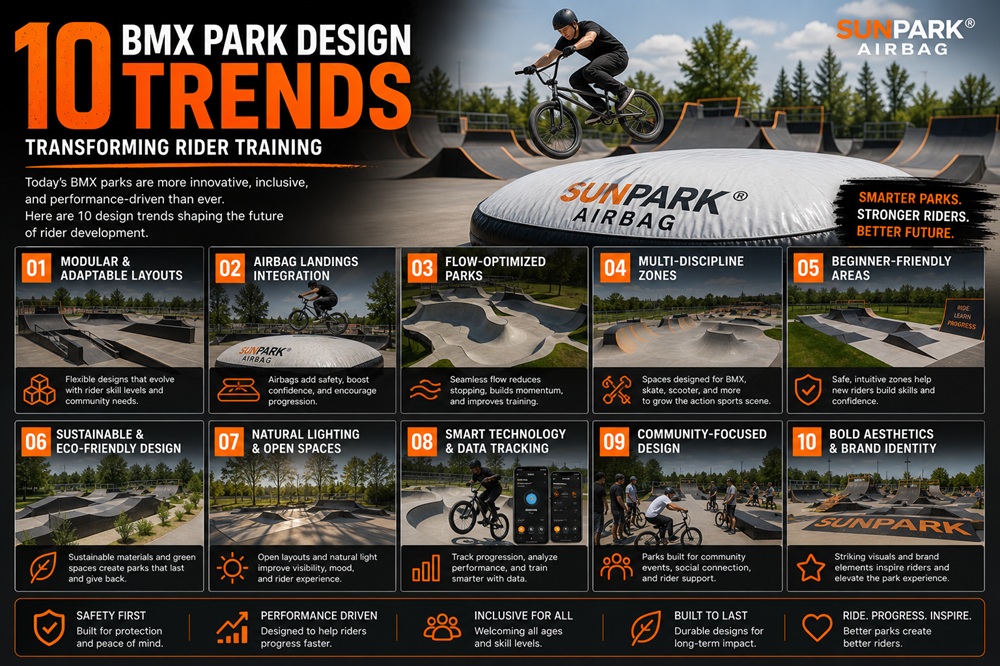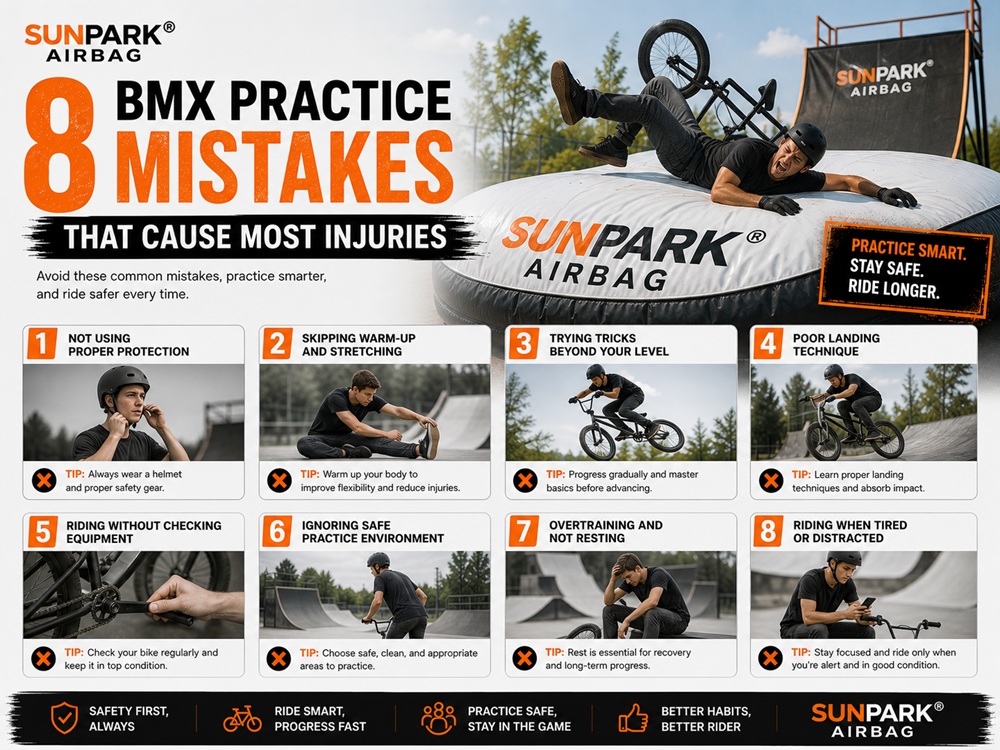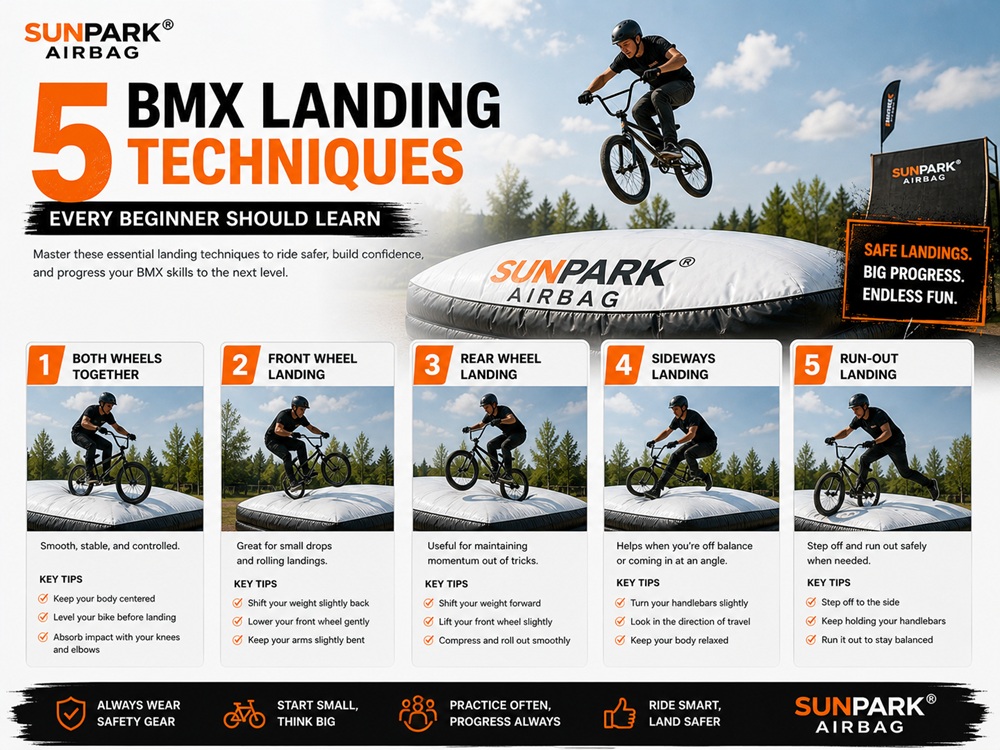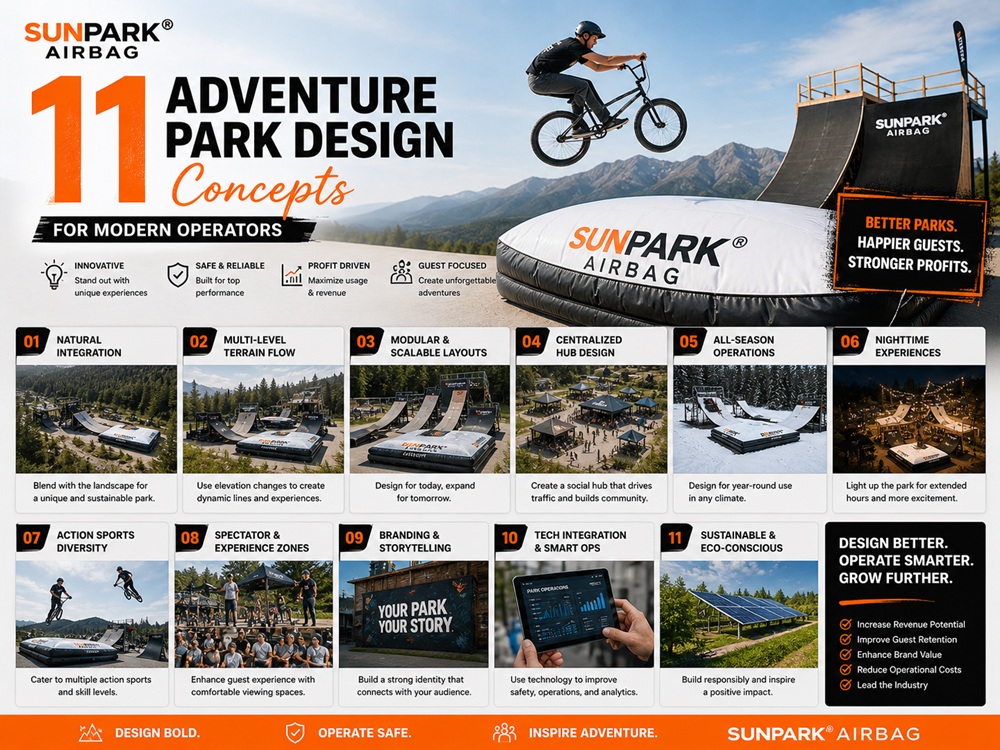
In the world of professional freestyle snowboarding, the transition from basic maneuvers to elite level competition requires not just talent, but the right safety infrastructure. As we look toward the 2026 season, the technology surrounding halfpipe airbag snowboarding has reached a critical peak. These systems are no longer just oversized pillows; they are precision-engineered landing zones that allow athletes to push the boundaries of physics without the catastrophic risk of traditional hard-landing progression. From our experience at SUNPARK®, the integration of high-density PVC and advanced airflow regulation has transformed how training camps operate globally.
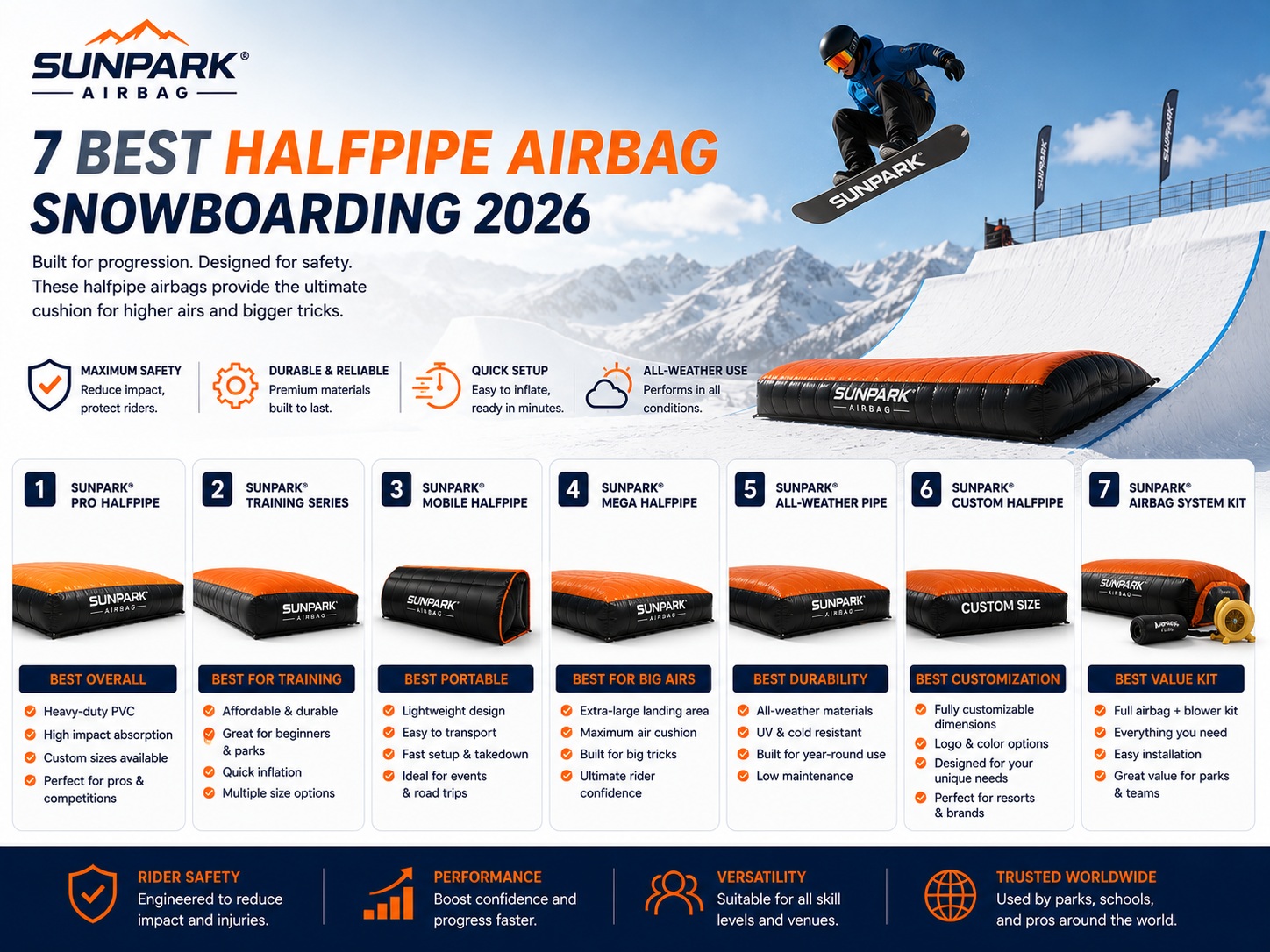
Table of Contents
The State of Halfpipe Airbag Snowboarding in 2026
Halfpipe airbag snowboarding has evolved significantly over the last decade. Historically, airbags were flat surfaces placed in the flats of a jump. Today, professional athletes require systems that mimic the transition of a 22-foot superpipe. We have observed that the most successful training facilities are those that invest in tailored transition airbags. These systems allow for a realistic trajectory, ensuring that when an athlete finally takes their new trick to the actual ice, the muscle memory is already perfectly calibrated. SUNPARK® has been at the forefront of this evolution, focusing on the durability and lead-free safety profiles required for international competition standards.
Summary Table: Top 7 Systems at a Glance
| Product Name | Primary Use Case | Material Quality | Key Advantage |
|---|---|---|---|
| SUNPARK® AIRBAG Halfpipe Airbag | Professional Competition Transition | 0.9mm PVC Top Sheet | Full customization and superior durability |
| Stunt Airbag Landing | Multi-Sport Freestyle | 0.55mm PVC Core | High versatility for various sports |
| Inflatable Crash Mat | Beginner Drills / Low Impact | Reinforced Tarpaulin | Portability and ease of setup |
| Big Jump Airbag System | Large Scale Aerials | Dual Layer Impact Zone | Maximum amplitude safety |
| Bike Airbag Landing | Cross-Training (MTB/BMX) | Heavy-Duty Base | Optimized for mechanical impacts |
| Gymnastics Airbag Equipment | Core Balance & Rotation | Soft-Touch Surface | Precision landing feel |
| Modular Halfpipe Extension | Variable Transition Training | Industrial PVC | Adaptable to different pipe heights |
Deep Dive: The 7 Best Airbag Solutions
1. SUNPARK® AIRBAG Halfpipe Airbag
At the top of our list is the SUNPARK® AIRBAG Halfpipe Airbag. This system is specifically designed for the rigorous demands of halfpipe airbag snowboarding. From our perspective, the most critical aspect of this product is its construction. It utilizes 0.55mm PVC Tarpaulin for the main body and a thickened 0.9mm PVC Tarpaulin for the top sheet. This is essential because the top sheet bears the brunt of the snowboard’s metal edges. We recommend this specific configuration for any resort or training center looking for a long-term investment. The material is water-proof, flame-retardant, and UV-protected, which is mandatory for high-altitude snow environments. Furthermore, it is lead and phthalate free, aligning with modern environmental and health standards.
2. Stunt Airbag Landing
For facilities that require a more general approach to freestyle progression, the stunt airbag landing is a robust alternative. While it lacks the specific transition curvature of a dedicated pipe bag, it offers a massive surface area for off-axis rotation practice. We have seen these used effectively in early-season camps where athletes are dialling in air awareness before moving to the vertical walls of the superpipe. The multi-chamber design ensures that even if one section loses pressure, the athlete remains protected.
3. Inflatable Crash Mat
Not every training session involves 20-foot airs. For technical jibbing and low-impact transition drills, an inflatable crash mat is highly effective. We recommend these for indoor facilities or “dry-slope” setups where space is at a premium. They are particularly useful for practicing “taps” and low-consequence rotations. In our experience, these mats are the backbone of youth development programs because they remove the fear factor associated with falling on hard surfaces during the initial learning phase.
4. Big Jump Airbag System
The big jump airbag system is the monster of the freestyle world. While often used for slopestyle training, its application in halfpipe airbag snowboarding is found in “extra-large” transition setups. When an athlete is looking to simulate the descent from a massive pipe hit, they need the deep-pocket deceleration that only a large-scale system can provide. These systems often require multiple high-output blowers to maintain the correct internal pressure gradients.
5. Bike Airbag Landing
While primarily marketed for wheels, the bike airbag landing systems are frequently used in cross-training for snowboarders. In the off-season, many professional riders use mountain bikes to maintain their sense of transition and trajectory. Using a landing bag designed for high-weight mechanical impacts ensures that the airbag can handle the concentrated force of a landing, which we have found provides an excellent secondary training tool for winter athletes.
6. Gymnastics Airbag Equipment
Precision is key in the halfpipe. The gymnastics airbag equipment is often integrated into the gym portion of a snowboarder’s training. This allows for safe repetition of double and triple cork rotations onto a soft surface. We recommend these for elite teams who utilize trampoline-to-airbag setups to master the flip components of their tricks before ever stepping onto a snowboard. The surface tension on these bags is specifically tuned for body-weight landings rather than equipment-based landings.
7. Modular Halfpipe Extension Airbags
Rounding out the list are modular systems that allow resorts to extend the safety zone of their existing pipes. These are often custom-sized to fit specific radii. From our experience, the ability to customize the size and color—offered by manufacturers like SUNPARK®—is vital for branding and integration into specific mountain terrain. These bags are the final piece of the puzzle for a comprehensive halfpipe airbag snowboarding facility.
Professional Selection Criteria: What We Recommend
Choosing a system for halfpipe airbag snowboarding requires a deep understanding of material science. We recommend that buyers look specifically at the top sheet thickness. A 0.9mm PVC top sheet is the gold standard in 2026. Anything thinner risks being sliced by the sharp edges of a snowboard during a high-velocity landing. Furthermore, we maintain that the workmanship is just as important as the materials. SUNPARK® employs workers with over 5 years of experience to ensure that the seams, which are the most common points of failure, are reinforced correctly.
From our experience, the accessories included with the bag also dictate its professional utility. A high-quality system should come with heavy-duty carrying bags and industrial-grade blowers. In the harsh conditions of a ski resort, cheap blowers will fail, leading to dangerous pressure drops during a session. We always advise our clients to negotiate for extra repair kits and to ensure the HS Code (9506990000) is correctly handled for international shipping to avoid customs delays.
Safety and Material Engineering
The safety of halfpipe airbag snowboarding depends on the concept of “controlled deceleration.” When an athlete lands on a SUNPARK® airbag, the air is displaced in a way that prevents the “trampoline effect,” which could otherwise launch the rider back into the air. This is achieved through calibrated air vents. We recommend testing the internal pressure daily. Weather changes, particularly the extreme cold of winter and the heat of a spring sun, can affect the air density inside the bag. A bag that is too firm is just as dangerous as one that is too soft.
Another often-overlooked factor is the lead and phthalate content of the PVC. As professional providers, we believe that the health of the athletes is paramount. Using lead-free materials ensures that even with repeated physical contact, there are no long-term health risks for the staff or athletes. This level of detail is what separates professional-grade equipment from budget alternatives.
Frequently Asked Questions
What is the ideal thickness for a snowboarding airbag top sheet?
From our experience, 0.9mm PVC is the ideal thickness for the top sheet. It provides the necessary puncture resistance against snowboard edges while remaining flexible enough to absorb impact safely.
How long does it take to manufacture a custom halfpipe airbag?
Typically, production takes about 15 working days. However, this depends on the size and the complexity of the customization. We recommend planning at least two months in advance of the winter season to allow for shipping and setup.
Can these airbags be used in rainy or snowy conditions?
Yes, professional halfpipe airbag snowboarding systems are made from water-proof PVC. However, it is important to clear heavy snow accumulation from the top sheet to maintain the correct landing consistency.
Are the blowers included with the airbag?
Yes, at SUNPARK®, we provide the blowers, repair kits, and heavy-duty carrying bags as part of the standard package to ensure you have everything needed for operation.
References
- International Ski and Snowboard Federation (FIS) – Safety Guidelines
- International Organization for Standardization (ISO) – Inflatable Equipment Standards
- Academic Research on Impact Attenuation in Freestyle Sports
Final Recommendation: For elite level training, the SUNPARK® AIRBAG Halfpipe Airbag remains the premier choice due to its 0.9mm PVC durability and custom tailoring options. For those looking for versatile freestyle equipment, the stunt airbag landing and big jump airbag systems offer excellent secondary training value. Always ensure your equipment meets the latest flame-retardant and lead-free certifications before installation.