A big air bag is not a product where the cheapest quotation automatically represents the best value. For a ski resort, trampoline park, MTB training facility or action sports venue, the real purchase price depends on the landing area, jump height, intended users, inflation system, material specification, anchoring, transport and installation requirements. A low initial quote can become an expensive mistake if the airbag is undersized, difficult to maintain or unsuitable for the tricks and equipment used at your site.
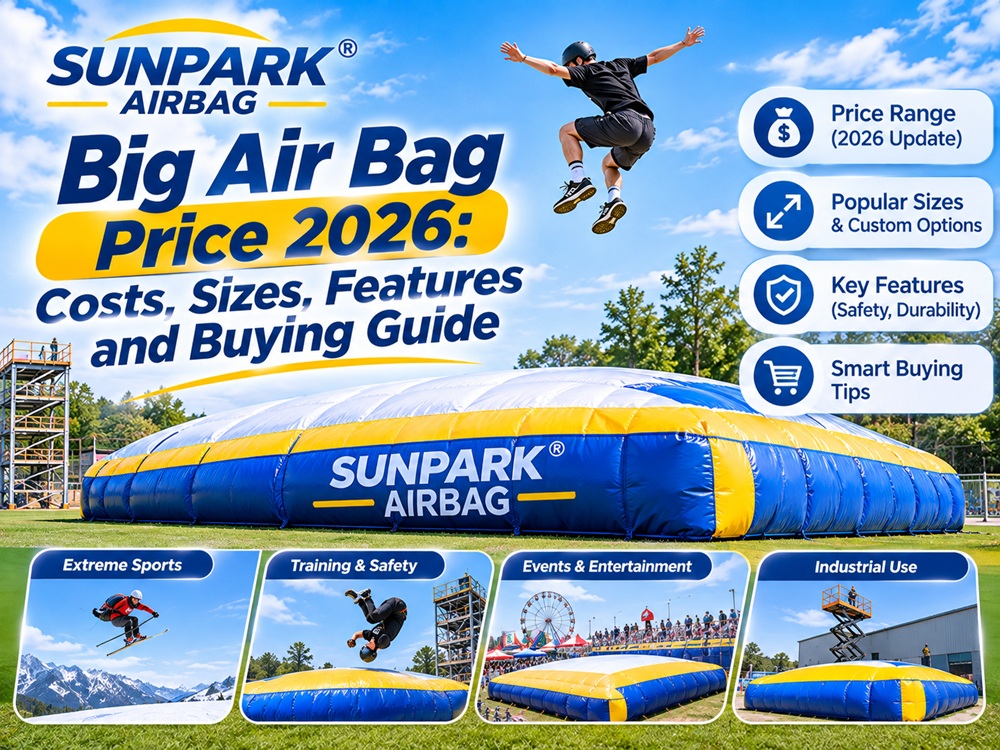
How Much Does a Big Air Bag Cost in 2026?
There is no reliable single price for a big air bag because dimensions, application, construction and project scope vary considerably. A compact training airbag for a gym has a different specification from a large landing system for a ski resort or commercial action sports park. Some quotations cover only the inflatable bag, while others include blowers, protective covers, anchoring accessories, installation guidance, spare parts and shipping.
For this reason, we recommend requesting a project-specific quotation rather than relying on a generic online price range. A supplier should know the jump height, landing surface, user group, available site area and expected operating frequency before recommending a configuration. If a supplier offers a firm price without asking these questions, treat the quotation cautiously.
Quick Answer: Big Air Bag Price in 2026
- What it costs: The final price is specification-dependent. Size, application, material, inflation equipment, safety features, shipping and installation all affect the quotation.
- What you are buying: A purpose-designed inflatable landing system, not simply a large inflatable cushion.
- Best value approach: Specify the intended sport, jump height, landing zone and daily usage before comparing suppliers.
- Where to invest: Material quality, structural design, suitable landing geometry, blower reliability and after-sales support.
- Where not to overspend: Decorative customization or capacity you will not use.
- Who should buy: Ski resorts, MTB parks, trampoline parks, gymnastics facilities, training centers and commercial action sports operators with a defined use case.
- Who may not need one: Small facilities with limited space, low demand or no suitable installation and operating arrangements.
Our recommendation: Compare complete, application-specific airbag systems on a like-for-like basis. The lowest purchase price is rarely the most useful number when you are responsible for daily operation and customer safety.
Big Air Bag Price: Quick Summary Table
Use this table to understand which factors usually have the greatest effect on a quotation. It is a planning guide, not a supplier price list: actual costs depend on dimensions, engineering, local requirements and project scope.
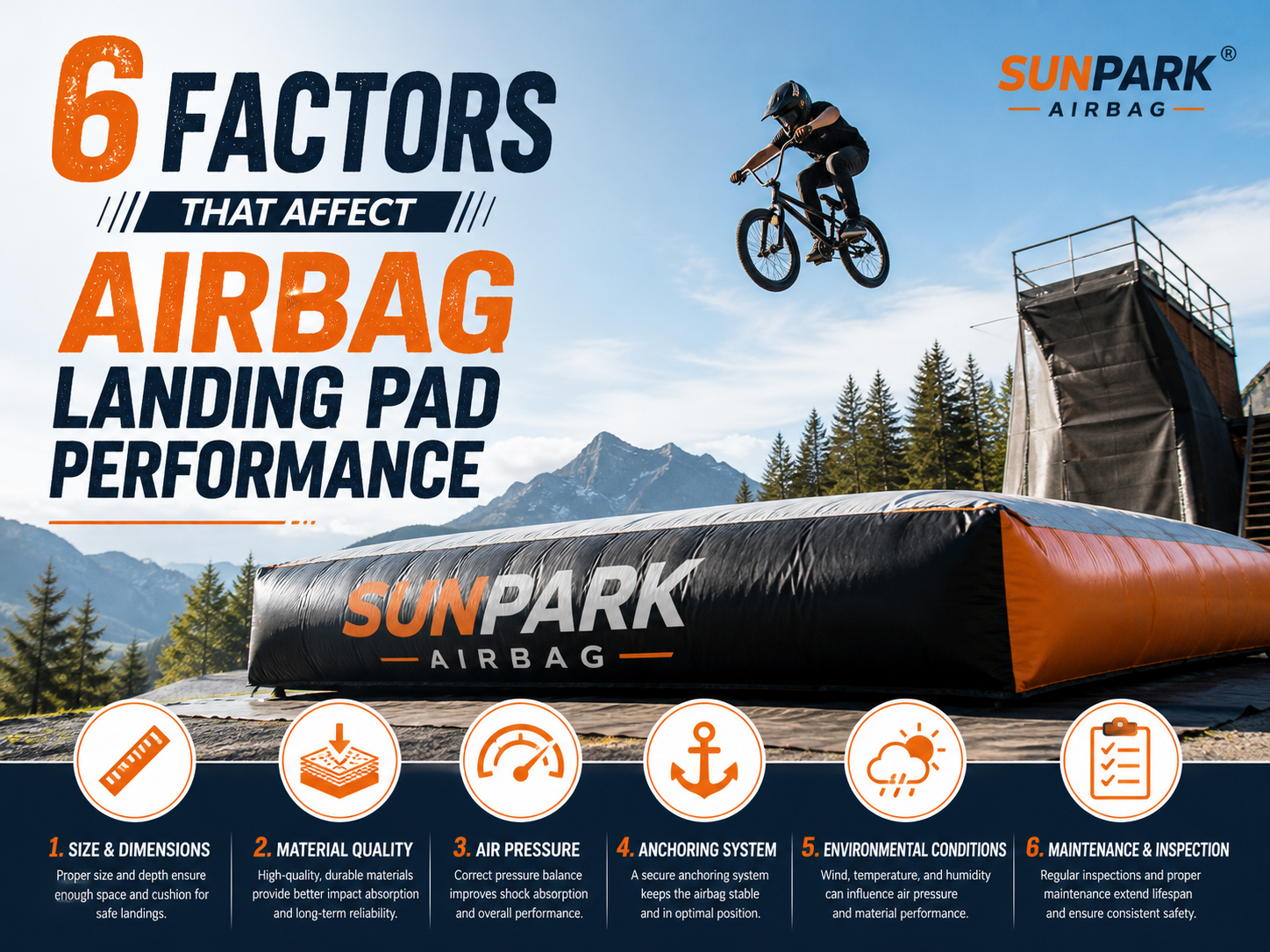
| Cost Factor | What Determines It | Price Impact | Our Buying Advice |
|---|---|---|---|
| Airbag dimensions | Length, width, height, landing profile and usable landing area | High | Provide a site plan and required landing dimensions before requesting a quote. |
| Application | Skiing, snowboarding, MTB, gymnastics, trampoline or general stunt use | High | Choose a design engineered for the actual sport and landing conditions. |
| Material specification | Fabric type, coating, reinforcement, seams and wear protection | High | Ask for material specifications and construction details, not just a fabric name. |
| Inflation system | Blower quantity, capacity, electrical requirements and redundancy | Medium to high | Confirm operating requirements and replacement-part availability. |
| Landing geometry | Top profile, transition, side structure and internal air-management design | High | Request drawings and an explanation of how the configuration suits your jump. |
| Accessories | Anchors, protective covers, repair kits, mats and connection components | Medium | Compare included accessories line by line. |
| Customization | Branding, colors, dimensions and project-specific features | Low to high | Prioritize functional customization before cosmetic upgrades. |
| Logistics and installation | Packaging, freight, unloading, site access and installation support | Medium to high | Ask for a delivered project cost, not only an ex-factory product price. |
| After-sales support | Warranty, technical assistance, spare parts and repair guidance | Long-term impact | Evaluate support before choosing the lowest quotation. |
What Is a Big Air Bag?
A big air bag is an inflatable landing structure designed for sports, training or recreational activities where users land after a jump, trick or controlled drop. Depending on its application, it may be configured for skiing, snowboarding, mountain biking, BMX, gymnastics, trampoline training or stunt practice.
Unlike an ordinary inflatable mattress, a sports landing airbag must be designed around the movement and impact conditions expected at the facility. Its dimensions, landing profile, internal air-management structure, fabric construction and inflation arrangement all influence how it performs. A visually large inflatable product is not automatically a suitable landing system.
How Does a Sports Airbag Work?
A blower or inflation system supplies air to the structure. When a user lands, the airbag deforms and manages displaced air through its design. The landing behavior depends on the complete system, including the bag’s geometry, internal compartments or air-release arrangement, operating pressure and the way it is installed.
Different sports require different landing characteristics. A snowboard airbag, for example, may need a different profile and landing zone from a gymnastics training airbag. A mountain bike system must account for the landing trajectory, bike contact points and the facility’s operating setup.
That is why professional buyers should not select a big air bag by dimensions alone. The supplier needs to understand the jump, approach, landing trajectory and user experience level. An appropriate airbag is a complete application-specific system, not just a large inflatable surface.
What Are the Main Benefits?
- Structured progression: A purpose-designed landing environment can support controlled skill practice when used with suitable coaching, site management and operating procedures.
- Repeatable training setup: Facilities can create a dedicated area for practicing selected tricks and movements.
- Commercial attraction: A well-planned airbag feature can add a distinctive activity to a ski resort, trampoline park or action sports venue.
- Flexible applications: Different product configurations can serve different sports and facility layouts.
- Potential operational value: A durable system with suitable maintenance support may serve a facility over multiple operating seasons.
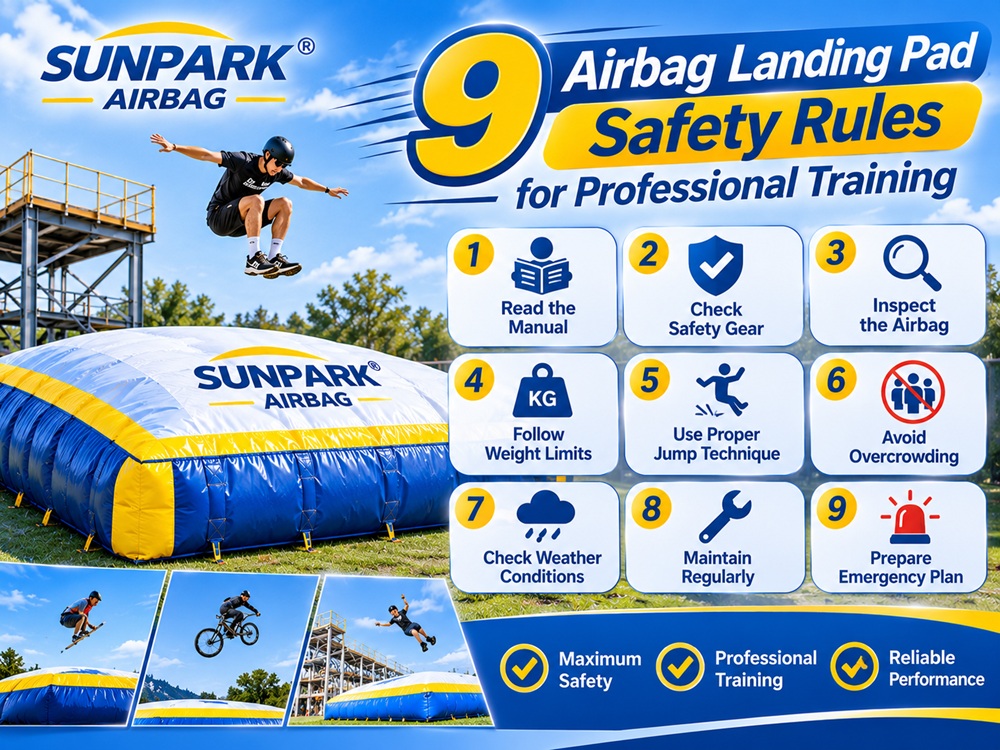
However, an airbag does not eliminate injury risk. It must be selected, installed, inspected and operated according to the manufacturer’s instructions and the facility’s risk-management procedures. It is not a substitute for coaching, appropriate protective equipment or competent supervision.
What Affects Big Air Bag Price in 2026?
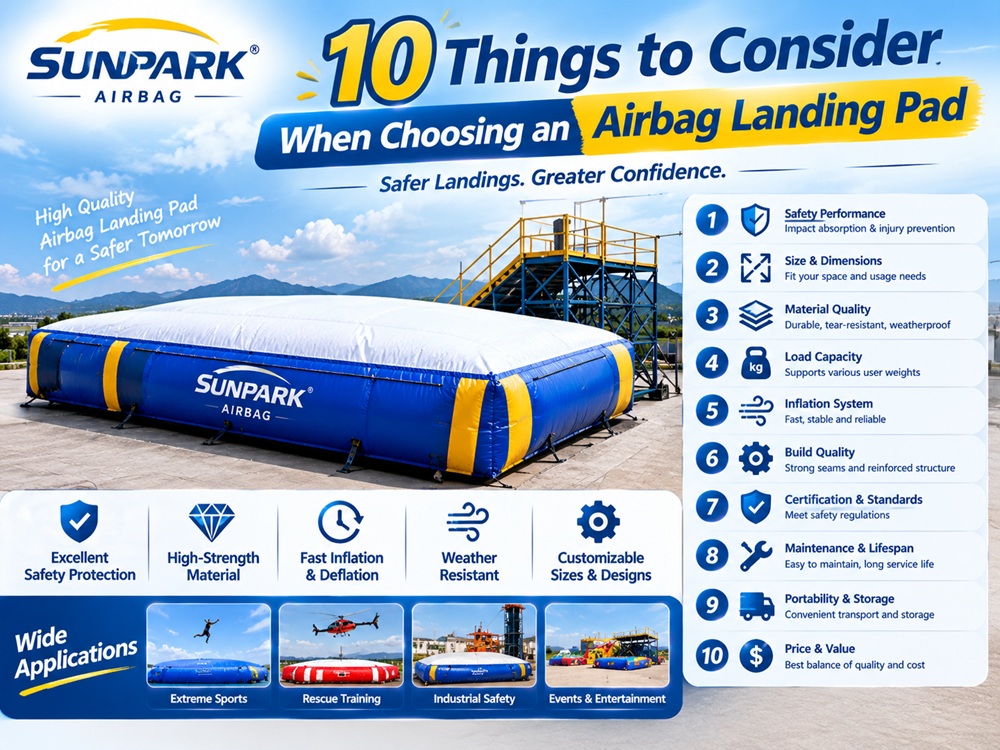
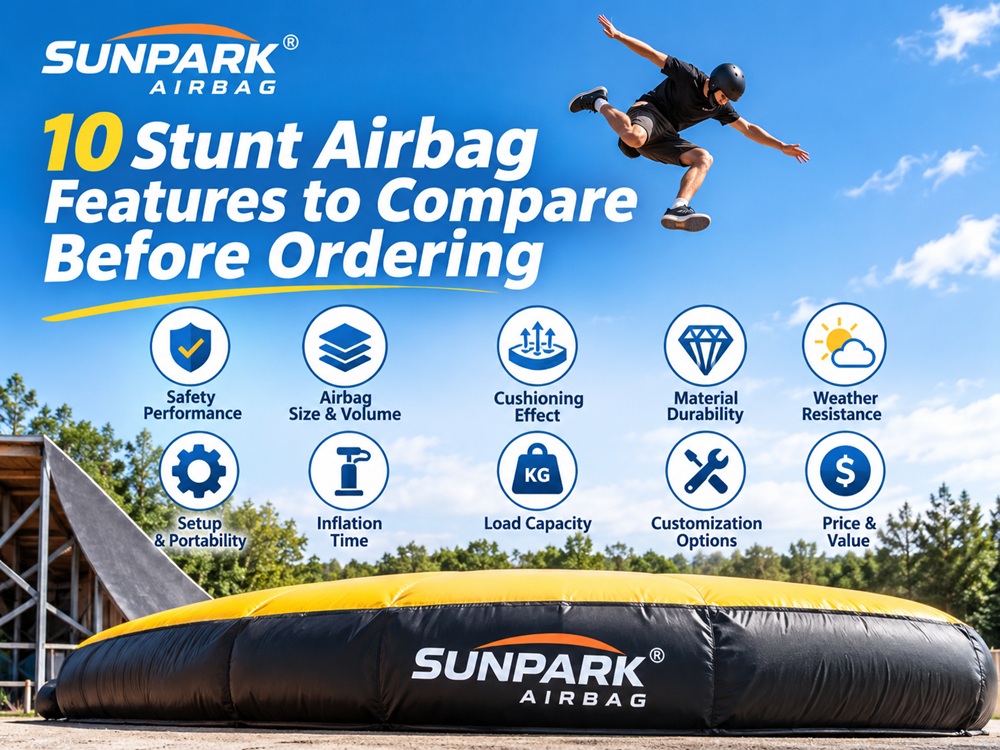
When buyers ask us for a big air bag price, we first look at the project specification. The following factors usually explain why two products that appear similar in photographs can have very different quotations.
1. Overall Dimensions and Landing Area
Size is one of the most visible cost factors. A wider or longer landing area requires more material and may need additional structural reinforcement. Height and landing profile also influence the design and volume of the inflatable system.
But bigger is not automatically better. An oversized airbag can increase transport, storage, installation and operating costs without improving the suitability of the landing zone. We recommend starting with the site layout and the intended jump rather than choosing the largest model available.
2. Intended Sport and Landing Requirements
A big air bag for a snowboard park is not necessarily interchangeable with one for a mountain bike facility. The approach speed, launch height, equipment, user movement and landing trajectory can differ significantly.
For a ski resort, the supplier should understand the slope, seasonal environment and planned jump configuration. For MTB, the landing area must be considered in relation to the bike, rider trajectory and site layout. For gymnastics, the requirements may focus on repeated training use, equipment compatibility and the specific skills being practiced.
Application-specific design can affect the quotation, but it is also where buyers should avoid false savings. A cheaper product that is not designed for the intended activity is not a bargain.
3. Fabric, Coating and Reinforcement
Fabric quality affects durability, handling, repairability and resistance to the conditions expected at the venue. Ask suppliers to identify the actual fabric construction, coating, weight or other relevant specification, reinforcement details and seam construction.
Do not compare materials using vague descriptions such as “heavy-duty PVC” alone. Ask what the specification means in practical terms, where reinforcement is used and how damaged areas can be repaired. A supplier should be able to explain how the selected material suits your operating environment.
4. Inflation Equipment and Electrical Requirements
The blower system is part of the project cost. The required capacity, number of blowers, electrical supply, operating arrangement and availability of replacement equipment should all be considered. A system that is inexpensive to purchase but difficult to operate or service can create unnecessary downtime.
For commercial users, we recommend checking the operating instructions and maintenance requirements before placing an order. Confirm whether the quotation includes blowers, connection components and any necessary accessories. Never assume that an airbag price includes every item required to put the system into service.
5. Landing Profile and Internal Construction
Landing geometry influences how the product is intended to be used. The top surface, transition, side structure and internal air-management design should match the project requirements. These details are more important than appearance in a product photograph.
Ask for drawings or a technical explanation of the proposed design. If two suppliers quote different prices, compare the construction and landing configuration rather than assuming the products are equivalent.
6. Customization and Branding
Custom dimensions, colors, logos and project-specific layouts can add cost. Branding may be worthwhile for a public-facing commercial installation, particularly where the airbag is a visible attraction. However, decorative customization should not take priority over the landing design, material specification or operating equipment.
7. Shipping, Installation and After-Sales Service
A large inflatable product can require careful packing, freight planning and suitable unloading access. International projects may also involve customs clearance, local handling and installation coordination. These costs can make a significant difference to the final delivered price.
Ask whether the quotation is ex-works, FOB, CIF or based on another delivery arrangement. Confirm what is included, who is responsible for unloading and whether the supplier provides installation guidance. For a commercial project, warranty conditions and spare-part access are not minor details; they are part of the purchase decision.
Big Air Bag Types: Comparison and Price Considerations
Different airbag categories are designed for different users and operating environments. The table below compares common options by application and the factors that typically affect their cost. It is not a claim that one type is universally safer or more durable than another.
| Airbag Type | Typical Application | Main Specification Drivers | Relative Cost Consideration | Best Buying Approach |
|---|---|---|---|---|
| Ski and snowboard airbag | Ski resorts, snow parks and freestyle training | Landing dimensions, jump profile, seasonal conditions and inflation setup | Project-specific; larger resort installations can require substantial logistics and customization | Provide jump geometry, site conditions and operating season details. |
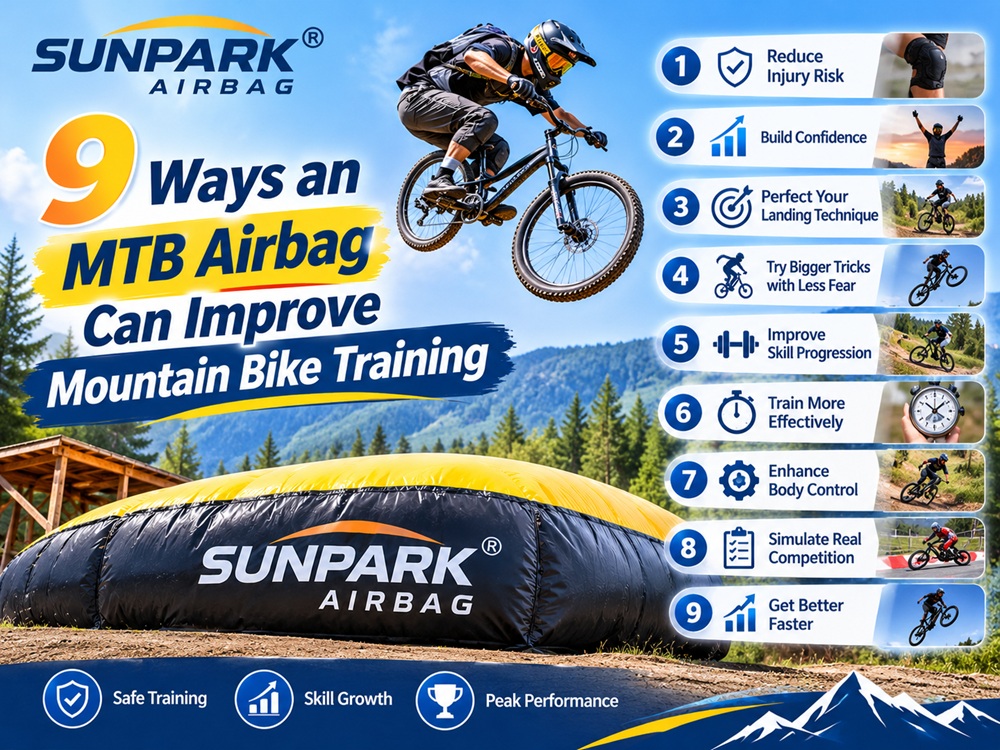
| MTB landing airbag | Mountain bike parks and rider training facilities | Landing trajectory, width, length, bike contact conditions and site access | Depends heavily on landing dimensions and structural configuration | Share a site drawing and intended jump profile with the manufacturer. |
| Gymnastics airbag | Gyms, training centers and skill development facilities | Training discipline, dimensions, surface design and frequency of use | Can vary with size, configuration and included accessories | Specify the exact training movements and user groups. |
| Trampoline park airbag | Indoor leisure parks and commercial activity venues | Daily usage, access design, integration with surrounding attractions and maintenance access | Project cost includes more than the inflatable itself | Evaluate the complete attraction layout and operational plan. |
| Halfpipe airbag | Freestyle training and specialized sports facilities | Halfpipe geometry, transitions, dimensions and installation conditions | Highly dependent on custom design and site requirements | Work with a manufacturer experienced in the specific application. |
| General stunt airbag | Stunt practice and selected recreational activities | Drop or jump conditions, landing area, fabric and air-management design | Varies widely by intended use and specification | Do not buy until the supplier has reviewed the proposed use. |
Which Type Should You Choose?
If you operate a ski resort, start with a purpose-designed halfpipe airbag or snowboard landing configuration according to your terrain and training plan. If your project is for mountain biking, review a dedicated MTB airbag landing system rather than adapting a product intended for another sport.
For an indoor gym, a gym airbag for training may be more appropriate. If the venue is a trampoline or leisure park, consider how an inflatable jump airbag fits into the wider attraction layout, visitor flow and operating plan.
Big Air Bag Price by Application: What Should You Budget For?
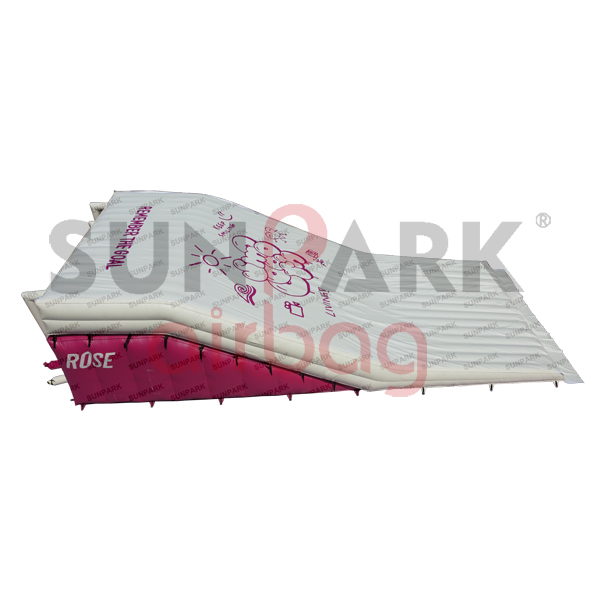
There is no responsible way to assign one standard 2026 price to every application without knowing the dimensions and technical requirements. Instead, use the following project profiles to prepare a realistic request for quotation.
Ski Resorts and Snowboard Parks
Ski resorts often need a large landing area designed around a particular jump and the site’s terrain. Outdoor conditions, seasonal operation, storage, installation and transportation can all influence the project budget.
For this type of purchase, do not compare only the cost per square meter. A suitable landing profile, reliable inflation setup and clear operating instructions matter more than a low unit price. If you are evaluating destinations and facility concepts, our guide to snowboard airbag parks provides additional context for the types of facilities using these systems.
Mountain Bike and BMX Facilities
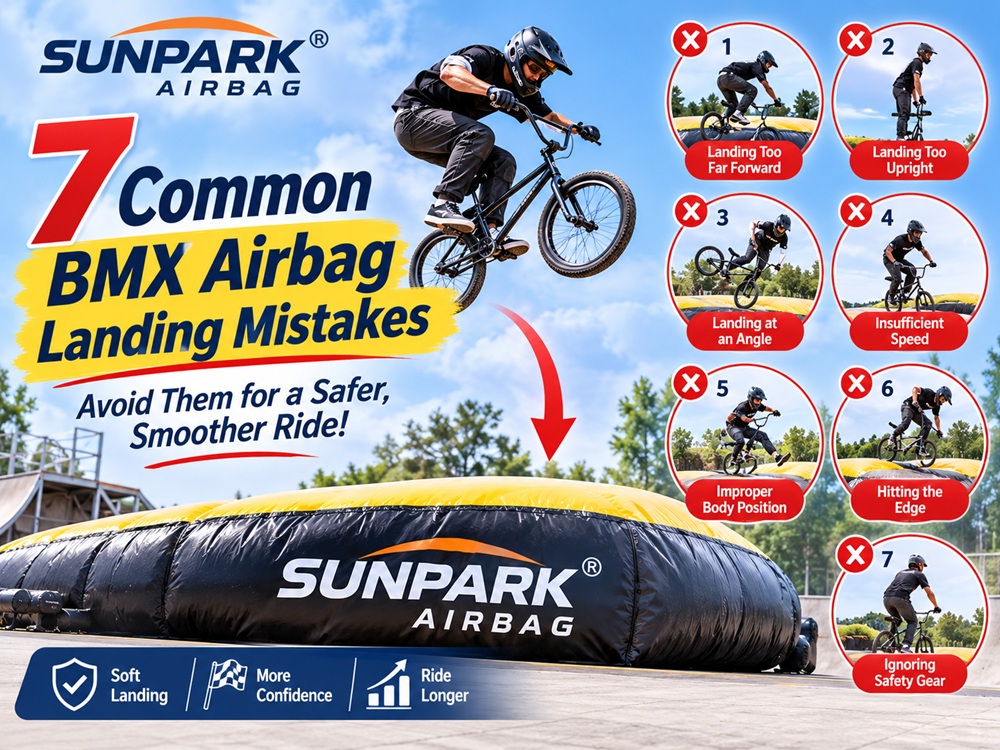
MTB and BMX projects need a configuration that matches the launch and landing trajectory. The supplier should understand the rider’s approach, expected landing position, equipment and available site area. The quotation should identify the intended setup and any required accessories.
For these facilities, a generic large inflatable may not be a suitable substitute for a purpose-designed landing airbag solution. Share photographs, measurements and a layout drawing before asking for a final price.
Trampoline Parks and Indoor Leisure Centers
Commercial trampoline parks should consider the airbag as one part of a larger attraction. The purchase decision should include available floor space, visitor circulation, staff supervision, maintenance access and how the airbag integrates with other activities.
Initial investment should be considered alongside the cost of the wider facility. Our guide to trampoline park construction cost explains why the inflatable attraction is only one component of a commercial park budget.
Gymnastics and Training Facilities
Training centers should identify the skills the airbag is intended to support and how frequently it will be used. A small facility with occasional sessions may not need the same dimensions or configuration as a high-volume training center.
For heavy-duty applications, we recommend discussing expected daily usage, inspection routines, cleaning, repair procedures and spare parts before finalizing the specification. A product’s purchase price should be evaluated against its expected service demands.
Pros and Cons of Buying a Big Air Bag
| Advantages | Limitations and Costs |
|---|---|
| Can create a dedicated landing environment for selected training and recreational activities. | Does not remove injury risk or replace qualified supervision and operating procedures. |
| Can support structured skill progression when the system and activity are appropriately managed. | Requires a suitable site, correct installation and ongoing inspection. |
| Can add a distinctive attraction to a commercial sports or leisure venue. | Initial purchase is only one part of the investment; freight, power, maintenance and staffing also matter. |
| Available in different configurations for different sports. | A product designed for one application may not be suitable for another. |
| A well-specified system may provide value across multiple operating seasons. | Fabric damage, blower issues or poor maintenance can lead to downtime and repair costs. |
| Can be customized to fit a facility’s layout and branding. | Custom dimensions and features can increase lead time and total project cost. |
Our view is that a big air bag is worth the investment when it solves a defined operational need and the facility can manage it properly. It is not worth buying simply because the attraction looks impressive. If you cannot identify the intended users, landing configuration, site requirements and maintenance plan, the project is not ready for a purchase order.
Specifications to Check Before Buying a Big Air Bag
A professional quotation should be supported by enough technical information for you to understand exactly what is being supplied. The following checklist helps prevent incomplete comparisons.
Dimensions and Usable Landing Area
Ask for overall length, width, height, usable landing area and any relevant transition measurements. Clarify whether the listed dimensions refer to the inflated product or its packed size. Confirm that the proposed design fits the site and the intended activity.
Material and Construction
Request the fabric type, coating, reinforcement approach, seam construction and repair method. Ask how the material is intended to perform under the expected environmental and operating conditions. If the supplier provides test reports or technical data, review the scope and applicability rather than relying on a general quality claim.
Inflation and Electrical Setup
Confirm blower quantity, specifications, electrical requirements, connection arrangement and operating instructions. Ask what happens if a blower stops working and whether replacement equipment or spare parts are available. The supplier should explain the required operating checks and maintenance schedule.
Anchoring and Installation
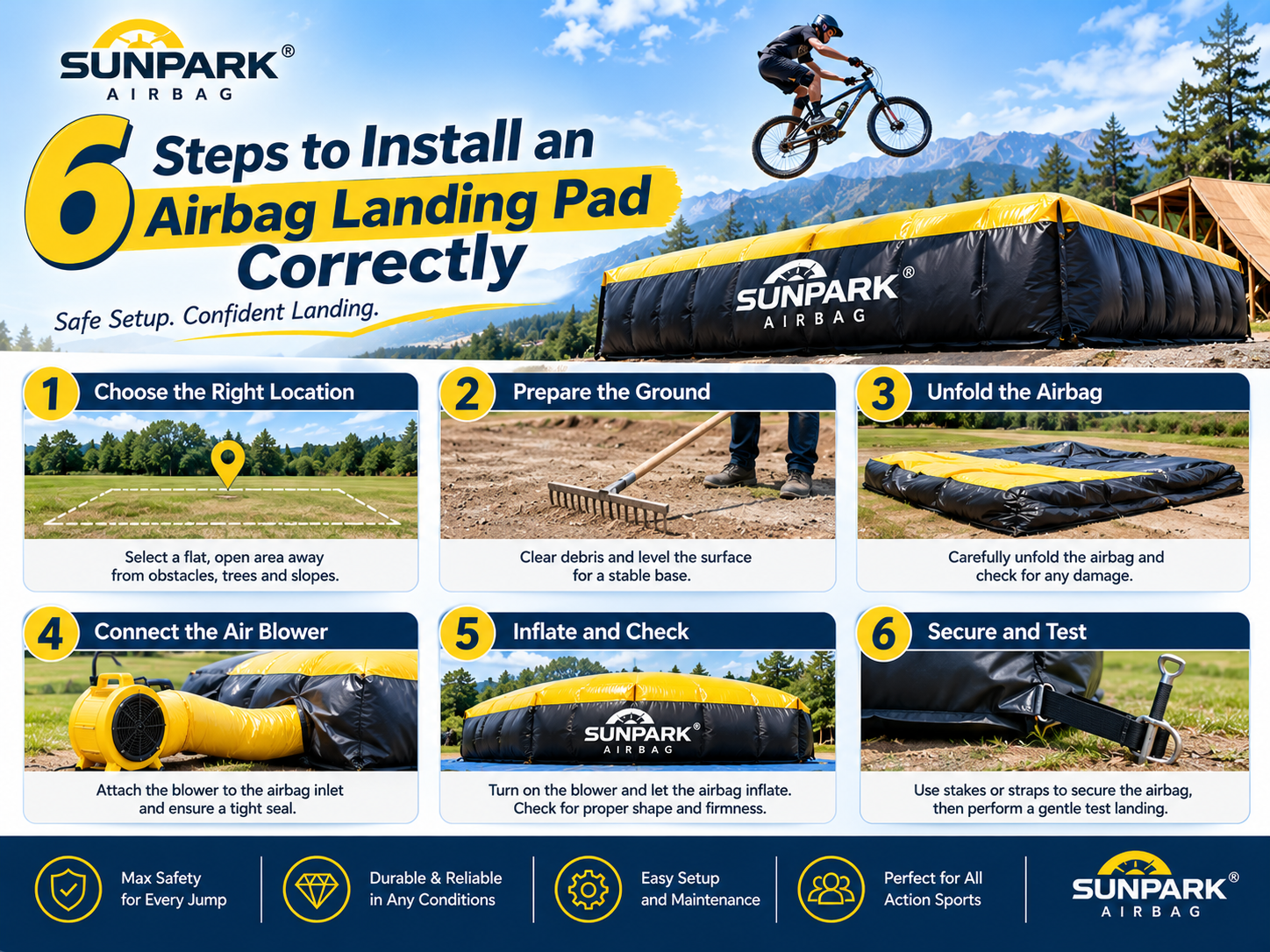
Outdoor installations may require site-specific anchoring and additional planning. Ask what anchoring components are included, what site preparation is required and whether local ground or weather conditions need to be considered. Installation should follow the manufacturer’s instructions and the facility’s engineering and safety requirements.
Inspection, Repair and Warranty
Ask for a written inspection routine, cleaning guidance, repair instructions and warranty terms. Confirm which components are covered, how long support is available and whether replacement parts can be supplied. A warranty that excludes the components most likely to need service may provide less practical value than it first appears.
How to Choose a Big Air Bag Manufacturer
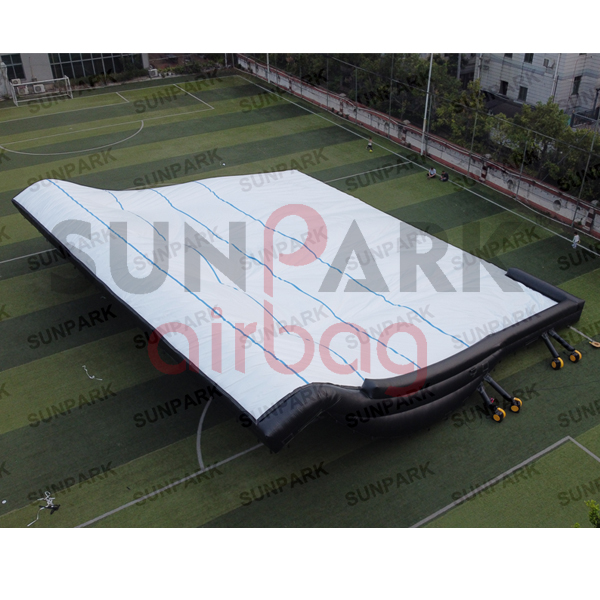
Halfpipe Training Airbag
Supplier selection can have a greater long-term impact than a small difference in the initial quotation. A manufacturer should be able to explain the design, materials, operating requirements and service arrangements in practical terms. If the sales discussion focuses only on price and appearance, you may not have enough information to make a sound decision.
1. Look for Relevant Application Experience
Ask whether the manufacturer has supplied systems for the same type of facility and sport. Experience with a small gym product does not automatically demonstrate experience with a large outdoor snowboard landing system. Request project examples that are relevant to your intended application.
2. Review Technical Drawings and Product Details
A capable supplier should be willing to discuss dimensions, landing geometry, material construction and inflation equipment. Request a technical proposal that identifies the actual product configuration. This gives your team something concrete to compare across suppliers.
3. Confirm Quality Control
Ask how materials are checked, how seams and connections are inspected, and what final quality checks are completed before shipment. Request supporting documentation where available. Avoid accepting broad statements such as “premium quality” without a clear explanation of the process behind them.
4. Evaluate Communication and After-Sales Support
Large inflatable systems may require installation guidance, maintenance advice and replacement components. A manufacturer should respond clearly to technical questions and explain how support works after delivery. For overseas projects, confirm communication channels, time zones, shipping responsibilities and spare-part arrangements.
5. Compare Complete Quotations
Make sure every supplier is quoting the same scope. One quotation may include blowers and accessories while another covers only the inflatable structure. Compare product dimensions, materials, equipment, delivery terms, warranty and support line by line.
For a commercial facility, we recommend choosing the supplier that can demonstrate a suitable design and support plan, not simply the one offering the lowest ex-factory figure.
Total Cost of Ownership: Is a Big Air Bag Worth the Investment?
The purchase price is only the starting point. A commercial buyer should estimate the full cost of owning and operating the system over its expected service period. This is especially important for facilities that plan to charge visitors or use the airbag as a major attraction.
Initial Purchase Cost
Include the inflatable structure, blower equipment, accessories, customization, packaging and any project-specific engineering or preparation. Confirm whether the quotation includes delivery to your site or only shipment from the factory.
Operating Costs
Consider electricity, staffing, inspection time, cleaning, storage and routine maintenance. Outdoor facilities may also need to account for seasonal installation and removal. The actual cost depends on operating hours and local conditions, so use your own facility’s expected schedule.
Maintenance and Downtime
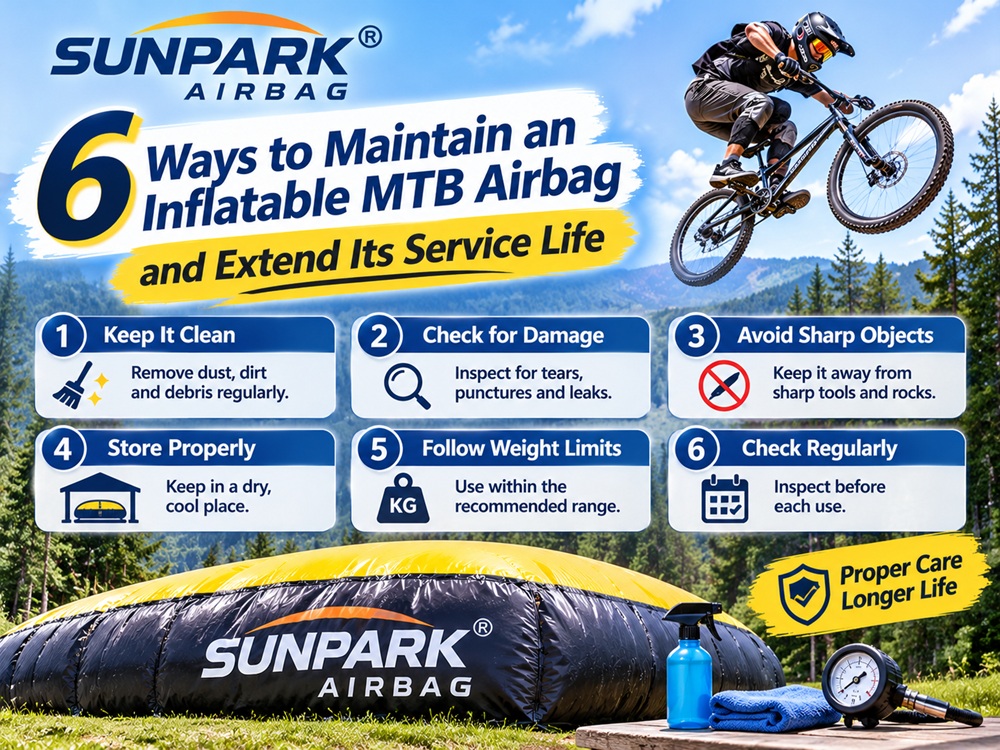
Fabric repairs, blower replacement and other service requirements can affect operating availability. Ask the supplier about common maintenance tasks and the recommended spare parts to keep on site. For commercial users, a planned maintenance budget is more sensible than waiting for a problem to interrupt operations.
Revenue and Utilization
If the airbag is part of a paid activity, estimate realistic daily usage, session capacity, operating days and revenue per session. Then account for staffing, insurance, marketing, maintenance and other operating expenses. Do not build a business case around full utilization every day; weather, seasonality, customer demand and maintenance downtime can all affect performance.
For trampoline park operators, our article on trampoline park owner income offers a broader view of the commercial factors behind venue profitability.
A Simple Airbag Investment Calculation
Use this basic framework to estimate whether the project is commercially viable:
Annual contribution from airbag activity = Annual airbag-related revenue − Direct operating costs
Estimated payback period = Initial project investment ÷ Annual contribution from airbag activity
This is a simplified planning calculation, not a guarantee of financial performance. Include financing, taxes, depreciation, insurance, facility overhead and unexpected maintenance in a full business model.
If the airbag is primarily for internal training rather than paid sessions, measure value differently. Consider training capacity, facility utilization, coaching objectives and whether the system supports activities that would otherwise be unavailable. Not every worthwhile purchase needs to generate direct ticket revenue, but the intended return should still be clear.
SUNPARK® AIRBAG: Sports Airbag Systems for Commercial Projects
SUNPARK® AIRBAG is an airbag system provider focused on freestyle airbags for ski resorts, theme parks, sports facilities and gymnastics venues. With over 10 years of experience, the company supplies products for international customers and develops solutions for extreme sports and leisure applications.
Our approach is to understand the intended activity and project conditions before recommending a configuration. A resort, MTB park and indoor training center do not have the same requirements. The right specification starts with the site, users and landing purpose, then works backward to dimensions, materials, inflation equipment and accessories.
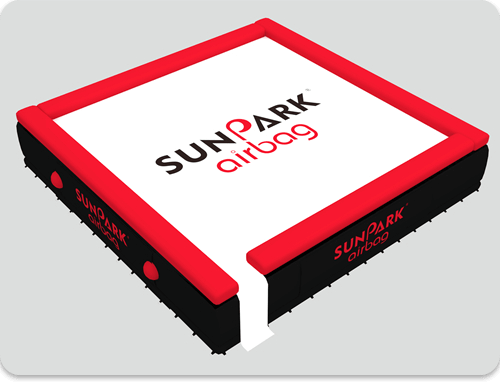
SUNPARK® AIRBAG – Explorer of Airbag Systems for Sports
SUNPARK® AIRBAG develops freestyle and landing airbag products for sports and leisure facilities around the world. Its product range is intended for applications including ski resorts, theme parks, sports venues and gymnastics facilities.
- Over 10 years of experience in sports airbag applications.
- Product development focused on freestyle, training and leisure uses.
- Solutions for ski resorts, sports facilities and trampoline parks.
- Project discussions based on intended application and product configuration.
What Information Should You Send for a Quote?
To receive a useful big air bag price, prepare the following information before contacting the manufacturer:
- Application: Skiing, snowboarding, MTB, BMX, gymnastics, trampoline park or another activity.
- Required dimensions: Approximate length, width, height and usable landing area.
- Jump information: Launch height, expected trajectory and relevant site layout, where applicable.
- Location: Country, installation environment and any relevant weather or site conditions.
- Operating plan: Intended user group, operating frequency and commercial or private use.
- Required equipment: Blowers, anchors, protective covers, repair kits and other accessories.
- Delivery requirements: Destination, preferred shipping arrangement and expected project schedule.
Providing this information helps the manufacturer recommend a suitable configuration and prepare a quotation that is easier to compare. To discuss your project, visit the SUNPARK® AIRBAG product range and submit your requirements.
Common Mistakes When Comparing Big Air Bag Prices
Choosing the Lowest Quotation Without Checking the Scope
A low price may exclude blowers, accessories, shipping or installation support. Compare the complete supply scope before deciding which quotation offers better value.
Buying by Overall Size Alone
A large airbag is not automatically appropriate for every jump. The landing profile and intended activity need to be considered alongside the dimensions.
Ignoring the Operating Environment
An indoor installation and an outdoor seasonal installation may face different environmental and maintenance demands. Tell the supplier where and how the system will be used.
Overlooking Maintenance and Spare Parts
Ask how repairs are handled and which components should be kept available. A system that cannot be serviced promptly may create avoidable downtime.
Assuming One Airbag Fits Every Sport
Snowboarding, MTB, gymnastics and trampoline applications have different requirements. Do not adapt a product to a new activity without written confirmation from the manufacturer that the configuration is suitable for the intended use.
Failing to Plan the Site Before Ordering
Check access routes, available floor or ground area, electrical supply, anchoring conditions, storage and installation access. These practical details can change the final project cost and delivery plan.
Frequently Asked Questions About Big Air Bag Price
1. How much does a big air bag cost in 2026?
Big air bag prices vary according to dimensions, application, material construction, landing design, inflation equipment, accessories, shipping and installation requirements. A small training airbag and a large commercial sports landing system are not directly comparable. Request a project-specific quotation based on your site and intended use.
2. Why do big air bag prices vary so much between manufacturers?
Manufacturers may quote different dimensions, fabric specifications, reinforcement, landing profiles, blower systems and accessories. Some quotations include freight or installation support while others cover only the inflatable structure. Compare the full technical and commercial scope rather than the headline price.
3. What size big air bag should I buy?
The appropriate size depends on the sport, jump or training activity, landing trajectory, available site area and intended users. Ask the manufacturer to review your project layout and recommend dimensions. Do not select a size based only on photographs or another facility’s installation.
4. Is a big air bag suitable for a ski resort?
A purpose-designed sports landing airbag may be suitable for selected ski resort and freestyle training applications. The configuration should be reviewed against the jump design, terrain, seasonal conditions, installation requirements and operating procedures. Consult an experienced manufacturer before purchasing.
5. Can I use a snowboard airbag for mountain biking?
Do not assume that a snowboard airbag is suitable for MTB use. The landing trajectory, equipment contact, dimensions and operating conditions may differ. Ask the manufacturer to confirm whether the exact configuration is designed and appropriate for the intended MTB application.
6. Does the big air bag price include a blower?
Not always. Some suppliers quote the inflatable structure separately from the blower and accessories. Ask for a written list of included equipment, electrical requirements, connection components and recommended spare parts.
7. What material is best for a sports airbag?
There is no single material specification that suits every application. Fabric, coating, reinforcement and seam construction should be selected according to the intended sport, environment and operating frequency. Ask the manufacturer for technical details and an explanation of why the proposed construction fits your project.
8. How long does a sports airbag last?
Service life depends on material quality, construction, usage frequency, installation, environmental exposure, maintenance and repair practices. Ask the supplier for maintenance instructions, warranty terms and guidance on inspection and storage. Avoid relying on a generic lifespan claim without knowing the conditions behind it.
9. Is a big air bag a good investment for a trampoline park?
It can be a useful attraction when it fits the park’s customer demand, layout, staffing and operating model. Evaluate the full installation cost, maintenance, insurance, staffing and realistic visitor utilization. A business case should use conservative revenue assumptions rather than assuming maximum daily capacity.
10. What should I send a manufacturer to get an accurate quotation?
Provide the application, approximate dimensions, site location, jump or training requirements, user group, expected operating frequency, required accessories and delivery destination. Drawings, photographs and site measurements help the manufacturer understand the project and reduce uncertainty in the quotation.
11. Can a big air bag eliminate the risk of injury?
No. An airbag does not eliminate injury risk. The system must be appropriate for the activity, installed and operated according to the manufacturer’s instructions, and supported by suitable supervision, training and facility safety procedures.
12. Should I choose a local supplier or an overseas manufacturer?
Compare technical capability, relevant project experience, product specification, communication, delivery terms, warranty and after-sales support. An overseas manufacturer may offer a suitable product and direct factory communication, but you should account for freight, customs, local installation and service arrangements before making a decision.
References and Further Reading
These resources provide background on inflatable-product safety, workplace risk management and commercial project planning. They should be used alongside the exact manufacturer’s technical documentation and local requirements for your facility.
- U.S. Consumer Product Safety Commission – Inflatable Amusements. Consumer safety information relevant to inflatable recreational equipment and its operation.
- ASTM F2374 – Standard Practice for Design, Manufacture, Operation, and Maintenance of Inflatable Amusement Devices. A recognized standard for inflatable amusement devices; confirm its applicability to the specific sports airbag and jurisdiction with qualified personnel.
- U.S. Occupational Safety and Health Administration – Worker Safety. Guidance and resources for workplace hazard management and safe operating practices.
The right big air bag is the one that fits your sport, site, users and operating plan. In 2026, do not make the buying decision on price per square meter alone. Compare landing geometry, fabric construction, inflation equipment, delivery scope, maintenance support and the manufacturer’s relevant experience. SUNPARK® AIRBAG recommends starting with a clear project specification so you can receive a quotation that reflects the system you actually need.