Mastering the art of flight is one of the most exhilarating milestones in mountain biking. However, as the saying goes, “what goes up must come down.” Knowing how to land a jump on a mountain bike smoothly and safely is arguably more critical than the takeoff itself. A poor landing can lead to mechanical damage, loss of momentum, or injury, while a smooth landing maintains your flow and speed for the next trail feature.
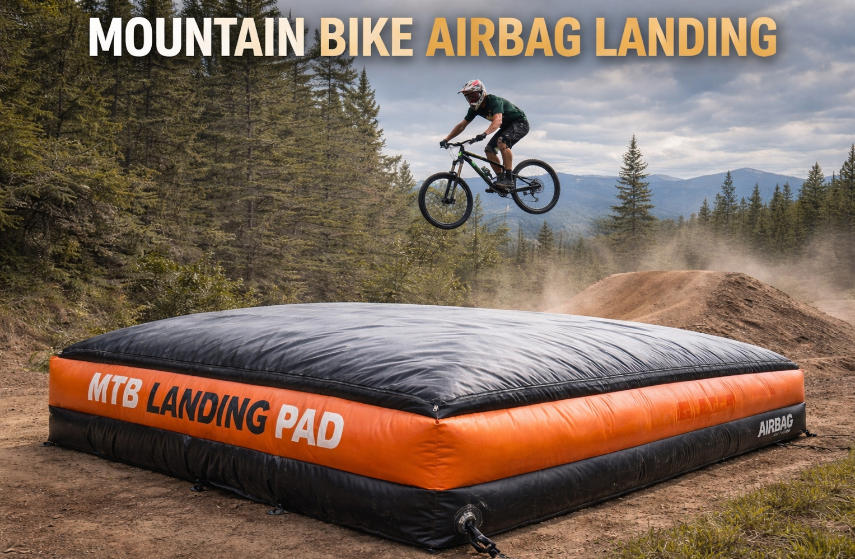
Whether you are sending your first tabletops or progressing to larger gap jumps, the physics of a proper landing remain consistent. This guide breaks down the essential techniques, body positioning, and safety protocols required to stomp your landings every time. We will also explore how advanced training tools, like airbag systems, are revolutionizing how riders learn these high-risk skills safely.
- 1. The Physics of Flight: Takeoff to Touchdown
- 2. Step 1: Spotting the Landing
- 3. Step 2: Body Positioning in the Air
- 4. Step 3: The Touchdown Technique
- 5. Common Mistakes to Avoid
- 6. Training Safely: The Role of Airbags
- 7. Partner Spotlight: SUNPARK® AIRBAG
- 8. Summary Checklist
- 9. Frequently Asked Questions
- 10. References
1. The Physics of Flight: Takeoff to Touchdown
Before focusing solely on the landing, it is vital to understand that a good landing starts at the takeoff. If you leave the lip of the jump off-balance, correcting it in the air becomes a struggle for survival rather than a controlled maneuver. A successful jump consists of four phases: the approach, the compression/takeoff, the apex (airtime), and the landing.
The goal of the landing phase is to match the angle of your bike to the angle of the landing ramp (transition). By doing this, you convert your downward momentum into forward speed, minimizing the impact on your body and bike components.
2. Step 1: Spotting the Landing
Once you are airborne, your eyes must immediately shift from the takeoff to the landing zone. This is known as “spotting the landing.” Your body tends to follow where your eyes look.
- Focus on the Transition: Don’t look at your front wheel or the ground directly beneath you. Lock your eyes on the downward slope where you intend to touch down.
- Assess Your Trajectory: In the split second you have in the air, judge if you are going to case (come up short) or overshoot. Spotting this early allows you to make micro-adjustments, such as pushing the bike forward to clear the knuckle or soaking up an overshot landing.
3. Step 2: Body Positioning in the Air
To prepare for impact, you must move from the extended position of the takeoff back into a “ready” or “attack” position. A stiff rider is a crashing rider.
The “Dead Sailor” vs. Active Rider
A “dead sailor” is a rider who freezes in the air, becoming a passenger on the bike. To avoid this, stay dynamic. As you reach the apex of the jump, begin to bring the bike back underneath you. Your arms and legs should be slightly bent and relaxed, ready to act as suspension.
Leveling Out
Use your handlebars to level the bike relative to the landing. If the landing is steep, you will need to push the nose (front wheel) down. If the landing is flat, you will aim for a more level, two-wheel touchdown.
4. Step 3: The Touchdown Technique
The moment of contact is where technique matters most. The objective is to be soft and quiet.
- Match the Slope: Ideally, both wheels should touch the ground simultaneously if you are landing on flat ground. For a downward transition (landing ramp), the front wheel should touch down just a fraction of a second before or simultaneously with the rear wheel to match the slope’s angle.
- Arms and Legs as Suspension: Do not rely solely on your bike’s mechanical suspension. As the wheels contact the ground, bend your elbows and knees deep to absorb the G-force. Think of catching a heavy medicine ball; you wouldn’t keep your arms straight, you would cushion the catch.
- No Braking: Never grab the brakes immediately upon landing. This causes skidding and loss of control. Wait until you have regained full traction and composure before scrubbing speed.
5. Common Mistakes to Avoid
Even experienced riders fall victim to these common errors when learning how to land a jump on a mountain bike.
Nose Diving
This occurs when a rider hits the front brake mid-air (which stops the front wheel’s gyroscopic effect, pitching the bike forward) or leans too far forward on takeoff. To recover, shift your weight back, but prevention is key.
Looping Out
The opposite of a nose dive, this happens when the front wheel lifts too high, causing the rider to land on the rear wheel uncontrollably, often resulting in the bike shooting out from under them. This is usually caused by pulling up too hard on the handlebars rather than pumping with the legs.
Stiffening Up
Tensing up mid-air prevents you from absorbing the landing. If you land with locked arms or legs, the energy of the impact will be transferred directly to your joints or bounce you off the bike.
6. Training Safely: The Role of Airbags
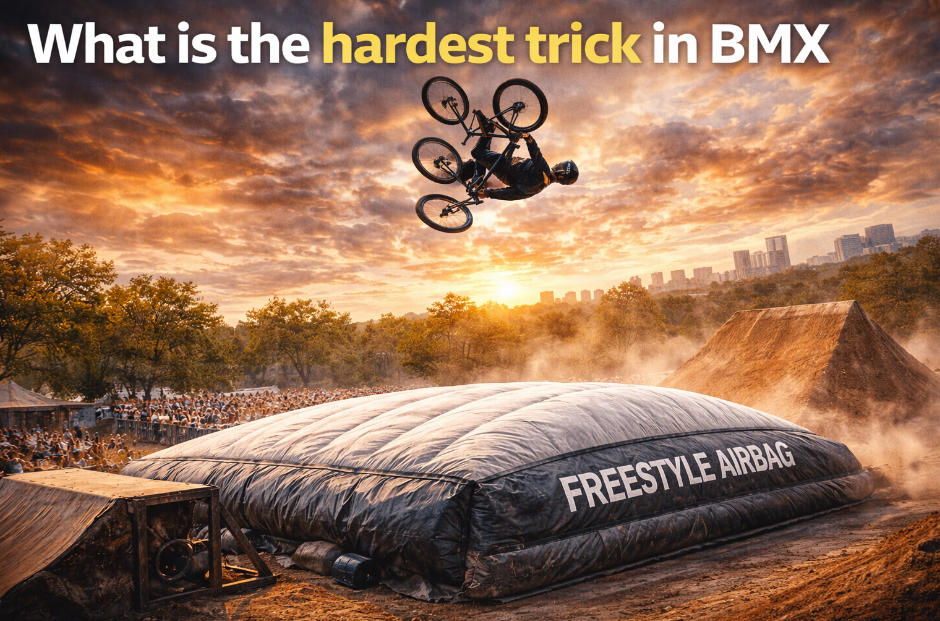
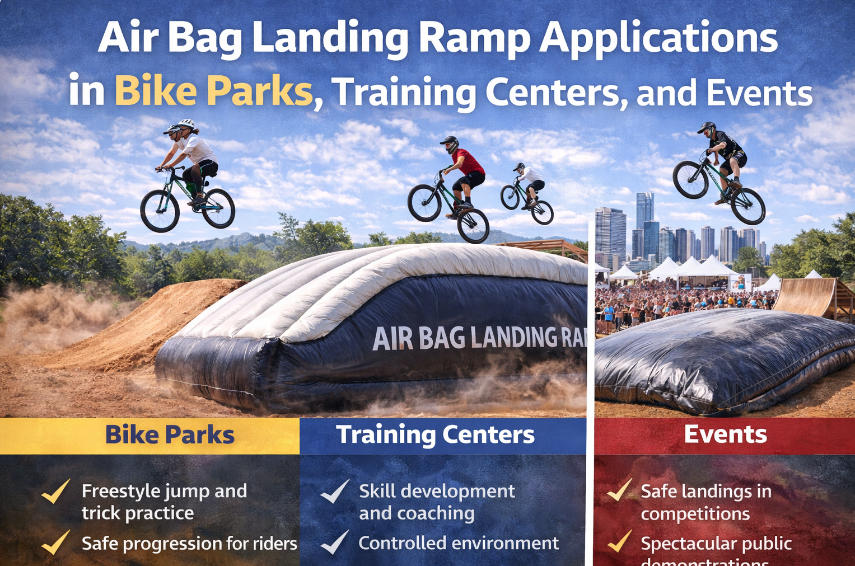
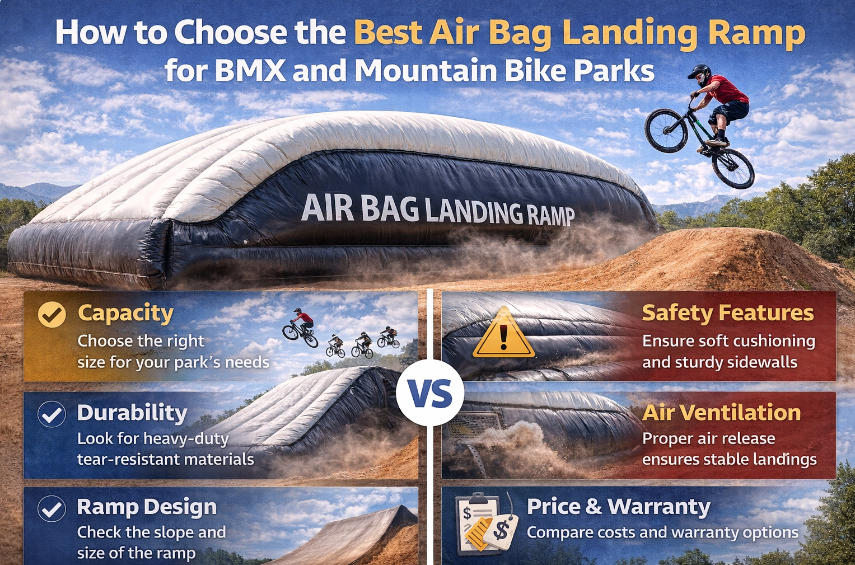
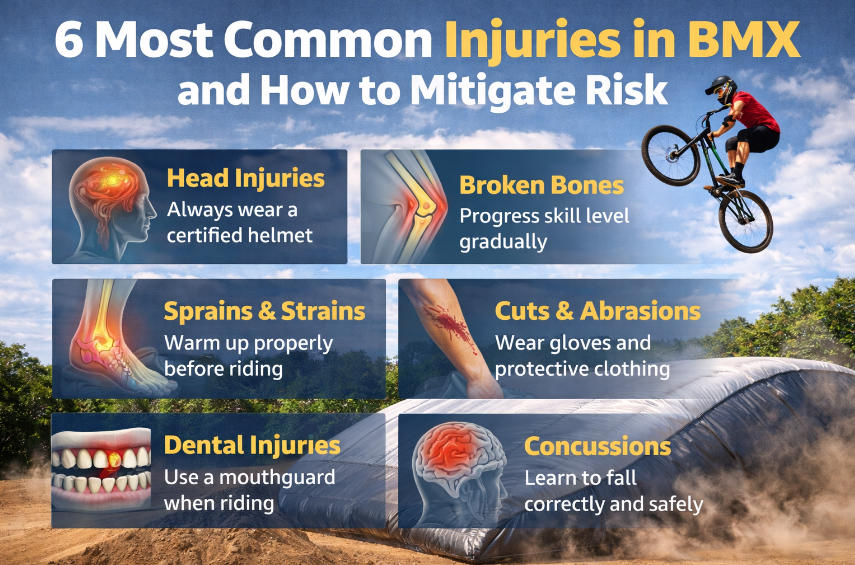
Progression in mountain biking involves risk, especially when learning to jump. Traditionally, riders learned on dirt/mulch, where a crash could mean broken bones. Today, the industry has shifted toward safer training methods using airbag landing systems.
Airbag landings mimic the angle of a real dirt landing but provide a soft, cushioned surface that absorbs falls. This allows riders to attempt jumps, tricks, and drops repeatedly without the fear of injury. Whether you are learning a basic air or a backflip, using an inflatable landing system accelerates the learning curve significantly.
7. Partner Spotlight: SUNPARK® AIRBAG
SUNPARK® AIRBAG – Explorer of Airbag System for Sports
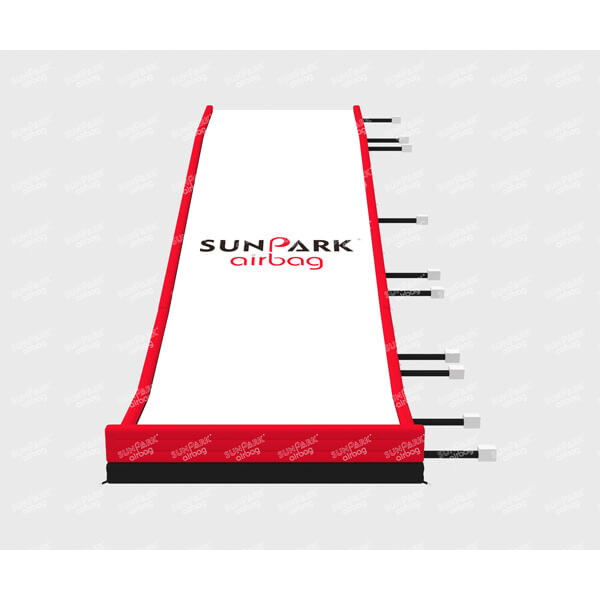
With over 10 years of experience, we provide freestyle airbags for ski resorts, theme parks, sports, and gymnastics facilities around the globe. SunparkAirbag® is the leading manufacturer of Airbags for Extreme Sports and Leisure Industries in China.
As extreme sports developed, more and more snowboarders and serious sports enthusiasts are looking for safer training possibilities to progress without risks of getting injured. We create the products for World Champion Snowboarders, famous riders, and trampoline parks worldwide. We are deeply committed to the development and improving of our own products.
Our Products:
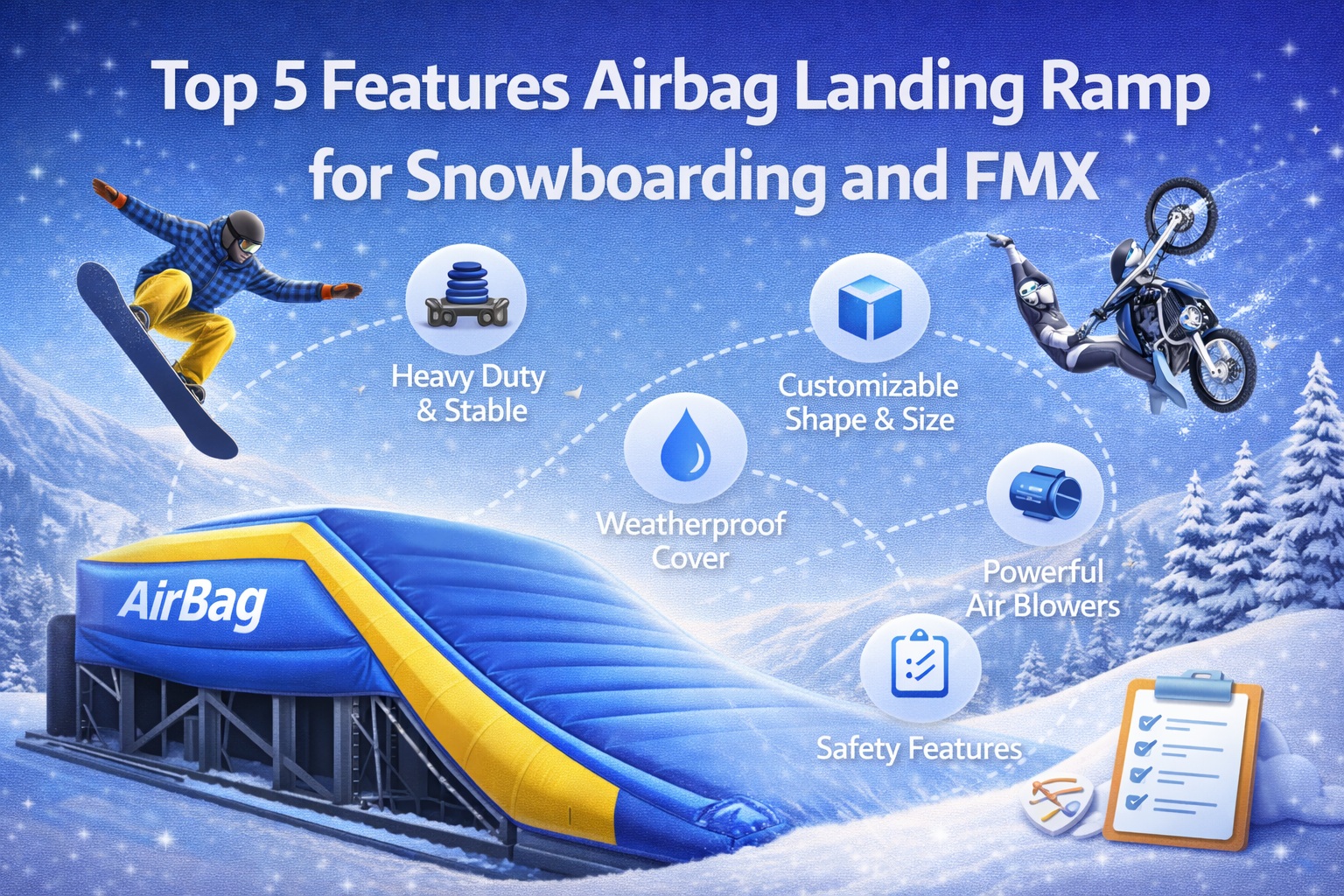
- Airbag Landing: Designed to mimic real competition landings, providing a realistic yet safe surface for progression.
- Inflatable Landing: A versatile solution for setting up temporary training grounds anywhere.
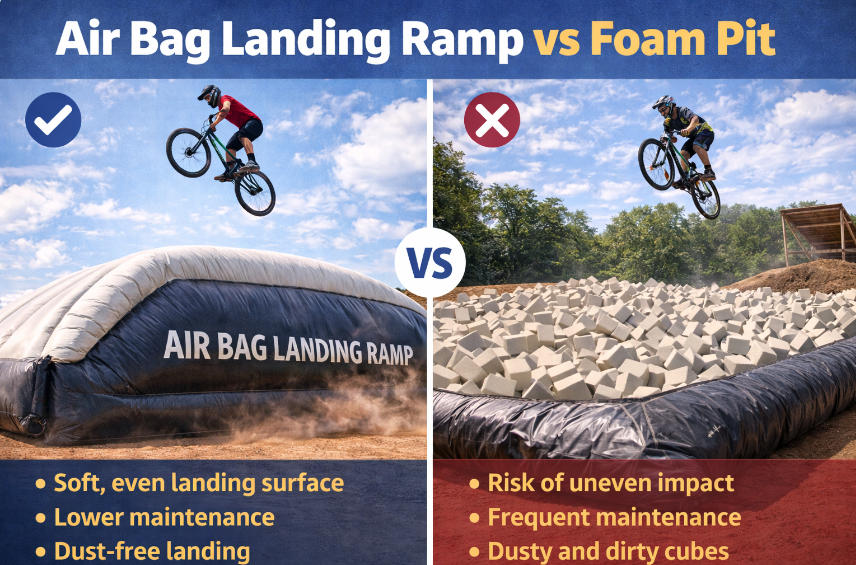
- Foam Pit Jump Airbag: A cleaner, safer alternative to traditional foam pits.
- Stunt Airbag: For high-impact professional stunts.
- Free Fall Airbag: For pure drop training.
- Custom Airbag: Tailored solutions for specific park needs.
For riders looking to build their own training facility or parks upgrading their safety standards, SUNPARK® AIRBAG offers the technology used by world champions.
8. Summary Checklist
| Phase | Key Action | Goal |
|---|---|---|
| Takeoff | Compress and pop | Generate height and stability. |
| Air Time | Spot the landing | Align the bike with the transition. |
| Descent | Push nose down (if needed) | Match the slope angle. |
| Impact | Bend arms and legs | Absorb energy and maintain momentum. |
| Runout | Stay off brakes | Regain control before slowing down. |
9. Frequently Asked Questions
Should I land on my rear wheel first?
On a flat landing (drop to flat), landing rear-wheel first is acceptable to absorb impact. However, on a jump with a transition (downward slope), you should aim to land both wheels simultaneously or front-wheel slightly first to match the slope and carry speed.
How do I stop my feet from blowing off the pedals?
This usually happens because you are stiff-legged or pulling up with your feet instead of pumping the bike. Keep your heels down and focus on pressing into the bike during the landing phase. Proper footwear and pedals with good pins also help.
What is the benefit of an airbag landing for beginners?
An Airbag Landing removes the fear of crashing. Beginners often stiffen up due to fear. By removing the consequence of a hard fall, riders stay relaxed, which ironically leads to better technique and fewer crashes when they move to dirt.
Why does my bike make a loud noise when I land?
A loud clunk usually means you bottomed out your suspension or landed “heavy.” This indicates you didn’t use your arms and legs to absorb the impact effectively, forcing the bike to take 100% of the hit. Work on bending your knees deep upon contact.
10. References
1. “Mastering Mountain Bike Skills,” Lee McCormack and Brian Lopes, 3rd Edition.
2. “The Physics of MTB Jumping,” Global Mountain Bike Network (GMBN).