Airbag Landing Motorcycle Systems

The 6 Best Airbag Landing Motorcycle Systems for 2026

In the adrenaline-fueled world of Freestyle Motocross (FMX) and extreme sports, the margin for error is non-existent. For decades, riders relied on foam pits and perfectly manicured dirt ramps to practice death-defying stunts. However, the industry has undergone a massive safety revolution with the introduction of the airbag landing motorcycle system. These inflatable landing pads have fundamentally changed how athletes train, allowing for faster progression, reduced injury risks, and the ability to set up a professional landing zone anywhere in the world.

Airbag Landing Motorcycle Systems

As we move into 2026, the technology behind these airbags has matured significantly. We are no longer talking about simple bouncy castles; modern FMX airbags are sophisticated engineering marvels featuring multi-chamber pressure systems, military-grade materials, and adjustable vents that mimic the firmness of a dirt landing without the unforgiving consequences. Whether you are a privateer looking to set up a compound in your backyard or an event organizer planning a touring show, choosing the right airbag is critical.

This comprehensive guide analyzes the top 6 best airbag landing motorcycle systems available today. We evaluate them based on durability, realistic feel, portability, and safety features. Additionally, we will deep dive into the technical specifications that separate a professional-grade product from a cheap imitation.

1. Why Switch to an Airbag Landing?

The transition from foam pits to airbags is not just a trend; it is a necessity for modern progression. Foam pits, while effective, have significant downsides. They are difficult to exit (often requiring a crane or immense physical effort to drag a bike out), they are a fire hazard, and the foam degrades over time, creating toxic dust. Furthermore, you cannot “ride out” of a foam pit; you simply crash into it.

A high-quality airbag landing motorcycle system allows for “ride-away” capability. This means if you land the trick perfectly, you can ride down the transition just like a dirt ramp. If you under-rotate or crash, the airbag absorbs the impact. This dual functionality enables riders to practice the full sequence of a trick, from takeoff to landing rollout, drastically increasing confidence and consistency.

2. SunparkAirbag FMX & MTB Landing System

2. SunparkAirbag FMX & MTB Landing System

SunparkAirbag has established itself as a dominant force in the inflatable manufacturing sector, particularly for extreme sports. Their landing airbags are renowned for their durability and customization options. They utilize a sophisticated multi-chamber design that ensures the rider never hits the ground, even during heavy casing or sideways landings.

One of the standout features of the Sunpark system is its versatility. While they offer dedicated FMX bags, their technology is cross-compatible with heavy-duty Mountain Bike (MTB) use, making it an excellent investment for multi-sport compounds. Below are the detailed specifications for their top-tier landing system, which exemplifies the build quality found across their FMX and Moto lines.

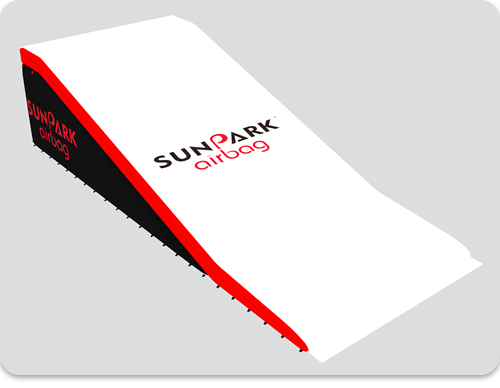
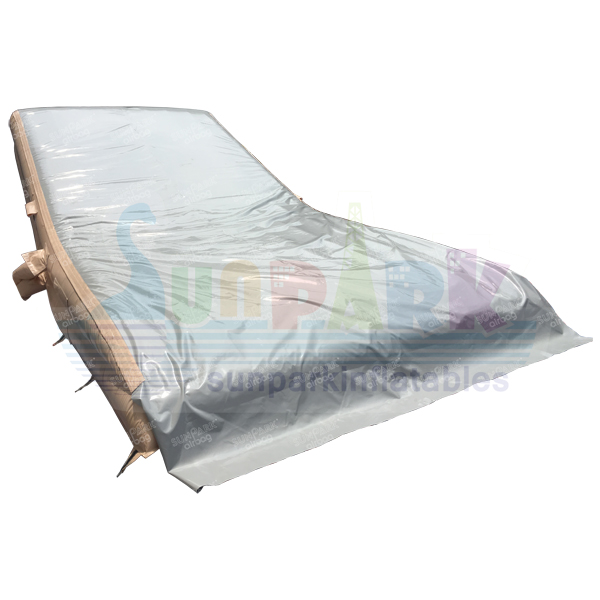
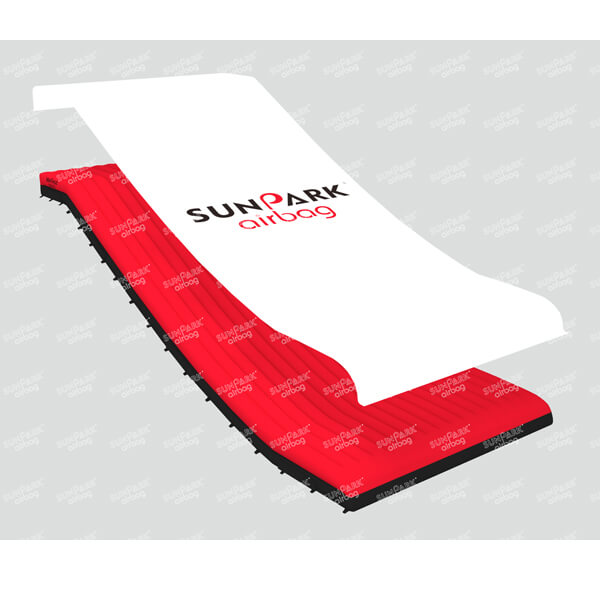
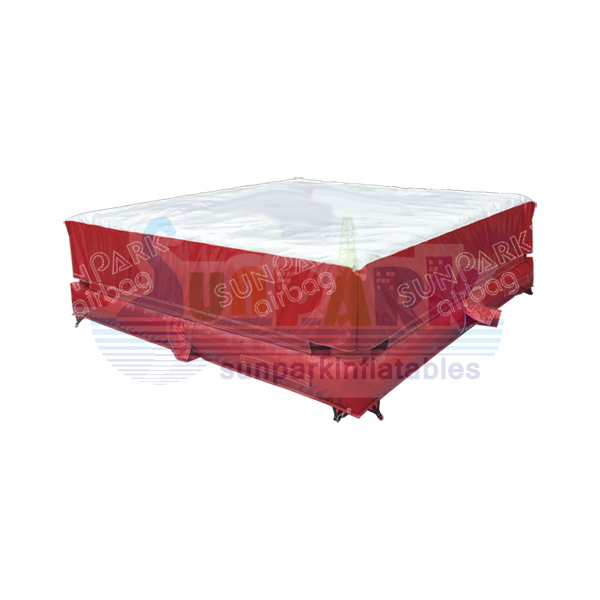
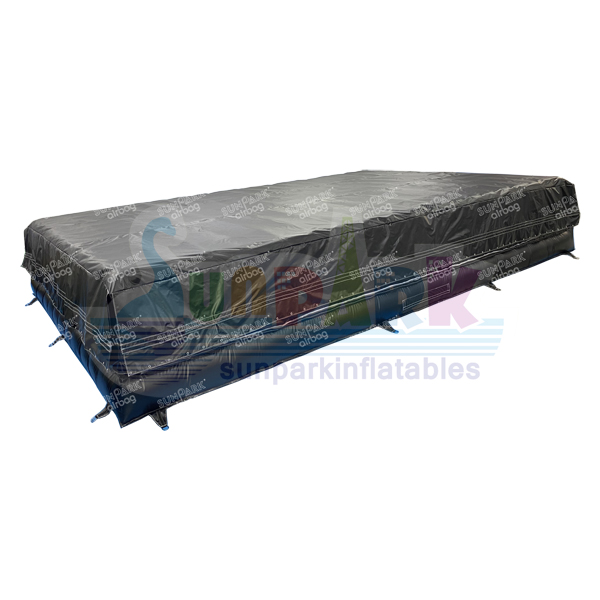
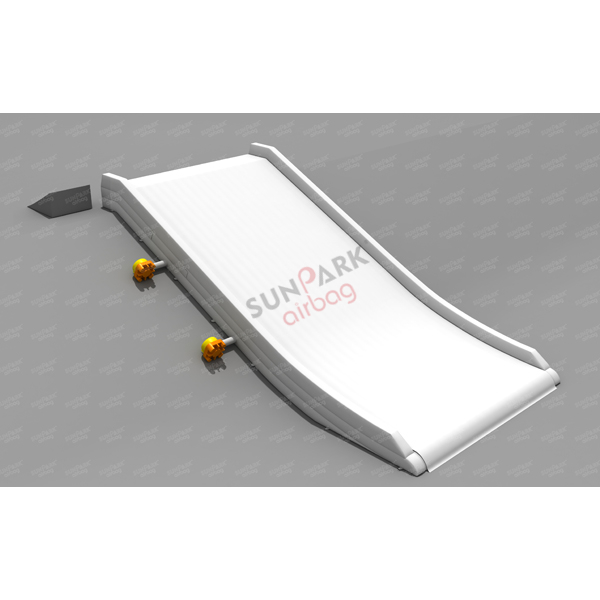
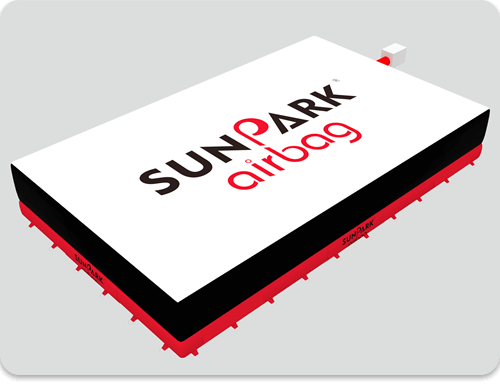
1. Sunparkairbag MTB Jump Airbag Landing

Airbag Landing MTB Features:

  • 2-layered impact-absorbing system: Ensures maximum safety by separating the landing zone from the base.
  • Air vents for softness adjustment: Allows riders to tune the firmness for training (soft) or competition (firm).
  • Anchoring system for fixation: Keeps the bag stable even under heavy braking or wind load.
  • Removable & replaceable top sheet: Critical for longevity; simply replace the top layer when worn instead of the whole bag.
  • Logo branding with printing: Fully customizable for sponsors and events.
  • Strong reinforcements made where it matters: Double and quadruple stitching in high-stress areas.
  • 2-Year warranty: A testament to manufacturing confidence.
  • Optional side bumpers: To keep jumpers from sliding off the side.
  • Optional stopper at the end: Ideal for snow setups to prevent jumpers from sliding off.
PortGuangzhou
Material0.55mm PVC Tarpaulin for airbag, 0.9mm PVC Tarpaulin for the top sheet, water-proof, flame-retardant, UV-protected, lead, and phthalate-free
SizeCustomizable
ColorAs per color sheet
PrintingDigital, Silk-screen, or UV Printing
HS Code9506990000
PriceAffordable and negotiable
Production Time15 working days or so, it depends on how big and how many you want
WorkmanshipOur workers have 5 years above experience in airbags to guarantee all is making well
AccessoriesBlower, repair kit, heavy-duty carrying bag
PackageAll airbags are packed with a heavy-duty carrying bag; Blowers are packed in a strong box

3. BagJump All-Terrain Landing Airbag

BagJump is arguably the originator of the modern action sports airbag. Based in Austria, they have pushed the envelope of what is possible with inflatable technology. Their “All-Terrain” Landing Airbag is a favorite among professional FMX riders because of its ability to be placed over existing dirt landings.

This system effectively “skins” a dirt ramp, providing the perfect shape of the dirt underneath but with the forgiving impact absorption of an airbag. This is ideal for riders who want to transition their tricks from a soft airbag to a hard dirt landing gradually. By deflating the bag slightly, you can make the landing harder and harder until you are ready to remove it entirely.

Key Pros:

  • No-Bounce Technology: Their patented internal airflow system prevents the “trampoline effect,” ensuring the bike stays planted upon landing.
  • Modular Design: Can be customized to fit specific ramp geometries.
  • Proven Heritage: Used in major events like Nitro Circus and X Games.

4. BigAirBag FMX Landing Edition

A European giant in the industry, BigAirBag (based in the Netherlands) offers a highly refined product known as the “Landing”. Their focus is on high throughput and ease of maintenance. The BigAirBag FMX edition utilizes a unique topsheet material often referred to as “IceTex” or similar proprietary fabrics that offer the perfect balance of grip and slide.

For motorcycle use, they reinforce the impact zones significantly to withstand the heat and abrasion from spinning tires and footpegs. Their blower systems are often integrated or silenced, making them a good choice for indoor shows where noise is a concern.

5. DD Airbags NextStep FMX Series

Hailing from Australia, DD Airbags has gained a cult following for producing high-quality airbags at a competitive price point. Their “NextStep” series is designed specifically for progression—hence the name. It is built to bridge the gap between learning a trick and taking it to dirt.

The DD Airbags FMX Landing stands out for its portability. It is often lighter than some of its competitors, making it a favorite for traveling stunt shows and riders who do not have a permanent facility. Despite the lighter weight, they do not compromise on the top sheet quality, using heavy-duty PVC that resists tearing from bike components.

6. Gravity Stunt Systems “Mars Lander”

When size matters, the Gravity Stunt Systems “Mars Lander” enters the conversation. This massive airbag landing motorcycle system is designed for the biggest tricks in the book—double backflips, front flips, and 360s. The landing area is significantly wider and longer than standard training bags, providing a huge margin for error.

This bag is typically seen in high-level stunt training facilities. It features extra-tall side bumpers to prevent riders from careening off the side after a wayward landing. The internal baffling system is robust, designed to support the immense weight of a 250lb bike plus rider dropping from 40+ feet.

7. Progression Airbags Mobile FMX PAB

Progression Airbags (PAB) specializes in modular, mobile setups. Their Mobile FMX unit comes with an inflatable wedge, eliminating the need for a dirt landing or scaffolding structure underneath. You simply roll it out, inflate it, and you have a ready-to-ride landing ramp in minutes.

This is the ultimate solution for “pop-up” demos and events. The wedge shape provides the necessary transition curve for smooth landings. While it may not offer the same custom contouring as a BagJump laid over dirt, its convenience is unmatched for mobile operators.

8. Buying Guide: Technical Specifications to Look For

Not all airbags are created equal. When investing thousands of dollars into a safety device, you need to verify specific technical details.

Material Thickness

For a motorcycle landing, the top sheet must be at least 0.9mm PVC Tarpaulin. Anything thinner will be shredded by the motorcycle’s tires, chain, and footpegs. The main body should be at least 0.55mm PVC to maintain structural integrity.

Blower Capacity

Look for systems that use multiple blowers. You want redundancy. If one blower fails or power dips, the bag should retain enough pressure to prevent a catastrophic bottom-out. High-output blowers also allow for quicker reinflation after a crash.

Adjustable Vents

The ability to adjust internal pressure is crucial. For learning a new flip, you want the bag soft to absorb a potential upside-down impact. For practicing ride-aways, you want it firm to simulate dirt. Ensure the airbag has accessible, high-quality zipper vents for this purpose.

Anchoring System

A motorcycle hitting a landing exerts tremendous forward force. The airbag must have heavy-duty stainless steel D-rings located at the base (every 1-2 meters) to stake it into the ground. Without this, the bag will slide forward upon landing, causing dangerous crashes.

9. Summary Comparison Table

BrandBest ForKey FeatureTop Sheet Material
SunparkAirbagOverall Value & Durability2-Layered Impact System0.9mm PVC Tarpaulin
BagJumpDirt SimulationFits over dirt rampsHeavy Duty Custom
BigAirBagIndoor/EventsIceTex Frictionless TopProprietary Textile
DD AirbagsPortabilityLightweight DesignReinforced PVC
Gravity StuntBig Air / StuntsMassive Surface AreaCommercial Grade
ProgressionMobile ShowsIntegrated Inflatable WedgeDurable PVC

10. Frequently Asked Questions (FAQs)

Can I leave my airbag landing outside permanently?While high-quality airbags like those from SunparkAirbag use UV-protected materials, it is not recommended to leave them permanently exposed to the elements. Constant sun exposure can degrade PVC over years, and heavy snow loads can damage the internal baffles. It is best to deflate and cover the bag when not in use for extended periods.

Do I need a special bike setup to ride an airbag?Generally, no. However, it is highly recommended to ensure your bike has no sharp protruding edges. Check your footpegs, brake levers, and exposed bolts. Some riders file down sharp stock footpegs to prolong the life of the airbag’s top sheet.

How long does an FMX airbag last?With proper maintenance and indoor storage, the main body of a professional airbag can last 5 to 10 years. The top sheet, which takes the direct abuse, is a consumable item and typically needs replacement every 1-3 years depending on usage frequency.

Is an airbag landing safer than a foam pit?Yes, for several reasons. Airbags provide a consistent landing surface that doesn’t change density like shifted foam. They are also much cleaner, eliminating the dust and bacteria associated with foam pits. Furthermore, the ability to ride away reduces the physical toll of dragging a bike out of foam.

Freestyle Airbag foy MTB

What is a Freestyle Airbag? The Ultimate Guide to Safe Progression

In the high-stakes world of action sports, the margin for error is razor-thin. For decades, athletes have pushed the boundaries of physics, attempting triple corks on snowboards, double backflips on mountain bikes, and gravity-defying stunts for cinema. Historically, the price of failure was injury. Today, however, a revolutionary technology has transformed how athletes train, learn, and progress: the Freestyle airbag.

What is a Freestyle Airbag? The Ultimate Guide to Safe Progression

But exactly what is a freestyle airbag? At its core, it is a sophisticated, large-scale inflatable landing system designed to absorb impact energy, allowing riders to attempt dangerous tricks with a significantly reduced risk of injury. Unlike the chaotic and dusty foam pits of the past, modern airbags offer consistent resistance, hygiene, and the unique ability to “ride out” of a landing. From Olympic training facilities to local trampoline parks, these devices have become the gold standard for safety in extreme sports.

This comprehensive guide delves deep into the engineering, applications, and future of airbag technology. Whether you are a facility owner looking to upgrade your park or an athlete curious about the mechanics of your safety net, this article covers everything you need to know.

1. The Evolution of Landing: From Foam Pits to Inflatable Airbags

To truly understand the value of a Freestyle airbag, one must look at what came before it. For years, the primary method for practicing aerial maneuvers was the foam pit—a deep hole filled with thousands of foam cubes. While effective at dampening impact, foam pits have inherent flaws. They are difficult to exit, requiring athletes to crawl out, which drastically slows down training sessions. Furthermore, foam degrades over time, creating dust that poses respiratory hazards and fire risks.

The earliest iterations of airbags were used in Hollywood stunts for high falls. These were simple “blob” designs intended to catch a falling person. However, as sports like freestyle skiing and motocross evolved, the need for a landing surface that mimicked the angle of a real jump became apparent.

Enter the modern Freestyle airbag. Engineers began designing bags with sloped profiles and adjustable pressure chambers. This evolution allowed an athlete not just to land safely, but to land on their feet (or wheels/skis) and ride away. This “ride-away” capability bridged the gap between practice and reality, accelerating the progression curve for athletes worldwide.

2. How Does a Freestyle Airbag Work?

A Freestyle airbag is not merely a bouncy castle; it is a piece of precision engineering. It typically relies on a two-chamber system to ensure safety and stability.

The Two-Chamber System

  • The Bottom Chamber (Base): This section is inflated to a higher pressure. Its primary function is to prevent the athlete from ever touching the ground, regardless of how hard they land. It acts as the final safety net.
  • The Top Chamber (Landing Zone): This section is softer and features air vents (often adjustable). When an athlete lands, this chamber compresses, and air is forced out through the vents. This displacement of air absorbs the kinetic energy of the fall, cushioning the rider.

The Topsheet Technology

The material covering the airbag, known as the topsheet, is critical. For sports involving equipment like skis, snowboards, or bikes, the topsheet must be durable enough to withstand sharp metal edges yet slippery enough to prevent “grabbing.” If the material grips the equipment too tightly, it could cause whiplash or rotational injuries. Modern topsheets are made from advanced PVC or Ripstop materials, often treated with silicone to ensure a smooth slide.

3. Key Applications of Freestyle Airbags

The versatility of the Freestyle airbag has allowed it to permeate almost every sector of action sports. Here is how different disciplines utilize this technology.

Snow Sports (Skiing & Snowboarding)

Snow-Sloped-Landing-Airbag-For-Sports-Riders-SUNPARK

In winter sports, progression is often limited by hard ice and dangerous landings. Airbags are deployed at ski resorts and summer training camps (often on dry slopes). They allow riders to attempt multi-rotation flips (like triple corks) without the fear of a concussion on hardpack snow. These are typically large, sloped airbags that mimic the landing angle of a “Big Air” jump.

Bike Sports (BMX & MTB)

Bike Sports (BMX & MTB)

Mountain bikers and BMX riders use airbags to learn jumps and aerial tricks. Unlike snow sports, bikes have moving parts (pedals, handlebars) that can tear fabrics. Therefore, bike-specific airbags use heavy-duty materials. These setups are crucial for learning backflips and 360s before taking them to dirt or concrete ramps.

Gymnastics & Trampoline Parks

Indoor parks have rapidly replaced foam pits with airbags. They offer higher throughput (more jumpers per hour) because exiting an airbag takes seconds, whereas climbing out of a foam pit can take minutes. They are also significantly more hygienic, as the surface can be wiped down and sanitized.

Stunt Work & Free Fall

For the film industry and thrill-seekers, “free fall” airbags are designed to catch a person falling from heights ranging from 3 meters to over 50 meters. These require precise calibration to ensure the deceleration doesn’t cause injury.

4. Types of Freestyle Airbags

When asking “what is a freestyle airbag,” the answer depends on the shape and intended use. There are several distinct categories:

  • Sloped Landing Airbags: These mimic the landing ramp of a jump. They are the standard for progression training because they allow the athlete to ride away if they land the trick, or slide down safely if they crash.
  • Flat Bags / Stunt Bags: Used primarily for vertical falls or “big air” jumps where riding away is not the goal. The objective is simply a soft catch.
  • Foam Pit Airbags: Designed to fit into existing foam pit depressions in gyms. These are flat but offer a soft, “squishy” landing similar to foam but without the mess.
  • Resi-Pads: A hybrid system often used in BMX, consisting of a foam layer covered by a hard plastic sheet, sitting on top of an airbag. It offers a feel closer to a real ramp but with forgiveness.

5. Industry Spotlight: SUNPARK® AIRBAG

In the global market of inflatable safety technology, few names carry the weight and experience of SUNPARK® AIRBAG. As a pioneer in the field, they have redefined what is possible in safety training equipment.

SUNPARK® AIRBAG – Explorer of Airbag System for Sports

With over 10 years of experience, we provide freestyle airbags for ski resorts, theme parks, sports, and gymnastics facilities around the globe. SunparkAirbag® is the leading manufacturer of Airbags for Extreme Sports and Leisure Industries in China.

As extreme sports developed, more and more snowboarders and serious sports enthusiasts are looking for safer training possibilities to progress without risks of getting injured. We create the products for World Champion Snowboarders, famous riders, and trampoline parks worldwide. We are deeply committed to the development and improving of our own products.

Our Product Lineup:

6. Top 5 Benefits of Switching to Airbags

For facility owners and athletes alike, the transition to airbag technology offers tangible benefits.

1. Enhanced Safety

The primary benefit is injury prevention. The variable resistance of air absorbs shock far better than compacted foam or hard ground, protecting joints and bones.

2. Hygiene and Cleanliness

Foam pits are notorious breeding grounds for bacteria, accumulating sweat, skin cells, and lost items (band-aids, socks, jewelry). An airbag is a sealed surface that can be easily cleaned with disinfectant, ensuring a sanitary environment.

3. Increased Throughput

In a commercial setting like a trampoline park, time is money. An airbag allows a jumper to land, roll off, and return to the queue in seconds. This efficiency increases customer satisfaction and ticket sales.

4. Weather Resistance

Unlike foam, which acts like a sponge and becomes unusable when wet, high-quality outdoor airbags are waterproof. They can be used in rain or snow, making them ideal for year-round training facilities.

5. Branding Opportunities

The large surface area of the topsheet serves as a massive billboard. Facilities can print logos, sponsor messages, or custom graphics directly onto the bag, creating a new revenue stream or enhancing brand visibility.

7. Installation and Maintenance Essentials

Owning a Freestyle airbag requires responsibility. Proper setup is crucial for performance. The bag must be anchored securely to the ground to prevent shifting during impact. Blowers (fans) must be kept running to maintain pressure, and air vents must be calibrated based on the weight of the users.

Maintenance Checklist:

  • Daily: Check blower connections and air pressure. Ensure the landing zone is free of debris.
  • Weekly: Inspect the topsheet for tears or wear from ski edges or bike pedals. Clean the surface.
  • Monthly: Check anchor points and internal baffles for structural integrity.

8. The Future of Airbag Technology

As we look toward the future, airbag technology continues to advance. We are seeing the integration of “smart” sensors that can detect impact force and automatically adjust air pressure for the next rider. Materials are becoming lighter yet stronger, allowing for easier transport of mobile setups for events and shows.

Furthermore, the integration of airbags into competition formats is changing. While currently used mostly for training, we may soon see hybrid competition landings that utilize firm airbag technology to reduce injuries during live televised events.

9. Summary Comparison: Airbag vs. Foam Pit

FeatureFreestyle AirbagTraditional Foam Pit
SafetyHigh (Adjustable pressure)Medium (Foam compaction risks)
HygieneExcellent (Wipe-clean surface)Poor (Accumulates dust/bacteria)
Exit SpeedFast (Walk/Ride off)Slow (Must crawl out)
MaintenanceLow (Blower check, surface clean)High (Fluffing foam, replacing cubes)
Outdoor UseYes (Waterproof)No (Absorbs water)
LifespanLong (5-10+ years with care)Short (Foam degrades quickly)

10. Frequently Asked Questions (FAQs)

Q: Can you land on a freestyle airbag with a bike?

Yes, absolutely. However, you must use an airbag designed specifically for bikes (MTB/BMX). These have tougher topsheets designed to resist tearing from pedals, pegs, and gears. Do not use a standard gymnastics airbag for bikes.

Q: Do airbags pop?

Freestyle airbags are not like balloons; they are not sealed airtight. They are “constant airflow” systems, meaning blowers constantly pump air in while vents let air out. If you puncture the topsheet, the bag will not explode; it will simply leak air slightly faster, which is usually compensated for by the blowers until repaired.

Q: Is it scary to hit an airbag for the first time?

It can be intimidating due to the size, but most riders find it significantly less scary than a hard landing. The visual of a large, soft cushion usually helps overcome the fear barrier quickly.

Q: Can SunparkAirbag® customize the size of the airbag?

Yes. Manufacturers like SunparkAirbag® specialize in custom dimensions to fit specific gym spaces, ski hills, or event venues. They can tailor the width, length, height, and slope angle.

11. References

1. “Safety Standards for Trampoline Parks and Adventure Facilities,” International Association of Amusement Parks and Attractions (IAAPA).

2. “Evolution of Freestyle Training Methods,” Snowboarder Magazine Archives.


Where Can I Find an Airbag Jump

Where Can I Find an Airbag Jump? The Ultimate Guide for Action Sports

For extreme sports enthusiasts, progression is the ultimate goal. Whether you are on skis, a snowboard, a mountain bike, or a motocross bike, learning new tricks comes with the inherent risk of crashing. This is why the question “Where can I find an airbag jump?” has become so critical for riders of all levels. Airbag jumps provide a cushioned landing that significantly reduces the risk of injury, allowing athletes to attempt complex maneuvers with confidence.

Where Can I Find an Airbag Jump

Finding the right facility depends heavily on your sport and location. From world-class ski resorts to indoor trampoline parks and dedicated bike training centers, airbag technology has revolutionized how we train. This comprehensive guide will help you navigate the landscape of airbag training facilities, understand the types of airbags available, and introduce you to industry leaders like SunparkAirbag® who are pioneering safety in extreme sports.

1. Types of Facilities with Airbag Jumps

When searching for where can I find an airbag jump, it is essential to categorize your search by facility type. Airbags are no longer exclusive to elite athlete training grounds; they are increasingly common in public recreational areas. The primary locations include:

  • Winter Resorts: Seasonal installations often found at major ski hills during winter, or dry-slope setups for summer training.
  • Bike Parks: Downhill and dirt jump parks that have replaced mulch or foam pits with inflatable landings.
  • Indoor Action Sports Hubs: Facilities like Woodward that offer year-round training for skate, BMX, and gymnastics.
  • Trampoline Parks: Recreational centers featuring flat airbags for safe flipping and jumping.

2. Ski Resorts & Snowboard Parks

For winter sports athletes, ski resorts are the most logical place to look. Many top-tier resorts now install large landing airbags to allow the public to practice jumps safely. These are typically “sloped” airbags that mimic the angle of a snow landing, allowing you to ride away if you land successfully.

Notable Locations

Major resorts in North America (like Mammoth Mountain and Copper Mountain) and Europe (such as Laax in Switzerland) frequently host airbag setups. Some are reserved for professional teams, while others are open to the public during specific hours or special camps.

Summer Training Camps

Do not limit your search to winter. “Dry slope” facilities use synthetic snow surfaces combined with airbag landings to offer year-round training. These are crucial for serious riders who need to maintain their skills during the off-season.

3. Bike Parks for MTB and BMX

The evolution of mountain biking and BMX has seen tricks become bigger and more dangerous. Consequently, bike parks are rapidly adopting airbag technology. If you ride two wheels, here is what to look for:

  • Freeride Parks: Look for parks that advertise “progression zones.” These areas often feature a series of jumps leading into a large airbag landing.
  • Dirt Jump Spots: Some maintained dirt jump trails have replaced their foam pits with airbags because they are cleaner and require less maintenance.

Unlike snow airbags, bike airbags are often designed with a tougher top sheet to withstand the metal components of the bike (pedals, pegs, and gears) without tearing.

4. Trampoline Parks & Indoor Training Centers

If you are asking “where can I find an airbag jump” for gymnastics or general acrobatic training, indoor parks are your answer. These facilities are accessible to the general public and are excellent for learning air awareness before taking tricks to snow or dirt.

Facilities like Woodward locations across the US are famous for their comprehensive setups, including “tramp-to-bag” stations where you can bounce from a trampoline directly into a soft airbag. This is the safest environment to learn the basic rotation of a backflip or cork.

5. Manufacturer Spotlight: SUNPARK® AIRBAG

When you land on a high-quality airbag at a resort or park, there is a good chance it was engineered by a specialist in safety innovation. SUNPARK® AIRBAG is a prime example of such a leader.

Explorer of Airbag System for Sports

5. Manufacturer Spotlight: SUNPARK® AIRBAG

With over 10 years of experience, we provide freestyle airbags for ski resorts, theme parks, sports, and gymnastics facilities around the globe. SunparkAirbag® is the leading manufacturer of Airbags for Extreme Sports and Leisure Industries in China.

As extreme sports developed, more and more snowboarders and serious sports enthusiasts are looking for safer training possibilities to progress without risks of getting injured. We create the products for World Champion Snowboarders, famous riders, and trampoline parks worldwide. We are deeply committed to the development and improvement of our own products.

Our Products:

SunparkAirbag® stands out by ensuring their products meet the rigorous demands of both facility operators and elite athletes, providing a durable and reliable safety net for progression.

6. Why Train on an Airbag?

Understanding the “why” is just as important as the “where.” Traditional foam pits have been the standard for decades, but airbags offer superior hygiene and safety.

  • Reduced Injury Risk: Airbags absorb impact energy more efficiently than foam or mulch, reducing the shock on joints and bones during a crash.
  • Hygiene: Foam pits accumulate dust, sweat, and bacteria. Airbags are easy to clean and do not trap debris.
  • Realistic Exits: Sloped landing airbags allow riders to “ride out” of a landing, simulating a real jump scenario much better than a foam pit where you simply sink.
  • Faster Turnaround: Exiting an airbag is quicker than climbing out of a deep foam pit, allowing for more jumps per session.

7. Summary of Facility Types

Facility TypeBest SportTypical AvailabilitySafety Level
Ski ResortSkiing / SnowboardingWinter SeasonHigh (Sloped Bags)
Bike ParkMTB / BMXSpring / Summer / FallHigh (Durable Topsheet)
Indoor Action Sports CenterSkate / BMX / ScooterYear-RoundVery High (Controlled Environment)
Trampoline ParkGymnastics / ParkourYear-RoundHigh (Flat Bags)
Dry Slope AcademySki / SnowboardYear-RoundHigh (Consistent Conditions)

8. Frequently Asked Questions

Can beginners use airbag jumps?
Yes, absolutely. In fact, airbags are ideal for beginners because they remove the fear of falling on a hard surface. Most facilities will require a brief orientation session to teach you how to land safely on the bag before you are allowed to jump.
Are airbag jumps free to use?
It depends on the location. Some bike parks and ski resorts include airbag access with your lift ticket. However, specialized training centers or trampoline parks usually charge an entry fee or a session fee specifically for the airbag zone.
How do I find a SunparkAirbag® facility near me?
You can search for “airbag training near me” on Google Maps or check the websites of local ski resorts and bike parks. Many facilities proudly advertise their safety equipment brands, so look for mentions of SunparkAirbag® in their park features description.
Can I buy my own airbag jump?
Yes, private sales are possible. Manufacturers like SunparkAirbag® supply directly to businesses and individuals. If you have the space and budget, you can purchase a private airbag for backyard training.

9. References


mountain bike airbag landing

3 Steps to Land a Jump on a Mountain Bike

Mastering the art of flight is one of the most exhilarating milestones in mountain biking. However, as the saying goes, “what goes up must come down.” Knowing how to land a jump on a mountain bike smoothly and safely is arguably more critical than the takeoff itself. A poor landing can lead to mechanical damage, loss of momentum, or injury, while a smooth landing maintains your flow and speed for the next trail feature.

mountain bike airbag landing

Whether you are sending your first tabletops or progressing to larger gap jumps, the physics of a proper landing remain consistent. This guide breaks down the essential techniques, body positioning, and safety protocols required to stomp your landings every time. We will also explore how advanced training tools, like airbag systems, are revolutionizing how riders learn these high-risk skills safely.

1. The Physics of Flight: Takeoff to Touchdown

Before focusing solely on the landing, it is vital to understand that a good landing starts at the takeoff. If you leave the lip of the jump off-balance, correcting it in the air becomes a struggle for survival rather than a controlled maneuver. A successful jump consists of four phases: the approach, the compression/takeoff, the apex (airtime), and the landing.

The goal of the landing phase is to match the angle of your bike to the angle of the landing ramp (transition). By doing this, you convert your downward momentum into forward speed, minimizing the impact on your body and bike components.

2. Step 1: Spotting the Landing

Once you are airborne, your eyes must immediately shift from the takeoff to the landing zone. This is known as “spotting the landing.” Your body tends to follow where your eyes look.

  • Focus on the Transition: Don’t look at your front wheel or the ground directly beneath you. Lock your eyes on the downward slope where you intend to touch down.
  • Assess Your Trajectory: In the split second you have in the air, judge if you are going to case (come up short) or overshoot. Spotting this early allows you to make micro-adjustments, such as pushing the bike forward to clear the knuckle or soaking up an overshot landing.

3. Step 2: Body Positioning in the Air

To prepare for impact, you must move from the extended position of the takeoff back into a “ready” or “attack” position. A stiff rider is a crashing rider.

The “Dead Sailor” vs. Active Rider

A “dead sailor” is a rider who freezes in the air, becoming a passenger on the bike. To avoid this, stay dynamic. As you reach the apex of the jump, begin to bring the bike back underneath you. Your arms and legs should be slightly bent and relaxed, ready to act as suspension.

Leveling Out

Use your handlebars to level the bike relative to the landing. If the landing is steep, you will need to push the nose (front wheel) down. If the landing is flat, you will aim for a more level, two-wheel touchdown.

4. Step 3: The Touchdown Technique

The moment of contact is where technique matters most. The objective is to be soft and quiet.

  • Match the Slope: Ideally, both wheels should touch the ground simultaneously if you are landing on flat ground. For a downward transition (landing ramp), the front wheel should touch down just a fraction of a second before or simultaneously with the rear wheel to match the slope’s angle.
  • Arms and Legs as Suspension: Do not rely solely on your bike’s mechanical suspension. As the wheels contact the ground, bend your elbows and knees deep to absorb the G-force. Think of catching a heavy medicine ball; you wouldn’t keep your arms straight, you would cushion the catch.
  • No Braking: Never grab the brakes immediately upon landing. This causes skidding and loss of control. Wait until you have regained full traction and composure before scrubbing speed.

5. Common Mistakes to Avoid

Even experienced riders fall victim to these common errors when learning how to land a jump on a mountain bike.

Nose Diving

This occurs when a rider hits the front brake mid-air (which stops the front wheel’s gyroscopic effect, pitching the bike forward) or leans too far forward on takeoff. To recover, shift your weight back, but prevention is key.

Looping Out

The opposite of a nose dive, this happens when the front wheel lifts too high, causing the rider to land on the rear wheel uncontrollably, often resulting in the bike shooting out from under them. This is usually caused by pulling up too hard on the handlebars rather than pumping with the legs.

Stiffening Up

Tensing up mid-air prevents you from absorbing the landing. If you land with locked arms or legs, the energy of the impact will be transferred directly to your joints or bounce you off the bike.

6. Training Safely: The Role of Airbags

Progression in mountain biking involves risk, especially when learning to jump. Traditionally, riders learned on dirt/mulch, where a crash could mean broken bones. Today, the industry has shifted toward safer training methods using airbag landing systems.

Airbag landings mimic the angle of a real dirt landing but provide a soft, cushioned surface that absorbs falls. This allows riders to attempt jumps, tricks, and drops repeatedly without the fear of injury. Whether you are learning a basic air or a backflip, using an inflatable landing system accelerates the learning curve significantly.

7. Partner Spotlight: SUNPARK® AIRBAG

SUNPARK® AIRBAG – Explorer of Airbag System for Sports

SUNPARK® AIRBAG - Explorer of Airbag System for Sports

With over 10 years of experience, we provide freestyle airbags for ski resorts, theme parks, sports, and gymnastics facilities around the globe. SunparkAirbag® is the leading manufacturer of Airbags for Extreme Sports and Leisure Industries in China.

As extreme sports developed, more and more snowboarders and serious sports enthusiasts are looking for safer training possibilities to progress without risks of getting injured. We create the products for World Champion Snowboarders, famous riders, and trampoline parks worldwide. We are deeply committed to the development and improving of our own products.

Our Products:

For riders looking to build their own training facility or parks upgrading their safety standards, SUNPARK® AIRBAG offers the technology used by world champions.

8. Summary Checklist

PhaseKey ActionGoal
TakeoffCompress and popGenerate height and stability.
Air TimeSpot the landingAlign the bike with the transition.
DescentPush nose down (if needed)Match the slope angle.
ImpactBend arms and legsAbsorb energy and maintain momentum.
RunoutStay off brakesRegain control before slowing down.

9. Frequently Asked Questions

Should I land on my rear wheel first?

On a flat landing (drop to flat), landing rear-wheel first is acceptable to absorb impact. However, on a jump with a transition (downward slope), you should aim to land both wheels simultaneously or front-wheel slightly first to match the slope and carry speed.

How do I stop my feet from blowing off the pedals?

This usually happens because you are stiff-legged or pulling up with your feet instead of pumping the bike. Keep your heels down and focus on pressing into the bike during the landing phase. Proper footwear and pedals with good pins also help.

What is the benefit of an airbag landing for beginners?

An Airbag Landing removes the fear of crashing. Beginners often stiffen up due to fear. By removing the consequence of a hard fall, riders stay relaxed, which ironically leads to better technique and fewer crashes when they move to dirt.

Why does my bike make a loud noise when I land?

A loud clunk usually means you bottomed out your suspension or landed “heavy.” This indicates you didn’t use your arms and legs to absorb the impact effectively, forcing the bike to take 100% of the hit. Work on bending your knees deep upon contact.

10. References

1. “Mastering Mountain Bike Skills,” Lee McCormack and Brian Lopes, 3rd Edition.

2. “The Physics of MTB Jumping,” Global Mountain Bike Network (GMBN).

What is an MTB Landing Pad

What is an MTB Landing Pad? The Ultimate Guide to Safe Progression

Mountain biking (MTB) has evolved dramatically over the last two decades. What began as simply riding down dirt trails has transformed into a sport defined by gravity-defying tricks, massive jumps, and high-speed aerial maneuvers. As the sport has progressed, so too has the need for safety equipment. Enter the MTB landing Pad.

What is an MTB Landing Pad

Whether you are a professional slopestyle rider perfecting a triple tailwhip or a beginner learning to clear your first tabletop, the risk of injury is a constant companion. An MTB landing Pad—often referred to as an airbag landing or inflatable landing—is a revolutionary training tool designed to mitigate this risk. It replaces the unforgiving nature of dirt, concrete, or wood with a cushioned, air-filled surface that absorbs impact, allowing riders to crash safely and ride away to try again.

In this comprehensive guide, we will explore exactly what an MTB landing Pad is, how it functions, the different types available, and why it has become an essential asset for bike parks, training facilities, and private riders worldwide.

1. Defining the MTB Landing Pad

At its core, an MTB landing Pad is a large, inflatable structure designed to catch a rider and their bike after a jump. Unlike a flat stunt airbag used for free-falling, an MTB-specific pad is often shaped to mimic a real landing ramp. It features a transition and a slope, allowing riders to land “wheels down” and ride away if they execute the trick correctly, or slide safely to a stop if they crash.

The primary purpose of an MTB landing Pad is to provide a “soft” landing. When a rider attempts a new trick—such as a backflip or a 360—the margin for error is slim. Landing on dirt with incorrect rotation usually results in broken bones or concussions. Landing on an airbag, however, dissipates the energy of the impact through air release valves, cushioning the fall and protecting the rider.

These pads are typically constructed from high-strength PVC or specialized technical fabrics that are resistant to tears from bike pedals, gears, and tires. They are kept inflated by continuous air blowers, ensuring consistent pressure even after repeated impacts.

2. How Does an Airbag Landing Work?

Understanding the mechanics of an MTB landing Pad requires looking at the internal structure. It is not just a balloon; it is a sophisticated piece of engineering.

Dual-Chamber Technology

Most professional landing pads utilize a dual-chamber or multi-chamber system.

The Bottom Chamber: This is the firm base of the airbag. It is kept at a higher pressure to ensure stability and prevent the rider from “bottoming out” (hitting the ground beneath the bag) during a high-impact crash.

The Top Chamber: This is the softness layer. It is kept at a lower pressure and features air vents. When a rider lands, the air in this top layer is forced out through the vents, absorbing the kinetic energy of the fall. This dynamic air release is what makes the landing feel soft.

The Sloped Design

What separates a generic stunt bag from a true MTB landing Pad is the geometry. The pad is designed with a landing angle (usually between 25 to 35 degrees) that matches the trajectory of a dirt landing. This allows riders to practice the landing aspect of the jump, not just the airtime. If they land wheels down, the firmness of the bag allows them to roll down the transition and exit the bag, mimicking a successful run on a dirt trail.

3. Industry Leader: SUNPARK® AIRBAG

3. Industry Leader: SUNPARK® AIRBAG

When discussing the evolution and quality of these safety devices, it is impossible to overlook the pioneers in the industry. One such leader is SUNPARK® AIRBAG.

SUNPARK® AIRBAG – Explorer of Airbag System for Sports

With over 10 years of experience, we provide freestyle airbags for ski resorts, theme parks, sports, and gymnastics facilities around the globe. SunparkAirbag® is the leading manufacturer of Airbags for Extreme Sports and Leisure Industries in China.

As extreme sports developed, more and more snowboarders and serious sports enthusiasts are looking for safer training possibilities to progress without risks of getting injured. We create the products for World Champion Snowboarders, famous riders, and trampoline parks worldwide. We are deeply committed to the development and improvement of our own products.

Our Products Include:

Companies like Sunpark have revolutionized the MTB landing Pad market by offering customizable solutions that cater to specific geometries of bike parks and backyard setups alike. Their commitment to safety standards ensures that the materials used can withstand the abuse of metal bike components while remaining gentle on the rider.

4. Types of MTB Landing Pads

There is no “one size fits all” when it comes to an MTB landing Pad. Depending on the skill level and the intended use, different configurations are available.

1. The Flat Bag (Stunt Airbag)

This is a large, flat mattress-style airbag. It is strictly for “crash” landings. Riders jump into the air, perform a trick, and land on their back or side. You cannot ride away from this. It is ideal for learning the initial rotation of dangerous tricks like double backflips where the rider needs to separate from the bike safely.

2. The Sloped Landing (Airbag Landing)

This is the most popular type of MTB landing Pad for progression. It mimics a dirt landing ramp. It allows for “ride-out” capabilities. If you stick the landing, you roll away. If you miss, you slide down safely. This is the product that bridges the gap between foam pits and dirt.

3. The Foam Pit Airbag

Many indoor parks are replacing traditional foam blocks with airbags. A “Foam Pit JumpAirbag” is designed to fit inside an existing pit. It is cleaner, more hygienic (no foam dust or bacteria), and eliminates the fire hazard associated with dry foam blocks.

4. Portable/Inflatable Ramps

Some systems combine the takeoff ramp and the landing pad into one integrated inflatable unit. These are perfect for traveling shows, demos, or riders who want to set up a spot in an open field.

5. Why Choose an Airbag Over Mulch or Foam?

For decades, riders used foam pits and mulch (wood chips) to learn tricks. However, the MTB landing Pad offers superior advantages.

Hygiene and Health

Foam pits are notorious for trapping sweat, dust, dead skin, and even rodents. They act as a sponge for bacteria. An airbag can be wiped down and sanitized easily. Furthermore, foam releases toxic dust as it degrades, which riders inhale. An airbag is a clean air environment.

Exit Efficiency

Getting out of a foam pit with a bike is exhausting. It can take 5 minutes to drag a bike out of deep foam, cutting into training time. With an MTB landing Pad, even if you crash, you simply slide down the side and walk off. This increases the number of jumps a rider can perform in a session by 500% or more.

Realistic Feedback

Mulch allows for a softer landing than dirt, but it changes shape constantly and requires raking. Foam offers zero feedback on whether you “landed” the trick. An MTB landing Pad offers realistic feedback; you know immediately if you landed wheels-heavy or sideways, helping you refine your technique for real dirt.

6. Who Should Use an MTB Landing Pad?

The usage of an MTB landing Pad spans across various demographics in the cycling world.

Bike Parks and Resorts

Ski resorts that convert to bike parks in the summer are increasingly installing permanent airbag landings. It attracts families and beginners who want to experience jumps without the fear of injury, increasing ticket sales and reducing liability issues.

Professional Athletes

For competitors in events like Red Bull Rampage or Crankworx, the MTB landing Pad is an office tool. It is where the world’s firsts—triple flips, quad tailwhips—are dialed in before being taken to dirt.

Event Organizers

Traveling stunt shows use these pads because they are lightweight (when deflated) and easy to transport. They can set up a massive show in a city center parking lot in under two hours.

7. Installation and Maintenance

Setting up an MTB landing Pad is relatively straightforward but requires attention to detail.

  • Ground Prep: The area must be flat and free of sharp rocks or sticks that could puncture the bottom of the bag. A ground sheet is recommended.
  • Anchoring: The bag must be securely anchored to the ground using heavy-duty stakes or water ballasts. A sudden gust of wind can move a large airbag if it is not secured.
  • Blower Management: The blowers require a constant power source. Generators or mains power must be reliable. If power cuts, the bag deflates rapidly.
  • Top Sheet Care: The top sheet is the wear layer. It will eventually wear out from tire friction. Manufacturers like Sunpark design these to be replaceable via zippers or Velcro, extending the life of the main airbag body.

8. Summary Comparison Table

Here is how the MTB landing Pad compares to traditional training methods.

FeatureMTB Landing Pad (Airbag)Foam PitMulch / Resi Landing
Safety ImpactHigh (Adjustable pressure)High (Deep cushion)Medium (Softer than dirt)
HygieneExcellent (Wipeable)Poor (Dust/Bacteria)Moderate (Organic material)
Turnaround TimeFast (Ride/Slide off)Slow (Climb out)Fast (Ride off)
MaintenanceLow (Blower check)High (Fluffing foam)High (Raking/Watering)
PortabilityHigh (Deflates)None (Fixed structure)Low (Heavy material)
Ride-Away AbilityYes (On sloped models)NoYes

9. Frequently Asked Questions (FAQs)

Q: Can I leave an MTB landing Pad outside?A: Yes, but it is not recommended for permanent outdoor storage without cover. UV rays can degrade the PVC material over time. If leaving it out, cover it with a UV-resistant tarp when not in use.

Q: Will my bike pedals tear the airbag?A: High-quality pads like those from SUNPARK® use heavy-duty, reinforced top sheets specifically designed to resist tears from pedals and sprockets. However, filing down extremely sharp pins on pedals is a common precaution.

Q: How much power does the blower use?A: A standard landing pad typically requires 1 to 2 constant-air blowers, usually running on standard 110V or 220V household outlets. The cost is comparable to running a large fan or AC unit.

Q: Is an MTB landing Pad waterproof?A: The material is waterproof, but the blowers are electric and must be protected from rain. Riding a wet airbag is also slippery and dangerous, so it is best used in dry conditions.

10. Conclusion

The MTB landing Pad has fundamentally changed the trajectory of mountain biking sports. By providing a safe, hygienic, and efficient way to practice high-consequence tricks, it has democratized progression. No longer do riders have to “hail mary” a backflip onto dirt and hope for the best. With innovative solutions from manufacturers like SUNPARK® AIRBAG, riders of all levels can push their limits, refine their skills, and most importantly, stay healthy to ride another day.


7 Best Airbag Jump Landing for Trampoline Park in 2026

The evolution of the modern trampoline park has reached a critical turning point. In 2026, the era of the foam pit is rapidly fading, replaced by the superior hygiene, safety, and throughput of professional airbag systems. For park owners, selecting the best airbag jump landing for trampoline park facilities is no longer just an operational detail; it is a primary factor in customer retention and insurance compliance.

7 Best Airbag Jump Landing for Trampoline Park in 2026

An airbag jump landing offers a consistent, soft, and clean surface that allows jumpers to attempt new tricks with confidence. Unlike foam blocks, which degrade into dust and harbor bacteria, high-quality airbags are easy to sanitize and reset instantly for the next user. This guide explores the top 7 manufacturers and products defining the market this year, featuring industry leaders like SUNPARK® AIRBAG and other global innovators.

1. Why Upgrade to an Airbag Jump Landing?

Before diving into the supplier reviews, it is essential to understand why the shift to airbags is accelerating. The keyword Airbag jump landing for trampoline park has become synonymous with “modernization” in the industry.

  • Hygiene: Foam pits are notoriously difficult to clean. Airbags can be wiped down daily with antimicrobial solutions.
  • Throughput: A jumper can exit an airbag in seconds. crawling out of a foam pit can take over a minute, causing lines to form on the trampoline deck.
  • Safety: Airbags provide a uniform landing surface, eliminating the “holes” or “thin spots” that develop in displaced foam pits.

2. SUNPARK® AIRBAG: The Global Leader

2. SUNPARK® AIRBAG: The Global Leader

Leading our list is a manufacturer that has defined the standard for freestyle and leisure airbags in China and across the globe. With over a decade of specialized experience, SUNPARK® has bridged the gap between extreme sports performance and family entertainment safety.

Company Overview

With over 10 years of experience, we provide freestyle airbags for ski resorts, theme parks, sports, and gymnastics facilities around the globe. SunparkAirbag® is the leading manufacturer of Airbags for Extreme Sports and Leisure Industries in China.

As extreme sports developed, more and more snowboarders and serious sports enthusiasts are looking for safer training possibilities to progress without risks of getting injured. We create the products for World Champion Snowboarders, famous riders, and trampoline parks worldwide. We are deeply committed to the development and improvement of our own products.

Top Products for Trampoline Parks

SUNPARK offers a diverse range of landing solutions tailored specifically for high-traffic adventure parks:

  • Airbag Landing: The standard for main court run-offs and high-performance zones. These bags feature advanced internal air chambers that regulate pressure to ensure a soft landing regardless of the jumper’s weight.
  • Foam Pit JumpAirbag: A direct replacement for existing foam pits. This product is designed to fit perfectly into the concrete depressions left by old foam pits, making the retrofit process seamless.
  • Stunt Airbag: Designed for high-impact zones, such as “leap of faith” towers or ninja warrior course landings.
  • Free Fall Airbag: Specifically engineered for high-altitude drops, providing a dual-chamber system where the top layer is soft for comfort and the bottom layer is firm for safety.
  • Custom Airbag: SUNPARK excels in branding, offering parks the ability to print full-color logos, mascots, or advertisements directly onto the top sheet.

3. Bagjump: The Pioneer of Innovation

Bagjump is often credited with popularizing the use of large airbags in freestyle sports. Based in Austria, their reputation is built on high-end engineering and material science. Their “AirPit” system is a direct competitor in the trampoline park sector.

The Airbag jump landing for trampoline park solutions from Bagjump are known for their “soft-touch” top sheets, which reduce friction burns—a common complaint with cheaper nylon bags. They also utilize a modular air pillar technology, meaning if one internal section is damaged, it can be replaced individually without scrapping the entire bag.

4. BigAirBag: Dutch Engineering Excellence

Another titan in the industry, BigAirBag from the Netherlands, focuses heavily on the “Ride Away” capability for bike and skate parks, but their “Gymna” and “Adventure” lines are perfect for trampoline parks. Their airbags are famous for their durability and the distinct branding options available.

BigAirBag utilizes a sophisticated blower alarm system that monitors internal pressure in real-time. If the pressure drops below a safe threshold due to a power outage or leak, an alarm sounds, and the attraction is automatically closed. This feature is a massive selling point for safety-conscious park operators.

5. AirTrack Factory: Aesthetic Integration

While originally famous for their air tracks used in gymnastics, AirTrack Factory has successfully pivoted into the landing bag market. Their “AirBag T” (Trampoline) series is designed with aesthetics in mind. These bags often feature sleek, flat top surfaces that look like a seamless extension of the trampoline court.

For parks that care deeply about visual design, AirTrack Factory offers some of the cleanest lines and most vibrant color options. Their landings are slightly firmer than the deep freestyle bags, making them excellent for parkour and running tricks where the user needs to stay on their feet.

6. Zero Shock: Patented Impact Technology

Zero Shock takes a radically different approach to the Airbag jump landing for trampoline park concept. Instead of a large single chamber or simple pillars, they use a patented “finger” technology. The bag consists of vertical tubes that are not interconnected in the traditional sense. When a jumper lands, only the tubes directly underneath them collapse to absorb the impact, while the surrounding tubes remain upright.

This “no sweet spot” technology ensures that landing on the edge of the bag is just as safe as landing in the center. It also eliminates the “launch effect,” where one person landing on the bag bounces another person off.

7. Next Level Parks: The Glow-in-the-Dark Specialist

For family entertainment centers (FECs) that operate “galactic nights” or “neon parties,” Next Level Parks offers a unique advantage. They specialize in integrating lighting effects directly into the airbag experience. Their top sheets can be printed with UV-reactive ink, turning the landing zone into a glowing attraction under blacklights.

Beyond the visuals, Next Level Parks focuses on the integration of the airbag with the surrounding platform. They offer “flush mount” installations that eliminate tripping hazards, creating a smooth transition from the trampoline to the bag.

8. Gravity Stunt Systems: Custom Solutions

Rounding out our list is Gravity Stunt Systems, a provider known for highly customized shapes and sizes. Not all trampoline parks have standard square pits. Some have L-shaped corners or round drop zones that require bespoke engineering.

Gravity Stunt Systems works closely with park architects to design airbags that fit into awkward spaces without compromising safety. They are particularly popular for “Ninja Warrior” course landings where the landing zone might be a narrow strip rather than a wide pit.

9. Summary Comparison Table

The table below compares the key features of the top Airbag jump landing for trampoline park suppliers to help you make the right choice.

SupplierPrimary SpecialtyBest FeatureIdeal For
SUNPARK® AIRBAGExtreme Sports & ParksProven Safety Record & CustomizationFull Park Overhauls & Retrofits
BagjumpPremium InnovationModular Air PillarsHigh-End Facility Branding
BigAirBagSafety TechnologyPressure Alarm SystemsSafety-First Operations
AirTrack FactoryGymnastics CrossoverSleek, Flat DesignParkour & Tricking Zones
Zero ShockImpact Tech“Finger” Tubes (No Bounce)Simultaneous Multi-User Landings
Next Level ParksVisual ExperienceUV/Glow-in-the-Dark PrintsTeen Nights & Party Centers
Gravity StuntBespoke ShapesCustom GeometryNinja Courses & Tight Spaces

10. Frequently Asked Questions (FAQs)

Q1: How long does an airbag jump landing last compared to a foam pit?A high-quality airbag like those from SUNPARK or Bagjump can last 5 to 10 years with proper maintenance. In contrast, foam blocks typically need replacement every 1-2 years and require weekly cleaning labor.

Q2: Can I install an airbag into my existing foam pit?Yes. Products like the SUNPARK Foam Pit JumpAirbag are specifically designed for this purpose. They are measured to fit the exact dimensions of your existing pit, sitting on the concrete floor and rising flush to the trampoline level.

Q3: Is an airbag safer than foam?Generally, yes. Airbags eliminate the risk of landing on the concrete floor (bottoming out), which can happen in foam pits if the foam is not fluffed. They also prevent contact with hidden objects that might be lost in the foam.

Q4: What maintenance is required?Maintenance is minimal. Daily checks of the blower units and air pressure are required. The top sheet should be wiped down regularly to maintain hygiene, and the internal chambers should be inspected annually.

Q5: How much power do the blowers consume?Modern blowers are energy efficient. A standard pit might use 1-2 blowers, which run on standard electrical circuits. The cost is negligible compared to the labor savings of not maintaining a foam pit.

11. Conclusion

The transition from foam to air is undeniable. Whether you run a small local park or a massive franchise, installing the best airbag jump landing for trampoline park use is an investment in your brand’s reputation and your customers’ safety. With industry leaders like SUNPARK® AIRBAG offering comprehensive solutions from freestyle landings to stunt bags, there has never been a better time to upgrade.

Are Trampoline Parks Safe

Are Trampoline Parks Safe? A Comprehensive 2026 Safety Analysis

In recent years, the popularity of indoor trampoline parks has skyrocketed, becoming a go-to destination for birthday parties, family outings, and fitness enthusiasts. However, with this rise in popularity comes a pressing question for parents and participants alike: are trampoline parks safe?

Are Trampoline Parks Safe

The answer is complex. While trampoline parks offer a controlled environment compared to backyard setups, they present unique risks due to the high energy of the activities involved. In 2026, the industry has seen a significant shift toward advanced safety technologies, such as replacing traditional foam pits with hygienic airbags and implementing stricter adherence to ASTM standards. This guide explores the current safety landscape, injury statistics, and the technological innovations making these parks safer than ever before.

The Reality of Trampoline Park Safety: Statistics & Trends

Understanding the risks associated with trampoline parks requires looking at the data. According to the U.S. Consumer Product Safety Commission (CPSC) and recent 2024-2025 reports, trampoline-related injuries have remained a concern, but the nature of these injuries differs between home and park settings.

While home trampolines account for the majority of total injuries (often due to lack of supervision or protective netting), injuries at commercial parks tend to be more severe. This is often attributed to the “double bounce” effect—where energy transfer from one jumper to another propels a person higher than intended—and the rigid nature of park equipment compared to softer backyard models.

Common injuries include:

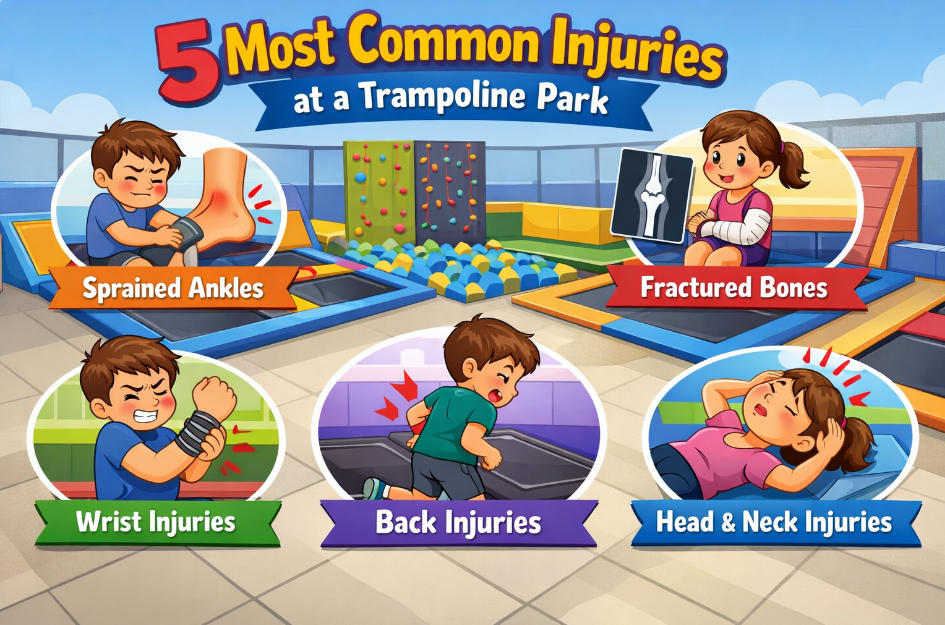
  • Lower extremity fractures: Often caused by landing awkwardly on the trampoline mat or frame.
  • Sprains and strains: The most common, yet usually less severe, injuries.
  • Collisions: Injuries resulting from multiple jumpers occupying the same space.

Modern Safety Standards: ASTM F2970

To combat these risks, the industry relies heavily on ASTM F2970, the Standard Practice for Design, Manufacture, Installation, Operation, Maintenance, Inspection, and Major Modifications of Trampoline Courts. Updated regularly, this standard sets the baseline for what constitutes a “safe” park in 2026.

Key Components of ASTM F2970 Compliance:

  • Redundant Beds: A backup safety net or bed underneath the primary jumping surface to prevent falls to the floor if the main mat fails.
  • Impact Attenuation: Strict requirements for padding over steel frames and springs to minimize impact injuries.
  • Court Supervision: Mandated staff-to-jumper ratios to ensure rules are enforced.
  • Foam Pit & Airbag Maintenance: rigorous hygiene and impact absorption testing for landing zones.

The Critical Shift: Foam Pits vs. Airbag Technology

One of the most significant safety upgrades in 2026 is the transition from traditional foam pits to inflatable airbags. For decades, foam pits were the standard for soft landings. However, they carry hidden dangers:

  • Hygiene Risks: Foam blocks are difficult to clean and can harbor bacteria, sweat, and dust.
  • Inconsistent Landings: Over time, foam degrades and compacts, leading to “bottoming out” where a jumper hits the hard floor beneath.
  • Fire Hazard: Loose foam is highly flammable compared to fire-retardant airbag materials.

Airbags solve these issues by providing a consistent, hygienic, and fire-retardant landing surface. They allow for faster exit times (increasing throughput) and eliminate the risk of landing in a “hole” created by previous jumpers.

Leading Safety Innovation: SUNPARK® AIRBAG

Leading Safety Innovation: SUNPARK® AIRBAG

When discussing the modernization of trampoline park safety, the quality of the equipment is paramount. Companies like SUNPARK® AIRBAG are at the forefront of this safety revolution, supplying professional-grade landing systems that mitigate the risks associated with extreme jumps and tricks.

SUNPARK® AIRBAG: Professional Grade Safety Solutions

With over 10 years of experience, we provide freestyle airbags for ski resorts, theme park, sports and gymnastics facility around the globe. SunparkAirbag® is the leading manufacturer of Airbags for Extreme Sports and Leisure Industries in China.

As extreme sports developed, more and more snowboarders and serious sports enthusiasts are looking for safer training possibilities to progress without risks of getting injured. We create the products for World Champion Snowboarder, famous riders and trampoline parks worldwide. We are deeply committed to the development and improving of our own products.

Our Products:

Obtain and complete the remaining items online.

Key Safety Tips for Parents and Jumpers

Even with the best technology, behavior plays a massive role in safety. To ensure a safe experience at a trampoline park, consider these guidelines:

  1. One Jumper per Trampoline: Never double bounce. The transfer of energy can break bones even on high-quality mats.
  2. Review the Waiver: Understand the risks before entering. Parks with detailed safety briefings generally prioritize safety higher than those that do not.
  3. Dress Appropriately: Wear grip socks to prevent slipping and avoid jewelry or clothing with sharp studs.
  4. Know Your Limits: Attempting backflips or complex tricks without training is the leading cause of head and neck injuries.
  5. Check the Equipment: Look for tears in the mats or exposed springs. If the park looks poorly maintained, leave immediately.

Summary Table: Safety Features Comparison

The table below highlights why modern parks are moving toward airbag technology for enhanced safety.

FeatureTraditional Foam PitModern Airbag (e.g., SUNPARK®)
HygieneLow (Traps bacteria/dust)High (Antimicrobial/Wipeable)
Landing ConsistencyVariable (Foam displaces)Consistent (Air pressure constant)
MaintenanceHigh (Frequent replacement)Low (Durable PVC materials)
Fire SafetyHigh RiskFire Retardant Materials
Exit SpeedSlow (Difficult to climb out)Fast (Walk off easily)

Frequently Asked Questions

What is the most common injury at trampoline parks?

Sprains and fractures of the lower extremities (legs and ankles) are the most frequently reported injuries. These often occur from awkward landings or collisions with other jumpers.

Are trampoline parks safe for toddlers?

Most medical associations, including the American Academy of Pediatrics (AAP), recommend against trampoline use for children under 6 years old. Their bones are still developing, making them more susceptible to fractures from the repetitive impact.

Why are airbags considered safer than foam pits?

Airbags do not degrade or compact like foam cubes, meaning they provide the same level of shock absorption on the 1000th jump as they did on the first. They also eliminate the hygiene risks associated with deep foam pits.

How can I tell if a trampoline park is safe?

Look for ASTM F2970 compliance, active court monitors who enforce rules, redundant safety beds (safety netting under the trampolines), and clean, well-maintained padding covering all springs and frames.


How Much Does It Cost to Build a Trampoline Park in 2026

How Much Does It Cost to Build a Trampoline Park in 2026?

The indoor entertainment industry is experiencing a dynamic resurgence. As we enter 2026, the demand for active entertainment venues—specifically trampoline parks—continues to climb. However, the financial landscape has shifted. Rising construction costs, advanced safety standards, and the need for high-tech attractions have changed the investment equation. Entrepreneurs asking “how much does it cost to build a trampoline park” in 2026 need to look beyond simple square footage estimates and consider the full ecosystem of modern family entertainment centers (FECs).

How Much Does It Cost to Build a Trampoline Park in 2026

Generally, the total capital required to open a competitive trampoline park in 2026 ranges from $1.5 million to over $3 million for a standard 25,000 to 35,000 square foot facility. Smaller, boutique setups may launch for under $750,000, while massive franchise locations with multi-attraction models can exceed $5 million. This guide breaks down every dollar, from the first bounce of the airbag to the final insurance premium.

2026 Market Outlook & Investment Trends

In 2026, a trampoline park is no longer just a room full of interconnected trampolines. The market has matured into “Adventure Parks.” To be competitive, new builds must integrate ninja warrior courses, climbing walls, VR zones, and professional-grade airbag landing systems. This diversification increases upfront equipment costs but significantly boosts retention and average ticket value.

Investors should note that safety compliance is stricter than ever this year. Insurance premiums have stabilized but remain high for venues that rely on outdated foam pits. This has driven a massive industry shift toward airbag technology, which reduces liability and maintenance costs over time.

Summary Cost Breakdown Table

The following table provides a high-level estimate for a standard 25,000 sq. ft. facility in a mid-sized US or European city.

Expense CategoryLow End EstimateHigh End EstimateDescription
Trampoline & Adventure Equipment$450,000$900,000+Main courts, airbags, ninja courses, installation.
Facility Build-Out$300,000$700,000HVAC, lighting, bathrooms, reception, café.
Rent & Deposit (3 Months)$75,000$150,000First, last, and security deposit ($25k-$50k/mo).
Technology (POS, Website)$30,000$60,000Ticketing software, turnstiles, servers.
Marketing & Pre-Opening$40,000$100,000Digital ads, grand opening events, signage.
Insurance & Legal$20,000$50,000Liability premiums and formation fees.
Furniture & Fixtures$50,000$120,000Lockers, tables, party rooms, kitchen gear.
Total Estimated Startup$965,000$2,080,000+Varies by location and finish quality.

1. Location and Facility Build-Out Costs

The single biggest variable in the cost to build a trampoline park is real estate. You generally need 25,000 to 40,000 square feet with a ceiling height of at least 18-20 feet clear span. In 2026, finding warehouse space zoned for commercial entertainment can be challenging.

Lease vs. Buy

Most operators lease. Expect to pay between $8 to $18 per square foot annually depending on the region. A deposit typically requires 3 to 6 months of rent upfront. For a 30,000 sq. ft. facility, your monthly rent could range from $20,000 to $45,000.

Renovations (The Build-Out)

Warehouses are rarely ready for the public. You must budget for:

  • HVAC: High-activity zones require powerful cooling. Expect to spend $100,000+ on climate control.
  • Electrical & Lighting: LED lighting upgrades and power drops for arcade games.
  • Bathrooms & Party Rooms: You will likely need to build multiple ADA-compliant restrooms and private party rooms, costing $50,000 – $150,000.

2. Equipment: The Heart of the Park

This is where your customer experience is defined. In 2026, equipment costs average between $60 to $100 per square foot of active play area. For a standard park, the equipment package usually costs between $500,000 and $850,000.

Modern Safety Standards: Airbags vs. Foam Pits

One of the most critical cost and safety decisions in 2026 is the landing zone. Traditional foam pits are becoming obsolete due to hygiene issues, fire risks, and high maintenance costs (foam cubes degrade and must be replaced frequently). The modern standard is the airbag system.

Airbags are easier to clean (sanitization is a priority post-2020), offer consistent impact absorption, and lower insurance liabilities. While the initial investment for a high-quality airbag is higher than a foam pit, the ROI is realized within 1-2 years through reduced maintenance labor and replacement costs.

Featured Safety Partner: SUNPARK® AIRBAG

When budgeting for your park’s safety infrastructure, choosing a reputable manufacturer is non-negotiable. SUNPARK® AIRBAG stands as a premier solution provider in 2026.

With over 10 years of experience, we provide freestyle airbags for ski resorts, theme parks, sports, and gymnastics facilities around the globe. SunparkAirbag® is the leading manufacturer of Airbags for Extreme Sports and Leisure Industries in China. As extreme sports developed, more and more snowboarders and serious sports enthusiasts are looking for safer training possibilities to progress without risks of getting injured. We create the products for World Champion Snowboarders, famous riders, and trampoline parks worldwide. We are deeply committed to the development and improving of our own products.

Our Products Include:

Investing in SunparkAirbag® technology not only enhances safety but also signals to insurers and customers that your facility utilizes top-tier professional equipment.

3. Soft Costs: Insurance, Legal, and Licensing

Many new owners underestimate the “invisible” costs. In 2026, liability insurance is a major line item. Because trampoline parks are considered high-risk venues, annual premiums can range from $15,000 to $50,000 depending on your safety protocols and equipment choices.

  • Permits & Architecture: You will need architects to draw up plans for city approval. Expect to spend $15,000 – $30,000 on blueprints and permits.
  • Legal Fees: Creating liability waivers, forming the business entity, and reviewing lease agreements will cost $5,000 – $15,000.

4. Operational Expenses and Staffing

Once built, the park costs money to run every day. Your “burn rate” before profitability is a critical calculation.

  • Staffing: You will need court monitors, front desk staff, party hosts, and a general manager. Monthly payroll often sits between $30,000 and $60,000.
  • Utilities: Lighting and cooling a massive warehouse is expensive. Budget $4,000 – $8,000 monthly.
  • Marketing: In the digital age, if you aren’t on social media, you don’t exist. Allocate 5-8% of gross revenue to marketing.

5. Franchise vs. Independent: The Price Difference

Should you go it alone or join a big brand?

Franchise Costs

Joining a major franchise (like Sky Zone or Urban Air) offers brand recognition but comes with a hefty price tag. You will pay an initial franchise fee of $40,000 – $60,000, plus ongoing royalties of 6-8% of your gross sales. However, franchises often have better financing relationships and lower equipment costs due to bulk buying power.

Independent Costs

Going independent saves you the royalty fees and allows total creative freedom. You can source your own equipment from manufacturers like SUNPARK® AIRBAG without restriction. However, you lack the corporate support manual, meaning you must build your own marketing and safety protocols from scratch.

6. Revenue Potential and ROI

Despite the high startup costs, the ROI for trampoline parks remains attractive in 2026. A well-run park in a good location can generate $1.5 million to $3 million in annual revenue. With profit margins averaging 20-30%, owners can see a full return on investment in 18 to 36 months.

Key Revenue Streams:

  • General Admission: Hourly jump tickets.
  • Birthday Parties: The bread and butter of the industry (often 30-40% of revenue).
  • Café/Concessions: High-margin food and drink sales.
  • Corporate Events: Team building exercises.

Frequently Asked Questions (FAQs)

Q: How much land do I need for a trampoline park?
A: You typically need a building footprint of 25,000 to 40,000 square feet. Adequate parking is also essential—calculate roughly 1 parking spot per 150-200 sq. ft. of facility space.

Q: Why are foam pits being replaced by airbags?
A: Foam pits require constant cleaning and foam replacement, and they can hide dangerous objects. Airbags, like those from SUNPARK®, are hygienic, durable, and allow for a higher throughput of jumpers, making them the superior financial and safety choice in 2026.

Q: Can I get a loan to build a trampoline park?
A: Yes, SBA loans and equipment financing are common. However, banks typically require the owner to put down 20-30% of the total capital as a down payment. You will need a strong business plan and personal liquidity.

Q: What is the most expensive part of building the park?
A: Aside from the long-term cost of rent, the trampoline equipment package and the HVAC/facility build-out are the two largest upfront expenses.

Conclusion

Determining the cost to build a trampoline park in 2026 reveals a high-barrier-to-entry business, but one with substantial rewards. With startup costs averaging near $2 million for a premier facility, success relies on efficient spending—particularly in choosing durable, low-maintenance safety equipment like modern airbag systems. By carefully balancing your location costs, equipment quality, and operational efficiency, you can build a thriving entertainment hub that serves your community for years to come.


5 Best Mountain Bike Airbag Landing 2026

5 Best Mountain Bike Airbag Landing 2026: The Ultimate Safety Guide

Introduction to Mountain Bike Airbag Landing Technology

In the world of extreme sports, 2026 has marked a pivotal year for athlete safety. The mountain bike airbag landing has transformed from a luxury training tool into an essential safety component for bike parks, professional athletes, and backyard enthusiasts. As riders push the limits of physics with triple backflips and complex 720 spins, the margin for error has decreased, making the demand for a reliable mountain bike airbag landing higher than ever before.

5 Best Mountain Bike Airbag Landing 2026


Modern mountain bike airbag landing systems are designed to provide a “forgiving” surface that mimics the geometry of a traditional dirt landing while offering the impact absorption of air. This combination allows riders to commit to new tricks with the confidence that a fall won’t result in a season-ending injury. Whether you are searching for a mountain bike airbag landing for sale for a commercial facility or a personal setup, understanding the nuances of material durability, air pressure customization, and setup efficiency is crucial.

1. SunparkAirbag® MTB Airbag Landing – The Industry Leader

BMX Landing Ramp

SunparkAirbag® offers the Ultimate Mountain Bike Airbag Landing, designed to provide riders with the safest and smoothest landings. Whether you’re practicing tricks, jumps, or pushing your limits on the trail, our MTB Airbag Lander ensures maximum safety by absorbing impact and providing a soft, controlled landing every time.

The mountain bike airbag landing from SunparkAirbag® is engineered with a dual-chamber system. This architecture features a firm lower chamber that acts as a stable foundation, preventing the rider from bottoming out, and a soft, adjustable upper chamber that cradles the impact. This specific mountain bike airbag landing has become the go-to solution for many of the world’s top 500 enterprises and professional bike parks due to its high-level craftsmanship and durability.

Features of SunparkAirbag® MTB Airbag Landing

  • Safe & Soft Landings – Designed to reduce impact and prevent injuries for MTB riders.
  • Durable & High-Quality Construction – Built to last, even with heavy usage in high-traffic commercial environments.
  • Customizable Sizes & Colors – Tailored to fit your space, brand, and specific ramp geometry.
  • Perfect for MTB Parks & Extreme Sports Events – Ideal for professional training and recreational use.
  • Easy Setup & Transport – Quick inflation and deflation for convenience during events or seasonal moves.

Technical Specifications

When investing in a mountain bike airbag landing, technical specs are paramount. SunparkAirbag® utilizes top-tier materials to ensure longevity and safety:

  • Port: Guangzhou
  • Material: 0.55mm PVC Tarpaulin for the internal airbag, 0.9mm PVC Tarpaulin for the top sheet. The material is water-proof, flame-retardant, UV-protected, and lead/phthalate-free.
  • Size: Fully customized to your requirements.
  • Workmanship: Experienced workers with 5+ years of specialized airbag fabrication experience.
  • Accessories: Includes a high-output blower, repair kit, and a heavy-duty carrying bag.

2. DD Airbags Elite NextStep – Performance for Pros

The DD Airbags Elite NextStep series is a formidable contender in the mountain bike airbag landing market. Known for its one-piece design, this system eliminates the gaps often found in multi-part bags, providing a seamless transition for riders. The Elite NextStep is specifically designed for high-profile competitions where consistent air pressure and surface tension are non-negotiable.

One of the primary benefits of this mountain bike airbag landing is the internal baffle system. Unlike cheaper alternatives, it prevents the “bubble” effect, ensuring the landing surface remains flat and predictable. This allows riders to practice not just the landing, but the exit as well, which is vital for maintaining flow in a jump line. If you are looking for a professional-grade mountain bike airbag landing that can withstand the rigors of global tours, DD Airbags is a solid choice.

3. Bagjump All-Terrain Landing – Versatile Integration

Bagjump has long been a pioneer in the industry, and their All-Terrain mountain bike airbag landing is a testament to their innovation. This model is designed to be placed directly onto uneven surfaces, such as hillsides or existing dirt jumps. This makes it the mountain bike airbag landing of choice for outdoor bike parks that want to integrate safety without completely restructuring their terrain.

The All-Terrain model features a specialized topsheet that provides enough grip for tires to track properly while remaining smooth enough to prevent skin abrasions during a slide-out. This balance of friction and safety makes it a top-rated mountain bike airbag landing for 2026, especially for disciplines like Slopestyle and Freeride where technicality meets high-consequence airtime.

4. Progression Airbags PAB – Specialized Training

For those focused on elite-level progression, the PAB (Performance Airbag) by Progression Airbags offers unmatched customization. This mountain bike airbag landing allows coaches and riders to independently adjust the pressure in different zones of the bag. You can have a softer “impact zone” where the initial contact occurs and a firmer “ride-out” zone to simulate a real landing ramp more closely.

This mountain bike airbag landing is often seen at national training centers. Its modular design allows for easy transport, which is a major selling point for national teams that travel to various training camps. The PAB system ensures that every mountain bike airbag landing session is data-driven and safety-focused, reducing the psychological barriers to learning new tricks.

5. Send It Airbags Flat Pro – Ultimate Progression

The Send It Airbags Flat Pro serves a slightly different niche. While the others are sloped landers, the Flat Pro is often used for “flat-bottom” training or as a safety layer in foam pit replacements. As a mountain bike airbag landing, it is exceptionally easy to set up in smaller spaces like backyards or indoor skateparks. Its height is optimized to provide maximum safety without requiring a massive footprint.

The portability of the Send It series makes it the best mountain bike airbag landing for riders who want to take their training on the road. Despite its smaller size, it still utilizes the 0.9mm PVC topsheet technology, ensuring it can handle the sharp impact of mountain bike pedals and handlebars without puncturing. For the enthusiast searching for a mountain bike airbag landing for sale that won’t break the bank, the Flat Pro is a top contender.

Comparative Analysis of Mountain Bike Airbag Landing Systems

Choosing the right mountain bike airbag landing requires a comparison of safety features and manufacturing quality. In 2026, the industry standard for the topsheet material has settled on 0.9mm PVC, which provides the best balance of weight and puncture resistance. SunparkAirbag® leads in customization, allowing facilities to choose dimensions that perfectly match their existing ramps.

Furthermore, the mountain bike airbag landing must feature a robust anchoring system. High winds or the force of a heavy mountain bike landing can cause lighter bags to shift, creating dangerous gaps. Professional systems like those from SunparkAirbag® and Bagjump include heavy-duty stainless steel D-rings every two meters to ensure the bag stays pinned to the ground exactly where it belongs.

The Buyer’s Guide: Choosing Your Mountain Bike Airbag Landing

When you are in the market for a mountain bike airbag landing, there are several factors that should influence your final decision. Safety is the primary concern, but longevity and ease of use are close seconds. Here is what to look for in 2026:

Material and Thickness

The most important part of any mountain bike airbag landing is the topsheet. Ensure the manufacturer uses at least 0.9mm PVC Tarpaulin. This material is heavy-duty and can withstand the friction of rubber tires and the impact of metal bike parts. The internal chambers of a mountain bike airbag landing should be made of at least 0.55mm PVC to ensure air retention and structural integrity.

Air Vent Systems

A high-quality mountain bike airbag landing must have an adjustable air vent system. These vents allow you to bleed off air to make the landing softer for new tricks or close them to make the landing firmer for practicing “ride-aways.” Without this, the mountain bike airbag landing might be too bouncy, leading to a “taco effect” where the rider gets swallowed by the bag.

Setup and Portability

If you plan to use your mountain bike airbag landing for events, check the inflation time. Most professional units should inflate within 10 to 15 minutes using a high-output blower. Additionally, ensure the package includes a heavy-duty carrying bag, as a folded mountain bike airbag landing is surprisingly heavy and requires a durable container for transport.

Summary Specifications Table

FeatureSunparkAirbag®Standard CompetitorEconomy Models
Topsheet Material0.9mm PVC Tarpaulin0.8mm PVC0.6mm PVC
Internal Material0.55mm PVC0.50mm PVC0.45mm PVC
CustomizationFull (Size/Color)LimitedNone
Production Time~12 Working Days20-30 DaysReady-made
Safety ComplianceUV, Flame, Lead-freeUV ProtectedBasic PVC

Frequently Asked Questions

Q: Can I use a mountain bike airbag landing for motorcycles (FMX)?

A: While many MTB landers are built tough, an FMX landing requires a significantly larger and more reinforced mountain bike airbag landing due to the weight of the bike. Always check with the manufacturer before using an MTB bag for motorized sports.

Q: How long does a mountain bike airbag landing last?

A: With proper care, a high-quality mountain bike airbag landing made from 0.9mm PVC can last 5 to 8 years. Keeping it clean, dry, and protected from excessive UV when not in use will extend its life.

Q: Is it easy to repair a puncture on a mountain bike airbag landing?

A: Yes. Most professional systems come with a repair kit that includes PVC patches and specialized glue. Small punctures can be fixed in minutes, and the mountain bike airbag landing can be back in service shortly after the glue cures.

References & Further Reading

1. International Extreme Sports Safety Association (2025). “Impact Absorption Standards for Inflatable Landing Systems.”

2. Journal of Action Sports Engineering (2026). “The Evolution of PVC Tarpaulin in Professional Training Equipment.”


By investing in the right mountain bike airbag landing, you are not just buying a piece of equipment; you are investing in the future of your riding. The safety and confidence provided by a premium mountain bike airbag landing are the ultimate catalysts for progression in 2026.


A red and black inflatable snowboarding airbag set up at the base of a snowy jump for snowboarders

7 Best Airbag Landing System 2026: Professional Review for Extreme Sports

In the rapidly evolving world of freestyle training and extreme sports, safety is no longer a luxury—it is a prerequisite for progression. As we move into 2026, the Best airbag landing system technologies have shifted from simple inflatable cushions to advanced dual-chamber impact absorption units that mimic the physics of a real landing. Whether you are a mountain biker aiming for a triple backflip or a ski resort operator looking to reduce liability, selecting the right equipment is paramount.

A red and black inflatable snowboarding airbag set up at the base of a snowy jump for snowboarders

Gone are the days of dusty, unhygienic foam pits. Modern inflatable landing solutions offer faster throughput, better hygiene, and most importantly, a realistic “ride-away” experience. This guide analyzes the top-performing systems currently dominating the market in 2026, focusing on durability, safety certifications, and athlete feedback.

1. SUNPARK AIRBAG – The Industry Standard

SUNPARK® AIRBAG: A Decade of Freestyle Excellence

1. SUNPARK AIRBAG – The Industry Standard

With over 10 years of experience, SUNPARK provides freestyle airbags for ski resorts, theme park, sports and gymnastics facility around the globe. SunparkAirbag® is the leading manufacturer of Airbags for Extreme Sports and Leisure Industries in China. As extreme sports developed, more and more snowboarders and serious sports enthusiasts are looking for safer training possibilities to progress without risks of getting injured. They create products for World Champion Snowboarders, famous riders and trampoline parks worldwide.

Primary Product Range:

SUNPARK is deeply committed to the development and improving of its own products, ensuring that every Airbag Landing system meets the highest safety thresholds while offering a realistic feel for athletes of all levels.

2. BigAirBag – Innovation and Customization

Based in the Netherlands, BigAirBag remains a titan among the Best airbag landing system suppliers. In 2026, their focus has shifted toward their proprietary IceTex topsheet technology, which provides a frictionless surface for skiers and snowboarders to land and ride away smoothly. Their systems are frequently used at Olympic training facilities, where precision in air pressure management is critical for high-level progression.

3. BAGJUMP – FMX and Heavy Impact Specialist

When it comes to the heaviest impacts in the world—such as Freestyle Motocross (FMX) and high-altitude stunt falls—BAGJUMP is the veteran of the industry. Their 2026 Allround Airbag series is designed to handle falls from up to 60 meters. For commercial facilities, their All-In-One landing system combines the safety of an airbag with the structural geometry of a traditional ramp, making it the Best airbag landing system for permanent bike parks.

4. Progression Airbags – Elite Training Systems

Progression Airbags has carved out a niche as the go-to for elite athletes. Their PAB (Performance Airbag) Landing Bag is a cutting-edge landing system designed specifically for progressive freestyle training. By 2026, their bags feature multi-piece designs that allow for easier installation and removal, regardless of the site challenges. This modularity makes them a favorite for traveling tours and temporary events.

5. AcroBag – The Original Slope Innovator

AcroBag was one of the first companies to introduce the concept of a sloped landing bag, which revolutionized how snowboarders practice their big air tricks. Their 2026 models focus on the internal air pillar system, which prevents the “taco effect” where a bag folds around a rider. For those looking for the Best airbag landing system that prioritizes a flat landing surface over a soft “sink-in” feel, AcroBag is a top contender.

6. DD Airbags – Portable Performance

Originating from Australia and expanding globally, DD Airbags has become a household name in the BMX and MTB circuits. Their Elite Nextstep series is known for its durability and non-bounce technology. In 2026, they have optimized their portable blowers to be quieter and more energy-efficient, allowing riders to set up a professional-grade landing in remote locations or backyard setups without disturbing neighbors.

7. NextStep – Backyard Freestyle Solutions

NextStep has dominated the backyard and portable market. Their incline airbags are designed for enthusiasts with limited space who still want a professional-grade training tool. While smaller than the Olympic-sized bags offered by SUNPARK, NextStep provides the Best airbag landing system for youth progression and local bike shops looking to offer a safe “intro to air” experience for their customers.

Comparison Table: Best Airbag Landing Systems 2026

ManufacturerSpecialtyBest ForSafety Standard
SUNPARK AIRBAGGlobal Full-ServiceSki Resorts & Theme ParksCE EN14960 Certified
BigAirBagIceTex TechnologySnow Sports & Olympic PrepTUV Certified
BAGJUMPHigh Impact/FMXProfessional Stunts & MotoISO 9001 Facility
Progression AirbagsModular PAB UnitsElite Freestyle EventsInternational Standard
DD AirbagsBMX & MTB FocusPortable Bike TrainingSafety Verified

How to Choose the Right Landing System

Choosing the Best airbag landing system for your facility requires more than just looking at the price tag. In 2026, the industry emphasizes three core pillars: Material Quality, Air Pressure Control, and Surface Slickness.

Material and Build Quality

The best airbags are manufactured using 0.55mm to 0.9mm PVC Tarpaulin. This material is not only waterproof and fire-retardant but also UV-resistant, which is crucial for outdoor installations at ski resorts or bike parks. Brands like SUNPARK use dual-chamber systems where the lower chamber provides a firm base and the upper chamber handles the soft landing.

Ride-Away Capability

A true landing system should allow the rider to land on their feet or wheels and continue moving. This requires a specific type of topsheet material. Look for systems that offer “removable and replaceable” topsheets. This allows you to swap out worn surfaces and ensures the bag stays slick, reducing the risk of the rider catching an edge and suffering a rotational injury.

Frequently Asked Questions

Is an airbag safer than a foam pit?Yes. In 2026, most facilities have transitioned to airbags because they are more hygienic, easier to maintain, and provide a consistent landing surface. Foam pits lose their shock absorption as the foam cubes degrade, whereas an airbag maintains consistent pressure through its blower system.

How long does it take to set up the best airbag landing system?Portable systems from brands like DD Airbags or NextStep can be set up in under 20 minutes. Larger resort-style bags from SUNPARK or BigAirBag typically take 1-2 hours for a full professional installation with anchoring.

Can these airbags be used in the winter?Absolutely. High-end systems are designed with cold-resistant materials that remain flexible even in sub-zero temperatures. Manufacturers like SUNPARK specifically design their Inflatable Landing units for year-round use in ski resorts.

What maintenance is required for a landing airbag?Routine maintenance includes wiping down the topsheet to remove dirt, checking the blowers for debris, and inspecting the anchoring points. Unlike foam pits, which require 40+ hours of labor annually, an airbag system usually requires only 1-2 hours of maintenance per year.

References

1. International Freestyle Skiing Association. Safety standards for training facilities (2025).

2. TUV SUD. Safety requirements and test methods for inflatable sports equipment.

3. Journal of Sports Science. Impact dissipation in dual-chamber inflatable systems (2024).